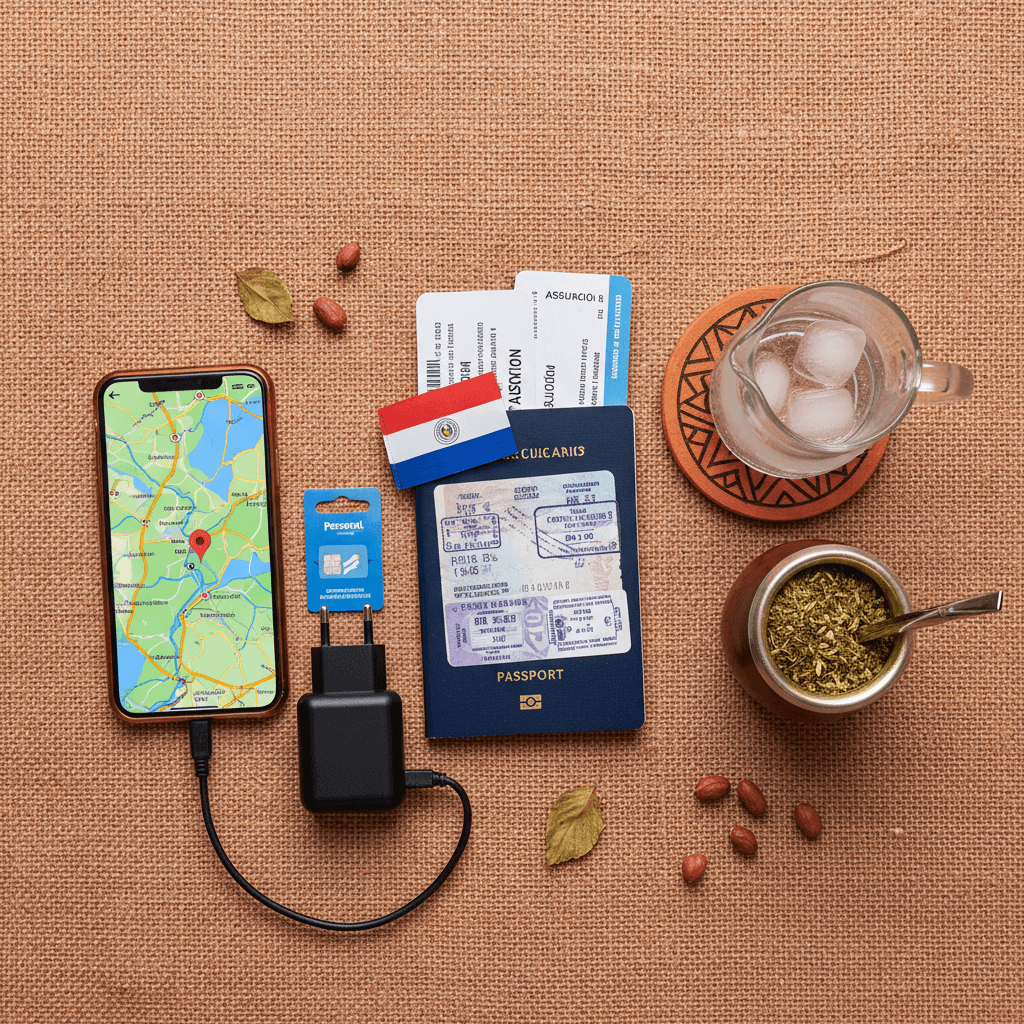
Paraguay
Complete Digital Nomad Guide

Policy Stability
Stamped Nomad ExclusiveHow likely visa and immigration policies are to remain unchanged
Quick Facts
Nomad Visa Cost
N/A
Income Requirement
$1,300/mo
Max Stay
3 months
Renewable
Yes
Cost of Living
$1,130/mo
Avg Internet
127 Mbps
Safety Score
4/10
Healthcare
Medium
Coworking
Medium
English Friendly
Low
Time Zones
PYT (UTC-4), PYST (UTC-3)
Entry Methods Available
Best For
Paraguay has quietly become one of the most accessible hubs in South America for digital nomads. While its neighbors often involve complex bureaucratic hurdles, the heart of the continent offers a straightforward entry process, especially if you hold a passport from a major Western or MERCOSUR nation. The system is managed by the Ministry of Foreign Affairs and the Dirección General de Migraciones, focusing on a digital-first approach for short-term stays.
The 90-Day Entry
For most travelers reading this, getting into Paraguay is as simple as showing up at the border. Citizens from the United States, Canada, Australia, New Zealand, the UK, and most of the EU can enter for up to 90 days without a visa. This specific exemption for North Americans and Oceanians is currently secured by law through 2027, making it a reliable window for planning a medium-term stay.
If you are from a country that isn't on the visa-free list, you will need to apply for a No Residente – Turista visa. This process is handled through a digital portal where you upload your documents before visiting a consulate for the final stamp. It is a hybrid system; you do the legwork online, but you still need that physical interaction with a consular official.
Extending Your Stay
If three months isn't enough to soak up the calm of Asunción or the energy of Ciudad del Este, you can usually double your time. Most 90-day entries can be extended once for an additional 90 days. You should handle this through the Migraciones online portal at least a few weeks before your initial permit expires.
- Extension Cost: Generally ranges between USD 40 and USD 90 depending on administrative fees.
- Requirements: A valid passport with at least 3 months of validity, proof of sufficient funds, and your original entry slip.
- Processing: Can be done via the government’s digital platform, though some nomads prefer visiting a migration office in person to ensure the paperwork is immediate.
Business and Technical Visas
If you are heading to Paraguay for more than just sightseeing, such as attending a series of conferences or performing short-term technical consulting, the No Residente – Técnico visa is the correct path. This also grants up to 90 days and requires an invitation letter from a local entity and a clean criminal record from your home country. Like the tourist version, you start this application online.
Recent Rule Changes
The visa landscape in Paraguay is shifting slightly to favor specific Asian and Caribbean partners while tightening others. It is important to keep these recent updates in mind:
- New Exemptions: Travelers from the Philippines and Malaysia now enjoy 30-day visa-free entry, while those from Trinidad & Tobago and the Bahamas get 90 days.
- Venezuela: As of January 10, 2026, Venezuelan nationals are required to obtain a visa prior to entry, as the previous exemption has been canceled.
- South Korea and Singapore: These nationalities have shorter initial stays, typically 30 or 60 days, rather than the standard 90.
A Note on Visa on Arrival
Don't count on getting your visa at the airport. Paraguay does not offer a general "Visa on Arrival" for most tourists. While there are very specific exceptions for pre-approved categories at Silvio Pettirossi Airport, the vast majority of travelers must either enter under a visa-free agreement or have their consular visa sorted before they board their flight.
For those looking to transition into residency, keep in mind that since 2023, if you aren't from a visa-exempt country, you must have a valid visa in your passport to even begin the residency application process. The days of "fixing it once you arrive" are largely over for non-exempt nationalities.
The Legal Reality
If you are looking for a flashy, marketing-heavy "Digital Nomad Visa" with a palm tree logo on the application, you will not find one in Paraguay. Unlike many of its neighbors, Paraguay has not bothered to create a specific category for remote workers. Instead, they have something arguably better: the Residencia Temporal.
Under the updated Law No. 6984/2022, the process for settling in Paraguay became significantly more streamlined for foreigners. This permit is the go-to choice for nomads because it allows you to live and work remotely while being legally recognized by the state. It is valid for 2 years and can be renewed for another 2 years. Once you have finished your stint as a temporary resident, you are eligible to apply for permanent residency.
Why Nomads Choose the Temporal Permit
The standout feature of the Paraguayan system is the lack of a minimum income requirement. Most countries demand proof of a high monthly salary or a massive bank balance to let you in. Paraguay simply asks that you declare what you do for a living via a sworn statement. If you are a freelance developer or a remote consultant, you just say so. No pay stubs or complex financial audits are required.
Once you submit your application, you receive "residente precario" status. This is a legal bridge that allows you to stay in the country, travel, and even start working while the government processes your paperwork. Eventually, you will receive your cédula, which is the local ID card that makes life much easier for everything from opening bank accounts to signing a lease.
The Application Process
You cannot do this from your couch. The application must be done in person at the Dirección Nacional de Migraciones in Asunción. Most travelers enter on a 90-day tourist visa and then begin the transition to residency once they are on the ground.
- Preparation: You need your passport, birth certificate, and a clean criminal record from your home country. These must be apostilled or legalized before you arrive.
- Local Documents: Once in Asunción, you will need to get a Paraguayan police clearance and an INTERPOL certificate.
- Translation: Any document not in Spanish must be translated by a certified translator in Paraguay.
- Submission: You will head to the Migraciones office to submit your file and pay the fee, which is approximately Gs. 2.787.550 (roughly USD 350).
The Tax Advantage
This is where Paraguay really shines for the digital nomad community. The country operates on a territorial tax system. This means that if your income is sourced from outside Paraguay, you generally pay 0% tax on it as a resident. If you do happen to take on local clients within the country, you are looking at a flat tax rate of only 10%. It is one of the most tax-friendly environments in the world for remote professionals.
Rules and Restrictions
While the process is accessible, it is not a free-for-all. You have to show up in person to apply, and you should plan to visit Paraguay at least once a year to keep your residency active. If you have a serious criminal record, your application will be rejected.
Also, keep in mind that while enforcement for tourists working on laptops is virtually non-existent, the law technically requires a residency permit for "lawful activities" like remote work. Getting the Residencia Temporal keeps you on the right side of the law and opens the door to a very low-cost, high-quality lifestyle in the heart of South America.
The Basics of Entry
Paraguay is surprisingly open for most travelers, but the rules are specific. If you hold a passport from the United States, Canada, the UK, Australia, or any EU Schengen state, you can generally breeze through immigration. You will get a stamp for 90 days without needing to apply for anything in advance. This also applies to MERCOSUR neighbors like Argentina and Brazil, who actually enjoy even more flexibility with their national ID cards.
Your passport needs at least six months of validity remaining. While the process is straightforward for many, keep in mind that Visa on Arrival is no longer an option. If your country is not on the visa-exempt list, you must handle your paperwork before you arrive at the airport in Asunción or any land border crossing.
The E-Visa and Consular Process
For those who do need a visa, Paraguay uses an online portal for the non-resident tourist category. This electronic application is meant for stays up to 90 days. You will need to upload a digital photo with a white background, a scan of your passport, and proof of financial solvency. They also ask for a hotel booking or an invitation letter from a resident or company in Paraguay.
The process usually involves an interview. Depending on your location, this might be virtual or require a trip to the nearest consulate. It is best to start this at least 30 days before your flight. Fees tend to hover around $65 for a single entry and $100 for multiple entries, though these prices fluctuate based on the specific consulate and your nationality.
Extending Your Stay
If three months is not enough time to explore the Chaco or settle into the Asunción cafe scene, you can apply for a Prórroga de Permanencia Transitoria. This is a formal extension handled by the Dirección Nacional de Migraciones. It is generally available to those from visa-free countries. If you entered on a visa, you must ensure your original visa allows for such an extension.
To get this done, you have to visit a migration office in person. Do not wait until day 89 to start this. If you are planning to stay long-term, most nomads eventually pivot to a residency application rather than stacking tourist extensions, as the government has become more strict about "perpetual tourists."
Border Runs and Overstays
The "border run" is a common tactic where you pop over to Foz do Iguaçu in Brazil or Clorinda in Argentina for a day to reset your 90-day clock. While there is no explicit law banning this, migration officers have the final say on your admission. If they see a pattern of three or four consecutive 90-day stamps with only a few hours between them, they might deny entry or pull you aside for questioning.
Overstaying is a bad idea. Paraguay enforces fines for every day you stay past your expiration. You will have to pay these at the migration desk at the airport or border before you are allowed to leave. Severe overstays can result in deportation or a temporary ban on re-entering the country. If you find yourself approaching your limit, it is much cheaper and easier to pay for a legal extension than to deal with the penalties at the exit gate.
Document Checklist for Travelers
- Passport: Must be valid for at least 6 months from your date of entry.
- Proof of Exit: While not always checked, having a flight or bus ticket out of the country is a standard requirement.
- Yellow Fever Certificate: This is mandatory if you are arriving from or traveling to high-risk areas like certain parts of Brazil.
- Financial Proof: E-visa applicants should have recent bank statements ready to show they can support themselves during their stay.
The Lowdown on Staying Long-Term
Paraguay has quietly become a favorite for the remote work crowd, and it isn't hard to see why. While many countries are tightening their borders or inventing expensive "Digital Nomad Visas" with massive monthly income requirements, Paraguay keeps things refreshingly straightforward. There is no specific nomad visa here; instead, you plug into the standard residency system, which is flexible enough to cover freelancers, retirees, and investors alike.
The process generally follows a "Temporary to Permanent" pipeline. You start with a two-year temporary residency. Once that period is up, you can transition into permanent status. The best part for most nomads is the tax situation: Paraguay typically operates on a territorial tax system, meaning foreign-sourced income often sits at a 0% tax rate. Combined with a low cost of living, your runway here is significantly longer than in Europe or North America.
Temporary Residency: The Nomad Choice
This is the standard entry point for freelancers and remote workers. You don't need a local employer; you simply declare your profession as a lawful activity. You will need to show you can support yourself, usually with bank statements or proof of income around $1,300 USD per month.
- Duration: 2 years, renewable.
- Cost: Government fees are approximately Gs. 2,787,550 (about $350–$400 USD), plus Gs. 223,004 for your radicación certificate.
- Timeline: Expect the paperwork to take 2 to 4 months to process.
- Key Benefit: This grants you a Cédula (ID card), which makes everything from opening bank accounts to signing apartment leases much easier.
Permanent Residency and Investment
If you are looking to skip the two-year waiting period or want a more "Golden Visa" style experience, the SUACE investment program is the fast track. This is designed for serious business owners rather than solo freelancers. It grants immediate permanent residency but comes with a higher bar for entry.
- Investment Requirement: A commitment to invest $70,000 USD into a business over a 10-year period.
- Job Creation: Your business plan must include a path to creating 5 local jobs.
- Processing: This is much faster, often wrapped up in 30 to 90 days.
- Total Costs: Including legal fees and setup, expect to spend around $14,000 USD.
The Paperwork Trail
Paraguay loves its stamps. You cannot just show up with photocopies; your core documents must be apostilled in your home country before you arrive. Once you are on the ground in Asunción, you will visit the Migraciones office in person to finalize the application. You will also need a local health certificate and a clean criminal record from Interpol, which you can handle locally.
Required Documents:
- Valid passport and entry stamps.
- Apostilled birth certificate and marriage/divorce certificates if applicable.
- Apostilled police records from your home country (for everyone age 14 and up).
- A local Paraguayan police certificate (obtained in-country).
- Proof of economic solvency, such as a pension letter or bank statements.
Pathways to Citizenship
For those looking for a "Plan B" passport, Paraguay offers one of the most accessible timelines in South America. After holding permanent residency for 3 years, you are eligible to apply for naturalization. You will need to demonstrate some integration into the country, which includes a basic grasp of Spanish and a bit of knowledge regarding Paraguayan history and geography. Unlike many other nations, there is no strict "minimum stay" to maintain your residency status, though visiting every 2 to 3 years is recommended to keep your files active.
Paraguay remains one of the best-kept secrets for digital nomads looking to stretch their dollars without sacrificing a high quality of life. For 2025 and 2026, it stands out as one of the most affordable hubs in Latin America. Depending on your lifestyle and choice of city, you can live comfortably on anywhere from $700 to $2,000+ USD per month.
The Big Three: Where to Plant Your Flag
Asunción is the undisputed heavyweight for nomads. It is the most expensive city in the country, but it offers the most robust infrastructure, including fiber optic internet reaching 300 Mbps and a legitimate coworking scene. If you want high-end malls, international networking, and the best steak of your life, this is your spot.
Encarnación offers a more relaxed, "beach" vibe along the Paraná River. It is roughly 25% cheaper than the capital and ranks high for safety and walkability. It is perfect if you prefer a slower pace and don't mind a smaller selection of dedicated office spaces.
Ciudad del Este is a bustling border town that leans more toward business and trade. While it is affordable, the safety profile is lower than the other two cities, making it a better fit for experienced travelers or those with specific business interests in the region.
Monthly Budget Tiers
To give you a realistic idea of what your bank account will look like at the end of the month, we have broken down costs into three tiers based on a single nomad living in central, popular neighborhoods like Villa Morra in Asunción.
- The Budget Tier ($670 – $910): This is for the minimalist. You are likely staying in a shared apartment or a basic studio, eating primarily at local "comedores," and using the public bus system.
- The Comfortable Tier ($1,020 – $1,460): This is the sweet spot. You get a private, modern 1-bedroom apartment, a dedicated desk at a coworking space, and plenty of room in the budget for dining out and weekend trips.
- The Premium Tier ($1,700+): At this level, you are living in a high-rise luxury building with a pool and gym, using private drivers or Uber for everything, and enjoying the city’s upscale nightlife without checking the price tag.
Cost Breakdown by City
The city you choose will be the biggest variable in your monthly burn rate. Here is how the numbers shake out for a "comfortable" lifestyle in the top three hubs.
Asunción
- 1BR Rent: $450 – $650 for a furnished unit in a nomad-friendly zone.
- Food: $250 – $350 for a mix of groceries and mid-range dining.
- Transport: $30 – $60 using a mix of the $0.50 bus fares and Ubers.
- Coworking: $250 – $400 for a dedicated desk at spots like Loffice or Regus.
- Health Insurance: $50 – $150 for nomad-specific international plans.
- Total Estimated: $1,500 – $2,000
Encarnación
- 1BR Rent: $300 – $450 for a central apartment.
- Food: $215 – $300; local produce is exceptionally cheap here.
- Transport: $28 for a monthly pass or local transit.
- Coworking: $100; you will mostly be working from cafes or your home setup.
- Health Insurance: $50 – $150.
- Total Estimated: $1,000 – $1,500
Ciudad del Este
- 1BR Rent: $250 – $400 for a standard apartment.
- Food: $220 – $300.
- Transport: $30 – $50, including border-crossing buses.
- Coworking: $200; options are limited but growing.
- Health Insurance: $50 – $150.
- Total Estimated: $1,100 – $1,600
The Small Print
While the big-ticket items like rent and food are low, don't forget the utilities. High-speed internet and electricity (especially if you run the AC during the humid summer) will usually add another $50 to $100 to your monthly total. Most furnished rentals for nomads include water, but always double-check if the "expensas" (building fees) are included in your monthly rent price.
Asunción: The Heart of the Nomad Boom
Asunción is currently experiencing a massive surge in popularity, with nomad arrivals jumping nearly 200% year-over-year. It is the only city in Paraguay that offers a truly robust infrastructure for remote work. You will find high-speed fiber internet reaching up to 300 Mbps for around $30 to $60 a month, making it as reliable as any major Latin American hub.
The city is a patchwork of traditional charm and modern development. Most nomads gravitate toward neighborhoods like Villa Morra and Carmelitas. These areas are walkable, safe, and packed with specialty coffee shops and upscale shopping centers. If you need a professional office environment, spaces like Regus, Spaces, and CoWork by Loffice provide reliable desks and networking opportunities.
- Monthly Cost: $700 to $1,100
- Internet Speeds: 30 to 300 Mbps
- Safety: Moderate; stick to expat-friendly districts at night.
- Community: Large and growing, supported by active Meetup groups.
Pros: The best coworking ecosystem in the country, 0% tax on foreign-sourced income, and a very low cost of living for a capital city.
Cons: It can feel like a concrete jungle in some parts, and the summer heat is intense.
Encarnación: The Relaxed Riverside Alternative
If the chaos of a capital city is not your speed, Encarnación is the best alternative. Known as the "Pearl of the South," this city sits right on the Paraná River. It is significantly quieter and safer than Asunción, offering a laid-back lifestyle centered around the Costanera, a long riverside promenade with beaches and sunset views.
While the nomad community here is smaller, the quality of life is high. You can find comfortable apartments for $300 or less, and the city is increasingly digital-friendly with cafes offering free Wi-Fi. It serves as a perfect base for nature lovers who want to visit the Jesuit Missions or take weekend trips toward Iguazú Falls.
- Monthly Cost: $600 to $900
- Internet Speeds: 50 to 100 Mbps
- Safety: High; one of the most relaxed environments in the region.
- Community: Small but welcoming; better for those who prefer local immersion.
Pros: Extremely affordable, very safe, and features beautiful river beaches.
Cons: Limited dedicated coworking spaces and a much slower pace of life.
Ciudad del Este: The Commercial Hub
Ciudad del Este is a unique beast. It is a massive tri-border shopping and business hub where Paraguay, Brazil, and Argentina meet. It is not a typical "lifestyle" destination, but for nomads who need to be near a major commercial center or who enjoy the energy of a border town, it has its perks. The internet is surprisingly fast here, with reports of 122 Mbps being common in the city center.
The vibe is more business-oriented than social. You will encounter a diverse expat crowd, including large Brazilian and Lebanese communities. While it is great for getting deals on electronics or crossing into Brazil for the weekend, the city center can feel hectic and requires more awareness regarding petty crime during the day.
- Monthly Cost: $1,300 to $1,500
- Internet Speeds: 122 Mbps average
- Safety: Moderate; requires caution in crowded market areas.
- Community: Medium-sized, but mostly focused on trade and commerce.
Pros: Incredible shopping, easy regional travel access, and solid connectivity.
Cons: Higher cost of living than other cities and a chaotic, noisy atmosphere.
Quick Comparison Summary
Asunción
- Rent: $300 to $650 for a 1BR in a good area.
- Food: $200 to $350 per month.
- Best for: Social nomads and those needing top-tier coworking.
Encarnación
- Rent: $200 to $400 for a 1BR.
- Food: $150 to $250 per month.
- Best for: Budget travelers and those seeking a quiet, safe retreat.
Ciudad del Este
- Rent: $400 to $700 for modern apartments.
- Food: $300 to $450 per month.
- Best for: Business-minded nomads and regional explorers.
Connectivity and Speed
Paraguay has quietly stepped up its tech game, particularly in the urban hubs. If you are staying in Asunción or Ciudad del Este, the fiber optic infrastructure is robust enough to handle video calls and heavy uploads without breaking a sweat. In the capital, neighborhoods like Villa Morra and Recoleta are the gold standard for speed, with many modern apartments offering connections between 50 Mbps and 300 Mbps.
Personal (Tigo) is currently the frontrunner for speed, often hitting averages around 139 Mbps. You can expect to pay anywhere from $25 to $80 per month for a home setup depending on how much bandwidth you need. While the cities are reliable, the quality drops off significantly once you head into rural territory, where you might be stuck with older DSL lines averaging only 10 to 30 Mbps. Always confirm fiber availability with your host before booking a long-term stay outside the city center.
Top Coworking Spaces in Asunción
The coworking scene in Asunción is concentrated but high-quality. Most spaces are clustered in the financial district and the trendy Villa Morra area, making it easy to hop between work and dinner.
- Urban Station: This is the most popular choice for nomads. They have multiple locations in Villa Morra, 100+ Mbps fiber, and dedicated phone booths for private calls. The community here is international and English-speaker friendly.
- Shift_ CoWork: Located right in the financial heart of the city, this is a more corporate, premium option. Hot desks start around $279 per month, while dedicated desks go for $425.
- Espacio Qualia: A boutique, creative-focused spot in Villa Morra. It has great natural light and flexible plans if you don't want to commit to a full month.
- Nido Coworking: Situated near Shopping del Sol, this spot targets the startup crowd. It’s known for competitive pricing and 24/7 access options for those working odd hours.
- La Cofi: A centrally located space that feels more like a shared office. It has fully equipped kitchens and meeting rooms if you need to host a local client.
- Regus: Located in the Citicenter, this is your standard global chain experience. It’s useful for short bursts of work with hourly rentals starting at $10.
Membership and Day Pass Costs
Pricing is generally lower than what you would find in North America or Europe, though premium spots in the business district can get pricey. If you are looking for a quick spot to work for the day, expect to pay between $10 and $20. For those staying a month, hot desks usually run between $80 and $150. If you need a dedicated desk, budget for $150 to $250. Some budget-friendly spots like Spaces Works offer "All Access" plans for as low as $6 per day.
Café Culture and WiFi
Asunción has a flourishing café scene where laptops are perfectly welcome. While you shouldn't rely on café WiFi for massive file transfers, it is usually fine for general admin work. Mokka Café and the Café de Acá in Los Laureles are reliable staples with speeds between 10 and 30 Mbps. Arte Sano is another favorite, offering strong 5G WiFi and excellent coffee. If you prefer a familiar environment, the Starbucks and Juan Valdez locations in Shopping del Sol provide consistent, fast connections in a central location.
Mobile Data and eSIMs
Having a backup data plan is a smart move in Paraguay. Local SIM cards are easy to get, but eSIMs are much more convenient for short-term stays. Several providers offer affordable packages that use the CLARO or Tigo networks.
- Nomad eSIM: Offers 1 GB for $6 (7 days) or 20 GB for $29 (30 days).
- MobiMatter: Provides flexible plans starting around $1.80 per GB.
- High-Volume Plans: For heavy users, 50 GB plans are available for roughly $69.
Most of these mobile plans support tethering, so you can easily use your phone as a hotspot if the power flickers or the café WiFi gets sluggish. 4G and 5G coverage is excellent throughout the capital, ensuring you stay connected even when you are on the move.
The Two-Tier Reality
Paraguay operates on a dual healthcare system, and for most digital nomads, the choice is simple. The public system, known as IPS, is free for residents with formal employment but struggles with long wait times often exceeding 6 hours and frequent supply shortages. It serves as a safety net, but it isn't where you want to be for elective procedures or specialized care.
The private sector is where the quality shines. Private hospitals in Asunción offer international standards, modern equipment, and English-speaking doctors. Many physicians here trained in Europe or the US, providing a level of care that feels familiar. Best of all, these services typically cost 50% to 70% less than what you would pay in the United States.
Where to Go in Asunción
If you are based in the capital, you have access to some of the best medical facilities in the region. These hospitals are the standard for expats and nomads:
- Sanatorio Migone Battilana: One of the most prestigious institutions in the country with JCI accreditation. They have over 200 doctors and are the go-to for cardiology and oncology.
- Centro Médico La Costa: A favorite for international patients. They feature a dedicated international office to help with logistics and house advanced tech like 3T MRI imaging.
- Sanatorio San Roque: Known for its ITAES accreditation and excellent surgery and trauma departments. It is a reliable, modern choice with roughly 150 beds.
- Centro Médico Bautista: A long-standing institution with over 70 years of history. They offer a wide range of specialties and their own internal prepaid health plans.
Insurance Options for Nomads
While out-of-pocket costs are low, having a solid plan is the best way to ensure immediate access to the top private clinics. You generally have three paths depending on how long you plan to stay.
For short-term travelers, SafetyWing is the standard choice at roughly $45 per month. It works on a subscription basis and covers emergencies and basic medical needs with a $250 deductible. If you are staying longer than six months, Genki offers more robust coverage starting around €35 per month with zero-deductible options.
If you are becoming a legal resident, local insurance is incredibly affordable. Plans from providers like Mapfre or Sancor Seguros range from $50 to $150 per month. These local plans usually cover consultations, surgeries, and even prescriptions during hospital stays. Be aware that pre-existing conditions often carry a 2 to 3 year waiting period on local policies.
What You’ll Pay Out of Pocket
If you choose to pay as you go, Paraguay is remarkably affordable. Medical tourism is growing here because the price-to-quality ratio is so high. Here is what you can expect to pay for common services:
- General Doctor Visit: $30 to $60
- Specialist Consultation: $50 to $100
- MRI Scan: $150 to $300
- Dental Cleaning: $30 to $50
- Root Canal: $100 to $200
- Appendectomy: Approximately $1,340
Pharmacies and Prescriptions
Finding a pharmacy (farmacia) is easy in any urban area. Major chains like Farmacenter and Farmacia Catedral often stay open 24/7. You will find that many medications requiring a prescription in the US or Europe are available over the counter here.
Generic drugs are the norm and usually cost 50% to 70% less than brand names. Recent government regulations have also slashed prices on high-priority medications, making chronic care much more manageable for those on a budget.
Emergency Protocol
In a crisis, the numbers to know are 911 for general emergencies and 141 specifically for ambulances. While the public ambulance service is free, it can be slow. If you have private insurance, use their dedicated emergency line; a private ambulance usually costs between $200 and $500 but arrives much faster and with better equipment. Keep in mind that medical infrastructure is excellent in Asunción but thins out significantly once you head into rural territory.
Banking and the Cédula Hurdle
Opening a local bank account in Paraguay is a bit of a "chicken and egg" situation. You cannot simply walk into a branch with a passport and walk out with a debit card. To access the local banking system, you must have a Cédula (the national ID card), which is only issued after you have secured legal residency.
Once you have your Cédula in hand, the process becomes straightforward. You will typically need to provide your passport, a local utility bill or rental agreement as proof of address, and a Certificado de Vida y Residencia, which you can get from the local police station. Banks will also ask for proof of income, such as tax returns or a payroll letter, and you will need a local phone number to receive security codes via SMS.
For those running a business, the requirements jump significantly. You will need your RUC (tax ID), business registration documents, and company bylaws. All foreign documents must be translated into Spanish by a certified Paraguayan translator and properly legalized before the bank will even look at them.
The Digital Wallet: Wise and Revolut
If you are hoping to use a Wise Multi-Currency Card, you are out of luck; it is currently unavailable for residents of Paraguay. You can still use the Wise platform to send money to local bank accounts, but the physical card won't work if your account is registered here.
Revolut is the better companion for this trip. Their cards are widely accepted throughout the country. If you are on a Standard plan, you can withdraw up to £200 per month without fees, while Metal users get up to £800. Just keep in mind that once you hit those limits, a 2% fee applies.
Managing Cash and ATMs
The local currency is the Paraguayan Guaraní (PYG). While credit cards work in major supermarkets and malls in Asunción, Paraguay is still very much a cash-first society. Small shops, local eateries, and street vendors rarely accept plastic.
Using ATMs can be a frustrating experience due to low limits and high fees. Most machines cap withdrawals at 1,500,000 PYG (about $200) per transaction. You will usually be hit with a fee of around 25,000 PYG ($3.50) every time you use the machine. When the ATM asks if you want to use their conversion rate, always decline and choose to be charged in Guaraní to avoid terrible exchange markups.
Moving Money Into the Country
When you need to move larger sums of money, skip the traditional wire transfers if possible. Remitly is often the favorite for nomads because they offer competitive rates and transfers that arrive within 48 hours. Wise and Revolut are also solid choices for transparent fees. While Western Union and MoneyGram are everywhere, they are generally the most expensive way to move significant capital.
The Crypto Safe Haven
Paraguay has become a hotspot for crypto-enthusiasts, largely thanks to its territorial tax system. If you are a resident and trade crypto on international exchanges like Binance or Kraken, your gains are generally tax-free as long as the money stays outside of the local Paraguayan banking system. This makes it an incredibly attractive base for miners and traders.
- Legal Status: Crypto is legal to buy, sell, and hold, though it is not "legal tender" like the Guaraní.
- Mining: This is fully permitted, provided you follow standard business and environmental regulations.
- Recent Laws: Law 7572, passed in 2025, recognizes blockchain tokens as securities, which is a major step toward a regulated digital economy.
- Local Spending: Be careful if you use Bitcoin to buy local real estate; converting to fiat locally can trigger tax obligations that wouldn't exist if the funds stayed offshore.
To use local exchanges or meet KYC requirements while living here, you will need your Cédula and your RUC. For most nomads, keeping your crypto activities on international platforms remains the most efficient path.
Securing the Future: Dependent Visas
Moving your family to Paraguay is surprisingly straightforward compared to the bureaucratic hurdles found in Europe or North America. Most nomad families opt for the Independent Means Visa. If you can prove a passive foreign income of roughly $1,300 per month, you can bring your spouse and minor children under 18 as dependents. You will need apostilled birth and marriage certificates, along with clean criminal records for the adults.
If you happen to be married to a Paraguayan citizen, the process is even faster through family reunification under Ley 2193/2003. This pathway allows you to skip the typical two-year temporary residency phase and move straight to permanent status. Expect the entire application process to take between one and four months. Total costs, including fees and translations, usually land between $1,200 and $2,800 depending on the size of your family.
Education and International Schools
Asunción is the clear winner for education. The city hosts heavy hitters like the American School of Asunción (ASA), St. Anne’s, and PAIS. These schools offer the International Baccalaureate or American curricula, making eventual transitions back home or to universities abroad much easier. Annual tuition for these top-tier institutions ranges from $3,000 to $15,000 per year. While that sounds like a lot, the total cost for a child’s education, including uniforms and registration, typically stays under $18,000, which is a fraction of what you would pay for similar private schooling in the US.
If you want a more immersive experience for your kids, look into bilingual Paraguayan private schools. These are highly regarded and much more affordable, with annual costs between $3,000 and $6,000. Be aware that the best elementary programs often have waitlists, so start your inquiries as soon as you decide on a move date.
The Cost of Childcare
One of the biggest "quality of life" upgrades for nomad parents in Paraguay is the cost of childcare. Full-day kindergarten or private preschool averages between $120 and $180 per month. Even at the high end of the market, you are looking at $300 per month. This is roughly 90% less than childcare costs in London or New York, allowing many families to hire additional help at home or enroll their children in more extracurricular activities.
Healthcare for the Little Ones
Residents have access to the public healthcare system (MSPBS), which provides free pediatric check-ups, emergency care, and vaccinations. While the public system is a great safety net, most expats choose private health insurance for faster access to specialists. The IPS Central Hospital in Asunción recently expanded its pediatric ER, significantly improving emergency services for children in the capital.
Where to Plant Roots
While Paraguay has several growing hubs, Asunción remains the most practical choice for families. Neighborhoods like Mburucuyá are quiet, residential, and very safe. You will have easy access to Parque de la Salud, which is a favorite for weekend strolls and fresh air. Other viable options include:
- Fernando de la Mora: Known for its abundance of parks and family museums.
- Ciudad del Este: Offers great private sports clubs and green spaces for active kids.
- Coronel Oviedo: A slower pace of life with plenty of community-focused family clubs.
Safety Reality Check
Paraguay is generally safe for families, especially in the residential pockets of major cities. The country carries a safety index of 69/100, which is respectable. Use the same common sense you would use anywhere else; avoid poorly lit border zones at night and keep an eye on your belongings in crowded markets. The biggest physical danger you will likely face is the infrastructure. Roads can flood quickly during heavy rain, so keep an eye on the weather before heading out on a family road trip.
Safety Realities for Nomads
Paraguay is often overlooked in favor of its flashier neighbors, but it holds a solid reputation as the fourth safest country in South America. Violent crime against foreigners is rare, and the homicide rate of 7.1 per 100,000 is comparable to the United States. You can generally walk the streets with peace of mind, provided you stick to the right neighborhoods.
Most issues you might encounter are opportunistic. Petty theft, such as phone snatching or bag grabs by "motochorros" (motorcyclists), happens in crowded parts of Asunción like the Centro or busy markets. To stay off the radar, keep your phone tucked away while walking and avoid flashy jewelry. If you are heading to the border city of Ciudad del Este, stay alert; it is a massive smuggling hub where the vibe is significantly more chaotic than the capital.
The biggest physical risk in Paraguay isn't crime, it is the traffic. With roughly 1,200 annual road deaths, reckless driving is common. Be extremely cautious as a pedestrian, and if you are getting around the city, use apps like Uber or Bolt rather than hailing random cars. These apps provide a digital trail and fixed pricing, which helps you avoid the "gringo tax."
Scams and Social Nuances
While Paraguayans are famously honest, a few classic scams target the uninitiated. Watch out for fake police officers demanding immediate cash "fines" or the "found money" trick, where a stranger pretends to find a stash of cash and offers to split it with you, only to swap it for fakes. In the expat world, real estate and visa fraud are the bigger threats. Never hand over money for a "guaranteed" residency permit or property title without a vetted lawyer. If a deal feels too fast or too cheap, it probably is.
On the social front, Paraguay is deeply conservative. This is particularly relevant for the LGBTQ+ community. While same-sex activity has been legal since 1990, there are no marriage or anti-discrimination protections. Discretion is the standard here. Outside of Asunción's trendy Villa Morra district, public displays of affection may draw unwanted attention or harassment. Most nomads find that while the culture is "live and let live," it remains traditional at its core.
The Art of the Tereré Circle
Paraguayan culture revolves around hospitality and the sharing of tereré, which is cold-brewed yerba mate. If someone offers you a sip from their guampa (cup), take it. Refusing is often seen as a rejection of friendship. It is the ultimate social icebreaker and the fastest way to transition from a stranger to a "tranquilo" local.
- Greetings: Use a firm handshake and a genuine smile. Paraguayans value personal connection over efficiency.
- Home Visits: If you are invited to a "asado" (barbecue), bring a small gift like wine or high-quality sweets.
- Dress Code: People dress modestly, especially at religious sites or formal offices. Save the beachwear for the pool.
- Pace of Life: Everything moves a bit slower. Patience is a virtue, and getting angry about a late appointment will only hurt your reputation.
Language and Community
Spanish will get you through your daily life in Asunción, where about 90% of the population understands it. However, Guaraní is the heartbeat of the country. It is a co-official language and the primary tongue in rural areas. Learning even five or six basic phrases in Guaraní will earn you instant respect and open doors that remain closed to those who only speak Spanish.
For those worried about isolation, the expat scene is small but tight-knit. There are roughly 15,000 expats and nomads living in Asunción, mostly concentrated in Villa Morra and Recoleta. Because the community isn't massive, you will start seeing the same faces at cafes and co-working spaces within a week. Joining the "Paraguay Digital Nomads" Facebook groups or attending weekly meetups is the best way to find your footing.
Integration Cheat Sheet
- Base yourself in Villa Morra: It is the safest, most walkable hub for nomads with the best internet.
- Join a sports club: Football is king, but padel is exploding in popularity and is a great way to meet locals.
- Use "Tranquilo": This word is a philosophy. Use it when things go wrong, and you will fit right in.
- Be patient with bureaucracy: Paperwork takes time. Don't fight the system; just bring a book and some tereré.
The Territorial Advantage
Paraguay is a hidden gem for digital nomads, primarily because it operates on a territorial tax system. This means the government only taxes income generated within Paraguay's borders. If you are sitting in an Asunción cafe working for a client in London, New York, or Sydney, that income is generally considered foreign-sourced and carries a 0% tax rate.
Unlike many other countries that tax your worldwide income once you become a resident, Paraguay lets you keep what you earn abroad. This makes it one of the most tax-efficient bases in the world for freelancers, remote employees, and e-commerce entrepreneurs who want a legitimate residency without the heavy tax burden.
Becoming a Tax Resident
Establishing tax residency is surprisingly flexible. You are legally considered a tax resident if you spend at least 120 days per year in the country. However, the authorities take a pragmatic approach. If you hold a local tax ID (RUC) and file your monthly VAT returns, you can often maintain your status even if you don't hit that day count exactly.
To get the process started, you will need to apply for a Cédula (residency card). The requirements are straightforward:
- A valid passport with at least 6 months of validity.
- A clean criminal background check from your home country.
- Proof of financial solvency, which usually involves a deposit of roughly $5,000 USD in a local bank account.
Once you have your Cédula and RUC, you can request a Tax Residency Certificate. This document is gold for digital nomads because it proves to your home country or banking institutions that you are officially paying your dues (or at least reporting them) in Paraguay.
Income Tax and Local Rates
If you do decide to take on local clients or start a business within the country, the rates remain very reasonable. The personal and corporate income tax rate is a flat 10%. For smaller operations, the IRA Simple regime is a great fit. This simplified system applies to individuals or small businesses with annual revenues under approximately 2 billion Paraguayan Guarani (about 245,000 EUR).
Value Added Tax (VAT) is also set at 10%. It only applies to services or goods sold within Paraguay. If your business is entirely export-based, you won't be charging or paying VAT on those international invoices.
Cryptocurrency and Capital Gains
Paraguay is becoming a major hub for the crypto-community due to its cheap hydroelectric power and favorable tax stance. For individual investors, there is a 0% capital gains tax on cryptocurrency. You can trade, HODL, and sell without reporting every transaction to the SET (the local tax authority).
The rules change slightly if you turn crypto into a full-time business:
- Individual Investors: No reporting requirements and 0% tax on gains.
- Mining and Trading Businesses: Subject to the standard 10% corporate tax on net profits.
- Asset Classification: Crypto is treated as an intangible asset, similar to stocks or bonds.
To keep things smooth with local banks and international exchanges in 2026, you should keep your Cédula and RUC paperwork handy. Most residents prefer to keep their trading on international platforms like Binance or Kraken to maintain clear boundaries between their local and international assets.
Compliance and Reporting
While the taxes are low, the paperwork is still necessary. If you have a tax ID, you are expected to file monthly VAT reports, even if they are "zero" filings. The fiscal year typically wraps up between March and July. Keeping a local accountant is highly recommended; they are affordable and will ensure you don't miss a filing that could jeopardize your residency status. For crypto users, it is wise to keep a log of your wallet addresses and exchange statements just in case you ever need to prove the source of your funds for a large local purchase like real estate.
Getting Connected
You have two main paths for staying online in Paraguay. If you want to hit the ground running, download an eSIM app like Yesim or Nomad. You can snag a prepaid plan for $6 to $15 before you even land. It saves you the hassle of hunting down a physical shop while you are still jet-lagged.
For those staying longer, local providers like Tigo, Personal, and Claro are the way to go. They offer no-contract plans with massive or even unlimited data buckets. Coverage is surprisingly solid in the cities, and these local SIMs usually give you better speeds than the roaming eSIMs.
Navigating the Streets
While Uber and Bolt are active here, you should definitely download MUV. It is Paraguay's homegrown ride-hailing app. It is often more transparent with pricing and can be cheaper during peak hours. If you are brave enough for the local buses, Jaha GPS and Más Tarjeta Billetaje are your best friends for tracking routes and arrival times in real time.
For driving, stick to Waze over Google Maps. The local community is very active on Waze, marking everything from sudden road closures to traffic police checkpoints. It is the gold standard for getting around Asunción without getting stuck in a bottleneck.
Where to Set Up Base
Asunción is a city of distinct pockets. Your choice depends on whether you want high-rise luxury or a leafy residential vibe.
- Villa Morra: This is the heart of the action. It is upscale, packed with tree-lined streets, and puts you within walking distance of the best nightlife at Paseo Carmelitas.
- Las Lomas & Manora: Located in the northern part of the city, these spots are quiet and exclusive. They are perfect if you want to be near the big malls like Shopping del Sol.
- Recoleta: Sophisticated and polished. You will find elegant apartment buildings here tucked between luxury restaurants and well-maintained parks.
- Barrio Herrera & San Cristóbal: These areas offer a great middle ground. Prices are more affordable, the quality of life is high, and you are still well-connected to the bus lines.
- Las Mercedes: A trendy, growing neighborhood that balances cost and quality. It is popular with a younger, creative crowd.
Finding Your Apartment
For a short stay, Airbnb is the easiest route, especially around the Paseo La Galería area. However, if you are staying for several months, check out infocasas.com.py. It is the most popular local platform for rentals. Be ready to negotiate; the first price listed is rarely the final price, especially if you can commit to a few months upfront.
Food and Groceries
PedidosYa is the dominant force for food delivery, covering everything from traditional chipa to sushi. For a local alternative that excels at fast food and drinks, try Monchis. It has a clean interface and very fast delivery times.
When it comes to groceries, Plub is a fantastic local app that delivers in under 60 minutes. If it is 2:00 AM and you need supplies, look for a Biggie Express. They are open 24/7 all over the city and are a lifesaver for late-night arrivals.
The Language Barrier
Do not expect much English outside of high-end hotels. Duolingo is great for the basics, but if you want to actually hold a conversation, Pimsleur or Babbel will get you there faster. Locals are incredibly patient and helpful, but knowing a few phrases like "Necesito ayuda" (I need help) or "Mi ubicación es" (My location is) is vital for daily life.
Emergency Contacts
The emergency system operates entirely in Spanish. If you call, speak clearly and state your neighborhood and street name immediately.
- 911: National Police for security or accidents.
- 132: Volunteer Firefighters for rescues and fires.
- 141: SEME for medical emergencies and ambulances.
- 160: ANDE for power outages.
Mistakes to Avoid
The heat is no joke. From December to February, temperatures often hit 40°C. If you are sensitive to heat, make sure your apartment has high-quality air conditioning. Also, avoid the "DIY" approach to taxes and residency. Paraguay has specific rules about "Paraguayan-sourced" income, and getting your tax structure wrong can lead to expensive headaches later. Finally, remember that things move slower here. Embrace the "tranquilo" pace rather than fighting against the local bureaucracy.
Latest Nomad News
Paraguay Tightens Residency Audits and Presence Rules
Paraguay is now enforcing a strict requirement for temporary residents to visit the country at least once every 12 months to maintain status. Authorities are also implementing a zero-tolerance policy on criminal records and conducting thorough audits of all passport pages during the application process.
Paraguay Updates Crypto Reporting Rules for Residents
The DNIT now requires crypto platforms to report user transactions exceeding $5,000 per year, including wallet addresses and transaction hashes. While foreign-sourced income remains untaxed under the territorial system, expats using local platforms must prepare for increased financial transparency and oversight.
Paraguay Enforces Physical Presence Rules for Permanent Residency
Starting March 2026, authorities will strictly verify that temporary residents have not spent more than 365 consecutive days abroad. Those failing this check will be ineligible for immediate permanent residency and must instead apply for a temporary residency extension.
Paraguay Updates Residency Rules for Permanent Status
Paraguay has restructured its immigration system, replacing Transitory Residence with a new Short-Term Residence and tightening the path to Permanent Residency. Most foreigners must now hold Temporary Residence for two years before becoming eligible for permanent status.
Paraguay Reinstates Visa Requirements for Venezuelan Nationals
Paraguay has revoked visa-free entry for Venezuelan citizens, effective immediately. Venezuelan travelers and digital nomads must now obtain a consular visa for tourism or business purposes prior to arrival, citing national security concerns.
Stay Updated on Paraguay
Get notified about visa changes, policy updates, and new information for digital nomads in Paraguay.