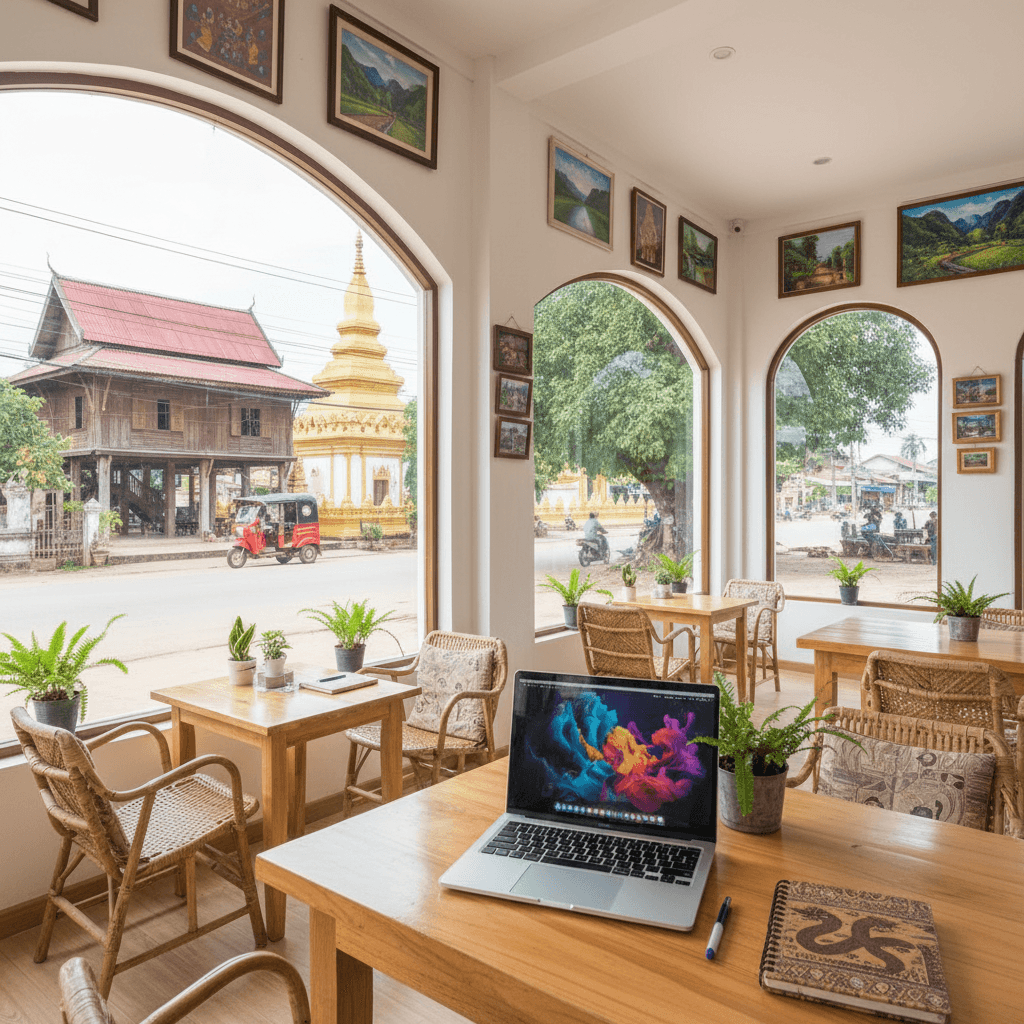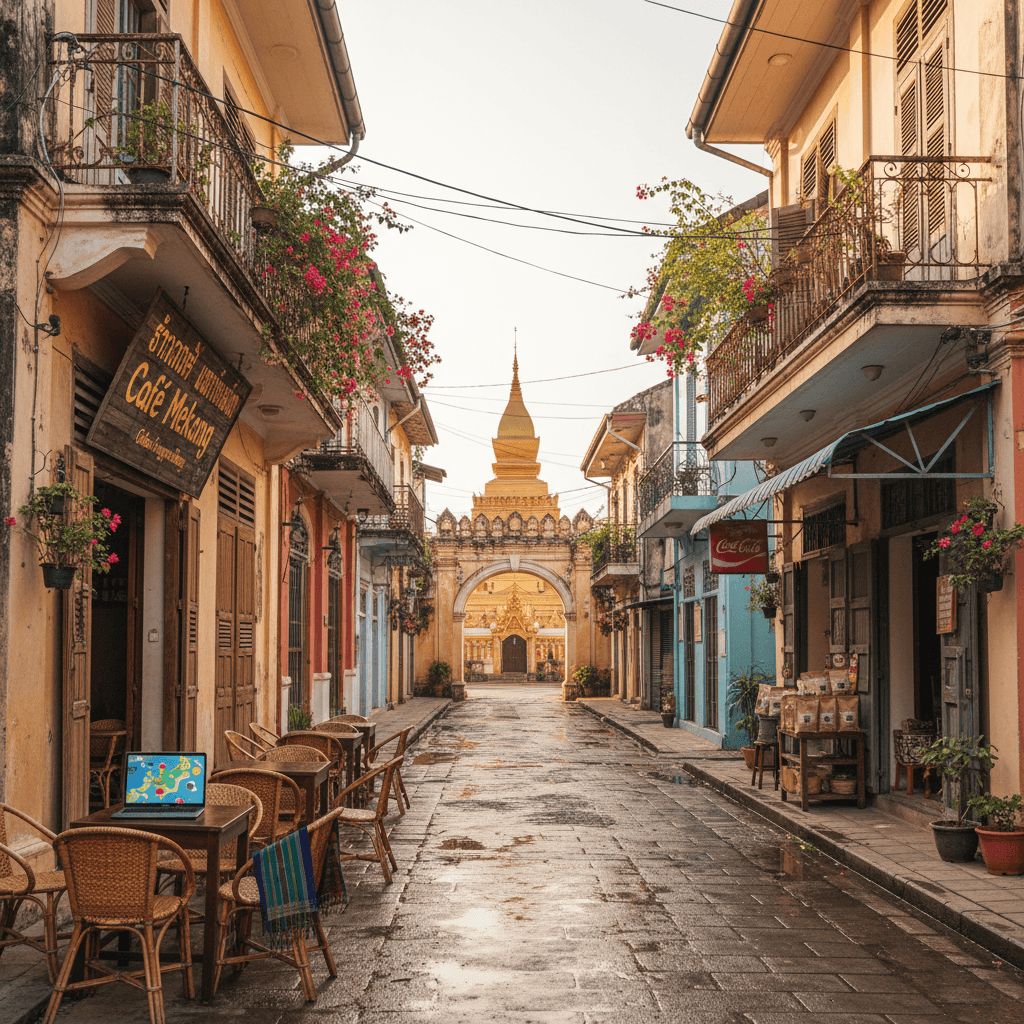
Savannakhet
🇱🇦 Laos
The Lowdown on the Mekong’s Quietest Corner
If you’re looking for the high energy of Bangkok or the digital nomad infrastructure of Chiang Mai, Savannakhet will give you immediate culture shock. It’s a city that moves at the speed of the Mekong River, which is to say, it barely moves at all. This is a place where French colonial villas crumble gracefully under the sun and the afternoon heat is usually met with a nap rather than a hustle. For nomads who feel burned out by the "scene" in larger hubs, Savannakhet is a sanctuary of low costs and high tranquility.
The vibe here is deeply nostalgic. You’ll spend your mornings drinking strong Lao coffee in old town cafes and your evenings at the night market, watching the sunset over Thailand across the water. It’s rural in spirit but urban in its layout, offering enough amenities to keep you comfortable without the noise of a major metropolis. Expats here appreciate the lack of pretension; it’s one of those rare places where you can actually hear yourself think.
Where to Plant Your Flag
Savannakhet is compact, but your choice of neighborhood dictates how much you’ll rely on a scooter. Most nomads gravitate toward the center to stay close to the action.
- Riverside & CBD: This is the heart of the old town. It’s the most walkable area, packed with French architecture and the Sihom Night Market. You’ll find a growing expat community here and the best access to cafes. Rent is slightly higher, but the convenience of being near the water is worth the extra few dollars.
- The Outskirts: As you move toward the That Inhang Stupa, things get much quieter and cheaper. It’s ideal for long term stays if you want a house with a yard, though you’ll definitely need your own wheels and a bit of patience with the spotty services.
The Cost of Living
Savannakhet is incredibly easy on the wallet. You can live a very comfortable life here for around $742 a month, though budget travelers often squeeze by on as little as $333. The local currency, the Lao Kip (LAK), fluctuates, so many expats keep a stash of Thai Baht or USD for larger purchases.
- Housing: A decent studio or one bedroom apartment in the center ranges from $90 to $350 per month.
- Food: Street food is your best friend here. A meal at the market costs about 50,000 LAK ($2.50). If you’re going for a mid range dinner for two, expect to pay around 400,000 LAK ($20).
- Transport: A 20,000 LAK ($1) minimum fare is standard for tuk tuks. If you’re staying a month, renting a scooter for about 30,000 LAK a day is the smartest move.
Internet and the Nomad Reality
Let’s be honest: you aren’t coming here for lightning fast fiber. There are no dedicated coworking spaces in the city yet, so you’ll be working from your guesthouse or hybrid cafes. 4G coverage in the urban center is solid enough for video calls and streaming, but it drops to 3G quickly once you head toward the rural fringes.
Most travelers recommend Unitel for the best city coverage, with Lao Telecom as a reliable backup. You can grab a SIM card at the central market, just make sure you have your passport. For a quick digital fix, Airalo eSIMs work well here too. Expect to pay about $28 a month for a decent mobile data plan.
Life on the Ground
Safety is rarely an issue in the city, which feels like a sleepy village most of the time. However, if you’re exploring the province along Routes 9 or 20, stay on marked paths due to unexploded ordnance (UXO) from past conflicts. For healthcare, there are provincial hospitals for the basics, but for anything serious, most expats cross the bridge into Thailand or head to Vientiane.
Socially, Savannakhet is what you make of it. There isn’t a massive nomad meetup every night, so you’ll need to check Facebook groups or head to Nicki Nightclub on the weekends to find the local crowd. Learning a few phrases like "Sabaidee" (hello) and "Khob chai" (thank you) goes a long way, as English isn’t widely spoken outside the main tourist spots. Download Google Translate for offline Lao use and install LOCA, the local ride hailing app, to make getting around much easier.
The Price of Slow Living
Savannakhet is one of those rare spots where your bank account finally gets a chance to breathe. It is significantly cheaper than Luang Prabang or Vientiane, making it a top choice if you want to stretch a modest budget without feeling like you are pinching pennies. Most single nomads find they can live comfortably on about $742 a month. If you are strictly watching your wallet, you can actually get by on closer to $333, while a high end lifestyle with a modern villa and frequent upscale dining rarely tops $1,550.
The local economy still runs heavily on cash, specifically Lao Kip, though Thai Baht and US Dollars are often accepted for larger transactions. You will want to keep plenty of Kip on hand for the night markets and smaller cafes. While the infrastructure feels a bit rural at times, the trade off is a cost of living that allows you to work less and explore more.
Housing and Neighborhoods
Rent will be your biggest variable. Most expats gravitate toward the Riverside and CBD areas because they are walkable and close to the action. If you venture toward the outskirts, prices drop, but you will definitely need a scooter to get around.
- Riverside / CBD: This is the heart of the expat scene. You are close to the Talat Night Market and the French colonial buildings. Expect to pay between $200 and $350 for a decent studio or one bedroom apartment. It gets a bit livelier in the evenings, but it is never truly loud.
- The Outskirts: Better for those who want total silence or more space. You can find houses for as low as $90 to $150 a month here. The downside is that services can be spotty and you are further from the reliable WiFi spots.
To find a place, skip the international booking sites. Most nomads recommend checking local Facebook groups or contacting agents like Neenee directly. Walking around and looking for "for rent" signs is still a very effective strategy here.
Daily Expenses
Eating out is where Savannakhet really shines. You can grab a filling meal at the Sihom Night Market for about 50,000 LAK ($2.50). If you want a sit down dinner for two at a mid range restaurant, you are looking at around 400,000 LAK ($20). For groceries, sticking to local markets for produce will keep your costs negligible, though imported goods at smaller convenience stores carry a premium.
Transportation is straightforward. A minimum tuk-tuk ride is usually 20,000 LAK. Many long term residents prefer renting a scooter for about 30,000 LAK per day to avoid haggling. For digital nomads, the monthly cost for a solid 4G data plan and home broadband averages around $28. You won't find dedicated coworking spaces, so factor in the price of a few coffees at hybrid cafes where you will likely do most of your work.
Connectivity and Logistics
Internet is the one area where you shouldn't cheap out. While 4G is reliable in the city center, it drops off quickly in rural areas. Expats suggest using Unitel for the best overall coverage, though Lao Telecom is a solid backup. You can pick up a SIM card at the central market; just remember to bring your passport for registration.
For getting around the city and making payments, download the LOCA app. It is the local answer to ride sharing and handles QR payments, which are becoming more common. If you need to handle banking or major medical issues, keep in mind that Savannakhet is limited. Most residents head across the river to Thailand or up to Vientiane for specialized healthcare or complex financial needs.
Nomads and Remote Workers
If you are coming to Savannakhet to work, you will want to plant yourself in the Riverside and Central Business District (CBD). This is the heart of the old town, characterized by crumbling French colonial facades and a slow, rhythmic pace of life. Most nomads gravitate here because it is the only part of the city that is truly walkable. You can wander from a morning coffee at a riverside cafe to the night market without ever needing a tuk-tuk.
- Rent: Expect to pay between $250 and $350 for a decent studio or one bedroom apartment in this prime area.
- Connectivity: There are no dedicated coworking spaces yet, so you will be hopping between hybrid cafes. Unitel is the consensus choice for a SIM card; buy one at the central market and load it with a high data plan for about $28 a month to use as a hotspot when cafe Wi-Fi wavers.
- Lifestyle: The Sihom Night Market is your evening canteen. You can grab a meal for about 50,000 LAK ($2.50) and eat by the Mekong. It is the best spot to meet the small but welcoming expat community.
Expats and Long-Term Residents
For those staying six months or longer, the areas surrounding the That Inhang Stupa offer a more authentic, residential feel. It is further from the tourist bubble but keeps you close to local life. Expats here often trade the convenience of the riverside for more space and lower overheads. You will definitely need your own wheels, as public transport is spotty this far out.
- Rent: Prices drop significantly here, with basic houses or larger apartments going for $150 to $200.
- Transport: Renting a scooter locally costs about 30,000 LAK per day, but long-term residents usually negotiate monthly rates or buy a second-hand bike to save on the 20,000 LAK minimum tuk-tuk fares.
- Healthcare: You are close to provincial facilities for basics, but for anything serious, most expats use the LOCA app to arrange a car for the trip to the Thai border or Vientiane.
Families
The Outskirts of the city are the best bet for families seeking quiet and safety. These neighborhoods feel almost rural, with plenty of greenery and significantly less dust and noise than the CBD. It is a peaceful environment, though you will be sacrificing proximity to the few "upscale" dining options and international grocery items found in the center.
- Rent: Large family homes can be found for under $400, though you should check the wiring and internet stability before signing anything.
- Safety: While the city is very safe, families should be cautious when exploring remote wooded areas on the city fringes due to UXO (unexploded ordnance) risks. Stick to well-trodden paths and local recommendations.
- Services: You will rely heavily on local markets. Pharmacies in these areas are surprisingly clean and well-stocked, though English is rarely spoken.
Solo Travelers
Solo travelers should stick to the Riverside, specifically near the Talat Nat night market area. Since the nomad scene is still growing, staying central is the only way to ensure you actually meet people. Social life often revolves around Nicki Nightclub on weekends or small riverside bars where the beer is cheap and the sunset views are free.
- Rent: Budget guesthouses can go as low as $90 a month if you are willing to live simply.
- Social: Since there are no major meetups, join the local Facebook groups or check InterNations. Most solo travelers find that a few afternoons spent at popular cafes will result in an invite to a local dinner.
- Navigation: Use the LOCA app for transparent pricing on rides. If you are heading to the airport, a tuk-tuk will take about 30 minutes and cost significantly less than a private car.
Connectivity Reality Check
If you are coming from Bangkok or Da Nang, adjust your expectations. Savannakhet is a place for deep work and slow living, not high speed gaming. The city lacks dedicated, large scale coworking spaces with ergonomic chairs and networking events. Instead, the nomad community here thrives in a hybrid cafe culture. You will be working alongside locals and a handful of expats in quiet, French colonial buildings turned coffee shops.
The 4G coverage in the Riverside and CBD areas is surprisingly solid for most tasks. You can expect reliable speeds for Zoom calls and streaming without much fuss. However, as you move toward the Outskirts or near the That Inhang Stupa, the signal often drops to 3G. If your work depends on a stable connection, stay central.
The Best Work Spots
Since there are no formal coworking hubs, nomads usually rotate between a few reliable spots. Most cafes offer free WiFi with a purchase, and they are generally relaxed about you staying for a few hours with a laptop. Look for places near the riverfront where the breeze helps with the heat. While broadband is affordable at around $28 a month for those renting long term, most travelers find that a combination of cafe WiFi and a local SIM card is the most flexible setup.
Mobile Data and SIM Cards
Do not rely solely on hotel WiFi. It is often the first thing to fail during a storm or a local power dip. Getting a local SIM is cheap, fast, and necessary. You will need your passport to register a card at the central market shops or official carrier stores.
- Unitel: This is the heavy hitter. It has the best overall coverage in Savannakhet and the most reliable speeds within the city limits.
- Lao Telecom: A solid backup choice. Some expats keep a dual SIM setup with both providers just in case one network has an outage.
- Airalo: If you want to be online the second you cross the border, an eSIM via Airalo works well, though it is usually pricier than buying a physical local card.
Data plans are incredibly cheap. You can often get generous data packages for just a few dollars. Just make sure to top up at any "mom and pop" shop displaying the carrier logo if you run out of credit.
Digital Nomad Infrastructure
The infrastructure here feels more rural than urban, even in the heart of the city. Power outages can happen, especially during the rainy season from June to August. It is smart to keep your laptop and power banks fully charged. For payments, while cash is king, the LOCA app is becoming more common for taxi services and some digital payments, helping bridge the gap for those used to a cashless lifestyle.
If you find the local internet isn't cutting it for a massive upload, some nomads take a quick trip across the bridge to Thailand for the day. However, for 90% of digital tasks, Savannakhet’s 4G and cafe WiFi get the job done for a fraction of the price you would pay elsewhere. It is a trade off: you lose the high tech office, but you gain a monthly cost of living that can be as low as $742.
Practical Setup Tips
- Power: Bring a high quality surge protector. The local grid can be temperamental.
- VPN: Essential for security and accessing home based services, though Laos doesn't have the same level of censorship as some of its neighbors.
- Backup: Use the LOCA app for more than just rides; it is a helpful tool for navigating the local economy when your physical cash is low.
A Peaceful Pulse and Low Crime
Savannakhet is one of those rare places where you can actually let your guard down. It lacks the aggressive hustle of Vientiane and the tourist traps of Luang Prabang, so you aren't likely to deal with petty theft or scams. Most expats find the local community incredibly respectful; it’s the kind of town where you can walk the Riverside area at night without looking over your shoulder. The biggest "danger" here is usually just a stray dog or a poorly lit sidewalk.
However, the province has a unique history that requires caution if you're the adventurous type. While the city center is perfectly safe, the surrounding rural areas along Routes 9 and 20 still contain unexploded ordnance (UXO) from past conflicts. If you are heading out for a trek or exploring remote villages, stay on well-beaten paths and never touch metal objects you find in the dirt. Stick to the main roads and you'll be fine.
Healthcare Reality Check
For day-to-day issues like a stomach bug or a minor infection, Savannakhet is well-equipped. You'll find plenty of pharmacies around the Central Market that are clean and well-stocked. Studies show about 81% of local pharmacies maintain high standards for cleanliness and organization, so getting basic meds is straightforward. If you need a doctor for something minor, the provincial hospitals provide basic care and even have supported neonatal units.
That said, modern medical infrastructure is limited. For anything serious, surgery, or specialized diagnostics, nomads and expats almost always cross the border into Thailand or head up to Vientiane. Mukdahan is just across the Mekong, and the hospitals there are significantly more advanced. Make sure your health insurance includes international coverage and medical evacuation; it is a standard precaution for anyone living in Southern Laos.
Emergency Contacts and Essentials
When things go wrong, don't expect a Western-style 911 dispatch. It’s better to have your own transport plan or use the LOCA app to find a driver quickly. Most travelers recommend keeping a small first aid kit for scrapes, as the tropical humidity can turn a small cut into an infection faster than you’d expect.
- Emergency Evacuation: Most nomads prioritize getting to Thailand for major emergencies.
- Pharmacies: Look for the green cross signs near the CBD; most pharmacists speak enough English to help with basic needs.
- Water Safety: Never drink the tap water. Stick to the large 20L blue jugs delivered to apartments or bottled water from local stalls.
Staying Street Smart
The local vibe is conservative, so "safety" also involves respecting local customs to avoid unwanted attention. Modest dress is the norm, especially near That Inhang Stupa. While the risk of "banditry" is occasionally mentioned in older travel advisories for remote mountain passes, it’s virtually unheard of within the city limits today. Just keep your wits about you if you're riding a scooter on unpaved roads after dark, mostly because of the lack of streetlights and the occasional wandering livestock.
Overall, if you stay hydrated, watch your footing on the old colonial sidewalks, and have a backup plan for major medical needs in Thailand, you'll find Savannakhet to be one of the lowest-stress environments in Southeast Asia.
The Pace of Life
Savannakhet isn't a city that demands you rush. The grid-like streets of the old French Quarter are remarkably easy to navigate, and the flat terrain makes it one of the few places in Laos where you can actually enjoy a long walk without breaking too much of a sweat outside the midday heat. Most of the action for nomads is concentrated near the Mekong riverfront, where you can get almost anywhere on foot within 15 to 20 minutes.
Tuk-Tuks and Songthaews
When the sun gets too intense or you're heading further out to spots like That Inhang Stupa, you'll rely on the local tuk-tuk fleet. These aren't metered, so you'll need to brush up on your haggling skills. Expect to pay a minimum of 20,000 LAK (roughly $1) for short hops within the central district. If you're arriving at the Savannakhet Airport, a tuk-tuk into town takes about 30 minutes and is the most reliable way to reach your guesthouse with luggage.
For longer distances or fixed routes, songthaews (converted pickup trucks with benches) are the budget choice. They're dirt cheap but can be confusing for newcomers since they don't follow a posted schedule. If you're heading to the main bus stations, expats often recommend just taking a tuk-tuk to save the headache, especially since the stations are a 30-minute walk from the riverside district.
Going Digital with LOCA
While Savannakhet feels like a trip back in time, ride-hailing has finally arrived. The LOCA app is the local answer to Uber or Grab. It's a lifesaver if you want to avoid the "tourist tax" sometimes applied to tuk-tuk fares. The app links to your credit card or local QR payment systems, which is great because finding working ATMs in town can sometimes be a mission. Just keep in mind that the fleet is smaller here than in Vientiane, so wait times might be longer during the rainy season or late at night.
Two Wheels: Scooters and Bicycles
For true independence, most long-termers rent a scooter. It's the best way to explore the outskirts or make a run to the Thai border. Daily rentals usually hover around 30,000 LAK. The roads in the center are generally well-maintained, but once you head toward Route 9 or 20, the infrastructure gets a bit more rural. Always wear a helmet and stay alert for stray livestock or the occasional pothole.
If you aren't comfortable on a motorbike, many guesthouses around the Sihom Night Market area offer basic bicycles for a few dollars a day. It’s the quintessential Savannakhet experience to pedal past colonial villas as the sun sets over the Mekong.
Transport Costs at a Glance
- Standard Tuk-Tuk Fare: Starting at 20,000 LAK for local trips.
- Daily Scooter Rental: Approximately 30,000 LAK plus fuel.
- Monthly Transport Budget: Most nomads spend between $20 and $160 depending on how often they use private drivers.
- Airport Transfer: Budget $5 to $10 for a private ride into the CBD.
Navigation Tips
Since English isn't widely spoken once you leave the riverside cafes, it's smart to have Google Maps downloaded for offline use. Travelers often find that showing a driver a photo of their destination or a pinned location on a phone works much better than trying to pronounce Lao street names. If you're planning on staying a while, getting a Unitel SIM card at the central market is the first thing you should do to ensure the LOCA app works when you're out and about.
The Linguistic Landscape
In Savannakhet, language is a window into the city's slow pace. Lao is the primary language spoken by everyone from market vendors to government officials. Unlike the more tourist-heavy Luang Prabang, English proficiency drops off significantly once you leave the riverside hotels or the few upscale cafes. You'll find that younger locals often have a basic grasp of English, but most daily interactions require a bit of patience and a few key Lao phrases.
Because of the proximity to the Thai border and the prevalence of Thai media, most locals understand Thai perfectly. If you've spent time in Bangkok or Chiang Mai, your basic Thai will serve you well here. The two languages are closely related; think of them as cousins that share a lot of DNA. Nomads often find that learning the Lao script is a challenge, so sticking to phonetic phrases and translation apps is the standard move for short to medium stays.
Communication Tools and Apps
You can't rely on finding English speakers everywhere, so your phone is your best friend. Most expats recommend downloading the Google Translate offline pack for Lao. It's not perfect with grammar, but the camera feature is a lifesaver for reading menus at small local spots or signs at the bus station. For voice translation, it's usually enough to get the point across at the pharmacy or when negotiating a tuk-tuk fare.
For getting around and paying for things, the LOCA app is becoming a staple. It functions like Grab or Uber and helps bridge the communication gap with drivers because you can set your destination in the app. Since many local businesses now use QR codes for payments, having a way to communicate through digital tools makes life much easier than fumbling with stacks of Kip and a language barrier.
Essential Phrasebook
A little effort goes a long way in Lao culture. Locals are incredibly polite and generally shy; leading with a smile and a "Sabaidee" changes the entire tone of an interaction. Here are the basics you'll use daily:
- Sabaidee: Hello (The universal greeting)
- Khob chai: Thank you
- Khob chai lai lai: Thank you very much
- Baw pen nyang: It's nothing / You're welcome / No problem (The most common phrase in Laos)
- Tao dai?: How much?
- Check bin: The bill, please
- Baw phet: Not spicy (A survival phrase for food)
Connectivity and Data
Staying connected is the only way to navigate the language gap effectively. When you arrive, head to the central market to grab a SIM card. Unitel is the heavy hitter here with the best coverage across the city, while Lao Telecom is a solid backup. You'll need your passport to register the card. Prices are very low; you can usually get a generous data plan for around $10 to $15 a month.
For those who want to hit the ground running, Airalo offers eSIM options, though they are slightly more expensive than local physical SIMs. In the urban center, you'll get reliable 4G speeds which are plenty for running translation apps or jumping on a Zoom call. If you head out to more remote areas like the That Inhang Stupa, expect the signal to dip to 3G or disappear entirely.
Social Etiquette
Communication in Savannakhet isn't just about the words you use; it's about your body language. The "Nop" is the traditional greeting where you place your hands together in a prayer-like gesture. You don't have to do this for every street vendor, but it's a sign of respect when meeting elders or entering temples. Remember to keep your voice down; loud, aggressive communication is frowned upon and will usually result in the person you're talking to simply shutting down or walking away. If you keep things relaxed and "Muang Lao" (Lao style), you'll find the locals are some of the friendliest people in Southeast Asia.
The Three Seasons of Savannakhet
Savannakhet follows the classic Southeast Asian tropical rhythm, but its position along the Mekong gives it a distinct feel compared to the mountainous north. You'll experience three main phases here: the cool dry season, the sweltering heat of spring, and the monsoon rains. For nomads, the difference between a productive month and a humid slog often comes down to when you book your flight.
The cool dry season runs from November to February and is easily the most comfortable time to be in the city. Daytime temperatures usually hover between 25°C and 28°C, while nights can actually get chilly, sometimes dropping to 15°C in December and January. It is the peak window for walking the colonial district or working from riverside cafes without needing the AC cranked to the max. Rainfall is almost non-existent during this stretch, with December seeing as little as 2mm on average.
Handling the Heat and Rain
If you aren't a fan of dripping sweat the moment you step outside, try to avoid April. This is the hottest month, where temperatures frequently hit 35°C or higher. The air gets heavy, and the "burning season" in the surrounding region can occasionally lead to hazy skies. Most expats spend these weeks hopping between air-conditioned spots or taking long breaks by the river to catch a breeze.
The rainy season kicks off in June and lasts through October. August is the wettest month, seeing about 343mm of rain. Expect intense, short-lived downpours rather than constant gray skies. While the rain brings out a lush, deep green across the province, it can make the unpaved roads on the outskirts a bit of a muddy mess. If you're staying in the CBD or Riverside areas, the infrastructure holds up well enough, though you'll want to keep a poncho in your scooter seat at all times.
Best Times for Nomads
- The Peak Window (December to February): Ideal for those who want to explore. The weather is perfect for day trips to That Inhang Stupa or long afternoons working outdoors.
- The Shoulder Season (March and October): A bit of a gamble, but you'll find even lower prices on accommodation and very few other travelers around.
- The Low Season (July to September): Great for those on a budget who don't mind staying indoors. The rain provides a nice soundtrack for deep work sessions, provided you have a stable power connection.
What to Pack
Because Savannakhet is more conservative than Vientiane, your wardrobe should lean toward modest but breathable fabrics. Linen and light cotton are your best friends here. If you're visiting during the cool months, don't forget a light jacket or a hoodie; the 15°C evenings feel much colder when you're riding a motorbike back from the night market. During the monsoon, a pair of sturdy sandals is better than sneakers, as you'll likely be stepping through puddles in the city center.
Most travelers find that the transition periods, specifically late October and early November, offer the best balance. The dust from the dry season hasn't settled in yet, the landscape is still green from the rains, but the oppressive humidity has finally started to lift.
Getting Connected and Staying Online
Internet in Savannakhet is a mixed bag. You will find solid 4G coverage in the city center, which is plenty for video calls and streaming, but speeds drop off quickly once you head toward the rural outskirts. Since there are no dedicated coworking spaces, most nomads set up shop in hybrid cafes like Lin's Cafe or similar riverside cafes. These spots offer reliable WiFi and a quiet enough atmosphere to get through a morning of deep work.
For your phone, grab a SIM card from Unitel or Lao Telecom at the central market. You will need your passport to register. If you prefer to hit the ground running, an eSIM via Airalo works well, though local physical SIMs generally offer more data for less money. Expect to pay around $28 a month for a decent broadband setup if you are renting long term.
Budgeting for the Mekong Life
One of the biggest draws here is the cost of living. A single person can live comfortably on about $742 a month. If you are on a tight budget, you can get that down to $333 by sticking to street food and modest guesthouses. Mid range travelers usually land around the $750 mark, while a luxury lifestyle with a large villa and frequent upscale dining still rarely tops $1,500.
- Studio Apartment: $90 to $350 per month.
- Street Food Meal: 50,000 LAK (about $2.50).
- Mid range Dinner for Two: 400,000 LAK ($20).
- Monthly Transport: $20 to $160 depending on how much you use tuk tuks.
Where to Plant Your Flag
The Riverside and CBD area is where most expats and nomads congregate. It is highly walkable, putting you right next to the night markets and the French colonial architecture that gives the city its character. Rents are slightly higher here, and the evenings can get a bit lively, but the convenience is hard to beat.
If you want more peace or have a family in tow, look toward the Outskirts. You will find much cheaper housing and a quieter pace of life, though you will definitely need a scooter. Services like trash pickup and high speed internet can be spotty the further you get from the That Inhang Stupa area. For finding rentals, locals recommend checking Facebook groups or contacting agents like Neenee at +856 20788880088.
Navigating the Streets
The city center is easy to cover on foot, but for anything else, you will be flagging down tuk tuks or songthaews. A short trip usually starts at 20,000 LAK. For a more modern experience, download the LOCA app. It works like Uber and allows for QR code payments, which saves you from carrying stacks of cash. Many expats rent scooters for about 30,000 LAK a day to get around on their own terms.
Health and Safety Realities
Savannakhet is very safe in terms of petty crime, and the vibe is generally peaceful. However, the rural areas surrounding the city, specifically near Routes 9 and 20, still have issues with unexploded ordnance (UXO). Stick to well trodden paths when exploring. For healthcare, local pharmacies are surprisingly clean and well stocked, but the provincial hospitals are basic. For anything serious, most expats cross the border into Thailand or fly to Vientiane.
Cultural Nuances
English isn't widely spoken once you leave the tourist cafes, so learning a few Lao phrases goes a long way. Sabaidee (hello) and Khob chai (thank you) are your daily staples. Use Google Translate with the offline Lao pack downloaded. Remember to dress modestly at temples, always remove your shoes before entering a home or place of worship, and never touch anyone on the head, as it is considered disrespectful.
Timing Your Stay
The best weather hits between December and February. It is cool and dry, with temperatures ranging from 15°C to 28°C. Avoid April if you can, as it is the hottest month with peaks around 35°C. The rainy season runs from June to August. While the lush green landscape is beautiful, the heavy downpours can turn dirt roads into mud pits and make travel a headache.
Need visa and immigration info for Laos?
🇱🇦 View Laos Country GuideOff the Radar
Pioneer territory