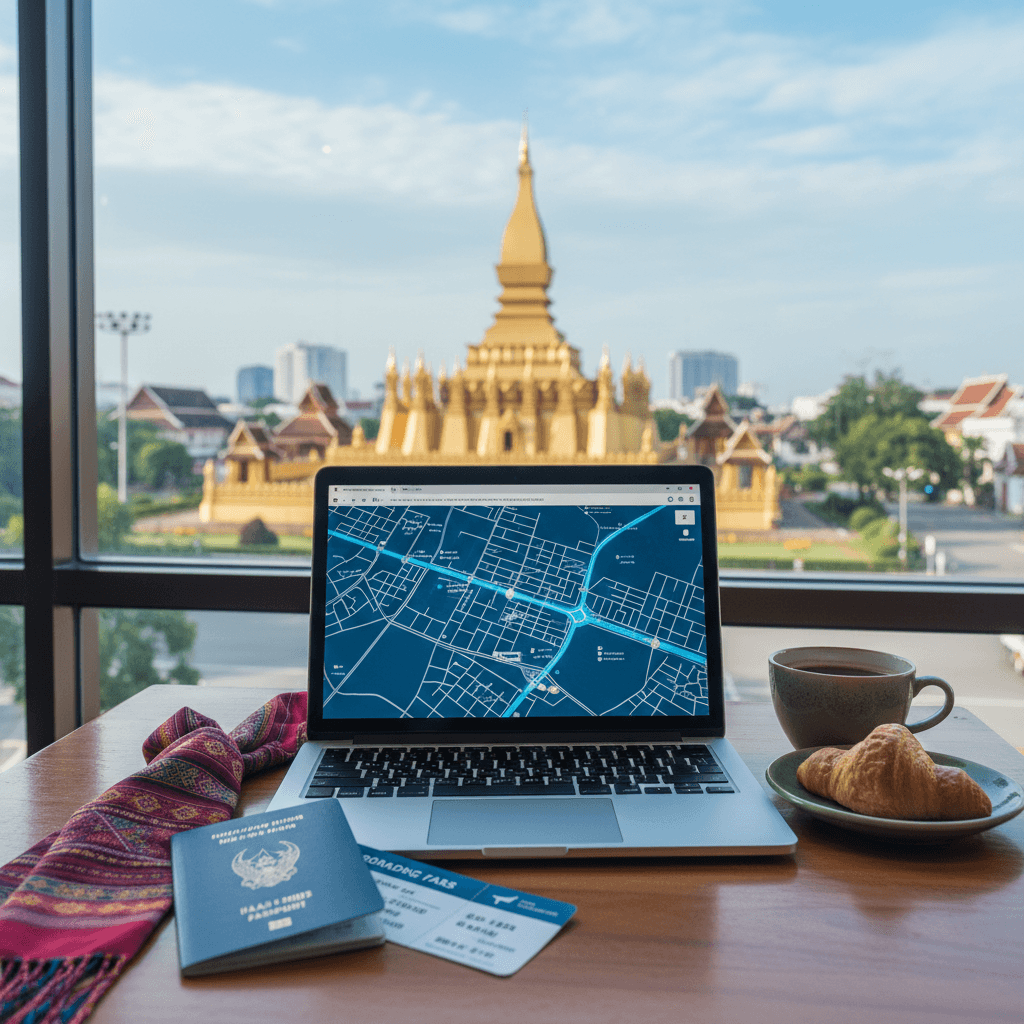
Laos
Complete Digital Nomad Guide

Policy Stability
Stamped Nomad ExclusiveHow likely visa and immigration policies are to remain unchanged
Quick Facts
Nomad Visa Cost
N/A
Max Stay
3 months
Renewable
Yes
Cost of Living
$900/mo
Avg Internet
74 Mbps
Safety Score
7/10
Healthcare
Low
Coworking
Medium
English Friendly
Medium
Time Zones
GMT+7
Entry Methods Available
Best For
The Basics: Tourist Visas and E-Visas
For most nomads, the journey into Laos begins with a standard Tourist Visa (T or T-B3). This grants you 30 days to explore the coffee shops of Vientiane or the mountains of Vang Vieng. You can secure this through a Visa on Arrival (VOA) at major airports and land borders, or via an embassy application. If you prefer to have your paperwork sorted before you land, you can apply through the Lao official e-visa system, which typically processes requests within three business days.
The fees for these visas generally range from $30 to $50 USD. While you can pay in Lao Kip, carrying crisp US Dollar bills often results in a better exchange rate at the border. Both the VOA and E-Visa are single-entry and must be used within 60 days of being issued. To keep things moving quickly at the border, make sure you have a passport-sized photo and your passport has at least six months of validity left.
Visa-Free Entry
If you hold a passport from an ASEAN nation, you likely won't need a visa at all for short stays. Most ASEAN citizens receive 30 days visa-free. This same 30-day privilege extends to travelers from Japan, South Korea, Russia, and Mongolia. Swiss and Luxembourgish citizens get 15 days, while those from Hong Kong or Myanmar are typically granted 14 days. If you fall into these categories, you can simply show up, get your stamp, and head straight to your guesthouse.
The Digital Immigration Form (LDIF)
Laos has modernized its entry process with the Lao Digital Immigration Form (LDIF). This is an online submission you should complete within three days before you arrive. It doesn’t replace your visa, but it speeds up the manual data entry at the immigration desk. It is currently used at primary entry points like Wattay International Airport and the Thai-Lao Friendship Bridges.
Extending Your Stay
Thirty days often isn't enough to soak in the slow pace of Lao life. Fortunately, you can extend a tourist visa up to two times for a maximum stay of 90 days. You’ll need to visit an immigration office in a major city like Vientiane or Luang Prabang to handle this. The costs are manageable, usually around 20,000 to 25,000 LAK (roughly $1 to $2 USD) per additional day, plus a small service fee of 30,000 to 40,000 LAK.
Business Visas for Working Nomads
If you are in Laos for more than just sightseeing, such as attending formal meetings or scouting local partnerships, the Business Visa (B or B2) is the standard choice. These usually require an invitation letter from a registered Lao company and are handled at an embassy.
- Duration: Valid for 30 to 90 days.
- Requirements: Passport, recent photos, an itinerary, and a support letter from your local host.
- Extensions: These can be extended at immigration offices similarly to tourist visas.
- E-Visa Option: A "Visit Visa" is also available online for those attending non-paid business meetings.
Key Entry Points for VOA and E-Visas
You can use your E-Visa or pick up a Visa on Arrival at 13 different entry points. The most common routes for nomads include:
- Wattay International Airport (Vientiane)
- Luang Prabang International Airport
- Thai-Lao Friendship Bridges I, II, and IV
- Boten Border Checkpoint (on the border with China)
Future Outlook for 2025 and 2026
The special tourism exemptions from the "Visit Laos Year 2024" campaign concluded on January 1, 2025. Since then, the country has reverted to its standard visa policies. While there have been discussions regarding potential fee reductions by 2026 to keep the country competitive with its neighbors, no official price drops have been codified yet. For now, plan your budget around the $30 to $50 range for entry fees.
If you are looking for a dedicated "Digital Nomad Visa" with a fancy name and a multi-year residency permit, you won't find it in Laos. The government hasn't rolled out a specific remote work scheme yet. However, that hasn't stopped a growing community of slow-traveling professionals from making Vientiane or Luang Prabang their temporary base. Most nomads simply rely on the Tourist Visa (often called the Ordinary Visa) to keep things legal.
The Standard Entry: Tourist Visa & eVisa
The go-to move for most travelers is the single-entry tourist visa. It gives you an initial 30 days to explore the mountains or find your favorite riverside cafe. While there isn't a strictly defined minimum income, you should be prepared to show you have enough funds to cover your stay, along with proof of accommodation and an onward flight ticket.
The cost typically ranges between $30 and $60 USD. The exact price depends on your nationality, so it is smart to have some crisp US dollars on hand if you are opting for the on-arrival route. You can secure your entry in two ways:
- eVisa: You can skip the lines by applying through the official Lao eVisa portal. You will need a digital scan of your passport and a 4x6 cm photo. It usually processes in about 3 business days and the approval letter is valid for 60 days.
- Visa on Arrival: This is still widely available at major international airports like Vientiane and Luang Prabang, as well as the Thai-Lao Friendship Bridges. Bring two passport photos and cash in USD to avoid unfavorable exchange rates.
Staying Longer: Extensions and Border Runs
Thirty days is rarely enough time to soak in the Lao pace of life. If you want to stick around, you can extend your stay at immigration offices in the major cities. Most nomads head to the office in Vientiane to add more time to their permit.
- Extension Duration: You can extend for 30 days at a time, up to a maximum of 60 additional days. This brings your total stay to 90 days.
- Cost: It generally costs about $2 to $3 USD per day plus a small service fee.
- Timing: Do not wait until the last minute. Apply 3 to 5 days before your current visa expires.
If you hit the 90-day limit and aren't ready to leave Southeast Asia, you will need to do a "border run." This involves exiting the country, usually into Thailand or Vietnam, and re-entering to start a fresh visa. Just remember that the tourist visa is single-entry; if you leave for a weekend trip to Bangkok, your current visa dies the moment you cross the border.
The Fine Print: Taxes and Legalities
Working remotely in Laos occupies a bit of a gray area. While the law strictly prohibits taking local jobs or starting a business without a formal work permit, the authorities generally tolerate nomads working for foreign clients. If your income is coming from outside Laos and you aren't competing with the local labor market, you are unlikely to face any issues.
Technically, a Tax ID is required if your annual revenue exceeds roughly $33,600 USD. However, enforcement for independent digital nomads is virtually non-existent. Most people just keep their heads down and enjoy the low cost of living.
Important Restrictions
There are a few hard rules you need to follow to keep your stay stress-free. First, your passport must be valid for at least 6 months from your date of entry. If it is expiring soon, renew it before you arrive.
Second, the government requires all foreigners to be registered at their place of residence within 24 hours of arrival. If you are staying at a hotel or a reputable guesthouse, they handle this for you automatically. If you are renting a long-term Airbnb, make sure the host is willing to register you with the local village chief.
Finally, keep an eye on your calendar. Overstaying your visa is an expensive mistake, with fines currently set at $10 USD per day. It is much cheaper to pay for the extension than to settle the bill at the airport on your way out.
Getting into Laos is surprisingly straightforward compared to some of its neighbors, but you need to have your cash and paperwork in order before you hit the border. For most nomads, the journey starts with either a visa on arrival or an e-visa. Both grant you a 30-day stay, which is plenty of time to decide if you want to settle into the Luang Prabang cafe scene or the co-working spaces of Vientiane.
The Visa-Free Shortlist
If you hold a passport from a neighboring ASEAN country, you might be able to skip the paperwork entirely. Citizens of Cambodia, Thailand, and Vietnam generally get 30 days for free. Travelers from Brunei and Myanmar are usually capped at 14 days. While proof of onward travel isn't always checked at land borders, keep a flight or bus confirmation handy if you are flying into Wattay International Airport just to be safe.
Visa on Arrival (VOA)
This is the old-school method and still the most common way to enter. It is available at all major international airports and most land crossings, including the popular Thai-Lao Friendship Bridges. To make this move smoothly, you will need:
- A passport with at least 6 months of validity remaining.
- Two passport-sized photos (4x6 cm).
- A completed arrival form, which they will hand you at the border.
- Cash for the fee, ideally in crisp US Dollars.
The cost typically ranges between $30 and $50 USD. If you show up on a weekend or a public holiday, expect a small "overtime" surcharge of about $1 to $2. If you forget your photos, the officers can usually scan your passport photo for an extra fee, but it is better to come prepared.
The E-Visa Option
If you prefer to have your ducks in a row before you land, you can apply through the official Lao e-visa portal. The process takes about 5 to 7 working days, so do not leave it until the last minute. You will upload a scan of your passport's bio page and a digital photo.
Once approved, print the document and bring it with you. The e-visa costs between $45 and $65 USD depending on your nationality and processing fees. It is valid for entry at all major airports and the busiest land borders, but double-check your specific entry point on the official site before you commit, as some remote jungle crossings still only handle paper visas.
Extending Your Stay
Thirty days goes by fast when you are living on "Lao time." If you want to stay longer, you can extend your tourist visa for another 30 days, giving you a total of 60 days. You will need to visit the Immigration Office in Vientiane or Luang Prabang.
- Cost: Approximately $2 to $5 USD (80,000 LAK) per day of the extension.
- Requirements: Your passport, one photo, and proof of where you are staying.
- Timing: The process usually takes one working day.
Try to head to the office 3 to 7 days before your current visa expires. Immigration officials aren't fond of last-minute rushes, and it saves you the stress of a potential overstay.
Border Runs
When your 60 days are up, many nomads opt for a "border run" to Thailand. You can cross the bridge from Vientiane to Nong Khai, grab a Pad Thai, and head back across the same day to get a fresh 30-day visa. While this works well once or twice, doing it indefinitely can lead to extra questions from border guards. It is a solid short-term fix, but not a permanent residency plan.
A Warning on Overstays
Whatever you do, do not let your visa expire while you are still in the country. Laos takes overstays seriously. Fines start at roughly $10 to $25 USD (400,000 to 500,000 LAK) per day. If you overstay by more than two weeks, you risk being detained, deported, or banned from the country for several years. There is no maximum cap on these fines, so an accidental month-long overstay can become an expensive nightmare very quickly.
Laos is a bit of a wildcard for digital nomads. Unlike its neighbors, Thailand or Vietnam, it hasn't rolled out a shiny new "Nomad Visa" to attract remote workers. Instead, staying here long-term requires a bit of a workaround or a commitment to the local business ecosystem. If you are looking for a slow-paced lifestyle along the Mekong, you can make it work, but you will need to get comfortable with paperwork and local agents.
The Freelancer Workaround
Since there is no dedicated freelancer visa, most nomads start on a standard tourist visa. You can extend this at immigration offices for up to 90 days, which usually costs around $2 per day plus a small service fee. To stay longer, many people exit the country and return, but this is a temporary fix rather than a lifestyle plan.
For a more stable setup, some freelancers opt for the B2 Business Visa. If you are working for clients strictly outside of Laos, you can often secure an annual multiple-entry version through a local agent. This keeps you legal and avoids the constant stress of monthly extensions.
- Duration: 3 to 12 months, renewable.
- Key Requirement: A valid passport with at least 6 months of validity and a local sponsor or agent.
- Estimated Cost: Roughly $150 for the visa, plus $50 to $100 for the required stay permit.
Retiring in the Land of a Million Elephants
Laos does not have an official retirement visa category. However, if you are over 50, the path is relatively well-trodden. Most retirees use the B2 Business Visa or a work permit combined with annual extensions.
You should expect to work with a reputable visa agent to handle the bureaucracy. They typically look for proof of a monthly income between $1,000 and $1,500 or equivalent savings. Expect to pay between $450 and $700 annually for the full package, which covers your visa, stay permit, and the agent's service fees.
Investment and Business Visas
If you are planning to actually start a business or invest in local projects, the NI-B2 or I-B2 Investor Visas are your best bet. These are specifically for people with approved investment projects or registered enterprises. While the initial paperwork is dense, it offers the most security for long-term residency.
- NI-B2 Investor Visa: Valid for 3 to 12 months initially. Costs range from $37.50 to $150 depending on duration.
- Stay Permits: These are mandatory additions to your visa and cost between $50 and $100.
- Long-term Options: For those with significant concessions lasting over 10 years, visas can sometimes be granted for 3 to 5 years at a time.
The Long Game: Permanent Residency
Permanent residency in Laos is a high bar to clear. It is generally reserved for those who have truly integrated into the country over a decade or those bringing significant capital to the table. You can find more details on official requirements at Invest Laos.
- Residency by Stay: Requires 10 continuous years of living in Laos, spending at least 10 months of each year in the country.
- Residency by Investment: Requires a business investment of at least $500,000 maintained for 5 years.
- Other Pathways: Specialized professionals or those with local family ties may have shorter routes, though a local guarantor is always required.
Standard Work Permits
If you find a local employer, they will handle the LA-B2 visa process for you. This requires a formal sponsorship from a Lao company and approval from the Ministry of Labor. The work permit itself is inexpensive, ranging from $5 to $150, but it is tied strictly to your employer. If you lose the job, you lose the permit.
Rules in Laos can shift without much warning. Always double-check the latest requirements with the Lao Immigration Department before you book a long-stay rental.
The Bottom Line
Laos remains one of the most budget-friendly corners of Southeast Asia. For most digital nomads, a monthly budget between $700 and $1,200 covers a very comfortable lifestyle that includes a private apartment, eating out frequently, and a dedicated workspace. While the capital city of Vientiane carries the highest price tag, you can expect your expenses to drop by about 10% if you head north to the UNESCO charm of Luang Prabang or south to the laid-back hub of Pakse.
Housing and Neighborhoods
Rent will be your biggest variable. In Vientiane, most nomads gravitate toward the riverside area for its proximity to cafes and nightlife. Luang Prabang offers a more boutique experience in the Old Town, while Pakse provides the most "local" prices for those willing to sacrifice some modern amenities.
- Vientiane: Budget options outside the center start around $300. A modern condo in the city center typically runs $500 to $800, while luxury units exceed $800.
- Luang Prabang: You can find basic spots on the rural edge for $300, but a central apartment usually hits the $500 to $700 range.
- Pakse: This is the value king. A standard one-bedroom apartment is often $350 to $500, with basic local units as low as $200.
Food and Dining
Eating in Laos is as expensive as you want it to be. If you stick to the vibrant night markets and street stalls, you can easily get by on $2 to $5 per meal. Groceries for home cooking generally cost between $90 and $250 monthly, though many nomads find it cheaper and easier to eat out.
- Budget ($150–$250/month): Focused almost entirely on street food and local markets.
- Comfortable ($250–$400/month): A mix of local favorites and international cafes, with dinner at a "sit-down" restaurant a few times a week.
- Premium ($400+/month): Frequent dining at upscale Western spots and wine bars, primarily found in Vientiane.
Transport and Getting Around
Most cities in Laos are walkable, but you will occasionally need wheels. Tuk-tuks and local bike hires are the standard for short hops, usually costing between $1 and $5. If you are staying long-term, renting a scooter for $15 to $60 a month is the most efficient way to get around.
- Budget ($20–$40/month): Walking and the occasional public bus.
- Comfortable ($40–$80/month): Regular tuk-tuk rides and a bicycle rental.
- Premium ($80+/month): Full-time scooter rental or frequent use of taxi apps.
Productivity and Coworking
Reliable internet used to be a challenge in Laos, but the infrastructure is catching up. Vientiane is the primary hub for dedicated coworking, offering over 260 potential workspaces. Luang Prabang is more limited with around 45 spots, though many nomads simply work from the city’s iconic riverside cafes.
- Budget: Working from cafes with free WiFi.
- Comfortable ($100–$150/month): A dedicated desk in a coworking hub.
- Premium ($150–$250/month): High-end setups with 24/7 access and private meeting rooms.
Health and Safety Nets
Public healthcare in Laos is basic at best. Most expats and long-term nomads head across the border to Thailand for serious medical issues. Because of this, private global health insurance is a non-negotiable expense. Vientiane has the best local facilities, but you should always have a plan that covers medical evacuation.
- Budget ($50–$80/month): Basic nomad-specific plans like SafetyWing.
- Comfortable ($80–$120/month): Mid-tier expat coverage with higher outpatient limits.
- Premium ($120+/month): Comprehensive global plans with full coverage in neighboring Thailand.
Laos is often overlooked in favor of its neighbors, but for nomads who find Chiang Mai too crowded or Bangkok too frantic, it offers a refreshing change of pace. You can live comfortably here for $800 to $1,300 a month, which is a steal compared to the $1,500+ price tags now common in Thailand’s digital hubs. While the infrastructure is still catching up, the three main hubs offer a distinct "choose your own adventure" vibe depending on whether you need high-speed desks or mountain views.
Vientiane: The Practical Capital
Vientiane is the clear winner if your work requires heavy lifting. It feels more like a sleepy riverside town than a national capital, but it holds the most reliable infrastructure in the country. You will find the strongest internet speeds here, typically averaging 10–30 Mbps, which is plenty for video calls and large uploads.
The nomad community is the most established in Vientiane, bolstered by a large expat population and NGO workers. When you need a professional environment, TohLao and Toong Samsenthai offer proper ergonomic setups and networking events. After hours, the scene shifts to the Mekong riverfront, where the Ban Anou night market and bars like Bor Pen Nyang provide a social outlet that does not feel overly "touristy."
Monthly Cost: $800–$1,000
Connectivity: 10–30 Mbps; best coworking availability
The Vibe: Urban convenience with easy access to Thailand for visa runs.
The Trade-off: It gets incredibly hot and lacks the "postcard" beauty of the north.
Luang Prabang: The Cultural Sanctuary
If you prefer waking up to the sound of temple bells rather than traffic, Luang Prabang is the spot. This UNESCO World Heritage site is arguably one of the most beautiful towns in Southeast Asia. It is slower, quieter, and more expensive than Vientiane, with monthly budgets ranging from $1,000 to $1,300.
Work-wise, The Desk Co-Working is the primary hub for nomads, offering stable WiFi and a community of like-minded travelers. While cafe culture is huge here, internet speeds can be inconsistent. It is wise to keep a local SIM card handy for mobile hotspots when the cafe WiFi decides to take a nap. The social life is mellow, revolving around sunset drinks by the river and wandering the night market.
Monthly Cost: $1,000–$1,300
Connectivity: 10–30 Mbps; one dedicated coworking space
The Vibe: Relaxed, spiritual, and aesthetically unmatched.
The Trade-off: Higher prices and significant tourist crowds during peak season.
Vang Vieng: The Adventure Outpost
Vang Vieng has transitioned from a wild backpacker party town into a scenic adventure hub. It is the most affordable option on the list, but it requires the most patience regarding technology. You won’t find dedicated coworking offices here. Instead, you will be working from nomad-friendly hostels or riverside cafes overlooking the limestone karsts.
Internet speeds usually hover between 5–10 Mbps, making it better for "deep work" phases like writing or coding rather than back-to-back Zoom meetings. The community is smaller and more transient, often centered around outdoor activities like rock climbing, kayaking, or hiking. It is the perfect spot if you want to slash your expenses and spend your lunch breaks in a lagoon.
Monthly Cost: $1,200–$1,400 (higher end accounts for more tours/activities)
Connectivity: 5–10 Mbps; limited to hostels and cafes
The Vibe: High-octane adventure and stunning natural scenery.
The Trade-off: Weakest internet and a lingering "party" reputation in certain areas.
Quick Comparison
Vientiane
Rent & Food: $800–$1,000
Internet: 10–30 Mbps
Coworking: High (3+ spaces)
Safety: High
Luang Prabang
Rent & Food: $1,000–$1,300
Internet: 10–30 Mbps
Coworking: Medium (1 main space)
Safety: High
Vang Vieng
Rent & Food: $1,200–$1,400
Internet: 5–10 Mbps
Coworking: Low (Hostel-based)
Safety: Good
The Connectivity Landscape
Laos has made massive strides in infrastructure recently. While it used to be the place where digital nomads went to "disconnect," that is no longer the case in the major hubs. You can expect fixed broadband speeds to average around 52 Mbps download, while mobile speeds in the cities often punch higher, hitting 60-70 Mbps. It is a tale of two countries, though; once you head into the mountains or rural villages, the fiber lines disappear and you will be relying on spotty 4G.
Fiber-optic cables now span over 98,000 km across the country. In Vientiane and Luang Prabang, Fiber-to-the-home (FTTH) is the standard for most guesthouses and modern apartments. Providers like Lao Telecom, Unitel, and Planet offer reliable urban connections that handle video calls and heavy uploads without much fuss.
Best Coworking Spaces
The coworking scene is concentrated but high quality. These spaces are your best bet for ergonomic chairs and a community that understands you actually have to work for a living.
- The Desk (Luang Prabang): This is the gold standard for nomads in the north. It features the fastest local WiFi and a mix of hot desks and dedicated spaces. It is built for the long-term traveler.
- Toong Samsenthai (Vientiane): A modern, professional environment that feels like a high-end office in Bangkok or Singapore. It is great for networking with local entrepreneurs.
- Toh-Lao (Vientiane): One of the original hubs in the city. It offers a relaxed atmosphere and frequent events for the tech community.
- LAB DE LINE (Vientiane): A sleek spot known for its reliable power and solid coffee, catering to a mix of locals and expats.
The Cost of a Desk
Pricing varies significantly depending on whether you want a day pass or a monthly home base. In Vientiane, a basic hot desk usually runs around $60 USD per month. If you are looking for a more premium experience with a dedicated desk and 24/7 access, prices can climb toward $380 USD. Luang Prabang tends to be slightly more affordable for nomad-specific monthly plans, though daily rates are comparable across both cities at roughly $6 to $10 USD per day.
Cafe WiFi Reliability
If you prefer the "laptop and a latte" lifestyle, you will find plenty of options. Most cafes in the tourist centers provide free WiFi with speeds ranging from 10 to 30 Mbps. It is generally fine for emails or Slack, but it can get sluggish during the lunch rush when everyone hops on the network. Sabaidee is a popular choice where speeds hover around 29 Mbps. Most nomads rate the cafe work experience a 4 out of 5, provided you have a backup data plan for when the local router decides to take a nap.
Mobile Data and eSIMs
Local SIM cards are incredibly cheap and easy to find. Unitel is the heavy hitter here, offering 95% coverage in Vientiane and the most consistent speeds nationwide. You can pick up a physical SIM or an eSIM at the airport or any small shop in town. Here are the typical data packages you will encounter:
- 15GB for 10 days: Approximately $7 USD.
- 30GB for 30 days: Ranges from $5 to $13 USD depending on the current promotion.
- 80GB for 30 days: Often available for as little as $6 to $10 USD during seasonal sales.
For the best experience, stick with Unitel or Lao Telecom. Their 4G and 5G networks are robust enough to act as a reliable hotspot if your guesthouse WiFi fails. You can check the latest coverage maps and plans on the Unitel official site or the Lao Telecom portal.
The Reality of Healthcare in Laos
Laos isn't the place to gamble with your health. While the country is making strides, the public healthcare system remains underfunded and overcrowded. For most digital nomads, public hospitals like Mahosot are best avoided unless you are dealing with something incredibly minor or have no other choice. These facilities often lack modern equipment and English-speaking staff, and the hygiene standards might not be what you are used to back home.
Most expats and nomads head straight to private facilities in Vientiane. These clinics and hospitals offer a much higher standard of care, modern diagnostics, and doctors who likely trained abroad. However, there is a ceiling to the care available in-country. For major surgeries or life-threatening emergencies, the standard protocol is stabilization followed by immediate evacuation across the border to Thailand.
Top Medical Facilities in Vientiane
If you feel a fever coming on or need a specialist, stick to the capital. Vientiane houses the only facilities that truly cater to international standards. These centers generally accept credit cards and work directly with international insurance providers.
- Kasemrad International Hospital: This is the heavy hitter in town. It is a Thai-affiliated hospital offering multi-specialty care, including 24/7 emergency services, cardiology, and even dialysis. It feels like a modern hospital you’d find in Bangkok, though prices are significantly higher than local clinics.
- Alliance International Medical Center: A favorite for many nomads, Alliance offers 24/7 emergency care and has its own ambulance fleet. Their staff is fluent in English and Thai, making communication seamless.
- French Medical Center (Centre Médical de l'Ambassade de France): This clinic follows European standards and is excellent for general practice and pediatric care. It is a reliable first stop for non-emergencies.
- LMC Clinic: A modern outpatient facility perfect for quick consultations or routine check-ups without the hospital wait times.
Insurance: Don't Leave Home Without It
Local insurance plans like Lao-Viet or Lanexang Assurance exist, but they are rarely suitable for digital nomads. They often have strict residency requirements and low coverage limits that won't help much if you need an airlift to Bangkok. You want a policy that specifically covers international medical evacuation.
Most nomads in Laos opt for flexible providers like SafetyWing because you can start or pause coverage while traveling. For those staying long-term, global providers like Cigna or Expacare offer higher limits and more comprehensive outpatient benefits. These plans ensure that if things go sideways, the $20,000 to $50,000 cost of a medical evacuation is covered.
What You'll Pay Out of Pocket
If you don't have insurance or are paying for minor treatments, costs are generally manageable but vary wildly between public and private sectors. Always ask for a price estimate before proceeding with major tests.
- General Consultation: Expect to pay around $35 USD at a reputable private clinic.
- Dental Cleaning: A basic cleaning at a private dentist costs roughly $15 USD.
- Specialist Visit: Seeing a cardiologist or surgeon at Kasemrad can be "tremendously expensive" by local standards, though still cheaper than US prices.
- Medication: Common antibiotics or malaria prophylaxis are very affordable at local pharmacies.
Pharmacies and Prescriptions
Pharmacies are everywhere in Vientiane, particularly clustered around the major hospitals. You will find that many medications requiring a prescription in the West, such as Doxycycline or certain blood pressure meds, are sold over-the-counter here. Pharmacists often act as a first line of medical advice for minor ailments, but be cautious; counterfeit medication can occasionally be an issue. Stick to the larger, well-lit pharmacies attached to private clinics to ensure you are getting the real deal.
Emergency Situations
In a medical emergency, you can dial 195 for an ambulance or 1195. Vientiane also has a unique volunteer-run service called Vientiane Rescue (dial 1623) which provides free emergency response. If you are in a serious accident, your goal should be to get to a private hospital in Vientiane for stabilization. From there, your insurance should coordinate a transfer to a Thai border hospital, such as Nong Khai Wattana, which offers a higher tier of critical care.
The Cash Culture
Laos runs on the Lao Kip (LAK), and while you might see prices listed in US Dollars or Thai Baht in tourist hubs, the local currency is your best bet for daily life. Outside of Vientiane and Luang Prabang, cash is king. You will find that high-end hotels and some restaurants take plastic, but the street food stalls and local markets where you will spend most of your time are strictly cash-only operations.
The exchange rate for the Kip can fluctuate quite a bit. It is smart to keep a small stash of USD or Thai Baht in your wallet for emergencies, as these are widely accepted for larger purchases. Just make sure your foreign bills are crisp and unblemished; many vendors will reject a dollar bill if it has even a tiny tear or a stray pen mark.
Opening a Local Bank Account
If you are planning to stay for several months, a local account makes life easier, especially for using local payment apps. BIC Laos and BCEL are the most popular choices for expats. To open a standard account, you generally need your passport, a valid work permit, or a stay permit. Some branches may also ask for a student pass or proof of marriage to a Laotian citizen if you are on a family visa.
For those on a simple tourist visa, JDB (Joint Development Bank) is often the path of least resistance. They have been known to allow account openings with just a passport and a local phone number, though requirements can change depending on the branch manager's mood that day. Having a local account allows you to use BCEL One, an app that is ubiquitous for QR code payments across the country.
Using Wise and Revolut
Your Wise or Revolut cards will be your best friends here. They work well for withdrawing Kip from ATMs and for spending at larger merchants. While you cannot have a new card shipped to a Lao address, your existing cards will function perfectly until they expire. These fintech cards usually offer much better exchange rates than traditional banks, saving you a significant chunk of change over a long stay.
To bridge the gap between your international card and the local economy, you can link your card to the LOCA PAY app. This allows you to scan local QR codes at cafes and shops, pulling the funds directly from your Wise or Revolut balance without needing a local bank account.
ATM Strategy and Fees
Finding a fee-free ATM in Laos is a myth. Every machine will charge you a convenience fee, typically ranging from 20,000 to 60,000 LAK (roughly $1 to $3 USD) per transaction. This is on top of whatever your home bank charges you.
- BCEL ATMs: These are the most common and usually charge a flat fee of 20,000 to 30,000 LAK.
- Withdrawal Limits: Most machines cap you at 2.5 million LAK per withdrawal.
- Pro Tip: If you need more cash, go inside a BCEL branch with your passport. You can often withdraw up to 5 million LAK at the counter, which helps you swallow the transaction fee less often.
Moving Money Into the Country
When you need to send larger sums to yourself or a local landlord, Wise is the top choice for bank transfers. Fees usually hover around 1.7% to 2%, and the money arrives much faster than a traditional SWIFT wire. If you find yourself in a spot where you need physical cash quickly, services like Ria or WorldRemit have pickup locations scattered throughout the major cities. They are reliable but generally more expensive than a digital transfer.
The Crypto Scene
Laos has taken an interesting stance on cryptocurrency. The government has authorized licensed mining and trading pilots, primarily overseen by the Ministry of Technology and Communications. This was a move to capitalize on the country's surplus of hydroelectric power. However, the tide is turning on large-scale operations, with plans to phase out electricity for miners by 2026 to protect the national grid.
For the individual nomad, crypto is a bit of a gray area. There are no official "crypto cafes" or widespread retail acceptance. While it is not illegal for individuals to hold or trade personally, the infrastructure is built for licensed corporations. Stick to your standard banking apps for your daily expenses and keep your crypto activities private.
Visas and Residency for Dependents
Laos doesn't offer a specific "digital nomad family" visa, but the process for bringing your children is relatively straightforward if you are there on a business or work-related status. Children cannot simply ride on your passport; every child needs their own individual visa regardless of how young they are. Most families apply for e-visas or pre-approvals through the official government portal before arrival.
Once you are on the ground, you can link your dependents to your primary visa status. This usually involves a trip to the immigration office with original birth certificates and proof of your own legal status. While the paperwork can feel a bit administrative, these family residence permits generally match the duration of the sponsor's stay. If you happen to be married to a Lao citizen, you would instead look into the SP-B3 visa category.
Education and International Schools
If you are settling in for the long haul, Vientiane is your best bet for education. The Vientiane International School (VIS) is the heavy hitter here, offering the IB curriculum with annual tuition ranging from $6,000 to $16,000. Another popular choice is the International School of Laos (ISL), which sits in a similar price bracket of $5,500 to $15,000 per year.
For families who don't need the full international prestige, there are more affordable "honors" programs. Sengdara Elementary is a notable mention, with fees between $1,450 and $1,950 annually. Keep in mind that the average primary tuition at top-tier schools hovers around $13,000, and you should budget an extra $1,200 per year if you need the school bus service.
Healthcare and Pediatric Services
Public healthcare in Laos is basic, so most nomad families carry international health insurance. Expect to pay between €2,500 and €6,000 annually for a family of four to ensure coverage for Western-style pediatric care and emergency evacuations. For routine checkups and English-speaking doctors, the Alliance International Medical Centre in Vientiane is the standard choice for expats.
In the north, the Lao Friends Hospital for Children in Luang Prabang provides high-quality care. While it is a primary resource for local children, it serves as a vital medical hub in the region. Always ensure your insurance includes medical evacuation to Thailand, as serious emergencies are often stabilized in Vientiane and then moved across the border to Udon Thani or Bangkok.
Childcare and Daily Costs
One of the biggest perks of nomadic life in Laos is the cost of help. Private preschools and kindergartens in Vientiane typically cost between $300 and $450 per month. If you are looking for a local private school with an English focus, prices can drop as low as $30 a month, though these are less common for short-term expat stays. Bilingual nurseries are also available in the capital, often including daily meals in their tuition rates.
Top Cities for Families
- Vientiane: This is the functional choice. It has the highest concentration of international schools, specialized pediatric clinics, and kid-friendly amenities like swimming pools and modern markets.
- Luang Prabang: This is the lifestyle choice. It is UNESCO-listed, incredibly walkable, and has significantly less traffic than the capital. It feels like a safe, quiet village where the locals genuinely adore children.
Safety and Local Culture
Laos is a very safe place in terms of violent crime. The biggest risks to your kids are actually the roads and the environment. Sidewalks are often uneven or nonexistent, and traffic can be unpredictable. In rural areas, you must keep children on well-marked paths due to the historical issue of unexploded ordnance (UXO), though this is not a concern in city centers like Vientiane.
The local culture is incredibly welcoming to families. Don't be surprised if restaurant staff or shop owners offer to play with your toddler while you eat. It is a relaxed atmosphere where children are seen as a blessing rather than a nuisance. Just remember to supervise them closely near the Mekong River and stick to well-lit areas if you are out after dark.
Safety and Local Crime
Laos is one of the more relaxed destinations in Southeast Asia. Violent crime against foreigners is rare, and the homicide rate sits around 6.9 per 100,000, which is close to the global average. Most serious incidents don't involve travelers. However, crimes of opportunity are on the rise in urban centers. In Vientiane, purse snatching spiked by 522% between 2023 and 2024, even though overall crime in the capital actually dropped by 17%.
Keep your belongings close when walking near the Mekong or in busy markets. Motorbike theft is a specific headache for nomads; always use a heavy lock and park in designated "borigan" areas with attendants. You should steer clear of Xaisomboun Province due to ongoing risks of civil unrest. Stick to well-trodden paths in rural areas to avoid the lingering danger of unexploded ordnance from historical conflicts.
Common Scams to Avoid
Most scams in Laos are minor annoyances rather than life-altering events, but they can sour a trip. Tuk-tuk drivers often quote triple the actual price to anyone carrying a laptop bag. Always negotiate the fare before you sit down. A more sinister trick involves motorbike rentals where the shop uses a spare key to "steal" the bike back, then charges you for the loss. Only rent from reputable shops recommended in expat forums and use your own padlock.
- The Golden Triangle Trap: Ignore high-paying IT job offers in the Bokeo Province Special Economic Zone. These are often fronts for cyber-fraud syndicates.
- Counterfeit Change: Check your bills in low-light bars; some vendors may pass off fake or damaged currency to distracted tourists.
- The Temple "Donation": If someone approaches you inside a temple asking for an unofficial maintenance fee, it is likely a con. Real donations go in the marked wooden boxes.
Cultural Etiquette and Language
Lao culture is deeply rooted in Theravada Buddhism, which emphasizes patience and "jai yen" (a cool heart). Losing your temper in public will get you nowhere and is considered deeply embarrassing for everyone involved. Greet people with a "nop," which involves pressing your palms together at chest height and giving a slight bow. A simple "sabaidee" goes a long way.
Respect the physical body by never touching someone on the head, as it is considered the most sacred part of the body. Conversely, the feet are seen as dirty. Never point your feet at people, religious icons, or the Buddha. When visiting temples, cover your shoulders and knees. Women should be particularly mindful not to touch monks or hand items directly to them; place the object on a table or a piece of cloth instead.
While English is common in Vientiane's cafes and Luang Prabang's guesthouses, it thins out quickly elsewhere. Learning "khob chai" (thank you) will earn you smiles. Most nomads rely on Google Translate for complex interactions, but locals are generally patient and will use pantomime to help you out.
LGBTQ+ Friendliness
Laos is a tolerant place for LGBTQ+ nomads. Same-sex relations are legal, and while there aren't specific anti-discrimination laws on the books, there is no state-sponsored harassment. The culture is conservative for everyone, meaning public displays of affection are frowned upon regardless of orientation. You won't find a massive "scene" like in Bangkok, but you will find a welcoming environment where discretion is the standard for all couples.
Building a Social Circle
The expat community is concentrated in Vientiane and Luang Prabang. It is a small, tight-knit group where you can quickly become a "regular." If you are looking for a desk and a community, check out TOHLAO Coworking Space or Impact Hub in the capital. These spots are the nerve centers for the local startup and remote work scene.
Integration is easiest when you frequent the same spots. The Ban Mixay neighborhood is a nomad favorite due to its density of cafes and bars. To meet people, join the "Expats in Laos" Facebook groups or head to Vientiane Social for evening events. Most nomads find that a monthly budget of $1,000 provides a very comfortable lifestyle, leaving plenty of room for social outings at the night markets or Mekong-side beer gardens.
The 183-Day Rule
Laos keeps things relatively straightforward when it comes to deciding if you owe them a slice of your global income. If you spend 183 days or more in the country during a single calendar year, you are officially a tax resident. These days don't have to be consecutive; the tax office just looks at the total tally from January to December.
To fully cement this status, you usually need a paper trail. This means having a formal rental contract or utility bills in your name. Once you hit that residency mark, the Lao government technically expects a cut of your worldwide earnings, not just what you make while sitting in a cafe in Luang Prabang.
Income Tax Brackets for 2025
The tax system here is progressive, so the more you earn, the higher the percentage. If you are living on a modest freelance income, the rates are actually quite gentle at the lower end. Here is how the annual brackets break down for residents:
- 0% on income up to LAK 15.6 million
- 5% on income between LAK 15.6 million and LAK 39 million
- 10% on income between LAK 39 million and LAK 65 million
- 15% on income between LAK 65 million and LAK 780 million
- 20% on income between LAK 780 million and LAK 1.56 billion
- 25% on income exceeding LAK 1.56 billion
If you stay less than 183 days, you are a non-resident. In that case, you generally only pay tax on income that actually originates from within Laos.
The Digital Nomad Reality Check
Laos hasn't rolled out a specific "Digital Nomad Visa" yet. Most remote workers enter on a 30-day tourist visa and extend it up to 90 days. While the government generally looks the other way regarding people typing on laptops in guesthouses, the law is clear on one specific threshold. If your online service revenue exceeds $33,600 annually, you are required to register for a tax identification number.
There aren't any special tax breaks or "startup" incentives for expats here. You fall under the same rules as everyone else, so it pays to keep your bookkeeping tight if you plan on staying long-term.
Crypto and Digital Assets
The legal framework for Bitcoin and other tokens is still in its infancy here. Currently, the tax office views crypto as an intangible asset. This means your gains are lumped in with your general income and taxed at the standard 5% to 25% rates based on the profit you make between buying and selling.
If you are running a more serious operation, like a crypto exchange or a mining farm, the rules get much heavier. Exchanges pay a 15% lump-sum tax on fees, and miners face massive flat fees based on their electricity usage, often starting at $1 million for every 10 megawatts.
Double Taxation and Filing
To avoid getting taxed twice on the same dollar, Laos has signed Tax Treaties with several countries, including Thailand and Luxembourg. These agreements allow you to deduct taxes paid abroad from your local bill, or vice versa, depending on the specific treaty terms. If your home country doesn't have a treaty with Laos, you usually won't get a credit for foreign taxes paid.
The tax year follows the calendar year, and you need to file your annual profit tax return by March 31 of the following year. If you are a US citizen, remember that the IRS still wants to hear from you regardless of where you live. You may need to file an FBAR if your foreign bank accounts cross the $10,000 mark at any point during the year.
Connectivity and Staying Online
Reliable internet is the biggest hurdle for nomads in Laos. For the best experience, pick up a physical SIM card from Unitel. They have the most consistent 4G coverage, reaching about 95% of Vientiane with speeds between 25-50 Mbps. Lao Telecom is your second-best bet, especially if you plan on heading into more rural provinces.
Avoid buying your SIM at the airport if you can help it; prices there are usually 10-20% higher. Instead, head to a local mobile shop or convenience store where a SIM costs between 5,000 and 20,000 kip. You will need your passport for registration, and while some shops take cards, cash is still king here. If you prefer to have data the moment you touch down, Airalo offers eSIM packages starting around $6.90.
Getting Around
Don't bother looking for Grab; it doesn't exist here. Download Loca instead. It is the local heavyweight for ride-hailing and operates in Vientiane, Luang Prabang, Pakse, Vang Vieng, and Savannakhet. The interface is almost identical to Grab, and you can link your credit card to avoid fumbling with cash. Just keep in mind that outside of Vientiane, you might wait 15-20 minutes for a driver to show up.
- Loca: The safest and most reliable way to get around major cities.
- Tuk-tuks: Best for short, breezy trips, but always negotiate the price before you get in.
- Buses: The most affordable way to travel between cities, though they can be slow.
- Motorbikes: Great for flexibility in places like Luang Prabang, just ensure you have a helmet and international permit.
Where to Set Up Base
Vientiane is the only city in Laos with the infrastructure to support long-term remote work. Other spots like Luang Prabang and Vang Vieng are beautiful for a week-long getaway, but the unstable Wi-Fi makes them risky for anyone with a heavy Zoom schedule.
Sisattanak (Vientiane)
- Rent: $300-$600 per month for a studio or 1-bedroom.
- Vibe: Popular with expats and close to international hubs.
- Pros: Modern amenities and decent cafes.
Vientiane City Center
- Rent: $400-$700 per month.
- Vibe: High energy, walkable, and packed with restaurants.
- Pros: You are in the heart of the action with the best food options.
Phonthan (Vientiane)
- Rent: $350-$600 per month.
- Vibe: Upscale, quiet, and residential.
- Pros: Ideal for deep work and avoiding the city noise.
Daily Life and Logistics
When you don't feel like heading out, Foodpanda is the dominant delivery app with over 300 restaurants on the platform. For a more local experience, Zap.la is a fantastic community app for finding hidden street food gems. If you are an Android user, check out Chomp-A, which is the country's longest-running delivery service.
Finding a place to stay is easiest through Agoda or Booking.com. For those specifically looking for community-focused stays, Nomad Stays lists spots vetted for Wi-Fi quality. Budget travelers can find dorm beds for $5, while private guesthouse rooms usually start around $20.
Safety and Communication
Laos is generally very safe, but it helps to have the right numbers saved. For any road accidents or medical emergencies in the capital, call 1623 for the Vientiane Rescue Team. They are a highly respected volunteer group. For general police assistance, dial 1191.
Learning a few phrases goes a long way with the locals. The Ling App is excellent for practicing Lao tones, while Simply Learn Lao is better for quick, phrase-based learning. If you want a real tutor, italki has native speakers available for remote 1-on-1 sessions.
Common Pitfalls
The biggest mistake nomads make is assuming "high-speed" Wi-Fi is standard. It isn't. If you have a big deadline, skip the cafe and head to a dedicated coworking space like Lab De Lines or Toong Samsenthai in Vientiane. They have the most stable connections in the country.
Also, keep a close eye on your visa. There is no specific digital nomad visa, so most people enter on a 30-day tourist e-visa. You will need to do "border runs" to Thailand to reset your stay. Lastly, make sure your health insurance is solid. Local hospitals are basic; for anything serious, you will likely be evacuated to Udon Thani or Bangkok in Thailand.
Latest Nomad News
More Guides from Southeast Asia



Stay Updated on Laos
Get notified about visa changes, policy updates, and new information for digital nomads in Laos.