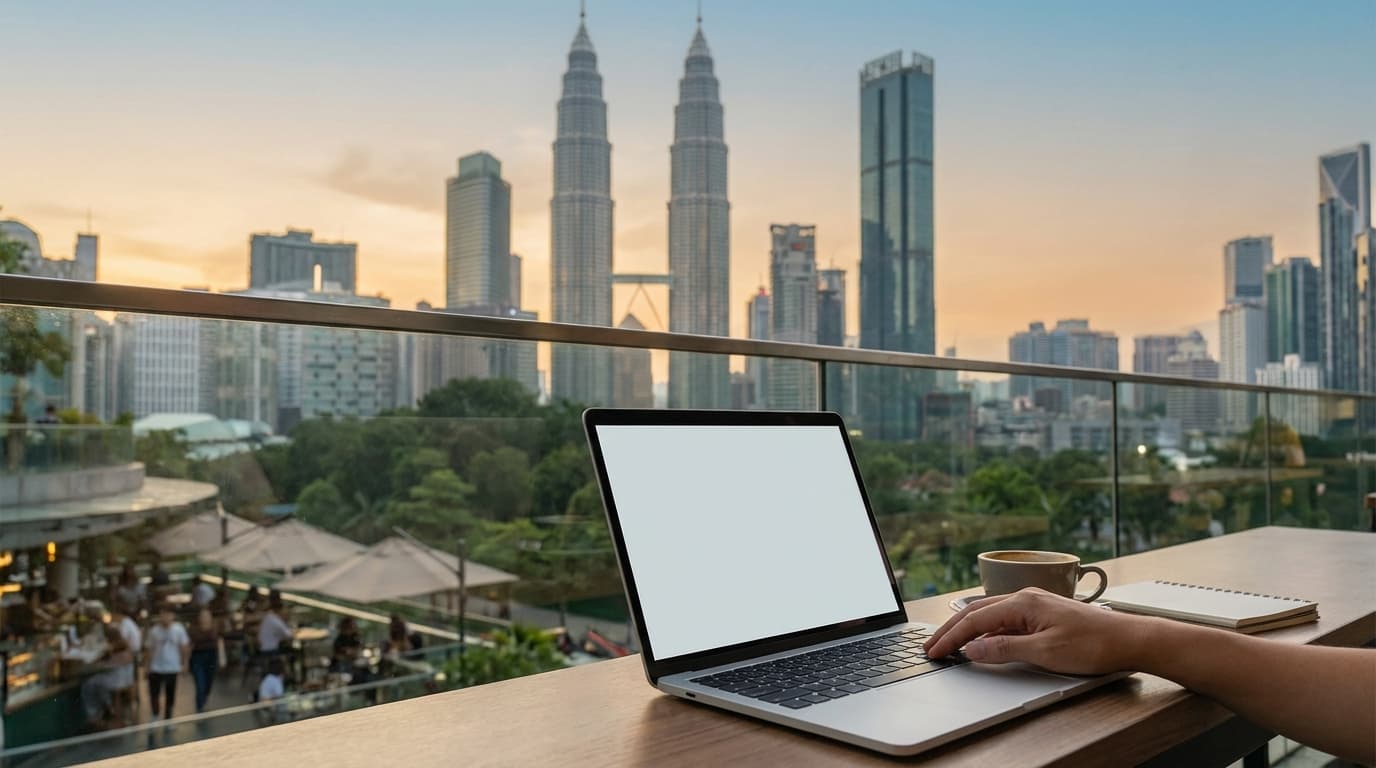
Malaysia
Complete Digital Nomad Guide

Policy Stability
Stamped Nomad ExclusiveHow likely visa and immigration policies are to remain unchanged
Quick Facts
Nomad Visa Cost
$210
Income Requirement
$5,000/mo
Max Stay
24 months
Renewable
Yes
Cost of Living
$1,645/mo
Avg Internet
94 Mbps
Safety Score
6/10
Healthcare
High
Coworking
High
English Friendly
High
Time Zones
GMT+8
Entry Methods Available
Best For
Getting In: The Basics
Malaysia is one of the most accessible hubs in Southeast Asia for remote workers. The entry process is generally straightforward, provided you have a passport with at least 6 months of validity remaining. Most visitors from Western nations, including the USA, UK, Canada, Australia, and EU member states, receive a 90-day visa-free entry stamp upon arrival. Recent policy updates have also extended this 90-day privilege to Chinese citizens, while Indian nationals currently enjoy 30 days of visa-free access.
Before you touch down at KLIA or cross a land border, there is one non-negotiable step: the Malaysia Digital Arrival Card (MDAC). You must submit this online within three days of your arrival. It is a quick digital form that has replaced the old paper cards, and immigration officers will check your status against your passport number when you reach the counter.
The eVisa System
If you aren't from a visa-exempt country, you will likely need to apply through Malaysia's official e-visa application portal. The process is digital and usually takes about two business days to process. A standard tourist eVisa costs RM105 (roughly USD23) and allows for a 30-day stay. This visa is valid for three months from the date it is issued, so don't apply too far in advance of your trip.
For those who need to stay longer or are visiting for specific professional reasons, the Social Visit Pass for Business is a solid alternative. It allows you to attend meetings or negotiate contracts. You can opt for a single-entry pass for RM105 or a multiple-entry version for RM265, which is valid for up to 90 days. You will need a formal invitation letter from a local Malaysian entity to secure this one.
Visa on Arrival and Extensions
While most nomads prefer to have their paperwork sorted before flying, a Visa on Arrival (VOA) is available for 34 specific nationalities, including travelers from India and Pakistan, specifically at KLIA and KLIA2. This is a more expensive and restrictive option. It costs RM200, lasts only 15 days, and requires proof of at least USD500 in funds along with a confirmed return ticket. You can only use the VOA path twice per year.
If you fall in love with the lifestyle in Kuala Lumpur or Penang and want to stay longer, extensions are possible but require a trip to a local immigration office. You can typically extend a standard tourist stay by another 30 days for a fee of RM50. Be prepared for a bit of a wait at the office; it is always better to arrive early in the morning with all your documents printed and ready.
Entry Requirements at a Glance
- Visa-Free (90 Days): USA, UK, EU, Australia, Japan, Canada, China.
- Visa-Free (30 Days): India, Nepal.
- Standard eVisa: RM105 fee, 30-day duration, 2-day processing time.
- Digital Arrival Card: Mandatory for everyone, must be completed 72 hours before entry.
For the most current list of restricted nationalities or specific fee changes, you should consult the official immigration page of the Malaysian government. They maintain the most accurate database of which countries require pre-approval versus those that can simply walk through the gate.
A Note on Border Runs
Malaysia is generally relaxed, but "border running" to reset your 90-day clock is scrutinized more heavily than it used to be. If you leave for Singapore or Thailand and try to return the same day, immigration officers may ask for proof of funds or a flight departing Malaysia. To stay on the safe side, spend at least a few days out of the country before re-entering, and always have your bank statements or a digital nomad visa application proof handy if you plan on making Malaysia a long-term base.
The DE Rantau Nomad Pass
Malaysia officially joined the digital nomad race in late 2022 with the launch of the DE Rantau Nomad Pass. Administered by the Malaysia Digital Economy Corporation (MDEC), this program is specifically designed to attract remote workers, freelancers, and independent contractors. While it initially focused heavily on IT and digital domains, the government has since expanded the eligibility criteria to include a broader range of professional services, making it one of the most accessible options in Southeast Asia.
The pass allows you to live and work remotely from Malaysia for anywhere between 3 and 12 months. If you fall in love with the lifestyle in Kuala Lumpur or the beaches of Penang, you can renew the pass once for an additional 12 months, giving you a total stay of up to 2 years. You are also welcome to bring your spouse and children along, provided you pay the additional dependent fees.
Financial and Professional Requirements
To qualify, you need to prove you are a legitimate remote worker or freelancer with a steady income stream from outside Malaysia. The financial threshold is relatively straightforward compared to other regional visas. You must show an annual income of at least $24,000 USD. MDEC will look for 3 months of bank statements, tax returns, or active employment contracts to verify this. If you are a freelancer, you can combine multiple contracts to meet the total requirement, as long as those contracts remain valid for at least 3 months after your application date.
There are a few hard boundaries to keep in mind. You cannot work for local Malaysian companies while on this pass; your clients or employer must be based outside the country. You also need to provide a notarized letter of good conduct to prove a clean criminal record and show proof of valid medical insurance that covers you within Malaysia.
The Application Process
The entire application is handled online through the MDEC portal. It generally takes between 4 and 8 weeks to get an approval, though this can fluctuate based on the volume of applicants. You will need to upload several documents in English PDF format, including your CV, highest education certificate, and a passport with at least 14 months of validity and 6 blank pages.
The costs associated with the DE Rantau pass are broken down into several fees:
- Main Applicant Fee: Approximately RM1,060 ($226)
- Dependent Fee: RM530 ($113) per person
- Immigration Pass Fee: Between RM90 and RM360 ($19–$77) depending on your nationality
- Security Bond: Roughly RM2,000 ($426), which is usually refundable unless you have a local sponsor
Taxes and Residency
Understanding the tax situation is vital if you plan on staying long-term. Malaysia uses a 183-day rule to determine tax residency. If you stay in the country for more than 183 days in a calendar year, you are technically considered a tax resident. While your foreign-sourced income is generally the focus of your home country, being a tax resident in Malaysia may trigger local filing requirements. You will need to register for a tax identification number with the Inland Revenue Board as part of your document checklist.
Unlike some other visas, the DE Rantau pass is quite structured. You get the freedom of a nomad with the legal backing of a formal residency status, which makes things like opening a local bank account or signing a long-term apartment lease much easier than if you were simply bouncing around on tourist exemptions.
The Easy Entry: Visa-Free Access
Malaysia is one of the most accessible hubs in Southeast Asia for remote workers. For many, entering the country is as simple as showing up at the airport. Nationals from over 160 countries, including the US, UK, Australia, Canada, and most of the EU, receive a social visit pass on arrival without any prior paperwork.
The duration of your stay depends on your passport. Most Western travelers are granted a 90-day stay. Others, including citizens from India and China under recent updates, typically receive 30 days, while some nationalities are limited to 14 days. You can verify your specific requirements on the official immigration page before you book your flight.
Visa on Arrival (VOA) and eVISA
If you don't qualify for visa-free entry, you have two main paths. The Visa on Arrival is a bit restrictive; it is currently reserved for citizens of specific countries like India and China entering from third countries like Singapore or Thailand. It costs RM200 (around $45 USD), lasts for 15 days, and requires proof of a return ticket and at least $500 USD in funds.
The more common route for those who need prior clearance is the eVISA. This is a digital process that usually takes 3 to 5 business days to process. You will need to upload a passport scan, a recent photo, your flight itinerary, and a bank statement. The base fee is RM105, but with processing fees, expect to pay around RM160 ($35 USD). You can submit your documents through Malaysia's e-visa application portal to get your approval letter, which you must print out before landing.
Extending Your Stay
While the 90-day stamp is usually plenty of time to explore the peninsula and Borneo, you might find yourself wanting more time. Extensions are possible but never guaranteed. You have to visit an Immigration Department office, such as the one in Kuala Lumpur, with your passport, copies of your documents, and a RM10 fee. It is best to do this at least two weeks before your current stamp expires. Don't rely on extensions for long-term residency; they are intended for emergencies or genuine travel delays.
The Reality of Border Runs
Since Malaysia shares easy land and air connections with Singapore, Thailand, and Indonesia, many nomads consider "visa runs" to reset their clock. While not strictly illegal, Malaysian immigration uses biometrics to track every entry. If you exit for 24 hours and try to come right back in for a third or fourth consecutive 90-day stay, you will likely be questioned. Officers have the discretion to deny entry if they suspect you are living in the country full-time on a tourist path.
Costs and Requirements at a Glance
- Visa-Free Entry: Free, valid for 14 to 90 days.
- Visa on Arrival: RM200, valid for 15 days (limited nationalities).
- eVISA: Approximately RM160, valid for 14 to 30 days.
- Passport Validity: Must be valid for at least 6 months from your date of entry.
- Proof of Onward Travel: Often requested by airlines and immigration officers.
Overstaying and Penalties
Malaysia takes immigration timelines seriously. Overstaying is a violation of the Immigration Act and can lead to heavy fines, detention, or even a permanent blacklist. Standard fines can reach up to RM10,000 ($2,200 USD), though a "compound" fee of RM3,000 ($650 USD) is more common for shorter overstays. If you realize you have overstayed, do not just head to the airport. You must visit an immigration office to pay your fines and obtain an exit pass first.
The Digital Nomad Gateway: DE Rantau
If you are a freelancer or remote worker looking for a year-long base, the DE Rantau Nomad Pass is your best bet. This visa allows you to stay for 3 to 12 months, and it is renewable if you want to extend your stay. It is specifically designed for digital professionals, including software developers, content creators, and AI specialists.
To qualify, you need to prove an annual income of at least USD 24,000. You will also need to provide active contracts from foreign-based companies or clients. The application fee is roughly RM 1,000 (about USD 230). You can start your application through the official Malaysia Digital Economy Corporation portal to get the process moving.
MM2H: The Long-Term Residency Standard
The Malaysia My Second Home (MM2H) program is the gold standard for those wanting a permanent-style base without giving up their original citizenship. This program recently underwent a massive overhaul, introducing a tiered system (Silver, Gold, and Platinum) based on your financial commitment. While it is often called a retirement visa, people as young as 30 years old can apply.
- Silver Tier: Requires a fixed deposit of RM 150,000 (approx. USD 35,000). This grants a 5-year renewable visa.
- Gold Tier: Requires a deposit of RM 500,000 and involves property purchase requirements for a 15-year stay.
- Platinum Tier: Requires a massive RM 1 million deposit, offering a 20-year visa and a pathway to potential permanent residency.
Regardless of the tier, you must show offshore income of at least RM 40,000 per month (roughly USD 9,200). You also need to clear a medical check and maintain local health insurance. Detailed requirements and current fee structures are listed on the official MM2H portal managed by the Ministry of Tourism.
The Premium Visa Programme (PVIP)
For high-net-worth investors, the PVIP functions like a "golden visa." It is geared toward those who want to live, work, and invest in Malaysia for up to 20 years. The financial bar is high; you need a fixed deposit of RM 1 million and must pay an upfront participation fee of RM 200,000 for the principal applicant. Unlike the standard MM2H, PVIP holders are generally allowed to participate in local business activities and employment.
Professional and Employment Passes
If you find a local company to sponsor you, the Employment Pass (EP) is the standard route. This is divided into categories based on salary. Category I applicants, earning RM 10,000 or more per month, get the most flexibility and longer contract durations. For short-term technical projects, the Professional Visit Pass (PVP) allows experts to stay for up to 12 months while working for a specific project or training initiative.
Permanent Residency (PR)
Gaining a red identity card (MyPR) is a marathon, not a sprint. Malaysia uses a points-based system where you need at least 65 points out of 120 to be considered. Points are awarded based on your age, professional qualifications, duration of stay in Malaysia, and your ability to speak Bahasa Melayu. Most expats live in Malaysia for a decade or more on renewable passes before they even consider the PR application, as the vetting process often takes more than a year.
Final Practicalities
Most long-term passes require a clean criminal record certificate from your home country and a thorough medical screening once you arrive in Kuala Lumpur or any major city. Processing times vary wildly. A Nomad Pass might take 4 to 8 weeks, while an MM2H application can easily stretch to 6 months. Always keep digital copies of your birth certificate, marriage license, and several years of bank statements, as the Immigration Department is thorough with documentation.
Malaysia remains one of the most attractive destinations for digital nomads who want a high quality of life without a Silicon Valley price tag. Depending on your lifestyle, a single person can live comfortably here on $800 to $2,000 USD per month. While inflation has nudged prices up recently, your dollars still go incredibly far, especially when it comes to modern infrastructure and world-class dining.
Kuala Lumpur: The Urban Powerhouse
Kuala Lumpur (KL) is the most expensive city in Malaysia, but it offers the best infrastructure for remote work. If you want a luxury high-rise with an infinity pool overlooking the Petronas Towers, this is your spot. You will find the highest density of coworking spaces and the most reliable public transit system here.
- Budget ($800–$1,200): Rent a basic apartment in outer areas like Cheras for $250–$350. Stick to local food courts and use the LRT or MRT trains for transport.
- Comfortable ($1,200–$1,800): A modern condo in Bangsar or Mont Kiara with a gym and pool will run $400–$500. You can eat at trendy cafes and use Grab (the local Uber) frequently.
- Premium ($1,800–$3,000+): Expect to pay $700+ for a luxury central residence. This tier includes fine dining, premium coworking memberships, and private car services.
Penang: The Value Champion
George Town is a favorite for nomads who prefer a slower pace, colonial architecture, and a legendary street food scene. It generally costs about 10% to 20% less than KL. It is the perfect middle ground for those who want a mix of beach vibes and city amenities.
- Rent: A simple studio starts around $300, while a premium condo with sea views in Gurney Drive or Tanjung Bungah averages $400–$600.
- Food: Penang is Malaysia’s food capital. You can eat world-class meals at hawker stalls for $3–$5, keeping your monthly food budget as low as $200 if you eat like a local.
- Lifestyle: Most nomads here spend about $1,200 to $1,500 for a very high-quality life that includes plenty of weekend trips and social outings.
Johor Bahru: The Budget Alternative
Located right on the border with Singapore, Johor Bahru (JB) offers the lowest cost of living among the major hubs. It is a strategic choice for those who want to visit Singapore occasionally without paying Singaporean rent prices.
- Rent: You can find central apartments with great facilities for $300–$400.
- Total Spend: A budget-conscious nomad can get by on $800–$1,000 a month here without feeling like they are pinching pennies.
Key Expense Breakdowns
Beyond rent, your biggest variables will be food and health insurance. Malaysia is a culinary paradise, but your bill will double if you insist on imported Western ingredients or frequent alcohol consumption, as alcohol is heavily taxed.
- Food & Dining: Budget $250–$400 for a mix of local markets and nice cafes. If you exclusively eat at high-end Western restaurants, expect to spend $600+.
- Transport: Public transport in KL is excellent and cheap. In Penang or JB, you will likely rely on Grab. A "comfortable" transport budget is roughly $150–$250 per month.
- Health Insurance: This is a mandatory requirement for the DE Rantau nomad visa. Basic expat plans start around $30–$50 monthly, while comprehensive coverage from providers like SafetyWing or Allianz typically costs $75–$100.
- Coworking: A dedicated desk in a premium KL space like WeWork or Common Ground costs $150–$250. Many nomads save money by working from "laptop-friendly" cafes, which are abundant and free as long as you buy a coffee.
Couples should note that they can often save 20% to 30% on these totals by sharing housing and utility costs. While these figures represent the 2025 and 2026 outlook, it is wise to buffer your budget by 10% to account for currency fluctuations between the USD and the Malaysian Ringgit.
Choosing where to set up your laptop in Malaysia depends entirely on your pace. Whether you want the high-octane energy of a global capital or a coastal town famous for its street food, the infrastructure here is surprisingly robust. Most urban hubs offer fiber-optic speeds that rival Europe or North America, and the DE Rantau Nomad Pass makes staying for up to 12 months a straightforward process.
Kuala Lumpur: The Metropolitan Hub
Kuala Lumpur (KL) is the undisputed heavy hitter for remote work in Southeast Asia. It is a city of contrasts where glass skyscrapers sit right next to traditional wet markets. If you thrive on networking and high-end amenities, this is your base.
- Coworking Scene: You will find massive networks like Common Ground, WORQ, and Co-labs scattered across the city. Many offer day passes starting around RM39.
- Internet: Fast and reliable. Expect 100Mbps to 800Mbps in most modern apartments and dedicated workspaces.
- Community: The largest nomad population in the country. Places like Digital Nomad House KL offer built-in social circles and networking events.
- Cost & Safety: Short-term luxury apartments with gyms and infinity pools often go for around €25 per night. The city is generally safe, though you should keep an eye on your belongings in crowded tourist spots.
The Trade-off: The traffic can be brutal. While the LRT and MRT trains are excellent, trying to get across town in a Grab during a tropical downpour will test your patience. It is a loud, busy, and intense urban environment.
Penang: Culture and Connectivity
Most nomads head straight for George Town. It is a UNESCO World Heritage site that feels like a living museum, but with excellent 4G coverage. It is the best choice if you want a slower pace without sacrificing a professional setup.
- Coworking Scene: While there are fewer "big name" chains than in KL, boutique spaces in George Town provide a productive, quiet atmosphere for deep work.
- Lifestyle: The food is legendary. You can grab a world-class meal at a hawker stall for less than $3 and then walk to a high-end cafe with reliable WiFi.
- Accommodation: You will find plenty of modern condos with dedicated office nooks and washing machines, which is a huge plus for long-term stays.
- Vibe: It is much more walkable than KL. You can spend your mornings working and your afternoons exploring street art or hiking in Penang National Park.
The Trade-off: The networking scene is more laid-back. If you are looking for constant startup pitches and tech mixers, you might find Penang a bit too quiet compared to the capital.
Johor Bahru: The Emerging Alternative
Sitting right on the border with Singapore, Johor Bahru (JB) has transformed from a transit point into a legitimate nomad destination. It offers a very economical lifestyle while keeping one foot in a global financial hub.
- The Setup: The city has seen a surge in "vibrant" coworking spaces recently. These spots are often less crowded than those in KL, meaning more privacy for your Zoom calls.
- Proximity: You are a short bus or train ride away from Singapore. This is perfect for weekend trips or if you need to access services only available in the Lion City.
- Affordability: Your Ringgit goes a long way here. Rent and coworking fees are often lower than in Kuala Lumpur, making it ideal for those just starting their nomad journey.
- Connectivity: Strong urban infrastructure ensures that high-speed internet is the standard, not the exception.
The Trade-off: JB lacks the distinct "soul" of Penang or the sheer variety of KL. The nightlife and cafe culture are growing, but they are still catching up to the more established hubs.
Which City Fits Your Workflow?
If you need the best transport links and the most networking opportunities, Kuala Lumpur is the winner. For those who prioritize food, history, and a relaxed coastal atmosphere, Penang is hard to beat. If you want to keep costs low while staying close to Singapore, give Johor Bahru a look. Regardless of your choice, you can apply for the 12-month visa through the official MDEC portal to make your stay official.
Malaysia has quietly become a powerhouse for remote work infrastructure in Southeast Asia. Unlike some regional neighbors where you might struggle with spotty connections outside of a few specific neighborhoods, Malaysia offers a robust, fiber-optic backbone that rivals Western standards. Whether you are settling into a high-rise in Kuala Lumpur or a heritage shophouse in Penang, staying connected is rarely an issue.
Internet Quality Overview
The fixed broadband scene is impressive. Most urban rentals and coworking spaces clock in with median download speeds between 141 Mbps and 162 Mbps. This performance puts Malaysia in the top 50 globally for fixed lines, making it more than capable of handling 4K video calls and heavy file transfers simultaneously.
Mobile connectivity is even more competitive. Malaysia currently ranks 29th globally for mobile speeds, thanks to a aggressive 5G rollout in major hubs. You can expect:
- Fiber Availability: Widespread in Kuala Lumpur, Penang, and Johor Bahru through providers like TIME and Maxis.
- Mobile Reliability: Reliable 4G and 5G coverage across all digital nomad hotspots.
- Value for Money: High-speed plans average around $27 USD per month, which breaks down to an incredible $0.32 per Mbps.
Best Coworking Spaces
If you need a dedicated desk, Malaysia’s coworking scene is sophisticated and affordable. Major players like Common Ground, WORQ, and WeWork dominate the market, offering enterprise-grade fiber connections that often reach 1,000 Mbps. These spaces are social hubs where the local startup scene intersects with the nomad community.
Most spaces offer flexible tiers to suit your travel schedule:
- Hot Desks: Usually cost between RM200 and RM500 ($45 - $115 USD) per month.
- Fixed Desks: Expect to pay RM600 to RM800 ($135 - $180 USD) for a permanent setup.
- Day Passes: Perfect for short stays, typically priced around RM30 to RM50 ($7 - $11 USD).
Cafe WiFi Reliability
You will find plenty of aesthetic cafes in KL’s Bangsar district or George Town’s heritage zone with free WiFi. While these spots usually offer speeds between 20 and 100 Mbps, they aren't always the best choice for a full workday. Bandwidth often gets throttled during lunch rushes, and power outlets can be hit-or-miss. Use cafes for casual emails, but stick to coworking spaces or your home fiber for deep work.
Mobile Data Plans for Nomads
Getting a SIM card is the first thing you should do after landing. The value is hard to beat, and having a 5G backup is a smart move for any professional. Providers like CelcomDigi, Maxis, and U Mobile offer massive data buckets that are easy to top up via their respective apps.
Common mobile data options include:
- Prepaid Packages: 50GB to 200GB of data for roughly RM30 to RM100 ($7 - $23 USD) per month.
- Unlimited Plans: Many carriers offer "unlimited" 5G data for around RM50 ($11 USD) monthly, though speeds may be capped after a certain threshold.
- eSIMs: For immediate connectivity, services like Airalo work well, though local physical SIMs generally offer better price-to-data ratios for long stays.
The combination of cheap mobile data and world-class fiber makes Malaysia one of the most frictionless places to work from in Asia. You get the stability of a developed economy at a fraction of the cost you would pay in Singapore or Australia.
Understanding the Two-Tier System
Malaysia is a global hub for medical tourism for a reason. You will find a dual system here: a heavily subsidized public sector and a high-end private sector. While the public hospitals offer solid care, they are often crowded with long wait times. As a digital nomad, you will almost certainly spend your time in private clinics and hospitals.
In cities like Kuala Lumpur and Penang, private facilities like Gleneagles, Pantai, and KPJ feel more like luxury hotels than hospitals. The staff speaks excellent English, the technology is state-of-the-art, and you can usually book a specialist appointment for the same afternoon. Once you head into more rural territory, options get thinner, so it is smart to handle elective check-ups while you are in the major urban centers.
Insurance Requirements and Options
If you are coming in on the DE Rantau Nomad Pass, having health insurance is not just a suggestion; it is a mandatory requirement for your visa approval. The same applies to those on the MM2H or standard employment passes. You need a policy that ensures you won't be paying out-of-pocket for private hospital stays, which can get expensive quickly without coverage.
- International Nomad Plans: Providers like SafetyWing or Genki are popular for their flexibility. Expect to pay between $150 and $350 per month depending on your age and coverage limits.
- Expat-Specific Policies: Companies like Allianz, AIA, and Prudential offer local plans that are highly respected by Malaysian private hospitals. You can usually apply online using your passport and visa details.
- Telemedicine: If you are working from a remote beach in Terengganu, apps like DoctorOnCall or insurance-linked portals provide video consultations, which is a lifesaver for minor ailments when you are far from a city.
Pharmacy Access and Primary Care
Finding a doctor in Malaysia is incredibly straightforward. Most neighborhoods have "Klinik" signs every few blocks. These are private General Practitioner offices where you can walk in without an appointment. A consultation often costs less than $15 to $25, and they can dispense basic medications on the spot.
For more specific prescriptions, pharmacies like Guardian, Watson’s, and Caring Pharmacy are everywhere. They are well-stocked with international brands, and many over-the-counter medications that require a prescription in the US or Europe are easily available here. Just bring your existing prescription or the original packaging to show the pharmacist.
Emergency Situations
In a true emergency, the public system is obligated to stabilize you, and the costs are very low for legal residents. However, for better comfort and faster response, most expats use private ambulance services or head straight to a private A&E department. If you are on a work visa, you might be covered under SKHPPA, a mandatory scheme for foreign workers that covers basic hospital stays and surgeries at fixed rates.
For those on the MM2H program who can prove a monthly offshore income of MYR 10,000, there are additional pathways to access subsidized public care. Regardless of your visa type, keep a digital copy of your insurance card on your phone at all times; private hospitals will often ask for a guarantee of payment or a credit card deposit before admitting you.
The Cost Advantage
Even if you have to pay out-of-pocket for minor issues, the prices in Malaysia are a fraction of what you would see in the West. You can get a full executive health screening, including blood work and imaging, for significantly less than a standard ER visit in the United States. This affordability, combined with the high level of English proficiency among doctors, makes Malaysia one of the easiest places in Southeast Asia to manage your health while working remotely.
Managing your money in Malaysia is surprisingly straightforward once you understand the divide between traditional banking and the modern fintech tools that most nomads actually use. While the local banking system is robust, it hasn't quite caught up to the flexible lifestyle of someone hopping between Kuala Lumpur and Penang on a tourist visa.
Traditional Banking for Non-Residents
Opening a local bank account as a foreigner is possible, but it comes with a fair amount of red tape. Most major institutions like Maybank or CIMB will ask for a long-term visa, such as an employment pass or the DE Rantau digital nomad pass. If you are just visiting on a standard 90 day tourist stamp, you will likely hit a brick wall at the branch level.
If you do have the right paperwork, come prepared with these documents:
- A valid passport with your entry stamp or long-term visa.
- Proof of a Malaysian address, which can be a formal rental agreement or sometimes a hotel confirmation for shorter stays.
- A reference letter from your home bank or your employer.
- A minimum initial deposit, usually ranging between RM1,000 and RM5,000.
- Completed FATCA and CRS forms to satisfy international tax compliance.
Keep in mind that non-resident accounts are often restricted. You will get a basic savings account and a debit card, but don't expect to access overdrafts or personal loans without full residency status.
The Fintech Edge: Wise vs. Revolut
For most digital nomads, Wise is the undisputed champion in Malaysia. It is fully licensed and regulated here, meaning you can open a multi-currency account, get a physical debit card, and hold Ringgit (MYR) directly. It uses the mid-market exchange rate, which saves you a fortune compared to the marked-up rates at airport kiosks or traditional banks.
Revolut is a different story. You cannot sign up for Revolut using a Malaysian address. If you already have an account from your home country (like the US, UK, or Australia), your card will work perfectly fine at local shops and ATMs. However, you won't be able to open a new account once you have officially moved your residency to Malaysia.
Handling Cash and ATM Fees
Malaysia is still very much a cash-friendly society, especially when you are eating at hawker centers or shopping at night markets. Local ATMs usually charge a fee of RM10 to RM12 per withdrawal for international cards. Your home bank might also tack on a 1% foreign transaction fee.
To keep costs down, try to withdraw larger amounts less frequently. If you use a Wise card, you can often avoid the dynamic currency conversion traps that ATMs set. Always choose to be charged in MYR (the local currency) rather than your home currency to ensure the best possible rate.
Moving Money Efficiently
When you need to pay rent or send money to a local friend, skip the old-school SWIFT transfers. They are slow and expensive, often costing RM50 or more in flat fees plus hidden exchange rate markups. Instead, use these preferred methods:
- Wise: This is the gold standard. Fees start as low as 0.41%, and many transfers to Malaysian bank accounts happen in under 20 seconds.
- Local Bank Apps: If you manage to open a Maybank or CIMB account, their apps are great for domestic transfers, usually costing between RM0.50 and RM20.
- YouTrip: This is a solid alternative if you happen to have a Singapore-based account, offering zero-fee spending in select currencies.
The Crypto Scene
If you deal in digital assets, Malaysia is relatively progressive but strictly regulated. The Securities Commission oversees everything, and Luno is the most popular licensed exchange for foreigners to trade crypto legally. You will need to complete a full KYC process using your passport to get started.
While you can trade and hold crypto, you cannot use it as legal tender to buy your morning coffee. Be careful when moving large amounts of money from crypto exchanges into local bank accounts; Malaysian banks have strict anti-money laundering triggers and may freeze your account if they see "suspicious" P2P activity. Stick to regulated platforms to keep your funds safe.
Understanding the Dependent Pass
Moving your family to Malaysia isn't just about finding the right beach; it's about the paperwork that keeps everyone legal. If you're coming in on an Employment Pass (Category 1 or 2), you can bring your spouse and children under 18. However, if you are entering as a student, the rules get a bit more specific. Only postgraduate students are allowed to sponsor dependents. If you're here for an undergraduate degree, your family won't be able to join you under your sponsorship.
For those in postgraduate programs, your family members will receive a Long Term Social Visit Pass (LTSVP). These are usually valid for 12 months at a time. As long as your student visa remains active, you can renew these passes annually. You'll coordinate this through your university and Education Malaysia Global Services (EMGS). Expect the processing time to take anywhere from 7 days to one month, so plan your arrival dates accordingly.
The Paperwork Trail
The Malaysian Immigration Department is thorough, so your documentation needs to be spotless. Any documents not originally in English must be officially translated before submission. You'll need the basics for everyone, including full passport copies with at least 12 months of validity and recent passport-sized photos with a white background.
Specific requirements depend on who you are bringing:
- For Spouses: You must provide a certified copy of your marriage certificate.
- For Children: Birth certificates are required for all children under 18. If you are bringing step-children or adopted children, you'll need the relevant legal custody or adoption papers.
- For Parents: Postgraduate students can often sponsor parents. You will need your own birth certificate to prove the relationship and a letter explaining why they need to stay with you.
Don't forget that you also need a formal letter from your university or employer supporting the application, along with copies of your own valid pass.
Life on the Ground
While the visa is the first hurdle, the daily reality of family life in Malaysia is generally quite comfortable. Most digital nomad families gravitate toward neighborhoods like Mont Kiara in Kuala Lumpur or Tanjung Tokong in Penang. These areas are popular because they are walkable, safe, and packed with amenities geared toward expats.
Education is often the biggest expense for families. Malaysia has a massive network of international schools, but costs vary wildly. You might find smaller private schools charging around $3,000 per year, while top-tier British or American schools can exceed $20,000. It is best to reach out to schools directly to get a breakdown of registration fees, which are often non-refundable.
Healthcare is another area where Malaysia shines. Private clinics are everywhere, and the standard of care is high. If your child catches a fever, a visit to a local pediatrician usually costs between $30 and $60, including medication. Most expats still opt for private insurance to cover any major hospital stays, as public facilities can be quite crowded.
Next Steps for Parents
Before you book your flights, there are a few extra boxes to check. If you're unsure about specific school placements or local childcare costs, it's a good idea to join expat groups on social media or speak with your university's international student office. They often have the most current "boots on the ground" advice for settling in with kids.
- Check the Malaysian Immigration Department for the latest fee schedules.
- Verify your university's specific requirements for sponsoring family members.
- Ensure all birth and marriage certificates are legalized or apostilled if required by your home country.
A Balancing Act of Modernity and Tradition
Malaysia is a standout choice for nomads who want a stable, high-functioning base without the eye-watering price tags of Singapore. It currently ranks second in Asia on the Global Peace Index with a score of 1.427, trailing only its southern neighbor. While the country is generally safe and welcoming, your experience will depend largely on your ability to read the room. Urban centers like Kuala Lumpur and Penang are progressive and cosmopolitan, but a strong undercurrent of cultural conservatism remains, especially regarding religious norms and social conduct.
Safety and Common Risks
Violent crime against foreigners is rare, but petty theft is a persistent nuisance in high-traffic areas. Snatch-and-grab robberies are the most frequent issue, often involving thieves on motorbikes who target pedestrians' bags or phones. Women and those traveling with children are statistically more likely to be targeted. To stay off the radar, keep your phone tucked away while walking near roads and carry your bag on the side away from traffic.
While the mainland is peaceful, regional risks exist in the east. Specifically, the eastern coast of Sabah, stretching from Kudat to Tawau, has a history of kidnapping risks and maritime threats. The U.S. Department of State currently maintains a travel advisory for this specific area due to the potential for kidnapping and coastal incursions. If you plan to visit world-class diving spots like Sipadan, stick to reputable resorts and strictly follow local curfews.
LGBTQ+ Considerations
It is important to be realistic about the legal environment for LGBTQ+ travelers. Malaysia is significantly more conservative than Thailand or Vietnam. Same-sex acts are criminalized under federal law, and while enforcement isn't always aggressive toward tourists, discretion is a necessity rather than a suggestion. This is particularly true in rural areas or when interacting with the local Muslim community, where religious laws are strictly observed. Most queer nomads find that sticking to private expat circles in KL or Penang allows for a social life, but public displays of affection are best avoided regardless of orientation.
Cultural Etiquette and Language
One of the biggest perks of living here is the lack of a language barrier. English is the unofficial bridge between the Malay, Chinese, and Indian communities that make up the country. You can easily manage banking, healthcare, and co-working logistics without a translator. However, showing respect for local customs will go a long way in how you are treated. Here are a few pointers for smooth integration:
- Dress the part: Modesty is valued. While shorts and tanks are fine for the mall, you should cover your shoulders and knees when visiting mosques, temples, or government offices.
- Mind the "Bad Tourist" trope: There is a slight, growing resentment toward Westerners who treat the country like a full-time party zone. Avoid disruptive behavior and respect local noise levels.
- Cyber Laws: Malaysia has strict regulations regarding online harassment and content that insults religion or the monarchy. Keep your social media commentary respectful.
- Traffic and Corruption: Unlike some neighboring countries where a small "fine" paid on the spot settles a traffic stop, Malaysia has worked hard to reduce corruption. If you get a ticket, expect to pay it through official channels.
The Nomad Social Scene
You won't have to look hard to find your tribe. The digital nomad community is thriving, bolstered by the DE Rantau nomad pass and a massive infrastructure of co-working spaces. Kuala Lumpur is the hub for tech and networking, while Penang offers a slower, heritage-focused vibe with a famous food scene. Johor Bahru is also emerging as a popular spot for those who want easy access to Singapore on the weekends.
To integrate quickly, look for networking events at hubs like Common Ground or Colony. These spaces aren't just for work; they serve as the primary social filters for the expat community. Because the cost of living is low and the internet is among the fastest in Southeast Asia, you'll find a mix of long-term "slowmads" and entrepreneurs rather than just backpackers passing through.
Understanding Your Tax Status
Malaysia is a favorite for digital nomads because it generally follows a territorial tax system. This means you are primarily taxed on income earned within Malaysia. If you are working for a company back home or serving international clients while sitting in a cafe in Kuala Lumpur, that money is usually considered foreign-sourced income. For most residents, foreign income is exempt from local taxation unless it is specifically remitted into a Malaysian bank account.
The magic number to remember is 182 days. This is the primary threshold that determines whether the Inland Revenue Board of Malaysia (IRBM) views you as a tax resident or a non-resident. If you spend 182 days or more in the country during a calendar year, you are officially a resident for tax purposes. This status isn't just about a single stretch of time; Malaysia uses "linked presence" rules. If you arrive in November and stay through the following May, your days in both years can be linked to trigger residency status.
There are a few other ways to become a resident even if you don't hit the 182-day mark in a single year. You might qualify if you spend at least 90 days in Malaysia during the current year and have been a resident (or present for at least 90 days) in three of the four preceding years. It sounds a bit like a math puzzle, but it essentially means the longer you make Malaysia your base, the more likely you are to be treated as a local taxpayer.
Tax Rates and the 60-Day Rule
Your tax bill depends entirely on that residency status. If you are just passing through for a short stint, there is a helpful "short-term exemption." If you work in Malaysia for 60 days or less in a calendar year, your employment income is typically exempt from Malaysian tax altogether.
Once you cross that 60-day mark but stay under the 182-day threshold, you are taxed as a non-resident. For residents, the system is much friendlier. Here is how the rates break down:
- Residents: You get access to a progressive tax scale ranging from 1% to 30%. You also qualify for personal tax reliefs and deductions that can significantly lower your effective rate.
- Non-Residents: You are hit with a flat 30% tax rate on all Malaysian-sourced income and you do not get to claim any personal reliefs.
The DE Rantau Nomad Pass
Malaysia's dedicated nomad visa, the DE Rantau Pass, requires you to earn at least $24,000 USD annually from foreign sources. While this visa makes it easy to stay for up to 24 months, it does not offer a special "nomad" tax rate. You will still fall under the standard residency rules. If you stay long enough to become a resident, you will need to file an annual return. The good news is that since your income is coming from outside Malaysia, you often won't owe the IRBM a cent, provided you handle your banking correctly.
Avoiding Double Taxation
For Americans, things are a little different because the U.S. taxes based on citizenship, and there is no formal tax treaty between the U.S. and Malaysia. However, you can usually avoid paying twice by using the Foreign Earned Income Exclusion (FEIE). For 2025, this allows you to exclude up to $130,000 of your earnings from U.S. federal tax if you meet the physical presence test. Alternatively, the Foreign Tax Credit (FTC) can help if you end up paying tax to the Malaysian government on local projects.
Digital nomads from other countries should check if their home nation has a Double Taxation Agreement (DTA) with Malaysia. These treaties often include a 183-day rule that protects you from being taxed in both jurisdictions during shorter stays. Always keep a meticulous log of your entry and exit dates; the IRBM is known for checking passport stamps to verify your residency claims.
Reporting and Compliance
If you trigger tax residency or earn income from a Malaysian client, you are required to register with the IRBM and file a return. Even if you believe you owe zero tax due to the foreign-sourced income exemption, filing keeps your status legal and ensures no surprises when you try to renew your DE Rantau pass. You can find the necessary forms and digital filing portals on the Inland Revenue Board of Malaysia website. While crypto taxation remains a grey area with no specific nomad-focused legislation yet, it is wise to keep clear records of all conversions to local Ringgit.
Stay Connected: SIMs and Data
Malaysia has some of the best mobile connectivity in Southeast Asia, but you need to be smart about how you buy it. While it is tempting to grab the first SIM card you see at the Kuala Lumpur International Airport arrival hall, you will often pay a premium for convenience. If you can wait until you reach a 7-Eleven, a Celcom Bluecube store, or a major mall, you will find starter packs for as low as RM10 to RM25.
For those who need to hit the ground running with video calls, Unifi Mobile offers an unlimited data plan for RM35 per month. If you prefer the big name providers, the Digi Tourist Pack is a solid choice at RM40 for 20GB lasting 14 days. Maxis Hotlink is another heavy hitter, offering 60GB for RM25, though the duration varies between 7 and 30 days depending on the specific promotion. Always bring your passport when buying a physical SIM, as local law requires registration for every line.
If your phone supports it, skip the plastic. Using an eSIM allows you to keep your home SIM active for bank 2FA codes while using local data. Airalo offers 5GB for roughly RM65, which is great for the first week. For heavy users, Holafly provides unlimited data for 7 days at about RM55. You can set these up before you even board your flight.
Getting Around and Eating Well
Forget trying to hail a taxi on the street. Download Grab immediately. It is the undisputed king of apps in Malaysia, covering everything from private cars and taxis to motorbikes. It works seamlessly in Kuala Lumpur, Penang, and Langkawi. The app is linked to your credit card, so you do not have to fumble with cash, and the prices are fixed before you book.
When you are deep in a flow state and cannot leave your desk, GrabFood and Foodpanda are your best friends. You can get world-class Laksa, Nasi Lemak, or even high-end Italian delivered to your door for a few dollars. Most nomads find that the cost of delivery is so low that it is often cheaper than cooking for one.
Where to Set Up Your Base
Your lifestyle will dictate your neighborhood. If you want high-speed fiber and a skyscraper view, look at Bukit Bintang or KLCC in Kuala Lumpur. These areas are packed with coworking spaces and are highly walkable. For a slower pace with a legendary food scene, George Town in Penang is the go-to. If you want the beach life while you work, Langkawi is the primary hub for the digital nomad visa crowd.
For housing, Airbnb and Agoda are standard for short stays. However, if you are staying for a month or more, check local Facebook groups for sublets. You can often find better rates by negotiating directly or finding "digital nomad" specific coliving spaces that include high-speed internet in the rent.
Local Nuances and Safety
English is widely spoken in major cities and tourist hubs, so you will rarely struggle to communicate. That said, downloading the offline Malay pack on Google Translate is a lifesaver when you are at a local "wet market" or traveling through rural areas. Learning a few phrases in Bahasa Malaysia via Duolingo also goes a long way in building rapport with locals.
Save these emergency numbers in your phone just in case:
- 999: General Police
- 991: Ambulance and Fire
- 997: Tourism Police
A common mistake is underestimating your data usage. If you are tethering your laptop for Zoom calls, those 5GB packs will vanish in hours. Stick to the unlimited plans from Unifi or CelcomDigi to avoid getting cut off mid-meeting. Also, remember to top up your balance through the provider's official app; it is much easier than searching for a physical top-up card in the heat.
Latest Nomad News
Malaysia Updates Employment Pass Salary and Tenure Rules
Starting June 2026, Malaysia will raise the Category I salary threshold to RM20,000 and limit employment durations to 5-10 years. These changes aim to reduce the foreign workforce to 5% by 2035, potentially impacting long-term residency prospects for skilled professionals.
Malaysia Streamlines Visas with MIDA Expatriate System
The new MIDA Expatriate System (MES) is a one-stop digital platform designed to streamline visa applications for the manufacturing and services sectors. This update aims to reduce administrative complexity and increase transparency for foreign professionals moving to Malaysia.
Lufthansa Returns to Malaysia With Allegris Cabin
Introduces a new long-haul route between Kuala Lumpur and Frankfurt with advanced cabin features, improving flight options for nomads moving between Europe and Southeast Asia.
Malaysia Enhances Air Connectivity with China
Expanded air links between Malaysia and China improve regional mobility and reduce travel costs for nomads using Southeast Asia as a home base.
Malaysia Updates Employment Pass Rules for Expats
Effective June 2026, Malaysia will increase minimum salary requirements for Employment Pass holders, with Category I rising to RM20,000. The policy also introduces a 10-year maximum tenure for most roles and requires employers to implement local talent replacement plans.
More Guides from Southeast Asia
Stay Updated on Malaysia
Get notified about visa changes, policy updates, and new information for digital nomads in Malaysia.