Paksong
🇱🇦 Laos
The Vibe: High Altitude, Low Stress
Paksong doesn't care about your deadlines. Sitting high on the Bolaven Plateau between 1,000 and 1,300 meters, this isn't the humid, sticky Laos you find in Vientiane. It is a land of red volcanic soil, misty mornings, and a microclimate that feels more like a spring day in Europe than Southeast Asia. The air smells like woodsmoke and roasting coffee beans, a constant reminder that you are in the caffeine capital of the region.
For the 2025 and 2026 seasons, Paksong remains a sanctuary for nomads who are genuinely burnt out by the "digital nomad scene." You won't find neon signs or craft beer bars here. Instead, life revolves around the Laven and Katu villages, local markets, and the roar of nearby waterfalls like Tad Fane. It is quiet, rustic, and deeply authentic. If you can handle the dusty roads and the occasional power flicker, the reward is a level of peace that most travelers only dream of finding.
Cost of Living
Your dollar goes incredibly far here, though the lack of high end infrastructure means there are fewer ways to spend it. Most nomads find they can live comfortably on $800 to $1,200 per month, while those on a true budget can survive on $600 if they stick to village guesthouses and local markets.
- Budget Tier ($600 to $800): Rent a basic village guesthouse for $150 to $250. Eat street food like sticky rice and grilled meats for $1 per meal. Rent a scooter for $100 a month and work from local cafes with free WiFi.
- Mid-range Tier ($900 to $1,200): Secure a solid room in Paksong town for $250 to $400. Mix in meals at spots like Paksong Cafe' for $3 to $5. Budget $50 to $100 for extra comforts and fuel.
- Comfortable Tier ($1,500+): Stay at a resort like Sabaidee Valley for $400+ per month. Enjoy upscale meals at $10+ and hire private transfers for $100 to get around the plateau.
Where to Plant Your Roots
Paksong is less about defined neighborhoods and more about how close you want to be to civilization. Most nomads choose the town center for convenience, while nature lovers head for the outskirts.
Paksong Town
- Best For: First timers and solo nomads.
- The Draw: This is the functional heart of the plateau. You have the best access to coffee shops, local markets, and motorbike rentals. It is the most reliable base for exploring the various loops.
- The Trade-off: It is basic. Don't expect any nightlife beyond a few beer stalls.
Tad Lo and Tad Fane Areas
- Best For: Nature addicts and slow travelers.
- The Draw: You are steps away from massive waterfalls and jungle treks. The air is even fresher, and the guesthouses often have incredible views.
- The Trade-off: The roads can be rough, and you are far from shops. Internet can be spotty here.
The Digital Setup
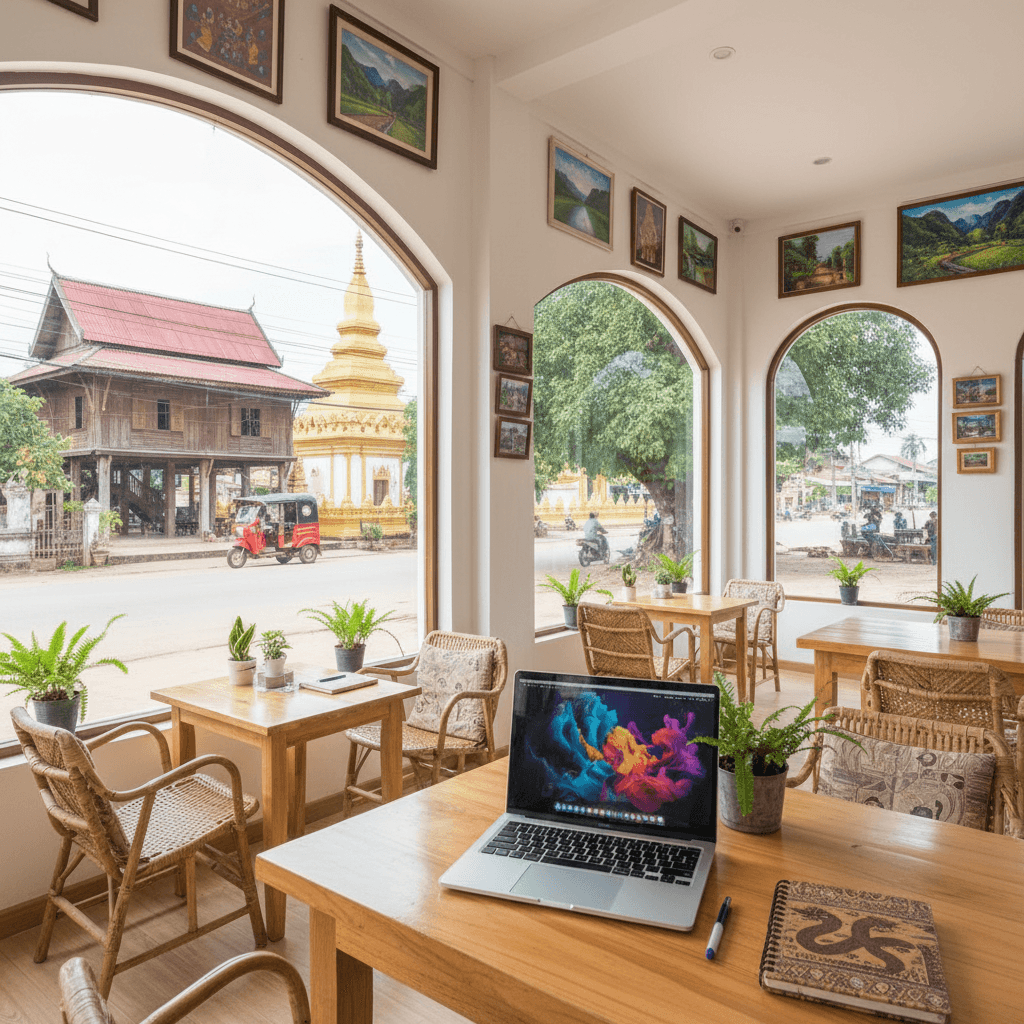
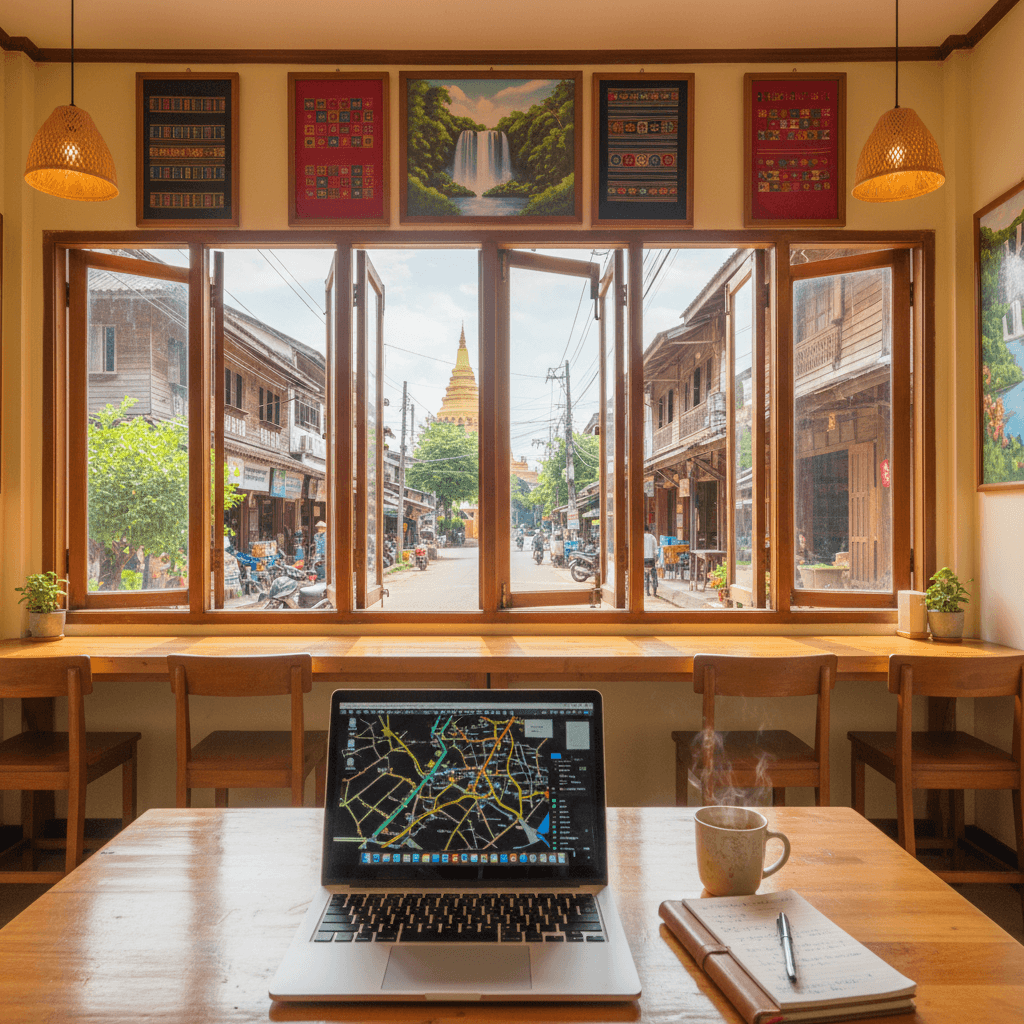
There are no dedicated coworking spaces in Paksong, so your "office" will likely be a wooden table overlooking coffee farms like Mystic Mountain or Bolaven Plateau Green Farm. Jhai Coffee and Paksong Cafe' are the go to spots for reliable work sessions. Jhai is particularly popular for its social mission and great brews. Expect speeds of 8 to 20 Mbps in town, but if you head into the rural villages, it can drop to a crawl.
Pick up a Unitel or Lao Telecom SIM in Pakse before you head up the plateau. A 10GB plan costs about 50,000 LAK ($2.50). Use a VPN on public networks, and always have a backup hotspot for those afternoon rainstorms that occasionally knock out the local fiber.
Safety and Logistics
Paksong is remarkably safe. Violent crime is almost unheard of, though you should keep an eye on your bag in the markets. The biggest risk is the road. If you rent a scooter for $5 to $10 a day, wear a helmet and be wary of potholes and wandering livestock. There is no Uber here; use the InDrive or Kokkok apps if you are starting your journey in Pakse, but in Paksong, you'll be relying on tuk tuks for 20,000 to 50,000 LAK per trip.
Healthcare is limited. The Paksong District Hospital can handle minor issues, but for anything serious, you will need to make the one to two hour drive down to Pakse. Carry plenty of cash (LAK or USD), as ATMs can be temperamental and many local shops don't accept cards.
Social Life and Language
The social scene is organic. You meet people at the Paksong Walking Street over grilled meats or while comparing notes on waterfall loops at Jhai Coffee. Most locals speak Lao, and English is quite limited outside of the main tourist cafes. Learning a few phrases like Sabaidee (hello) and Khob chai (thank you) goes a long way. Download the Google Translate offline pack; you are going to need it.
The best time to visit is the dry season from November to April, when temperatures sit between a comfortable 15 and 25 degrees Celsius. During the rainy season from May to October, the plateau turns into a lush green paradise, but the heavy downpours can make the roads a muddy challenge.
The Price of High-Altitude Living
Living in Paksong feels like a throwback to a simpler era. While the rest of Laos is seeing a gradual rise in prices, this plateau town remains incredibly affordable for anyone willing to trade luxury for fresh air and local immersion. You can comfortably get by on $800 to $1,200 a month here, depending on how often you retreat to the upscale resorts on the outskirts of town.
Your biggest expense will likely be accommodation, but even that is a bargain compared to Vientiane or Luang Prabang. Most nomads settle into one of two lifestyles: the budget village experience or the mid-range resort stay. Here is how the monthly spending typically breaks down:
- Budget ($600 to $800): You'll stay in a village guesthouse for $150 to $250, eat mostly at the Paksong Walking Street, and get around on a long term scooter rental for about $100.
- Mid-Range ($900 to $1,200): This covers a nicer private room in Paksong town for $250 to $400, frequent meals at spots like Paksong Cafe, and a small budget for weekend trips to Pakse.
- Comfortable ($1,500+): At this level, you are staying at a place like Sabaidee Valley for $400+ a month, hiring private transfers for $100, and paying for high speed home WiFi.
Where to Set Up Base
Paksong doesn't have traditional neighborhoods, but where you choose to sleep dictates your entire experience. In town, you have access to the markets and the most reliable power. Further out, you get the silence of the plantations.
Paksong Town
- Best For: Solo nomads and those who need a central hub.
- Pros: Walking distance to Jhai Coffee, the best markets, and scooter rental shops.
- Cons: Can be dusty; very little to do after 8:00 PM.
Tad Fane and Tad Lo Villages
- Best For: Nature lovers and slow travelers.
- Pros: Incredible views of the waterfalls and a peaceful, rural atmosphere.
- Cons: Remote; roads can be rough during the rainy season; power outages are more frequent.
Connectivity and Remote Work
Don't expect a Silicon Valley setup here. There are no dedicated coworking spaces in Paksong yet. Most nomads treat Jhai Coffee or Paksong Cafe as their unofficial offices. You can usually work for the price of a coffee, which runs about $1.50 to $2.50.
Internet speeds generally hover between 8 and 20 Mbps in town. It is enough for Zoom calls, but you will want a backup. Grab a Unitel or Lao Telecom SIM card for about 50,000 LAK ($2.50) for 10GB of data. If you are coming from Pakse, you can set up an eSIM via Klook before you head up the mountain.
Eating and Socializing
The social scene revolves around the coffee harvest and the evening food stalls. You will spend very little on food if you stick to the local staples. Sticky rice and grilled meats at the market cost between 10,000 and 20,000 LAK ($0.50 to $1). For a sit down meal with Western options like pasta or nuggets, expect to pay $3 to $7.
Nightlife is non existent in the traditional sense. Most people meet up at the street stalls or join the Bolaven Plateau Travelers Facebook group to see who else is in town. It is a place for early risers, not night owls.
Getting Around and Safety
Public transport is scarce. You will see plenty of tuk tuks, which cost 20,000 to 50,000 LAK for short hops, but most expats rent a semi automatic scooter for $5 to $10 a day. It is the only way to explore the loops and waterfalls properly.
Safety is rarely a concern beyond the occasional petty theft at the market. The real danger is the road. Between June and September, the rains make the plateau tracks incredibly slick. Always wear a helmet and try to avoid riding after dark. For medical needs, the Paksong District Hospital handles the basics, but for anything serious, you will need to make the 90 minute drive down to Pakse.
Paksong Town
The central hub is the obvious choice for nomads who need to stay within walking distance of a caffeine fix and a reliable 4G signal. It isn't a metropolis, but it's where you'll find the highest concentration of guesthouses and the daily market. Most nomads gravitate toward the area around Jhai Coffee, which doubles as an unofficial community center and workspace.
- Best for: Digital nomads and solo travelers.
- Rent: $150 to $250 for a basic village guesthouse; $250 to $400 for a more private apartment.
- Vibe: Local and functional. You're here for the convenience of the Paksong Walking Street and the ability to grab a 10,000 LAK bowl of noodle soup before hopping on a scooter.
- Pros: Best internet access in the region, easy to meet other travelers, and central for exploring the plateau loops.
- Cons: Can get dusty during the dry season and lacks any real nightlife.
Tad Fane and Tad Yuang Environs
If you're moving with a partner or family and want that "jungle retreat" aesthetic, look toward the villages near the major waterfalls. This area is about 10 to 15 kilometers west of the main town. It feels more like a scenic outpost than a neighborhood, but the air is crisper and the views are unbeatable. Expats often settle here for the long term to escape the noise of Pakse.
- Best for: Expats and families wanting peace.
- Rent: $400 to $600+ for a bungalow or a spot at a resort like Sabaidee Valley.
- Vibe: Quiet, green, and secluded. Your neighbors are more likely to be coffee farmers than other remote workers.
- Pros: Immediate access to trekking trails and waterfall swims; significantly cooler temperatures.
- Cons: You'll need your own transport for everything, and power outages are more frequent during the rainy season.
The Coffee Plantations Outskirts
For those who want the authentic Bolaven experience, living on the fringes of a working plantation is the way to go. These areas are scattered north and south of the main road. It's a rugged choice, but it's where you'll find the most affordable long term stays if you're willing to negotiate directly with locals. It's a slow living paradise for anyone who doesn't mind a bit of isolation.
- Best for: Budget travelers and slow living enthusiasts.
- Rent: $150 to $300 for simple wooden houses or homestays.
- Vibe: Rural immersion. The day starts at dawn with the sound of roosters and ends shortly after sunset.
- Pros: Extremely low cost of living and a deep dive into Laven or Katu culture.
- Cons: Internet is spotty at best; you'll rely heavily on a Unitel or Lao Telecom SIM card for data.
Practical Living Costs
Living in Paksong is significantly cheaper than the capital, with most people spending between $800 and $1,200 per month for a comfortable mid range lifestyle. Street food like grilled meats and sticky rice will only set you back about $1 to $2. If you prefer sitting down at a place like Paksong Cafe, expect to pay $3 to $7 for a mix of local and Western dishes. Transport is your biggest variable; renting a scooter for the month costs around $100, which is the most reliable way to get around since there are no ride sharing apps like InDrive active in the highlands yet.
Connectivity Realities
Working from Paksong requires a bit of a mindset shift. You aren't going to find the high speed fiber loops of Bangkok here. Most cafes and guesthouses provide speeds between 8 and 20 Mbps, which is plenty for emails and basic video calls but might struggle with heavy 4K video uploads. If you wander further into the rural plantations, expect those speeds to dip to a crawl of 2 to 5 Mbps.
Power outages happen occasionally, especially during the monsoon season from June to September. Local nomads suggest keeping your devices charged and having a backup power bank ready. Because you'll be relying on public networks in cafes, always use a VPN to keep your data secure. It's a small price to pay for the ability to work surrounded by coffee trees and mist.
Coworking and Work-Friendly Cafes
Don't go looking for a WeWork or a dedicated coworking hub in Paksong; they don't exist yet. Instead, the local coffee culture doubles as your office. Most spots are incredibly relaxed about people lingering with laptops as long as you're ordering a few brews.
- Jhai Coffee: This is the gold standard for nomads in town. It's a social enterprise with a mission, and the atmosphere is perfect for deep work. They offer free WiFi and a welcoming environment for those looking to support local coffee farmers.
- Paksong Cafe: Located right in the heart of town, this spot has a more modern feel. The WiFi is generally reliable, and they have plenty of power outlets. It's a great place to meet other travelers passing through on the Bolaven Loop.
- Sabaidee Valley: If you need a more "resort" vibe for a day of heavy focus, head slightly out of town. It's more upscale, but the connection is often more stable than the smaller village shops.
Mobile Data and SIM Cards
Since the WiFi can be spotty, a local SIM card is your best insurance policy. Unitel and Lao Telecom are the two big players here. You can pick up a SIM for about 50,000 LAK ($2.50) which usually includes 10GB of data. Coverage is surprisingly good in Paksong town and along the main roads, often outperforming the hardware in the guesthouses.
You can find these SIM cards at small mobile shops in the Paksong market area. If you're coming from Pakse, it's easier to get set up there before heading up the plateau. For those who prefer digital convenience, eSIMs are available via the Klook app, though they often cost more than the local physical cards. To top up your balance, most expats use the BCEL One app or just buy scratch cards from any roadside stall.
Digital Nomad Community
The nomad scene in Paksong is small and transient. You won't find weekly meetups or networking events. Most people here are "slow travelers" rather than career nomads. If you're looking for community, your best bet is the Bolaven Plateau Travelers Facebook group or checking in with the expat crowds in Pakse, which is only about an hour away.
Living here is about trade-offs. You lose the convenience of a "smart city," but you gain a workspace where the temperature stays a cool 20°C while the rest of Southeast Asia swelters. It's the ultimate destination for a "deep work" retreat where the lack of distractions is actually the main feature.
Staying Safe on the Plateau
Paksong is one of the safest spots in Laos for digital nomads, largely because it lacks the frantic energy of Vientiane or the party scene in Vang Vieng. Violent crime is almost unheard of here. You can walk through the central market or along the main road without feeling on edge, but keep a close eye on your belongings in crowded areas. Petty theft like bag snatching is rare, but it can happen if you leave valuables exposed on your scooter while visiting waterfalls.
The real safety risks in Paksong are environmental. If you are doing the Bolaven Loop on a rented scooter, the roads can be treacherous, especially during the rainy season from May to October. Thick mountain mist and potholes are common. Stick to daytime riding and always wear a helmet. Travelers often warn about the "dust factor" during the dry season, which can irritate your eyes and throat on long rides. A face mask and goggles are practical additions to your kit.
While the local vibe is incredibly welcoming, the area is still deeply traditional. Avoid solo trekking into remote forests or near border zones without a local guide. There are still unexploded ordnances (UXO) in some undeveloped parts of the plateau, so staying on marked trails is a non-negotiable rule for your weekend adventures.
Healthcare and Medical Facilities
Medical infrastructure in Paksong is basic. For minor issues like a stomach bug, a cold, or light scrapes from a scooter mishap, Paksong District Hospital is the primary point of contact. It has seen recent upgrades to its water and sanitation facilities, making it cleaner and more reliable than in years past. Local pharmacies in the town center stock essentials like antibiotics and rehydration salts, but they won't have specialized prescriptions. If you rely on specific medication, bring a multi-month supply with you.
For anything serious, you will need to head to Pakse. It is about a one to two hour drive depending on the weather. Pakse has better equipped private clinics and more doctors who speak English. In a true emergency, your best bet is to arrange transport to Thailand, as the hospitals in Ubon Ratchathani are far superior to anything in Southern Laos.
- Emergency Ambulance: Dial 1195
- Best for Basic Care: Paksong District Hospital
- Best for Advanced Care: Pakse (60km away) or Ubon Ratchathani, Thailand
- Travel Insurance: Make sure your policy specifically covers motorbike riding, as many standard plans exclude it.
Health Tips for Nomads
The cooler climate at 1,000 to 1,300 meters means you won't deal with the same level of heat exhaustion found in the lowlands, but the sun is still strong. Dehydration is a sneaky risk here. Stick to bottled or filtered water, as tap water isn't safe for drinking. Most guesthouses and cafes like Jhai Coffee provide refills for a small fee or for free.
Mosquitoes are less of a nuisance in the highlands than in the Mekong valley, but malaria and dengue still exist in the region. Use repellent during the dawn and dusk hours. If you start feeling feverish or unusually fatigued, don't wait it out in Paksong. Head down to Pakse for a blood test immediately, as early diagnosis is key for tropical recovery.
Getting Around Paksong
Paksong is the definition of slow travel. You won't find a sprawling public transit network or a fleet of air-conditioned buses here. Instead, moving around the plateau requires a bit of independence and a willingness to embrace the dust. The town itself is small enough to cover on foot, but the real draws, the waterfalls and coffee estates, are scattered across the highlands.
The Scooter Life
Most nomads agree that renting a scooter is the only way to truly experience the Bolaven Plateau. It gives you the freedom to chase waterfalls like Tad Fane or Tad Yuang without haggling for a ride every hour. You can pick up a bike in Paksong town or rent one in Pakse and ride the 50 kilometer incline up to the plateau. Expect to pay between $5 and $10 per day depending on the bike's condition and how long you're keeping it.
- Road Conditions: The main roads are generally paved but can be slick during the rainy season from May to October. Watch out for potholes and wandering livestock on the outskirts.
- Safety: Always wear a helmet. Locals are used to the terrain, but tourists often take spills on the gravelly shoulders.
- Fuel: Small fuel stations and roadside glass bottles of petrol are common, but keep your tank topped off if you're heading deep into the plantation loops.
Tuk-Tuks and Taxis
If you aren't comfortable on two wheels, your options narrow down to local tuk-tuks and motorbike taxis. These are fine for short hops around the town center or getting to the Paksong Walking Street. A short trip usually costs between 20,000 and 50,000 LAK. Just be prepared to negotiate the price before you hop in, as meters don't exist here.
For longer trips or getting back down to the valley, you can arrange a private minivan transfer. These are more comfortable for the one hour journey to Pakse and usually cost between $10 and $20. While ride-hailing apps like InDrive or Kokkok are starting to gain traction in Pakse, they are almost non-existent once you reach the higher elevation of Paksong.
Arrival and Regional Connections
Most travelers arrive via Pakse International Airport (PKZ). Since Paksong doesn't have its own airport or a formal bus terminal with a set schedule, you'll likely rely on shared minivans that depart from Pakse's southern bus station. These vans leave when they're full rather than on a strict clock, which is a good introduction to the "Paksong pace" of life.
- Walking: Paksong town is very walkable. If you stay near the central market, you're only a few minutes from Jhai Coffee and local noodle stalls.
- Bicycles: Some guesthouses offer basic bicycles. They're great for a quiet morning ride through the nearby coffee rows, but the hilly terrain makes them a workout for anything further.
- Navigation: Download offline maps. Cell service can be spotty when you're tucked between the mountains, and 4G signals from Unitel or Lao Telecom often dip to 2G in the deep rural pockets.
The Linguistic Landscape
In the misty highlands of the Bolaven Plateau, your language skills will be tested more than in the tourist hubs of Luang Prabang or Vientiane. Lao is the primary language spoken in Paksong, though the region is a fascinating patchwork of ethnic diversity. You'll frequently hear Laven, Katu, or Alak dialects being spoken in the villages surrounding the plantations. While these groups have their own tongues, almost everyone uses Lao for trade and daily business.
English proficiency is quite low here. In the center of Paksong town, staff at spots like Jhai Coffee or Paksong Cafe speak enough English to handle your caffeine order or discuss the roast profile of their beans. Beyond that, communication usually involves a lot of smiling, pointing, and patience. Most nomads find that while the locals are incredibly friendly, the language barrier is a real hurdle for anything beyond basic transactions.
Digital Communication and Translation
Since English isn't widely spoken, the Google Translate app is your best friend. Make sure you download the Lao language pack for offline use, as cell service can be spotty when you're out exploring the waterfalls. The camera translation feature is particularly helpful for deciphering local menus or signs.
For staying connected, don't rely on your home roaming plan. Pick up a local SIM card from Unitel or Lao Telecom. You can find these in Pakse before you head up the plateau, or at small phone shops in Paksong town. A 10GB data package usually costs around 50,000 LAK ($2.50). If your phone supports it, an eSIM via Klook or Airalo is a convenient backup, though local physical SIMs generally offer better speeds in the rural stretches.
Key Phrases for the Plateau
Learning a few words of Lao goes a long way in building rapport with the coffee farmers and guesthouse owners. It shows you aren't just passing through on a scooter loop. Start with these basics:
- Sabaidee: Hello (the universal greeting)
- Khob chai: Thank you
- Khob chai lai lai: Thank you very much
- Tao dai?: How much?
- Phet: Spicy (and Bo phet for not spicy)
- Baw pen nyang: No problem or you're welcome
Social Etiquette and Non-Verbal Cues
Communication in Paksong is as much about what you do as what you say. The traditional Nop or Wai greeting, where you place your palms together in a prayer like gesture and bow slightly, is the standard way to show respect. Use it when meeting elders or entering a home.
Keep your voice low and avoid public displays of frustration. The "cool heart" philosophy is big here; losing your temper or being loud is seen as a major social failure. If there is a misunderstanding about a price or a direction, stay calm and keep a smile on your face. Most travelers find that a relaxed attitude solves more problems than a dictionary ever could.
The Nomad Connection
Since there isn't a massive expat scene in Paksong, most digital nomads coordinate via the Bolaven Plateau Travelers Facebook group or broader Pakse Expats circles. These are the best places to find English speaking contacts for long term rentals or to ask about the current state of the roads. If you're looking for a tribe, head to the communal tables at Jhai Coffee. It's the unofficial headquarters for foreigners in town and the easiest place to find someone to chat with in English over a pour over.
The Highland Microclimate
Paksong sits between 1,000 and 1,300 meters above sea level, which completely changes the game compared to the stifling heat of the Mekong Valley. While the rest of Laos might be sweltering, the Bolaven Plateau stays refreshingly cool. You'll actually need a light jacket or a decent hoodie here, especially if you're planning on sunrise scooter rides or evening coffee sessions. It is a distinct microclimate that draws nomads who want to escape the humidity of Southeast Asian cities without leaving the region.
Dry Season: November to April
This is the prime window for anyone looking to base themselves in Paksong. The air is crisp, the skies are generally clear, and the roads are at their most manageable. Most travelers aim for the November to February stretch when temperatures hover between 15°C and 25°C. It is perfect for trekking to remote coffee plantations or spending the afternoon working from the porch of a guesthouse.
By March and April, the temperature climbs slightly, but it never reaches the oppressive levels seen in Vientiane or Pakse. Local farmers are busy during these months, and the dust on the unpaved backroads can get a bit thick. If you're sensitive to dust, bring a buff or mask for your scooter loops. This is also the best time for photography, as the light is consistent and the waterfalls like Tad Fane are still flowing steadily, even if they aren't at their peak volume.
- January: Expect cool mornings around 22°C and very little rain (averaging 20mm).
- April: The warmest month, but still pleasant compared to the lowlands.
- Vibe: Peak harvest season for coffee and the most social time for the small expat and nomad community.
Rainy Season: May to October
The monsoon hits the plateau hard. From June to September, rainfall can exceed 300mm per month. While the landscape turns an incredible, deep green and the waterfalls become thunderous spectacles, the practicalities of nomad life get harder. Power outages become more frequent, and the already spotty internet can get even more unreliable during heavy storms.
The roads are the biggest hurdle during these months. Paksong’s rural infrastructure doesn't handle mud well, and many of the best "secret" spots or indigenous villages become inaccessible by scooter unless you're an experienced rider on a dirt bike. Most long-termers recommend avoiding a full stay during August and September unless you truly enjoy isolation and the sound of rain on a tin roof.
- June: Temperatures stay around 26°C, but the humidity spikes.
- August: Peak rainfall; expect daily downpours that can last for hours.
- November: The transition month where the rain tapers off to about 50mm and the "cool" season begins.
When to Visit for Specific Experiences
If your priority is the coffee culture, arrive in November or December. This is when the harvest is in full swing and places like Jhai Coffee or Paksong Cafe are buzzing with activity. You can see the beans drying in the sun and participate in roasting workshops when the weather is most predictable.
For those focused on the waterfalls like Tad Yuang, the early dry season (November to January) is the sweet spot. The water levels are still high enough to be impressive, but the trails aren't dangerously slippery. If you’re on a tight budget, the "shoulder" months of May or October can sometimes land you better deals on long-term guesthouse stays, though you'll have to gamble with the weather daily.
The Paksong Vibe
Living in Paksong feels like stepping into a quieter, cooler version of Southeast Asia. At 1,300 meters, the humidity of the Mekong disappears, replaced by a microclimate that makes a light jacket necessary after sunset. Most nomads find the pace here incredibly slow; it is a place for deep work or nature resets rather than networking and nightlife. You are trading high speed fiber for fresh mountain air and the smell of roasting coffee.
Cost of Living
Your budget will stretch further here than in Vientiane or Luang Prabang. A comfortable lifestyle for a solo nomad typically lands between $900 and $1,200 per month. If you are on a strict budget, you can get by on $600 to $800 by staying in village guesthouses and sticking to local markets.
- Housing: Village guesthouses run $150 to $250 a month. For more comfort, a studio in Paksong town costs $250 to $400. High end options like Sabaidee Valley start around $400.
- Food: Street food like sticky rice and grilled meats costs about $0.50 to $1. A meal at Paksong Cafe costs $1.50 to $2.50, while upscale dining is rare and hits $10 or more.
- Transport: Scooter rentals are your best bet at $5 to $10 per day or roughly $100 a month. Fuel and occasional tuk-tuks will add another $50.
Where to Base Yourself
Paksong town is the logical choice for anyone needing to stay connected. It is the central hub for the Bolaven Plateau loops and has the best access to markets and the few reliable WiFi spots. You will find most of the rentals and coffee shops here, though the town itself is fairly basic.
If you prefer a retreat style stay, the villages near Tad Lo or Tad Fane are stunning. Expats and families often choose these areas for the waterfalls and peaceful homestays. The downside is the isolation; roads are rough and you won't find any dedicated workspaces. The coffee plantation outskirts offer the best air and cheapest stays, but power can be variable during the rainy season.
Internet and Productivity
Do not expect world class speeds. WiFi in town cafes usually averages 8 to 20 Mbps via fiber. In more remote plantations, it can drop to a crawl of 2 to 5 Mbps. Since there are no formal coworking spaces, most nomads set up shop at Jhai Coffee or Paksong Cafe. Jhai is a favorite for its social mission and relaxed atmosphere.
A local SIM card is mandatory. Pick up a Unitel or Lao Telecom SIM in Pakse before heading up the plateau. 10GB of data costs about $2.50. If you have an eSIM compatible phone, you can set it up via Klook before you arrive. Always have a VPN ready when using public networks in cafes.
Getting Around
Public transport is non existent within Paksong. Tuk-tuks are available for short trips for about 20,000 to 50,000 LAK, but they aren't ideal for exploring. Most travelers rent a semi automatic or automatic scooter in Pakse and drive the 1 hour up to the plateau. The ride is scenic but watch for gravel and dust on the backroads. For getting to Paksong from Pakse Airport, a private minivan transfer costs between $10 and $20.
Safety and Health
Paksong is generally very safe with low violent crime. The biggest risks are petty theft in crowded markets and road accidents on the scooter loops. Avoid riding at night; the roads aren't well lit and livestock often wanders onto the pavement. For healthcare, the Paksong District Hospital can handle minor issues, but for anything serious, you will need to head to Pakse. Keep a basic first aid kit and your insurance details handy.
Local Culture and Language
Lao is the primary language and English proficiency is low once you leave the main coffee shops. Learning a few phrases goes a long way. Use Sabaidee for hello and Khob chai for thank you. Download the Google Translate offline pack for Lao before you arrive. Remember to remove your shoes before entering homes or temples, and use the wai (a slight bow with palms together) as a respectful greeting. Public displays of affection are generally frowned upon in these traditional highland communities.
Weather Watch
The best time to visit is the dry season from November to April. Temperatures are a comfortable 15 to 25°C. The rainy season from May to October brings heavy downpours, especially in June and September, which can turn rural roads into mud pits. If you visit in January, bring a heavy sweater; the plateau gets surprisingly chilly at night.
Need visa and immigration info for Laos?
🇱🇦 View Laos Country GuideHidden Gem
Worth the effort