Kota Kinabalu
🇲🇾 Malaysia
The Vibe: Borneo’s Low-Key Coastal Base
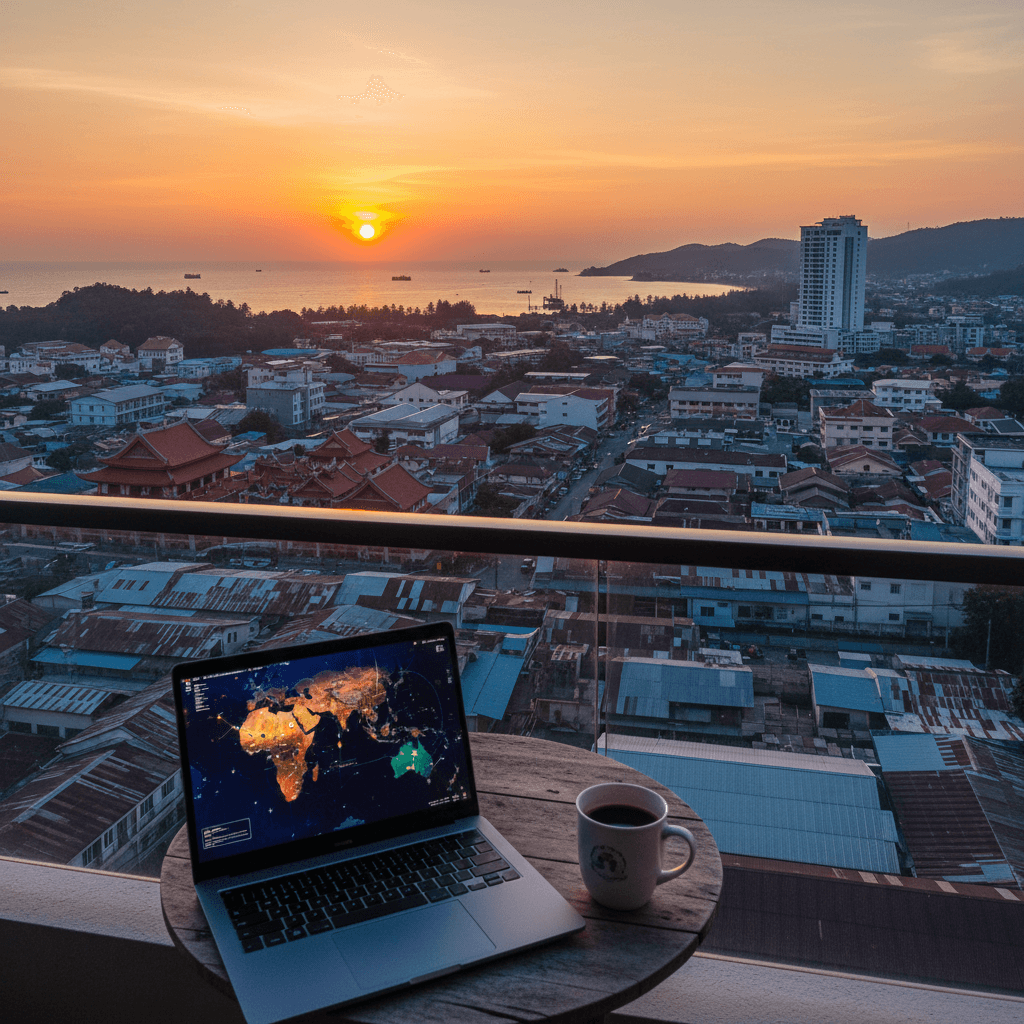
Kota Kinabalu, or KK as everyone calls it, occupies a unique spot in the Southeast Asian nomad circuit. It doesn't have the caffeinated energy of Kuala Lumpur or the digital nomad density of Chiang Mai. Instead, it offers a mid-speed lifestyle where the South China Sea meets dense jungle hills. It’s the kind of place where you can finish a Zoom call at 4:00 PM and be on a boat to a tropical island for a sunset swim by 4:30 PM.
The city feels lived-in and unpretentious. You'll find sleek shopping malls like Imago sitting just a short walk from salt-aired fish markets and gritty, authentic coffee shops. Most nomads who stick around for more than a week do so because they want a base that feels "normal" but provides immediate access to world-class nature. It’s quiet, safe, and surprisingly affordable for a city with such high-end infrastructure.
The trade-off is a smaller community. You won't find a new networking event every night here. The nightlife is concentrated in a few waterfront strips and can feel a bit repetitive after a month. However, if you're looking to trade the "hustle" for morning hikes up Signal Hill and weekend trips to the foothills of Mount Kinabalu, KK hits the sweet spot.
Cost of Living (2025–2026 Estimates)
Living in KK is significantly cheaper than in Western hubs, though prices have ticked up slightly as the city modernizes. Your biggest variable will be your choice of housing; modern condos with infinity pools command a premium, while local walk-ups are incredibly cheap.
- Budget Tier ($700–$900/month): This covers a room in a shared flat or a basic studio in areas like Penampang, eating primarily at hawker stalls, and using the new bus system.
- Mid-Range Tier ($1,000–$1,400/month): Most nomads fall here. You’ll get a nice one-bedroom apartment in a good area, eat out at mid-range cafes often, and have a healthy budget for weekend island hopping.
- Comfortable Tier ($1,500–$2,000+): This buys you a top-floor unit in a luxury condo like those near Imago, daily dining at international restaurants, and frequent guided excursions into the Sabah interior.
Housing and Rent
Expect to pay more for short-term stays on Airbnb, but if you can negotiate a three-to-six-month lease, prices drop fast. Most modern units come fully furnished with air conditioning and high-speed internet capabilities.
City Centre / Waterfront
- Rent: $280–$700 for a one-bedroom apartment.
- The Vibe: High walkability, close to the Jesselton Point ferry terminal and the Gaya Street Sunday Market. It can be noisy, but you're in the heart of the action.
Imago / KK Times Square
- Rent: $350–$600 for modern condo units.
- The Vibe: This is the expat favorite. You have a massive mall at your doorstep, plenty of "laptop-friendly" spots like Print Cafe, and high-end gym facilities. It feels very Westernized.
Luyang / Damai
- Rent: $210–$350 for apartments in Luyang / Damai.
- The Vibe: Local and leafy. This is where the best non-touristy food is found. You’ll need the Grab app to get around, but it's much quieter than the CBD.
Daily Essentials
- Local Meal: $3.50–$4.00 (RM 15–16) at a food court or coffee shop.
- Cafe Latte: $2.60–$3.00 in specialty shops.
- Dinner for Two: $18–$20 at a mid-range restaurant.
- Monthly Transport: $11 (RM 50) for the BAS.MY 30 Day Card.
Internet and Work Spaces
Internet reliability has improved drastically. Home fiber plans (30–100 Mbps) typically RM89–150 ($21–$35) per month. Most nomads find the local cafes reliable enough for deep work, though dedicated spaces are available.
- Coworking: Regus offers professional setups in the city, while GASpace in the Luyang area is a popular local alternative for a more community-focused vibe.
- SIM Cards: Pick up a Celcom or Maxis SIM at the airport. You’ll get plenty of data for around $10–$15 per month.
The real charm of KK isn't found in a spreadsheet, though. It’s in the lack of pretension. Locals are genuinely friendly, the air is cleaner than in most Asian capitals, and the logistics of daily life are simple enough that you can actually focus on your work and your well-being.
The Price of Paradise in Borneo
Kota Kinabalu is a rare find for 2025. It's one of those spots where you can actually live a high-quality life for a fraction of what you'd spend in Kuala Lumpur or Bali. Most nomads find that $1,400 to $1,600 a month buys a very comfortable lifestyle here, including a modern condo, plenty of meals out, and weekend trips to the islands. If you're willing to live like a local and stick to a studio outside the center, you can easily get by on $700 to $900.
Rent is the biggest variable. In the heart of the city or near the waterfront, expect to pay between $350 and $380 for a decent one-bedroom apartment. If you want the luxury experience at Imago or KK Times Square, prices can climb toward $700, but you'll get a pool, gym, and 24/7 security. Utilities and high-speed home internet usually add another $60 to $90 to your monthly bill.
Eating and Moving Around
Food is where your budget really stretches. A meal at a local hawker stall or food court will set you back about $4. Even a nice three-course dinner for two at a mid-range restaurant usually hits around $19. If you're a coffee lover, a flat white or cappuccino in a specialty cafe like Print Cafe or October Coffee House costs roughly $3.
Transport is undergoing a major shift. While the old bus system was a headache, the new BAS.MY system launching in 2026 makes things much easier. You can grab a monthly pass for about $11. Most nomads still rely on the Grab app for quick trips, which is affordable and reliable. For work, a day pass at a space like Regus costs about $28, but long-term members can get desks for as low as $6 a day.
Where to Plant Your Flag
Your neighborhood choice defines your KK experience. Each pocket of the city has a distinct energy and price point.
City Centre and Waterfront
- Rent: $280 to $700
- Vibe: Best for short-term stays and those who want to be near the action.
- Pros: You can walk to the Jesselton Point jetty for island hopping and the night markets are right there.
- Cons: It's the loudest part of town and definitely more tourist-heavy.
Imago and KK Times Square
- Rent: $400 to $750
- Vibe: Modern, upscale, and convenient.
- Pros: High-end shopping at your doorstep and the best modern condos in the city.
- Cons: It can feel a bit sterile and "mall-centric" compared to the local areas.
Luyang and Damai
- Rent: $160 to $300
- Vibe: Residential, leafy, and authentic.
- Pros: This is where the best local food is hidden. It's home to GASpace, a popular coworking hub.
- Cons: You'll definitely need to use Grab or have a car to get around comfortably.
Connectivity and Digital Infrastructure
The internet situation in KK is surprisingly solid for 2026. Fiber plans offering 50 Mbps or more are the standard for home setups, costing around $27 a month. Most cafes have reliable Wi-Fi, though they can get crowded on weekends. For mobile data, travelers recommend picking up a local SIM card immediately, as 5G coverage is now widespread across the urban center and suburban hubs like Penampang and Likas.
For the Solo Nomad: City Centre & Waterfront
If you are landing in KK for the first time, the City Centre near Warisan Square and the Waterfront is your best bet. It is the most walkable part of the city, sitting right on the edge of the South China Sea. You can walk to the Jesselton Point jetty for a morning boat to the islands and be back at a café by lunch.
Most solo travelers choose this area because everything is within a 15 minute walk. You have the night markets for cheap street food, the Gaya Street Sunday Market for local vibes, and plenty of air conditioned malls when the humidity hits. The downside is the noise; it is a busy hub, and the apartments here are often older and pricier than what you will find further out.
- Rent: $350 to $700 for a one bedroom apartment.
- Vibe: Social, busy, and very convenient for short stays.
- Top Spot: Grab a coffee at one of the many shops along Gaya Street if you need a place to work for an hour.
For the Modern Expat: Imago & KK Times Square
If you want a lifestyle that mirrors a Western city, head slightly south of the centre to the Imago Mall and KK Times Square area. This is where you will find the shiny, modern condos with infinity pools and gyms that look great on camera. It is a favorite for mid term nomads and couples who want reliable infrastructure and easy access to high end groceries.
The area feels more like a polished development than a traditional neighborhood. While it lacks "soul" compared to the old town, it makes up for it with convenience. You have Print Cafe nearby for a solid work session and dozens of international restaurants right at your doorstep. It is the most expensive pocket of the city, but it offers the most comfort.
- Rent: $400 to $800 for a premium condo.
- Vibe: Upscale, safe, and mall centric.
- Top Spot: Imago Mall is the primary hangout for shopping and dining.
For the Long Termer: Luyang, Damai & Hilltop
Expats who stay in KK for a year or more usually migrate to Luyang or Damai. These are established residential suburbs that feel like "real" Malaysia. You will find the best local laksa and sang nyuk mian (pork noodles) here at a fraction of the waterfront prices. It is leafy, quiet, and much more relaxed than the CBD.
You will definitely need the Grab app or your own car to live here, as it is not walkable. However, the community feel is much stronger. Many nomads head to GASpace at Kolam Centre in this area, which is one of the few dedicated coworking spots in the city. It is a great place to meet locals and long term residents rather than just tourists.
- Rent: $200 to $400 for a decent apartment or house.
- Vibe: Local, foodie focused, and residential.
- Top Spot: The Damai area is famous for its evening food stalls and local coffee shops.
For Families & Nature Lovers: Likas & Tanjung Aru
Families often prefer Likas for its proximity to international schools and the Likas Bay seafront. There is a long promenade perfect for cycling or running at sunset. It is more spacious than the city centre, though you will be trading away the "café culture" for parks and playgrounds. The commute into the centre can be slow during the morning school run, but the air feels fresher here.
Alternatively, Tanjung Aru is the go to for those who want to be near the beach. It is famous for its sunsets and proximity to the airport. While there are fewer everyday amenities like large supermarkets, the lifestyle is very relaxed. You can spend your evenings at the beach food stalls or walking in Perdana Park.
- Rent: $250 to $500 for larger family units.
- Vibe: Outdoorsy, quiet, and family friendly.
- Transport: Budget roughly $11 for a 30 day unlimited bus pass starting in 2026 to help get around.
Connectivity and Speed
Internet in Kota Kinabalu is surprisingly reliable for a city that feels so close to the wilderness. Most modern condos and Airbnb rentals come equipped with fiber optic connections, typically offering home fiber plans offering 100 Mbps+ for $20–$35 a month. This is plenty for video calls and heavy uploads. While the city doesn't have the lightning fast infrastructure of Kuala Lumpur, it's more than enough for the average remote worker.
Mobile data is your best friend here. Local SIM cards from providers like Celcom, Maxis (Hotlink), or Digi offer great coverage across the city. You can pick up a prepaid SIM at the airport or any mall for a few dollars. Expect to pay about $10 to $15 for a monthly data package with 40GB to 60GB of data. Signal strength is solid in the CBD and Luyang, though it can get patchy if you head deep into the jungle hills or out toward the more remote parts of Penampang.
Coworking Spaces
The coworking scene in KK is small but functional. It lacks the massive, community driven hubs you find in Bali or Chiang Mai, but the available spots are professional and affordable. Most nomads find that the limited options actually make it easier to meet the small, tight knit community of expats who live here year round.
- Regus (Lot G-0-1, Suria Sabah): Located right in the heart of the city within a major mall, this is the most "corporate" option. It's great if you need a formal meeting room or a very quiet environment. Regus day coworking from MYR119 ($28), but it's much cheaper if you book a dedicated desk for a month, which averages out to about $6 a day.
- GASpace (Kolam Centre, Luyang): This is a local favorite located slightly outside the main tourist drag. It feels more like a community hub and is popular with local startups. It's a bit further out, so you'll likely need to take a Grab to get here if you're staying in the waterfront area.
- Harbour City / KK Times Square: While not a single cowork hub, this area is packed with small boutique offices and tech companies. You'll often find freelancers nesting in the various smaller shared offices that pop up in these commercial blocks.
Laptop-Friendly Cafés
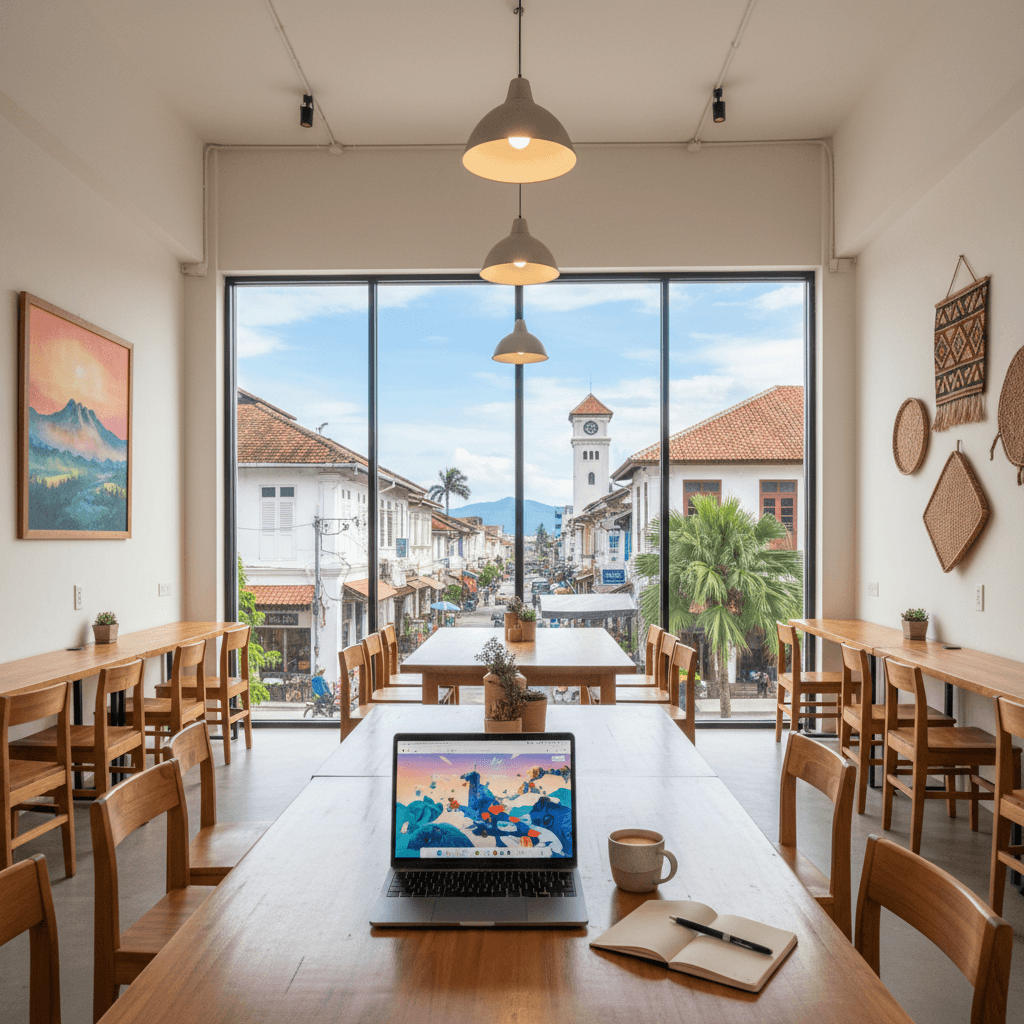
Since the formal coworking options are few, much of the "work from anywhere" crowd gravitates toward the city's thriving café culture. The coffee scene in KK has exploded recently, and many owners are happy to let you linger for a few hours if you're buying drinks and food.
- Print Cafe (KK Times Square): A unique spot that doubles as a printing shop. It's quiet, has plenty of power outlets, and the Wi-Fi is consistently decent. It's a go-to for many nomads staying near the Imago mall area.
- October Coffee House: There are a few branches around town, including one in the CBD and one in Peak Nam Tong. They have a cozy, rustic vibe and serve solid lattes for about $3. The atmosphere is generally conducive to getting a couple of hours of deep work done.
- Nook Cafe: Located in the older part of the city center, this spot has a great aesthetic and excellent sandwiches. It can get busy during lunch hours, so it's better for a morning session.
- The Coffee Bean & Tea Leaf (various locations): If you just need a guaranteed fast connection and a familiar environment, the branches at Imago or Jesselton Quay are reliable fallbacks.
Digital Nomad Practicalities
Public Wi-Fi in malls like Imago or Suria Sabah is okay for basic browsing, but don't rely on it for important meetings. Most nomads recommend using a personal hotspot as a backup, especially during the afternoon tropical thunderstorms which can occasionally cause brief power flickers or minor internet stutters.
If you're planning to stay long term, look for "SOHO" (Small Office Home Office) style apartments in buildings like The Loft or Sutera Avenue. These are specifically designed for people who work from home and often have better internal wiring for high speed internet compared to older walk up apartments in areas like Lido or Penampang.
Safety in the Land Below the Wind
Kota Kinabalu is generally a very safe and welcoming base. Most nomads find it significantly more relaxed than Kuala Lumpur or Johor Bahru. Violent crime against foreigners is extremely rare; you're more likely to deal with a persistent street cat than a physical threat. That said, common sense still applies in the CBD and around the Waterfront at night, where opportunistic petty theft like bag snatching can happen if you're not paying attention.
The city has a unique social fabric. While it's part of Malaysia, Sabahans pride themselves on being more laid back and harmonious than their counterparts in Peninsular Malaysia. You'll notice a distinct lack of religious or ethnic tension here. One specific thing to watch for is the "Sulu Sea" security situation. While the Eastern Sabah Security Zone (ESSZONE) is far from KK, travelers often see a heavy police and military presence at the airports or maritime borders. In the city itself, this doesn't affect daily life, but it's why you'll see maritime patrols out near the islands.
- Solo Female Safety: Women generally report feeling safe walking during the day. At night, it's better to use Grab rather than walking through dimly lit areas or construction zones.
- Scams: Be wary of "tourist prices" at the Night Market or for boat transfers at Jesselton Point. Always check the official board for island hopping rates before paying.
- Natural Hazards: Sunburn and dehydration are the real enemies here. Also, if you go hiking in the jungle hills, keep an eye out for leeches and snakes.
Healthcare Quality & Access
For a city of its size, KK has surprisingly high quality medical care. Most doctors speak excellent English, and many were trained in the UK, Australia, or Singapore. If you have a minor ailment, you can walk into any "Klinik" in areas like Damai or Luyang and see a GP for about $15 to $30 including basic medication.
For anything serious or for those with premium international insurance, private hospitals are the way to go. They offer shorter wait times and modern facilities that feel more like hotels than wards. Expats and nomads usually gravitate toward these two:
- Gleneagles Hospital Kota Kinabalu: Located right near the IMAGO Mall, this is the gold standard for private care in Sabah. It's modern, expensive by local standards, and has a great emergency department.
- KPJ Sabah Specialist Hospital (Luyang): Another top tier private option with a wide range of specialists. It's slightly further from the city center but very well regarded.
Pharmacies & Prescriptions
You'll find pharmacies like Watson’s and Guardian in every major mall, including Suria Sabah and Imago. For more specialized needs, look for Caring Pharmacy or local independent shops. Many medications that require a prescription in the US or Europe, like certain asthma inhalers or basic antibiotics, can sometimes be bought over the counter after a quick consultation with the on site pharmacist.
Emergency Basics
It's smart to keep these numbers saved, though hopefully you won't need them. The general emergency number for police and ambulance is 999. For a faster response if you have private insurance, it's often better to call the Gleneagles or KPJ emergency lines directly to arrange a private ambulance. Most nomads also join local expat Facebook groups or WhatsApp chats, as these are often the fastest way to get recommendations for a specific specialist or dentist on short notice.
Water and Environment
Don't drink the tap water. While it's treated, the pipes in many older buildings aren't up to snuff. Stick to filtered water or buy the large 5 liter jugs from 99 Speedmart for about $1.50. Air quality is generally great, especially compared to the smog in KL, though "haze season" (usually between June and September) can occasionally bring smoke from regional agricultural fires. It's rarely as bad as it is in Singapore or Indonesia, but it's something to monitor if you have respiratory issues.
Getting Around Kota Kinabalu
Kota Kinabalu is a compact city, but it's not exactly designed for walking once you leave the immediate waterfront. Most nomads find that while the city center is manageable on foot, you'll need a digital strategy for anything further than a few blocks. Fortunately, the infrastructure is shifting. By 2026, the new BAS.MY system is expected to replace the aging fleet of mini buses with a more reliable network.
The Grab Dominance
For now, Grab is the undisputed king of transport here. It's affordable, reliable, and saves you from arriving at your meeting drenched in sweat from the humidity. A typical 8 km ride usually costs significantly less than a standard taxi, which might run you around $11 for the same distance. Travelers often say that unless you're heading deep into the jungle or up toward Mount Kinabalu, there's rarely a need to rent a car.
Public Transit and the 2026 Upgrade
The legacy bus system has been a point of frustration for expats for years, often costing around $1.90 for a single ticket with inconsistent schedules. However, the SBST (Stage Bus Service Transformation) is a game changer for the 2025 to 2026 period. Here is what to expect from the new system:
- The BAS.MY 30 Day Card: This card costs RM50 (roughly $11) for unlimited travel.
- Reliability: Newer buses with fixed schedules and better coverage of residential areas like Luyang and Likas.
- Connectivity: Better links between the CBD and the suburban hubs where many nomads choose to live for lower rent.
Two Wheels and Walking
Walking is pleasant enough along the Waterfront or the Likas Bay promenade, especially during sunset. Outside of these zones, sidewalks can be uneven or non existent. You won't see many nomads on bicycles due to the heat and aggressive traffic patterns, though Likas is a popular spot for recreational cycling on weekends. If you're staying in Gaya Street or Warisan Square, you can reach most cafes and markets on foot, but you'll still want a Grab app ready for trips to Imago Mall or the airport.
Logistics for Digital Nomads
If you're planning to use KK as a base for exploring Sabah, keep these logistics in mind:
- Jesselton Point: This is the main jetty for boats to the islands. It's right at the edge of the city center and easily reachable by a short walk or a $2 Grab ride from most central hotels.
- Airport Proximity: KKIA is incredibly close to the city. A ride from the airport to the CBD or Tanjung Aru takes about 10 to 15 minutes and costs very little.
- Parking: If you do decide to rent a car for a trip to Kundasang, be aware that parking in the city center is tight and requires a coupon system or a digital app, though newer malls like Imago have plenty of paid bays.
Most nomads find the transport situation in KK to be a fair trade off. While it lacks the sophisticated metro systems of Kuala Lumpur, the low cost of ride hailing and the upcoming bus improvements make it one of the easier cities in Borneo to navigate without your own wheels.
The Linguistic Landscape
You'll find that Kota Kinabalu is remarkably easy to navigate if you speak English. While Bahasa Malaysia is the official language, the city's history and its role as a tourism hub mean English is widely spoken in shops, malls, and professional settings. Most nomads find they can get by for months without learning more than a few basic phrases, though locals always appreciate a "Terima kasih" (thank you) at the night market.
The local dialect, Sabah Malay, is distinct from what you'll hear in Kuala Lumpur. It's often described as slower and more phonetic, which actually makes it easier for beginners to pick up. Because of the diverse ethnic makeup of the city, you'll also hear plenty of Mandarin, Cantonese, and Hakka, along with indigenous languages like Kadazan and Dusun. This creates a multicultural atmosphere where people are used to switching between languages mid sentence.
Day to Day Communication
In the CBD and trendy areas like Imago or Luyang, menus and signs are almost always bilingual. If you're heading further out to the local markets in Penampang or Lido, English levels might drop slightly, but pointing and smiling works wonders. Most service staff in the city's growing cafe scene are fluent and often happy to chat about the best hiking spots or weekend island trips.
Expats recommend joining local WhatsApp or Telegram groups for the most up to date info on community events. Whether it's a weekend beach cleanup at Tanjung Aru or a meetup at GASpace, these digital circles are where the real communication happens. For official business or long term rentals, documents are usually provided in English, though it's smart to have a local friend double check anything complex.
Practical Tech & Connectivity
Staying connected is straightforward and cheap. You can grab a SIM card at the airport or any 7-Eleven for a few dollars. Most nomads lean toward providers like CelcomDigi or Maxis (Hotlink) for the most reliable coverage across Sabah.
- Mobile Data: Expect to pay around $8 to $12 per month for a generous 5G data plan.
- Essential Apps: Download Grab immediately. It's the primary way to get around and order food. WhatsApp is the default for all business and social communication.
- Language Apps: While Google Translate works well, LingoDeer or Duolingo are decent for learning basic Malay grammar, though they won't teach you the specific Sabahan slang.
Communication Tips for Nomads
Sabahans are known for being some of the friendliest people in Malaysia. The pace of life is slower here, and that reflects in how people talk. Don't be surprised if a simple coffee order turns into a ten minute conversation about your travel plans. If you're working from a cafe like Print Cafe or Woo!, it's common to share tables during busy lunch hours, which is a great way to meet locals and other remote workers.
If you plan on heading into the deep jungle or remote parts of the Kiulu Valley, don't rely on your phone. Download offline maps and learn a few basic Malay words for food and directions. In the city, however, your biggest communication challenge will likely just be deciding which laksa spot the locals are recommending today.
The Tropical Rhythm
Living in Kota Kinabalu means getting used to a tropical rainforest climate where the concept of four seasons doesn't exist. Instead, your life revolves around the sun and the rain. Temperatures stay remarkably consistent year round, usually hovering between 24°C (75°F) at night and 32°C (90°F) during the day. The humidity is the real factor here; it is thick and constant, making air conditioning a non-negotiable for most nomads working from home.
The city experience is defined by two main monsoon seasons. The Northeast Monsoon typically runs from November to March, while the Southwest Monsoon hits from May to September. However, because of KK's position on the coast of Borneo, weather patterns can be unpredictable. You might see a massive downpour at 2:00 PM that clears up entirely by 4:00 PM, just in time for one of the city's famous pink sunsets.
When to Visit for the Best Experience
Most expats and long term travelers aim for the window between January and April. This is generally the driest part of the year. The skies are clearer, which is vital if you plan on trekking Mount Kinabalu or spending your weekends island hopping in the Tunku Abdul Rahman Marine Park. During these months, the sea is calmer and visibility for snorkeling or diving is at its peak.
If you arrive in May, you'll catch the Pesta Kaamatan (Harvest Festival). It's the most significant cultural event in Sabah. While it is technically the start of a wetter period, the cultural energy, traditional dances, and local rice wine (tapai) celebrations make the occasional rain shower easy to ignore.
The Reality of the Rainy Season
The wettest months are usually October and November. During this time, the rain isn't just a drizzle; it is a heavy, tropical deluge that can cause localized flash flooding in lower lying areas like Penampang. For a digital nomad, this is actually a productive time. Since the beach is off the table, most people hunker down in air conditioned cafés like October Coffee House or Nook Cafe to get through their deep work blocks.
One thing travelers often overlook is the "inter-monsoon" periods. These transitional weeks often bring spectacular lightning storms over the South China Sea. If you have a balcony in a high rise condo like Jesselton Quay or Pelagos Designer Suites, these evening storms are better than any Netflix show.
A Note on Haze and Air Quality
While not an annual guarantee like in Kuala Lumpur or Singapore, Kota Kinabalu can occasionally be affected by regional haze between July and September. This happens when agricultural burning in neighboring regions sends smoke across the sea. It doesn't happen every year, but it's worth checking the Air Pollutant Index (API) if you have respiratory sensitivities. Most of the time, the air in KK is significantly fresher than in West Malaysia due to the proximity of the Crocker Range jungle and the sea breeze.
Packing and Daily Strategy
- The Nomad Uniform: Breathable linen or moisture-wicking fabrics are your best friends. Save the jeans for the plane; they're too heavy for the KK humidity.
- The Afternoon Block: Local life slows down between 12:00 PM and 3:00 PM when the heat is most intense. Expats usually run errands in the early morning or after 5:00 PM.
- Rain Protection: Don't bother with a cheap umbrella from a convenience store; the wind will flip it in seconds. Invest in a decent poncho or a sturdy vented umbrella if you plan on walking between meetings.
- Mount Kinabalu Prep: If you're heading to the mountain, the weather there is a different beast entirely. Temperatures at the summit can drop to 0°C (32°F), so you'll need actual winter gear despite the tropical heat at the base.
For those looking for the sweet spot of 2025 and 2026, aim for a February arrival. You'll miss the end of year rains, skip the peak holiday prices of December, and have a solid three month run of great weather to explore the islands and jungles before the humidity cranks up again.
The Kota Kinabalu Vibe
Kota Kinabalu, or simply KK to the locals, is a coastal city that moves at a medium pace. It is perfect if you want a base where the sea is on one side and jungle hills are on the other. You can spend a morning snorkeling at the islands and be back in time for a sunset hike, all within a short Grab ride from the city center. It is a modern spot with malls and solid infrastructure, but it lacks the frantic energy or massive nightlife scenes found in Kuala Lumpur.
Most nomads come here for the nature access and the low cost of living. It is still a bit off the beaten path for the remote work crowd, which means the community is smaller and tighter. You will find friendly locals and reliable internet, though you might find the public transport a bit frustrating until the planned upgrades fully roll out in 2026. It is a city for those who prefer a quiet coffee shop over a crowded club.
Cost of Living (2025-2026)
Your budget in KK depends entirely on how "local" you want to live. A single person sticking to local food and basic housing can get by on $600 to $750 a month. If you want the full nomad experience with a modern condo, daily cafe visits, and weekend trips, expect to spend closer to $1,400 to $1,600.
- Housing: A modern one bedroom apartment in the city center typically runs between $350 and $380. If you look in residential areas like Luyang, prices drop to around $160 to $250.
- Utilities: Budget about $35 to $60 for electricity and water. High speed home internet (50 Mbps+) usually costs around $25 to $30 per month.
- Food: A meal at a local hawker stall or food court is a steal at roughly $3.50 to $4. A nice three course dinner for two at a mid range restaurant will cost about $19, though alcohol will push that price up significantly.
- Transport: While the old bus system is clunky, the new BAS.MY pass launching in 2026 offers unlimited city rides for 50 MYR (about $11) per month. Most nomads rely on Grab, which is affordable and efficient.
Where to Set Up Base
Choosing a neighborhood in KK is about balancing convenience with your preferred lifestyle. The city is compact, but traffic can be a factor during peak hours.
City Centre & Waterfront
- Top choice for: Short term stays and those who want to walk to markets and the jetty.
- Pros: You are steps away from Jesselton Point and the best cafes in town.
- Cons: It is noisier and more touristy, with higher rents for older buildings.
Imago & KK Times Square
- Top choice for: Expats who want modern luxury and easy shopping.
- Pros: High end condos with gyms and pools. You have the Imago mall for everything you need and laptop friendly spots like Print Cafe nearby.
- Cons: It feels a bit like a bubble and lacks a traditional neighborhood soul.
Luyang & Damai
- Top choice for: Long termers who want a quiet, local feel.
- Pros: Incredible local food scene and easy access to GASpace, one of the few dedicated coworking spots in town.
- Cons: You will definitely need to use Grab or get a car to get around.
Connectivity and Workspace
Internet in KK is generally reliable, with fiber optics reaching most modern condos and office blocks. If you need a professional environment, Regus offers day passes for around $25, while GASpace in the Luyang area is a favorite for those looking for a more community focused vibe. For those who prefer working from cafes, the city has a growing specialty coffee scene with stable Wi-Fi, particularly around the CBD and Damai areas. Just remember to grab a local SIM card at the airport, 5G coverage is expanding rapidly through 2025 and provides a great backup for your hotspot.
Need visa and immigration info for Malaysia?
🇲🇾 View Malaysia Country GuideEasy Landing
Settle in, no stress
Monthly Budget Estimates
More cities in Malaysia
Canggu (Batu Ferringhi/Penang)
🇲🇾 Malaysia