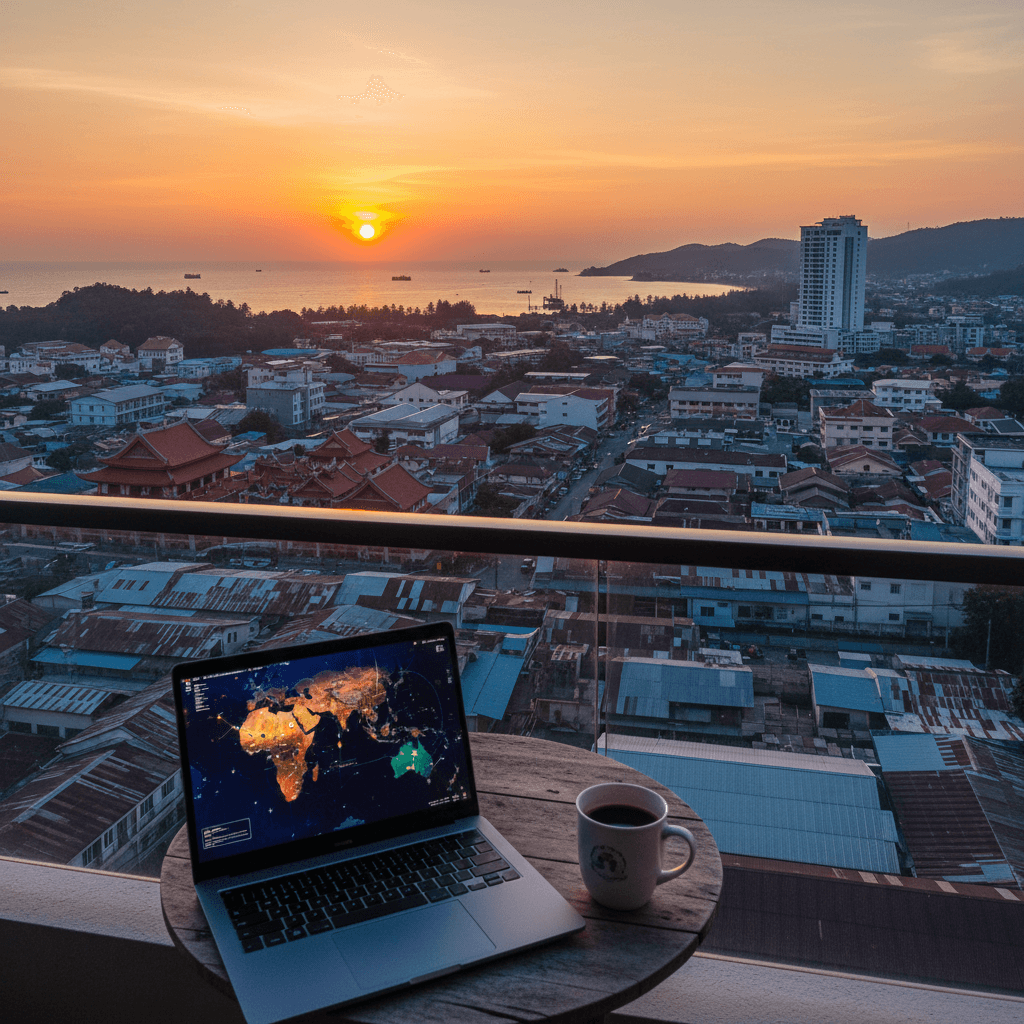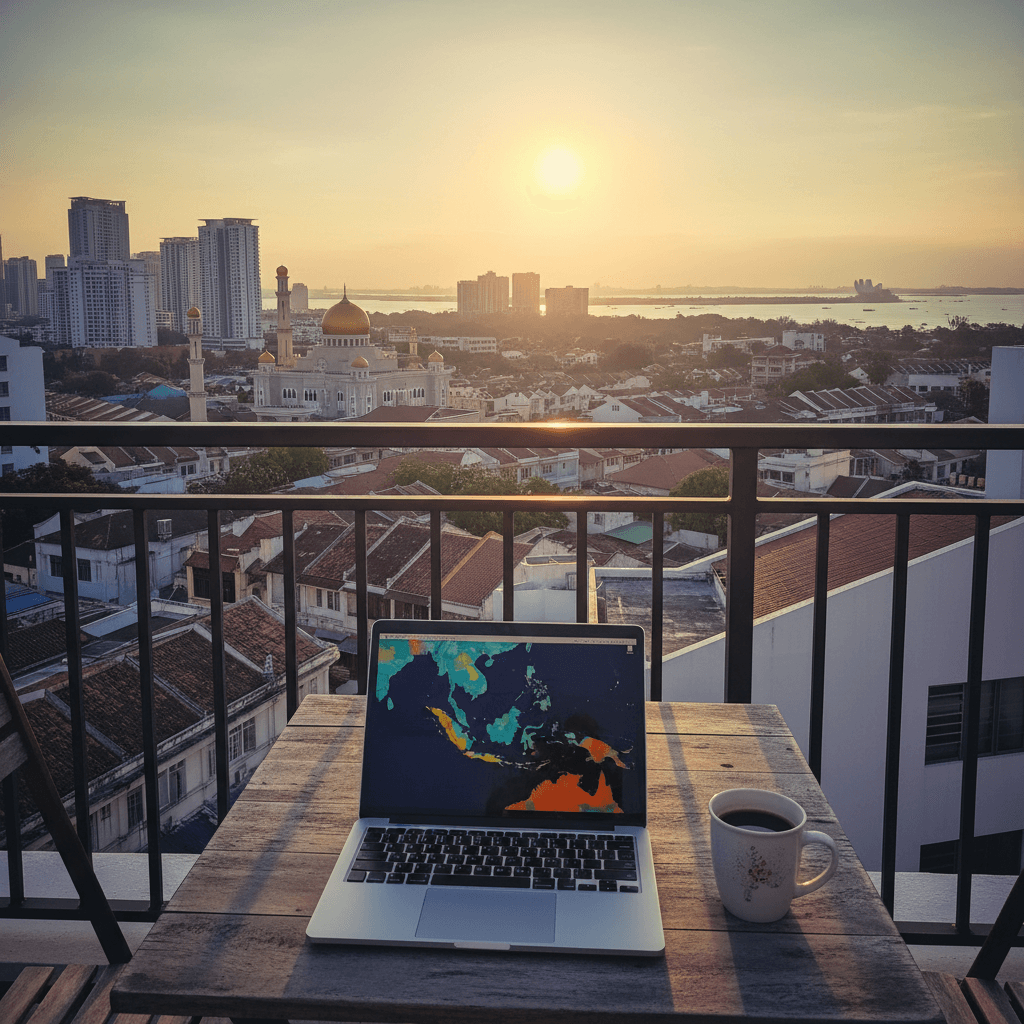
Johor Bahru
🇲🇾 Malaysia
The Practical Gateway
Johor Bahru doesn't try to win you over with neon lights or postcard perfect skylines. It's a city that feels grounded, functional, and unapologetically real. While digital nomads often flock to the tropical aesthetics of Bali or the high energy of Kuala Lumpur, JB (as everyone calls it) attracts a different crowd. It's the go to spot for remote workers who want to maximize their lifestyle without the premium price tag of its neighbor, Singapore.
The vibe here is a unique blend of Malaysian grit and rapid modernization. You'll find sleek, high rise condos with infinity pools standing right next to traditional hawker centers where a meal still costs less than RM15. It doesn't have the "tourist bubble" feel of other Southeast Asian hubs. Instead, you're living alongside Singaporean commuters, tech professionals, and local families. It’s a place where you can actually get work done during the week and escape to a different country for dinner.
The Daily Grind and Lifestyle
Living in JB feels like a life hack. Most nomads find that they can afford a level of luxury here that would be impossible elsewhere. You're looking at modern studio apartments in the city center for around RM1,200 to RM2,000 per month. These aren't just rooms; they usually come with gyms, high speed fiber internet, and 24 hour security. It’s the kind of place where you can comfortably live on a budget of $1,200 USD while enjoying a mid range lifestyle.
The emotional experience of JB is one of convenience. Everything is accessible via the Grab app, from your morning laksa to a ride across town. The city is shedding its old reputation for being a bit rough around the edges, transforming into a tech forward enclave. Expats recommend leaning into the local rhythm: work from a trendy cafe in Iskandar Puteri during the day, then hit a night market in Skudai for cheap, incredible food once the sun goes down.
Choosing Your Neighborhood
Where you park your laptop matters. Each pocket of the city offers a different energy:
- Iskandar Puteri (Nusajaya): This is the modern face of JB. It’s a planned township that feels spacious and green. It's popular with younger expats and nomads who want waterfront dining and a more "international" atmosphere.
- Central JB: If you plan on crossing the causeway frequently, stay near the CIQ. Areas like Jalan Tan Hiok Nee are walkable and full of character, blending heritage buildings with specialty coffee shops like The Replacement.
- Taman Molek: This is the business heart. It's packed with banks and upscale restaurants. It’s less about the "nomad vibe" and more about professional convenience and high end infrastructure.
- Skudai: A bit further out, but it’s where the social life happens. It’s got a younger energy with live music venues and plenty of local haunts that stay open late.
Connectivity and Workspaces
The internet isn't an issue here. With 5G rollout and reliable broadband hitting speeds of 100 to 300 Mbps, video calls are seamless. If you need a dedicated office environment, the coworking scene is growing fast. Co-labs Coworking at Mid Valley Southkey is a favorite for its 24/7 access, while INFINITY8 offers premium spaces right in the city center.
What makes JB truly different is the proximity to Singapore. Most nomads use it as a strategic base. You get the $3 USD street food and $500 rent in Malaysia, but you're a short bus or train ride away from the global networking events and high end amenities of one of the world's most expensive cities. It’s the best of both worlds, provided you can handle the occasional weekend traffic at the border.
Healthcare and Safety
Safety is a common question, but most travelers find JB perfectly manageable. Stick to the standard urban rules: watch your belongings in crowded areas and use Grab instead of hailing random taxis at night. The healthcare is a massive draw, with private facilities like KPJ Johor Specialist and Columbia Asia providing world class care at a fraction of Western costs. Many expats actually prefer the private hospitals here over those in Singapore because the quality is comparable but the bills are significantly lower.
Johor Bahru is often called Singapore's backyard, but for digital nomads, it's more like a high end life at a massive discount. You get the same infrastructure and high speed fiber found in Singapore, but your monthly budget stretches three times as far. It's a pragmatic choice for those who want a modern condo and a reliable workstation without the capital city price tag.
The Monthly Bottom Line
Living here is incredibly affordable compared to Western hubs. A single person can live comfortably on about $789 USD (RM3,100) per month, including rent in a modern building. If you're traveling solo and sticking to local hawker centers and public transport, you can even squeeze that down to $650 USD.
For those moving with a family of four, expect to spend around $1,815 USD (RM7,150). This covers a spacious three bedroom condo, grocery runs for international brands, and frequent dining out. Most expats find that their biggest expense is the occasional weekend trip across the causeway into Singapore, which can quickly drain a budget if you aren't careful.
Accommodation Standards and Prices
The housing market is a buyer's or renter's dream because there is a massive surplus of high quality condos. You won't be living in a cramped studio; you'll likely have access to an infinity pool, a gym, and 24 hour security.
- Studio or 1-Bedroom (City Center): $335 to $650 USD (RM1,200 to RM2,000). These are usually modern units in buildings like Suasana or Setia Sky 88.
- 3-Bedroom Condo: $550 to $780 USD (RM2,500 to RM3,500). Perfect for families or nomads who want a dedicated home office.
- Landed Houses: $670 to $1,100 USD (RM3,000 to RM5,000). Popular in suburban areas like Horizon Hills for those who want a yard and more privacy.
Eating and Groceries
Food is where Johor Bahru really shines. You can hop between plastic stool hawker stalls and high end cafes without breaking the bank. A standard meal at a local coffee shop, like a plate of Hainanese chicken rice or Laksa, will cost you about $3.50 USD (RM15).
If you're craving a proper sit down dinner for two at a mid range restaurant in areas like Austin Heights, you'll spend roughly $19 USD (RM63). For the grocery shoppers, a monthly haul for two people usually stays between $135 and $205 USD, depending on how much imported cheese or wine you're buying from supermarkets like Jaya Grocer or Village Grocer.
Connectivity and Getting Around
Utilities are surprisingly cheap. Expect to pay around $25 USD (RM84) for electricity and water if you're a single occupant. High speed internet is the real winner here; 50 Mbps or higher fiber plans cost about $30 USD (RM101) per month and are rock solid for video calls.
Transport is dominated by Grab, the local version of Uber. A typical 8 km ride across town costs about $6.60 USD (RM22). If you're on a strict budget, the local bus system is functional for $0.72 USD (RM2.40) per ride, but most nomads find the convenience of Grab worth the extra couple of dollars.
Budget Tiers for Nomads
- The Lean Nomad ($800 to $1,200 USD): You'll stay in a nice studio, eat mostly at local hawker centers, and use the bus or occasional Grab.
- The Mid-Range Professional ($1,500 to $2,200 USD): This gets you a premium 1-bedroom apartment, a mix of cafe hopping and home cooking, and frequent weekend trips.
- The High-End Expat ($2,500+ USD): You'll live in a luxury condo or landed house, eat at top tier restaurants, and likely maintain a car or use Grab Premium for every trip.
Prices have ticked up slightly recently because more Singaporeans are moving across the border to escape their own rising costs, but JB remains one of the best value for money cities in Southeast Asia for anyone working remotely.
For Digital Nomads: Iskandar Puteri (Nusajaya)
If you're looking for that modern, master planned vibe, Iskandar Puteri is where you'll likely land. It's the newest part of the city and feels distinctly different from the grit of the old town. Most nomads gravitate here because the infrastructure is built for remote work from the ground up.
You'll find plenty of high rise condos with infinity pools and gyms that would cost five times as much in Singapore. The area around Puteri Harbour is great for evening walks and waterfront dining, while the Medini district is becoming a tech hub in its own own right. It's quiet, clean, and has enough trendy cafes with reliable WiFi to keep your productivity high.
- Rent: Expect to pay between RM 1,800 and RM 2,800 for a modern one bedroom or studio.
- Coworking: Many nomads use the cafes in Eco Botanic or head to nearby shared spaces.
- The Vibe: Polished, quiet, and very car dependent.
For Corporate Expats & Professionals: Taman Molek
Taman Molek is the city's financial engine. It's not particularly "touristy," but it's incredibly functional. If your lifestyle involves business meetings, banking, or you just want to be surrounded by high end amenities, this is the spot. It's packed with international banks, telecommunications hubs, and some of the best Japanese and Korean restaurants in the city.
The housing here tends to be more established and premium. You aren't just getting a room; you're getting a lifestyle that caters to people who work hard and want convenience. It's centrally located enough that you can get almost anywhere in JB within 15 to 20 minutes by Grab.
- Rent: Premium rates, usually starting around RM 2,500 for decent sized apartments.
- Best for: People who want everything within a five minute drive.
- Highlight: Excellent specialty coffee shops and high end bistros.
For Solo Travelers & Commuters: Central JB (CIQ Area)
If you're in town to hop back and forth to Singapore or you want to be in the thick of the action, stay near the Customs, Immigration, and Quarantine (CIQ) complex. This is the historic heart of the city. It's walkable, which is a rarity in Johor Bahru, and it's where you'll find the most character.
Areas like Jalan Tan Hiok Nee offer a mix of heritage shophouses, antique cafes, and street art. It's perfect for solo travelers who don't want to feel isolated in a suburban condo. You can grab a RM 12 plate of chicken rice, walk to a coworking space like INFINITY8 Reserve at Komtar JBCC, and then catch a movie at City Square mall all without needing a car.
- Rent: Ranges from RM 1,500 for older units to RM 2,200 for new builds like Suasana.
- Transport: Best access to the KTM Shuttle Tebrau train to Singapore.
- The Vibe: Energetic, slightly chaotic, and culturally rich.
For Families: Permas Jaya & Mount Austin
Families usually split between the suburban comfort of Permas Jaya or the entertainment heavy Mount Austin. Permas Jaya is more laid back and residential, offering larger landed terrace houses and semi detached homes. It's got a solid community feel and plenty of local schools.
Mount Austin, on the other hand, is the "fun" neighborhood. It's famous for having an incredible density of bubble tea shops, karaoke bars, and the Austin Heights Water Park. It can get crowded on weekends, but for families who want activities right on their doorstep, it's hard to beat. You'll find plenty of three bedroom condos here that fit a family budget comfortably.
- Rent: RM 2,500 to RM 3,500 for a spacious three bedroom family condo.
- Healthcare: Close to major facilities like Columbia Asia Tebrau.
- Shopping: Easy access to IKEA Tebrau and Aeon Mall.
For Socialites & Night Owls: Skudai
Skudai is where the local energy is. Thanks to the nearby university, the area has a younger demographic and a nightlife scene that stays active later than the rest of the city. It's the place to go for live music, late night mamak stalls, and local craft boutiques. It's also one of the more affordable areas, making it a favorite for budget conscious travelers who still want a social life.
- Rent: Very affordable, often RM 1,200 to RM 1,700 for decent apartments.
- Food: Some of the best local hawker food prices in the state.
- The Vibe: Youthful, unpretentious, and local.
Connectivity and Speed
You won't have to worry about dropping off a Zoom call in Johor Bahru. The city has seen massive infrastructure upgrades recently, and 5G coverage is now standard across the major hubs like the City Center and Iskandar Puteri. Most modern condos come pre-wired for high speed fiber, with average speeds ranging between 100 Mbps and 300 Mbps.
Most nomads find that a monthly home internet plan costs around RM101 ($30 USD). If you're just passing through, grab a local SIM card immediately. Providers like Maxis, Celcom, and Digi offer reliable data packages for RM20 to RM50 per month. Just make sure you have your local number linked to your banking apps, as Malaysia relies heavily on OTP codes for online transactions.
Top Coworking Spaces
The coworking scene in JB has leveled up, moving away from cramped offices toward lifestyle focused spaces integrated with malls and cafes. Here are the spots expats actually use:
- Co-labs Coworking (Mid Valley Southkey): This is the new heavyweight on the scene, opened in January 2026. It's integrated with a massive mall and hotel, offering 24/7 access and high speed WiFi. They often run launch promos, sometimes offering up to 4 months of free rental for longer commitments.
- INFINITY8 Reserve JBCC: Located right in the heart of the city at Komtar JBCC, this is the go to for anyone who needs to be near the Singapore causeway. It features a rooftop garden and professional networking spaces, making it feel more like a private club than a cubicle farm.
- HH Hub: With multiple locations across the city, this is a more functional, flexible choice. It's popular with freelancers who just need a professional business address and a quiet desk without the premium price tag of the mall based spaces.
- Zen Office Space: A solid, no frills option for those who prioritize a quiet, professional environment over social events. It's known for having rock solid internet and well equipped meeting rooms.
Laptop-Friendly Cafes
If you prefer the hum of a coffee machine to a formal office, JB has a thriving cafe culture. The vibe is generally welcoming to remote workers, provided you aren't camping out for six hours on a single espresso during the lunch rush.
- The Replacement - Lodge & Kitchen: Located on the historic Jalan Dhoby, it's a favorite for its minimalist aesthetic and reliable WiFi. It gets busy on weekends, so try to hit it on a Tuesday morning.
- Bev C'afe: A quirky, fashion themed spot near City Square. It's great for an afternoon work session, though the seating is more "aesthetic" than ergonomic.
- IT Roo Cafe: While famous for its chicken chop, it's a decent spot to catch up on emails in a more traditional, "old school" setting if you don't mind the lack of air conditioning in certain sections.
Digital Nomad Community
The community here is a mix of Singapore based professionals "slowmading" to save on rent and a growing number of Westerners. You'll find most of the action in Iskandar Puteri, where the newer townships are designed with walkable streets and modern amenities. Most nomads connect through local Facebook groups or by hanging out at the Mid Valley Southkey area. Unlike the transient party vibe of Bali, the community in JB tends to be more career focused and settled.
Safety in the City
Johor Bahru has shed much of its old "wild west" reputation, evolving into a comfortable base for remote workers. While it doesn't feel quite as sterile as Singapore, most expats find it perfectly safe if they use common sense. You'll see plenty of families and solo travelers out in areas like Iskandar Puteri or the City Center well into the evening.
The most common issues are petty crimes like snatch thefts or phone grabbing, usually involving motorbikes. It's a good idea to keep your bag on the side away from the street and avoid walking with your phone out near the curb. Stick to well lit areas at night, especially around Jalan Wong Ah Fook or Skudai. If you're heading home late, most nomads recommend skipping the walk and calling a Grab instead. It's cheap, tracked, and much safer than wandering through unfamiliar backstreets.
Solo female travelers generally report a positive experience, though you might get the occasional stare in less international neighborhoods. Standard urban precautions apply: keep your valuables secure, use licensed transport apps, and stay aware of your surroundings in crowded markets.
World Class Healthcare at Local Prices
One of the biggest perks of living here is the healthcare. Many Singaporeans actually cross the border specifically for dental work and specialist appointments because the quality is comparable but the price tag is about 60% lower. Most private hospital staff and doctors speak fluent English, having often trained in the UK, Australia, or Singapore.
Wait times in private facilities are usually short. You can often walk into a clinic and see a GP within 20 minutes for a consultation fee of around RM50 to RM100. If you need more serious care, the private hospitals are modern, high tech, and JCI accredited.
Top Private Hospitals:
- KPJ Johor Specialist: This is a long standing favorite for expats. It's JCI accredited and handles everything from routine checkups to complex surgeries.
- Columbia Asia Tebrau: A very modern facility that's easy to navigate. It's popular with families for its efficient pediatric and maternity wards.
- Gleneagles Medini: Located right near Legoland, this feels more like a luxury hotel than a hospital. It's the go to for those living in Iskandar Puteri.
Pharmacies and Prescriptions
You won't have any trouble finding medicine. Chains like Watson's, Guardian, and Caring Pharmacy are in almost every shopping mall. They're well stocked with international brands, and pharmacists can often provide advice or over the counter help for minor ailments. Many are open until 10:00 PM to match mall hours.
If you have a specific prescription from home, it's usually easy to find an equivalent here, though it helps to know the generic chemical name rather than the brand name. Prices for maintenance medications are significantly lower than in the US or Europe.
Emergency Information
It's smart to keep these numbers saved in your phone, just in case. Response times are generally good in the city center but can be slower during peak traffic hours.
- General Emergency (Police/Ambulance/Fire): 999
- Tourist Police: +60 3 2149 6590
- Local Police Headquarters: +60 7 221 2222
The Daily Commute and Ride-Hailing
Most nomads in Johor Bahru (JB) rely heavily on Grab. It is the gold standard for getting around because it is affordable, safe, and removes the need to haggle with taxi drivers. A typical 8 km trip across town usually costs around RM22. If you are staying in Iskandar Puteri or Taman Molek, you will find that the city is spread out, making walking between neighborhoods nearly impossible. Most expats suggest downloading the app before you arrive and linking a travel-friendly credit card to avoid carrying heaps of cash.
Traditional taxis still exist, but they are increasingly rare for daily use. If you do use one, insist on the meter. For a more local experience, the Bas Muafakat Johor and other local bus services are incredibly cheap at roughly RM2.40 per ride. While they cover major routes, they are not always on time. If your work depends on being somewhere at a specific hour, stick to ride-hailing.
The Singapore Connection: Crossing the Causeway
The proximity to Singapore is a huge draw, but the commute can be a logistical headache. The Johor-Singapore Causeway is one of the busiest border crossings in the world. To get across, most travelers use the KTM Shuttle Tebrau train. It is a 5 minute ride from JB Sentral to Woodlands in Singapore, costing RM5 from the Malaysian side. Tickets sell out weeks in advance, so you have to book early through the KTM website.
Alternatively, you can take the Causeway Link buses (the "yellow buses") or the SBS Transit buses. These are cheap but subject to the mercy of traffic. During peak hours or holiday weekends, a trip that should take 30 minutes can easily stretch into 3 hours. Experienced nomads recommend crossing during "off-peak" times, like Tuesday mornings or late weekday nights, to avoid the crush of daily commuters.
Driving and Car Ownership
If you plan to stay for six months or longer, you might consider renting a car. The roads in JB are generally well-maintained, though the driving style can feel aggressive to newcomers. Having your own wheels is the only way to easily reach spots like Desaru Coast or the hiking trails at Gunung Pulai.
- Petrol prices: Very affordable, usually around RM2.05 per liter for RON95.
- Parking: Most modern condos like those in Medini include free parking. In the city center, use the MBJB Spot app to pay for street parking.
- Tolls: You will need a Touch 'n Go card for highway tolls and some parking garages. You can buy and top these up at most petrol stations or convenience stores.
Future Connectivity
The transportation landscape is changing fast. The RTS Link (Rapid Transit System) is expected to start service in December 2026. It will connect Bukit Chagar in JB directly to North South Line in Singapore, handling up to 10,000 passengers per hour. Until then, the key to staying mobile is a mix of Grab for local trips and the KTM train for Singapore runs.
Practical Transport Tips
- Avoid the peak: Never try to cross the Causeway on a Friday evening or Sunday night unless you enjoy standing in long immigration queues.
- Data is key: Ensure your local SIM is active before calling a Grab, as the pickup points at malls like Mid Valley Southkey can be confusing and require coordination with the driver.
- Walking: Only feasible in very specific pockets like Jalan Tan Hiok Nee. For everything else, the heat and lack of continuous sidewalks make it a challenge.
What to Expect
You won't have much trouble getting your point across in Johor Bahru. English is widely spoken in professional settings, shopping malls, and medical centers. Because of the city's proximity to Singapore, the level of English proficiency is generally higher here than in many other parts of Southeast Asia. You'll find that most younger Malaysians and service staff in the Iskandar Puteri or Taman Molek areas speak it fluently.
That said, the linguistic landscape is a mix of Malay (Bahasa Malaysia), Mandarin, and Tamil. Locals often speak "Manglish," a colorful blend of English and Malay grammar peppered with various Chinese dialects. Don't be surprised if people add "lah" or "can" to the end of sentences; it's just the local flavor. While you can survive entirely on English, learning a few Malay phrases goes a long way in building rapport at hawker stalls or when chatting with Grab drivers.
Key Languages
- Bahasa Malaysia: The national language. It's used for all official government business and signage.
- English: The unofficial language of business and tourism. Most digital nomads find they can navigate daily life without a translator app.
- Mandarin and Dialects: Widely spoken within the large Chinese community, especially in business hubs and older parts of the city.
- Tamil: Primarily spoken by the Indian community, particularly around the "Little India" areas near the city center.
Digital Communication and Connectivity
Staying connected is rarely an issue. Mobile data is cheap and reliable, which is a major win for remote workers. You should pick up a local SIM card as soon as you arrive. It isn't just about data; you'll need a local number to set up banking apps, use the Grab app for transport, or register for delivery services like FoodPanda.
Major providers like Maxis, Celcom, and Digi offer competitive prepaid plans. Most nomads opt for plans costing between RM20 and RM50 per month, which usually provides more than enough data for hotspotting in a pinch. If you're settling in for a few months, 5G coverage has expanded significantly across the city center and major residential hubs, making video calls and large file uploads seamless.
Essential Local Phrases
While English gets the job done, using these Malay basics will definitely earn you a smile at the night markets:
- Terima Kasih: Thank you (pronounced 'te-ree-mah ka-seh').
- Sama-sama: You're welcome.
- Berapa?: How much? (Useful at markets where prices aren't always labeled).
- Makan: Eat. You'll hear this constantly as food is the national obsession.
- Boleh: Can / Possible. It's the ultimate "yes" in Malaysia.
- Tandas: Toilet. Look for this sign in public buildings.
Communication Etiquette
Malaysians are generally polite and indirect. Raising your voice or being overly aggressive in a disagreement is considered "losing face" and won't get you very far. A soft-spoken approach works best. When meeting someone for the first time, a polite nod or a slight bow of the head is common. In the local Muslim community, some people may prefer not to shake hands with members of the opposite sex; a hand over the heart is a respectful alternative.
Expats often mention that "Malaysian Time" is a real thing. If a local tells you they are "on the way," it might mean they are just stepping into the shower. For business meetings, however, punctuality is expected, especially if you are dealing with firms that frequently cross over to Singapore. If you're working from a cafe like The Replacement or Bev C, it's polite to keep your voice down during calls, as these spaces are often shared by students and other professionals.
Climate Reality
Johor Bahru doesn't really have seasons in the traditional sense. It follows a tropical rainforest climate, which means it's hot and humid pretty much every day of the year. You can expect temperatures to hover between 26°C and 32°C (79°F to 90°F). While the sun is intense, the proximity to the coast provides a slight breeze that makes the humidity a bit more manageable than in landlocked cities.
Rain is a constant companion here, but it usually comes in short, heavy bursts rather than long, gray drizzles. These afternoon downpours actually help cool the city down. Most nomads find that the indoor life, fueled by high quality air conditioning in malls and coworking spaces, makes the heat a non issue for productivity.
The Best Window: January to March
If you're looking for the sweet spot, aim for the window between late December and March. This period follows the heaviest monsoon rains and offers slightly lower humidity and more consistent sunshine. It's the ideal time for exploring the heritage streets of the city center or taking weekend trips to nearby islands like Pulau Sibu or Rawa.
June to August is another popular window. While it's technically "summer," the weather remains relatively stable. This is often when the digital nomad community is most active, as travelers move through Southeast Asia to avoid the typhoon seasons further north.
The Monsoon Season
The Northeast Monsoon hits between November and early January. This is the wettest time of the year. While it won't ruin your trip, it can make commuting via Grab or walking between cafes a bit of a gamble. Flash floods can occasionally occur in low lying areas, and the sea can get choppy, which often puts a halt to ferry services to the nearby islands.
During these months, you'll want to prioritize living in neighborhoods like Iskandar Puteri or Taman Molek, where modern infrastructure handles the rain better and you have plenty of indoor amenities within reach.
Timing Your Visit with Festivals
When planning your arrival, keep the local calendar in mind. Johor Bahru is a cultural melting pot, and major holidays can change the city's rhythm significantly:
- Chinese New Year (January/February): Expect a week of massive celebrations, lion dances, and many local businesses closing. It's a festive time, but prices for short term rentals often spike.
- Ramadan and Hari Raya: The dates shift every year. During Ramadan, the city slows down slightly during the day, but the evening "Bazaar Ramadans" offer some of the best street food you'll find all year.
- Chingay Day: Usually held in February, this is a massive street parade unique to Johor Bahru that draws hundreds of thousands of spectators. It's a loud, colorful, and chaotic experience that's worth seeing at least once.
The "Singapore Factor"
One practical tip most expats live by: avoid traveling into or out of Johor Bahru on weekends or public holidays. Because of the city's proximity to Singapore, the causeways become massive bottlenecks on Friday evenings and Sunday nights. If you can, schedule your arrival for a Tuesday or Wednesday to avoid the 3 to 4 hour traffic jams at the border.
Survival Basics
Living in Johor Bahru (JB) requires a shift in mindset compared to Kuala Lumpur. It's a city built for utility, and you'll get the most out of it by leaning into the local systems. Most nomads recommend downloading Grab immediately, it's the lifeblood of the city for both transport and food delivery. While there's a bus system, it isn't always punctual, so having a backup plan is smart.
For your phone, don't rely on international roaming. Pick up a local SIM from Maxis or Celcom at the mall. You can get a solid data plan for RM30 to RM50 a month. You'll need that local number for everything from setting up your Touch 'n Go e-wallet to receiving OTPs for online shopping on Shopee or Lazada.
Money and Costs
JB is significantly cheaper than Singapore, which is why you'll see a massive influx of people crossing the border on weekends. To avoid the crowds and price hikes at restaurants, try to do your grocery shopping or dining out on Tuesday or Wednesday. A typical monthly budget for a single nomad usually lands between $800 and $1,200 USD if you're living comfortably.
- Street food meal: RM12 to RM15
- Cappuccino in a specialty cafe: RM10 to RM15
- Monthly gym membership: RM150 to RM250
- Utilities for a studio: RM80 to RM100
Productivity Hubs
The coworking scene is finally catching up to the city's growth. If you're looking for a professional vibe with all the bells and whistles, Co-labs Coworking at Mid Valley Southkey is the current top pick. It opened in late 2025 and integrates directly with a massive mall, so you have endless lunch options. For something closer to the border, INFINITY8 Reserve at Komtar JBCC is the go to for those who need to jump over to Singapore for meetings.
If you prefer the "laptop and a latte" lifestyle, the cafe culture in Iskandar Puteri is excellent. Places like The Replacement or Bev C offer stable WiFi and won't kick you out after an hour, though it's polite to keep the coffee orders coming.
Health and Safety
You're in good hands here when it comes to medical care. Many Singaporeans actually cross the border specifically for dental work and specialist appointments because the quality is high and the cost is about 60% lower. KPJ Johor Specialist and Columbia Asia Tebrau are the standard recommendations for expats. They're modern, efficient, and everyone speaks English.
Safety wise, JB has shed much of its old "rough" reputation, but you still need to be street smart. Snatch thefts occasionally happen, so keep your bag on the side away from the road when walking. Stick to well lit areas in Central JB at night, and if a neighborhood feels deserted, just call a Grab. It's cheap enough that there's no reason to risk a long walk in the dark.
Navigating the Border
The love-hate relationship with the Causeway is a central part of JB life. If you're heading to Singapore, avoid the 7:00 AM to 9:00 AM window going in, and the 5:00 PM to 8:00 PM window coming back. The RTS Link is expected to change the game once fully operational, but for now, the KTM Shuttle Tebrau train is the fastest way across if you can snag a ticket in advance. Otherwise, the bus is your primary option for a few Ringgit.
Need visa and immigration info for Malaysia?
🇲🇾 View Malaysia Country GuideEasy Landing
Settle in, no stress
Monthly Budget Estimates
More cities in Malaysia
Canggu (Batu Ferringhi/Penang)
🇲🇾 Malaysia