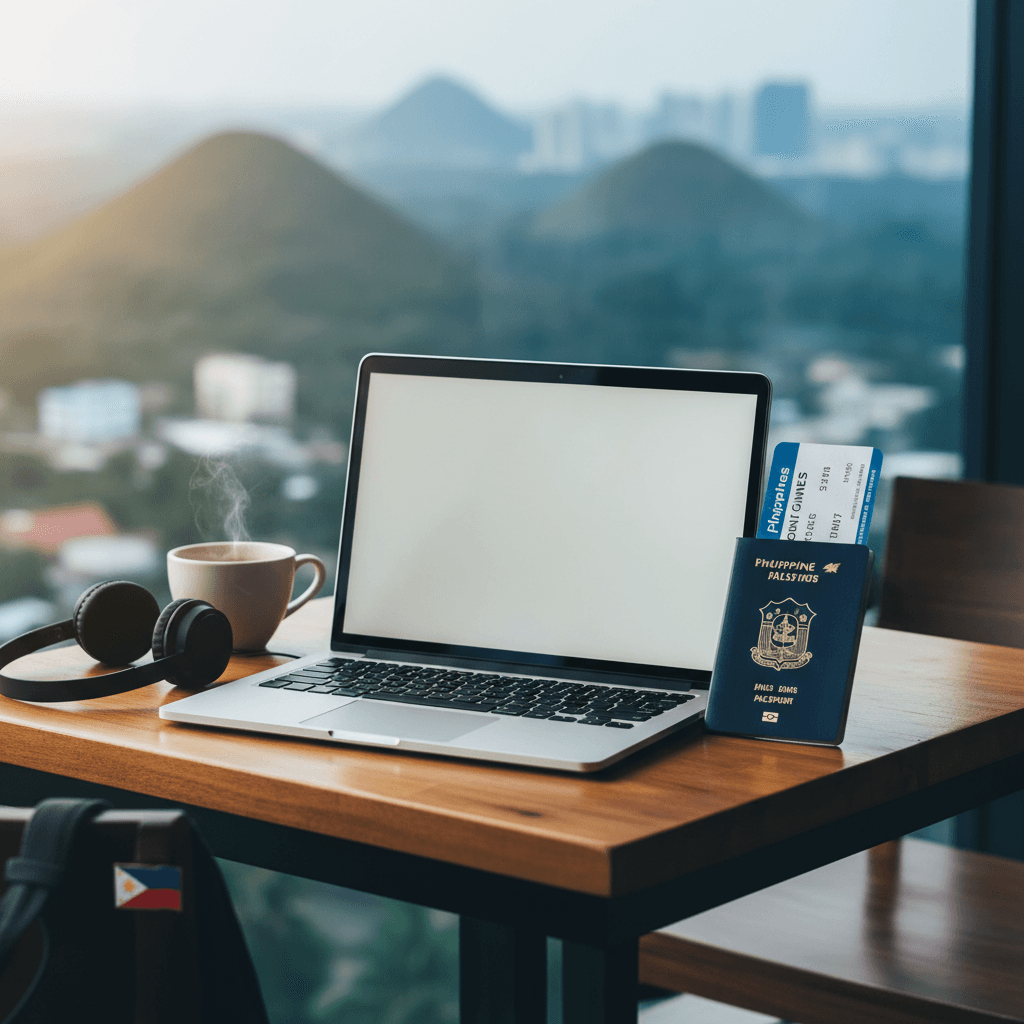
Philippines
Complete Digital Nomad Guide

Policy Stability
Stamped Nomad ExclusiveHow likely visa and immigration policies are to remain unchanged
Quick Facts
Income Requirement
$2,000/mo
Max Stay
36 months
Renewable
Yes
Cost of Living
$1,200/mo
Avg Internet
94 Mbps
Safety Score
6/10
Healthcare
High
Coworking
High
English Friendly
High
Time Zones
PHT (UTC+8)
Entry Methods Available
Best For
The 9A Visitor Strategy
For the vast majority of digital nomads, the 9A Temporary Visitor Visa is the primary gateway into the Philippines. It covers both tourism and short-term business activities, provided you aren't receiving a salary from a Philippine-based company. If you are from one of the 157 visa-free countries, you can simply land, get a stamp, and start your tropical tenure.
The beauty of the Philippine system is its flexibility. While many neighbors in Southeast Asia limit you to 60 or 90 days, the Philippines allows non-visa-required nationals to extend their stay for up to 36 months without needing to leave the country. You just visit a Bureau of Immigration office every month or two to keep your status current.
Visa-Free Entry and Extensions
If you hold a passport from the USA, UK, Australia, Japan, or most EU nations, you receive an initial 30-day stay upon arrival. You can also opt for a 59-day stay immediately if you apply through a consulate before your trip. For those already on the ground, your first extension usually involves a 29-day waiver to bring your total stay to 59 days. This first step costs approximately PHP 3,030.
Subsequent extensions are handled in one-month or two-month blocks. A one-month extension for an adult typically runs around PHP 4,400, while a two-month block is roughly PHP 4,900. These prices include express fees, which are standard for most travelers. Keep in mind that once you stay beyond 59 days, you are required to apply for an ACR I-Card (Alien Certificate of Registration), which costs about USD 50 plus service fees and acts as your local ID.
- Extension Deadline: Visit a BI office at least 7 days before your current stamp expires.
- Overstay Penalty: Missing your date results in a fine of PHP 500 per month.
- Passport Validity: Your passport must be valid for at least 6 months beyond your intended stay.
The New E-Visa System
The government is actively modernizing its entry process. Certain nationalities, including travelers from France and Austria, can now use the Philippines' official immigration portal to secure a 9A visa online before arrival. This digital version is convenient but generally non-extendible, so it is best suited for nomads planning a shorter, fixed-term trip rather than a multi-year residency.
Specific Nationalities and 2025-2026 Updates
Entry rules for several major regions are shifting. Indian nationals currently receive 14 days, but starting June 2025, those with valid visas from the US, Canada, Japan, or Australia can stay for 30 days. Chinese nationals are also seeing changes; starting January 2026, they can enter for 14 days visa-free for tourism or business through specific ports like Manila and Cebu, though this specific entry type cannot be extended.
Travelers from Hong Kong and Macau SAR are granted 14 days upon arrival. If you hold a specialized passport or are from a country not on the visa-exempt list, such as Afghanistan or Algeria, you must secure a visa from a Philippine embassy before booking your flight, as Visa on Arrival (SEVUA) is extremely limited and rarely granted to independent travelers.
Business vs. Remote Work
The 9A visa is perfectly legal for those attending meetings, scouting locations, or signing contracts, provided no local compensation is involved. If you are a digital nomad working for a company back home, the 9A remains the standard path. However, if you plan to invest significantly or start a local entity, you might eventually look into the 9D Treaty Trader or 9G Pre-arranged Employment visas. These require more paperwork, including invitation letters, financial statements, and a much higher application fee, but they offer more permanent standing for long-term residents.
The Philippines finally joined the remote work revolution in June 2025 with the official launch of its Digital Nomad Visa (DNV). It is a game changer for anyone who wants to trade their home office for a beach shack in Siargao or a high-rise in Makati without the constant stress of monthly visa runs.
The Basics: Duration and Income
The DNV gives you an initial 12-month stay, which you can renew for another 12 months. This gives you a total of two years to explore the archipelago. It is a multiple-entry visa, so you can easily use Manila or Cebu as a hub to explore the rest of Southeast Asia during your stay.
While the government has been a little vague on the exact floor for earnings, the current benchmark sits between $2,000 and $3,000 per month. You will need to show that this money is coming entirely from sources outside the Philippines. If you are making roughly $24,000 to $36,000 annually, you should be in the clear.
The Application Process
The Bureau of Immigration has moved most of the heavy lifting online. You can start the process through the official government portal. Once your digital file is reviewed, you will need to visit a Philippine embassy or consulate to show your physical passport and original documents.
You will need to have these items ready for your application:
- A passport with at least 6 months of validity remaining.
- Proof of remote work, such as employment contracts or long-term freelance invoices.
- Bank statements covering the last 3 months.
- An international health insurance policy that covers you in the Philippines.
- An apostilled criminal background check from your home country.
- A recent passport photo and proof of your current residence.
Tax Perks and Rules
One of the biggest draws of this visa is the tax treatment. Your foreign-sourced income is exempt from Philippine income tax. Because you are working for a company or clients based outside the country, the local government does not take a cut of your paycheck. This allows you to take full advantage of the lower cost of living in the islands.
There are, however, a few non-negotiable rules you need to follow:
- You must be at least 18 years old.
- You cannot take a local job or provide services to Philippine-based companies.
- Your home country must have a reciprocal agreement or a Foreign Service Post.
- You must maintain your health insurance coverage for the entire duration of your stay.
Why It Matters
Before this visa, most nomads relied on tourist visa extensions. While those are relatively easy to get, they require frequent trips to immigration offices and offer zero long-term certainty. The DNV provides a legitimate, stable path for staying in the country. It treats you like a resident rather than a perpetual tourist, making it much easier to sign long-term leases or set up a consistent routine in your favorite coastal town.
Welcome to the Land of Easy Extensions
The Philippines is one of the most nomad-friendly countries in Southeast Asia when it comes to paperwork. While other neighboring countries require complex "visa runs" or expensive long-term permits, the Philippines allows you to stay for up to 3 years without ever needing to leave, provided you keep up with your monthly or bi-monthly renewals.
Most travelers from the US, Canada, Australia, the UK, and the EU fall under Executive Order 408. This means you can show up at the airport with nothing more than a passport valid for 6 months and proof of a flight out of the country. You'll get a stamp for 30 days for free. If you are a citizen of Brazil or Israel, you get 59 days right off the bat.
The Entry Process
Before you board your flight, you must register via the eTravel portal. Do this within 72 hours of your arrival to get your QR code, which immigration officers will ask to see alongside your boarding pass.
For those who aren't on the visa-exempt list, you'll need to apply for a 9(a) tourist visa in advance. The government has rolled out an online e-visa system for many nationalities. You'll need to upload your passport details, photo, and financial records. Processing usually takes between 7 to 21 working days, so don't leave it until the last minute.
Staying Long-Term: Extensions and the ACR I-Card
If you fall in love with the islands and want to stay past your initial 30 days, the process is straightforward. You can visit any Bureau of Immigration (BI) office, which are located in most major malls and cities across the country.
- First Extension (Visa Waiver): Extends your stay to a total of 59 days. Cost is approximately ₱3,000 to ₱3,500.
- Standard Extensions: After the first 59 days, you can apply for 1-month extensions (approx. ₱3,000-₱4,000) or 2-month extensions (approx. ₱4,000-₱5,500).
- Long Stay Visitor Visa Extension (LSVVE): If you know you're staying put, you can apply for a 6-month extension for roughly ₱11,500 to ₱13,900.
Once you stay beyond 59 days, you are required to apply for an ACR I-Card (Alien Certificate of Registration). This is a microchipped ID card that costs around ₱2,500 to ₱3,000 plus a $50 fee. It serves as your official ID in the country and is often required to open local bank accounts or sign certain rental agreements.
Border Runs vs. Formal Extensions
You might be tempted to fly to Hong Kong or Singapore for a weekend to "reset" your 30-day free stamp. While this works, immigration officers eventually catch on. If they suspect you are living in the country permanently without the proper extensions, they can deny you entry. It is much safer and often cheaper to use the official extension system, especially since visa-exempt nationals can stay for 36 months before they are required to leave and restart the clock.
Handling Overstays
Life happens, and sometimes you might miss a renewal date. If you overstay, you'll face fines of about ₱500 to ₱1,000 per month, plus the cost of the extensions you missed. You can usually settle these at the Bureau of Immigration or even at the airport before you fly out. However, overstaying for a long period can lead to being blacklisted or deported, which effectively ends your nomad stint in the Philippines for 1 to 5 years.
If you've stayed in the country for more than 6 months, you must obtain an Emigration Clearance Certificate (ECC) before you leave. This costs about ₱1,260 and proves you have no pending legal or financial obligations in the Philippines. Get this at a BI office at least 3 days before your flight.
Making the Philippines Your Base
The Philippines has long been a favorite for slow travelers because of its incredibly flexible visa rules. Whether you are looking to park a bit of capital for permanent residency or just want to work from a beach for a year, there is likely a permit that fits your lifestyle. The bureaucray can be slow, but the options are surprisingly diverse.
The New Digital Nomad Visa
The Philippines recently joined the global trend by introducing a specific Digital Nomad Visa. This is the most direct route if you are working for a company back home or running your own freelance business. It is designed to be a streamlined, online-first process.
- Income Requirement: You need to show a minimum monthly income of US$2,000.
- Eligibility: You must be at least 18 years old and work for a foreign-based employer or clients.
- Documentation: You will need a clean criminal record and valid health insurance that covers you for the length of your stay.
- Reciprocity: Your home country must have a reciprocal agreement with the Philippines regarding nomad visas.
The Retirement Route (SRRV)
Do not let the word "retiree" fool you; the Special Resident Retiree's Visa (SRRV) is open to anyone 50 years old or older. It is widely considered one of the best value residency programs in Southeast Asia. It gives you multiple-entry privileges and the right to stay indefinitely.
- Classic Pensioner: If you have a monthly pension of US$800 (or US$1,000 for couples), you only need to deposit US$10,000 in a Philippine bank.
- Classic Non-Pensioner: If you do not have a fixed pension, the required deposit ranges from US$20,000 to US$50,000.
- Renewal Fees: The annual fee is US$360 for the standard version or US$100 for military veterans.
Investment and Residency
If you have some capital to deploy, the Special Investor’s Resident Visa (SIRV) or the Fast-Track Investor Visa (FIV) are powerful tools. These are effectively "Golden Visas" that grant you the right to live, work, and study anywhere in the country. The FIV, managed by the Freeport Area of Bataan, is known for being incredibly quick, with some approvals happening in just three business days.
- Investment: A minimum of US$75,000 must be invested in approved Philippine businesses or local projects.
- Benefits: No minimum stay requirements and a pathway to citizenship after 10 years.
- Family: You can include your spouse and any unmarried children under 21 as dependents.
Temporary Residency and the ACR I-Card
For those not ready to commit to a specific program, the Temporary Resident Visa (TRV) covers marriage, employment, or study. These usually require annual renewals that cost between PHP 8,620 and PHP 37,060, which is roughly US$150 to US$650.
Regardless of which path you take, if you stay longer than 59 days, you must apply for an ACR I-Card (Alien Certificate of Registration). This is a microchip-based credit card-sized ID that acts as your primary identification while in the country. It costs US$50 plus some small administrative fees and needs to be renewed annually.
The Path to Citizenship
Naturalization is a long game in the Philippines, but it is possible. Generally, it requires 10 years of continuous residency. This can be cut down to 5 years if you marry a Filipino citizen or are a teacher in a local school. You will need to demonstrate proficiency in English, Spanish, or a local language like Tagalog or Cebuano, and you must own real estate worth at least 5,000 pesos or have a steady job.
Cost Summary
- SRRV Pensioner: US$10,000 deposit + US$100 annual fee.
- SRRV Non-Pensioner: US$20,000 deposit + US$360 annual fee.
- Investor Visas: US$75,000 minimum investment.
- Digital Nomad Visa: US$2,000 monthly income requirement.
- ACR I-Card: US$50 per year for stays over 59 days.
The Philippines offers a compelling balance for digital nomads: it is significantly more affordable than Western hubs while providing a higher standard of living than some of its Southeast Asian neighbors if you have the budget. You can comfortably navigate life here on $1,000 to $2,500 USD per month. Where you land on that scale depends almost entirely on your tolerance for Manila traffic and your addiction to imported groceries.
Breaking Down the Monthly Rent
Housing is your biggest variable. In the Philippines, "nomad areas" usually mean high-security districts with reliable fiber internet and backup power generators, which are vital during the occasional tropical storm. Prices for a 1BR furnished condo vary wildly by neighborhood.
Manila (BGC and Makati)
- Budget: $300–$500 for older units or those on the periphery of the main business districts.
- Comfortable: $500–$1,000 for modern studios in managed buildings with gyms and pools.
- Premium: $1,000–$2,000+ for high-rise luxury units in the heart of Bonifacio Global City.
Cebu (IT Park and Lahug)
- Budget: $250–$400 for simple, functional units near the tech hubs.
- Comfortable: $400–$700 for newer developments with solid amenities.
- Premium: $700–$1,000 for the best views and top-tier building management in the city.
Davao (Bajada and Matina)
- Budget: $200–$350 for local-style apartments.
- Comfortable: $350–$500 for well-located, air-conditioned condos.
- Premium: $500–$800 for the most exclusive residences in the city.
Food and Dining
If you stick to local markets and "carinderias" (small local eateries), you can eat well for $200–$350 a month. Most nomads opt for a mix, spending $350–$500 to enjoy a blend of local dishes and Western-style cafes. If you find yourself constantly ordering through delivery apps or frequenting high-end restaurants in BGC, expect your bill to hit $500–$800. Cebu and Davao generally offer cheaper fresh produce and local meals than the capital.
Transport and Infrastructure
Manila is famous for its gridlock, making the Grab app your best friend. Budget $20–$50 if you are brave enough for jeepneys and buses, or $50–$100 for daily rideshares. Premium users who take frequent private cars or inter-island flights should plan for $100–$250. Davao remains the most affordable city for getting around, with much lighter traffic than Manila or Cebu.
Coworking and Connectivity
Reliable Wi-Fi is no longer the myth it used to be in the Philippines, but coworking spaces still provide the most stable environment. Availability is highest in Cebu’s IT Park and Manila’s BGC. Flexi desks usually run $50–$150 a month, while a dedicated desk at a premium provider like KMC Solutions or Regus will cost between $200 and $350.
Health and Wellness
While local healthcare is affordable for minor issues, comprehensive international insurance is a non-negotiable for most long-term travelers. Basic plans from SafetyWing start around $45–$100. Mid-tier coverage typically falls between $100–$250, while premium plans with full global coverage can reach $250–$400 per month. These rates are consistent across the islands, though the best medical facilities are concentrated in Metro Manila and Cebu City.
The Top Three Picks
The Philippines is no longer just a destination for weekend backpackers. With fiber-optic speeds now hitting 100 Mbps in urban centers and Starlink saving the day on the islands, the country has become a legitimate base for remote work. Most nomads find they can live comfortably here on $550 to $1,000 per month, depending on how much they prioritize air conditioning and imported coffee.
While Dumaguete offers a quiet university town vibe and Baguio provides a cool mountain escape, three locations stand out for their balance of community and connectivity.
Cebu City: The All-Rounder
Cebu City is often the "Goldilocks" choice for nomads. It offers the infrastructure of a major metropolis without the suffocating scale of Manila. If you base yourself near the IT Park, you will find a density of 100+ Mbps fiber connections and a community that gathers at spots like The Company or Nomad's Hub.
The real draw here is the proximity to adventure. You can finish a client call at 5:00 PM and be on a boat to a world-class diving spot by Saturday morning. The traffic is notoriously heavy, so it is best to live within walking distance of your favorite cafe or coworking space.
- Monthly Cost: $700–$1,000
- Internet: 100+ Mbps Fiber
- Coworking: High density in IT Park and Mabolo
- Vibe: Urban hustle meets weekend island hopping
Metro Manila (BGC & Makati): The Corporate Hub
If your job requires zero downtime and high-speed networking, stick to Bonifacio Global City (BGC) or Makati. These districts feel more like Singapore than the rest of the Philippines. You will find premium spaces like WeWork and Acceler8, where the internet rarely blinks and the networking opportunities are endless.
It is the most expensive path, with costs ranging from $900 to $1,500, but the safety and walkability in these pockets are world-class. When the sun goes down, the rooftop bar scene at places like The Penthouse offers a great way to decompress after a long shift.
- Monthly Cost: $900–$1,500
- Internet: 100+ Mbps (Top-tier reliability)
- Coworking: Very High (Global brands available)
- Vibe: Modern, polished, and fast-paced
Siargao: The Island Dream
Siargao used to be a gamble for remote workers, but the arrival of Starlink has changed the game. Spots like Alter Space and CocoSpace now provide reliable 50+ Mbps speeds to a community of surfers and creators. It is the most affordable of the top three, with many nomads getting by on $550 to $750 a month.
The lifestyle here is centered around the tides. You work when the sun is high and surf or socialize at beach bars when it drops. Be prepared for occasional power outages; having a backup power bank for your laptop is a smart move here.
- Monthly Cost: $550–$750
- Internet: 50+ Mbps (Starlink-dependent)
- Coworking: Growing selection of boutique spaces
- Vibe: Laid-back, social, and outdoorsy
Whether you need the high-rise efficiency of Makati or the barefoot lifestyle of Siargao, the Philippines has finally built the digital infrastructure to match its scenery.
The Connection Reality
Internet in the Philippines has undergone a massive glow-up recently. While the country once had a reputation for sluggish speeds, the expansion of fiber optics has changed the game for remote workers. In urban hubs like Metro Manila, BGC, and Cebu, you can expect fixed broadband to average between 94 and 105 Mbps. If you stick to the major cities and modern condos, your Zoom calls will be just as crisp as they are back home.
Once you head to the islands, things get a bit more adventurous. Regions like Calabarzon maintain high speeds, but more remote spots like Eastern Visayas can see averages dip toward 38 Mbps. If you are planning a stint in Siargao or Palawan, it is best to check if your accommodation has a Starlink backup, which is increasingly common in digital nomad hotspots where traditional cables struggle.
Top Coworking Hubs
If you need a professional environment to get through a heavy sprint, the coworking scene is thriving, particularly in the business districts. These spaces offer the most reliable uptime and often serve as the social heart of the nomad community.
- KMC: With locations in BGC, Makati, and Cebu IT Park, these are the gold standard for reliable infrastructure and modern aesthetics.
- WeWork: You will find their most popular branches in Uptown Bonifacio (BGC) and the RCBC Plaza (Makati), perfect for those who want a familiar, high-end feel.
- Clock In: A great local favorite with spots in Alabang and Palawan, offering flexible access for those moving between the city and the coast.
- Acceler8: Located throughout Makati, these spaces are known for being particularly friendly to solopreneurs and freelancers.
What You Will Pay
Pricing for desk space depends heavily on your lifestyle. In the premium districts of Metro Manila, a monthly hot desk pass typically runs between ₱10,000 and ₱14,000. If you are based in Cebu or Davao, you can find quality setups for ₱5,000 to ₱9,000 per month.
For those who just need a spot for the afternoon, day passes usually cost between ₱400 and ₱900. Many nomads opt for a "work-from-anywhere" approach by using Regus, which offers access plans starting around ₱8,600 monthly across multiple locations.
Cafe Culture and Reliability
Working from cafes is a popular pastime in the Philippines, but it requires some strategy. Urban spots like Arabica or Luna Cafe in BGC offer solid WiFi reaching 40-80 Mbps, along with plenty of power outlets. However, many public networks and smaller coffee shops use Go-Free, which often cuts your connection after 60 minutes.
In the islands, cafe WiFi is notoriously fickle. Power outages (locally called "brownouts") can take down a whole neighborhood's grid. If you are working on a deadline, it is always safer to book a dedicated coworking space rather than relying on a beachside bistro.
Mobile Data and SIMs
Never rely solely on hotel WiFi. Local SIM cards are cheap and the 4G/5G coverage in cities is excellent, often reaching speeds up to 300 Mbps. You have three main choices: Globe, Smart, and DITO. All of them offer generous prepaid bundles that you can manage easily through their respective apps.
- Globe: Offers around 30GB for 30 days for roughly ₱700.
- DITO: Known for aggressive pricing, often providing 50GB for 30 days at ₱999.
- eSIMs: Providers like Nomad or Airalo offer 5GB to 20GB plans ranging from $7 to $35, which is the easiest way to get connected the moment your plane touches the tarmac.
Pro tip: If you are staying long-term, grab a Smart SIM as well. Having two different networks is the best insurance policy against the occasional local tower outage.
Staying healthy in the Philippines is straightforward as long as you know where to go and what to avoid. While the country has a universal healthcare system called PhilHealth, it is designed primarily for locals and often involves long wait times, crowded wards, and older equipment. For nomads and expats, the private healthcare sector is the way to go. You will find world-class facilities in the major cities that rival Western hospitals, but at a fraction of the price.
Public vs. Private Care
The gap between public and private facilities is significant. Public hospitals are subsidized and very affordable, but they are frequently overstretched. As a foreigner, you will pay full price in these facilities anyway, so it makes little sense to deal with the bureaucracy. Private hospitals offer modern technology, shorter queues, and staff who speak excellent English.
Expect to pay 2 to 5 times more at a private hospital than a public one. Even with that markup, a standard consultation usually only costs between 2,000 and 5,000 PHP ($35-$90). It is affordable out-of-pocket for minor issues, but costs can escalate quickly if you require surgery or specialized diagnostic imaging.
Top-Tier Hospitals
If you are based in Metro Manila or Cebu, you have access to some of the best medical care in Southeast Asia. These institutions are JCI-accredited and often have direct billing arrangements with international insurance providers.
- St. Luke's Medical Center: Located in Global City (Taguig) and Quezon City. This is widely considered the gold standard in the country.
- Makati Medical Center: A top choice for those staying in the central business district.
- The Medical City: Located in Ortigas, known for advanced specialties and excellent patient care.
- Chong Hua Hospital: The premier option if you are working from Cebu City.
Insurance Strategies
Health insurance is not a legal requirement for most Philippine visas, but going without it is a massive gamble. Private hospitals often require a significant cash deposit or proof of insurance before admitting you for non-emergency procedures. While you can join PhilHealth voluntarily, the coverage is too basic for most nomad needs.
Local HMOs like Pacific Cross are popular and cost roughly 15,000 to 40,000 PHP per year. However, most nomads prefer international plans from providers like Cigna, Allianz, or SafetyWing. These plans usually range from $80 to $150 per month and cover medical evacuation, which is vital if you plan on spending time in remote islands like Siargao or Palawan where specialized care is limited.
Estimated Medical Costs
Prices vary depending on the prestige of the clinic. Here is what you can expect to pay at private and international-standard facilities:
- General Consultation: 2,000 to 10,000 PHP
- Specialist Visit: 5,000 to 20,000 PHP
- CT or MRI Scan: 15,000 to 70,000 PHP
- Minor Surgery: 30,000 to 150,000 PHP
- Major Surgery: 100,000 to 500,000 PHP
For context, a complex procedure like a heart stent in a high-end private room will set you back around 330,000 PHP ($5,900).
Pharmacies and Prescriptions
Getting your hands on medication is easy. Look for Mercury Drug or Watsons; these chains are everywhere, from major malls to small provincial towns. They carry both name-brand and generic options. Most pharmacists speak great English and can recommend over-the-counter substitutes if your specific brand isn't available. Many of these chains also have online locators to help you find specific meds before you make the trip.
Emergencies
In an emergency, dial 911. However, response times for public ambulances can be slow due to Manila's infamous traffic. If you are in a city, it is often faster to take a Grab or taxi to the nearest private hospital emergency room. Keep the direct contact number of the nearest private hospital saved in your phone. For non-life-threatening issues, look for "Urgent Care" clinics in malls, which handle walk-ins much faster than a full-scale hospital.
The Local Banking Reality
Opening a traditional bank account in the Philippines is a bit of a mixed bag. While it is technically possible for foreigners, your experience will depend heavily on which branch you walk into. Most banks require an ACR I-Card (Alien Certificate of Registration), which you can typically apply for after staying in the country for more than 59 days. If you are on a standard tourist visa, many branches will politely decline your application until you have that card in hand.
When you are ready to apply, bring your passport, your ACR I-Card, proof of address (like a lease agreement or a utility bill), and a minimum initial deposit. Some managers might ask for a bank reference letter from your home country. If you want the path of least resistance, BDO, BPI, and Metrobank are generally the most accustomed to dealing with international clients.
Digital Wallets and Neobanks
For most nomads, Wise is the gold standard here. You can hold Philippine Pesos (PHP) directly in your account and even get local bank details to receive salary payments from Filipino clients without the massive wire fees. It is far more functional for long-term stays than Revolut, which works for tapping your card at a cafe but does not support PHP-denominated transfers or local account numbers.
Once you land, download GCash or Maya. These are the lifeblood of the Philippine economy. You can use them to pay for everything from street food to electricity bills. You can easily "cash in" to these apps using Remitly or WorldRemit, which often offer better exchange rates than a standard bank transfer. WorldRemit is particularly handy for small amounts because they allow transfers as low as $1 and often waive fees for your first few transactions.
Handling Cash and ATM Fees
The Philippines is still very much a cash-heavy society, especially once you leave Manila or Cebu. You will need a stack of pesos for trikes, local markets, and smaller guesthouses. Unfortunately, the ATM situation is a bit of a racket. Almost every ATM in the country charges a flat fee of PHP 250 to 300 for foreign cards. This is roughly $4 to $5 USD per withdrawal, regardless of how much you take out.
To keep costs down, try to withdraw the maximum amount allowed, which is usually between PHP 10,000 and 20,000 per transaction. Daily limits are often capped at PHP 50,000 to 100,000. When the machine asks if you want to use its "conversion rate," always select "Decline Conversion." This ensures your home bank handles the exchange rate, saving you from the predatory rates set by the local ATM provider.
Currency and Exchange Rates
The local currency is the Philippine Peso (PHP). The exchange rate currently sits around 57.93 PHP to 1 USD. The peso has shown some strength recently, climbing about 2.47% in the last month, so it is worth keeping an eye on the charts if you are planning to move a large chunk of savings into the local ecosystem.
Crypto Regulations
If you trade or hold crypto, you can breathe easy. It is perfectly legal in the Philippines, though it is strictly regulated. You cannot use Bitcoin to buy your morning coffee at the mall, but you can trade on registered platforms. Just make sure any exchange you use is compliant with the Crypto Asset Service Provider (CASP) rules that went into effect on July 5, 2025. The government has become very strict about unregistered exchanges lately, so stick to licensed platforms to avoid having your funds frozen or facing legal headaches.
Financial Quick Stats
- Average ATM Fee: PHP 250 per transaction
- Standard Withdrawal Limit: PHP 10,000 to 20,000
- Best Transfer Tool: Wise (for PHP account details)
- Must-Have App: GCash
- Required Document: ACR I-Card for stays over 59 days
Moving your family to the Philippines is a bold move that pays off in ways most Western countries can't match, particularly when it comes to work-life balance and the cost of household help. While most nomads start in the Philippines as solo travelers, the country is surprisingly well-equipped for those bringing a spouse and children, provided you choose your base wisely.
Visa Logistics for Dependents
If you are heading to the Philippines on a long-term track, your family can usually tag along under your principal status. The 9G work visa and the SRRV (Retiree) visa both allow you to include a spouse and unmarried children under 21 years old. For those exploring the economic zones, the 47(a)(2) visa offers similar perks.
You will need to gather a stack of paperwork before you arrive. This includes:
- Valid passports for every family member.
- Original birth and marriage certificates, which must be PSA-issued or apostilled in your home country.
- Medical certificates and police clearances for any children over 16.
- Proof of custody if you are a single parent.
If you are still deciding on a long-term status, many families enter on a 9A tourist visa. You can extend these in increments for up to 36 months, giving you plenty of runway to convert to a resident status while on the ground.
Education and International Schools
The local public school system isn't usually the first choice for expats. Instead, most nomad families gravitate toward international schools that offer the IB or IGCSE curricula. Most of these top-tier institutions are clustered in Metro Manila and Cebu.
Be prepared for a wide range in tuition. In Manila, premium schools like International School Manila or British School Manila can cost between PHP 600,000 and PHP 1,100,000 per year. In Cebu, the Cebu International School offers a high standard for slightly less. Generally, primary school fees start around PHP 300,000 (approx. USD 5,000), but you should also budget for one-time enrollment and development fees that can add several thousand dollars to your first year.
Childcare and Nannies
This is where the Philippines truly shines for parents. Affordable childcare is the norm here, allowing parents to actually get work done while the kids are looked after. A full-time, live-in nanny (locally called a yaya) typically earns between PHP 5,000 and PHP 10,000 per month plus room and board. In Manila, rates for experienced help are higher, often ranging from PHP 17,000 to PHP 25,000.
If you prefer a part-time arrangement, hourly rates usually sit between PHP 150 and PHP 400. Private preschools and kindergartens are also widely available in urban centers, costing roughly PHP 10,000 to PHP 14,000 per month.
Healthcare for the Little Ones
The healthcare system is a mix of public and private options. While PhilHealth is mandatory for many residents and covers basic check-ups and vaccinations for a low annual fee of PHP 2,400 to PHP 3,600, it often requires co-pays of up to 40%. Most expats opt for private insurance or HMO plans to access better facilities.
A solid family health plan usually starts around PHP 5,000 per month. Stick to private hospitals in major cities for pediatric emergencies, as they house the most modern equipment and English-speaking specialists. It is also wise to maintain international insurance that includes medical evacuation if you plan on living in more remote islands.
Where to Set Up Camp
Location is everything when you have kids in tow. You want a mix of safety, walkability, and modern amenities.
- Cebu City: Offers a great balance of infrastructure and proximity to beaches. It has a high safety rating for expats and excellent schools.
- Davao City: Known for strict local laws and very low crime rates. It has a more relaxed, family-oriented vibe than Manila.
- Dumaguete: A budget-friendly university town. It is incredibly walkable and often cited as one of the safest spots in the country.
- Makati and BGC (Manila): The gold standard for convenience. You will find the best hospitals and schools here, though you will pay a premium for the lifestyle.
Staying Safe
Safety in the Philippines is generally high in the areas where nomads congregate, particularly in gated communities and business districts. One thing to take seriously is road safety. The country has mandatory car seat laws for children, which is a significant step in reducing travel risks. Beyond the roads, the biggest day-to-day concerns are usually petty crimes like pickpocketing in crowded areas, so staying aware in transit is your best bet.
A Safe Haven for Nomads
The Philippines is currently experiencing a significant downward trend in crime, making it one of the more secure hubs for remote work in Southeast Asia. Recent data shows crime rates dropped by 24.32% in early 2026, continuing a steady decline from previous years. While you should always keep your wits about you in crowded Metro Manila markets, the overall environment is welcoming and stable.
If safety is your top priority, Davao stands out as the gold standard for expats due to its strict local ordinances and low incident rates. Metro Manila has also seen a 24% decrease in crime recently, particularly in high-traffic nomad areas like Makati and BGC. Most issues foreigners face are petty thefts in tourist hotspots, which are easily avoided with basic situational awareness.
Avoiding the Local Hustle
While violent crime is rare, "white lie" scams and opportunistic overcharging do happen. Your biggest headache will likely be airport taxis. Drivers often claim their meters are broken or try to negotiate a flat "tourist rate" that is triple the actual cost. Download the Grab app immediately upon arrival; it functions like Uber and ensures you pay a fair, tracked price.
- ATM Security: Stick to machines inside malls or bank branches. Skimming is a known issue, especially during holiday seasons.
- Digital Scams: Be wary of "too good to be true" tour packages advertised on social media or spontaneous invites to private card games.
- Romance Scams: Online dating is popular here, but verify who you are talking to before sending money for "emergencies" or travel costs.
The Social Fabric and Etiquette
Filipino culture is built on Pakikisama, which roughly translates to maintaining harmony. People go out of their way to avoid confrontation, so a smile goes much further than a raised voice. You will find the hospitality here is genuine and often overwhelming. If a local invites you to share their meal, it is polite to accept at least a small portion.
Respect for elders is a pillar of society. You can earn instant points by adding the word "po" to the end of your sentences when speaking to someone older. A simple "Kumusta po" (How are you?) is the perfect icebreaker. While the country is deeply religious, the dress code is generally casual. However, cover your shoulders and knees when visiting churches or rural government offices.
LGBTQ+ Visibility
The Philippines is consistently ranked as one of the most LGBTQ+ friendly destinations in Asia. There is a high level of societal acceptance, with surveys showing over 73% support for the community. You will find vibrant queer scenes in Manila’s bars and across the beaches of Siargao.
While same-sex marriage isn't legally recognized yet, the "live and let live" attitude is the norm. In rural provinces, the culture is more conservative, but travelers rarely face overt hostility. The younger generation is particularly progressive, and many urban centers have local ordinances protecting against discrimination.
Communication and Community
One of the biggest perks of the Philippines is that English is an official language. It is the medium of instruction in schools and the primary language for business and law. You can negotiate a lease, talk to a doctor, or brainstorm with a local entrepreneur without ever needing a translator. This lack of a language barrier makes the Philippines one of the easiest places in the world to integrate quickly.
Finding your tribe is straightforward. Thriving expat and nomad communities are active in specific hubs:
- Manila: Focus on BGC and Makati for corporate networking and high-end coworking.
- Cebu: The IT Park area is the go-to for tech nomads and developers.
- Siargao and Davao: Best for those looking for a mix of surf culture and community-led meetups.
To get started, join the Philippines Digital Nomads Facebook group or check out local listings on Meetup. Most social life revolves around food and sport; joining a local basketball game or a "boodle fight" (a communal feast eaten with your hands) is the fastest way to turn neighbors into friends.
Understanding the tax situation in the Philippines is less about counting every single day and more about your intent and where your money comes from. The Bureau of Internal Revenue (BIR) generally leaves you alone if you are living on foreign savings or remote income from clients outside the country. However, once you cross certain thresholds or start picking up local gigs, the rules get specific.
The Residency Spectrum
The Philippines categorizes you based on how long you stay and what you are doing. If you are just passing through on a tourist visa for less than 180 days in a calendar year, you are a Non-Resident Alien Not Engaged in Trade or Business (NRA-NETB). In this bracket, you generally only worry about a 25% flat tax on any income actually generated within the Philippines.
Once you stay for more than 180 days, the BIR considers you "engaged in trade or business" (NRA-ETB). This sounds more intense than it is; it simply means you are now taxed at the same progressive rates as locals for any Philippine-sourced income, rather than a flat 25%. If you intend to stay indefinitely, you might be classified as a Resident Alien, which technically subjects your worldwide income to local taxes, though this is rarely applied to nomads on temporary visas.
The Digital Nomad Visa Perk
The game changed with the introduction of the dedicated Digital Nomad Visa. If you hold this specific visa, which can last for 12 to 24 months, you are officially exempt from paying taxes on your foreign-sourced income. It is the cleanest way to stay long-term without worrying about the BIR knocking on your door, provided you aren't taking jobs from local Philippine companies.
Tax Rates and Brackets
If you do end up earning money from Philippine sources or lose your exemption, the tax man uses a graduated scale. For those classified as residents or NRA-ETBs, the rates for taxable income are:
- 0% for income up to PHP 250,000
- 15% to 20% for income between PHP 250,000 and PHP 800,000
- 25% to 30% for income between PHP 800,000 and PHP 8,000,000
- 35% for anything over PHP 8,000,000
Self-employed nomads who earn less than PHP 3,000,000 annually can often opt for a much simpler 8% flat tax on gross sales, which saves a massive amount of paperwork.
Crypto and Digital Assets
The Philippines views crypto as property. If you sell or exchange crypto while residing here, you are technically looking at capital gains taxes of up to 15%. If you are mining or staking, that is treated as regular income and taxed at the progressive rates mentioned above. While enforcement is currently light, the government is moving toward international reporting standards (CARF) by 2028, so keeping clean records now is a smart move.
Double Taxation and Treaties
You probably won't have to pay tax twice on the same dollar. The Philippines has tax treaties with over 40 countries, including the US, UK, Canada, and Australia. These agreements ensure you can claim credits back home for taxes paid in the Philippines, or vice versa. If you find yourself being over-withheld, you can file BIR Form 1901 to sort out your status.
Paperwork and Deadlines
If you are required to file, the magic date is April 15. This is the deadline for the annual Income Tax Return (ITR). You will need a Tax Identification Number (TIN), which you can get by filing Form 1904 at a local Revenue District Office with your passport and visa. Most filings are now handled through the eBIRForms system, so you don't necessarily have to stand in line at a bank to pay your dues.
Setting up shop in the Philippines requires a bit of local savvy to bypass the common frustrations of island life. While the infrastructure is improving, your success as a nomad depends on having your digital toolkit ready before you even step off the plane at NAIA.
Connectivity and Data
Internet is the lifeblood of your remote work setup, and you shouldn't rely solely on hotel Wi-Fi. Pick up a 5G-ready SIM card immediately upon arrival. Smart and Globe are the two main players; Smart generally offers better speeds in Metro Manila and Siargao, with tourist packages ranging from 4 GB to 36 GB for $7.80 to $35.50 USD.
- Smart/TNT: Best for high-speed data bundles and 5G coverage.
- Globe: Reliable backup with extensive provincial reach.
- eSIMs: If you want to skip the physical swap, Airalo, BitJoy, or Holafly provide instant activation, though they are often pricier than local physical SIMs.
Getting Around
Traffic in Manila and Cebu is legendary for all the wrong reasons. Download Grab before you arrive. It is the gold standard for ride-hailing and ensures you pay a fair, upfront price rather than haggling with taxi drivers. For solo travelers looking to weave through gridlock, Angkas, JoyRide, or Move It offer legitimate motorcycle taxi services with provided helmets.
When you are trying to figure out the complex web of jeepney routes and train lines, Sakay.ph is your best friend. It gives you step-by-step public transit directions that Google Maps often misses.
Where to Post Up
Your choice of neighborhood dictates your quality of life. For those who need corporate-grade stability, Makati CBD and Bonifacio Global City (BGC) are the top picks. You will find world-class coworking spaces and reliable power grids here, though studio rents reflect the premium, typically costing PHP 35,000 to 60,000 per month.
If you prefer the beach, Siargao has transformed into a nomad hub with a strong community vibe. Cebu City offers a middle ground, providing urban amenities with quicker access to diving spots. For bookings, Airbnb is great for monthly discounts, but check out Coliving.com or Communal Coliving in Siargao for built-in social circles and backup generators.
Food and Daily Basics
When the tropical heat makes you want to stay indoors, GrabFood and Foodpanda are the dominant delivery apps. They cover everything from local Jollibee runs to healthy grain bowls. Foodpanda is particularly useful for quick grocery deliveries if you are staying in a condo and want to cook.
While English is an official language and spoken fluently by most locals, learning a few Tagalog phrases goes a long way in building rapport. Use Ling or Drops for gamified vocabulary practice, or iTalki if you want to book a few sessions with a native tutor to master the basics.
Safety and Emergencies
The Philippines uses 911 as its nationwide emergency number for police, fire, and medical assistance. If you are in Metro Manila and dealing with a minor road incident or need rescue services, the MMDA can be reached at 136.
Pro-Tips to Avoid Burnout
The most common mistake is overestimating the Wi-Fi. Always ask for a speed test screenshot before booking a long-term stay. Brownouts happen, especially during typhoon season, so a high-capacity power bank and a dedicated mobile hotspot are non-negotiable backups.
Lastly, keep your wits about you at the airport. Ignore unsolicited "helpers" who offer to carry your bags or lead you to "special" taxis; these are almost always scams. Stick to the official transport apps or the yellow metered taxi line. Pace yourself by staying in one region for at least two weeks. Rushing between islands every few days is the fastest way to drain your budget and your energy.
Latest Nomad News
Philippines Updates Overstay Rules Amid Travel Disruptions
The Bureau of Immigration has announced a grace period for foreign nationals whose legal stay expires on or after February 28, 2026. Affected individuals can remain in the country without incurring fines or overstaying penalties until April 1, 2026, due to regional instability.
Clearing Immigration via the Philippines APIS
The Philippines and U.S. have committed to new collaborative initiatives to modernize immigration monitoring and border security systems. Expats and travelers may see updated screening processes and enhanced digital tracking at Philippine ports of entry as these strategic priorities are implemented.
Why Philippines 9G Visa Holders Face Stricter Enforcement
The Bureau of Immigration has arrested four foreign nationals for overstaying and violating 9G work visa conditions. Commissioner Viado emphasized that 9G visa holders must strictly work only for their petitioning employer or face deportation.
More Guides from Southeast Asia
Stay Updated on Philippines
Get notified about visa changes, policy updates, and new information for digital nomads in Philippines.