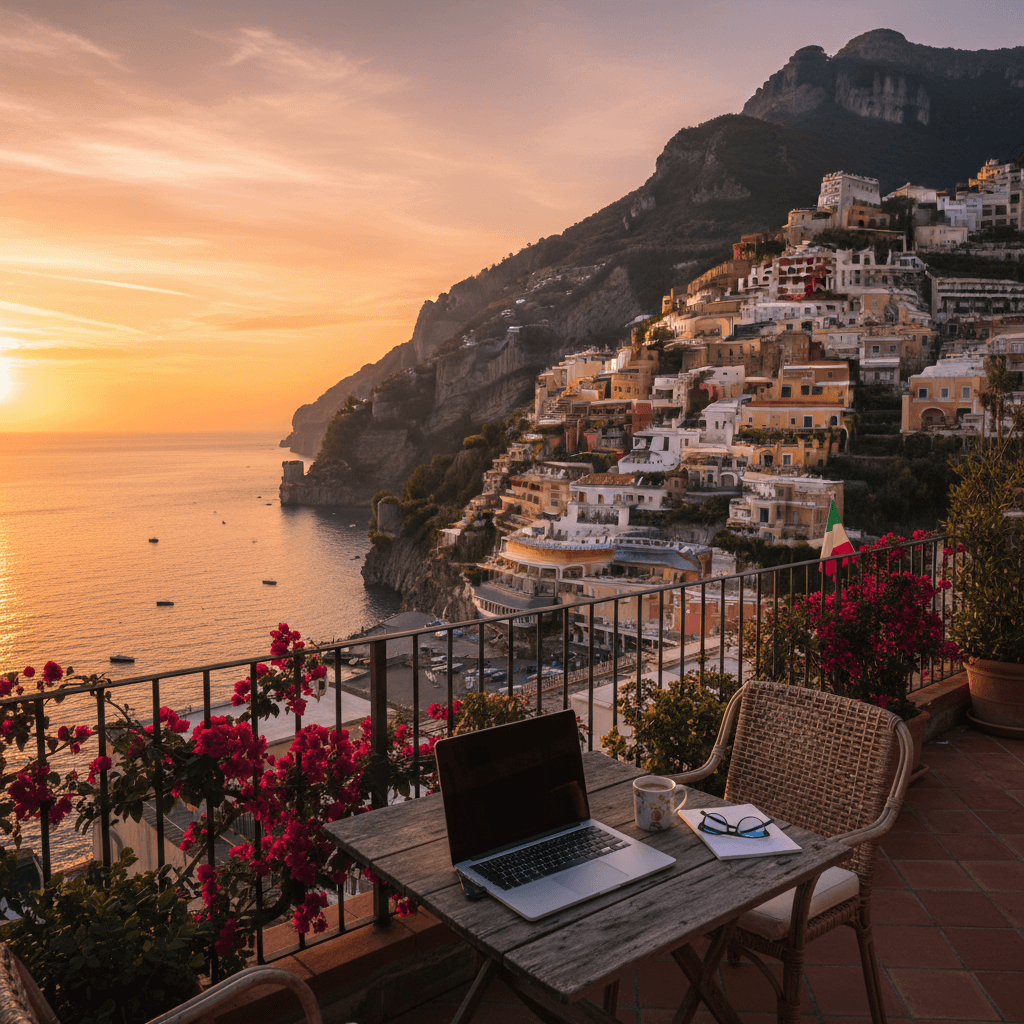
Italy
Complete Digital Nomad Guide

Policy Stability
Stamped Nomad ExclusiveHow likely visa and immigration policies are to remain unchanged
Quick Facts
Nomad Visa Cost
$125
Income Requirement
$2,231/mo
Max Stay
12 months
Renewable
Yes
Cost of Living
$2,400/mo
Avg Internet
171 Mbps
Safety Score
7/10
Healthcare
Medium
Coworking
High
English Friendly
Medium
Time Zones
CET, CEST
Entry Methods Available
Best For
The Basics: Schengen vs. National Visas
Italy operates under the Schengen Agreement, which makes entry straightforward if you are coming for a quick scout of the Colosseum or a month-long pasta tour. For most digital nomads, your journey starts with choosing between a Type C short-stay visa or a Type D long-stay national visa. Type C covers you for up to 90 days within any 180-day period, while Type D is the path for anyone planning to settle in for more than three months.
Italy does not offer a visa on arrival. You need to have your paperwork sorted before you touch down at Fiumicino or Malpensa. Most applications go through local Italian consulates or third-party providers like VFS Global in your home country. If you are just passing through an Italian airport to reach a non-Schengen destination, you might need a Type A transit visa, though this is only for specific nationalities who aren't leaving the airport gate area.
Visa-Free Entry and the ETIAS Update
If you hold a passport from the USA, UK, Canada, Australia, or Japan, you are part of a group of roughly 60 countries that can enter Italy visa-free for up to 90 days. This is perfect for a "workation," provided you aren't signing local contracts. You just show up, get a stamp, and start your 90-day clock.
Things are changing slightly in late 2026. You will soon need to apply for ETIAS, which is a quick online pre-authorization rather than a traditional visa. It will cost €7 and stay valid for three years. It is a digital hurdle, but it won't change your 90-day allowance.
The Tourist Path (Type C)
If your nationality requires a visa even for short trips, the Tourist Schengen Visa is your standard entry point. This allows for tourism or visiting friends and family. It is a strict 90/180 rule, and overstaying is a bad idea as it often leads to multi-year bans from the entire Schengen Area.
- Cost: €80 for adults; €40 for children aged 6 to 12.
- Processing Time: Usually 15 days, but it can stretch to 45 days during peak summer months.
- Requirements: A valid passport, proof of travel insurance with €30,000 minimum coverage, a return flight itinerary, and proof of sufficient funds.
Business and Professional Entry
If you are heading to Milan for a fashion trade show or Rome for a series of corporate meetings, you might need a Business Visa. This still falls under the 90-day Type C umbrella but requires a specific invitation letter from an Italian company and proof of your professional status back home. You will need to show you have at least €27 per day to cover your expenses while in the country.
Staying Long-Term: The Type D Visa
For those looking to make Italy a semi-permanent home, the Type D National Visa is the way to go. There are over 21 different subtypes, including options for salaried employees, students, and family reunification. These visas are valid only for Italy initially. Once you arrive, you have eight days to apply for a Permesso di Soggiorno (residency permit) at the local post office or police station to make your stay official.
Future Digital Shifts
The Italian government is moving toward a more modern system. By Q2 2026, Italy plans to roll out an eVisa platform. This will replace the old-school physical stickers in your passport with digital PDFs. This shift coincides with the installation of more biometric e-gates at major airports, aimed at making the entry process faster for frequent travelers. For now, keep your physical documents organized and always check the official Ministry of Foreign Affairs portal for the most current requirements based on your specific passport.
The Long-Awaited Reality
For years, Italy was the dream destination that lacked a clear legal path for remote workers. That changed in April 2024 when the government finally rolled out the official Digital Nomad Visa. Officially known as the Visto per Nomadi Digitali e Lavoratori da Remoto, this permit allows non-EU citizens to trade their home office for a terrace in Tuscany or a cafe in Rome for up to a year at a time.
This isn't just a simple tourist extension. It is a formal residence path designed specifically for "highly qualified" professionals. Whether you are a freelancer with a roster of international clients or a full-time employee for a company back home, you can now live the Italian lifestyle without worrying about the 90-day Schengen shuffle.
Who Qualifies?
Italy has set the bar relatively high to ensure applicants are established professionals. You cannot just be starting your remote journey; you need to prove you have been working remotely for at least six months. You also need to meet one of three educational or professional criteria:
- A three-year university degree or higher.
- A professional license for a regulated occupation.
- Significant documented experience, typically three to five years, in your specific field.
The financial requirement is also specific. You need to show an annual gross income of at least €28,000 to €34,200. This figure is tied to Italian healthcare thresholds and can fluctuate slightly, so aiming for the higher end is a safer bet. If you want to bring family members, expect to show an additional €780 per month for each adult and €130 per month for each child.
The Application Process
The process starts at the Italian consulate or embassy that serves your current place of residence. You cannot apply for this while already inside Italy on a tourist visa. Once you gather your documents, you will book an appointment for the national visa. After the consulate approves your application, you have the green light to move.
The real work begins once you land. Within eight working days of arriving in Italy, you must visit the local Questura (police headquarters) to apply for your physical residence permit, the Permesso di Soggiorno. This involves a trip to the post office to send a "kit" of documents, followed by a fingerprinting appointment. While the visa gets you through the border, the permit is what actually allows you to stay.
Paperwork Checklist
- Proof of Income: Contracts, bank statements, or payslips showing you meet the minimum threshold.
- Remote Work Proof: A declaration from your employer or contracts with clients confirming you work via telecommunications.
- Accommodation: A signed lease agreement or a declaration of hospitality.
- Health Insurance: A policy valid in Italy providing full coverage for the duration of your stay.
- Clean Record: A self-certification stating you have no recent criminal convictions.
Timeline and Renewals
The visa and the initial residence permit are valid for one year. The good news is that you can renew this annually as long as you still meet the income and employment requirements. If you fall in love with the lifestyle and stay for five years, you become eligible to apply for permanent residency, provided you pass a language and integration test.
Processing times vary wildly depending on your status. Freelancers might wait up to 120 days for approval, while corporate employees often see their applications processed within 30 days. Patience is a requirement when dealing with Italian bureaucracy.
Tax and Social Security
Living in Italy as a nomad means you will eventually become a tax resident. Italy’s tax system is progressive, with rates ranging from 23% to 43%. You will also need to apply for a Partita IVA (VAT number) from the tax agency once you arrive. Italy does not currently offer a specific "flat tax" for this visa, so it is wise to consult with a cross-border tax expert to understand how double-taxation treaties between Italy and your home country will apply to your specific situation.
The 90-Day Rule and Visa-Free Entry
For many digital nomads, getting into Italy is as simple as showing a passport. Citizens from about 60 countries, including the USA, UK, Canada, Australia, and New Zealand, can enter the Schengen Area for up to 90 days without a formal visa. This window is calculated within any 180-day period, meaning you can spend three months soaking up the sun in Tuscany, but you will need to spend the next three months outside the Schengen zone before returning.
To breeze through border control, make sure your biometric passport is valid for at least three months beyond your planned departure. Officers might ask to see a return ticket or proof that you have enough funds to support your stay. While it is rare, they can also check for an SIS alert, so keep your travel history clean.
- Exempt Countries: Argentina, Brazil, Israel, Japan, Mexico, South Korea, and Ukraine (biometric only).
- Specific Requirements: Taiwan passport holders must have their ID number included in the document.
- The No-Go: Italy does not offer a "Visa on Arrival" service. If you are not from a visa-exempt country, you must have your paperwork sorted before you land.
The Schengen Short-Stay Visa (Type C)
If your home country is not on the exempt list, you will need to apply for a Type C Schengen Visa. This involves a trip to an Italian consulate or embassy in your current country of residence. You should start this process early, as standard processing takes about 15 days, though it can stretch to 45 days during busy summer months.
The cost for a Type C visa typically ranges between €80 and €104, depending on your nationality and the current exchange rate. Keep in mind these fees are non-refundable, even if your application is denied. You will need to provide travel insurance, proof of accommodation, and a detailed itinerary of your stay.
The Digital Shift: E-Visas in 2026
Italy is preparing to modernize its entry systems with a nationwide e-visa platform scheduled to launch in late May 2026. This new system will handle both Type C tourist visas and Type D national visas. Once live, you will be able to upload documents and pay fees online, significantly cutting down on paperwork.
While the goal is to make things easier, most applicants will still need to visit a consulate to provide biometrics like fingerprints. However, there is talk of remote options for travelers deemed "low-risk." Until this platform is fully operational, the traditional consulate route remains the only way to secure your entry.
Extensions and Overstays
Italy is famous for its relaxed lifestyle, but their immigration authorities are anything but laid back when it comes to dates. Extending a tourist visa is incredibly difficult and only happens in "force majeure" situations, such as a medical emergency or a flight grounding. If you find yourself in this position, you must visit the local Questura (police headquarters) before your current stay expires.
Overstaying your welcome can lead to serious headaches. Penalties include:
- Fines: These start at €400 and can climb above €3,000.
- Entry Bans: A mark on your record can lead to a 1 to 3-year ban from the entire Schengen Area.
- Deportation: You may be escorted out of the country at your own expense.
Managing the 180-Day Clock
A common mistake for nomads is the "border run." Unlike some regions where you can cross a border for a day to reset your visa, the Schengen clock does not work that way. Leaving Italy for a weekend in London or Montenegro does not reset your 90 days; it simply pauses the count. You must spend a full 90 days outside the zone to "earn" another 90 days inside.
To stay on the right side of the law, use an official Schengen calculator to track your movements. Authorities in Northern Italy are particularly strict about checking entry stamps, so accuracy is your best friend when planning a multi-country European stint.
The Elective Residence Visa (ERV)
If you have built a solid nest egg or have recurring passive income, the Elective Residence Visa is your most straightforward path to life in Italy. This is a Type D national visa designed for those who don't need to work locally. It is a favorite for retirees or those with significant rental income and dividends.
To qualify, you need to prove a minimum passive income of roughly €31,000 per year for a single applicant. If you are bringing a spouse, that number jumps to about €38,000, with an additional 20% required for each dependent child. You will also need to show a signed lease or a deed for a home in Italy and have a private health insurance policy ready to go.
- Application Fee: Between €50 and €300 at the consulate.
- Permit Fee: Approximately €116 once you arrive.
- Restrictions: You are strictly prohibited from seeking employment or freelancing for Italian clients while on this visa.
The Investor Visa (Golden Visa)
Italy’s "Golden Visa" is the fast track for those with significant capital to deploy. The process starts with a digital application for a Nulla Osta (a certificate of no impediment) through the Investor Visa Committee. Once you have that, the visa application at the consulate is usually quite fast.
The investment thresholds vary based on where you put your money:
- €250,000 in innovative startups.
- €500,000 in limited companies or shares.
- €1,000,000 as a philanthropic donation to arts, education, or research.
- €2,000,000 in Italian government bonds.
Expect to pay around €11,000 in legal fees to ensure the paperwork is flawless. Your initial permit lasts 2 years and is renewable for another 3 years, provided you keep the investment intact.
Self-Employment and Digital Nomad Visas
For the modern nomad, the self-employment visa (lavoro autonomo) has historically been the standard, though it is subject to annual quotas known as the Decreto Flussi. You will need a business plan, registration with the local Chamber of Commerce, and proof of income from the previous year that exceeds the minimum threshold for healthcare exemption.
The newer Digital Nomad Visa is designed specifically for remote workers with a high skill level. Requirements for this route include:
- Annual Income: Proof of at least €33,500.
- Experience: A university degree or significant documented work experience in your field.
- Contracts: Evidence of a remote work contract or client agreements dating back at least 6 months.
- Duration: The permit is usually issued for 1 year and can be renewed annually.
The Residency Process (Permesso di Soggiorno)
Regardless of which visa you choose, the real work begins when you land. You have exactly 8 days from your arrival to visit a local post office and request your Permesso di Soggiorno. Look for the "Sportello Amico" window to pick up the "yellow kit" of forms. This starts the process of getting your fingerprints taken at the local Questura (police headquarters).
The government fees for these permits generally range from €40 to €116, plus an additional €30 for the post office service. Never try to work or overstay on a standard 90-day tourist visa; Italy is strict about these transitions and rarely allows you to change status without leaving the country first.
The Path to Permanent Residency
If you fall in love with the Italian lifestyle and stay for 5 continuous years, you become eligible for the EC Long-Term Residence Permit, often called the Carta di Soggiorno. This permit has a 10-year validity and grants you many of the same rights as EU citizens, including easier movement within the Schengen Area.
To qualify, you must show you have lived legally in Italy for the full five years with a valid permit and a registered residential address. Time spent on a student visa usually only counts for half, or sometimes not at all, so check your specific permit type. The application fee is roughly €130, and you will need to demonstrate a basic level of Italian language proficiency and a clean criminal record.
Italy offers a lifestyle that feels like a million euros, but your actual bank statement will depend heavily on which side of the Po Valley you call home. While the "sweet life" is accessible on most nomad budgets, the price gap between the industrial north and the sun-drenched south is wider than you might expect.
The Big Picture: Monthly Budget Profiles
Living costs in Italy are a tale of two peninsulas. If you are eyeing Milan, prepare for a budget that rivals London or Paris. In contrast, Palermo offers a Mediterranean capital experience for about half the price. Most nomads find their sweet spot in the €1,800 to €2,500 range, which covers a private apartment in a central neighborhood and plenty of nights out at the local enoteca.
- Milan: Expect to spend €2,300–€3,300 for a comfortable lifestyle. It is Italy's most expensive city, driven by high demand for modern housing.
- Rome: A balanced life in the Eternal City usually lands between €2,200–€2,400.
- Florence: The Renaissance capital stays competitive at €2,200–€2,300, though the historic center carries a heavy premium.
- Bologna: This culinary hub is a nomad favorite, offering a high quality of life for €2,000–€2,100.
- Palermo: The ultimate budget win. You can live very well here for €1,400–€1,600.
Housing: Your Biggest Line Item
Rent is the primary variable in your Italian budget. In Milan, even a budget studio in outer areas like Bovisa or Lambrate will run you €900–€1,500. If you want to be near the action in Navigli or Porta Romana, expect to pay €2,000–€3,000.
Rome offers slightly better value if you look toward Prati or Trastevere, where comfortable one-bedrooms range from €1,200–€1,600. For those on a tighter leash, Palermo is the clear winner; a central, comfortable apartment rarely exceeds €1,000, and budget options start as low as €500.
Keep in mind that utilities are often separate. Budget €100–€180 for electricity and gas in the spring, but be ready for that to hit €250 during the winter heating season.
Food and Dining: Where Italy Shines
Groceries are surprisingly affordable if you shop at local markets and avoid imported brands. A monthly grocery bill typically hovers around €250–€350. However, the temptation to eat out is high, and luckily, it won't always break the bank.
- Morning Ritual: An espresso and a pastry at the bar usually costs €2.50–€4.00.
- Quick Lunch: A panino or a plate of pasta at a local tavola calda runs €8–€14.
- Neighborhood Dinner: A full meal with house wine at a trattoria generally costs €20–€35 per person.
If you dine out three times a week and cook the rest, a €550–€750 monthly food budget is plenty. For those who want the full fine-dining experience regularly, set aside €900–€1,200.
Transportation and Workspace
You do not need a car in Italian cities. Public transport is efficient and cheap. A monthly pass for the metro and bus systems in most cities costs between €35–€42. Single tickets are usually around €1.70–€2.30, making it easy to get around on a whim.
For work, Italy has a growing coworking scene. A hot desk in a professional space typically costs €150–€300 per month. If you prefer the community vibe of coliving, private rooms that include a workspace and utilities usually range from €850–€1,400, which can actually save you money compared to a traditional short-term rental and a separate office.
Health and Wellness
Private health insurance is a requirement for the Digital Nomad Visa. Basic plans for nomads start at €50–€100 per month. For more robust, comprehensive coverage, budget €100–€200. If you decide to register for the Italian public health system (SSN), non-EU citizens can expect a minimum annual fee of €2,000.
Top Destinations for Remote Work
Italy is often romanticized for its slow pace of life, but for a digital nomad, the reality depends on finding the right balance between old-world charm and modern infrastructure. While the south offers rugged beauty, the northern and central hubs are where you will find the most reliable fiber-optic speeds and established coworking cultures. Most nomads find they need between €1,500 and €2,800 per month to live comfortably, depending on how much they prioritize central high-rise apartments over local neighborhood stays.
The following four cities represent the gold standard for remote work in Italy. They offer a mix of high-speed internet, typically ranging from 50 to 101 Mbps, and active social scenes that make it easy to transition from the laptop to the aperitivo hour.
Milan: The Professional Powerhouse
Milan is Italy's only true global metropolis. It is the best choice if you are looking for high-level networking, particularly in tech, design, or fashion. The city feels more European than Mediterranean, with a fast-paced energy and the best public transit system in the country.
- Monthly Cost: €2,000 to €2,800
- Work Hubs: Talent Garden, Copernico, and Spaces
- The Vibe: Polished, international, and expensive
While the winters can be gray and the rent is the highest in Italy, the infrastructure is unmatched. You can spend your mornings working from Pave Café and your evenings at rooftop bars overlooking the Duomo. It is the most seamless transition for anyone moving from London, NYC, or Berlin.
Bologna: The Creative Hub
Bologna is frequently overlooked by tourists but beloved by nomads. Home to the oldest university in the Western world, the city has a youthful, intellectual energy. It is smaller and more walkable than Milan, making it easy to build a local routine quickly.
- Monthly Cost: €1,500 to €2,000
- Work Hubs: COBO, Serre dei Giardini, and Kilowatt
- The Vibe: Academic, authentic, and food-centric
The city is famous for its porticoes, which allow you to walk across the center sheltered from rain or sun. It is a haven for foodies, and the cost of living is significantly lower than in the fashion capitals. The community here is creative and welcoming, though you should be prepared for intense humidity during the peak summer months.
Turin: The Alpine Alternative
Turin offers a sophisticated, regal atmosphere at a fraction of the price of Milan. Located at the foot of the Alps, it is an ideal base for nomads who want to spend their weekends skiing or hiking. The streets are wide, the architecture is Baroque, and the cafe culture is legendary.
- Monthly Cost: €1,500 to €2,000
- Work Hubs: Toolbox and Talent Garden Torino
- The Vibe: Calm, historic, and industrious
The internet infrastructure is excellent, with speeds frequently hitting 100 Mbps. While the nomad community is smaller and less international than in Milan, it is growing rapidly. It feels like a hidden gem where you can enjoy historic spots like Al Bicerin without the heavy tourist crowds found elsewhere.
Florence: The Artistic Retreat
Florence is the choice for those who want to be surrounded by Renaissance history. It is highly walkable and visually stunning, though the experience changes drastically between the quiet winter months and the crowded summer season. The nomad community is largely made up of artists, writers, and creative entrepreneurs.
- Monthly Cost: €1,700 to €2,600
- Work Hubs: Impact Hub and Multiverso
- The Vibe: Artistic, touristy, and inspiring
Connectivity is generally good, though Wi-Fi in older stone buildings can be spotty. It is best to stick to dedicated coworking spaces or modern apartments. If you can handle the tourist throngs in the city center, the payoff is living in an open-air museum with world-class wine and Tuscan countryside just a short train ride away.
The Connectivity Reality Check
Italy has spent the last few years aggressively upgrading its digital backbone. Fixed-line speeds now average around 170 Mbps, a massive jump from where things stood just a year ago. If you are staying in a major city, you will likely have access to Fiber-to-the-home (FTTH) with speeds ranging from 300 Mbps to 1 Gbps. This coverage reaches nearly 60% of households.
The northern regions like Lombardy and Piedmont still lead the pack for consistency. However, the south is catching up fast. Even in rural areas, high-speed broadband is available to over 93% of homes. If fiber isn't an option in your villa, look for Fixed Wireless Access (FWA), which can still pull 50 to 300 Mbps.
Top Coworking Hubs
Milan is the undisputed capital for remote work infrastructure. Talent Garden operates five campuses here; the Calabiana location is legendary for its 8,500 square meters of space and even an outdoor swimming pool for those hot July afternoons. For a more corporate, polished vibe, Copernico Milano Centrale offers soundproofed offices and its own gym.
Rome offers a mix of modern and historic vibes. Talent Garden Ostiense is the go-to for networking and workshops. If you prefer a quieter, greener environment, Ala/34 is an excellent accelerator and coworking hybrid. For those on a budget, Impact Hub Roma uses environmentally friendly desks and hosts frequent community events.
In Florence, Impact Hub Florence is the standout. It is located in a renovated leather factory, blending the city's artisanal history with high-speed tech. It is one of the best places to meet local creative professionals.
What You Will Pay
Coworking costs depend heavily on your location and how often you plan to show up. Here is a breakdown of what to budget for monthly passes:
- WeWork Italy: Hot desks start at €329 per month.
- Talent Garden (National): A fixed desk typically runs €280 per month, which includes meeting room credits.
- Talent Garden Roma: Offers a part-time option (20 hours a week) for €150 per month.
- PMO Coworking (Palermo): A shared workspace is a steal at €150 per month, or €200 for a dedicated desk.
- Day Passes: Most spaces charge between €16 and €35 for a single day of access.
The Café Culture Catch
Do not expect the "laptop and a latte" culture to be seamless in Italy. Traditional Italian bars are for quick espressos standing up, not four-hour Zoom calls. Many local spots lack WiFi entirely. When you do find it, you often have to register with a passport or ID due to local security regulations.
In Florence, you can utilize city-wide free WiFi hotspots, though they have a 500 MB daily limit. Chain restaurants like McDonald's offer 30 minutes of free access with a purchase. If you need to work from a café, look for "Internet Cafés" specifically, which usually charge between €1 and €5 per hour for a reliable connection.
Mobile Data and eSIMs
Mobile data is your safest bet for a backup. In cities like Rome, Milan, and Bologna, 5G speeds can hit 500 Mbps during off-peak hours. In the countryside, 4G is more common, delivering between 5 and 30 Mbps. If you are heading to rural Sicily or Sardinia, expect patchier service.
For ease of use, grab an eSIM before you land. Here are the current best options for nomads:
- Nomad: 10 GB for €19 (valid for 30 days) or 1 GB for $4 (valid for 7 days).
- AloSIM: 15 GB for €25 (valid for 21 days).
- Saily: Basic plans starting as low as $3.99.
Most 4G coverage is solid along the coastlines and major tourist routes. If your work involves heavy video uploading, stick to the regional hubs where 5G is the standard.
The Healthcare Landscape
Italy’s healthcare system, the Servizio Sanitario Nazionale (SSN), is world-class but comes with a distinct personality. It is a universal system, meaning it is built to care for everyone, but the experience changes depending on where you plant your flag. In Northern hubs like Milan or Bologna, you will find cutting-edge facilities that rival any in Europe. As you move south, the charm of the countryside is sometimes matched by longer wait times and older infrastructure.
For most nomads, the public system is your safety net for emergencies, while private care is your shortcut for everything else. Public doctors are excellent, but unless you speak Italian, communicating your symptoms in a crowded waiting room can be a challenge. Private clinics are where you will find English-speaking specialists and appointments that happen this week rather than next month.
Visa Requirements and Insurance
If you are applying for the Italian Digital Nomad Visa, insurance isn't just a suggestion; it is a gatekeeper. You must show proof of a policy that covers at least €30,000 in medical expenses and is valid for your entire stay. Most nomads opt for international providers like Allianz or AXA because they understand the specific paperwork Italian consulates demand.
Expect to pay between €200 and €600 per month for a comprehensive international plan that includes medical repatriation. If you eventually become a legal resident and get your Codice Fiscale (tax code), you can register for the SSN. This allows you to choose a local family doctor and access heavily subsidized care, though many expats keep a private "top-up" policy to skip the lines for specialists.
Out-of-Pocket Costs
Even without insurance, Italian healthcare costs are surprisingly manageable compared to North American standards. If you walk into a private clinic for a consultation, you are usually looking at a bill between €50 and €200. Here is a breakdown of what to expect for common services:
- GP Visit: $20 to $100
- Specialist Appointment: $30 to $200
- ER Visit: $100 to $300
- MRI: $200 to $500 (Private clinics may charge up to €600)
- Hospital Stay (per night): $200 to $500
- Childbirth: $1,500 to $3,500
International Hospitals
In the major cities, there are specific hospitals that cater to the international community. These facilities feel more like what you might find in London or New York, with administrative staff who speak fluent English and streamlined billing for international insurance providers.
- Rome American Hospital: Located on Via Emilio Longoni, this is a top choice for broad diagnostic services.
- Salvator Mundi (Rome): Situated in the Janiculum area, it offers a high level of comfort and multilingual care.
- Milan Medical Center: A go-to for expats in the north, located on Via Angelo Mauri.
- San Raffaele (Milan): A massive, highly respected research hospital with modern facilities.
Pharmacies and Prescriptions
Look for the glowing green cross. Italian pharmacies (farmacie) are everywhere and serve as the first line of defense for minor ailments. Pharmacists in Italy have a high degree of training and can often recommend over-the-counter remedies for things that would require a prescription elsewhere. However, they cannot give you antibiotics without a doctor's note.
Most pharmacies follow traditional shop hours, closing for a few hours in the afternoon (usually 1:00 PM to 4:00 PM), though "Farmacia di Turno" locations stay open late or on weekends for emergencies. Prescription medication is very affordable, with many common items costing between €5 and €20.
Emergencies
In a crisis, dial 118 for an ambulance or the general EU emergency number 112. Ambulances are generally free and prioritize based on severity. If you head to the Pronto Soccorso (Emergency Room) on your own, you will be assigned a color code. Red and orange cases are seen immediately, while green or white codes (non-emergencies) can result in a wait of 2 to 4 hours. No one is ever denied emergency care in Italy, regardless of their insurance status or ability to pay at that moment.
Managing Your Euros
Italy still has a reputation for being a cash-heavy society, but that is changing fast. You will find that Visa and Mastercard are accepted almost everywhere, from high-end boutiques in Milan to small cafes in Puglia. While the Euro (€) is the only currency in play, having a bit of physical cash is still smart for that €1.50 espresso or small transactions at local markets.
For the best exchange rates, avoid the kiosks at airports or train stations. They often bake high commissions into poor conversion rates. Your best bet is always using a local ATM or a multi-currency card like Wise or Revolut to withdraw cash directly. Most merchants prefer contactless payments, so keeping your phone or card handy will cover 95% of your daily needs.
Traditional Banking for Nomads
If you are planning a long-term stay or applying for residency, a local bank account becomes a necessity. Italian banks offer accounts for both residents and non-residents, though the paperwork for non-residents can be a bit more tedious. You will typically need your passport, a valid visa or residency permit, and your Codice Fiscale (Italian tax code).
Major players like UniCredit and Intesa Sanpaolo are reliable choices with extensive branch networks. Digital-first options like Illimity or Fineco are often more popular with the nomad crowd because they offer better English support and streamlined mobile apps. Expect to make an initial deposit between €100 and €500 to get the account active.
Digital Wallets and the IBAN Issue
Many nomads rely on Wise or Revolut to avoid the headache of traditional Italian bureaucracy. However, there is a technical hurdle called "IBAN discrimination" to keep in mind. Some Italian utility companies or government agencies only accept an "IT" IBAN for direct debits and won't play nice with the Belgian (BE) IBAN provided by Wise.
Revolut has solved this by offering local Italian IBANs through its Milan branch. This makes it a standout choice if you need to pay local bills or set up official residency. Both platforms offer free standard tiers, but upgrading to a premium plan can be worth it if you move large sums of money or want higher fee-free withdrawal limits.
ATM Fees and Limits
Using an ATM (known locally as a Bancomat) is straightforward, but the fees can sneak up on you. Some banks charge foreign cardholders between €3 and €6 per transaction. Look for BNL machines, as they are frequently fee-free for international cards. Typical withdrawal limits range from €250 to €1,000 per day depending on the bank and your own card's settings.
- Wise: Free withdrawals up to €200 per month (limited to two transactions), with a 1.75% plus €0.50 fee after that.
- Revolut: Free withdrawals between €200 and €2,000 per month depending on your subscription level, with a 2% fee thereafter.
Moving Money Internationally
If you need to move significant funds into Italy for a rental deposit or a vehicle purchase, skip the traditional bank wire. Wise is the gold standard for low-fee transfers using the mid-market exchange rate. If you are looking for other specialized services, several options cater to different needs:
- OFX: Best for large transfers, as they often waive fees for amounts over a certain threshold.
- Remitly: Great for speed and offers cash pickup options if you are in a pinch.
- Xoom: A reliable choice for direct deposits into major Italian institutions like Poste Italiane.
Crypto in Italy
Italy is a relatively friendly environment for crypto users. It is fully legal, and the government is aligning its local laws with the EU MiCA regulations. This means service providers must register with the Bank of Italy to ensure they are following anti-money laundering rules. As an individual, you can hold and trade freely, but be aware that capital gains are generally taxed at 26% for short-term profits. There are no specific restrictions for digital nomads, so your hardware wallet or exchange accounts will function just as they do elsewhere in Europe.
Visas and Residency for the Whole Crew
Moving to Italy with dependents involves a specific legal pathway known as the family reunification process. If you are a non-EU citizen holding a valid residence permit for at least one year, you can sponsor your spouse and children. The heavy lifting happens through the Sportello Unico Immigrazione, where you must secure a nulla osta (entry clearance) before your family applies for their National D Visas at a consulate.
The Italian government wants to see that you can support your lifestyle without relying on local social services. You will need to prove a minimum annual income, which usually starts around €8,000 to €11,000 for a single sponsor. For every additional family member, you should expect to show an increase of about 50% of the base amount, or roughly €3,500 per person. You will also need a housing certificate proving your home is large enough for everyone.
Children under 18 are easily covered, while those up to 21 or adult children with disabilities are also eligible under specific conditions. Plan for a timeline of 2 to 6 months to get all the paperwork finalized and the visas in hand.
Schooling and International Education
If your stay in Italy is temporary or you prefer an English-language curriculum, international schools are your best bet. These are primarily concentrated in hubs like Rome, Milan, and Trieste. Most offer the International Baccalaureate (IB) or British curriculum, easing the transition for kids who might move again in a few years.
- Acorn International (Rome): Serving ages 3 to 18 with annual fees ranging from €8,500 to €14,500.
- St. Stephen’s (Rome): A high-end option for ages 13 to 18, with fees between €28,960 and €49,413.
- General Market Rates: Expect to pay anywhere from €6,000 to over €30,000 per year depending on the grade level and prestige of the institution.
Keep in mind that registration fees are usually extra, often costing between €500 and €1,000. It is wise to reach out to admissions offices early, as waitlists can be long in popular expat neighborhoods.
Healthcare and Pediatric Support
Italy is famously kid-friendly when it comes to medical care. Once you have your residence permit and tax code (codice fiscale), you can enroll your children in the Servizio Sanitario Nazionale (SSN). For children under 14, healthcare is largely free and includes a dedicated pediatrician who manages their long-term wellness.
While the system is public, there are small co-pays for certain specialists or prescriptions, though these are capped around €36. The quality of care is generally excellent, particularly in the northern regions, and Italian children consistently rank among the healthiest in Europe.
Where to Plant Your Roots
While Rome and Milan offer the most jobs and schools, they can be frantic for families. If you want a slower pace, consider these locations:
- Trento: This Alpine city is consistently ranked as one of the best for quality of life. It is safe, green, and offers incredible outdoor perks like skiing and hiking right on your doorstep.
- Bologna: Known for its incredible food, this city is manageable and flat. It has a high concentration of parks and a very active calendar of family-oriented cultural events.
- Lucca: A favorite for those with small children. The city walls are a giant, circular park where kids can bike safely, and the town center is largely pedestrianized.
Childcare and Daily Costs
If your children are under three, you will be looking at asili nido (daycare). Public centers are priced based on your income and can be as low as €150 a month. However, spots are limited and priority often goes to locals. Private daycare in major cities is more accessible but pricier, typically ranging from €500 to €1,200 per month.
Living in the north is generally more expensive. In these regions, the average monthly cost of raising a child, including daycare and essentials, sits around €714. You may be eligible for the Bonus Asilo Nido, a government subsidy that helps offset daycare costs, provided you have your financial paperwork (ISEE) in order.
Safety and Culture
Italy is a remarkably safe place to raise a family. Violent crime is rare, and the culture is deeply centered around the "bambini." It is perfectly normal to see children at restaurants late into the evening or playing in the piazza while parents grab a coffee nearby. This social freedom is one of the biggest draws for nomad parents. Just stay vigilant in high-traffic tourist areas like Florence or Venice, where petty pickpocketing is the only real safety concern you are likely to face.
Safety Overview
Italy is a welcoming and secure base for digital nomads, consistently ranking high on the Global Peace Index. While violent crime is rare, you should stay alert in crowded tourist hubs where petty theft is common. Pickpocketing and bag snatching are the most frequent issues, particularly in high-traffic areas like Rome’s Termini Station or the busy metros of Milan.
Safety varies slightly by region. Northern cities like Bologna, Trento, and Trieste boast some of the lowest crime rates in the country. While southern regions like Calabria and Sicily are historically associated with organized crime, these activities almost never impact the daily lives of foreigners or remote workers. Stick to the same common-sense habits you would use in any major global city, and you’ll likely find Italy very safe.
Common Scams and How to Avoid Them
- The Helpful Local: Be wary of anyone at train stations who insists on helping you navigate ticket machines. They often expect a tip or are looking for a chance to pickpocket you while you're distracted. Just say a firm "No, grazie" and keep moving.
- The "Foreigner Tax": Some restaurants in heavy tourist zones may try to charge you more than the price listed on the menu. Always check the menu before ordering and ask for a receipt. If you want the real deal, eat where the locals are standing at the bar.
- Taxi Overcharging: Unregulated drivers at airports and stations might quote you astronomical flat rates. Always use official apps like FreeNow or ItTaxi to ensure you are paying the metered fare.
- Street Touts: Avoid buying "skip-the-line" tickets from vendors on the street near the Colosseum or the Duomo. These are often overpriced or fake. Book your tickets directly through official museum websites in advance.
- The Bracelet Trick: In Rome and Milan, vendors may try to tie a "free" bracelet on your wrist and then demand payment. Keep your hands in your pockets or keep walking if someone approaches you with strings.
LGBTQ+ Friendliness
Italy is increasingly progressive, with a majority of the population supporting anti-discrimination laws. Major urban centers have vibrant, established queer communities where you will feel perfectly at home. Public displays of affection are generally accepted in cities, though they may still draw curious looks in more traditional, rural villages.
- Milan: The undisputed LGBTQ+ capital of Italy. The Porta Venezia district is packed with inclusive bars and clubs.
- Rome: Head to the San Lorenzo and Pigneto neighborhoods for a younger, alternative vibe. The city also hosts the massive Gay Village event every summer.
- Bologna: Known as Italy’s most progressive city, it is home to the famous Cassero LGBT Center.
Cultural Etiquette and Integration
Italians value la bella figura, which is the concept of making a good impression through your behavior and appearance. Dressing well is a sign of respect; you’ll rarely see locals wearing gym clothes or flip-flops unless they are at the beach or the gym. Aim for "smart casual" to blend in and receive better service.
Socializing revolves around food and coffee. Don't rush your meals. In Italy, the table is for talking, not just eating. When it comes to coffee, remember that a "caffè" is a quick shot of espresso taken standing at the bar. If you sit down, the price usually goes up. Also, keep in mind that tipping is not mandatory or expected, though rounding up the bill is a nice gesture for great service.
Breaking the Language Barrier
In Milan, Rome, and Florence, you can easily get by with English, especially among the younger generation. However, once you head into the smaller towns that make Italy so charming, English proficiency drops significantly. Learning even five to ten basic phrases will completely change how locals treat you.
If you are struggling to communicate, look for university students or people working in tech hubs, as they are most likely to be fluent. Using Google Translate is helpful for menus, but enrolling in a local language "tandem" or exchange group is a better way to make friends while improving your Italian. Italians are generally very patient with learners and will appreciate your effort to speak their language, no matter how many mistakes you make.
Building Your Social Circle
Integration takes time, but the expat communities in Italy are incredibly active. Facebook groups and Meetup.com are the best places to find other digital nomads. To meet locals, try joining a circolo (social club) or a local sports team. Volunteering for community projects or attending local sagre (food festivals) are also fantastic ways to break out of the "tourist bubble" and build a real life in Italy.
Understanding Tax Residency
Living the Italian dream involves more than just finding the perfect espresso spot. If you stay long enough, the Italian taxman, the Agenzia delle Entrate, will want a seat at your table. You become a tax resident if you meet just one of four criteria: spending 183 days or more in the country, registering with the local Anagrafe (town hall), having your habitual home there, or keeping your main social and family ties in Italy.
The 183-day rule is the most common trap for nomads. Italy counts partial days as full days, so even a quick weekend arrival and departure counts as two days toward your limit. Once you trigger residency, Italy expects you to pay tax on your worldwide income, not just what you earn while sitting in a Roman cafe. Keeping a meticulous log of your travel dates is the only way to stay under the radar if you plan to remain a non-resident.
Income Tax Brackets for 2026
Italy uses a progressive tax system known as IRPEF. Your earnings are taxed at higher rates as you move up the ladder. For the 2026 tax year, the brackets are structured as follows:
- 23% for income up to €28,000
- 33% for income between €28,001 and €50,000
- 43% for any income exceeding €50,000
Keep in mind that these are just the national rates. You also need to factor in regional surcharges ranging from 0.7% to 3.33% and municipal surcharges up to 0.9%. For most high-earning nomads, the total effective tax rate can climb quickly without a proper strategy.
Special Tax Regimes for Nomads
Italy is actively trying to attract global talent, which means there are some incredibly generous "tax breaks" available if you play your cards right. These regimes can drastically lower your tax bill compared to the standard rates.
The Impatriati Regime
- The Benefit: A 50% tax exemption on your income, which rises to 60% if you settle in the southern regions like Sicily or Puglia.
- Duration: Valid for 5 years.
- Requirements: You must move your residency to Italy, hold a university degree, and haven't been a resident in Italy for the 3 years prior to your move. There is a cap of €600,000 on eligible earnings.
The Forfettario (Flat Tax) Regime
- The Benefit: A flat tax of just 15%, which drops to 5% for the first five years for brand-new startups.
- Duration: Ongoing as long as you meet the revenue requirements.
- Requirements: Your annual revenue must stay below €85,000. This is the go-to choice for freelancers and independent contractors. You cannot use this if you are also an employee earning more than €30,000 from a separate job.
High Net Worth Flat Tax
- The Benefit: A lump-sum payment between €100,000 and €300,000 that covers all foreign-sourced income.
- Duration: Renewable annually.
- Requirements: Designed for wealthy individuals moving their residency to Italy for the first time.
Crypto and Digital Assets
Italy has tightened the screws on digital assets recently. If you hold crypto, gains are taxed as miscellaneous income. Through 2025, the rate is 26%, but starting in 2026, the tax on capital gains over €2,000 jumps to 33%. You can choose an alternative 18% substitute tax based on your portfolio value as of January 1st if you prefer a "step-up" approach. Even if you don't sell, you must disclose all holdings in your tax return.
Filing and Compliance
The Italian tax year follows the calendar year. Residents must file their Modello Redditi PF through the government portal, usually by October. One of the most important parts of the filing is Quadro RW. This is where you disclose all foreign bank accounts, properties, and crypto wallets. Failure to report these can lead to heavy penalties and a 0.2% stamp duty on the value of those offshore assets. You will need a Codice Fiscale (tax ID) before you can perform any of these administrative tasks.
Italy has double taxation treaties with over 80 countries, including the US, UK, and Canada. These treaties ensure you aren't paying the full tax rate to two different governments on the same Euro earned. If you are a US citizen, the tie-breaker rules in the treaty are vital for determining which country gets the first bite of your income.
Connectivity and SIM Cards
Staying connected is the first hurdle when you land in Italy. If your phone supports it, skip the airport kiosks and download an eSIM like Saily, Holafly, or aloSIM before you depart. You can find data plans starting as low as $3.79, and they typically offer 5G support across most major cities. It saves you from the 30€ price tags and passport registration queues often found at physical provider stores.
If you prefer a local physical SIM, look for Iliad, WindTre, or Vodafone shops in the city center rather than the airport. While these require your passport for registration, they often provide better long-term value if you plan to stay for several months. Just be aware that signal strength can drop significantly inside thick stone buildings, so always check the bars before settling into a new apartment.
Getting Around
Public transport varies wildly between the north and south. In Milan or Rome, apps like Moovit or MyCicero are your best friends for buying digital tickets for metros, buses, and even the vaporettos in Venice. For taxis, avoid hailing them on the street. Use itTaxi or AppTaxi to book licensed drivers. These apps use fixed fares and help you avoid surge pricing, which is a common headache in tourist-heavy zones.
- itTaxi: Best for licensed cabs in over 95 cities.
- Free Now: Great for a mix of rideshares and e-scooters.
- Trenitalia: The go-to app for high-speed rail between major hubs.
Where to Set Up Your Desk
Choosing a neighborhood is about balancing your workflow with the Italian lifestyle. In Milan, the Navigli district is the place to be for fiber internet and a high concentration of coworking spaces. It caters to a more business-focused crowd. Florence offers a slower pace, with creative hubs like Impact Hub providing a community for those who want to walk everywhere.
If you crave the energy of a capital city, Rome has established expat communities in areas like Trastevere or Prati. These districts offer reliable WiFi and plenty of cafes that won't mind if you linger over an espresso while finishing a report.
Finding a Home
Avoid the trap of booking a short-term Airbnb for a month-long stay. You will pay a massive premium. Instead, look at Flatio or Spotahome. These platforms specialize in mid-term rentals ranging from 1 to 12 months. They often include utilities in the price and, most importantly, provide verified WiFi speeds so you aren't surprised by a 2Mbps connection on your first day.
- Flatio: Best for verified WiFi and no-deposit stays.
- Housing Anywhere: Good for month-to-month flexibility.
- Selina: Ideal if you want a built-in social life and dedicated coworking desks.
Daily Life and Logistics
When you don't feel like cooking, Just Eat and Glovo are the dominant players here. Glovo is particularly useful because it covers more than just pasta; you can order pharmacy items or groceries in under an hour. If you are struggling with the language, spend some time on Babbel or italki before you arrive. While many Italians speak English, knowing how to order your "cornetto" and "caffè" in the local tongue goes a long way in building rapport with your neighbors.
In case of any trouble, remember 112. This is the universal emergency number for police, fire, or medical assistance across the country. It is free to call from any phone, even without a local SIM card.
Avoiding Common Pitfalls
The biggest mistake nomads make in Italy is failing to budget for the "hidden" costs of expensive cities like Milan. Always plan your expenses ahead of time. Also, pack light. Dragging a 30kg suitcase over Roman cobblestones or through Venetian bridges is a rite of passage you want to avoid. Finally, don't get stuck in a nomad bubble. Italy is best experienced when you step away from the laptop, ignore the slow WiFi in your 18th-century apartment for an hour, and head to the local piazza for an aperitivo.
Latest Nomad News
Italy Updates Citizenship Declaration Deadlines
The Italian government has extended the deadline for eligible minors of Italian descent to file 'benefit-of-law' citizenship declarations until May 31, 2029. This extension provides more time for expat families with Italian heritage to secure EU passports and eases the administrative burden on consulates.
Italy Updates Digital Nomad Visa Guidelines
New guidance confirms a €28,000 annual income requirement for Italy's digital nomad visa with no application quotas. Holders are prohibited from working for Italian entities and must provide proof of accommodation upon arrival to maintain residency status.
Italy Updates Consular Services and Digital Processing
Law No. 11/2026 introduces significant reforms to Italian consular services, promising faster passport renewals and more predictable visa processing times. The update also digitizes document legalization and integrates consular data with tax and pension systems for smoother administrative handling.
Italy Updates Residency Rules for Welfare Benefits
The EU Court of Justice has ruled against Italy's 10-year residency requirement for welfare benefits. Non-EU residents with at least five-year permits can now access social support regardless of their actual time lived in the country, significantly lowering the barrier for long-term foreign workers.
Italy Aviation Strikes Threaten Disruptions
A 24-hour strike on March 18 involving Milan airport staff and EasyJet crews will cause significant flight cancellations and travel chaos for those moving through Italy.
More Guides from Europe
Stay Updated on Italy
Get notified about visa changes, policy updates, and new information for digital nomads in Italy.