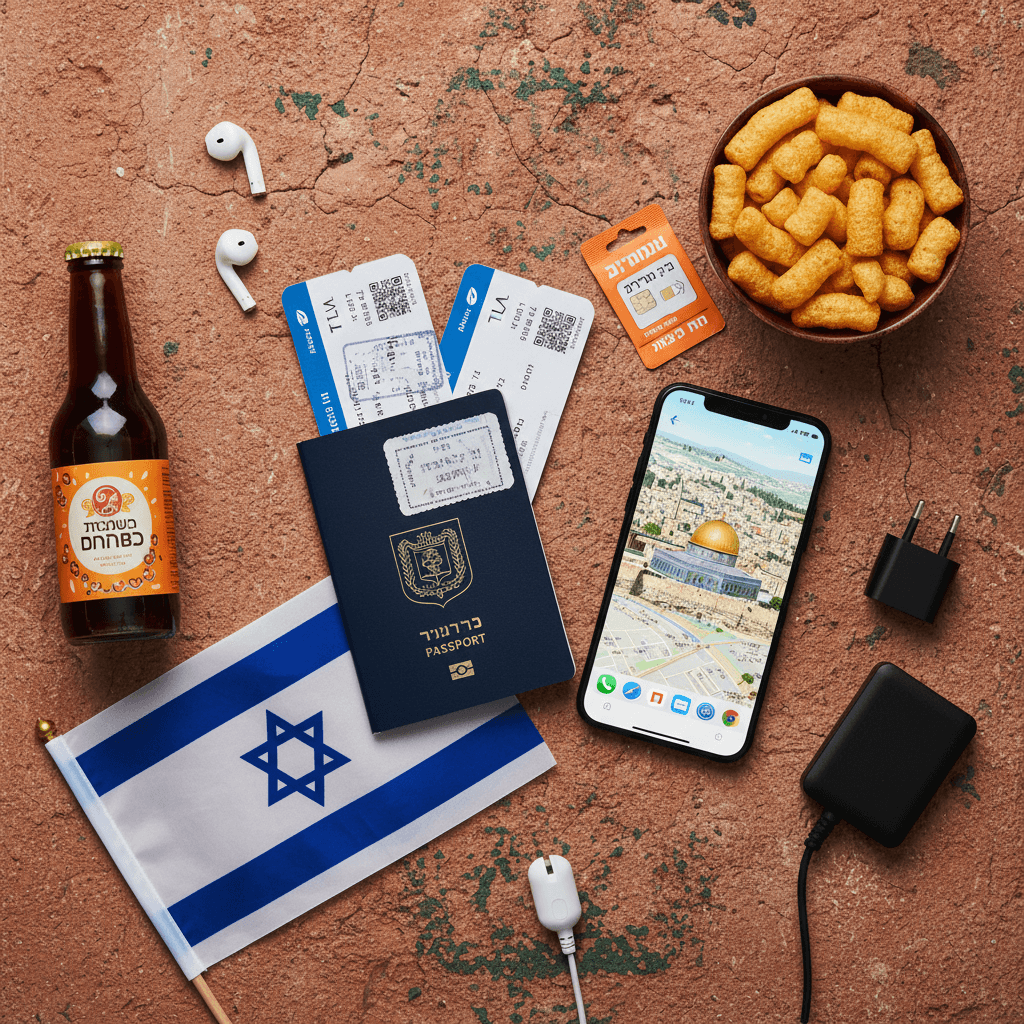
Israel
Complete Digital Nomad Guide

Policy Stability
Stamped Nomad ExclusiveHow likely visa and immigration policies are to remain unchanged
Quick Facts
Nomad Visa Cost
N/A
Income Requirement
$5,000/mo
Max Stay
3 months
Renewable
Yes
Cost of Living
$2,665/mo
Avg Internet
200 Mbps
Safety Score
7/10
Healthcare
High
Coworking
High
English Friendly
High
Time Zones
IST (UTC+2), IDT (UTC+3)
Entry Methods Available
Best For
The Digital Nomad Reality
Israel doesn't currently offer a specific "Digital Nomad Visa," but that hasn't stopped a thriving community of remote workers from setting up shop in Tel Aviv's coffee shops and Jerusalem's co-working spaces. Most nomads enter on a standard tourist status, which allows you to enjoy the Mediterranean lifestyle while handling your global business affairs.
The New ETA-IL Requirement
The biggest shift in Israeli immigration recently is the introduction of the ETA-IL system. If you hold a passport from one of the 96 visa-exempt countries, like the US, Canada, the UK, or most of the EU, you can no longer just show up at Ben Gurion Airport and get a stamp.
You must apply for authorization before you fly. The process is digital, costs 25 NIS, and typically grants you a stay of up to 90 days. Once approved, your ETA-IL is valid for up to two years, or until your passport expires. You can manage your application and check requirements through the Israel entry government portal to ensure you have the green light before heading to the airport.
Standard Tourist Visa (B/2)
For those who aren't from visa-exempt countries, or if you need to apply formally, the B/2 visa is the standard entry permit. This covers tourism, business meetings, and short-term language study. While this visa allows you to explore the country and attend networking events, it strictly prohibits you from being employed by an Israeli company or receiving a salary from an Israeli source.
- Duration: Usually 3 months from issuance.
- Entry type: Typically single entry, though multiple entry can sometimes be requested.
- Extension: You can apply to extend your stay at the Ministry of Interior for a fee of about 195 NIS.
Long-Term Options
If you're looking to stay in Israel for more than a few months, you'll need to look into more specific categories. These aren't designed for casual remote work but provide a legal path for longer stays.
Student Visa (A/2): If you decide to take a deep dive into Hebrew at a recognized university or specific institution, the A/2 visa is your best bet. It’s valid for one year and is renewable as long as you’re enrolled. The application fee is roughly 350 NIS. Note that this visa also does not grant work rights.
Work Visa (B/1): This is the hardest to get and requires a specific Israeli employer to sponsor you. It’s generally reserved for experts in their field or specific sectors like tech, construction, or agriculture. It’s valid for one year but can be extended for up to 63 months.
Volunteer Visa (B/4): A unique path for those who want to give back while experiencing the country. This is common for people working on a Kibbutz or with recognized non-profits. You’ll need an official invitation from the organization to apply.
Important Paperwork and Logistics
Israel has moved away from physical passport stamps to avoid travel complications for visitors heading to other countries in the region. Instead, you'll receive a small blue paper slip (the "stay permit") at the border. Do not lose this. You’ll need it for hotel check-ins and to prove your legal status if asked.
- Passport Validity: Your passport must be valid for at least six months beyond your date of entry.
- Proof of Funds: While not always checked, border officials may ask for proof that you can support yourself during your stay without working locally.
- Health Insurance: Having travel insurance that covers Israel is highly recommended, as local healthcare costs for foreigners can be steep.
If you find yourself falling in love with the lifestyle and want to stay longer than your initial 90 days, start the extension process early. The Ministry of Interior (Misrad HaPnim) is known for long wait times, so giving yourself a four-week buffer before your current visa expires is a smart move.
Let's get the big question out of the way first: Israel doesn't have a formal "Digital Nomad Visa." You won't find a dedicated pathway specifically designed for remote workers on the government websites. However, that doesn't mean you can't set up shop in a Tel Aviv coffee shop for a few months. Most nomads make it work by using the standard visitor routes.
The Go-To: ETA-IL
If you're from a visa-exempt country like the United States, Canada, or any EU nation, your primary entry method is now the ETA-IL. This electronic authorization is the most streamlined way to get into the country for remote work. It gives you up to 90 days of stay per visit and remains valid for two years with multiple entries.
The application is entirely digital. You should submit your request through the official Israeli government portal at least 72 hours before you head to the airport. There is a small processing fee, and most people see an approval in their inbox within a couple of days. This is the path of least resistance for anyone working for clients back home.
The B/2 Tourist Visa
If you aren't using the ETA system, you'll likely enter on a B/2 tourist visa. This also grants a 90-day stay within a 180-day window. You are legally allowed to work for international clients while on this visa, provided you aren't doing business with Israeli companies or earning shekels from a local source.
If you fall in love with the Mediterranean lifestyle and want to stay longer, you can try to apply for an extension at a local Ministry of Interior office. Just keep in mind that these extensions aren't guaranteed and often depend on the mood of the official you speak with that day.
The B/1 Work Visa
This is a different beast entirely. If you're planning to consult for an Israeli startup or take a local contract, you need a B/1 Work Visa. This requires a local employer to sponsor you. It's a heavy administrative lift involving criminal background checks, medical exams, and Ministry of Interior approval. Unless you have a specific job offer on the table, most nomads skip this option.
Money and Taxes
While the tourist routes don't have a rigid income floor, some long-term work arrangements require a minimum annual income of $80,000. For most visitors, the bigger concern is the 183-day rule. If you spend more than 183 days in Israel during a tax year, the government may consider you a tax resident, making you liable for local taxes on your global income.
U.S. citizens have a slight advantage here. You might qualify for a tax exemption if you stay for 90 days or less during a 12-month period and receive your salary in foreign currency from a non-Israeli employer. It's a good idea to keep your stays under the three-month mark if you want to keep your tax situation simple.
What You Need to Apply
Even though the process is relatively informal for short-term stays, you should have your paperwork ready for the border officials. They can be thorough, so keep digital or physical copies of these items:
- A passport with at least six months of validity remaining.
- Proof of health insurance that covers you specifically in Israel.
- Recent bank statements showing financial stability for the duration of your stay.
- A return or onward flight ticket.
The beauty of the Israeli system is its flexibility for short-term visitors. As long as your income is coming from outside the borders and you respect the 90-day limit, you can enjoy the hummus and the high-speed internet without a mountain of paperwork.
The ETA-IL: The New Standard for Most Nomads
For the vast majority of digital nomads, entering Israel is a straightforward process, but the rules have recently shifted toward a digital-first approach. If you hold a passport from the US, UK, Canada, Australia, or any EU nation, you don’t need a traditional paper visa. Instead, you must secure an ETA-IL (Electronic Travel Authorization) before you even head to the airport.
The ETA-IL is a mandatory pre-screening tool that costs 25 NIS (roughly $7 USD). It is valid for up to two years, or until your passport expires, and allows for multiple entries. While approval is often instant, you should submit your application at least 72 hours before your flight through the official PIBA portal. Once approved, you are generally granted a 90-day stay upon arrival.
Who Needs a Traditional Visa?
If your country isn't on the visa-exempt list, the process is a bit more involved. Nationals from countries like India or Sri Lanka can often utilize an e-visa system for tourism and business stays of up to 90 days. For everyone else, you’ll need to schedule an appointment at an Israeli embassy or consulate.
- Processing Time: Expect at least 5 business days for embassy-issued visas.
- Requirements: You will need your current passport, any prior passports, proof of funds, and a round-trip itinerary.
- Visa on Arrival: This is almost non-existent at airports. It is primarily reserved for specific land crossings, like the Taba border for Egyptian citizens, and is restricted to short stays in the southern region.
Staying Longer: Extensions and Costs
Sometimes 90 days isn't enough to soak up the energy of Tel Aviv or the history of Jerusalem. If you want to stay longer, you have to apply for an extension through the Ministry of Interior (Misrad HaPnim). This isn't a guaranteed right; it’s entirely at the discretion of the immigration officer.
To apply, you'll need to visit a local branch with a completed application form, your passport, recent photos, and proof that you have the financial means to support yourself without working locally. The base fee for an extension starts at approximately 195 to 205 NIS (about $55 USD). Be prepared for a wait, as these applications can take several weeks to process.
The Reality of "Border Runs"
In some nomad hubs, "border runs" are a way of life. In Israel, they are a gamble. While each entry under an ETA-IL is technically a fresh assessment, border control officers are trained to spot patterns that suggest you are trying to live in the country permanently on a tourist budget. If they suspect you are circumventing the 90-day limit by popping over to Cyprus or Jordan for a weekend, they can, and often do, deny re-entry.
The Consequences of Overstaying
Israel takes immigration status seriously. Overstaying your visa can lead to significant headaches that far outweigh a few extra days of sun. Penalties include hefty fines, detention, and formal deportation. Perhaps most importantly for frequent travelers, an overstay often results in being blacklisted or banned from entering the country for several years. Always ensure you depart or file for your extension before your 90 days are up to keep your travel record clean.
Israel is a master of the "hustle," but when it comes to formal digital nomad visas, the bureaucracy is actually quite traditional. There isn't a specific remote work permit yet. However, if you're looking to plant roots in the Silicon Wadi for more than a few months, you have several distinct paths depending on your heritage, your bank account, or your professional skills.
The Aliyah Program (Law of Return)
If you have Jewish ancestry, this is the gold standard for moving to Israel. It’s more of a homecoming than a visa process. Once approved, you aren't just a resident; you're a citizen with access to full healthcare and social benefits.
- Tax Perks: You get a 10-year tax exemption on all foreign-sourced income.
- Requirements: You'll need to provide birth certificates, proof of Judaism, and sit for an interview with a Jewish Agency representative.
- Support: The government often provides initial financial assistance and free Hebrew classes (Ulpan) to help you integrate.
The Entrepreneur and Investor Routes
For those with capital to deploy, Israel offers a few ways to "buy in" to the ecosystem. These are high-barrier options, but they offer the most stability for non-Jewish expats who want a permanent base in the Middle East.
- B/1 Investor Visa: Requires a minimum investment of $500,000 USD into an Israeli business or venture capital fund. It's renewable annually and can lead to permanent residency after 5 years.
- Entrepreneur Visa: Designed for tech founders with a solid track record. The investment requirement is lower, usually between $100,000 and $300,000 USD, but you must present a business plan that proves you'll create local jobs.
- A/5 Investor Track: This is the "fast track" for high-net-worth individuals. It requires a $2 million USD investment but grants you much more freedom, including the ability to work for any employer and access to the national healthcare system.
The B/1 Work Visa
If a local tech giant or startup scouts you, they'll handle the B/1 Work Visa. This is strictly tied to your employer. If you lose the job, you lose the visa. It's usually granted for one year and can be extended, but it doesn't typically lead to a blue passport or permanent residency.
The "Ghost" Nomad Strategy
Since there is no official freelancer visa, many digital nomads enter on a standard B/2 tourist visa. This is usually valid for 90 days. While you can't work for an Israeli company or "compete" in the local labor market on this visa, many remote workers continue to service their foreign clients while enjoying the Tel Aviv sunshine.
Just remember that as a tourist, you won't have access to the public health system (Kupat Holim). You'll need private international insurance to cover any medical needs while you're in the country.
Financial Breakdown for Long-Term Residency
Moving to Israel on an investment track involves significant upfront costs beyond the investment itself. Here is what you should budget for the professional side of the move:
- B/1 Investor Entry: $500,000 minimum investment, plus $15,000 to $50,000 in professional legal fees.
- Entrepreneur Entry: $100,000 to $300,000 investment, with government application fees around $1,000 to $5,000.
- Real Estate Route: $1.5 million minimum investment in commercial or development property; residential homes do not count toward this requirement.
- Annual Compliance: Budget $5,000 to $15,000 for ongoing legal and tax advisory to keep your status in good standing.
Pathways to Permanent Residency
If you aren't eligible for Aliyah, the A/5 Temporary Residency Visa is your best bet for a long-term future. This is usually granted to spouses of Israelis or those on the high-level investor tracks. After holding an A/5 for 4 to 5 years, you can finally apply for permanent residency or full naturalization. This grants you the Teudat Zehut (Israeli ID card), making life significantly easier for everything from opening a bank account to signing a long-term apartment lease.
Israel is famously pricey, but the "Startup Nation" tag exists for a reason. You're paying for world-class infrastructure, a high-octane tech scene, and a Mediterranean lifestyle that's hard to beat. While your bank account might take a hit in the center of the country, there are plenty of ways to play the system if you know where to look.
Tel Aviv: The High-End Hub
Expect to spend the most here. Tel Aviv is the heartbeat of Israel’s nomad scene, and the prices reflect that. Staying in a one-bedroom apartment in the city center will set you back between $1,650 and $2,200 monthly. If you move a few blocks away from the beach or the trendy Rothschild Boulevard, you might find spots for around $1,450.
Eating out is a national pastime, but a mid-range dinner for one averages $40. To keep your budget intact, stick to the incredible street food like falafel or sabich, which remains relatively affordable. Here’s what a comfortable monthly stay looks like:
- Rent (Nomad areas): $1,450
- Food & Dining: $720
- Transport (Rav-Kav): $50
- Coworking: $245
- Total: Approximately $2,665
Jerusalem: Culture at a Discount
Jerusalem is significantly easier on the wallet than Tel Aviv, and the vibe is entirely different. You can find a solid one-bedroom in the city center for $1,000 to $1,300. Groceries cost about the same as in the big city, but dining out is cheaper, with moderate meals costing around $25 per person.
- Rent (Nomad areas): $1,150
- Food & Dining: $600
- Coworking: $250
- Total: Approximately $2,240
Eilat and Haifa: The Budget Alternatives
If you want to stretch your dollars, head south to Eilat or north to Haifa. Eilat is a tax-free zone, making it a dream for budget-conscious remote workers. Furnished apartments in the center go for $600 to $800, and weekly groceries are nearly half the price of Tel Aviv at $50. A comfortable lifestyle here totals roughly $1,535 a month.
Haifa offers a middle ground. It’s a hilly, beautiful port city with a growing tech presence. You’ll pay about $700 to $896 for a central one-bedroom. It’s a great spot if you want urban amenities without the $2,800+ monthly price tag of the capital.
Working and Moving Around
Coworking is a standard expense here. Most spaces across the country charge between $200 and $350 monthly, though you can grab a day pass for about $43 if you just need a change of scenery. The good news is that public transport is a steal. A monthly Rav-Kav pass (the local transit card) usually costs between $30 and $80 depending on how far you’re traveling.
Health and Insurance
Since you won't have access to the public health system (Kupat Holim) without residency, private insurance is a must. Basic international plans usually run $150 to $300 a month. Many nomads opt for specialized providers to keep costs down:
- SafetyWing offers nomad-specific coverage starting at $56.28 monthly.
- Genki provides plans ranging from €48.30 to €180 depending on your needs.
- Comprehensive private plans for those staying long-term can reach $600 monthly.
While Tel Aviv is 20–30% more expensive than the rest of the country, the connectivity and networking opportunities often justify the cost for those in tech. If you're looking to save, base yourself in Haifa or Eilat and take the train in for meetings.
Israel is a powerhouse for remote work, blending a world-class tech ecosystem with Mediterranean living. While the country is famously expensive, the infrastructure for nomads is seamless. You will find high-speed fiber optics, a culture that lives in cafes, and a community of "Silicon Wadi" entrepreneurs who are always happy to network over hummus.
Tel Aviv: The Non-Stop Tech Hub
If you have the budget for it, Tel Aviv is the ultimate nomad destination. It is the heart of Israel’s startup scene and feels like a mix of Miami and Berlin. The city is packed with hundreds of active nomads at any given time, making it the easiest place to find your tribe.
You can spend your mornings working from a beachside cafe and your afternoons at high-end coworking spaces like WeWork, Urban Place, or Mindspace. The internet is generally fast, hitting up to 500 Mbps in specialized hubs. Just be prepared for the "Tel Aviv Tax." Prices here are steep, and the humidity in the summer is no joke.
- Monthly Cost: $4,800–$5,900
- Rent (1BR Center): $1,650
- Internet Speed: 15–120 Mbps average
- Pros: Massive nomad scene, world-class nightlife, and incredible beaches.
- Cons: High cost of living, very crowded, and intense summer humidity.
Haifa: The Coastal Alternative
Haifa is the hidden gem for nomads who want the Mediterranean lifestyle without the Tel Aviv price tag. Built on the slopes of Mount Carmel, it offers stunning sea views and a much more relaxed pace of life. It is roughly 28% cheaper than Tel Aviv, which makes a huge difference if you are staying for a few months.
Surprisingly, Haifa often beats the rest of the country on connectivity, boasting average speeds of 250 Mbps. While the nomad community is smaller, it is growing quickly. The city is famous for its coexistence and the beautiful Bahai Gardens, though the nightlife is definitely quieter than its neighbor to the south.
- Monthly Cost: $3,500–$4,800
- Rent (1BR Center): $900–$1,500
- Internet Speed: 250 Mbps average
- Pros: More affordable, fastest internet in the country, and a chill vibe.
- Cons: Smaller social circle for nomads and limited late-night options.
Jerusalem: History and Focus
Jerusalem offers a completely different energy. It is a city for those who want to be inspired by history rather than the beach. It is about 21% cheaper than Tel Aviv and offers a very high safety rating. The work culture here is a bit more serious and focused.
You will find solid coworking options like the Jerusalem Startup Hub and Urban Place. The city is perfect for deep work, though keep in mind that many businesses close down from Friday afternoon through Saturday for Shabbat. If you need a bustling bar scene every night of the week, Jerusalem might feel a bit conservative for you.
- Monthly Cost: $3,900–$5,300
- Rent (1BR Center): $1,585
- Internet Speed: 15–100 Mbps average
- Pros: Unmatched cultural depth, very safe, and great for focused work.
- Cons: No beach, quieter nightlife, and a more traditional atmosphere.
For most nomads, the choice comes down to lifestyle. Tel Aviv is for the social butterflies and techies, Haifa is for the budget-conscious beach lovers, and Jerusalem is for the history buffs and those seeking a quieter, more reflective environment.
Israel is widely known as the "Start-Up Nation," and that reputation translates directly into its digital infrastructure. For nomads, this means some of the most reliable connectivity in the Middle East. Whether you are hunkered down in a Tel Aviv high-rise or working from a boutique cafe in Jerusalem, the days of hunting for a stable signal are mostly over.
The Speed Situation
The country has aggressively rolled out fiber-optic infrastructure, which now reaches nearly 95% of households. In most urban centers, you can expect fixed broadband speeds to average around 169 Mbps for downloads, though it is common to see peaks up to 288 Mbps on networks provided by Bezeq or HOT. Even mobile data is snappy, with 5G coverage providing an average of 52 Mbps nationwide.
Top Coworking Spaces
Tel Aviv is the undisputed hub for coworking, though Jerusalem and Haifa are catching up quickly. Most spaces offer a mix of high-energy networking and quiet zones. Here are the heavy hitters:
- WeWork Midtown (Tel Aviv): Perfectly situated near major transit lines, this spot offers the classic global membership experience with excellent lounges and a very central location.
- Mindspace HaBursa (Ramat Gan/Tel Aviv): Located in the diamond district, this space is famous for its fast WiFi, fully stocked kitchens, and frequent community events.
- Sarona Space (Tel Aviv): A quieter alternative near the Sarona Market, popular with tech professionals who need private offices or a more focused environment.
What It Costs
Israel is not a budget destination, and coworking prices reflect the local cost of living. You will find that memberships are generally all-inclusive of utilities, coffee, and printing. Here is a breakdown of what to budget monthly:
- Hot Desk/Flexible Pass: expect to pay between ₪900 and ₪1,450 (roughly $240 to $390 USD).
- Dedicated Desk: rates usually sit between ₪1,200 and ₪1,450.
- Private Offices: prices start at ₪2,500 and scale up based on team size.
- Day Passes: if you just need a spot for the afternoon, most places charge around ₪115.
The Cafe Culture
If you prefer the hum of a coffee shop, Tel Aviv is incredibly nomad-friendly. Many cafes are accustomed to people working on laptops for hours, provided you keep the coffee orders coming. Places like Cafe Xoho, Eazy Cafe, and Cafelix are staples in the community. They often run on fiber connections with speeds exceeding 200 Mbps. Power outages are almost non-existent in the major cities, but it is always a good idea to check for available outlets before you sit down, as the most popular spots fill up fast during mid-morning peaks.
Mobile Data and SIMs
Staying connected on the move is remarkably affordable compared to coworking costs. You can grab a local physical SIM or set up an eSIM before you land. The data packages are generous, often providing more than you could realistically use in a month.
- Hot Mobile: Offers massive plans, sometimes up to 1500GB including local calls and texts, for approximately ₪70 (about $19 USD).
- Pelephone: Provides reliable 5G coverage with plans ranging from 39GB to 70GB for around ₪79 ($23 USD).
- eSIM Options: Providers like Nomad or eSIM4 offer short-term data packets starting between $3 and $20 for 5GB to 50GB of data, which is perfect for those staying less than a month.
Most nomads find that a combination of a ₪70 monthly mobile plan and a flexible hot desk membership provides the best balance of mobility and deep-work focus. The infrastructure is robust enough that you can take video calls from almost anywhere without worrying about your connection dropping mid-sentence.
The Healthcare Landscape
Israel is home to a world-class medical system that consistently ranks among the best globally. For digital nomads, the reality is a bit of a split. While locals pay into a public system via four main HMOs (Kupot Holim), this coverage is generally reserved for permanent residents. As a nomad on a temporary visa, you will be operating almost entirely within the private sector.
The quality of care is exceptional regardless of which door you walk through. Israel is a world leader in fields like oncology, cardiology, and fertility treatments. The main difference between the public and private sectors isn't the skill of the doctors, but the speed of service. Public specialist appointments can take 2 to 8 weeks to book, while private clinics usually get you in within a few days and offer more luxury amenities.
Top Expat-Friendly Hospitals
Most major hospitals in Israel feel like international hubs with English-speaking staff and high-tech facilities. If you need serious care or a specific specialist, these are the primary institutions to look for:
- Chaim Sheba Medical Center (Tel Aviv): A JCI-accredited facility and one of the largest in the Middle East.
- Hadassah Ein Karem (Jerusalem): Renowned for research and advanced surgical procedures.
- Rambam Health Care Campus (Haifa): The go-to center for those based in the north.
- Nazareth Hospital: Particularly helpful for its multilingual staff fluent in English, Hebrew, Arabic, and Russian.
Insurance Strategies for Nomads
Since you cannot lean on the state system, having a robust international policy is a non-negotiable. If you are working for a local tech firm, they usually provide premium private insurance. If you are self-employed, you will need a global policy that covers inpatient and outpatient care. Expect to pay between $300 and $600 per month for a high-tier plan.
Popular providers for the nomad crowd include SafetyWing and Genki for basic travel-medical needs, or Cigna Global for more comprehensive, long-term coverage. If you eventually obtain residency, you can add "Shaban" supplemental insurance for about $50 to $100 per month to bridge the gap between public and private services.
What Things Cost
Without insurance, private medical costs in Israel can escalate quickly. While emergency rooms must stabilize you regardless of your ability to pay, you will be billed afterward. Here is a look at common private procedure costs:
- Specialist Consultation: $450
- Full Diagnostic Workup: $3,000 to $7,000
- Hernia Repair: $6,600 to $12,600
- Cataract Surgery: $5,000+
- Hemorrhoid Surgery: $6,250 to $8,000
Pharmacies and Prescriptions
Pharmacies are everywhere in Israel, with Super-Pharm being the most recognizable chain. You can grab basic over-the-counter meds easily, but anything requiring a prescription needs to be signed off by an Israeli-licensed doctor. Foreign prescriptions are not accepted at local pharmacies.
If you need a refill for maintenance medication like birth control or asthma inhalers, book a quick session with a private, English-speaking GP. They can transcribe your foreign records into a local prescription. It is a straightforward process, though you will pay the private consultation fee out of pocket.
Emergency Services
In a medical emergency, dial 101 to reach Magen David Adom (MDA), Israel's national ambulance service. Their response times are impressive, often under 3 minutes nationally and less than 90 seconds in dense urban areas like Tel Aviv. They operate over 1,000 vehicles equipped for both basic and advanced life support. While the service is world-class, remember that ambulance rides and ER visits are billed to the patient if you aren't a member of a local HMO, so keep your insurance details handy.
Money Matters in the Holy Land
Managing your finances in Israel is a bit of a balancing act. The local currency is the New Israeli Shekel (ILS), and while the country is highly digitized, the banking system remains famously bureaucratic and conservative. For most nomads, the goal is to bypass the traditional brick-and-mortar banks entirely unless you plan on staying for years.
Opening a Local Bank Account
Opening a bank account as a non-resident is a bit of a hurdle. While it is technically possible at institutions like Bank of Jerusalem, the requirements are strict. You will generally need to prove that Israel is not your permanent home and that you spend fewer than 183 days per year in the country. Expect to visit a branch in person and bring a mountain of paperwork.
If you decide to go through with it, you will need:
- A valid passport and proof of a foreign residential address.
- Tax identification, such as a Social Security Number for Americans (who must also sign a W-9 form due to FATCA regulations).
- Recent bank statements from your home country.
- A signed non-resident declaration, which you have to renew every three years.
For those with residency status or a Teudat Zehut, the process is much smoother at major banks like Leumi or Hapoalim. However, for a typical three to six month stay, the administrative headache usually outweighs the benefits.
Wise and Revolut: The Nomad Favorites
This is where things get easier. Both Wise and Revolut hold payment licenses in Israel, making them the gold standard for nomads. You can hold ILS directly in these apps and transfer money to local Israeli accounts with very low fees. This is particularly helpful if you need to pay a landlord or a local service provider who doesn't take credit cards.
Israeli banks are generally comfortable receiving transfers from these platforms. While Revolut is not yet a licensed deposit bank in Israel, their cards work seamlessly at shops and ATMs across Tel Aviv and Jerusalem. Wise is often the winner for larger transfers because they use the real mid-market exchange rate and charge a transparent fee of around 0.4%.
ATM Fees and Cash Access
Israel is very card-friendly, but you will still need cash for market stalls or small hummus shops. Most ATMs accept Visa and Mastercard, and you will find them on almost every block in major cities. The catch is the cost.
Local ATM operators usually charge a fee between 10 and 14 ILS per withdrawal. On top of that, your home bank might tack on a 1% to 3% foreign transaction fee. To keep costs down, always choose to be charged in the local currency (ILS) rather than your home currency. If the ATM asks if you want them to do the conversion for you, decline it; their "convenience" rates are almost always a rip-off.
Best Ways to Move Money
Traditional wire transfers are slow and expensive, often eaten up by intermediary bank fees. For the best experience, stick to these methods:
- Wise: Best for sending money to local Israeli bank accounts with the lowest possible markup.
- Revolut: Great for day-to-day spending and small, fee-free currency exchanges within the app.
- Remitly or Xoom: These are solid backups if you need to arrange a cash pickup for someone without a bank account.
Crypto in Israel
Israel is a major tech hub, and the government is slowly warming up to crypto. There are no bans on holding or trading digital assets, but the banking sector is still very cautious. If you are trading, use licensed exchanges and be prepared for the tax man; crypto gains are generally treated as capital income.
The government is working on a new regulatory framework expected to be fully implemented by 2026. This should make it much easier to integrate crypto assets with traditional bank accounts. For now, it is best to keep your crypto activities on major global exchanges and move funds into your Wise or Revolut account before spending them locally.
Visas for the Whole Crew
Moving your family to Israel usually means your spouse and children will piggyback off your primary status. If you are there on an A/2 student visa or A/3 clergy visa, your dependents can apply for A/4 visas. These match your stay duration but keep in mind that they do not permit your spouse to work locally.
For those on a B/1 work visa, family members typically receive B/2 visitor visas. You will need to provide original, apostilled marriage and birth certificates. The processing window is relatively quick, usually taking 2 to 4 weeks. If your children are old enough for school, they might need to transition to an A/2 student status to satisfy local requirements.
Education and International Schools
Israel has a robust public school system, but most nomads and expats opt for international schools to keep their kids in English-language or IB programs. These schools offer high standards but come with a significant price tag. You should budget for more than just tuition, as busing, meals, and extracurriculars often cost extra.
- Walworth Barbour American International School: Tuition ranges from $5,100 to $6,220 per year.
- Jerusalem American International School: Costs fluctuate between 27,000 and 62,000 ILS ($7,768 to $17,837) annually.
- Anglican International School Jerusalem: Expect to pay between 63,200 and 92,100 ILS per year.
Healthcare for Kids
The healthcare system here is excellent for families. Once you are settled, you will register with one of the four national health funds, such as Meuhedet or Leumit. These funds cover specialist visits, diagnostic tests, and hospital stays. One of the best perks for parents is that dental care is generally free for children up to age 12.
For children who were not born in Israel, full coverage typically kicks in after an initial 4-month waiting period. The system is funded through a mix of government subsidies and modest parent co-pays for specific medications or specialized services.
Where to Set Up Base
While Tel Aviv is the heartbeat of the country, many families gravitate toward the "garden cities" or suburbs that offer more space and quieter streets. These areas are packed with parks, zoos, and kid-friendly museums.
- Ra'anana and Herzliya: These are the heavy hitters for expats, offering high-end infrastructure and a very high English-speaking population.
- Modi'in: Located right between Tel Aviv and Jerusalem, it is a modern city designed specifically with young families in mind.
- Zichron Yaakov: A beautiful, historic town on the Carmel mountain range, perfect for those who want a slower pace and coastal views.
Childcare Costs
If you have toddlers, your biggest hurdle will be finding a spot in a subsidized daycare. These public options for ages 0-3 cost between 1,000 and 2,500 ILS ($280 to $700) per month, but they prioritize large families or those with lower incomes. Only about 25% of applicants get these full subsidies.
In major hubs like Tel Aviv, you will likely end up in the private market. Private daycare usually runs between 3,500 and 6,000 ILS ($980 to $1,680) per month. For older children, kindergartens are more accessible, with some income-based aid available that can cap costs at 1,700 ILS per month.
Safety and Daily Life
Despite what you might see on the news, daily life in Israel is very family-oriented. It is a culture where children are welcomed everywhere, from upscale restaurants to late-night beach strolls. The infrastructure is built for parents, with plenty of playgrounds and well-maintained public spaces.
Safety requires a bit of common sense. You should stay away from border zones like the West Bank or Gaza and keep an eye on local advisories. Within the major expat hubs and family-friendly suburbs, the sense of community is strong and security is a top priority for local municipalities.
Israel is a land of sharp contrasts, where ancient tradition meets a high-octane startup culture. For digital nomads, it offers a lifestyle that is surprisingly safe and deeply social, provided you understand the local rhythm. While the headlines often focus on regional tensions, the day-to-day reality in hubs like Tel Aviv is more about finding the best hummus and hitting your deadlines at a beachside cafe.
Safety and Common Sense
Violent crime against foreigners is remarkably rare. You’ll likely feel safer walking home at night in Tel Aviv than in many major American or European cities. However, petty theft is the main nuisance. Pickpockets and bag snatchers operate in crowded areas like Jerusalem’s Old City and popular beaches.
Keep your belongings secure and never leave your laptop or phone unattended at a cafe, even for a quick bathroom break. If you are renting a car, don't leave bags in plain sight; vehicle break-ins are a common headache at tourist trailheads and beaches.
Be skeptical of unsolicited help. Common scams include:
- Taxi drivers refusing to use the meter; always insist on "monit" (the meter) or use apps like Gett.
- "Friendly strangers" who offer a free tour only to demand a high fee at the end.
- Distraction techniques used by beggars in Jerusalem to facilitate pickpocketing.
- Fake "police" asking to see your passport or wallet; official officers will always provide ID.
The LGBTQ+ Experience
Israel stands out as the most progressive destination in the Middle East for LGBTQ+ travelers. Tel Aviv is a global beacon for the community, home to a massive annual Pride festival and a culture that is almost entirely "live and let live." Same-sex partnerships are legally recognized, and anti-discrimination laws are strictly enforced.
That said, context matters. While you can be completely open in Tel Aviv, it is wise to be more discreet in conservative neighborhoods of Jerusalem or when visiting religious sites. Public displays of affection in ultra-Orthodox or traditional Arab areas might draw unwanted attention, regardless of your orientation.
Navigating the Culture
Israelis are famously direct. This "sabra" personality can feel blunt or even rude to newcomers, but it’s rarely personal. They value honesty and efficiency over polite small talk. Don't be afraid to push back, ask questions, or speak your mind; it’s actually the fastest way to earn respect here.
A few etiquette tips to keep in mind:
- Shabbat: From Friday sunset to Saturday sunset, public transport stops and many shops close. In Tel Aviv, some spots stay open, but in Jerusalem, the city almost entirely shuts down.
- Gestures: Avoid using the thumbs-up sign, as it can be offensive to some older generations. Also, try not to use your left hand for eating or passing items in traditional settings.
- Personal Space: Expect people to stand closer than you might be used to in North America or Northern Europe. It’s a warm, high-contact culture.
The Language Gap
English is the unofficial second language of the tech and nomad scene. You can easily manage your daily life, order food, and network in English in the major cities. However, official bureaucracy is a different story. Government websites, banking apps, and utility bills are often exclusively in Hebrew.
If you plan to stay long-term, consider joining an Ulpan (intensive Hebrew school) or using apps to learn the basics. Understanding the alphabet will make your life significantly easier when trying to navigate grocery stores or reading street signs in smaller towns.
Building Your Network
Tel Aviv is the heart of the "Startup Nation," making it one of the easiest places in the world to find like-minded remote workers. The expat community is massive and highly active. You won’t have to look far for a workspace; coliving brands like Selina offer built-in communities with coworking desks and social events.
To integrate quickly, lean on digital communities:
- Join Facebook groups like "Digital Nomads Israel" or "Secret Tel Aviv" for housing leads and social meetups.
- Attend tech mixers and "Olim" (immigrant) networking events to find mentors who know the local ropes.
- Use coworking spaces as your primary social hub; places like Mindspace or WeWork are central to the local professional scene.
Socializing often happens over food and drink. If someone invites you for a Friday night dinner, go. It is the quickest way to move from "tourist" to "local" in the eyes of your neighbors.
Understanding Israeli Tax Residency
Living the nomad life in Israel is fantastic, but the tax man does eventually come knocking. Israel uses a "center of life" test to decide if you owe them a piece of your global income. They look at where your family stays, where you keep your permanent home, and where your economic interests lie.
There are two specific numbers you need to remember: 183 and 425. You are presumed a tax resident if you spend 183 days or more in Israel during a single calendar year. You also trigger this presumption if you spend at least 30 days in the current year and your total stay over the last three years hits 425 days. These are just presumptions, though; if you can prove your life is truly centered elsewhere, you might be able to rebut the status.
Income Tax Brackets
If you qualify as a resident, you'll face a progressive tax system. These rates are currently frozen through 2026, so you don't have to worry about inflation adjustments shifting the goalposts for a while. Here is how the annual income stacks up:
- 10% on income up to approximately NIS 79,560
- 14% from NIS 79,561 to NIS 114,120
- 20% from NIS 114,121 to NIS 177,360
- 31% from NIS 177,361 to NIS 247,440
- 35% from NIS 247,441 to NIS 514,920
- 47% from NIS 514,921 to NIS 663,240
- 50% on everything above NIS 663,240 (this includes a surtax)
High earners should keep an eye on the 3% surtax that kicks in once total income passes NIS 721,560. If you remain a non-resident, you generally only pay tax on money actually earned within Israeli borders.
Treaties and Special Nomad Perks
The good news is that Israel has double taxation treaties with over 60 countries, including the US, UK, Canada, and Germany. These agreements ensure you aren't paying twice on the same dollar. If your home country doesn't have a treaty, Israel usually offers unilateral credits for taxes paid abroad.
There are some interesting incentives for the remote crowd. Some nomads working for foreign clients can qualify for a 15% flat rate on foreign income for up to five years, provided they register correctly. If you are considering making the move permanent, new immigrants arriving in 2026 can enjoy 0% tax on income up to NIS 1M for their first two years, followed by tiered discounts through 2030. This is on top of the famous 10-year tax holiday on foreign-sourced income for new citizens.
The Crypto Factor
Israel views cryptocurrency as an asset rather than a currency. If you sell or exchange crypto, you’ll likely face a 25% capital gains tax. However, if you are a professional trader, miner, or heavy staker, the authorities might classify your activity as a business, which pushes you back into those 10% to 50% progressive income tax brackets.
One local quirk: Israeli banks are notoriously hesitant about crypto deposits. If you find yourself stuck, the Israel Tax Authority allows for direct payments from abroad to settle your bill without needing a local bank middleman. Just keep in mind that starting in July 2025, new rules will mandate a 25% withholding tax on digital asset transactions.
Filing and Deadlines
The Israeli tax year follows the calendar year. You need to file your annual return by April 30, though this is extended to May 31 if you file online. If you eventually decide to leave and break your residency, be aware of the "exit tax." This rule treats your assets as if they were sold the day before you left, which could trigger a final capital gains bill. You can learn more about specific forms on the official government services portal.
Staying Connected
Landing at Ben Gurion Airport without a data plan is a rookie move. You can grab a physical tourist SIM from Cellcom, Partner, or Pelephone at the terminal, but expect to pay between 100 and 250 ILS for a 30-day plan. You will need your passport for registration.
If your phone supports it, an eSIM is much easier. Providers like Airalo and Nomad offer 4G and 5G plans starting around $4.50. These are perfect for hitting the ground running without swapping tiny pieces of plastic.
Getting Around
Forget trying to decipher paper bus schedules. Download Moovit immediately; it is the gold standard for navigating Israel’s public transport system. It provides real-time updates on buses and trains, which is vital since schedules can shift without warning.
For getting across town, Gett is the local favorite for taxis because it offers fixed pricing. While Uber exists, it is less common than Gett. If you are brave enough to drive, Waze was invented here and remains the best way to dodge the notorious Mediterranean traffic. In Tel Aviv, use the Tel-O-Fun app to grab a green bike or an electric scooter for short coastal trips.
Where to Set Up Your Desk
Tel Aviv is the primary hub, but your vibe depends on the neighborhood. Florentin is the go-to for the creative crowd, filled with street art and industrial-style workspaces. Neve Tzedek offers a quieter, more upscale atmosphere, while the Old North is perfect if you want to be near the beach and the port.
If you prefer cooler air and historical weight, look near Abraham Hostels in Jerusalem. For those on a tighter budget, Haifa is an underrated gem. The German Colony or Hadar districts offer a growing tech scene and much more affordable rent than the center of the country.
Finding Your Home
Standard platforms like Airbnb and Booking.com work well for short stints, but nomads often gravitate toward Abraham Hostels or The Spot Hostel for their dedicated coworking zones. For longer stays, coliving is the way to go. Companies like Mapmelon and Selina provide reliable WiFi and a built-in community of remote workers in Tel Aviv and Haifa.
Food and Language
When you are deep in a flow state and forget to cook, Wolt is the dominant delivery app. It covers everything from high-end sushi to local hummus spots. TenBis is another popular option, often used by local tech workers for their lunch stipends.
While English is widely spoken in the tech hubs, learning some basic Hebrew goes a long way. Duolingo is great for the alphabet and daily vocabulary. If you want a more professional setup, Preply connects you with local tutors for one-on-one sessions over Zoom.
The Shabbat Factor and Other Pitfalls
The biggest culture shock for most nomads is Shabbat. From Friday sunset to Saturday night, public transport stops in most cities and many shops close down. Plan your grocery shopping and travel accordingly. While cards are accepted in most places, keep some Shekels on hand for open-air markets like Mahane Yehuda or Carmel Market.
Respect the dress codes when visiting religious sites in Jerusalem or Safed. Keep your shoulders and knees covered to avoid being turned away. Also, do not underestimate the summer heat; carry water everywhere and avoid long walks between 12:00 PM and 4:00 PM.
Emergency Contacts
- Police: 100
- Ambulance (Magen David Adom): 101
- Fire Department: 102
- General Emergency (from mobile): 112
Latest Nomad News
Israel Updates Tax Rules for New Residents
The Knesset is advancing a bill to provide tax exemptions on Israeli-sourced income for new immigrants and returning residents arriving after November 5, 2025. The exemptions, ranging from NIS 600,000 to NIS 1 million annually through 2030, aim to reduce the financial burden for those relocating to Israel.
Israel Updates Salary Requirements for Foreign Expert Visas
Starting January 2026, the minimum monthly salary for foreign experts in Israel will increase to NIS 27,132. The government is also expanding worker quotas in trade and services while increasing enforcement against unlawful employment and reorganizing industrial visa processing.
Israel Automatically Extends Visas During Security Disruptions
The Population and Immigration Authority has announced an automatic three-month extension for work, tourist, student, and temporary resident visas expiring between February 22 and March 31, 2026. No application or office visit is required, and holders should keep their current documents as proof of legal status.
How Israel’s B/1 Expert Visa Salary Requirements Work
Effective January 2026, the mandatory minimum monthly salary for Foreign Expert B/1 visa holders will increase to NIS 27,132 (approx. $8,600). Government application and permit fees for these visas are also set to rise, impacting high-skilled expats and their employers.
Israel Extends Foreign Passport Entry Rules for Dual Citizens
The Israeli Interior Ministry has extended a policy allowing dual citizens to enter and exit the country using their foreign passports instead of an Israeli one. This accommodation, now valid until September 30, 2026, simplifies travel for dual nationals facing delays in passport issuance or renewals.
Stay Updated on Israel
Get notified about visa changes, policy updates, and new information for digital nomads in Israel.