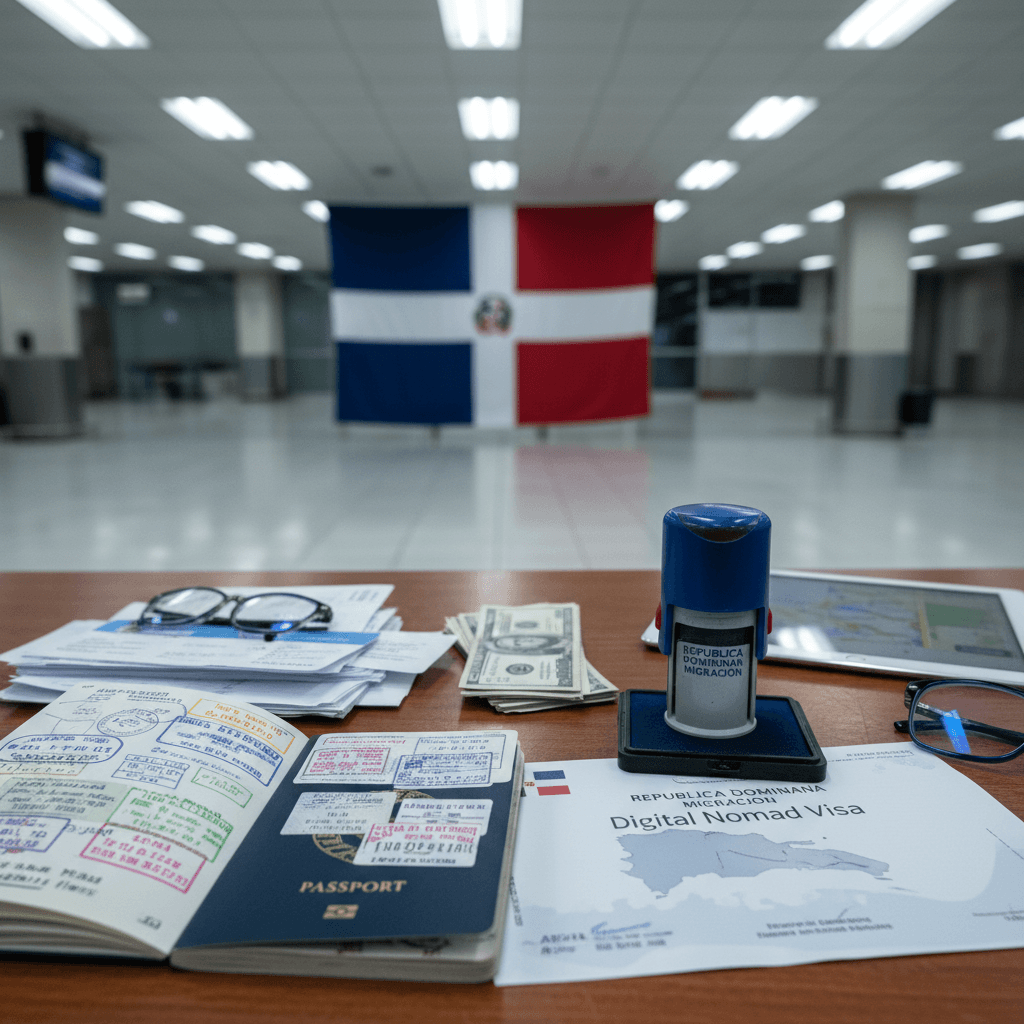
Dominican Republic
Complete Digital Nomad Guide

Policy Stability
Stamped Nomad ExclusiveHow likely visa and immigration policies are to remain unchanged
Quick Facts
Nomad Visa Cost
N/A
Income Requirement
$1,500/mo
Max Stay
4 months
Renewable
Yes
Cost of Living
$1,139/mo
Avg Internet
58 Mbps
Safety Score
5/10
Healthcare
Medium
Coworking
Medium
English Friendly
Low
Time Zones
AST (UTC-4)
Entry Methods Available
Best For
The Dominican Republic has long been a favorite for nomads because it keeps things remarkably simple. For the vast majority of visitors, there is no stressful embassy visit or mountain of paperwork required before you board your flight. You essentially land, get stamped, and start your tropical "workcation."
The Tourist Entry and E-Ticket
Most nationalities, including those from the US, Canada, UK, EU, Australia, and Brazil, can enter the country visa-free. Instead of a formal visa, you use a Tourist Card. The $10 fee for this card is almost always baked into your airfare automatically, so you won't even notice you've paid it. This grant allows you to stay for an initial 30 days.
The one non-negotiable step is the E-Ticket. This is a free digital form that combines your customs declaration, embarkation/disembarkation card, and health form. You can fill it out any time before passing through immigration, and you can even include your entire family on one form. You will receive a QR code that agents will scan upon arrival and departure.
To ensure a smooth entry, make sure your passport is valid for at least 6 months. While there have been temporary extensions for US and EU citizens allowing shorter validity through 2025 and 2026, it is always safer to have the full six months. You should also be prepared to show proof of an onward ticket and evidence of funds, generally around $50 per day of your stay.
Staying Longer: Extensions and Overstays
Thirty days is rarely enough time to see everything from the Samaná Peninsula to the cafes of Santo Domingo. If you want to stay longer, you have two main paths. The official route is to apply for an extension through the Dominican Republic’s migration management system. You can do this online or at an immigration office to extend your stay up to 120 days total.
- 30-day extension: Approximately RD$1,500 (US$25).
- 30 to 90-day extension: Approximately RD$3,500 (US$60).
The second path is the "overstay fee," which is a common practice in the DR. If you stay past your 30 days without a formal extension, you simply pay a scaled fine at a dedicated window in the airport when you leave. For an overstay of 1 to 30 days, the fine is roughly RD$5,000 (US$85). The fees increase the longer you stay, but for many nomads, this is a stress-free way to handle a few extra weeks of travel.
Business and Residency Options
If you are moving to the DR to conduct formal business transactions or represent a foreign company, a Business Visa is more appropriate. These come in single-entry 60-day versions or multiple-entry one-year versions. Recent updates in 2026 have actually made this easier; you no longer need to submit personal medical certificates or CVs. Instead, the focus is on the stability of the host company and a police clearance that is valid for 12 months.
For those looking to make the island a permanent base, there are several residency paths:
- Work Visa (NM1): Requires a valid employment contract with a Dominican company, renewable annually.
- Student Visa (NM9): For those enrolled in certified educational institutions.
- Investment Residency: A fast-track option for those purchasing property or investing significant capital in the country.
Visa-Free Nationalities
The Dominican Republic is incredibly open. Over 100 countries qualify for the 30-day visa-free entry. Even if your specific nationality usually requires a visa, you can often bypass that requirement if you hold a valid visa or residency from the US, Canada, UK, or the Schengen Area. This makes the DR one of the most accessible hubs in the Caribbean for a global remote workforce.
The Dominican Republic is currently in a bit of a "watch this space" phase when it comes to remote work legislation. While the government has drafted a presidential decree for a dedicated Digital Nomad Residency program, it hasn't officially hit the ground yet. You won't find a "Digital Nomad Visa" button on the consulate website just yet, but the framework is ready and waiting for the final green light.
The Proposed Digital Nomad Residency
Once this program goes live, it's set to be one of the most competitive in the Caribbean. The proposed requirements are surprisingly accessible compared to neighbors like Barbados or the Cayman Islands. You'll need to show a minimum annual income of US$18,000 (or roughly RD$1,000,000). That is a very low bar for most remote professionals.
The perks of this upcoming permit are significant. It is expected to grant a 2-year residency that can be renewed for up to 10 years. Even better, it offers tax-free status on your foreign-sourced income. The application fee is set at RD$12,500 (about US$425), which is a one-time cost with no recurring annual fees.
When the portal opens, the process will look like this:
- Register through the RepublicaVisas portal.
- Enroll in RepublicaID, the national digital identification system.
- Provide proof of remote employment or self-employment with income verification.
- Submit a clean criminal record and proof of health insurance valid in the DR.
- Wait for a processing time of no more than 30 business days.
Just keep in mind the deal-breakers. The visa can be revoked if you take a job with a local Dominican company without a separate permit or if you leave the country for more than 12 consecutive months.
Current Workarounds for Remote Workers
Since the official nomad visa is still pending, most travelers use a mix of shorter-term options or more permanent residency paths. If you're just looking for a "workation," the standard entry methods work fine, but for long-term stays, you'll need to look at residency visas.
- Tourist Entry: Most visitors get 30 days on arrival. You can usually extend this for another 60 days, giving you a total of 90 days to enjoy the island life.
- Rentista Visa (Independent Means): This is the gold standard for high earners. You must prove a passive, foreign-sourced income of at least US$2,000 monthly. It is valid for four years and can lead to citizenship after just two years of residency.
- Pensionado Visa: If you are retired and receiving a pension of at least US$1,500 per month from abroad, this visa offers the same four-year renewable terms as the Rentista.
- Long-Stay Visa: This is a one-year visa that acts as a bridge. Once you have this, you can apply for a formal residence permit while on the ground.
Which Path Should You Take?
If you're planning to stay for less than three months, stick to the tourist extension. It's the path of least resistance. For those looking to make the DR a semi-permanent home base right now, the Rentista visa is the most secure route, provided you meet the passive income threshold.
If your income comes from a standard remote job salary rather than investments, your best bet is to keep an eye on the Ministry of Foreign Affairs website for the official launch of the Digital Nomad Residency. It’s the only path specifically designed for the modern remote employee, and it’s expected to simplify the paperwork nightmare significantly.
Getting In: Visa-Free Entry
For most nomads reading this, getting through the door is refreshingly simple. If you hold a passport from the United States, Canada, the UK, the European Union, Mexico, or Japan, you don't need to apply for a visa in advance. You'll be granted a 30-day tourist stay upon arrival.
You just need a passport with at least six months of validity and a return ticket to show you aren't planning to stay forever. There is a temporary exception running until November 30, 2025; if you're from the US, UK, Canada, or the EU, your passport only needs to be valid for the duration of your stay.
The Mandatory E-Ticket
While you might not need a visa, everyone needs an E-Ticket. This is a free digital form that combines your customs declaration and embarkation/disembarkation card. You have to fill it out before you get to the airport check-in counter. You can access the form through the official Dominican Republic immigration portal.
- Timing: Complete it any time after you have your flight details.
- Requirement: You need one for entry and one for exit.
- Cost: It is completely free. Don't get scammed by third-party sites charging for this.
Staying Longer: Extensions
Thirty days is rarely enough time to see the DR, let alone work from there. If you want to stick around, you can apply for an extension through the immigration office's online portal. This can push your total stay up to 120 days.
The government charges for this privilege, and the fees are a bit steep compared to neighboring islands. You'll need to upload your passport's biometric page, your entry stamp, and proof of "economic solvency" (bank statements) to their website.
- 30 to 90 days: $3,500 USD
- 90 to 120 days: $5,600 USD
The Overstay Reality
The Dominican Republic has a unique relationship with overstaying. For years, many nomads simply stayed as long as they wanted and paid a fine at the airport when leaving. While this is still common, immigration has become more formal, and overstaying can technically lead to detention or future re-entry bans.
The penalties start the day after your 30-day card or your approved extension expires. The fees are calculated in Dominican Pesos (RD$) and increase the longer you stay:
- 1 to 30 days: RD$1,000 (roughly $18 USD)
- 3 to 4 years: RD$16,000
- 9 years: RD$60,000
- 10+ years: RD$70,000
Visa Runs and Re-entry
If you're thinking about a "border run" to Haiti or a quick flight to Puerto Rico to reset your 30 days, proceed with caution. There isn't a hard rule against it, but if an immigration officer sees a pattern of back-to-back tourist entries, they have the discretion to deny you entry. They want to see that you are a visitor, not a resident flying under the radar.
For those who aren't from visa-exempt countries, you'll need to coordinate with a Dominican consulate in your home country before booking your flight. The costs and processing times for these visas vary significantly depending on where you're applying from.
Making the DR Your Long-Term Base
The Dominican Republic is one of the few Caribbean hubs where the dream of a permanent island life is actually attainable. While many nomads start with a simple tourist entry, staying long-term requires shifting into the residency lane. There is no specific "Digital Nomad Visa" here yet, but the existing pathways are surprisingly flexible if you have the paperwork in order.
Most remote workers begin with a Temporary Residency (RT-9). This permit is valid for one year and acts as your probationary period. You will need to prove financial solvency, typically showing a bank balance around $5,000 USD, and undergo a local medical exam. Expect the total cost, including government fees and medicals, to land between $300 and $2,000 depending on how much legal help you hire.
The Retirement Route (Pensionado)
If you have a guaranteed monthly pension, the Pensionado Visa is one of the most efficient ways to settle. It bypasses some of the standard hoops and offers tax exemptions on your foreign pension income. The process starts at a Dominican consulate in your home country before finishing the paperwork on the ground in Santo Domingo.
- Income Requirement: At least $1,500 USD per month, plus $250 to $500 for each dependent.
- Duration: Initial 1-year residency, renewable for 4-year terms.
- Estimated Costs: Application fees range from $300 to $1,000, plus medical exam fees of roughly RD$6,300.
- Key Documents: Apostilled criminal record, birth certificate, and proof of stable pension.
The Investor Pathway (Golden Visa)
For those with capital to deploy, the Inversionista program is a fast-track to permanent status. By investing in the local economy, you skip the five-year waiting period usually required for permanent residency. This can be done through real estate, a local business, or even high-value certificates of deposit in Dominican banks.
- Minimum Investment: $200,000 USD, which must be certified by ProDominicana.
- Processing Time: Rapid approval, usually within 45 to 90 days.
- Total Fees: Government fees and legal costs typically range from $620 to $3,000.
- The Perk: You can apply for citizenship eligibility in as little as 6 to 24 months after receiving residency.
Passive Income and Freelancing
If you aren't retired but have "passive" income from rental properties or investments, the Rentista Visa is your best bet. It requires a monthly income of $2,000 USD. For active freelancers and remote employees, the RT-9 Temporary Residency remains the standard choice. You will need to provide proof of your work contracts and bank statements to show you won't be a burden on the local state.
Keep in mind that all official documents, like birth certificates or marriage licenses, must be apostilled and translated into Spanish by a certified translator. You can track your application progress through the General Directorate of Migration (DGM) portal.
The Road to Permanent Residency
For most nomads, the journey is a marathon. You will renew your temporary residency annually for five consecutive years. After that milestone, you are eligible to apply for Permanent Residency (RP-1). This status is valid for five years initially and is much easier to maintain than the yearly temporary hustle.
- Temporary Residency: Proof of $5,000 USD solvency, 1-year duration, 5-year path to permanent.
- Rentista: $2,000 USD monthly passive income, fast-track to permanent status.
- Naturalization: Possible after 2 to 10 years of permanent residency, with fees between $100 and $700.
While the bureaucracy can feel slow, the Dominican Republic does not require you to renounce your original citizenship to become a dual national later. It is a welcoming system for those willing to navigate the paperwork.
The Dominican Republic occupies a sweet spot for nomads who want Caribbean vibes without the eye-watering price tags of places like the Virgin Islands or St. Barts. You can realistically live here on $1,500 to $3,000 per month, though your choice of neighborhood will dictate whether you’re living like a local or a high-end expat.
The Three Tiers of Living
If you are on a Budget Tier ($1,200–$2,000), you’ll be shopping at local colmados, using public transport, and living a few blocks back from the beach. It is a comfortable life, but you’ll be skipping the daily fancy cocktails and high-end gym memberships.
The Comfortable Tier ($2,000–$3,000) is where most digital nomads land. This covers a modern apartment with AC, frequent dining out at Western-style cafes, and a reliable scooter rental or regular Ubers. At this level, you aren't constantly checking your bank balance before booking a weekend excursion.
For those in the Premium Tier ($3,000+), the island really opens up. This buys you ocean-front penthouses in Las Terrenas, private villas with pools, and a lifestyle that mirrors a permanent vacation. You’ll have the best health insurance, private drivers when needed, and access to the most exclusive beach clubs.
Santo Domingo: Urban Value
The capital offers the best bang for your buck if you crave city life and high-speed fiber internet. It’s a sprawling metropolis where luxury high-rises sit just minutes away from historic colonial streets.
- 1BR Rent: $500 (Budget) / $800 (Comfortable) / $1,200 (Premium)
- Food: $300 / $500 / $700
- Transport: $50 / $100 / $200
- Coworking/Internet: $100–$200
- Health Insurance: $100 / $150 / $250
Puerto Plata: The Affordable Hub
Puerto Plata remains the most budget-friendly major hub on the island. It’s perfect for nomads who want a mix of mountain views and Atlantic coastline without the "tourist tax" found in the smaller surf towns.
- 1BR Rent: $350 (Budget) / $600 (Comfortable) / $900 (Premium)
- Food: $250 / $350 / $500
- Transport: $80 / $120 / $200
- Coworking/Internet: $120 / $150 / $200
- Health Insurance: $100 / $150 / $250
Cabarete & Sosúa: The Adventure Coast
These twin towns are the heart of the nomad community. Because of the high demand for kite-surfing and nightlife, prices here run about 10% to 15% higher than in the cities, but the community access is worth the premium.
- 1BR Rent: $450–700 (Budget) / $900 (Comfortable) / $1,200 (Premium)
- Food: $400 / $500 / $600
- Transport: $100 / $150 / $250
- Coworking/Internet: $100 / $100 / $150
- Health Insurance: $100 / $150 / $250
Las Terrenas: The European Escape
Las Terrenas has a distinct French and Italian influence, which shows in both the quality of the bakeries and the price of the real estate. It is the most expensive nomad destination on the island, but the pristine beaches are hard to beat.
- 1BR Rent: $800 (Budget) / $1,200 (Comfortable) / $2,000+ (Premium)
- Food: $300 / $400 / $600
- Transport: $50 / $100 / $200
- Coworking/Internet: $50–$150
- Health Insurance: $100 / $150 / $250
A Note on Hidden Costs
While the base costs are manageable, keep a few variables in mind. Electricity is notoriously expensive in the DR; if you run your air conditioning 24/7, expect your utility bill to jump by $100 or $200 easily. Most nomads opt for international health coverage, which typically ranges from $100 to $250 per month depending on your age and coverage level. You can compare various plans through SafetyWing or World Nomads to find a fit for your specific travel style.
Imported goods like peanut butter, specialty electronics, or high-end sunscreens carry heavy import taxes. If you want to keep your budget lean, stick to the local markets and buy your tech before you land on the island.
The Dominican Republic has evolved far beyond its reputation for all-inclusive resorts. For those of us working remotely, it offers a sweet spot of fiber-optic connectivity and a cost of living that typically sits between $1,500 and $2,500 per month. While you can find pockets of quiet across the island, three specific hubs have built the infrastructure and social scenes necessary to sustain a long-term nomad lifestyle.
Cabarete: The Adventure Capital
If your ideal workday ends with a kiteboarding session or a beachfront sunset beer, Cabarete is the place to be. It hosts the largest and most active nomad community in the country. You won't struggle to find your tribe here; the town is highly walkable and centered around a crescent-shaped bay where expats and locals mingle constantly.
The infrastructure is surprisingly robust for a beach town. You will find over 25 coworking options starting around $15 per day, with fiber-optic speeds ranging from 100 to 300 Mbps. While the seasonal crowds of kitesurfers can make the main strip feel a bit hectic, the social energy is unmatched.
- Monthly Cost: $1,500–$2,500
- Housing: Studios start around $600, though beachfront units command a premium.
- Vibe: High energy, athletic, and social.
- Best for: Water sports enthusiasts and solo travelers looking for an instant community.
Las Terrenas: The European Escape
Located on the Samaná Peninsula, Las Terrenas feels more like a chic Mediterranean village than a Caribbean outpost. It has a heavy French and Italian influence, which translates to some of the best coffee and boulangeries in the region. It is quieter than Cabarete but offers a more sophisticated, boutique atmosphere.
Connectivity has improved significantly in recent years. Hubs like CoWorking Las Terrenas offer speeds up to 400 Mbps, making it a viable spot for heavy Zoom users. The cost of living tends to be slightly higher here because of the upscale dining and real estate market, but the pristine, palm-fringed beaches are a fair trade.
- Monthly Cost: $1,800–$3,000
- Housing: Expect to pay $800+ for a quality one-bedroom apartment.
- Vibe: Relaxed, international, and upscale.
- Best for: Couples or nomads who prefer quiet mornings and gourmet meals over late-night parties.
Santo Domingo: The Urban Powerhouse
For those who need the reliability of a capital city, Santo Domingo is the clear winner. This is where you will find the fastest internet in the country, often exceeding 500 Mbps. The city is a sprawling mix of colonial history and modern skyscrapers, offering a level of variety you won't find on the coast.
Most nomads gravitate toward the Zona Colonial for its historic charm or Piantini for its high-end malls and modern apartments. While traffic can be a nightmare and you need to stay aware of your surroundings in non-tourist areas, the sheer volume of cafes, museums, and coworking spaces makes it the most productive environment in the DR.
- Monthly Cost: $1,500–$2,500
- Housing: One-bedroom apartments in good areas start around $500.
- Vibe: Culturally rich, fast-paced, and authentic.
- Best for: History buffs and those who need top-tier infrastructure for demanding remote roles.
Comparison at a Glance
Cabarete
- Internet: 100-300 Mbps
- Safety Score: Moderate
- Top Perk: Walkability and social scene
Las Terrenas
- Internet: 50-400 Mbps
- Safety Score: Good
- Top Perk: World-class beaches and dining
Santo Domingo
- Internet: 200-500+ Mbps
- Safety Score: Fair (stick to tourist zones)
- Top Perk: Most affordable urban amenities
Choosing between these three usually comes down to your tolerance for noise and your love for the ocean. If you want a city that never sleeps, head to Santo Domingo. If you want to live in your board shorts, Cabarete is calling. For a middle ground that feels a bit more "vacation," Las Terrenas is the spot.
Connectivity Overview
The Dominican Republic has shaken off its reputation for spotty island internet. While you might still find 1 Mbps speeds in remote mountain villages, the urban centers and digital nomad hubs now boast surprisingly robust infrastructure. Claro is the heavyweight champion here, delivering average download speeds of 38.3 Mbps for broadband and nearly 57 Mbps on mobile. The government recently set a new floor for fixed broadband at 30 Mbps, so the "dark ages" of dial-up speeds are largely over in developed areas.
Fiber-optic cables are snaking their way through Santo Domingo, Santiago, and Punta Cana at a rapid pace. If you are booking an Airbnb, always ask for a screenshot of a speed test. Most modern apartments in the capital easily hit 50 Mbps, though you should expect a dip during the peak "Netflix hours" between 6 PM and 10 PM when the local nodes get crowded.
Top Coworking Spaces
If you need a professional environment or a backup for when the power flickers, the DR has a growing network of dedicated workspaces. Prices are competitive, often coming in much lower than what you would pay in North America or Europe.
Santo Domingo & Santiago
- PYHEX Work "Kennedy": A high-energy spot with hot desks starting at $59 USD/month.
- COffice.DO: Great for those who need a consistent setup, offering dedicated desks for $100 USD/month.
- BWorkDR: A premium option in the capital with hot desks for $124 USD/month.
- Regus: Reliable and corporate, with memberships starting around $50/month for frequent travelers.
Punta Cana & Beach Hubs
- Cana Work: Located near the airport, memberships range from $90 to $205/month.
- CoWorking Las Terrenas: A favorite for beach lovers, offering 50 Mbps+ speeds and, most importantly, solid power backups.
- Dulce+Loco Coworking: The go-to community hub for nomads living the surf-and-work life in Cabarete.
Cafe Culture and WiFi Reliability
Working from a cafe is a viable option in the tourist hubs, but it requires a bit of strategy. Most cafes in Santo Domingo and Las Terrenas provide stable connections between 5 and 20 Mbps. It is enough for emails and Slack, but maybe not for a high-stakes client presentation with video.
In Santo Domingo, grab a table at Affogato Café or the stylish La Alpargatería. If you are working from the coast in Las Terrenas, El Mosquito and Café Cosón are reliable bets. Just keep in mind that beach bars often rely on cellular routers, which can struggle when the weekend crowds arrive.
Mobile Data and SIM Cards
Do not rely solely on hotel WiFi. Getting a local SIM is cheap, easy, and serves as a vital tethering backup. You have three main choices: Claro, Altice, and Viva. Stick with Claro if you plan on exploring rural areas, as they have the most aggressive tower coverage across the island.
You can pick up a physical SIM at the airport or any major mall for $10 to $20 USD. This usually includes a healthy chunk of data (around 5 to 10 GB) valid for a month. If you are a data heavy-user, Claro offers monthly unlimited plans for $20 to $40 USD. Topping up is a breeze; just look for a "Colmado" (local grocery store) and ask for a recarga, or use an app like Recarga.com.
For those who prefer to land with data already active, eSIM providers like Airalo and Holafly offer packages starting at $6 USD. It is more expensive than buying locally, but it saves you the hassle of finding a store after a long flight.
One of the biggest surprises for nomads landing in the Dominican Republic is just how good the private healthcare is. While the public system (SeNaSa) is available to residents, it is often plagued by long waits and aging equipment. For anyone living the remote life, the private sector is the only way to go. You will find U.S.-trained specialists, modern facilities, and price tags that are consistently 50% to 80% lower than what you would pay in the States.
The Best Hospitals for Expats
If you are based in a major hub, you are never far from world-class care. Most of these facilities operate with international standards and have English-speaking staff in their international departments. Stick to these top-tier options for anything more serious than a cold:
- Santo Domingo: CEDIMAT and Hospital General de la Plaza de la Salud are the gold standards for complex procedures like cardiology or oncology.
- Santiago: HOMS (Hospital Metropolitano de Santiago) is a massive, modern facility serving the northern interior.
- Puerto Plata: Centro Médico Bournigal is the go-to for north coast nomads.
- Punta Cana: Hospiten Bávaro is highly tourist-oriented and very comfortable.
Insurance: Local vs. International
You have two main paths here. Local plans from providers like ARS Humano or ARS Universal are incredibly affordable, usually costing between $50 and $150 per month. They provide great access to local networks, but they often have coverage caps around $50,000 to $200,000 and rarely cover medical evacuation.
Most nomads prefer international plans from companies like Cigna Global, Allianz, or IMG. At age 30 to 40, expect to pay $100 to $400 per month. These plans offer much higher limits and ensure you can be flown to Miami if a specialized emergency arises, which can cost $25,000 or more out of pocket without coverage.
What You Will Pay Out-of-Pocket
If you are healthy and just need routine maintenance, the cash prices in the DR are a breath of fresh air. Many nomads choose to self-insure for the small stuff and keep a high-deductible plan for catastrophes.
- GP Visit: $25 to $50
- MRI: $150 to $300
- CT Scan: $100 to $200
- Appendectomy: $2,000 to $4,000
- Knee Replacement: $8,000 to $12,000
- Dental Cleaning: $25 to $50
- Dental Crown: $150 to $300
Pharmacies and Prescriptions
Pharmacies, or farmacias, are everywhere. Major chains like Farmacia Carol are well-stocked and often open 24/7. You will find that many medications requiring a prescription in the U.S. or Europe are available over-the-counter here. A course of antibiotics usually runs between $3 and $10. While common meds are easy to find, bring a three-month supply of any highly specific or "brand name" maintenance drugs, along with a doctor's letter, just to be safe.
Emergencies
The national emergency number is 911, which covers major areas like Santo Domingo, Santiago, and the main coastal strips. However, ambulances can be slow. If you are in a pinch and have a car or a taxi nearby, it is almost always faster to head directly to a private hospital's ER. Keep in mind that private facilities usually require proof of insurance or an upfront credit card payment before they admit you, so keep your digital insurance card handy on your phone.
Managing Your Money in the DR
Handling your finances in the Dominican Republic is relatively straightforward, but it requires a bit of strategy to avoid losing money to exchange rates and ATM fees. While the Dominican Peso (DOP) is the official currency, the US Dollar is widely accepted in tourist hubs like Punta Cana and Las Terrenas. However, you will always get a better deal paying in pesos for your day-to-day life, from "público" taxis to local colmados.
Opening a Local Bank Account
You don't need a residency permit to open a bank account here, which is a massive win for nomads staying on a standard tourist entry. Banks like Banco Popular Dominicano, Banreservas, and Scotiabank are the most foreigner-friendly. They offer English-speaking staff in larger branches and robust mobile apps.
To get started, head to a branch with these items in hand:
- Your valid passport with a clear entry stamp.
- A secondary ID, like a driver's license from home.
- Proof of income, such as three months of bank statements or a job letter.
- A local utility bill or a rental agreement to prove your address.
- An initial deposit, usually between $100 and $500 USD or the peso equivalent.
Expect the process to take about one to two weeks for approval. Once active, you can open a multi-currency account, allowing you to hold both USD and DOP, which helps hedge against currency fluctuations.
Using Wise and Revolut
If you prefer not to open a local account, digital banks like Wise and Revolut work flawlessly at most merchants. When the card terminal asks if you want to pay in your home currency or the local currency, always choose local currency (DOP). This forces your digital bank to handle the conversion, saving you from the predatory exchange rates set by local banks.
ATMs are easy to find in cities and coastal towns, but they get scarce quickly once you head into the mountains or rural villages. Most machines have a withdrawal limit of 5,000 to 10,000 DOP per transaction. Because local banks charge a fee of 200 to 300 DOP per withdrawal on top of what your home bank charges, it is smarter to take out the maximum amount allowed each time rather than making several small trips.
Sending Money Internationally
When you need to move larger sums or pay a landlord who doesn't take cards, skip the traditional wire transfers. They are slow and expensive. Instead, use one of these services:
- Wise: Best for mid-market exchange rates and direct deposits into Dominican bank accounts. It usually takes 1 to 2 days.
- Remitly: Often the fastest option with the lowest fees for smaller amounts. You can choose bank deposit, cash pickup, or even home delivery. Fees range from $0.99 to $4.99.
- Xoom: Owned by PayPal, this is a reliable way to send money for instant cash pickup at Banreservas or Banco Popular locations. Fees start around $4.99.
The Crypto Situation
If you trade or hold crypto, you can breathe easy knowing it is legal to own and use for personal transactions in the DR. That said, it is not recognized as legal tender. The Central Bank has prohibited local banks from facilitating crypto transactions, so do not expect to link your local Dominican account to an exchange easily. Most nomads stick to P2P transfers or use their international cards to fund their wallets. Treat it as a "use at your own risk" asset while you are in the country.
Visas and Legal Paperwork
Moving your family to the Dominican Republic is relatively straightforward if the primary remote worker holds a qualifying visa. Whether you are here on a work (NM1) or student visa, your spouse and children can apply for dependent status. You will need to arrive with apostilled birth certificates for all children and medical certificates for everyone in the family. While adults need a clean criminal record check, this requirement is waived for minors.
The process moves quickly once you are on the ground. You must formalize your status with the Migration department within 30 days of arrival. Expect to pay around $150 USD in government fees per dependent, though you should budget extra for document translations and legalizations. You will also need to provide a notarized guarantee letter stating that the primary visa holder is financially responsible for the family.
International Education Options
Schooling is often the biggest expense for nomad families, but the quality in the DR is high. Many international schools follow a US-style curriculum and are fully accredited, making it easy for kids to eventually transition to universities abroad. Most of these campuses are bilingual, ensuring your kids pick up Spanish while maintaining their English proficiency.
- Carol Morgan School (Santo Domingo): The most prestigious option with tuition reaching $20,000 per year. There are also one-time entrance fees ranging from $5,500 to $11,000.
- Mid-range Bilingual Schools: These are common in expat hubs and typically cost between $3,000 and $7,000 per year.
- Santiago Christian School: A popular choice in the second city with annual fees between RD$87,000 and RD$164,000.
- Affordable Alternatives: Schools like Doulos Discovery and LAM School offer quality education for $1,000 to $3,500 per year.
Healthcare and Pediatric Care
You do not want to rely on the public health system here. Instead, expats use a network of high-end private clinics where many doctors are US-trained and speak fluent English. The best part is the price; specialized pediatric care usually costs 50% to 80% less than what you would pay in the United States without insurance.
Private family health insurance is a must for peace of mind. A plan for a couple usually runs between $700 and $1,500 per year, and adding children is very affordable. These plans cover everything from standard vaccinations to emergency room visits and well-child checkups. You can usually get an appointment with a specialist in a matter of days rather than weeks.
Where to Plant Your Flag
Location is everything when you have kids in tow. You want a mix of safety, walkability, and proximity to other expat families. These areas are the current favorites for nomad parents:
Punta Cana and Bávaro
- Vibe: Gated communities and resort-style living.
- Safety: High, thanks to dedicated tourist police (CESTUR) and private security.
- Perks: Easy access to world-class beaches and several international schools.
Santo Domingo (Piantini or Naco)
- Vibe: Upscale urban living.
- Safety: Modern high-rises with 24/7 doormen and secure parking.
- Perks: The best hospitals in the country and high-end shopping malls with indoor playgrounds.
Las Terrenas and Cabarete
- Vibe: Laid-back beach towns with a European flair.
- Safety: Low crime in tourist zones; very community-oriented.
- Perks: Sports clubs, swimming pools, and a heavy focus on outdoor activities like surfing and kitesurfing.
Childcare and Daily Safety
If you need a break to hit a deadline, childcare is incredibly affordable compared to Western standards. Private full-day preschool or kindergarten in Santo Domingo averages between $250 and $360 per month. If you just need a local daycare, you can find reputable spots for $150 to $200 per month.
Regarding safety, the DR is generally welcoming to families. Stick to established tourist zones or gated communities to minimize risks. While petty crime exists in the larger cities, common sense goes a long way. Avoid flashy displays of wealth, use reputable transport apps like Uber instead of hailing street taxis, and choose neighborhoods with a visible security presence. Most families find that the lifestyle benefits, like year-round sunshine and a lower cost of living, far outweigh the logistical hurdles.
Safety on the Ground
Living in the Dominican Republic requires a higher level of situational awareness than you might be used to in Europe or North America. Crime rates are statistically high, with Numbeo rating overall crime at 70.25. Most issues nomads face are opportunistic, such as bag-snatching, pickpocketing, or drive-by robberies. In urban centers like Santo Domingo, keep your phone tucked away and avoid walking alone at night in poorly lit residential districts.
Theft isn't the only concern; corruption is a persistent issue with a rating of 81.20. You might encounter "fake" police officers demanding cash fines for imaginary traffic violations. Stick to marked taxis or, better yet, use ride-sharing apps to avoid the common "gringo tax" or overcharging. When using ATMs, always check for skimmers and try to use machines located inside banks rather than on the street to avoid skimming and currency fraud.
- Common Scams: Watch out for "Wolf of Wall Street" style investment schemes, fake excursions sold on the beach, and vendors selling overpriced trinkets.
- Personal Safety: Avoid wearing flashy jewelry or carrying large amounts of cash. Kidnapping for ransom, while rare, sometimes targets those perceived as very wealthy.
- Transport: Stick to official apps or reputable companies. Unmarked taxis are a significant risk factor for robberies.
Cultural Nuances and Etiquette
Dominicans are incredibly warm and social people. When you enter a room or a gathering, it is polite to greet every person individually. A firm handshake with eye contact and a smile goes a long way. If you are meeting elders, use titles like Señor or Señora to show respect. Once you become part of a social circle, don't be surprised if greetings evolve into a light kiss on the cheek.
The culture is somewhat conservative, so dress modestly when you are away from the beach. Punctuality is appreciated, even if the local "island time" means things don't always start exactly on the minute. To keep conversations smooth, stick to neutral topics like food, music, or baseball. Avoid diving into local politics, religion, or asking overly personal questions until you have built a solid rapport.
LGBTQ+ and Social Climate
Same-sex activity has been legal here since 1822, making it one of the more progressive histories in the region. However, modern legal protections haven't quite caught up. Same-sex marriage is currently banned, and there are no specific anti-discrimination laws on the books. In tourist hubs like Punta Cana and the Zona Colonial in Santo Domingo, the atmosphere is generally tolerant and welcoming.
Outside of these bubbles, the culture remains traditional. Public displays of affection might draw unwanted attention or stares. If you are looking for a safe space, check reviews on travel sites to find hotels and guesthouses that specifically market themselves as gay-friendly. Santo Domingo hosts vibrant Pride events, which are great opportunities to connect with the local community.
The Language Gap
Spanish is the heartbeat of the country. While you can get by with English in high-end resorts or major tourist zones, that safety net disappears quickly once you step into a local pharmacy or government office. Accessing healthcare or administrative services can be a struggle if you don't speak the language, as public interpreters are rarely available.
Most successful nomads use a mix of tools to bridge this gap. Using apps like Duolingo for basics and booking sessions with tutors on italki before arrival helps tremendously. Immersion in nomad hubs is the fastest way to learn, as you can practice in low-stakes environments like local cafes and markets.
Community and Integration
You won't be alone in the DR. There are thriving expat and nomad scenes scattered across the island. These communities are vital for everything from finding a reliable plumber to getting the best tips on hidden beaches. Most nomads find their footing through Facebook groups or local coworking hubs.
- Cabarete: The go-to for kiteboarders and surf enthusiasts. It has a very active outdoor community and great coworking spots.
- Las Terrenas: A bit more laid back with a European flair, popular for its beach yoga and social mixers.
- Santo Domingo: Best for those who want a "big city" feel in Piantini or the historic charm of the Zona Colonial.
To truly integrate, don't just stick to the expat bars. Attend local food markets, volunteer with local charities, or join a language exchange. Showing an interest in the local way of life will earn you respect and help you build authentic connections that go beyond the typical tourist experience. Expect to budget between $1,500 and $2,500 per month to live comfortably within these communities.
The Dominican Republic is a rare gem for digital nomads because it operates on a territorial tax system. This means the government generally only cares about the money you earn within their borders. If you are sitting on a beach in Cabarete working for a company in London or New York, the DR usually keeps its hands out of your pockets.
Defining Tax Residency
You become a tax resident if you spend more than 182 days in the country during a single calendar year. This can be a straight six-month stint or several shorter trips that add up. Once you hit that threshold, the DGII (the local tax authority) considers you one of their own for tax purposes.
There is a significant "honeymoon period" for new residents. For your first three years of residency, you are only taxed on income sourced within the DR. It is only after that third year that you are technically liable for taxes on foreign investment income or financial gains. Even then, your active remote work salary from abroad often remains exempt under territorial rules.
Income Tax Brackets
If you do end up owing the DR a cut, perhaps because you started a local business or took on a Dominican client, the rates are progressive. The first DOP 416,220 (roughly USD 7,000) is tax-free. Beyond that, the rates climb as follows:
- DOP 416,220 to 624,329: 15% on the amount over the threshold.
- DOP 624,329 to 867,123: A flat base of DOP 31,216 plus 20% on the excess.
- DOP 867,123 and above: A flat base of DOP 79,776 plus 25% on the excess.
The Treaty Situation
The DR does not have a massive network of double taxation treaties. There is a long-standing agreement with Canada that helps prevent being taxed twice on the same dollar, and similar deals exist with nations like Belgium and Spain. However, there is no tax treaty with the United States. This makes it even more important for Americans to utilize the Foreign Earned Income Exclusion (FEIE) back home.
Crypto and Digital Assets
The local tax office views cryptocurrency as an asset rather than currency. If you sell or trade crypto while living as a resident in the DR, any profits are treated as capital gains. These gains are taxed at the same progressive rates mentioned above, ranging from 0% to 25%. Because of the territorial system, gains from foreign exchanges are typically not taxed for the first three years of your residency, but you should keep meticulous records of your transactions just in case.
Paperwork and Reporting
If you cross into resident territory, you need to get an RNC (tax ID) from the DGII website. Residents are expected to file an annual return, known as the IR-1, by March 31 each year. While the filing process is relatively straightforward, the language barrier and specific exemption rules mean it is usually worth hiring a local accountant for your first year to ensure you are claiming your foreign income exemptions correctly.
Special Considerations
While there is no official "Digital Nomad Visa" with its own tax code yet, the territorial system acts as a de facto incentive. Most nomads simply enter on a tourist card and pay a small overstay fee when leaving. If you decide to go the formal route, residency programs for investors or retirees offer additional perks, such as exemptions on property taxes and household goods importation, though these require a significant financial commitment or a guaranteed monthly pension of at least USD 1,500.
Stay Connected: SIM Cards and Data
Landing without a data plan in the DR is a recipe for a headache. For the best nationwide coverage, head straight to a Claro or Altice store. Claro is the heavyweight champion for rural reach, making it your best bet if you plan on exploring beyond the city limits. You can grab a prepaid SIM card easily with just your passport.
If you have an unlocked phone that supports eSIMs, apps like Airalo or Holafly offer data-only bundles. Expect to pay between $5 and $15 for packages like 8GB for 5 days. It is a solid temporary fix until you can get a local physical SIM for cheaper long-term rates.
Getting Around Safely
Forget hailing random taxis on the street. It is safer and cheaper to use apps where the fare is tracked and transparent. Uber and inDrive are the market leaders here. While Uber is predictable, inDrive is a local favorite because it allows you to negotiate the fare with the driver before they pick you up.
- Uber: Best for seamless payments and reliability in Santo Domingo and Punta Cana.
- inDrive: Great for competitive pricing; you bid on the ride price.
- Cabify/DiDi: Reliable backups if the other two are surging.
Where to Set Up Your Desk
The Dominican Republic is diverse, so your "best" neighborhood depends on your workflow. If you need high-speed fiber and an urban vibe, Piantini in Santo Domingo is the upscale choice. It is the city's financial heart, packed with modern apartments and cafes with strong WiFi.
For the classic nomad experience, Las Terrenas is the gold standard. It has a massive expat community, French bakeries, and surprisingly good fiber internet for a beach town. If you are into kitesurfing, Cabarete is your spot. It is more rugged and adventure-focused but still has reliable pockets of connectivity for remote work.
Finding Your Home Base
Most nomads stick to Airbnb or Booking.com for the first month. Always message the host beforehand to ask for a screenshot of a speed test. You want to see "Fiber Optic" in the description whenever possible. For those looking for an instant community, check out Coliving.com to find shared spaces that cater specifically to remote workers.
Food and Essentials on Demand
You do not have to cook every night or even leave the house for groceries. PedidosYa is the king of delivery in the DR. It covers everything from local "pica pollo" to pharmacy runs and full grocery hauls. Uber Eats is also widely available in the larger cities, though its reach is slightly more limited than PedidosYa.
Breaking the Language Barrier
Dominican Spanish is fast, rhythmic, and full of local slang. While Duolingo helps with the basics, try Talkio AI or Espanido to get used to the specific Caribbean accent. These apps use voice recognition to help you practice real-world scenarios you will actually face at the "colmado" (local corner store).
Safety and Common Pitfalls
The DR is generally welcoming, but petty theft happens. Keep your phone tucked away when walking on busy streets and avoid flashing expensive jewelry or large stacks of cash. One of the biggest mistakes newcomers make is booking "cheap" unverified rentals that end up having no backup power. Power outages can happen, so ensure your building has a "planta" (generator).
- Emergency Services: Dial 911 for immediate help.
- Tourist Police (POLITUR): Call 809-688-3510 for assistance specific to visitors.
- Health: Always carry private medical insurance and keep a digital copy of your policy on your phone.
Finally, keep an eye on the seaweed (sargassum) season if you are heading to the coast. From May to October, some beaches can get hit hard, which might ruin those "work from the beach" views you were dreaming of. Do your research on specific beaches before signing a long-term lease.
Latest Nomad News
Inside the Dominican Republic’s Pedernales Development
The development of a new international airport and luxury resorts will open up previously remote areas of the Dominican Republic for digital nomads and international residents.
Dominican Republic Extends Relaxed Passport Rules Through 2026
Clarifying the Visa Rules for Chinese Nationals Entering the Dominican Republic
More Guides from Caribbean
Stay Updated on Dominican Republic
Get notified about visa changes, policy updates, and new information for digital nomads in Dominican Republic.