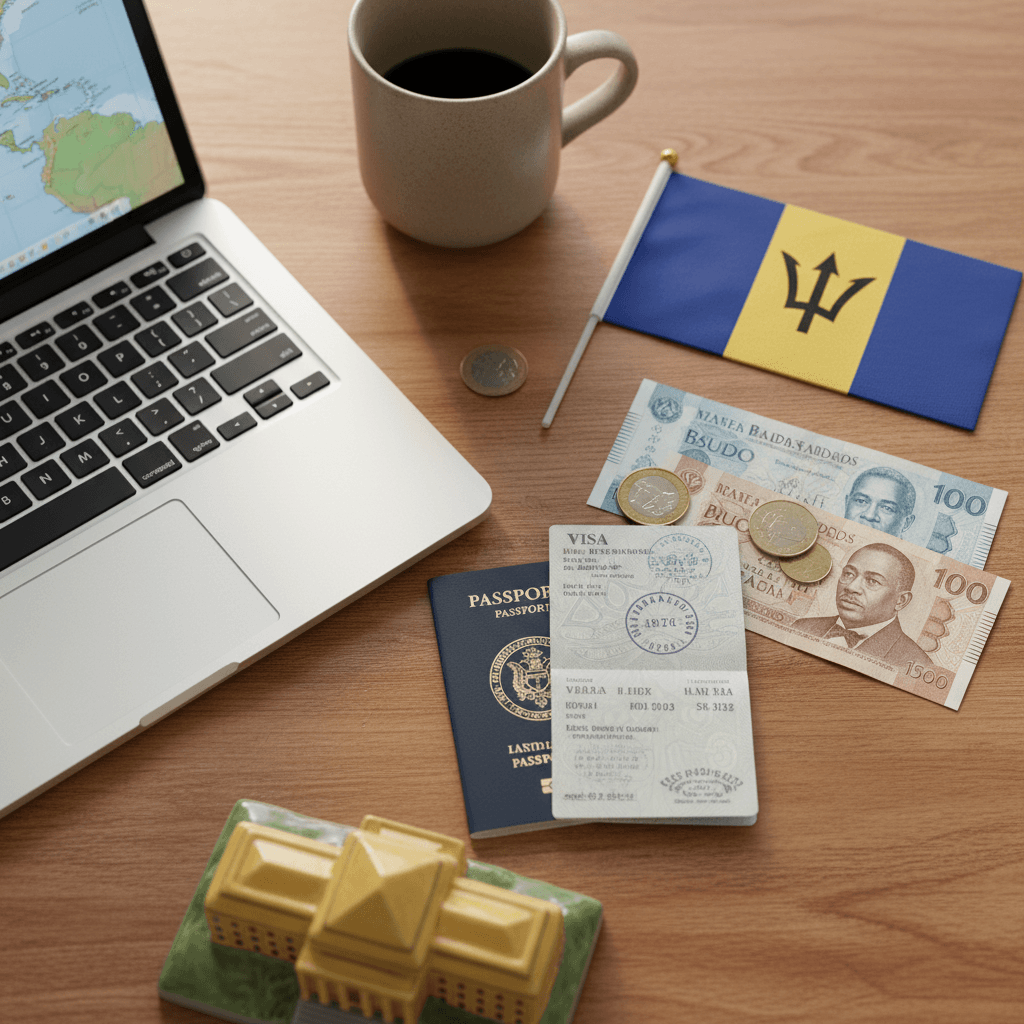
Barbados
Complete Digital Nomad Guide

Policy Stability
Stamped Nomad ExclusiveHow likely visa and immigration policies are to remain unchanged
Quick Facts
Nomad Visa Cost
$2,000
Income Requirement
$4,166/mo
Max Stay
12 months
Renewable
Yes
Cost of Living
$2,000/mo
Avg Internet
60 Mbps
Safety Score
6/10
Healthcare
High
Coworking
Medium
English Friendly
High
Time Zones
AST (UTC-4)
Entry Methods Available
Best For
The Basics: Entering Barbados
Barbados is one of the most accessible islands in the Caribbean for digital nomads, thanks to a visa policy that favors long stays. Most visitors from major hubs like the US, Canada, and the UK can stay for up to 6 months without a visa. If you are coming from the EU or a Schengen country, you generally get 90 days within a 180 day period, while travelers from countries like China or Mexico typically receive 28 to 30 days upon arrival.
Regardless of your nationality, everyone entering the island must complete the Online Immigration and Customs Form (ED Card) before landing. This is a digital requirement that streamlines your path through Grantley Adams International Airport. While many nationalities enjoy visa-free entry, some travelers now require an Electronic Travel Authorisation (ETA). This is a quick pre-approval process that works alongside your visa-free status, so check the latest requirements for your specific passport before you book your flight.
Visa-Free Entry and Extensions
If you arrive on a standard tourist entry, you are generally expected to be there for leisure. However, Barbados is quite relaxed about short-term business activities. You can attend meetings or scout locations on a tourist entry for the duration of your stamped stay. If you decide that a few weeks isn't enough, you can apply for an extension through the Immigration Department in Bridgetown.
- Extension Fee: Approximately $100 USD.
- Requirements: A valid passport, a copy of your return ticket, a passport-sized photo, and proof of funds.
- Approval: Extensions are discretionary, but staying for a full 180 days is common for those who show they can support themselves.
The E-Visa Process
If you are from a country that does not have a visa-waiver agreement with Barbados, you will need to apply for an E-Visa before you travel. Barbados does not typically offer a general visa on arrival, so do not show up expecting to sort it out at the border. You should submit your application between 1 and 45 days before your trip.
- Single-Entry Visa: Costs $107 USD.
- Multiple-Entry Visa: Costs $211 USD.
Remote Work and Long-Term Stays
For the serious digital nomad, the Barbados Welcome Stamp is the gold standard. This 12-month remote work visa was designed specifically for people who want to live the island life while keeping their global jobs. It bypasses the need for a standard work permit, which usually requires a local employer to sponsor you.
- Individual Fee: $2,000 USD.
- Family Bundle: $3,000 USD.
- Income Requirement: You must certify that you expect to earn at least $50,000 USD annually during your stay.
If you are looking to retire or make a significant investment, the Special Entry Permit is another path. This is often tied to property ownership, such as a home worth $300,000 USD or more. For those who just want to study, schools and universities must apply for a student permit on your behalf before you arrive on the island.
Final Logistics
The Barbados Immigration Department and the Ministry of Foreign Affairs are the ultimate authorities on these rules. Because policies can shift, it is smart to verify your nationality's specific stay duration on the official government portals. Keep digital copies of your ED Card and any visa approvals on your phone, as you will need to show them to the immigration officer to get that coveted 6-month stamp.
The Barbados Welcome Stamp
Barbados was one of the first countries to truly lean into the remote work revolution, and their flagship offering remains the Barbados Welcome Stamp. This is a 12-month residency permit designed specifically for people who want to swap their home office for a beach chair. It allows you to live on the island while continuing to work for your current employer or run your own business, provided those entities are based outside of Barbados.
The beauty of this program is its simplicity. It bypasses the usual red tape of standard work permits because you aren't competing for local jobs. Instead, you're treated as a long-term guest who contributes to the local economy while keeping your professional life international.
Income and Eligibility
To qualify, the primary requirement is your paycheck. You must certify that you expect to earn at least US$50,000 over the course of the year you spend on the island. This income must come from sources outside of Barbados. When you apply, you'll sign an income declaration confirming you meet this threshold.
- Foreign Employment: You must be employed by a company registered outside Barbados or be self-employed with a client base outside the country.
- Clean Record: You'll need to confirm you have no criminal history.
- Health Coverage: You must maintain valid health insurance for the duration of your stay. If your international plan doesn't cover Barbados, you can easily purchase a local policy once you arrive.
The Application Process
The government has streamlined the process to be entirely digital. Most applicants receive a response in about 5 working days. You'll need to have a few digital documents ready before you start the online form:
- A high-quality scan of your passport bio-data page.
- Two digital passport-sized photographs.
- Birth certificates for yourself and any family members joining you.
- Proof of relationship for dependents, such as a marriage certificate.
Once you get the green light, you have 28 days to pay the visa fee. For an individual, the cost is US$2,000. If you're bringing the family along, the "Family Bundle" fee is US$3,000. These fees are non-refundable and only due after your application is approved. Your 12-month clock starts the moment you land on the island, and you must arrive within 12 months of your approval date.
Tax Benefits and Rules
One of the biggest draws of the Welcome Stamp is the tax treatment. As a holder of this visa, you are not required to pay Barbadian income tax on your foreign earnings. You also won't have to worry about local social security contributions. Your tax obligations remain tied to your home country or wherever you were a tax resident before arriving.
However, there are strict boundaries. You are legally barred from seeking employment with a Barbadian company or providing services to local businesses while on this visa. Breaking this rule can lead to your visa being revoked. Think of it as a "look but don't touch" policy regarding the local job market.
Duration and Renewal
The visa is valid for one year, but if you find that twelve months of turquoise water isn't enough, you can apply to renew it. You don't even have to leave the island to do so. In fact, many visitors who arrive on a standard 6-month tourist entry decide to upgrade to the Welcome Stamp from within the country once they realize how well the island life suits them.
Before you fly, make sure you fill out the standard immigration and customs form online. This is required for everyone entering Barbados, regardless of their visa status, to ensure a smooth transition through the airport and onto the beach.
The Easy Entry: Visa-Free Travel
For most travelers, getting into Barbados is a breeze. Citizens from around 180 countries can enter without a visa. This includes the US, Canada, the UK, Australia, and most of the EU. When you land, an immigration officer will stamp your passport for a stay ranging from 1 to 6 months, depending on where you are from.
To keep things moving at the airport, make sure you have your ducks in a row. You will need a passport that is valid for your entire stay, a confirmed return or onward ticket, and the address of where you are staying. They might also ask for proof that you can support yourself financially, so have a bank statement or credit card handy.
The Digital Paperwork: ED Cards
Every single traveler, regardless of their nationality, has to fill out the Barbados Online ED Card. This is your combined immigration and customs form. You can do this online before you even pack your bags. Once you submit it, you will get a receipt via email. Keep a copy on your phone or print it out to show the officer when you land.
When You Need a Visa in Advance
If you are from a country that isn't on the visa-exempt list, you will need to apply for a visa before you book your flight. Barbados has an online portal for this, which makes the process a bit more modern. You should get your application in at least 6 weeks before you plan to travel, as processing usually takes about 7 to 10 business days.
The requirements for an e-visa are straightforward but strict. You will need:
- A completed application form and a copy of your passport data page.
- A recent passport-sized photo.
- A valid travel ticket showing when you plan to leave.
- A formal letter addressed to the Chief Immigration Officer explaining why you are visiting.
The Barbados Welcome Stamp
If you want to stay longer than a standard tourist trip, the Welcome Stamp is the gold standard for remote workers. This is a 12-month digital nomad visa that lets you live and work on the island while your income comes from abroad. It is one of the most popular programs in the Caribbean for a reason.
To qualify for the Welcome Stamp, you need to meet these criteria:
- A minimum annual income of $50,000 USD.
- Proof of employment or business registration outside of Barbados.
- A passport valid for at least 6 months.
- An application fee of $2,000 USD for individuals or $3,000 USD for families.
Staying Longer: Extensions and Rules
If you fall in love with the island and want to stay past your initial stamp, you can apply for an extension. You will need to head to the Barbados Immigration Department in Bridgetown or the office at the airport. Each extension costs $100 USD. You will need your passport, a new photo, and a good reason for staying longer, like ongoing medical care or just needing more time to explore.
Don't rely on "border runs" here. While some people try to hop to a nearby island and come back for a fresh stamp, immigration officers are hip to this. They have the discretion to deny you re-entry if they think you are trying to bypass the rules. It is always better to go through the official extension process.
Whatever you do, don't overstay your welcome without paperwork. Overstaying is illegal and can lead to fines, detention, or deportation. It also creates a permanent mark on your immigration record, which could make it very difficult to return to Barbados or even visit other countries in the future.
The 12-Month Welcome Stamp
If you are a remote worker looking to swap your home office for a view of the Caribbean Sea, the Welcome Stamp is your easiest entry point. This visa was designed specifically for digital nomads and freelancers who earn their income from sources outside of Barbados. It allows you to live and work on the island for 12 months, and you can renew it if you decide one year just isn't enough.
The application process is remarkably fast, with most people receiving a decision within 7 business days. To qualify, you need to prove an annual income of at least $50,000 USD. You will also need a valid passport, proof of remote employment or freelance status, and health insurance that covers you while you are on the island.
- Individual Fee: $2,000 USD
- Family Bundle Fee: $3,000 USD
- Approval Timeline: Around one week
- Key Benefit: You do not pay Barbados income tax on your foreign earnings while on this visa.
Special Entry and Residence Permit (SERP)
For those looking for a more permanent connection to the island through investment, the SERP acts as the Barbados version of a "Golden Visa." This is a popular route for high-net-worth individuals who want long-term stability without the yearly renewal cycle of a nomad visa. There are two primary categories based on your level of investment.
Category 1 is for those with a net worth of at least $5 million USD who invest $2 million USD into the local economy using foreign funds. This grants indefinite residency and makes you eligible for a work permit. Category 2 is more accessible, requiring a $300,000 USD investment in real estate or other approved areas, which provides a 5-year renewable residency permit.
Common requirements for both include a $150 USD application fee, a clean police certificate, and health insurance with at least $500,000 USD in coverage. You will also need to submit Form B to the Immigration Department and provide a tax residency declaration.
Retiring in the Tropics
Barbados is a welcoming spot for retirees, offering an "Immigrant Status" specifically for those over 60 years old. If you can show that you have a steady pension or private income and won't need to rely on public funds, the process is straightforward. Most officials look for a monthly deposit into a local bank account of around $2,000 USD.
The costs for this status include the standard $150 USD application fee, plus approval fees that range from $300 to $1,200 USD depending on your specific circumstances. You will need to provide character references and undergo a medical exam to ensure you are in good health before the permit is finalized.
The Path to Permanent Residency
If you fall in love with the island and want to make it your forever home, you can apply for permanent residency after living here continuously for 5 years. This typically applies to those holding immigrant status or specific work permits. You must show that you have remained in good standing with the law and have contributed positively to the community during your stay.
While the Welcome Stamp does not count directly toward this five-year clock, many nomads use their first year to transition into a SERP or other residency category. The Immigration Department handles all these transitions, and it is usually best to start your renewal or status change application at least three months before your current permit expires.
Contact and Application Info
All residency applications are managed by the Barbados Immigration Department. You can reach them by phone at +1 246-535-4100 or via email at immigration@barbados.gov.bb. While the Welcome Stamp application is handled through a dedicated online portal, more complex permits like the SERP or permanent residency usually require physical document submission at their office in Bridgetown.
The Reality of Island Living
Living in Barbados as a nomad is a study in contrasts. You can find yourself eating a $10 flying fish cutter at a beach shack one afternoon and sitting down for a $150 fine dining experience in Holetown the next. While it is certainly not the cheapest destination in the Caribbean, the infrastructure and reliability make it a top-tier choice for those working remotely.
Monthly expenses typically fall between $1,500 and $5,200 USD. This wide range exists because Barbados caters to everyone from the surf-focused budget traveler to the high-net-worth individual. Keep in mind that the local currency is pegged to the US Dollar at a 2:1 ratio, making math easy while you are out shopping.
Where You Stay Matters
Your biggest expense will always be rent, and the neighborhood you choose dictates your baseline. Bridgetown is the most affordable urban hub, while the "Platinum Coast" in the west is where prices peak.
- Bridgetown: The capital offers an authentic urban feel. You can find 1BR apartments for $850 to $1,500. It is the best spot if you want to be near major coworking hubs like TEN Habitat.
- Christ Church: This is the nomad sweet spot. Areas like Oistins and Rockley offer plenty of furnished rentals between $1,000 and $1,800. You get easy beach access and a solid mix of expats and locals.
- Holetown: If you want luxury, this is it. Expect to pay $1,500 to $2,500+ for a modern 1BR. It is polished, upscale, and puts you right next to the island's best shopping and high-end cafes.
Breaking Down the Monthly Budget
Outside of rent, your lifestyle choices will drive the final total. To make things simple, we look at three distinct tiers of spending for a single person.
The Budget Tier (~$1,500 Monthly)
This lifestyle relies on local markets, public transport, and staying in more modest inland areas or Bridgetown.
- Rent: $650 to $1,200 for a basic studio or shared apartment.
- Food: $280 to $400 by sticking to local produce markets and street food.
- Transport: $85 to $150 using the local bus system at $1.75 per ride.
- Workspace: $100 to $200 for basic flex-desk memberships or working from cafes.
- Health Insurance: $60 to $150 for standard nomad travel insurance.
The Comfortable Tier (~$2,800 Monthly)
This is the standard expat experience. You get a nice 1BR near the water, eat out a few times a week, and likely use a mix of taxis and buses.
- Rent: $1,200 to $1,800 for a furnished 1BR in Christ Church.
- Food: $480 to $600 including grocery runs for imported goods and weekly dinners at mid-range spots.
- Transport: $180 to $250 for frequent rideshares or occasional car rentals.
- Workspace: $250 to $400 for a dedicated desk at a professional coworking space.
- Health Insurance: $120 to $250 for comprehensive plans that meet visa requirements.
The Premium Tier (~$5,200+ Monthly)
For those who want the best of the west coast. This includes a luxury apartment, a full-time rental car, and frequenting the island's top-tier restaurants.
- Rent: $2,000+ for a high-end condo in Holetown or a beachfront villa.
- Food: $700 to $900 for premium groceries and dining at world-class establishments.
- Transport: $300 to $350 for a full-time car rental and fuel.
- Workspace: $500+ for private office suites at locations like Regus.
- Health Insurance: $200 to $400 for top-tier international medical coverage.
Hidden Costs to Watch For
Groceries can be a shock. Since most goods are imported, anything in a box or jar from overseas will carry a premium price tag. Shopping at local "vegetable stalls" instead of large supermarkets can save you 30% on your weekly bill. Also, remember that the 12-month Welcome Stamp carries its own fee of $2,000 for individuals, which is not included in these monthly living estimates.
Utilities like electricity are also notoriously high due to the cost of air conditioning. If your rent does not include "light," expect to add another $150 to $300 to your monthly outgoings if you plan on keeping the room cool 24/7.
Bridgetown: The Professional Pulse
Bridgetown serves as the island’s nerve center, offering a blend of historic charm and modern infrastructure. It is the most logical choice for nomads who need proximity to major coworking spaces like Regus and Spaces. The internet here is some of the fastest in the Caribbean, typically ranging between 40-70 Mbps, making it a reliable base for heavy Zoom users or developers.
The capital feels more like a small city than a beach town. You will find a high safety index of 78/100 and a bustling local scene at Baxters Road when the sun goes down. While it is busier than other coastal spots, the abundance of amenities and community meetups organized through local Facebook and Slack groups makes it easy to find your footing.
- Estimated Monthly Cost: $1,200 - $1,700
- Coworking Scene: High availability with global brands and local hubs.
- Best For: Nomads who want a "city" feel and maximum networking opportunities.
St. Lawrence Gap: The Social Hub
Commonly referred to as "The Gap," this area is the heartbeat of the south coast. It is famous for its mile-long stretch of bars, restaurants, and hotels. If your version of nomad life involves a morning swim followed by a laptop session at a cafe like Bliss or Happy Days, this is your spot. The digital nomad community here is active, often gathering at Harbour Lights or local beach bars for happy hour.
The vibe is undeniably touristy, which means prices for dining out can climb quickly. However, the walkability is a major plus. You can live, work, and party within a small radius without ever needing a car. Just be prepared for a bit of noise; this isn't the place for those seeking total silence during the workday.
- Estimated Monthly Cost: $1,000 - $1,200
- Key Amenities: Lively nightlife, high walkability, and beach access.
- Best For: Social butterflies and nightlife enthusiasts.
Holetown: Upscale Coastal Living
Located on the platinum west coast, Holetown is where you go for a more refined, luxury-leaning experience. The beaches here are calmer and the lifestyle is noticeably more "chic." You will find high-end shopping at Limegrove and quiet, air-conditioned cafes like Cafe Moya that are perfect for deep work sessions.
This is the most expensive area on the island, with monthly costs often reaching $2,000. It operates on "island time," so things move a bit slower here. It is ideal for established nomads or those on the Barbados Welcome Stamp who prefer a quieter, sophisticated environment over the high-energy south coast.
- Estimated Monthly Cost: $1,500 - $2,000
- Vibe: Luxury, calm waters, and high-end dining.
- Best For: High-earners and those seeking a peaceful, premium lifestyle.
Speightstown: The Budget-Friendly Retreat
Further north lies Speightstown, a town that feels like a window into "old Barbados." It is significantly more affordable than the southern hubs, with apartments often found for $800 - $1,000. Despite the lower price tag, it is safe and increasingly well-connected, with new coworking options from Regus and Spaces opening nearby.
The trade-off for the lower cost is a smaller nomad community and fewer organized events. You will spend your weekends at local markets or quiet coastal cafes rather than at massive beach clubs. It is the perfect hideaway for writers or creators who want to stretch their budget while enjoying a genuine Bajan atmosphere.
- Estimated Monthly Cost: $800 - $1,000
- Atmosphere: Laid-back, historic, and authentic.
- Best For: Slow travelers and budget-conscious nomads.
Warrens and Hastings: The Business District
Warrens is the island's primary commercial district, located just inland from the south coast. While it lacks the immediate beach views of Holetown, it offers the most professional environment for remote work. The area is home to major corporate offices and the best-equipped coworking spaces in the country.
Hastings, located nearby, offers a bridge between the business world and the beach. You can spend your morning working in a professional suite and your afternoon at ArtSplash cafe or walking the boardwalk. Note that Warrens is quite car-dependent, so factor in the cost of a rental if you choose to base yourself directly in the commercial zone.
- Estimated Monthly Cost: $1,000 - $1,500
- Infrastructure: Top-tier internet and professional office setups.
- Best For: Serious professionals who prioritize productivity over proximity to sand.
Reliable Connectivity in the Tropics
One of the biggest hurdles for the nomadic lifestyle is the "will it work?" anxiety regarding video calls. In Barbados, you can leave that stress at the airport. The island has invested heavily in subsea fiber cables, making it one of the most digitally capable hubs in the Caribbean. Whether you are tucked away in a breezy parish like St. Joseph or right in the heart of Bridgetown, the infrastructure is robust enough to handle heavy Zoom schedules and large file transfers.
Fixed broadband speeds generally hover between 60 Mbps and 90 Mbps, though it is not uncommon to see fiber connections pushing much higher. Flow and Digicel are the two primary titans on the island. Flow currently leads the pack with average download speeds around 71.8 Mbps, while Digicel is a fantastic secondary option, especially for those who prioritize mobile data reliability.
Fiber Providers and Home Setup
If you are renting a villa or an apartment for a few months, you will likely be dealing with one of the big three: Flow, Digicel, or TeleBarbados. Fiber optic coverage is surprisingly widespread, reaching most residential pockets across the island. If your rental does not already include internet, or if you need to upgrade the speed for a specific project, here is what to expect from the local market:
- Flow: Plans start around BBD 82 per month for 30 Mbps, scaling up to 150 Mbps for approximately BBD 105.
- Digicel: Known for high-speed bundles, offering 400 Mbps for BBD 130 and ultra-fast 1000 Mbps packages starting around BBD 185.
- TeleBarbados: A reliable alternative often used by businesses and high-end residential properties for dedicated fiber lines.
Coworking Spaces and Community Hubs
While the "work from the beach" dream is great for an hour, serious productivity usually requires an ergonomic chair and backup power. Barbados has several professional spaces that cater specifically to the remote workforce. These spots offer a mix of corporate professionalism and island community vibes.
- Regus: Located in St. Thomas, this is the most corporate environment on the island. It is perfect if you need a polished backdrop for client meetings. Their Coworking Access Plan starts at BBD 20 per day on a long-term contract, while dedicated desks run about BBD 38 per day.
- Remote Work Barbados: Situated at the trendy Haymans Market, this space offers 24/7 access, which is a lifesaver if you are working for a company in a vastly different time zone. A monthly pass here costs roughly BBD 426 (US$213).
- TEN Habitat: More than just a desk, this is an innovation hub. It is a great place to meet local entrepreneurs and fellow nomads. Premium memberships start at US$150 per month.
- The Work Boulevard & Spaces: These boutique options offer a more intimate feel with ergonomic setups and, in many cases, excellent views that remind you why you moved to the Caribbean in the first place.
The Cafe Culture
If you prefer a more social atmosphere, the cafe scene is welcoming to laptops. Most establishments understand the nomad economy and provide free, reliable WiFi. You will rarely be asked to move along as long as you are keeping the coffee and snacks flowing. The connection at most popular spots is stable enough for standard video conferencing.
Artsplash in Hastings is a favorite for its creative energy and sea breeze. The Coffee Bean has multiple locations across the island and offers a very consistent, "office away from home" experience. For a more relaxed vibe, Senses Marché, Bliss Cafe, and various beachside bistros provide enough bandwidth to clear your inbox while watching the waves.
Mobile Data and eSIM Options
Do not rely solely on public WiFi when you are out exploring. Local SIM cards are easy to grab at the airport or in any major town. Digicel is particularly popular for nomads because their plans often include data specifically for apps, and they have strong regional coverage if you plan to island-hop.
- Local Prepaid SIMs: Flow offers 4GB packages for 30 days ranging from BBD 48 to BBD 90.
- eSIMs: If you want to hit the ground running, providers like Nomad offer 1GB for 7 days at around US$8. For longer stays, 20GB for 30 days costs roughly US$49 and allows for tethering.
- Network Quality: Both major carriers offer 4G/5G capabilities, though 5G is still rolling out in specific high-traffic corridors.
Between the widespread fiber availability and the growing number of dedicated workspaces, Barbados has managed to shed the "island time" reputation when it comes to technology. You can expect a digital experience that rivals most mid-sized North American or European cities, just with much better weather.
The Two-Tier Reality
Barbados punches well above its weight when it comes to medical care in the Caribbean. The island operates a dual system where public and private facilities coexist. While the public system is free for locals, digital nomads and expats are charged fees. Most nomads find that the public route involves significant wait times for anything that isn't a life-threatening emergency.
For your day-to-day peace of mind, the private sector is where you will likely spend your time. It offers faster service, more comfortable surroundings, and modern diagnostic equipment. While there are no JCI-accredited hospitals on the island yet, the top-tier private facilities operate at Western standards with highly trained, English-speaking staff.
Top Facilities for Nomads
If you are based in or near Bridgetown, the Queen Elizabeth Hospital (QEH) is the primary public hub with over 600 beds and a 24/7 ER. It handles the most complex traumas and specialized surgeries. However, for a more streamlined experience, most expats head to these private alternatives:
- Bayview Hospital: Located just outside the capital, this is the go-to for many nomads. It offers private rooms, an ICU, and specialized surgical units.
- Sandy Crest Medical Centre: Situated in St. James, this facility is open 24/7 and is famous among the expat community for its efficiency and on-site scanning capabilities.
- FMH Emergency Clinic: A great option for urgent but non-life-threatening issues in St. Michael, offering Level 2 emergency care without the public hospital wait times.
Insurance Requirements and Options
Since 2022, Barbados has required proof of health insurance for entry. While you can find local policies starting around BBD 200 to 300 per month, these often lack the reach needed for international travel. Most digital nomads opt for global providers like Cigna, Allianz, or BUPA.
A solid international plan is vital because private care costs add up quickly, and the island's public system is not a safety net for foreigners. Your policy must include medical evacuation. While Barbados handles most things well, extremely specialized cases sometimes require a flight to the United States for treatment.
What You Will Pay
Healthcare here is high quality, but it is not a "budget" destination for medical tourism. You should be prepared to pay upfront at private clinics, even if you have insurance to reimburse later. Here is a breakdown of what to expect for common costs:
- Private GP Visit: BBD 100 to 200 ($50 to $100 USD)
- Specialist Consultation: Starting at BBD 200 ($100 USD)
- MRI Scan: BBD 1,000+ ($500+ USD)
- Dental Extraction: Around BBD 400 ($200 USD)
- Private Overnight Stay: $1,000 to $3,000 USD
- Major Surgery (e.g., Hip Replacement): $12,000 to $16,000 USD
Pharmacies and Prescriptions
Pharmacies are easy to find and generally well-stocked with international brands. You will pay the full market price for medications since the government subsidy only applies to citizens. If you have a prescription from home, you usually need a local doctor to rewrite it on a Bajan prescription pad to get it filled.
In a pinch, many pharmacists can provide a 5-day emergency supply of maintenance medication if you show them your original bottle. While most common drugs are available, some niche brand names might be substituted with high-quality generics due to import cycles.
Emergency Situations
In a serious crisis, dialing 511 connects you to the QEH ambulance service. They have a fleet of over 10 vehicles capable of CPR and IV administration, but response times can be slow in rural parishes. For faster service, many expats use private ambulance providers like Urgent Care Barbados, which typically costs between $150 and $800 USD depending on the level of care required during transport.
Managing your money in Barbados is surprisingly straightforward once you understand the local peg and the perks of your Welcome Stamp status. While the island has its own currency, the Barbadian Dollar (BBD), you will quickly notice it is hard-pegged to the US Dollar at a rate of 2:1. This fixed rate makes mental math easy; just cut the BBD price in half to know what you are spending in USD. Most businesses accept US cash, but you will almost always receive your change in BBD.
Opening a Local Bank Account
As a digital nomad on the Welcome Stamp, you are treated as a non-resident for exchange control purposes. This is a massive win. It means you can hold foreign currency accounts and move your money back home without the usual red tape that locals face. While you can manage perfectly fine with international cards, opening a local account is helpful if you are staying for the full year and want to pay local utilities or rent via domestic transfer.
The process is paperwork-heavy and usually requires an in-person visit, though some banks allow you to start the process via video call. Major players like Scotiabank, CIBC FirstCaribbean, and RBC are the most expat-friendly. Be prepared for a high barrier to entry; many banks require a minimum opening deposit of $10,000 USD or more for non-resident accounts.
To get through the door, you will need to gather a stack of documents:
- Two forms of photo ID (your passport is the most important).
- Proof of your Welcome Stamp visa.
- Proof of address, including your home country address and your local Barbados lease or a hotel confirmation.
- Tax ID from your home country.
- A bank reference letter from your current bank back home.
- Evidence of income, such as recent payslips or an employment contract.
ATMs and Digital Banks
If you prefer to skip the local bank bureaucracy, Wise and Revolut are your best friends on the island. Both cards work seamlessly at local retailers and ATMs because they run on the Visa and Mastercard networks. Using these cards allows you to spend at the mid-market exchange rate, avoiding the "tourist tax" often hidden in traditional bank conversion fees.
When you need cash, stick to bank-affiliated ATMs like those at Republic Bank or First Citizens. Most of these machines do not charge a local convenience fee, though your home bank might still hit you with an international transaction charge. Most ATMs have a withdrawal limit of around 3,000 BBD per transaction. Avoid the standalone ATMs found in high-traffic tourist bars or convenience stores, as these often carry high surcharges.
Moving Money Efficiently
For paying your security deposit or monthly rent, skip the traditional bank wire if possible. Wise is the gold standard for sending money to Barbados banks; it is significantly cheaper and faster than a standard SWIFT transfer. If you need to send cash for a quick pickup, Western Union and MoneyGram have locations across the island, but you will pay a premium for the convenience.
Most nomads find the "hybrid" approach works best: keep your main funds in a high-yield account back home, use Wise for daily spending and ATM runs, and only open a local account if your landlord specifically demands local transfers for a long-term villa lease.
Bringing the Family Along
Moving your family to a tropical island sounds like a dream, but the logistics of schools and safety are what make it a reality. Barbados is one of the more seamless Caribbean islands for digital nomad families, largely because the infrastructure for expats is already well-established. Whether you are here for a year on the Welcome Stamp or longer on a work permit, your dependents are welcome to join you.
Spouses and children under 18 are eligible for dependent visas. This also extends to older children who are still in university and financially reliant on you. You will need to provide the standard paperwork like birth and marriage certificates and proof that you can support everyone without seeking local employment. The process usually kicks off once the primary visa holder is approved through the Immigration Department.
Education and International Schools
The island has a high standard of education with several international schools that cater to expat children. Most follow the British curriculum or the International Baccalaureate (IB) program, making it easier for kids to transition back to schools in the US, UK, or Canada later on.
- The Codrington School: Located in St. John, this is the go-to for the IB program. Fees for non-nationals range from $1,500 to $22,660 USD per year depending on the grade level.
- St. Gabriel’s and Providence: These are popular primary and secondary options that offer a mix of local and international curricula.
- Lockerbie College: Known for a more personalized approach, often following the Cambridge system.
Keep in mind that school fees are often quoted per term, and there are three terms in an academic year. You should also budget for one-time application and processing fees when you first enroll.
Healthcare for Kids
Barbados provides free public healthcare for all children under the age of 16. This includes primary care at local polyclinics, immunizations, and emergency services at the Queen Elizabeth Hospital. Many of the medications on the National Formulary are also covered at no cost for minors.
While the public system is reliable, many nomad families choose to carry private health insurance to access private clinics. These facilities usually offer faster service and more specialized pediatric care. The island also has a partnership with SickKids, which has helped bolster the quality of specialized pediatric services available locally.
Where to Set Up Base
Most families gravitate toward the West Coast. It is famous for its calm Caribbean waters, which are much safer for small children than the rugged Atlantic waves on the East Coast.
- Holetown: This is the hub of the West Coast. It is incredibly walkable with high-end supermarkets, medical centers, and beaches like Folkestone Marine Park.
- Speightstown: If you want something quieter and more "Old Caribbean," this is it. It is less touristy but still has great cafes and calm swimming spots.
- Bridgetown and Carlisle Bay: The bay has some of the best shallow water for kids on the island, and the capital offers plenty of cultural sites for weekend outings.
- St. Lawrence Gap: While known for nightlife, the surrounding residential areas near Dover Beach are popular because the beach is wide and well-patrolled.
Childcare and Daily Support
Finding help at home is common and affordable in Barbados. If you need a night out or help during the workday, babysitters typically charge between BDS$10 and BDS$20 per hour. That is roughly $5 to $10 USD.
For younger children, preschools and daycares like Day Stars are available. These programs usually cost around BDS$1,000 per term. If you are running late, expect to pay a small late pickup fee of about BDS$15. Full-time daycare costs generally align with the regional average of $200 to $400 USD per month.
Staying Safe
Barbados is generally considered a safe destination for families. Violent crime is low in the areas where expats and tourists typically live and play. Most of the crime reported on the island is gang-related and does not target visitors, though petty theft can happen in crowded areas or on the beach.
Standard safety rules apply: don't leave your bags unattended on the sand and keep your car locked. On the beach, always look for areas with lifeguards and keep a close eye on the sun. The Caribbean sun is intense, so high-factor sunscreen and UV-protected swimwear for the kids are non-negotiable.
Safety Essentials
Barbados maintains a reputation as one of the safest hubs in the Caribbean. While the island is generally secure, there has been a rise in gang-related activity and gun crime since 2019. These incidents are almost exclusively concentrated in specific neighborhoods like Crab Hill or the Nelson and Wellington Street areas of Bridgetown at night. As a nomad, you aren't a specific target for these groups, but you should avoid these pockets after dark.
The real risks for visitors are petty theft and crimes of opportunity. Keep your doors locked, don't leave valuables visible in rental cars, and stay alert in crowded tourist areas. Most trouble comes from being perceived as affluent and distracted rather than being a foreigner.
Common Scams to Avoid
A few specific ruses target the unsuspecting. Watch out for these common traps:
- The Entry Form Scam: Never pay for your immigration forms. A fraudulent site (barbadostravelform.org) tries to charge US$39 for a service that is actually free through official government channels.
- The Bird Poop Trick: If someone squirts a white paste on your shoulder and offers to help clean it off, walk away immediately. This is a distraction technique used by pickpockets.
- The Camera Hustle: Locals might ask you to take their photo, then claim you broke their equipment and demand cash for repairs.
- Unpriced Menus: Some bars avoid listing prices and then present an inflated bill. They may even try to escort you to an ATM to settle the tab. Always ask for a price list before ordering.
LGBTQ+ Climate
The legal environment for the LGBTQ+ community shifted significantly in December 2022. The High Court struck down colonial-era laws that criminalized consensual same-sex acts, marking a major win for civil rights. Additionally, the 2020 Employment Act protects workers from discrimination based on sexual orientation.
The Welcome Stamp visa is inclusive, allowing same-sex spouses to join their partners on the island. Despite these legal strides, social attitudes can be conservative. Public displays of affection are generally rare for all couples in Barbados, but LGBTQ+ individuals should exercise extra discretion to avoid unwanted attention.
Bajan Etiquette and Language
Politeness is the currency of the island. You will notice that Bajans greet almost everyone they pass. A simple "Good morning" or "Good afternoon" is expected; walking into a shop or boarding a bus without a greeting is considered quite rude. When meeting elders, use formal titles like Mr. or Mrs. until invited to do otherwise.
English is the official language for business and government, so you won't have trouble navigating logistics. However, the local tongue is Bajan Creole. It is fast, rhythmic, and heavily flavored with West African influences. While it is English-based, it can be difficult to follow in casual settings. If you find yourself lost in a conversation, just listen for the cadence; most locals will switch to standard English if they see you struggling.
Dress codes matter here. While swimwear is fine for the beach, it is inappropriate in Bridgetown or inside shops and churches. Keep it conservative when you head into town.
Community and Social Life
The nomad scene is small but exceptionally welcoming. Because the island is compact, you will likely run into the same faces frequently, making it easy to build a social circle quickly. Integration is often driven by shared interests like surfing or diving.
- Bajan Nomad Social: This group hosts co-working popups on the first Thursday of every month at different restaurants and hotels.
- Blackpats: A dedicated community specifically for Black expats and nomads to connect and share resources.
- Digital Communities: Facebook and WhatsApp are the primary ways nomads coordinate. Join these groups before you land to get the latest on meetups.
- The "Island Time" Mindset: Things move slower in Barbados. Embracing the relaxed pace rather than fighting it will make your social interactions much smoother.
The Welcome Stamp Advantage
For most digital nomads, the entry point to island life is the 12-month Welcome Stamp. The biggest draw of this program, aside from the obvious beach views, is the tax exemption. Under this specific visa, you are not required to pay Barbados income tax on your foreign-sourced earnings. As long as your clients and employers are based outside of the country, you can enjoy your time here without worrying about the local tax authorities knocking on your door.
This exemption keeps things simple for your first year. You won't need to file a local tax return or report your remote salary to the Barbados Revenue Authority. However, keep in mind that this only applies to your remote work. If you decide to take on a local freelance project or consult for a Barbadian company, that specific income is subject to local taxes.
When Tax Residency Kicks In
If you decide to stay beyond the initial year or find yourself returning frequently, you need to watch the calendar. Barbados uses a physical presence test to determine tax residency. You become a tax resident if you spend more than 182 days in the country during a single calendar year.
There is also a concept called "ordinary residence." This applies if you have a permanent home on the island and intend to stay for at least two years. Once you hit resident status, the tax rules change. Residents who are not "domiciled" in Barbados (meaning it isn't your permanent legal home) are typically taxed on their local income and any foreign income that is remitted to or "brought into" the country.
Income Tax Brackets
If you do trigger residency or earn local income, the tax system follows a two-tier progressive structure. The rates are relatively straightforward compared to many Western systems:
- 12.5% on the first BBD 50,000 of taxable income.
- 28.5% on any income exceeding BBD 50,000.
Double Taxation and Treaties
Nobody wants to pay tax twice on the same dollar. Barbados has built a robust network of Double Taxation Agreements (DTAs) to prevent this. They currently have treaties with 31 countries, including the United States, United Kingdom, Canada, and China. These agreements usually allow you to claim a credit for taxes paid in one country against the liability in the other, ensuring you aren't unfairly penalized for your nomadic lifestyle.
Crypto and Digital Assets
Barbados hasn't rolled out a specific "Crypto Law" yet, so digital assets fall under general tax principles. If you are trading crypto as a hobby, gains are often treated as capital gains, which currently aren't taxed in Barbados. However, if the authorities determine you are "trading" as a business, or if you receive mining and staking rewards, that could be classified as taxable income.
The country also participates in the Crypto-Asset Reporting Framework (CARF). This means they exchange information with other jurisdictions to ensure transparency, so don't assume your digital wallet is invisible to tax authorities back home or in Bridgetown.
Deadlines and Reporting
If you find yourself meeting the residency requirements, you'll need to mark April 30 on your calendar. This is the annual deadline for filing personal income tax returns. Even if you don't owe money due to treaty credits, you are still required to file if you meet the residency criteria. It is a good idea to keep a simple log of your entry and exit dates to prove your status if the revenue office ever asks for verification.
For those strictly on the Welcome Stamp with no local income, you can skip the April filing entirely. Just make sure you aren't accidentally "remitting" foreign funds in a way that triggers a local liability if you stay long-term.
Getting Connected
Landing in Barbados without a data plan is a rookie mistake you'll want to avoid. While cafes have WiFi, it can be unpredictable during tropical storms or peak hours. Your best bet is grabbing a local eSIM from Digicel or Flow. Digicel offers a tourist-specific plan with 30GB of data for $100 USD that lasts 30 days. If you prefer a physical SIM, you can pick one up at the airport or in Bridgetown; top-ups usually start around $30 USD for a week of service.
For those who hate swapping cards, Holafly provides unlimited data packages, though they can be pricier than local options. Regardless of which provider you choose, having 4G or 5G coverage island-wide allows you to work from a beach chair without stressing over a dropped Zoom call.
Moving Around the Island
You don't necessarily need a car here, but you will need the right apps. Download Bimride or PickUp as soon as you arrive. Bimride is particularly reliable for airport transfers, with fares starting around BBD 23 and drivers usually arriving within 2 minutes in popular areas. It’s the local answer to Uber and much more transparent than haggling with street taxis.
If you’re feeling adventurous, the "ZR" vans (white minivans with a maroon stripe) are a cheap, loud, and quintessentially Bajan way to get around for a few dollars. If you decide to rent a vehicle for more freedom, remember that driving is on the left. The roads can be narrow and winding, so take it slow until you get the hang of the local flow.
Where to Set Up Your Desk
Choosing a neighborhood defines your nomad experience. Each pocket of the island has a distinct personality and price point.
- Holetown: This is the upscale choice. It’s perfect for nomads who want luxury shopping and manicured beaches. Expect to pay between $1,500 and $2,000 per month for an apartment. It's home to several coworking spaces and high-end cafes.
- St. Lawrence Gap: If you want to close your laptop and walk straight into a happy hour, "The Gap" is for you. Monthly rents are more moderate, ranging from $1,000 to $1,200. It’s social, loud, and very walkable.
- Bridgetown: The historic capital offers the best urban access and high-speed fiber internet. Apartments go for $1,200 to $1,500. It’s less "vacation vibe" and more "productive professional."
- Carlton: For those who need deep focus, this residential area is quiet and peaceful. Prices sit around $1,200 to $1,500. You’ll be closer to locals and further from the tourist traps.
Finding a Home and Staying Fed
While Airbnb is the standard go-to, it often carries a "tourist tax" in its pricing. For longer stays, check out Flatio, which offers flexible leases without the massive deposits. If you're looking for a built-in community, TEN Habitat or Mapmelon are excellent for coliving. These spots prioritize high-speed WiFi and shared workspaces, which takes the guesswork out of your morning routine.
When you’re too deep in a project to cook, foodDROP is the island’s premier delivery service. They handle everything from quick salads to full platters from the Oistins Fish Fry. The app has real-time tracking, so you aren't left wondering when your flying fish sandwich will arrive.
Local Culture and Safety
English is the official language, but you’ll quickly realize the local dialect, Bajan Creole, has its own rhythm. Download the Bajan Lingo app to decode local proverbs and slang. It’s a great way to break the ice with neighbors and show you're more than just a temporary visitor.
For emergencies, memorize these three numbers: 211 for Police, 511 for Ambulance, and 311 for Fire. If you have a hearing impairment or simply prefer text, the Fire and Rescue service accepts WhatsApp messages and location pins at +1 246-262-4120. For medical needs, Queen Elizabeth Hospital is the primary facility, but FMH Emergency is often faster for non-life-threatening issues.
Pro-Tips to Avoid Burnout
The biggest mistake nomads make is fighting "island time." Things move slower here, from restaurant service to administrative tasks. Lean into it. Also, the Caribbean sun is no joke; check the UV index daily and wear higher SPF than you think you need. Finally, keep an eye on your budget. Barbados imports almost everything, which means groceries can be expensive. Shop at local markets and eat where the locals eat to keep your monthly burn rate under control.
More Guides from Caribbean
Stay Updated on Barbados
Get notified about visa changes, policy updates, and new information for digital nomads in Barbados.