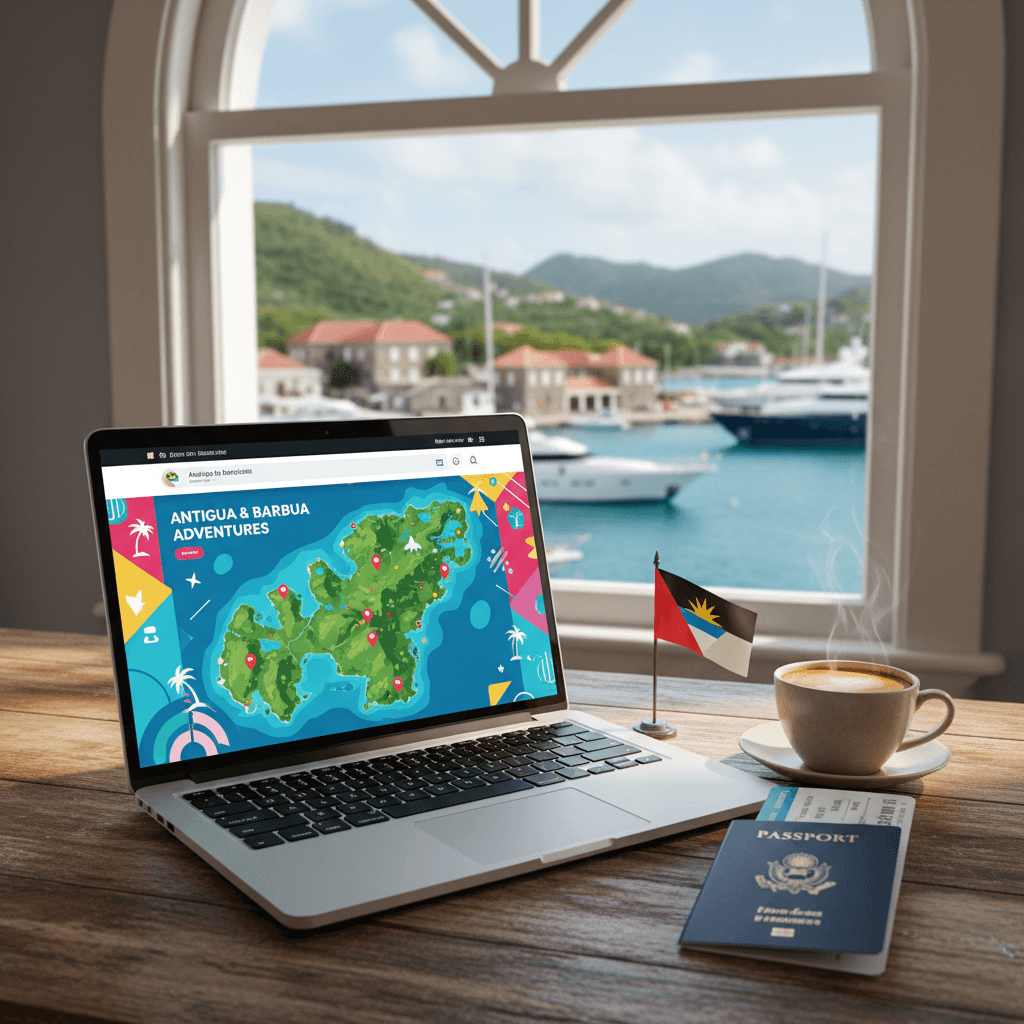
Antigua and Barbuda
Complete Digital Nomad Guide

Policy Stability
Stamped Nomad ExclusiveHow likely visa and immigration policies are to remain unchanged
Quick Facts
Nomad Visa Cost
$1,500
Income Requirement
$4,167/mo
Max Stay
24 months
Renewable
Yes
Cost of Living
$2,500/mo
Avg Internet
26 Mbps
Safety Score
5/10
Healthcare
Low
Coworking
Low
English Friendly
High
Time Zones
AST
Entry Methods Available
Best For
Antigua and Barbuda keeps things simple for most visitors. If you hold a passport from the US, UK, Canada, or an EU member state, you can walk off the plane at V.C. Bird International and stay for up to 90 days without a visa. No advance paperwork, no embassy visit, no stress. Just your valid passport, a return ticket, and proof you can support yourself while you're on the islands.
Who Gets In Without a Visa?
- US, UK, Canadian, and EU citizens get 90 days visa-free
- CARICOM nationals enjoy up to 6 months of free movement
- Many Commonwealth countries also qualify for visa-free entry
- Some nationalities can get a visa on arrival or apply for an e-visa before departure
For those who don't fall into visa-free categories, an e-visa system is available that lets you apply entirely online. Processing usually takes a few business days, so plan ahead if that applies to you.
Beyond the Initial Stay
If 90 days isn't enough, you've got options. Extensions are possible through the Immigration Department in St. John's, though it helps to start that process before your initial period expires. You can also look into the Nomad Digital Residence (NDR) program for a longer, more structured stay, or explore work permits and residency routes if you're thinking longer term.
The islands also participate in the Citizenship by Investment program, which is a different lane entirely but worth knowing about if you're considering a deeper commitment to Caribbean life.
Entry requirements are straightforward. You'll need a passport valid for at least six months beyond your arrival date, a confirmed return or onward ticket, and enough funds to cover your stay. Immigration officers are generally friendly but they do check, so have your documents accessible.
Antigua and Barbuda launched its Nomad Digital Residence (NDR) program in late 2020, making it one of the first Caribbean nations to roll out a dedicated remote work visa. The program was designed to attract location-independent professionals who earn their income outside of Antigua, and it's been a solid option for anyone looking to swap their home office for a beachside setup.
Key Details
- Duration: Up to 2 years
- Income requirement: Minimum $50,000 USD per year (individual)
- Application fee: $1,500 for a single applicant, $2,000 for a couple, $3,000 for a family of three or more
- Processing time: Typically 3-7 business days
- Application method: Entirely online through the official NDR portal
Who Qualifies?
You need to be employed by a company registered outside of Antigua and Barbuda, or run your own business that operates internationally. Freelancers, remote employees, and entrepreneurs all qualify as long as the income flows from outside the country. The $50,000 threshold is per individual, not household, so couples each need to meet it independently unless one applies as a dependent.
The Tax Advantage
Here's where the NDR really shines. Holders are not subject to local income tax on their foreign-earned income. Antigua doesn't tax your remote salary, your freelance invoices, or your business revenue. You keep what you earn, minus whatever obligations you have to your home country. For Americans, that means you'll still file with the IRS, but you won't be double-taxed by Antigua.
Application Process
The whole thing runs online. You'll need to submit proof of income (employment letter, tax returns, or bank statements), a valid passport, health insurance documentation, and a clean background check. Once approved, you receive a digital confirmation that serves as your residence authorization. It's refreshingly unbureaucratic by Caribbean standards.
Dependents can be included on your application. Children under 18, spouses, and in some cases elderly parents can all be covered. The family rate of $3,000 makes this particularly attractive compared to similar programs in Barbados or the Cayman Islands.
One thing to keep in mind: the NDR doesn't grant you the right to work for a local Antiguan employer. It's strictly for remote work directed at clients or employers outside the country. If you want to pick up local gigs or start a local business, you'll need a separate work permit.
Most visitors to Antigua and Barbuda won't need to arrange a visa before they fly. The country maintains a generous visa-free policy with a wide range of nations, particularly those in the Commonwealth, the EU, and the Americas.
Visa-Free Entry
- US, UK, Canadian, and EU citizens: 90 days, no visa required
- CARICOM member state nationals: Up to 6 months under the free movement agreement
- Most Commonwealth countries: 30-90 days depending on nationality
- Several Asian and Middle Eastern countries: Visa on arrival may be available
The 90-day visa-free window for major Western passport holders is straightforward. You show up with a valid passport (at least six months of validity remaining), proof of return travel, and evidence of sufficient funds. That's it. No advance application, no fees at the border.
E-Visa System
For nationalities that do require a visa, Antigua operates an e-visa platform that handles applications digitally. You fill out an online form, upload your supporting documents, pay the processing fee, and wait a few business days. It removes the need to visit an embassy or mail your passport anywhere, which is a real convenience if the nearest Antiguan consulate is hundreds of miles away.
Extending Your Stay
If you arrive on a tourist entry and decide you want more time, extensions are available through the Immigration Department on Queen Elizabeth Highway in St. John's. You'll want to apply before your current period expires. Extensions are granted at the discretion of immigration officials, and you'll need to show you can support yourself financially for the additional time.
What to Bring to the Airport
- Valid passport with 6+ months validity
- Return or onward flight ticket
- Proof of accommodation (hotel booking or host letter)
- Evidence of funds (bank statement, credit card, or cash)
Immigration in Antigua is generally relaxed and efficient. Lines can be long during peak season (December through April), but the process itself is quick. Officers may ask about the purpose of your visit and where you're staying, so have that info ready.
One more thing: there's a departure tax, but it's almost always included in your airline ticket price these days. You won't be caught off guard at the gate.
If you're thinking beyond a few months in Antigua and Barbuda, there are several pathways to longer-term residency. The options range from straightforward work permits to one of the Caribbean's most established Citizenship by Investment programs.
Work Permits
To take local employment in Antigua, your employer needs to secure a work permit on your behalf through the Labour Department. These are typically granted for 1 year and renewable. The employer must demonstrate that the role couldn't be filled by a local candidate, which is standard practice across the Caribbean. Work permits come with fees that vary by sector and position.
Permanent Residency
After living legally in Antigua and Barbuda for 7 continuous years, you become eligible to apply for permanent residency. This is the traditional route and requires you to have maintained legal status throughout that period, whether through work permits, the NDR program, or another valid visa category. The application goes through the Immigration Board, and processing can take several months.
Citizenship by Investment (CBI)
Antigua's CBI program is one of the most recognized in the world. There are several investment routes:
- National Development Fund donation: Starting at $100,000 USD for a single applicant
- Real estate investment: Minimum $200,000 USD in an approved project (can be shared between two applicants)
- Business investment: $400,000 USD minimum into an approved business, or $200,000 as part of a joint venture
- University of the West Indies Fund: $150,000 USD for families of six or more
CBI processing takes approximately 3-6 months, and successful applicants receive full Antiguan citizenship and a passport. That passport provides visa-free or visa-on-arrival access to over 150 countries, including the UK, EU Schengen zone, Hong Kong, and Singapore.
Residency Through Property Ownership
Buying property doesn't automatically grant residency, but it does strengthen your application. Non-citizens need a Non-Citizen Landholding License to purchase property, which carries a fee of roughly 5% of the property value. Owning property combined with a residency application shows commitment and financial stability.
Whatever route you choose, working with a local immigration attorney is worth the investment. Regulations can shift, processing times vary, and having someone who knows the system saves you from unexpected delays.
Let's be honest: Antigua and Barbuda isn't cheap. As a small island nation that imports most of its goods, prices reflect the reality of shipping everything across the Atlantic or Caribbean Sea. That said, you can live comfortably here if you plan your budget and make smart choices about where you spend.
Monthly Budget Overview
- Comfortable solo budget: $2,500-$4,000 USD/month
- Rent (1BR apartment near the beach): $1,200-$2,000
- Rent (1BR inland or less touristy area): $800-$1,200
- Utilities (electricity, water, internet): $150-$300
- Groceries: $400-$700
- Dining out: $15-$40 per meal
- Transportation (car rental): $500-$800
Housing
Rent is your biggest expense. Beachfront or ocean-view apartments in popular areas like Jolly Harbour or Dickenson Bay run $1,500-$2,000+ for a one-bedroom. Move slightly inland or to less touristy parts of the island and you'll find places in the $800-$1,200 range. Long-term rentals (6+ months) often come with better rates than monthly bookings. Check local Facebook groups and word of mouth rather than relying on Airbnb for long stays.
Food and Groceries
Groceries run 30-50% higher than mainland US prices. Imported items like cheese, cereal, and packaged snacks carry the highest markups. Local produce, fish, and meat are more reasonable. The Friday market in St. John's is your best bet for fresh local food at fair prices. Supermarkets like Epicurean and First Choice carry a solid range of imported goods.
Eating out varies wildly. A local lunch spot might charge $8-$15 for a plate of rice, peas, and grilled chicken. Sit-down restaurants in tourist areas range from $20-$40 per person. Fine dining at resort restaurants can easily hit $60+ per person.
Utilities and Internet
Electricity is expensive in the Caribbean, and Antigua is no exception. Air conditioning is the big driver. If you run AC heavily, expect electricity bills of $150-$250 monthly. Water is usually included in rent or runs around $30-$50 separately. Internet packages from APUA or Digicel cost $50-$100 monthly.
Getting Around
Most nomads rent a car, which runs $500-$800 monthly for a basic vehicle. Public buses exist but they're infrequent and don't cover the whole island. Taxis are available but pricey for daily use. Gas prices hover around $5-$6 per gallon.
Antigua isn't a big island. You can drive from one end to the other in about 45 minutes, so wherever you base yourself, nothing is far away. That said, different areas have distinctly different vibes, and where you choose to settle will shape your daily experience.
St. John's
The capital and largest town is where most of the practical stuff happens. Government offices, banks, the main hospital, larger supermarkets, and the majority of restaurants are here. Heritage Quay and Redcliffe Quay offer shopping and dining. It's not glamorous, but it's functional and has the widest range of services on the island.
For nomads, St. John's makes sense if you prioritize convenience and access to amenities over beachfront living. Rent is slightly more affordable than coastal resort areas, and you're close to everything you need for daily life. The vibe is more local Caribbean town than tourist paradise.
English Harbour and Nelson's Dockyard
The southeast corner of the island is where history and sailing culture collide. Nelson's Dockyard is a UNESCO World Heritage Site and one of the most beautiful marina complexes in the Caribbean. English Harbour attracts an international crowd, particularly during sailing season (December through April). It's a mix of yachties, expats, and visitors who appreciate a slower, more refined pace.
Restaurants and bars here tend to be higher-end. The community is tight-knit and social. If you're into sailing, hiking (Shirley Heights has some of the best sunset views in the Caribbean), or simply want a more scenic backdrop for your remote work life, this area delivers.
Jolly Harbour
This purpose-built marina community on the west coast offers a more modern, planned-community feel. You'll find a supermarket, gym, restaurants, a golf course, and a beach all within the development. It's popular with expats and longer-term residents who want convenience without the bustle of St. John's.
Jolly Harbour is a solid pick for families or anyone who wants everything within walking or short driving distance. The marina has a social scene of its own, and the west coast beaches are among the island's best.
Dickenson Bay
The island's main tourist beach strip sits on the northwest coast. Hotels, all-inclusives, beach bars, and water sports operators line the bay. It's the liveliest beach area and has good restaurant options. If you thrive on energy, want to be near the action, and don't mind a more touristy environment, Dickenson Bay works well. It's also close to the airport and St. John's.
This is where Antigua shows its rough edges for digital nomads. Unlike Lisbon or Bali, you won't find a coworking space on every corner. The island's remote work infrastructure is still developing, and you'll need to be a bit creative about where and how you set up your workspace.
Coworking Spaces
Dedicated coworking facilities are limited. A few small spaces have popped up in St. John's and near English Harbour, but availability changes frequently. Some hotel business centers and boutique hotels offer day passes or weekly workspace arrangements for non-guests. It's worth asking around once you arrive, as these options don't always have a strong online presence.
Many nomads end up working from their rental accommodations most of the time, with occasional visits to cafes for a change of scenery. Cafes in St. John's, Jolly Harbour, and English Harbour are generally laptop-friendly during off-peak hours.
Internet Quality
Two main providers serve the island:
- APUA (Antigua Public Utilities Authority): The government-owned provider offers fiber and DSL connections. Speeds range from 25-50 Mbps for residential plans, with higher tiers available in some areas.
- Digicel: Provides both fixed broadband and mobile data. Their LTE network covers most of the island with reasonable speeds.
- Flow: Another mobile provider with 4G coverage across the island
Real-world speeds vary depending on your location and the time of day. Areas closer to St. John's and major developments tend to get better connectivity. Rural and hilltop locations can be spotty. If reliable internet is non-negotiable for your work, confirm speeds at any rental before committing.
Starlink and Backup Options
Starlink has been gaining traction in Antigua and across the Caribbean. If your rental has a clear view of the sky, it can be a game-changer for consistent speeds. Some longer-term rentals already have it installed. Otherwise, a mobile hotspot from Digicel or Flow serves as a decent backup. Prepaid SIM cards with data packages are easy to buy at the airport or in town.
A pro tip: always have a backup internet option. Caribbean weather, particularly during rainy season, can knock out connectivity temporarily. A mobile hotspot or a second provider gives you a safety net for those days when your primary connection hiccups.
Healthcare in Antigua and Barbuda is functional but limited. For routine medical needs, you'll be fine. For anything serious, you'll likely need to get off the island. Understanding the system before you arrive will save you stress down the line.
Hospital and Clinics
Mount St. John's Medical Centre (MSJMC) is the island's main public hospital. It handles general medicine, surgery, maternity, and emergency care. The facility was built with help from China and opened in 2009. It's a significant upgrade from what came before, but it's still a small Caribbean hospital with the limitations that implies. Wait times can be long, and specialized equipment isn't always available.
Several private clinics operate around St. John's and in tourist areas. These offer faster service for general consultations, minor procedures, and diagnostics. Costs are reasonable by international standards, with a basic doctor's visit running $50-$100 USD.
Pharmacies
Pharmacies in St. John's carry most common medications. For specialized prescriptions, availability can be inconsistent due to import dependencies. If you take regular medication, bring a generous supply with you and keep your prescriptions documented.
Medical Evacuation
For serious medical emergencies, trauma cases, or specialized treatment, evacuation to Miami, San Juan (Puerto Rico), or Martinique is the standard protocol. Medical evacuation flights are expensive, often running $15,000-$50,000+ depending on the destination and urgency. This alone is reason enough to carry proper insurance.
Insurance
International health insurance is a must. Don't rely on the local public system as your primary safety net. Look for policies that include:
- Medical evacuation coverage (this is the big one)
- Inpatient and outpatient care
- Prescription drug coverage
- Coverage across the Caribbean region, not just Antigua
Popular options among nomads include SafetyWing, World Nomads, and Cigna Global. If you're on the NDR visa, you'll need to show proof of health insurance as part of your application anyway.
Dental and optical care is available through private practitioners in St. John's, and quality is generally good for routine work. Prices are lower than in the US or UK.
Banking in Antigua and Barbuda works on a dual-currency reality. The official currency is the Eastern Caribbean Dollar (XCD), pegged to the US dollar at a fixed rate of $2.70 XCD = $1 USD. In practice, US dollars are accepted almost everywhere, especially in tourist areas, hotels, and restaurants. You can live here quite comfortably without ever exchanging currency.
Opening a Bank Account
This is where things get tricky for nomads. Antiguan banks are notoriously difficult for non-residents to work with. Even NDR visa holders report mixed experiences. The main banks on the island include:
- Antigua Commercial Bank (ACB)
- Eastern Caribbean Amalgamated Bank (ECAB)
- CIBC FirstCaribbean
- Republic Bank
Expect extensive documentation requirements: passport, proof of address (both home and local), reference letters from your existing bank, source of funds documentation, and sometimes a personal interview. Processing can take 2-4 weeks or longer. Some banks require a minimum deposit.
The honest advice? Unless you're staying for more than a year or have a specific need for a local account, skip the hassle and use international alternatives.
International Banking Alternatives
Wise (formerly TransferWise) and Revolut are your best friends here. Both offer multi-currency accounts, and their debit cards work at most ATMs and point-of-sale terminals in Antigua. ATMs dispense XCD, and withdrawal fees vary by bank but are usually around $3-$5 per transaction.
Credit cards are widely accepted in hotels, restaurants, and shops in tourist areas. Visa and Mastercard have the best acceptance rates. American Express is hit or miss. Smaller local shops, market vendors, and some restaurants are cash-only, so always carry some bills.
ATM Access
ATMs are available throughout St. John's, at the airport, in Jolly Harbour, and in other developed areas. Rural areas may not have convenient ATM access, so plan ahead. Most ATMs accept international cards on the Visa/Mastercard/Cirrus/Plus networks.
A practical note on exchange rates: when paying in USD, merchants sometimes apply their own exchange rate rather than the official peg. For larger purchases, paying in XCD can save you a few percent.
Antigua and Barbuda can be a great fit for families, especially those with younger children who'll thrive in an outdoor, water-oriented lifestyle. The islands are safe, English-speaking, and genuinely welcoming to families with kids.
Schools
Several schooling options exist for expat families:
- Island Academy: The most popular choice among international families. It follows an international curriculum and accepts students from pre-K through secondary school. Class sizes are small and the community is tight.
- Antigua International School: Another option with an international focus
- Local public and private schools: Follow the Caribbean/British-influenced curriculum. Quality varies, but some private schools maintain solid standards
Homeschooling is also common among nomad families. The island's small size and natural environment offer plenty of real-world learning opportunities. Libraries and community groups sometimes organize activities for homeschooled children.
NDR Family Visa
The Nomad Digital Residence program allows dependents at a combined family rate of $3,000. Children under 18 and spouses can be included on a single application. This makes Antigua one of the more family-friendly nomad visa options in the Caribbean, both in terms of cost and practicality.
Family Activities
You won't run out of things to do with kids here:
- 365 beaches: The island famously claims a beach for every day of the year. Many are calm, shallow, and perfect for small children.
- Snorkeling and sailing: Older kids will love the water activities. Catamaran tours and snorkel trips run daily.
- Stingray City: A popular family excursion where you can swim with and feed stingrays
- Devil's Bridge: A dramatic natural limestone arch on the east coast, great for a family hike
- Donkey Sanctuary: Kids love it. It's free and the donkeys are friendly.
Practical Family Matters
Childcare is available through both formal daycare centers and informal arrangements with local caregivers. Rates are reasonable compared to Western countries. Baby supplies, diapers, and formula are available in supermarkets, though the selection is smaller and prices are higher than you'd find back home.
The pace of life here is genuinely family-friendly. People look out for each other's kids, the beach is always a short drive away, and the stress level is about as low as it gets. For families looking to slow down and spend more quality time together, Antigua delivers.
Antigua and Barbuda is one of the safer Caribbean nations, but like anywhere, it pays to be aware of your surroundings and exercise common sense. Violent crime targeting tourists is rare, while petty theft is the main concern.
Safety
Most crime that affects visitors falls into the petty theft category: unattended bags on beaches, unlocked rental cars, and valuables left visible. Standard precautions apply:
- Don't leave belongings unattended on the beach
- Lock your car and don't leave valuables inside
- Avoid walking alone in poorly lit areas at night, particularly in St. John's
- Use your rental's safe for passports and electronics you're not carrying
The tourist areas and resort zones are well-patrolled and very safe. English Harbour, Jolly Harbour, and Dickenson Bay all feel comfortable at any time of day. Parts of St. John's can feel a bit rougher after dark, but violent incidents involving visitors are uncommon.
Culture and Social Life
Antiguans are warm, friendly people with a proud sense of national identity. English is the official language, so there's no language barrier. The local Creole dialect can be thick at times, but everyone switches to standard English when speaking with visitors.
The biggest cultural event is Carnival, held in late July and August. It's a spectacular celebration of Caribbean culture with calypso and soca music, elaborate costumes, street parades, and parties that go well into the morning hours. If you're on the island during Carnival season, you're in for a treat.
Cricket is practically a religion here. Antigua has produced world-class cricketers including Sir Vivian Richards, and the island has hosted international test matches at the Sir Vivian Richards Stadium. Even if you don't follow the sport, attending a match is a great cultural experience.
LGBTQ+ Considerations
Antigua's legal framework around LGBTQ+ rights is still conservative. Same-sex relationships were decriminalized by court ruling in 2022, but societal attitudes remain mixed. The culture is more tolerant in tourist and expat communities, but public displays of affection between same-sex couples may attract unwanted attention in local areas. The situation is evolving, but slowly.
Local Etiquette
Antiguans appreciate politeness. Say good morning or good afternoon when entering a shop or starting a conversation. Dress modestly when away from the beach. Tipping 10-15% is customary in restaurants, and some places add a service charge automatically.
Antigua and Barbuda has one of the more favorable tax environments in the Caribbean, particularly for digital nomads on the NDR visa. Understanding where you stand can save you real money and keep you out of trouble with your home country's tax authority.
Income Tax
Here's the headline: Antigua and Barbuda has no personal income tax. That applies to locals and residents alike. The government funds itself primarily through indirect taxes (import duties, sales tax, property tax) rather than taxing wages or business income directly.
For NDR visa holders, this is straightforward. Your foreign-earned income is not taxed by Antigua. Period. No filing requirements, no withholding, no surprises.
Other Taxes to Know About
- Antigua and Barbuda Sales Tax (ABST): 15% on most goods and services. This is like a VAT and is already included in most prices you see.
- Property tax: Applies if you own real estate. Rates are relatively low, based on the property's assessed value.
- Capital gains tax: None. There's no capital gains tax in Antigua and Barbuda.
- Inheritance tax: None.
- Corporate tax: 25% for companies operating in Antigua, though International Business Companies (IBCs) may qualify for lower rates.
Tax Residency
You become a tax resident of Antigua and Barbuda if you spend 183 or more days in the country during a calendar year. However, since there's no personal income tax, becoming tax resident here doesn't carry the same weight it would in most countries. The main implication is for determining your tax status with your home country.
Home Country Obligations
This is where it gets personal. Your home country may still tax your worldwide income regardless of where you live:
- US citizens: You owe US tax on global income no matter what. However, the Foreign Earned Income Exclusion (FEIE) lets you exclude up to roughly $126,500 (2024 figure, adjusted annually) if you qualify via the physical presence or bona fide residence test.
- UK citizens: You may be able to establish non-domiciled or non-resident status, reducing your UK tax obligations. This requires careful planning.
- EU/Canadian citizens: Tax treaties and residency rules vary by country. Spending 183+ days outside your home country usually breaks tax residency, but check your specific situation.
Hiring a tax professional who understands both your home country's rules and Caribbean tax law is money well spent. The savings from getting this right far outweigh the cost of professional advice.
These are the things nobody tells you until you're already on the ground. A few of these tips will save you time, money, or both.
Getting There
V.C. Bird International Airport (ANU) is the only commercial airport. Direct flights connect to Miami, New York (JFK), Toronto, London (Gatwick), and several other Caribbean islands. During peak season (December-April), flight options expand significantly. Off-season, connections may route through Miami, San Juan, or Barbados.
Getting Around
Renting a car is the most practical option. Public transportation exists (buses run along main routes), but service is infrequent and doesn't cover the whole island. Important things to know:
- Driving is on the left side of the road
- You'll need a temporary local driving permit, which costs $20 USD and is issued at the rental agency or police station
- Roads range from decent to rough. Potholes are part of the experience.
- GPS and Google Maps work on the island, though some smaller roads may not be well mapped
- Gas stations are mainly in St. John's and along major roads. Fill up when you can.
Weather and Hurricane Season
Antigua has a tropical climate with two loose seasons:
- Dry season (December-April): The best weather. Low humidity, consistent sunshine, temperatures around 77-85°F (25-30°C)
- Wet season (May-November): Hotter, more humid, with short rain showers. Hurricane season officially runs June through November, with the highest risk in August-October.
If you're here during hurricane season, stay informed. Follow local weather services and have a plan. Most modern buildings are built to withstand tropical storms, and the island has emergency protocols in place.
Water and Power
Tap water in hotels and resorts is generally safe to drink. In local areas, quality can vary, so bottled water is a safe default. Power outages happen occasionally, more frequently during storms. If you depend on electricity for work, consider a rental with a backup generator or have a battery pack ready.
Phone and SIM Cards
Pick up a local SIM card from Digicel or Flow at the airport or in town. Prepaid plans with data start around $20-$30 USD for a week of decent data. Both networks offer LTE coverage across most of the island.
Day-to-Day Tips
- Sunscreen is expensive on the island. Bring your own in bulk.
- Mosquito repellent is a must, especially during wet season
- Shops close early on Sundays and some close on Saturday afternoons
- Tipping 10-15% is standard at restaurants
- Learn to appreciate 'island time' because things don't always run on a strict schedule
More Guides from Caribbean
Stay Updated on Antigua and Barbuda
Get notified about visa changes, policy updates, and new information for digital nomads in Antigua and Barbuda.