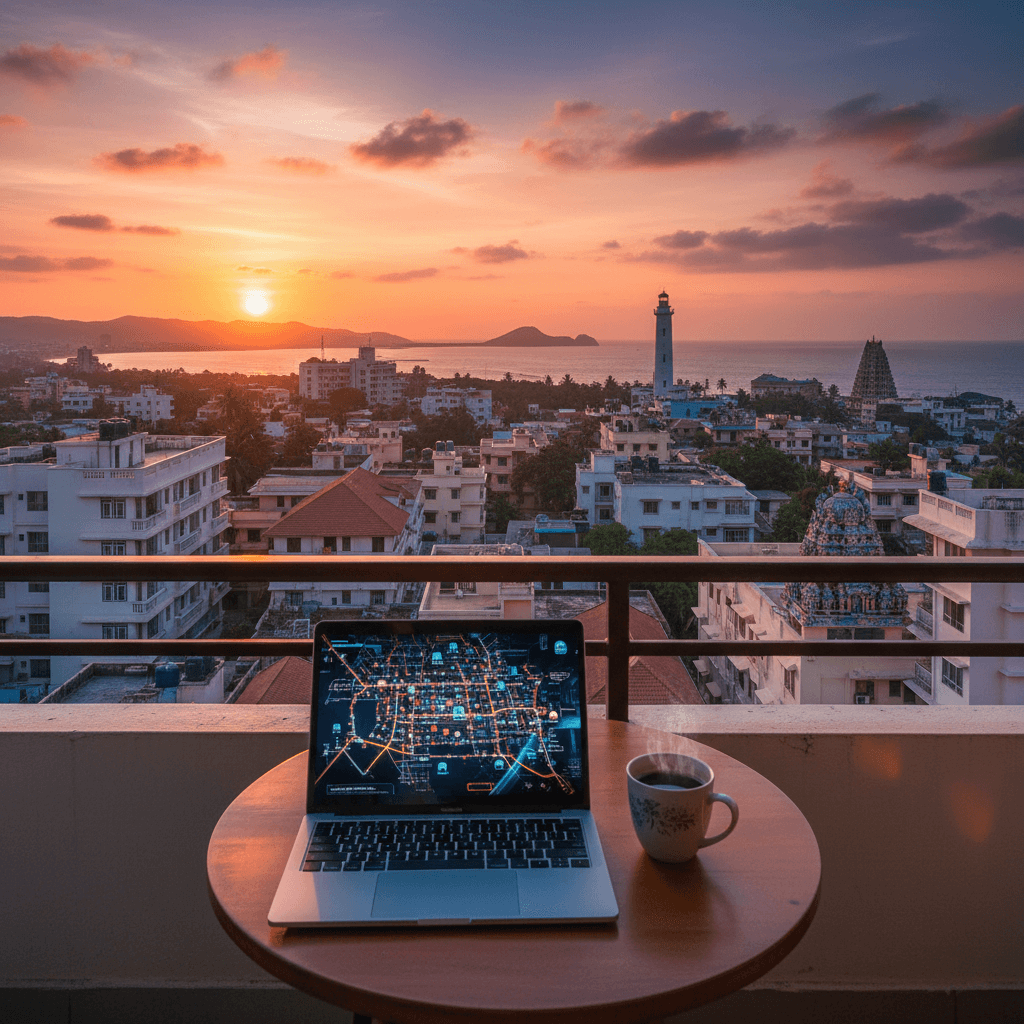
Visakhapatnam
🇮🇳 India
The Goa Alternative You Haven't Considered
Visakhapatnam, or Vizag as everyone calls it, is the city for nomads who want the ocean without the chaos. While places like Goa are permanent parties, Vizag feels like a deep exhale. It is a rare Indian city where the mountains literally meet the sea, creating a landscape that feels more like Southeast Asia than the typical urban sprawl of the subcontinent. You will find a distinct, laid back coastal rhythm here that makes it easy to actually get work done during the day and unwind on a quiet beach by sunset.
The vibe is undeniably unpretentious. You aren't competing with thousands of influencers for a spot on the sand. Instead, you are sharing the promenade with local families, students, and a small but growing community of remote workers who value peace over nightlife. It is affordable, even by Indian standards, and the locals are famously hospitable, often speaking excellent English which makes navigating daily life much smoother than in the rural interior.
Cost of Living Breakdown
Living here is incredibly easy on the wallet. You can maintain a high quality of life for a fraction of what you would spend in Southeast Asian hubs like Canggu or Chiang Mai. Most nomads find that a mid range budget of ₹40,000 to ₹60,000 per month covers a comfortable lifestyle, including a nice apartment and frequent dining out.
- Budget Tier (₹20,000 to ₹30,000): Best for those staying in local guesthouses, eating street food like Muri Mixture for ₹50, and using public transport.
- Mid Range Tier (₹40,000 to ₹60,000): Covers a private 1BR apartment in a good area, regular cafe work sessions, and a mix of local and upscale dining.
- Comfortable Tier (₹70,000+): Access to premium sea view apartments, daily car hires via apps, and dining at the best hotels in the city.
Where to Plant Your Flag
The city is roughly divided between the scenic coastline and the more functional inland areas. For nomads, the choice is usually clear: stay near the water.
RK Beach & Coastal Areas
- The Draw: This is the heart of the nomad experience. You have immediate access to the beach road, stunning sunrises, and the highest concentration of cafes.
- Rent: Expect to pay ₹15,000 to ₹25,000 for a decent furnished spot.
- Pros: Highly walkable, great views, and a constant sea breeze that helps with the heat.
- Cons: It gets crowded on Sunday evenings when the whole city descends on the promenade.
City Center & Siripuram
- The Draw: This is the upscale commercial heart of Vizag. It is better for those who want to be close to high end gyms, boutiques, and the best hospitals.
- Rent: Similar to the beach, though you get more modern amenities for your money.
- Pros: Best internet reliability and proximity to the most consistent cafes for working.
- Cons: Lacks the holiday feel of the beach; more traffic and noise.
Connectivity and the Work Grind
While Vizag doesn't have a dedicated "Nomad District" with dozens of coworking spaces yet, the cafe culture is stepping up. Most remote workers rely on Jio Fiber or Airtel, which are reliable enough for video calls. If your Airbnb WiFi flickers, grab your laptop and head to a local cafe. The locals are used to people lingering over a coffee for a few hours. For mobile data, pick up a Jio SIM at the airport or a local shop; you will just need your passport and a couple of photos.
Getting Around and Staying Safe
Getting around is stress free if you use the right apps. Download Uber or Ola immediately. A typical cross city trip will rarely cost more than ₹300. For longer explorations or day trips to the Araku Valley, travelers often use Stayfari to book a car and driver for about ₹2,500 a day. If you are staying long term, renting a scooter is the move for total freedom along the coast.
Safety is generally a non issue, though standard precautions apply. The city feels secure for solo travelers, and the presence of a large naval base keeps things orderly. For payments, everyone uses UPI apps like Google Pay or PhonePe. Even the smallest coconut water stall will have a QR code, so you rarely need to carry much cash.
The Best Time to Visit
Timing is everything in Vizag. You want to aim for the window between October and March. The weather is gorgeous, the humidity drops, and the evenings are perfect for long walks. Avoid April through June unless you enjoy melting; the summer heat is intense. The monsoon season from July to September brings dramatic storms which are beautiful to watch from a balcony, but the humidity and occasional power dips can make working a bit of a challenge.
The Bottom Line on Vizag
Visakhapatnam, or Vizag as everyone calls it, is the dark horse of the Indian coast. While the crowds fight for space in Goa, nomads who prioritize focus and peace head here. It is significantly cheaper than India's major tech hubs, and your money goes incredibly far without sacrificing the coastal lifestyle. Expect a monthly burn rate between ₹40,000 and ₹60,000 for a mid-range lifestyle that includes a private apartment and plenty of meals out.
Monthly Budget Tiers
- The Budget Nomad (₹20,000 to ₹30,000): You are living like a local student. Think basic guesthouses or shared apartments, heavy reliance on street food, and using local buses or walking.
- The Mid-Range Professional (₹40,000 to ₹60,000): This is the sweet spot. You will get a modern 1BR apartment in a decent area, eat at nice cafes daily, and use Uber or Ola for most trips.
- The Comfortable Expat (₹70,000+): You are looking at high-end serviced apartments, upscale dining, and weekend car rentals for exploring the Ghats.
Housing and Neighborhoods
Rent is the biggest variable. While Vizag does not have a massive inventory of "digital nomad" specific housing, the local market is accessible. Most travelers look toward the coastline for the sea breeze and easier access to cafes.
RK Beach and Surroundings
- Monthly Rent: ₹15,000 to ₹25,000 for a 1BR or studio.
- Vibe: The heart of the action. It is walkable, though it gets crowded on weekends. You will find the best concentration of work-friendly spots here.
- Pros: Ocean views and easy access to the main city amenities.
MVP and Residential Areas
- Monthly Rent: ₹12,000 to ₹20,000 for a standard apartment.
- Vibe: More "real world" and less touristy. It is quieter and offers better value if you are staying for three months or longer.
- Pros: Better grocery options and lower prices for everyday services.
Food and Daily Costs
Eating out is a highlight here. Seafood is fresh and cheap, and the South Indian breakfast scene is a lifesaver for your budget. A plate of idli or dosa at a local spot will cost you ₹50 to ₹100. If you prefer a mid-range restaurant for dinner, expect to pay ₹200 to ₹400. Upscale dining at hotel restaurants or trendy spots usually starts around ₹500 per person.
Connectivity and Remote Work
You won't find a massive list of dedicated coworking spaces like you would in Bangalore. Instead, the culture revolves around cafes. Most nomads find that a Jio Fiber or Airtel connection at home is rock solid for video calls. For mobile data, grab a local SIM card at the airport or a local shop with your passport. It is dirt cheap, and 5G coverage is surprisingly widespread. Use UPI apps like PhonePe or Google Pay for almost everything; even the smallest tea stall usually accepts digital payments.
Getting Around
Walking is great along the beach roads, but for anything else, you will want wheels. Uber and Ola are the gold standard here. A typical cross-city trip costs ₹100 to ₹300. If you want to head out of town to the Araku Valley or more remote beaches, hiring a car with a driver for the day via services like Stayfari will run you about ₹2,500. It is a stress-free way to explore without dealing with Indian traffic yourself.
The Visa Situation
India doesn't have a specific nomad visa yet. Most remote workers enter on a Tourist e-Visa, which allows for stays up to 180 days for many nationalities. If you are doing business meetings or more formal work, the Business e-Visa is a better bet. Always check the current FRRO regulations if you plan on staying longer than six months, as requirements can shift without much notice.
The Coastal Stretch (RK Beach & Rushikonda)
Best for: Digital Nomads and Solo Travelers
If you're coming to Vizag to work with a view, you'll want to stay as close to the coastline as possible. The area around Ramakrishna (RK) Beach is the heart of the city's social life. It's walkable, breezy, and packed with cafes where you can park your laptop for a few hours. Most nomads prefer this over the more industrial parts of town because the air is cleaner and the vibe is significantly more relaxed than what you'll find in Goa.
Further north, Rushikonda is the go to spot for a true "workcation." It's quieter, less crowded, and sits right by the best surfing beach in the area. You'll find a growing community of remote workers here who prefer the peace of the hills meeting the sea. Most travelers recommend using apps like Stayfari to find long term stays here, as traditional hotels can get pricey during weekends.
- Rent: Expect to pay between ₹15,000 and ₹25,000 for a decent one bedroom apartment or a serviced studio with a sea view.
- Connectivity: While free public WiFi is hit or miss, Jio Fiber and Airtel are reliable. Most nomads grab a local SIM card immediately; just bring your passport and a photo to a local shop.
- Work Spots: There aren't many dedicated coworking spaces yet, so look for beachside cafes. The local cafe culture is strong, and most owners don't mind you staying for a few hours if you're ordering coffee and snacks.
Waltair Uplands & Siripuram
Best for: Expats and Long-term Residents
Waltair Uplands is where the upscale crowd lives. It's the "posh" side of Vizag, characterized by wide, tree lined streets and better infrastructure. Expats usually settle here because it's close to the best international dining and shopping centers. It feels more like a traditional city neighborhood and less like a tourist hub, which is ideal if you're looking for stability and local amenities.
You'll have easy access to Uber and Ola here, making it simple to get anywhere in the city for about ₹100 to ₹300 per trip. The food scene in Siripuram is particularly good, ranging from street side spicy punugulu for ₹50 to high end multi cuisine restaurants where a meal might cost ₹800 or more.
- Rent: Prices are higher here, often starting at ₹30,000 for a modern apartment in a secure complex.
- Convenience: This area is the hub for UPI payments. You can use Google Pay or PhonePe for almost everything, from high end grocery stores to the smallest fruit vendor.
MVP Colony
Best for: Families
Often cited as one of the largest townships in Asia, MVP Colony is a self contained ecosystem. It's perfect for families because everything is within a ten minute walk: parks, schools, hospitals, and markets. It strikes a balance between the busy city center and the quiet residential zones. It's safe, well lit at night, and has a very neighborly feel that's hard to find in the more transient beach areas.
The cost of living here is very manageable. You can live a comfortable life on about ₹60,000 to ₹70,000 a month, covering a large apartment and frequent meals out. English proficiency is very high in this neighborhood, so you won't have any trouble communicating with shopkeepers or service providers.
- Rent: ₹12,000 to ₹20,000 for a spacious two or three bedroom house.
- Atmosphere: Very local and authentic. You'll see families out for evening walks and kids playing in the many public parks.
Practical Transit Tips
No matter which neighborhood you choose, getting around is straightforward. Most people rely on ride hailing apps, but if you're staying long term, renting a scooter is a smart move. It gives you the freedom to explore the hidden coves along the coast road without haggling with auto rickshaw drivers. For a more comfortable day trip to the nearby temples or viewpoints, you can hire a car with a driver for roughly ₹2,500 per day.
Connectivity and Speed
Vizag isn't Bangalore or Hyderabad, so don't expect a coworking space on every corner. However, the city's digital infrastructure is surprisingly robust. If you're staying near the beach or in the central business districts, you'll likely have access to Jio Fiber or Airtel Xstream. These providers are the gold standard here, offering speeds that can easily handle Zoom calls and large file uploads without breaking a sweat. Most high end apartments and hotels come pre-equipped with these lines.
Public WiFi is hit or miss. You'll find "okay" free connections at the airport and some public squares, but they aren't reliable for a full workday. Your best bet is to grab a local SIM card immediately. Airtel and Jio are the two main players. You can pick one up at the airport or a local shop with your passport and a couple of photos. Mobile data is incredibly cheap in India; you can get a daily 2GB allowance for less than $5 a month, which serves as a perfect backup hotspot if your building's power or fiber blips.
Where to Work
Since dedicated coworking hubs are still catching up to the city's growth, most nomads here adopt a "cafe office" lifestyle. The vibe is much more relaxed than the frantic pace of North India. You'll find plenty of space to spread out, and as long as you're ordering coffee or a snack, staff generally won't mind you staying for a few hours. The best spots are usually concentrated around RK Beach and Siripuram.
- RK Beach Area: This is the heart of the nomad scene. You can find several cafes with ocean views where the breeze keeps things cool. It's the best spot for those who want to close their laptop and walk straight onto the sand.
- Siripuram: This is the more upscale, commercial side of town. It's home to several modern cafes and bistros that have reliable power outlets and quieter corners for focused work.
- Daspalla Hills: A quieter, more residential neighborhood where you'll find boutique cafes that feel a bit more private than the beachside spots.
Digital Nomad Logistics
To stay connected and productive, you'll need to set up your digital wallet. India runs on UPI. Apps like PhonePe and Google Pay are used for everything from street food to high end dining. While you can use cash, having a UPI link via a local SIM makes life significantly easier. For getting between your laptop and your lunch, Uber and Ola are the go-to apps. They're reliable, cheap, and save you the hassle of negotiating prices with auto-rickshaw drivers.
If you're planning a longer stay, look into platforms like Stayfari. They specialize in "workcation" setups and can help you find apartments that actually have a desk and decent ergonomics. Most local rentals will start around ₹15,000 to ₹25,000 a month for a decent one bedroom in a good area. If you're looking for something more premium with a view, expect to pay ₹40,000 or more.
Productivity and Lifestyle
The real draw of working from Vizag is the balance. Most people here start their day early with a walk on the beach before the heat kicks in, work through the midday sun, and head back to the coast for the evening. English proficiency is very high among the local workforce and students, so you won't struggle to communicate your needs at a cafe or tech shop. If you need a monitor or a new charger, the local electronics markets are well stocked and easy to navigate.
- Best time for workcations: October to March offers the most pleasant weather for working outdoors or in non-AC cafes.
- Power backup: While the grid is generally stable, it's smart to ask your host if the building has a "power backup" or UPS, especially during the monsoon season from July to September.
- Noise levels: Beachfront spots can get loud on weekends. If you have important calls, stick to the quieter cafes in Siripuram or stay in your apartment during the Sunday rush.
Safety in the City
Visakhapatnam generally feels safer and more relaxed than the frantic pace of Mumbai or Delhi. It's a city where the naval presence adds a layer of disciplined calm to the atmosphere. Most nomads feel comfortable walking along the main stretches of RK Beach or Lawson's Bay during the day. Locals are helpful, and because English proficiency is high, you won't struggle to ask for directions or help if you feel turned around.
That said, standard precautions apply after dark. While the beach promenade is well lit and popular with families until late, the more secluded stretches of coastline toward Bheemili can get lonely at night. Solo travelers usually stick to well populated areas after 9:00 PM. Petty theft isn't rampant, but keep an eye on your tech in crowded markets or when using public transport. If you're heading home late, use ride-hailing apps like Uber or Ola rather than flagging down a random auto-rickshaw; the digital trail adds a layer of security and ensures you aren't overcharged.
The ocean is the biggest safety variable here. The currents along the Vizag coast are notoriously strong and deceptive. Even if you're a strong swimmer, stick to designated areas and pay attention to local warnings. Many of the beaches have steep drop-offs just a few meters from the shore, which can catch you off guard.
Healthcare and Medical Services
If you need medical attention, you're in good hands. Vizag is a major regional hub for healthcare, and the private hospitals here are modern and efficient. Most doctors speak fluent English, and you'll find that many have trained or practiced abroad. For anything serious, expats and long term travelers usually head to Apollo Health City in Arilova or SevenHills Hospital in Rockdale Layout. These facilities offer international standards of care and are equipped for emergencies, specialist consultations, and diagnostic imaging.
For minor issues like "Delhi Belly" or seasonal allergies, you'll find a pharmacy (locally called a medical store) on almost every street corner. Large chains like Apollo Pharmacy or MedPlus are reliable and often stay open 24 hours. You can even use apps like Tata 1mg or PharmEasy to have over the counter meds and basic supplies delivered directly to your doorstep within a few hours.
Health Tips for Nomads
- Water Safety: Never drink tap water. Use an Aquaguard filter if your apartment has one, or stick to 20 liter branded water jars (like Bisleri or Kinley) which cost around ₹80 to ₹100.
- Mosquitoes: Dengue can be a concern during and after the monsoon months of July to September. Use repellent creams like Odomos and keep your windows shut at dusk unless you have mesh screens.
- Insurance: Ensure your policy covers private hospital stays. Most top tier hospitals in Vizag accept international insurance, but you'll likely need to pay upfront and claim later, so keep every receipt and digital record.
- Air Quality: While the sea breeze helps, the industrial zones near the port can occasionally affect air quality. If you have sensitive lungs, check the AQI apps before planning a long outdoor run.
Emergency Contacts
It's smart to have these numbers saved in your phone before you arrive. Response times can vary based on traffic, so ride-hailing apps are often faster for getting to a hospital in non life threatening situations.
- Police: 100
- Ambulance: 108
- Women’s Helpline: 181
- Apollo Emergency: 1066
The Coastal Commute
Moving around Vizag feels significantly more relaxed than the frantic pace of Mumbai or Bangalore. The city is laid out along the coast, which makes navigation intuitive; if the ocean is on your right, you're likely heading north toward the quieter beach stretches. While the city is spread out, the infrastructure is surprisingly nomad friendly if you know which apps to keep on your home screen.
Ride-Hailing and Apps
For most daily trips, Uber and Ola are your best friends. They eliminate the need to haggle with auto-rickshaw drivers, which can be exhausting if you don't speak the local language, Telugu. Most nomads find that a typical 5 to 10 kilometer trip costs between ₹100 and ₹300. If you're heading to the airport, expect to pay between ₹500 and ₹1,000 depending on your proximity to the beach.
- Uber/Ola: Reliable for both cars and auto-rickshaws. Most drivers in Vizag have high ratings, though they might call you to confirm your location.
- Rapido: If you're traveling solo and want to beat the evening traffic, bike taxis through Rapido are a cheap, fast alternative.
- Payments: Almost every driver prefers UPI (Google Pay or PhonePe). It's the standard here, so having a local bank link or a compatible fintech app is a massive advantage.
Two-Wheeler Rentals
If you're staying for a month or more, renting a scooter is the ultimate freedom move. It allows you to explore the winding coastal roads toward Bheemili at your own pace. You can often find local shops near RK Beach or Rushikonda that rent out Activas or similar scooters. Expect to pay around ₹400 to ₹600 per day, though monthly rates are significantly lower if you negotiate. Always wear a helmet; the local police are strict about it, especially on the main beach roads.
The Walkability Factor
Vizag is one of the few Indian cities where walking is actually pleasant, provided you're in the right neighborhood. The Beach Road (Janmabhoomi Marg) has a long, paved promenade that's perfect for a morning stroll or a sunset walk to a cafe.
- RK Beach Area: Highly walkable with plenty of street food and cafes within a 15 minute radius.
- Rushikonda: More spread out and hilly; you'll want a scooter here, but the immediate beach area is easy to cover on foot.
- Safety: Walking during the day is perfectly fine. At night, stick to the well lit main stretches of the promenade where families and other travelers congregate.
Private Drivers for Day Trips
When you want to head out to the Araku Valley or explore the further reaches of the coastline, hiring a car with a driver for the day is the way to go. Platforms like Stayfari or local travel agencies can arrange this for about ₹2,500 per day. It's a stress free way to see the sights without worrying about navigation or parking in crowded temple areas. Most drivers speak enough English to help you coordinate pickups and basic logistics.
Public Transit
The local bus network is extensive and incredibly cheap, often costing less than ₹20 for a cross city trip. However, they can get very crowded during peak hours and aren't always intuitive for newcomers. If you're on a tight budget, look for the "Beach Road" buses that connect the main city center to the coastal points. For most nomads, the convenience of a ₹150 Uber usually outweighs the savings of the bus system.
The Language Mix
You won't have much trouble getting your point across in Visakhapatnam. While Telugu is the primary language spoken by nearly everyone in the city, the local proficiency in English is impressively high. Most nomads find that they can navigate daily life, from ordering a spicy prawn curry at a beach shack to negotiating with an auto-rickshaw driver, using English alone.
Because Vizag hosts a major naval base and a growing tech sector, the city has a cosmopolitan edge. Hindi is also widely understood and spoken, serving as a helpful bridge if you've spent time in North India. If you're staying near RK Beach or the Siripuram area, you'll find that staff in cafes and shops are almost entirely fluent in English.
Digital Communication and Connectivity
Staying connected is straightforward, provided you skip the unreliable public WiFi and set up your own system. Most expats recommend picking up a local SIM card immediately. It makes life easier for everything from booking rides to using local payment apps.
- Top Providers: Jio and Airtel are the two heavy hitters. Jio generally offers the most consistent 4G and 5G coverage throughout the city.
- The Setup: You will need your passport and a couple of passport-sized photos. Visit an official store in a mall like CMR Central rather than a small street kiosk to ensure the activation goes through quickly.
- Reliability: While the city-wide free WiFi is often rated as just okay, home and cafe fiber connections are solid. Most work-friendly spots use Jio Fiber, which handles video calls without much lag.
Essential Apps for the Ground
To communicate like a local, you need the right digital toolkit. Since Vizag is a spread-out coastal city, these apps are non-negotiable for smooth daily interactions.
- WhatsApp: This is the primary way everyone communicates. You'll use it to talk to your landlord, order water cans, and even book some local services.
- Uber and Ola: These are the best ways to get around without having to haggle over prices. The apps are in English and the interface is identical to what you'd use back home.
- Google Pay or PhonePe: India has moved rapidly toward a cashless economy via UPI. Even the smallest fruit stall on the beach will have a QR code. Setting this up with a local bank account or a compatible international fintech card makes payments seamless.
- Google Translate: While English is common, having the Telugu pack downloaded for offline use is a smart move for reading signs or communicating in more residential neighborhoods.
Social Nuances and Etiquette
The vibe in Vizag is significantly more conservative than Goa but more relaxed than Hyderabad. People are generally curious and friendly toward travelers. When you're out in public, a little politeness goes a long way. Using the suffix Garu after a name is a local way to show respect, though as a foreigner, a simple "Namaste" or "Hello" works perfectly fine.
If you're heading into temples or more traditional areas near Simhachalam, it's respectful to dress modestly. In the main nomad hubs and beach areas, casual western wear is the norm. Most travelers find that a smile and a bit of patience are the best communication tools, especially when dealing with the slower, "coastal time" pace of life here.
The Seasonal Sweet Spot
Visakhapatnam, or Vizag as you'll quickly start calling it, doesn't follow the same punishing heat patterns as inland Indian hubs. Being tucked between the Bay of Bengal and the Eastern Ghats gives it a slightly more tempered climate, but you still want to time your arrival carefully to avoid the humidity spikes. Most nomads find the window from October to March to be the absolute prime time for a stint here. During these months, the air is crisp and the evenings are cool enough for a light jacket while you're walking along RK Beach.
Expats usually recommend avoiding the peak summer months of April, May, and June. Temperatures can climb into the high 30s (Celsius), and the humidity makes even a short walk to a cafe feel like a workout. If you're here during this time, you'll want to ensure your rental has a high quality AC unit and a backup power source, as the grid can get taxed during heatwaves. It's a period where work happens strictly indoors until the sun goes down.
Monsoon Realities
The rainy season typically rolls in around July and lasts through September. While the landscape turns incredibly lush and the surrounding hills look like something out of a movie, the rain can be disruptive. You'll see heavy downpours that might mess with your travel plans or outdoor work sessions. If you enjoy a moody, rainy atmosphere for deep work, it's actually quite peaceful, but don't expect to spend much time on the sand. Just keep an eye on the weather apps, as the coast can occasionally see cyclonic activity during the tail end of the monsoon.
When to Visit for the Best Vibe
- October to February: The goldilocks zone. It's dry, sunny, and perfect for exploring the nearby Araku Valley on weekends. Highs sit around 25 to 28 degrees Celsius.
- March: The transition month. It's getting warmer, but it's still manageable for those who like the heat.
- June to September: Best for budget travelers who don't mind staying indoors. You'll likely find lower rates on long term stays.
Planning Your Stay
If you're coming for the beaches, aim for the winter months. The water is calmer and the beachside shacks are in full swing. Travelers often say that the lack of crowds compared to Goa makes Vizag a much better spot for a "workcation" where you actually need to get things done. You won't be competing with thousands of tourists for a quiet corner or a stable connection.
For those looking at the long game, a business e-visa (typically 1-5 years validity with multiple entry) or 1/5 year tourist e-visa is preferred by nomads for flexibility. While you can stay for up to 180 days on a tourist e-visa, the business e-visa (multiple entry, validity up to 5 years depending on nationality) is often preferred by those who want more flexibility. Just remember that you'll need to register with the FRRO if you plan on staying in one spot for more than six months. Most locals speak excellent English, so navigating the paperwork or asking for local weather tips is usually a breeze.
Monthly Climate Expectations
- Winter (Nov to Feb): 18 to 30 degrees Celsius. Clear skies and low humidity. This is peak season for a reason.
- Summer (Mar to May): 26 to 38 degrees Celsius. Intense sun and high humidity. Stay near the coast for the breeze.
- Monsoon (Jun to Oct): 24 to 32 degrees Celsius. Frequent heavy rain and overcast days. Great for saving money on rent.
Getting Connected and Staying Productive
Internet reliability in Vizag is generally solid, though you won't find the hyper-connected infrastructure of Bangalore or Hyderabad. Most nomads rely on Jio Fiber or Airtel for home setups. If you're heading to a cafe to work, don't count on free public WiFi; it's often patchy or requires an Indian phone number for OTP verification. Instead, grab a local SIM card immediately. You can pick one up at the airport or any small shop in the city with your passport and a photo. Jio and Airtel offer the best coverage, and data plans are incredibly cheap, often less than ₹300 for a month of daily data.
While dedicated coworking spaces are still popping up, the cafe culture here is where the work gets done. You'll find plenty of nomads with laptops at beachside spots near RK Beach. The vibe is laid back, and most owners don't mind you lingering over a coffee for a few hours. Locals speak excellent English, so you'll have no trouble asking for the WiFi password or ordering another round of cold brew.
Cost of Living
Vizag is a dream for budget-conscious remote workers. It's significantly cheaper than Goa or Mumbai, allowing your money to go much further while enjoying a coastal lifestyle. Most expats find they can live very well on a mid-range budget without trying too hard.
- Budget (₹20,000 to ₹30,000 per month): This covers a basic studio or room in a local guesthouse, plenty of street food like ₹50 dosas, and getting around via public buses.
- Mid-range (₹40,000 to ₹60,000 per month): This is the sweet spot. You can afford a nice one-bedroom apartment near the coast, eat out at decent restaurants where meals cost ₹200 to ₹400, and use ride-hailing apps daily.
- Comfortable (₹70,000+ per month): This gets you a high-end apartment in a prime area, frequent upscale dining, and perhaps a private driver for weekend trips at roughly ₹2,500 per day.
Navigation and Neighborhoods
The city is divided between the busy commercial center and the more relaxed coastal strip. Most nomads gravitate toward the Beach Road area and RK Beach. It's walkable, the air is fresher, and you're close to the best cafes. If you need more amenities or a quieter residential feel, the areas near the city center are better for long-term stays, though they lack that immediate ocean breeze.
Getting around is simple if you use the right apps. Download Uber or Ola; they're the standard for cars and auto-rickshaws. A typical cross-town trip will set you back ₹100 to ₹300. For daily flexibility, many travelers rent a scooter. It's the best way to explore the coastline at your own pace. If you're arriving by air, a ride from the airport to the beach usually costs between ₹500 and ₹1,000 depending on the vehicle type.
Money and Logistics
India has moved rapidly toward digital payments. You'll see QR codes for UPI (via apps like PhonePe or Google Pay) at even the smallest street stalls. While these often require an Indian bank account to set up, many nomads use international cards at larger establishments and keep cash for small vendors. ATMs are everywhere, but stick to those attached to major banks to avoid high fees.
On the legal side, most remote workers enter on a business e-visa (multiple entry, validity up to 5 years) or a tourist e-visa. Remember that a tourist visa usually limits your stay to 180 days at a time. If you plan to stay longer, you might need to register with the FRRO (Foreigners Regional Registration Office). Always keep a digital copy of your passport and visa on your phone, as hotels and SIM card providers will ask for them constantly.
Weather and Timing
Timing your visit is everything. The most pleasant window is from October to March. The weather is cool enough for long walks on the beach and outdoor working. Avoid the peak summer months of April to June unless you enjoy intense humidity and heat that makes leaving your AC-cooled room a chore. The monsoon season hits from July to September, which brings beautiful greenery but can also lead to power outages and internet disruptions during heavy storms.
Need visa and immigration info for India?
🇮🇳 View India Country GuideEasy Landing
Settle in, no stress