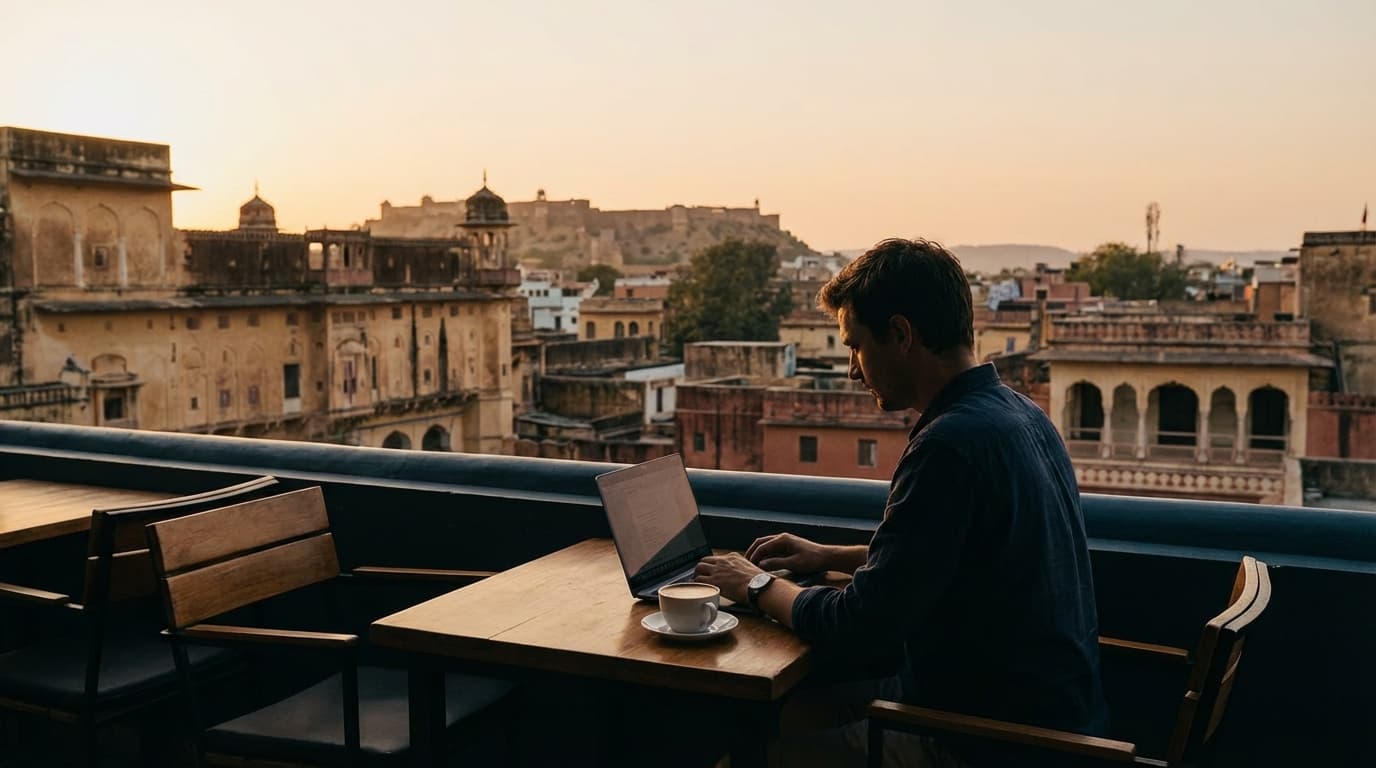
India
Complete Digital Nomad Guide

Policy Stability
Stamped Nomad ExclusiveHow likely visa and immigration policies are to remain unchanged
Quick Facts
Nomad Visa Cost
N/A
Max Stay
6 months
Renewable
No
Cost of Living
$900/mo
Avg Internet
62 Mbps
Safety Score
6/10
Healthcare
High
Coworking
High
English Friendly
High
Time Zones
IST (UTC+5:30)
Entry Methods Available
Best For
India doesn't currently offer a dedicated "Digital Nomad Visa," but recent overhauls to their electronic visa system have made it significantly easier to call the subcontinent home for months at a time. Whether you are eyeing a workstation in the Himalayan foothills of Dharamshala or a beach shack in Goa, understanding the new 2026 regulations is your first step toward getting stamped.
The e-Visa Advantage
For most nomads, the e-Visa is the gold standard. It is processed entirely online through the official immigration portal, usually within 72 hours. The system now covers 167 countries and has expanded to nine distinct categories, including new options like e-Transit and e-Ayush for those seeking traditional Indian medical treatments.
One of the biggest wins for frequent travelers is the removal of the old "three e-Visas per year" limit. You can now apply for as many as you need, provided you meet the entry requirements. Just keep in mind that your passport must have at least 6 months of validity remaining, and if you renew your passport, any existing e-Visa linked to the old one becomes void.
Choosing Your Visa Type
Most remote workers gravitate toward the Tourist or Business categories. Here is how the most common options break down:
- e-Tourist Visa (1-year or 5-year): These are the most popular for long-term stays. They allow for multiple entries, with a maximum stay of 90 to 180 days per visit depending on your nationality.
- e-Business Visa: Valid for 1 year with multiple entries. Each stay can last up to 180 days. This is a solid choice if you plan to attend meetings, audits, or networking events while working remotely.
- 30-Day e-Tourist Visa: A double-entry permit best suited for short scouting trips to find your ideal base.
- e-Entry Visa: A newer category for people of Indian origin or spouses of Indian citizens, allowing stays of up to 3 months.
Costs and Fees
India uses a reciprocal pricing model, meaning the fee you pay often depends on what your home country charges Indian citizens. Standard rates for a 1-year e-Business visa hover around $120, but there are specific variations:
- United States: Approximately $140 for a 1-year e-Business visa.
- Australia: Approximately $215 for a 1-year e-Business visa.
- e-Tourist Fees: These vary seasonally, with 30-day visas often being cheaper during the off-peak summer months.
The Fine Print: Staying Legal
While the e-Visa is convenient, it is generally non-extendable. If you want to stay longer than your allotted 90 or 180 days, you will usually need to leave the country and re-enter. For those looking for a more permanent setup, regular visas issued through a consulate can last up to 10 years for US citizens, though these require a more rigorous application process.
Upon arrival at one of the 51 designated entry points, you will need to provide biometrics. Always carry a printed copy of your Electronic Travel Authorization (ETA), as many airlines will ask to see it before you even board your flight. You can find the full list of eligible ports and specific nationality requirements on the official visa category page.
Recent Updates for 2026
The system has become more high-tech recently. Expect stricter AI-driven photo verification during the online application process to cut down on errors. There is also a move toward integrating Aadhaar-KYC for faster processing for those with existing ties to the country. Most importantly, the 5-year and 10-year long-term visas have been fully restored, giving nomads more stability for multi-year planning.
Always double-check your specific country's status before booking flights, as reciprocal agreements can change. The only truly reliable source for these updates is the government visa website, which handles all official applications and fee payments.
The Current State of Visas
India hasn't rolled out a formal, nationwide "Digital Nomad Visa" yet. While there is plenty of buzz about specialized programs, particularly in coastal states like Goa, the federal government still relies on existing frameworks to accommodate remote workers. Most nomads choose the e-Tourist Visa (e-TV), which remains the most practical path for anyone looking to set up a temporary office between the Himalayas and the Arabian Sea.
The e-TV is technically designed for recreation and sightseeing. However, the Indian government generally permits remote work for foreign employers under this category, provided you aren't seeking local employment or competing in the Indian job market. It is a flexible, low-barrier option that keeps you legal while you hunt for the best Wi-Fi in Kerala or Rajasthan.
Your Best Options
The e-Tourist Visa comes in three main flavors. Your choice depends entirely on how long you plan to call India home and how often you want to deal with paperwork.
- 30-Day e-TV: Best for a quick "workation" or testing the waters in a single city.
- 1-Year e-TV: The standard choice for most nomads. It allows multiple entries throughout the year.
- 5-Year e-TV: The ultimate long-term play for those who know they will be returning frequently.
There is a specific catch you need to remember. Even with a 1-year or 5-year visa, you cannot stay in the country indefinitely. Most nationalities are restricted to a stay of 90 days at a time. Once your 90 days are up, you must exit the country. Many nomads use this as an excuse for a "visa run" to nearby hubs like Bangkok, Colombo, or Kathmandu before heading back into India for another stint.
The Application Process
The process is remarkably straightforward and entirely digital. You won't need to visit an embassy or mail your physical passport anywhere. Everything happens through the official e-Visa portal.
- Complete the online form with your passport details and a digital photo.
- Pay the processing fee via credit or debit card. Fees vary by nationality and visa duration.
- Wait for your Electronic Travel Authorization (ETA) to arrive via email, which usually takes less than 72 hours.
- Print the ETA and carry it with you. You will also need to show proof of onward travel, like a flight ticket out of India, when you land.
Financials and Taxes
One of the biggest perks of the Indian e-TV compared to nomad visas in places like the UAE or Iceland is the lack of a minimum income requirement. You don't need to prove you earn $5,000 a month to get in. As long as you can support yourself, the government is generally satisfied.
From a tax perspective, staying on a tourist visa while working for a foreign company usually keeps you outside the Indian tax net. Since your income is earned and paid outside of India, you typically won't owe local income tax. However, tax laws are notorious for shifting, so it is smart to keep an eye on local regulations or chat with a tax professional if you plan on staying for the maximum allowed time each year.
The Goa Exception
You might hear rumors about a specific 1-year digital nomad visa for Goa. Local authorities there have been vocal about attracting remote talent and have proposed a local framework that requires proof of remote work and stable income. While this is a great sign of things to come, these local initiatives often still operate within the national e-TV system. If you are heading to Goa, look for local co-working hubs that partner with the government, as they often provide the best boots-on-the-ground advice for staying long-term.
Important Reminders
- No Local Work: You are strictly prohibited from taking a job with an Indian company or performing freelance work for Indian clients while on a tourist visa.
- Overstay Penalties: India takes visa expiration seriously. Overstaying can result in heavy fines, detention, or being blacklisted from future entry.
- e-Arrival Card: Check the latest entry requirements before you fly, as some airports now require a digital arrival card to be filled out 72 hours before landing.
Understanding the Entry Requirements
India is a bucket-list destination for many nomads, but it is not a "show up and get a stamp" kind of country. Unlike some Southeast Asian hubs, India has no visa-free entry for any foreign national. Every traveler, regardless of their passport, needs to secure prior approval before they can clear immigration.
The good news is that the process has become significantly more streamlined. While traditional paper visas still exist through embassies, the vast majority of digital nomads will opt for the e-Visa system. It is digital, relatively fast, and covers everything from quick mountain retreats to long-term stays in Goa or Rajasthan.
The e-Visa: Your Primary Option
The e-Visa is the gold standard for most travelers. You can apply for this online via the official government portal up to 120 days before your intended arrival. Once approved, you simply print the Electronic Travel Authorization (ETA) and present it at one of the 31 designated airports (including Delhi, Mumbai, and Bengaluru) where your biometrics will be taken and the visa stamped into your passport.
There are three main subtypes of the Tourist e-Visa to consider based on your travel plans:
- 30-Day Tourist Visa: This is a double-entry visa valid for 30 days from the date you arrive. It is perfect for short-term scouting trips or yoga retreats.
- 1-Year Tourist Visa: A popular choice for nomads, this allows multiple entries over 365 days. You can stay for up to 180 days per calendar year.
- 5-Year Tourist Visa: The ultimate long-term option. It grants multiple entries over 5 years, though the 180-day annual limit still applies.
Specialized e-Visa Categories
Recent expansions to the system have introduced niche categories that might suit specific nomadic lifestyles. If your "work" looks a little different, one of these might be a better fit:
- e-Transit: Valid for 30 days with two entries, specifically for those passing through to a third country.
- e-Mountaineering: Lasts 6 months for a single entry, but you will need clearance from the Indian Mountaineering Foundation.
- e-Film: A 1-year multiple-entry visa for those working on authorized film projects, requiring Ministry of Information clearance.
If you are a professional journalist, be careful. Even if you are visiting strictly for tourism, you are generally required to apply for a traditional paper J-Visa rather than using the e-Visa system.
Visa on Arrival (VoA)
While the e-Visa is the most reliable route, a 60-day Visa on Arrival is available for citizens of a very limited number of countries. This typically allows for a single entry and can be obtained at major international airports. However, the list of eligible nationalities changes frequently based on diplomatic reciprocity. It is almost always safer and more efficient to secure your e-Visa in advance to avoid long queues or potential denials at the border.
Stays, Extensions, and Border Runs
India is quite strict about its visa durations. Tourist e-Visas are not extendable while you are inside the country. If your visa is expiring, you must exit the country. Overstaying can lead to heavy fines, detention, or being banned from future entry, so keeping an eye on your calendar is vital.
For those on long-term multiple-entry visas, "border runs" are a common tactic. Since you are limited to 180 days per year, many nomads take a short trip to neighboring countries like Nepal, Sri Lanka, or Thailand before returning. While there is no explicit rule against this, frequent exits and immediate re-entries can sometimes lead to questions from immigration officers. It is always best to have your onward travel plans and proof of funds ready just in case.
Application Essentials
When you sit down to apply, make sure you have your documents in order. You will need a passport with at least 6 months of validity remaining and at least two blank pages. The authorities also expect you to have a confirmed return or onward ticket. Fees vary depending on your nationality and the specific visa subtype you choose, so check the official portal for the most current pricing before you start the process.
India is a magnetic destination for digital nomads, but if you are planning to make it a semi-permanent base, you need to be strategic. Unlike Portugal or Mexico, India does not offer a dedicated freelancer or "digital nomad" visa. There is no formal retirement scheme or golden visa for investors either. Instead, long-term stays are built by piece-milling existing visa categories or, for those with Indian heritage, securing an OCI card.
The Realities of Long-Term Residency
Most nomads start with a 5-year or 10-year Tourist Visa. While these allow for multiple entries, they come with a catch: you generally cannot stay longer than 90 or 180 days at a time, depending on your nationality. If you want to stay in an apartment in Goa or a cottage in the Himalayas for a full year without leaving the country, you will need a visa that allows for FRRO registration.
Any foreigner staying in India for more than 180 days must register with the Foreigners Regional Registration Office (FRRO) within 14 days of arrival. This process turns your visa into a temporary residency permit, but it requires a specific paper trail.
Primary Visa Pathways
- Business Visa (B-Visa): This is the most common choice for entrepreneurs and consultants. It is usually valid for up to 5 years with multiple entries. You will need an invitation letter from an Indian company or a detailed justification for your business activities, such as exploring investment opportunities. While it does not allow for local employment, it is perfect for those managing international interests from an Indian base. Costs range from $100 to $300 depending on your home country.
- Employment Visa: If you are actually working for an Indian firm or a multinational with an Indian branch, this is your path. It is tied to a specific job and requires a contract showing a senior or skilled role. These are usually granted for 1 to 5 years and are extendable annually at the FRRO, provided you stay tax-compliant.
- Student Visa: If you are serious about Yoga, Vedic studies, or learning a local language, a Student Visa covers the duration of your course up to 5 years. You must be enrolled in a recognized institution, and these visas are strictly monitored. Expect to pay between $50 and $150 for the application.
- Entry (X) Visa: This is a "lifestyle" visa for the families of those on Employment or Student visas. It allows dependents to stay long-term without the right to work locally.
The OCI Advantage
The "Overseas Citizen of India" (OCI) card is the closest thing India has to permanent residency. It is available to people of Indian origin or those married to Indian citizens. It costs about $275 and provides a lifelong right to live, work, and own property in India without ever needing to visit the FRRO. If you have a parent or grandparent who was born in India, this is the gold standard for long-term stays.
Managing Your Stay
Since there is no "Golden Visa" shortcut, most non-Indian nomads navigate the system by being meticulous with paperwork. If you are on a Business or Employment visa, the FRRO will require proof of your local address, usually a registered lease agreement or a "Form C" from your landlord. Keeping these documents in order is the difference between a smooth extension and a stressful exit.
For those just starting the process, you can find the specific requirements for each category on the official Indian visa portal. It is the most reliable place to check current fees and documentation checklists before you head to the consulate.
The Freelancer Gap
If you are a solo freelancer with no Indian clients and no corporate ties, your options are limited. Most in this position rely on the Tourist Visa and perform "visa runs" to neighboring countries like Nepal, Sri Lanka, or Thailand every few months. While this works for a year or two, it does not build toward residency. If you want a more permanent setup, you might consider incorporating a business entity in India, which can then sponsor your own Business Visa, though this involves significant tax and legal overhead.
India remains one of the most compelling destinations for nomads who want their dollars, euros, or pounds to stretch without sacrificing a high quality of life. While the country is often associated with extreme budget travel, the modern digital nomad scene focuses on a middle ground. You can live quite well on a budget of ₹40,000 to ₹90,000 ($450–$1,000) per month. This range covers a private apartment in a safe neighborhood, plenty of eating out, and a dedicated desk at a coworking space.
Breaking Down the Monthly Rent
Housing will be your biggest variable. Prices fluctuate based on whether you want a traditional long-term lease, which usually requires a hefty deposit, or a nomad-friendly serviced apartment. Most remote workers gravitate toward these four hubs:
- Goa: The ultimate nomad favorite. A comfortable flat in a popular area like Anjuna or Assagao costs between ₹25,000 and ₹40,000 ($278–$445). If you want a luxury villa with a pool, expect to pay ₹60,000+ ($667+).
- Jaipur: Perfect for those watching their wallet. You can find great spots for ₹12,000 to ₹20,000 ($133–$223), while even premium heritage-style stays rarely top ₹50,000 ($556).
- Bengaluru: The tech heart of the country. It is more expensive, with comfortable apartments in areas like Indiranagar or Koramangala ranging from ₹35,000 to ₹55,000 ($389–$612).
- Mumbai: The outlier. Space is at a premium here. Even a modest one-bedroom in a decent area starts around ₹38,300 ($425), and premium living easily clears ₹92,200 ($1,025).
Daily Essentials and Connectivity
Once your rent is settled, the cost of living drops significantly. India has some of the cheapest mobile data and broadband prices globally. A high-speed fiber connection (60+ Mbps) costs only ₹500 to ₹1,000 ($5.50–$11) monthly. If you prefer a professional environment, coworking spaces in major hubs charge between ₹5,000 and ₹12,000 ($56–$133) for a monthly hot desk.
Food is another area where you can save or splurge. A mix of local restaurants and grocery shopping usually runs about ₹8,000 to ₹15,000 ($89–$167). If you are a fan of high-end cocktail bars and imported ingredients, you could easily double that. For getting around, stick to ride-hailing apps like Uber or Ola. A daily commute via auto-rickshaw or metro rarely exceeds ₹800 ($8.90) per month, making it much more efficient than renting a car.
Lifestyle Tiers
How you choose to spend depends on your work-life balance and how often you move between cities. Many nomads rotate through these tiers depending on their current project load.
- The Budget Tier (₹40,000–₹55,000 / $445–$612): Best suited for Jaipur or Pune. This covers a basic but clean studio, local meals, and public transport.
- The Comfortable Tier (₹60,000–₹90,000 / $667–$1,000): The sweet spot for most. This allows for a modern apartment in Goa or Bengaluru, frequent cafe visits, a gym membership, and regular weekend trips.
- The Premium Tier (₹100,000+ / $1,112+): This is for those living in Mumbai or high-end districts of Bengaluru. It includes luxury high-rise living, private drivers, and fine dining.
For peace of mind, don't forget health insurance. While local clinics are affordable for minor issues, a solid expat policy usually costs between ₹15,000 and ₹40,000 ($167–$445) per year. It provides access to top-tier private hospitals which are excellent in major cities. Overall, India offers a rare opportunity to live a high-amenity lifestyle for a fraction of what you would pay in Europe or North America.
India is no longer just a destination for spiritual seekers and backpackers. The country has rapidly modernized its digital infrastructure, creating a patchwork of hubs that cater to different flavors of the remote work lifestyle. Whether you need the high-octane energy of a tech capital or a quiet corner in the Himalayas to finish your manuscript, there is a spot for you.
1. Bangalore: The Tech Powerhouse
If your priority is "zero downtime," Bangalore is the gold standard. Known as the Silicon Valley of India, the city is built for productivity. You will find a co-working space on nearly every block in neighborhoods like Indiranagar and Koramangala, featuring industry leaders like WeWork, 91Springboard, and BHIVE.
- Pros: Unbeatable Wi-Fi reliability, a massive community of young tech professionals, and a world-class craft beer scene.
- Cons: The traffic is legendary for all the wrong reasons, and it is one of the more expensive cities in the country.
- Best For: Serious networking and high-speed infrastructure.
2. Goa: The Lifestyle Choice
Goa has transitioned from a seasonal party destination to a year-round nomad hub. North Goa, specifically areas like Assagao and Anjuna, offers a unique "work hard, play hard" balance. Communities like NomadGao provide dedicated coliving spaces that make it easy to land and start working immediately.
- Pros: High-quality lifestyle with beach sunsets, a creative expat community, and plenty of laptop-friendly cafés.
- Cons: South Goa remains beautiful but lacks the robust internet infrastructure found in the north.
- Best For: Community vibes and a relaxed work-life balance.
3. Udaipur: The Aesthetic Retreat
For those who find inspiration in architecture and tranquility, Udaipur is a hidden gem. It offers a much slower pace than the coastal or metropolitan hubs. You can find long-stay options in restored havelis (traditional mansions) that offer stunning views of Lake Pichola at a fraction of the cost of a Bangalore apartment.
- Pros: Highly affordable, incredibly scenic, and perfect for deep-focus work.
- Cons: The nightlife is quiet, and the co-working scene is still in its infancy.
- Best For: Creative professionals and budget-conscious travelers.
4. Rishikesh: The Zen Den
Rishikesh offers a rare mix of spiritual energy and surprisingly stable connectivity. Most nomads congregate in Tapovan or Laxman Jhula, where riverside cafés serve as makeshift offices. It is common to see people juggling Zoom calls in the morning and yoga teacher training in the afternoon.
- Pros: Very budget-friendly, healthy food options, and a peaceful atmosphere.
- Cons: Limited professional co-working spaces; you will mostly be working from hostels or cafés.
- Best For: Wellness-focused nomads and hikers.
5. Gangtok: The Mountain Outpost
If you want to get off the beaten path without losing your 4G signal, look toward Gangtok in Sikkim. It is clean, organized, and offers a cool mountain climate that is a welcome break from the heat of the plains. While the nomad community is small, it is growing among those who value fresh air and mountain views.
- Pros: Stunning Himalayan scenery and a very safe, quiet environment.
- Cons: The infrastructure in the Northeast can be less predictable than in the south.
- Best For: Nature lovers who want to escape the typical tourist trail.
Cost and Logistics Breakdown
Workspace costs in India are flexible. You can expect to pay anywhere from INR 500 to 2,500 (USD 6-45) per day depending on the level of luxury and amenities you require. Here is how the cities stack up for a monthly stay:
Bangalore
- Workspace Cost: Higher
- Overall Affordability: Moderate to High
Goa
- Workspace Cost: Moderate
- Overall Affordability: Moderate
Udaipur
- Workspace Cost: Lower
- Overall Affordability: Low to Moderate
Rishikesh & Gangtok
- Workspace Cost: Lower
- Overall Affordability: Low
Which City Should You Choose?
If you are new to India, Goa is the easiest entry point because of its established nomad infrastructure. If you are a founder or developer looking to network, Bangalore is the place to be. For those on a tight budget who want to stretch their dollars while staying productive, Rishikesh or Udaipur will serve you best. Always check for recent reviews on platforms like Nomad List to get real-time feedback on Wi-Fi speeds before booking a long-term stay.
Getting online in India used to be a gamble involving spotty dongles and frequent power cuts. By 2026, the script has flipped. If you are sticking to the major hubs or the rising Tier-2 cities, you will find fiber speeds that rival most European capitals. The secret is knowing where to sit. While public infrastructure is still catching up, the private coworking sector has turned high-speed connectivity into a science.
The Coworking Gold Standard
For a digital nomad, the local coworking space is your insurance policy. Premium providers have moved beyond just offering a desk; they now provide enterprise-grade fiber with redundant backups. This means if one line goes down, another kicks in immediately. Most top-tier spaces like Awfis and 91Springboard treat 24/7 power backup as a non-negotiable standard, which is vital during the monsoon season when city grids can get shaky.
You can expect consistent, symmetrical speeds suitable for heavy video conferencing and large file uploads. While exact speeds vary by building, the infrastructure in these hubs is significantly more reliable than what you will find in a standard Airbnb or a local apartment rental.
Top Players and Where to Find Them
The market is dominated by a few heavy hitters that offer "passport" style memberships, allowing you to hop between cities without signing new contracts. Bengaluru remains the undisputed heavyweight champion for workspace density, but the scene is exploding in places like Bhubaneswar and Pune.
- Regus and WeWork: These are your safe bets for international standards. They are usually located in prime business districts and offer the most polished "corporate" feel.
- Cowrks and IndiQube: These spaces are often massive, vibrant, and located near major transit lines. They are popular with the local tech elite, making them great for networking.
- Smartworks and alt.f: These providers focus heavily on scalability. If you are a solo nomad who might eventually hire a local team, these are built to grow with you.
- GoodWorks and Exospace: These are gaining traction in Tier-2 cities, offering spacious designs and high-end fiber at a lower price point than the metro hubs.
The Cost of Connectivity
Pricing in India is incredibly flexible. Most spaces have moved to an all-inclusive model where your desk, internet, coffee, and utilities are bundled into one price. This is almost always cheaper and less of a headache than trying to set up a private commercial line yourself.
- Daily Passes: Great for those who move fast. Expect to pay a premium per day, but you get full access to the amenities.
- Monthly Hot Desks: The sweet spot for most nomads. You get a flexible seat in a common area and usually a set amount of conference room credits.
- Private Cabins: If you handle sensitive data or spend eight hours a day on calls, these are available in almost every major hub like Smartworks.
To compare live prices and deposits, aggregators like Qdesq are the most efficient way to see what is available in a specific neighborhood without physically visiting ten different buildings.
Cafes vs. Dedicated Spaces
While the "laptop in a cafe" vibe is alive and well in neighborhoods like Indiranagar in Bengaluru or Bandra in Mumbai, it is rarely a long-term solution. Cafe WiFi is often unsecured and prone to slowing down when the lunch crowd arrives.
Most modern coworking spaces have solved this by building high-end internal pantries and cafes. You get the relaxed atmosphere and the artisanal latte, but you are still on a secure, enterprise-grade network. It is the best of both worlds without the risk of your Zoom call dropping mid-sentence.
Mobile Data and Hotspots
Mobile data is incredibly cheap in India, but it should be your "Plan C." While 5G coverage is expansive, building penetration can be hit or miss. Use a local SIM for navigation and messaging, but rely on the fixed fiber lines in your coworking space for actual work. The stability of a hardwired connection in a managed office is simply unmatched by mobile hotspots, especially during peak usage hours in crowded metros.
India’s healthcare system is a study in contrasts. While the country is a global hub for medical tourism, your experience will depend entirely on where you choose to walk through the door. For digital nomads, the rule of thumb is simple: stick to the private sector. While public hospitals exist and are technically open to foreigners on a cash basis, they are often overcrowded and under-resourced. In a private facility, you will find standards that rival or exceed what you are used to in North America or Europe, usually at a fraction of the price.
Public vs. Private Care
The public system is the backbone for millions of locals, but it is not designed with the expat experience in mind. You will likely face long waits, language barriers, and a lack of privacy. Public insurance schemes like Ayushman Bharat are strictly for citizens, so you will be paying out of pocket regardless.
Private healthcare is where you want to be. These hospitals feel more like luxury hotels, featuring English-speaking staff, private rooms, and cutting-edge technology. You can usually see a specialist within hours rather than weeks. In major hubs like Delhi, Mumbai, or Bangalore, the care is world-class.
Top International Hospitals
If you are staying in a major metro, look for these specific chains. They are JCI-accredited and are the standard choice for the expat community:
- Apollo Hospitals: One of the largest networks in Asia, known for advanced surgeries and cardiology.
- Fortis Healthcare: High-end facilities with a heavy presence in North India and Bangalore.
- Max Healthcare: Particularly popular in the Delhi NCR region for its modern amenities.
- Manipal Hospitals: A reliable choice for general care and diagnostics across South India.
Insurance Options for Nomads
Since you cannot access the public health system, having a solid policy is non-negotiable. While out-of-pocket costs for a simple doctor's visit are low, a major accident or a bout of dengue fever can lead to a massive bill if you are in a top-tier private wing.
- SafetyWing: A favorite for many in our community. Their Nomad Health plan covers you globally in over 175 countries. It includes preventive care and alternative therapies like acupuncture, which is great if you are staying long-term.
- William Russell: They offer highly flexible plans and have a network of over 40,000 hospitals, making them a very safe bet for those moving between different Indian states.
- Local Indian Plans: Providers like Niva Bupa offer plans specifically for expats. These are usually cheaper than global plans but only cover you within India.
Pharmacies and Prescriptions
You will find "chemists" on almost every street corner, even in smaller towns. Most medications are sold as generics, making them incredibly affordable. While many pharmacists are quite relaxed about seeing a physical script for basic meds, it is always better to have a digital or paper copy from a local doctor. English signage is the norm in cities, so finding what you need is rarely a struggle.
Emergency Services
In an emergency, do not rely on public ambulances if you can avoid it. They can be slow and may not have the equipment you expect. Most high-end private hospitals run their own ambulance fleets with much faster response times. If you have a policy like SafetyWing, your insurance often covers emergency evacuation to a better facility if you happen to be in a remote area when something goes wrong. Always keep the direct emergency number of the nearest private hospital saved in your phone; it is much faster than the general emergency line.
Cost Breakdown
While specific prices fluctuate, here is a general idea of what to expect when paying out of pocket at a high-end private facility:
- Specialist Consultation: $15 to $30
- ER Visit: $20 to $50 (excluding tests)
- Private Room (Per Night): $70 to $150
- Basic Blood Work: $10 to $25
Managing Your Money in India
India is a country where cash used to be king, but things have shifted toward a digital-first economy faster than almost anywhere else. While you can get by with international cards in big cities, setting up local banking or understanding the transfer ecosystem will save you a fortune in fees and a lot of headaches at the checkout counter.
Can You Open a Local Bank Account?
The short answer is yes, but it depends on your visa. If you are on a standard tourist visa, opening a traditional bank account is nearly impossible. However, if you have an employment visa or a long-term stay permit exceeding 182 days, the doors open up. You will generally be looking at two types of accounts.
- NRE (Non-Resident External) Account: This is the gold standard for nomads. It allows you to hold foreign currency, is tax-free in India, and you can move your money back home whenever you want.
- NRO (Non-Resident Ordinary) Account: This is better for managing income earned within India. Be careful here; it is subject to Indian taxes and has stricter rules about sending money back to your home country.
To get started, you will need to visit a branch in person. Bring your passport, your long-term visa, a copy of your FRO permit, and several passport-sized photos. You will also need proof of both your Indian and overseas addresses. Most banks will also ask for a PAN card (Indian tax ID) or Form 60 if you do not have one yet.
The Realities of ATMs and Cash
Even with the rise of digital payments, you will still need physical rupees for local markets, rickshaws, and smaller cafes. Most Indian ATMs have a withdrawal limit per transaction, usually between ₹10,000 and ₹20,000. If you use a foreign card, expect your home bank to hit you with a fee, and the Indian bank might add another ₹200 to ₹500 on top.
To minimize these costs, look for ATMs from State Bank of India (SBI) or ICICI Bank, which tend to be more reliable with international cards. Always choose to be charged in the local currency (INR) rather than your home currency to avoid terrible "dynamic currency conversion" rates.
Fintech and Money Transfers
Since traditional banking is a paperwork nightmare, most nomads rely on fintech. Wise is a staple here for sending money to Indian bank accounts, often arriving in minutes. While Revolut is great for spending, it currently has limitations for residents in India, so it is best used as a travel card rather than a primary banking solution.
The real secret to living like a local is UPI (Unified Payments Interface). This is a QR-code-based system used by everyone from luxury boutiques to street food vendors. Until recently, you needed an Indian bank account to use it. Now, some services allow travelers from specific countries to link their foreign numbers to UPI apps like PhonePe or Google Pay at select international airports. It is a game-changer if you can get it activated.
A Note on Crypto and Taxes
India has a complicated relationship with cryptocurrency. While it is not illegal to own, the government imposes a flat 30% tax on any gains from crypto transfers, and you cannot offset losses against gains. There is also a 1% Tax Deducted at Source (TDS) on every transaction. If you are planning to trade heavily while in Goa or Bangalore, keep your accounts based in your home country to avoid getting tangled in the local tax net.
For those staying long-term, keep an eye on your residency status. Once you cross that 182-day mark in a single financial year, you may be considered a tax resident, which changes your reporting requirements significantly. If you are earning a high salary remotely, a quick consultation with a local CA (Chartered Accountant) is a smart move to keep your finances clean.
The Visa Logistics
Moving your family to India requires some careful paperwork, but the process is straightforward once you have your primary visa secured. Spouses and children under 18 can join you on a dependent visa. This is generally co-terminus with your own visa, meaning their legal stay is tied to your status in the country.
You will need to provide original, often apostilled, marriage certificates for your spouse and birth certificates for your children. Each family member needs their own separate application. If you are on an eStudent visa, be aware that the dependent version often allows for stays of up to 90 days with four entries per year, so you might need to plan for periodic travel or local renewals.
One major point to keep in mind is that dependent visa holders are not authorized to work in India. If your partner plans to continue their own career, they will likely need to secure their own independent Employment Visa or look into the specific tax implications of working remotely for a foreign company while on a dependent status.
Documentation Checklist
- Valid passports for every family member with at least six months of validity.
- Proof of relationship via marriage and birth certificates.
- Bank statements showing you have the financial muscle to support the whole crew.
- Medical clearance and vaccination records for the kids.
- Proof of accommodation, such as a long term lease agreement or a utility bill in your name.
Healthcare and Wellness
India is a hub for medical tourism, so the quality of private healthcare in major cities like Bangalore, Mumbai, or Delhi is world class. However, health insurance is not just a suggestion; it is a necessity for your visa and your peace of mind. You will want a policy that covers private hospital visits, emergency care, and routine pediatric checkups.
Before you fly, make sure your children's vaccination records are up to date and translated into English. Many international schools and local health authorities will ask for these during the registration process. It is also smart to register with a local pediatrician at a private hospital as soon as you arrive so you have a point of contact for the common "Delhi Belly" or seasonal allergies.
Schooling and Daily Life
If you are staying for more than a few months, international schools are the standard choice for nomad families. These schools typically follow IB or British curriculums, making the transition easier if you move to a new country later. Competition for spots can be high, so start reaching out to admissions offices several months before your move.
Childcare is one area where India is incredibly accessible for nomads. Hiring a "nanny" or "ayah" is very common and affordable. This can be a lifesaver for parents working across different time zones. Most families find help through local word of mouth or specialized agencies in expat heavy neighborhoods.
Family Friendly Hubs
- Bangalore: Known for its parks and a massive expat community. It has the highest density of international schools and family oriented cafes.
- Goa (North): Great for families who prefer a slower pace and "forest schools" or alternative education. It is much more relaxed but requires more effort for high end medical facilities.
- Pune: Often overlooked, it offers a cooler climate and a more manageable pace of life than Mumbai, with excellent educational institutions.
You can start the formal application process through the official Indian Visa portal. Make sure to double check the specific requirements for your home country, as local consulate rules can vary slightly.
The Cultural Vibe
India is less a single country and more a collection of distinct nations packed into one sub-continent. Your experience will shift dramatically depending on where you set up your desk. In Goa, the atmosphere is laid-back and Western-friendly, making it the primary hub for nomads through 2026. If you head to Bangalore, expect a high-intensity tech scene where people talk shop over craft beers. Kochi offers a slower pace, defined by greenery and a focus on avoiding burnout.
Social integration happens fastest in co-working spaces and "hostel-tels" that cater to the remote work crowd. These hubs make it easy to find like-minded people for weekend trips or collaborative projects. While English is widely spoken in professional and urban circles, learning a few phrases in Hindi or the local regional language goes a long way in building rapport with shopkeepers and rickshaw drivers.
Safety and Local Awareness
General crime rates in popular nomad hubs are relatively low, but physical safety requires a bit of local intuition. Petty theft and opportunistic scams can happen in crowded transit hubs. It is best to use ride-sharing apps like Uber or Ola rather than hailing taxis on the street; this ensures your fare is tracked and transparent.
For women traveling solo, it is generally better to avoid walking alone in unfamiliar or dimly lit areas late at night. Stick to the busier parts of town or travel in groups when exploring after dark. While India is increasingly modern, dressing modestly in more traditional neighborhoods or when visiting religious sites helps you blend in and shows respect for local customs.
LGBTQ+ and Social Inclusivity
The legal landscape for LGBTQ+ individuals has seen significant progress in recent years, though social attitudes remain conservative in many regions. You will find much more openness in metropolitan cities like Mumbai, Bangalore, and Delhi, which have active queer scenes and inclusive spaces. In rural areas, discretion is often the standard approach as public displays of affection are generally frowned upon for everyone, regardless of orientation.
Health and Paperwork
India currently lacks a specific Digital Nomad Visa. Most remote workers enter on an e-Tourist or Business visa, though you should consult the official visa portal for the latest entry requirements. Be aware that foreign remote workers are not covered by the national healthcare system. You will need a robust international health insurance policy that covers private hospitals, which offer high standards of care in major cities.
- Healthcare: Private clinics are affordable but require upfront payment or solid insurance.
- Tap Water: Never drink it. Stick to filtered or bottled water to avoid "Delhi Belly."
- Connectivity: Get a local SIM card from providers like Airtel or Jio for reliable 5G backup when the cafe Wi-Fi fluctuates.
Daily Etiquette Tips
Understanding the unwritten rules makes life smoother. Use your right hand for eating and shaking hands, as the left is traditionally considered unclean. When entering someone's home or certain shops, look for a pile of shoes at the door; it is a sign you should remove yours too. People are generally curious and friendly, so do not be surprised if locals ask you personal questions about your job or family. It is usually just their way of being welcoming.
City Profiles for Integration
- Goa: Best for community events, beach vibes, and a high density of international nomads.
- Bangalore: Best for networking with engineers, founders, and the Indian startup elite.
- Kochi: Best for a quiet, authentic experience with a focus on wellness and nature.
The 182-Day Rule
India’s tax system is built around your physical presence rather than your visa type. The most important number to remember is 182. If you spend 182 days or more in the country during a single financial year, which runs from April 1 to March 31, you are generally classified as a tax resident.
For most nomads, staying under that 182-day threshold means you are a Non-Resident (NR). In this bracket, you only owe taxes on income actually earned or received within India. If you are working for a client in London or New York and the money lands in a bank account outside of India, you typically won't owe the Indian government a rupee.
Things get interesting if you decide to stay longer. If you cross that 182-day mark, you might fall into a transitional category called Resident but Not Ordinarily Resident (RNOR). This is a "honeymoon" status for your first few years in the country. Under RNOR, your foreign-sourced income remains exempt from Indian tax, provided it isn't derived from a business or profession controlled right there in India.
Understanding Your Tax Scope
Your liability shifts significantly depending on how the tax authorities label you. Here is how the income scope breaks down:
- Non-Resident (NR): You are only taxed on income sourced in India.
- Resident but Not Ordinarily Resident (RNOR): You are taxed on Indian income plus any foreign income that comes from an Indian-controlled business.
- Resident (ROR): Once you become a full resident, your worldwide income is taxable in India.
Simplified Taxes for Freelancers
If you are a remote professional or freelancer and find yourself qualifying as a resident, there is a silver lining called Section 44ADA. This is a presumptive taxation scheme designed to cut through the red tape. If your gross receipts are under ₹50 lakhs, you can simply declare 50% of your total income as profit and pay tax on that amount. It saves you the headache of tracking every single coffee shop receipt or equipment purchase.
Keep in mind that if you expect your total tax liability for the year to exceed ₹10,000, you are required to pay "Advance Tax" in quarterly installments. Waiting until the end of the year to pay the full lump sum can result in interest penalties.
Avoiding Double Taxation
India has established Double Taxation Avoidance Agreements (DTAA) with dozens of countries. These treaties are there to ensure you don't pay full tax to two different governments on the same dollar. To benefit from these, you usually need to provide a Tax Residency Certificate (TRC) from your home country.
There is also a new exemption on the horizon. Starting in the financial year 2026-2027, certain visitors on short-term assignments who haven't been residents in the previous five years may get a 5-year exemption on foreign-accruing consulting fees and salary. It is a sign that the government is slowly opening up to high-skill remote talent.
Paperwork and Compliance
Even if you don't think you'll owe much, the administrative side of India is strict. You will need to handle a few specific filings if you plan on staying long-term:
- PAN Card: The Permanent Account Number is your primary ID for all things financial. You can apply for one through the NSDL portal.
- FRRO Registration: If your stay exceeds 180 days, you must register with the Foreigners Regional Registration Office within 14 days of reaching that limit.
- Tax Returns: The deadline to file your annual return is July 31. This is done through the Income Tax Department's e-filing website.
India does not currently offer a specific "Digital Nomad Visa" with its own tax breaks. You are essentially treated as any other foreign national. If you are earning significant amounts from Indian clients, you may also need to look into GST registration, though this rarely applies to nomads working solely for overseas employers.
Staying Connected
Reliable internet is the lifeblood of any nomad stint in India. While most cafes and Airbnbs offer Wi-Fi, you need a backup for those inevitable power cuts or spotty router moments. For immediate connectivity the second you land, grab an eSIM from Voye Global. It saves you the headache of physical SIM swaps and works across state lines without a hitch.
If you are staying for more than a couple of weeks, get a local SIM from Jio or Airtel. You can find monthly plans starting around ₹700 that offer generous daily data limits. You will need your passport and a couple of photos to sign up at a local shop, but the speeds in urban hubs like Bangalore are surprisingly fast.
Where to Plant Your Laptop
India is massive, so picking the right base depends entirely on your workflow. If you want a tech-heavy environment with endless coworking spaces and a cool climate, Bangalore is the spot. It is the Silicon Valley of Asia; you will find networking opportunities at every coffee shop in neighborhoods like Indiranagar or Koramangala.
For those who prefer a slower pace, Goa is the premier choice. It offers a "susegad" lifestyle, which is a local Portuguese-influenced term for relaxed contentment. Stick to the beach towns in the north for community vibes, or head south if you need total silence. Other solid options include:
- Mumbai: High energy and expensive, but perfect for media and finance pros in areas like Bandra.
- Himachal Pradesh: Ideal for the summer months when the plains get too hot. Think mountain views and crisp air.
- Kerala: Known for its backwaters and tranquility, great for a "deep work" retreat.
- Pondicherry: A French-influenced coastal town with a charming, slower pace.
Getting Around and Eating Well
Do not bother with car rentals in Indian cities. The traffic is legendary and the rules are "flexible." Instead, download Uber and Ola. These apps are affordable, trackable, and save you from haggling with auto-rickshaw drivers. In cities like Bangalore and Mumbai, they are the most efficient way to bounce between your apartment and the office.
When it comes to food, the convenience economy is incredible. Zomato and Swiggy are the two giants here. You can get anything from ₹100 street food to high-end sushi delivered to your door in 30 minutes. It is a lifesaver when you are on a deadline and cannot spare an hour for a sit-down lunch.
Logistics and Safety
India does not currently offer a specific "Digital Nomad Visa." Most nomads enter on a Tourist or E-Business visa. Make sure you check the specific duration allowed for your nationality, as some visas allow for 180-day stays while others require you to exit and re-enter more frequently.
English is the unofficial bridge language in India. You will have no trouble in tech hubs or tourist areas. However, if you are heading into more spiritual or remote territory like Varanasi or rural Rajasthan, having Google Translate or a basic grasp of Hindi phrases on Duolingo will go a long way.
For emergencies, keep these numbers saved in your phone:
- Police: 100
- Ambulance: 102 or 108
- Fire: 101
- Women’s Helpline: 1091
Avoiding the Burnout
The biggest mistake new nomads make is trying to "do" India while working a 40-hour week. The sensory input here is intense. If you are new to the country, start in Goa or Bangalore to find your feet before tackling the beautiful chaos of Mumbai or Delhi. Establish a strict routine with set work-leisure blocks, and always have a JioFiber or Airtel Wi-Fi backup. Nothing kills the nomad buzz faster than a dropped Zoom call during a monsoon storm.
Latest Nomad News
India Transitions to Mandatory e-Arrival Cards
All foreign travelers and OCI cardholders must submit a digital e-Arrival Card prior to entry, as paper forms will be phased out by March 31, 2026. Travelers will need to present a QR code confirmation to airlines during check-in and at immigration checkpoints.
Understanding India's Rental Laws for Foreigners
Long-term renters in India face increased legal risks as new laws allow landlords to fast-track evictions for non-payment and impose contractual penalties for late rent.
India Updates Digital Content Rules for AI Labeling
Remote workers and digital marketers operating in India must now navigate strict AI labeling requirements and faster content moderation timelines to remain compliant with local IT laws.
India Updates Travel Guidance for Iran and Israel
The Indian Ministry of External Affairs has issued a safety advisory for citizens and travelers regarding transit through or residence in Iran and Israel. Expats and travelers currently in these regions are urged to register with their respective embassies and maintain high vigilance regarding local security updates.
More Guides from South Asia
Stay Updated on India
Get notified about visa changes, policy updates, and new information for digital nomads in India.