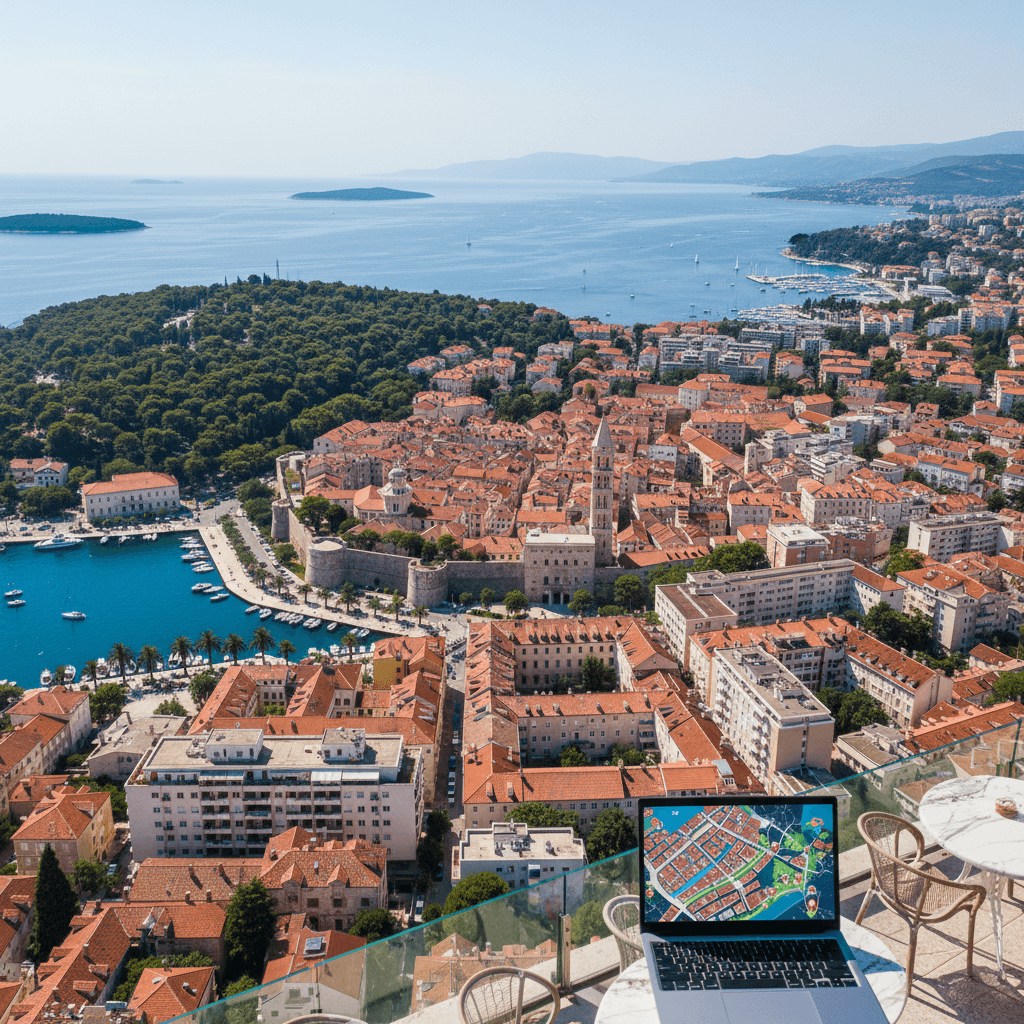
Split
🇭🇷 Croatia
Split is a city where you can literally work from a palace. Living here feels like a constant negotiation between 1,700 years of history and a modern, sun-drenched lifestyle. Most nomads find that the city operates on pomalo, a local philosophy that translates to "take it easy." It is less about the hustle and more about sipping a €2 espresso on the Riva promenade for two hours while the Adriatic Sea glitters in front of you.
The city is a rare hybrid. It has the infrastructure of a regional hub but the soul of a Mediterranean village. You can spend your morning on a Zoom call in a Roman courtyard and your afternoon hiking the pine-scented trails of Marjan Hill or taking a €20 ferry to the islands of Hvar or Brač. While it is incredibly safe and walkable, the vibe shifts dramatically with the seasons. Summer brings a surge of tourists and higher rents, while the shoulder seasons of May, June, September, and October offer the perfect balance of warm weather and a quieter, more authentic community.
The Cost of Living
Your budget in Split depends heavily on how close you want to be to the ancient stone walls of the center. Most expats recommend budgeting between €2,000 and €2,500 for a comfortable mid-range lifestyle.
- Budget Tier (€1,500/month): Staying in a shared apartment in Spinut, eating €4 bureks from local bakeries, and using the Promet Split bus system.
- Mid-Range (€2,000 to €2,500/month): A private 1BR in Varoš, frequenting cafes, and a dedicated desk at a coworking space like The Works.
- Comfortable (€3,000+ /month): Luxury living within Diocletian's Palace, high-end seafood dinners, and weekend boat rentals.
Where to Plant Your Flag
Choosing a neighborhood is about balancing charm with convenience. The city is compact, but the terrain gets steep quickly as you move away from the water.
- Old Town (Diocletian's Palace): Best for those who want to be in the thick of it. You are steps away from D16 coffee and the best nightlife, but be prepared for €800 to €1,200 rents and noisy summer nights.
- Varoš and Meje: These areas offer an authentic Croatian feel with stone houses and steep alleys. It is quieter than the center and offers incredible views, with rents typically between €600 and €900.
- Spinut and Poljud: These residential spots are a 15 to 20 minute walk from the center. They are favorites for budget-conscious nomads and families, offering more space for €500 to €800.
- Firule: This is the go-to for many remote workers because it sits right by the beach and is home to The Works coworking space.
Work, Connectivity, and Community
The internet is generally reliable, hitting speeds of 50 to 100Mbps, though you should always ask your landlord to run a speed test if you are staying in an old stone building with thick walls. For a professional setup, The Works in Firule is the most popular hub, costing around €150 to €250 per month. Saltwater Split is another fantastic option near the center that focuses heavily on community events and networking.
Socializing is easy if you know where to look. There is a popular WhatsApp group where people organize everything from Friday drinks to hikes. The Daltonist is a great spot for a craft beer and meeting other expats, while Basta Gourmet Bar on the waterfront is a reliable place to bring a laptop and grab a pizza. If you need a local SIM, grab a Hrvatski Telekom or A1 card at the airport for about €10 to €20 to get plenty of data.
English proficiency is high here, especially among the younger crowd and in the service industry. You can get by easily, though learning a few phrases like Bok (hi) or Hvala (thanks) goes a long way with the locals. Just remember that the city slows down on Sundays, and during the peak of summer, the crowds can be a test of patience. Most seasoned nomads suggest arriving in September to catch the tail end of the swimming season without the July madness.
Cost of Living in Split
Split sits in that sweet spot of Mediterranean living where you can still find a high quality of life without the eye watering prices of nearby Italy or the French Riviera. While the city has seen a price hike since adopting the Euro, it remains accessible if you know where to look. Most nomads find they can live comfortably on €2,000 to €2,500 per month, though you can definitely squeeze that down if you opt for local neighborhoods over palace views.
Monthly Budget Tiers
- Budget Tier (€1,500): This covers a shared apartment in Spinut or Poljud, plenty of street food like €3 bureks, and relying on the local bus system.
- Mid-Range Tier (€2,000 to €2,500): The standard nomad experience. You'll get a private 1BR in Varoš, regular meals at spots like Basta Gourmet Bar, and a dedicated desk at a coworking space.
- Comfortable Tier (€3,000+): Luxury living within the Roman walls of the Old Town, high end seafood dinners, and frequent weekend ferry trips to Hvar or Brač.
Housing and Neighborhoods
Rent is your biggest variable. Prices fluctuate wildly between the quiet winter months and the sun soaked summer peak. Most expats recommend using Flatio for mid term stays or hunting for long term discounts on Airbnb before you arrive.
Old Town (Diocletian's Palace)
- Best For: First timers who want to be in the thick of the action.
- Rent: €800 to €1,200 for a studio or 1BR.
- Pros: Historic charm and walkable to every major cafe.
- Cons: It gets loud, crowded with tourists, and many old buildings have a frustrating lack of power outlets.
Varoš and Meje
- Best For: Expats looking for a more authentic, quieter vibe.
- Rent: €600 to €900.
- Pros: Traditional stone houses and immediate access to the hiking trails of Marjan Hill.
- Cons: Prepare your calves; these areas are built on a steep incline.
Spinut and Poljud
- Best For: Budget conscious nomads and families.
- Rent: €500 to €800.
- Pros: Much more affordable, quiet, and close to local beaches.
- Cons: A longer walk to the city center and fewer coworking options.
Daily Expenses and Lifestyle
Eating out doesn't have to break the bank. A quick lunch of street food or a slice of pizza usually costs between €3 and €5. A mid range dinner with a glass of local wine will run you about €15 to €20. If you are cooking at home, groceries are reasonably priced, especially if you shop at the Pazar (Green Market) for fresh produce.
For getting around, the city center is incredibly walkable. If you need to go further, the Promet Split bus system is efficient at €1.50 per ride, or you can grab a monthly pass for €30. Ride hailing apps like Bolt and Uber are reliable, with most trips around the center costing between €5 and €10.
Workspace and Connectivity
Internet speeds are generally solid, averaging 50 to 100Mbps, but travelers often warn to double check the WiFi in thick walled stone buildings before signing a lease. Coworking is a big part of the local social scene. The Works in Firule is a favorite for its proximity to the beach, costing between €150 and €250 per month. Other solid options include Saltwater Split and Smartspace, which host regular networking events. If you prefer cafes, D16 and Daltonist are laptop friendly spots where a €2 coffee buys you a few hours of work time.
To stay connected, pick up a SIM card from Hrvatski Telekom or A1 at the airport or any newsstand. You can usually get a 30GB data package for €10 to €20, which is plenty for hotspots when the apartment WiFi fails.
The Pulse Seekers: Old Town & Diocletian’s Palace
If you want to wake up inside a literal Roman monument, this is your spot. Living within the walls of Diocletian’s Palace means you are seconds away from the best specialty coffee at D16 and the social hum of the Riva promenade. It is the undisputed hub for solo travelers and short term nomads who want to be in the thick of the action.
Most nomads find the energy here infectious, but it comes with a price tag. Expect to pay between €800 and €1,200 for a studio or one bedroom apartment. While the historic charm is unmatched, the stone walls can be a nightmare for phone signals, and power outlets are often scarce in older buildings. During July and August, the crowds can feel overwhelming, so many long term residents migrate outward during the peak heat.
- Best for: Social butterflies, history buffs, and those without a car.
- Top Spot: Grab a craft beer at The Daltonist to meet the local expat crowd.
- Trade-off: High noise levels and premium "tourist" pricing on groceries.
The Long Termers: Varoš & Meje
Just west of the palace, Varoš offers the quintessential Dalmatian lifestyle with its winding stone alleys and red-tiled roofs. It feels more authentic and lived-in than the Old Town. If you keep walking west, you hit Meje, which is arguably the most prestigious residential strip in the city, tucked between the sea and the pine forests of Marjan Hill.
Expats recommend this area for the balance of peace and proximity. Rents typically hover between €600 and €900. You are close enough to walk to the center in 10 minutes, but far enough to escape the cruise ship crowds. It is perfect for those who start their day with a run or hike, as the Marjan Hill trails are right at your doorstep.
- Best for: Active nomads and expats seeking a "local" feel.
- Pro Tip: Be prepared for hills; your glutes will get a workout daily.
- Connectivity: Reliable home internet, though Saltwater Split is a short walk away for coworking.
The Remote Work Professionals: Firule & Bačvice
For those who prioritize a dedicated workspace and a morning swim, Firule is the sweet spot. This neighborhood is home to The Works, one of the most popular coworking spaces in the city, costing about €150 to €250 per month. It is a professional enclave where the active WhatsApp community often organizes lunch meetups.
The vibe here is laid-back and coastal. You can spend your afternoon working from Zbirac, a seaside cafe where a €2 coffee buys you a seat with a view for hours. The housing here is more modern, meaning better insulation and more reliable utilities than the ancient center.
- Best for: Serious digital nomads and beach lovers.
- Dining: Basta Gourmet Bar is a local favorite for waterfront pizza and solid WiFi.
- Transport: Highly walkable, but Bolt rides to the center are only €5 to €10 if you're in a rush.
The Budget Minded & Families: Spinut & Poljud
If you are looking to stretch your budget or moving with a family, head north of Marjan Hill to Spinut or Poljud. This area is residential, quiet, and significantly more affordable, with rents ranging from €500 to €800. It lacks the "Disney-fied" feel of the center, offering wide sidewalks and plenty of green space for kids to play.
Travelers often say this feels like the "real" Split. You’ll find better deals at local bakeries (try a €3 burek for lunch) and larger supermarkets that aren't marked up for tourists. While it's a longer trek to the nightlife, the Promet Split buses are efficient, with monthly passes costing around €30.
- Best for: Families, slow travelers, and those on a €1,500 monthly budget.
- Pros: Easy parking, less noise, and proximity to the local football stadium and quiet beaches.
- Cons: A 20 to 25 minute walk to the main attractions.
Connectivity and Speed
Split is a reliable base for remote work, with most modern apartments and cafes offering fiber speeds between 50 and 100Mbps. It is generally enough for seamless video calls and heavy uploads, though you should always ask your host for a speed test if you are booking a place in the historic stone houses of the Old Town. Those thick Roman walls are great for keeping things cool, but they can be a nightmare for WiFi signals.
For a backup or a primary mobile connection, skip the roaming charges and grab a local SIM. Hrvatski Telekom and A1 both offer "Tourist" packages for €10 to €20 that usually include a massive amount of data, often 30GB or even unlimited for a week or two. You can pick these up right at the airport or at any "Tisak" newsstand in the city center.
The Top Coworking Spaces
The nomad community in Split is tight knit, and most networking happens within a few key hubs. If you prefer a professional environment over a noisy cafe, these are the spots most expats recommend:
- The Works: Located near Firule beach, this is arguably the most popular spot for long termers. It costs between €250 and €300 per month and has a strong community vibe. It is perfect if you want to walk straight from your desk to the Adriatic for a sunset swim.
- Saltwater Split: Situated closer to the Old Town, Saltwater is run by people who deeply understand the nomad lifestyle. They often host events and even offer coliving options if you want to live and work in the same ecosystem.
- Smartspace: A sleek, flexible option in the city center that caters to people who need a desk for a few days without a long commitment. It is known for being quiet and productive.
- Re.Split Coworking: Another solid choice that balances work desks with social events, making it easy to meet people if you are new to the city.
Laptop Friendly Cafes
The local "pomalo" philosophy means nobody is going to rush you out of a cafe. You can usually order a €2 white coffee and sit for two or three hours without an eye roll from the staff. Just be mindful of the smaller spots during the lunch rush.
D16 in the Old Town is the go to for specialty coffee enthusiasts who need to hammer out some emails. If you prefer a view, the spots along the Riva promenade are iconic, though they can get crowded and loud. For a more relaxed afternoon session, Zbirac overlooks the beach and has a loyal following of remote workers. During the off season, The Daltonist is a cozy craft beer bar that is surprisingly laptop friendly during the day, offering a quiet atmosphere and plenty of power outlets.
Community and Networking
Don't rely solely on LinkedIn here. The real pulse of the Split nomad scene is in a massive WhatsApp group. It is where people organize weekend trips to Hvar, find tennis partners, or ask for help with the digital nomad visa paperwork. You can usually get an invite link by showing up to a weekly meetup at The Works or Saltwater.
If you are in town during the Split Tech City Festival, make sure to grab a ticket. It is the best way to connect with local Croatian developers and entrepreneurs, bridging the gap between the temporary nomad crowd and the permanent tech scene.
A Safe Haven on the Adriatic
Split frequently ranks as one of the safest cities in Europe, a fact that becomes obvious after your first late night stroll through the city center. The crime rate is remarkably low, and violent crime is almost unheard of in the local community. Most nomads feel perfectly comfortable walking alone at any hour, even in the winding, dimly lit alleys of the Old Town or the steep stone streets of Varoš.
While the city is secure, you should still use common sense during the peak summer months. When the cruise ships dock and the Riva promenade fills up, petty pickpocketing can occasionally occur in crowded areas. Expats generally suggest keeping an eye on your belongings at the beach, especially at popular spots like Bačvice where it is easy to get distracted by a game of picigin. Aside from these minor tourist season precautions, the biggest "danger" you’ll likely face is tripping on the centuries-old, polished limestone pavestones that get incredibly slippery when it rains.
Healthcare Infrastructure
If you need medical attention, the primary facility is KBC Split (Klinički bolnički centar Split). It is a large, reputable teaching hospital that provides high quality care. Most doctors and many of the nursing staff speak excellent English, so you won't struggle to explain your symptoms. For minor issues or routine checkups, there are several private clinics around the city that cater to the international community and digital nomad visa holders.
- Emergency Services: Dial 112 for general emergencies or 192 specifically for the police.
- Public Hospital: KBC Split is located near the Firule and Križine neighborhoods.
- Pharmacies: Look for the green "Ljekarna" signs. They are ubiquitous, with at least one 24-hour pharmacy always on duty in the city center.
- Costs: A standard consultation at a private clinic usually ranges between €40 and €70.
Pharmacies and Everyday Wellness
For basic ailments like a cold or a headache, head to a local ljekarna. You’ll find pharmacists are highly trained and can often give professional advice or suggest over-the-counter treatments for minor issues, saving you a trip to the doctor. Most common medications cost between €5 and €20. If you have a specific prescription from home, bring a copy with you; while many Croatian pharmacists are helpful, they are strict about regulations for antibiotics and specialized medications.
The local lifestyle actually contributes quite a bit to your well-being here. The air quality is excellent, and the "fjaka" mindset, a local Mediterranean state of mind that prioritizes relaxation, helps keep stress levels low. Nomads often find that the combination of fresh seafood, easy access to Marjan Hill for hiking, and the clean waters of the Adriatic makes Split a very healthy place to live long-term.
Practical Safety Tips
- Download Bolt or Uber for late-night transport. While walking is safe, these apps provide a transparent, fixed price (usually €5 to €10 for city trips) and avoid the "tourist tax" sometimes applied by unmetered street taxis.
- Tap water in Split is safe to drink and actually tastes quite good, coming from the nearby Jadro River. You can save money and reduce plastic waste by refilling your bottle at the historic stone fountains.
- If you are staying in an older stone house in the Old Town, be mindful of the electrical outlets. Older wiring can sometimes be finicky with high-draw devices like hair dryers or heavy-duty gaming laptops.
The Walkability Factor
Split is a city built for pedestrians, especially if you're based near the center. The Roman core and the surrounding neighborhoods like Varoš are almost entirely car-free zones. Most nomads find that their own two feet are the primary mode of transport. You can walk from the Riva promenade to the hiking trails of Marjan Hill in about 15 minutes, and most coworking spaces are within a 20 minute radius of the main sights.
Public Buses
When you need to venture further out to neighborhoods like Spinut or Firule, the Promet Split yellow bus network is your best bet. It is reliable and covers the entire metropolitan area.
- Single tickets: These cost €1.50 and can be bought directly from the driver or at Tisak newsstands.
- Monthly passes: If you're staying for a month or more, a pass costs around €30 and is a lifesaver for daily commuters.
- Frequency: Most lines run every 15 to 30 minutes, though they can get crowded during the peak summer heat.
Ride-Hailing and Taxis
While traditional taxis exist, they are notoriously expensive, especially for foreigners. Expats recommend sticking to Uber or Bolt. These apps are widely used and prevent the "tourist tax" often found with street hails. A typical ride from the Old Town to the outskirts usually falls between €5 and €10. During the Ultra Europe festival or mid-August, expect these prices to surge significantly.
Cycling and Scooters
Split isn't the most bike-friendly city due to its narrow, cobblestone streets and occasional steep hills, but the seaside paths are perfect for a ride. Nextbike is the primary bike-sharing service here.
- Nextbike costs: It is €1 to unlock and then €0.10 per minute.
- Electric Scooters: You'll see plenty of these around, but be careful on the limestone pavers; they get incredibly slick when it rains.
Getting to and from the Airport
Split Airport (SPU) is about 25km north of the city. You have three main ways to make the trek:
- Shuttle Bus: The most economical choice at €8. It drops you right at the main bus station near the ferry port.
- Bolt/Uber: Expect to pay between €25 and €35 depending on demand. It's the most convenient option if you have heavy luggage.
- Public Bus (Line 37 or 38): The cheapest but slowest route. It stops frequently and can take nearly an hour to reach the center.
Ferries and Island Hopping
One of the best perks of living in Split is the easy access to the islands. The ferry terminal is located right in the heart of the city. You can hop on a Jadrolinija ferry or a high-speed catamaran to Hvar, Brač, or Vis. Tickets generally range from €20 to €30 for a round trip. Nomads often use these for "workcations" on Fridays, taking advantage of the reliable 4G coverage even out on the water.
Practical Navigation Tips
Google Maps is generally accurate for bus schedules, but locals often rely on the Promet Split app for real-time updates. If you're walking through Diocletian's Palace, don't rely too heavily on GPS; the thick stone walls often mess with the signal. It's better to learn the main gates (Gold, Silver, Bronze, and Iron) as your primary landmarks.
The English Advantage
You won't need to brush up on your Slavic grammar just to order a coffee or negotiate a lease. English proficiency in Split is remarkably high, especially among the younger generation and those working in the service industry. In the Old Town and popular nomad hubs like Firule, you can expect about 80% to 90% of the people you interact with to speak fluent English. Whether you are at The Works coworking space or grabbing a pizza at Basta Gourmet Bar, language barriers rarely exist.
Most digital nomads find that everyday transactions, from buying a SIM card at Hrvatski Telekom to visiting the KBC Split hospital, are straightforward. Doctors and pharmacists almost always speak English, which takes the stress out of any unexpected medical needs. While the local language is Croatian, the city's heavy reliance on international tourism means English has become the unofficial second language of the Riva promenade.
Breaking the Ice with Croatian
Even though you can survive on English alone, learning a few Croatian phrases goes a long way with the locals. Croatians are generally proud of their language and appreciate it when a visitor makes an effort beyond a simple hello. It changes the dynamic from being just another tourist to being a respected neighbor. Most nomads recommend picking up these basics to use at the local markets or small Varoš bakeries:
- Bok: Hi / Bye (The most versatile word in your vocabulary)
- Hvala: Thanks
- Molim: Please / You're welcome
- Koliko košta?: How much does it cost?
- Dobar dan: Good day
- Pivo, molim: A beer, please
For more complex interactions, Google Translate is reliable for reading menus or signs. If you are staying long-term on a digital nomad visa, consider joining a local language exchange. It's a great way to meet people and understand the "pomalo" lifestyle, which is the local philosophy of taking things slow and enjoying the moment.
Digital Communication and Networking
Staying connected is rarely an issue. You can pick up a local SIM card from A1 or Hrvatski Telekom for about €10 to €20, which usually nets you around 30GB of data or even unlimited weekly packages. These are available right at the airport or at any "Tisak" newsstand in the city center.
The real heartbeat of the nomad community in Split happens on WhatsApp and Facebook. There is a large WhatsApp group where people coordinate everything from beach meetups to weekend trips to Hvar or Brač. If you are looking for professional networking, keep an eye on Split Tech City. They host events and festivals that bridge the gap between international remote workers and the local tech scene. For a more casual vibe, head to Daltonist in the off-season or Saltwater Split; these are the go-to spots for meeting English-speaking expats and finding your footing in the city.
The Sweet Spot: Shoulder Season
If you want the best of Split without the crushing crowds, aim for the shoulder seasons: April to June and September to October. During these months, temperatures hover comfortably between 20°C and 25°C. It is warm enough to work from a terrace at Riva or catch a ferry to Hvar, but you won't be fighting thousands of cruise ship passengers for a seat at a cafe.
Most nomads find that September is the goldilocks month. The Adriatic sea is still warm enough for a swim at Firule beach after a deep work session at The Works coworking space, but the frantic energy of peak summer has started to fade. Prices for short term rentals in areas like Varoš also begin to stabilize as the high season tourism demand drops off.
Summer Heat and Crowds
July and August are the hottest months, with temperatures frequently hitting 25°C to 32°C. While the weather is perfect for island hopping, these months can be tough for remote work. The Old Town becomes a labyrinth of tourists, and the noise levels in Diocletian's Palace can make it difficult to focus on calls.
Rents also skyrocket during this period. Many local landlords prefer short term vacation rentals over monthly nomad stays in the summer, so if you plan to be here in August, book your accommodation months in advance. Expats often recommend retreating to the quieter, residential streets of Spinut or Poljud to escape the heat and the noise during the peak of summer.
The Mild Mediterranean Winter
Split doesn't really get "cold" in the traditional sense, but it does get wet. From November to March, you can expect temperatures between 8°C and 12°C. This is the rainy season, with 50mm to 100mm of rainfall per month. While you won't see much snow, the "Bura" wind can be biting and fierce, whistling through the stone alleys of the center.
Living here in January is a different experience entirely. The city feels local and quiet. While some tourist focused restaurants close for the season, nomad favorites like D16 and Daltonist stay cozy and open. It is the most affordable time to live in the city, with rents often dropping by 30% to 50% compared to summer rates.
Seasonal Planning at a Glance
- Best for Work/Life Balance: May, June, and September. Expect sunny days, moderate prices, and active nomad meetups.
- Best for Budgeting: November through February. You will save significantly on housing, though you will need a good raincoat and a sweater.
- Best for Socializing: July and August. The city is at its most energetic, with festivals and nightlife peaking, though your cost of living will rise.
Keep in mind that while the weather is generally reliable, older buildings in the center often lack modern insulation. If you are visiting in the winter, double check that your rental has a dedicated heating system or a powerful AC unit with a heat pump. Most nomads find that as long as they have a good pair of walking shoes and a light jacket, Split is a year round destination.
Getting Settled and Staying Connected
Split is a city where the internet is fast but the lifestyle is slow. Most apartments and cafes clock in between 50 to 100Mbps, though you should always ask your host for a speed test if you are booking an older stone house in the Old Town. Thick Roman walls are great for history, but they can be brutal on a WiFi signal.
For a dedicated workspace, The Works in Firule is the local favorite for nomads who want to be near the beach. It costs between €150 and €250 per month and puts you right in the middle of the community. If you prefer the center, Saltwater Split offers a mix of coworking and networking events. For casual laptop sessions, grab a table at D16 in the Old Town or Zbirac by the water. You can usually nurse a €2 coffee for a few hours without anyone bothering you.
Pick up a local SIM card immediately. Hrvatski Telekom or A1 sell tourist packs at the airport or any Tisak newsstand for about €10 to €20. These usually come with massive data allowances that make hotspotting a breeze if your apartment WiFi flails.
Cost of Living and Neighborhoods
Your monthly burn rate depends heavily on whether you want to live inside a palace or among the locals. A €2,000 to €2,500 budget provides a comfortable mid-range life with a nice apartment and regular meals out.
- Old Town (Diocletian's Palace): Rents run €800 to €1,200. It is beautiful and walkable, but it gets loud and crowded with tourists during peak season.
- Varoš and Meje: Expect to pay €600 to €900. These areas offer an authentic feel and easy access to Marjan Hill, though you will be walking uphill quite a bit.
- Spinut and Poljud: The budget choice at €500 to €800. It is quieter and favored by families or long-term nomads who want to be near the beaches without the center's price tag.
- Firule: Perfect for those working at The Works. It is residential and calm, though the nightlife is limited compared to the Riva.
Moving Around the City
The city center is small enough that you will rarely need wheels. When you do, the Promet Split bus system is reliable. A single ride is €1.50, or you can grab a monthly pass for €30. For late nights or grocery hauls, Bolt and Uber are the go-to apps, with most cross-town trips costing €5 to €10.
Getting from Split Airport (SPU) is straightforward. A private Bolt usually costs €25 to €35, while the shuttle bus is a budget-friendly €8. If you want to explore the islands like Hvar or Brac, the ferries at the main port cost between €20 and €30 for a round trip.
Health, Safety, and Language
Split is remarkably safe. You can walk through most neighborhoods at 2:00 AM without a second thought, though the usual rules apply about staying alert in dark alleys. If you get sick, KBC Split is the main hospital with many English-speaking doctors. Pharmacies, marked as Ljekarna, are everywhere for minor issues.
English proficiency is very high, especially among people under 50. You will have no trouble ordering food or negotiating rent in English. Still, learning a few words goes a long way. Use Bok for hi, Hvala for thanks, and ask Koliko košta? to find out the price of something at the green market.
Timing Your Stay
The weather dictates the vibe. April to June and September to October are the sweet spots. The temperatures sit comfortably around 20 to 25°C, and the crowds are manageable. July and August are scorching and packed with cruise ship passengers, while January is often rainy and quiet. Many nomads find the shoulder seasons provide the best balance of social life and productivity.
Need visa and immigration info for Croatia?
🇭🇷 View Croatia Country GuideEasy Landing
Settle in, no stress