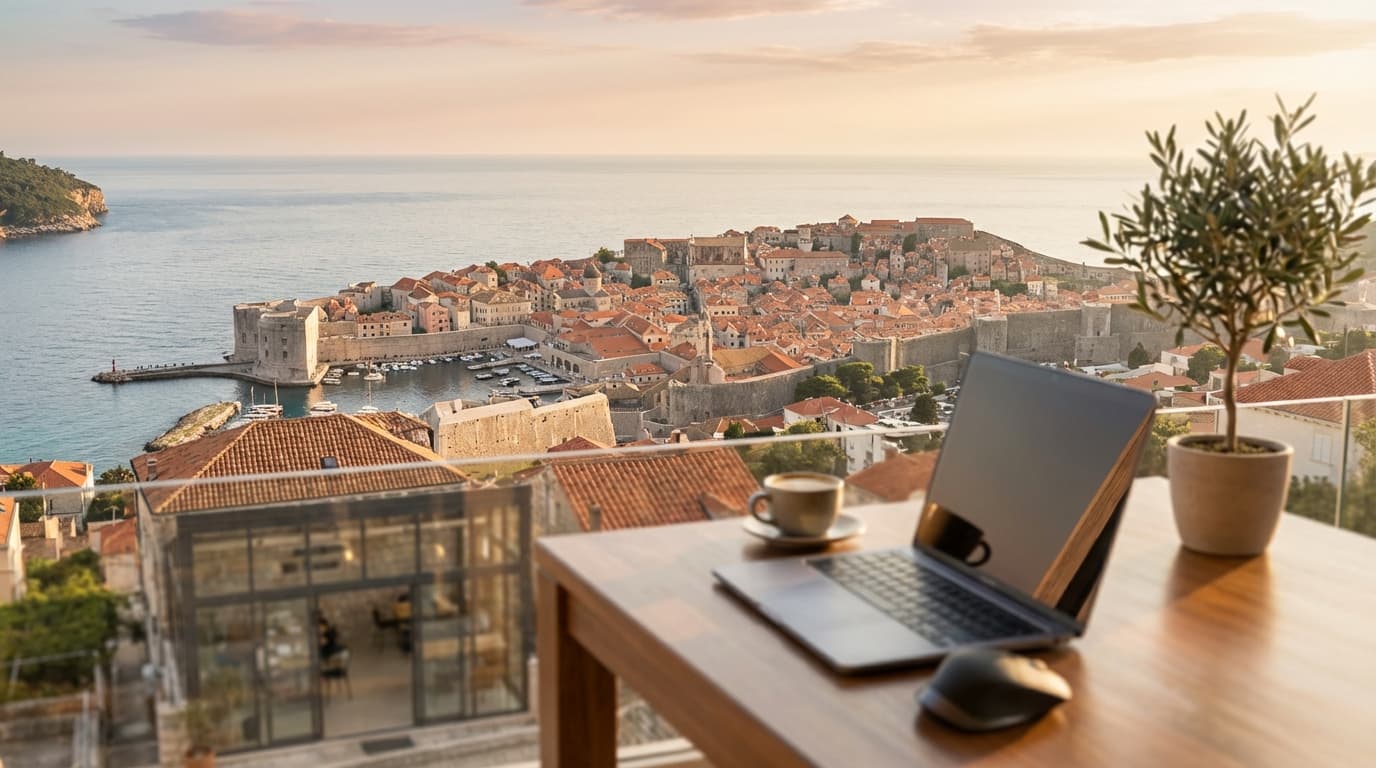
Croatia
Complete Digital Nomad Guide

Policy Stability
Stamped Nomad ExclusiveHow likely visa and immigration policies are to remain unchanged
Quick Facts
Nomad Visa Cost
$95
Income Requirement
$3,559/mo
Max Stay
12 months
Renewable
No
Cost of Living
$1,600/mo
Avg Internet
90 Mbps
Safety Score
8/10
Healthcare
High
Coworking
High
English Friendly
High
Time Zones
CET
Entry Methods Available
Best For
The Post-Schengen Reality
Croatia’s full integration into the Schengen Area on January 1, 2023, fundamentally changed the game for digital nomads. While the country used to have its own separate visa clock, it now follows the standard EU rules. This means any time you spend in Croatia counts toward your total 90-day limit within the wider Schengen zone. If you are planning a long-term stint on the Adriatic coast, you need to be meticulous with your calendar.
The official immigration portal is the best place to track current requirements, but generally, your path depends on your nationality and how long you plan to stay. There are no visas on arrival and no e-visa options; everything is handled through physical applications at diplomatic missions or VFS Global centers.
Short-Stay vs. Long-Stay Options
For most nomads, the choice boils down to two main visa types. If you are just testing the waters for a few months, a Type C visa is your go-to. If you are moving for the long haul, you will likely need a Type D visa to bridge the gap until you get a residence permit.
- Type C (Schengen Visa): This covers tourism, business trips, and short stays. It allows you to remain in Croatia and the Schengen Area for up to 90 days within any 180-day period. It can be issued for single or multiple entries.
- Type D (National Long-Stay Visa): This is required if you intend to stay for more than 90 days. You generally apply for this after you have received approval for a temporary stay permit (like the Digital Nomad Permit). It acts as the entry document that allows you to stay while your local residency paperwork is finalized.
- Type A (Airport Transit): Only relevant for a specific list of nationalities who are just passing through the international transit area of a Croatian airport.
Visa-Free Travelers and ETIAS
Citizens from countries like the US, Canada, UK, and Australia do not need a visa for stays under 90 days. You can simply show up with a valid passport. However, keep in mind that the 90/180-day rule still applies across the entire Schengen zone. You cannot simply hop over to Slovenia or Italy to "reset" your clock.
Looking ahead to late 2026, the ETIAS (European Travel Information and Authorization System) will become a requirement for these visa-exempt travelers. It is a quick online pre-approval that will cost €7 for most adults and remains valid for 3 years. If you already hold a valid Schengen visa, you will not need an ETIAS.
The Application Checklist
When you sit down to apply at a consulate or through the government visa website, you need your paperwork in perfect order. Croatian officials are known for being thorough. At a minimum, you will need:
- A passport issued within the last 10 years, valid for at least 3 months beyond your intended departure, with 2 blank pages.
- One recent passport-sized photo (35x45mm).
- Proof of travel health insurance with a minimum coverage of €30,000.
- Evidence of your purpose of stay, such as a flight itinerary or accommodation booking.
- Bank statements or proof of income to show you have sufficient means of subsistence for the duration of your trip.
Business vs. Remote Work
It is important to distinguish between "business" and "work." A Type C visa allows you to attend meetings, sign contracts, or scout locations for up to 90 days. However, if you are working remotely for a foreign company as a digital nomad and want to stay longer, you should skip the standard business visa and look directly into the Digital Nomad residency process. The Type D visa is the specific vehicle used to facilitate that longer stay once your initial permit is approved.
For any highly specific questions or to verify your country's specific status, you can contact the Ministry of Foreign and European Affairs directly at vize@mvep.hr. They recommend using the official EU Schengen calculator to ensure you don't accidentally overstay your welcome.
The Mediterranean Office: Croatia’s Digital Nomad Permit
Croatia was one of the first countries in Europe to roll out a dedicated pathway for remote workers, and it remains one of the most attractive. Officially known as the Temporary Stay of Digital Nomads, this permit allows non-EU/EEA citizens to trade their traditional office for a desk overlooking the Adriatic. It is not exactly a "visa" in the traditional sense, but rather a residency permit that grants you the right to live in the country while working for companies or clients located outside of Croatia.
The biggest draw here, aside from the stunning coastline and pebble beaches, is the tax treatment. Croatia currently offers a full exemption from local income tax on foreign earnings for the duration of your stay. This makes it a financially savvy move for freelancers and remote employees who want to maximize their take-home pay while enjoying a Mediterranean lifestyle.
Financial Requirements
To qualify, you need to prove you have sufficient funds to support yourself without relying on the Croatian labor market. The government updates these figures periodically based on the average national wage. You should aim to show a monthly income of at least €3,295. If you prefer to show savings instead, you will need a bank balance of at least €39,540 to cover a full year.
If you are bringing family members along, keep in mind that the financial threshold increases. You will need to add an extra 10% to the monthly requirement for each dependent. All income must originate from sources outside of Croatia; taking a local job while on this permit is strictly prohibited.
Duration and Staying Legal
The permit is typically granted for up to one year. While some administrative updates suggest stays of up to 18 months in specific circumstances, most nomads should plan for a 12-month stint. One quirk of the Croatian system is that this permit is not immediately renewable. Once your year is up, you generally have to leave the country for 90 days before you can apply for a new nomad permit.
If you are already in Croatia on a visa-free entry, you can apply at a local police station (MUP). However, if you require a visa to enter the Schengen Area, you must start the process at a Croatian embassy or consulate before you arrive.
Your Application Checklist
The paperwork is straightforward but requires attention to detail. You can submit your application through the official government portal or in person. Here is what you need to gather:
Valid Passport: It must be valid for at least three months beyond your intended stay.
Proof of Remote Work: This includes employment contracts, service agreements, or business registration documents showing you work for non-Croatian entities.
Health Insurance: You need a policy that provides coverage within Croatia for the duration of your stay.
Criminal Background Check: A clean record from your home country, which usually needs to be apostilled and translated into Croatian.
Accommodation Proof: A signed rental lease or a booking confirmation for your initial period in the country.
Fees and Processing
The cost of the permit varies depending on where you apply and whether you need a biometric card. Expect to pay between €80 and €523 in total administrative fees. Once you submit everything, approval usually takes between 3 to 4 weeks. After you get the green light, you have 30 days to enter Croatia and register your address with the local police to receive your physical residency card.
Key Restrictions to Remember
No Local Clients: You cannot provide services to Croatian companies or employers.
Non-EU Only: This program is specifically designed for "third-country nationals." EU citizens already have the right to live and work here.
Age Limit: Applicants must be at least 18 years old.
Address Registration: You must report your living address to the police within 3 days of entering the country or changing your residence.
The 90-Day Handshake
For most digital nomads coming from the US, UK, Canada, Australia, or New Zealand, getting into Croatia is as simple as showing up at the border. You fall under the visa-free regime, which allows you to stay for up to 90 days within any 180-day period. Since Croatia joined the Schengen Area, these days are shared with other member countries like Italy, Slovenia, and Hungary. If you spend 30 days in Rome before heading to Zagreb, you only have 60 days left on your "clock" before you need to exit the zone.
EU citizens have it even easier. You can move to Split or Rijeka tomorrow without a visa and stay indefinitely, though you should register your address if you plan on sticking around for more than three months. For everyone else, the 90-day rule is firm. Border runs don't work like they used to; once you hit your 90-day limit, you must leave the entire Schengen Area for another 90 days before you can return.
Upcoming Tech: EES and ETIAS
The way you enter Croatia is about to get a digital makeover. Starting October 12, 2025, the Entry/Exit System (EES) goes live. This means the first time you cross the border, you will need to provide biometric data, including fingerprints and a facial photo. This replaces the old-school ink stamps in your passport and makes it much harder for anyone to accidentally overstay their welcome without the system noticing.
Following that, in late 2026, the ETIAS requirement kicks in. If you are from a visa-exempt country like the US or UK, you will need to apply for this electronic authorization before you fly. It will cost approximately €7, is valid for three years, and links directly to your passport. It is a quick online process, but it is one more thing to check off your list before heading to the airport.
Applying for a Traditional Tourist Visa
If you hold a passport from a country like India, China, South Africa, or Turkey, you will need to apply for a standard tourist visa before you arrive. Croatia does not offer a visa-on-arrival or a standard e-visa for these nationalities. You will need to head to the nearest consular office and bring several documents with you:
A passport valid for at least 90 days after your planned departure.
Travel health insurance with a minimum coverage of €30,000.
Recent bank statements to prove you can support yourself.
Confirmed flight and hotel reservations.
A signed application form and the visa fee, paid via bank transfer.
You can check the specific requirements for your nationality through the official Ministry of Foreign Affairs portal. It is best to start this process at least a month before your trip to account for processing times.
Passport and Documentation Rules
Regardless of where you are from, your passport needs to be in good shape. It must be valid for at least 90 days after you intend to leave Croatia. If you are a UK traveler, the recommendation is even stricter, aiming for six months of validity from the date of entry. EU citizens are the exception here, as a national identity card is sufficient for entry.
Extensions for tourist visas are notoriously difficult to get. Unless you have a genuine medical emergency or a serious personal circumstance, the government expects you to leave when your 90 days are up. For nomads who want to stay longer, the tourist visa is usually just the "scouting phase" before applying for the specific digital nomad residence permit.
Making Croatia Your Long-Term Home
Croatia doesn't offer a traditional "Golden Visa" where you can simply buy your way to a passport. Instead, the country uses a merit-based system that rewards people who actually want to live there, whether you are working remotely, starting a local business, or enjoying retirement. While the paperwork can feel a bit bureaucratic, the actual financial barriers are surprisingly low compared to Western Europe.
For most non-EU citizens, the journey begins with a temporary residence permit. These typically last for one year. You will need to show a valid passport, proof of health insurance, a clean criminal record from your home country, and evidence that you can support yourself financially without relying on the Croatian social system.
Popular Residency Pathways
- The Digital Nomad Permit: This is the most popular route for freelancers and remote employees. You need to prove a monthly income of at least €2,500 from employers or clients outside of Croatia. The permit lasts for one year and is non-renewable on the spot; you have to leave the country for six months before you can apply for a second one.
- Business Investment: If you want to work locally, you can start a company (d.o.o.). You must own at least 51% of the business, invest €26,545 in startup capital, and employ three Croatian citizens on full-time contracts. This is one of the few paths that allows you to work for your own Croatian entity immediately.
- Passive Income and Retirement: If you have a pension or stable investment income, you can apply for residency under "other purposes." You just need to show you have the funds to cover your living expenses and accommodation. While this doesn't grant you the right to work for a Croatian company, it is a steady path for those looking to settle down long-term.
- Property Ownership: Owning a home in Croatia allows you to stay for up to nine months per year. However, there is a catch: this specific permit does not count toward the five-year clock for permanent residency, and you must leave the country for 90 days before you can re-apply the following year.
The Road to Permanent Residency
If you fall in love with the Adriatic lifestyle and want to stay forever, your goal is "Long-Term Residence." You can usually apply for this after five years of continuous temporary residence. "Continuous" means you haven't been away for more than ten months total over those five years, or more than six months in a single stretch.
The requirements for the five-year milestone are stricter than the initial permit. You will need to pass a basic Croatian language and culture test (A1 level). You also need to maintain your health insurance and prove you have stable financial means. Once you secure long-term residence, you gain many of the same rights as Croatian citizens, including better access to the labor market and social services.
For those with family ties, the path is faster. If you are the life partner or family member of a Croatian citizen, you can often apply for permanent residency after only four years of temporary stay. If you have Croatian heritage or are an emigrant returning home, that timeline can drop to three years.
Application Logistics and Costs
The process usually happens at the MUP (Ministry of the Interior) office in the city where you intend to live. You should submit your application at least 60 to 90 days before your current visa or 90-day tourist stay expires. Most administrative fees are modest, ranging from €50 to €100, though you should budget extra for official translations of your birth certificate and criminal record check.
For a detailed breakdown of the required documentation for each specific permit, you can consult the Ministry of Foreign and European Affairs portal. Processing times generally take between one and three months, so patience is a requirement alongside your paperwork.
Becoming a Citizen
The final step is naturalization. This is available after eight years of continuous residence. By this stage, the government expects a high level of integration. You will need to demonstrate fluency in the Croatian language using the Latin script and show that you have become a functional part of the local community. It is a long road, but it grants you an EU passport and the permanent right to live and work anywhere in the European Union.
While Croatia transitioned to the Euro recently, it remains one of the more accessible Mediterranean destinations for remote workers. You can live a high-quality life here for significantly less than in London or San Francisco, but the "tourist tax" is real. Prices for housing and dining fluctuate wildly based on the season, especially along the Adriatic coast.
The Monthly Bottom Line
Most digital nomads find their sweet spot between €1,500 and €2,500 per month. This range covers a modern one-bedroom apartment in a central neighborhood, frequent meals out, a coworking membership, and weekend trips to the islands. If you are on a strict budget, you can get by on €1,000 to €1,200 in the capital, Zagreb, by living further from the center and cooking most meals at home. On the high end, a premium lifestyle in Dubrovnik during July or August can easily push past €3,000.
Housing: Inland vs. Coastal
Rent will be your biggest variable. In Zagreb, prices stay relatively stable year-round. On the coast in cities like Split and Zadar, many landlords transition to daily tourist rates in the summer, which can make long-term rentals harder to find or much more expensive between June and September.
Zagreb (The Capital Hub)
- Budget: €300 to €500 for basic studios or apartments on the outskirts.
- Comfortable: €600 to €800 for a modern 1BR in the Lower Town or near the tram lines.
- Premium: €900 to €1,150 for luxury builds in the city center.
Split (The Coastal Favorite)
- Budget: €380 to €500 for older units away from the Riva.
- Comfortable: €500 to €800 for central spots, though these prices often spike 20% in summer.
- Premium: €800+ for high-end coastal views or renovated stone houses.
Dubrovnik (The Scenic Premium)
- Budget: €400 to €500, usually only found in neighboring towns like Župa or Cavtat.
- Comfortable: €1,000 to €1,200 for a spot near the Old Town.
- Premium: €1,500+ per week for villas during the peak tourist surge.
If you prefer community-driven housing, coliving spaces across the country typically range from €500 to €800 per month and usually include utilities and high-speed internet.
Food and Dining
Groceries are affordable if you shop like a local. Visit the pazar (open-air market) for seasonal produce. A budget-conscious nomad can spend €150 to €300 a month on groceries. If you enjoy the local bistro scene, a mid-range meal at a konoba (traditional tavern) will cost between €10 and €25. For those who eat out daily and enjoy specialty coffee and craft beer, expect to budget €400 or more for food.
Getting Around and Working
Public transport is reliable and cheap. A monthly pass for the iconic blue trams in Zagreb or the bus network in Split costs roughly €40 to €50. Most nomads find the city centers highly walkable, reducing transport costs to almost zero unless you are taking regional ferries or buses for weekend getaways.
For your professional setup, coworking spaces are popping up everywhere. Zagreb offers the most variety with hubs like Impact Hub, with monthly desks ranging from €150 to €300. In Split, you can find basic memberships starting around €120. If you are on a budget, Croatia has a thriving cafe culture where working for a few hours over a €2 espresso is perfectly acceptable.
Health Insurance Requirements
To secure your digital nomad residence permit, you must show proof of health insurance with at least €30,000 in coverage. While the public system is available once you are a resident, most nomads opt for private expat plans like SafetyWing or similar providers. Expect to pay between €50 and €150 per month depending on your age and the level of coverage you choose.
Choosing where to plant your laptop in Croatia depends entirely on whether you crave the buzz of a European capital or the slow rhythm of the Adriatic. While the country is famous for its coast, the infrastructure for remote work varies significantly between the bustling streets of Zagreb and the ancient stone walls of Dubrovnik.
Zagreb: The Networking Powerhouse
If your priority is a reliable desk and a large professional network, Zagreb is the clear winner. As the capital, it avoids the "ghost town" feel that some coastal cities experience during the winter months. It hosts the highest number of coworking spaces and a community that stays active year-round.
Coworking & Tech: Dozens of dedicated hubs with the most stable fiber-optic connections in the country.
Cost of Living: Generally the most affordable major city for long-term rentals and daily expenses.
Vibe: Think craft beer bars, street art, and a massive cafe culture where sitting for three hours with one espresso is perfectly acceptable.
The Trade-off: You are inland. While you have easy access to mountains, you are a 2.5-hour drive from the nearest beach.
Split: The Coastal All-Rounder
Split offers the best balance for nomads who want a "big city" feel without sacrificing the ocean. It has transitioned from a mere transit point for islands into a legitimate tech hub. The local nomad scene is vibrant, centered around the walkable Old Town and the Marjan forest park.
Coworking & Tech: Several established spaces like Saltwater and Amosfera cater specifically to internationals.
Lifestyle: You can finish a meeting at 5:00 PM and be swimming at Bacvice beach by 5:15 PM.
The Trade-off: Summer brings massive cruise ship crowds and a spike in rental prices. Many nomads prefer Split in the "shoulder" seasons of May or September.
Zadar: The Quiet Achiever
Zadar is often overlooked, which is exactly why it appeals to focused nomads. It is more affordable than Split or Dubrovnik but still offers that stunning Roman-ruin-meets-seafront aesthetic. It is also the gateway to some of Croatia’s best national parks.
Community: A smaller, tight-knit expat group where it is easy to make friends quickly.
Work Environment: Infrastructure is expanding, though you might find yourself working from laptop-friendly cafes more often than dedicated offices.
The Trade-off: The nightlife is significantly quieter than Zagreb or Split, making it better for those who prefer sunsets and wine over clubbing.
Dubrovnik: The Premium Experience
Living in "King’s Landing" comes with a price tag. Dubrovnik is breathtakingly beautiful and exceptionally safe, but it is the most expensive base in Croatia. It is best suited for short-term stays or nomads with a higher budget who want to experience the UNESCO heritage lifestyle.
Infrastructure: While there are fewer traditional coworking offices, many high-end hostels and hotels have built out dedicated work zones.
Networking: The community is smaller and more transient, often consisting of travelers passing through for a few weeks.
The Trade-off: High costs and heavy tourist foot traffic in the summer can make daily life feel a bit hectic.
Rijeka: The Creative Alternative
Rijeka is Croatia’s gritty, honest, and artistic port city. It doesn't try to be a tourist postcard, which makes it feel much more authentic. It is an excellent base for those who want to explore the Istrian peninsula or the nearby islands of Krk and Cres.
Innovation: Home to creative hubs like KIWI, which attracts designers, artists, and developers.
Affordability: Very competitive prices for housing and food compared to the southern coast.
The Trade-off: It is known as the rainiest city in Croatia, so pack an umbrella if you are visiting outside of mid-summer.
Quick Comparison
Zagreb
Internet: Reliable urban fiber
Community Size: Largest in Croatia
Cost: Lowest for long-term stays
Split
Internet: High-speed available in most hubs
Community Size: Large and social
Cost: Moderate (High in July/August)
Dubrovnik
Internet: Adequate in the Old Town
Community Size: Small/Tourist-focused
Cost: Highest in the country
Before you pack, remember that the official digital nomad residency allows you to stay for up to a year. Most nomads start in Zagreb to handle paperwork and find their footing before migrating to the coast once the summer heat—and the crowds—begin to fade.
Connectivity and the Digital Workspace
Croatia has rapidly evolved into a Mediterranean hub for remote work. While you might dream of working from a sun-drenched balcony overlooking the Adriatic, you will likely find yourself gravitating toward the country's robust coworking scene for your heavy lifting. The infrastructure in major cities is reliable, and most professional spaces prioritize high-speed fiber or stable broadband to cater to the growing nomad community.
Public Wi-Fi in cafes is common, particularly in tourist hotspots like Split and Dubrovnik. However, these connections can be hit-or-miss for video calls or large uploads. If your job depends on a rock-solid connection, sticking to dedicated workspaces or securing a local SIM card from providers like Hrvatski Telekom or A1 is your best bet. 4G and 5G coverage is excellent in urban centers, though it can thin out once you head into the more remote islands or rural mountainous regions.
Top Coworking Hubs by City
The coworking landscape is diverse, ranging from corporate environments to relaxed, community-focused spots. Here are the standout locations where you can set up shop.
Zagreb
- BIZkoshnica: A modern, creative space with 35 workstations. It is known for its networking events and central location. Monthly cost: 140 EUR.
- Impact Hub & Hub 385: These are the go-to spots for tech startups and social entrepreneurs looking for a collaborative atmosphere.
- Regus & Spaces: For those who prefer a corporate standard, these chains operate multiple sites including the Hoto Tower and Matrix buildings. Monthly cost: From ~350 EUR.
Split
- Saltwater Nomads: A favorite for international workers. They offer various locations including Riva and an OldTown site that includes coliving options. Monthly cost: From 160 EUR.
- AmoSfera Coworking: A highly-rated, budget-friendly option with strong amenities and a community feel. Monthly cost: 133 EUR.
- Scaleup Office: A larger facility geared toward scaling businesses and freelancers needing a professional setup.
Zadar & Beyond
- COIN (Zadar): This space offers 35 workstations and excellent conference facilities. It is a great anchor point for nomads exploring the Dalmatian coast. Monthly cost: From 80 EUR.
- SIT & WORK (Karlovac): Located inland, this boutique space is perfect if you are passing through or want a quieter pace. It features private offices and a full kitchen. Monthly hot desk: ~320 EUR.
What to Expect for Your Budget
Pricing varies significantly depending on the city and the level of luxury you require. Most spaces offer daily or weekly passes if you are just passing through, but monthly memberships provide the best value. Be aware that prices often exclude VAT, so clarify the final total before you pay.
Cost Comparison for Monthly Hot Desks
- Zadar (COIN): From 80 EUR
- Split (AmoSfera): 133 EUR
- Zagreb (BIZkoshnica): 140 EUR
- Split (Saltwater): From 160 EUR
- Karlovac (SIT & WORK): 320 EUR
- Premium/Corporate Chains: From 350 EUR
If you prefer the flexibility of a global network, Regus and Spaces have a strong presence in cities like Rijeka and Slavonski Brod. These often include 24/7 access, which is a lifesaver if you are working across North American or Asian time zones. Most local spots operate on standard European business hours, though many are increasingly offering keycard access for their monthly members.
One of the biggest perks of basing yourself in Croatia is the peace of mind that comes with their healthcare system. It sits comfortably in the top 25% globally for quality, though the way you access it depends largely on your budget and how much you value your time. The system is split into public (HZZO) and private sectors, and as a digital nomad, you’ll likely find yourself using a blend of both.
Public vs. Private: What to Expect
The public system is reliable and high-quality, but it’s notorious for "the wait." If you need a specialist, you might be looking at anything from a few days to a few weeks depending on the urgency. Public care also involves a 20% co-payment for most treatments, though this is fortunately capped at €530.88 per procedure.
Most nomads skip the queues and head straight for private clinics (*Poliklinika*). These facilities are sleek, modern, and almost everyone speaks excellent English. You’ll find the best concentrations of these in Zagreb, Split, and Dubrovnik. If you’re living the island life on Hvar or Korčula, keep in mind that local clinics are fine for a flu shot or a minor scrape, but anything serious will usually involve a ferry ride to the mainland.
Insurance Requirements for Nomads
To get your digital nomad permit approved, you must show proof of health insurance that covers you for your entire stay. You have two main paths here:
International Nomad Insurance: Providers like SafetyWing or World Nomads are the most popular choices. These plans usually start around €40 per month and provide at least €30,000 in coverage, which satisfies the government requirements.
Local Private Insurance: You can opt for a local *dodatno* (supplemental) plan. These range from €170 to €1,000 per year depending on your age and medical history. These plans often allow you to use public hospitals with priority or cover the costs at private clinics.
While EU citizens can use their EHIC card for emergency care, digital nomads on the specialized permit are generally exempt from the mandatory state insurance (*obvezno*), provided they have their own private policy.
Pharmacies and Prescriptions
Pharmacies (*Ljekarna*) are easy to spot by their glowing green crosses. If you’re using the public system, your GP will issue an *e-uputnica* (electronic referral). You can actually track these and your prescriptions through the e-Gradani portal, which is the government's digital service hub.
If you’re going the private route, a doctor will give you a paper prescription. You’ll pay the full price at the pharmacy and then submit the receipt to your insurance provider for reimbursement. Most common medications are readily available, but it’s smart to bring a three-month supply of any niche maintenance meds just in case.
Emergency Services
In a pinch, the number to dial is 112. Emergency rooms in major cities like Zagreb are world-class, and your private or travel insurance will cover the costs. If you are staying in a remote coastal village, be aware that emergency transport to a major hospital can take time, so it pays to know where the nearest "Dom Zdravlja" (Health Center) is located.
Healthcare Cost Snapshot
Public Co-pay Cap: €530.88 per treatment.
Nomad Insurance: Starts at approx €40/month.
Local Supplemental Plan: €170 - €1,000/year.
Specialist Wait Times: 1 to 7+ days (Public) vs. Same-day (Private).
Welcome to the Eurozone
Ever since Croatia officially joined the Eurozone on January 1, 2023, the financial life of a digital nomad has become significantly easier. The Kuna is a thing of the past; everything from your morning macchiato to your monthly rent is now handled in Euro (€). If you are coming from elsewhere in Europe, you likely won't need to change your banking habits at all. For those arriving from outside the EU, the transition is still relatively smooth thanks to the country's modernizing financial infrastructure.
The Local Banking Scene
Opening a traditional bank account in Croatia as a foreigner is possible, though it requires a bit of legwork. Most digital nomads find that a local account isn't strictly necessary for short stays, but it can be helpful if you are signing a long-term lease or dealing with local utilities. You will almost certainly need to visit a branch in person.
The two heavyweights in the market are Zagrebačka Banka (ZABA) and Privredna Banka Zagreb (PBZ). Both are used to dealing with expats and offer reliable mobile apps. To get started, you will typically need:
- A valid passport.
- Your OIB (Croatian Tax ID number), which is a prerequisite for almost any legal or financial transaction in the country.
- Proof of address, such as a formal rental agreement.
- Your residence permit or digital nomad visa approval.
Using Wise and Revolut
In reality, most nomads skip the local banks and stick with Wise or Revolut. These are widely accepted across the country, from the bustling markets of Split to the tech hubs in Zagreb. Since Croatia is part of the EEA, SEPA transfers are the standard for moving money quickly and cheaply.
Wise is generally the better pick for moving larger sums of money or receiving your salary from abroad. They offer the mid-market exchange rate and transparent fees that usually start around 0.41%. You can hold over 40 currencies in your account and get local bank details for the Eurozone, making it easy for clients to pay you as if you were a local.
Revolut shines when it comes to daily spending and splitting dinner bills with friends. It supports over 25 currencies and offers free transfers between Revolut users. Just keep an eye on the clock; Revolut often applies a markup on currency exchanges during the weekends when markets are closed.
ATM Tips and Fees
Cash is still king in many smaller konobas (traditional taverns) and coastal souvenir shops, so you will want to keep some physical Euros on hand. If you have an EEA-based card, many ATMs will allow you to withdraw cash for free or a very small SEPA-regulated fee. However, if you are using a non-EEA card, be prepared for operator fees that typically range from €3 to €6 per transaction.
Always decline the "guaranteed conversion rate" offered by the ATM screen. Let your own bank handle the conversion instead; the ATM's "convenience" rate is almost always a losing deal for you. If you use Revolut, remember that they have monthly limits on free withdrawals, usually around €200 depending on your plan, with a 2% fee applied after you hit that cap.
Moving Money Around
Comparing your options for international transfers is the best way to keep your overhead low. Here is how the top two contenders stack up for a nomad in Croatia:
Wise
- Best for: Large transfers and receiving international client payments.
- Fees: Low, transparent, and uses the real mid-market rate.
- Speed: Over 50% of transfers are instant or arrive within seconds.
- Currencies: Hold and manage 40+ different currencies.
Revolut
- Best for: Daily spending, budgeting, and peer-to-peer payments.
- Fees: Variable based on your monthly plan; higher on weekends.
- Speed: Instant for app-to-app transfers; standard SEPA speeds for banks.
- Currencies: Supports 25+ currencies with built-in crypto and stock features.
A Word on Crypto
Croatia is becoming increasingly crypto-friendly, following the broader EU MiCA regulations. You will find crypto exchange offices in major cities, and some online retailers even accept Bitcoin. While platforms like Binance and Coinbase operate freely here, the tax implications depend on your specific residency status. If you plan on cashing out significant gains while living in Croatia, it is a good idea to consult with a local tax professional or check the latest guidelines from HANFA, the local financial regulator.
Bringing the Whole Crew: Family Residency
Croatia is remarkably welcoming to families, but the paperwork for dependents requires a bit of patience. If you are moving here on a digital nomad permit or a temporary stay, your spouse and minor children can join you through the family reunification process. You will need to provide original marriage certificates and birth certificates for your children, which must be officially translated and often apostilled depending on your home country.
The application process can take anywhere from 6 to 12 months, so it is smart to start early. For children under 14, you do not need to provide a criminal record check. However, any family member over 12 must visit the police station or consulate in person to provide biometric data. Each dependent needs a passport valid for at least 3 months beyond your planned stay and proof of health insurance.
Education and International Schools
While the local Croatian school system is high quality and free, most nomadic families gravitate toward international schools in the major hubs. Zagreb offers the most variety, including the American International School and the British International School. These institutions follow the IB or British curricula, making it easier for kids to transition if you move again later.
- Zagreb: The primary hub for international education with the most diverse options.
- Split: Home to several international programs, though smaller in scale than the capital.
- Annual Tuition: Typically ranges from €5,000 to €20,000 per child, depending on their grade level.
For younger children, local nurseries and kindergartens (vrtići) are an option. Public spots are often limited and prioritize local residents, but private kindergartens are widely available. You can expect to pay between €300 and €600 per month for a private international preschool, while local public options are closer to €100 to €200.
Healthcare for the Little Ones
To get your initial visa approved, you must show proof of travel health insurance for the entire family. Once you have your temporary residency cards, you will likely register with the national health system (HZZO). This provides children with comprehensive coverage, though many expats choose to use private clinics for faster access to English speaking pediatricians.
Private clinics like Poliklinika in Zagreb or Split are favorites for digital nomads. They offer modern facilities and easy online booking. If you need a nanny or babysitter for a night out, rates usually hover between €8 and €15 per hour, depending on the city and the provider's experience level.
The Best Bases for Families
Choosing where to park the suitcases depends on your lifestyle, but three cities stand out for their family friendly infrastructure. Croatia is incredibly safe, and it is common to see children playing in parks or walking to school unsupervised, which is a breath of fresh air for many parents.
Zagreb
- Best for: Schooling options, healthcare access, and year round activities.
- Atmosphere: Large parks like Maksimir provide plenty of green space for weekend outings.
- Convenience: Highest concentration of English speaking services and international communities.
Split
- Best for: Coastal living and an active outdoor lifestyle.
- Atmosphere: Safe, pedestrian friendly old town areas and family beaches like Bačvice.
- Convenience: A slower pace of life that suits families looking to escape the city grind.
Rijeka
- Best for: Affordability and proximity to both the mountains and the sea.
- Atmosphere: A gritty, authentic charm with lots of nearby hiking and nature spots.
- Convenience: Generally lower cost of living than Zagreb or Split while still offering good medical facilities.
Before you pack, make sure to check the latest requirements on the Ministry of the Interior website. Having your documents organized before you land in Croatia will make the transition much smoother for everyone involved.
Safety Standards and Personal Security
Croatia is consistently ranked as one of the safest countries on the planet. It currently holds the 15th spot on the Global Peace Index and sits at 22nd out of 128 countries for overall safety. For digital nomads coming from major U.S. or UK cities, the difference is palpable. You will often see locals walking alone at night in Zagreb or Split without a second thought; in fact, recent European surveys ranked Croatia as the safest country for solo nighttime walks.
Violent crime is rare here. While total reported crimes saw a 7.3% uptick in late 2024, the vast majority of these were economic offenses or aggravated thefts rather than physical confrontations. There are no "no-go" zones or off-limits neighborhoods to worry about. That said, isolated incidents can happen, and travelers should maintain the same level of awareness they would use in any foreign capital.
Common Scams and Nuisances
Most issues you might encounter are opportunistic rather than aggressive. If you are spending your summer on the Adriatic coast, keep a close eye on your belongings. Pickpocketing and bag snatching tend to spike in crowded tourist hubs and on public transit during the high season.
The Beach Trap: Never leave your phone or wallet unattended in a beach bag while you go for a swim. Use a waterproof pouch or have a friend stay with the gear.
Gentlemen's Clubs: These are a known hotspot for predatory billing. Tourists have reported being charged thousands of euros for a few drinks and then being intimidated into paying. It is best to avoid these establishments entirely.
The ATM "Euronet" Tax: You will see blue and yellow Euronet machines everywhere. They offer notoriously poor exchange rates. Stick to official bank ATMs like PBZ, Erste, or Zagrebačka banka to keep your fees low.
Accommodation Security: While break-ins are uncommon, always use the provided safe for your passport and extra cash, especially in high-turnover hostel environments or ground-floor rentals.
Cultural Etiquette and Social Vibe
Life in Croatia moves at a different speed. The "coffee culture" is the backbone of social life; a single espresso can easily turn into a two-hour conversation. Croatians are generally warm and speak excellent English, particularly in the cities and among the younger generation. In rural areas, the language barrier is higher, but people are usually patient if you try to communicate.
There are a few cultural sensitivities to keep in mind. The country has a complex war history, so it is wise to avoid debating ethnic tensions or regional politics unless you are with very close friends. Locally, people tend to be modest, so flashing large amounts of cash or wearing overly flashy jewelry can feel out of place and may mark you as a target for petty theft.
For solo women, the environment is generally very respectful. You might encounter the occasional persistent "cat-call" in coastal tourist towns, but a firm "no" or simply ignoring it is usually enough to end the interaction.
The Nomad Community and Integration
The expat scene is centered in Zagreb and Split, with a growing pocket in Zadar. The introduction of the Digital Nomad Visa has made it much easier for non-EU citizens to settle in. To qualify, you will need to show a monthly income of at least €2,300, provide a clean criminal record, and have valid health insurance.
To get settled, consider these tips for social integration:
Join local Facebook groups like "Digital Nomads Croatia" or "Expats in Zagreb" to find meetups and housing leads.
Learn a few basic phrases. A simple "Dobar dan" (Good day) or "Hvala" (Thank you) goes a long way in building rapport with shopkeepers and neighbors.
Respect the "Polako" mindset. It translates to "slowly" or "take it easy." Don't expect everything to happen with lightning efficiency; embrace the slower pace instead.
If you are a victim of theft, report it immediately to the local police station. You will need a police report for any insurance claims or passport replacements.
While specific data on LGBTQ+ safety is less documented than general crime stats, the overall low crime rate suggests a safe environment. However, rural areas remain more conservative than the cosmopolitan hubs of Zagreb or Rijeka. In the cities, you will find a more liberal atmosphere, especially during annual Pride events.
The 0% Income Tax Perk
Croatia made headlines when it introduced its digital nomad permit, and for good reason. The biggest draw is a total exemption from personal income tax on income earned from foreign sources. If you are working for a company in New York or freelancing for clients in London, the Croatian government does not take a cut of those earnings. This makes Croatia one of the most tax-efficient bases in Europe for remote workers.
There is a catch to keep in mind. This 0% rate only applies to income earned from entities that are not registered in Croatia. If you decide to pick up a local project or consult for a Zagreb-based startup, that specific income is taxable at standard Croatian rates, which typically range from 20% to 30%. To keep things simple, most nomads stick strictly to their foreign contracts while living here.
Navigating Tax Residency
Usually, spending more than 183 days in a country makes you a tax resident, meaning they want to tax your worldwide income. Croatia’s digital nomad permit effectively creates a "tax bubble." Even if you stay long enough to technically become a resident, the specific exemptions in the Personal Income Tax Act protect your foreign earnings from being taxed locally.
However, your home country might still have a claim on you. Croatia follows OECD-model double taxation treaties. These use "tie-breaker" rules to decide which country gets to tax you if both claim you as a resident. They look at things like where you have a permanent home or where your "center of vital interests" lies. If you want to ensure you don't get hit with a surprise bill, it helps to maintain a paper trail showing your primary ties remain outside of Croatia.
Financial Requirements for the Permit
To qualify for this tax-free lifestyle, you have to prove you have the means to support yourself without seeking local employment. The government updates these figures regularly based on average wages. Currently, you need to demonstrate a monthly income of at least €3,295. If you prefer to show a lump sum, you will need a bank statement showing at least €39,540 for a one-year stay.
Monthly Income: €3,295 minimum
Annual Savings: €39,540 minimum
Family Add-on: Increase the threshold by 10% for each dependent
Duration: Valid for up to 12 months, with a total stay potential of 18 months under certain conditions
Reporting and Compliance
While the tax rate is zero, the paperwork is not. You are required to register your temporary residence within 3 days of arriving in the country. You will also need to provide a legalized criminal record check from your home country and proof of valid health insurance that covers you in Croatia.
For Americans, remember that the IRS still requires you to report worldwide income regardless of where you live. You can often use the Foreign Earned Income Exclusion to shield up to $126,500 of your earnings from US federal tax, but you still have to file the forms. Keep meticulous records of your foreign contracts, bank statements, and the number of days you spend inside Croatian borders.
VAT and Local Costs
While your income might be exempt, your spending is not. Croatia has a standard Value Added Tax (VAT) of 25% on most goods and services. You will see a reduced rate of 13% on things like restaurant meals and some accommodation costs. This is usually baked into the price you see on the tag, so there are no surprises at the checkout counter. If you are used to US-style sales tax added at the register, you might find the "what you see is what you pay" system a relief.
Staying Connected
Getting online the moment you land at Franjo Tuđman or Split Airport is easy, but you have options depending on how long you plan to stay. If you just need data to find your Airbnb, an eSIM is your best bet. Providers like Nomad, Airalo, and Saily offer plans starting around $4.50 USD for 1GB. For heavy users, you can grab 20GB for about $32 USD. These activate instantly via a QR code, so you won't be hunting for a paperclip to poke your SIM tray.
If you're settling in for a month or more, skip the data-only eSIMs and get a local physical SIM. You’ll need a local number for things like delivery apps or calling a doctor. T-Mobile Croatia is widely considered to have the best coverage across the islands and coast. Their tourist bundle costs roughly 85 HRK (about $14) and gives you unlimited data. Hrvatski Telekom also has a great long-term deal: 120GB for 90 days for roughly €20. Just avoid buying these at the airport kiosks where prices are hiked up; walk into a branded shop in the city center instead.
Because Croatia is in the EU, your local SIM works across the border. If you’re coming from Italy or Greece, your current plan should work here at no extra cost. The same applies if you buy a Croatian SIM and then head to Slovenia for a weekend trip.
Money and Payments
Croatia has a "cash is king" culture that catches many nomads off guard. While big supermarkets and hotels take cards, your favorite seaside konoba or a small cafe in the narrow streets of Zadar likely won't. Always keep a few hundred Kuna in your pocket for daily expenses. When you need to withdraw cash, look for OTPbanka ATMs, as they generally charge lower fees than the flashy blue-and-yellow machines you see on every street corner.
Avoid using your standard home bank card if you can. The exchange rates will eat into your budget. Use a travel-friendly card like Wise to get the real mid-market rate. When an ATM asks if you want them to "do the conversion" for you, always decline. Let your own bank handle the conversion to save a significant percentage on every transaction.
Getting Around and Staying Safe
Public transport is reliable, especially the extensive bus network that connects major hubs like Zagreb, Zadar, and Split. For local hops, apps like Uber and Bolt are active in the cities. If you're heading to the islands, the Jadrolinija ferry system is your lifeline.
English is spoken fluently by almost everyone under the age of 50, especially in tourist areas. However, learning a few Croatian basics goes a long way with the locals. "Hvala" (thank you) and "Dobar dan" (good day) are easy starting points. In any emergency, the number to dial is 112. This is the standard European emergency number and will connect you to police, fire, or medical services with English-speaking operators available.
Common Pitfalls to Avoid
Underestimating data: If you're hopping on Zoom calls all day, those 1GB eSIM packs will vanish in hours. Go for the 10GB+ packages or the unlimited tourist SIMs from A1 Croatia which offer 10 days of unlimited 5G for €7.90.
Relying on "Data-Only": Most eSIMs don't come with a phone number. This makes it impossible to register for local services or receive SMS verification codes for banking.
Ignoring the "Kuna": Even as the country moves closer to the Euro, cash remains the primary way people pay for small luxuries. Don't expect your Amex to work at a beach bar.
Latest Nomad News
More Guides from Europe
Stay Updated on Croatia
Get notified about visa changes, policy updates, and new information for digital nomads in Croatia.