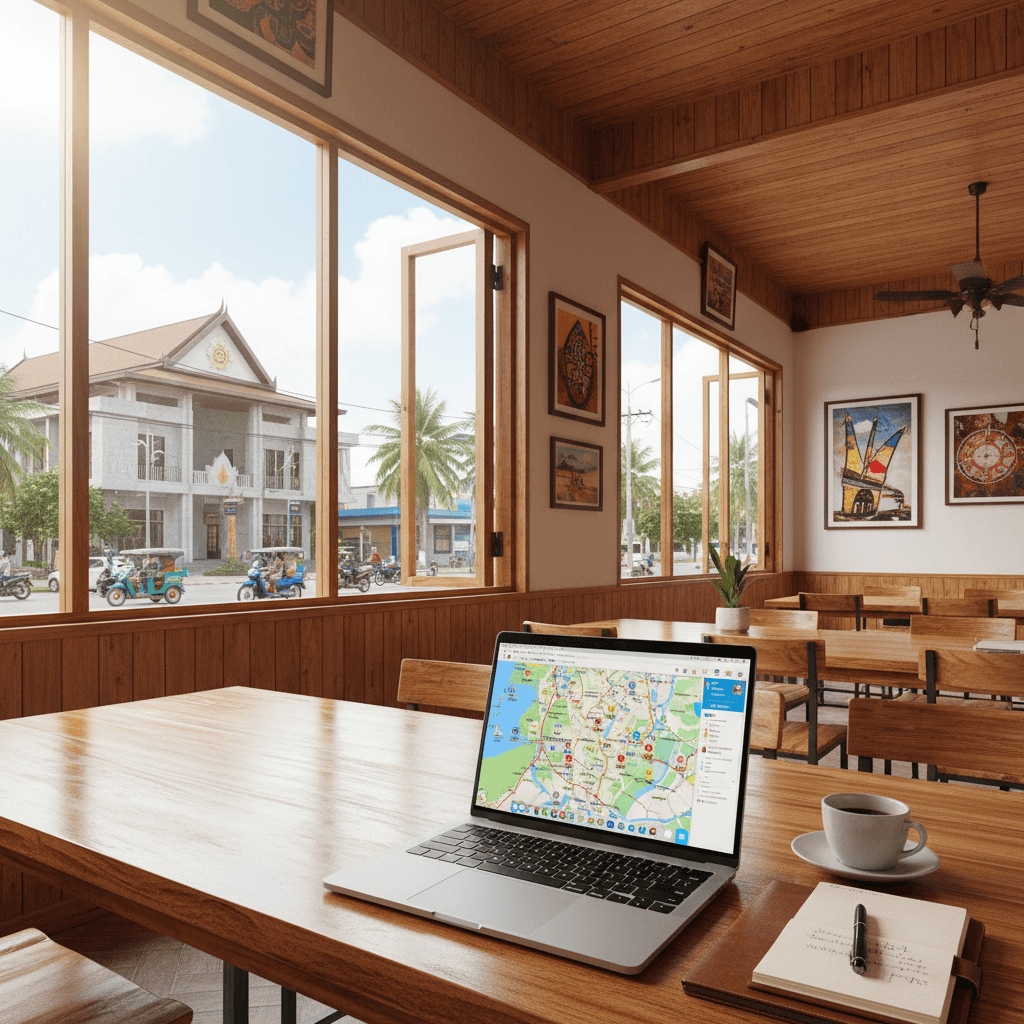
Sihanoukville
🇰🇭 Cambodia
The Gateway to the Secret Gulf
Sihanoukville occupies a strange, evolving space in the Southeast Asian nomad circuit. It isn't the manicured tech hub of Bali or the heritage-heavy streets of Chiang Mai. Instead, it's Cambodia's primary coastal gateway, a place where the salt air of the Gulf of Thailand meets a city in the middle of a massive transformation. For some, it's a launchpad to the pristine sands of Koh Rong; for others, it's a base where you can find a $300 studio and work with a view of the water.
The vibe here is unapologetically casual. You'll see expats in linen shirts and flip-flops moving between beachfront cafes and local markets. It’s a town of contrasts where high-rise developments sit alongside traditional Khmer BBQ stalls. Most people come for the islands but stay for the low cost of living and the surprisingly deep expat community that has stuck around through the city's recent face-lifts.
The Nomad Experience
Working from Sihanoukville requires a bit of a pioneer spirit. While the infrastructure is catching up, it doesn't have the "plug-and-play" feel of larger hubs. You won't find a coworking space on every corner, but the cafe culture is growing fast. Places like The Workshop Space provide a dedicated environment for deep focus, while dozens of beachside spots offer free Wi-Fi and enough caffeine to power a late-night sprint.
The emotional draw here is the proximity to the ocean. There is a specific kind of freedom in finishing a Zoom call at 5:00 PM and being on a boat or a surfboard by 5:15 PM. It’s a "work hard, play harder" environment, especially around Serendipity Beach, where the nightlife can be intense. If you prefer a slower burn, the community around Otres Beach offers a more bohemian, stripped-back lifestyle that favors sunset beers over clubbing.
What to Expect on the Ground
- The Budget: It’s incredibly affordable. You can grab a local lunch for $2 or a beachfront dinner for $5. A comfortable monthly life here usually clocks in between $800 and $1,200 depending on how much you indulge in the western-style amenities.
- The Connectivity: Internet is generally reliable at 10 Mbps, but it’s not perfect. Power outages happen occasionally. Savvy nomads always keep a Cell Card SIM loaded with data as a backup; it’s cheap and keeps you online when the cafe Wi-Fi blips.
- The Mobility: Grab is your best friend here. It’s the standard for getting around safely and cheaply. If you’re staying in Serendipity, you can walk almost everywhere, but for exploring the coast, a scooter rental for about $5 to $10 a day is the way to go.
The Local Landscape
Choosing your neighborhood defines your experience. Serendipity is the heart of the action, perfect if you want everything within a five-minute walk. Otres is the choice for those who want to wake up to the sound of waves and don't mind being a little further from the main supermarkets. Downtown is where the best deals are, offering an authentic look at Cambodian life away from the tourist gaze.
Ultimately, Sihanoukville is for the nomad who is tired of the "perfect" digital nomad bubbles. It’s a bit gritty, very beautiful in spots, and constantly changing. It’s a place where you can build a high-productivity routine during the week and disappear to a tropical island with zero Wi-Fi on the weekend to completely reset.
The Bottom Line
Living in Sihanoukville is a lesson in getting more for less. While Cambodia's coastal hub has seen massive development, it remains one of the most affordable beachside destinations in Southeast Asia. Most digital nomads find they can live comfortably here on a fraction of what they would spend in Thailand or Vietnam, provided they know where to look and how to haggle for long term stays.
Monthly Housing Costs
Your biggest expense will be rent, and prices fluctuate wildly based on how close you are to the sand. If you are on a tight budget, look toward the Downtown area where a simple studio can go for $150 to $250. Most expats prefer a bit more breathing room and better amenities, which usually means a one bedroom apartment in the $300 to $600 range near the beach, or $200 to $350 if you look further inland or around Victory Hill. If you want a luxury condo with a sea view and a pool, expect to pay $1,000 or more.
- Budget Studio: $150 to $250
- Mid Range 1BR: $300 to $600 (near beach) or $200-350 (inland/Victory Hill)
- High End Apartment: $1,000 plus
Eating and Drinking
Food is where you'll really save money. Street food is everywhere, and you can grab a solid lunch at a local market for about $2. In the evenings, the beachfront BBQs are a staple for the nomad community, usually costing around $5 for a full meal. If you prefer sitting in a proper restaurant with AC, most mid range spots charge between $4 and $8 for a main course. Upscale dining is available but will set you back $12 or more per plate.
- Street Food Meal: $1 to $3
- Mid Range Restaurant: $4 to $8
- Beachfront BBQ: $5
- Upscale Dining: $12 plus
Daily Connectivity and Transport
Since coworking spaces are still a bit limited, many nomads work from cafes like Suzy Time. A day pass or a few drinks to secure a seat usually costs between $2 and $5. It is a small price to pay for reliable Wi-Fi and unlimited coffee. For getting around, the Grab app is your best friend. A quick trip across town typically costs between $0.50 and $2. If you want more freedom, you can rent a scooter for about $5 to $10 a day, though most people find the local tuk tuks more convenient for short hops.
- Coworking Day Pass: $2 to $5
- Local Transport (Grab): $0.50 to $2
- Scooter Rental: $5 to $10 per day
- Local SIM Card: $5 to $10 per month for data
A Practical Perspective
Expats recommend keeping a buffer in your budget for "island weekends." While Sihanoukville is cheap, a trip out to Koh Rong or Koh Rong Samloem can get pricey because of boat transfers and higher island markups on food. Most people find that $1,200 to $1,500 a month allows for a very comfortable lifestyle that includes plenty of social outings, a nice apartment, and the occasional weekend getaway. If you are living like a local and sticking to the markets, you could easily get by on $800, but you will be sacrificing those western comforts that make remote work sustainable.
For the Social Nomad: Serendipity Beach
If you want to be in the thick of the action, Serendipity Beach is where you'll likely drop your bags first. It is the most convenient neighborhood in town, packed with spas, travel agencies, and shopping centers all within a five minute walk. For remote workers who crave a high energy environment and a "work hard, play hard" mentality, this is the spot.
The nightlife here is the most intense in Sihanoukville. You'll find plenty of bars and beach clubs that stay loud well into the early hours. It's the easiest place to meet other travelers, but the convenience comes with a trade-off. It can get crowded, and you'll pay a premium for the location compared to the rest of the city.
- Vibe: High energy, party-centric, and ultra-convenient.
- Rent: $200-400 for a decent studio depending on exact location.
- Pros: Everything is walkable; best concentration of cafes with Wi-Fi.
- Cons: Can be noisy at night; higher prices for food and services.
For the Focused Remote Worker: Otres Beach
Most long-term digital nomads eventually migrate toward Otres Beach. It offers a much more relaxed, coastal lifestyle that feels worlds away from the frantic pace of the main town. The atmosphere is laid-back, and the beachfront dining scene is arguably the best in the area.
You'll still find a social scene here, but it's more about sunset drinks and beachfront BBQs that cost around $5 than late-night clubbing. It is also the go-to spot for water sports like diving and snorkeling when you need to close the laptop. Just keep in mind that you're further from the main markets and banks, so you'll likely want to use the Grab app to get into town for errands.
- Vibe: Chill, bohemian, and focused on wellness and water sports.
- Rent: 1-bedroom apartments typically range from $250 to $400.
- Pros: Quieter environment for deep work; beautiful sunsets; better air quality.
- Cons: Limited access to large supermarkets; requires transport to get to central services.
For the Budget-Conscious Expat: Downtown & Central
If you're prioritizing your savings or want a more "authentic" Cambodian experience, look toward the city center. This area lacks the beachy charm of Otres or Serendipity, but it's where the locals live and shop. You'll have immediate access to the traditional markets where a fresh lunch costs about $2.
The infrastructure here is geared toward residents rather than tourists. This means fewer beachfront bars but better access to gyms, local hardware stores, and the main transport hubs. For nomads who treat their stay like a local immersion rather than a holiday, the cost savings here are significant.
- Vibe: Local, busy, and functional.
- Rent: Budget studios can be found for as little as $150 to $250.
- Pros: Lowest cost of living; authentic food; close to local amenities.
- Cons: Noisy traffic; far from the water; fewer English-speaking social hubs.
For the Weekend Escape: Koh Rong & Koh Rong Samloem
While not neighborhoods in the traditional sense, these islands are an integral part of the Sihanoukville experience. They are perfect for solo travelers or groups looking for a "digital detox" on the weekend. The white sand beaches and turquoise waters are stunning, but they are not suitable for a work week.
The internet on the islands is notoriously poor, often with no connection at all. Most nomads recommend heading out on a Friday afternoon and returning Sunday evening. Use this time to unplug, as trying to take a Zoom call from a beach bungalow here is a recipe for frustration.
- Vibe: Island paradise and total disconnection.
- Cost: Beachfront bungalows vary wildly, but plan for $20 to $60 per night.
- Pros: Incredible natural beauty; great for meeting people at communal dinners.
- Cons: Extremely unreliable Wi-Fi; limited electricity in some areas; more expensive food.
Connectivity Realities
Internet in Sihanoukville is a bit of a mixed bag. While Phnom Penh and Siem Reap offer more stability, this coastal hub keeps you connected well enough for most remote roles. Average speeds hover around 10 Mbps, which handles Zoom calls and standard uploads without much drama. You can expect a total outage every few weeks, but these are usually brief. Most nomads find that the Wi-Fi in established cafes and hotels works reliably 99% of the time.
The golden rule here is to never rely solely on hotel Wi-Fi. Grab a local SIM card the moment you land. Cell Card is the go-to provider for most expats because their mobile data is surprisingly consistent. It serves as a vital backup when a cafe's router decides to take a nap or the power flickers during a tropical storm.
Coworking Spaces and Where to Work
The dedicated coworking scene is still finding its feet compared to Bali or Chiang Mai. Options are limited, but the quality is decent for those who need a professional environment. The Workshop Space is the primary dedicated spot in town, offering a focused atmosphere that separates work from the city's party vibes.
If you're looking for a more casual setup, the cafe culture is where Sihanoukville shines. Many digital nomads spend their mornings in local coffee shops. You'll find free Wi-Fi as a standard offering, and it's perfectly acceptable to camp out for a few hours with a latte.
- The Workshop Space: Best for deep work and reliable infrastructure.
- Otres Beach Cafes: Ideal for low-intensity tasks where you want a sea breeze and a view.
The Island Trap
It is tempting to book a bungalow on Koh Rong or Koh Rong Samloem and assume you can work from the beach. Don't do it. The islands are notorious for having very poor Wi-Fi, and often, no internet connection at all. Most experienced remote workers treat the islands as a "digital detox" weekend retreat rather than a Monday-to-Friday workspace. If you have deadlines, stay on the mainland where the infrastructure exists.
Digital Nomad Logistics
The cost of staying connected is incredibly low. A daily pass at a workspace will rarely set you back more than $5, and mobile data packages are cheap enough that you won't even think twice about the cost. For transport between your accommodation and your favorite cafe, the Grab app is your best friend. It is the primary way to get around safely and avoids the hassle of negotiating prices with drivers in the heat.
Networking happens naturally at the beach bars and larger cafes. While there aren't as many formal "nomad meetups" as you'd find in larger cities, the community is tight-knit. You'll likely meet other remote workers over a $5 beachfront BBQ at Serendipity Beach or while grabbing a $2 lunch at a local market. Most nomads use online expat groups to stay informed about the best new spots with stable routers.
Keeping Your Wits About You
Sihanoukville has undergone a massive transformation recently, shifting from a backpacker trail stop to a high-rise casino hub. While the city is generally safe for nomads who stick to the beach areas like Otres or Serendipity, it requires a bit more street smarts than a sleepy town in Northern Thailand. Petty theft, specifically bag snatching from motorbikes, is the most common issue expats report. Keep your phone tucked away when walking near the road and don't drape your bag loosely over your shoulder.
The nightlife scene is intense, and most trouble happens late at night around the bar clusters. Stick to well lit areas, use Grab to get home instead of walking alone on dark stretches of beach, and keep an eye on your drink. If you are heading out to the islands like Koh Rong, remember that help is a long boat ride away, so take it easy on the jungle treks and midnight swims.
Healthcare and Medical Emergencies
For minor ailments like "Phnom Penh belly," skin infections, or flu symptoms, local pharmacies are surprisingly well stocked and many pharmacists speak enough English to help you out. However, for anything serious, the local infrastructure in Sihanoukville is still catching up to the city's rapid growth. Most long term residents recommend heading to Phnom Penh for reliable hospital care, as the capital has international standard facilities like Royal Phnom Penh Hospital.
If you have a genuine emergency, CT Clinic is often the first choice for expats in town. It is one of the more modern facilities available locally. That said, medical evacuation insurance is a non negotiable here. If you have a major accident or a serious health complication, you will likely want to be stabilized and then flown to Bangkok or Singapore for surgery or long term recovery.
Staying Healthy on the Coast
The tropical sun here is brutal, especially when reflected off the white sands of Otres Beach. Heat exhaustion is a frequent complaint for newcomers trying to maintain a "normal" work schedule while acclimating. Drink plenty of bottled water, as tap water is strictly off limits for consumption. You can find 1.5L bottles for about $0.50 at most local marts.
- Emergency Number: Dial 119 for police or 117 for fire, though response times can be slow.
- Vaccinations: Most travelers ensure they are up to date on Hepatitis A, B, and Typhoid.
- Mosquitoes: Dengue fever is a reality in coastal Cambodia. Use repellent during the "golden hours" of dusk and dawn when mosquitoes are most active.
- Insurance: Ensure your policy specifically covers motorbike accidents, as many providers void coverage if you don't have a valid local or international license.
Prescriptions and Pharmacies
You will find plenty of pharmacies in the downtown area and near the Golden Lions roundabout. Prices are low, and many medications that require a prescription in the West are available over the counter here. Always check the expiration dates on the packaging, as heat and humidity can degrade poorly stored stock. For specific chronic medications, it is best to bring a three month supply with you, as specific brands can be hit or miss in the local supply chain.
Getting Around Town
Navigating Sihanoukville has changed quite a bit recently. While the city center is becoming more paved and structured, the coastal charm still dictates how people move from beach to beach. For most daily trips, you can expect to pay anywhere from $0.50 to $2, making it one of the most affordable cities in the region for local transit.
Ride-Hailing and Apps
If you want to avoid the headache of haggling over prices, download Grab the moment you land. It is the gold standard here for reliability and safety. You can book everything from a standard car to the ubiquitous Khmer tuk-tuks through the app. Most nomads prefer the app because the pricing is transparent and the drivers use GPS, which saves you the trouble of explaining directions to a specific cafe or hidden guesthouse.
- Grab: Best for transparent pricing and safety.
- Local Tuk-Tuks: Fun for short beach hops, but always agree on the price before you hop in if you aren't using an app.
- PassApp: Another popular local alternative to Grab that often has a high density of drivers in the downtown area.
Scooter and Bike Rentals
For those living in Otres Beach or planning a longer stay, renting your own wheels is the way to go. It gives you the freedom to scout out quiet work spots without waiting for a ride. Expect to pay between $5 and $10 per day for a decent scooter. If you are sticking around for a month or more, you can usually negotiate a monthly rate that brings the daily cost down significantly. Just keep in mind that traffic can be unpredictable, so wear a helmet and stay alert.
Walkability
Sihanoukville isn't exactly a walkable city in its entirety, but specific pockets are very pedestrian-friendly. The Serendipity Beach area is the most convenient for those who want to live car-free. You will find spas, bars, and coworking spots like The Workshop Space all within a short stroll of each other. Conversely, if you are staying in Otres, you will likely want a bike or an app-based ride to get into the main town for banking or major shopping trips.
Reaching the Islands
Since Sihanoukville is the primary gateway to the islands, you will eventually find yourself at the pier. Fast ferries run regularly to Koh Rong and Koh Rong Samloem. While these islands are perfect for a weekend escape, most digital nomads treat them as "off-the-grid" destinations. The WiFi is notoriously spotty or non-existent there, so finish your deadlines before you board the boat.
Key Transit Costs
- Short Tuk-Tuk trip: $1 to $2
- Daily Scooter Rental: $5 to $10
- Monthly Scooter Rental: $80 to $120
- Ferry to Koh Rong: $14-30+ one-way, $28-60+ round trip depending on operator and season
For airport transfers, remember that the city is about a 3-hour drive from other major hubs like Phnom Penh. If you are flying into Sihanoukville International Airport, Grab is still your best bet for a fair price on the 20-kilometer trek into the city center.
The Language Landscape
While Khmer is the national language of Cambodia, Sihanoukville has a distinct linguistic profile due to its status as a major port and tourism hub. You will find that English is widely understood in the coastal areas, especially around Serendipity Beach and the Otres area. Most hospitality staff, tour operators, and younger locals speak enough English to handle daily transactions and casual conversation without much trouble.
The city has seen a massive influx of international investment over the last few years, which has shifted the local dialect in certain quarters. You will notice a significant presence of Mandarin Chinese on signage and in many businesses downtown. In the more nomad focused beach pockets, however, English remains the primary bridge between expats and locals.
Communication for Remote Work
If you are planning to get work done, do not rely solely on your hotel Wi-Fi. While many cafes and hotels offer decent speeds, the infrastructure is still catching up to places like Phnom Penh. Most nomads here use their phones as a primary or backup hotspot to stay consistent. Cell Card is the go to provider for most expats; their mobile data is surprisingly reliable and keeps you connected even when the local power grid or a cafe router decides to take a break.
Pick up a SIM card as soon as you land or arrive in town. It is a cheap insurance policy for your productivity. You can usually get a decent data package for under $10 that will last you most of the month. Having a local number also makes using Grab much easier, as drivers might need to call you to confirm your pickup spot in the busier parts of town.
Navigating Daily Interactions
Even though you can get by with English, learning a few Khmer basics goes a long way in building rapport with the locals. It shows you are not just passing through and respect the culture. Here are a few essentials to keep in your back pocket:
- Choum Reap Sour: A formal "Hello" (accompanied by a small bow with hands together, known as the Sampeah).
- Sues-dei: A more casual "Hi" for friends and peers.
- Or-kun: "Thank you." This is the most important word you will learn.
- Chhnang: "Delicious." Say this to a street food vendor and watch them light up.
- Bo-man: "How much?" Useful for the local markets where prices are not always posted.
For more complex interactions, especially when dealing with landlords or specific mechanical issues, Google Translate is your best friend. The Khmer script is beautiful but difficult for Westerners to read, so the camera translation feature is a lifesaver when looking at menus or official notices that do not have English subtitles.
Digital Communication and Apps
In Sihanoukville, Telegram is the king of communication. Almost every business, from your local laundry service to the coworking space manager, uses it for quick updates and customer service. If you are joining local expat or nomad groups to find meetups, you will likely find them on Telegram or Facebook Groups.
When it comes to getting around or ordering food, Grab is the essential app. It removes the language barrier entirely for transportation. You put in your destination, see the price upfront, and the driver follows the GPS. It saves you from the "lost in translation" moments that often happen in the back of a tuk-tuk when you are trying to find a specific tucked away cafe.
Seasonal Breakdown
Living and working in Sihanoukville means planning your life around the monsoon cycle. The year is split into two distinct periods: the dry season and the rainy season. Most nomads find the sweet spot between November and February, when the weather is consistently sunny and the humidity hasn't reached its peak yet.
During these peak months, temperatures hover around 25°C to 30°C (77°F to 86°F). It is the perfect time for those staying in Otres Beach to enjoy water sports or for digital nomads to take the ferry to the islands for a weekend offline. The downside is that prices for short term rentals can tick upward, and popular spots around Serendipity Beach get crowded with travelers.
The Heat and the Rain
From March to May, the heat intensifies. Temperatures often climb above 35°C (95°F), and the humidity makes it feel even hotter. If you are working from a cafe, you will want to make sure they have reliable air conditioning, as a simple ceiling fan won't cut it during the midday slump.
The rainy season typically kicks off in June and lasts through October. While you can find great deals on accommodation during this time, be prepared for heavy downpours. These usually happen in short, intense bursts in the afternoon, but they can occasionally last for days. For remote workers, the biggest challenge during the monsoon is the increased frequency of power outages and internet flickers, which expats say occur roughly once every few weeks.
Best Time for Digital Nomads
If you want the best balance of weather and value, aim for the shoulder months of late October or early November. You might catch the tail end of the rains, but the dust is settled, the landscape is lush and green, and the high season crowds haven't fully descended. This is also a great time to secure a long term lease at a better rate before the December rush.
- Peak Season (November to February): Best weather, highest prices, most social events.
- Hot Season (March to May): Very high temperatures, good for beach lovers who don't mind the sweat.
- Rainy Season (June to October): Quietest time, lowest prices, but potential for travel disruptions and tech issues.
What to Pack
Since the vibe is casual and beach oriented, you will spend most of your time in light, breathable fabrics. Even in the "cool" months, it is never actually cold. A light rain jacket is a must if you are visiting during the monsoon, especially if you plan on riding a scooter between Otres and the main town. Most importantly, bring a reliable power bank and a Cell Card SIM card to use as a mobile hotspot; having a backup data source is the best way to handle the occasional weather related internet drops.
Connectivity and Tech Setup
Staying online in Sihanoukville requires a bit of a backup plan. While the average speed hovers around 10 Mbps, outages happen every few weeks. Most nomads find that cafes and hotels are reliable 99% of the time, but you shouldn't rely solely on hotel Wi-Fi for high stakes meetings.
Your first move should be picking up a local SIM card. Cellcard is the go-to for most expats because their mobile data is consistent and serves as a perfect hotspot when the local fiber line acts up. If you need a dedicated desk, The Workshop Space is the primary spot for a professional environment. For a more casual setup, the city has a growing cafe culture where you can work for the price of a coffee.
A word of warning: if you head out to Koh Rong or Koh Rong Samloem for the weekend, do not expect to get any work done. Internet on the islands is notoriously poor or non-existent. Treat those trips as a total digital detox.
Money and Budgeting
Sihanoukville offers a high quality of life for a fraction of Western costs. You can comfortably live here on a mid-range budget of $800 to $1,200 per month, though budget travelers can scrape by on much less if they stick to local spots.
- Studio Apartments: Expect to pay $150 to $250 for a basic budget spot, or $300 to $500 for something modern in a good area.
- Daily Food: Street food meals at local markets cost about $2. A nightly beachfront BBQ usually runs around $5, while a meal at a mid-range restaurant is typically $4 to $8.
- Coworking: Day passes are incredibly cheap, usually between $2 and $5, and some places even include unlimited drinks with your entry.
Getting Around the City
The easiest way to navigate is by using Grab. It works just like it does in the rest of Southeast Asia and is the safest way to ensure you aren't overcharged. Rides usually cost between $0.50 and $2 for most trips within the city. You can also use the app for food delivery when you're deep in a work session.
If you prefer more freedom, scooter rentals are available for $5 to $10 per day. The Serendipity Beach area is the most walkable part of town, where you can reach bars, pharmacies, and shops on foot. For longer trips, remember that the drive to other major hubs like Phnom Penh takes about 3 hours.
Social Life and Networking
The social scene is heavily centered around the water. Most people meet at beachfront bars or during water sports like diving and snorkeling. Otres Beach attracts a more relaxed, long-term nomad crowd, while Serendipity is the heart of the party scene.
To find specific meetups, check nomad groups online. Many local events are posted on social media platforms to help remote workers connect. If you're looking for a quiet place to network during the day, the local coworking spaces and work-friendly cafes are your best bet for meeting like-minded expats.
Need visa and immigration info for Cambodia?
🇰🇭 View Cambodia Country GuideHidden Gem
Worth the effort