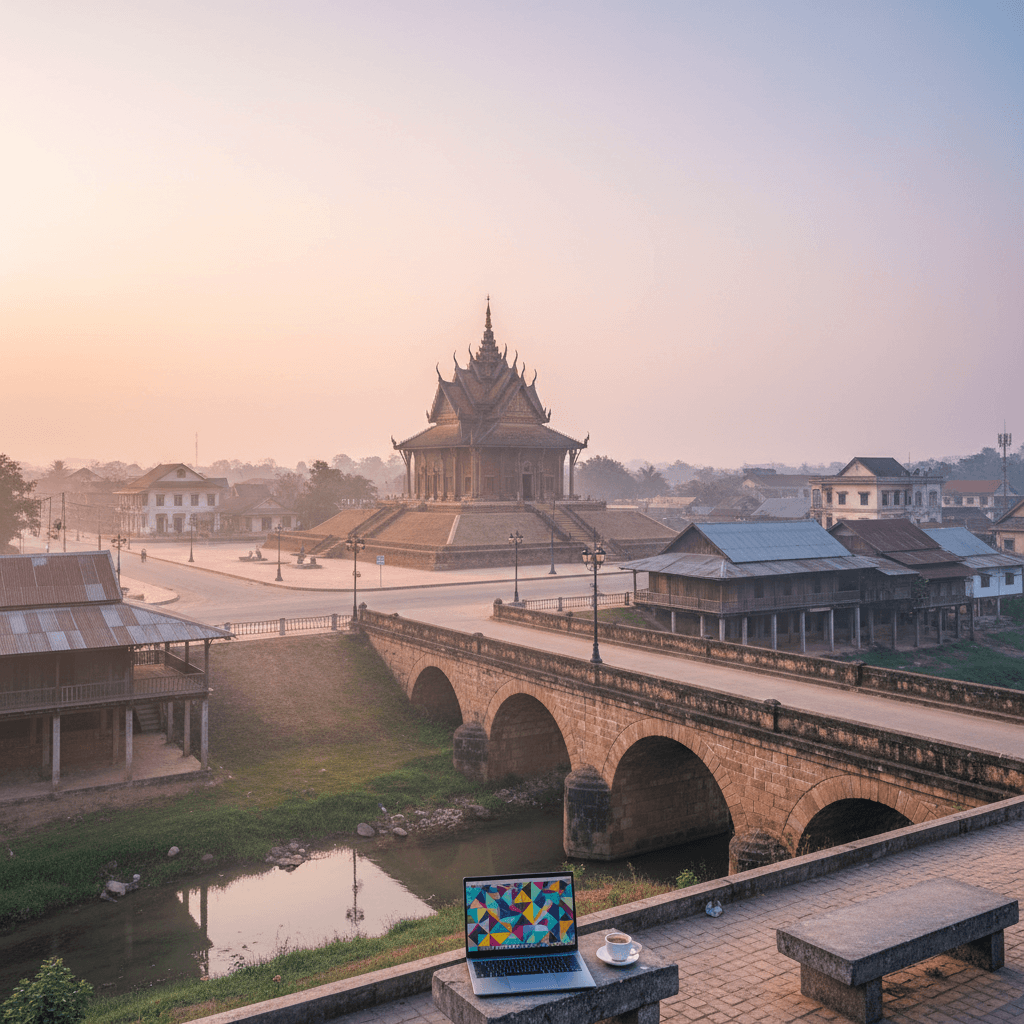
Sen Monorom
🇰🇭 Cambodia
The Highland Escape
Sen Monorom feels worlds away from the humid, flat plains of Phnom Penh or the temple crowds of Siem Reap. Perched in the rolling hills of Mondulkiri, the vibe here is distinctly cool and rural. You won't find a skyline; instead, the horizon is dominated by pine trees, red dirt roads, and the occasional indigenous Bunong community member heading to the central market. It is a place for the nomad who wants to trade a high speed internet connection for a hammock and a view of the Sea Forest.
The town itself is small and unpretentious. Life revolves around the central market, where the community gathers for Khmer coffee and fresh produce. It is not a "nomad hub" in the traditional sense. You won't find sleek glass offices or specialty espresso bars every ten feet. Instead, you get a raw, authentic slice of highland life where the air is crisp enough that you might actually need a sweater in the evenings between December and February.
Most travelers come here for the ethical elephant projects, like the E.L.I.E. NGO, or the massive waterfalls hidden in the jungle. Nomads who choose to stay longer usually do so because they are looking for a "digital detox" with just enough connectivity to check emails. It is a slow, quiet existence that rewards those who enjoy hiking and local culture over late night parties or networking events.
The Cost of Living
Living here is incredibly affordable, even by Cambodian standards. Because it is a rural province, your dollars go much further, though you'll sacrifice some modern comforts. Most nomads find that a budget of $900 to $1,500 provides a very comfortable lifestyle, including a private 1BR apartment and plenty of excursions into the surrounding forests.
- Budget ($600 to $900): Staying in a local guesthouse for around $150 a month, eating primarily at the market or street stalls for $2 to $4 per meal, and getting around on foot or via the occasional tuk-tuk.
- Mid-range ($900 to $1,500): A decent 1BR in the town center for $300, a mix of local and expat-friendly cafes for meals (roughly $5 to $8), and renting a scooter for $5 to $10 a day to explore the province.
- Comfortable ($1,500+): Staying in a premium eco-lodge on the outskirts for $500+, private transport for all trips, and dining at the best available lodges every night.
The Infrastructure Reality
Let's be honest about the work setup: it's basic. There are no dedicated coworking spaces in Sen Monorom. You will be working from your guesthouse or a handful of quiet cafes near the market. WiFi is often spotty and rarely exceeds 10 to 20Mbps. Most expats recommend picking up a Cellcard SIM with an unlimited data plan for $10 to $20 to use as a hotspot when the local routers inevitably fail.
The town also lacks ride-hailing apps like Grab or PassApp. You'll need to negotiate with tuk-tuk drivers directly, usually paying $3 to $5 for a short trip. Walking is possible in the center, but be careful after dark. The lack of sidewalks and the presence of territorial stray dogs make night walks a bit of a challenge. Most people prefer to be tucked in by 9:00 PM anyway, as the town goes quiet very early.
Who It Is For
Sen Monorom is for the nomad who has already seen the big cities and wants to disappear into nature for a few weeks. It is for the writer who needs silence, the developer who can work offline for stretches, or the traveler who wants to support indigenous ecotourism. If you require lightning-fast fiber optics and a bustling social scene, you will likely find it frustrating. But if you want to wake up to the sound of the jungle and spend your weekends at a waterfall for a $2.50 entry fee, this is your spot.
The Price of Highland Serenity
Living in Sen Monorom is significantly cheaper than the coastal hubs or the capital, but it comes with a trade-off. Since the town is tucked away in the highlands, many goods are trucked in, keeping prices slightly higher than you might expect for such a rural outpost. Still, a solo nomad can live comfortably here for $900 to $1,500 per month without much effort.
Most of your budget will go toward housing and transport, especially if you choose a lodge in the hills rather than a guesthouse in the center. Because there are no ride-hailing apps like Grab or PassApp, you'll find yourself negotiating with tuk-tuk drivers frequently, which can add up if you aren't careful.
Monthly Budget Tiers
- Budget ($600 to $900): This lifestyle involves staying in a local guesthouse or a shared room for around $150. You'll eat primarily at the central market or street stalls, walk most places, and keep your excursions to the free viewpoints.
- Mid-range ($900 to $1,500): This is the sweet spot for most nomads. You can snag a decent one-bedroom apartment or a long-term hotel rate in the center for $300 to $400. This allows for a mix of local Khmer dishes and the occasional western meal, plus enough leftover for guided tours to the elephant sanctuaries.
- Comfortable ($1,500+): If you prefer the eco-lodge lifestyle on the outskirts of town, expect to pay $500 to $600 for rent. You'll likely rely on private transport or daily tuk-tuks, which can cost $200 a month, and you'll dine at the better-rated lodge restaurants.
Daily Expenses and Local Prices
Daily life in Mondulkiri is affordable if you stick to local habits. A bowl of noodles or a rice dish at the market will set you back $2 to $4. If you're craving something more familiar, mid-range cafes charge between $5 and $8 for a meal. Upscale dining is almost non-existent, though some high-end eco-lodges offer multi-course dinners for $10 or more.
Transport is the one area where you might feel a bit of a squeeze. A single tuk-tuk ride around town generally costs $3 to $5. Many expats and long-termers eventually rent a scooter for about $5 to $10 per day to save money and gain the freedom to explore the surrounding waterfalls at their own pace.
Logistics and Connectivity
Don't count on high-speed fiber here. Most nomads rely on a Cellcard SIM for a mobile hotspot, which costs about $10 to $20 for a month of data. It's a necessary backup because guesthouse WiFi is notoriously spotty, especially during the rainy season. Since there are no dedicated coworking spaces, you'll be working from your porch or a quiet corner of a local cafe.
Healthcare is another hidden cost to consider. While there are basic pharmacies in the center for minor ailments, anything serious requires a 5 to 6 hour bus ride to Phnom Penh. Most travelers recommend keeping an emergency fund specifically for private transport to the capital if a medical issue arises.
Spending Tips for Nomads
- Shop at the central market early in the morning for the freshest produce and lowest prices on fruit and snacks.
- Pay in Cambodian Riel for small purchases to get a better exchange rate than using US Dollars for everything.
- Join local Facebook groups to find long-term rental deals that aren't listed on major booking sites.
- Budget an extra $50 to $100 per month for national park entry fees and community-led tours, as these are the main reason to be in the region.
Nomads and Remote Workers
For those of us trying to clock hours while enjoying the Mondulkiri highlands, the City Center is the only practical choice. It is a compact grid surrounding the central market where the town's limited infrastructure is most concentrated. You'll want to stay within a five minute walk of the main roundabout to ensure you are near the few cafes that offer decent seating and "workable" WiFi.
- Rent: $200 to $400 for a basic studio or a room in a guesthouse.
- Vibe: Functional and dusty, but social. You'll be near the tour operators and the few spots where English is commonly spoken.
- The Trade-off: It is not particularly scenic. You trade the rolling green hills for proximity to power outlets and the occasional 10Mbps connection. Most nomads treat the center as a staging ground, finishing their deep work before heading into the hills to unplug.
Expats and Long-Term Residents
Expats who have settled here often migrate toward the Hillside Outskirts, specifically the elevated areas just east and south of the town center. These spots offer the cooler breezes and panoramic views that make Sen Monorom famous. Life here is much quieter, though you'll definitely need your own moto or a reliable tuk-tuk driver's number, as there are no sidewalks and the walk into town involves steep, unlit inclines.
- Rent: $300 to $500 for small houses or premium bungalows with better construction.
- Vibe: Peaceful and rural. You'll wake up to the sound of roosters and the mist rolling over the valleys.
- The Trade-off: Transportation costs add up. A round trip into town for groceries or dinner usually runs about $6 to $10 total. You also have to deal with territorial stray dogs if you try to walk home after sunset.
Families
Families generally prefer the Eco-Lodge Zones located 2 to 5 kilometers outside the main hub. These areas host established lodges like those near the E.L.I.E. Elephant Valley Project office or the road toward Phnom DoKramom. These properties offer more space for kids to run around and are far removed from the traffic and construction noise of the center.
- Rent: $500 to $800 for larger family bungalows or long-stay lodge rates.
- Vibe: Safe, enclosed, and nature-focused. It feels more like a retreat than a city.
- The Trade-off: Isolation. There are no international schools or specialized pediatric care in the province. Most families here are on extended vacations or working in the NGO sector, relying on the lodges for meals and activities.
Solo Travelers
If you're traveling solo, stick to the Market District. This is the heart of the action where the bus from Phnom Penh drops you off. Staying here makes it easy to join group tours to the Bousra Waterfall or elephant sanctuaries without paying for private transport. It is the easiest place to meet other travelers over a $2 plate of Khmer ginger chicken or a $1 Angkor beer.
- Rent: $10 to $20 per night for a decent guesthouse room.
- Vibe: High energy during the day and very quiet by 9:00 PM.
- The Trade-off: The aesthetic is lacking. The center can feel a bit gritty compared to the "Sea Forest" views just a few miles away, but for ease of logistics, it can't be beat.
The Connectivity Reality
If you're planning to grind through a high-bandwidth project or host back-to-back Zoom calls, Sen Monorom will test your patience. This is a rural highland town where the infrastructure hasn't quite caught up to its growing popularity. Most travelers find the local Wi-Fi speeds hover between 10 to 20 Mbps on a good day, but it's prone to frequent drops, especially during the heavy rains of the monsoon season.
The golden rule here is to treat Sen Monorom as a place for deep work or "unplugged" productivity. You won't find the fiber-optic reliability of Phnom Penh. Most nomads recommend finishing your heavy uploads or critical client meetings before you head up into the hills of Mondulkiri.
Coworking and Cafe Culture
There are no dedicated coworking spaces in Sen Monorom. You won't find anything like the structured environments of Suzy Time Café in the capital. Instead, your "office" will likely be your guesthouse porch or a quiet corner in a local eatery near the central market.
Working from cafes is possible, but it's an informal affair. The local cafe culture isn't built around digital nomads, so don't expect ergonomic chairs or an abundance of power outlets. A few spots worth checking out include:
- Mondulkiri Pizza: Often cited by travelers as a reliable place to sit with a laptop while grabbing a meal for $5 to $8.
- Hefalump Cafe: A social hub that occasionally hosts travelers looking to catch up on emails between elephant sanctuary tours.
Mobile Data: Your Lifeline
Because hotel Wi-Fi is so hit-or-miss, a solid local SIM card is mandatory. Don't rely on your accommodation's router. Expats and frequent visitors consistently recommend Cellcard or Smart for the best coverage in the highlands.
- Cost: You can pick up a SIM with an unlimited data package for roughly $10 to $20 a month.
- Coverage: Signal is generally strong in the town center, but it drops off rapidly once you head toward the eco-lodges or the Sea Forest viewpoint.
- Hotspotting: Most nomads find that tethering to their phone is actually faster and more stable than using the shared Wi-Fi at budget guesthouses.
Practical Tips for Remote Work
Power outages aren't uncommon in this part of Cambodia. If you have a deadline, keep your laptop and power banks fully charged at all times. If you're staying in the more scenic eco-lodges outside of town, be aware that you're paying for the view, not the bandwidth. These spots are often beautiful but digitally isolated.
For those who absolutely need a professional setup, your best bet is to stay in the town center where the signal is strongest. If you need a change of pace, the local market area has the highest density of shops and small cafes, though the lack of sidewalks and the presence of territorial stray dogs can make wandering with expensive gear a bit of a hassle after dark.
Ultimately, Sen Monorom is a place to clear your head rather than clear your inbox. Plan your workload accordingly, and you'll find the mountain air does wonders for your creativity, even if the download speeds don't.
Safety in the Highlands
Sen Monorom is a breath of fresh air for those used to the frantic energy of Phnom Penh. It’s a quiet, slow-paced town where serious crime is nearly non-existent. You won't find the same level of petty theft or phone snatching that plagues the larger cities, but the rural setting brings its own set of minor hazards.
The biggest safety concern for nomads isn't people; it's the streets themselves. The town lacks proper sidewalks, and the roads are often unlit once you leave the central market area. Local travelers frequently warn against walking back to your guesthouse after dark. This isn't because of muggings, but because of territorial stray dogs that can get aggressive at night. If you’re staying at an eco-lodge in the hills, always arrange a $3 to $5 tuk-tuk ride back rather than hoofing it through the dark.
Traffic is generally light, but the mix of motorbikes and heavy trucks on winding mountain roads means you need to be alert if you're renting a scooter. If you aren't an experienced rider, the hilly terrain and occasional potholes make Sen Monorom a tough place to learn. Stick to the local drivers who know the curves of the Mondulkiri landscape.
Healthcare Reality Check
Healthcare in Sen Monorom is basic at best. You'll find a few pharmacies in the center that stock essentials like antibiotics, painkillers, and basic first-aid supplies. There are small clinics for minor ailments, but they aren't equipped for anything complex. If you have a pre-existing condition that requires specialized care, this isn't the place to hunker down for long.
For anything serious, from a broken bone to a severe tropical infection, you’ll need to head to Phnom Penh. That’s a 5 to 6 hour bus or private car ride away. Because of this gap, nomads usually follow these health precautions:
- Travel Insurance: Make sure your policy covers medical evacuation. If you need a high-end hospital, you’re going to the capital or even Bangkok.
- First Aid Kit: Pack a robust personal kit with antiseptic, bandages, and rehydration salts. Pharmacies here are fine for the basics, but specific brands or high-quality medical tape can be hard to find.
- Vaccinations: Since you're in a forested, rural area, talk to a travel clinic about Japanese Encephalitis and Rabies before you arrive. Malaria is a low risk but present in the deep jungle, so most expats stick to high-strength DEET and long sleeves at dusk.
Emergency Contacts and Logistics
Don't expect a Western-style emergency response system. There is no local equivalent to 911 that will dispatch an ambulance with English-speaking paramedics. In an emergency, your best bet is often your guesthouse owner or a trusted tuk-tuk driver who can get you to the nearest clinic quickly.
- Local Clinics: Located near the central market; suitable for stitches or stomach bugs.
- Pharmacies: Clustered around the main roundabout. Check expiration dates on packaging before buying.
- Major Medical: Calmette Hospital or Royal Phnom Penh Hospital (both in the capital).
Most nomads find that as long as they stay off the roads at night and keep a "Phnom Penh fund" ready for a quick exit if they get sick, Sen Monorom is a peaceful and low-stress environment. It’s a place to decompress, not a place to test the limits of the local medical infrastructure.
The Logistics of Getting Around
Sen Monorom is a small, dusty town where the pace of life matches the slow roll of the surrounding hills. Unlike the frantic streets of Phnom Penh, you won't find a gridlock of cars here. Instead, you'll be sharing the road with motorbikes, the occasional cattle crossing, and a handful of tour vans. The town center is compact enough to navigate on foot, but the lack of sidewalks and the presence of territorial stray dogs make walking a bit of a chore, especially after the sun goes down.
If you're staying in the center near the market, you can walk to most local eateries and tour offices. However, if you've booked one of the scenic eco-lodges in the hills, you'll need a plan for getting back and forth. Most nomads find that while the center is convenient, the real magic of Mondulkiri requires some wheels.
Tuk-Tuks and Local Transport
Don't bother opening Grab or PassApp when you land in town; ride-hailing apps haven't made it to this corner of Cambodia yet. You'll rely on traditional tuk-tuks for most short trips. A standard ride within the town limits usually costs between $3 and $5. If you're staying at a lodge outside the main hub, expect to pay on the higher end of that scale. It's best to grab the phone number of a driver you like or ask your guesthouse to arrange a pickup, as finding a random tuk-tuk on a quiet backroad is nearly impossible.
Scooter and Bike Rentals
For those staying more than a few days, renting your own wheels is the gold standard for independence. Most guesthouses and a few shops near the central market rent out semi-automatic and automatic scooters. Prices typically range from $5 to $10 per day depending on the bike's condition and your bargaining skills.
- Fuel: You can buy petrol at formal stations or from the ubiquitous glass bottles sold at roadside shacks.
- Road Conditions: The main roads are paved but can be slick during the rainy season. Red dirt tracks lead to the waterfalls and viewpoints; these turn into thick mud from May to October, so only attempt them if you're an experienced rider.
- Bicycles: Some lodges offer mountain bikes for rent, but keep in mind that "rolling hills" is a literal description of the geography. You'll need decent fitness to tackle the inclines in the midday heat.
Arriving and Departing
There is no functional airport in Sen Monorom, so your entry point will almost certainly be by road. Most travelers arrive via minivan or public bus from Phnom Penh or Siem Reap. The journey from Phnom Penh takes about 6 to 8 hours on increasingly well-paved roads, while the trip from Siem Reap can take 9 to 10 hours.
Tickets usually cost between $12 and $20. Companies like Kim Seng Express or Virak Buntham are the standard choices. Once the bus drops you at their local depot, there will usually be a swarm of tuk-tuk drivers waiting to take you to your accommodation for a few dollars. If you're heading to a remote sanctuary or a specific NGO project like the Elephant Valley Project, they often coordinate their own private shuttles from a central meeting point in town.
Navigating to Key Sites
Most of the big draws, like the Sea Forest viewpoint or Bousra Waterfall, are located well outside the town center. While you can take a tuk-tuk to these spots, it's often more cost-effective to hire a driver for a half-day or full-day excursion. A private day hire for a tuk-tuk generally runs between $15 and $25, giving you the freedom to linger at the viewpoints without worrying about how to get back. For the more distant waterfalls, a motorbike is faster and more practical if you're comfortable navigating the terrain.
The Linguistic Landscape
In the highlands of Mondulkiri, communication takes a different shape than in the tourist corridors of Siem Reap or the business districts of Phnom Penh. While Khmer is the national language and the primary tongue for trade in the central market, Sen Monorom is the heart of the Bunong community. This indigenous group has its own distinct language and traditions, adding a layer of cultural depth you won't find in the lowlands.
English proficiency is modest here. You'll find a comfortable level of English among tour operators, elephant sanctuary guides, and the staff at popular guesthouses. However, once you step into the local market or visit smaller family run eateries, the language barrier becomes more evident. Most nomads find that a friendly smile and a few Khmer phrases go a long way in bridging the gap.
Essential Khmer for Daily Life
Learning the basics isn't just about utility; it's a sign of respect that locals deeply appreciate. Since Sen Monorom is a tight knit community, being the "foreigner who tries" will often get you better service and warmer smiles. Here are the phrases you'll use most often:
- Susadei: Hello (informal)
- Choum Reap Sour: Hello (formal, used with elders)
- Aw kuhn: Thank you
- Chhnang: Delicious (perfect for the market stalls)
- Bo man?: How much?
- Ot tay, aw kuhn: No, thank you
If you're heading out to the villages or working with conservation NGOs, you might hear Bunong being spoken. It's an oral language with a very different phonetic structure than Khmer. While you aren't expected to speak it, learning "M'leh" (Hello/How are you) will instantly endear you to the local community.
Digital Tools and Translation
Because the internet can be spotty in the hills, don't rely on a live connection for translation. Expats recommend downloading the Khmer offline pack on Google Translate before you leave Phnom Penh. The visual translation feature is particularly helpful for reading basic signs or menus that don't have English subtitles.
Since ride hailing apps like Grab or PassApp haven't reached this far east yet, you'll be negotiating with tuk-tuk drivers directly. Most drivers in the town center understand basic numbers in English, but having a calculator app or your fingers ready to clarify $3 to $5 fares will prevent any confusion.
Communication for Remote Work
For nomads trying to maintain a professional presence, communication challenges are usually more technical than linguistic. The lack of reliable high speed fiber means you should have your Cellcard or Smart SIM card topped up with plenty of data. A $10 to $20 plan usually provides enough of a safety net for hotspots when guesthouse WiFi fails.
Travelers often say that Sen Monorom is a place to "unplug" for a reason. If you have important client calls, it's best to schedule them during the day when the town's infrastructure is most stable. By evening, the pace slows down, and the town shifts into a quiet, offline mode that favors face to face interaction over digital pings.
Social Etiquette
Communication in Cambodia is governed by "saving face." Even if there's a misunderstanding with a bill or a booking, keeping your voice low and staying patient is the only way to get a good result. Loud or aggressive communication is seen as a major social failure. In a small town like Sen Monorom, where everyone knows everyone, maintaining a "cool heart" (as the locals say) ensures you'll always be welcome back.
The Highland Microclimate
Forget the oppressive humidity of Phnom Penh or the dusty heat of Siem Reap. Sen Monorom sits at an elevation of about 700 meters, giving it a distinct highland climate that feels more like eternal spring than tropical Southeast Asia. While the rest of Cambodia swelters, you'll likely find yourself reaching for a light jacket or a hoodie once the sun goes down.
Temperatures typically fluctuate between 15°C (59°F) and 30°C (86°F) throughout the year. The air is crisp, the breeze is constant, and the rolling hills provide a refreshing break for nomads who need to clear their heads after a long week of screen time. It is one of the few places in the country where you can enjoy a morning coffee outdoors without immediately breaking a sweat.
When to Go: The Golden Window
The absolute best time to visit is from November to February. During these months, the rains have subsided, leaving the landscape incredibly lush and neon green. The "cool season" peaks in December and January, where nighttime temperatures can occasionally dip into the low teens. It is perfect for trekking to see elephant sanctuaries like the E.L.I.E. project or hiking up to the Sea Forest viewpoint.
The "shoulder" months of March and April bring the heat. While still cooler than the lowlands, this is the driest period. The waterfalls might be less impressive, and the grass on the hills turns a dusty gold. However, it is a great time for photography if you prefer clear blue skies and easy motorbike travel on the rural backroads.
The Rainy Season Reality
From May to October, the monsoon takes over. Rainfall in Mondulkiri is heavy and persistent. While the mist clinging to the pine forests looks moody and beautiful, the practicalities for a remote worker are tough. Landslides can occasionally block the main road from Phnom Penh, and power outages become more frequent during heavy storms.
The peak of the wet season in July, August, and September makes the red clay roads incredibly slick and muddy. If you're staying in an eco-lodge on the outskirts of town, getting into the center for supplies becomes a messy adventure. Most travelers suggest avoiding this window if you plan on doing a lot of outdoor exploration, though the waterfalls are at their most thunderous and spectacular during these months.
Seasonality at a Glance
- Peak Season (November – February): Clear skies, cool nights, and perfect trekking conditions. Expect slightly higher prices for popular lodges and more weekend visitors from the capital.
- Hot & Dry Season (March – April): Temperatures rise toward 30°C. Dust becomes an issue on unpaved roads, but travel is easy and predictable.
- Wet Season (May – October): Lush scenery but difficult logistics. Expect daily downpours, muddy trails, and potential internet flickers during storms.
For a digital nomad, the sweet spot is late October or early November. You'll catch the tail end of the rains so the waterfalls are full, but you'll beat the primary tourist rush and enjoy the most stable weather for getting work done between adventures.
Connectivity and the Digital Setup
If your job involves heavy video editing or constant Zoom calls, Sen Monorom will test your patience. The town is a classic "work-cation" spot where you finish your tasks before arriving or stick to basic emails. Most guesthouses offer WiFi, but speeds often hover between 10 to 20Mbps and can drop out during heavy rain.
There are no dedicated coworking spaces here. You'll be working from your accommodation or local cafes near the central market. Since there isn't a established nomad scene, don't expect ergonomic chairs or silent zones. For a reliable backup, pick up a Cellcard SIM card. A monthly unlimited data plan usually runs between $10 and $20. It's the most reliable way to stay tethered when the local router decides to take a nap.
Getting Around Town
The town center is small enough to navigate on foot, but it's not exactly pedestrian-friendly. There are almost no sidewalks, and traffic can be unpredictable. Most travelers find that walking is fine during the day, but you should be cautious at night because of territorial stray dogs and unlit stretches of road.
- Tuk-tuks: Expect to pay $3 to $5 for a short trip. Since Grab and PassApp haven't reached this far into the highlands yet, you'll need to negotiate prices or have your lodge arrange a driver.
- Scooter Rentals: You can rent a semi-automatic or automatic bike for $5 to $10 per day. It's the best way to reach the Sea Forest or distant waterfalls, but the hilly terrain requires some experience.
- Arrival: Most people arrive via a 5 to 6 hour van ride from Phnom Penh. These tickets usually cost around $12 to $18.
Health and Safety Essentials
Sen Monorom is remarkably safe when it comes to crime, but the infrastructure is basic. The biggest safety concern isn't theft; it's the lack of medical facilities. There are small pharmacies and clinics in the center for minor issues like stomach bugs or scrapes, but for anything serious, you'll have to head back to Phnom Penh.
The weather is significantly cooler here than in the rest of Cambodia. Pack a light jacket for the evenings, especially between December and February when temperatures can dip to 15°C (59°F). If you're visiting during the rainy season from May to October, be prepared for muddy roads and potential landslides that can delay travel.
Language and Local Interaction
While you'll hear Khmer everywhere, this region is also home to the indigenous Bunong people. English isn't widely spoken outside of the main trekking guides and eco-lodge staff. It's helpful to have Google Translate with the Khmer offline pack downloaded on your phone.
A few basic phrases go a long way. Use "Susay dei" for hello and "Aw kuhn" for thank you. Most locals are incredibly friendly but reserved. Since there aren't many expat meetups, your social life will likely revolve around the people you meet on elephant sanctuary tours or at the market stalls in the early evening.
Daily Costs at a Glance
Living here is affordable, though prices for imported goods are slightly higher than in the capital because of the transport distance. Here is what you can expect for a monthly stay:
- Budget Tier ($600 to $900): Staying in a shared guesthouse or basic fan room for $150, eating primarily street food at $2 to $4 per meal, and sticking to local transport.
- Mid-range Tier ($900 to $1,500): A private 1-bedroom apartment or bungalow near the center for $300, a mix of local and cafe meals, and regular weekend excursions.
- Comfort Tier ($1,500+): Staying at premium eco-lodges for $500+, private transport for all trips, and dining at the few mid-range restaurants available.
Need visa and immigration info for Cambodia?
🇰🇭 View Cambodia Country GuideWild Card
Expect the unexpected