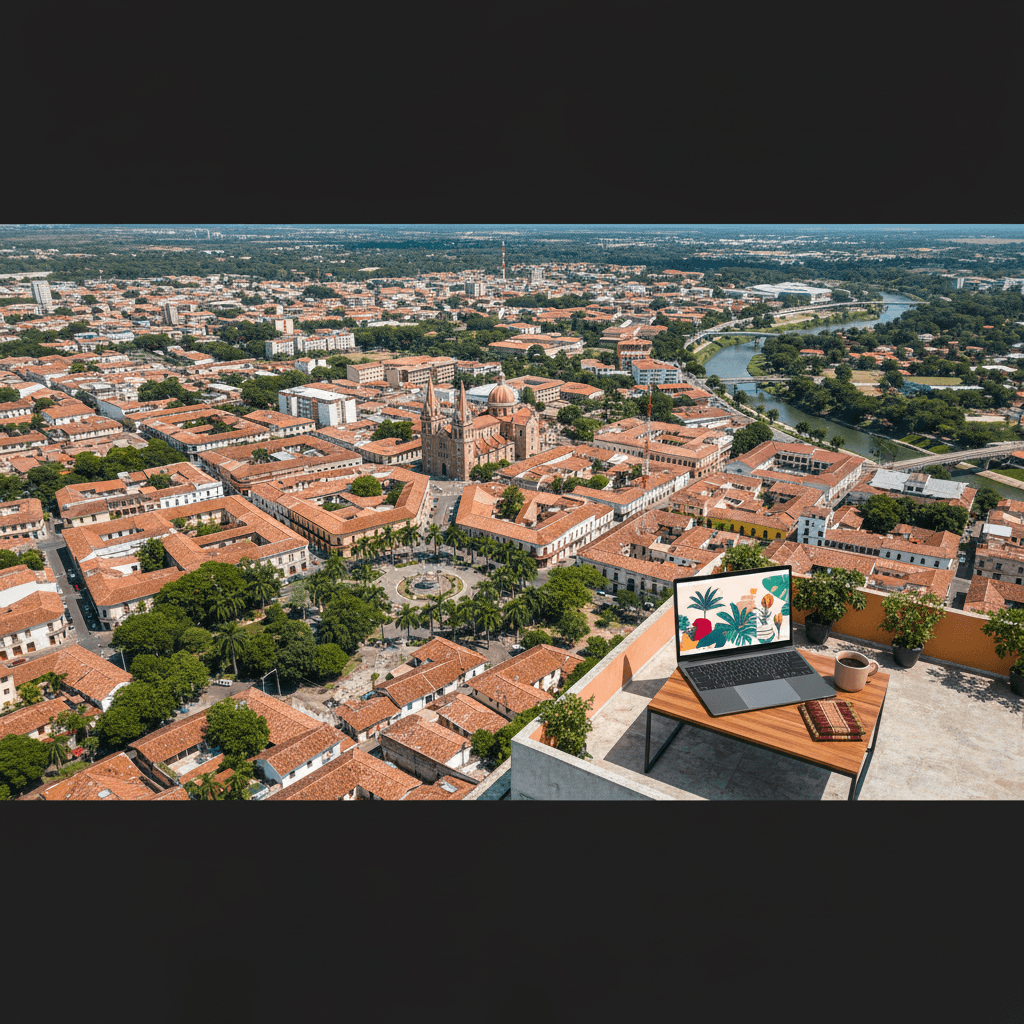
Santa Ana
🇸🇻 El Salvador
If San Salvador is the country's high-energy engine, Santa Ana is its soulful, slower-paced heart. It is the kind of place where you can spend your morning answering emails from a colonial-era plaza and your afternoon hiking the rim of an active volcano. For nomads, the draw here isn't a high-tech infrastructure or a glitzy nightlife scene; it is the authentic, unpolished charm of a city that feels deeply Salvadoran while remaining remarkably approachable.
The vibe is decidedly chill and walkable. You will find yourself living among coffee-growing heritage and colorful markets rather than glass skyscrapers. It is a backpacker hub at its core, which means you will easily find a community of travelers, but it lacks the overwhelming "tourist trap" feel of coastal surf towns. Most nomads appreciate the balance of urban convenience and immediate access to nature, though you should be prepared for some grit. The city center can be noisy and the air quality isn't always pristine, but the trade-off is a cost of living that is hard to beat in Central America.
The Nomad Experience
- The Work-Life Balance: You are 45 minutes away from Lake Coatepeque and the Santa Ana Volcano. It is common for nomads to grind through a four-day work week and spend long weekends exploring the crater lakes or the Ruta de las Flores.
- The Social Scene: While there isn't a massive clubbing culture, the social life revolves around hostel rooftops and central cafes. Places like Urban Nest have become the de facto headquarters for remote workers, offering the most reliable work environment in the city.
- The Connectivity: WiFi can be a bit of a rollercoaster. Most hostels offer "okay" speeds, but for high-stakes video calls, you will want a local Tigo or Claro SIM card as a backup. The cafe culture is growing, and you will find several spots in the historic center where you can park with a laptop for a few hours.
Cost of Living Breakdown
Santa Ana remains one of the most affordable urban hubs for 2025. You can live comfortably here for a fraction of what you would spend in El Tunco or San Salvador.
- Budget Tier ($800 to $1,200/month): This covers a bed in a shared hostel, sticking to the legendary $1 to $2 pupusas at the central market, and using the $0.35 public buses to get around.
- Mid-Range Tier ($1,500 to $2,000/month): This is the sweet spot for most. It buys you a private 1BR apartment in the city center for about $270, a mix of local markets and mid-range restaurants where meals run $5 to $10, and the occasional private ride for day trips.
- Comfortable Tier ($2,500+/month): This allows for a larger 3BR home on the outskirts for roughly $300, consistent use of coworking spaces, and private transport for exploring the region.
Neighborhoods to Know
Most of the nomad action is concentrated in the Historic Center. This is where you will find the iconic neo-Gothic cathedral and the theater. It is the most walkable part of town, keeping you within steps of groceries, pharmacies, and the main bus terminals. Expats often recommend staying near the hostels around the center to remain close to the social hum, even if you are renting a private apartment.
For those who need more peace and quiet, especially families, the residential areas just outside the center offer more space and lower noise levels. However, you will likely need to rely more on taxis or local buses to get into the heart of the action, as these areas aren't quite as pedestrian-friendly.
Practical Realities
Spanish is the currency of daily life here. While the locals are incredibly friendly and patient, English proficiency is low once you step out of the main tourist hostels. You will want to have a translation app ready and learn the basics; a simple "Cuanto cuesta?" goes a long way at the market.
Safety is a common question, and while Santa Ana feels much more relaxed than the capital, it is still a working city. Most travelers feel secure walking the main central streets during the day, but it is wise to keep your wits about you after dark and stick to well-lit areas. The lack of a beach nearby is the main "con" for many, but the cool mountain air and the proximity to the coffee highlands offer a different kind of refreshment that many long-term travelers eventually prefer.
The Price of Coffee Country Living
Santa Ana is where your dollar stretches significantly further than in San Salvador or the coastal surf towns. While the capital feels like a frantic metro hub, Santa Ana maintains a slower pace that reflects in its local economy. You can realistically live here on a modest budget without feeling like you're constantly pinching pennies.
Most digital nomads find that a monthly budget between $1,500 and $2,000 provides a very comfortable lifestyle. This covers a private apartment, eating out frequently, and weekend trips to the nearby volcanoes or Lake Coatepeque. If you're in "hustle mode" and sticking to hostels and street food, you can get by on roughly $800 to $1,200 per month.
Monthly Budget Breakdown
- 1BR Apartment (City Center): $270
- 3BR House (Outside Center): $300
- Utilities (Electricity/Water): $35
- High-Speed Internet: $44
- Groceries for Two: $225 to $425
- Public Transport (One-way): $0.35
Housing and Neighborhoods
The Historic Center is the heartbeat of the expat and nomad community. It's the most walkable part of the city, putting you within steps of the neo-Gothic cathedral and the central markets. Long term rentals here are affordable, with basic studios starting around $270. The trade-off is the noise; the center is active from dawn until dusk with bus horns and street vendors.
For those staying more than a month, looking just outside the immediate center can land you a much larger 3-bedroom home for around $300. Families or groups often choose these quieter residential pockets, though you'll likely rely more on local buses or taxis to get around. If you aren't ready to sign a lease, Urban Nest is the go-to hostel for the remote work crowd, offering a reliable environment for those who need to stay productive while scouting for a permanent spot.
Eating and Socializing
Your food budget depends entirely on how much you embrace the local pupuserías. You can grab two or three pupusas for $1 to $2, making it the ultimate budget fuel. A mid-range meal at a sit-down restaurant typically runs between $5 and $10. While upscale dining is limited compared to San Salvador, the local coffee culture is top-tier, given the city's history as a processing hub.
Nightlife is admittedly quiet. Most social life revolves around the hostel bars or small local spots in the center. Because the city isn't a massive party destination, you'll find that your "entertainment" budget usually goes toward nature. A day trip to hike the Santa Ana Volcano or a visit to the turquoise waters of Lake Coatepeque is affordable, though you should factor in $50 to $100 a month for transport and park fees if you plan to explore every weekend.
Connectivity and Practicalities
Internet reliability can be hit or miss in older buildings. While most cafes and hostels offer WiFi, it's often slow during peak hours. Expats recommend picking up a local SIM card from Tigo or Claro as a backup. Data plans are generous and cheap, ensuring you stay online even when the hostel router decides to take a siesta. If you need a dedicated workspace, hostels like Urban Nest provide the most stable environments for video calls and heavy uploads.
Banking is straightforward, but it helps to have some cash on hand for the markets and buses. Spanish is the primary language here; while the locals are incredibly patient and friendly, your daily life will be much cheaper and easier if you can handle basic transactions in Spanish. "Cuanto cuesta?" and "La cuenta, por favor" will be your most used phrases.
The Historic Center: Best for Nomads and Solo Travelers
If you want to be where the action is, the historic center (Centro Histórico) is the only place to plant your flag. This is the heart of the city's backpacker and nomad scene, characterized by crumbling colonial facades, colorful markets, and a surprisingly chill pace compared to the madness of San Salvador. Most nomads gravitate here because it is entirely walkable; you can hit the grocery store, grab a coffee, and find a place to sleep all within a few blocks.
For those who need to get work done, Urban Nest is the gold standard for hostels in this area. It is widely regarded as having the most reliable work environment among the half dozen spots in the center. While WiFi across the city can be hit or miss, usually hovering at speeds that make video calls a bit of a gamble, the cafes and dedicated nomad spots in the center offer the best stability. Solo travelers find it easy to meet people here, as the community naturally clusters around central landmarks and the vibrant market stalls.
- Rent: Around $270 for a one bedroom apartment or studio.
- Food: Street food like pupusas will run you $1 to $2, while a mid range meal costs between $5 and $10.
- Vibe: Cultural immersion, slightly noisy, but very social.
Outer Neighborhoods: Best for Families
Families looking for a bit of breathing room usually head toward the quieter residential pockets just outside the immediate city center. These areas trade the colonial charm of the historic district for more modern layouts and significantly more space. You won't find the same level of walkability here, so you will likely rely on local buses which cost about $0.35 per trip, or you might find yourself needing a car for school runs and grocery hauls.
The trade off is worth it for the peace and quiet. While the center can suffer from poor air quality and constant traffic noise, the outer fringes offer a much calmer environment for kids. You can find three bedroom houses for roughly $300 a month, which is a steal for the amount of square footage you get. Just keep in mind that English proficiency is quite low in these residential areas, so you will need to brush up on your Spanish to handle daily interactions with neighbors and shopkeepers.
- Rent: Approximately $300 for a three bedroom house.
- Connectivity: Reliable enough for home office setups, though a Tigo or Claro SIM card is a necessary backup.
- Vibe: Quiet, spacious, and very local.
The Expat Perspective: Choosing Your Base
Expats who have been in Santa Ana for the long haul often suggest that your choice of neighborhood depends entirely on your tolerance for chaos. If you are moving here to be part of the coffee growing heritage and want to walk out your door and immediately be in a market, stay in the center. If you are here for the long term and want a "real" life away from the backpacker trail, look for rentals in the newer developments on the outskirts.
Regardless of where you land, the social life for expats usually revolves around weekend trips. Since Santa Ana lacks a major nightlife scene, most people spend their Saturdays and Sundays heading to Lake Coatepeque or hiking the Santa Ana Volcano. It is a lifestyle built on nature and early mornings rather than late nights and clubbing. For those working remotely, the general consensus is to budget at least $1,500 to $2,000 a month to live comfortably, which covers a nice apartment, frequent dining out, and the occasional private transport for day trips.
- Daily Transport: Public buses are the primary way to get around if you aren't walking.
- Internet: Expect to pay around $44 for a decent home connection.
- Groceries: A couple can expect to spend between $225 and $425 monthly depending on how much they stick to local markets versus imported goods.
Santa Ana is a bit of a mixed bag when it comes to the digital grind. While it's the second largest city in El Salvador, it feels more like a sprawling provincial town than a tech hub. For nomads, this means you'll get plenty of authentic charm and $1 pupusas, but you'll have to be more intentional about where you set up your laptop compared to the beach towns or San Salvador.
The Connectivity Reality
Expect hostel WiFi to be hit or miss. Most travelers find the connections in the historic center's hostels are fine for a quick email or scrolling social media, but they often choke during a Zoom call or a heavy upload. It's generally slow and prone to the occasional hiccup. If your job depends on high speed stability, you'll want a backup plan.
Most remote workers in town rely heavily on local SIM cards to tether when the house internet fails. Tigo and Claro are the two heavy hitters here. You can pick up a SIM for a couple of dollars and load it with generous data packages for around $10 to $20. Digicel is another option, though coverage can be spotty once you head out toward the volcanoes. Having a local SIM is basically a requirement if you plan on working from the city center for more than a few days.
Best Places to Work
The coworking scene in Santa Ana is still in its infancy, so don't expect a WeWork on every corner. However, the community has carved out a few reliable spots. Urban Nest is currently the gold standard for travelers who need to get things done. It's praised by nomads for having the most consistent work environment and a layout that actually accommodates a laptop. It serves as a de facto hub where you're likely to run into other people working on their side hustles or remote gigs.
If you prefer a cafe vibe, the historic center has a growing number of urban spots with decent connections. The city's coffee heritage means the beans are top tier, and many cafes are happy to let you linger for an hour or two if you're buying lattes. Just keep in mind that the center can get noisy, so bring noise-canceling headphones to drown out the street traffic and market chaos.
Internet Costs and Setup
If you're looking to sign a short term lease on an apartment, expect to pay around $44 a month for a dedicated home internet connection. Most 1BR apartments in the center go for about $270, and while they usually come with WiFi, it's always worth asking for a speed test before you commit.
- Local SIM (Tigo/Claro): $10 to $25 for a month of data.
- Hostel WiFi: Usually free, but speeds are often under 10 Mbps.
- Cafe Working: $3 to $5 for a coffee and a few hours of bandwidth.
- Home Internet: Roughly $44 per month for standard fiber or cable.
Most nomads find that the trade off is worth it. You might deal with a few seconds of lag, but you're paying a fraction of what you'd spend in a more developed digital nomad hub. Just stick to the historic center where the infrastructure is most modern, and you'll find the balance between colonial life and remote work is surprisingly manageable.
A Shift in the Safety Narrative
If you've been following the news over the last few years, you know El Salvador has undergone a massive transformation. Santa Ana reflects this shift perfectly. Most nomads find the city significantly more relaxed and walkable than San Salvador. While the capital can feel high energy and sometimes overwhelming, Santa Ana has a slower, almost provincial pace that makes you feel comfortable wandering the historic center during the day.
That said, you shouldn't throw basic street smarts out the window. Expats generally recommend staying within the well lit areas of the center after dark, particularly around the Teatro Nacional and the main plaza. While the heavy gang presence of the past has largely vanished from the tourist trail, petty theft can still happen in crowded markets. Keep your phone tucked away while walking and stick to registered taxis or pre arranged transport if you're heading out late at night.
One specific thing to keep in mind is the air quality and noise. The center is beautiful but can get choked with exhaust from older buses. If you have respiratory sensitivities, you might find the air a bit harsh during peak traffic hours. Travelers often say that the real "danger" here isn't crime, but rather the uneven sidewalks and the chaotic flow of traffic in the market zones. Watch your step and always give buses the right of way.
Healthcare Infrastructure
For minor issues, you'll find a farmacia on almost every corner in the center. Pharmacists in El Salvador are often highly trained and can give advice on basic ailments or suggest over the counter medications for things like "traveler’s stomach." If you need more serious care, Santa Ana is home to several private clinics and public hospitals, though most expats prefer private facilities for faster service and a higher likelihood of finding English speaking staff.
The healthcare costs are a major draw for long term residents. A standard consultation with a private doctor usually runs between $30 and $50. For anything specialized, you might find yourself taking the 90 minute trip to San Salvador, where the country’s top tier private hospitals, like Hospital de Diagnóstico, are located. It’s a good idea to have a solid international health insurance policy that covers medical evacuation, just in case of a serious emergency while hiking the nearby volcanoes.
Emergency Basics
- General Emergency: Dial 911 for police assistance.
- Medical Emergencies: Dial 132 for the public ambulance service (Sistema de Emergencias Médicas).
- Pharmacy Hours: Most central pharmacies close by 7:00 PM or 8:00 PM, but you can find 24 hour options like Farmacias Económicas near the larger hospitals.
- Water Safety: Do not drink the tap water. Stick to bottled water, which costs about $0.50 for a small bottle or $2.00 for a large jug.
Solo Traveler Perspective
Solo travelers usually feel quite welcome here. The local community is famously friendly and often curious about why you've chosen Santa Ana over the beach towns. Because the nomad scene is still growing, you won't find the same "bubble" as you might in El Tunco. This means you'll be interacting with locals more often than not. As long as you maintain a respectful profile and learn a few phrases of Spanish, you'll find the environment supportive and safe.
The Walkability Factor
Living in the historic center of Santa Ana means you can ditch the wheels for most of your daily routine. The city core is surprisingly compact and flat, making it easy to stroll between your hostel, the central market, and local cafes. Most nomads find that staying near the Urban Nest area puts everything within a ten minute walk. While the sidewalks can be narrow and the air quality near the bus terminals isn't great, the colonial architecture and colorful street life make walking the preferred way to soak in the atmosphere.
Public Buses
For trips that are too far to walk, the local bus system is the backbone of the city. It is incredibly cheap, with one way fares typically costing around $0.35. You will see plenty of colorful "chicken buses" and smaller microbuses buzzing through the center. While they are reliable for getting from point A to point B, they can get cramped during peak hours. If you are heading to the outskirts for a cheaper $300 three bedroom house, you will likely become a regular on these routes. Just keep some small change handy, as drivers rarely have change for large bills.
Getting to the Nature Spots
One of the biggest draws of Santa Ana is its proximity to the Santa Ana Volcano and Lake Coatepeque, but getting there requires a bit more planning. While public buses do run to these spots, they can be slow and infrequent. Many travelers recommend teaming up with others at a hostel to split the cost of a private driver or taxi for the day. If you want total freedom to explore the coffee plantations and mountain roads, you might find yourself wishing for a rental car, as ride hailing apps like Uber have very limited availability here compared to San Salvador.
Arrival and Transit Logistics
Since Santa Ana does not have its own international airport, you will likely be arriving via Monseñor Óscar Arnulfo Romero International Airport near the capital. The drive takes about 1.5 hours. You have a few choices for the trek:
- Private Shuttle: The most comfortable and direct option, often arranged through hostels, costing between $30 and $50.
- Taxis: Readily available at the airport, though you should negotiate the price before getting in.
- Public Bus: The most budget friendly route involves taking a bus into San Salvador and then transferring to a "Special" (Class A) bus to Santa Ana. It takes longer but costs less than $5 total.
Connectivity and Navigation
Because the street signs can be hit or miss and English proficiency is low, having a working SIM card is a lifesaver for navigation. Expats usually suggest grabbing a card from Tigo, Claro, or Digicel as soon as you arrive. Data plans are affordable and will help you use Google Maps to find those tucked away pupuserias. Since the city layout is a grid, it is hard to get truly lost, but having a backup for your GPS makes the learning curve much smoother during your first week.
Transport Costs at a Glance
- Standard Bus Fare: $0.35
- Airport Transfer (Private): $30 to $50
- Monthly Transport Budget: $30 to $60 (depending on weekend trips)
- Tigo/Claro SIM with Data: $10 to $20 per month
The Language Barrier
In Santa Ana, Spanish is the undisputed king. Unlike the surf towns along the coast where English is common, this is a traditional Salvadoran city where the local dialect, known as Caliche, reigns supreme. You'll find that English proficiency is quite low once you step away from the front desk of hostels like Urban Nest. If you don't speak Spanish, you're going to rely heavily on translation apps to get through your day.
Most nomads find that a basic grasp of the language isn't just helpful; it's the key to enjoying the city. Locals are incredibly friendly and patient with learners, but they won't necessarily meet you halfway in English. Expect to use a lot of hand gestures and smiles at the central market when you're hunting for $1 pupusas. It's an immersive environment that'll force your Spanish to improve quickly if you're putting in the effort.
Key Phrases for Daily Life
You don't need to be fluent to survive, but a few specific phrases will go a long way in the markets and on the buses. Beyond the standard greetings, keep these in your back pocket:
- ¿Cuánto cuesta? (How much does it cost?): Use this constantly at the street stalls.
- Una pupusa de revueltas, por favor: The standard order for the classic pork, bean, and cheese staple.
- ¿Dónde para el bus? (Where does the bus stop?): Vital for those $0.35 trips around town.
- La cuenta, por favor: To get your bill at mid-range spots where you're paying $5 to $10 for a meal.
Staying Connected
Since you'll likely be using Google Translate or maps to get around, having a reliable data plan is a non-negotiable backup for the sometimes spotty hostel WiFi. Local SIM cards are cheap and easy to find. Expats generally recommend Tigo or Claro for the most consistent coverage in the city center. You can pick these up at small shops throughout the historic district for just a few dollars, and topping them up with data packages is straightforward.
For remote work, don't rely solely on the "okay" speeds at your accommodation. While the cafe culture is growing, the language of business here is still very much face-to-face. If you're heading out to Lake Coatepeque or the Santa Ana Volcano for the day, download your maps and translation dictionaries for offline use, as signal can drop significantly once you leave the urban core.
Social Etiquette and Communication
Communication in Santa Ana is often more about the "how" than the "what." People here value politeness. Always start an interaction with a "Buenos días" or "Buenas tardes" before launching into a question. It's a slower-paced city than San Salvador, and the way people talk reflects that. If you're trying to negotiate a longer stay in a $270 a month apartment, a friendly, respectful approach will get you much further than a cold, transactional one.
If you're looking for an English-speaking community, your best bet is to hang out in the backpacker hubs in the center. This is where you'll find other digital nomads to swap tips with in English, but for everything else, from buying groceries to catching a ride, Spanish is your primary tool for navigation.
The Seasonal Rhythm
Santa Ana operates on a classic tropical schedule, split between the dry season and the rainy season. For most nomads, the sweet spot is the dry window from November to April. During these months, the sky stays a crisp blue and the humidity drops, making the walkable historic center much more manageable on foot. This is also the prime time for the famous Santa Ana Volcano hike; you won't have to worry about the trail turning into a mudslide or the view at the crater lake being swallowed by clouds.
The rainy season kicks in around May and lingers through October. While it sounds intense, it typically follows a predictable pattern where mornings are clear and sunny, followed by a heavy downpour in the late afternoon. If you're okay with timing your grocery runs and cafe hops around the 3:00 PM rain, you'll benefit from lower prices and a much lusher, greener landscape. Just be aware that the city's air quality can dip during the peak of the dry season due to dust and agricultural burning, while the rain tends to scrub the air clean.
Temperature and Comfort
Because of its elevation near the volcanic highlands, Santa Ana is generally a few degrees cooler and less stifling than the coastal towns or the concrete heat of San Salvador. You can expect daytime highs to hover between 25°C and 30°C year-round. Evenings are surprisingly pleasant, often dipping enough that you might want a light hoodie if you're out grabbing pupusas after dark.
- Hottest Months: March and April can see temperatures spike before the rains arrive.
- Coolest Months: December and January offer the most comfortable "spring-like" weather.
- Packing Tip: Bring a rain jacket for the summer months and sturdy boots for the volcano trails, as the volcanic rock gets slippery when wet.
When to Visit for the Best Vibe
If you want to see the city at its most energetic, aim for July. The Fiestas Julias take over the city in honor of its patron saint, bringing parades, street food stalls, and a festive atmosphere that breaks up the usual quiet pace of life. For a more relaxed experience centered around nature, the months of November and December are favorites among the expat community. The landscape is still green from the recent rains, but the weather is stable enough for weekend trips to Lake Coatepeque.
Nomads who prioritize work often prefer the dry season simply because power outages and internet flickers are less common when there aren't tropical storms rolling through. If you're staying at a spot like Urban Nest, you'll find the social scene picks up during the winter months as travelers head south to escape the northern cold. It's the best time to find a hiking partner or a group to split a car rental for trips out of the city center.
Monthly Weather Snapshot
- November to February: Peak season. Dry, sunny, and the best air quality. Ideal for outdoor enthusiasts.
- March to April: The tail end of the dry season. It's the warmest time of year, and the dust can be a bit much for those with sensitive lungs.
- May to October: The "green season." Expect daily rain, lower prices, and fewer tourists. Great for those who enjoy a moody, tropical atmosphere and don't mind working indoors during the afternoons.
Connectivity and Workspaces
Internet reliability is the main hurdle in Santa Ana. While most hostels offer WiFi, it can be sluggish for video calls or heavy uploads. If you're planning to stay productive, look into Urban Nest; it's widely regarded as the best spot in the center for a reliable work environment. For a backup, grab a local SIM card from Tigo, Claro, or Digicel. Data plans are cheap and provide a necessary safety net when the hostel router decides to take a siesta.
The cafe culture for remote work is growing, but it's still a bit informal. You'll find strong connections in urban spots near the historic center, but don't expect a dedicated coworking space on every corner. Most nomads find that a mix of cafe hopping and a solid data plan is the best way to stay online.
Cost of Living Breakdown
Santa Ana is incredibly easy on the wallet, especially compared to San Salvador or the coastal surf towns. You can live comfortably here for $1,500 to $2,000 a month, while budget travelers often get by on $800 to $1,200 by sticking to hostels and street food.
- 1BR Apartment (City Center): Approximately $270 per month.
- 3BR House (Outside Center): Around $300 per month.
- Monthly Utilities: Roughly $35.
- High-speed Internet: About $44.
- Groceries for two: Between $225 and $425 depending on how many imported goods you buy.
Navigation and Neighborhoods
The Historic Center is where you want to be. It's the heartbeat of the city, placing you within walking distance of the central market, groceries, and the main bus terminals. It's walkable and full of character, though the trade-off is higher noise levels and some exhaust fumes from the older buses. If you're bringing a family or just want peace, look for housing on the outskirts where a $300 budget gets you a lot more space, though you'll be more dependent on taxis or buses.
Getting around the city is straightforward. Public buses are just $0.35 per ride. For day trips to the Santa Ana Volcano or Lake Coatepeque, the bus system works well, but many expats recommend renting a car for at least a day to explore the more isolated trailheads or lakeside spots at your own pace. Uber isn't as prevalent here as in the capital, so expect to rely on local taxis or your own two feet.
Food and Social Life
Eating out is a highlight here. You can fill up on $1 to $2 pupusas at the central market or local street stalls. For a sit-down mid-range meal, expect to pay between $5 and $10. The social scene is centered around the backpacker hostels in the historic center, which serve as the primary meetup points for solo travelers and nomads.
Nightlife is relatively quiet. Santa Ana isn't a party town; it's a place for early morning hikes and afternoon coffees. Most social interaction happens over shared meals or during group excursions to the nearby volcanoes. If you're looking for a club scene, you'll likely find it lacking, but the friendly, community-focused vibe of the locals more than makes up for it.
Practical Essentials
- Language: Spanish is the primary language. Proficiency in English is low, so download an offline version of Google Translate and learn basics like "Cuanto cuesta?" (How much?) and "La cuenta, por favor" (The check, please).
- Weather: It's a tropical climate. The dry season runs from November to April and is the best time for hiking. The rainy season hits from May to October, which can make the volcano trails slippery and difficult.
- Safety: The city feels more relaxed than San Salvador. Stick to well-lit areas in the center at night and keep an eye on your belongings in the crowded markets.
Need visa and immigration info for El Salvador?
🇸🇻 View El Salvador Country GuideOff the Radar
Pioneer territory