El Salvador
Complete Digital Nomad Guide

Policy Stability
Stamped Nomad ExclusiveHow likely visa and immigration policies are to remain unchanged
Quick Facts
Nomad Visa Cost
$100
Income Requirement
$1,460/mo
Max Stay
24 months
Renewable
Yes
Cost of Living
$1,056/mo
Avg Internet
91 Mbps
Safety Score
6/10
Healthcare
Medium
Coworking
Medium
English Friendly
Low
Time Zones
CST (UTC-6)
Entry Methods Available
Best For
The 180-Day Sweet Spot
El Salvador has undergone a massive shift in how it welcomes remote workers. For most travelers from North America, Europe, and Oceania, the days of stressing over 90-day border runs are over. Under the updated 2025 regulations, citizens of over 100 countries receive 180 days of visa-free entry upon arrival. This makes it one of the most generous stays in Central America for those who want to settle into a beach town without immediate paperwork headaches.
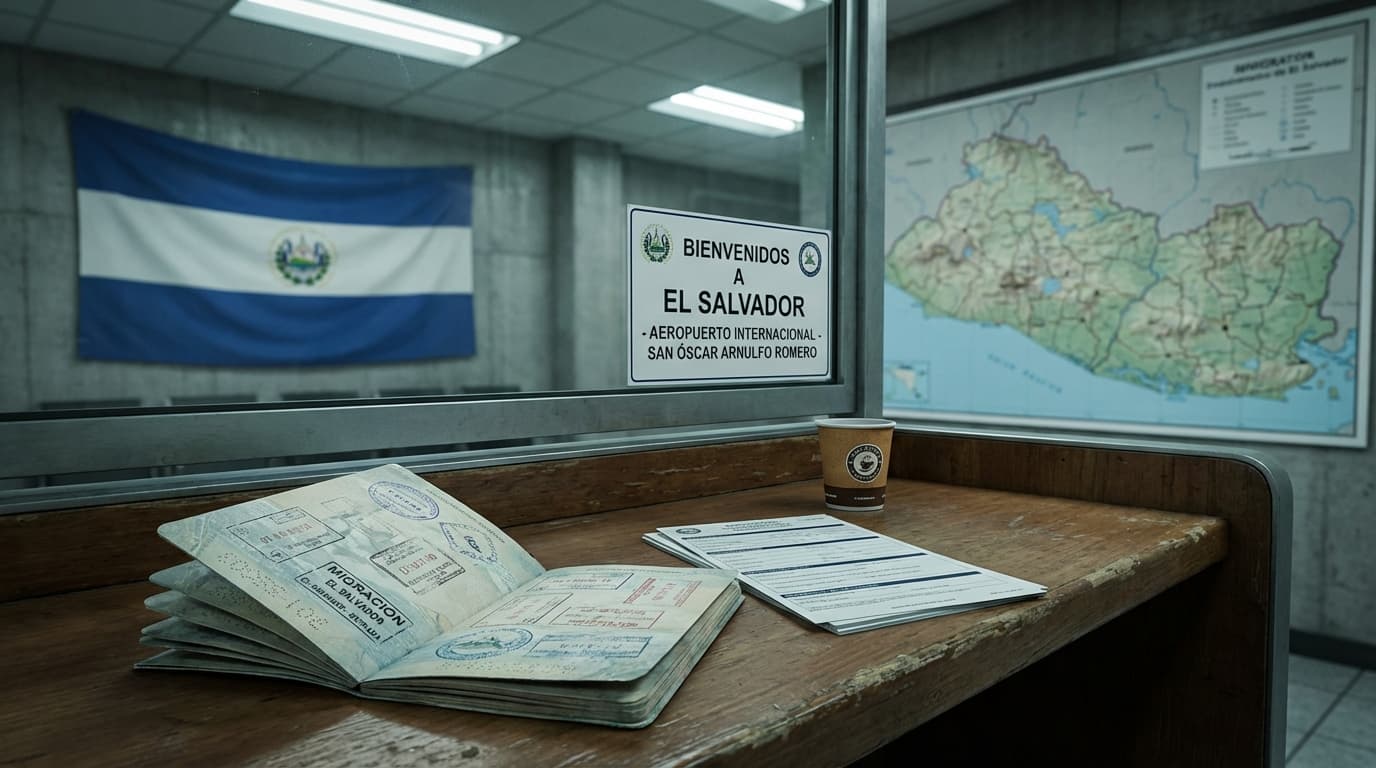
When you land at El Salvador International Airport, you will simply purchase a $12 Tourist Card. This fee is paid at the immigration counter before you get your stamp. While the process is streamlined, you should still have a digital or printed copy of your onward travel (a flight out of the country) and proof that your passport is valid for at least six months.
The CA-4 Catch
While El Salvador grants you 180 days, you have to keep the CA-4 Border Control Agreement in mind if you plan on hopping between neighbors. This agreement links El Salvador, Guatemala, Honduras, and Nicaragua. Technically, the 180-day allowance is specific to El Salvador, but the regional limit for the entire four-country zone often defaults to 90 days. If you intend to spend months bouncing between Santa Ana and Antigua, Guatemala, you may need to reset your clock by exiting the CA-4 zone entirely, usually by heading south to Costa Rica or north to Mexico.
The Digital Nomad Visa
For those who want to make the "Land of Volcanoes" a semi-permanent base, the government recently introduced a dedicated Digital Nomad Visa. This is a two-year renewable permit designed specifically for remote employees and freelancers. It removes the uncertainty of tourist stays and gives you a more formal legal standing in the country.
- Income Requirement: You must prove a monthly income of at least $1,460.
- Clean Record: A certified criminal background check from your home country is mandatory.
- Health Insurance: You need a policy that covers you locally for the duration of your stay.
- Remote Status: Proof of employment with a company outside El Salvador or evidence of a freelance client base.
Nationalities Requiring Pre-Approval
If you aren't from a visa-exempt country, El Salvador has digitized its entry process through the Special Entry Permit (PEI) and eVisa system. There is no traditional "visa on arrival" for these nationalities, so you must secure your documentation before booking your flight. You can verify your specific nationality's requirements and start the digital application through the government's immigration portal. The processing time for these digital permits typically ranges from two to four weeks, with fees falling between $100 and $150.
Extending Your Stay
If you entered on a tourist card and decide you aren't ready to leave when your 180 days are up, you can apply for an extension. You’ll need to visit a local immigration office (Extranjería) and submit form F44. The extension fee is a modest $25, but you will be asked to show proof of funds to support your continued stay. It is best to start this process at least 10 days before your current stamp expires to avoid overstay fines.
Business vs. Tourism
The lines are refreshingly blurred here for short-term stays. If you are entering to scout investment opportunities, attend a conference, or meet with local partners, you can do so under the standard visa-exempt entry for up to 180 days. You don't need a specific business visa unless you are being paid by an El Salvador-based entity or your country of citizenship requires a consular business visa, which usually costs around $110 and takes about 10 days to process.
The Gateway to Central America
El Salvador has officially stepped into the spotlight for remote workers with the launch of its Digital Nomad Visa. Often called the e-Nomad Visa, this permit allows you to trade your home office for a view of world-class surf breaks or lush volcanic landscapes for up to four years. It is one of the most accessible options in the region, specifically designed for those who want more than just a 90-day tourist stamp.
Income Thresholds and Requirements
The financial barrier to entry is surprisingly low compared to European or Caribbean alternatives. To qualify, you need to show a minimum monthly income of $1,460 USD. This income must come from employers or clients based outside of El Salvador. If you are planning to bring your family, the requirements scale slightly to accommodate them.
- Individual applicant: $1,460 per month
- Family of three or four: $2,190 per month
- Proof of funds: 12 months of bank statements showing consistent deposits
The Application Process
The process is straightforward but requires some legwork before you hop on a plane. You will need to coordinate with an El Salvador consulate in your current country of residence. Most applicants see a turnaround time of about 45 days after their interview.
First, gather your paperwork. You will need a full copy of your passport, proof of remote employment, a clean criminal background check, and an international health insurance policy that covers you in El Salvador. Once your documents are ready, book an appointment at the consulate. The application fee is modest, ranging between $40 and $70 USD depending on your specific location.
After you receive your approval email, you have 120 days to enter the country. Once you land, your final step is to visit a local immigration office to secure your physical temporary resident permit.
Duration and Staying Legal
Your initial visa is valid for 1 to 2 years. If you fall in love with the pupusas and the Pacific coast, you can renew it for a total stay of 4 years. Just make sure to submit your extension request at least 30 days before your current visa expires.
There are a few ground rules to keep in mind. You must spend at least 6 months per year within El Salvador to maintain your status. Additionally, you cannot be absent from the country for more than 3 consecutive months. Most importantly, this visa strictly prohibits you from working for local Salvadoran companies or engaging in local business activities.
Tax Perks and Long-term Residency
The biggest draw for many nomads is the tax treatment. Under this visa, your foreign-earned income is not taxed by El Salvador. You get a specific exemption from local income tax on money made abroad. However, be mindful that spending more than 200 consecutive days in the country might trigger tax residency status, so it is wise to consult with a professional if you plan on staying year-round.
For those thinking about a permanent move, this visa offers a clear pathway. Most residents can apply for permanent residency and eventually citizenship after five years. If you happen to be a Spanish national or a citizen of a Spanish-speaking Latin American country, that timeline is fast-tracked to just one year of residency.
Quick Summary of Benefits
- Renewable: Stay for up to 4 years total.
- Family Friendly: Spouses and children are easily included in the application.
- Tax-Free: Zero tax on income earned from foreign clients or employers.
- Path to Citizenship: Valid years count toward permanent residency requirements.
The CA-4 Reality and Visa-Free Entry
El Salvador has become significantly more welcoming lately, making it one of the easiest hubs for digital nomads in Central America. If you hold a passport from the United States, Canada, the UK, the European Union, Australia, or Japan, you fall into the visa-exempt category. This means you can show up at the border or airport without any prior paperwork.
Most travelers from these countries are granted a stay of up to 180 days. You will need a passport with at least 6 months of validity remaining. While immigration officers don't always ask, you should have digital copies of your onward travel plans and proof that you have enough money to support your stay just in case.
One detail you cannot overlook is the Central America-4 (CA-4) Border Control Agreement. El Salvador shares a common visa territory with Guatemala, Honduras, and Nicaragua. Your 180-day clock is shared across all four countries. If you spend 60 days in El Salvador and then cross into Guatemala, you do not get a fresh 180 days; you are still on the same countdown. While "border runs" to Mexico or Costa Rica can reset this clock, doing it too frequently can lead to extra questioning at the border.
The New E-Visa System
If your nationality isn't on the exempt list, El Salvador launched a streamlined e-visa system in October 2025 to handle applications digitally. This replaces the old method of visiting a consulate in person. You can submit your application through the official El Salvador e-visa portal.
The process is straightforward. You will need to upload a digital passport photo, a scan of your passport, and recent bank statements. The standard fee ranges between $100 and $150 USD, with a processing time of 5 to 9 business days. If you are in a rush, there is an express option that costs an additional $60 USD to get your approval within 24 hours.
Breakdown of Entry Costs
- Tourist Card: Citizens of the US and several other nations must pay a $12 USD fee immediately upon arrival at the airport or land border.
- E-Visa Fee: $100 to $150 USD depending on your specific nationality.
- Extension Fee: Varies by case but is non-refundable and paid at the immigration office.
Staying Longer: Extensions and Overstays
If you fall in love with the surf in El Zonte and 180 days isn't enough, you can request an extension. You need to visit a local immigration office (Extranjería) before your current permit expires. You can also start the inquiry by emailing [email protected] to get the latest requirements. Be prepared to show your bank statements again and provide a reason for staying. Approval is common for nomads, but it is never a guarantee, so apply at least a few weeks before your time runs out.
Do not let your visa expire. Overstaying is a headache you want to avoid. The government has increased penalties lately, and you will be hit with a fine that can reach hundreds of dollars. Beyond the cash, an overstay goes on your permanent record, which can lead to deportation or being banned from returning to El Salvador in the future. If you realize you have overstayed, head to an immigration office or the airport early to pay your fines and clear your name before trying to board a flight.
The Remote Worker (Digital Nomad) Route
El Salvador recently stepped up its game for the remote crowd by launching a dedicated Digital Nomad visa. This is the path of least resistance if you are working for clients or a company based outside the country. You will need to show a monthly income of at least $1,460. If you are bringing a family of three or more, that requirement jumps to $2,190.
The application process usually takes between 30 to 45 days through the General Directorate of Migration and Foreigners (DGME). You cannot take on local Salvadoran clients with this permit, but it gives you a solid legal footing to stay long-term. Make sure your passport is valid for at least six months and you have a clean criminal record from your home country.
The Rentista and Pensionado Visas
If you aren't actively "working" but have money coming in, El Salvador has two specific categories for you. The Pensionado Visa is for retirees with a lifetime pension. You need to prove a stable monthly income of $1,095, which is calculated as three times the local minimum wage. It is one of the more affordable paths, with application fees ranging from $140 to $260 depending on whether you want a one or two-year permit.
The Rentista Visa is the go-to for those living off investment dividends or rental income from back home. The income bar is slightly higher here at $1,460 per month. Expect to spend between $800 and $1,500 on the total setup, including the cost of getting your documents apostilled and translated. Both of these visas prohibit you from working locally, but they are renewable and lead directly to permanent residency after three years.
High-Value Investment Options
For those looking to move significant capital, the Freedom Visa is the headline-grabber. While the primary path involves a $1 million investment in Bitcoin or USDT, there are more traditional business routes too. You can secure residency by registering a business with the National Investment Office (ONI) or by putting $10,000 into a local company that generates at least $4,000 in annual sales.
- Freedom Visa: High-speed residency for major crypto investors.
- Real Estate: Direct investment in property with the benefit of no property taxes.
- Business Equity: Lower entry points for entrepreneurs starting local ventures.
The Paperwork and Logistics
Regardless of which path you choose, the "starter pack" of documents is largely the same. You will need your original birth certificate and a national-level criminal background check. Both must be apostilled in your home country before you arrive. If your country is not part of the Hague Convention, you will need to go through the embassy legalization process instead.
Once you are in the system, keep an eye on the calendar. To maintain most temporary permits, you should aim to be physically present in the country for about 8 months per year. The DGME charges a processing fee of $50 to $100, plus $70 for your actual residency card once approved.
The Long Game: Permanent Residency and Citizenship
Temporary residency is exactly what it sounds like, a stepping stone. After holding your temporary status for three years, you can apply for permanent residency. This is a game-changer because it grants you full work rights and removes the need for annual renewals. If you are from a Central American country, you might be able to skip the three-year wait and apply for permanent status almost immediately.
If you fall in love with the place and want a Salvadoran passport, the timeline is quite reasonable. Most foreigners can apply for citizenship after five years of total residency. If you are from Spain or a Latin American country, that timeline is fast-tracked to just one year. It is a straightforward process as long as you keep your filings clean and your taxes in order.
El Salvador is currently one of the most budget-friendly frontiers for digital nomads in the Americas. While prices have ticked up slightly as the country gains popularity, your dollar still goes incredibly far. A single person can live a basic lifestyle for around $800 a month, while $1,500 buys a high level of comfort, including a nice apartment in a secure neighborhood and frequent dining out.
The financial landscape is unique here because the US Dollar is the official currency, meaning travelers from the States can skip the conversion math. Bitcoin is also legal tender, though in practice, it is mostly used in coastal "Bitcoin Beach" areas like El Zonte or at major franchises in the capital.
San Salvador: The Urban Hub
If you need high-speed fiber internet and a "big city" feel, the capital is your best bet. Stick to neighborhoods like Escalón or San Benito for the best amenities. These areas are walkable, filled with specialty coffee shops, and offer the most reliable infrastructure in the country.
- Rent: Budget options in the city outskirts start at $400, while a comfortable 1BR in a prime area like San Benito ranges from $700 to $1,000. Premium luxury condos with gyms and pools often exceed $1,200.
- Food: Expect to spend $300 to $400 for a mix of grocery shopping and mid-range dining.
- Transport: Uber is cheap and efficient here, with most rides costing between $3 and $8. Budget $50 to $100 monthly.
- Coworking: Monthly hot desk passes at Impact Hub or Regus run between $75 and $200.
El Tunco & El Zonte: The Surf City Vibe
Living on the coast offers a relaxed pace, but you will pay a "beach tax" for the location. Prices here fluctuate based on the surf season and proximity to the water. Internet can be spotty, so many nomads rely on Starlink or dedicated coworking spaces.
- Rent: Basic rooms or shared houses cost around $350 to $500. A comfortable private bungalow with AC usually falls between $600 and $900.
- Food: Local "comedores" keep costs down, but tourist-facing cafes add up. Budget $200 to $400 monthly.
- Transport: Most people walk or use local buses for $0.25. If you need frequent trips to the city, budget $60 to $100 for private shuttles.
- Coworking: Dedicated spaces like Tunco Work offer reliable speeds for $75 to $150 per month.
Santa Ana: Colonial Charm on a Budget
For those who prefer a cooler climate and a more authentic Salvadoran experience, Santa Ana is the hidden gem. It is significantly cheaper than the capital or the coast, though the nomad community is smaller.
- Rent: This is where you find the best deals. A comfortable apartment in the city center averages $450 to $700, while budget rooms can be found for as low as $250.
- Food: Groceries are more affordable here than in the coastal tourist traps. Budget $180 to $350.
- Transport: The city is compact and highly walkable. Monthly transport costs rarely exceed $40 to $80.
- Coworking: Spaces like 44 HUB provide professional environments for $75 to $150 monthly.
Daily Expenses & Lifestyle
Your biggest variable will be how often you eat local versus international cuisine. You can grab three pupusas and a drink for under $3 at a street stall, while a dinner at a trendy bistro in San Salvador will run you $20 to $30. Local beer is usually $1.50 to $3, and a standard latte is about $3.50.
Healthcare is high quality in the private sector. A visit to a private doctor typically costs between $30 and $60 out of pocket. For insurance, most nomads use SafetyWing, which starts around $45 to $80 per month, though premium global plans can reach $300 depending on your age and coverage needs.
El Salvador is currently undergoing a massive rebranding, shifting from a cautionary tale to a legitimate hotspot for remote workers. Whether you want to pay for your morning avocado toast with Bitcoin or need a high-speed fiber connection for back-to-back Zoom calls, the country offers a surprisingly diverse range of environments. Here are the top spots to set up your mobile office.
El Zonte (Bitcoin Beach)
If you are part of the crypto crowd or just want a laid-back surf vibe, El Zonte is the place to be. It gained global fame as the birthplace of the "Bitcoin Beach" movement, and today it serves as a experimental hub for decentralized finance. The community is small but incredibly tight-knit, focused heavily on surfing, wellness, and tech innovation.
The infrastructure is getting better every year. Spots like Hope House and Purosurf provide reliable environments for work, though you should expect occasional power blips during tropical storms. It is a bit more expensive than the interior of the country, but the ability to walk from your laptop to a world-class break in two minutes is a trade-off many nomads gladly make.
- Estimated Monthly Cost: $2,000–$2,300
- Internet Speeds: Up to 100 Mbps in specific hubs; can be spotty elsewhere.
- Vibe: Chill, crypto-centric, and surf-heavy.
- Best For: Crypto enthusiasts and serious surfers who don't mind a quiet nightlife.
El Tunco
Just down the road from El Zonte, El Tunco is the "party brother" of the La Libertad coast. It is arguably the most famous beach town in the country, known for its iconic rock formation and bustling weekend crowds. For nomads, it offers a great balance of social life and productivity. You will find plenty of cafes with decent WiFi and a much more active social scene than in Zonte.
The town is entirely walkable, and the safety levels are high, even after dark. While it lacks some of the formal coworking spaces found in the capital, the sheer number of nomads passing through makes it easy to network. It is slightly more affordable than El Zonte, though prices spike during the high season when tourists flock to the coast.
- Estimated Monthly Cost: $2,100
- Internet Speeds: Comparable to Zonte, ranging from 50–100 Mbps in nomad-friendly cafes.
- Vibe: High energy, social, and tourist-friendly.
- Best For: Social nomads who want beach access and a lively bar scene.
Santa Tecla
For those who prefer a "local" feel over a "tourist" feel, Santa Tecla is a hidden gem. Located on the southern edge of the San Salvador metropolitan area, it offers a cool climate and a very safe, suburban atmosphere. It is one of the most walkable cities in the country and feels much more European than the capital's chaotic center.
This is where you go if you want your dollar to stretch as far as possible. Rents here are significantly lower, often ranging between $500 and $700 for a nice apartment. You will have access to professional coworking spaces like Regus and excellent fixed-line fiber internet, making it the most practical choice for those with demanding remote jobs.
- Estimated Monthly Cost: $1,200
- Internet Speeds: Very reliable; 45 Mbps mobile and 100+ Mbps fixed broadband.
- Vibe: Safe, residential, and authentic.
- Best For: Budget-conscious nomads and long-termers who need top-tier infrastructure.
San Salvador
The capital is the heartbeat of the country's transformation. It is a sprawling metropolis that offers everything you would expect from a major city: massive shopping malls, high-end hospitals, and the best culinary scene in Central America. The nomad community here is the largest in the country, centered around neighborhoods like San Benito and Escalón.
Work-wise, San Salvador is a powerhouse. You can find 24/7 coworking spaces like Impact Hub and Start Oficinas with blazing fast internet. While the city used to have a rough reputation, safety has improved dramatically in recent years. You will still have to deal with heavy traffic and urban noise, but the networking opportunities and amenities are unmatched.
- Estimated Monthly Cost: $1,500
- Internet Speeds: The best in the country, easily exceeding 100 Mbps.
- Vibe: Fast-paced, modern, and gritty.
- Best For: Professional networking, foodies, and those who need 24/7 office access.
El Salvador is finally shedding its reputation for spotty connectivity. While you won't find Seoul-level speeds across the entire country, the infrastructure in the major hubs is more than enough for video calls, heavy uploads, and the typical nomad workflow. San Salvador is the powerhouse here, boasting fixed broadband speeds that average around 65 Mbps download and 24 Mbps upload. If you stick to the urban centers, you'll likely find fiber optic connections from providers like Claro or Japi that can push well past 100 Mbps.
Internet Speeds and Fiber Availability
In the capital and cities like Santa Ana or San Miguel, fiber is the standard for modern apartments and coworking spaces. You can expect a stable experience, though it is always smart to have a backup. Once you head toward the coast, things get a bit more "rustic." In surf havens like El Tunco, speeds usually hover between 20-30 Mbps. Recent investments have made these beach towns much more viable for remote work, but a heavy tropical storm can still cause the occasional flicker in service.
Best Coworking Spaces
If you need a dedicated desk and a professional atmosphere, San Salvador and Santa Tecla are your best bets. These spaces are often located within striking distance of the coast, meaning you can finish a shift and be at the beach in under an hour.
- Start Oficinas (San Salvador): This is a top-tier choice with a 4.8 rating. It offers 24/7 access and very reliable internet. It is about 50 minutes away from the waves at El Tunco.
- Sandbox (World Trade Center, San Salvador): Located in a prestigious business district, this spot has a 4.5 rating. You get 24/7 access and free coffee. It is roughly 45 minutes from Punta Roca.
- Cireba BW (Santa Tecla): A quieter, highly-rated option (4.4) with fast Wi-Fi. It is perfectly positioned for those who want to reach El Zonte in about 40 minutes.
- 44 HUB (Santa Ana): The go-to spot if you are heading north. It features ergonomic setups and community events, though it is far from the surf.
The Cost of Staying Connected
Budgeting for an office space is straightforward. Most high-end coworking spots in the city offer monthly passes for $200 to $300. If you don't need a full month, daily rates typically fall between $10 and $49 depending on the amenities. For those on a tighter budget, spaces like POINT or 44 HUB offer limited-hour plans starting as low as $75 per month.
Cafe Culture and Remote Work
Working from cafes is common in San Salvador and Santa Ana. You will find reliable Wi-Fi at chains like Starbucks, though they can get loud during the afternoon rush. For a more "nomad" vibe, coastal spots like Cafe Sunzal in El Tunco offer decent connections around 20-30 Mbps. Just keep in mind that coastal cafes are better for clearing your inbox than for high-stakes presentations, as reliability can dip during peak hours.
Mobile Data and eSIM Options
Don't rely solely on Airbnb Wi-Fi. Grabbing a local SIM or setting up an eSIM is cheap and provides a necessary safety net. The "Big Three" providers are Claro, Tigo, and Digicel. Coverage is generally excellent across the country, even on the highways.
- Claro Super Pack: Costs $12 for 5GB of data, valid for 30 days.
- Tigo Maxi Plan: Costs $10 for 3GB of data, valid for 30 days.
- Digicel Data Blast: A budget-friendly $3.50 for 1.2GB, valid for 7 days.
- Nomad eSIM: Great for immediate connectivity upon arrival, costing $6 for 1GB (7 days).
- Holafly: For heavy users, an unlimited 15-day plan is about $47, but note that it usually forbids hotspot tethering.
Understanding the Dual System
El Salvador operates on a two-tier healthcare system. The public side, managed by MINSAL and ISSS, handles the bulk of the local population. While it is technically accessible to legal residents, it is often plagued by long wait times, equipment shortages, and a significant language barrier. If you do not speak fluent Spanish, getting through a public clinic visit can be a frustrating experience.
Most nomads and expats head straight for the private sector. The quality of care in San Salvador’s top private hospitals is excellent, often mirroring what you would find in the US or Europe but at a fraction of the price. You will find modern diagnostics, English-speaking specialists, and facilities that feel more like boutique hotels than sterile wards.
The Best Private Hospitals
If you need serious medical attention, San Salvador is the place to be. Outside of the capital, facilities become much more basic very quickly. Keep these names in your phone:
- Hospital de Diagnóstico: Known for having the most advanced technology in the country, particularly for cardiology and complex diagnostics.
- Hospital de la Mujer: The go-to facility for women’s health and maternity services, frequently recommended by foreign embassies.
- Centro Médico Escalón: A reliable, high-end facility located in a convenient part of the city for most expats.
- Hospital Centro de Emergencias: Often the first choice for urgent care due to their efficiency and 24/7 English-speaking staff.
Insurance: Mandatory vs. Practical
Health insurance is a legal requirement if you are applying for residency in El Salvador. Even if you are just staying on a long-term tourist permit, going without coverage is a massive gamble. You have three main paths for staying covered:
- International Health Insurance: Providers like April International, Geoblue, or MSH International offer global plans. These typically cost between $100 and $500 per month and are widely accepted for direct billing at top-tier private hospitals.
- Local Salvadoran Plans: Companies like Seguros del Pacífico, ASESUISA, or MAPFRE offer local coverage. These are much cheaper, usually $50 to $200 per month, but they often lack coverage if you travel outside the country.
- Public Contributions (ISSS): If you become a legal resident and work locally, you can contribute to the Social Security Institute (ISSS), though most nomads keep this only as a backup to their private plan.
What You Will Pay
The cost of care is one of the biggest perks of living here. You can expect to pay about 60% to 80% less than you would in the US. Here is a breakdown of what to expect in the private sector versus the public clinics:
General Consultation
- Private: $25–$60
- Public: $5–$10
Emergency Room Visit
- Private: $100–$250
- Public: $10–$20
Diagnostic Tests (X-rays/Labs)
- Private: $50–$150
- Public: $10–$30
Inpatient Stay (Per Night)
- Private: $150–$400
- Public: $10–$30
Minor Surgery
- Private: $700–$2,000
- Public: $150–$500
Pharmacies and Prescriptions
Pharmacies are everywhere in El Salvador. You will recognize chains like Farmacia San Nicolas, Farmacias UNO, and Farmacias Economicas by their bright signs on almost every major corner. Many medications that require a strict prescription in the UK or US are available over the counter here. However, for specialized meds, it is best to bring your original bottle or a local doctor's note.
If you are looking for something specific, you can use the DoctorSV app to check availability and prices at nearby pharmacies. While shortages happen occasionally, most standard maintenance drugs for hypertension or diabetes are consistently in stock and very affordable.
Emergencies
In a crisis, dial 911 or the local medical emergency number 132. Public ambulances are generally staffed by paramedics but may have limited equipment. For a faster and more sophisticated response, many expats prefer to contact private hospitals directly, as they often maintain their own ambulance fleets. Stick to the private ERs in San Salvador whenever possible for the fastest service and the best chance of finding an English speaker immediately.
The Currency Reality
El Salvador is a unique beast when it comes to money. While the US Dollar has been the official currency since 2001, the country made global headlines by adopting Bitcoin as legal tender in 2021. However, things move fast here. Recent shifts indicate the government has pulled back on that legal tender status, making the regulatory environment for crypto a bit of a moving target.
For your day-to-day life, USD is king. You’ll use it for everything from rent to pupusas. If you are a crypto enthusiast, the government-run Chivo Wallet still offers fee-free Bitcoin-to-USD conversions, which is a massive perk. Just be wary of third-party Bitcoin ATMs; they can hit you with predatory fees as high as 20%.
The Digital Nomad Visa
The government recently rolled out a dedicated visa for remote workers, and the barrier to entry is surprisingly reasonable. To qualify, you need to show a minimum monthly income of $1,460. The visa lasts for 1 to 2 years initially and can be extended for up to 4 years total.
You’ll need to prove you work remotely with 3 to 6 months of bank statements, provide an apostilled criminal record check, and have international health insurance. Keep in mind that this visa requires you to be physically present in the country for at least 6 months out of the year.
Banking as a Non-Resident
Opening a local bank account isn't strictly necessary for short stays, but it’s helpful if you’re planning to stick around for a year or more. You can open an account as a foreigner, though expect a fair amount of paperwork. You will need your valid passport, a Tax Identification Number (NIT), and proof of address like a rental agreement or utility bill.
While some banks might let you use a foreign address, having a local Salvadoran address makes the process much smoother. Most banks require you to show up in person to sign documents. If you’re opening a business account, come prepared with tax filings and your company registration certificates.
Managing Your Cash
ATM fees can be a nuisance, usually ranging from $3 to $7 per withdrawal. If you want to save a few bucks, look for Scotiabank machines, which are known for not charging local fees. Most machines in major cities are reliable, but standalone ATMs in heavy tourist zones often have higher surcharges and lower withdrawal limits.
Regarding your favorite fintech apps, there are some limitations to keep in mind:
- Wise: You cannot open a new account or request a card if you have a Salvadoran address. However, your existing card will work until it expires, and their transfer services are excellent for sending money to local accounts.
- Revolut: Similar to Wise, Revolut doesn't issue cards to residents here. Your current card should work for payments, but don't count on getting a replacement sent to your beach house in El Tunco.
Moving Money Efficiently
Since you’ll likely be paid in a foreign account, you need a cheap way to get funds into the local economy. Skip the traditional wire transfers if you can; they are slow and expensive. Here are the best ways to move your money:
- Wise: Still the gold standard for low fees. Transfers often land in 15 minutes.
- Paysend: Great for those coming from the U.S., with a flat $1.99 fee.
- Chivo Wallet: If you're comfortable with digital assets, this is the cheapest way to move money internationally with near-zero fees.
- Remitly: A solid backup that offers various delivery methods if you need to pick up physical cash.
On the tax front, El Salvador remains very friendly to nomads. There is currently no tax on Bitcoin gains, and the general tax atmosphere for foreign-earned income is quite relaxed, though it’s always smart to consult a local pro if you’re staying long-term.
The Logistics of Relocating Your Family
Moving your family to El Salvador is more straightforward than you might expect, especially if you qualify for the Independent Means Visa. Whether you are applying as a Pensionado or a Rentista, your spouse and children are covered under your residency status without needing to prove additional income. The process usually takes between 2 to 3 months.
You will need to gather apostilled and Spanish-translated birth certificates for the kids and a marriage certificate for your spouse. Everyone will need a clean criminal record from the last 2 years and a medical exam performed by a Salvadoran physician to confirm you are free of contagious diseases. Keep in mind that residency requires you to be physically present in the country for at least 8 months of the year. Most families find it much easier to hire a local attorney to handle the filings with the Directorate General of Migration.
Education and International Schools
If you are settling in or near San Salvador, you will have access to high-caliber international schools that rival those in Europe or North America. These institutions typically offer English, British, or French curricula, making for a smooth transition for kids coming from abroad.
- Escuela Americana: Located in San Salvador, this school follows a US-style curriculum with AP programs. Annual tuition ranges from $5,000 to $15,000.
- British School of San Salvador: Offers IGCSE and A-Levels with tuition between $5,000 and $15,000 per year.
- Academia Británica Cuscatleca: Found in Santa Tecla, this school blends British and Salvadoran curricula for $5,000 to $15,000 annually.
Budget an extra $500 to $1,700 per year for uniforms, books, and registration fees. If your children are younger, the savings are even more significant. Private preschool or full-day kindergarten averages about $140 to $160 per month, which is nearly 90% cheaper than similar childcare in the United States.
Healthcare for the Kids
While El Salvador has a public healthcare system, almost every nomad family opts for private care. San Salvador is home to top-tier facilities like Hospital de Especialidades Médicas and Centro Médico Escalón, where you will find English-speaking pediatricians and modern emergency rooms. Private international insurance is a requirement for your residency; expect to pay between $100 and $500 per month for a family plan. This coverage ensures you skip the long wait times at public clinics and get immediate access to specialists and dental care.
Where Families Live and Play
San Salvador and its suburbs are the go-to spots for families because of the infrastructure. Antiguo Cuscatlan is a favorite for its botanical gardens and walkable areas. If you want more green space, Colonia San Francisco and Ciudad Merliot offer easy access to Parque Bicentenario, a massive park perfect for weekend bike rides and picnics.
For those with younger children, Santa Elena is home to the Museo de los Niños (Children’s Museum) and several high-end athletic clubs. If your family prefers the coast, the Surf City area around El Tunco has become a legitimate hub for nomadic families, though you will likely still find yourself driving into the city for specialized medical appointments or major shopping trips.
Safety and Daily Life
The safety profile of El Salvador has shifted dramatically over the last few years. While you should still use common sense, the heavy policing in tourist zones and suburban neighborhoods has made the country feel remarkably secure for families. Violent crime has plummeted, and many expats report feeling safer here than in major US cities. Stick to Uber for nighttime travel, keep an eye on your belongings in crowded markets, and enjoy the incredibly friendly, family-oriented culture that defines the country.
The New Safety Reality
El Salvador has undergone a radical transformation that few saw coming. Once synonymous with high crime, it now boasts a homicide rate of roughly 1.9 per 100,000. To put that in perspective, it is statistically safer than many major U.S. cities and on par with Canada. This shift is largely due to the government’s aggressive anti-gang measures under the State of Exception. The U.S. State Department currently gives it a Level 1 rating, meaning you can generally walk the streets in broad daylight without looking over your shoulder.
While the heavy military presence in some areas might feel jarring, the results for travelers are tangible. Violent crime against foreigners is rare, especially in nomad hotspots like Escalón in the capital, or the surf-centric El Tunco and El Zonte. You will often see POLITUR (tourist police) patrolling these zones. However, as gang violence has faded, petty crime has stepped into the spotlight. Keep your wits about you in crowded markets where distraction theft is the main game. If someone spills a drink on you or creates a scene, check your pockets immediately.
Avoiding the Gringo Tax and Scams
As the country becomes a trendy destination, some locals have pivoted toward opportunistic scams. Most of these are minor annoyances rather than dangerous encounters. You might run into taxi drivers who "forget" to start a meter or take the scenic route to bump up the fare. Stick to Uber or registered radio taxis to keep your costs predictable. Other common issues include:
- Credit card skimming: Keep your eyes on your card at all times; handheld readers are your friend.
- Fake tour operators: Always book through reputable hostels or verified websites.
- Faulty rental gear: Check surfboards and motorbikes for cracks before handing over any cash.
- Short-change scams: In busy bars, always count your change before walking away from the counter.
Cultural Nuances and Etiquette
Salvadorans are incredibly warm people, but they value traditional manners. Always start an interaction with a formal "usted" or use the local "vos" once you have built some rapport. Politeness goes a long way here. People generally dress a bit more conservatively than you might expect for a tropical climate. While flip-flops are fine for the beach, you should wear long pants and a decent shirt when visiting churches or government offices.
If you are invited to a local’s home for a meal, accept it. It is a sign of respect and a fast track to making real friends. Just try to keep the conversation away from sensitive topics like the civil war or heavy political debates until you know someone well. Instead, talk about the food, the surfing, or the local festivals like the Fiestas Agostinas.
Language and LGBTQ+ Visibility
Do not expect much English once you leave the "Bitcoin Beach" bubble of El Zonte. Spanish is the currency of daily life. If you do not speak the language, you will likely find yourself stuck in an expat echo chamber. Most nomads recommend taking a week of intensive classes or using a language exchange app to get the basics down. It will make everything from negotiating rent to ordering pupusas much smoother.
For LGBTQ+ travelers, the situation is nuanced. Homosexuality has been legal since 1822, and there is a visible community in San Salvador’s Zona Rosa. However, the country remains socially conservative, and there are no specific anti-discrimination laws for housing or jobs. While the capital is relatively progressive, smaller rural towns may be less welcoming of public displays of affection. Most nomads find that "discretion" is the general rule of thumb outside of designated safe spaces.
The Nomad Community
The expat scene is growing fast, fueled by the government’s push for Bitcoin adoption and world-class surfing. You will find a mix of crypto enthusiasts, remote tech workers, and long-term surfers. Most of the action is concentrated in a few key hubs:
San Salvador (Escalón & San Benito)
- Vibe: Upscale, modern, and urban.
- Best for: Networking at Impact Hub and high-speed fiber internet.
- Monthly Cost: Roughly $1,800 to $2,100.
El Zonte & El Tunco
- Vibe: Laid-back, barefoot luxury, and crypto-forward.
- Best for: Surfers and those who want to pay for everything with a Lightning wallet.
- Monthly Cost: $1,500 to $2,000 depending on how close you are to the waves.
To get plugged in, join the El Salvador Expats and Nomads group on Facebook or check out local meetups on Nomad List. Integration is easiest when you bridge the gap between the expat bubbles and local life. Join a local soccer game, volunteer for a beach cleanup, or simply frequent the same coffee shop every morning. Salvadorans are usually happy to strike up a conversation if you show a genuine interest in their culture.
The Territorial Advantage
El Salvador stands out in Central America for its territorial tax system. Generally, the government only cares about money you earn within their borders. If you are working for a company in Austin or freelancing for clients in Berlin, your income stays out of the local tax man's reach. This makes the country an incredible financial base for remote workers who want to maximize their take-home pay while enjoying a lower cost of living.
The Digital Nomad Visa (DNV) codifies this benefit. Under this specific permit, your foreign-earned income is explicitly exempt from local taxation. It allows you to live the beach life in El Tunco without worrying about filing complex returns on your international earnings, provided you maintain your status correctly.
Defining Tax Residency
While the territorial system is generous, you need to watch the calendar. You become a tax resident if you stay in El Salvador for more than 200 consecutive days within a single calendar year. Your passport stamps and migratory documents are the primary evidence used to track this, so keep your records organized.
Once you cross that 200-day threshold, the rules shift toward worldwide taxation. However, there are a few nuances to keep in mind regarding residency status:
- The Main Income Rule: Residency can also be triggered if your primary source of income or business center is located within El Salvador.
- Temporary Absences: If you have already established residency, being away for up to 165 days does not necessarily break that status.
- DNV Protections: Most nomads avoid the "main income" trigger because their contracts and clients remain outside the country.
Income Tax Brackets
If you do trigger tax residency or start earning money from Salvadoran sources, you will fall into a progressive tax system. The rates are zero-weighted for low earners but climb quickly once you pass certain thresholds. All figures are in USD, which is the official currency.
- $0 to $6,600: 0% tax rate
- $6,601 to $9,142: 10% on the excess over $6,600
- $9,143 to $22,857: 20% on the excess over $9,142
- Over $22,857: 30% on the excess over $22,857
If you are a non-resident earning local income, the government typically applies a flat 30% withholding tax. This is why most nomads prefer to keep their professional ties strictly international.
The Bitcoin Factor
El Salvador made global headlines by adopting Bitcoin as legal tender, and the tax perks for crypto users are significant. If you are a crypto enthusiast or get paid in BTC, you will find a very friendly environment. There are no capital gains taxes on Bitcoin, and it is exempt from income and VAT taxes when used for transactions.
Even crypto-related businesses enjoy massive incentives. While these entities must still file returns for transparency, they generally pay no tax on their transactions. It is a rare "hands-off" approach that has turned the country into a laboratory for the future of digital finance.
Filing and Treaties
For those who hit the residency mark, the annual tax deadline is April 30. You are required to report your worldwide income by this date. Digital Nomad Visa holders who stay under the 200-day limit usually have no local filing requirements at all, keeping your administrative overhead to a minimum.
Before you commit to a long-term stay, check your home country's tax treaties. El Salvador has a comprehensive double taxation treaty with Spain and mutual assistance agreements with neighbors like Costa Rica, Guatemala, Honduras, and Nicaragua. There is currently no double taxation treaty with the United States, meaning American citizens must still navigate the Foreign Earned Income Exclusion (FEIE) on their US returns.
You can find more specific forms and regulatory updates through the Ministerio de Hacienda website, though you may need a local accountant to help translate the more dense administrative requirements.
Connectivity and SIM Cards
You can't rely on café WiFi alone if you plan to get actual work done. Grab a local SIM immediately to avoid the "no signal" panic. Tigo is the gold standard for coverage, offering 4G and 5G speeds that hold up well even outside the capital. You can pick up a $10 plan that covers 5GB of data plus unlimited social media for 30 days.
If you prefer to hit the ground running, download an eSIM before you land. Nomad and SimOptions are reliable, while Holafly offers unlimited data starting at $27 for five days. If you'd rather buy in person, look for Digicel, Claro, or Movistar counters at the San Salvador Airport or head to Centro Comercial Galerías once you're settled in the city.
Getting Around
Public buses are an experience, but for daily nomad life, stick to the apps. Uber is the most reliable way to get around San Salvador and is surprisingly affordable. For a more local experience, inDrive and DiDi allow you to bid on fares, which can save you a few bucks if you aren't in a rush. Always verify your driver's plate in the app and avoid flagging down unofficial taxis on the street after dark.
Where to Set Up Base
San Salvador is the heartbeat of the country's infrastructure. Zona Rosa and San Benito are the top picks for nomads. These neighborhoods are packed with high-end coffee shops, reliable coworking spaces, and the most stable WiFi in the country. It is the safest area to walk around at night and puts you close to the best nightlife.
If you need the ocean breeze, La Libertad is the go-to surf hub. It is much cheaper, with some apartments running around $300 a month, but be warned: the internet here is notoriously spotty. It is great for a weekend getaway, but maybe not for a high-stakes Zoom presentation.
Housing and Food
Airbnb is your best bet for finding furnished spots with dedicated workspaces. Look for listings in San Benito and filter for "work-friendly" to ensure you get a desk and decent upload speeds. For shorter stays or a more social vibe, the city has a growing number of boutique hostels and B&Bs that cater to the remote work crowd.
When you're deep in a project and can't leave the desk, PedidosYa is the local favorite for delivery. They handle everything from groceries to pharmacy runs. Uber Eats is also widely available, featuring familiar spots like Papa John's and Burger King alongside local eateries.
Language and Communication
While you can get by with English in high-end hotels, knowing some Spanish is a game changer. Use Duolingo for the basics or Babbel if you want a more structured approach. To really sound like a local, Talkio AI helps you practice the specific Salvadoran dialect, while iTalki can connect you with native tutors for 1-on-1 sessions.
Emergency Contacts
Keep these numbers saved in your phone just in case. The local infrastructure is improving, but it helps to be prepared.
- National Police: 911
- Medical Emergencies: 132
- Fire Department: 913
- Civil Protection: 2201-2424
- Comandos de Salvamento (Rescue): 2133-0000
Common Pitfalls to Avoid
The biggest mistake nomads make here is assuming the whole country is a tech hub because of the "Bitcoin Country" headlines. Outside of San Salvador and El Zonte, internet speeds drop off fast. Always have a backup data plan. Don't book a remote beach house for a week of heavy meetings without confirming the signal strength first. Finally, remember to actually close your laptop. It is easy to get stuck in the "grind" mindset in the city, but the best parts of El Salvador are found on the hiking trails and surf breaks just an hour away.
Latest Nomad News
Inside El Salvador’s Remote Work Residency
El Salvador's digital nomad visa offers a one-year residency, renewable for up to four years, for remote workers earning at least $1,460 monthly. Key benefits include a total exemption from income tax on foreign-sourced earnings and the ability to use Bitcoin as legal tender.
El Salvador Updates Minimum Stay Rules for Residents
A new bill aims to lower the annual residency requirement from 180 days to 90 days. This change would allow digital nomads and investors to maintain their legal status while traveling more frequently outside the country.
El Salvador Secures $1.3 Billion for Infrastructure Upgrades
Strategic investments in tourism and housing infrastructure are likely to improve local amenities and safety, making El Salvador a more viable long-term destination for expats.
More Guides from Central America
Stay Updated on El Salvador
Get notified about visa changes, policy updates, and new information for digital nomads in El Salvador.