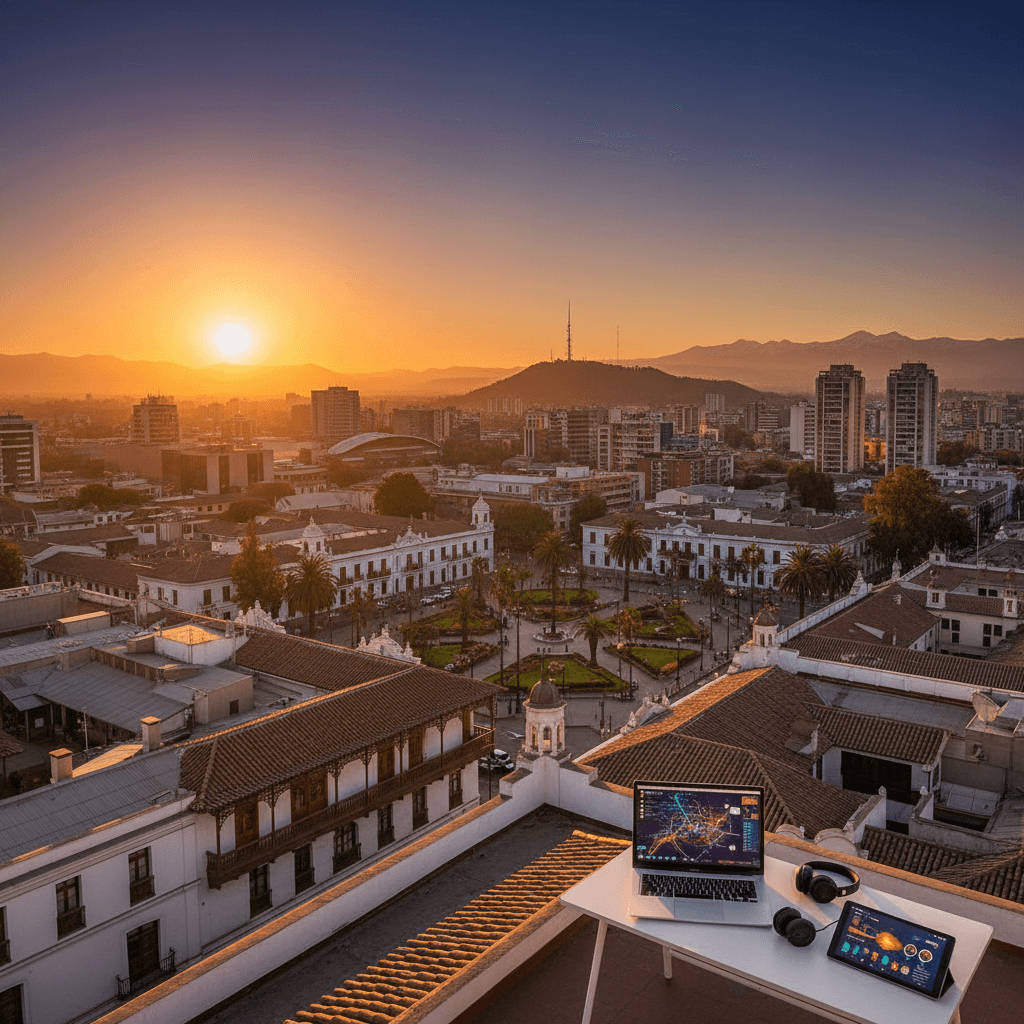
Rancagua
🇨🇱 Chile
The Industrial Heart with a Rural Soul
Rancagua isn't your typical digital nomad postcard. You won't find the bohemian graffiti of Valparaiso or the frantic skyscrapers of Santiago here. Instead, you get a city that feels grounded, practical, and deeply connected to the Chilean countryside. Most nomads who end up here are looking for an authentic slice of local life away from the expat bubbles, or they're using it as a strategic base to explore the O'Higgins Region's famous vineyards and mountain trails.
The vibe is undeniably blue collar but surprisingly relaxed. As the capital of Chile's copper mining and agricultural heartland, the city moves to a different rhythm. You'll see huasos (Chilean cowboys) in traditional hats walking past modern shopping centers. It feels like a large town that grew into a city but never quite let go of its provincial roots. It's a place where people still take their lunch hours seriously and the streets quiet down significantly once the sun sets.
What Sets It Apart
What makes Rancagua unique is its position as the gateway to the Cachapoal Valley. While you're working from a cafe in the morning, you're only a short drive from some of the best Carmenere vineyards in the world. It lacks the "tourist polish" of other hubs, which is exactly why some travelers love it. You aren't treated like a walking paycheck; you're just another neighbor. The cost of living reflects this, with local prices often sitting 20% to 30% lower than what you'll find in the upscale neighborhoods of Santiago.
The emotional experience of living here is one of steady integration. There's a certain satisfaction in navigating the Feria Libre de Rancagua for your weekly groceries or catching a local football match at the Estadio El Teniente. It’s a city that rewards those who speak a bit of Spanish and aren't afraid to strike up a conversation with a local vendor. You'll feel less like a nomad and more like an inhabitant.
The Digital Setup
Connectivity is surprisingly solid despite the city's low profile on the nomad radar. Chile has some of the fastest internet in South America, and Rancagua benefits from that infrastructure. Most apartments and modern cafes offer speeds between 50 Mbps and 100 Mbps. You won't find a coworking space on every corner, but the infrastructure is there for those who are self-sufficient.
- The "Sewell" Effect: The city is defined by its proximity to the El Teniente mine. This brings a certain level of wealth and stability to the area, meaning services like healthcare and banking are high quality.
- Climate: Expect Mediterranean weather. Summers are hot and dry, while winters are cool and rainy. It’s perfect for those who want clear seasons without extreme tropical humidity.
- The Commute: Many nomads choose Rancagua because the Tren Nos-Rancagua connects you to central Santiago in about 70 to 80 minutes. You can enjoy the lower costs of the province while popping into the capital for networking events or high-end dining.
Living the Local Life
Expats who settle here usually gravitate toward the northern and eastern sectors of the city, like the neighborhoods around Carretera El Cobre. This is where you'll find the most modern amenities, gym franchises, and reliable grocery stores like Jumbo. For a midday break, travelers often head to Plaza de los Heroes, the city's historic center, to grab a coffee and watch the world go by. It’s not a city of "sights" as much as it is a city of experiences, from the smell of roasting meat during a weekend asado to the dust of a local rodeo.
If you're looking for a 24/7 party or a massive community of English speakers, Rancagua will feel quiet. But if you want a reliable, affordable base where you can actually focus on your work and experience real Chilean culture, this city provides a steady, welcoming hum that's hard to find in the more crowded tourist tracks.
While Rancagua sits just a short train ride away from the capital, your wallet will definitely feel the difference. It is a blue collar city at heart, fueled by the El Teniente mine, which means prices are grounded in reality rather than inflated for tourists. You can expect to live comfortably here for about $1,100 to $1,400 USD per month, depending on how much you lean into the local lifestyle versus imported luxuries.
Housing and Neighborhoods
Rent is your biggest win in Rancagua. Unlike the skyrocketing prices in Santiago neighborhoods like Providencia, you can find modern apartments here for a fraction of the cost. Most nomads look toward the northern and eastern sectors of the city for a better balance of safety and amenities.
- Sector Norte (near Portal Rancagua): This is a favorite for those who want proximity to big supermarkets and gyms. A modern one bedroom apartment here typically runs between $450 and $550 USD per month.
- Machalí (The Suburbs): Technically a separate commune but functionally part of the city, this is where the upscale crowd lives. It is more expensive and requires a car, with houses or larger apartments starting around $700 to $900 USD.
- City Center (El Centro): It is busier and louder, but you can find older, spacious units for as low as $350 USD. It is great for walking to the main plaza but gets very quiet and a bit sketchy after dark.
Groceries and Dining
Eating like a local is the key to keeping your budget tight. The Feria Libre (open air markets) are where you should buy your produce. You will walk away with a week's worth of fresh fruit and vegetables for about $20 USD. If you stick to the Unimarc or Jumbo supermarkets, expect to pay prices similar to what you would see in North America for packaged goods.
A Menú del Día at a local spot near the Plaza de los Héroes usually costs between $7 and $10 USD. This typically includes a starter, a main dish like cazuela or pastel de choclo, and a small dessert. If you are heading out for a nice dinner in Machalí at a place like El Abasto, a meal with wine will likely set you back $30 to $40 USD per person.
Connectivity and Utilities
Chile has some of the best internet in South America, and Rancagua is no exception. A high speed fiber optic connection from providers like VTR or Movistar costs roughly $25 to $35 USD per month. Most nomads find the speeds reliable enough for video calls and heavy uploads without needing to hunt for a coworking space.
Basic utilities for a standard apartment, including electricity, water, and gas, usually hover around $80 to $110 USD. Keep in mind that winter (June through August) can get chilly. Since many Chilean apartments lack central heating, your electricity bill might spike if you are running space heaters to stay warm.
Transportation
The city is very walkable if you stay central, but the local "micros" (buses) and "colectivos" (shared taxis with fixed routes) are the standard way to get around. A colectivo ride is usually less than $1 USD. If you need to head into Santiago for a weekend, the Metrotren Rancagua is a lifesaver. It is a clean, modern train that costs about $3 to $5 USD each way and gets you to the capital in a little over an hour.
Monthly Budget Summary
- Estimated Total: $1,150 to $1,500 USD
- Rent (1-bedroom): $450 to $600 USD
- Groceries: $250 to $300 USD
- Dining Out: $200 to $300 USD
- Internet and Phone: $45 to $60 USD
- Utilities: $90 to $120 USD
- Local Transport: $40 to $70 USD
For Digital Nomads: El Teniente and Sector Norte
If you're looking for the most reliable infrastructure, the northern part of the city near the El Teniente neighborhood is usually the go-to. This area feels more modern and sits closer to the main highway, making it easy to zip up to Santiago in about 80 to 90 minutes if you need a big city fix. Most nomads here prefer the apartment complexes near the Portal Rancagua mall because you get stable fiber optic internet for about $30 USD a month and easy access to groceries.
While Rancagua doesn't have a massive coworking scene like Valparaíso, locals often work from the various cafes and coffee shops located in the city center. These spots generally offer the most reliable Wi-Fi for remote work. You'll likely pay around $450 to $600 USD for a decent one-bedroom apartment in this district. It's quiet, functional, and keeps you close to the main transport links.
For Expats and Long-Term Residents: Machalí
Technically its own commune but effectively a suburb of Rancagua, Machalí is where most expats end up. It has a much more relaxed, upscale vibe compared to the grit of the city center. You'll find newer housing developments along Avenida San Juan, which is lined with trendy bars and better dining options like El Abasto, a favorite for its local seasonal menu. The air quality is often slightly better here since you're heading toward the foothills of the Andes.
- Rent: expect to pay $900 to $1,200 USD for a modern house or large apartment.
- Groceries: monthly costs average $350 USD per person if you shop at the Jumbo supermarket.
- Atmosphere: safe, suburban, and very green compared to the industrial core.
For Families: Villa Triana
Villa Triana is one of the most established and traditional neighborhoods in the city. Families choose this area because it's walkable and sits near some of the better private schools. The streets are lined with trees and older, sturdy houses with actual yards, which is a rarity in the more modern developments. It's a peaceful pocket where kids can actually ride bikes outside without parents worrying too much about traffic.
The neighborhood is also close to the Parque de los Enamorados, a popular spot for weekend strolls. Living here puts you within a 10-minute drive of the Clinica Isamédica, which is the main private health facility in the region. Most families find that a monthly budget of $2,500 USD covers a comfortable lifestyle including private school fees and a car, which you'll definitely need if you live in this part of town.
For Solo Travelers: Downtown (El Centro)
If you want to be in the thick of things and don't care about a suburban lawn, staying near the Plaza de los Héroes is your best bet. This is the historical heart of Rancagua. It's more chaotic and louder than Machalí, but everything is within walking distance. You've got the Mercado Central for cheap, fresh produce and plenty of small "picadas" where you can grab a massive plate of lomo a lo pobre for about $10 USD.
Solo travelers usually opt for smaller studios here which can be found for as low as $450 USD. Safety is generally fine during the day, though locals recommend staying off the smaller side streets after 9:00 PM. It's the best area for meeting people organically at the various pubs and social spots near the intersection of German Riesco and Estado. Just keep in mind that the buildings here are older, so check the insulation before signing anything for the winter months.
Connectivity in the Hub
Rancagua sits in a bit of a sweet spot for remote work. Since it is a major regional capital and a hub for the mining industry, the infrastructure is surprisingly robust. You aren't going to find the same density of laptop friendly cafes as you would in Santiago, but the fiber optic coverage is excellent. Most modern apartments in neighborhoods like El Teniente or the newer developments in Machalí come equipped with speeds ranging from 200 to 500 Mbps. Expect to pay around $30 USD per month if you are setting up your own connection.
Mobile data is your best friend here. Chile has some of the cheapest and fastest 5G in South America. Grab a WOM or Entel SIM card at the Portal Rancagua mall. For about $15 USD, you can get a prepaid plan with more data than you will likely use in a month. It is reliable enough to use as a hotspot if the power dips, which happens occasionally during the winter storms.
Coworking Spaces and Dedicated Desks
The coworking scene in Rancagua is small but functional, catering mostly to local entrepreneurs and consultants for the nearby mines. You won't find the massive international chains here, which actually makes for a more authentic networking experience. WeDo Cowork is the primary spot for nomads. It is located near the city center and offers a professional environment without the pretension you find in the capital. A hot desk usually goes for about $12 USD a day, while a monthly pass sits around $160 USD.
If you need a more corporate vibe, some of the business hotels near Carretera del Cobre offer day passes for their business centers, though these lack the community feel of a dedicated space. Most of these spots are open from 9:00 AM to 6:00 PM, so if you are working for a company on US West Coast time, you might need to finish your day at home.
Laptop Friendly Cafes
If you prefer the hum of a coffee shop, you will want to head toward the Machalí area or the streets surrounding Plaza de Los Héroes. While Rancagua is a bit more traditional than Santiago, the cafe culture is catching up. For a longer afternoon session, try these spots:
- Starbucks in malls: It is a predictable choice, but it is one of the few places where you can sit for four hours with a single latte and nobody will look at you twice. The speeds here are consistently above 50 Mbps.
Digital Nomad Essentials
Living here requires a bit more self reliance than in a tourist town. Most nomads find that a VPN is necessary for accessing streaming services from home, though local banking and government sites work fine without one. If you are planning to stay for a few months, look for housing in the north or east of the city. These areas are quieter and have the newest wiring for high speed internet.
- Average Monthly Coworking: $150 to $180 USD
- Daily Drop-in Rate: $10 to $15 USD
- Coffee Price: $3.50 to $5 USD
- Typical Home Internet Speed: 300 Mbps
Keep in mind that while the internet is fast, the city sleeps early. Do not expect to find 24 hour cafes or coworking spaces. If you have late night meetings, make sure your home setup is solid. The reliability of the grid is high, but having a portable power bank for your phone and a backup puck for data is a smart move for anyone working on a tight deadline.
Staying Safe in the Regional Capital
Rancagua is generally lower key than Santiago, but you still need to keep your wits about you. Most of the city feels like a working class hub rather than a tourist trap, which means you aren't a constant target for professional scammers, but petty crime like phone snatching happens in crowded areas. Locals usually suggest staying alert around the Terminal O'Higgins and the Mercado Central area, especially after the sun goes down.
The neighborhood of Machalí, which sits just to the east, is where most expats and higher income residents gravitate. It is significantly quieter and safer for walking at night compared to the city center. If you are staying in central Rancagua, stick to well lit streets like Avenida Libertador Bernardo O'Higgins. Avoid wandering into the outskirts or less developed residential "poblaciones" without a specific reason or a local friend.
- Emergency Number: Dial 133 for the Carabineros (police).
- Common Scams: Watch out for the "mustard trick" where someone spills something on you to distract you while an accomplice grabs your bag.
- Transportation Safety: Use apps like Uber or Cabify rather than hailing random cars on the street at night. It provides a digital trail and set pricing.
Healthcare Quality and Access
Chile has some of the best medical care in South America, and Rancagua is well equipped because it serves as the primary medical hub for the entire O'Higgins region. You will find a clear divide between the public system (Fonasa) and the private system (Isapres). As a nomad, you will almost certainly be using private clinics and paying out of pocket or through your travel insurance.
The Clínica RedSalud Rancagua and Clínica Isamédica are the top choices for expats. These facilities are modern and can handle most emergencies or specialist consultations. For routine issues or prescriptions, pharmacies like Cruz Verde or Ahumada are on nearly every corner in the city center. You can get many basic medications over the counter, but anything specialized will require a local doctor's note.
- Typical Consultation Cost: A visit to a private GP usually runs between $40,000 and $60,000 CLP (roughly $45 to $65 USD).
- English Speaking Doctors: While many specialists at private clinics speak some English, the administrative staff and nurses often do not. Have a translation app ready.
- Travel Insurance: Make sure your policy covers medical evacuation to Santiago for extreme cases, though Rancagua's facilities are sufficient for 95% of situations.
Environmental and Health Considerations
One thing people don't talk about enough is the air quality. Because Rancagua sits in a valley and is close to the El Teniente mine, the air can get heavy and smoggy during the winter months of June through August. If you have asthma or respiratory sensitivities, you might find the "pre-emergencia" days tough on your lungs.
The tap water in Rancagua is technically safe to drink and meets national standards. However, it has a very high mineral content that tastes "heavy" to many North Americans and Europeans. Most nomads buy 20 liter jugs of purified water for around $3,500 CLP to avoid stomach upsets and because the taste is much better for making coffee.
Quick Reference Safety Stats
- General Safety: Moderate. Safer than Valparaíso, more industrial than Santiago's Providencia.
- Walking at Night: Recommended in Machalí; use caution in Sector Centro.
- Best Hospital: Clínica Isamédica for modern equipment and faster service.
- Water Quality: Potable but high mineral content; bottled is preferred.
The Commuter Connection
Rancagua sits just 85 kilometers south of Santiago, which defines much of its transit identity. Many locals make the daily trek to the capital, and as a nomad, you'll likely do the same when you need a dose of big-city infrastructure or a specific meetup. The Tren Rancagua-Estación Central is your best friend here. It is a reliable, modern rail service that gets you to Santiago in about 70 to 80 minutes. Tickets usually cost between $2,400 and $3,700 CLP depending on the time of day, and you will need a Tarjeta TrenCentral to ride.
For those heading further south or looking for more frequent departures, the Terminal O'Higgins is the main hub for intercity buses. Companies like TurBus and Pullman offer constant departures. It is a chaotic but functional spot located right near the city center. You can usually snag a seat to nearby wine regions or coastal towns for under $10,000 CLP.
Navigating the City Grid
Once you are within the city limits, the layout is a fairly standard Spanish colonial grid. The downtown area, or El Centro, is highly walkable. Most of your daily needs, from the Mercado Central to the main banks, are clustered within a few blocks of the Plaza de los Héroes. If you choose to stay in residential pockets like Barrio El Teniente or the newer developments in Machalí, you will need to rely on local wheels.
The backbone of local transit is the Micro. These are colorful buses that crisscross the city. They don't really follow a strict digital timetable, so you will want to look for the destination signs in the windshield. A standard fare is roughly $500 to $700 CLP. It is cheap, but they can get incredibly cramped during the afternoon rush when schools let out and offices close.
The Colectivo Culture
If the bus feels too slow and a private cab is too pricey, do what the locals do and hop in a Colectivo. These look like standard sedans but have signs on the roof indicating their fixed routes. They are faster than buses because they take fewer passengers and don't stop every block.
- Standard Daytime Fare: Around $800 to $1,000 CLP.
- Night Rates: Expect to pay a small premium after 9:00 PM.
- How to use: Wave one down, confirm they are passing your street, and pay the driver in cash when you get in.
Ride Hailing and Driving
Uber operates in Rancagua and is generally the preferred choice for nomads coming home late at night or carrying groceries. A cross-town trip rarely exceeds $4,000 or $5,000 CLP. While Cabify is also an option in Chile, its presence in Rancagua is hit or miss compared to the capital.
Renting a car is only really recommended if you plan on exploring the Cachapoal Valley vineyards or heading up to the Sewell mining town. Traffic in the city center is notoriously congested during peak hours, and parking is a headache near the Plaza. If you do drive, keep an eye out for the estacionamiento signs; street parking is often managed by attendants in high-vis vests who you pay a small fee upon leaving.
Cycling and Foot Traffic
Rancagua is flat, which makes it a candidate for cycling, though the bike lane infrastructure is still catching up to Santiago's standards. You will see more cyclists as you move toward the Machalí area, which has wider avenues and a bit more green space. For most nomads, walking combined with the occasional Colectivo is the most efficient way to handle the city. Just keep your phone tucked away while walking in crowded areas like the Paseo Independencia to avoid opportunistic theft, a standard precaution in any Chilean urban center.
The Local Linguistic Landscape
In Rancagua, you aren't going to find the English proficiency levels of Santiago or Valparaíso. This is a hardworking regional hub, and while the younger crowd and professionals in the mining sector often have a decent grasp of English, your daily life will be conducted almost entirely in Spanish. If you're coming here to work remotely, you'll need at least a survival level of Spanish to handle everything from ordering a completo at a local cafe to navigating a lease agreement.
Chilean Spanish is famous for being a unique beast. Locals speak fast, drop the "s" at the end of words, and use a heavy amount of slang known as Chilenismos. In Rancagua, you'll hear "cachai?" (you get it?) at the end of every other sentence. You'll also need to get used to "po," a filler word that gets tacked onto "si," "no," and "ya" for emphasis. It takes some time to tune your ear, but people here are generally patient if they see you're trying to make an effort.
Staying Connected
The good news is that Chile's digital infrastructure is some of the best in South America. Even in a secondary city like Rancagua, you'll find reliable fiber optic internet. Most nomads find that a standard home connection costs between $25 and $35 USD per month for speeds ranging from 200 to 500 Mbps. If you're staying in an Airbnb or a rental in neighborhoods like El Teniente or Machalí, always ask for a speed test screenshot before booking, but generally, the reliability is high enough for video calls and heavy uploads.
For mobile data, don't rely on international roaming; it's overpriced and often throttles your speed. Pick up a local SIM card as soon as you arrive. The main providers are Entel, WOM, and Movistar. Entel is widely considered to have the best coverage if you plan on heading out to the nearby vineyards or the Andes, while WOM is popular with younger locals for its aggressive pricing and high data caps. You can get a prepaid plan with 50GB to 100GB of data for roughly $10 to $15 USD per month.
Practical Tools and Communication
WhatsApp is the undisputed king of communication here. You won't just use it for friends; you'll use it to book a hair appointment, order delivery from a local kitchen, or talk to your landlord. If a business has a phone number listed, they almost certainly have a WhatsApp account tied to it. Many nomads use the translate feature within the app to bridge the gap during those first few weeks.
- Google Translate: Download the Spanish offline dictionary. The camera feature is a lifesaver for reading menus or signs at the Feria Libre.
- Cornershop/Uber Eats: Use these apps for groceries and food. They allow you to communicate with the shopper via text, which is much easier to translate than a frantic phone call.
- Cabify: While Uber is available, Cabify is often preferred by expats in Chile for safety and better vehicle standards.
Coworking and Community
Rancagua doesn't have the massive "nomad hubs" you'll find in Medellin or Mexico City. The community is smaller and more localized. Coworking spaces like WeDo Cowork or Sercotec centers provide the necessary desk space and stable power, but the primary language in these offices is Spanish. Most digital nomads find that these spaces are great for networking with local entrepreneurs rather than meeting other international travelers. Expect to pay around $150 to $200 USD for a dedicated monthly desk, or about $12 to $15 USD for a day pass.
If you prefer working from cafes, you'll find a few spots with decent Wi-Fi near the Plaza de Los Héroes. However, Chileans take their coffee time seriously, and sitting for four hours with a laptop isn't always the norm in smaller family run spots. Stick to the larger cafes or dedicated work spaces if you have a long day of meetings ahead. Always carry a Type C or Type L power adapter, as these are the standard three pin plugs used across the country.
Mediterranean Roots and Seasonal Shifts
Rancagua sits in the heart of Chile's central valley, which means you are dealing with a classic Mediterranean climate. It is a land of extremes where the sun dictates your daily schedule. If you are coming from the Northern Hemisphere, remember that the seasons are flipped. January is the peak of summer, while July brings the deepest chill.
The city doesn't get the coastal breeze that cools down places like Valparaiso. Instead, the heat gets trapped against the Andes. During the summer months from December to March, daytime temperatures frequently hit 30°C to 34°C (86°F to 93°F). It is a dry, intense heat. You will want to make sure your apartment in neighborhoods like El Teniente or Villa Triana has decent airflow or air conditioning, though the latter isn't as common in local homes as you might expect.
The Best Windows for Nomads
Most expats and long term travelers agree that the shoulder seasons are the sweet spots for living here. October to November (Spring) and April to May (Autumn) offer the most comfortable balance. During these months, you can expect pleasant afternoons around 20°C to 25°C (68°F to 77°F), which is perfect for working from a cafe terrace or heading out to the nearby vineyards in the Cachapoal Valley.
Autumn is particularly special in this region. Since Rancagua is an agricultural hub, this is harvest season. The surrounding countryside turns shades of deep orange and red, and the air is crisp. It is arguably the best time for weekend trips to the Sewell Mining Town or the Termas de Cauquenes without the summer crowds or the winter rain.
Surviving the Winter Chill
Winter in Rancagua, lasting from June through August, is a different beast. While it rarely snows in the city center, it gets damp and foggy. Daytime highs hover around 12°C to 15°C (54°F to 59°F), but the nights can drop to near freezing. The real challenge for nomads isn't the outdoor temperature, it is the indoor insulation. Many older buildings in the city center lack central heating.
If you are booking a stay during these months, ask your host specifically about heating. Most locals rely on "estufas" (portable gas or paraffin heaters). You will likely find yourself wearing layers even while sitting at your laptop. On the plus side, rainy days are when the Andes mountains, visible from almost everywhere in the city, get draped in fresh snow, creating a stunning backdrop for your morning coffee.
What to Pack and When to Book
Because the air is so dry, the temperature swings between day and night are significant. Even in the height of summer, the evening might drop by 15 degrees. A light jacket is a year round requirement here. If you are planning to visit during the Fiestas Patrias in September, book your accommodation at least a month in advance. The city goes into full party mode for the "Dieciocho," and prices for short term rentals can spike as people travel to see the traditional rodeos at the Medialuna Monumental.
- Peak Summer (Dec to Feb): Hot, dry, and quiet as many locals head to the coast. Great for pool weather but tough for walking mid-day.
- Shoulder Season (Mar to May, Oct to Nov): Ideal for digital nomads. Reliable weather and perfect for outdoor activities.
- Winter (Jun to Aug): Rainiest months. Good for skiers wanting to be near the mountains, but requires heavy sweaters for indoor work.
For those looking to save a bit of money, July and August often see slight dips in rental prices for short term stays, provided you don't mind the overcast skies. However, for the quintessential Chilean experience, aim for late March to catch the vendimia (wine harvest) festivals when the weather is still glowing and the local culture is on full display.
Getting Around the City
Rancagua is a compact city, and you'll find that the central grid is very walkable. For longer trips to the outskirts or the neighboring vineyards, the local micros (colorful buses) are the standard choice. A typical fare is around $600 to $800 CLP. If you're heading to Santiago for a weekend, the Metrotren is your best friend. It's a reliable commuter rail that gets you to Estacion Central in about 70 to 80 minutes for roughly $2,400 CLP.
Most nomads prefer using apps like Uber or Cabify for late night trips or when carrying groceries. These are widely available and generally safer than flagging down a random street taxi. Expect to pay about $3,000 to $5,000 CLP for a cross-town ride. If you're planning on staying for more than a month, consider buying a BIP card if you'll be frequenting the capital, though Rancagua's local buses still largely operate on cash.
Connectivity and Power
Chile has some of the fastest fiber internet in South America, and Rancagua is no exception. You can easily find apartments with speeds between 200 and 500 Mbps. If you're setting up your own home office, a typical monthly plan from providers like VTR or Movistar costs between $25 and $35 USD. Mobile data is equally impressive. Grab a WOM or Entel SIM card at the Mall Plaza America for about $5 USD and you can get a 100GB data plan for under $15 USD.
The power supply is 220V and uses Type C or Type L plugs (the ones with three round pins in a row). If you're coming from North America, you'll definitely need a converter for your non-dual voltage electronics. Power outages aren't common, but they can happen during heavy winter storms in July or August, so a good power bank is a smart investment.
Budgeting for Your Stay
Living in Rancagua is notably cheaper than Santiago, but it's not "dirt cheap" compared to parts of Southeast Asia. You're paying for high quality infrastructure and safety. Here is a breakdown of what a typical nomad budget looks like for a month:
- One-bedroom apartment: $450 to $650 USD
- Monthly groceries: $250 to $350 USD
- Co-working or cafe budget: $100 to $150 USD
- Dining out and entertainment: $200 to $300 USD
A mid-range meal at a local restaurant will run you about $10 to $15 USD, while a coffee and a pastry at a local bakery is usually under $5 USD. If you stick to the local ferias (open air markets) for your fruits and vegetables, you can cut your grocery bill by nearly 30 percent.
Safety and Local Etiquette
Rancagua is generally safer than the larger Chilean metros, but you still need to be smart. Keep your phone tucked away when walking near the main plaza or the train station. Petty theft like bag snatching is the most common issue. Most expats recommend staying in neighborhoods like Machali or the residential areas near the Estadio El Teniente, where the streets are quiet and well lit at night.
When it comes to social norms, Chileans are polite but can be a bit formal at first. A handshake is the standard greeting, though once you know someone, a single kiss on the right cheek is common. Don't be surprised if things start late. If you're invited to a dinner at 8:00 PM, arriving at 8:30 PM is perfectly acceptable. Also, remember that tipping (the "propina") is usually 10 percent in restaurants and is often added to the bill automatically as a suggestion.
Health and Wellness
The city has excellent private healthcare facilities. Clinica Isamedica is the go-to for most expats and nomads. It's modern and many doctors speak some English. A standard consultation will cost you around $40 to $60 USD out of pocket if you don't have local insurance. For prescriptions, pharmacies like Cruz Verde or Ahumada are on almost every corner and are very well stocked. You can find high quality gyms in the city center with monthly memberships ranging from $30 to $50 USD.
Need visa and immigration info for Chile?
🇨🇱 View Chile Country GuideHidden Gem
Worth the effort