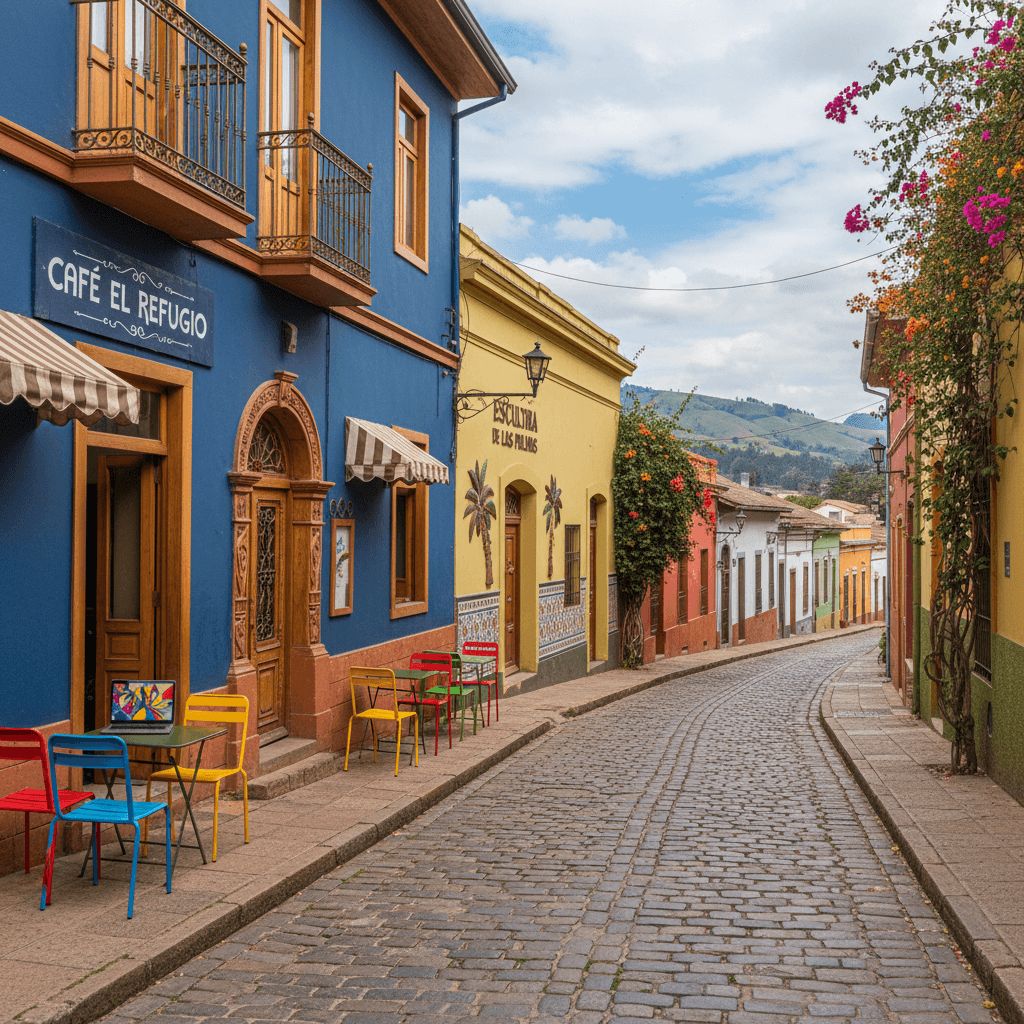
Quillota
🇨🇱 Chile
The Agricultural Heartbeat
If you're tired of the frantic pace of Santiago or the gritty, uphill hustle of Valparaiso, Quillota is where you go to catch your breath. Located in the Aconcagua River valley, this city feels less like a tourist destination and more like Chile's backyard. It is famously known as the "City of Eternal Spring" because the climate stays remarkably mild year round, making it an agricultural powerhouse. You'll notice the smell of citrus and avocado trees almost as soon as you step off the bus.
The vibe here is deeply provincial but surprisingly connected. It lacks the curated, hipster aesthetic of nomad hubs like Medellin or Lisbon. Instead, you get a genuine slice of Chilean life where the local "huaso" culture still feels present. People move a bit slower, the plazas are filled with seniors chatting on benches, and the surrounding hills are draped in green plantations. It is the kind of place where the shopkeeper will remember your coffee order by the third day.
A Different Kind of Nomad Life
Nomads usually land in Quillota because they want to escape the "expat bubble." You won't find a WeWork on every corner here. In fact, you'll likely be one of the few remote workers in the local cafes. This makes it a perfect spot for deep work and immersion. The city serves as a strategic base; you are only about 45 minutes from the coastal beaches of Concon and an hour and a half from the capital, yet your cost of living drops significantly the moment you cross the city limits.
The emotional experience of Quillota is one of quiet stability. It doesn't demand your attention with flashy nightlife or iconic landmarks. Instead, it invites you to settle into a rhythm of morning runs toward the hills of the La Campana National Park and afternoon empanadas from a street stall. It feels grounded. For many, the appeal lies in the fact that it isn't trying to be "nomad friendly," it is just a functional, friendly Chilean city that happens to have decent fiber optic internet and incredible produce.
What Sets Quillota Apart
- The Microclimate: While Santiago swelters in 35 degree heat, Quillota often stays a comfortable 24 to 26 degrees. It is rarely too hot or too cold to work outside.
- The Avocado Capital: This is the "Capital de la Palta." You will find the highest quality avocados for a fraction of the price you'd pay in the US or Europe. It is a small detail that changes your daily quality of life.
- Authentic Integration: Since there isn't a massive tourism industry, you'll need to use your Spanish. This isn't a place where people automatically switch to English, which is exactly why language learners love it.
- Access to Nature: You are at the doorstep of the Cordillera de la Costa. Weekend hiking is the default activity here, not an expensive excursion.
Expats who have spent time here often describe it as "refreshingly normal." You aren't navigating a landscape of overpriced brunch spots designed for Instagram. You are living in a city that produces the food the rest of the country eats. It is a place for the nomad who wants to disappear for a few months, save some money, and actually finish that project they've been procrastinating on.
Expect to spend your evenings at the Plaza de Armas, which is widely considered one of the most beautiful squares in Chile. It is shaded by massive ancient trees and serves as the social living room of the city. When the sun starts to set and the air cools down, the whole city seems to migrate there. It is a simple, pleasant way to live that feels a world away from the digital grind.
The Local Price Advantage
Living in Quillota is a significant departure from the price tags you'll find in Santiago or even neighboring Viña del Mar. Because this is a city built for locals rather than tourists or high flying expats, your dollar, euro, or pound stretches considerably further. Most digital nomads who land here find they can maintain a comfortable lifestyle for about $900 to $1,300 USD per month, depending on how often they head to the coast for weekends.
The economy here revolves around agriculture, specifically avocados and chirimoyas. This means fresh produce is incredibly cheap if you shop at the local ferias. You aren't paying for the "nomad tax" that usually inflates prices in more popular Chilean hubs. You'll find that while luxury imports are still pricey due to national taxes, the daily cost of existence is one of the lowest in central Chile.
Monthly Budget Breakdown
- One Bedroom Apartment (City Center): $450 to $600
- Utilities (Electricity, Water, Gas): $70 to $100
- High Speed Fiber Internet: $30 to $45
- Monthly Grocery Bill: $250 to $350
- Local Gym Membership: $25 to $40
Housing and Neighborhoods
Rent is where you'll see the biggest savings. In the city center, or Centro, a modern apartment will typically run you around 450,000 to 550,000 Chilean Pesos. If you look toward the more residential areas like San Pedro or the newer developments near the Quillota mall, prices stay stable but you often get more space or a small garden.
Most rentals are found through local Facebook groups or by walking around and looking for "Arriendo" signs, as the big international rental sites rarely list properties here. Many expats recommend negotiating a "gastos comunes" (building maintenance fees) inclusive price if you are staying in a managed building, which usually adds another $50 to $80 to the monthly total.
Food and Dining Costs
Eating out in Quillota is affordable if you stick to the "Menu del Dia." Between 1:00 PM and 3:00 PM, local spots near the Plaza de Armas serve a full lunch including a starter, main course, and drink for about $6,000 to 8,500 CLP (roughly $7 to $9 USD).
- Dinner for two at a mid range restaurant: $35,000 CLP ($38 USD)
- Large Cafe Latte: $3,200 CLP ($3.50 USD)
- Pint of local craft beer: $4,500 CLP ($5 USD)
- Street food (Empanada or Completo): $2,000 to $3,500 CLP ($2 to $4 USD)
Transportation and Connectivity
Quillota is compact enough that you can walk most places within the city core. For longer trips, the "colectivos" (shared taxis that run set routes) are the local lifeline. These cost about $700 to $1,000 CLP per ride. If you need to head into Valparaíso or Viña del Mar for a change of scenery, the bus network is efficient and cheap, costing around $3,000 CLP for a one way ticket.
Mobile data is surprisingly cheap in Chile. A prepaid SIM card from providers like WOM or Entel with a generous data package will only set you back about $10 to $15 USD per month. This is a lifesaver for those who want to work from a park or a cafe that might have spotty guest Wi-Fi.
For Digital Nomads: The City Center
If you need to be within walking distance of the few spots with reliable infrastructure, the area surrounding the Plaza de Armas is your best bet. This is the heart of the city where you will find the most consistent fiber optic connections and the highest concentration of cafes. Local nomads often frequent places like Cafe Amadeus or the various spots along Calle OHiggins to get some work done when their home internet flickers. It is not a sprawling metropolis, so staying central means you are never more than a few minutes away from the main banks and the bus terminal.
- Average Rent: $450 to $600 for a furnished apartment.
- Atmosphere: Active during the day, quiet by 9:00 PM.
- Connectivity: Best access to VTR or Movistar fiber lines.
For Expats: San Isidro
Expats looking for a more suburban feel with a bit of space usually head toward the San Isidro district. It is located on the outskirts of the main urban grid and offers a much greener environment. You will find larger houses here, often with gardens or small plots of land, which is a major draw for those who find the center too cramped. It feels more like the agricultural valley Quillota is famous for, yet you can still drive into the city center in about ten minutes.
- Average Rent: $700 to $900 for a multi bedroom house.
- Atmosphere: Peaceful, residential, and surrounded by avocado groves.
- Pro Tip: You will definitely want a car if you live out here, as local micros are less frequent.
For Families: El Sendero and Santa Teresita
Families tend to gravitate toward the newer residential developments in areas like El Sendero. These neighborhoods are designed with safety and community in mind, featuring paved sidewalks and small neighborhood parks where kids can play. It is a very localized experience where you will get to know your neighbors quickly. The proximity to local schools and supermarkets like Lider or Santa Isabel makes the daily logistics much easier to manage than in the older, more congested parts of town.
- Average Rent: $500 to $750 for modern townhomes.
- Amenities: Close to the Mall Paseo del Valle and local medical centers.
- Vibe: Very safe, family oriented, and quiet at night.
For Solo Travelers: Corvi
The Corvi neighborhood is one of the most established parts of the city and is perfect for solo travelers who want an authentic, budget friendly experience. It is a high density area with plenty of small corner stores, known as almacenes, where you can buy fresh bread and produce every morning. The rent is significantly lower here than in the newer developments, and the social fabric is tight. It is a great place to immerse yourself in the local culture and practice your Spanish with neighbors who have lived there for decades.
- Average Rent: $300 to $450 for a small house or studio.
- Food Costs: Very low if you shop at the local feria on weekends.
- Vibe: Traditional Chilean neighborhood life with a strong sense of community.
Connectivity in the Valley
Quillota is a different beast compared to the high speed hubs of Santiago or Valparaiso. It is an agricultural center first and a digital nomad destination second. While you won't find fiber optic cables running into every single adobe building, the infrastructure has improved significantly. Most modern apartments and houses in the city center now offer stable VTR or Movistar connections with speeds hitting 100 to 300 Mbps.
The main challenge here is the geography. If you rent a rustic farmhouse on the outskirts toward San Isidro, you are going to be relying on 4G or 5G signals. Fortunately, the mobile coverage is surprisingly robust. Entel and WOM are the reliable choices for local SIM cards. You can pick up a prepaid SIM for about $5,000 CLP and top it off with data packages that are cheap enough to use as a primary hotspot if the local Wi-Fi gets moody during a windstorm.
Coworking and Workspaces
You won't find a WeWork or a flashy international coworking brand in Quillota. The scene is much more grassroots and localized. Most nomads here end up working from home or finding a quiet corner in a local cafe. If you need a dedicated professional environment, LinnQ Lab or La Compania Cowork are the primary players in town. They provide the basics: reliable internet, desks, and coffee without the pretension of the big city spots.
For those who prefer a more social vibe, the local cafes are your best bet. Café La Croix is a classic choice where you can sit for a couple of hours with a laptop. Just remember that Chilean lunch hours are sacred; between 1:30 PM and 3:30 PM, these places get loud and crowded with families, so plan your deep work for the mornings or late afternoons.
- LinnQ Lab / La Compania Cowork: Daily rates are around $10,000 CLP, giving you a stable desk and a break from the isolation of an Airbnb.
- Public Library: The Biblioteca Municipal is a quiet, free alternative, though the Wi-Fi is hit or miss. It is better for offline tasks or light browsing.
- Mall Paseo del Valle: If you are desperate, the food court area has open Wi-Fi, but it is noisy and best saved for emergencies.
Practical Tips for Staying Online
Power outages aren't a daily occurrence, but they happen more often here than in Santiago, especially during the winter rains. Experienced expats always keep a fully charged power bank and a mobile hotspot ready to go. If your work involves heavy video conferencing, stick to the city center where the grid is more stable.
One thing travelers often overlook is the "Siesta" culture. Many smaller shops and even some service providers might close up for a few hours in the afternoon. If you need tech support or a new charger, get it done before noon. Most locals are incredibly helpful, but they operate on a relaxed timeline that might frustrate you if you are used to the 24/7 hustle of a major tech hub.
Digital nomads who choose Quillota usually do so for the peace and the proximity to the Aconcagua Valley, not for the cutting edge tech. As long as you have a backup data plan and a bit of patience, you will find the internet more than capable for a standard remote job. It is a trade off: you get a slower pace of life and lower rent in exchange for a slightly more DIY approach to your office setup.
Staying Safe in the Valley
Quillota is generally much quieter than the chaotic streets of nearby Valparaiso or the dense neighborhoods of Santiago. Most nomads find the city has a relaxed, provincial pace where people still greet their neighbors. While it lacks the high-profile crime rates of the capital, you should still practice common sense. Opportunistic theft, like phone snatching or bag lifting in crowded areas like the Plaza de Armas, is the most common issue you might face.
Walking around during the day is perfectly fine in the center and residential areas like El Sendero. At night, it's better to stick to well lit main roads or call a car through an app. Local expats recommend keeping a low profile and not flashing expensive laptops or cameras while sitting in outdoor cafes. If you're heading out for a night in the San Pedro district, just be mindful of your surroundings as you would in any mid sized city.
- Emergency Number: Dial 133 for the Carabineros (police).
- PDI: Dial 134 for the Policia de Investigaciones, who handle immigration and serious crimes.
- Local Tip: Keep a digital copy of your passport and entry stamp on your phone, but leave the physical documents in a secure spot at your accommodation.
Healthcare and Medical Services
The healthcare system in Quillota is surprisingly robust for a city of its size. The Hospital Biprovincial Quillota-Petorca is a newly operational, large scale facility that serves the region. It's the primary spot for emergencies and specialized care. For quick consultations or minor issues, many residents head to private clinics like Clinica Ciudad del Mar network outposts or local Centros Medicos in the downtown core.
Pharmacies are everywhere. You'll recognize the big three: Farmacias Ahumada, Cruz Verde, and Salcobrand. Most are located around the main square and along Calle O'Higgins. They carry most standard medications, though it's always easier if you have your prescription written using the generic drug name rather than a brand name. Many pharmacists speak a little English, but having a translation app ready will save you a lot of frustration.
Practical Health Tips
The tap water in Quillota is technically safe to drink, but it has a very high mineral content that can be tough on your stomach if you aren't used to it. Most long term travelers buy five liter jugs of purified water at the supermarket to avoid any digestive drama. The sun in the Aconcagua Valley is also incredibly strong. Even on cloudy days, the UV index hits 10+ easily, so high SPF sunscreen is a daily requirement, not a suggestion.
- Public vs. Private: Use private clinics for faster service if you have travel insurance. The public system is good but often involves long wait times for non emergencies.
- Insurance: Make sure your policy covers medical evacuation to Santiago for serious surgeries, though the local hospital is equipped for most standard procedures.
- Cost: A standard private GP visit usually runs between $35,000 and $50,000 CLP.
If you have a serious medical emergency that requires specialized English speaking staff, you might consider the hour drive to Vina del Mar. However, for 95% of health needs, Quillota's local infrastructure is more than sufficient for a digital nomad stay.
The Pulse of the Aconcagua Valley
Moving through Quillota feels different than the frantic pace of Santiago. This is a city that moves to its own rhythm, dictated largely by the agricultural cycles of the surrounding valley. You won't find a massive subway system here. Instead, the layout is dominated by a grid pattern centered around the Plaza de Armas, making the downtown core extremely walkable for your daily errands or a quick coffee run.
Most nomads who settle here for a few months find that their feet are their best asset. The city is flat, and most of the essential services, banks, and local markets like the Feria de Quillota are clustered within a few blocks of the center. If you are staying in neighborhoods like San Pedro or the newer residential areas toward the outskirts, you will need to get familiar with the local transit ecosystem.
Collectivos and Micros
The backbone of local transport is the colectivo. These look like standard black sedans with signs on their roofs indicating their routes. They operate like a hybrid between a bus and a taxi. They follow fixed routes but will pick you up or drop you off anywhere along that path. It is a shared service, so expect to sit next to locals heading to work or the market. A typical ride within the city limits usually costs between 600 and 800 CLP.
For longer hauls or reaching the edges of the city, the local buses, known as micros, are your go to. They are less frequent than in Valparaíso but are very affordable. You will usually pay the driver in cash as you board, so keep small coins and 1,000 CLP bills handy. Most routes through the city center cost around 500 CLP. If you are heading out toward the industrial areas or nearby La Cruz, the price might tick up slightly.
Regional Connections
One of the biggest perks of living in Quillota is the proximity to the coast and the capital, even if the city itself feels tucked away. The Limache-Puerto train (formerly known as Merval) is the golden ticket for digital nomads who want a weekend in Viña del Mar or Valparaíso. While the train doesn't run directly into Quillota, it terminates in nearby Limache.
To get there, you take a specialized "Bus+Metro" combination. Several bus lines run frequently from the Quillota terminal directly to the Limache station. From there, the sleek, modern train whisks you to the coast in about 30 minutes. You will need a Tarjeta Transporte Inteligente (TTI) to use the train, which you can buy and top up at the station. A trip from Limache to Puerto station in Valparaíso costs roughly 1,100 CLP during peak hours.
Cycling and Ride Sharing
The weather in the valley is famously stable, which makes cycling a viable way to get around for most of the year. While dedicated bike lanes are still a work in progress in many sectors, the side streets are generally quiet enough for a comfortable ride. Some expats choose to buy a cheap mountain bike at the local sodimac or a second hand shop to handle the occasional pothole or gravel path on the outskirts.
Apps like Uber and Cabify do operate in Quillota, though the fleet is significantly smaller than what you would find in Santiago. During the day, you can usually snag a ride within 5 to 10 minutes. On weekend nights, wait times can stretch significantly. For a more reliable late night option, locals often keep the WhatsApp number of a trusted local "radiotaxi" company saved in their phones. A typical cross town trip in a private taxi will run you about 3,000 to 5,000 CLP.
Practical Transit Tips
- Cash is King: While the train uses a card, almost every colectivo and micro in Quillota requires physical pesos.
- The "Bajar" Rule: When you want to get off a micro, shout "¡Baja!" or "En la esquina, por favor" clearly to the driver, as stop buttons don't always work or exist.
- Peak Hours: Traffic can get surprisingly tight around the Plaza de Armas between 8:00 AM and 9:00 AM and again around 6:00 PM. Plan your grocery runs or gym sessions outside these windows.
- Terminal de Buses: For long distance trips to Santiago, head to the main terminal. Buses to the capital run frequently and take about 1.5 to 2 hours depending on traffic, costing around 5,000 to 7,000 CLP.
The Local Linguistic Landscape
In Quillota, you are stepping away from the bilingual bubbles of Santiago or the tourist heavy streets of Valparaiso. Spanish is the absolute rule here. While you might find the occasional English speaker at the bigger supermarkets like Lider on Condell, most of your daily interactions at the local ferias or neighborhood almacenes will happen entirely in Spanish.
Chilean Spanish is famous for being a challenge, even for those who speak the language well. Locals tend to drop the "s" at the end of words and speak with a paragraph-long, melodic cadence. In a smaller agricultural hub like Quillota, the accent is thick and full of local slang, known as chilenismos. Don't be surprised if your textbook Spanish doesn't immediately help you understand a conversation at Plaza de Armas.
Most nomads find that a B1 level of Spanish is the sweet spot for living comfortably here. If you are just starting out, you will rely heavily on translation apps for anything beyond ordering a completo. However, the residents of Quillota are generally patient and appreciate the effort when you try to use their tongue. It is a far cry from the rushed atmosphere of the capital; people here will often take the time to help you find the right word.
Key Terms and Slang
To get by in the "City of Chirimoyas," you need to get comfortable with the local vocabulary. You will hear these words dozens of times a day:
- Cachai?: The universal Chilean filler meaning "Do you understand?" or "You get it?"
- Po: A suffix added to almost everything for emphasis. "Si, po" or "No, po" are the standard responses.
- Luca: A 1,000 peso bill. If someone tells you a bag of avocados is tres lucas, they mean 3,000 pesos.
- Fome: Something boring or lame.
- Pololo/Polola: Boyfriend or girlfriend. You won't hear "novio" unless someone is literally getting married.
Digital Communication and Connectivity
Staying connected is relatively easy if you have the right tools. WhatsApp is the backbone of all communication in Quillota. From coordinating with local vendors to joining community groups for apartment rentals, everything happens through the app. If you don't have a local number, you will find yourself out of the loop very quickly.
For mobile data, expats recommend grabbing a SIM card from Entel or WOM. Entel generally has the most reliable coverage when you head out toward the rural edges of the Aconcagua Valley or up toward La Campana National Park. A prepaid plan with plenty of data usually costs around 10,000 to 15,000 pesos per month. You can top these up at any Caja Vecina, which are small payment points found inside local corner stores.
Learning the Language Locally
Since Quillota isn't a major expat destination, you won't find a dozen formal language schools on every corner. Most nomads living here opt for private tutors or online exchanges. If you want a more immersive experience, check the notice boards at the Centro Cultural Leopoldo Silva Reynoard. It is a great place to meet locals who might be interested in a language exchange, swapping English practice for Spanish lessons over a coffee.
If you need intensive classes, many travelers take the 45 minute bus ride to Vina del Mar or Valparaiso once or twice a week. These coastal cities have established schools with programs specifically designed for foreigners. However, the best practice you will get is simply navigating the local markets. Buying your fruits and vegetables at the Feria de Quillota is a daily lesson in numbers, food names, and local banter that no classroom can replicate.
Mediterranean Roots and Microclimates
Quillota sits in a sweet spot within the Aconcagua Valley, sheltered by the coastal range. This geography creates a mediterranean climate that is famously stable, which is exactly why the area is the avocado capital of Chile. You can expect warm, dry summers and cool, damp winters, but without the extreme temperature swings you might find deeper in the Andes or the oppressive humidity of the coast.
The city earns its nickname, the City of Eternal Spring, because the transition between seasons is relatively gentle. Most nomads find the air quality here significantly better than in Santiago, as the coastal breezes help clear out the valley haze. It is a place where you can actually leave your windows open while you work without getting blasted by city soot or freezing drafts.
The Golden Window: September to April
If you want the quintessential Quillota experience, aim to arrive between September and November. This is springtime in the southern hemisphere, and the valley is incredibly lush. The fruit trees are in bloom, and the daytime temperatures hover comfortably around 20°C to 24°C (68°F to 75°F). It is perfect for afternoon walks through the Plaza de Armas or weekend trips to the nearby La Campana National Park.
Summer runs from December through February. It gets hot, often peaking around 30°C (86°F), but the low humidity makes it manageable. This is the peak season for local produce, so your grocery budget goes a long way at the local ferias. Just keep in mind that many locals head to the nearby beaches of Concon or Vina del Mar during January, so the city feels a bit sleepier during the peak heat of the day.
The Rainy Season Reality
Winter in Quillota lasts from June to August. It is never truly "freezing" by northern standards, but the dampness can seep into your bones because many older apartments and houses lack central heating. Nighttime temperatures can dip to 4°C or 5°C (40°F). This is when you will see everyone wearing their thickest wool ponchos and sipping on tea.
Rain is infrequent but usually comes in heavy bursts. When it does rain, the dust settles and the surrounding hills turn a brilliant green almost overnight. If you are staying during these months, make sure your rental includes a gas heater (estufa) or a sturdy electric radiator, or you will spend your workdays wrapped in a blanket.
Packing and Practicality
The biggest weather challenge here is the diurnal temperature swing. Even in the height of summer, the temperature can drop 15 degrees as soon as the sun goes behind the coastal hills. Expats quickly learn the "onion method" of dressing in layers. You will want a light jacket even on a day that felt like a scorcher at noon.
- September to November: The best balance of weather and local festivals. Expect highs of 22°C and lows of 9°C.
- December to March: Best for sun seekers and hikers. Highs of 30°C and virtually zero rain.
- May to August: The quietest time for digital nomads. Highs of 15°C with frequent morning fog and occasional heavy rain.
If your work depends on outdoor inspiration or you plan to spend your weekends exploring the valley, stick to the months surrounding the harvest. March and April are particularly beautiful as the light turns golden and the heat begins to mellow out, making it the most productive time for many who choose to call this valley home for a few months.
Connectivity and Power
You won't find many dedicated coworking spaces in Quillota like you would in Santiago. Many visitors set up shop at the Lider supermarket cafe area for a reliable signal. If you're planning to stay for more than a week, get a local SIM card from Entel or WOM. Entel generally has the best coverage in the Aconcagua Valley, especially if you plan on heading out to the rural outskirts for a weekend hike. Expect to pay about 10,000 CLP for a decent monthly data prepaid plan.
Chile uses Type C and Type L plugs, which are the ones with two or three round pins. The voltage is 220V. If you're coming from North America, you'll need a transformer for your high powered electronics, though most laptop chargers handle the range fine with just a simple plug adapter. Power outages aren't frequent, but they can happen during heavy winter rainstorms in June and July.
Money and Budgeting
Cash is still very much part of daily life here. While larger pharmacies like Cruz Verde and supermarkets like Tottus take cards, the local fruit stands and smaller shops often prefer pesos. ATMs, known locally as Redbanc, are easy to find around the city center. Try to use the machines inside the Banco de Crédito e Inversiones (BCI) or Banco Estado for better security.
Tipping is straightforward. At sit down restaurants, a 10% tip (the propina) is standard and usually added to the bill as a suggestion. You can ask them to remove it if the service was terrible, but it's considered quite rude. For grocery baggers or small services, a few hundred pesos is a kind gesture. A daily budget of 35,000 to 45,000 CLP covers a nice meal, some local transport, and a few coffees without feeling like you're pinching pennies.
Navigating the Local Rhythm
Quillota follows the traditional Chilean schedule. Many smaller shops close for a couple of hours in the afternoon, usually between 2:00 PM and 4:30 PM, for a long lunch or siesta. This is the perfect time to catch up on deep work because the streets get quiet. The city wakes back up in the evening, and dinner rarely happens before 8:30 PM. If you're hungry at 6:00 PM, look for a spot serving "once," which is a hearty Chilean tea time involving bread, avocado (palta), and cold cuts.
The local "Colectivos" are your best friend for getting around. These are shared taxis that run fixed routes and have signs on the roof indicating their destination. They're faster than the bus and cost around 700 to 900 CLP depending on the distance. Just wave them down like a regular taxi; if they have space, they'll pull over.
Health and Safety
The tap water in Quillota is safe to drink, though it has a high mineral content that might taste a bit "heavy" to some. Most expats buy a 20 liter water jug for their apartments to avoid the scale buildup in their kettles. For medical needs, Hospital Biprovincial Quillota-Petorca is the main facility in town, but for non emergencies, a "Centro Médico" or "Clínica" will get you seen much faster for a flat fee.
Safety is generally not a major concern compared to Valparaíso or Santiago. However, keep your phone tucked away when walking near the train tracks or late at night in less lit areas. The biggest local "danger" is actually the sun. The valley gets incredibly high UV levels, so wearing SPF 50 is a daily requirement even if it feels breezy outside.
- Emergency Number (Police): 133
- Ambulance: 131
- Fire Department: 132
- Average Lunch (Menú del Día): 6,000 to 8,500 CLP
Need visa and immigration info for Chile?
🇨🇱 View Chile Country GuideHidden Gem
Worth the effort