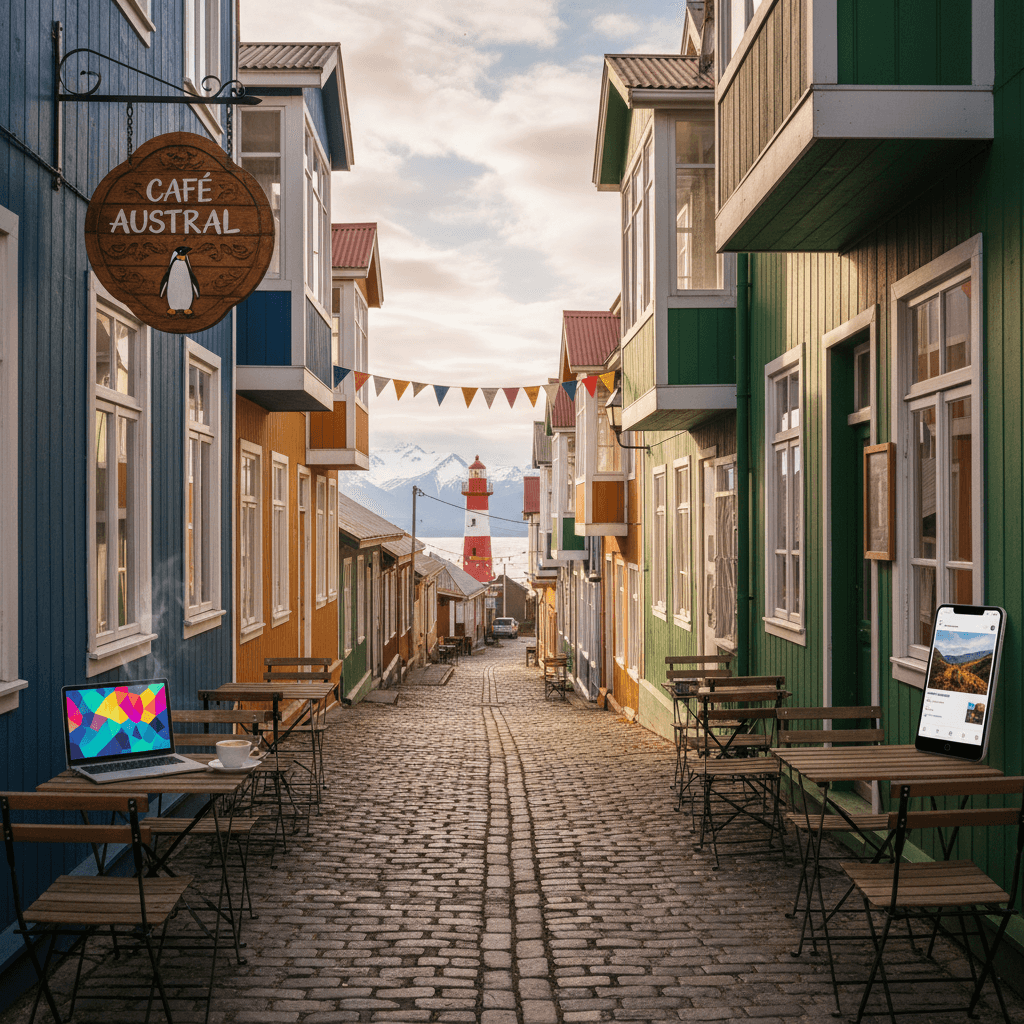
Punta Arenas
🇨🇱 Chile
The Edge of the World Vibe
Punta Arenas isn't your typical digital nomad hub. It feels like the last outpost before the earth simply gives up. There's a certain grit here, a mix of 19th-century mansions built by wool barons and salt-stained shipping containers. You'll spend your mornings walking through Plaza Muñoz Gamero, dodging the legendary Magallanes wind that can literally knock you off your feet, and your afternoons staring at the Strait of Magellan from a weathered promenade.
The city has a slow, deliberate pace. It's a place for people who prefer a sturdy wool sweater over a beach towel. You’ll find a unique blend of Croatian heritage, gaucho culture, and maritime history. Most nomads describe the atmosphere as "frontier-chic." It’s isolated, sure, but that’s the point. You’re here because you want to be at the gateway to Antarctica, where the street dogs are friendly and the light during the summer months stretches well into the night, giving you plenty of time for photography after the workday ends.
Living Costs & Nomad Budget
While Chile is rarely the cheapest spot in South America, Punta Arenas is surprisingly manageable because of its tax-free status. You can snag a decent central 1BR apartment for $400 to $700 a month. Most nomads find they can live comfortably on a total budget of $1,100 to $1,300, which covers a private place, plenty of local seafood, and the occasional weekend trip to see the penguins.
- Budget Tier ($900 to $1,100): Shared housing, eating at local spots like the central market, and using the $1 colectivos to get around.
- Mid-Range Tier ($1,100 to $1,200): A private central apartment, working from cafes, and dining out a few times a week.
- Comfortable Tier ($1,300+): High-end rentals, frequent dinners at upscale spots near the Plaza de Armas, and booking private tours to Parque del Estrecho.
Where to Plant Your Flag
Most nomads stick to the Central neighborhood around Plaza de Armas. It’s the most walkable part of town and keeps you close to the banks, pharmacies, and the best cafes for working. You’ll be surrounded by historic architecture like the Museo Regional de Magallanes, and the buildings here offer the best protection against the wind.
If you need a break from the screen, the Waterfront area near Parque María Behety is where you’ll find locals jogging or cycling. It’s a bit grittier, featuring rusted shipwrecks like the Lord Lonsdale, but the views of the water are unbeatable. For gear junkies, the Zona Franca is a massive tax-free zone about 8km out. It’s not a place to live, but it’s where you go to buy a discounted laptop or high-end hiking boots before heading into the wild.
The Connectivity Reality
Don't expect the lightning-fast fiber of Santiago, but the internet here is reliable enough for Zoom calls and heavy uploads. Since there aren't many dedicated coworking spaces, you'll likely be working from your apartment or local cafes. Expats often recommend getting a ConnectPls eSIM or a Holafly plan for unlimited data. Having a backup is smart when you're this far south, especially if you plan on working while looking for whales along the coast.
Safety and Everyday Life
This is consistently ranked as one of the safest cities in Chile. You can walk around the center at night without looking over your shoulder. The community is tight-knit and generally welcoming to foreigners, though you'll definitely want to brush up on your Spanish. English is rare outside of the high-end tour agencies. If you need medical help, there are solid clinics near the center, though anything extremely serious usually requires a flight back to Santiago.
Getting around is simple. The city core is compact and walkable. For longer trips, look for the colectivos, shared taxis that run fixed routes for about $1. They are way more common than standard taxis and much cheaper. Just look for the signs on their roofs indicating their destination.
The Trade-off
The isolation is real. You are a long way from any other major city, and the weather can be harsh even in the middle of summer. However, the payoff is access to some of the most dramatic landscapes on the planet. Between the Cementerio Municipal (honestly one of the most beautiful cemeteries you'll ever see) and the proximity to Torres del Paine, the "end of the world" starts feeling like a place where you could actually stay a while.
The Patagonian Price Tag
Living at the edge of the world doesn't have to break the bank. While Punta Arenas is more expensive than rural Chile, it remains significantly more affordable than Santiago or the high-end tourist hubs in the Northern Hemisphere. Most digital nomads find they can live comfortably here on a budget of $1,100 to $1,300 per month, which covers a private apartment, frequent dining out, and the occasional splurge on a penguin-watching tour.
The city's unique tax-free status at the Zona Franca is a major perk. If you need to upgrade your laptop or replace your hiking boots, this is the place to do it. You'll find electronics and outdoor gear at prices that are often lower than anywhere else in South America, making it a strategic pitstop for long-term travelers.
Monthly Budget Tiers
- The Budget Nomad ($900 to $1,100): You're likely sharing a house or staying in a modest guesthouse, eating mostly street food like choripanes for $5, and using the local colectivo buses to get around.
- The Mid-Range Professional ($1,100 to $1,200): This gets you a private one-bedroom apartment near the city center, regular meals at local spots for $15 to $25, and enough left over for decent coffee and weekend trips.
- The High-End Resident ($1,300+): You'll have a modern apartment with a view, eat at upscale restaurants where dinner runs $30 or more, and book professional tours to explore the surrounding glaciers and wildlife.
Housing and Neighborhoods
Rent is your biggest variable. A central one-bedroom apartment near Plaza de Armas or Plaza Muñoz Gamero typically costs between $400 and $700 per month. Staying central is highly recommended for nomads because it keeps you within walking distance of the best cafes, banks, and the Museo Regional de Magallanes.
If you prefer a quieter vibe, look toward the Waterfront near Parque María Behety. It's grittier and more industrial, but the views of the Strait of Magellan are unbeatable. Families often prefer this area for the open space, though you'll rely more on taxis or the $1 colectivo rides to get into the heart of the city.
Daily Expenses
Groceries can be slightly higher than in central Chile because so much has to be shipped in, but it's manageable if you shop at local markets. Eating out offers a wide range of prices. You can grab a quick bite for under $10, but a nice meal with a glass of Chilean wine will usually set you back about $20.
Transportation is one of the cheapest parts of living here. The city core is compact and very walkable, provided you can handle the famous Patagonian wind. When it's too cold to walk, the bus and colectivo network is efficient and cheap. Taxis are plentiful and easy to hail, especially around the Zona Franca shopping district.
Connectivity and Remote Work
While Punta Arenas doesn't have a dedicated coworking scene like Santiago, the infrastructure is surprisingly solid. Most apartments come with reliable fiber optic internet. For backup, many nomads use ConnectPls or Holafly eSIMs to maintain a high-speed connection while working from cafes near the main plaza.
The local work culture is relaxed. You won't find many "laptop cafes" with dedicated quiet zones, but as long as you're buying coffee, most cafe owners are happy to let you work for a few hours. Just remember that English isn't widely spoken, so having a translation app ready on your phone will save you a lot of hassle when setting up utilities or negotiating a short-term lease.
For Digital Nomads: The Historic Center (El Centro)
If you need to be within walking distance of a reliable espresso and a stable Wi-Fi signal, the area surrounding Plaza Muñoz Gamero and Plaza de Armas is your best bet. This is the heart of the city where 19th century mansions meet modern services. Most nomads find this the only practical place to stay because it solves the logistics of Patagonian life without needing a car. You are minutes away from banks, pharmacies, and the Museo Regional de Magallanes.
While there are no dedicated coworking franchises here yet, the cafe culture is welcoming. You can grab a table at local spots near the plaza and work for a few hours comfortably. Rent for a one bedroom apartment in this core typically runs between $400 and $700 per month. The main drawback is the influx of cruise ship passengers during the summer, but the convenience of having the best restaurants and travel agencies at your doorstep makes up for the crowds.
- Rent: $400 to $700 for a private 1BR
- Vibe: Historic, walkable, and connected
- Best for: Reliable internet access and social proximity
For Solo Travelers: The Waterfront (Costanera)
Solo travelers often gravitate toward the blocks bordering the Strait of Magellan. This area feels a bit grittier and more industrial, but it offers the most iconic Patagonian views. It is perfect if you spend your mornings running or your afternoons photographing shipwrecks like the Lord Lonsdale. The promenade is well lit and features exercise equipment and bike lanes that are popular with locals.
Staying here puts you close to the bus terminals, which is vital for those planning quick trips to Puerto Natales or Torres del Paine. You will find plenty of hostels and guesthouses where it is easy to meet other backpackers heading south. Expect to pay about $15 to $25 for a mid range meal at the nearby seafood spots. It can get incredibly windy on the front row, so make sure your accommodation has solid insulation.
- Daily Budget: $40 to $60 including hostel and local eats
- Vibe: Rugged, scenic, and transitional
- Top Activity: Watching for whales or dolphins from the shore
For Families: Southern Residential Areas
Families usually prefer the residential pockets near Parque María Behety. This neighborhood is quieter than the city center and offers much more green space for kids to run around. The park itself is a local favorite, featuring large playgrounds and plenty of room for weekend picnics. It feels more like a traditional neighborhood and less like a tourist hub.
Safety is a major draw here. Punta Arenas is frequently cited as one of the safest cities in Chile, and these residential streets exemplify that peace of mind. You will likely rely on colectivos (shared taxis) or the local bus system to get into the center, which costs about $1 per ride. It is a more authentic way to experience the city away from the souvenir shops.
- Housing: Larger homes and apartments with more square footage
- Vibe: Quiet, safe, and community oriented
- Proximity: Close to the waterfront bike paths and large parks
For Long Term Expats: Zona Franca & North
If you are planning to stay for several months or a year, the area toward Zona Franca is worth considering. Located about 8.6 kilometers north of the center, this is the tax free shopping district. Expats recommend this area if you are setting up a permanent home and need easy access to electronics, outdoor gear, and imported goods at lower prices. It is less about charm and more about practicality.
Living here usually requires a vehicle or a commitment to the taxi lines, as it is not a walkable commute to the historic district. However, the cost of living remains manageable, with a comfortable lifestyle for a couple costing around $1,300 per month. It is the best spot for those who want modern amenities and the ability to stock up on supplies for long expeditions into the wilderness.
- Monthly Budget: $1,100 to $1,300 for a comfortable lifestyle
- Vibe: Commercial, modern, and convenient
- Key Perk: Tax free shopping for high end tech and hiking gear
Connectivity at the Edge of the World
Working from the southern tip of Patagonia used to be a gamble, but Punta Arenas has evolved into a surprisingly reliable base for remote work. While you won't find the hyper-connected tech hubs of Santiago here, the city offers stable infrastructure that handles video calls and large uploads without much fuss. Most nomads find that the local fiber optic networks are more than capable of supporting a full work week, provided you choose your base wisely.
The city's safe, small-town atmosphere means you can comfortably pull out a laptop in public without looking over your shoulder. However, the extreme southern latitude does mean you should prepare for occasional weather-related blips. Heavy winds can sometimes interfere with local signals, though these instances are becoming rarer as the city modernizes its infrastructure for the 2025 season.
Coworking and Work-Friendly Spaces
Traditional, dedicated coworking spaces are scarce in Punta Arenas. Unlike the northern cities, the "office" culture here is much more informal. Most remote pros gravitate toward the historic center near Plaza de Armas and Plaza Muñoz Gamero. The cafes in this area have a long-standing culture of welcoming patrons who linger over a coffee and a laptop, especially during the quieter morning hours.
- Central Cafes: Look for spots near the Museo Regional de Magallanes. These areas offer the best balance of reliable Wi-Fi and ample power outlets.
- Public Libraries: For a quieter, more focused environment, the local libraries near the city core provide a free alternative, though you'll need to be mindful of their specific operating hours.
- Waterfront Setups: When the weather permits, the promenade near Sandy Point has benches that work for quick tasks, though the Patagonian wind usually makes this a short-lived office.
Mobile Data and eSIMs
If you're planning to move around or take day trips to see the penguin colonies, a solid data plan is your best friend. Relying solely on public Wi-Fi isn't recommended if you have deadlines. Most travelers now opt for digital solutions to avoid the hassle of finding a physical store in the city center.
- eSIM Providers: Services like ConnectPls and Holafly are the go-to choices for unlimited data. They're easy to activate before you even land at the airport.
- Physical SIMs: If you prefer a local number, you can pick up a physical SIM at the airport or at small shops (kioskos) around the Plaza de Armas. Expect to pay around $5 to $10 for a starter data package.
- Coverage: Signal strength is excellent within the city limits and the Zona Franca shopping district, but it drops off significantly once you head into the deeper wilderness of the surrounding parks.
Digital Nomad Practicalities
Living and working here requires a bit of a gear shift. Because the city is a tax-free zone, it's actually one of the best places in Chile to upgrade your tech. If your laptop dies or you need a specific peripheral, head to Zona Franca Punta Arenas. It's about 8.6km from the center and offers significant savings on electronics compared to the rest of the country.
Budgeting for your stay is straightforward. A comfortable lifestyle here, including a central apartment with high-speed internet, usually runs between $1,100 and $1,300 per month. Most of that budget goes toward housing, as central 1BR apartments range from $400 to $700. Utilities are generally affordable, though heating costs can spike during the winter months. For the best connectivity, always ask your landlord for a speed test before signing a monthly lease, as older buildings in the colonial district can sometimes have thicker walls that dampen Wi-Fi signals.
A Safe Haven in the Deep South
Punta Arenas holds a unique reputation as one of the safest cities in Chile. While larger hubs like Santiago struggle with rising petty crime, this Patagonian outpost maintains a peaceful, small town atmosphere where the community keeps a close watch on things. Most nomads feel comfortable walking through the city center or along the waterfront at night, provided they use the same common sense they would at home.
The crime rate here is remarkably low, especially regarding violent incidents. You won't find specific "no go" zones to avoid, but the gritty aesthetic of the waterfront might feel intimidating to some newcomers. Don't let the weathered buildings fool you; the area near Parque María Behety and the shipwrecks is frequented by local families and joggers. The biggest safety nuisance you'll actually encounter is the local population of street dogs. While generally friendly or indifferent, they can be unpredictable if you're carrying food or jogging.
Healthcare Infrastructure
For a city of its size, the medical facilities are surprisingly robust. Most healthcare services, clinics, and pharmacies are clustered within walking distance of Plaza de Armas. It's the kind of place where you can handle routine checkups or minor injuries without much fuss. Pharmacies are ubiquitous and easy to find, often staying open late to serve the central district.
- Public vs. Private: The public hospital system is reliable for emergencies, but expats and nomads usually prefer private clinics for faster service and more modern equipment.
- Language Gap: Don't expect medical staff to be fluent in English. Even in professional settings, you'll likely need a translation app or a basic grasp of Spanish to explain your symptoms.
- Serious Cases: While the local hospital handles most issues well, specialized surgeries or complex long term treatments often require a flight to Santiago.
Emergency Contacts
If things go sideways, you'll want these numbers saved in your phone. Chile uses a simple three digit system for emergency services. Response times in the city center are generally quick because the traffic is rarely an issue outside of peak hours.
- Ambulance: Dial 131
- Police (Carabineros): Dial 133
- Fire Department: Dial 132
Environmental Hazards
In Punta Arenas, the "danger" is rarely people and almost always the climate. The wind here isn't just a breeze; it can reach speeds that literally knock you off balance. Locals are used to it, but travelers often underestimate the chill. Hypothermia is a genuine risk if you head out for a trek unprepared, even in the summer. Always check the forecast before heading to Parque del Estrecho or the surrounding wilderness.
The ozone layer is also thinner this far south. Even on cloudy days, the UV index can be deceptively high. Nomads who spend their afternoons working from waterfront benches often find themselves with a "Patagonian burn" if they skip the sunscreen. It sounds minor, but the sun here hits differently than it does in the tropics.
Practical Tips for Staying Secure
Most nomads recommend staying in the Central neighborhood near Plaza Muñoz Gamero to be close to the highest concentration of services and well lit streets. If you're heading out to Zona Franca for tax free gear, stick to official taxis or the frequent colectivos rather than walking the long, exposed route back with expensive electronics.
Overall, your biggest worry in Punta Arenas will likely be a dead phone battery or a sudden rainstorm rather than a pickpocket. It's a place where you can actually relax your guard and focus on the landscape, which is exactly why it's becoming a go to base for remote workers looking to escape the chaos of bigger South American cities.
The Walkable Frontier
Punta Arenas is surprisingly compact for a regional capital. If you're staying near the historic core or Plaza de Armas, your own two feet will be your primary mode of transport. The grid system is easy to follow, and reaching the waterfront promenade for a sunset walk takes minutes from most central apartments. Just be prepared for the wind; it's a local constant that can turn a simple five block walk into a bit of a workout.
The Costanera del Estrecho (the waterfront) features dedicated bike lanes and wide pedestrian paths. It's the best spot in town for a morning run or a casual cycle, passing by the famous Lord Lonsdale shipwreck. While the city center is manageable on foot, you'll want wheels for anything beyond the immediate downtown radius.
Colectivos and Micro Buses
When the Patagonian weather turns sour or you're heading to a neighborhood further out, the local bus system and colectivos are your best friends. These aren't just for locals; they're the most efficient way to get around on a budget. A single ride typically costs around $0.40 to $0.60, making it an easy choice for daily errands.
- Colectivos: These look like standard taxis but have signs on the roof indicating their specific routes. They follow fixed paths and are shared with other passengers. You can hail them anywhere along their route.
- Micro Buses: Larger buses that cover the main arteries of the city. They're slightly slower than colectivos but great for reaching the northern residential areas or the southern docks.
- Zona Franca Access: If you're heading to the tax free zone to stock up on gear or electronics, look for buses or colectivos labeled Zona Franca. It's about 3.5km north of the center, so walking isn't really an option unless you have a full afternoon to kill.
Taxis and Ride Hailing
While global giants like Uber aren't the dominant force here yet, traditional taxis are everywhere. You'll find them idling in ranks around Plaza Muñoz Gamero and near the large shopping centers. They're reliable and safe for late night trips back from a restaurant or bar. Most nomads find that for short hops within the city, a taxi rarely exceeds $3 to $6.
For longer excursions, like visiting the Parque del Estrecho or the penguin colonies at Otway Sound, skip the standard taxi and book a dedicated tour or a private transfer. These sites are a significant drive away, and local outfitters offer better value than a metered cab for full day trips.
Airport Transfers
Getting from Presidente Carlos Ibáñez del Campo International Airport to the city center is straightforward. The drive takes about 15 to 20 minutes depending on traffic. You have two main choices upon arrival:
- Official Airport Taxis: Expect to pay between $15 and $25 for a private ride directly to your door.
- Transfer Shuttles: These shared vans are a favorite for solo travelers. They're cheaper than a private taxi and will still drop you at your specific hostel or apartment, though you might have to wait as they drop off other passengers first.
Cycling and Outdoor Mobility
Biking is popular along the waterfront, but the city's steep hills and unpredictable gusts make it less practical for commuting through the center. If you want to explore the coast, you can find rentals at local outfitters near the Plaza de Armas. It's a fantastic way to see the shipwrecks and the gritty, industrial charm of the Magellan Strait on a clear day. Just keep an eye on the sky; the weather changes faster here than almost anywhere else in Chile.
The Local Linguistic Landscape
In Punta Arenas, Spanish is the undisputed king. Unlike the international bubbles of Santiago or the heavy tourist presence in San Pedro de Atacama, this is a working port city first and a tourist hub second. Most nomads find that while the frontier spirit is welcoming, the language barrier is real. Outside of high end hotels or major tour operators running excursions to the Magdalena Island penguin colonies, English proficiency is quite low.
Chilean Spanish is famous for being some of the fastest and most slang heavy in the world, and the Patagonian variety adds its own rugged flair. Locals often drop the "s" at the end of words and speak with a melodic, rapid fire cadence. You'll hear the word "po" tacked onto the end of almost every sentence; it doesn't really mean anything, it's just linguistic punctuation. If you're coming from a background of formal classroom Spanish, don't be discouraged if you don't understand much during your first week. It takes a minute to tune your ears to the local frequency.
Communication for Remote Work
If you're planning to hunker down for a few months of remote work, you can't rely on the local shops or cafes having English speaking staff. Expats recommend downloading an offline version of Google Translate immediately. Since you'll likely be spending time at Zona Franca to pick up tax free gear or electronics, being able to ask specific technical questions in Spanish is a massive advantage. Most interactions at banks, supermarkets, or when dealing with landlords for a central apartment will happen entirely in Spanish.
For staying connected, the infrastructure is surprisingly solid for such a remote outpost. Most nomads skip the hassle of physical SIM cards and opt for an eSIM from providers like Airalo or Holafly before they even land at the airport. If you prefer a local number, Entel and WOM are the most reliable carriers in the region. You can grab a prepaid chip for about $5 to $10 at shops near Plaza Muñoz Gamero. Having a steady data connection is vital because you'll be using apps like WhatsApp for almost everything, from booking a table at a local restaurant to coordinating with tour guides for a weekend trek.
Practical Tips and Survival Phrases
Navigating daily life becomes much smoother once you've mastered a few basics. While you don't need to be fluent, showing effort goes a long way with the locals, who are generally proud of their isolated corner of the world. Travelers often say that a simple "Hola, buen día" opens more doors than jumping straight into English.
- ¿Cuánto cuesta? (How much does it cost?): Vital for the Plaza de Armas craft markets or catching a colectivo.
- ¿Habla inglés? (Do you speak English?): Use this before launching into a long explanation.
- La cuenta, por favor (The check, please): Essential for those long lunches at mid range spots where service is relaxed and unhurried.
- ¿Dónde está el baño? (Where is the bathroom?): Always useful when you're exploring the waterfront promenade.
Social Integration
Building a social life here as a non Spanish speaker takes a bit of work. There isn't a massive, organized digital nomad scene with weekly meetups like you'd find in Medellin or Lisbon. Instead, social life revolves around shared interests. You'll meet people at the Teatro Municipal or while browsing the aisles of Zona Franca. Most expats find their community through adventure sports; joining a group for a whale watching trip or a hike is the easiest way to find other English speakers. If you're staying in the Central neighborhood, the local cafes are your best bet for meeting fellow travelers who are using the city as a base for Patagonia explorations.
Ultimately, Punta Arenas rewards the patient communicator. If you embrace the local "Castellano" and use your translation apps to bridge the gaps, you'll find a community that is incredibly hardy, helpful, and eager to share the secrets of life at the edge of the world.
The Patagonian Reality Check
Living at the edge of the world means embracing a climate that is famously unpredictable. Punta Arenas doesn't do mild; it does dramatic. You can expect four seasons in a single afternoon, shifting from piercing sunshine to horizontal sleet before you've finished your morning coffee. The wind is the defining characteristic here, often reaching speeds that make walking down the street feel like a workout. Most nomads find that a high quality windbreaker is more important than a laptop sleeve in this city.
The temperature range is surprisingly narrow but consistently chilly. Even in the height of summer, daytime highs rarely climb above 14°C (57°F). Winter brings a deep freeze, with averages hovering around 1°C to 2°C (34°F). While the cold is manageable with the right gear, the isolation and harsh weather are the two things digital nomads cite most often as the biggest challenges of staying here long term.
Peak Season: Summer (December to March)
This is the window when the city truly wakes up. It's the best time for remote workers who want to balance their Zoom calls with bucket list adventures. The days are incredibly long, with the sun staying up until nearly 10:00 PM in late December, giving you plenty of daylight for a post work hike or a trip to the penguin colonies.
- The Draw: Best weather for trekking in nearby Torres del Paine or visiting the Otway Sound.
- The Vibe: The city feels alive with travelers heading to Antarctica or deeper into Patagonia.
- The Downside: Prices for short term rentals and hotels spike, and you'll need to book your tours weeks in advance.
The Shoulder Seasons: Spring and Fall
October, November, and April represent the sweet spot for nomads looking to avoid the heaviest tourist crowds while still enjoying functional weather. Spring brings the blooming of local flora, though the winds are often at their most aggressive during these months. Fall is a photographer's dream, as the surrounding landscapes turn deep shades of orange and red.
Expats recommend this time for house hunting. You'll find more leverage with landlords for mid term stays, with 1BR apartments in the center often sitting in the $400 to $700 range. Just be prepared for the occasional surprise snowstorm in late April.
Winter: The Quiet Frontier (June to August)
Winter in Punta Arenas is for a specific type of traveler. The days shrink to about seven hours of light, and the city takes on a gritty, frontier atmosphere. While it's the most affordable time to live here, many outdoor attractions close or become difficult to access. However, for those interested in the southern lights or specialized winter photography, the isolation can be a draw rather than a deterrent.
What to Pack
Forget your fashion forward outfits; Punta Arenas is a city of function. If you're planning a stay, your packing list should prioritize technical layers. Most locals and long term travelers rely on a simple system:
- A heavy duty windbreaker: Not just water resistant, but windproof.
- Thermal base layers: Essential for those days when the heating in older colonial buildings can't quite keep up.
- Sturdy footwear: The streets are safe, but the pavement can be slick with ice or rain.
- Tax free gear: If you forget something, nomads usually head to Zona Franca to buy high end electronics and outdoor clothing without the heavy Chilean VAT.
The Best Time for Your Goals
- For Wildlife: Visit between October and March to see the Magellanic penguins at Isla Magdalena.
- For Budgeting: Aim for May through September, when living costs hit their lowest point, though you'll spend more on heating.
- For Remote Work: January and February offer the most reliable "outdoor office" days if you want to work from a cafe near Plaza de Armas.
Making the Move: Costs and Logistics
Living at the edge of the world is surprisingly affordable compared to the Santiago metro area. Most nomads find that a monthly budget between $1,100 and $1,200 covers a comfortable mid range lifestyle. This typically includes a private one bedroom apartment in the city center and plenty of meals out.
If you are watching your wallet, you can scrape by on $900 to $1,000 by opting for shared housing and sticking to local street food. On the flip side, those looking for premium apartments and frequent guided tours should plan for $1,300 or more. Here is how the typical monthly expenses break down:
- Central 1BR Apartment: $400 to $700
- Local Meal: $5 to $10
- Mid range Dinner: $15 to $25
- Transit: $1 per ride on buses or colectivos
Where to Plant Your Flag
The neighborhood you choose determines how much you will struggle with the Patagonian wind. Most remote workers stick to the Central district near Plaza de Armas and Plaza Muñoz Gamero. It is the most walkable part of town, putting you steps away from banks, the regional museum, and the best cafes for working. While it gets some tourist foot traffic, the historic architecture provides a bit of a windbreak.
The Waterfront area near Parque María Behety is a favorite for those who need a view. It is grittier than a Mediterranean promenade, but the bike lanes and shipwrecks like the Lord Lonsdale make for atmospheric morning runs. If you need to stock up on gear, the Zona Franca is about 8 kilometers out. It is a tax free zone perfect for buying electronics or high end hiking boots, though it is too industrial for most people to actually live there.
Staying Connected
Internet infrastructure is solid for a city this isolated. You won't find a massive selection of dedicated coworking spaces like you would in Santiago, but the cafe culture near the main plazas is welcoming to laptops. Places like the Museo Regional de Magallanes or local libraries offer quiet corners with decent connectivity.
For reliable data while you are out scouting penguin colonies or whale watching, grab a ConnectPls eSIM or a Holafly plan before you arrive. It saves you the hassle of hunting down a physical SIM card at the airport. Local speeds are generally adequate for video calls, though it is smart to have a backup hotspot if you are staying in an older colonial building with thick stone walls.
Getting Around and Staying Safe
Punta Arenas is one of the safest cities in Chile. You can walk the central streets at night without much worry, though the local street dogs can be a bit loud. The city core is compact enough to navigate entirely on foot. When you need to go further, look for colectivos; these are shared taxis that run set routes and are much faster than the standard bus.
Healthcare is reliable for routine issues, with several clinics and pharmacies clustered around the center. For anything major, you would likely be medevaced to Santiago, so high quality travel insurance is a must. If you have an emergency, dial 133 for police or 131 for an ambulance.
Language and Social Life
Spanish is the law of the land here. Outside of high end hotels and tour agencies, English proficiency is quite low. You will want Google Translate downloaded for offline use. Most social life happens over long dinners or during adventure tours. Since there isn't a massive nomad hub, travelers usually meet at the Plaza Muñoz Gamero craft market or while booking trips to Torres del Paine at local outfitters.
Need visa and immigration info for Chile?
🇨🇱 View Chile Country GuideHidden Gem
Worth the effort