Pucón
🇨🇱 Chile
The Pulse of the Lake and Lava
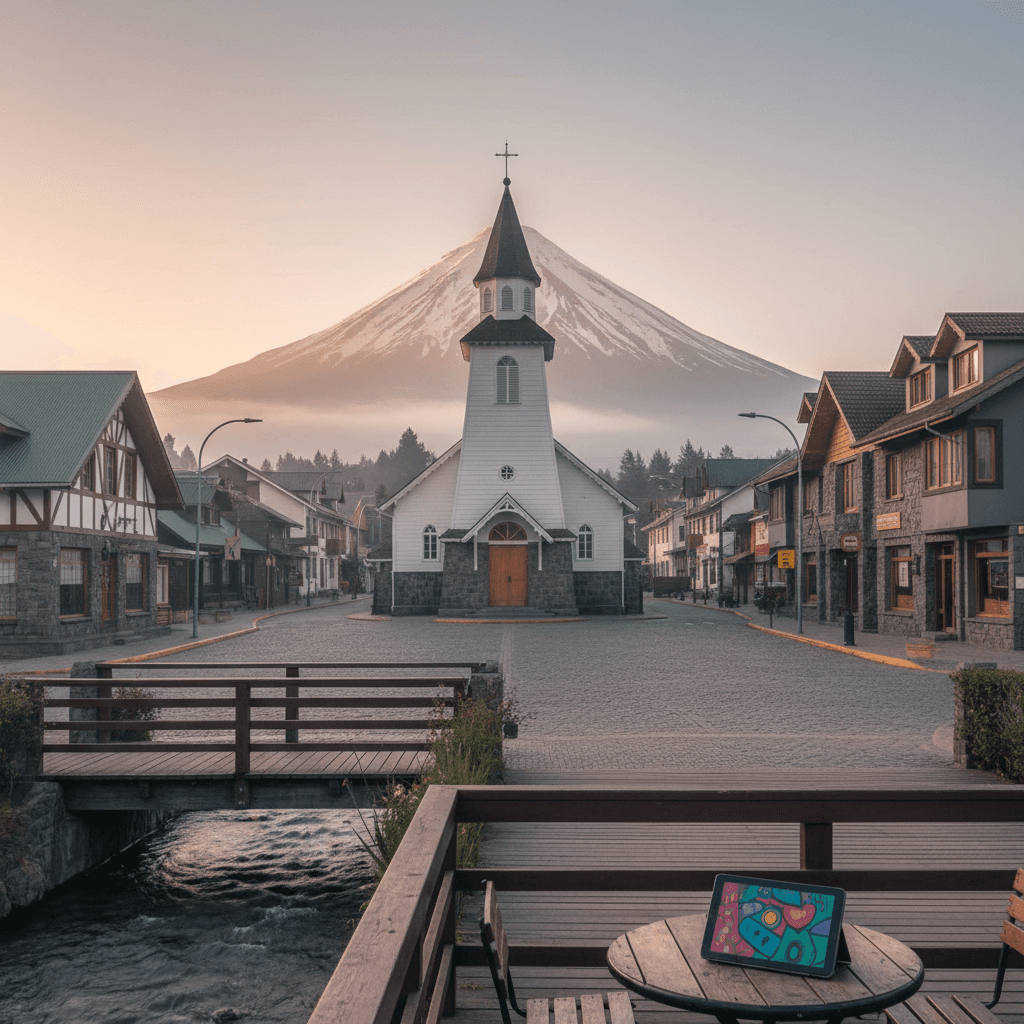
Pucón doesn't feel like the rest of Chile. While Santiago is all about the frantic urban grind, this lakeside outpost operates on "volcano time." It is a compact, walkable adventure hub where the massive, snow capped Villarrica Volcano looms over every street corner like a silent guardian. You'll find a unique blend of rugged outdoor grit and high end relaxation here, where mud covered hikers rub shoulders with expats sipping craft beer at lakeside bistros.
The vibe is distinctly seasonal. During the peak summer months of December through February, the town transforms into a high energy resort. The streets hum with travelers heading to Playa Grande or booking rafting trips. Come winter, specifically July and August, things slow down significantly. The crowds thin out, the rain moves in, and the town takes on a cozy, misty atmosphere perfect for those who actually enjoy a bit of isolation and the smell of woodsmoke.
Who is Pucón For?
This isn't the place for the "city slicker" nomad who needs a different coworking space for every day of the week. It’s for the person who wants to finish a Zoom call at 2:00 PM and be at the base of a waterfall or soaking in a natural hot spring by 3:00 PM. Digital nomads here tend to be self sufficient, often working from quiet cafes near the main square or using an eSIM like Holafly to stay connected while exploring the Parque Cuevas Volcánicas.
Expats often mention the deep cultural layers that set Pucón apart. It isn't just a playground for tourists; it is a heartland for Mapuche culture. You’ll see this reflected in the local gastronomy and the handicraft fairs. There is a profound respect for the land here, and you’ll quickly learn that "quiet time" in the surrounding forests is a local custom worth adopting.
Cost of Living Breakdown
While Chile is generally more expensive than its neighbors, Pucón carries a "tourism premium," especially during the summer. To live comfortably, you should budget for the following monthly expenses:
- Budget Tier: 800,000 to 1,200,000 CLP. This covers a basic studio near the beach and meals at local markets like Feria Pucón. You'll mostly be walking or taking local buses.
- Mid Range Tier: 1,500,000 to 2,000,000 CLP. This gets you a nice 1BR apartment near the Plaza de Armas, regular meals out, and a dedicated workspace or occasional coworking fee.
- Comfortable Tier: 2,500,000+ CLP. Expect a lakeview property, frequent car rentals for weekend trips, and dining at upscale spots along the waterfront.
The Neighborhood Layout
Since the town center is small enough to cross in 15 minutes on foot, choosing a "neighborhood" is more about your proximity to the noise of the bars or the silence of the trees.
Centro (Main Square & Playa Grande)
- The Draw: This is the heartbeat of Pucón. You are steps away from the Santa Clara Monastery lookout and the best cafes.
- Rent: Expect to pay between 700,000 and 1,000,000 CLP for a decent 1BR.
- The Trade off: It gets loud in the summer, and you'll be surrounded by tourists 24/7.
Lakeside (Lake Villarrica)
- The Draw: Much quieter and scenic. It’s the preferred zone for families and long term expats who want to watch the sunset over the water.
- Rent: Prices often jump to 1,200,000 CLP or more for anything with a view.
- The Trade off: You’re further from the grocery stores and the main hub of activity.
Volcano Slopes
- The Draw: Total immersion in nature. You’re living among the lava caves and trailheads.
- Rent: Highly variable, but often cheaper for larger plots of land.
- The Trade off: You absolutely need a car. Internet can be spotty, so you'll need to rely on Starlink or a strong mobile data plan.
Ultimately, Pucón offers a rare emotional payoff. There is something grounding about living at the foot of an active volcano. It reminds you to stay present. Whether you’re navigating the local ferias for fresh produce or organizing a group hike to Ojos del Caburgua, the community here is bound by a shared love for the wild, unpredictable terrain of the Araucanía region.
The Price of Adventure
Living at the foot of an active volcano comes with a "tourism tax." Because Pucón is Chile’s undisputed outdoor capital, you’ll find prices here sit slightly higher than in nearby Temuco or Valdivia. For 2025 and 2026, expect to budget around 1,800,000 CLP (approx. $2,000 USD at current rates) for a comfortable mid-range lifestyle. While it’s not Santiago prices, the seasonal influx of holidaymakers keeps the rental market competitive.
The local economy runs on the Chilean Peso (CLP). While credit cards are accepted at most grocery stores and restaurants in the Centro, you’ll need cash for the local buses (micros) heading to the hot springs or the craft fairs. Most nomads find that using a Wise or Revolut card helps avoid the steep transaction fees at the local ATMs found along O'Higgins street.
Monthly Budget Breakdowns
The Budget Nomad
- Monthly Total: 800,000 to 1,200,000 CLP
- Rent: 400,000 to 600,000 CLP. This usually gets you a basic studio or a private room in a shared house near Playa Grande.
- Food: 3,000 to 8,000 CLP per meal. Stick to the "Menu del Día" at local diners or grab empanadas from street vendors.
- Transport: 50,000 CLP. Pucón is small enough to walk, so this covers the occasional bus to the Villarrica trails.
- Workspace: Free. You’ll be hopping between cafes with reliable Wi-Fi near the main square.
The Mid-Range Expat
- Monthly Total: 1,500,000 to 2,000,000 CLP
- Rent: 700,000 to 1,000,000 CLP. A modern one-bedroom apartment near the main square or a quiet cabaña just outside the noise.
- Food: 5,000 to 12,000 CLP per meal. This allows for frequent dinners at lakeside bistros and decent wine.
- Transport: 100,000 CLP. Covers regular Ubers and the occasional taxi when the southern rain starts pouring.
- Workspace: 150,000 to 250,000 CLP. A dedicated desk in a coworking space or a very high-end home internet setup.
The High-Comfort Resident
- Monthly Total: 2,500,000+ CLP
- Rent: 1,200,000+ CLP. Expect a premium lakeside property or a luxury condo with a direct view of the volcano.
- Food: 8,000 to 40,000+ CLP per meal. Fine dining, imported goods from the supermarket, and upscale cocktails.
- Transport: 150,000+ CLP. Most residents at this level rent a 4x4 vehicle to explore the rugged Araucanía region independently.
- Workspace: 300,000 to 400,000 CLP. Premium office setups or private studio rentals.
Practical Savings and Logistics
Groceries will be one of your biggest variable costs. Expats recommend skipping the smaller convenience stores for your weekly shop and heading to local markets or ferias for fresh produce. The local fish markets are a goldmine for affordable, high-quality seafood that would cost triple the price in North America or Europe.
If you’re planning to stay during the peak summer months of January and February, book your accommodation at least four months in advance. Prices can double during this window, and availability vanishes as half of Santiago descends on the lake. Conversely, if you can handle the rain, winter rentals (June through August) are often negotiable, as landlords look for steady income during the off-season.
For connectivity, don't rely on your home roaming plan. Pick up an Entel or Movistar SIM card at a kiosk in the Centro, or set up a Holafly eSIM before you land. Reliable data is a safety requirement here, especially if you’re using the Wikiloc app to navigate the trails around Parque Cuevas Volcánicas or the volcano slopes where cell signals can be spotty.
Solo Travelers and Social Nomads: Centro (Main Square & Playa Grande)
If you want to be in the heart of the action, Centro is your best bet. It is the most walkable part of town, where you can get from the main square to the black sands of Playa Grande in under 15 minutes. Most solo travelers gravitate here because you do not need a car to reach the best cafes, the handicraft fairs, or the bus terminal for weekend trips.
- The Vibe: Energetic and social. During the summer months of December to February, these streets stay lively well into the night with people grabbing craft beers near the square.
- Monthly Rent: Expect to pay between 700,000 and 1,000,000 CLP for a decent one bedroom apartment.
- Daily Life: You will find the best "office" setups in local cafes near the beach. While there is not a massive dedicated coworking scene yet, the Wi-Fi in these central spots usually hits 50 to 100 Mbps, which is plenty for Zoom calls.
Expats and Long-Term Residents: Lakeside (Lake Villarrica)
Expats looking for a more permanent, tranquil lifestyle usually move slightly away from the tourist shops toward the lakefront. This area offers a more refined atmosphere with stunning views of the water and easy access to catamaran tours. It is quieter than Centro, especially during the hectic peak season, making it easier to actually get work done without the sound of street performers outside your window.
- The Vibe: Scenic and relaxed. It feels more like a residential retreat than a vacation hub.
- Monthly Rent: This is the premium zone. A lakeview apartment can easily run 1,200,000 CLP or more.
- Daily Life: You will likely want to use apps like Uber or keep a local taxi driver's number handy here, as signal can sometimes drop when you are closer to the water. It is the perfect spot for those who value a morning walk by the lake over being next door to a bar.
Adventure Nomads: Volcano Slopes
For those who moved to Pucón specifically for the Villarrica Volcano and the backwoods, the slopes are where you belong. Located about 7.5 miles out of the main town near Parque Cuevas Volcánicas, this area is for people who want to wake up in the trees. You are trading convenience for immediate access to lava caves and hiking trails.
- The Vibe: Rugged and isolated. It is pure nature immersion.
- Monthly Rent: Prices vary wildly based on the "cabin" style, but budget around 600,000 CLP for something basic.
- Daily Life: A car is non-negotiable here. You will also want a reliable eSIM like Holafly or a local Entel SIM, as the thick forest and elevation can make standard mobile data spotty. Most nomads here use the Wikiloc app to navigate the local trails offline.
Families: La Poza and Residential Pockets
Families often find their sweet spot in the quieter pockets near La Poza or the outskirts of the central grid. These areas provide a bit more space for kids to run around while remaining close enough to the local clinics and pharmacies near the main square. The safety profile is high, and the atmosphere is welcoming for those traveling with children.
- The Vibe: Safe and community-oriented.
- Monthly Rent: A larger family home or multi-bedroom unit typically ranges from 900,000 to 1,300,000 CLP.
- Daily Life: Most families spend their weekends at the Mapuche cultural fairs or taking short bus trips to the Salto Grande waterfalls, which cost about 3,000 CLP for entry. The local markets like La Vega are great for stocking up on affordable seafood and fresh produce for family meals.
Connectivity and Speed
While Pucón doesn't boast the lightning fast fiber optics of Santiago, it holds its own for most remote work needs. You can generally expect speeds between 50 and 100 Mbps in the town center. Most cafes and rentals rely on standard Chilean providers like Entel or Movistar. It is enough for video calls and heavy uploads, though a sudden rainstorm can occasionally make the connection stutter.
For a backup, don't rely on public Wi-Fi. It is spotty at best. Local nomads swear by Holafly eSIMs for a seamless transition, but if you are staying longer than a week, grab a physical SIM at a kiosk in the Centro. Entel typically offers the best coverage when you head out toward the volcano or the lava caves. Keep the Wikiloc app downloaded for offline maps; data drops the moment you hit the higher trail elevations.
Coworking Spaces and Work-Friendly Cafes
Pucón lacks a massive, dedicated coworking hub like you would find in Valparaíso. Instead, the town operates on a "laptop and latte" culture. Most nomads congregate in cafes near Playa Grande or the main square. You will find a relaxed atmosphere where nobody minds if you linger over a second espresso while finishing a report.
- The Cafe Scene: Look for spots with lake views near the waterfront. They offer the best "office" backdrop in Chile. Expect to pay about 3,000 to 5,000 CLP for a good coffee and a snack.
- Coworking Costs: Since there isn't a flagship local brand, pricing follows national trends. If you find a shared desk in a boutique hotel or a small local initiative, expect to pay between 150,000 and 250,000 CLP per month for a dedicated spot.
- Peak Season Crowds: During the summer months of December through February, the cafes get loud. If you have important meetings, your best bet is a rental in the Lakeside zone where it is quieter, or ensuring your Airbnb has a dedicated desk.
Digital Nomad Logistics
If you are planning to stay for a full season, your biggest hurdle isn't the internet; it's the power outlets. Chile uses Type C and L plugs, so bring a sturdy adapter. Power surges aren't common, but they happen during winter storms in July and August. A good power bank is a smart investment if you plan to work from the more remote cabins on the Volcano Slopes.
Most expats use Wise or Revolut for daily expenses to avoid the high fees at local ATMs in the Centro. While many cafes take cards, having 10,000 to 20,000 CLP in cash is helpful for the smaller, family run spots that often have the best atmosphere for a quiet afternoon of deep work.
For those who need a professional setup, the lack of a formal "Nomad Hub" means you have to be proactive. Reach out to local Facebook groups or check Couchsurfing hangouts. You will often find other developers or writers tucked away in the back of a bakery, usually recognizable by their noise-canceling headphones and the view of Villarrica Volcano through the window.
Staying Safe in the Adventure Capital
Pucón maintains a reputation as one of the safest towns in Chile. Because the local economy relies almost entirely on tourism, there is a collective effort to keep the streets secure. You can comfortably walk through the Centro or along Playa Grande after dark without much worry, though it is always smart to stick to well lit paths like O'Higgins or Ansorena.
Most nomads find that the biggest "threat" isn't crime, but the environment itself. If you are heading out to the Parque Cuevas Volcánicas or hiking the trails near Salto Grande, tell someone where you are going. Cell service can drop out quickly in the Araucanía backcountry. Travelers often recommend downloading Wikiloc for offline maps and keeping an eSIM like Holafly active for when you pop back into signal range.
- Petty Crime: While rare, opportunistic theft can happen on the beach or in crowded cafes during the peak summer months of January and February. Keep your laptop bag looped around your chair leg.
- Volcanic Activity: You are living at the base of Villarrica, one of South America's most active volcanoes. The town has clear evacuation routes marked by yellow signs. Most expats just keep an eye on the "volcanic traffic light" system managed by the local authorities.
- Emergency Numbers: Dial 131 for an ambulance and 133 for the Carabineros (police).
Navigating Healthcare and Clinics
For a small town, Pucón is well equipped for minor injuries and routine checkups. There is a reliable local clinic located near the main square that handles most traveler ailments, from sprained ankles to stomach bugs. For anything specialized or major, you will likely be transported to Temuco, which is about 2 hours away and home to high quality regional hospitals.
Expats living here long term usually pay into the public healthcare system, which costs about 7% of your monthly income. This covers basics like dental and vision, though many nomads prefer to keep private international insurance to skip the wait times at public facilities. If you need a prescription, pharmacies are abundant in the Centro and are easy to spot by their bright signs.
- Pharmacies: Look for Cruz Verde or Farmacias Ahumada. They are generally open until 8:00 PM or 9:00 PM.
- Water Safety: The tap water in town is generally considered safe to drink, but if you have a sensitive stomach, stick to bottled water for your first week while you adjust.
- Language in Care: English proficiency among medical staff is hit or miss. It is best to have Google Translate downloaded for offline use or bring a Spanish speaking friend if your "médico" vocabulary is rusty.
Practical Wellness Tips
The Southern Chilean sun is deceptively strong, especially when you are out on Lake Villarrica. Locals recommend high SPF sunscreen even on cloudy days. If you are visiting during the rainy season between May and September, the damp cold can be biting. Most rentals use wood burning stoves or electric heaters; ensure your accommodation has proper ventilation to avoid indoor air issues, a common complaint among expats during the winter months.
The Walkability Factor
Pucón is refreshingly compact. If you're staying in the Centro or near Playa Grande, your own two feet are your primary mode of transport. You can cross the entire downtown core in about 15 minutes. Most nomads find they only need wheels when the lure of the volcano or the distant hot springs becomes too strong to ignore.
For daily errands, everything is clustered around the main square and O'Higgins street. You'll find pharmacies, grocery stores like Unimarc, and gear shops all within a few blocks. It's the kind of place where you'll start recognizing the same faces at the coffee shops by day three.
Public Buses and Colectivos
When you need to head out of town to spots like Ojos del Caburgua or the Huerquehue National Park, the local buses are your best friend. They're reliable and incredibly cheap, usually costing around 1,000 to 3,000 CLP depending on the distance.
- Buses Caburgua: Look for their terminal on Calle Uruguay for trips toward the lake and waterfalls.
- Rural Buses: These depart frequently for the Termas (hot springs) and trailheads. Check the signs in the front windows for destinations.
- Colectivos: These look like regular taxis but have signs on the roof. They run fixed routes and are a shared, affordable way to zip between the center and the outskirts.
Cycling and Scooters
Biking is a popular way to explore the lakefront, though the hills get punishing once you head toward the volcano. Several shops in the center rent mountain bikes for roughly 15,000 to 20,000 CLP per day. It's a great way to reach the Monasterio Santa Clara lookout without paying for a taxi. Just keep in mind that bike lanes are limited, so you'll often be sharing the shoulder with cars.
Ride-Hailing and Taxis
Uber operates in Pucón, but it's not always consistent, especially during the shoulder season. Expect to pay around 4,000 to 6,000 CLP for short hops within the town limits. If you're heading somewhere remote like Parque Cuevas Volcánicas, travelers often recommend getting your driver's WhatsApp number. Cell service can be spotty near the volcano, and having a direct line for a return trip saves a lot of stress.
Car Rentals
If you're planning to explore the Seven Lakes circuit or want total freedom to hit the remote Mapuche fairs, a car is the way to go. It's a steep expense for solo travelers, often starting at 45,000 CLP per day, but it's the only way to reach the best hidden trailheads on your own schedule. Most agencies are located near the TurBus station. Make sure to book well in advance if you're visiting during the January and February peak season, as the town frequently runs out of available vehicles.
Getting In and Out
Most people arrive via Temuco (Araucanía Airport), which is about 2 hours away. You can grab a shared shuttle for around 15,000 to 20,000 CLP, or take a taxi for a much higher premium. If you're coming from Santiago, the overnight TurBus or Pullman coach is a classic expat move. They're comfortable, offer "semi-cama" or "salon cama" reclining seats, and drop you right in the heart of town at dawn.
The Linguistic Landscape
In Pucón, Spanish is the undisputed king of the streets. While it's a major tourism hub, don't expect the high level of English you might find in Santiago or Valparaíso. Most locals working in high-end hotels or leading technical volcano treks speak enough English to get by, but once you step into a local feria (market) or a neighborhood grocery store, you'll need at least some basic Spanish to navigate the interaction.
Chilean Spanish is famous for being fast, dropping the "s" at the end of words, and using unique slang called chilenismos. You'll hear the word "cachai" (meaning "you get it?") everywhere. Most nomads find that while the accent is a bit of a challenge at first, the people in Pucón are generally patient and appreciative when you make an effort to speak the local tongue.
Indigenous Roots and Mapudungun
The Araucanía region is the heartland of the Mapuche people. You'll see their influence in place names, food, and local crafts. While Mapudungun isn't used for daily business, it's woven into the town's identity. You'll see signs for rukas (traditional houses) and encounter Mapuche terminology at cultural fairs. Respecting this heritage is important; nomads who take an interest in the indigenous history of the volcano and the surrounding forests usually find it easier to connect with the long-term expat community.
Digital Communication and Connectivity
For staying connected, the town's infrastructure is reliable but varies by location. If you're staying in the Centro or near Playa Grande, fiber optic internet is common. If you venture out toward the Volcano Slopes, signals can get spotty. Most travelers recommend setting up an eSIM before arrival or grabbing a local SIM card immediately.
- Top Providers: Entel and Movistar have the best coverage in the region. Entel is generally preferred by those who spend a lot of time on hiking trails.
- eSIMs: Holafly is a popular choice for nomads who want data the second they land at the airport in Temuco.
- Offline Tools: Download the Pucón region on Google Translate for offline use. It's a lifesaver when you're deep in the Parque Cuevas Volcánicas and need to translate a trail sign or menu.
- Navigation: Use the Wikiloc app. It's the local gold standard for finding trails and includes offline maps that are far more accurate than standard GPS apps in the Chilean backcountry.
Practical Phrases for Nomads
While you can survive with a translation app, memorizing a few local staples will make your daily life much smoother. Prices are often quoted in thousands, so getting comfortable with numbers in the 1,000 to 50,000 CLP range is a priority for grocery shopping and paying for colectivos (shared taxis).
- "¿A cuánto está?" (How much is it?): Use this at the handicraft markets near the main square.
- "¿Tiene Wi-Fi?" (Do you have Wi-Fi?): Essential for cafe hopping.
- "La cuenta, por favor" (The bill, please): Standard for the lakeside restaurants.
- "¿Dónde está el paradero?" (Where is the bus stop?): Useful for finding the buses that head out to the Termas or Ojos del Caburgua.
Socializing and Networking
Since Pucón lacks a massive, dedicated coworking space, most networking happens organically. Expats and nomads tend to congregate in cafes near the lake or at the base of the volcano treks. There aren't many formal English-speaking meetups, so Facebook groups and the occasional Couchsurfing hangout are your best bets for finding your tribe. If you're looking for a "work from anywhere" vibe, stick to the cafes in the center where the 50 to 100 Mbps speeds are consistent and the staff is used to seeing laptops.
When to Go
Pucón is a town of two distinct personalities. If you are here for the high-energy adventure scene, aim for the Chilean summer from December to March. During these months, the sun stays out late, and temperatures hover between 20°C and 30°C. It is the prime window for summiting Villarrica Volcano or spending the afternoon at Playa Grande, though you should expect the town center to be packed with vacationing families from Santiago.
For nomads who prefer a quieter pace and lower rental rates, the shoulder seasons of late March to May and October to November are the sweet spots. You will get crisp air and clear views of the smoking volcano without the heavy crowds. Just be ready for the occasional sudden downpour; the Lake District is famously lush for a reason.
The winter months from June to August are chilly, with temperatures ranging from 5°C to 15°C. While the volcano gets a fresh coat of snow for skiing, the town sees significant rainfall. Most travelers find this the hardest time to stay productive if they don't enjoy gray skies, but it is the perfect season for soaking in the nearby hot springs like Termas Geométricas when the air is cold.
Seasonal Breakdown
- Peak Season (December–February): Best for hiking, kayaking, and outdoor meetups. Expect the highest prices for Airbnbs and a loud, festive atmosphere in the Centro.
- Shoulder Season (March–May, October–November): Ideal for long-term stays. The weather is predictable enough for trails, and you can often negotiate better monthly rates on housing.
- Low Season (June–September): Rainy and quiet. Great for skiers and writers who want total isolation, but many tour operators scale back their schedules.
What to Pack
The weather here is famously fickle. Even in the height of summer, a clear morning can turn into a rainy afternoon. Locals and long-term expats live by the "onion method" of dressing in layers. You will want a high-quality waterproof shell and sturdy boots if you plan on using apps like Wikiloc to explore the trails around Parque Cuevas Volcánicas.
If you are visiting in the winter, don't underestimate the dampness. Most older apartments in Pucón rely on wood-burning stoves or small electric heaters. Bringing a heavy fleece and wool socks will save you from the southern Chilean chill. For the summer, a high-SPF sunscreen is non-negotiable; the hole in the ozone layer over South America means the sun here burns much faster than in the Northern Hemisphere.
Nomad Survival Tips for the Seasons
- Internet Reliability: Heavy rain in the winter can occasionally cause signal drops. If you have a deadline, have a backup like a Holafly eSIM or an Entel physical SIM card ready to hotspot.
- Booking Ahead: If you plan to arrive in January or February, book your accommodation at least three months in advance. Prices can double during these weeks as the whole country heads south.
- Transportation: In the rainy months, Ubers are harder to find. Grab the phone number of a local taxi driver in the main square to ensure you aren't stuck walking home in a deluge.
Connectivity and Tech Setup
Internet speeds in Pucón generally hover between 50 and 100 Mbps in the town center, which is plenty for video calls. While you won't find a massive dedicated coworking space like you would in Santiago, the cafe culture near Playa Grande is strong. Most nomads set up shop in local spots with lake views; just look for places with "Wi-Fi" signs along the main drag.
For mobile data, don't rely on your home roaming. Grab an eSIM from Holafly for immediate connectivity, or head to a kiosk in the center for a local Entel or Movistar SIM card. You'll want a working signal to use Uber or check the Wikiloc app, which is a lifesaver for tracking offline trails when you're out by the volcano.
Money and Monthly Budgeting
The Chilean Peso (CLP) is the currency here, and while cards are widely accepted in shops, you'll need cash for the local buses and smaller handicraft stalls. Use Wise or Revolut to avoid heavy bank fees at the ATMs located around the main square. Expect a tourism premium compared to other Chilean towns, especially during the peak summer months.
- Budget Lifestyle (800,000 to 1,200,000 CLP): Stick to basic studios near the beach, cook with groceries from local ferias or markets, and use the local buses.
- Mid-Range (1,500,000 to 2,000,000 CLP): Covers a nice one bedroom apartment near the square, frequent meals out, and occasional coworking or desk rentals.
- Comfortable (2,500,000+ CLP): Includes a lakeview apartment, car rentals for weekend trips, and high-end dining.
Getting Around
Pucón is incredibly compact. You can walk across the entire center in about 15 minutes. For anything further out, like the Salto Grande waterfalls or the Ojos del Caburgua, local buses are reliable and cheap, usually costing around 3,000 CLP for a trip. If you're heading to the Parque Cuevas Volcánicas or the hot springs, you might want to rent a car, though solo travelers often find the daily rates a bit steep.
If you're arriving from a distance, you'll likely fly into Temuco (Araucanía Airport). The transfer to Pucón takes about 2 hours via shuttle or bus. Once you're in town, bikes and scooters are the preferred way to zip between the lakeside and the forest trails.
Safety and Health
This is one of the safer spots in Chile. It's a small-town atmosphere where people look out for each other. Standard common sense applies: don't leave your laptop unattended on a cafe table and stick to well-lit paths if you're walking home late. For medical needs, there's a local clinic near the main square that handles basics. If anything serious happens, dial 131 for an ambulance or 133 for the police. Expats living here usually pay into the public healthcare system, which covers dental and vision, but travelers should definitely have their own insurance sorted.
When to Go
Timing is everything in the Araucanía region. December through March is the sweet spot for hiking and kayaking, with temperatures reaching 20 to 30°C. If you hate the cold, avoid July and August. The winter is rainy and chilly, and while the snow on the volcano looks stunning, many of the best trails become inaccessible. Most expats recommend the shoulder seasons of late spring or early autumn to avoid the massive summer crowds while still enjoying the sun.
Local Etiquette
The Mapuche culture is central to life here. When visiting forest areas or indigenous fairs, keep your voice down and be respectful of the natural silence. It's a cultural norm to appreciate the landscape quietly. In town, a simple "Hola" goes a long way. English isn't widely spoken outside of the main tour agencies, so keep Google Translate downloaded for offline use to help with grocery runs or bus schedules.
Need visa and immigration info for Chile?
🇨🇱 View Chile Country GuideEasy Landing
Settle in, no stress