Paramaribo
🇸🇷 Suriname
The Vibe: Amsterdam Meets the Amazon
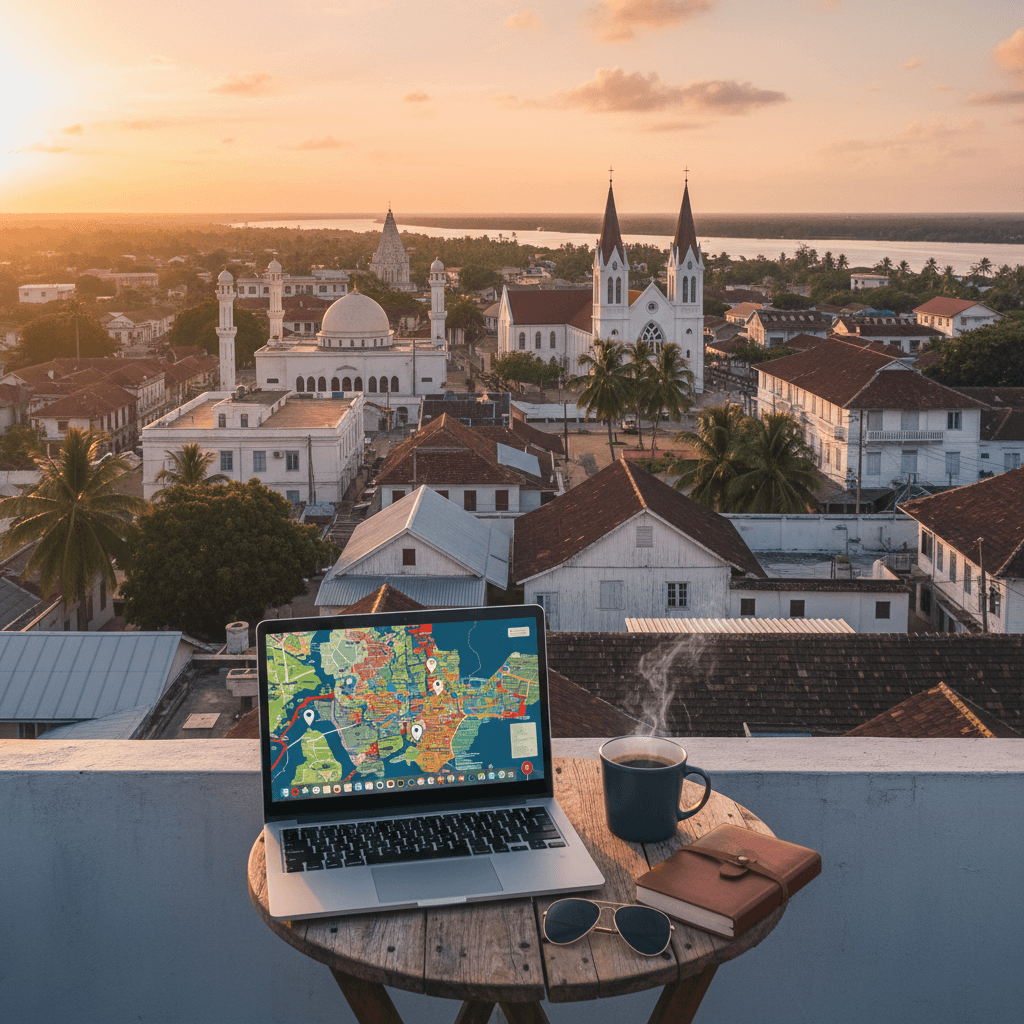
Paramaribo is a glorious, unpolished contradiction. Imagine the stately, white-washed wooden architecture of a Dutch canal town transported to the edge of a dense tropical rainforest. It is a place where a synagogue and a mosque sit peacefully side by side, and the air smells like a mix of river silt, diesel, and frying ginger. This isn't a city for the nomad who needs sleek glass skyscrapers or high speed fiber optics at every corner. It is for the traveler who wants to feel like they have stumbled onto a well kept secret before the rest of the world catches on.
The pace here is slow, dictated by a humidity that frequently makes it feel like 38°C (100°F). You'll find yourself adopting the local rhythm quickly: mornings are for getting things done, afternoons are for retreating into the shade, and sunset belongs to the Waterkant. This riverside stretch is the soul of the city, where everyone gathers to crack open a cold Parbo beer and watch the Suriname River turn gold. It is gritty, soulful, and entirely authentic.
The Digital Nomad Reality Check
Living here as a remote worker requires a bit of grit. The infrastructure is famously temperamental. You will be dodging potholes the size of small cars and navigating sandy side streets that feel more like jungle tracks than city roads. Internet speeds usually hover between 4 and 17 Mbps, which is plenty for emails and Slack but might make high stakes video calls a gamble. Most nomads work from cafes, though limited coworking spaces like Ondernemershuis exist, and instead set up shop in the cafes around Independence Square or the Old Town.
The trade off for the mediocre Wi-Fi is an incredibly low cost of living and a culture that is impossible to find anywhere else. You'll hear Sranan Tongo and Dutch blending in the streets, and your lunch options range from Creole pom to Javanese saoto soup. It is a city that rewards the curious. If you can handle the sweat and the occasional power flicker, you'll find a community that is welcoming and a lifestyle that is remarkably affordable.
Neighborhood Breakdown
Most nomads stick to the historic core, as the outskirts quickly turn into rugged terrain that requires a serious 4x4 vehicle to navigate.
Waterkant & Independence Square
- The Draw: This is the most walkable part of the city and the primary cultural hub. You are steps away from Fort Zeelandia and the best sunset views in the country.
- The Downside: It is the epicenter of the city's "unpolished chaos" and can get very loud during festivals or weekend gatherings.
- Estimated Rent: $400 to $800 for a decent apartment nearby.
The Old Town (UNESCO District)
- The Draw: Stunning Dutch colonial mansions and a slightly more "expat" feel. It is home to many shops run by Lebanese and Chinese families where you can find imported comforts.
- The Downside: The streets are often poorly maintained; expect sand and uneven pavement even in the "nice" parts of town.
- Estimated Rent: $700 to $1,100 for a renovated wooden home or modern studio.
Budgeting for Paramaribo
Suriname is a cash heavy society. You'll want to keep plenty of Surinamese Dollars (SRD) on hand, as international cards aren't accepted everywhere. A typical ATM withdrawal is capped around SRD 10,000, which is roughly $266. There is no real tipping culture here, so the price you see is generally what you pay.
- Monthly Living Cost: $1,243 to $1,736 covers a comfortable lifestyle including a private rental and frequent dining out.
- Street Food Meal: $3 to $6 for world class roti or fish soup at the local markets.
- Mid-range Dinner: $15 to $25 for a fusion meal in a colonial setting.
- Local SIM Card: $15 to $30 per month depending on your data needs. Pro tip: grab an eSIM before you land to avoid the "no service" scramble at Johan Adolf Pengel Airport.
Survival Tips
Safety is generally good in the central districts, but use common sense. Use taxis after dark rather than walking, as the lack of street lighting and the uneven roads make for a tricky trek. There are no major ride hailing apps like Uber here, so you'll need to negotiate with local drivers in cash. Most importantly, embrace the humidity. You will be sweaty from the moment you leave your AC, but so is everyone else. It is just part of the Paramaribo charm.
The Price of an Amsterdam-Amazon Mashup
Paramaribo is one of the few places left where your dollar still feels like it has some real weight. Most digital nomads find they can live comfortably here on a budget between $1,243 and $1,736 per month. It is a cash-heavy society where 100 SRD equals roughly $2.66 USD. You will spend most of your time hunting for ATMs that let you pull out the maximum limit of 10,000 SRD (about $266) to avoid constant transaction fees.
The city has a refreshing lack of a tipping culture, which keeps your daily expenses predictable. While the infrastructure is unpolished and the roads are often a mess of potholes and sand, the low cost of entry makes the "sweaty humidity" a lot easier to swallow. You are paying for the atmosphere, the fusion food, and the proximity to the deep jungle, not for high-speed fiber or luxury public transit.
Monthly Budget Tiers
- The Scrappy Nomad ($1,200 to $1,500): You are looking at a basic studio apartment found via local Facebook groups or Airbnb, eating mostly street food like roti and pom, and sticking to the walkable Old Town.
- The Mid-Range Pro ($1,500 to $2,000): This gets you a decent 1-bedroom apartment with reliable air conditioning, regular dinners at mid-range fusion spots, and enough left over for weekend trips to the Commewijne plantations.
- The High-End Resident ($2,000+): At this level, you are dining at the best upscale spots in the city, taking private taxis everywhere, and likely renting a larger colonial-style house or a modern apartment with a backup generator.
Key Daily Expenses
- A Meal at a Mid-Range Restaurant: Expect to pay around $10 to $15 for a solid sit-down dinner.
- Street Food (Roti or Fish Soup): You can fill up for $3 to $6 at local markets.
- Local Beer (Parbo): A cold bottle at a Waterkant spot will run you about $2 to $3.
- Monthly Transportation: Budget around $100 for taxis, as there are no ride-hailing apps like Uber and public transport is unreliable.
Housing and Neighborhoods
Most nomads stick to the Waterkant and Independence Square area. It is the cultural heart of the city, where you can walk between Dutch wooden mansions and synagogues. Renting here puts you near the best cafes for working, though you will deal with more noise and humidity. Expats also frequent the Old Town for its charm, though the sandy streets and potholes make getting around a bit of a workout.
If you are looking for more space, the Commewijne outskirts offer a quieter life near the jungle edges. However, you will need to budget for a sturdy vehicle to handle the poor road conditions. Most travelers recommend sticking to the center to save on transport costs and stay close to the few spots with decent internet.
Connectivity and Coworking Costs
This is where Paramaribo tests your patience. Internet speeds usually hover between 4 and 17 Mbps, and dedicated coworking spaces are almost non-existent. You will likely be working from your apartment or local cafes around Independence Square. Budget about $30 to $50 for a local SIM card and data plan. Many nomads suggest getting an eSIM before you land at Johan Adolf Pengel International Airport to avoid being stranded without a signal while trying to negotiate a taxi fare in Dutch or Sranan Tongo.
Practical Spending Tips
Cash is king here. While some upscale shops run by Lebanese or Chinese owners might take cards, you should always have a stack of SRD on you. If you plan on heading into the interior or visiting the Galibi sea turtles, your costs will spike due to the need for specialized transport and guides. Always negotiate your taxi fares before you get in the car, as there are no meters to keep things official.
For Nomads & Solo Travelers: Waterkant & Independence Square
If you want to be where the action is, the area around Waterkant and Independence Square is your best bet. This is the city's living room, where the Suriname River meets the colonial core. It is the most walkable part of a city that otherwise hates pedestrians. You are steps away from the famous wooden mosques and synagogues sitting side by side, and the sunset views over the river are the best in town.
Most nomads gravitate here because it is the only place where you can reliably find a decent signal. While dedicated coworking spaces are almost non-existent, the riverside cafes are the unofficial offices of Paramaribo. You can grab a Parbo beer at a plastic table, tether to your phone, and soak in the chaos. Just be ready for the humidity; it regularly feels like 38°C (100°F), so you will be moving at a much slower pace than you are used to.
- Rent: Expect to pay $600 to $900 for a decent Airbnb or short term studio.
- Vibe: Unpolished, multicultural, and loud.
- Connectivity: The most stable area for local SIM data, though still averaging 4 to 17 Mbps.
For Long-Term Expats: The Old Town
The Old Town is where you go if you want to live inside a UNESCO World Heritage site. It is filled with those iconic black and white Dutch wooden mansions and grassy squares. It feels a bit more "settled" than the riverfront, with a mix of Lebanese and Chinese owned shops where you can find almost anything if you look hard enough. It is charming, but it is also rugged. You will be dealing with sandy streets and massive potholes that turn into ponds after a tropical downpour.
Expats like this area because it feels authentic. You are living among history, but you are also close to the best fusion food in the city. You can walk to a market and grab Creole pom or roti with parrotfish for just a few dollars. It is a cash-heavy lifestyle here; most residents recommend withdrawing the maximum SRD 10,000 (about $266) whenever you find a working ATM to avoid constant trips to the bank.
- Rent: $800 to $1,200 for a larger 1-bedroom in a historic building.
- Food: Very affordable if you eat local; mid-range meals cost around $15.
- Transportation: Mostly walkable, though you will need to negotiate cash prices with local taxis for longer trips.
For Families & Nature Lovers: Commewijne Outskirts
If the heat and noise of the center are too much, the outskirts toward Commewijne offer a breath of air. This is technically across the bridge, shifting from urban grit to old plantations and the edges of the jungle. It is much quieter and safer for kids, with more space for your money. You will see more green than concrete here, and it is the gateway to spots like the Neotropical Butterfly Park.
The trade-off is the commute. The infrastructure is poor, and the roads are often a mess. Travelers who stay out here usually end up renting a sturdy 4x4 vehicle because the local "bus" system is unreliable for a family. You are also further from the better internet speeds of the center, so this is better for those who aren't tethered to Zoom calls all day.
- Rent: $1,000 to $1,500 for a full house with a yard.
- Pros: Proximity to nature, quiet nights, and family-friendly space.
- Cons: Requires a car; internet is spotty and slower than the city center.
The Reality of Staying Connected
If your job involves heavy video editing or managing massive data sets, Paramaribo is going to test your patience. The internet here is best described as mediocre. You can expect average speeds between 4 Mbps and 17 Mbps, though it often dips below 15 Mbps during peak tropical afternoon hours. It is enough for emails, Slack, and the occasional Zoom call, but you'll want to have a backup plan.
Most nomads find the most reliable signals around Independence Square and the Waterkant area. The colonial wooden buildings are charming, but their thick walls can sometimes act like Faraday cages for Wi-Fi. Always ask for a speed test before committing to a long-term Airbnb stay.
Coworking and Where to Work
Paramaribo doesn't have the established, glass-walled coworking hubs you’ll find in Medellín or Bali. It is a "work from a cafe" kind of city. Dedicated coworking spaces are limited but available, such as Ondernemershuis Paramaribo, which can be helpful if you need a professional ergonomic setup or a silent booth for calls.
Instead, look for spots along the Waterkant. While these are primarily social hubs for a Parbo beer at sunset, some of the quieter cafes in the Old Town offer a decent environment for a few hours of laptop time. Travelers often congregate at spots near Fort Zeelandia where the breeze off the Suriname River makes the 33°C to 38°C "feels like" temperature slightly more bearable. Just keep in mind that power runs at 115V/60Hz, so bring the right adapters if you’re coming from Europe.
Mobile Data and SIM Cards
Since the infrastructure is unpolished, your phone’s data plan is your lifeline. Don't wait until you're trying to negotiate a taxi in "charades" at Johan Adolf Pengel International Airport to find a connection. Expats highly recommend setting up an eSIM before you land to avoid the "No Service" trap at arrivals.
- Local Providers: Telesur and Digicel are the main players. You can pick up a physical SIM in the city center at shops run by Lebanese or Chinese owners.
- Data Costs: Budget about $20 to $40 per month for a generous data package to use as a hotspot when the cafe Wi-Fi inevitably fails.
- Connectivity Tip: If you're heading to the Commewijne outskirts or deep into the jungle for a weekend, expect total signal blackouts.
Digital Nomad Essentials
Working here requires a bit of a "hacker" mindset. Since there aren't formal hubs, you'll be creating your own office daily. Here is what you need to know for your budget and setup:
- Mobile Hotspot: Treat this as a requirement, not an option.
- Power Bank: Essential for long sessions in cafes where outlets are rare.
- Monthly Tech Budget: Factor in about $100 to $150 for data and cafe spend.
- Atmospheric Challenges: The 93% humidity is no joke for electronics. Keep your laptop in a sleeve when not in use and try to work in air-conditioned spaces whenever possible to prevent hardware issues.
While the lack of infrastructure is a hurdle, the trade-off is the cost. With total monthly living expenses ranging from $1,243 to $1,736, you can afford to spend a little extra on a high-end data plan or a nicer apartment with a dedicated router. It is a rugged, DIY digital nomad experience, but for those who prefer Parbo beer and Dutch-Creole fusion over sanitized office pods, it works.
Staying Secure in the Tropical Chaos
Paramaribo is generally a safe place for nomads, but it doesn't hold your hand. The city has a gritty, unpolished charm that requires a bit of street smarts. In the UNESCO-listed old town and around Independence Square, you'll mostly feel at ease during the day. However, the infrastructure is notoriously poor. Potholed roads and sandy side streets can be genuine tripping hazards, especially after a heavy tropical downpour.
Expats who've lived here for years suggest avoiding the city fringes after dark. While the center is walkable, it's best to use taxis once the sun sets over the Suriname River. Since there aren't any major ride-hailing apps like Uber, you'll need to negotiate your fare in cash. Most travelers recommend carrying enough **SRD** for the night and keeping your phone tucked away while walking through crowded markets.
- Stick to the core: Stay within the central districts where the Dutch wooden architecture is densest.
- Cash is king: ATMs usually let you withdraw around **SRD 10,000** (roughly **$266**). Carry small bills for taxis and street food.
- Transport: Don't try to navigate the outskirts without a sturdy vehicle. The jungle starts where the pavement ends.
Healthcare and Wellness
The healthcare system in Suriname is limited compared to European or North American standards. You'll find pharmacies scattered throughout the center, often run by Lebanese or Chinese owners, which are well-stocked for basic ailments. For anything serious, you'll likely be heading to a facility in the capital, as rural areas have almost no medical infrastructure.
Most nomads rely on travel medical insurance like **SafetyWing** to cover emergencies. If you do need a doctor, your best bet is to take a local taxi directly to a hospital in the city center rather than waiting for an ambulance. Always keep a digital and physical copy of your insurance policy on hand, as you'll likely need to pay upfront for smaller consultations.
Environmental Hazards
The real "danger" in Paramaribo is often the climate rather than the people. The humidity is intense, frequently making a **28°C** day feel like **38°C**. Dehydration and heat exhaustion hit fast if you aren't careful. Drink bottled water and keep up with your electrolytes, especially if you're spending the afternoon exploring Fort Zeelandia or the local markets.
Since you're at the edge of the Amazon, mosquitoes are a constant presence. While malaria isn't a massive concern in the city itself, it's a factor if you take day trips to the Commewijne plantations or deeper into the forest. Use a high-quality repellent and consider wearing long sleeves during the "golden hour" when the bugs are most active.
Emergency Quick Reference
- Local Emergency: Dial **115** for police or **113** for fire services.
- Medical Insurance: **SafetyWing** is the standard choice for most digital nomads here.
- Pharmacies: Look for "Apotheek" signs in the Old Town area.
- Water: Stick to bottled water to avoid stomach issues, particularly if you're new to the region.
A City Built for Walking and Taxis
Paramaribo is a city of contrasts where Dutch colonial charm meets the rugged reality of the Amazon. Getting around requires a bit of patience and a willingness to embrace the unpolished nature of the infrastructure. While the historic core is relatively compact, the tropical heat and potholed streets will quickly influence how you choose to move from your Airbnb to the nearest roti shop.
The UNESCO-listed center is surprisingly walkable if you can handle the humidity. Most nomads stick to the area around Independence Square and the Waterkant. It is easy to spend an afternoon wandering between the massive wooden mansions and the riverside on foot. Just keep an eye on the ground; sandy streets and uneven pavement are the norm here rather than the exception.
Taxis: Your Primary Mode of Transport
Since there are no major ride-hailing apps like Uber or Bolt, you will rely heavily on local taxis. These are not metered, so you need to negotiate the fare before you get in the car. Most short trips within the city center will cost you between 400 to 700 SRD (roughly $11 to $19 USD). It is a cash-heavy system, so always keep small bills on you.
- Negotiate first: Always agree on a price before the driver pulls away.
- Availability: Taxis are easy to find near major landmarks like Fort Zeelandia or the central markets.
- Safety: While the city is generally safe, expats recommend taking a taxi after dark rather than walking through poorly lit side streets.
Public Transit and Regional Travel
The public bus system consists mainly of privately owned minibuses. They are incredibly cheap but lack set schedules and can be confusing for newcomers. They usually wait until they are full before departing, which is not ideal if you are trying to make a Zoom call. If you are heading out of the city to the Commewijne district, these buses are an adventure, but most nomads prefer hiring a private driver for day trips.
For those looking to explore the jungle or the plantations further out, you will want a vehicle with high clearance. The roads outside the capital deteriorate quickly. If you plan on renting a car, expect to pay around $35 to $50 USD per day for a decent 4x4. Remember that traffic drives on the left side of the road here, a lingering influence from the British before the Dutch took over.
Getting from the Airport
Your arrival at Johan Adolf Pengel International Airport (PBM) is your first real logistical hurdle. The airport is about 45 kilometers south of the city, and the drive takes roughly 45 to 60 minutes depending on traffic. A private taxi to the center typically costs about $100 to $120 USD.
Many travelers find themselves in a game of charades if they haven't secured a local SIM card yet. It is smart to download an eSIM before you land to ensure you can coordinate with your host or look up your accommodation's location. There are airport shuttles available for a lower cost, around $15 USD, but they often require advance booking or a wait while they fill up with other passengers.
Practical Navigation Tips
- Offline Maps: Download the Paramaribo map on Google Maps for offline use. Data can be spotty, and you don't want to be lost on a sandy backstreet without a signal.
- The Heat Factor: Between 11:00 AM and 3:00 PM, the "feels like" temperature often hits 38°C (100°F). Even a ten-minute walk can leave you drenched, so budget for extra taxi rides during peak sun hours.
- Sranan Tongo: Learning a few basic phrases in the local Creole language can go a long way with taxi drivers and help you negotiate better rates.
The Social Dialect
Paramaribo is a linguistic puzzle that reflects its chaotic, beautiful history. While Dutch is the official language used in government and schools, you'll rarely hear it in its purest form on the street. The real heartbeat of the city is Sranan Tongo, a rhythmic English based Creole that serves as the ultimate bridge between the city's Hindustani, Javanese, Creole, and Maroon communities. It is the language of the markets and the Waterkant beer stalls.
Most nomads find that English proficiency is surprisingly low compared to other South American hubs. You can get by in upscale hotels or with younger crowds, but the Lebanese and Chinese shop owners who run the local convenience stores often speak a mix of Dutch and Sranan Tongo. Don't expect everyone to understand your coffee order in English; instead, embrace the "charades" method of communication until you pick up the basics.
Practical Communication Tips
If you want to move beyond being a face in the crowd, learning a few phrases in Sranan Tongo goes a long way. Locals appreciate the effort, and it often turns a standard transaction into a genuine conversation. Here are a few basics to get you started:
- Fa waka: How are you? (The universal greeting).
- Mooi: Good or beautiful.
- Grantangi: Thank you.
- Sibi doti: Literally "sweep the dirt," used for a clean sweep or a job well done.
Because of the language barrier, translation apps are your best friend. Download the Dutch and English offline packs on Google Translate before you land. If you're stuck, look for the local shopkeepers; many act as unofficial neighborhood fixers and can help translate if you're trying to negotiate a taxi fare or find a specific ingredient in the market.
Connectivity and Staying Online
Staying connected in Paramaribo requires a bit of strategy. The internet isn't exactly lightning fast, with speeds often hovering between 4 and 17 Mbps. If your work involves heavy video editing or constant Zoom calls, you might find the "Amazon-meets-Amsterdam" infrastructure a bit frustrating. Most nomads recommend avoiding the "No Service" panic at Johan Adolf Pengel International Airport by setting up an eSIM before you arrive. It ensures you can call a taxi for the 45 minute drive into the city without relying on spotty airport Wi-Fi.
Once you're settled, you'll likely rely on your phone's hotspot as much as cafe Wi-Fi. Local providers offer data SIMs that are affordable, but coverage can get shaky once you leave the historic center. If you're working from a cafe near Independence Square, always ask for the password before you buy your Parbo beer; some spots have "nomad friendly" stickers but the routers struggle with the thick wooden walls of the colonial buildings.
The Cultural Nuance
Communication here is as much about vibe as it is about words. Life moves at a relaxed, tropical pace. If someone tells you they'll meet you at 2:00 PM, they might mean 2:30 PM. Pushing for efficiency often backfires; instead, adopt the local "no stress" attitude. Whether you're navigating the sandy streets of the Old Town or sharing a plate of pom at a street stall, a smile and a "Fa waka" will open more doors than a perfect Dutch sentence ever could.
The Tropical Reality
Paramaribo doesn't do mild. It is a city of extremes where the air is thick enough to wear, and the sun feels like a physical weight. You are looking at consistent temperatures around 27-28°C, but the 93% humidity means the "feels like" index regularly hits a sweltering 33-38°C. If you aren't a fan of a permanent light sweat, this isn't the city for you. Most nomads find that their daily schedule revolves around the heat, opting for indoor work during the midday peak and saving their exploration for the slightly cooler "Golden Hour" at the Waterkant.
Seasons and Timing
Suriname follows a classic tropical cycle, though the lines between seasons often blur into one long, humid stretch. While specific data can be elusive, the region generally experiences two rainy seasons and two dry seasons. The heavy rains typically descend from May to July, with a shorter wet burst around November to January. During these times, those famous potholes in the old town turn into small ponds, and the sandy streets of the outskirts become a muddy challenge.
The best window for a visit is usually between February and April or August to October. These periods offer the most reliable weather for trekking into the jungle or taking boat trips to see the sea turtles at Galibi. Even in the dry season, don't leave your accommodation without an umbrella; sudden, violent downpours are just part of the local charm.
Planning Your Arrival
If you have the flexibility, aim for late August or September. While it is hot, the skies are clear, making it the perfect time to experience the multicultural festivals that pop up near Independence Square. It is also the prime season for heading east to see the leatherback turtles hatch, a bucket-list experience that makes the humidity much more bearable. Avoid the peak of the long rainy season in June unless you enjoy being trapped in a cafe waiting for the streets to become walkable again.
Nomad Survival Tips for the Heat
- AC is Non-Negotiable: When booking an Airbnb in neighborhoods like the Old Town or near the Waterkant, prioritize units with high-quality air conditioning. You will need it to get any meaningful work done during the afternoon slump.
- Hydration and Salt: Between the heat and the spicy Creole pom or salty fish soup, you'll go through water faster than you think. Carry cash for cold Parbo beers or bottled water, as many small shops run by Lebanese or Chinese owners won't take cards.
- The Dress Code: Keep it light and breathable. Linen and cotton are your best friends here. You'll see locals looking effortlessly cool in the heat, but for the rest of us, it takes a few weeks to adjust to the constant moisture in the air.
- Internet Reliability: Heavy storms during the rainy season can occasionally mess with the already mediocre 4-17 Mbps speeds. If you have a deadline, check the forecast and get your uploads done before the afternoon clouds roll in.
Ultimately, Paramaribo is a place where you embrace the elements rather than fight them. The weather is part of the city's unpolished, "Amsterdam-meets-the-Amazon" vibe. Once you accept that you'll be slightly damp for the duration of your stay, you can start enjoying the sunsets over the Suriname River with a cold drink in hand.
Connectivity and Workspace
Internet speeds in Paramaribo are a mixed bag, usually hovering between 4 and 17 Mbps. It is enough for emails and basic calls, but you might struggle with heavy video editing or large uploads. Most nomads stick to the area around Independence Square for the most reliable connection. You won't find traditional, high end coworking hubs here yet. Instead, the local strategy is to hop between cafes in the historic center or work from your Airbnb.
Pick up an eSIM before you land at Johan Adolf Pengel International Airport. It saves you from the "No Service" headache while trying to negotiate a taxi. Once you are settled, visit a local provider for a physical SIM if you need larger data packages. Power runs at 115V/60Hz, so check your devices before plugging in.
Cost of Living
Suriname is remarkably affordable compared to its neighbors. Most digital nomads spend between $1,243 and $1,736 per month. Cash is king here, and the local currency is the Surinamese Dollar (SRD). You can usually withdraw up to SRD 10,000 (about $266) at a time from local ATMs.
- Budget Tier ($1,200 to $1,500): A basic studio apartment and plenty of delicious street food like roti and pom.
- Mid Range ($1,500 to $2,000): A one bedroom apartment in the Old Town and regular meals at mid range fusion restaurants.
- Comfortable ($2,000+): Upscale dining, private transport, and more frequent trips into the interior.
Getting Around the City
The city center is walkable, though you will be dodging potholes and navigating sandy stretches. There are no major ride hailing apps like Uber, so you will rely on local taxis. Always negotiate the fare in cash before you get in. If you are heading out to the Commewijne district or deeper into the jungle, you will want a sturdy 4x4 vehicle. The roads outside the capital get rough quickly.
Safety and Health
Paramaribo is generally safe, especially in the UNESCO listed core and around the Waterkant. Like any unpolished city, it is best to avoid the outskirts after dark. Stick to taxis at night rather than walking. For healthcare, keep your travel insurance details handy and head to the pharmacies in the center for minor issues. Many are run by Lebanese or Chinese owners who are very helpful. Most expats use services like SafetyWing to cover any major medical emergencies.
Language and Culture
Dutch is the official language, but you will hear Sranan Tongo, a local Creole, on every street corner. English proficiency isn't incredibly high, so downloading a translation app is a smart move. Learning a few basic Sranan Tongo phrases goes a long way with locals. There is no tipping culture here, so don't feel obligated to add extra to your bill at a cafe or in a cab.
Weather Realities
The humidity is the first thing you will notice. It often feels like 33°C to 38°C. You will be sweaty, so dress in light, breathable fabrics. The tropical climate means rain can come out of nowhere, particularly during the wetter months from November to January. Most travelers find the drier window from February to August more manageable for exploring the city's wooden architecture and outdoor markets.
Neighborhood Picks
- Waterkant and Independence Square: Best for nomads who want to be near the action. It is walkable and perfect for sunset beers by the river.
- Old Town: Great for those who love history. Expect beautiful Dutch wooden buildings, though the infrastructure is a bit crumbling.
- Commewijne: Better for day trips than a home base. It is lush and full of old plantations but requires a car to reach.
Need visa and immigration info for Suriname?
🇸🇷 View Suriname Country GuideOff the Radar
Pioneer territory