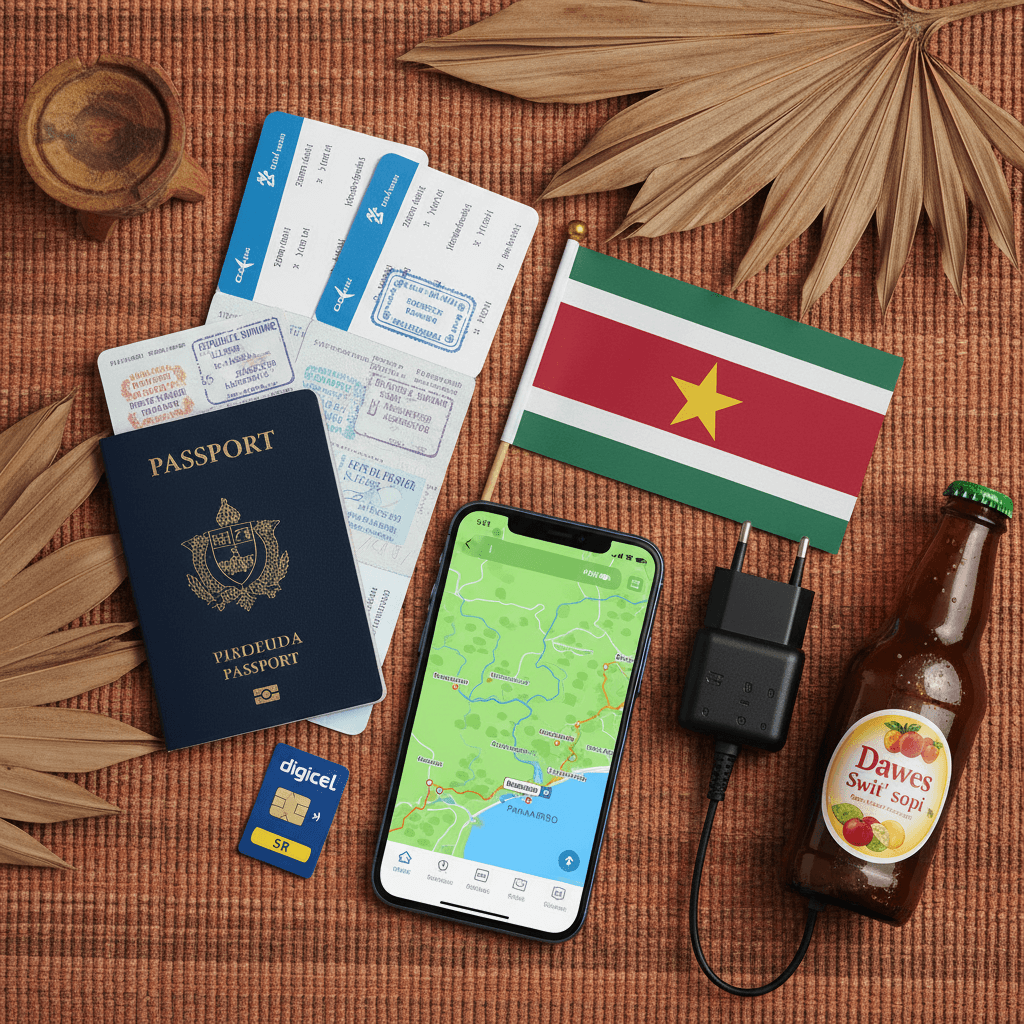
Suriname
Complete Digital Nomad Guide

Policy Stability
Stamped Nomad ExclusiveHow likely visa and immigration policies are to remain unchanged
Quick Facts
Nomad Visa Cost
N/A
Max Stay
3 months
Renewable
Yes
Cost of Living
$1,008/mo
Avg Internet
25 Mbps
Safety Score
5/10
Healthcare
Medium
Coworking
Low
English Friendly
Medium
Time Zones
SRT (UTC-3)
Entry Methods Available
Best For
Suriname’s entry requirements have shifted significantly over the last year. Gone are the days of the general visa-on-arrival. Today, the system is almost entirely digital, centered around a mandatory online portal. Whether you are coming for a quick scout of Paramaribo or planning a longer stint, you need to sort your paperwork well before you head to the airport.
The Entry Fee: For Most Western Nomads
If you hold a passport from the US, Canada, the UK, or most EU nations, you don't need a traditional visa for tourism or family visits. However, you aren't getting in for free. You are required to pay a mandatory Entry Fee online before you travel. This covers stays of up to 90 days.
- Purpose: Strictly for tourism or visiting family. Business activities are not permitted under this fee.
- Requirement: You must apply through the official VFS Global portal and receive a voucher.
- Proof: Airlines will ask to see this voucher before they let you board. If you don't have it, they can and will deny you boarding.
- Timing: The government moved to a pre-pay system on January 15, 2024; you can no longer pay this at the airport in Paramaribo.
Nationalities Requiring an E-Visa
While many have it easy with the entry fee, Suriname re-imposed strict visa requirements for 21 specific nationalities on May 1, 2023. If you are a citizen of countries like India, South Africa, Egypt, or the Dominican Republic, you cannot use the entry fee system. Instead, you must apply for a formal E-Visa or a standard visa through the VFS portal.
This list also includes travelers from Afghanistan, Angola, Bangladesh, Cameroon, Cuba, Eritrea, Ghana, Kenya, Nepal, Nigeria, Pakistan, Somalia, Sri Lanka, Syria, Tunisia, Venezuela, and Zambia. If you hold one of these passports, make sure you select the correct E-Visa category (Tourist or Business) to avoid being turned away at the border.
Business Travel and Short-Stay Categories
If your trip involves more than just sightseeing, the entry fee won't cut it. Business travelers, including those attending conferences, training sessions, or exploratory meetings, must apply for a Business E-Visa. This is handled through the same digital portal but requires different documentation to prove the nature of your visit.
- E-Tourist Card: Available for specific nationalities for single-entry tourist trips.
- Tourist E-Visa: Offers more flexibility, including multiple-entry options for those planning to hop between Suriname and neighboring Guyana or French Guiana.
- Transit Visa: Necessary if you are just passing through and your nationality requires a visa for entry.
Staying Long-Term: The MKV Process
For nomads who fall in love with the jungle and want to stay beyond the 90-day mark, the process gets much more bureaucratic. You cannot simply extend a tourist visa indefinitely. You will need an Authorization for Temporary Stay, known locally as an MKV.
The MKV is an approval from the Ministry of Justice and Police. You must apply for this at least three months before you plan to leave for Suriname. It is a prerequisite for the KV (Temporary Stay) visa. This process involves submitting birth certificates and criminal record checks. Once you arrive on a KV visa, you then coordinate with the immigration authorities to finalize your residence permits.
The Immigration & Customs Form (ICF)
Regardless of whether you need a visa, an entry fee voucher, or a long-stay permit, every single passenger must fill out the Suriname Immigration & Customs Form (ICF). This is a separate digital requirement from your visa. It is best to complete this online before arrival to keep your transition through airport security as smooth as possible.
Summary of Entry Paths
- Tourist (Exempt Nations): Pay the Entry Fee online, stay up to 90 days.
- Tourist (Restricted Nations): Apply for an E-Visa or E-Tourist Card via VFS Global.
- Business: Apply for a Business E-Visa regardless of nationality.
- Nomads staying 90+ days: Apply for an MKV through the Ministry of Justice and Police months in advance.
The Current Landscape
Suriname is one of those rare spots on the map that feels like a genuine frontier. However, because it hasn't quite hit the mainstream radar for remote workers, the government hasn't rolled out a red carpet in the form of a dedicated digital nomad visa. You won't find a "laptop permit" or a "work-from-paradise" scheme here yet. Instead, you have to work within the existing immigration framework, which is surprisingly flexible if you know which path to take.
Most travelers who head to Paramaribo for a few months rely on the standard entry systems. If you are looking for a long-term base in the Amazonian jungle or the colonial streets of the capital, you will need to look into residency permits rather than a specialized nomad program.
Short-Term Stays: The E-Visa and Tourist Card
If your plan is to test the waters for a few months, the easiest entry point is the Electronic Tourist Card. This is a straightforward digital application that grants you a stay of up to 90 days. It is designed for tourism, but for many nomads working quietly on foreign contracts, it serves as the initial entry point.
- Duration: Valid for 90 days from the date you enter the country.
- Application Window: You should complete the Immigration and Customs Form (ICF) starting 7 days before your arrival.
- Requirement: A passport valid for at least six months and a confirmed return ticket.
Long-Term Options: The MKV and Work Visas
For those who fall in love with the pace of life here and want to stay beyond the three-month mark, things get a bit more formal. You will likely be looking at the Authorization for Temporary Stay, known locally as the MKV (Machtiging tot Kort Verblijf). This is the bridge to residency and is handled by the Ministry of Justice and Police.
If you are employed by a company back home but want to reside in Suriname legally for a year or more, a Temporary Work Visa is the standard route. It requires a bit more paperwork than a simple tourist entry, but it legitimizes your stay. To get this moving, you generally need to provide:
- Proof of Employment: A contract or letter from your employer outside Suriname.
- Income Verification: Bank statements or pay stubs showing you can support yourself without tapping into the local job market.
- Medical Clearance: A recent health certificate from a doctor.
- Job Description: A clear breakdown of what you do, proving that your work is remote and doesn't compete with local labor.
Tax and Legal Reality
Living in Suriname as a remote worker puts you in a gray area regarding taxes. Since there isn't a specific nomad law, the general tax code applies. If you spend more than 183 days in the country during a calendar year, you could technically be considered a tax resident. This means you might be liable for local income tax on your global earnings.
Most nomads staying on short-term cards don't run into issues, but if you go the route of the MKV or a formal work visa, it is smart to chat with a local tax consultant. The authorities are generally more focused on people working for Surinamese companies, but staying compliant keeps your future residency options open.
The Logistics of Arrival
Regardless of which permit you choose, every traveler has to deal with the Immigration and Customs Form (ICF). This is a mandatory digital step. You can't just wing it at the airport anymore; the system expects your data at least a week before you land. If you have questions during the process, the support team is reachable via WhatsApp or email, which is a surprisingly modern touch for a country that often feels like it's operating on "island time."
Suriname is a "choose your own adventure" destination for remote workers. It requires a bit more legwork than countries with shiny nomad marketing, but the reward is a lifestyle that very few people in the digital nomad community have actually experienced.
Suriname is one of South America's best-kept secrets, and for most travelers, getting through the front door is surprisingly straightforward. While the country has moved away from traditional "visa on arrival" stamps at the airport, they have replaced it with a digital system that keeps things moving quickly for the digital nomad crowd.
The Visa-Free Reality
Most travelers have it easy. Citizens from a vast majority of countries can enter Suriname visa-free for up to 90 days. This is the gold standard for nomads who want to test the waters in Paramaribo without a mountain of paperwork. If you hold a passport from the US, Canada, UK, or most EU nations, you generally fall into this category.
There are exceptions to this rule. If your passport is from one of the following countries, you will need to secure a visa before you land:
- Afghanistan, Angola, and Bangladesh
- Cuba, Dominican Republic, and Egypt
- India, Pakistan, and Sri Lanka
- Kenya, Nigeria, and South Africa
- Vietnam and Venezuela
The E-Visa and E-Tourist Card
For those who aren't on the visa-free list, or if you are looking for specific business or long-stay entries, the VFS Global portal is your only official route. Suriname has fully digitized this process, so don't show up at the border expecting to pay cash at a desk. You need to have your digital paperwork sorted at least 3 to 5 business days before you fly.
The costs are relatively modest compared to other tropical destinations. A standard E-Tourist Card for a single entry costs $40, while a Multiple Entry Tourist Visa valid for two months is $45. Keep in mind there is a mandatory $14 government handling fee added to every application. If you use third-party expeditors, those prices can jump significantly, so stick to the official portal to keep your overhead low.
The Mandatory Entry Form
Regardless of whether you need a visa or not, every single person entering the country must complete the Immigration and Customs Form (ICF). You can do this online starting 7 days before your arrival. It is a quick digital check-in that replaces the old blue and white paper cards you used to fill out on the plane. Make sure your passport has at least 6 months of validity remaining, or the airline might block you from boarding your flight.
Staying Longer: Extensions and Rules
If you fall in love with the rainforest and want to extend your stay, you will need to deal with the Ministry of Foreign Affairs in Paramaribo. While the initial 90-day window is generous, extensions are handled on a case-by-case basis. It is always better to start this process at least two weeks before your current stamp expires.
A few things to keep in mind regarding your stay:
- Overstays: Suriname takes its immigration laws seriously. While they don't publish a flat daily fine online, overstaying can lead to deportation and future entry bans. Always visit the immigration office if you think you'll miss your exit date.
- Border Runs: Since the e-visa system is still relatively new, "resetting" your visa by crossing into French Guiana or Guyana is a bit of a grey area. It is usually more reliable to apply for a formal extension through official channels in the capital.
- Work Status: The tourist visa and e-tourist card are strictly for leisure. If you are planning to sign local contracts or open a business on the ground, you should look into the specific Business or Work visa categories available on the e-visa portal.
Suriname offers a unique blend of Dutch influence and Amazonian grit. As long as you have your ICF form printed and your passport is current, the entry process is one of the smoother experiences in the region.
The Long-Term Landscape
Suriname is a unique choice for nomads looking to step off the beaten path. While it doesn't have a specific "digital nomad visa" yet, the country offers several pathways for those who want to call Paramaribo home for more than just a few weeks. The system is currently undergoing modernization, making it easier to transition from a visitor to a long-term resident.
The Retired Citizen Visa
If you have a steady passive income, the Retired Citizen Visa is your most straightforward path. It is designed for stays longer than 60 days and is initially valid for one year. You can extend this annually up to five times, giving you a total of five years before you need to consider permanent residency.
To qualify, you need to prove you are financially self-sufficient. This typically means showing 12 months of bank statements with an average monthly balance of USD 80,000, or a guaranteed monthly pension or Social Security payment of at least USD 2,000. You will also need a passport with six months of validity, a clean background check, and proof of your local domicile in Suriname.
Business and Self-Employment Permits
For the entrepreneurs and freelancers who want to set up shop locally, the self-employment residence permit is the way to go. Suriname doesn't have a formal "Golden Visa" or residency-by-investment program, but they are very open to people who bring economic value to the country. If you are starting a business or working as a freelancer, you will need to demonstrate how your work contributes to the local economy.
- Contribution: You must show your business creates employment or provides a service that benefits the Surinamese market.
- Process: You apply for a work permit alongside your residency application.
- Sole Proprietorship: If you are operating as an individual, ensure your visa status allows for local income generation before you start billing clients.
The One Stop Unit (OSU) Advantage
In the past, getting your paperwork sorted in Suriname was a test of patience that could take six months or more. The government recently introduced the One Stop Unit (OSU) to fix this. This service allows you to bundle your Short-Stay Visa, Work Permit, and Residence Permit into a single application package.
Using the OSU cuts your waiting time down to about three to four weeks. This speed comes with a price tag; the expedited government fee is USD 1,500. If you are not in a rush, standard work permit fees are much lower, usually ranging between USD 150 and USD 250.
Permanent Residency
If you fall in love with the rainforest and the melting-pot culture of Paramaribo, you can apply for permanent residency after five years of legal living in the country. The authorities will look for proof of your social integration and financial stability during those five years. You will need to provide a solid employment history and show that you have become a part of the local community.
Application Checklist
- Passport: Must be valid for at least six months from your date of entry.
- Photos: Recent colored passport photographs are required for all permit types.
- Digital Forms: All travelers must complete the mandatory Immigration and Customs Form (ICF) before arrival.
- Financials: Keep your bank statements and pension letters translated and ready for review.
The Cost of Living in Suriname
Suriname remains one of the best-kept secrets for digital nomads who want their dollars to stretch without sacrificing a vibrant cultural experience. While it doesn't have the massive infrastructure of Medellin or Lisbon, the capital city of Paramaribo offers a remarkably low cost of entry. You can live a lifestyle here that feels premium for a fraction of what you would spend in North America or Europe.
Housing and Neighborhoods
Your biggest expense will be rent, but even in the heart of the city, prices are approachable. If you want to be in Paramaribo Centrum, expect to pay between $400 and $555 for a one-bedroom apartment. This area puts you close to the colonial architecture and the best nightlife, though it can be noisier than the suburbs.
Many nomads migrate toward Rainville or Blauwgrond. Rainville is particularly popular for its safe, walkable streets, with prices ranging from $150 to $250. Blauwgrond is the culinary heart of the city, where you can find decent spots for $200 to $300 per month. If you are on a strict budget, outlying areas offer basic housing for as little as $150.
Dining and Groceries
Food is where Suriname truly shines, both in flavor and price. You can grab a roti lunch for about $3 or a massive bowl of saoto soup for similar prices. Even a more substantial traditional meal like pom or pepper pot usually starts around $5. If you enjoy eating out, you can do so daily without breaking the bank.
For those who prefer to cook, local markets are incredibly cheap. Basic groceries will run you about $20 per week. A realistic monthly grocery budget for a nomad who mixes home cooking with the occasional takeout is between $150 and $250.
Workspace and Connectivity
Reliable internet is the lifeline of any nomad. While Suriname’s speeds average between 25 and 47 Mbps, it is stable enough for video calls and remote desktop work. Local SIM cards are easy to snag, with monthly data plans starting at $10.
Coworking culture is growing in Paramaribo. You can find a hot desk at spots like the Suriname Innovation Hub for about $100 per month. If you only need a desk occasionally, daily rates are a steal at $5 to $10. These spaces are often the best way to meet the local tech community and other expats.
Transportation and Healthcare
Getting around is simple but requires a bit of patience. Public buses are the cheapest option at $0.50 per ride, though they don't always run on a strict schedule. Taxis are much more convenient for evening outings, typically costing between $5 and $10 for most trips within the city. Most nomads spend roughly $40 to $80 a month on total transport.
Health insurance is a requirement you shouldn't skip. Private plans that offer access to the better clinics in Paramaribo range from $80 to $150 per month. While the public system is available, most remote workers opt for private coverage to ensure faster service and English-speaking staff.
Budget Breakdown by Lifestyle
- The Budget Nomad: Expect to spend $420 to $610 monthly. This covers a modest room in a neighborhood like Rainville, mostly local street food, public transit, and a basic coworking membership.
- The Comfortable Nomad: This lifestyle costs between $650 and $930. It includes a nicer apartment, frequent dining out, more taxi rides, and a dedicated desk at a coworking space.
- The Premium Nomad: For $930 to $1,285, you can live in a top-tier city center apartment, eat at the best restaurants in town, and have full private health coverage.
While Paramaribo is the primary hub, some nomads look toward Nieuw Nickerie for even lower costs. Rent there starts as low as $150, but keep in mind that the infrastructure for remote work is significantly more limited than in the capital. For most, the sweet spot for a comfortable, productive life in Suriname sits right around $1,008 per month.
Paramaribo: The Only Real Game in Town
If you are planning to work remotely from Suriname, Paramaribo isn't just your best bet; it is essentially your only option. This historic, wooden capital city is the heartbeat of the country and the only place where you will find the infrastructure necessary to keep a laptop lifestyle afloat. It is a unique blend of Dutch colonial architecture and tropical energy, offering a low cost of living that is hard to beat in South America.
Coworking and the Connectivity Reality
The coworking scene is small but functional. You have a few solid choices to set up shop:
- Burō Workspaces: This is a members-only spot that provides the most professional environment and the most reliable high-speed internet in the city.
- Ondernemershuis Paramaribo: A more budget-friendly option starting around $100 a month, great for those who want a dedicated desk without breaking the bank.
- WorkUrMagic: Known among locals and travelers for having some of the fastest WiFi in town by Surinamese standards.
You need to manage your expectations regarding speed. Most standard connections hover around 4 Mbps, which can make heavy video calls or large file uploads a bit of a headache. A monthly plan for 8 Mbps will run you about 720 SRD (roughly $20 USD). It is manageable for emails and basic tasks, but power users might find it frustrating.
Living Large on a Budget
The biggest draw for nomads here is the price tag. Your money goes incredibly far. A furnished studio in a decent neighborhood can cost as little as 4,391 SRD ($125 USD) per month. Even on the higher end, most nomads find they can live comfortably on $514 to $1,791 a month, depending on how much they indulge in the expat lifestyle.
- Basic Lunch: 335 SRD ($10 USD)
- Cappuccino: 156 SRD ($4.50 USD)
- Local Beer: Very affordable, especially at sidewalk cafes.
Safety and After-Hours Culture
Paramaribo requires a bit of street smarts. Petty crime is a reality, so keep your wits about you in business districts and near major hotels. Avoid walking alone once the sun goes down, and always stick to registered taxis for night transit. The Waterkant is beautiful during the day, but it gets a bit sketchy after dark with aggressive panhandlers.
For a safe night out, head to the Waka Pasi enclave near the Ramada. It is well-lit, police-patrolled, and very walkable. If you want a bit of energy, Next Nightclub brings in international DJs, while The 22 Jazz Club offers a more laid-back vibe. For late-night cravings, the Blauwgrond district is the place to be for Javanese food and casual drinks.
Lelydorp: The Quiet Alternative
Lelydorp is the second-largest city, sitting just south of the capital. Interestingly, internet speeds can actually be better here, often reaching 17 Mbps. However, it lacks the "nomad" soul. You won't find coworking spaces or a community of remote workers to grab a coffee with. While the monthly costs are similar to Paramaribo at around $1,794 for a full lifestyle, the lack of infrastructure makes it more of a place to visit for a day than a place to set up a home office.
The Trade-Off
Suriname is a frontier for digital nomads. There is no dedicated nomad visa, and the community is tiny. If you are looking for a polished hub like Medellin or Buenos Aires, this isn't it. But if you want an affordable, off-the-beaten-path experience where you can live for a fraction of what you would pay elsewhere, Paramaribo is a fascinating, if slightly disconnected, home base.
Connectivity Realities
Working from Suriname requires a bit of a shift in expectations. While you won't be struggling with dial-up speeds, you aren't going to find the lightning-fast fiber optics common in Medellín or Lisbon. The infrastructure in Paramaribo is functional for most digital tasks like video calls and project management, but you should expect the occasional hiccup.
Most hotels and guesthouses offer free Wi-Fi, though the signal strength tends to drop off significantly once you leave the lobby. If your work involves uploading massive video files or constant high-bandwidth streaming, you will need a backup plan. The local infrastructure is improving, but it remains susceptible to weather-related interruptions and general network congestion during peak hours.
The Mobile Data Lifeline
For most nomads in Suriname, a local SIM card is the most reliable way to stay online. It is often faster and more consistent than the Wi-Fi found in cafes or mid-range rentals. The two primary providers are Telesur and Digicel. Both offer 4G/LTE coverage throughout the capital, though Telesur generally has the edge when it comes to broader national coverage if you plan on heading toward the interior.
Setting up is straightforward. You can grab a SIM at the airport or at various kiosks in the city center for a few dollars. Data packages are affordable, often ranging from $10 to $25 for generous monthly allotments. Tethering your laptop to your phone is a common practice here, and in many cases, it will be your primary connection for important meetings.
Coworking Spaces in Paramaribo
The coworking scene is small but high-quality. You won't find a dozen options, but the spaces that do exist are professional and cater specifically to the needs of remote workers and local entrepreneurs. These hubs are your best bet for stable power and the fastest available internet speeds in the country.
- The Hub Suriname: This is the go-to spot for the international community. It offers a modern aesthetic, ergonomic seating, and a reliable backup generator, which is a major plus. They offer daily, weekly, and monthly memberships.
- SmartUp: Located conveniently within the city, this space focuses on networking and provides a quiet environment for deep work. It is particularly popular with local startups.
- Kosmos: While technically a cafe-style environment, it is very nomad-friendly with plenty of power outlets and a menu built for long afternoon sessions.
Digital Nomad Friendly Cafes
If you prefer the hum of a coffee shop over a structured office, Paramaribo has a handful of spots where you can set up for a few hours without being ushered out. The cafe culture is growing, and most staff are used to seeing laptops on tables.
- Ready Tex Art Gallery: A unique spot where you can work surrounded by Surinamese art. The cafe upstairs is quiet and usually has a decent connection.
- Rituals Coffee House: This is a regional chain that offers a familiar, Starbucks-like experience. The internet is generally stable, and the air conditioning is always blasting.
- Garden of Eden: Great for those who want an outdoor vibe. It is better for light admin work rather than heavy meetings, as the Wi-Fi can be spotty in the corners of the garden.
Technical Specs and Tips
Power outages do happen, though they are rarely prolonged in the city center. If you are serious about your uptime, investing in a small power bank for your phone and ensuring your laptop has a healthy battery is a smart move. Most coworking spaces have their own backup systems, which is another reason to use them for high-stakes deadlines.
Standard download speeds in a good cafe hover around 5 to 10 Mbps. In a dedicated coworking space, you might see 20 to 50 Mbps. Always ask for a speed test before committing to a long-term rental if the host claims to have high-speed internet, as definitions of "high speed" vary wildly here.
Public vs. Private Care: What to Expect
Suriname's healthcare system is a bit of a mixed bag. While the country offers a blend of public and private facilities, the quality gap between them is noticeable. Most nomads and expats stick to the private sector in Paramaribo, where the standards are higher and wait times are shorter. Many local doctors are trained in the Netherlands, the US, or Cuba, so you will often find a high level of expertise despite the aging infrastructure in some buildings.
Don't expect every clinic to meet the pristine standards of Western Europe. Hygiene levels can vary, and public hospitals often struggle with equipment shortages. If you have a minor ailment, a private clinic in the capital will serve you well. For anything life-threatening, the goal is usually stabilization followed by a flight out of the country.
Top Medical Facilities in Paramaribo
Almost all reliable healthcare is concentrated in the capital. If you are heading into the interior or rural districts, medical help becomes much harder to find. Here are the main spots to keep on your radar:
- Academisch Ziekenhuis Paramaribo (AZP): This is the big one. It is a teaching hospital with about 700 beds and 400 doctors. They handle the heavy lifting like cardiology, neurosurgery, and oncology. Address: Gravenstraat 36.
- St. Vincentius Ziekenhuis: A highly regarded private hospital. With 150 beds and over 80 specialists, it is a go-to for internal medicine and orthopedics.
- Isala Medisch Centrum: Another solid private option. It is smaller, with about 100 beds, and focuses on gastroenterology and cardiology.
- 's Lands Hospitaal: One of the oldest public institutions. It is primarily known for maternity care, pediatrics, and general medicine. Address: Gravenstraat 1.
Insurance and Why You Need a Backup Plan
Suriname has a mandatory local insurance system, but it is not designed for the digital nomad lifestyle. Residents pay between 50 SRD and 165 SRD monthly, but this coverage is basic. It won't get you into the best private rooms, and it certainly won't pay for a private jet if you need specialized surgery.
You need a high-quality international health insurance plan. Look for providers like Cigna or similar modular plans that specifically include medical evacuation. If things get serious, you will likely want to be treated in Miami, Brazil, or back in Europe. Without evacuation coverage, a medical flight can cost you tens of thousands of dollars out of pocket.
Costs and Payments
The good news is that healthcare in Suriname is remarkably affordable if you are earning in USD or Euros. The price index sits around 27.94, which is a fraction of what you would pay in the States. Even in private hospitals, the bills are manageable. Just keep in mind that most facilities expect direct payment upfront if you don't have a pre-approved international plan. Keep your receipts; you will need them for reimbursement later.
Pharmacies and Prescriptions
Pharmacies are plentiful in Paramaribo, but the supply chain can be hit or miss. Private pharmacies generally have a better stock of brand-name medications and generics. You might see antibiotics being sold in small shops or supermarkets without a prescription, but it is better to stick to official pharmacies to ensure you are getting the real deal. If you rely on specific maintenance medication, bring a multi-month supply with you, as public sector stock-outs are common.
Emergency Contact Numbers
If you find yourself in a bind, these are the numbers to dial. Note that response times can vary depending on traffic in Paramaribo's narrow streets.
- Medical Emergencies & Ambulance: 113
- SUR-CAD (Private Ambulance): 117
- Police: 115
- Fire & Rescue: 110
For high-stakes emergencies, SUR-CAD provides 24/7 dispatch and is generally more responsive for accidents. If you need an air ambulance for international evacuation, REVA is the primary provider operating in the region.
Managing Your Money in the Wild Coast
Suriname is a cash-heavy society where the Surinamese Dollar (SRD) is king. While Paramaribo is modernizing, you’ll quickly find that small vendors, local markets, and even some guesthouses prefer physical bills over plastic. Carrying a mix of cards and cash is the smartest move for any nomad landing here.
Opening a Local Bank Account
Unlike many neighboring countries, Suriname is surprisingly open to non-residents. You can open a personal chequing or savings account without being a citizen. Banks like Republic Bank are popular choices for expats and long-term travelers. To get started, you'll need your passport and a reference letter or bank statements from your home bank that are less than 6 months old.
You also need to show proof of income, such as an employer declaration or recent salary slips, and a utility bill for address verification from the last 3 months. The barrier to entry is low; you can open a chequing account with just SRD 25, USD 50, or EUR 50. Savings accounts usually require a deposit of 100 in your chosen currency.
ATMs and Local Fees
ATMs are plentiful in the capital but get scarce once you head into the interior. Stick to machines attached to physical bank branches. They are safer and much easier to deal with if the machine happens to eat your card. Republic Bank typically charges a guest fee of SRD 10.00 per transaction.
Always choose to be charged in SRD rather than your home currency when the machine offers a conversion. This prevents the bank from hitting you with a terrible "guaranteed" exchange rate. It is also wise to avoid airport and hotel exchange desks. You will get much better rates at licensed money-exchange bureaus (cambios) or banks in the city center.
Digital Wallets and Neo-Banks
If you are looking to sign up for Wise or Revolut using a Surinamese address, you are out of luck. These services don't currently issue cards to residents here. However, if you already have a card from back home, it will work perfectly fine for withdrawals and point-of-sale payments until the expiration date. You can still use these apps to transfer money into the country even without a local physical card.
Best Ways to Send Money
If you need to move larger sums or pay a local landlord, several digital platforms work better than traditional wire transfers. Wise remains a favorite for its mid-market exchange rates. Other reliable options include:
- Remitly: Great for bank deposits, cash pickups, or even home delivery.
- Western Union: Useful for quick cash pickups via their mobile app or local agents.
- MoneyGram: Offers real-time tracking through their app for peace of mind.
- ACE Money Transfer: Often runs promotions with zero-fee transfers for new users.
The Crypto Scene
Cryptocurrency is a bit of a gray area in Suriname. It is perfectly legal to hold and trade, but it is not recognized as legal tender. You won't be buying your morning coffee with Bitcoin just yet. While there has been political talk about making Bitcoin legal tender by 2025, nothing has been signed into law. For now, treat it as a personal investment rather than a functional way to pay for your daily life in Paramaribo.
Visas and Residency for Dependents
Moving the whole family to Suriname involves a bit of paperwork, but it is manageable if you are organized. Every child needs their own complete visa application. If you are traveling as a single parent or your spouse is staying behind, you must have authenticated parental authorization and a legalized copy of the child’s birth certificate or family book. For those with legal guardianship or adopted children, a copy of the judicial decision is mandatory.
Don't forget that valid health or travel insurance is a non-negotiable requirement for the application. It is best to get these documents legalized and translated well before your departure date to avoid delays at the embassy.
Education and International Schools
For most digital nomad families, Paramaribo is the only realistic base because that is where the international schools are located. You have two primary options, both offering smaller class sizes and facilities that feel familiar to Westerners.
- QSI International School of Suriname: This school follows a Mastery Learning model from preschool through high school. You will look at a one-time registration fee of $300 and annual tuition of approximately $4,700 for the 5-year-old class and older.
- International Academy of Suriname (IAS): This is the more premium option, delivering a North American curriculum in English. Tuition rates sit between $9,000 and $10,350 annually. They have a strong reputation for getting students into international universities.
While these prices are high compared to the local economy, they are a bargain compared to private schools in the U.S. or Europe. Space is often limited, so it is smart to reach out to admissions as soon as you know your dates.
Childcare and Daily Life
If your children are younger, childcare is one of the biggest cost savings you will find in Suriname. Private full-day preschool or kindergarten averages around $63 a month. That is a massive 95% saving compared to American rates. Local daycares are even cheaper, often around $100 a month, but be aware that staff may speak limited English and the teaching style might be more traditional than what you are used to.
Living in Paramaribo with a family requires some logistical adjustments. The city’s historic Dutch colonial core is beautiful, but the sidewalks are often uneven or non-existent. Forget the heavy strollers; a high-quality baby carrier or a sturdy bicycle is much more practical. Because of the heat and the lack of pedestrian-friendly infrastructure, most expat families rely on reputable taxis to get around.
Healthcare Realities
Suriname’s healthcare system is concentrated in the capital. While the government has made strides in maternal and child health, the infrastructure is limited once you leave Paramaribo. Most nomad families stick to private providers in the city for routine checkups and emergencies.
Health risks for children often stem from the environment. Infectious diseases from contaminated food, water, or insects are a concern, so being diligent about hygiene and mosquito protection is part of daily life. Ensure your family’s vaccinations are up to date and always keep a stock of basic pediatric medicines, as specific brands might be hard to find locally.
Staying Safe with Kids
Safety in Suriname is mostly about common sense and being aware of your surroundings. Paramaribo is generally fine during the day, but petty crimes like pickpocketing happen in busy shopping districts. It is best to avoid displaying expensive jewelry or gadgets when you are out with the kids.
- Avoid walking alone after dark, especially outside of the main hotel districts.
- Keep your car windows up and doors locked while driving through the city.
- The Palm Garden area is best avoided after sunset due to limited police presence.
- Many families choose to live in the northern residential areas of Paramaribo, where private security guards are common.
While there has been a rise in residential break-ins in wealthier areas, most of these target homes where large amounts of cash are kept. Using a reputable taxi service instead of public transport and staying in gated or secured housing will mitigate most of these risks.
Safety on the Ground
Suriname is generally more relaxed than its neighbors in South America, but you shouldn't let your guard down entirely. Paramaribo has a high-threat rating for petty crime, particularly in the busy shopping districts. Bag snatching and pickpocketing are the most common issues for foreigners, who are often viewed as high-value targets. Keep your phone tucked away and avoid wearing expensive jewelry or watches that scream "tourist."
Violent crime is less frequent but does happen, especially along the East-West highway toward Albina and the Afobakka Highway. In the city, the Palmentuin (Palm Garden) area is beautiful during the day but becomes a hub for illicit activity after dark. Stick to taxis if you are moving around at night, keep your car doors locked, and avoid walking alone outside of the immediate hotel zones once the sun goes down.
Avoiding Scams
Scams in Suriname aren't as sophisticated as in Europe or Southeast Asia, but they usually involve overcharging for services. Taxi drivers and independent tour operators might try to inflate prices for foreigners. Always verify tour companies through official channels; a known scam involves a fake entity using the name "All Suriname Tours." If an offer for a "private expedition" seems too good to be true or comes from an unsolicited guide on the street, it is best to decline.
LGBTQ+ Acceptance
Suriname is surprisingly progressive compared to much of the region. Same-sex intercourse is legal, and the Penal Code actually protects against hate speech and discrimination. The government interprets the constitution to include gender identity and sexual orientation under its anti-discrimination clauses. In a 2017 study, 83 percent of the population expressed tolerance or acceptance of LGBTQ+ individuals.
While the legal framework is solid, day-to-day life can still involve some social friction or public hostility in more conservative circles. For networking and support, look into Parea, a professional network for LGBTQ+ individuals that hosts workshops and social events in Paramaribo.
Cultural Etiquette and Language
The local culture is a melting pot of African, Asian, and European influences, and respect for elders is paramount. When you meet someone, a firm handshake is standard. If you become close friends, you will likely be greeted with a brasa (a warm hug). When someone asks "Fa Waka" (How are you?), the standard response is "calm," which signals that everything is good. You don't need to give a long life update.
- Footwear: Always remove your shoes at the door when entering a home.
- Dress: Surinamese people value a neat appearance; try to dress up a bit for social gatherings.
- Language: Dutch is the official language, but Sranan Tongo is the heart of daily communication.
- English: Proficiency is high among the youth and business professionals, but it drops off significantly with the older generation and in rural districts.
The Nomad Community
The digital nomad scene is still in its early stages, but it is growing. You won't find the massive crowds of Medellin or Canggu, which makes the community here feel more tight-knit and welcoming. Most expats congregate in Paramaribo Centrum or the upscale Blauwgrond neighborhood. The cost of living is a major draw, with a total monthly budget averaging around $1,008.
Popular neighborhoods for remote workers include:
- Blauwgrond: Upscale area with rent between $200 and $300.
- Rainville: A laid-back vibe with prices ranging from $150 to $250.
- Paramaribo Centrum: The heart of the action, costing $250 to $400 per month.
To meet people, head to the Paramaribo Coworking Space or join the "Paramaribo Digital Nomads" Facebook group. Internet speeds average 47 Mbps, which is plenty for video calls and remote work. Integrating is easy if you show up to local festivals like Keti Koti or Maroon Day and try the local food. Grabbing a plate of pom or roti at a local market is the fastest way to start a conversation and feel like more than just a visitor.
Understanding Tax Residency
Suriname doesn't play by the standard 183-day rule you might be used to in Europe or North America. Instead, the tax authorities look at your "center of personal economic interests." This is a fancy way of saying they look at where you actually live, where your family hangs out, and where you do your business.
You can become a tax resident without even having a formal residence permit. Once the government decides you are a resident, they expect a cut of your worldwide income. If you are just passing through and don't meet those residency criteria, you only owe tax on money you earned directly from Surinamese sources.
The Progressive Tax Scale
Suriname uses a progressive system, so the more you earn, the higher the percentage you pay. The rates for the current tax year are broken down by annual income in Surinamese Dollars (SRD):
- Up to 108,000 SRD: 0% (Tax-free bracket)
- 108,000 to 150,000 SRD: 8%
- 150,000 to 192,000 SRD: 18%
- 192,000 to 234,000 SRD: 28%
- Above 234,000 SRD: 38%
The top rate of 38% is quite high for the region. Nonresidents usually get a tougher deal because they aren't eligible for the same deductions and personal allowances that residents use to lower their taxable base.
Double Taxation and Treaties
This is where it gets tricky for nomads. Suriname has a very limited network of tax treaties. They recently signed a significant agreement with Curaçao to prevent people from being taxed twice on the same income, covering things like dividends and wealth tax. They also have a treaty with Indonesia.
If you are from the United States, be aware there is currently no bilateral investment or tax treaty in place. You will need to lean heavily on your home country's foreign tax credits to avoid paying twice. Always check the current status of these treaties before you arrive, as many are still moving through the legislative process.
Digital Nomad Specifics and Crypto
Suriname hasn't jumped on the digital nomad visa trend yet. There is no special tax break or "tech nomad" category. If you stay longer than 90 days, you need an Authorization for Temporary Stay (MKV). From a tax perspective, you are treated like any other foreign worker or resident.
When it comes to cryptocurrency, the rules are straightforward because they are non-existent. There is no specific crypto tax law, so the government treats your Bitcoin gains or mining income as regular income. You report it under the progressive brackets mentioned above. On the bright side, there is no separate capital gains tax or VAT applied to your crypto trades.
Filing Your Returns
The system here is based on self-assessment. You are responsible for doing the math and telling the Inspector of Direct Taxes what you owe. There are two big dates you need to put in your calendar:
- April 15: Your provisional income tax return is due. You pay this in four installments throughout the year: April 15, July 15, October 15, and December 31.
- April 30: This is the deadline for your final income tax return for the previous year.
The local tax office is strict about these dates. If you miss them, they will likely hit you with an estimated assessment, which is usually higher than what you actually owe, plus interest and fines. If you are working for a local company, they will withhold wage tax from your paycheck starting on day one.
Connectivity and SIM Cards
Staying connected in Suriname is straightforward, but you should choose based on your arrival needs. For instant data the moment you land, grab an eSIM from Airalo or Holafly. These are perfect for getting a ride to your accommodation without hunting for a shop.
- Telesur: The national provider with extensive coverage. Expect to pay $5–$15 USD for a SIM and roughly $10–$30 USD for a monthly data plan.
- Digicel: A solid alternative often found throughout the Caribbean. Their plans are competitively priced and easy to top up via their app.
You will need to bring your passport to a physical store in Paramaribo to register a local SIM. Most shops are concentrated in the city center and are usually open during standard business hours.
Getting Around
Public transport is a bit of a maze, so most nomads rely on apps. Ride is the local heavy hitter. It functions like Uber, connecting you with drivers in about 3 minutes. For a more traditional experience with modern perks, Ulstrel Taxi 1680 offers licensed cars with real-time tracking and fare estimates.
If you hail a taxi on the street, remember that meters are rare. Always negotiate the price before the car moves. Avoid minibuses after the sun goes down; stick to registered taxi apps for safety and transparent pricing.
Where to Set Up Your Base
Paramaribo is a collection of distinct vibes. Your choice depends on whether you want peace or a short walk to the nearest bar.
- Blauwgrond: This is the expat favorite. It is famous for its Javanese food, colonial architecture, and walkable streets. One-bedroom apartments typically run between $200–$300 per month.
- Rainville: A laid-back student and academic hub near the university. It is quieter and more affordable, with rents ranging from $150–$250.
- Paramaribo Centrum: The heart of the city. You are close to everything, but you will pay a premium of $250–$400 for the convenience.
For those looking for luxury, North Paramaribo offers large houses and gated communities, while Flora provides some of the most budget-friendly housing in the city.
Finding a Home and Food
Airbnb is the most reliable tool for finding "work-ready" spaces. There are over 330 properties in the district specifically tagged with dedicated workspaces. Booking.com is also useful for securing a place for the first week while you scout local real estate agencies for "expat homes."
When you don't feel like cooking, Food Delivery is the go-to app for variety, from Surinamese pom to Indian curries. For a quick cafe lunch or a snack, RideEats has a faster, more modern interface. Keep in mind that delivery times skyrocket on Friday and Saturday nights, so order early.
Language and Communication
While English is spoken in tourist areas, Dutch is the official language and Sranan Tongo is the local lingua franca. Using Duolingo or Babbel to learn basic Dutch greetings will go a long way. If you want to dive deeper, Beelinguapp is great for practicing reading and listening through local stories.
Safety and Practical Realities
Suriname is a cash-heavy society. Many local spots do not take cards, so keep a stash of SRD (Surinamese Dollars) on you. Use ATMs located inside banks or malls during the day to avoid any issues. If an ATM doesn't work with your card, don't panic; just try a different bank branch.
Internet can be hit or miss. Before you sign a long-term lease, verify the WiFi speed yourself. Do not take a "high-speed" claim at face value. Check recent reviews on Booking.com specifically for mentions of the internet stability. In an emergency, dial 115 for police, ambulance, or fire services.
Common Pitfalls
- Taxi Tips: Even after negotiating a price, some drivers might ask for a "tip" in USD or Euros. Stick to the agreed price in local currency unless the service was exceptional.
- Valuables: Keep your phone and laptop out of sight when walking, especially after dark. Use a money belt for your passport and extra cash.
- Connectivity Backups: Always have a backup mobile hotspot. Power outages or service flickers can happen, and you don't want to drop out of a Zoom call mid-meeting.
Stay Updated on Suriname
Get notified about visa changes, policy updates, and new information for digital nomads in Suriname.