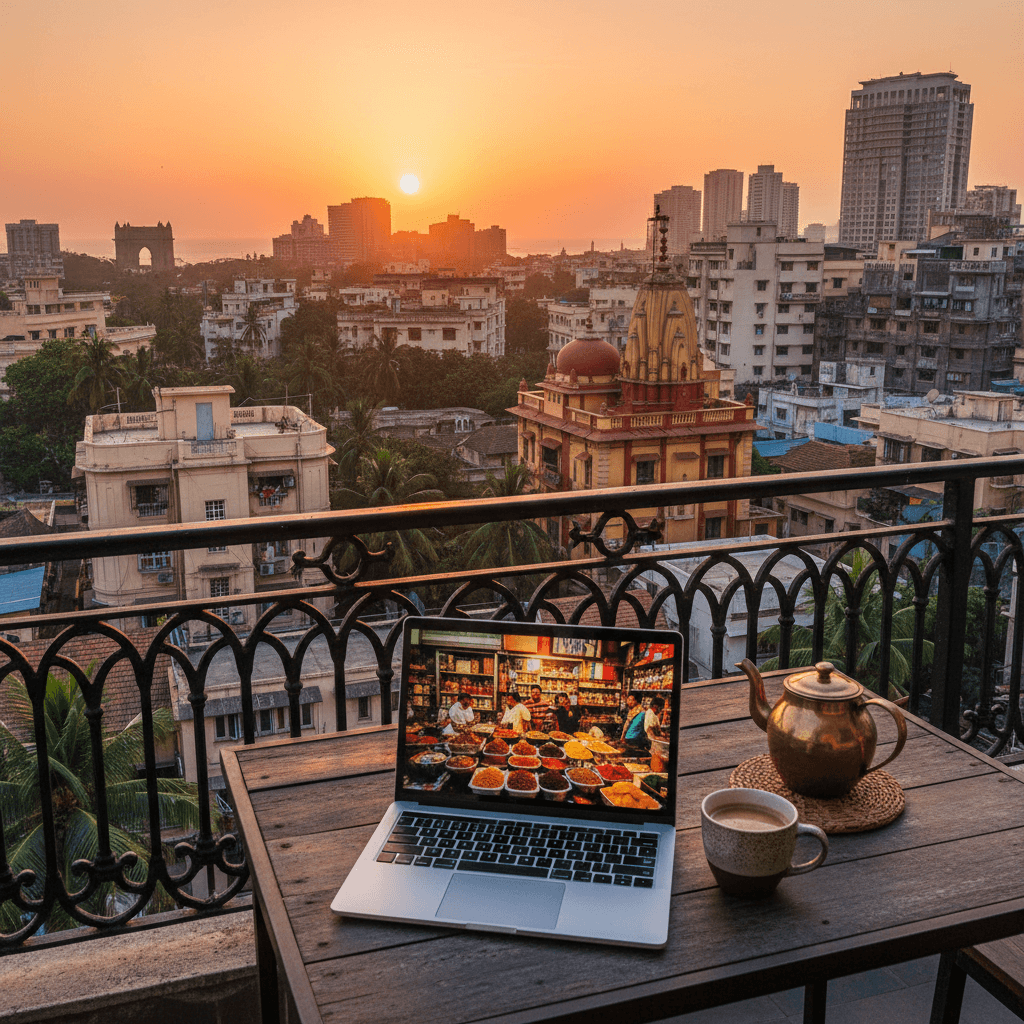
Mumbai
🇮🇳 India
The Maximum City
Mumbai doesn't just ask for your attention; it demands it. This is a city of extremes where glass skyscrapers overlook sprawling settlements and colonial architecture rubs shoulders with high energy tech hubs. Most nomads find the initial experience a bit of a shock to the system, but once you settle into the rhythm of the local hustle, it becomes addictive. It's the only place in India where you'll see a Bollywood star and a tech founder grabbing a vada pav at the same street stall.
The vibe here is restless and aspirational. Unlike the laid back beaches of Goa or the tech heavy seriousness of Bangalore, Mumbai has a creative edge fueled by the film industry and a massive financial sector. You'll feel the "Maximum City" energy in the crowded local trains and the late night bars in Bandra. It's loud, the humidity can be punishing, and the traffic is legendary, but the networking opportunities are unmatched in South Asia.
Living Costs & Budgeting
Mumbai is notorious for being the most expensive city in India, particularly when it comes to real estate. Space is at a premium, so expect smaller apartments than you'd find in Delhi or Hyderabad. Most mid range nomads budget around $873 to $950 per month to live comfortably.
- Budget ($660/month): Usually involves a shared room in Andheri, relying on local trains, and sticking to street food like ₹50 samosas.
- Mid range ($873/month): A private studio in Lower Parel, a mix of Ubers and trains, and frequenting coworking spaces.
- Comfortable ($920+/month): A nice 1BR in Bandra West, dining at upscale spots like The Fatty Bao, and daily rideshares.
Where to Plant Your Flag
Choosing the right neighborhood is the difference between loving and hating Mumbai. Traffic can turn a five mile trip into a two hour ordeal, so nomads usually live where they work.
Bandra West
The undisputed king for nomads and expats. It's walkable, filled with third wave coffee shops, and has a distinct creative soul.
- Rent: ₹27,000 to ₹40,000 ($366 to $530)
- Pros: Best nightlife, huge networking scene, plenty of cafes.
- Cons: Highest rents in the city and very crowded on weekends.
Lower Parel
Once a district of textile mills, it's now a concrete jungle of high rises and corporate offices.
- Rent: ₹30,000 to ₹45,000 ($400 to $600)
- Pros: Modern infrastructure, top tier coworking like WeWork, and luxury malls.
- Cons: Lacks the leafy, residential charm of Bandra.
Andheri
A sprawling suburb that's popular with those on a stricter budget or those who need to be near the airport.
- Rent: ₹25,000 to ₹35,000 ($330 to $465)
- Pros: More affordable, great Metro connectivity, and close to the media industry hubs.
- Cons: Heavy suburban feel and intense traffic congestion.
Digital Infrastructure
Internet speeds are generally solid, ranging from 49 to 97 Mbps. Most cafes in Bandra and Lower Parel are nomad friendly, though you'll want a backup power bank and a local SIM. Expats recommend getting a Jio or Airtel SIM immediately; you can get 2GB of daily data for about ₹300 to ₹1,000 per month. For dedicated work, WeWork in Lower Parel (₹10,000 to ₹20,000) or 91springboard in Bandra (starting at ₹8,000) are the go to spots.
When to Go
Timing is everything in Mumbai. You want to aim for the window between November and February. The weather is dry, the temperatures stay between 18°C and 31°C, and you can actually walk outside without melting. Avoid June through September unless you enjoy monsoon floods and 100% humidity. The summer months of March to May are brutally hot, with "real feel" temperatures often crossing 40°C.
Practical Survival
Skip the local trains during peak rush hour unless you're looking for a physical challenge. Download Uber or Ola for getting around, and use Zomato or Swiggy for food delivery. For housing, skip the high Airbnb fees and check NoBroker or Blueground for stays longer than a month. Most locals speak excellent English, but learning a few words of Hindi or Marathi goes a long way. Always carry some cash for street vendors, but use Google Pay or PhonePe (UPI) for almost everything else; even the smallest chai stalls usually have a QR code.
The Price of Living in India's Financial Heart
Mumbai is easily India's most expensive city, but for a digital nomad, it remains a bargain compared to London or New York. You can get by on $660 if you're living like a local in a shared apartment in Andheri, but most remote workers find the sweet spot around $873 to $958 per month. This mid-range budget covers a private 1BR apartment, plenty of Ubers to avoid the heat, and a dedicated desk at a coworking space.
If you want the high life in Bandra with frequent upscale dinners and craft cocktails, plan to spend $1,200 or more. Rent will always be your biggest hurdle here; space is at a premium, and "cozy" is often a polite word for "cramped."
Breaking Down the Monthly Budget
- Housing: Expect to pay $330 to $465 for a basic setup in Andheri. Moving to trendy Bandra or the business hub of Lower Parel pushes prices to $530 or $600 for a decent 1BR.
- Coworking: A hot desk typically runs between $65 and $200 a month.
- Food: You can grab a Vada Pav on the street for $0.65, but a solid meal at a mid-range cafe costs about $4 to $8.
- Transport: Local trains are incredibly cheap at less than $0.50 a ride, while a month of frequent Uber and Ola trips rarely exceeds $15.
Where to Plant Your Laptop
Neighborhood choice defines your Mumbai experience. Most nomads gravitate toward these three hubs:
Bandra West
This is the creative soul of the city. It's walkable, packed with third-wave coffee shops, and home to a massive expat community. While rent is high, the networking opportunities at spots like 91springboard are worth the premium.
Lower Parel
If you're here for business, this is the spot. It's full of modern skyscrapers, luxury malls, and high-end coworking spaces like WeWork. It feels more corporate and polished, though it lacks the bohemian charm of the suburbs.
Andheri
Great for those on a budget or anyone needing quick access to the airport. It's loud and traffic-heavy, but housing is more affordable and the metro makes getting around much easier than in the south.
Connectivity and Workspace
Internet speeds are generally reliable, hovering between 49 and 97 Mbps. Most cafes in Bandra are happy to let you work for a few hours if you're buying coffee, but power outages can happen. Smart nomads keep a local SIM from Jio or Airtel as a backup. You can snag a data plan with 2GB of daily data for around $4 to $12 a month.
For a more stable environment, check out these local favorites:
- WeWork: Locations in Lower Parel and Andheri offer the most reliable infrastructure for $120 to $240 a month.
- 91springboard: A hub for startups in Bandra with a more social, community-focused vibe.
- Social: A chain of "workspace by day, bar by night" venues that are perfect for casual deep work.
Practical Money Tips
Cash is still useful for street food, but the city has gone digital. Most expats use Wise or Revolut for international transfers and set up Google Pay or PhonePe for local UPI payments. When looking for an apartment, skip the expensive short-term Airbnb listings. Locals recommend using sites like NoBroker or Blueground to find better rates for stays longer than 30 days.
Keep in mind that while the cost of living is low, the "convenience tax" adds up. Using apps like Swiggy for food delivery or Zepto for 10-minute groceries is affordable and saves you from battling the humidity and chaotic street traffic.
Bandra: The Creative Nomad Hub
If you want to be where the action is, head straight to Bandra. It's the undisputed headquarters for the city's creative crowd, expats, and solo travelers. While the rent is on the higher side, usually between ₹27,000 and ₹40,000 ($366 to $530 USD) for a decent studio, you're paying for the lifestyle. You can spend your mornings working from 91springboard or grab a table at a local cafe like The Fatty Bao.
Nomads love this area because it's one of the few places in Mumbai where you can actually walk between your apartment, your coworking space, and the bar. The nightlife is centered around spots like Social, where networking happens naturally over a few drinks. Just be prepared for the crowds; it's popular for a reason, and the streets can feel tight during peak hours.
Lower Parel: The Professional Powerhouse
Expats and serious professionals often gravitate toward Lower Parel. This is the city's business heart, where old textile mills have been transformed into shiny glass towers and high end malls. It's the best spot if you need top tier infrastructure and modern coworking spaces like WeWork, which typically costs between ₹10,000 and ₹20,000 per month.
Living here puts you right in the middle of the corporate energy. Expect to pay around ₹30,000 to ₹45,000 ($400 to $600 USD) for a one bedroom apartment. While it lacks the bohemian charm of Bandra, it makes up for it with efficiency and proximity to some of the best high end dining in the city. It's polished, productive, and perfect for those who prioritize a short commute to the office.
Andheri: The Budget and Family Choice
For families or nomads keeping a closer eye on their bank account, Andheri is the practical choice. It's a massive suburb that offers a lot more space for your money, with rents for a one bedroom typically falling between ₹25,000 and ₹35,000 ($330 to $465 USD). It’s also incredibly convenient for travelers because of its proximity to the airport and the Metro line, which helps you bypass some of the legendary Mumbai traffic.
The vibe here is more residential and suburban, but don't think it's quiet. It's home to the Bollywood industry, so there's always a frantic energy in the air. Families appreciate the access to major hospitals like Kokilaben and a wider variety of larger apartment complexes that are hard to find in the southern parts of the city. If you're on a budget, you can live comfortably here for about $660 USD a month by sticking to local markets and shared housing.
Quick Neighborhood Comparison
- Bandra: Best for solo travelers and creatives. Expect high walkability, great cafes, and a monthly cost of $920+ for a comfortable lifestyle.
- Lower Parel: Best for corporate expats and networking. Features the best coworking infrastructure and modern malls.
- Andheri: Best for families and budget nomads. Offers the most affordable housing and easy airport access.
Practical Living Tips
- Internet: Most cafes and apartments offer speeds between 49 and 97 Mbps. Always have a Jio or Airtel SIM as a backup for the occasional power outage.
- Transport: Use the Uber or Ola apps for reliable rides. A typical trip costs between ₹200 and ₹500. For a cheaper local experience, the trains are only ₹10 to ₹50, but avoid them during rush hour unless you're feeling brave.
- Leasing: Most nomads find better luck using NoBroker or Blueground rather than Airbnb for stays longer than 30 days.
- Health: If you're in Bandra, Lilavati Hospital is the standard for international quality care. In an emergency, dial 100 for police or 108 for an ambulance.
Mumbai is a city that never stops, and its digital infrastructure has finally caught up with its ambition. While the city's pulse is chaotic, the internet scene is surprisingly robust, provided you know where to plant your laptop. You can expect average speeds between 49 and 97 Mbps in most professional setups, which is plenty for seamless Zoom calls or uploading large files.
Coworking Spaces
The coworking culture here is professional, high energy, and great for networking. If you want to be in the middle of the corporate action, WeWork has a massive presence in Lower Parel. It is the gold standard for reliability, though it comes with a price tag of ₹10,000 to ₹20,000 per month. It is where you will find the city's tech elite and startup founders.
For a more creative, nomad friendly vibe, head to 91springboard in Bandra. It is a bit more affordable, starting around ₹8,000 per month, and puts you right in the heart of the city's best nightlife and cafe scene. Most nomads find the community events here are the quickest way to make friends in a city that can otherwise feel overwhelming.
- WeWork (Multiple Locations): Best for high speed reliability and premium amenities. Monthly hot desks around $120 to $240.
- 91springboard (Bandra/Andheri): Better for networking and a community feel. Plans start near $100.
- Workbay (Bandra): A smaller, more intimate boutique space that feels less like a corporate office.
The Cafe Culture
If you prefer the "laptop and a latte" lifestyle, Bandra West is your playground. Local spots are incredibly welcoming to remote workers, though it is polite to keep the orders coming if you are staying for hours. Starbucks is a reliable fallback for strong AC and steady WiFi, but local favorites like Blue Tokai or Social offer more character. Social actually doubles as a dedicated workspace during the day, offering "workation" packages that include food and drink credits with your desk fee.
Connectivity and SIM Cards
Do not rely solely on cafe WiFi. Power outages or local grid resets happen, especially during the monsoon months from June to September. Most expats recommend having a solid backup. A local SIM is a must, and the process is fairly straightforward if you have your passport and a couple of photos ready.
- Jio: Generally offers the best 4G and 5G coverage across the city. You can get a 28 day plan with 2GB of data per day for about ₹300 to ₹500 ($4 to $6).
- Airtel: A strong second choice, often better in certain indoor "dead zones" where Jio might struggle.
- eSIMs: If you want to hit the ground running, Airalo works well, though it is significantly more expensive than buying a local physical SIM at Chhatrapati Shivaji International Airport.
Practical Tips for Staying Online
Mobile data is incredibly cheap in India, so many nomads simply use their phone as a hotspot when the fiber goes down. Just ensure your plan allows for tethering. If you are renting an apartment in Andheri or Bandra through sites like NoBroker or Blueground, always ask the landlord for a speed test screenshot before signing. While 100 Mbps fiber is common, the physical wiring in older buildings can sometimes be the bottleneck. Digital nomads who stay long term usually install a secondary connection from a different provider just to be safe.
Keeping Your Wits in the Chaos
Mumbai is generally safer than many western travelers expect, especially in the central and northern suburbs where nomads tend to cluster. Most people find the city has a protective energy; if you look lost or run into trouble, locals are usually quick to step in and help. That said, the sheer density of people makes petty crime like pickpocketing a reality, particularly in the sweltering crush of a local train or around the Gateway of India.
Street scams are the most common hurdle you will face. From "helpful" strangers offering to lead you to a better shop to overly aggressive taxi drivers, a firm "no, thank you" goes a long way. Stick to neighborhoods like Bandra, Lower Parel, and Andheri. They are well lit and have a heavy police presence. Avoid wandering through the Dharavi slums without a reputable guide, and try to steer clear of the local train stations after 11:00 PM if you are traveling solo, as they can get desolate and unpredictable.
Women traveling alone often report feeling safer here than in Delhi, but it is still wise to use Uber or Ola for late night transit rather than flagging down a random rickshaw. These apps track your ride and let you share your location with friends, which adds a much needed layer of security in a city this size.
World Class Care and Common Ailments
Healthcare in Mumbai is a tale of two systems. You will want to bypass public clinics entirely and head straight for the private hospitals, which are excellent and often staffed by doctors who trained in the UK or US. If you are staying in Bandra, Lilavati Hospital is the gold standard for expats. For those based in Andheri, Kokilaben Dhirubhai Ambani Hospital offers top tier emergency and specialist care.
Most minor issues can be handled at a local pharmacy. Apollo Pharmacy is a reliable chain found on almost every major corner. You can get most medications over the counter, but always check the expiry dates and ensure the blister pack is sealed. For emergencies, dial 100 for police or 108 for an ambulance, though in many cases, taking an Uber to the ER is actually faster than waiting for a vehicle to navigate the gridlock.
- Lilavati Hospital (Bandra): Best for international standards and specialized care.
- Kokilaben Hospital (Andheri): Massive facility with high tech diagnostics.
- Apollo Pharmacy: Ubiquitous for prescriptions and basic first aid.
The Invisible Threat: Air Quality
The real health risk in Mumbai isn't a tropical disease; it's the air. The AQI varies seasonally, ranging from 50-100 in cleaner months to 100-150+ during winter months. Check AirVisual for current readings. If you have asthma or respiratory issues, you will feel it within a few days. Many long term nomads invest in a high quality air purifier for their apartments and use apps like AirVisual to track pollution spikes before planning outdoor workouts.
Water safety is the other big one. Never drink the tap water. Even locals stick to filtered or bottled water. Use Bisleri or Kinley for drinking, and be cautious with ice cubes in street side stalls. Most upscale cafes in Bandra and Lower Parel use purified water for their ice, so your iced latte is usually safe, but when in doubt, skip it. If you do get the dreaded "Delhi Belly," look for Electral (an ORS powder) at any pharmacy to stay hydrated.
Emergency Quick Reference
- Police: 100
- Ambulance: 108
- Standard Consultation Fee: ₹800 to ₹2,500 ($10 to $30 USD)
- General Safety Rating: Moderate / High for solo travelers
The Pulse of the Local Train
Movement in Mumbai is an art form. The city is built on a narrow peninsula, meaning traffic generally flows north to south in the morning and reverses in the evening. If you want to understand the city's soul, you have to board the local train. It is the fastest way to bypass the legendary gridlock, with rides costing between ₹10 and ₹50. Just avoid the peak rush hours of 8:00 AM to 10:00 AM and 6:00 PM to 8:00 PM unless you want to experience what locals call maximum city density.
For nomads, the first class compartments or the newer air conditioned rakes are worth the extra few rupees. They offer a bit more breathing room and a break from the humidity. If you are staying in Bandra or near Kokilaben Hospital in Four Bungalows, Andheri West, the Western Line will be your primary artery for reaching the business hubs in the south.
Ride-Hailing and Rickshaws
When the trains feel like too much, Uber and Ola are your best friends. A typical cross town trip usually sets you back ₹200 to ₹500. It is comfortable, but you will be at the mercy of the traffic. Always account for an extra 30 to 45 minutes if you are heading to a meeting during the day.
- Auto Rickshaws: These three wheeled icons operate mainly in the suburbs north of Bandra. They are metered, which is a rare luxury in India, so you don't have to haggle. They are perfect for short hops to a coworking space or a cafe.
- Kala Peelis: These are the classic black and yellow taxis found in South Mumbai where rickshaws aren't allowed. They also run on meters, though many nomads prefer the predictability of an app.
- Yulu Bikes: For short distances, these electric blue scooters are popping up everywhere. You can rent them via an app for about ₹50 per hour, making them great for dodging traffic in congested pockets like Lower Parel.
The Metro and Walking
The Metro system is expanding rapidly and is a godsend for those living in Andheri. It is clean, air conditioned, and helps you skip the surface level chaos entirely. While the network doesn't cover the whole city yet, it is the most reliable way to get to and from the airport area without losing your mind in a traffic jam.
Walking in Mumbai is a mixed bag. Bandra is one of the few neighborhoods where you can actually enjoy a stroll. The promenades and leafy side streets near Pali Hill are nomad favorites. In most other parts of the city, sidewalks are either non existent or occupied by vendors, so you will likely spend more time in a vehicle than on your feet.
Airport Transfers
Arriving at Chhatrapati Shivaji International is relatively smooth. Skip the aggressive touts at the arrival gate and head straight for the Uber or Ola pickup zones. A ride to Bandra usually takes about an hour and costs between ₹500 and ₹1,000 depending on the surge pricing. If you are staying further south in Colaba, the journey can easily take 90 minutes or more during the day.
Practical Transit Tips
- Download M-Indicator: This app is the bible for local train timings and routes. It is much more accurate than Google Maps for the rail network.
- Get a Smart Card: If you plan to stay for a month or more, get a rechargeable card for the trains and metro to avoid standing in long ticket lines.
- Carry Cash: While Uber uses digital payments, small rickshaw fares or bus tickets often require physical ₹10 or ₹20 notes.
The Linguistic Landscape
Mumbai is a linguistic melting pot where you can get by with English almost everywhere in the professional and social circuits. While Marathi is the official state language and Hindi is the most common bridge between different communities, English is the default for business, menus, and digital nomad hubs like Bandra and Lower Parel. You'll find that most locals are multilingual, often switching between three or four languages in a single conversation.
If you're hanging out in cafes like Subko or working out of WeWork, English is the primary tongue. However, as soon as you step into a local market or flag down a rickshaw in Andheri, a few words of Hindi or Marathi go a long way. It changes the dynamic from being just another tourist to someone who’s actually trying to integrate into the city's rhythm.
Essential Phrases for Your Pocket
You don't need to be fluent to survive, but these basics will help you navigate daily interactions, especially when bargaining or using public transport.
- Namaste: The standard respectful greeting.
- Kitna?: How much? Use this constantly at street stalls or when dealing with vendors.
- Dhanyavaad: Thank you. While "thanks" is understood, this is a nice touch.
- Bas: Enough. Use this when a street food vendor is piling too much spicy chutney on your Vada Pav.
- Chalo: Let’s go. You’ll hear this constantly in traffic and on train platforms.
Digital Communication and Connectivity
Staying connected is relatively cheap and straightforward. Most nomads skip the expensive roaming plans and grab a local SIM immediately. Jio and Airtel are the heavy hitters here. You can pick up a SIM at the airport for about ₹299 ($3.50 USD) which usually nets you 1.5GB of data per day for a month. If you prefer the convenience of an eSIM, Airalo works well, though it’s pricier than local options.
For daily logistics, WhatsApp is the lifeblood of Mumbai. From your landlord and the local grocery delivery to networking groups for Mumbai Digital Nomads, everything happens on this app. If you aren't on it, you're effectively invisible. For translations, Google Translate is quite reliable for Hindi and Marathi, especially the camera feature for reading signs or menus in smaller local joints.
Tech and Practicalities
The city's tech infrastructure is solid but has its quirks. While coworking spaces like 91springboard offer high speed fiber (often 49 to 97 Mbps), power cuts can happen, especially during the monsoon months from June to September. Most established offices have power backups, but if you're working from a smaller cafe, keep your laptop charged.
Digital payments have completely taken over. While carrying some cash for small street purchases is smart, most nomads rely on UPI apps like Google Pay or PhonePe. For international transfers and managing your budget, Wise or Revolut are the standard recommendations among the expat community to avoid the high fees of local banks.
Social Etiquette and Soft Skills
Communication in Mumbai is as much about what you don't say as what you do. People are generally warm but very direct when it comes to business and street life. When entering someone's home or a temple, always remove your shoes. It's a small gesture that shows massive respect.
In social settings, keep in mind that the right hand is used for eating and shaking hands. Public displays of affection are generally frowned upon in most neighborhoods, so it's best to keep things low key until you're in the more liberal nightlife spots of Bandra. If you're looking to meet people, join the Meetup.com groups or the Mumbai Digital Nomads Facebook group; the community is active and usually very welcoming to newcomers.
The Sweet Spot: November to February
If you want to experience Mumbai without feeling like you're living inside a steamer basket, aim for the window between November and February. This is the city's version of winter, though "winter" is a loose term here. You can expect daytime highs between 25°C and 31°C and evenings that actually feel crisp, dipping down to 18°C.
Nomads usually find this the best time to settle into a cafe in Bandra or take long walks along Marine Drive. The humidity takes a backseat, the air is clearer, and you won't break a sweat just walking from your apartment to the nearest 91springboard. It's also peak festival season; if you're here in late October or November, you'll catch Diwali, where the city lights up and the energy is infectious.
The Humidity Hike: March to May
By March, the heat starts cranking up. Temperatures climb toward 36°C, but the real kicker is the humidity. It often feels like 40°C or higher. If you're staying in a neighborhood like Andheri or Lower Parel during these months, an apartment with high quality air conditioning isn't just a luxury, it's a requirement for getting any work done.
Expats often retreat to the malls or air conditioned coworking spaces like WeWork during the day. If you struggle with heat, you might find your productivity dipping as the afternoon sun hits. You'll want to do your exploring early in the morning or after the sun goes down.
The Monsoon Lockdown: June to September
The monsoon isn't just a bit of rain; it's a seasonal shift that defines life in Mumbai. From June through September, the city gets hammered with heavy downpours. While the rain brings a certain romanticism and turns the surrounding Western Ghats lush and green, the urban reality is different. Heavy rains frequently lead to flooding, and the already intense traffic can ground to a complete halt.
Most nomads advise against arriving during the peak of the monsoon. The humidity stays high, around 32°C, and the dampness can be hard on electronics. If you're already settled in, it’s a great time for "deep work" since you'll be spending a lot of time indoors. Just make sure your building has a reliable power backup, as outages can happen during heavy storms.
Planning Your Stay
- Peak Season (Nov to Feb): Best weather, highest prices for short term rentals, and lots of social events.
- Shoulder Season (Mar to May): Hot and sticky. Good for finding deals on housing if you can handle the heat.
- Monsoon Season (Jun to Sep): Dramatic weather and potential travel disruptions. Best for those who don't mind staying put.
Regardless of when you arrive, keep an eye on the air quality index. The AQI often hovers around 147, especially in the drier months. Many long term nomads invest in a small air purifier for their bedroom to deal with the urban smog that settles over the city when the sea breezes die down.
Settling In and Staying Connected
Mumbai moves fast, and your first priority should be getting a local SIM card to keep up. While you can grab a Jio or Airtel card at Chhatrapati Shivaji International Airport, many nomads prefer using Airalo for an immediate eSIM connection. For the best long term rates, head to a local shop with your passport and a photo. You can usually get 2GB of daily data for around ₹300 to ₹1,000 per month. This is vital because while cafe WiFi is common in Bandra, it can be spotty during monsoon season or power fluctuations.
When it comes to money, the city has largely moved to UPI payments via PhonePe or Google Pay. Most shops and even street vendors prefer it. Since you likely won't have a local bank account, keep a stash of cash for smaller purchases and use a Wise or Revolut card for ATM withdrawals. Expect to pay about $65 to $200 a month for a dedicated desk at spots like WeWork in Lower Parel or 91springboard in Bandra.
Cost of Living Breakdown
Your budget in Mumbai depends entirely on how much you value space and air conditioning. It is easily the most expensive city in India, but it remains affordable compared to Western hubs.
- Budget ($660/month): This usually involves a shared room in Andheri, relying on local trains for transport, and eating plenty of street food like ₹50 vada pav.
- Mid-range ($873/month): You'll likely land a 1BR in Lower Parel, eat at mid-range spots like The Fatty Bao, and use Ubers frequently.
- Comfortable ($920+/month): This covers a nice 1BR in Bandra West, daily coworking fees, and dining at upscale venues like Wasabi by Morimoto.
Where to Base Yourself
Choosing the right neighborhood will define your Mumbai experience. Traffic is brutal, so most nomads try to live, work, and socialize within the same three mile radius.
Bandra
This is the creative heart of the city. It is walkable, packed with expats, and full of third wave coffee shops.
- Rent: ₹27,000 to ₹40,000 per month.
- Vibe: Trendy, coastal, and social.
- Downside: High rents and very crowded weekends.
Lower Parel
A former mill district turned into a corporate and nightlife hub. It is perfect if you need to be near big tech offices or high end malls.
- Rent: ₹30,000 to ₹45,000 per month.
- Vibe: Modern, polished, and industrious.
- Downside: Lacks the historical charm of other districts.
Andheri
A massive suburb that is popular with those who need to be near the airport or the metro line.
- Rent: ₹25,000 to ₹35,000 per month.
- Vibe: Residential and practical.
- Downside: Intense traffic and a more suburban feel.
Navigating the City
The local train system is the city's lifeline. It's incredibly cheap, with rides costing between ₹10 and ₹50, but it is notoriously packed. Avoid the rush hour crush at all costs. For daily commutes, most nomads stick to Uber or Ola, which typically cost ₹200 to ₹500 per trip. If you are just going a short distance, look for the bright blue Yulu bikes which you can rent for about ₹50 per hour via an app.
Health and Safety
Mumbai is generally safe for solo travelers, though petty scams at major tourist sites like the Gateway of India are common. For healthcare, the city has world class facilities. Expats usually head to Lilavati Hospital in Bandra or Kokilaben in Andheri for anything serious. Pharmacies like Apollo are on almost every corner and stay open late. If you have an emergency, dial 100 for police or 108 for an ambulance.
Timing Your Visit
The window from November to February is the sweet spot. The weather is dry and temperatures sit comfortably between 18°C and 31°C. Avoid the June to September monsoon season if you can. The city often faces heavy flooding and extreme humidity that makes walking anywhere impossible. During the summer months of March to May, the heat index can frequently push past 40°C, making air conditioning a non negotiable requirement for your apartment.
Need visa and immigration info for India?
🇮🇳 View India Country GuideNomad Haven
Your home away from home