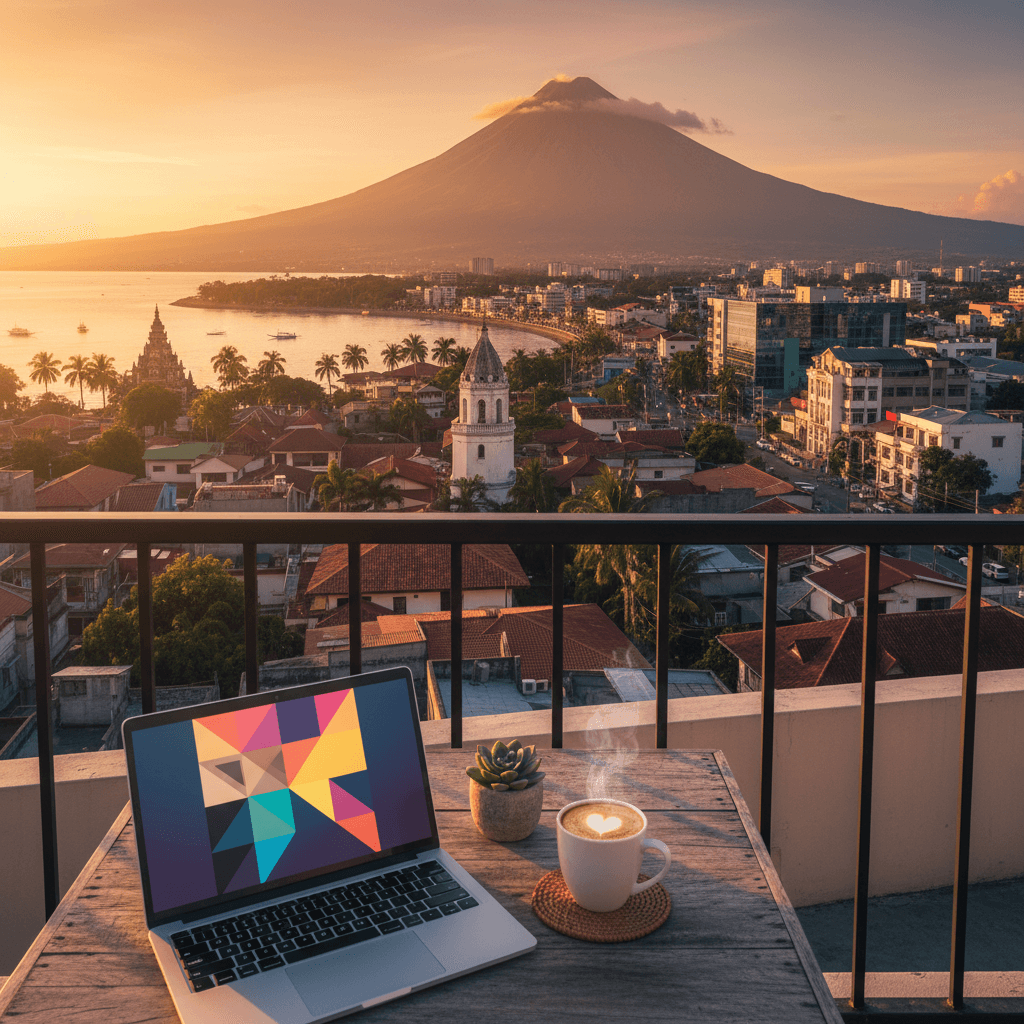
Legazpi City
🇵🇭 Philippines
Legazpi is a city that lives in the constant, majestic shadow of the Mayon Volcano. While most digital nomad hubs in Southeast Asia feel like they are sprinting toward the future, Legazpi moves at a rhythmic, provincial pace. It is a place where your morning coffee comes with a view of a near perfect cone, and your afternoon commute likely involves the high pitched hum of a tricycle engine rather than a subway. It is not a place for those who need high speed urban chaos; it is for the nomad who wants to trade the neon lights of Manila for spicy Bicolano soul food and rugged volcanic landscapes.
The vibe here is undeniably outdoor centric and grounded. Life revolves around the volcano, and you will feel its presence everywhere, from the ash gray sand on the beaches to the conversation topics at local cafes. It is a town that feels honest. You aren't surrounded by curated tourist traps; you are living alongside locals who are genuinely proud of their spicy Bicol Express and their resilience in the face of nature. Most expats and travelers find that the city offers a rare work life balance, provided you can handle the occasional infrastructure quirk.
The Nomad Reality Check
Living in Legazpi for 2025-2026 requires a bit of a pioneer spirit when it comes to technology. While the cost of living is incredibly low, the internet can be a heartbreaker. Most nomads quickly learn to skip the hotel WiFi and rely on Airalo e-SIMs or local GCash funded data promos. Coworking spaces are still a rarity, so you will likely find yourself setting up shop at cafes near SM Legazpi or Pacific Mall. It is the kind of place where you do your deep work in the morning and spend your afternoons riding ATVs through lava trails.
- The Best Part: Unbeatable affordability and a front row seat to one of the world's most beautiful natural wonders.
- The Trade off: Inconsistent internet speeds and a very quiet nightlife scene.
- The Weather Factor: The clear skies of January to April are paradise, but the rainy season from July to October can bring typhoons that occasionally ground travel and dampen the WiFi signal.
Cost of Living Breakdown
Legazpi is one of the most budget friendly spots in the Philippines. You can live comfortably here for a fraction of what you would spend in Cebu or Siargao.
- Budget Lifestyle: ₱25,000 to ₱40,000 ($475 to $760) per month. This covers shared housing, plenty of street food, and getting around via ₱10 jeepneys.
- Mid Range Lifestyle: ₱40,000 to ₱60,000 ($760 to $1,140) per month. This gets you a private one bedroom apartment, regular dining at mall eateries, and frequent tricycle rides.
- Comfortable Lifestyle: ₱60,000+ ($1,140+) per month. This allows for upscale condo living, air conditioned transport, and a high end food budget.
Neighborhood Guide
Since the city is compact, where you stay depends entirely on how much "hustle" you want around you.
Legazpi City Center
- The Vibe: Functional and convenient. You are walking distance to SM Legazpi and the main transport terminals.
- Pros: Best access to cafes with decent data signals and the widest variety of food.
- Cons: Can be noisy with traffic and lacks the scenic tranquility of the outskirts.
Daraga
- The Vibe: Quiet, residential, and scenic. This is where you go for those iconic Mayon views.
- Pros: Closer to the Bicol International Airport and generally quieter than the city center.
- Cons: You will spend more on tricycles (around ₱200 for a private trip) to get into the city for supplies.
Old Albay
- The Vibe: Historical and rural. It is the gateway to the Cagsawa Ruins.
- Pros: Very affordable and feels like "authentic" Bicol.
- Cons: WiFi is notoriously spotty here, and you are far from the modern amenities of the malls.
Ultimately, Legazpi is for the nomad who is tired of the "digital nomad bubble." You won't find many organized meetups or networking events here. Instead, you will find a community of locals who will invite you for a beer, a landscape that humbles you every time you look out the window, and a pace of life that actually lets you breathe.
Legazpi is one of those rare spots where your dollar stretches incredibly far without feeling like you're compromising on the view. It's significantly more affordable than Manila or Cebu, making it a prime choice if you're looking to pad your savings while living in the shadow of the world's most perfect volcanic cone. Most nomads find they can live a very comfortable life here for a fraction of what they'd spend in Southeast Asia's more established hubs.
Monthly Budget Breakdown
Your total spend in Legazpi depends heavily on how much you prioritize air conditioning and Western style amenities. For 2025-2026, these are the typical monthly ranges you'll encounter:
- Budget Lifestyle: ₱25,000 to ₱40,000 ($475 to $760). This covers a room in a shared house or a very basic local apartment, eating primarily at street stalls or "carinderias," and using jeepneys for transport.
- Mid-Range Lifestyle: ₱40,000 to ₱60,000 ($760 to $1,140). This is the sweet spot for most digital nomads. It includes a private one bedroom apartment, dining at mid-range spots like the eateries in SM Legazpi, and the occasional private tricycle ride.
- Comfortable Lifestyle: ₱60,000+ ($1,140+). At this level, you're looking at an upscale apartment with a view of Mayon, frequent dining at top tier restaurants, and a healthy budget for weekend adventures and high speed data backups.
Housing and Neighborhoods
Rent is the biggest variable here. While specific data is often sparse because many deals happen via local signage or Facebook groups, Airbnbs and short term rentals in the city center usually start around ₱10,000 to ₱20,000 ($190 to $380) for a studio or one bedroom. If you want those iconic volcano views in Daraga, expect to pay a premium.
Legazpi City Center
This is the most practical choice for nomads. You're within walking distance of Pacific Mall and SM Legazpi, which is vital because that's where the most reliable mobile signal and food options are located. It’s noisier, but the convenience of having transport at your doorstep is hard to beat.
Daraga
Expats often prefer Daraga for its quieter, more residential feel. It’s closer to the airport and offers better views of Mayon, but you'll spend more on transport. A shuttle from the airport to this area usually runs about ₱220 ($4).
Old Albay
If you're looking for a more rural, adventurous vibe near the Cagsawa Ruins, you can find very cheap housing here. However, be warned that the WiFi is notoriously spotty in this area. It's great for a weekend, but frustrating for a work week.
Food and Daily Expenses
Bicolano cuisine is famous for its heat, and eating local is the best way to keep your budget low. You can grab street food for ₱50 to ₱100 ($1 to $2), while a solid meal at a mid-range restaurant will set you back about ₱200 ($4). If you're feeling fancy, an upscale dinner will usually start around ₱500 ($10).
Transport is almost exclusively handled by tricycles and jeepneys. A jeepney ride to local attractions like Cagsawa is a mere ₱10 ($0.19). For tricycles, a group rate for a longer trip usually hovers around ₱200 ($4). Travelers often find that a full day of DIY sightseeing via tricycle costs roughly ₱2,077 ($41) including driver wait times.
The Connectivity Tax
Since coworking spaces are still scarce in Legazpi, you'll likely be working from cafes near the malls. While they don't always have a set "desk fee," you'll be buying a few coffees a day. More importantly, because hotel WiFi is often unreliable, savvy nomads factor in the cost of a high quality e-SIM or a local Globe/Smart pocket WiFi device. It’s a non-negotiable expense if you have deadlines to meet. Most nomads recommend using GCash or Maya for daily transactions, as they're widely accepted and save you frequent trips to the ATM.
Best for Nomads and Solo Travelers: Legazpi City Center
If you're landing in Legazpi to work while exploring, the city center near SM Legazpi and Pacific Mall is your best bet. This isn't a high-rise concrete jungle, but rather a compact hub where everything you need is within a ten-minute tricycle ride. Most nomads gravitate here because it's the only area where you'll find reliable access to cafes with decent LTE signals.
Living here means you're steps away from the central transport terminal. You can hop on a jeepney to the Cagsawa Ruins for just ₱10 or catch a van to neighboring towns. The vibe is functional and convenient, though you'll have to trade quiet mornings for the hum of tricycles and city traffic. Since dedicated coworking spaces are still hard to find, you'll likely spend your afternoons at mall-based cafes. Just remember to bring a backup pocket WiFi or an e-SIM, as hotel connections in the center are notoriously hit-or-miss.
- Estimated Rent: ₱10,000 to ₱20,000 for a studio or one-bedroom apartment.
- Pros: High walkability, easy access to groceries at SM, and the best mobile data reception in the region.
- Cons: Can be noisy; views of Mayon are often blocked by buildings.
Best for Expats and Long-Term Residents: Daraga
Technically a separate municipality that bleeds into Legazpi, Daraga is where many expats choose to settle for a more suburban feel. It's closer to the Bicol International Airport, making it convenient if you're frequently flying back to Manila or Cebu. The air feels a bit fresher here, and the pace is noticeably slower than the downtown core.
Expats recommend this area for its residential charm and proximity to the iconic Daraga Church. You'll find larger houses for rent here compared to the cramped apartments in the city center. While it's quieter, you aren't isolated; a shuttle van into the city costs about ₱220, or you can take a series of cheaper jeepneys. It's the kind of place where you can find a rental with a clear, unobstructed view of the volcano to enjoy with your morning coffee.
- Estimated Rent: ₱15,000 to ₱25,000+ for larger, family-sized homes.
- Pros: Stunning Mayon views, quieter streets, and proximity to the airport.
- Cons: Requires more transport planning to get to major shopping centers; higher short-term rental prices.
Best for Adventurers and Slow Travelers: Old Albay
For those who don't mind a "rural-lite" lifestyle, Old Albay offers a scenic alternative near the base of the volcano. This area is perfect if your priority is being the first person at the Cagsawa Ruins in the morning or hitting the ATV trails before the crowds arrive. It feels much more like a traditional Bicolano village than a city.
Travelers often choose this area for short, immersive stays. You'll find plenty of local eateries serving authentic Bicol Express and Pinangat for ₱50 to ₱100. The trade-off is the infrastructure. The WiFi is often non-existent in budget guesthouses, and you'll be relying entirely on your own data plan. It's not the place for someone with a heavy Zoom schedule, but it's unbeatable for someone looking to disconnect and hike.
- Estimated Rent: ₱8,000 to ₱15,000 for basic local housing or guesthouses.
- Pros: Immediate access to nature and adventure tours; very low cost of living.
- Cons: Poor internet reliability; limited dining options after dark; not very walkable at night.
Best for Families: Rawis and Suburban Legazpi
Families looking for a middle ground often look toward the Rawis area. It hosts several government offices and schools, lending it a stable, community-oriented atmosphere. It's safe, and the streets are generally wider and cleaner than the immediate downtown area. You're still close enough to the Legazpi Boulevard for evening walks by the sea, which is a favorite local pastime for parents and kids.
Healthcare is accessible here, with several clinics and pharmacies nearby. While there isn't a massive "expat row," you'll find that the locals are incredibly welcoming, and the neighborhood feel makes it easier to integrate. Grocery runs are a bit more of a chore than living next to the mall, but most families find the peace and quiet worth the ₱150 tricycle fare into town.
- Estimated Rent: ₱12,000 to ₱22,000 for multi-bedroom houses.
- Pros: Safe, community-vibe, close to the seaside boardwalk.
- Cons: Limited Western-style amenities; requires a tricycle or private car for most errands.
Connectivity Realities
If you're planning to work from Legazpi, your first priority should be a solid backup plan. While the city is the commercial hub of the Bicol Region, the infrastructure hasn't quite caught up to the needs of heavy bandwidth users. Most nomads find that hotel and Airbnb WiFi is hit or miss; it's often fine for emails but will likely fail you during a high stakes Zoom call or a large file upload. Expect speeds to fluctuate, especially during the rainy season from July to October when storms can knock out local lines.
The local consensus is to never rely on a single connection. You'll want to grab a local SIM or an e-SIM immediately. Globe and Smart are the primary providers here. Many expats recommend using an Airalo e-SIM for convenience, but for the best local rates and data packages, a physical SIM from a vendor at Pacific Mall or SM Legazpi is the way to go. If you have a 5G capable device, you'll find decent pockets of speed near the city center, but don't expect that same performance once you head toward the outskirts of Daraga or Old Albay.
Coworking and Study Spaces
Legazpi is seeing a growing scene for remote workers, with emerging coworking spaces like Ctrl Alt Work and Back_Space located near the city center. These spots offer more reliable infrastructure than your average cafe. Beyond these dedicated hubs, the remote work scene is centered around functional cafes and "study centers" that cater mostly to local university students and freelancers.
- Mall-Based Cafes: The areas around SM Legazpi and Pacific Mall are your best bets. You'll find familiar chains like Starbucks and The Coffee Bean & Tea Leaf. They offer the most stable environments, though they can get noisy during peak afternoon hours.
- Local Coffee Shops: Keep an eye out for smaller spots near the city center. While they don't usually have official day rates, most are happy to let you work for a few hours if you're buying coffee and snacks. Expect to spend ₱150 to ₱300 ($3 to $6) per session on food and drinks.
- Pocket WiFi: Many long term travelers invest in a high quality pocket WiFi device. This allows you to turn a balcony with a view of Mayon Volcano into your office, which is really the main draw of being here anyway.
Digital Nomad Essentials
To stay productive in Legazpi, you need to be self-sufficient. Don't wait until you're in a pinch to find a signal. Here is what the local setup usually looks like:
- Mobile Data: Budget around ₱500 to ₱1,000 ($10 to $19) per month for a generous prepaid data plan.
- Power Backups: Power outages (locally called "brownouts") can happen, particularly during typhoon season. A beefy power bank for your phone and a laptop power bank are highly recommended.
- Fintech: Download GCash or Maya. These apps are used everywhere from convenience stores to some tricycle drivers, making it much easier to manage your daily spending without hunting for an ATM.
- Best Working Hours: If you're on a Western schedule, the evening internet speeds tend to be slightly more stable as the local daytime traffic drops off. Plus, the cafes are much quieter after 8:00 PM.
Ultimately, Legazpi is a place where you work to live, not the other way around. The "crappy internet" is a common complaint, but most nomads find the trade off worth it for the ₱20 ($0.38) tricycle rides to stunning viewpoints and the incredibly low cost of living. Just make sure your data is topped up before the clouds roll in over Mayon.
Personal Safety and General Security
Legazpi feels significantly more relaxed than Manila or Cebu. Most people find the city very safe, characterized by a provincial hospitality where locals are generally helpful and polite. You can walk around the city center or the SM Legazpi area during the day without any real concern. Like any urban hub, petty theft like pickpocketing can happen in crowded spots like the public markets, so keep your phone and wallet secure in those environments.
At night, stick to well lit main roads in the city center or Daraga. Some side streets lack consistent street lighting, which can be disorienting if you aren't familiar with the layout. There aren't specific "no go" zones, but nomads usually prefer staying within the more developed corridors where tricycles are easy to hail. If you're heading out for late drinks near Pacific Mall, just use common sense and avoid walking alone through unlit residential patches.
The biggest "safety" factor here isn't crime, it's the environment. Since you're living at the foot of Mayon Volcano, it's smart to keep an eye on the local PHIVOLCS bulletins. While the volcano is a permanent fixture of the skyline, it's active. Most travelers visit the Cagsawa Ruins without a second thought, but during the rainy season from July to October, be mindful of heavy rainfall which can cause localized flooding or lahar flows in rural outskirts.
Healthcare Facilities and Services
For routine medical needs, Legazpi is the healthcare hub of the Bicol region. You'll find several hospitals capable of handling standard emergencies and consultations. The Ago General Hospital and the Bicol Regional Hospital and Medical Center are the primary facilities. While they may not have the luxury "concierge" feel of high end Manila clinics, the doctors are highly trained and English is the standard language for all medical interactions.
If you have a minor ailment, pharmacies are everywhere. Look for Mercury Drug or Watsons, particularly in malls like Ayala Malls Legazpi or SM Legazpi. They are well stocked with international brands, though it's always wise to bring a supply of any specific prescription medications you need, as specialized brands might require a trip back to a larger city.
Emergency Information
The Philippines uses a centralized emergency system, but local response is often faster if you have specific numbers saved. Most expats recommend having the local police and hospital digits programmed into your phone since 911 dispatch can sometimes be slow to route to provincial units.
- General Emergency: Dial 911
- Local Police: Reach out to the Legazpi City Police Station for non-emergencies or police reports.
- Health Insurance: Most nomads use SafetyWing or Genki. Ensure your policy covers "adventure activities" if you plan on riding ATVs around the volcano lava fronts.
- Finances: Keep GCash on your phone for quick payments, but always carry cash for tricycle fares and smaller clinics that might not take international credit cards.
Staying Healthy as a Nomad
The local water is generally not recommended for drinking straight from the tap. Most expats and locals rely on purified water delivery services or 5 gallon jugs which cost about ₱30 to ₱50. For food, the Bicolano diet is famously spicy. If you aren't used to heavy coconut milk and chili, go easy on the Bicol Express during your first few days to avoid any digestive surprises.
Lastly, the tropical sun near the volcano is intense. If you're out exploring Daraga Church or the Lignon Hill Nature Park, hydrate more than you think you need to. Heat exhaustion is a much more common "medical incident" for travelers here than any actual illness or crime.
Legazpi is a city where the pace of life is dictated by the volcano on the horizon. Getting around is straightforward once you understand the local hierarchy of transit, which favors the tricycle for short hops and the iconic jeepney for longer stretches between neighborhoods. While the city center is quite walkable, the tropical humidity and sudden rain showers usually make a ₱20 tricycle ride the more attractive option.
The Tricycle: Your Primary Mode
In Legazpi, tricycles are the lifeblood of the commute. Unlike the standardized taxi fleets of Manila, these sidecar motorcycles are everywhere and can get you into the narrowest side streets. For a standard trip within the city center, expect to pay around ₱15 to ₱60 depending on the distance to reflect recent adjustments. If you are traveling as a group or want to hire one for a half-day tour of the Daraga Church and local viewpoints, nomads often negotiate a flat rate of about ₱200 for a few hours of service.
Jeepneys for the Long Haul
If you are heading out to the Cagsawa Ruins or moving between Legazpi and Old Albay, look for a jeepney. They follow set routes and are the most budget-friendly way to travel. A ride typically costs between ₱14 to ₱20+ depending on distance. It is a classic Philippine experience; just pass your fare to the person next to you and say "para po" when you want to hop off. Digital nomads staying in the city center use these frequently to reach the malls or the outskirts for a morning hike without blowing their daily budget.
Airport Transfers and Shuttles
Bicol International Airport is located in Daraga, about 30 minutes from the Legazpi city center. When you land, you will have a few choices:
- Shuttle Vans: These are the most convenient for those with luggage. A seat in a shared van to Legazpi or Daraga typically costs ₱220.
- Tricycles: You can find them outside the terminal, though they are better suited for those staying nearby in Daraga rather than the city center.
- Ride-Hailing: While Grab is the king of transport in Manila and Cebu, its presence in Legazpi is much more limited. Don't rely on it for an early morning flight; stick to pre-arranged shuttles or local taxis.
Walking and Biking
The area around SM Legazpi and Pacific Mall is very manageable on foot. You will find most of your daily needs, from ATMs to cafes, within a few blocks. However, the infrastructure for cycling isn't well-developed yet. While you might see some locals on bikes, the lack of dedicated lanes and the aggressive driving style of jeepneys means most expats stick to motorized transport for anything beyond a ten-minute walk. If you do walk, keep an eye on the weather; the rainy season from June to November can turn a quick stroll into a literal wash-out in minutes.
Navigating with Apps
Since ride-hailing apps aren't reliable here, Google Maps is your best friend for plotting jeepney routes, though it's not always 100% accurate with local stops. For payments, having the GCash app is a massive advantage. While you'll still need physical cash for tricycles and jeepneys, many shops and larger transport providers increasingly accept digital payments, which saves you a trip to the ATM at the mall.
Transportation Costs at a Glance
- Standard Tricycle Fare: ₱15 to ₱60 for short city hops
- Jeepney Fare: ₱14 to ₱20+ depending on distance
- Airport Shuttle: ₱220 per person
- Private Day Hire: ₱200 to ₱500 depending on duration and distance
The Local Linguistic Landscape
In Legazpi, you'll be navigating a unique linguistic blend. While Tagalog is the national language and understood by everyone, the locals speak Bikol (specifically the Legazpi dialect) at home and in the markets. It’s a rhythmic, expressive language that sounds quite different from the Tagalog you might hear in Manila. Most nomads find that while they can get by with English, learning a few Bikol phrases earns immediate respect and often better prices at the market.
The good news for remote workers is that English proficiency remains moderate to high. In the city center, especially around SM Legazpi or Pacific Mall, you won't have any trouble communicating with shopkeepers, hotel staff, or medical professionals. Most signage, menus, and official documents are in English, making the administrative side of nomad life relatively painless.
Practical Communication Tips
When you're out and about, especially when dealing with tricycle drivers, keep your instructions simple. If you're heading to a specific landmark like the Cagsawa Ruins, just saying the name followed by "po" (a sign of respect) is usually enough. For more complex interactions, Google Translate handles Tagalog well, though it can struggle with specific Bikol nuances. Locals are generally patient and will often switch to English the moment they see you struggling.
- Magkano po?: How much? (Useful for the ₱200 tricycle rides)
- Salamat: Thank you
- Dios Mabalos: The local Bikol way to say thank you (highly recommended for extra smiles)
- Paki-bagalan po: Please slow down (great for those enthusiastic jeepney drivers)
Staying Connected
Communication isn't just about talking; it's about your data. This is where Legazpi can be a bit of a challenge. Travelers often complain that hotel WiFi is more of a suggestion than a reliable service. You'll want a solid backup plan before you settle in for a Zoom call. Most expats recommend skipping the hotel router and relying on local SIM cards or e-SIMs.
Globe and Smart are the primary providers here. For the most flexibility, an Airalo e-SIM is a popular choice for short stays, but for longer stints, a local prepaid SIM is significantly cheaper. You can top these up using the GCash or Maya apps, which are the lifeblood of digital payments in the Philippines. Most small shops and cafes now accept GCash, so having the app on your phone is just as important as having cash in your pocket.
The Cafe Workaround
Since dedicated coworking spaces are almost non-existent in Legazpi for the 2025-2026 season, your communication hub will likely be a local cafe. The spots near the city center and Albay District are your best bets. While they don't always have professional-grade fiber, the mobile data signal in these areas is usually strong enough for standard tasks. Just don't expect to upload 4K video files without a bit of a wait. Most travelers suggest embracing the "crappy internet" reality for a few hours and then heading out to enjoy the volcano views once the workday is done.
Social Etiquette
Communication in Bicolano culture is deeply rooted in politeness. You'll notice locals using "po" and "opo" constantly. As a visitor, using these small words shows you've done your homework. If you're invited into a local home, it’s customary to remove your shoes. When it comes to social gatherings, don't expect much in the way of formal nomad meetups. Instead, your social circle will likely grow through Facebook groups or by chatting with the friendly locals you meet at the bars near Pacific Mall.
Understanding the Bicolano Seasons
Living in the shadow of Mayon means your daily schedule is dictated by the volcano's visibility. In Legazpi, the weather isn't just about temperature; it's about whether or not you can actually see the "Perfect Cone" through the clouds. The city follows a tropical cycle that splits the year into a distinct dry window and a heavy rainy season that can disrupt even the best-laid remote work plans.
The dry season runs from December through May. During these months, temperatures hover between 25°C and 32°C (77°F-90°F). This is when the city feels most alive. You'll get those crisp, clear mornings perfect for an ATV ride to the lava wall or a hike near the Cagsawa Ruins. Most nomads prefer this window because the humidity is manageable and the risk of power outages or internet disruptions caused by storms is much lower.
The Sweet Spot: January to April
If you're planning a stint in Albay, aim for the January to April window. This is widely considered the prime time for digital nomads and expats. The air is slightly cooler coming off the tail end of the northeast monsoon, and the skies are at their clearest. If you want that iconic Mayon view from your balcony in Daraga or a cafe near SM Legazpi, these are your best odds.
March and April start to heat up significantly, pushing toward the 32°C (90°F) mark. It's great for visiting nearby beaches, but you'll definitely want an apartment with reliable air conditioning. During this peak season, expect slightly higher prices for short term Airbnbs and more crowds at the main tourist spots, though Legazpi rarely feels "overrun" compared to places like Boracay or Siargao.
The Rainy Season and Typhoon Risks
From June to November, the vibe shifts. Temperatures stay warm, usually between 22°C and 30°C (72°F-86°F), but the rainfall is intense. Legazpi is located in a region often referred to as the "typhoon belt." Between July and October, the risk of tropical storms is at its highest. Heavy flooding can happen, and the clouds often swallow Mayon for weeks at a time.
Digital nomads often find this season frustrating. Heavy rain frequently leads to "crappy internet" days where local infrastructure struggles. If you're here during these months, you absolutely need a backup data plan like an Airalo e-SIM or a local Globe/Smart SIM, as hotel WiFi is notoriously fickle when the weather turns. On the plus side, local spots like the Small Talk Cafe are much quieter, and your monthly living costs might dip as accommodation demand drops.
What to Pack and When to Book
Legazpi is casual. Even in the "cool" months, you're looking at tropical heat. Locals and expats stick to light, breathable fabrics. If you're visiting during the rainy season, a high quality waterproof bag for your laptop is more important than a raincoat; the downpours are often sudden and sideways.
- Dry Season (Dec-May): Best for outdoor adventure, clear volcano views, and stable power/internet.
- Rainy Season (Jun-Nov): Best for budget travelers who don't mind gray skies and working from indoor cafes.
- Peak Typhoon Window (Jul-Oct): Expect travel delays and potential flooding; have a backup power bank and data ready.
For those looking to balance work and exploration, the February to March period is the winner. You'll avoid the Christmas holiday rush, skip the most oppressive heat of May, and enjoy the most consistent conditions for both your Zoom calls and your weekend treks.
Connectivity and Tech Setups
Internet reliability is the top complaint among remote workers in Legazpi. Most hotels and Airbnbs offer WiFi, but it's often sluggish or prone to dropping out during heavy rain. Experienced nomads recommend arriving with a local SIM or e-SIM (Globe or Smart) and using a pocket WiFi device as your primary backup. If you need high bandwidth for video calls, don't rely on your accommodation's router alone.
Coworking spaces are still rare here. Instead, most nomads set up shop in cafes near SM Legazpi or Pacific Mall. These spots are functional for a few hours of work, though you'll likely pay a small daily fee or just the price of a few coffees. If you're planning on staying long-term, look for rentals in the Legazpi City Center where signal strength tends to be more stable than in the rural outskirts of Old Albay.
Budgeting for the Bicol Life
Legazpi is significantly more affordable than Manila or Cebu. You can live quite comfortably here on a mid-range budget of ₱40,000 to ₱60,000 ($760 to $1,140) per month. This covers a private one-bedroom apartment, dining out frequently, and regular weekend trips to the volcano or nearby ruins.
- Budget Tier: ₱25,000 to ₱40,000 ($475 to $760). Ideal for those using shared housing, eating street food for ₱50 to ₱100, and commuting via jeepney.
- Comfortable Tier: ₱60,000+ ($1,140+). This allows for upscale apartments in Daraga with Mayon views, frequent Grab rides, and high-end dining at mall eateries where meals start around ₱500.
- Transport Costs: Local jeepney rides are a steal at ₱9 to ₱10, while a private tricycle for a group usually costs around ₱200.
Navigation and Getting Around
The city center is surprisingly walkable, but you'll need wheels for anything else. Tricycles are the backbone of local transport. They don't use meters, so it's smart to clarify the price before you hop in. For longer distances, like heading to the Cagsawa Ruins, the ₱10 jeepney is your best friend.
If you're arriving at Bicol International Airport, skip the expensive private taxis. There's a shuttle van service for ₱220 that drops you off in Legazpi or Daraga. Once you're in town, you'll notice that Grab isn't as ubiquitous as it is in the capital, so downloading GCash or Maya is vital for quick digital payments at shops and some transport operators.
Health, Safety, and Language
Legazpi is generally very safe, even for solo travelers. Petty theft happens in crowded markets, but violent crime is rare. Stick to well-lit areas in the city center at night and you'll be fine. For medical needs, there are several reliable hospitals and pharmacies located near SM Legazpi. In any emergency, dial 911.
English proficiency is high, especially in the service industry and tourist spots. While the locals speak Bikol and Tagalog, you'll have no trouble communicating in English for business or daily errands. Using respectful particles like "po" and "opo" when speaking to elders or service staff goes a long way in building local rapport.
Climate Realities
Timing your stay is everything. The best window is between January and April, when the skies are clear and you can actually see the peak of Mayon Volcano. The rainy season hits hard from July to October. During these months, typhoon risks and flooding can make travel difficult and internet even more spotty. If you're here during the wet season, always have a "rainy day" fund and a backup power bank for potential outages.
Need visa and immigration info for Philippines?
🇵🇭 View Philippines Country GuideHidden Gem
Worth the effort