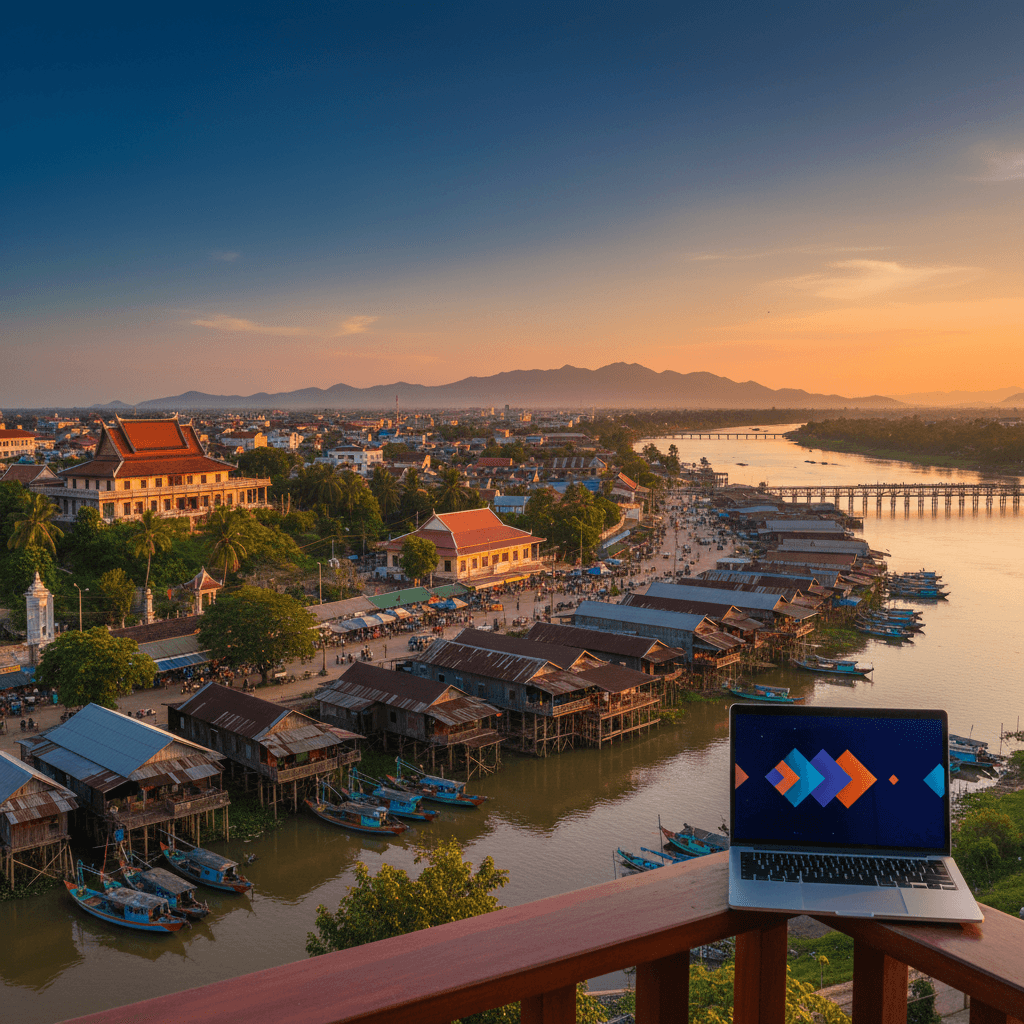
Kampong Chhnang
🇰🇭 Cambodia
The River Life Reimagined
If you're looking for the neon lights of Phnom Penh or the tourist crowds of Siem Reap, you've come to the right place to avoid them. Kampong Chhnang is defined by water. The city sits on the banks of the Tonle Sap River, and the rhythm of life here follows the seasonal rise and fall of the current. It feels less like a traditional city and more like a collection of floating villages and dusty riverside paths where the primary soundtrack is the low hum of longtail boat motors and the clinking of ceramic kilns.
The vibe is undeniably slow. Most nomads who land here are looking for a deep reset or a place to focus on a heavy project without the distractions of a major expat hub. You won't find a line of sleek coworking spaces, but you will find a level of authenticity that's getting harder to find in Southeast Asia. It's a place where locals are genuinely curious about your presence, and your morning routine likely involves a bowl of num banh chok at the Phsar Leu market rather than a $5 avocado toast.
The Floating Heart of the City
The real character of the town lives on the water. The floating villages of Phoum Kandal and Chong Koh aren't just tourist attractions; they're fully functioning neighborhoods with houses, shops, and even vegetable gardens all bobbing on the surface. Living nearby means you're constantly aware of the environment. When the monsoon hits, the landscape transforms, and the connection between the people and the river becomes even more visceral. It’s a grounded, humbling place to spend a few months.
Expats who settle here typically stay on the mainland side near the riverfront. This area is walkable, though most people end up renting a scooter for about $80 to $120 a month to explore the surrounding pottery villages. The city is famous for its red clay, and you'll see ox carts hauling handmade pots through the streets. It’s a visual reminder that this is a town that still makes things with its hands, providing a refreshing contrast to the digital world we live in.
Work and Connectivity
Don't expect high end infrastructure, but don't count it out either. Most nomads find that the 4G and 5G coverage from Cellcard or Smart is surprisingly reliable for video calls. While dedicated coworking spaces are nonexistent, several cafes along the riverfront have stepped up. Garden Coffee is a frequent haunt for those needing a decent table and a caffeine fix, while the lobby of the Garden City Hotel often serves as a makeshift office for its reliable Wi-Fi and air conditioning.
The cost of living is one of the biggest draws for the budget conscious traveler. You can live a very comfortable life here for significantly less than in the capital. A decent apartment or a long term guesthouse room usually runs between $200 and $350 a month. Food costs are equally low, with local meals at the market costing around $1.50 to $3, and a cold Angkor beer at sunset setting you back about $0.75.
The Nomad Experience
Living in Kampong Chhnang requires a bit of an adventurous spirit. You'll need to navigate the language barrier more often than in the bigger cities, and the "nightlife" usually consists of a few quiet drinks by the river rather than clubbing. However, the trade off is a sense of peace and a front row seat to a way of life that hasn't changed much in decades. Travelers often say that the sunset over the Tonle Sap, with the silhouette of the floating houses in the distance, is worth the lack of western amenities.
- Vibe: Serene, river centric, and deeply traditional.
- Best for: Writers, deep work enthusiasts, and slow travelers on a budget.
- Key Neighborhoods: The Riverfront for convenience, or near Phsar Leu for a local feel.
- Daily Transport: Walking or a rented 125cc scooter.
Ultimately, Kampong Chhnang is for the nomad who wants to disappear for a while. It’s for the person who finds inspiration in the reflection of the clouds on the water and the smell of woodsmoke in the evening. It isn't always easy, and it certainly isn't polished, but it is deeply rewarding for those who want to see the real Cambodia away from the postcards.
The Bottom Line on Budgets
Living in Kampong Chhnang is a lesson in how far the US dollar can stretch when you step off the main tourist trail. While Phnom Penh might demand $800 a month for a comfortable life, you can live well here on $500 to $650. It is one of the most affordable riverside towns in Cambodia, mostly because the local economy still caters to residents rather than expats.
Most transactions happen in a mix of US Dollars and Cambodian Riel. You will get Riel back as change for anything under a dollar. Local nomads usually keep a stack of 1,000 and 5,000 Riel notes for market visits and tuk-tuk rides around the center.
Monthly Breakdown
- One-bedroom Apartment: $150 to $250
- Local Meals: $1.50 to $3.00
- Western-style Dinner: $5.00 to $9.00
- Monthly Scooter Rental: $60 to $80
- High-speed Home Internet: $15 to $25
Housing and Neighborhoods
You won't find many high-rise condos or formal apartment complexes here. Instead, housing usually consists of traditional Khmer villas or renovated shopfronts. Most expats look for places near the Phsar Leu market area or along the riverfront for better breeze and proximity to the few cafes in town.
Rent is incredibly low compared to Siem Reap. A basic but clean studio near the town center goes for about $150. If you want something with air conditioning and modern appliances, expect to pay closer to $250. Utilities are rarely included; electricity is the main expense and can add $40 to $70 to your monthly bill if you run the AC all night.
Food and Groceries
Eating like a local is the best way to keep your costs down. The central market is the heart of the town, where you can grab a bowl of Kuy Teav for about $1.50. Fresh produce is cheap; a bag of seasonal fruit or vegetables rarely costs more than $2.
For a change of pace, places like Garden Coffee or the small eateries near the independent monument serve decent coffee and basic Western plates. A latte usually sits around $2.00, and a solid lunch will run you $4.00. There are no major international supermarket chains, so you will be relying on local mom-and-pop shops for imported goods like cheese or specific spirits, which carry a premium price.
Connectivity and Transport
Since there are no dedicated coworking spaces in Kampong Chhnang, your "office" will likely be your apartment or a quiet corner in a guesthouse. A Cellcard or Smart SIM card with a heavy data package is a must. For about $10 a month, you can get enough data to hotspot through occasional power flickers.
Getting around is simple. The PassApp and Grab apps work here, though the fleet is smaller than in the capital. A short trip across town costs about $1.25. If you plan to stay more than a month, renting a small 110cc scooter is the most cost-effective move. It gives you the freedom to explore the pottery villages and river banks without haggling over every ride.
Daily Essentials
- Large Angkor Beer: $1.50 at a local shack, $2.50 in a restaurant
- Gym Membership: $10 to $15 at a basic local facility
- 1.5L Bottle of Water: $0.50
- Laundry (per kilo): $1.00
The Riverfront (Best for Nomads)
If you want to be where the action is, the area along the Tonle Sap river is your best bet. It is the heart of the town and where most nomads set up shop. You will find the highest concentration of cafes with decent Wi-Fi here, like the Garden Coffee or various spots near the Independent Monument. It is walkable, which is a rarity in many Cambodian towns, and you are never more than five minutes from a sunset view over the water.
- Rent: $250 to $400 for a decent guesthouse or a small serviced apartment.
- Food: $2 to $5 for local meals; $7 to $12 for Western style dishes.
- Vibe: Social and convenient, with easy access to the night market.
Most nomads find that staying near the river makes life easier because you don't need a motorbike for every small errand. The internet is generally stable enough for video calls, though it is smart to keep a Cellcard or Smart SIM card with a 40GB data plan as a backup. You can grab a local SIM for about $5 and top it up for another $10 a month.
Phsar Leu Area (Best for Expats)
Expats who plan to stay for six months or more usually drift toward the neighborhoods surrounding Phsar Leu, the main market. This is where you get a more authentic feel for the town. It is noisier and more chaotic than the riverfront, but the prices for long term rentals drop significantly. You are closer to the hardware stores, larger grocery stalls, and the main transportation hubs for trips back to Phnom Penh.
- Rent: $150 to $300 for a traditional Khmer style house or a modern flat.
- Food: $1.50 for a bowl of Kuy Teav at the market; $4 for a full dinner.
- Vibe: Practical and local. You will need a scooter to get around comfortably here.
Living here means you are part of the community. You will get to know the vendors at the market, and your dollar goes much further. Expats recommend this area if you want to save money while immersing yourself in the local rhythm of life. Just be prepared for early mornings, as the market starts buzzing before the sun is up.
The Outskirts and Pottery Villages (Best for Families)
For families looking for space and a bit of quiet, moving slightly south toward the famous pottery villages like Andong Russey is a solid choice. You can find larger homes with gated yards and actual trees, which help keep the tropical heat at bay. It is much quieter at night, and there is plenty of room for kids to run around without the traffic concerns of the town center.
- Rent: $350 to $600 for a larger family home with multiple bedrooms.
- Food: Mostly home cooking; local markets are a short bike ride away.
- Vibe: Peaceful, rural, and very safe for children.
The trade off is the commute. You will definitely need your own transport, likely a car or a few reliable motorbikes, to get into town for schools or specialized shopping. However, the air is cleaner and the pace of life is much more relaxed. Families often say the extra space is worth the ten minute drive into the city center.
Phnom Neang Kangrey Foothills (Best for Solo Travelers)
Solo travelers who prioritize nature and hiking should look at the small clusters of guesthouses near the base of the mountains. It is a bit more isolated, but it is perfect if your goal is to disconnect or focus on a specific project. You are surrounded by rice paddies and have immediate access to the hiking trails that lead up the mountain for incredible views of the province.
- Rent: $10 to $20 per night for a bungalow; monthly rates are negotiable.
- Food: $3 to $6 at guesthouse restaurants or small roadside stalls.
- Vibe: Adventurous and quiet. Great for those who don't mind a bit of solitude.
While the Wi-Fi can be hit or miss in this area, the atmosphere is unbeatable for someone traveling alone. It is easy to meet other travelers at the communal dining areas of the local lodges. Just make sure you have a reliable flashlight and some bug spray, as the rural setting means you are sharing your space with the local wildlife.
Connectivity and Speed
Living in Kampong Chhnang requires a different mindset than the high speed hubs of Phnom Penh or Siem Reap. You won't find fiber optic lines snaking into every guesthouse, but the 4G network is surprisingly robust. Most nomads here rely on local SIM cards rather than hotel Wi-Fi, which can be spotty during the afternoon heat or heavy rain. Smart and Cellcard are the two main providers you should look at. A monthly data plan with 40GB to 60GB usually costs around $10 to $15.
If you're planning to take Zoom calls, do it in the morning. Speeds generally hover around 10 to 15 Mbps on a good day, but they can dip when everyone hops online after work. It's a good idea to bring a portable power bank because local brownouts happen, especially during the dry season when the grid is under pressure.
Where to Work
There aren't any dedicated coworking spaces in Kampong Chhnang yet. You won't find ergonomic chairs or hot desks for rent by the hour. Instead, the nomad community here gravitates toward riverside cafes or larger local establishments. The vibe is very "DIY office," so make sure your laptop battery is healthy before you head out.
- Farmhouse Resort & Spa: Located a bit further out, this spot is better for deep work sessions. It's quieter than the town center, though you'll need your own transport to get there.
Digital Nomad Essentials
Since the infrastructure is basic, you have to come prepared. Expats in the area recommend carrying a universal adapter and a local SIM as a dedicated hotspot. Don't rely on the "Free Wi-Fi" signs you see at smaller eateries; these are often just basic routers that struggle with more than three users.
- Best Mobile Network: Smart (best coverage in the city center)
- Average Coffee Price: $2.00
- Power Stability: Moderate; expect occasional 30 minute outages
- Noise Levels: High near the market, low near the riverbank
The social scene for remote workers is informal. You'll mostly meet other nomads at the riverside bars around sunset. There isn't a Slack group or a dedicated Meetup for the city, so most networking happens over a $1.00 Angkor Beer at the end of the day. If you need a serious community of tech workers, you might find Kampong Chhnang a bit isolating, but for those who just need a quiet place to grind for a few weeks, it works well.
Data and Costs
Your biggest expense won't be the internet; it'll be the iced lattes you buy to justify sitting in a cafe all day. Overall, the cost of staying connected here is much lower than in neighboring countries.
- Monthly Data Plan: $12 for 50GB
- Daily Cafe Spend: $5 to $8 for food and drinks
- Backup Router (Pocket Wi-Fi): $35 at local electronics shops
Most travelers find that the lack of distractions is the biggest selling point. Without the temptation of networking events or fancy coworking lounges, your productivity might actually go up. Just remember to download any large files or software updates before you arrive, as the local speeds aren't meant for heavy lifting.
Keeping Your Wits About You
Kampong Chhnang is a significantly slower, quieter town than Phnom Penh, and that reflects in the safety environment. Most nomads find the town incredibly welcoming, but you still need to keep your head on a swivel for the usual petty crimes. Bag snatching is less common here than in the capital, but it still happens, especially near the Phsar Leu market or the riverfront at night. If you're on a motorbike, don't leave your phone in the front cubby or your bag in the basket.
The biggest safety risk you'll actually face is the road. Traffic in the center can be unpredictable, and if you're renting a scooter, remember that might is right. Trucks and buses won't stop for you. Most expats recommend wearing a helmet even for short trips to the riverside; the local police occasionally set up checkpoints near the Independence Monument to fine foreigners without them. These fines are usually around $5 to $10, but it's better to avoid the hassle.
Street lighting is hit or miss once you get away from the main paved roads. If you're staying in a guesthouse further out toward the pottery villages, carry a small flashlight or make sure your phone is charged. Stray dogs can be territorial after dark, and having a light helps keep them at a distance.
Healthcare and Clinics
For minor issues like a stomach bug, skin infections, or a mild fever, there are several pharmacies along National Highway 5. Look for the larger ones with glass storefronts; they usually have staff who speak basic English and can provide over the counter meds. Expect to pay about $2 to $5 for basic antibiotics or hydration salts.
The Kampong Chhnang Provincial Hospital is the primary facility in town. It's fine for basic stabilized care, but for anything serious, you'll want to head to Phnom Penh. The drive is roughly two hours, and most long term residents keep a taxi driver's number handy for emergencies.
- Emergency Evacuation: Always have insurance that covers medical evacuation to Bangkok. For serious trauma or surgery, that's where you'll want to be.
- Vaccinations: Ensure your Hepatitis A and Typhoid shots are up to date, as food prep standards vary wildly in the local markets.
- Mosquitoes: Dengue is a real factor here, especially during the wet season from May to October. Use repellent with at least 30% DEET if you're working near the river in the evenings.
Staying Healthy on the Road
The heat in Kampong Chhnang can be oppressive, often hitting 35 degrees Celsius or higher in April. Dehydration is the most frequent reason nomads end up feeling sidelined. Stick to bottled water, which costs about $0.25 for a small bottle or $2 for a large 20 liter jug delivered to your apartment. Avoid the tap water entirely, even for brushing your teeth if you have a sensitive stomach.
If you need a pharmacy that stocks international brands, U-Care or Pharmacie de la Gare in Phnom Penh are your best bets for a weekend supply run. Local pharmacies in town are great for the basics, but they might not have your specific asthma inhaler or specialized blood pressure meds. Travelers often say it's best to stock up on a three month supply of any essentials before arriving in town.
Emergency Contacts
- Police: 117
- Ambulance: 119
- Fire: 118
- Phnom Penh Private Hospital (Calmette): +855 23 426 948
The Local Layout
Kampong Chhnang isn't a massive metropolis, so you won't be dealing with the soul crushing traffic of Phnom Penh. The town is split into two distinct areas. There is the bustling market center near Phsar Leu, and the riverside area where the famous floating villages sit. Most nomads choose to base themselves near the riverfront for the breeze and the views, but the market area is where you'll find the cheapest street food and supplies.
Getting Around Town
The humble remorque, or Khmer tuk tuk, is the backbone of local transit. Unlike the sleek, electric versions in the capital, many here are still the traditional carriage pulled by a motorbike. A short hop within the town center usually costs between $1.50 and $2.50. It is always smart to agree on the price before you hop in, though drivers here are generally less aggressive with their pricing than in tourist hubs like Siem Reap.
For those staying more than a few days, renting a scooter is the move. You can usually find a 125cc Honda Dream or a similar semi-automatic for about $5 to $7 per day. If you negotiate a monthly rate, you can often get that down to $80 or $100. Just keep an eye out for the red dust on the backroads; it gets everywhere, and the potholes can be legendary after a heavy rain.
Ride Hailing and Apps
While PassApp and Grab have taken over the bigger cities, their presence in Kampong Chhnang is hit or miss. You might find a few drivers active during the day, but don't count on them for a 4:00 AM run to the bus station. It's better to find a local driver you like, grab his Telegram or phone number, and message him directly when you need a lift. This is the standard expat move for reliable transport.
Water Transport
Since this is a riverside town, sometimes the best way to get around is by boat. To visit the floating villages of Phoum Kandal or Chnok Tru, you'll need to hire a small motorized wooden boat. These usually depart from the waterfront near the park. A private trip for an hour or two will cost you roughly $10 to $15 depending on your haggling skills and the current price of fuel.
Regional Connections
Getting in and out of town is straightforward because Kampong Chhnang sits right on National Highway 5. Most nomads arrive via minivan from Phnom Penh. The trip takes about 2 to 2.5 hours and costs around $6 to $9. Companies like Larimar and Seila Angkor are the favorites for their safety records and decent Wi-Fi, though the signal often cuts out once you leave the city limits.
- Tuk Tuk (Short Trip): $1.50 to $2.50
- Daily Scooter Rental: $5 to $7
- Monthly Scooter Rental: $80 to $100
- Minivan to Phnom Penh: $6 to $9
- Private Boat Hire (Hourly): $10 to $15
Walking is doable in the early morning or late evening, but the midday heat is brutal. The town is flat, which makes it easy on the legs, but the lack of consistent sidewalks means you'll be sharing the pavement with motorbikes and the occasional wandering cow. Most expats stick to bikes or tuk tuks between 11:00 AM and 4:00 PM to avoid the worst of the sun.
Getting Around the Language Barrier
In Kampong Chhnang, you are stepping away from the polished English fluency of Phnom Penh or Siem Reap. Most locals speak Khmer exclusively. While younger people and those working in the few guesthouses near the riverfront speak basic English, you will largely rely on smiles, gestures, and a few key phrases to get through your day. It is a place where a little effort goes a long way with the residents.
Most nomads find that learning the basics is non-negotiable here. Start with Choum reap sour (Hello, formal) and Arkoun (Thank you). If you are heading to the Phsar Leu market to stock up on fruit, knowing your numbers will save you from the "tourist tax," even though prices here are already significantly lower than in the capital. Expect to pay about $1 to $2 for a large bag of seasonal fruit if you can negotiate in the local tongue.
Staying Connected
Don't rely on the Wi-Fi at smaller local cafes or guesthouses if you have a deadline. The infrastructure in town is improving, but it is not built for heavy data lifting. Most expats recommend picking up a local SIM card immediately upon arrival. Smart and Cellcard are the two big players. You can get a SIM for about $1 and a data plan with 40GB to 80GB for roughly $10 to $15 a month.
Coverage is surprisingly solid within the town center and along the river. However, if you take a boat out to the floating villages like Phoum Kandal, the signal can drop significantly. If you need to take a Zoom call, stick to your accommodation or one of the more established spots near the Independence Monument where the signal is most stable.
Essential Apps for Communication
Digital life in Cambodia runs on a few specific platforms. If you want to talk to a local business, a tuk-tuk driver, or a new friend, you won't be using email or standard SMS. Download these before you arrive:
- Telegram: This is the primary way everyone communicates in Cambodia, from government offices to the guy selling coffee on the corner.
- PassApp or Grab: While Kampong Chhnang is small, these apps are increasingly useful for booking rides without having to haggle over prices in broken Khmer. A short trip across town usually costs around $1 to $2.
- Google Translate: The camera feature is a lifesaver for reading menus that don't have English translations. It isn't perfect with Khmer script, but it gets the point across.
- ABA Bank: If you are staying long term, many nomads open a local account. Everyone uses KHQR codes for payments, even at tiny street stalls. It's much easier than carrying stacks of Riel.
The Social Nuances
Communication here is as much about what you don't say as what you do. People in Kampong Chhnang are incredibly polite and soft spoken. Raising your voice or showing frustration when a translation goes wrong is a quick way to lose respect. If a shopkeeper doesn't understand you, just smile and try a different word. Most travelers find that the locals are patient and will often call over a younger neighbor who knows a bit more English to help you out.
English signage is rare once you move away from the main highway or the river. You will see Khmer script on almost everything. It is helpful to memorize what the character for "Pharmacy" or "Water" looks like, though the universal symbols for gas stations and restaurants usually hold true here. If you are ever truly stuck, head toward the riverside guesthouses; you'll almost always find someone there who can translate for you.
The Seasonal Rhythm
Timing your stay in Kampong Chhnang depends entirely on how much you enjoy being on the water. This isn't just a riverside town; it's a community that expands and contracts with the seasons. Most nomads find the November to February window the most comfortable. The air is dry, the humidity drops to manageable levels, and temperatures hover around 25°C to 30°C. It is the peak season for a reason, as you can explore the pottery villages without melting or getting stuck in a sudden monsoon downpour.
If you arrive in March or April, prepare for the heat. This is the peak of the dry season, and temperatures frequently climb above 38°C. While the dust can be a bit much for some, it's actually a great time for photographers. The water levels in the Tonle Sap are at their lowest, exposing the intricate stilts of the floating houses in Phoum Kandal and Chong Kos. Just make sure your accommodation has reliable air conditioning, as a simple ceiling fan won't cut it during these months.
Monsoon and the Great Lake
The rainy season kicks off in May and lasts through October. Don't let the "rainy" label scare you off. It rarely rains all day; instead, you get massive, dramatic afternoon bursts that clear the air and drop the temperature. For a digital nomad, this is actually a productive time to be here. The landscape turns a brilliant, neon green, and the prices for guesthouses often drop by 20% to 30%.
Expats who stay long term love the late monsoon months of September and October. This is when the Tonle Sap River reverses its flow. The water rises right up to the edges of the town, and the floating villages move further inland. It transforms the geography of the area. You'll find yourself taking boat taxis to places you used to walk to, which adds a unique layer to the daily commute.
Key Events and Logistics
Planning around Khmer holidays is vital because the town changes character completely. During Chaul Chnam Thmey (Khmer New Year) in mid-April and Pchum Ben in September or October, many local businesses close down. While the atmosphere is festive, your favorite coffee shop might be shuttered for three or four days while the staff visits family. On the flip side, the Bon Om Touk (Water Festival) in November is a spectacular time to be in Kampong Chhnang, as boat races take over the riverfront.
- Cool Season (Nov to Feb): Best for outdoor exploring and comfortable nights. Expect prices to be at their firmest.
- Hot Season (Mar to May): Intense heat. Great for seeing the architectural bones of the floating villages.
- Rainy Season (Jun to Oct): Lush scenery and lower costs. Perfect for those who prefer a slower, indoor work pace.
What to Pack
The sun here is unforgiving, especially when it reflects off the river. Even in the "cool" months, you'll want high SPF sunscreen and a decent hat. If you're visiting during the monsoon, a high quality waterproof bag for your laptop is mandatory. The rain comes fast, and if you're caught on a moto or a wooden boat between Phoum Kandal and the mainland, you'll want your gear protected. Lightweight, breathable fabrics are your best friend year round; leave the heavy denim at home.
Most travelers find that a light jacket is only necessary if you're taking an early morning boat trip or a long moto ride in January. Otherwise, the climate is tropical and consistent. Just remember that the humidity can peak at 90% during the rains, so silica gel packets in your tech bag are a smart move to keep the moisture out of your electronics.
Getting Around and Staying Connected
Kampong Chhnang is a small, riverside town where life moves at a much slower pace than in Phnom Penh. Most nomads find that the easiest way to get around is by renting a scooter for about $5 to $7 per day. If you aren't comfortable driving, you can use the PassApp or Grab apps to hail a local tuk tuk; a short trip across town usually costs between $1 and $2.
For your internet needs, don't rely solely on guesthouse Wi-Fi. It is reliable enough for basic emails, but for video calls, you should pick up a local SIM card from Cellcard or Smart. You can get a 20GB data plan for around $5 at any small shop near the central market. Most cafes in the center of town have decent connectivity, though you should expect the occasional power flicker during the rainy season.
Cost of Living Breakdown
Living here is significantly cheaper than in the capital or Siem Reap. You can live comfortably on a budget of $600 to $900 per month without feeling like you are pinching pennies. Here is a rough look at what to expect for your monthly expenses:
- Housing: $200 to $400 for a decent apartment or a long stay guesthouse room with air conditioning.
- Food: $150 to $250 if you mix local market visits with occasional western meals.
- Transport: $50 to $80 for a monthly scooter rental and fuel.
- Utilities and Mobile Data: $40 to $60 depending on how much you run the AC.
Where to Work and Eat
There are no formal coworking spaces in Kampong Chhnang yet, so you will be doing the laptop lifestyle from local cafes. Garden Coffee is a popular spot for expats because it has plenty of shade and reliable power outlets. For a more local vibe with great views, head toward the riverfront area in the late afternoon where the breeze keeps things cool.
When it comes to food, the Phsar Leu market is the heart of the town. You can grab a bowl of Num Banh Chok (Khmer noodles) for about $1.25. For dinner, many travelers head to the floating village area or the small eateries near the Independence Monument. A solid meal at a sit down restaurant like Van Soleap will usually run you about $4 to $6 including a drink.
Practical Logistics
Banking is straightforward as long as you use the right machines. Look for ABA Bank or Canadia Bank ATMs; they are the most reliable for international cards. Keep in mind that while the US Dollar is used everywhere, the $1, $5, and $10 bills are being phased out in favor of the Cambodian Riel. Most vendors will expect you to pay for small items in Riel, so keep a stack of 5,000 and 10,000 notes handy.
Visa extensions are best handled through an agency in town rather than trying to do it yourself. Most expats recommend dropping your passport off at a local travel agent; they will send it to Phnom Penh and have it back to you in about a week. An ordinary E-visa extension for six or twelve months is the standard choice for anyone staying long term.
Safety and Health
The town is generally very safe, even at night. The biggest risks involve the roads and the sun. Always wear a helmet, even for short trips, and stay hydrated. For minor health issues, there are several pharmacies near the market that stock basic Western medicines. For anything serious, you will want to take the two hour bus ride back to Phnom Penh where the international hospitals are located.
Need visa and immigration info for Cambodia?
🇰🇭 View Cambodia Country GuideOff the Radar
Pioneer territory