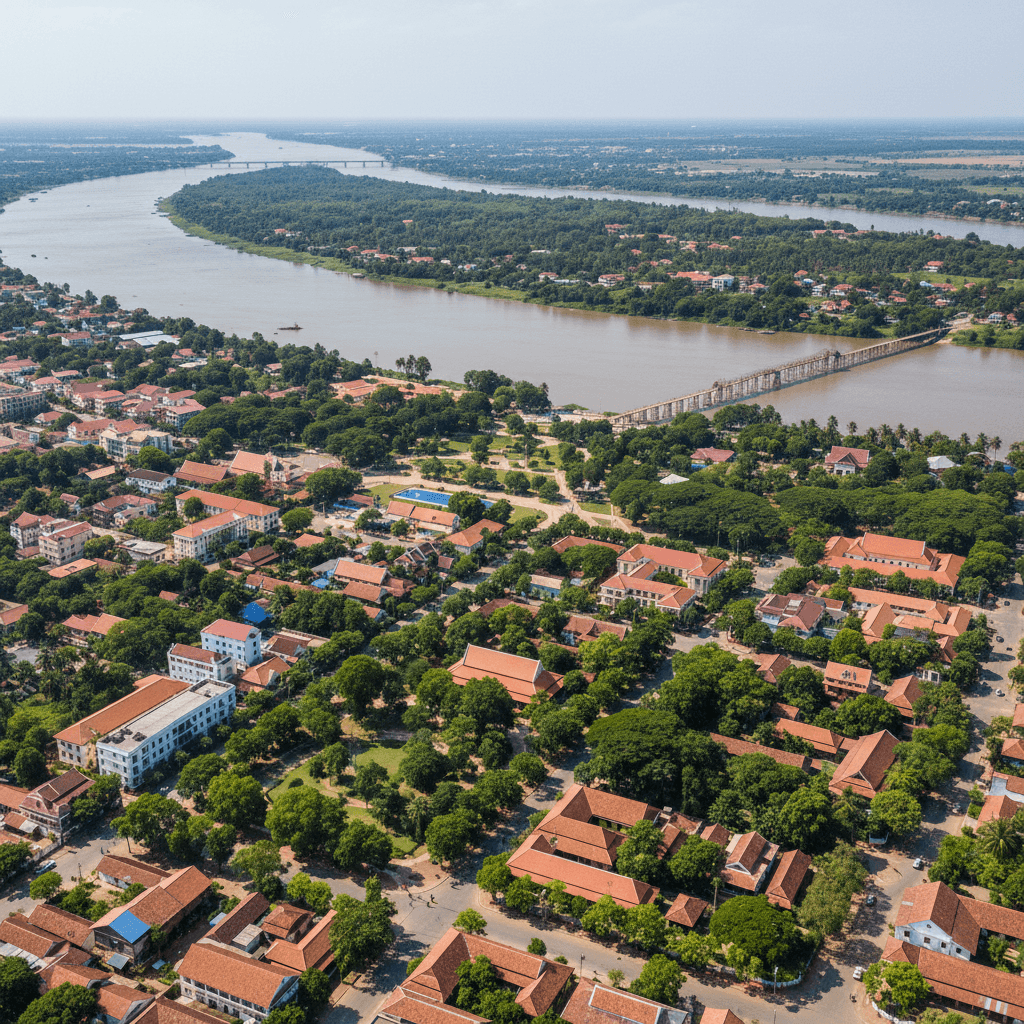
Kampong Cham
🇰🇭 Cambodia
The Forgotten Riverside Paradise
If you're looking for the high-octane energy of Phnom Penh or the tourist-heavy sprawl of Siem Reap, Kampong Cham will feel like a different country entirely. It's Cambodia's third-largest city, but it wears that title lightly. Most travelers describe it as a place where time slows down to match the languid flow of the Mekong River. It’s a city of crumbling French colonial architecture, wide boulevards, and a distinct lack of the "hustle" that defines modern nomad hubs.
The vibe here is unapologetically local. You won't find Starbucks or high-end coworking chains. Instead, you'll find a community that centers around the riverfront, where the evening air smells of street popcorn and the sound of local families dancing or singing at the night market fills the space. It’s a destination for the nomad who wants to unplug, save money, and experience an authentic slice of Khmer life without the filter of a massive tourism industry.
The Nomad Experience
Living here is about simplicity. Most expats and long-term travelers gravitate toward the riverside, specifically the area near Mekong Crossing Guesthouse. It’s the closest thing the city has to a social hub. You'll spend your mornings working from a cafe with 45 Mbps internet, your afternoons exploring rural islands via the famous bamboo bridge, and your evenings watching the sunset over the water with a $1 beer in hand.
While the atmosphere is peaceful, it isn't for everyone. The infrastructure is basic, and the visible poverty in the surrounding villages can be a reality check for those used to more polished destinations. Most nomads find that 1 to 3 days is enough to see the sights, but those who stay longer are usually looking for a "digital detox" or a very low-cost base to focus on a specific project. It’s the kind of place where you’ll quickly become a "regular" at the local market, and the shopkeepers will recognize you by day three.
Cost of Living & Logistics
Your bank account will love Kampong Cham. It is significantly cheaper than Cambodia’s more famous cities, with a total monthly budget for a comfortable nomad lifestyle averaging around $857. Cash is king here, so you'll want to keep a Wise card or Visa handy for ATM withdrawals at Canadia Bank or Wing, but don't expect to use plastic at the markets.
- Budget Tier ($600 to $800): Staying in a local guesthouse and eating almost exclusively at the night market or street stalls where meals cost $1 to $2.
- Mid-Range ($900 to $1,200): A private riverside apartment or a nicer hotel room, mixed with dining at mid-range spots like Mekong Crossing where entrees run $3 to $5.
- Comfortable ($1,500+): You’ll be living like royalty, frequenting the best restaurants in town and renting a high-end motorbike for daily trips to Hanchey Temple or Phnom Srei.
Connectivity and Work
There are no dedicated coworking spaces in Kampong Cham yet. You'll be working from your guesthouse or local cafes. For a reliable connection, pick up a Cellcard or Smart SIM card at the local market; $5 to $10 will usually get you 10GB to 20GB of data for the month. Power outages happen occasionally across Cambodia, so it’s smart to keep your devices charged and have a backup data plan for your phone.
Getting Around
The core riverside area is walkable, but to see the real beauty of the region, you'll need wheels. Motorbike rentals are the standard way to get around, costing between $5 and $10 per day. Unlike the bigger cities, you won't find Grab here. You’ll rely on local tuk-tuk drivers for longer hauls, like the 20km trip to the hilltop temples. If you're coming from Phnom Penh, expect a 3 to 4 hour journey by bus or shared van.
Why It’s Different
Kampong Cham offers a rare opportunity to see Cambodia without the "tourist goggles" on. It’s a place of 32°C heat, warm smiles, and a refreshing lack of pretension. You come here to breathe, to write, or to simply watch the Mekong roll by. It’s not a place to "network" in the traditional sense; it’s a place to reconnect with the reasons why you started traveling in the first place.
The Price of Simplicity
Living in Kampong Cham is a lesson in how far the US dollar can stretch when you step away from the tourist hubs of Siem Reap or Phnom Penh. Most digital nomads find they can live comfortably here on about $857 per month. It is one of the most affordable riverside spots in Southeast Asia, though you are trading modern infrastructure for that low price tag.
Expats typically divide their budgets into three tiers. If you are sticking to basic guesthouses and eating almost exclusively at the night market, you can get by on $600 to $800. A mid range lifestyle with a private apartment and a mix of local and Western meals usually sits between $900 and $1,200. For those who want the best available rentals and frequent weekend trips, $1,500 provides a very high standard of living.
Housing and Utilities
The rental market is informal. You won't find many listings on major international sites; instead, travelers recommend checking Facebook groups or simply asking at local hubs like Mekong Crossing Guesthouse. Most nomads gravitate toward the riverside area for the views and the breeze.
- Studio or 1BR Apartment: Expect to pay between $200 and $400 per month for a central spot near the river.
- Guesthouse Rates: Short term stays usually cost $10 to $20 per night for a clean, fan cooled or AC room.
- Utilities: Electricity is the main variable. If you run the air conditioning all day while working, expect your bill to jump. Budget around $40 to $70 for a month of power and water.
Food and Dining
Eating out is often cheaper than cooking for yourself, especially since small apartments rarely have full kitchens. The night market along the Mekong is the social heart of the city, where you can grab snacks, ice cream, or popcorn for $1 to $2.
- Street Food: A bowl of noodles or a pork and rice plate costs about $1 to $2.
- Mid range Restaurants: A solid meal at a sit down spot like Smile Restaurant or the cafes near the bridge will run you $3 to $5.
- Western Comforts: If you are craving a burger or a pizza, expect to pay between $8 and $12.
- Coffee: A local iced coffee is under $1, while a latte in a nomad friendly cafe costs around $2 to $3.
Connectivity and Transport
Since there are no formal coworking spaces, your "office" costs are usually just the price of a coffee. For mobile data, expats recommend picking up a Cellcard or Smart SIM card at the local market. You can get 10GB to 20GB of data for roughly $5 to $10 per month.
Getting around is remarkably cheap because the central core is walkable. However, to see the sights like Phnom Srei or Hanchey Temple, you will need wheels. Motorbike rentals are the standard choice, costing $5 to $10 per day. If you prefer not to drive, a short tuk tuk trip across town usually costs $1 to $3, though you will need to negotiate since ride hailing apps aren't active here yet. Monthly transport costs for most residents rarely exceed $50.
Daily Essentials
Local markets are great for cheap produce, but imported goods like cheese or specific Western toiletries are pricey and sometimes hard to find. It is a good idea to stock up on essentials in Phnom Penh before heading north. For minor health issues, local pharmacies are abundant and cheap, but keep a reserve fund for a $15 bus or private car ride to the capital if you need a proper hospital.
For Digital Nomads
If you're working remotely, you'll want to plant yourself in the Riverside area, specifically the stretch near the Mekong Crossing Guesthouse. This is the most functional part of town for anyone needing a stable base. It's walkable, has the highest concentration of reliable Wi-Fi, and puts you right next to the night market for easy dinners after a day of calls.
While Kampong Cham doesn't have dedicated coworking spaces yet, nomads usually set up shop in cafes like those along the riverfront. Expect to pay about $200 to $400 for a decent studio or guesthouse room in this zone. The vibe here is social but quiet; you'll meet other travelers at the riverside bars, but you won't be fighting for a seat or dealing with the noise of a major city. Just keep in mind that internet speeds average around 45 Mbps, which is plenty for Zoom but can occasionally flicker during heavy storms.
For Expats
Long-term residents tend to gravitate toward the Central district, particularly the streets surrounding Phsar (the central market). This area offers a more authentic slice of Cambodian life while keeping you close to the Bamboo Bridge. It's less about the "tourist" view and more about being near the best produce, hardware stores, and local pharmacies.
Expats here enjoy a very low cost of living, often keeping their total monthly spend under $900. Living in the center means you're perfectly positioned to hop on a motorbike and head out to Hanchey Temple or Nokor Wat for a weekend escape. It's a tight-knit community where locals will eventually recognize you at the morning market, though you'll need a translation app or some basic Khmer phrases to get by, as English proficiency is lower here than in Phnom Penh.
For Solo Travelers
The Riverside is the undisputed home for solo travelers. It’s the safest and most convenient area to navigate on foot, especially since there are no ride-hailing apps like Grab available in town. Staying near the river puts you in the heart of the "social hub" where people gather for evening dancing and street food like $1 popcorn or ice cream.
If you're traveling alone, this area minimizes the "poverty shock" sometimes felt in the further-flung villages and keeps you within reach of English-speaking guesthouse staff. Most solo travelers find that one to three days is the sweet spot for staying here before the slow pace starts to feel a bit too quiet. You can rent a scooter for about $5 to $10 a day to explore the 308 stairs of Phnom Srei without needing a group or a guide.
For Families
Families usually find the Central area near the bridge the most practical. It provides easy access to Koh Pen Island via the bridge, which is a great spot for kids to explore rural village life in a safe, controlled way. The proximity to the markets makes it easier to source familiar snacks or fresh fruit for picky eaters.
- Rent for a 2-bedroom: $400 to $600 depending on the level of Western amenities.
- Transport: Remork (tuk-tuk) rides around town usually cost a few dollars.
- Safety: Very high, though the lack of international-standard hospitals means you'll want to head to Phnom Penh for anything more serious than a cold.
The lack of "Western comforts" like playgrounds or malls means families here focus on cultural immersion. Most find that the riverside night market is the best evening entertainment, offering plenty of space for kids to run around while parents enjoy the Mekong breeze.
Connectivity and Speed
Working from the banks of the Mekong means trading high speed fiber for a steady, functional pace. You can expect average speeds of around 45 Mbps, which is plenty for video calls and standard cloud work. While the infrastructure is better than you might expect for a rural hub, Cambodia's grid isn't perfect; minor power outages happen every few weeks. Most guesthouses and riverside cafes have reliable uptime, but it's smart to have a backup plan.
Mobile data is your best friend here. Don't rely solely on hotel Wi-Fi. Pick up a local SIM from Cellcard or Smart at the local markets as soon as you arrive. You'll get 10GB to 20GB of data for roughly $5 to $10 per month. Coverage is surprisingly strong in the city center, though it drops off quickly once you head toward the ruins or across the bridge to Koh Pen.
The Coworking Reality
If you're looking for a dedicated coworking space with ergonomic chairs and networking events, you won't find it in Kampong Cham. This isn't Siem Reap or Phnom Penh. Instead, the "office" culture here revolves around riverside guesthouses and quiet local cafes. It's a DIY setup where you'll need to be self-sufficient with your own power banks and hotspots.
The Mekong Crossing Guesthouse is the unofficial hub for travelers and remote workers. It's one of the few spots where you'll see other laptops open. The atmosphere is relaxed, the staff won't rush you, and the river breeze acts as natural air conditioning. Most nomads find that the lack of formal spaces is actually a plus; it forces a slower, more intentional work day.
Best Cafes for Deep Work
Since there are no formal hubs, you'll likely spend your mornings rotating through a few key spots. Look for places near the riverside core where the Wi-Fi is generally more stable. While the cafe scene is still emerging, it's starting to mirror the "work-from-anywhere" vibe found in places like Kampot.
- Mekong Crossing: The most reliable spot for a long session. It has plenty of shade, decent power outlet access, and a menu that covers both Khmer and Western tastes.
- Smile Restaurant: A training restaurant that offers a quiet environment and friendly service. It's great for an hour or two of focused writing.
- Local Riverside Spots: Many small shops along the Mekong have surprisingly decent Wi-Fi. Just look for the "Free Wi-Fi" signs and check the signal before you order your coffee.
Practical Workflow Tips
The heat is a real factor here. With temperatures often hitting 32°C, your laptop will struggle if you're sitting in the sun. Expats recommend getting your heavy lifting done before 11:00 AM or after 4:00 PM when the air cools down. If you need to take a high stakes meeting, do it from your guesthouse room where you can control the noise and the fan speed.
For payments and top-ups, download the ABA Bank or Wing apps if you're staying long-term. Otherwise, you can buy scratch cards for your data at almost any "hole-in-the-wall" shop for a couple of dollars. Most nomads find that as long as they have a loaded SIM and a fully charged power bank, the "forgotten riverside" vibe of Kampong Cham is a productive, if simple, place to get things done.
A Peaceful Environment with Minimal Risks
Kampong Cham is one of the safest cities in Cambodia for foreigners. The local community is tight knit and generally welcoming, which keeps violent crime rates exceptionally low. Most travelers find they can walk around the riverside and central market areas at night without feeling uneasy. While it lacks the heavy police presence of Phnom Penh, the sheer lack of crowds and the slow pace of life contribute to a secure atmosphere.
That said, you should still practice standard urban awareness. Petty theft like bag snatching is rare here compared to the capital, but keep your phone and wallet secure when riding in a tuk tuk. The most visible safety concern for many newcomers is the level of poverty in the outskirts and rural villages. You'll likely encounter children begging near the Bamboo Bridge or Phnom Srei. It is generally advised to support local NGOs rather than giving cash directly to children, as this often keeps them out of school.
Healthcare: Local Basics and Serious Care
Healthcare in Kampong Cham is functional for minor ailments but limited for anything complex. You will find plenty of pharmacies scattered around the Phsar (Central Market) area that stock common generics and first aid supplies at low prices. Many pharmacists speak basic English and can help with routine issues like stomach bugs or skin infections.
For more significant medical needs, the city has local clinics and a provincial hospital, but the quality of care doesn't match international standards. If you face a serious injury or a chronic health emergency, you'll want to head to Phnom Penh. The capital is only a 3 to 4 hour drive away and offers high end facilities like Royal Phnom Penh Hospital.
- Emergency Number: Dial 119 for police or ambulance services, but keep in mind that English proficiency among dispatchers is hit or miss.
- Medical Evacuation: Because of the limited local infrastructure, expats strongly recommend having travel insurance that covers medical evacuation to Bangkok or Singapore for major surgeries.
- Pharmacies: Look for larger shops near the riverside for the best selection of Western brands.
Staying Healthy on the Ground
The biggest health risks you'll face are environmental. The tropical heat frequently hits 32°C to 35°C, making dehydration and heat exhaustion a real threat if you're out exploring temples all day. Stick to bottled water; tap water is a no go here. Most guesthouses like Mekong Crossing provide filtered water or affordable large jugs.
Mosquito borne illnesses like Dengue fever are present, particularly during the rainy season from May to October. Use repellent if you're dining by the river at dusk. While the city is relatively clean, the dust during the dry season can be tough on those with respiratory issues. If you're renting a motorbike to visit Hanchey Temple, wearing a light face mask is a common local practice to keep the road dust out of your lungs.
Safety and Health Checklist
- Travel Insurance: Must include "repatriation" or "evacuation" coverage.
- Vaccinations: Ensure you're up to date on Hepatitis A, B, and Typhoid before arriving.
- Road Safety: This is your biggest physical risk. If you rent a scooter for $5 to $10 a day, always wear a helmet. The roads are quiet, but local traffic patterns can be unpredictable.
- Night Safety: Stick to the riverside night market area after dark. The outskirts are poorly lit and can be difficult to navigate if you aren't familiar with the terrain.
Navigating the Riverside
Kampong Cham is a city that moves at the speed of a bicycle. Unlike the frantic energy of Phnom Penh, the layout here is compact and intuitive, centered largely around the Mekong riverfront. Most nomads find that the riverside core is perfectly walkable for daily life, but you will need wheels to see the ruins and hilltop temples that make the province famous.
The primary way to get around like a local is by motorbike or scooter. You can generally find rentals through guesthouses like Mekong Crossing or local shops for $5 to $10 per day. It is the most efficient way to reach spots like Phnom Srei, which is about 9km from the center, or the ancient Hanchey Temple, located 20km upriver. If you are staying for a month, you can often negotiate a long term rate closer to $50 or $80, though you should always check the brakes and tires before signing anything.
Tuk-Tuks and Local Transport
If you aren't comfortable driving yourself, tuk-tuks are everywhere. However, there is a catch: the big ride-hailing apps like Grab or PassApp haven't really taken hold here yet. You will have to do things the old fashioned way by flagging a driver down and negotiating the price upfront. A short trip within the city usually costs about $1 to $2, while a half day excursion to the bamboo bridge and Koh Pen Island will run you significantly more.
Bicycles are another popular choice for those sticking to the flat riverside roads. Many guesthouses offer them for $1 or $2 a day. It is a quiet, sweaty, but rewarding way to explore the colonial architecture and the local Phsar (market) without the noise of an engine.
Getting In and Out
Since Kampong Cham doesn't have its own airport, you will likely arrive via Phnom Penh. The journey takes between 3 and 4 hours depending on the traffic leaving the capital. Travelers usually choose between two main options:
- Minivans: These are the fastest public option, costing around $7 to $10. Companies like Larryta or Seila Angkor are generally more reliable and less crowded than the "local" vans that stop for every passenger on the road.
- Private Taxis: For more comfort, a private car from Phnom Penh costs between $50 and $70. This is a great move if you are carrying a lot of tech gear or want to avoid the cramped seating of a minivan.
- Buses: Larger coaches are cheaper but slower, often taking 5 hours as they navigate the highway.
The Bamboo Bridge and Koh Pen
One of the most unique "transport" experiences in Cambodia is the bamboo bridge leading to Koh Pen Island. It is a seasonal feat of engineering, rebuilt every year after the floodwaters recede. While there is now a permanent concrete bridge nearby for cars and heavy trucks, taking a motorbike or bike across the clicking bamboo slats is a rite of passage. Expect to pay a small toll of about $0.50 to $1 as a tourist to cross. Once on the island, the roads are mostly dirt and sand; a mountain bike or a sturdy scooter is much better than a standard city bike here.
Parking and Safety
Parking is rarely an issue, but you should always use a designated parking attendant if one is available. At major sites like Phnom Srei, you'll pay about 2,000 Riel ($0.50) to someone who will watch your bike and give you a ticket. It is a small price for peace of mind while you are climbing the 308 stairs to the top. At night, most expats recommend bringing your bike inside your guesthouse or apartment courtyard rather than leaving it on the street.
The Khmer Connection
In Kampong Cham, the language landscape is a bit different than the tourist bubbles of Siem Reap or Phnom Penh. Khmer is the heartbeat of the city, and while you'll find a decent level of English at guesthouses like Mekong Crossing or popular riverside spots, it drops off quickly once you head into the local markets or surrounding villages. Most nomads find that while the locals are incredibly welcoming, communication is often a game of smiles and gestures.
Expats living here recommend leaning into the local culture rather than expecting Western standards of fluency. You aren't going to find many people who can discuss complex remote work setups in English, but you'll have no trouble ordering a $1 iced coffee or negotiating a $5 motorbike rental for the day. It's a city that rewards patience and a good sense of humor.
Essential Tools for Communication
Since English proficiency is generally low, your smartphone is your best friend. Travelers often say that Google Translate is a lifesaver, specifically if you download the Khmer offline pack before you arrive. This helps when you're out at the night market trying to figure out what's in a specific snack or explaining a destination to a tuk-tuk driver.
- Data is cheap: Grab a SIM card from Cellcard or Smart at the local market. You can get up to 40GB or more of data for about $5 to $10 a month.
- Signal strength: Expect decent 4G or 5G coverage in the city center, which is vital for translation apps when you're on the move.
- Visuals: Showing a photo of your destination or a specific dish on your phone is often more effective than trying to pronounce the name.
Key Phrases to Know
Learning a few basic Khmer words goes a long way in building rapport with the community. Even a clumsy "hello" will usually earn you a massive grin from the vendors at Phsar Kampong Cham. Use these to get started:
- Susay dei: Hello (Informal)
- Arkun: Thank you
- Choul mouy: Cheers! (Useful for those Friday nights by the river)
- Tuk-tuk chul nei?: Is this tuk-tuk for hire?
- Ot tay arkun: No thank you (Great for politely declining offers)
Social Nuances and Etiquette
Communication in Cambodia isn't just about the words you say; it's about how you carry yourself. The traditional "wai" greeting, where you place your palms together in a prayer like gesture, is a sign of respect that locals appreciate. If you're visiting temples like Nokor Wat or Phnom Srei, remember that modest dress is a form of non-verbal communication that shows you respect the local culture.
Digital nomads who stay for more than a few days often find that the social scene is small but tight. You won't find dedicated expat bars, but the riverside area becomes a natural social hub in the evenings. Most communication happens over shared plates of street food or while watching the local dancing and singing that takes place by the Mekong. It's a low-key environment where a simple "Arkun" can be the start of a great conversation.
The Sweet Spot: November to February
If you're planning a stint in Kampong Cham, timing is everything. Most nomads and long term travelers aim for the window between November and February. This is the cool, dry season where the humidity drops to manageable levels and the daily average sits around 25°C to 30°C. It's the perfect weather for crossing the bamboo bridge to Koh Pen or hiking the 308 stairs up Phnom Srei without melting.
During these months, the Mekong River is calm and the riverside evening markets are at their peak. You'll find locals and the small expat community gathering for sunset drinks or synchronized dancing near the water. The air is crisp, and you won't have to worry about sudden downpours ruining your afternoon deep work session at a riverside cafe.
The Heat Build-Up: March to May
By March, the thermostat starts climbing. This is the shoulder season where temperatures frequently hit 35°C or higher. It's a dry, dusty heat that can feel pretty intense if your guesthouse or apartment doesn't have reliable air conditioning. Expats living here usually shift their schedules during this time, getting all their errands and outdoor activities done by 9:00 AM before retreating indoors until the sun starts to dip.
While it's hot, April brings the Khmer New Year. It's a fantastic time to see the city's temples like Nokor Wat come alive with celebrations, though you should expect many businesses to close for a few days while families celebrate. Just be prepared to sweat through your shirt by mid morning.
The Rainy Season: June to October
The monsoon arrives in June and lingers through October. You'll see heavy, predictable afternoon deluges that turn the dusty streets into temporary streams. While the rain brings a lush, green beauty to the surrounding countryside and rubber plantations, it also brings the humidity. Average temperatures stay around 32°C, but the moisture in the air makes it feel much heavier.
Travelers often avoid September and October because these are the wettest months. Flooding along the Mekong can occur, and the famous bamboo bridge is usually taken down during the high water season, replaced by local ferries. If you're a fan of moody, grey skies and don't mind staying indoors to crush some tasks while the rain drums on the roof, you'll find accommodation prices are at their absolute lowest during this period.
What to Pack
- Light linens and cottons: You'll want breathable fabrics year round to deal with the 32°C average.
- A light jacket: Surprisingly, early morning motorbike rides in January can feel chilly.
- Modest attire: Even when it's sweltering, you'll need to cover your shoulders and knees if you plan on visiting Hanchey Temple or other local ruins.
- Sturdy sandals: Essential for the rainy season when streets get muddy and for the easy "shoes off" culture in homes and shops.
Most digital nomads find that a two week stay in January offers the best balance of comfortable weather and local atmosphere. It gives you enough time to soak up the slow riverside pace before the heat or the rains make the lack of infrastructure more apparent.
Connectivity and Digital Setup
While Kampong Cham lacks the slick coworking hubs of Phnom Penh, the internet is surprisingly punchy. Most nomads find the 45 Mbps speeds at riverside guesthouses more than enough for Zoom calls, though it's smart to expect a brief outage every few weeks. Since there aren't dedicated office spaces, your best bet is to set up shop at Mekong Crossing or one of the cafes lining the river. They're used to travelers lingering over a coffee for a few hours.
For your phone, don't rely on roaming. Head to the local market and grab a SIM from Cellcard or Smart. You can get 10GB to 20GB of data for about $5 to $10. It’s reliable enough to use as a hotspot if the hotel Wi-Fi takes a dive.
Money and Budgeting
Cash is king here. While you'll find Canadia Bank and Wing ATMs scattered around the center, smaller vendors and market stalls won't touch a card. If you're using a foreign card, expect a fee of about $4 to $6 per withdrawal. Many expats use Wise for transfers, but for daily life, keep a stack of small denomination Riel and US Dollars on hand.
Living here is incredibly cheap. A budget of $857 a month covers a very comfortable lifestyle. You can find a decent room or small apartment near the riverside for $200 to $400. Street food like grilled meats or noodle soup will only set you back $1 or $2, while a sit-down meal at a mid-range spot costs around $5.
Getting Around the City
Forget about Grab or other ride-hailing apps; they haven't really made it here yet. The riverside core is small enough to cover on foot, but for anything else, you'll need wheels. Most travelers recommend renting a motorbike for about $5 to $10 a day. It gives you the freedom to cross the Bamboo Bridge or head out to Phnom Srei without haggling with a driver every time.
If you aren't comfortable on a bike, local tuk-tuks are everywhere. Just be prepared to negotiate the price upfront. For getting in and out of town, the 3 to 4 hour van or bus ride from Phnom Penh is the standard route since there's no local airport.
Health and Safety
Kampong Cham is generally safe and very laid back. You won't find much of the aggressive scamming common in heavier tourist zones, though you should keep an eye on your belongings in the markets. The main thing to watch out for is the lack of high-end medical care. Local clinics are fine for a flu or a minor scrape, but for anything serious, you'll want to head straight back to Phnom Penh.
Local Etiquette
The vibe here is traditional, so dressing modestly goes a long way, especially when visiting spots like Nokor Wat or Hanchey Temple. Always take your shoes off before entering a home or a temple. English levels are quite low compared to Siem Reap, so download the Khmer offline pack on Google Translate. A simple "Arkun" (thank you) and a "Wai" greeting (pressing your palms together) will get you plenty of smiles from the locals.
When to Visit
The sweet spot is between December and February. The weather sits around a pleasant 25°C to 30°C, and the humidity hasn't hit its peak yet. Avoid September and October if you can; the heavy rains often lead to local flooding, and the humidity can make working from a non-air-conditioned cafe pretty brutal.
- Best time for weather: December to February
- Motorbike rental: $5 to $10 per day
- Monthly data plan: $5 to $10
- Average 1BR rent: $200 to $400
Need visa and immigration info for Cambodia?
🇰🇭 View Cambodia Country GuideHidden Gem
Worth the effort