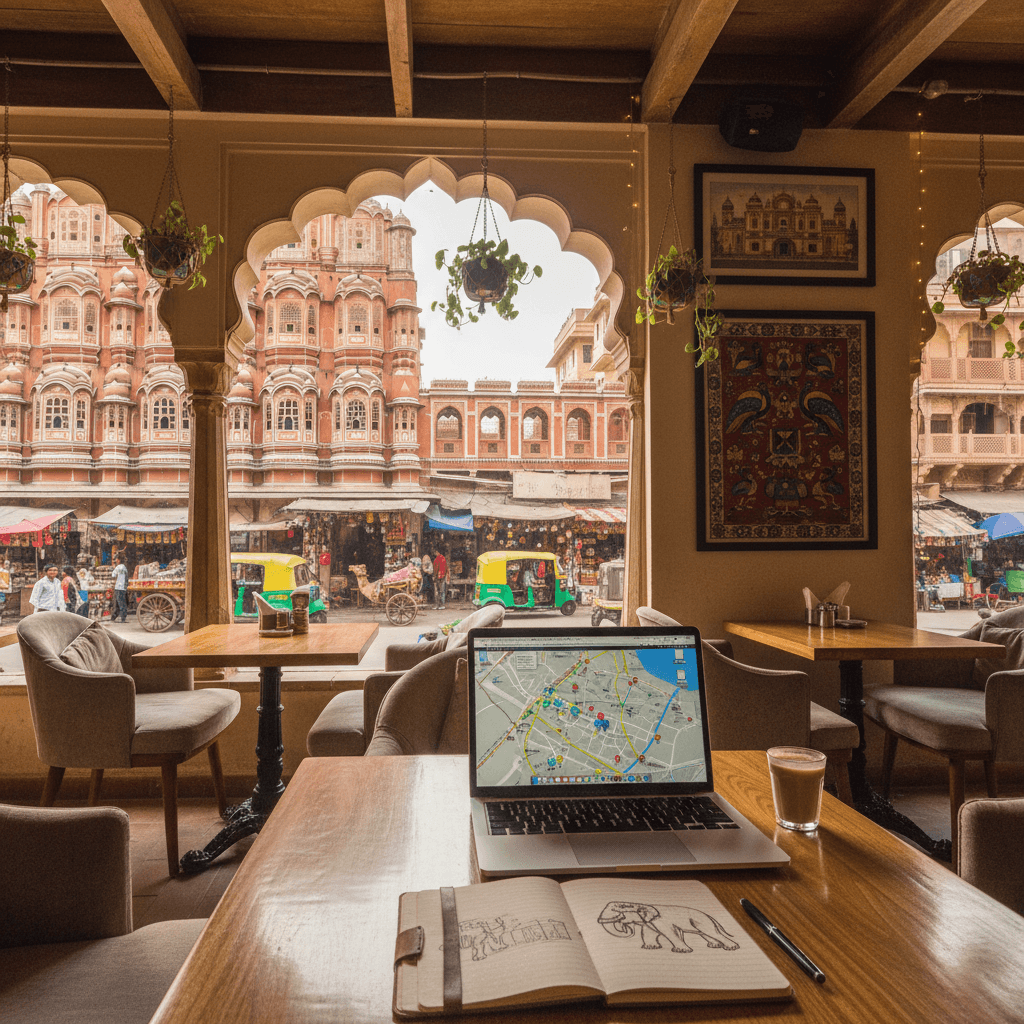
Jaipur
🇮🇳 India
The Pink City Pulse
Jaipur is a sensory overload in the best possible way. While tech hubs like Bangalore or the beach vibes of Goa dominate the Indian nomad conversation, Jaipur offers a different pace. It is a city where 18th-century royal history sits right next to high-speed fiber internet. You'll find yourself dodging a camel cart on your way to a modern cafe in C-Scheme, and that contrast defines the experience here. It is more relaxed than Delhi, but it still has that unmistakable Rajasthani energy.
The city's personality is split between the chaotic, maze-like Old City and the polished, modern suburbs. Living here means embracing a slower, more intentional lifestyle. You aren't here for a massive party scene; you're here for the craftsmanship, the world-class textiles in Sanganer, and a cost of living that makes your budget stretch incredibly far. Most nomads find that while the community is smaller than in other global hubs, the connections you make are deeper and centered around creativity and entrepreneurship.
What You'll Spend
Jaipur is remarkably affordable, even by Indian standards. A comfortable monthly budget usually sits between $500 and $1,000, depending on how much you lean into luxury. Local life is cheap, but the city has plenty of upscale pockets if you want to splash out.
- Housing: Expect to pay $100 to $300 for a solid one-bedroom apartment in a nomad-friendly area.
- Food: Street food is a steal at $1 to $3 per meal. A mid-range dinner of dal baati churma will cost around $7, while high-end dining hits the $20 mark.
- Transport: A full day with a dedicated tuk-tuk driver costs about 500 INR ($6). For quicker hops, Uber is reliable and often the most transparent pricing option.
- Work: Monthly coworking memberships hover around $50 to $100.
The Neighborhood Breakdown
Choosing your base is the difference between a productive stay and a stressful one. Most long-termers avoid living inside the Old City walls because of the noise and traffic.
C-Scheme
- Best For: Nomads and expats who want a "soft landing."
- The Vibe: This is the city's upscale heart. It’s quiet, green, and packed with the best cafes and coworking spots.
- Rent: $100 to $300 for a 1BR.
- Pros: Excellent internet, walkable streets, and a high concentration of English speakers.
Malviya Nagar
- Best For: Creatives and shoppers.
- The Vibe: A mix of residential comfort and massive shopping malls. It feels more "new India" and has a growing number of workspaces.
- Rent: $150 to $300.
- Pros: Great food options and proximity to the airport.
The Old City (Chaura Rasta/MI Road)
- Best For: Short-term cultural immersion.
- The Vibe: Intense, colorful, and loud. It’s where you’ll find the iconic pink facades and the famous Lassiwala on MI Road.
- Pros: Unbeatable street food and proximity to the major markets.
- Cons: Poor walkability and spotty internet in older buildings.
The Practical Realities
The best time to be here is October through March. During these months, the weather is gorgeous, typically between 20°C and 30°C. Avoid the city from April to June unless you enjoy 45°C heat that makes leaving your air-conditioned room nearly impossible. The monsoon season from July to September brings relief from the heat but can cause occasional street flooding.
Internet is surprisingly reliable in the newer districts. You can expect speeds between 20 and 50 Mbps in most cafes and coworking spaces in C-Scheme. For mobile data, grabbing a local Airtel or Jio SIM is the way to go; $10 usually gets you about 30GB of data. If you’re only staying a week, a Truely eSIM is a quick fix, though more expensive.
Safety is rarely a major concern, though the social scene is conservative. You'll want to dress modestly, covering shoulders and knees, to avoid unwanted attention. While the nightlife isn't wild, the social life revolves around the cafe culture and weekend trips to the Amber Fort or craft workshops in Bagru. It’s a city that rewards the patient traveler who prefers a sunset view over a fort to a crowded nightclub.
The Bottom Line
Jaipur is one of those rare spots where you can live like royalty on a shoestring budget. While it doesn't have the massive nomad hubs you'll find in places like Goa, the Pink City makes up for it with a cost of living that's significantly lower than Delhi or Mumbai. Depending on your lifestyle, you can get by comfortably on $500 to $1,000 per month. It’s a city where you can start your morning with a $1 lassi and end it in a restored haveli without breaking a $50 bill.
Monthly Budget Tiers
- The Budget Nomad ($500 to $700): You're looking at a studio or shared apartment in areas like Sanganer, eating mostly street food like kachoris and mirchi vadas, and using public transport or the occasional Uber.
- The Mid-Range Professional ($800 to $1,000): This gets you a nice 1BR in a modern neighborhood like C-Scheme, a mix of cafe working and home cooking, and regular nights out at mid-range restaurants.
- The High-End Expat ($1,200+): You'll be living in the city's most upscale pockets, taking private taxis everywhere, and frequenting boutique hotels and high-end dining spots.
Housing and Neighborhoods
Where you park your laptop matters here. Most nomads gravitate toward C-Scheme or Malviya Nagar because they offer the best balance of reliable internet and quiet streets. Rent for these areas usually lands between $100 to $250 for a solid 1BR. If you're on a tighter budget, Sanganer offers spots for around $150, though you'll be further from the action.
Avoid staying long term in the Old City or near MI Road. While the markets are great for a day trip, the noise and maze like streets can be exhausting for daily life. Use platforms like NoBroker or Housing.com to scout prices, but many people find the best deals by joining local Facebook expat groups or asking around in cafes.
Eating and Drinking
Food is where Jaipur really shines for your wallet. Street food is incredibly cheap; a filling breakfast of aloo sabzi or a lassi at the famous Lassiwala on MI Road will only cost you $1 to $3. For a proper sit down meal of dal baati churma, expect to pay $5 to $10. If you want to splurge at a high end rooftop spot, you're looking at $15 to $30 including drinks. Since the social scene is a bit more conservative, you'll spend less on alcohol here than in other digital nomad hubs, as the nightlife is mostly centered around malls and specific hotel bars.
Transport and Connectivity
Getting around is cheap but requires some patience. An Uber is usually your best bet for transparent pricing, but you can hire a tuk-tuk for a full eight hour day for about 500 INR ($6). If you need a private car for longer trips to the forts, a taxi will run you about 1,600 INR ($19).
For work, the internet is surprisingly reliable in the newer districts. A local Airtel or Jio SIM card with a 30GB data plan costs about $10, which is a lifesaver for hotspots. Coworking memberships in C-Scheme or Malviya Nagar typically range from $50 to $100 per month, offering a much more stable environment than the local cafes.
Practical Essentials
- Healthcare: Stick to private hospitals in C-Scheme for the best care. It's affordable, but always keep travel insurance handy.
- Banking: Use Wise or Revolut to avoid high ATM fees. Most local vendors now use UPI apps like Google Pay or PhonePe, which are incredibly convenient once you have a local bank account or a compatible international setup.
- Seasonality: Plan your stay between October and March. The April to June heat is brutal, with temperatures hitting 45°C, which often leads to higher electricity bills for air conditioning.
Choosing where to plant your flag in the Pink City depends entirely on how much chaos you can handle before breakfast. Jaipur is a sprawling mix of 18th century planned architecture and modern concrete hubs. While the old city looks great on Instagram, most people staying longer than a weekend find that the newer neighborhoods offer the sanity and high speed internet needed to actually get work done.
For Digital Nomads: C-Scheme
C-Scheme is the undisputed headquarters for the remote work crowd. It hits that sweet spot of being central without the deafening noise of the bazaars. You'll find the highest concentration of chic cafes, boutique coworking spaces, and reliable fiber optic internet here. Most nomads find the lifestyle here mirrors a European city more than a typical Indian urban center, with walkable streets and plenty of greenery.
- Rent: Expect to pay between $200 and $400 for a decent one bedroom apartment.
- Internet: Reliable speeds from 20 to 50 Mbps through providers like Airtel and Jio.
- Vibe: Quiet, upscale, and filled with expats. It is the best place to network without trying too hard.
- Downside: It can feel a bit sanitized. If you want that grit and history, you will have to commute a few kilometers east.
For Creatives and Long-Termers: Malviya Nagar
If C-Scheme is the established heart, Malviya Nagar is the rising star. It is popular with creative professionals and those who want a more "local" feel without sacrificing modern comforts like shopping malls and air conditioned gyms. It is slightly further from the tourist sites, which means lower prices and a more authentic residential atmosphere. You will find plenty of workspace hubs here that cater to the growing local startup scene.
- Rent: Slightly more budget friendly, often ranging from $150 to $300 for comfortable setups.
- Amenities: Proximity to World Trade Park and Gaurav Tower means you have every global brand and food chain at your doorstep.
- Transport: Use Uber or the PhonePe app to call rides; it is well connected but traffic can get heavy during the evening rush.
For Solo Travelers: MI Road and the Old City
If you are in Jaipur for a short stint and want to soak up every bit of Rajasthani heritage, stay near MI Road or the Chaura Rasta area. This is the Jaipur of the postcards. You are steps away from the Hawa Mahal and the labyrinthine markets. It is loud, it is dusty, and the walkability is poor due to the sheer volume of rickshaws, but the energy is unmatched.
- Daily Life: You will spend your mornings grabbing a lassi at the legendary Lassiwala on MI Road or snacking on kachoris for $1.
- Cost: Very cheap guest houses and heritage stays are available for around $15 to $25 a night.
- The Trade-off: The internet can be spotty in older buildings with thick stone walls. It is better for a cultural deep dive than a heavy work week.
For Families and Craft Enthusiasts: Sanganer
Located on the southern outskirts, Sanganer is famous for its traditional block printing. It is much more relaxed and offers a slower pace of life that suits families or those seeking a retreat. It feels like a village that grew into a suburb, keeping a lot of its craft heritage intact.
- Activities: Great for taking block printing workshops or exploring the local Jain temples without the crowds.
- Logistics: You will be far from the main nomad hubs. Budget around 500 INR for a full day tuk-tuk rental if you plan to head into the center often.
Most travelers agree that the best strategy is to book a week in C-Scheme to get your bearings and then scout apartments in Malviya Nagar if you plan to stay for the typical e-Visa duration (up to 30-180 days depending on type). Avoid the peak heat of April to June, and aim for the October to March window when the weather is perfect for cafe hopping.
While Jaipur might feel like a step back in time when you're wandering the terracotta corridors of the Hawa Mahal, the city's digital infrastructure is surprisingly modern. It doesn't have the frantic tech energy of Bangalore, but for nomads who want a slower pace without sacrificing their Zoom connection, the Pink City delivers. You'll find a stable backbone of fiber optics and a growing crop of professional spaces that cater to the remote crowd.
The Connectivity Reality
Expect typical WiFi speeds to range between 20 and 50 Mbps in most coworking spaces and modern cafes. If you're staying in newer developments like C-Scheme or Malviya Nagar, high-speed fiber from providers like Airtel and Jio is the standard. Most nomads find these speeds more than enough for video calls and heavy uploads, though it's always smart to have a backup.
For mobile data, don't rely on your international roaming. Pick up a local SIM from Airtel or Jio; you can usually snag 30GB of data for around $10. If you're only in town for a week or two and want to skip the paperwork of a local SIM, an eSIM from Truely is a popular alternative among travelers, though it'll cost a bit more for less data.
Top Coworking Spots
The coworking scene in Jaipur is concentrated in the more affluent, modern neighborhoods. You won't find many dedicated desks in the middle of the Old City markets, so plan to commute if you're staying near the bazaars. Monthly memberships generally run between $50 and $100.
- C-Scheme Hubs: This is the primary nomad hangout. The spaces here are professional, usually featuring ergonomic chairs, air conditioning that actually works during the 40°C April heat, and reliable power backups.
- Malviya Nagar Spaces: A bit further south, this area attracts creative types and local startups. It's often slightly cheaper than C-Scheme and sits close to the major shopping malls if you need to run errands between deep work sessions.
- Cafe Culture: If you prefer a casual vibe, MI Road has several cafes where nobody will blink if you sit with a laptop for three hours. Just make sure to order a constant stream of chai or coffee.
Digital Nomad Logistics
Power outages do happen, especially during the monsoon season from July to September. Most professional coworking spaces have heavy duty generators, but if you're working from an Airbnb, ask the host specifically about "power backup" or an inverter. It's the difference between finishing a project on time and sitting in the dark for two hours.
For payments, the city has gone almost entirely digital. While you'll need cash for kachoris at Lassiwala, almost every other vendor accepts UPI payments. Since foreign bank accounts can't always link to local UPI apps like PhonePe, many nomads use Wise or Revolut to manage their funds and withdraw cash from ATMs with minimal fees.
Costs and Practicalities
- Coworking Desk: $50 to $100 per month
- Local SIM (30GB): $10
- Cafe Coffee: $2 to $4
- Average WiFi Speed: 20 to 50 Mbps
If you're planning a long stay, looking for apartments via Facebook nomad groups or local sites like Housing.com is your best bet. Most expats recommend sticking to C-Scheme for the best balance of reliable internet and proximity to the best cafes. It's quieter, the streets are wider, and the signal strength is consistently better than the maze-like interior of the old city walls.
Staying Safe in the Pink City
Jaipur is generally a laid back environment for digital nomads, especially compared to the high energy chaos of Delhi. Most travelers find the city safe and welcoming, though the "Pink City" charm comes with a side of persistent street vendors and the occasional tourist hustle. In the old city markets like Johari Bazaar or Tripolia, keep your bags close to your body. Pickpocketing isn't rampant, but it happens in the thick of those crowded lanes.
The social vibe is conservative, so you won't deal with the aggressive nightlife scenes found in other global hubs. However, this means it's wise to avoid isolated or poorly lit areas after dark. If you're out late, stick to the modern pockets of C-Scheme or Malviya Nagar where there's more foot traffic and open businesses. Women traveling solo often report feeling comfortable here, though many prefer to use ride hailing apps for late night transport rather than flagging down a random rickshaw.
Medical Care and Hospitals
If you get sick, you're in good hands, provided you head to a private facility. The public healthcare system can be overwhelming and slow, but Jaipur's private hospitals offer care that matches international standards for most routine issues. Most expats and long term nomads head to C-Scheme for medical consultations because the facilities there are modern and the staff usually speaks excellent English.
- Quality of Care: Private clinics are well equipped for everything from "Delhi Belly" to more serious infections. Pharmacies are on almost every corner and stay open late, often selling over the counter medications that would require a prescription elsewhere.
- Travel Insurance: Most nomads suggest having a solid policy in place before arriving. While a basic doctor's visit might only cost you $10 to $20, emergency procedures or medical evacuations can get expensive quickly.
- Water Safety: Never drink the tap water. Stick to filtered or bottled water, even for brushing your teeth if you have a sensitive stomach.
Emergency Contacts
It's smart to keep these numbers saved in your phone as soon as you land. While you likely won't need them, the peace of mind is worth the thirty seconds of effort. If you're using a local SIM from Airtel or Jio, these numbers will connect instantly.
- Police: Dial 100
- Ambulance: Dial 108
- General Emergency: 112 is the pan-India emergency number that works much like 911.
Practical Health Tips for Nomads
Heat exhaustion is a bigger threat than crime during the summer months. From April to June, temperatures regularly hit 40°C (104°F) and higher. If you're working from a cafe or exploring the forts, stay hydrated and try to get your outdoor walking done before 10:00 AM. Most nomads find that the winter months from October to March are the only time the city is truly walkable without risking a heat stroke.
Air quality can also fluctuate, particularly during the post monsoon months. If you have asthma or respiratory issues, check the air quality index (AQI) apps daily. On high pollution days, it's better to work from an air conditioned coworking space in Malviya Nagar rather than sitting in an open air street cafe.
The Pulse of the Pink City
Moving through Jaipur feels like a choreographed dance between centuries-old traditions and modern efficiency. While it lacks the frantic energy of Mumbai or Delhi, it's still a city where you need a strategy to get from your coworking space in C-Scheme to a sunset view at Nahargarh Fort. Most nomads find that the city’s layout rewards those who embrace ride-hailing apps over trying to navigate the old city's maze on foot.
Ride-Hailing and Taxis
Uber is the gold standard for digital nomads here. It's metered, transparent, and allows for card payments, which saves you the headache of haggling over every trip. You'll find it's often the cheapest way to get across town, especially during the heat of the day. For a more local experience, tam-tams (electric rickshaws) are everywhere. They're great for short bursts, but for a full day of scouting locations or visiting the forts, expats recommend hiring a private taxi for around 1600 INR ($19). This gives you an air-conditioned base and a driver who knows the shortcuts through the traffic peaks in Malviya Nagar.
The Tuk-Tuk Experience
You can't experience Jaipur without the iconic three-wheeled tuk-tuks. They are perfect for weaving through the narrow lanes of the old city where cars often get stuck. If you're planning a marathon day of sightseeing or market hopping, you can book a driver for an 8-hour block for roughly 500 INR ($6). Just be prepared to negotiate the price upfront if you aren't using an app, and keep some small change handy.
- Uber/Ola: Best for predictable pricing and AC.
- Tuk-tuks: Best for short distances and the old city markets.
- Tam-tams: Cheap, electric, and plentiful for neighborhood hops.
- Private Cars: Recommended for day trips to Sanganer or Bagru.
Walking and Micromobility
Jaipur isn't a particularly walkable city in the traditional sense. While the wide boulevards of C-Scheme are pleasant for a morning stroll to a cafe, the old city is a different beast. The sidewalks are often occupied by vendors or uneven pavement, making a 15-minute walk feel like a workout. If you're feeling brave, bike and scooter rentals are available via local apps for about $5 a day, but most travelers suggest sticking to four wheels until you're used to the local driving flow.
Arrival and Airport Transfers
Jaipur International Airport is surprisingly close to the action. It's a quick 45-minute flight from Delhi if you're skipping the train. Once you land, bypass the aggressive touts at the arrival gate and book an Uber. A ride to the city center or the nomad hubs in C-Scheme usually costs between 500 and 1000 INR. If you're coming in by train, the main Jaipur Junction station is centrally located, making it easy to reach most mid-range hotels and guesthouses within 20 minutes.
Practical Transport Costs
- Airport to C-Scheme (Uber): 500 to 800 INR
- Full Day Tuk-Tuk Rental: 500 INR
- Full Day Private Taxi: 1600 INR
- Daily Scooter Rental: 400 to 500 INR
Most long-term nomads settle into a routine of using Ubers for work commutes and keeping a few trusted tuk-tuk drivers' numbers in their WhatsApp for quick trips. It's a system that works well once you get past the initial learning curve of the city's geography.
The Linguistic Landscape
You won't need to be a polyglot to survive in Jaipur, but a little effort goes a long way. Hindi is the primary language spoken across the city, alongside the local Rajasthani dialect. In the modern hubs of C-Scheme and Malviya Nagar, English proficiency is surprisingly high. Most cafe owners, coworking space managers, and younger professionals speak it fluently, making it easy to handle business meetings or technical support issues.
Things change once you step inside the gates of the Old City. In the chaotic markets of Chaura Rasta or Tripolia Bazar, English becomes more of a tool for commerce than conversation. While shopkeepers understand enough to haggle over the price of a block-printed scarf, deeper communication might require some creative gesturing or a translation app. Most nomads find that the language barrier is rarely a dealbreaker, though it adds a layer of complexity to daily chores like explaining directions to a tuk-tuk driver.
Navigating the Basics
If you're staying for more than a week, learning a few Hindi phrases will change how locals treat you. Using a simple "Namaste" for hello or "Dhanyavaad" for thank you signals that you're more than just a passing tourist. When you're out in the markets, "Kitna rupaya?" (How much?) is your best friend for starting a negotiation. Don't be surprised if locals are curious about your work; Jaipur has a smaller nomad scene than Goa, so people are often genuinely interested in the "digital nomad" lifestyle.
- Google Translate: This is the gold standard here. Download the Hindi pack for offline use so you can translate signs or menus in the more traditional parts of Sanganer.
- The "Head Bobble": It's not a word, but it's the most important communication tool in India. A slight side-to-side tilt can mean "yes," "maybe," or "I understand." You'll pick up the nuances within a few days.
- Numerical literacy: While most people know English numbers, knowing the Hindi words for 10 (dus), 50 (pachaas), and 100 (sau) can help you avoid the "tourist tax" when buying street food like kachoris.
Connectivity and Tech
Staying connected is relatively cheap and straightforward. Most nomads recommend skipping the overpriced roaming plans and grabbing a local SIM card immediately. Airtel and Jio are the two giants here, and you can get a solid 4G/5G data plan for around $10 a month, which usually includes about 30GB of data. If you're only in town for a few days and don't want the hassle of paperwork, an eSIM from Truely (check current plans around $8+) works well, though it's less cost-effective for long stays.
For payments, the city is rapidly moving toward a cashless society via UPI. Apps like PhonePe or Google Pay are used everywhere from high-end boutiques in C-Scheme to tiny lassi stalls on MI Road. However, setting these up usually requires an Indian bank account. For nomads, keeping a stash of Indian Rupees (INR) is still necessary for smaller transactions, while Wise or Revolut cards are widely accepted in modern cafes and coworking spaces.
Pro Tips for Smooth Talk
Communication in Jaipur is often about patience. People are generally polite and helpful, but the pace can be slower than what you're used to in Western hubs. If you're hiring a driver for a full day (usually around 500 INR for a tuk-tuk), it's best to use WhatsApp to coordinate. It's the unofficial communication backbone of India. Whether you're talking to your landlord in Malviya Nagar or ordering a delivery, a quick WhatsApp message is usually faster and more effective than a phone call.
- Data Speeds: Expect 20 to 100 Mbps in most coworking hubs. It's plenty for Zoom calls, but always have a mobile hotspot as a backup during the occasional monsoon power flicker.
- Social Apps: Use the Novad app or local Facebook groups to find the expat community. Since the nomad scene is still growing, these digital circles are where most networking happens.
- Service Etiquette: When dining out, a 10 percent tip is appreciated but not mandatory. In smaller eateries, rounding up the bill is common practice.
When to Land in the Pink City
Jaipur is at its most welcoming from October to March. During these months, the desert heat retreats and you'll find daytime temperatures hovering between 20°C and 30°C. It is the goldilocks zone for digital nomads; the air is crisp, the sky is usually a brilliant blue, and you can actually walk through the old city bazaars without melting. Most nomads plan their stays around this window to enjoy outdoor cafes in C-Scheme and weekend trips to the Amber Fort.
By late January, you can expect highs of around 23°C, which is perfect for working from a rooftop terrace. This is also when the city feels most alive with festivals and events, though you should pack a light jacket for the surprisingly chilly desert nights.
Survival Guide: The Summer Scorcher
If you are thinking about staying through April, May, or June, be prepared for a reality check. Temperatures regularly spike to 45°C. The heat is dry and intense, often making it impossible to be outside between 11:00 AM and 5:00 PM. During this season, your life will revolve entirely around air conditioning. Many long term expats head north to the mountains or move toward coastal areas like Goa during this stretch to avoid the midday burnout.
The monsoon arrives between July and September. While the rain brings the temperature down to a more manageable 20°C to 35°C, it brings its own set of challenges. Expect occasional flooding in the narrow lanes of the old city and a spike in humidity that can make the "feels like" temperature higher than the thermostat suggests. On the plus side, the surrounding Rajasthani landscape turns a rare, lush green, which makes for stunning photography.
Seasonal Logistics and Planning
Because the winter season is so popular, prices for short term rentals and boutique hotels can climb. If you want to snag a decent 1BR in C-Scheme or Malviya Nagar for the standard $200 to $400 range, try to book your spot at least a month before the October rush.
- Peak Season (Oct-Mar): Best for networking, walking tours, and outdoor work. Expect higher demand for popular coworking spots.
- Shoulder Season (Jul-Sep): Good for those who don't mind the rain and want to see a greener side of Rajasthan with fewer tourists.
- Off-Peak (Apr-Jun): Only recommended if you have a high heat tolerance and a rock-solid AC unit. Rents might be more negotiable now.
Travelers often say that the sweet spot is November. The heavy rains are gone, the extreme heat hasn't yet returned, and the city’s air quality is generally better than what you'll find in nearby Delhi. It's the ideal time to settle in, grab a $1 lassi from Lassiwala on MI Road, and get some work done before the midday sun gets too bright.
Getting Settled and Staying Connected
Jaipur is one of those rare cities that feels like a big town rather than a frantic metropolis. Most nomads find that the city works best when you lean into its slower pace. To get started, grab a local SIM card from Airtel or Jio at the airport or a shop in C-Scheme. You'll get plenty of data for around $10 a month. If you're only staying a week or two, an eSIM from Truely is a painless way to skip the paperwork.
Internet speeds are surprisingly solid in the newer districts, typically ranging between 20 and 50 Mbps. While the old city is great for a morning photo walk, its maze of narrow streets makes for spotty signals and noisy work environments. Stick to C-Scheme or Malviya Nagar for your "office" days. These neighborhoods host a growing coworking scene where monthly desks run between $50 and $100. For a more casual vibe, the cafes around MI Road are reliable spots to hammer out some emails over a coffee.
Budgeting for the Pink City
Your money goes a long way here. A comfortable lifestyle usually costs between $800 and $1,000 per month, though budget travelers can easily scrape by on $500 if they stick to shared housing and street food. Local payments are dominated by UPI apps like PhonePe or Google Pay. While you can't link these to foreign bank accounts easily, keeping a Wise or Revolut card handy for ATM withdrawals and upscale restaurants will cover most of your needs.
Where to Base Yourself
- C-Scheme: This is the nomad favorite. It's quiet, central, and packed with modern cafes. A one bedroom apartment here typically costs between $200 and $400.
- Malviya Nagar: A great alternative for creatives who want to be near shopping malls and newer workspaces. It's budget friendly but can get congested during rush hour.
- Sanganer: Located on the outskirts, this area is perfect for long term stays if you're interested in the local block printing scene. Rents are cheaper, often around $150, but you'll be far from the city center nightlife.
Transport and Navigation
Walking in Jaipur is an Olympic sport, especially in the old city where sidewalks are non existent. For daily commutes, Uber is your best friend. It's metered, you can pay by card, and it's often cheaper than haggling with a roadside driver. If you want the full Rajasthani experience, you can hire a tuk-tuk or an electric tam-tam for about 500 INR ($6) for a full eight hour day. For longer trips to the Amber Fort, a private taxi usually costs around 1600 INR ($19).
Health, Safety, and Local Customs
Jaipur is generally safe, but the old city markets can be a magnet for pickpockets. Keep your wits about you in the Tripolia or Johari bazaars. If you need medical care, the private hospitals in C-Scheme are excellent and comparable to what you'd find in larger Indian hubs. For emergencies, dial 100 for police or 108 for an ambulance.
Socially, Jaipur is more conservative than Goa or Mumbai. It's respectful to dress modestly, covering shoulders and knees, especially when visiting temples. Always remove your shoes before entering someone's home. When dining, remember that the right hand is used for eating. If you're invited for a meal, trying the dal baati churma is a must, and a lassi from the famous Lassiwala on MI Road is the local cure for a hot afternoon.
Timing Your Visit
The weather dictates everything here. The sweet spot is October to March, when temperatures hover between 20°C and 30°C. Avoid the city from April to June unless you enjoy 45°C heat that makes working almost impossible. The monsoon arrives in July, bringing occasional floods but also much needed relief from the dust.
Need visa and immigration info for India?
🇮🇳 View India Country GuideEasy Landing
Settle in, no stress