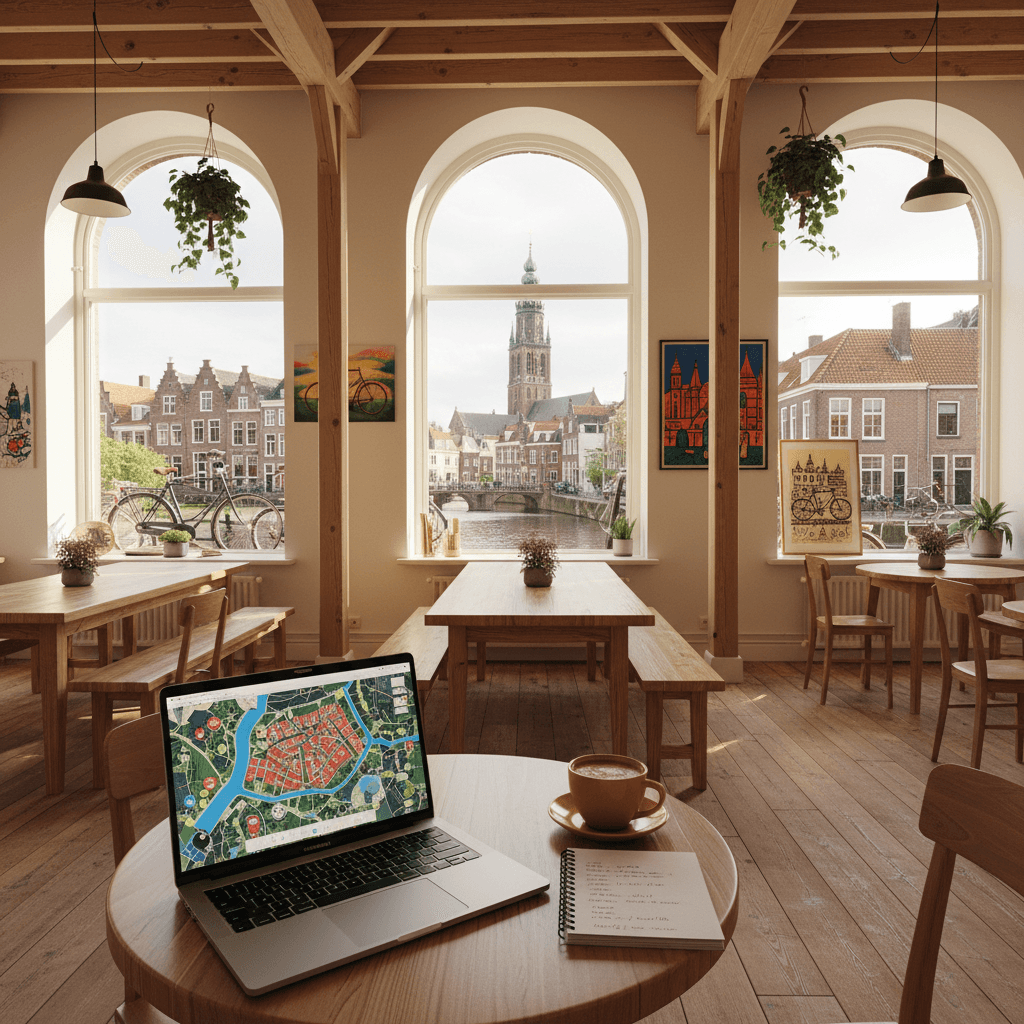
Groningen
🇳🇱 Netherlands
The Northern Pulse
Groningen is a city that refuses to act its age. While the medieval architecture of the Martinitoren and the historic Grote Markt square suggest a sleepy provincial capital, the reality is far more energetic. This is a university town through and through, where roughly a quarter of the population is made up of students. That demographic shift changes everything about the daily rhythm; it is younger, more international, and significantly more affordable than Amsterdam.
Most nomads find the vibe here to be a perfect middle ground. It has the canals and brick paved charm of the Randstad but lacks the overwhelming tourist crowds. You will feel the city's personality most at 2 AM, when the bars in the Binnenstad are still packed and the streets are filled with thousands of people cycling home. It is a place where "bicycle etiquette" is the only law that truly matters, and the flat terrain makes it effortless to get across town in fifteen minutes.
What to Expect on the Ground
Living here means embracing a specific Dutch pace. While the nightlife is legendary, the daytime commerce is surprisingly traditional. Most shops close their doors by 6 PM, which can be a shock if you are used to 24 hour convenience. Expats often joke that you have to get your errands done early or wait for the Thursday late night shopping hours.
The emotional experience of Groningen is one of safety and accessibility. It is the kind of city where you can leave a laptop on a cafe table to grab a refill without much anxiety. However, the housing market is notoriously tight. Travelers often say that finding a desk is easy, but finding a bed is the real challenge, so you should start your search months in advance through agencies or local networks.
Cost of Living Breakdown
Your budget in Groningen will stretch much further than in the south of the country. For a solo nomad, expect to spend between €2,000 and €3,000 for a comfortable, mid range lifestyle.
- Budget (approx. €1,500 to €2,000): Focus on neighborhoods like Oosterparkwijk where a studio might run €800. You will be eating €5 to €10 street food like haring or stroopwafels and using a second hand bike instead of public transport.
- Mid Range (approx. €2,000 to €3,000): This covers a €1,100 one bedroom apartment in the City Center, regular €20 dinners at local bistros, and a €200 monthly membership at a coworking space like Spaces.
- Comfortable (approx. €3,000+): High end living involves a premium €1,400 apartment, frequent €40 dinners, and perhaps a €85 high speed 8 Gbps fiber internet connection from providers like KPN or Ziggo.
Digital Infrastructure
The internet here is world class. Most apartments come with fiber as standard, and mobile coverage is nearly 100 percent. If you prefer working from cafes, the area around Grote Markt is full of laptop friendly spots, though they do fill up with students during exam seasons. For a more professional setup, nomads recommend Spaces or local hubs that offer dedicated desks for around €150 to €300 per month.
The Neighborhoods
- City Center (Binnenstad): This is the heart of the action. You are steps away from the best bars and the central library, but you will pay a premium in rent and deal with more noise. It is the best choice for short term stays or anyone who wants to be in the middle of the social scene.
- Oosterparkwijk: Located just east of the center, this area is greener and significantly quieter. It is popular with families and long term nomads who want more space for their money. It is an easy ten minute bike ride to the city core.
Getting Around and Language
Do not bother with ride hailing apps; they are limited and expensive. Instead, rent a bike for €10 to €20 a day or buy a used one if you are staying longer than a month. The city is designed for two wheels, and the public bus system is efficient for those rare days when the North Sea rain is too much to handle.
Language is rarely a barrier. English proficiency is incredibly high, especially among the student population and in business settings. You can easily manage your daily life, banking with apps like Revolut or Bunq, and socializing without knowing a word of Dutch. That said, learning a simple "Dank je" goes a long way with the locals.
Living the Student Life on a Professional Budget
Groningen manages a rare feat in the Netherlands: it feels youthful and energetic without the eye watering price tag of Amsterdam. Because a quarter of the population is made up of students, the city’s economy is built around affordability. You can live comfortably here for significantly less than in the Randstad, provided you can actually find a place to stay.
Most digital nomads find that €2,000 to €2,500 a month covers a very high quality of life. This includes a private apartment, plenty of dinners out at the terrace cafes on Grote Markt, and a dedicated desk at a coworking space. If you are more of a "bootstrapping" nomad, you can scrape by on €1,500 by choosing a studio in the quieter outskirts and sticking to street food and home cooking.
Breaking Down the Monthly Burn
Your biggest hurdle won't be the cost of a coffee, but the cost of four walls. The housing market is notoriously tight, so you should start your search months in advance through agencies or expat networks.
- Budget Tier (€1,500 to €2,000): This lifestyle usually involves living in Oosterparkwijk, where a studio or small one bedroom runs about €700 to €1,100. You'll spend roughly €300 on groceries, €50 on a second hand bike and occasional bus fare, and €150 for a basic coworking membership.
- Mid-Range Tier (€2,000 to €3,000): This is the sweet spot for most professionals. You can snag a nice 1BR in the Binnenstad (City Center) for €1,100 to €1,500. This budget allows for €500 in dining out and a €200 full access coworking pass at spots like Spaces.
- Comfortable Tier (€3,000+): If you want a premium apartment in the heart of the action and don't want to look at the menu prices while eating canalside, this is your bracket. Expect to pay €1,400 or more for rent and upwards of €700 on upscale dining and social life.
Neighborhood Value
City Center (Binnenstad): This is where you want to be if you crave proximity to bars, shops, and the university vibe. It is the most expensive area, but you save on transport because everything is a five minute walk away. Expect noise on the weekends; the nightlife here doesn't really have a closing time.
Oosterparkwijk: Expats often recommend this area for a more "local" feel. It is greener, quieter, and located near the main hospital. It is perfect if you want a bit more space for your money and don't mind a ten minute bike ride to reach the center.
Food, Connectivity, and Gear
Eating out is surprisingly varied. You can grab a quick bite for €5 to €10, while a solid mid range dinner usually lands between €15 and €25. If you are cooking at home, Dutch supermarkets like Albert Heijn or Jumbo are high quality and reasonably priced.
Internet is a non issue here. The city is wired with fiber, and you can get speeds up to 8 Gbps for €40 to €85 a month through providers like KPN or Ziggo. Mobile plans are equally affordable, usually ranging from €20 to €50 for generous data packages. For work, coworking spaces typically charge between €150 and €300 a month, though many nomads just camp out in cafes near the Grote Markt until the shops close at 6 PM.
Transportation is essentially free if you buy a used bike for €80. If you prefer public transit, a monthly budget of €50 to €100 covers the occasional bus or train ride to the coast. Just remember that Groningen is built for two wheels; ride hailing apps are limited and expensive, so do as the locals do and pedal.
The Social Butterfly and Solo Nomad: Binnenstad (City Center)
If you want to be where the action is, Binnenstad is your only real choice. This is the heart of Groningen, defined by the towering Martinitoren and the constant hum of students cycling between lectures and bars. For solo travelers and nomads, it's the easiest place to build a social circle because everything is walkable and the nightlife doesn't really have a closing time.
Living here means you're steps away from the Grote Markt, where you'll find the best terrace cafes for a mid afternoon coffee or a quick laptop session. Most nomads recommend starting your search near Prinsenstraat 8 for short term stays. Just keep in mind that the convenience comes with a price tag and a bit of noise from the cobblestone streets.
- Rent: €900 to €1,500 for a studio or one bedroom apartment.
- Vibe: High energy, historic, and very international.
- Best for: Networking, nightlife, and those who don't want to rely on a bike for every single errand.
The Long Term Expat: Oosterparkwijk
Expats who plan to stay for more than a few months often migrate toward Oosterparkwijk. It's located just east of the center and offers a much more authentic, residential feel without the "student bubble" intensity of the Binnenstad. It's close to the main hospital and features plenty of local grocery stores that stay open until the standard 6 PM cutoff.
You'll get significantly more square footage for your money here. The streets are wider, the buildings are charmingly traditional, and it's quiet enough to actually get deep work done from a home office. It's a favorite for those who want a "real" Dutch life while still being a five minute bike ride from the city's best coworking spaces.
- Rent: €700 to €1,100 for similar sized units compared to the center.
- Vibe: Relaxed, local, and green.
- Best for: Remote workers on a budget and those seeking a quieter lifestyle.
Families and Slow Travelers: Helpman and Southern Districts
While the center is a playground for twenty somethings, families and slow travelers usually head south toward Helpman. This area feels like a different world; it's leafy, upscale, and filled with primary schools and parks. It's the kind of place where you'll see parents with cargo bikes (bakfiets) dropping kids off before heading to work.
The housing market here is tight, but the quality of life is high. You're close to the Hoornsemeer lake for weekend walks, and the area feels incredibly safe at all hours. Most expats find that while the rent is higher than Oosterparkwijk, the peace and access to nature make it worth the investment.
- Rent: €1,200 to €1,800+ for larger multi bedroom houses.
- Vibe: Suburban, prestigious, and family oriented.
- Best for: Those traveling with children or anyone staying for a year or more.
Practical Advice for All Residents
Regardless of which neighborhood you pick, the housing shortage in Groningen is a real hurdle. Travelers often say you should start your search at least two months before arriving. Use local agencies or expat Facebook groups rather than just relying on major booking platforms.
Since the city is so flat, don't feel like you have to live in the Binnenstad to enjoy it. A €10 to €20 daily bike rental (or a cheaper monthly Swapfiets subscription) makes the entire city accessible in under 15 minutes. Most nomads find that living slightly further out in Oosterparkwijk allows for a €2,000 monthly budget, while staying central usually pushes that closer to €3,000.
Connectivity and Speeds
Groningen might feel like a quiet university town, but its digital infrastructure is world class. Most apartments and offices are wired with fiber optics, and you can expect speeds up to 8 Gbps if you're staying in a modern rental. Providers like KPN, Ziggo, and Odido dominate the market, and nomads generally report that the connection is rock solid for video calls and heavy uploads.
For mobile data, you've got plenty of reliable options. Grab a local SIM or an eSIM from Vodafone or KPN to ensure 99% coverage across the city. Expect to pay between €20 and €50 per month depending on your data needs. If you're just passing through for a few weeks, WorldSIM is a popular choice among the nomad community for quick setup without the Dutch paperwork.
Top Coworking Spaces
The coworking scene here is professional yet relaxed, mirroring the city's academic energy. Most spaces are concentrated around the Binnenstad (City Center), making them easy to reach by bike from anywhere in town. You'll typically pay between €150 and €300 per month for full access, though many spots offer day passes for those just testing the waters.
- The Launchpad: A favorite for those who want a community feel. It's often filled with young entrepreneurs and international students from the University of Groningen.
- Spaces: Located near the central station, this is the go to for a more corporate, high end environment with excellent coffee and ergonomic setups.
- Hashtag Workmode: This spot is great if you're looking for a creative atmosphere and networking events specifically tailored to freelancers.
Cafe Culture and Remote Work
If you prefer the hum of a coffee shop over a dedicated office, Groningen has a strong cafe working culture. The area around Grote Markt is packed with spots where nobody will look twice if you open a laptop. Just keep in mind the local rhythm; many shops and smaller cafes close their doors by 6 PM, so you'll need to migrate to a bar or back home if you're working late for a different time zone.
Expats recommend Black & Bloom for serious coffee nerds, though it can get crowded. For a more spacious vibe, try the cafes near the Forum, a massive cultural center that is essentially a nomad's dream. It has free seating, fast Wi-Fi, and incredible views of the city. It's often cited by travelers as the best "unofficial" office in the northern Netherlands.
Practical Tips for Digital Nomads
While the internet is fast, the housing market is notoriously tight. Most nomads suggest securing your accommodation well in advance, as finding a place with a dedicated desk setup can be a challenge. If you're staying in Oosterparkwijk, you'll get more space for your money, but you might find yourself biking 10 minutes into the center for the best coworking communities.
- Peak Times: Cafes get busy around lunch, so aim to grab a spot before 11 AM if you plan on staying a while.
- Public Wi-Fi: Free Wi-Fi is common in the City Center and at Groningen Central Station, but always use a VPN for security.
- Power Outlets: Dutch cafes are hit or miss with outlets. Always show up with a full charge or head to the Forum where power points are plentiful.
Stay Safe in the North
Groningen is remarkably safe, even by high Dutch standards. Because students make up about a quarter of the population, the streets stay active well into the early hours. You'll often see people cycling home alone at 3 AM without a second thought. Most nomads find the city center and university zones like the Zernike Campus to be very secure environments.
The biggest "crime" you're likely to face is bike theft. It's a local rite of passage, but you can avoid it by using two locks: one for the wheel and a heavy chain to secure the frame to a permanent rack. Avoid leaving your bike near the Groningen Central station overnight if it isn't properly bolted down. Violent crime is rare, and there aren't any "no-go" neighborhoods to worry about, though the areas around the Grote Markt can get rowdy on Thursday and Saturday nights when the bars are at capacity.
Healthcare Infrastructure
The quality of care here is world class. If you're staying in a greener neighborhood like Oosterparkwijk, you're right next to the University Medical Center Groningen (UMCG), one of the largest hospitals in the country. For non-emergencies, your first stop is always a huisarts (General Practitioner). Expats recommend registering with a doctor as soon as you have your BSN (citizen service number), as some practices can get full.
For quick needs, look for a drogist like Kruidvat or Etos for over-the-counter meds. If you need a prescription, you'll head to an apotheek (pharmacy). Most pharmacists speak perfect English and can help translate Dutch dosage instructions for you.
Emergency Contacts and Coverage
- General Emergencies: Dial 112 for police, fire, or ambulance services. This works across the EU.
- Non-Emergency Police: Dial 0900-8844 if you need to report a stolen bike or a minor incident.
- After-hours Doctor: Call Doktersdienst Groningen for medical issues that can't wait until morning but aren't life-threatening.
If you're a non-EU nomad staying longer than four months, you'll likely need to look into Dutch public health insurance, which usually costs around €130 to €150 per month. Short-term visitors should ensure their travel insurance covers private clinics, as the system is built around mandatory coverage for residents. Travelers often say the peace of mind in Groningen is worth the administrative hurdles; the city is designed for people, not cars, which makes for a much less stressful daily grind.
Practical Health Tips
The tap water in Groningen is some of the cleanest in Europe, so don't waste money on bottled water. Just fill up a reusable bottle before you head to a coworking space like Spaces or a cafe. Since the weather is often damp and windy between October and December, keep an eye on your Vitamin D levels; locals swear by supplements during the gray winter months to keep the "winter blues" at bay while working remotely.
The Two-Wheeled Way of Life
In Groningen, if you aren't on a bike, you're doing it wrong. This city is world famous for its cycling infrastructure, and for good reason. The entire layout is designed to prioritize cyclists over cars, making it one of the few places where your commute might actually be the highlight of your day. The terrain is dead flat, so you won't break a sweat getting from a meeting in Binnenstad to a quiet afternoon in Oosterparkwijk.
Most nomads skip the fancy new models and head straight for a used "omafiets" (grandma bike) or use a subscription service like Swapfiets. For a flat monthly fee of around €20, they give you a reliable bike and fix it for free if you get a flat. If you're just visiting for a few days, daily rentals at the main station or local shops usually run between €10 and €20. Just remember the golden rule: always use two locks. Bike theft is the only "crime" locals really worry about here.
Public Transit and the OV-chipkaart
When the Dutch rain inevitably kicks in, the bus network is your best friend. Qbuzz operates the local lines, and they're remarkably punctual. You don't need to worry about paper tickets; just tap your contactless debit card or phone on the reader when you board and again when you hop off. It's seamless and usually costs a few Euros for a cross-town trip.
For longer hauls, Groningen Centraal is the heart of the city. It’s a stunning piece of architecture that connects you to the rest of the country. You can be in Utrecht or Amsterdam in about two to two and a half hours. While the trains are comfortable and offer free Wi-Fi, they can be pricey. If you plan on exploring other Dutch cities on weekends, it's smart to look into a Dal Voordeel subscription on your OV-chipkaart, which gives you a 40% discount during off-peak hours.
Walking and Ride-Hailing
The city center is compact enough that walking is often faster than trying to find a spot to park a bike. You can cross the entire Binnenstad on foot in about 15 to 20 minutes. It’s a pedestrian-heavy zone, especially around Grote Markt and the Vismarkt, where the lack of car traffic makes for a relaxed atmosphere.
Don't rely on Uber or Bolt here. While they technically exist, the wait times are long and the prices are steep because the city makes it difficult for cars to reach the central core. If you absolutely need a car, stick to local taxi companies or apps like Check or Felyx for shared electric scooters. These are popular for quick trips when you're running late, though you'll still need to park them in designated zones.
Arriving and Departing
If you're flying in, Groningen Airport Eelde is about 20km away. It’s a small airport with limited international connections. Most nomads find it easier to fly into Schiphol and take the direct train north. If you do use Eelde, a taxi into the city will set you back €20 to €40, but the Line 100 or Line 9 buses are much cheaper alternatives that drop you right at the central station.
- Bike Rental: €10 to €20 per day
- Swapfiets Subscription: ~€20 per month
- Bus Fare: Typically €2 to €5 per trip
- Train to Amsterdam: ~€30 one way
- Airport Transfer (Bus): ~€5
One final tip for the road: watch out for the "bakfiets" (cargo bikes). Parents use them to haul kids and groceries, and they have the right of way in the hearts and minds of every local. Give them space, stay in the green-painted bike lanes, and you'll fit right in.
The Language Landscape
You can breathe a sigh of relief when it comes to communication in Groningen. This is one of the most international cities in the northern Netherlands, largely thanks to the massive student population at the University of Groningen. You'll find that English proficiency is incredibly high here. Whether you are ordering a craft beer at a terrace on the Grote Markt or asking for a specific part at a bike repair shop, almost everyone speaks fluent, high level English.
Most digital nomads find they can live here for months without ever needing to master the local tongue. However, the atmosphere changes slightly when you deal with officialdom. While the locals are bilingual, government letters, tax documents, and rental contracts from local agencies are almost always in Dutch. For these moments, keep Google Translate or the DeepL app handy. If you plan on staying longer than four months and need to register for a BSN (citizen service number), having a basic grasp of Dutch etiquette goes a long way with administrative staff.
Useful Phrases for Your Stay
Even though you don't need Dutch to survive, using a few words shows respect for the local culture. The residents, known as Groningers, appreciate the effort. Here are a few basics to get you started:
- Hallo (Hello): The standard greeting.
- Dank je (Thanks): Use this constantly; the Dutch are polite but direct.
- Hoi (Hi): A more casual way to greet your barista or neighbor.
- Lekker (Tasty/Nice): You'll hear this used for everything from a good meal to a sunny day.
- Fietsverhuur (Bike rental): You'll see this sign everywhere.
- Proost (Cheers): You will need this at the bars around the Poelestraat.
Digital Communication and Connectivity
Staying connected is rarely an issue in Groningen. The city is a tech hub with fiber internet speeds reaching up to 8 Gbps in some areas. If you are renting a flat in the Binnenstad or Oosterparkwijk, you will likely be using KPN, Ziggo, or Odido. Expect to pay between €40 and €85 per month for a solid home connection. Mobile coverage is nearly 99 percent across the city, so you won't drop calls even when biking through the outskirts.
For your phone, nomads usually recommend picking up a local SIM to avoid roaming charges. Major providers like Vodafone offer prepaid plans, but many expats prefer WorldSIM or Lebara for international flexibility. You can expect to pay €20 to €50 per month for a generous data package. If you prefer working from cafes, the area around the Grote Markt is packed with spots that welcome laptops before the evening rush, though most of these places close their doors to shoppers and workers by 6 PM.
Social Etiquette and Networking
Communication here is famously direct. Don't mistake a local's bluntness for rudeness; it's just the Dutch way of being efficient. In social settings, the vibe is relaxed and youthful. To meet people, nomads often lean on Meetup.com or local Facebook groups for internationals. Because the city is so compact, you'll often run into the same people at coworking spaces or the university library, making it easy to build a network quickly. Just remember the golden rule of Groningen: stay out of the bike lanes when you're walking, or you'll receive a very loud, very direct verbal correction from a passing cyclist.
The Seasonal Vibe
Groningen is a maritime city through and through, meaning the weather is a constant conversation starter. You'll experience a temperate climate where the seasons are distinct but rarely hit extremes. The city truly comes alive when the sun peaks out, as the massive student population spills out of the University of Groningen buildings and onto the terraces of the Grote Markt.
The sweet spot for a nomad stay is May through September. During these months, you can expect mild temperatures averaging between 15°C and 22°C. It's the perfect window for exploring the flat terrain by bike without getting soaked, and the daylight hours stretch long into the evening, fueling the city's legendary nightlife. Most expats recommend arriving in late spring to catch the city at its most energetic before the summer holiday lull.
Winter and the "Gezellig" Factor
From November to February, the North Sea influence brings a damp, cool chill. Temperatures hover between 0°C and 6°C, and while snow is rare, a biting wind and gray drizzle are common. This is the peak rainy season, particularly from October to December, where monthly rainfall hits around 70mm to 80mm.
While it sounds bleak, this is when the Dutch concept of gezellig (coziness) takes over. You'll find nomads retreating to cafes like Koffiestation or the Forum to work. If you visit during winter, pack high-quality waterproof layers and a solid pair of boots. The city doesn't stop for the rain, and neither do the cyclists.
Best Time for Your Budget
Groningen is generally more affordable than Amsterdam, but timing still impacts your wallet. April and May can see a slight bump in short-term rental prices around Kings Day and the flower markets. If you're looking for the best value, consider a shoulder season arrival in September. The weather is still pleasant, the student energy is peaking as the semester starts, and you'll avoid the peak summer tourist prices at short-term spots like Prinsenstraat 8.
Climate Breakdown by Season
- Spring (March to May): Highs of 9°C to 15°C. A mix of sun and showers. The city begins to bloom, and the canals become active again.
- Summer (June to August): Highs of 18°C to 22°C. This is the driest period, though you should always carry a light rain shell. Perfect for biking to the nearby Hoornsemeer lake.
- Autumn (September to November): Highs of 9°C to 18°C. Rainfall increases significantly in October. The city turns golden, but the wind picks up.
- Winter (December to February): Highs of 5°C. Cold, wet, and dark. Most social life moves indoors to the bars and pubs in the Binnenstad.
The Nomad Verdict
If you're looking for the quintessential Dutch experience, aim for June or July. You'll get the best weather for outdoor networking and the most reliable conditions for those 2 AM bike rides home from the bars. If you prefer a quiet, focused work environment and don't mind the rain, January offers a much slower pace and easier luck with short-term housing bookings, which are notoriously difficult during the autumn student rush.
Getting Settled and Staying Connected
Groningen is a digital nomad's playground, but it operates on its own schedule. While the university crowd keeps the bars open late, the rest of the city winds down early. Most shops shutter their doors by 6 PM, so don't plan on running errands in the evening. For your tech setup, the internet is world-class. You can snag fiber speeds up to 8 Gbps through providers like KPN or Ziggo for €40 to €85 a month. If you're just passing through, a local SIM from Odido or Vodafone usually runs between €20 and €50.
When you need to get out of your apartment, the coworking scene is solid. Spaces like those found near the Grote Markt offer full access for €150 to €300 a month. If you prefer the laptop-and-latte life, the cafes around the city center are welcoming before the evening rush, though they expect you to actually order more than one espresso if you're camping out for four hours.
The Cost of Living Breakdown
You'll find Groningen significantly kinder to your wallet than Amsterdam, though the housing market is notoriously tight. Most nomads recommend starting your search months in advance or looking at short-term spots like Prinsenstraat 8 to get your foot in the door.
Budget Tier
- Total Monthly: €1,500 to €2,000
- Rent: €800 (Studio in Oosterparkwijk)
- Food: €300 (Mostly cooking and street food)
- Coworking: €150
Mid-Range Tier
- Total Monthly: €2,000 to €3,000
- Rent: €1,100 (1BR in Binnenstad)
- Food: €500 (Mix of cafes and dining out)
- Coworking: €200
Comfortable Tier
- Total Monthly: €3,000+
- Rent: €1,400+ (Premium City Center apartment)
- Food: €700 (Regular upscale dining)
- Coworking: €250+
Navigation and Safety
Forget Uber; it's barely a thing here. If you want to live like a local, you need a bike. The terrain is dead flat, and the city is designed around two wheels. Daily rentals cost €10 to €20, but if you're staying a month, just buy a second-hand frame or use a subscription service. Just remember the golden rule: stay out of the bike lanes when you're on foot, or you'll hear about it from a frustrated student cyclist.
Safety is a non-issue for most. It's a student town, so walking home at 2 AM is common and generally safe. For health needs, the hospitals near Oosterparkwijk are excellent. If you're staying long-term, you'll need to navigate the BSN registration to access the full healthcare system, but for quick fixes, local pharmacies are everywhere. In any real emergency, dial 112.
Language and Culture
You don't need to speak Dutch to survive. English proficiency is incredibly high, especially among the massive international student population. That said, learning a few basics goes a long way with the locals. "Hallo" (hello) and "Dank je" (thanks) are easy wins. If you're looking for a bike rental, look for signs saying "Fietsverhuur."
The weather is the only real downside. It's a maritime climate, meaning it's often gray and damp. The best window is May through September, when temperatures hover between 15°C and 22°C. If you're visiting between November and February, bring a heavy waterproof jacket and expect plenty of rain. The Dutch don't let it stop them, and neither should you; just grab a sturdy umbrella and keep pedaling.
Need visa and immigration info for Netherlands?
🇳🇱 View Netherlands Country GuideNomad Haven
Your home away from home