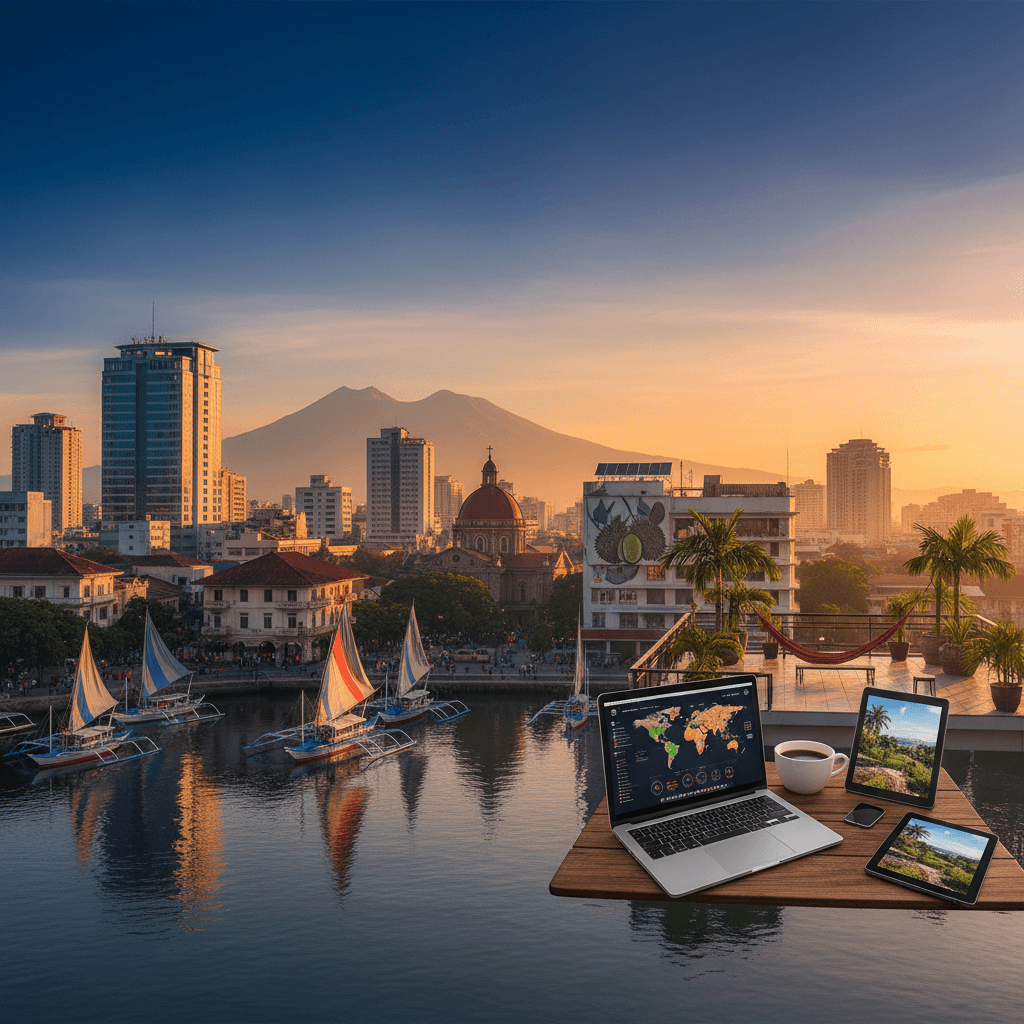
Davao City
🇵🇭 Philippines
The Vibe: Discipline Meets Island Chill
Davao City is a bit of an outlier in the Philippines. While Manila and Cebu can feel like a relentless assault on the senses, Davao operates at a lower frequency. It’s a place where the traffic actually follows the rules, the streets are remarkably clean, and there’s a palpable sense of order that nomads often find refreshing. Locals call it "Davao discipline," and it creates a safe, predictable environment that’s perfect if you’re looking to get your head down and work without the chaos of a typical Southeast Asian metropolis.
The emotional experience here is one of quiet confidence. You aren’t constantly on guard against scams, and the locals are genuinely friendly rather than transactional. It’s a city that feels lived-in and authentic, lacking the "tourist bubble" feel of places like Siargao or Boracay. You’ll spend your mornings in a modern cafe in Bajada and your weekends taking a 15 minute ferry to the white sands of Samal Island or hiking the foothills of Mount Apo. It’s that balance between urban utility and raw nature that keeps people sticking around longer than they planned.
Cost of Living
Your dollar goes significantly further here than in the capital. Most nomads find they can live a very comfortable life on $1,200 to $2,000 per month, though budget travelers can certainly scrape by on less if they stick to local markets and jeepneys.
- Budget ($800-$1,200): You’ll likely stay in a modest studio for around $300, eat $2 street food at Bankerohan Market, and use coworking spaces sparingly.
- Mid-Range ($1,200-$2,000): This buys you a nice 1BR condo in a building with a pool for $400 to $500, daily cafe visits, and regular Grab rides.
- Comfortable ($2,000+): You’re looking at upscale living in the best parts of Bajada, frequent dinners at spots like Jack’s Ridge for $20 to $30, and weekend private rentals.
Where to Set Up Base
Choosing a neighborhood depends on how much you value proximity to the "action," though even the busiest parts of Davao are relatively calm.
Bajada
- Best For: Nomads and solo travelers who want everything within walking distance.
- Pros: Home to the best coworking spaces like DevHub and plenty of high speed internet cafes.
- Cons: Rent is higher here, and the main J.P. Laurel Ave can get congested during rush hour.
Talomo
- Best For: Long term expats and families.
- Pros: Much quieter and more residential with lower housing costs (around $250 to $400 for a house or large apartment).
- Cons: You’ll depend heavily on the Grab app or a scooter to get to the city center.
Connectivity and Productivity
Internet in Davao has improved drastically. You can expect speeds between 50 and 100Mbps in dedicated workspaces. However, smart nomads always keep a backup. Grab a Globe or Smart SIM at the airport for about $10 and load it with a large data plan via the GCash app. It’s a lifesaver when cafe WiFi occasionally dips.
- DevHub Davao: Located in Bajada, it’s the go to spot for serious work at $8 a day. They have standing desks and a community of local developers.
- RainMakers: A more budget friendly option in Talomo at $3 a day.
- Fourth Street Cafe: A charming spot with strong WiFi if you prefer a less corporate atmosphere.
Safety and Practicalities
Davao is frequently cited as the safest city in the country. There is a strict ban on smoking in public and a 1:00 AM liquor ban, which means the nightlife is more about craft beers and quiet conversations than wild clubbing. If you need medical help, the Southern Philippines Medical Center is reliable, and the emergency number is 911, just like in the US.
For getting around, Grab is the gold standard for convenience, usually costing $2 to $5 per trip. If you’re feeling adventurous, the local jeepneys are only about $0.20 and are an iconic way to see the city. Just remember to respect the local customs; don’t jaywalk, and always "salamat" (thank you) your driver.
The Best Time to Go
The weather is tropical and humid year round, but the seasons matter for your weekend plans. The sweet spot is March to May, when the skies are clear and the rain is minimal. Avoid November and December if you don't like heavy tropical downpours, as these are the wettest months. Even in the rainy season, the city rarely faces the severe typhoons that hit the northern islands, making it a safe bet for year round productivity.
The Price of Discipline and Relaxation
Davao City occupies a unique sweet spot in the Philippines. It is significantly more affordable than Manila or Cebu, but it doesn't feel like a "budget" destination because of how well the city is managed. Most nomads find they can live a high quality life here for about $1,200 to $2,000 per month without much effort. If you are on a strict budget, it is entirely possible to get by on $800 to $1,200 by sticking to local markets and modest studio apartments.
The local economy rewards those who live like residents rather than tourists. You'll notice a distinct "Davao discipline" here; there is no jaywalking, smoking is heavily restricted, and the city feels remarkably safe even late at night. This orderliness makes your daily spending predictable, as there are fewer "tourist traps" or hidden costs compared to the islands.
Monthly Budget Breakdowns
- The Budget Tier ($800 - $1,200): This covers a basic studio in a residential area like Talomo for $250 to $300, plenty of street food from Bankerohan Market, and using jeepneys for transport at $0.20 a ride.
- The Mid-Range Tier ($1,200 - $2,000): Most digital nomads land here. It includes a modern 1-bedroom condo in Bajada for $400 to $500, regular Grab rides, a full-time coworking membership, and eating out at mid-range spots like Jack's Ridge.
- The Comfortable Tier ($2,000+): This allows for a premium high-rise condo, daily dining at upscale fusion restaurants, frequent weekend trips to Samal Island, and perhaps a private scooter rental for $150 a month.
Housing and Neighborhoods
Your rent will be your biggest variable. Most travelers recommend Bajada if you want to be in the heart of the action. It is the most walkable area and puts you within striking distance of the best cafes and coworking hubs, though you'll pay a premium for the convenience.
Bajada (Central)
- Rent: $300 to $500 for a modern studio or 1BR.
- Vibe: Urban, convenient, and close to DevHub.
- Trade-off: Heavier traffic and slightly higher noise levels.
Talomo (Residential)
- Rent: $250 to $400 for larger spaces.
- Vibe: Quiet, green, and popular with long-term expats.
- Trade-off: You will rely heavily on Grab or jeepneys to get into the city center.
Connectivity and Workspace Costs
While apartment WiFi can be hit or miss, the city's infrastructure is generally solid. Most nomads suggest getting a local SIM from Globe or Smart immediately. A 30GB data plan costs around $10 to $20 and serves as a reliable backup hotspot. If you need a professional environment, coworking prices are very reasonable.
- DevHub Davao (Bajada): Around $8 for a day pass. It is the go-to for standing desks and high-speed fiber.
- RainMakers (Talomo): A more budget-friendly option at $3 per day.
- Cafe Work: Fourth Street Cafe and STASH Coffee Co. are favorites for the price of a $3 latte. Just be aware that service in Davao can be relaxed, so don't expect your caffeine fix in a hurry.
Food, Transport, and Daily Life
Eating out is a highlight here. You can grab a filling meal at a local "carinderia" for $1 to $3, while a nice dinner at a mid-range Filipino fusion restaurant will run you $5 to $10. If you are craving high-end seafood or international cuisine, expect to pay $15 to $30.
Getting around is cheap. Grab is the most reliable way to move, with most city trips costing between $2 and $5. If you are feeling adventurous, the jeepney network is efficient and costs pennies. For healthcare, the city is well-equipped with facilities like the Southern Philippines Medical Center. A standard consultation is affordable, but it's always wise to have your own insurance for emergencies. If anything goes wrong, you can dial 911, a service Davao pioneered in the Philippines.
The Nomad Hub: Bajada
If you want to be where the action is, head straight to Bajada. This is the city's commercial heartbeat and the undisputed favorite for digital nomads who need to balance work with a social life. It feels more like a modern urban center than the rest of Davao, packed with shopping malls, high-rise condos, and most of the city's best workspaces.
- Vibe: Fast-paced, convenient, and very walkable.
- Work: DevHub Davao on J.P. Laurel Avenue is the go-to spot with $8 day passes and reliable standing desks.
- Rent: Expect to pay between $300 and $500 for a decent studio or one-bedroom condo.
- Pros: Everything is within a ten-minute walk; great cafe density.
- Cons: Traffic can get heavy during rush hour, and it's the priciest area in the city.
The Expat and Family Choice: Ecoland and Matina
Expats and those staying long-term usually gravitate toward Ecoland or Matina. These neighborhoods offer a much greener, quieter lifestyle compared to the central business district. You'll find more gated communities and spacious houses here, making it the top pick for anyone bringing kids or looking for a sense of community.
- Vibe: Residential, leafy, and relaxed.
- Highlights: Close to the Matina Town Square for live music and Jack's Ridge for dinners with a view of the city.
- Safety: Extremely high; these areas are known for being peaceful at night.
- Pros: More space for your money and better access to parks.
- Cons: You'll rely on Grab or jeepneys more often to get to the coworking hubs in the north.
The Budget-Conscious Solo Traveler: Downtown
For solo travelers who want to dive into the local culture and keep costs at a minimum, the Downtown area near Bankerohan Market is the place to be. It's gritty, authentic, and puts you right in the middle of Davao's famous street food scene. You won't find many luxury condos here, but you'll find the cheapest beds in town.
- Vibe: Energetic, crowded, and traditional.
- Food: This is the land of $1 to $3 meals. Don't miss the fresh durian and seafood at the local markets.
- Rent: Budget guesthouses can go for as low as $200 a month if you're willing to go basic.
- Pros: Unbeatable prices and easy access to public transport.
- Cons: It can be noisy and you'll need to keep a closer eye on your pockets in crowded markets.
The Long-Term Resident: Talomo
Talomo is where you go when you're done being a tourist and want to live like a local. It's a massive district that offers a middle ground between the price of downtown and the amenities of Bajada. It has its own growing ecosystem of cafes and even a solid coworking option for those who don't want to commute.
- Vibe: Suburban and unpretentious.
- Work: RainMakers offers a very affordable workspace at just $3 per day.
- Rent: Typical 1BR apartments range from $250 to $400.
- Pros: Very affordable housing and a diverse range of local shops.
- Cons: It’s a bit of a trek to the upscale malls or the ferry terminals for Samal Island.
Practical Neighborhood Tips
Most nomads find that staying in Bajada for the first month is the smartest move. It lets you find your feet while having 50 to 100Mbps internet speeds within reach. Once you're settled, you can scout Facebook Marketplace for long-term deals in Matina or Talomo. No matter where you land, use Grab for your first few trips; it usually costs between $2 and $5 to cross most of the city, which is a lifesaver while you're still learning the jeepney routes.
Davao City offers a surprisingly stable environment for remote work, especially if you compare it to the chaotic connectivity often found in more tourist heavy islands. While it doesn't have the sheer volume of spaces you'll find in Makati or BGC, the quality of what's available is high, and the local "Davao discipline" means you'll usually find people actually working rather than just socializing.
Internet Speeds and Connectivity
Most dedicated coworking spaces and modern cafes clock in between 50Mbps and 100Mbps. This is more than enough for video calls and heavy uploads. However, residential WiFi can still be a bit of a gamble depending on the building's infrastructure. Most nomads in Davao follow a simple rule: don't rely solely on your apartment's router.
Pick up a local SIM card immediately upon landing. Globe and Smart are the two main players. You can grab a card at the airport or any mall for about $10 and load it with a "Power Data" or "Unli Data" plan for roughly $20 per month. Using your phone as a mobile hotspot is the standard backup plan here, and it works remarkably well in central areas like Bajada.
Top Coworking Spots
If you need a professional setup with ergonomic seating and a community vibe, these are the go to locations:
- DevHub Davao: Located at the corner of J.P. Laurel Ave and Inigo St in Bajada, this is the gold standard for the city. It costs about $8 per day. They have standing desks, which are a rare find in the Philippines, and the crowd is a mix of local tech talent and international nomads.
- RainMakers: Situated in the Sazon Building on McArthur Highway in Talomo, this is a more budget friendly option at around $3 per day. It's a bit further from the city center but perfect if you've settled in the quieter residential areas.
Laptop Friendly Cafes
Davao has a thriving cafe culture where staying for a few hours with a laptop is generally accepted, provided you keep the coffee orders coming. Be aware that some spots lack 24 hour access, so you'll need to plan your shift accordingly.
- Fourth Street Cafe: This spot is a nomad favorite for its charming interior and consistently strong WiFi. It's a great place to knock out a few hours of focused work in the afternoon.
- STASH Coffee Co.: If you prefer a quieter atmosphere, STASH is the move. They have both indoor and outdoor seating, and they serve food and cocktails if your workday bleeds into happy hour.
Digital Nomad Community and Logistics
The nomad scene in Davao is smaller and more tight knit than in Canggu or Chiang Mai. You won't find a massive coworking event every night, but the people you do meet are usually serious about their projects. Most networking happens in Facebook groups like Digital Nomads Davao or through casual chats at DevHub.
For payments, download GCash or Maya. These fintech apps are used everywhere from high end malls to small local shops. You can link your bank account or top them up at 7-Eleven. It saves you from constantly hunting for an ATM that accepts international cards, though BPI and UnionBank are usually the most reliable for foreign withdrawals.
While the city is incredibly safe, it's worth remembering that it's a "daytime" city. Unlike Manila, the late night options for working are limited. If you're working a graveyard shift for a US or European client, you'll likely be working from your rental, so prioritize a place in Bajada or Ecoland where fiber internet is more common.
A Gold Standard for Safety
Davao City has earned a reputation as the safest major urban center in the Philippines, and it is a title the locals take seriously. Most nomads find the city exceptionally disciplined compared to the chaotic energy of Manila. You won't see the aggressive street solicitation or the "tourist trap" vibe common in other Southeast Asian hubs. The local government enforces strict ordinances, including a citywide smoking ban in public places and a liquor ban from 1:00 AM to 8:00 AM, during which the selling, serving, and drinking of alcoholic beverages is prohibited. While this means the nightlife is more subdued, it contributes to a secure environment where you can walk around comfortably even after dark.
Travelers often say the "Davao discipline" is palpable. Jaywalking is actually ticketed here, and taxis are famous for being honest; drivers will usually give you your exact change down to the last peso without you having to ask. While the city is very safe, it's still an urban environment. Expats recommend staying alert in crowded spots like the Bankerohan Market to avoid opportunistic pickpockets, and it's best to stick to well lit areas if you're exploring the outskirts of Talomo at night.
Healthcare Infrastructure
If you get sick or need a checkup, you're in good hands. Davao serves as the primary medical hub for the entire southern region of the Philippines. The Southern Philippines Medical Center (SPMC) is the major government facility, known for its reliable emergency services. For private care, many nomads head to Davao Doctors Hospital or Metro Davao Medical and Research Center. These private facilities offer modern diagnostic equipment and Western-style care at a fraction of the price you would pay in the US or Europe.
Most doctors speak excellent English, so explaining your symptoms won't be a struggle. A standard consultation with a specialist usually costs between $10 and $20. For minor issues, pharmacies like Mercury Drug and Watsons are everywhere. They are well stocked with international brands, though you should bring a physical prescription for any specialized maintenance medications to avoid hiccups at the counter.
Emergency Protocols
One of the most reassuring features of living here is the emergency response system. Davao was the first city in the country to implement a centralized 911 service, modeled after the United States system. Whether you need an ambulance, the fire department, or the police, dialing 911 from a local SIM or landline gets a remarkably fast response. Most nomads find this level of organization a huge relief when choosing a base for a few months.
Staying Healthy and Hydrated
The tropical climate is generally pleasant, but the humidity can be intense between June and January. Dehydration and heat exhaustion are the most common health complaints for newcomers. While the city government claims the tap water is safe to drink, most expats and locals still prefer bottled or purified water for drinking. You can get a 5 gallon blue jug delivered to your apartment for about $1.
Since you'll likely be spending time outdoors at places like Eden Nature Park or taking the 15 minute ferry to Samal Island, keep some bug spray handy. Mosquito borne illnesses like Dengue occur occasionally during the peak rainy months of November and December, so it's smart to use repellent if you're hanging out in garden cafes or near the forest.
Shortlist: Health and Safety Essentials
- Emergency Number: Dial 911 for all services.
- Top Private Hospital: Davao Doctors Hospital (Central location).
- Pharmacy Chains: Mercury Drug, Watsons (Open late, widely available).
- Water Safety: Stick to purified/bottled water for drinking; tap is fine for brushing teeth.
- Local Laws: No smoking in public; a liquor ban from 1:00 AM to 8:00 AM, during which the selling, serving, and drinking of alcoholic beverages is prohibited.
Getting Around the Crown Jewel of the South
Davao City is a bit of a geographical anomaly. It is one of the largest cities in the world by land area, but the urban core feels surprisingly manageable. Unlike the chaotic gridlock you will find in Manila, Davao operates with a sense of "disciplined chill." There is a strict no-smoking policy in public and a 30-60 kph speed limit that drivers actually follow, making the streets feel much safer for pedestrians and cyclists alike.
Public Transport: Jeepneys and Taxis
The backbone of local travel is the iconic Philippine jeepney. For about $0.20 (12 PHP) per ride, you can hop on these colorful trucks to traverse the main arteries like J.P. Laurel Avenue. If you are staying in Bajada or the Downtown area, they are the most efficient way to move like a local.
For a more private experience, taxis are everywhere and remarkably honest. Unlike other Southeast Asian hubs where you might have to haggle, Davao drivers almost always use the meter. A typical 15-minute cross-town trip will usually set you back about $2 to $4. If you prefer booking via smartphone, Grab is the go-to app here. It is reliable, transparent, and avoids any language barriers when pinpointing your drop-off at a coworking space like DevHub.
Two-Wheeled Freedom
If you want to dodge the peak-hour congestion around the malls, JoyRide is the local answer for motorcycle taxis. You can book a ride through their app for roughly $1 to $2 for short hops. While some nomads choose to rent scooters for around $5 to $7 a day, most stick to ride-hailing apps for the convenience of not having to find parking in busy districts like Matina or Ecoland.
Walkability and Daily Hubs
Davao is not a city where you will walk from one end to the other, but specific neighborhoods are quite pedestrian-friendly. Bajada is the prime example; you can easily walk between Gaisano Mall, various cafes, and your apartment without feeling like you are competing with heavy machinery. Ecoland is another great pocket for walking, especially if you enjoy green spaces and proximity to the coastal road.
Arrival and Island Escapes
Getting into the city from Davao International Airport (DVO) is straightforward. A taxi or Grab to the central business district takes about 20 to 30 minutes and costs between $5 and $10. If you are looking for a weekend break, the ferry terminal to Samal Island is just a short drive from the city center. The boat ride takes about 15 minutes and costs less than a dollar, giving you instant access to white sand beaches when the city heat gets too intense.
Transportation Quick Reference
- Jeepney: Best for budget travel on main roads. Cost: $0.20.
- Grab/Taxi: Best for safety and comfort. Cost: $2 to $5 per trip.
- JoyRide: Best for beating traffic. Cost: $1 to $3.
- Airport Transfer: Grab or white taxi. Cost: $5 to $10.
- Scooter Rental: Best for long-term flexibility. Cost: ~$150 per month.
Most nomads find that a mix of walking within their neighborhood and using Grab for longer distances provides the perfect balance of cost and convenience. Just remember that while the city is disciplined, the tropical sun is relentless; if your destination is more than a 10-minute walk away, you will probably want to opt for an air-conditioned ride.
The Linguistic Landscape
You won't have much trouble making yourself understood in Davao. English proficiency is remarkably high here, especially within the business districts of Bajada and the university zones. Most locals are functionally bilingual or even trilingual. You'll find that baristas at STASH Coffee Co. or staff at DevHub speak near-fluent English, making it one of the easiest cities in Southeast Asia for native English speakers to settle into without a massive language barrier.
While English is the formal language of instruction and government, the heart of the city beats in Cebuano (often called Bisaya). Even though Davao is in Mindanao, the local dialect is a unique blend often referred to as Davao-Tagalog. It's a mix of Cebuano, Tagalog, and a few English loanwords thrown in for good measure. Most nomads find that while they can get by with English, learning a few Bisaya phrases goes a long way in building rapport with market vendors at Bankerohan or jeepney drivers.
Key Phrases to Know
While you can navigate 90% of your day in English, using the local tongue shows respect for the "Davao discipline" the city is known for. Here are the essentials for your first week:
- Salamat: Thank you. (Universal and always appreciated).
- Maayong buntag: Good morning.
- Tag-pila? or Magkano?: How much? (Useful for street food or market stalls).
- Para: Stop. (Use this when you want to get off a jeepney).
- Lami: Delicious. (Say this after finishing a meal at Jack's Ridge).
Digital Communication and Connectivity
Staying connected is fairly straightforward, but seasoned nomads recommend a dual-SIM approach. The two major players are Globe and Smart. You can pick up a SIM card at the airport or any major mall like SM Lanang for about $10, which usually includes a generous data starter pack of 30GB or more.
Since apartment WiFi can be hit or miss depending on the building's infrastructure, most remote workers use their phones as mobile hotspots. Download the GCash or Maya apps immediately. These are the lifeblood of local commerce; you can use them to pay for your Grab rides, top up your data, or pay for dinner at mid-range restaurants. Most expats find that a monthly spend of $20 on data is more than enough for a reliable backup to the 50-100Mbps speeds typically found in coworking spaces.
Social Etiquette and Communication Style
Davaoeños are known for being friendly but more reserved and disciplined than their counterparts in Manila. There is a strong sense of civic pride here. Communication is generally indirect; people prefer to stay polite and avoid confrontation. If a service is slow at a cafe, a friendly smile and a gentle follow-up will get you much further than showing frustration.
Expect a "relaxed yet disciplined" vibe in conversations. People are happy to chat about local nature spots like Samal Island or Mount Apo, but they also appreciate the city's strict rules. Don't be surprised if locals politely remind you about the citywide smoking ban or the no-jaywalking ordinances. It is all part of the local charm that makes the city feel so safe.
Navigating Daily Interactions
For everything else, technology fills the gaps. While Google Translate is helpful for reading signs in more remote areas, you'll rarely need it for conversation. Most digital nomads find that the biggest hurdle isn't the language itself, but getting used to the local accent and the "Taglish" (Tagalog-English) blend used in casual settings. If you're ever in doubt, just ask. Locals are famously helpful and will usually go out of their way to ensure you're heading in the right direction.
The Tropical Rhythm
Davao City sits in a sweet spot geographically. Unlike Manila or Cebu, it is largely outside the direct path of the major typhoons that sweep through the northern Philippines. You'll deal with rain, but it's rarely the catastrophic kind. The city stays warm year round, with temperatures hovering between 25°C and 32°C (77-90°F). It is humid, but the proximity to the coast and the shadows of Mount Apo usually provide a decent breeze.
The year is split into two main seasons. The dry season runs from February to May, while the rainy season takes over from June through January. Even during the wet months, the rain often comes in short, heavy afternoon bursts rather than days of grey drizzle. This makes it easy to plan your deep work sessions around the downpours.
When to Book Your Flight
If you want the best possible weather for island hopping at Samal or hiking the trails of Mount Apo, aim for March to May. This is the peak of the dry season. The skies are consistently clear, and the sea is calm. It is the hottest part of the year, so you'll want to make sure your apartment in Bajada or Ecoland has high quality air conditioning.
August is another popular window for nomads. While it falls during the rainy season, the city comes alive for the Kadayawan Festival. It is a massive celebration of life and harvest. If you don't mind a few raindrops, the energy in the streets and the cultural showcases make the humidity much more bearable.
The Low Season Reality
The wettest months are typically November and December. You can expect daily showers and high humidity. While this might sound like a downside, many long term nomads actually prefer this time. The city is cooler, the dust is kept down, and the cafes like STASH Coffee Co. or Fourth Street Cafe feel even cozier when you're watching the rain from a window seat.
If you're planning a visit during the rainy season, keep these points in mind:
- Travel delays: Heavy rain can turn Davao's traffic into a standstill, especially on major arteries like J.P. Laurel Avenue.
- Outdoor plans: Keep your schedule flexible. Use the rainy afternoons for focused work at DevHub and save your Samal Island trips for the sunny mornings.
- Gear: A high quality umbrella and waterproof tech bag are non negotiable if you're commuting via jeepney or Grab.
Monthly Climate Breakdown
- January to March: Transition period. Rainfall is low to medium. Temperatures are slightly cooler, making it a very comfortable time for those new to the tropics.
- April to May: The peak dry season. Expect 32°C (90°F) days and very little rain. This is the best time for beach lovers and outdoor enthusiasts.
- June to October: The rainy season begins. Rainfall is high, but usually predictable. This is a great time for "monk mode" work sessions.
- November to December: The wettest months of the year. Expect frequent heavy showers and slightly lower temperatures around 29°C (84°F).
Most nomads find that Davao is a year round destination because of its "discipline." Even when the weather gets moody, the city's infrastructure and reliable Grab service mean you're never really stuck. Just avoid the July to October window if you're particularly sensitive to humidity or the occasional tropical storm system passing nearby.
The Vibe and Cost of Entry
Davao City is a bit of an outlier in the Philippines. It lacks the frantic, edge-of-your-seat energy of Manila, replacing it with a sense of order and safety that nomads find refreshing. Locals take pride in their "Davao discipline," which means you'll see people actually waiting for pedestrian lights and adhering to the citywide smoking ban. It is a place where you can carry your laptop through the street at night without checking over your shoulder every ten seconds.
Your budget goes remarkably far here. While prices fluctuate, most digital nomads living a mid-range lifestyle spend between $1,200 and $2,000 per month. This covers a comfortable condo, plenty of Grab rides, and eating out at solid mid-tier restaurants. If you are on a tighter budget, you can scrape by on $800 to $1,200 by sticking to local markets and studio apartments in residential areas.
- Budget Tier ($800-$1,200): Studio rent around $300, street food meals for $1 to $3, and jeepney commutes.
- Mid-range Tier ($1,200-$2,000): One-bedroom condo for $400, cafe meals for $5 to $10, and a full-time coworking membership.
- Comfortable Tier ($2,000+): Upscale 1BR for $600+, frequent dining at spots like Jack's Ridge, and weekend trips to Samal Island.
Where to Set Up Base
Most nomads gravitate toward Bajada. It is the city's commercial heart, packed with malls, cafes, and the best coworking infrastructure. You can walk to most things you need, though the traffic on J.P. Laurel Avenue can get thick during rush hour. Expect to pay a premium for the convenience here.
If you prefer a quieter, more suburban feel, look at Talomo or Ecoland. These areas are popular with long-term expats and families because they offer more green space and lower rents. The trade-off is the commute; you will rely heavily on Grab or a scooter to get into the city center for social events.
- Bajada: Best for short-term stays and solo nomads. High walkability but higher rent.
- Talomo/Matina: Best for peace and quiet. More affordable, but limited nightlife and farther from the action.
- Downtown: Best for budget travelers. It is crowded and noisy, but the street food at Bankerohan Market is unbeatable.
Internet and Productive Spaces
Reliable internet used to be a headache in Mindanao, but things have stabilized. Most cafes and dedicated workspaces offer 50 to 100Mbps. However, savvy nomads always carry a backup. Pick up a Globe or Smart SIM card at the airport or any mall for about $10 and load it with a large data plan via the GCash app. Using your phone as a hotspot is often more reliable than relying on apartment WiFi.
For a focused work day, DevHub Davao in Bajada is the go-to. It costs about $8 for a day pass and has the ergonomic setup you probably lack at your Airbnb. If you are in the Talomo area, RainMakers is a bargain at $3 a day. For a more casual vibe, Fourth Street Cafe and STASH Coffee Co. are nomad favorites with strong signals and great caffeine.
Getting Around and Staying Safe
Davao is famously safe. It holds a 10/10 safety rating from many travelers, and the local 911 emergency system is efficient. While you should still use common sense in crowded markets to avoid pickpockets, the general threat level is very low.
For transport, download the Grab app immediately. It is the safest and most transparent way to get around, with most city trips costing between $2 and $5. For a local experience, the jeepneys are iconic and cost only about $0.20, though they can be confusing for newcomers. If you're heading to the airport, a Grab will cost roughly $5 to $10 and take 20 to 30 minutes depending on the notorious Davao traffic.
Weather and Timing
It is tropical, so expect heat and humidity year-round. The best window to visit is March through May. This is the dry season when the weather is most predictable for island hopping or hiking Mount Apo. The rainy season kicks in around June and peaks in November and December. While Davao is generally outside the main typhoon belt that hits Luzon, heavy afternoon downpours are common during these months.
- March to May: Sunny and dry. Peak season for outdoor activities.
- June to October: Higher rainfall. Good for focused work indoors.
- November to January: Wettest months. Expect some humidity-related service delays.
Need visa and immigration info for Philippines?
🇵🇭 View Philippines Country GuideEasy Landing
Settle in, no stress