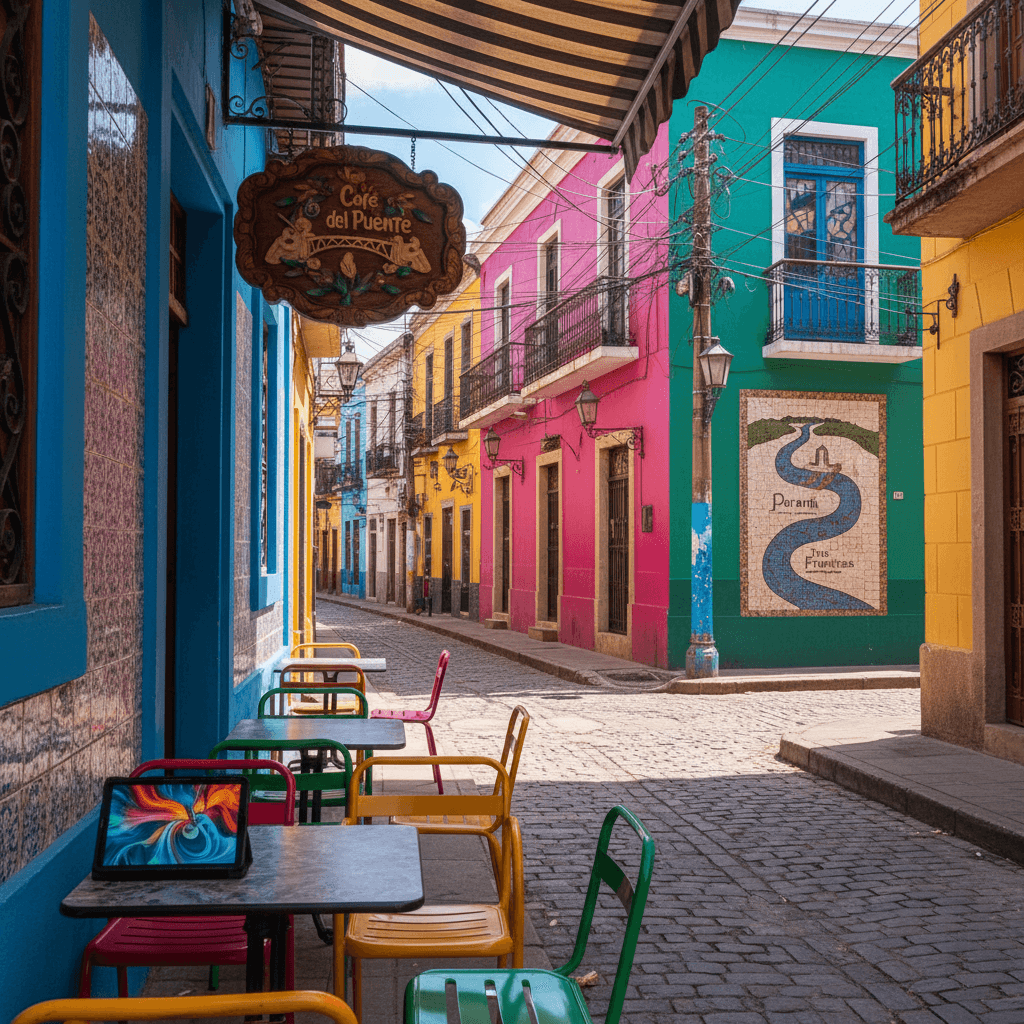
Ciudad del Este
🇵🇾 Paraguay
The Adrenaline of the Triple Frontier
Ciudad del Este isn't your typical digital nomad sanctuary. It doesn't have the manicured parks of Medellín or the coastal chill of Florianópolis. Instead, it feels like a sprawling, high-octane bazaar set against the backdrop of the subtropics. This is Paraguay's second city, a tax-free trade hub where the borders of Brazil, Argentina, and Paraguay collide. The energy here is frantic, commercial, and unapologetically raw. It's the kind of place you visit when you want to see the gears of South American commerce turning in real time.
During the day, the city center is a labyrinth of neon signs, massive shopping malls like Shopping del Este, and street vendors selling everything from high-end electronics to cheap empanadas. It’s loud, crowded, and slightly chaotic. But there’s a strange magnetism to it. You’ll hear a constant mix of Spanish, Portuguese, and Guarani, reflecting its status as a melting pot for traders and travelers alike. By late afternoon, the frenzied pace drops off significantly, leaving a much quieter, more industrial atmosphere as the day-trippers head back across the Friendship Bridge to Brazil.
A Base for the Bold
Most nomads treat Ciudad del Este as a strategic pitstop rather than a long-term home. It serves as a launchpad for the Iguazu Falls, which are just a 30-minute drive away, and the massive Itaipu Dam. While the urban infrastructure can feel a bit rundown, the cost of living is one of the lowest in the region. You're effectively trading aesthetic charm for deep discounts on gear and incredibly cheap daily expenses.
The vibe is utilitarian. You won't find a dedicated coworking space with artisanal coffee here; instead, you'll be working from local cafes in the center where the WiFi is surprisingly punchy, often hitting 25 Mbps. Expats who stick around are usually involved in the import-export trade, so the social scene is less about networking events and more about grabbing a cold beer at a local bar after the markets close. It’s gritty, it’s real, and it’s a total sensory overload.
The Practical Landscape
Living here requires a bit of street smarts. Petty theft is a reality in the crowded market districts, so you'll want to keep your wits about you and your laptop bag close. Most travelers recommend sticking to the city center during daylight hours and using apps like Uber or local taxis for transit after dark. If you need a break from the concrete, the proximity to nature is the city's greatest redeeming quality.
- The "Experience" Factor: It’s a city for those who enjoy the "wild west" side of travel. You aren't here for the museums; you're here for the deals, the nature, and the sheer intensity of the border.
- The Crowd: Expect to meet plenty of Brazilian shoppers and international traders, but few other remote workers. You'll likely be the only person with a laptop in the cafe.
- Language: English is rare. You’ll want a solid grasp of Spanish or at least a translation app that handles Guarani if you want to venture off the main shopping drags.
What It Costs
Your dollar goes incredibly far here. While prices fluctuate, the general consensus is that Ciudad del Este is significantly cheaper than Asunción and much more affordable than the Brazilian side of the border.
Estimated Monthly Costs
- Budget Tier: $800 to $1,200 per month. This covers a basic studio, plenty of street food like chipa and asado for $3, and using the local bus system which costs about $0.50 a ride.
- Mid-Range Tier: $1,500 to $2,000 per month. This buys you a modern one-bedroom apartment in a central area, regular dining at mid-range restaurants for $10, and frequent rideshares.
- Comfort Tier: $2,500+ per month. At this level, you’re looking at the best apartments available, upscale dining, and private transfers for day trips to the falls.
Ultimately, Ciudad del Este is for the nomad who is tired of the "curated" travel experience. It’s a place to recharge your bank account, upgrade your tech gear, and experience a unique corner of South America that doesn't care about being "Instagrammable." It’s honest, it’s messy, and it’s undeniably memorable.
The Price of the Triple Frontier
Ciudad del Este is a unique beast in South America. It's a tax-free haven where the economy is built on high-volume trade, which creates a strange paradox for your wallet. While electronics and designer goods are cheaper here than almost anywhere else on the continent, the lack of a traditional "nomad infrastructure" means you won't find the same standardized housing packages you'd see in Medellín or Buenos Aires. You're trading polished amenities for some of the lowest baseline costs in the region.
Most remote workers find that their dollar stretches significantly further here than in neighboring Brazil or Argentina. It’s an unpolished, raw kind of affordability. You aren't paying for "vibes" or curated experiences; you're paying for the essentials in a city that prioritizes business over aesthetics.
Monthly Budget Tiers
- The Budget Backpacker ($800 to $1,200): This covers a basic studio apartment or a long-term rate at a local guesthouse, plenty of street food like $2 chipa or empanadas, and using the local bus system. You'll be working from cafes and keeping your entertainment focused on free nature spots.
- The Mid-Range Nomad ($1,500 to $2,000): This is the sweet spot. It gets you a modern one-bedroom apartment in the city center with air conditioning, daily meals at decent sit-down restaurants, and regular rideshares or taxis to get around safely at night.
- The High-End Expat ($2,500+): At this level, you're living in the best available housing, likely with a pool or gym access, eating at the few upscale spots in town, and making frequent weekend trips to Foz do Iguaçu for better coworking spaces and shopping.
Housing and Utilities
Rent is your biggest variable. Because there isn't a massive surplus of luxury "nomad-ready" apartments, you'll likely rely on Airbnb or local Facebook groups to find a spot. A decent one-bedroom in a central, walkable area typically runs between $300 and $500. If you're looking for something more modern with reliable backup generators, expect to pay toward the higher end of that range.
Utilities are generally affordable. High-speed internet is usually included in short-term rentals, but if you're paying your own, a solid 25 Mbps plan will cost around $30 to $50 per month. Electricity can spike in the summer because the humidity is relentless and you will want that AC running 24/7.
Food and Dining
Eating out is where Ciudad del Este shines for the budget-conscious. The city is a melting pot, so you can find everything from Lebanese shawarma to traditional Paraguayan asado at very low price points.
- Street Food: You can grab a filling snack or a quick lunch for $2 to $4. Look for vendors selling mbeju or empanadas in the market areas.
- Mid-range Meal: A nice lunch or dinner at a cafe in the center will usually set you back $8 to $12, including a drink.
- Fine Dining: There aren't many "white tablecloth" spots, but the higher-end restaurants will cost $20 to $35 for a full multi-course meal with wine.
- Groceries: If you prefer to cook, local markets are incredibly cheap for produce. A weekly grocery run for one person typically averages $40 to $60.
Transport and Connectivity
Getting around is cheap but sometimes chaotic. Local buses are the standard for locals and cost about $0.50 per ride. They aren't the most comfortable, so many nomads prefer using apps like Uber or local taxis. A typical cross-town trip rarely exceeds $5 to $10.
For your phone, grab a SIM card from Tigo or Personal as soon as you arrive. You can get a starter data plan for $10 to $20 that will cover you for a month of moderate use. It's a small price to pay for having maps and translation apps ready while navigating the crowded market streets.
The Hidden Costs
Don't forget the "border tax" of living here. If you find the local scene too quiet, you'll likely spend money crossing into Brazil for better coworking offices or Argentina for steak dinners. Visa extensions at the local migration office usually cost between $50 and $100, depending on how long you've stayed and your nationality. It's a straightforward process, but it's a recurring expense to keep in your ledger.
Choosing where to plant your flag in Ciudad del Este is less about finding a cozy residential pocket and more about strategic positioning. It is a city defined by trade, meaning the urban layout is utilitarian. Most digital nomads treat the city as a high energy base for a few weeks rather than a long term home, so your choice of neighborhood usually comes down to how close you want to be to the action versus how much you value a quiet night of sleep.
Best for Nomads: The City Center (Centro)
If you are here to work, stay in the Centro. This is the heartbeat of the city where the most reliable WiFi lives. While there are no dedicated coworking spaces in the city yet, the center is packed with cafes that are accustomed to people lingering over laptops. Most nomads find that the convenience of being able to walk to a grocery store or a pharmacy outweighs the daytime chaos.
- Rent: Expect to pay between $300 and $500 for a decent one bedroom apartment or a serviced studio.
- Vibe: High energy and commercial. It is a maze of electronics shops and street vendors from sunrise to sunset.
- Connectivity: This is where you will find the most stable fiber optic connections, averaging around 25 Mbps in better buildings.
- Practical Tip: Stick to the well lit main drags. While it is safe during the day, the streets empty out quickly after the shops close, and it can feel a bit desolate.
Best for Solo Travelers: Near the Friendship Bridge
Solo travelers who want to maximize their time exploring the Triple Frontier often cluster near the bridge connecting Paraguay to Brazil. This area is perfect if you plan on frequent day trips to Foz do Iguaçu for better coworking options or want easy access to the bus terminals for Iguazu Falls. You will find a higher concentration of hostels and budget hotels here.
- Daily Costs: You can get by on $30 to $50 a day including a basic room, street food like empanadas for $2, and bus fare.
- Transport: Local buses are incredibly cheap at about $0.50 per ride, making it easy to hop between the border and the central markets.
- The Trade off: It is loud. The constant flow of motorcycles and trucks across the bridge creates a permanent hum, so bring a good pair of noise canceling headphones.
Best for Expats and Long Term Residents: The Outskirts and Gated Communities
Expats who are in Ciudad del Este for the long haul, often involved in the import export business, rarely live in the thick of the downtown mess. They tend to move further out toward the residential zones or even toward the Itaipu Dam area. These neighborhoods offer more space, actual yards, and a break from the humidity trap of the concrete center.
- Rent: Larger houses or modern apartments can go for $700 to $1,200 depending on the level of security and amenities.
- Lifestyle: You will need a car or a reliable taxi contact. Ride hailing apps like Uber are hit or miss here, so most long termers rely on local taxi numbers or their own wheels.
- Social Scene: This is where you will find the more upscale parrillas and steakhouse style dining, where a high end meal will cost you around $20.
A Note for Families
While Ciudad del Este is an incredible experience for a weekend, most families find it a tough sell for a long term base. The infrastructure is often run down, and the lack of green space in the city center can be taxing. Families looking for a permanent Paraguayan home usually prefer the Villa Morra or Recoleta neighborhoods in Asunción, which offer better international schools and parks. If you must stay in Ciudad del Este with kids, look for newer apartment builds on the periphery that offer 24 hour security and private play areas.
Regardless of where you land, remember that Ciudad del Este is a daytime city. By 7:00 PM, the frantic energy of the markets vanishes. Successful residents learn to do their shopping and socializing early, retreating to their WiFi and air conditioning when the sun goes down.
If you are looking for a sleek, glass-walled coworking hub with artisanal espresso and networking mixers, you won't find it here. Ciudad del Este is a gritty trade outpost where the "office" is usually a plastic chair in a crowded cafe or a corner table in a shopping mall food court. It is a place for getting work done between border crossings rather than building a long-term professional community.
Connectivity and Speeds
The internet situation is surprisingly decent for a city that feels like a giant open-air market. Most urban cafes and mid-range hotels offer stable fiber connections with average speeds hovering around 25 Mbps. This is plenty for Zoom calls and uploading files, though you might experience the occasional hiccup during peak afternoon trading hours when the city's infrastructure is under the most pressure. It is reliable enough for a short stay, but many nomads find the chaotic environment distracting for deep work.
The Cafe Scene
Since dedicated coworking spaces are non-existent in the city center, you will likely join the local traders and shoppers in the cafes. The City Center is your best bet for finding a workspace. You can walk between several decent spots in the commercial heart of the city, where the staff generally won't mind if you linger for a few hours over a coffee.
- Shopping Paris and Shopping Del Este: These modern malls are often the quietest places to work. The food courts have reliable WiFi and the air conditioning is a lifesaver during the humid summer months.
- Independent Cafes: Look for spots tucked away from the main electronics markets. While specific names change frequently in this fast-paced economy, the rule of thumb is to look for places with "WiFi" stickers in the window.
- Foz do Iguaçu Option: If you absolutely need a professional coworking environment, many nomads take the short trip across the Friendship Bridge to the Brazilian side. Foz do Iguaçu has a more developed digital nomad infrastructure and dedicated shared offices.
Mobile Data and SIM Cards
Do not rely solely on public WiFi. Local SIM cards are cheap and the 4G/LTE coverage is strong throughout the city. You can pick up a starter plan for $10 to $20 at the airport or any of the small kiosks in the markets. The three main players are Tigo, Personal, and Claro. Tigo is generally cited by expats as having the most consistent coverage across Paraguay, though Personal often wins on price for data-heavy packages.
Remote Work Logistics
Working here requires a bit of strategy. The city is a daytime economy; it is incredibly loud and busy from 8:00 AM to 4:00 PM and then gets very quiet, and sometimes sketchy, at night. If you have late-night meetings with clients in different time zones, make sure your accommodation has a solid backup plan or a strong cellular signal, as wandering the streets looking for a late-night cafe is not recommended.
Internet Costs and Specs
- Average Fiber Speed: 20 to 30 Mbps
- Mobile Data: Approximately $10 for a 10GB to 15GB starter pack
- Local Carriers: Tigo, Personal, Claro
- Coffee Price: $2 to $4 in a decent cafe
- Availability: High in the center, sparse on the outskirts
Most travelers treat Ciudad del Este as a 48 to 72-hour stopover. It is a great place to buy a new laptop or camera at a discount, test the local WiFi for a few days, and then move on to the more established nomad scenes in Asunción or across the border in Argentina or Brazil. It's a functional base, but not a comfortable one for the long haul.
Street Smarts and Personal Safety
Ciudad del Este has a reputation for being a bit of a Wild West, but for most nomads, the reality is more about being alert than being in danger. The city center is a high energy commercial zone where the main risk is petty theft. Pickpockets thrive in the dense crowds around the Friendship Bridge and the primary market streets. Keep your phone in your front pocket, leave the expensive watch at your accommodation, and carry only the cash you need for the day.
The city undergoes a dramatic shift once the shops close. While the daytime is frantic and crowded, the streets empty out quickly after dark. Expats generally recommend avoiding the downtown market areas and the bridge vicinity at night. If you're heading out for dinner or drinks, use a radio taxi or a ride hailing app rather than walking through quiet, dimly lit side streets. Stick to well populated areas and you'll find the environment manageable.
If you run into trouble, the emergency number is 911. For administrative issues like visa extensions or lost documents, the local migration office is located right in the city center. Expect to pay between $50 and $100 for basic visa renewals or stay extensions. Most travelers find the local police presence visible but primarily focused on traffic and commercial security.
Healthcare Infrastructure
Medical facilities in Ciudad del Este are functional but basic compared to what you'll find in Asunción or across the border in Brazil. For minor ailments, the city is packed with farmacias (pharmacies). These are often open late and pharmacists can provide over the counter advice and medication for common travel issues. You'll find plenty of these around the Shopping Paris and Shopping China areas.
For more serious concerns, there are regional hospitals in the city, but they can be crowded and may have limited English speaking staff. If you have a significant medical emergency, many expats choose to cross the bridge into Foz do Iguaçu, Brazil, where the private healthcare facilities are generally more modern. For long term stays, it's wise to have a robust international health insurance policy that covers medical evacuation to Asunción or São Paulo for specialized care.
Nomad Health Essentials
- Water Safety: Do not drink the tap water. Stick to bottled water, which is cheap and available at every corner kiosk for about $0.50.
- Air Quality: The city center can get quite dusty and exhaust heavy during peak trading hours. If you have respiratory sensitivities, consider staying in the quieter residential outskirts.
- Vaccinations: While no specific shots are mandatory for entry, being up to date on Hepatitis A and Typhoid is standard advice for the region. If you're heading into the nearby rainforests or Iguazu Falls, mosquito repellent is your best friend to ward off Dengue.
Practical Safety Checklist
- Digital Security: Use a VPN when working from cafes in the center. While the WiFi is generally reliable at 25 Mbps, public networks in high traffic trade zones can be targets for data skimming.
- Cash Handling: ATMs are plentiful in the malls. Use the ones located inside Shopping del Este or Monalisa rather than standalone machines on the street for better privacy and security.
- Document Backups: Keep digital copies of your passport and entry stamp on your phone. Local authorities occasionally conduct spot checks in the border zone.
Getting Around Ciudad del Este
Navigating Ciudad del Este is an exercise in managing chaos. The city center is a high energy grid of narrow streets, overflowing markets, and constant movement. While it feels overwhelming at first, the layout is actually quite compact. If you are staying in the central district to be near the cafes and shopping hubs, your own two feet are usually the most efficient way to get from a morning work session to a late lunch.
Public Buses
The local bus system is the backbone of the city, though it is definitely more functional than comfortable. These colorful, often aging vehicles crisscross the city and provide the most affordable way to move between the center and the outskirts. You do not need a transit card; just have some local currency ready. Buses cost roughly $0.50 per ride, making it one of the cheapest transit options in South America. If you are heading toward the Friendship Bridge to cross into Brazil, look for buses marked "Foz" or "Internacional."
Ride-Hailing and Taxis
Unlike Asunción, where Uber is the undisputed king, ride-hailing in Ciudad del Este can be a bit hit or miss. Uber exists, but drivers are less frequent, especially during peak market hours when traffic comes to a standstill. Most expats and travelers rely on traditional taxis. You will find them clustered near the major shopping malls like Shopping Paris or Shopping del Este. Always negotiate the fare before you get in, as meters are rarely used. A typical short hop across the center should run you between $5 and $8, while a trip to the Guarani International Airport (AGU) will likely cost between $20 and $30 depending on your haggling skills.
The Cross-Border Shuffle
Many nomads based here eventually realize that the best coworking spaces are actually across the river in Foz do Iguaçu, Brazil. Crossing the Friendship Bridge (Puente de la Amistad) is a daily ritual for many. You can walk across in about 15 to 20 minutes if the weather isn't too punishing, or take a dedicated cross-border bus. If you are taking a taxi across, be prepared for significant delays during the middle of the day when shoppers are moving goods. If you just need to get across quickly, local motorcycle taxis are a popular, albeit daring, choice for weaving through the gridlocked bridge traffic.
Walking and Safety
The city center is highly walkable, but you need to stay alert. The sidewalks are often uneven and crowded with street vendors, electronics displays, and shoppers. Most nomads recommend doing your walking during daylight hours. Once the shops close and the shutters go down around 5:00 PM or 6:00 PM, the downtown area empties out and becomes significantly less safe. If you are heading out for dinner or a drink at night, skip the walk and call a taxi or an Uber directly to your door.
Practical Transport Tips
- Guarani International Airport (AGU): Located about 20km from the center. Taxis are the most reliable way to get there, but allow at least 45 minutes for travel due to unpredictable traffic.
- Motorcycle Taxis: These are everywhere near the bridge. They are fast and cheap, but they don't always prioritize safety. Use them at your own risk.
- Traffic Peaks: Avoid moving across the city between 8:00 AM and 10:00 AM or 4:00 PM and 6:00 PM. The logistics of a trade hub mean trucks and vans dominate the roads during these windows.
- Navigation: Google Maps is generally accurate for street layouts, but don't rely on it for bus schedules. Asking a local "Donde para el bus para...?" is still the most effective method.
The Linguistic Landscape
In Ciudad del Este, your ears will be met with a constant, rhythmic blend of Spanish and Guarani. While Spanish is the language of business and bureaucracy, Guarani is the soul of the street. It is an official language and isn't just a dialect; it is a foundational part of the local identity. You will often hear people speaking Jopara, a fluid mix of both languages that shifts depending on who is talking and how much coffee they have had.
Because of the city's unique position on the border, Portuguese is the unofficial third language. The constant flow of shoppers from Brazil means most vendors in the central markets are functionally trilingual. If you speak basic Portuguese, you will actually find it easier to get by here than in Asuncion. However, English proficiency is low. Outside of high end hotels or the occasional electronics flagship store like Casa Nissei, don't expect much English. You will need a translation app and a good sense of humor to navigate daily life.
Essential Phrases for Your Kit
While everyone understands standard Spanish, throwing in a bit of Guarani or local slang goes a long way in building rapport with vendors and cafe owners. It signals that you are more than just a day tripper from the falls.
- Mba'éichapa? (Guarani): How are you? Use this instead of "Hola" to see an immediate smile.
- Iporã! (Guarani): Good or fine. The standard response to the greeting above.
- Cuanto cuesta?: How much? You will use this constantly in the markets.
- WiFi contraseña?: WiFi password? Most cafes are happy to share if you are buying a chipa or a coffee.
- Gracias, tranqui: A very Paraguayan way to say "No thanks, I'm good."
Staying Connected
For a city that feels a bit chaotic, the digital infrastructure is surprisingly solid. You won't find dedicated coworking spaces in Ciudad del Este yet, so your "office" will likely be a cafe in the city center. Most of these spots offer speeds around 25 Mbps, which is plenty for Zoom calls or uploading files. If you need a more professional setup, many nomads take the short trip across the bridge to Foz do Iguaçu in Brazil for the day.
For mobile data, do not rely on international roaming; it is expensive and spotty. Grab a local SIM card as soon as you arrive. The three main players are Tigo, Personal, and Claro. You can find their kiosks in almost any shopping mall or near the Guarani International Airport.
- Tigo: Generally considered to have the best coverage across Paraguay.
- Personal: Often has the most aggressive data promos for prepaid users.
- Cost: A starter SIM with a decent data pack usually runs between $5 and $10.
- Registration: You will need your passport to register the SIM legally at an official store.
Communication Tools and Apps
Since English is rare, Google Translate is your best friend. Be sure to download the Spanish offline dictionary. While Guarani support is improving, it is still hit or miss, so stick to Spanish for the app. For logistics, WhatsApp is the undisputed king. Whether you are messaging an Airbnb host, checking if a shop is open, or trying to find a local fixer, everyone uses it. If a business has a phone number listed, they expect a WhatsApp message, not a cold call.
For getting around, Uber is available but can be sparse during peak market hours. Many locals prefer Muv, a homegrown Paraguayan ride hailing app that often has better availability in the downtown core. Always confirm your destination in the app to avoid language barriers with the driver regarding directions.
The Subtropical Reality
Ciudad del Este sits in a humid subtropical zone, which means you're going to experience a lot of moisture and some serious heat if you time your visit wrong. The city doesn't really do "mild" in the way Europeans or North Americans might expect. Instead, it swings between heavy, tropical downpours and intense, sticky sunshine.
The summer months, stretching from December through February, are notoriously brutal. Temperatures regularly climb between 25°C and 35°C (77°F to 95°F), but the humidity makes it feel significantly hotter. This is also the peak of the rainy season. If you're here during this window, expect sudden afternoon thunderstorms that can turn the hilly market streets into temporary streams. Most nomads find the combination of the chaotic crowds and the sweltering heat a bit too much for productivity.
The Sweet Spot: May to September
If you have the flexibility, aim for the Paraguayan winter. From May to September, the air clears up and the thermometer settles into a much more manageable range of 15°C to 25°C (59°F to 77°F). The humidity drops, making those long walks across the Friendship Bridge or through the sprawling electronics markets actually enjoyable rather than an endurance test.
July and August are particularly pleasant. You might even need a light jacket for the evenings, as temperatures can occasionally dip toward 10°C (50°F) when a cold front pushes up from the south. This is also the driest part of the year, which is vital if you're planning to head out to the nearby natural wonders.
Timing Your Sightseeing
Since Ciudad del Este is the primary gateway to Iguazu Falls and the Itaipu Dam, your weather choices impact your photos and your comfort. Travelers often recommend visiting in May or June. During this time, the falls are usually flowing with impressive volume from the summer rains, but you won't be melting in the jungle heat while standing on the viewing platforms.
- Best for blue skies: June and July offer the most consistent sun and the least rain.
- Best for the Falls: April and May provide a great balance of high water volume and cooling temperatures.
- Worst for walking: January and February are the months to avoid if you hate sweating through your clothes by 10:00 AM.
What to Pack
Because of the humidity, quick-dry fabrics are your best friend here. Even in the "dry" season, a stray shower isn't uncommon. If you're visiting during the summer, prioritize breathable cotton and a high-quality umbrella. For those planning to stay through the winter months, layering is key. The transition from a chilly, damp morning to a bright, warm afternoon happens fast.
Expats who spend significant time in the region suggest keeping an eye on the weather apps specifically for Foz do Iguaçu or Puerto Iguazú as well. The microclimate around the triple border can be unpredictable, and a storm hitting the Brazilian side will almost certainly reach the Paraguayan markets within the hour. If you see the sky turning a deep purple over the Parana River, it's time to head inside a cafe and wait it out with a cold tereré.
Connectivity and Tech Setup
While Ciudad del Este doesn't have a dedicated coworking scene yet, you won't be left in the dark. Most digital nomads find the WiFi in central cafes surprisingly reliable, with speeds often hitting 25 Mbps. It's enough for Zoom calls and general remote work, though you might want a backup for heavy uploads.
For mobile data, grab a SIM card as soon as you arrive. Tigo and Personal have the best coverage in the city. You can pick these up at the airport or various kiosks in the market area for about $10 to $20, which usually includes a generous data starter pack. If you find yourself needing a professional office environment, many expats take the quick trip across the Friendship Bridge to Foz do Iguaçu, Brazil, where coworking spaces are more established.
Safety and Street Smarts
The city's reputation is a bit of a mixed bag. During the day, the shopping district is a high energy maze where the biggest threat is a quick fingered pickpocket. Keep your phone in your front pocket, don't flash expensive camera gear, and stay alert in heavy crowds. Travelers often say the city feels like a different world once the shops close; the streets empty out quickly and the vibe gets noticeably sketchier.
Stick to the well lit central areas and avoid the outskirts or the bridge zones after dark. If you need to get home late, don't walk. Use a taxi or a ride hailing app to get door to door. Healthcare is basic but functional for minor issues. There are pharmacies on almost every corner in the center, but for anything serious, you'll likely want to head to Asunción or across the border to Brazil.
Getting Around the Triple Frontier
The city center is walkable if you don't mind dodging shoppers and street vendors. For longer distances, local buses are the way to go at just $0.50 per ride. They aren't fancy, but they'll get you where you're going. Taxis are everywhere, but they rarely use meters, so always negotiate your fare before you get in.
- Guarani International Airport (AGU): Located about 20km from the center. A taxi or private transfer will run you between $20 and $30.
- Cross-border travel: Crossing to Brazil or Argentina is common for day trips. Just keep your passport handy and be prepared for some traffic on the bridge.
- Ride-hailing: Uber is available but can be sparse compared to larger cities. Local taxi stands are often more reliable during peak market hours.
Money and Costs
Paraguay is famously affordable, and Ciudad del Este is no exception. Your dollar goes a long way here, especially if you're eating like a local. Street food like empanadas or asado will only set you back $2 to $4, while a solid mid range meal is usually under $12.
- Budget Living: $800 to $1,200 per month covers a basic studio and plenty of local eats.
- Mid-Range: $1,500 to $2,000 per month gets you a modern apartment in the center and more frequent dining out.
- Comfortable: $2,500+ per month allows for upscale housing, private transport, and regular weekend trips to the falls.
Banking is straightforward if you're looking at residency, which is a popular move for nomads due to the easy requirements. For daily spending, carry some local Guarani for markets, though many larger electronics stores gladly accept US Dollars or Brazilian Reais.
Language and Culture
Spanish and Guarani are the local tongues. While you'll hear Portuguese everywhere due to the Brazilian shoppers, English proficiency is quite low. Learning basic phrases for "How much?" or "Where is the bathroom?" is pretty much mandatory. Google Translate is your best friend here, especially the offline mode for Guarani which can help you connect with locals in a way most tourists don't bother to do.
Need visa and immigration info for Paraguay?
🇵🇾 View Paraguay Country GuideWild Card
Expect the unexpected