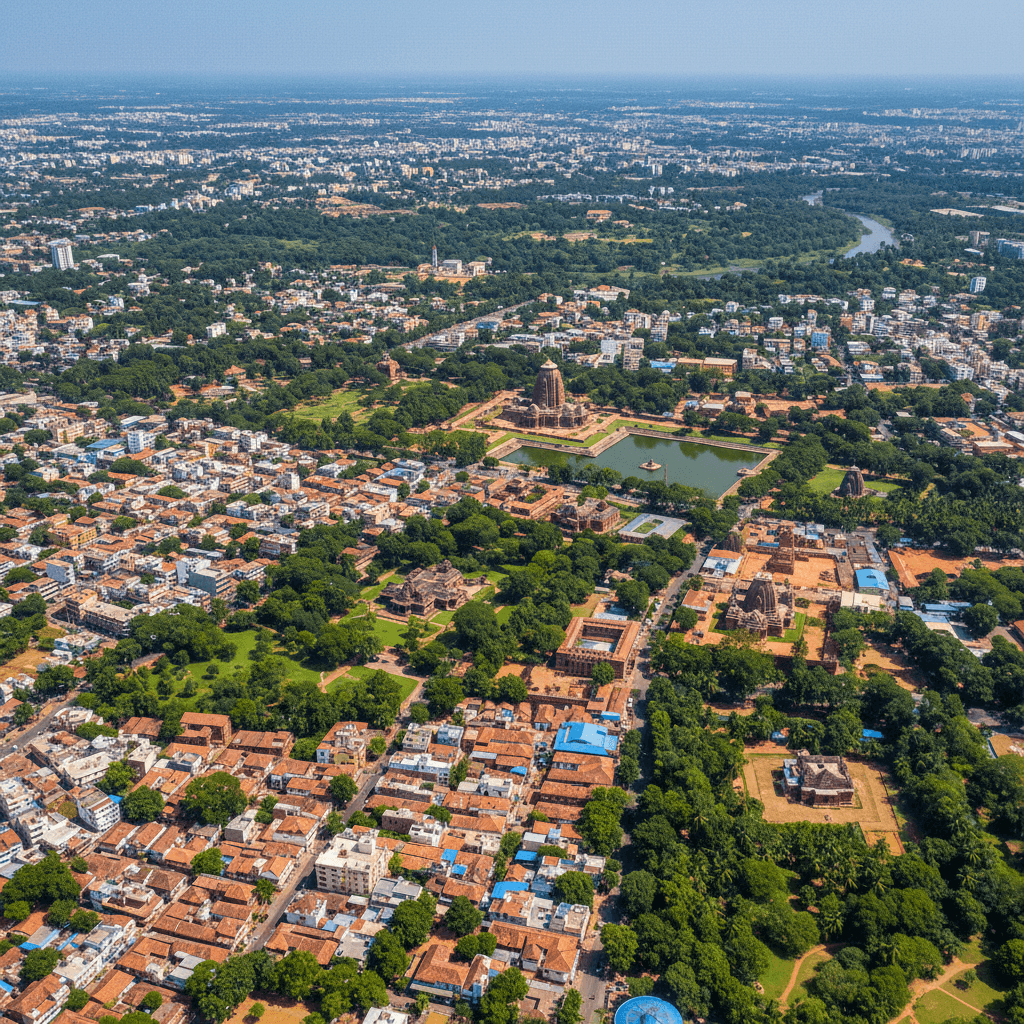
Bhubaneswar
🇮🇳 India
The Temple City Transition
Bhubaneswar occupies a strange, quiet space in the Indian nomad circuit. While the masses flock to the chaos of Bangalore or the beaches of Goa, this city remains largely under the radar. It is a place where ancient stone carvings meet a surprisingly orderly urban layout. You will feel the weight of its 2,000 year history immediately, but you will also notice something rare for an Indian capital: breathing room. It does not demand your energy; it lets you keep it.
The vibe here is decidedly mid tempo. It is not a party town, and it is not a high pressure tech hub. Instead, it feels like a city in a state of deliberate growth. For nomads who find the sensory overload of Delhi or Mumbai exhausting, Bhubaneswar is a palate cleanser. You can spend your morning on a Zoom call and your afternoon walking through the Udayagiri and Khandagiri Caves without fighting a wall of people. It is a city that rewards the patient traveler who prefers a quiet evening at a local park over a crowded nightclub.
The Digital Infrastructure
Let's be realistic about the setup. This is a frontier destination for remote workers. You are not going to find a dozen high end coworking spaces with artisanal coffee on every corner. However, the basics are solid. Internet speeds generally hover around 75 mbps in modern apartments and hotels, though some older areas might dip as low as 12 mbps. It is vital to test the connection before committing to a long stay.
The cost of living is one of the biggest draws. Most nomads find they can live comfortably on $900 to $940 per month. This covers a decent apartment, daily meals out, and local transport. It is significantly more affordable than the Tier 1 Indian cities, giving you a much higher quality of life for your dollar. You will likely be one of the few expats in your neighborhood, which means you will get plenty of curious stares, but also an incredible amount of genuine hospitality.
What It Feels Like to Live Here
Living in Bhubaneswar feels like being let in on a secret that hasn't quite gone viral yet. The city is known as the Temple City for a reason; there are hundreds of them, ranging from tiny roadside shrines to the massive Lingaraj Temple complex. The spiritual atmosphere is pervasive but not overbearing. It adds a layer of calm to the daily grind that you won't find in more commercialized hubs.
The climate can be a challenge. Temperatures often hit 35°C (95°F), and the humidity during the monsoon can be intense. You will find yourself planning your day around the heat, doing your deep work in the air conditioned mornings and emerging only when the sun begins to dip. It is a city that follows the rhythm of the weather. When the evening breeze finally kicks in, the local parks and food stalls come alive with families and students, creating a communal energy that is easy to slip into.
The Practical Reality
If you are looking for a pre packaged nomad community with weekly meetups and networking events, you might find Bhubaneswar isolating. There is no established "nomad scene" here. You will have to be proactive about making friends, likely through local interest groups or by frequenting the few modern cafes that have started popping up in the newer parts of town. It is a destination for the self reliant nomad who wants to disappear into a local culture rather than live in an expat bubble.
- Daily Pace: Slow to moderate. Everything closes earlier than you would expect.
- The "X" Factor: The proximity to Puri and Konark makes for incredible weekend escapes to the coast.
- Safety: Generally regarded as very safe, with a lower crime rate than most major Indian metros.
- Language: Odia is the primary tongue, but English is widely understood in business and academic circles.
Ultimately, Bhubaneswar is for the nomad who is tired of the "same old" destinations. It is for the person who wants to see ancient architecture every time they go for a grocery run and who values a low cost of living over a high density of bars. It is raw, it is authentic, and it is waiting for people to figure out it exists.
The Bottom Line
Bhubaneswar is one of those rare spots where your dollar stretches incredibly far, even by Indian standards. It is significantly cheaper than hubs like Bangalore or Mumbai, making it a solid choice if you are looking to burn through work projects without burning through your savings. Most nomads can live comfortably here on a budget of $900 to $950 per month. This covers a private apartment, eating out frequently, and a few weekend trips to nearby coastal spots.
Housing and Neighborhoods
The city layout is organized into sectors, and you will want to stick to the northern and central areas to stay close to reliable infrastructure. Rent is the biggest variable, but it rarely feels like a burden.
- Nayapalli and Jayadev Vihar: These are the prime spots for expats and remote workers. You are close to the major malls and better cafes. A modern one bedroom apartment here typically runs between $250 and $350 per month.
- Patia: This is the student and tech hub. It is younger and more energetic, with plenty of quick service restaurants. You can find decent studio setups or shared apartments for $180 to $250.
- Short Term Stays: If you are just passing through, mid range hotels and guesthouses cost around $25 to $40 per night.
Food and Dining
Eating is a highlight here because the prices are so low you rarely have to check the menu. Local Odia cuisine is delicious and incredibly affordable, while international options are concentrated in the malls.
- Local Meals: A full traditional thali at a local spot like Dalma will cost you about $3 to $5. It is plenty of food for one person.
- Mid Range Dining: A nice dinner for two at a place like Michael's Kitchen or a restaurant in the Esplanade One Mall usually totals around $15 to $22.
- Coffee: A latte at a chain like Blue Tokai or Cafe Coffee Day costs about $2.50 to $3.50.
- Groceries: If you prefer to cook, a weekly run to the market for fresh produce and staples will rarely exceed $30.
Connectivity and Workspace
Internet reliability can be a bit of a mixed bag. While some areas report speeds of 75 mbps, others struggle to hit 12 mbps. It is vital to test the Wi-Fi before signing a lease. Most nomads rely on mobile hotspots as a backup. A local SIM card with a heavy data plan from Jio or Airtel is a must and costs less than $10 per month.
Coworking spaces are beginning to pop up in the Patia and Chandrasekharpur areas. Expect to pay around $80 to $110 for a monthly hot desk. These spots are your best bet for meeting other professionals since the nomad community here is still quite small.
Transportation
Getting around is simple if you use the right apps. Avoid haggling with street rickshaws and stick to technology. Uber and Ola are the standard here for both cars and auto rickshaws. A typical cross town ride in an auto rickshaw costs about $1.50 to $3. For longer distances, the Mo Bus city service is efficient and very cheap, with most fares under $0.50.
Daily Essentials
- Gym Membership: A decent local gym costs about $20 to $35 a month.
- Beer: A pint at a local bar is roughly $3 to $5 depending on the brand.
- Laundry: Professional wash and fold services usually charge by the piece, costing roughly $5 to $8 for a large week's worth of clothes.
The Professional Crowd: Saheed Nagar and Unit IX
If you need to be near the action, Saheed Nagar is the closest you will get to a central business district. It is the city's commercial heartbeat, packed with coaching centers, small tech offices, and the most reliable fiber internet connections in town. You will find most of the local coworking spots here, like WorkZpace or Innova8, where a day pass usually runs around $5 to $7.
- Rent: Expect to pay $250 to $400 for a decent serviced apartment.
- Vibe: Fast paced by local standards, very walkable, and full of students.
- Best for: Nomads who prioritize high speed internet and networking.
Expats often lean toward Unit IX because it balances central access with a bit more breathing room. It is close to the major government buildings and regional headquarters, so the infrastructure is better maintained than in the outskirts. You will find better grocery options here and a few higher end cafes where you can actually get a decent espresso.
The Lifestyle Seekers: Patia and Kiit Road
Patia is where the younger, more globalized crowd hangs out. Since it is home to major universities and IT parks like Infocity, the neighborhood has a distinct energy that the older parts of the city lack. You will find plenty of cafes like Bocca Cafe or Big Cup Cafe that are friendly to laptop users. This is also the best place to find modern high rise apartments with gyms and power backup, which is a lifesaver during the humid summer months.
- Rent: Modern 1BHKs go for $200 to $350 depending on the building amenities.
- Vibe: Youthful, trendy, and packed with late night food joints.
- Best for: Solo travelers and younger nomads looking for a social scene.
The main strip along Kiit Road is where you will do most of your socializing. It has a high concentration of international food chains and local boutiques. While it can get noisy, the convenience of having everything from a 24 hour pharmacy to a CrossFit gym within a ten minute walk makes it the top choice for most long term visitors.
Quiet Comfort: Jayadev Vihar and Nayapalli
Families and expats who want a quieter life usually head to Jayadev Vihar. It is centrally located but tucked away from the main traffic arteries. You are right next to Pal Heights mall for your shopping needs and close to Ekra Haat, which is a great spot for evening walks and picking up local crafts. The streets are wider here, and there is significantly more greenery than in the dense blocks of Patia.
- Rent: Large 3 bedroom family homes can be found for $450 to $600.
- Vibe: Residential, green, and established.
- Best for: Families and slow travelers who want a "neighborhood" feel.
Nayapalli is another solid choice for those who want a local experience without the chaos. It is home to the ISKCON temple and several parks. Finding a standalone house with a garden is much easier here than in the newer northern developments. Just keep in mind that you will likely need to use Ola or Uber to get to the coworking spaces in Saheed Nagar, though a ride rarely costs more than $2 or $3.
Budget and Logistics
Most nomads find that Bhubaneswar is incredibly affordable if you eat local. A solid meal at a place like Dalma will cost you about $4, while a coffee in a trendy Patia cafe is around $2. For transport, stick to the Mo Bus system for cheap commutes, or use the Rapido bike taxi app if you are in a rush and traveling solo. It is the fastest way to cut through the afternoon congestion around Vani Vihar.
Making the Connection
Bhubaneswar occupies a unique spot on the Indian nomad map. It isn't a high speed tech hub like Bangalore, but it provides a surprisingly stable environment for those who want to escape the chaos of the bigger metros. You'll find that ACT Fibernet and JioFiber have blanketed the city with reliable fiber optics. Most decent apartments and hotels easily clock speeds between 50 Mbps and 100 Mbps, which is plenty for heavy Zoom calls or uploading video content.
Mobile data is your best friend here. Grab a Jio or Airtel SIM card as soon as you land. For about $4 to $7, you can get a monthly plan that gives you 2GB of 5G data per day. It works perfectly as a hotspot backup if the power goes out, which happens occasionally during the monsoon season.
Top Coworking Spots
The coworking scene is concentrated around the Saheed Nagar and Patia districts. These areas are the heart of the city's student and startup population, so the vibe is energetic but professional.
- O-Hub: This is a government backed incubator in the IDCO Info City area. While it is more geared toward startups, it is the center of gravity for the local tech community. It is a fantastic place to network if you are looking to connect with Indian developers or founders.
Coffee Shop Offices
If you prefer a more relaxed atmosphere, the cafe culture in Bhubaneswar is growing fast. Most nomads gravitate toward Patia because the cafes there are used to people staying for a few hours with a laptop.
Bocca Cafe in Master Canteen or Patia is a staple. They have decent Wi-Fi, plenty of power outlets, and the coffee is actually good. A latte will cost you about $2.50. Another solid option is Coffee Day Square, which is a bit more upscale and quieter than your average Starbucks, making it easier to focus.
Practical Realities
While the infrastructure is solid, you need to be prepared for the pace of life. Bhubaneswar is a Tier 2 city, so don't expect 24/7 coworking hubs or massive nomad meetups. Most spaces operate on standard business hours, typically 9:00 AM to 8:00 PM. If you are working for a company in a Western time zone, you'll likely be working from your rental in the evenings.
Power outages used to be a headache, but most modern office buildings and upscale apartments now have 100 percent power backup. Always ask your landlord or the coworking manager specifically about "power backup for Wi-Fi" to ensure you don't drop out of a meeting during a switchover.
- Average Coworking Day Pass: $4 to $6
- Monthly Dedicated Desk: $65 to $85
- Home Fiber Internet (100 Mbps): $12 per month
- Coffee at a "Work Friendly" Cafe: $2 to $3
Staying Safe in the Temple City
Bhubaneswar generally feels much calmer than the chaotic energy of Delhi or Mumbai. It has a reputation for being one of the safer tier two cities in India, especially for solo travelers. Most locals are incredibly helpful, though you might deal with some curiosity or staring if you look like an obvious outsider. It is a conservative city at heart, so keeping a low profile and dressing modestly helps you blend in and avoid unwanted attention.
Street crime is rare, but petty theft can happen in crowded spots like the Lingaraj Temple area or the busy markets of Unit 2. Keep your phone and wallet secure in these zones. After dark, the city gets quiet fairly early. Stick to well lit areas like Saheed Nagar or Patia if you are out late. Public transport like the Mo Bus service is reliable and safe, but for late night trips, stick to Uber or Ola so your ride is tracked.
The biggest safety hurdle is actually the traffic and the heat. Walking can be a challenge because sidewalks are inconsistent and drivers are unpredictable. During the summer months from March to June, temperatures frequently climb above 40°C (104°F). Heatstroke is a real risk, so plan your outdoor errands for early morning and stay hydrated with bottled water or fresh coconut water from street vendors.
Healthcare Infrastructure
If you get sick, you are in good hands. Bhubaneswar has evolved into a major medical hub for Eastern India. You will find high quality private hospitals that meet international standards, and most doctors speak excellent English. For anything serious, bypass the smaller clinics and head straight to the major private providers.
- Apollo Hospitals: Located in Sainik School Road, this is usually the top choice for expats and nomads. It is a multidisciplinary hospital with modern diagnostic equipment.
- AMRI Hospitals: Situated in Khandagiri, this is another reliable private facility known for good emergency care and specialist consultations.
- SUM Ultimate Medicare: A newer, high end facility in Kalinga Nagar that offers a very comfortable patient experience and modern amenities.
For minor issues like "Delhi Belly" or seasonal allergies, you will find a pharmacy, or chemist, on almost every street corner. Large chains like Apollo Pharmacy or Wellness Forever are reliable. Most basic medications are available over the counter, but it is always better to have a local doctor write a quick prescription to ensure you get the right dosage.
Practical Health Tips
The most common health issue for nomads here is waterborne illness. Never drink tap water. Stick to filtered water provided by your guesthouse or buy 20 liter branded cans like Bisleri or Kinley for your apartment. These usually cost around 80 to 100 Rupees including delivery.
Air quality is generally better than in the northern "smog belt," but it can still get dusty during construction booms or dry seasons. If you have sensitive lungs, keep an eye on the AQI levels during the winter months. Also, carry a high quality mosquito repellent. Like much of India, there is a risk of Dengue or Malaria, particularly during and after the monsoon season from July to September.
Standard doctor consultations at a private hospital will usually set you back between 500 and 1,000 Rupees (roughly $6 to $12). Even without extensive insurance, out of pocket costs for basic care are very manageable, but you should still have a solid travel insurance policy for any major emergencies or medical evacuations.
The Local Transit Scene
Bhubaneswar isn't a city where you'll want to spend much time walking between neighborhoods. The layout is spread out, and the humidity can be punishing. Most nomads rely on a mix of app based rides and the local bus network to get from their apartments to coworking hubs. It is a city that moves at a slightly slower pace than Bangalore, but the traffic still has that predictable Indian chaos during peak hours.
Ride Hailing and Rickshaws
The easiest way to get around is by using Uber or Ola. These apps are reliable here and save you the headache of haggling over fares. You can book a standard car or a motorized rickshaw, locally called an auto, directly through the app. A typical 5 kilometer trip in an auto usually costs between 80 and 120 rupees. If you hail an auto on the street, make sure to agree on the price before you hop in, as drivers rarely use the meter for foreigners or newcomers.
- Uber/Ola Auto: Best for short hops and weaving through traffic.
- Uber Premier: Better for longer trips when you need air conditioning.
- Rapido: This is a bike taxi app that is incredibly popular with solo travelers. It is the cheapest way to move, often costing less than 50 rupees for a quick cross town trip.
Mo Bus: The Modern Lifeline
The Mo Bus system is the pride of the city. It is surprisingly efficient, clean, and many of the buses are air conditioned. It covers almost every major corridor, including the route to the airport and the tech hubs near Patia. You can download the Mo Bus app to see real time locations and schedules. Fares are extremely low, usually ranging from 5 to 30 rupees depending on the distance. It is a solid option if you are on a budget and want to avoid the surge pricing on Uber during monsoon rains.
Neighborhood Connectivity
Where you stay dictates how much time you will spend in transit. Most of the nomad friendly infrastructure is clustered in specific pockets.
Patia and Infocity
- Vibe: This is the modern, tech centric side of town. It is where you will find the most cafes and coworking spaces.
- Mobility: Highly walkable within the immediate blocks, but you will need an auto to get to the city center.
- Commute: About 20 to 30 minutes to the airport or railway station.
Saheed Nagar and Jayadev Vihar
- Vibe: Central and academic. It feels more lived in and has better access to traditional markets.
- Mobility: This is the transit heart of the city. Most Mo Bus routes intersect here.
- Commute: Very easy access to the Janpath road, which is the main artery for shopping and dining.
Two Wheeler Rentals
If you are staying for a month or more, look into renting a scooter. While there aren't many large scale rental chains like you might find in Goa, local shops and some guesthouses can arrange a monthly rental for about 4,000 to 6,000 rupees. Having your own wheels gives you the freedom to explore the outskirts or head to Dhauli without worrying about finding a ride back. Just be prepared for the aggressive driving style of local trucks and buses; it is not for the faint of heart.
Getting Out of Town
The Biju Patnaik International Airport is remarkably close to the city center, often just a 15 minute drive from Saheed Nagar. For weekend trips to Puri or Konark, the trains are frequent and cheap. A reserved seat on a day train to the coast will set you back less than 200 rupees and takes about an hour and a half. For a more comfortable trip, you can book a private cab for the day for roughly 2,500 to 3,500 rupees, which allows you to see the Sun Temple and the beach on your own schedule.
While you can get by with English in the more developed parts of Bhubaneswar, the linguistic landscape is dominated by Odia. It is the official state language and the heart of local identity. Most nomads find that while the younger generation and office workers in the IT corridor speak English fluently, your daily interactions with rickshaw drivers or small shop owners will require a bit more patience and a few local phrases.
The English Factor
English is the primary language for business and higher education here. In neighborhoods like Patia or Chandrasekharpur, where the tech crowd hangs out, you will rarely face a total communication breakdown. Most signage, menus in cafes, and official government documents are in English. However, outside these bubbles, English proficiency drops. If you are heading into the Old Town to see the temples, expect a mix of broken English and heavy gesturing.
Navigating with Odia and Hindi
Odia has a distinct script that looks like beautiful, rounded loops. You don't need to learn to read it, but knowing the sounds helps. Hindi is also widely understood because of Bollywood and the influx of workers from neighboring states. Many locals are bilingual or even trilingual. If you speak a bit of Hindi, you will find it serves as a reliable bridge when English fails.
- Odia: The primary local language used by everyone from vegetable vendors to government officials.
- Hindi: Widely understood and a great backup for travelers who have spent time in North India.
- English: Common in tech hubs, upscale hotels, and among the student population.
Staying Connected
You cannot rely on public Wi-Fi in Bhubaneswar. It is either non existent or requires an Indian phone number to receive an OTP code. To stay online, you will need a local SIM card. Jio and Airtel are the two heavy hitters here. Most expats recommend Airtel for its slightly more stable indoor coverage in residential areas like Saheed Nagar.
To get a SIM, take your passport, a passport sized photo, and a copy of your visa to a branded store in a mall like Esplanade One. Do not bother with the small street kiosks for your first SIM; they often struggle with the foreign registration process. Expect to pay around 300 to 500 INR for a monthly plan that gives you 1.5GB to 2GB of data per day. If you are working from home, fiber broadband is available via JioFiber or RailWire, usually costing around 700 to 1,000 INR per month for speeds up to 100 Mbps.
Essential Apps for Communication
Communication in India happens almost exclusively on WhatsApp. Whether you are talking to a landlord, ordering a cake, or booking a haircut, you will do it through a WhatsApp chat. For getting around, Ola and Uber are your best friends. They eliminate the need to haggle over prices in Odia, as the fare is fixed in the app. Just make sure the driver hits the start button on their device when you get in.
For food and groceries, Swiggy and Zomato are the standard. The interfaces are in English, and you can track your delivery in real time. If a delivery driver calls and you cannot understand them, just say "Location pe aao" which means "come to the location." It usually does the trick.
Useful Phrases to Know
Learning a few words in Odia goes a long way in building rapport with locals. It shows you are not just passing through but actually respect the culture.
- Namaskara: Hello or Greetings (Used at any time of day).
- Dhanyabaad: Thank you.
- Kemit achanti?: How are you?
- Bhala achi: I am good.
- Eka dam kete?: How much is this?
- Mate Odia janani: I do not know Odia.
Most travelers find that a smile and a "Namaskara" will open doors. The people in Bhubaneswar are generally more reserved than those in Delhi or Mumbai, but they are incredibly helpful if you approach them with a bit of local etiquette.
Bhubaneswar occupies a unique spot in Odisha's coastal plain, which means you are dealing with a tropical savanna climate. If you do not time your visit right, you will likely find yourself hopping from one air conditioned cafe to another just to escape the oppressive humidity. For most nomads, the sweet spot falls between October and February. This is when the scorching summer heat retreats, replaced by clear skies and temperatures that hover comfortably between 15°C and 28°C.
The Golden Window: October to February
This is easily the best time to set up your remote office here. The air is crisp, and the morning fog over the ancient temples gives the city a mystical quality that is great for early walks before you log on for work. You can expect daytime highs around 25°C, which is perfect for exploring the Ekamra Kshetra heritage area or taking your laptop to a rooftop spot. Rainfall is minimal during these months, so you won't have to worry about sudden monsoon downpours interrupting your commute to a coworking space.
- Peak Season: December and January are the coolest months, with nights occasionally dipping to 12°C. You might actually want a light jacket.
- Festivals: If you visit in January, you can catch the Mukteswar Dance Festival. It is a fantastic way to see Odissi dance performed against the backdrop of 10th century architecture.
- Crowds: While it is the busiest time for tourism, Bhubaneswar rarely feels overwhelmed like Goa or Jaipur. You will still find plenty of quiet corners in local libraries or cafes.
The Heat Wave: March to June
Unless you are a fan of extreme heat, you should probably avoid being here during the pre-monsoon summer. By April, temperatures regularly climb past 35°C, and May often sees spikes up to 42°C or higher. The humidity from the nearby Bay of Bengal makes it feel even hotter than the thermometer suggests. Most expats and digital nomads who stay through the summer find their productivity takes a hit if they aren't near a high quality AC unit.
If you do end up here in June, keep an eye out for the Ratha Yatra. While the main event is in nearby Puri, the energy in Bhubaneswar is palpable. Just be prepared for the sweat and the logistical challenges of moving through a city that is melting under the sun.
The Monsoon Shift: July to September
The rains bring a much needed drop in temperature, but they also bring a different kind of chaos. Bhubaneswar gets hit with heavy downpours that can lead to localized waterlogging in certain neighborhoods. On the plus side, the surrounding countryside turns an incredible shade of emerald green. If you enjoy the moody atmosphere of rainy days and don't mind the occasional power flickering during a storm, the monsoon can be quite peaceful.
- Internet Reliability: While the city has decent fiber connectivity, heavy monsoon storms can occasionally cause brief outages. Having a local SIM with a 5G data plan is a necessary backup.
- Humidity: It stays high, usually around 80%. You will want to stay in modern apartments with good ventilation to avoid that damp feeling that settles into everything.
Most travelers find that the transition months of October and March offer a decent balance of lower prices and manageable weather. However, if you want the quintessential Bhubaneswar experience with the most freedom to move around, stick to the winter months. Your gear and your sanity will thank you.
Getting Around and Staying Connected
Bhubaneswar isn't as chaotic as Delhi or Mumbai, but you still need a strategy to get from your apartment to a workspace without losing your mind in the humidity. Most nomads rely on Uber or Ola. These apps are reliable here and prevent the need to haggle with auto-rickshaw drivers who might try to overcharge you. A typical cross-town ride usually costs between $2 and $4.
For your phone, grab an Airtel or Jio SIM card as soon as you land. You can pick these up at the Biju Patnaik International Airport or at branded kiosks in the city. Expect to pay around $8 to $10 for a monthly plan that gives you plenty of daily data. While some cafes claim to have high speed internet, it is hit or miss. If you are doing heavy video calls, stick to a dedicated workspace or ensure your rental has a fiber connection.
Budgeting for the Temple City
One of the biggest draws here is the low cost of entry. You can live a very comfortable life on $900 to $950 per month. This budget covers a decent apartment, eating out frequently, and a few weekend trips. If you are living like a local, you could easily drop that number even lower.
- Monthly Rent: $300 to $500 for a modern one-bedroom in a good area.
- Coworking Desk: $80 to $120 per month.
- Local Meal: $2 to $4 for a filling thali or street food.
- Coffee at a nice cafe: $2 to $3.
Where to Set Up Your Laptop
The nomad scene is still in its early stages, so don't expect the massive community hubs you see in places like Bali. However, the infrastructure is catching up. O-Hub is a popular government backed incubator space that attracts a lot of local tech talent. If you prefer a more traditional corporate vibe, WorkEase and Regus provide stable internet and air conditioning, which becomes a necessity when temperatures climb toward 35 degrees Celsius.
When you need a change of scenery, head over to the Jayadev Vihar or Patia neighborhoods. These areas are the heartbeat of the city's modern side. You will find plenty of cafes with decent Wi-Fi where you can work for a few hours. Bocca Cafe is a local favorite for its relaxed atmosphere and reliable caffeine hits.
Health and Safety
Bhubaneswar is generally considered one of the safer cities in India for solo travelers. People are polite and the pace of life is slower than in the mega-cities. That said, the standard rules apply. Keep your wits about you at night and use ride-hailing apps instead of walking long distances in poorly lit areas.
For medical needs, AMRI Hospitals and Apollo Hospitals are the top choices. They offer international standards of care and most doctors speak fluent English. Make sure you have travel insurance that covers outpatient visits, as even minor stomach issues can occasionally pop up while you are adjusting to the local spices.
The Social Scene
Since there isn't a massive expat bubble, you will likely spend most of your time socializing with locals. This is a blessing if you want an authentic experience. English proficiency is quite high among the younger crowd and professionals, so you won't have much trouble making friends at coworking spots or gyms. If you want to meet people, join local Facebook groups or look for meetups centered around the growing startup ecosystem in the Patia area.
Need visa and immigration info for India?
🇮🇳 View India Country GuideEasy Landing
Settle in, no stress