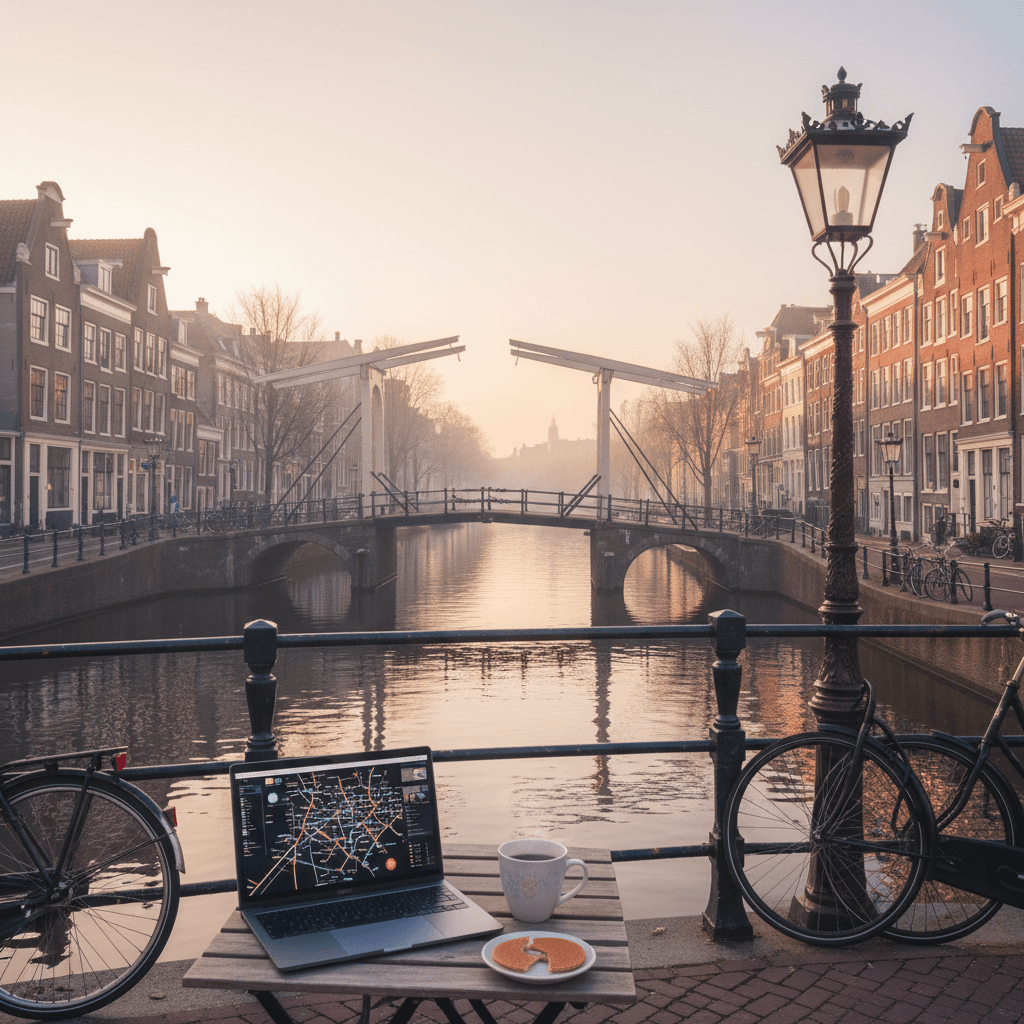
Amsterdam
🇳🇱 Netherlands
The Amsterdam Rhythm
Amsterdam feels like a high tech village. While other European capitals can feel overwhelming and frantic, this city manages to balance a world class startup scene with a surprisingly mellow pace. You’ll find yourself cycling past 17th century canal houses on your way to a glass fronted coworking space, and that contrast is exactly why nomads stick around. It’s a place where efficiency meets a deep seated appreciation for the good life, or what the Dutch call "gezelligheid."
The city is built for people, not cars. This changes the way you live. Instead of being stuck in traffic, you’re navigating a web of bike lanes and bridges. Most nomads find the lifestyle incredibly liberating, though you’ll need to get used to the directness of the locals. They don't sugarcoat things here, but that honesty makes networking and making friends much faster than in more reserved cultures. It’s a city that values your time and expects you to do the same.
The Financial Reality
Let’s be real about the costs. Amsterdam isn't a budget destination, and the housing market is notoriously tight. Most solo nomads should budget at least $2,500 for a mid range lifestyle, though you can squeeze by on $2,000 if you’re savvy with shared housing and cook at home. If you want a private apartment in a prime spot and regular dinners out, you’re looking at $3,500 or more.
- Rent: Co-living is a popular workaround for the housing crisis. Dam Coliving in the East starts around $990 for shared setups, while The Social Hub offers private en-suites with coworking access for $850 to $1,300 per month.
- Coworking: Expect to pay $200 to $400 for a monthly hot desk. Spaces and WeWork are the big players, but boutique spots like B. Amsterdam and Loft offer a more curated community vibe.
- Food & Drink: A quick herring snack or a stroopwafel from a street stand costs about €5 to €10. A casual dinner at a spot like FEBO or a local cafe runs €15 to €25, while a nice meal by the canal will easily top €40.
- Transport: A monthly GVB pass for trams and buses is roughly €100, but most people just rent a bike via Donkey Republic for €10 to €20 a day or buy a second hand one.
Where to Plant Your Flag
Each neighborhood has a distinct personality. Where you stay will define your Amsterdam experience more than anything else.
Oost (East): This is the current nomad favorite. It’s more affordable than the center and feels authentically lived in. You’ve got Oosterpark for afternoon breaks and the Dappermarkt for fresh groceries. It’s vibrant, diverse, and just a short bike ride from the action.
De Pijp: If you want to be in the thick of the brunch and bar scene, this is it. It’s the old Latin Quarter, now filled with expats and young professionals. The housing competition here is fierce, but the density of cafes with strong WiFi makes it a remote work dream.
Centrum: Best for short stays. It’s beautiful and walkable, but it’s also crowded with tourists and carries the highest price tags. You’ll spend a lot of time dodging selfie sticks on your way to the office.
Amsterdam West: A bit quieter and more residential. It’s perfect if you’re traveling with a partner or just want more green space and modern amenities. It feels less like a postcard and more like a home.
Work, Connectivity, and Logistics
The internet here is some of the fastest in Europe. Fiber optic is the standard, and you’ll find reliable WiFi in almost every cafe. Just be aware that the thick brick walls of older canal houses can sometimes mess with 4G and 5G signals. For mobile data, pick up a SIM from KPN or Vodafone, or just grab a Holafly eSIM before you land.
Getting around is effortless. The train from Schiphol Airport to Centraal Station takes just 15 minutes and costs about €6. Once you’re in the city, the GVB app is your best friend for tram and metro schedules. While the city is very safe, keep your wits about you in the Red Light District at night and always, always double lock your bike. Bike theft is practically a local sport.
The best time to visit is May through September. The days are long, the canal banks are packed with people having drinks, and the weather is mild. Winters from November to February can be grey, damp, and biting cold, which is when the "gezellig" indoor cafe culture really earns its keep. Most people speak perfect English, so you won't struggle to communicate, but a quick "Dank je" goes a long way toward making a good impression.
The Price of Living in the Venice of the North
Amsterdam is many things, but cheap isn't one of them. While it doesn't quite reach the eye watering heights of London or Zurich, you'll need a solid budget to enjoy the city without constantly checking your banking app. Most digital nomads find they need between $2,100 and $2,400 USD per month to cover the basics. If you're looking for a more "settled" lifestyle with your own apartment and frequent dinners out, that figure quickly climbs toward $3,500.
The biggest hurdle is almost always housing. The market is incredibly tight, and short term rentals come with a premium. Expats often recommend starting in a co-living space to bypass the brutal competition for private studios.
Monthly Budget Tiers
- The Budget Nomad ($2,000): You're likely sharing a flat in Amsterdam Oost, cooking most meals at home, and relying entirely on a second hand bike for transport.
- The Mid-Range Professional ($2,500): This covers a private room in a trendy area like De Pijp, regular lunches at local cafes, and a monthly GVB transport pass for rainy days.
- The Comfortable Resident ($3,500+): At this level, you can afford a private 1BR apartment, a dedicated desk at a premium coworking space like Spaces, and upscale dining along the canals.
Housing and Neighborhoods
Where you park your laptop matters. Each pocket of the city has a distinct price point and personality. Most nomads gravitate toward the east or west to avoid the tourist crowds of the Centrum.
Amsterdam Oost (East)
This is the current hotspot for the remote work crowd. It's more affordable than the center and feels authentically local.
- Co-living: Dam Coliving starts around €891/month (approximately $970 USD) for a room, with utilities and internet typically adding €100-150 per person per month.
- Vibe: Multi-cultural, vibrant markets like Dappermarkt, and plenty of green space.
De Pijp
Think of this as the Latin Quarter of Amsterdam. It's packed with brunch spots and bars, making it perfect for social butterflies.
- Rent: High competition; expect to pay $1,200+ for a decent room in a shared house.
- Vibe: High energy, great metro links, and home to the famous Albert Cuyp Market.
Alternative: The Social Hub
Many newcomers opt for The Social Hub (formerly Student Hotel). Rates range from $850 to $1,300/month. It's a "plug and play" option that includes a private en-suite room and access to their coworking facilities, which saves you the hassle of setting up utilities.
Food, Drink, and Socializing
Eating out can be a mixed bag for your wallet. A quick herring from a street stand or a snack from a FEBO wall will only set you back €5 to €10. Casual mid-range eateries usually land between €15 and €25 for a main course and a drink. If you're heading to a nice canalside bistro, plan for €40 or more per person.
Grocery shopping at Albert Heijn or Jumbo is manageable, and locals often save money by hitting the outdoor markets for fresh produce. For networking, most nomads find their tribe at startup events or through apps like Meetup.com. Since English proficiency is nearly universal, you won't have any trouble making friends or ordering a "biertje" at the pub.
Workspaces and Connectivity
The internet here is some of the fastest in Europe, though the thick brick walls of 17th century canal houses can sometimes mess with your 5G signal. If your home WiFi feels sluggish, the city is full of laptop friendly cafes. For a more professional setup, coworking is the way to go.
- Day Passes: Expect to pay €25 to €40 at spots like WeWork or B. Amsterdam.
- Monthly Memberships: Most desks go for €200 to €400.
- Top Picks: Loft offers a boutique feel, while Spaces is great for corporate networking.
Getting Around
Don't bother with cars. A monthly GVB Vrij unlimited pass costs €129 for adults. However, the most "Amsterdam" way to save money is to buy a used bike. If you're only here for a few weeks, apps like Donkey Republic allow for easy rentals at €10 to €20 per day. For airport transfers, the train from Schiphol to Centraal is a steal at roughly €6 and takes only 15 minutes.
Oost (The East)
If you're looking for the best balance between cost and community, Oost is where most nomads eventually land. It feels less like a postcard and more like a real neighborhood. You'll find a massive concentration of remote workers around Oosterpark and the Dappermarkt. It's home to some of the city's most practical co-living setups, like Dam Coliving, where you can snag a room in a shared flat for around $990 a month, plus shared utility costs which are divided among residents.
- Best For: Digital nomads and budget-conscious expats
- Pros: More affordable housing, diverse food markets, and a quick bike ride to the center.
- Cons: It feels a bit removed from the historic canal belt.
- Rent: Shared rooms from $990; private studios at The Social Hub range from $850 to $1,300.
De Pijp
Expats usually gravitate toward De Pijp for its high energy and incredible food scene. It’s the old Latin Quarter of the city, packed with brunch spots, craft beer bars, and the famous Albert Cuypmarkt. The vibe is social and international, making it very easy to meet people. You’re also right on the North-South metro line, which gets you across the city in minutes. Just be ready for the noise; the streets are narrow and the bars stay busy late.
- Best For: Young expats and social butterflies
- Pros: High density of cafes to work from, great nightlife, and central metro access.
- Cons: Competitive housing market and can be loud on weekends.
- Food: Mid-range meals cost $15 to $25; plenty of international options.
Amsterdam West
West has seen a massive transformation over the last decade and is now the go-to for families or anyone who wants a quieter, more polished lifestyle. It’s leafy and spacious, with Vondelpark and Rembrandtpark providing plenty of green space. The architecture is a mix of classic brick and modern developments. While it’s less of a networking hub than the center, it offers a much higher quality of life if you aren't looking to party every night.
- Best For: Families and long-term residents seeking balance
- Pros: Excellent schools, quiet streets, and beautiful parks.
- Cons: Fewer coworking spaces and networking events compared to Oost or Centrum.
- Vibe: Residential, modern, and very bike-friendly.
Centrum
Living in the Centrum is all about the "classic Amsterdam" experience. You’re surrounded by 17th-century canals, the Red Light District, and the city’s major museums. Solo travelers often choose this area for short stays because everything is walkable and public transport is right at your doorstep. However, it’s the most expensive place to live, and the crowds of tourists can get exhausting after a few weeks. Most nomads find WeWork or Spaces near the canals for a day pass, which usually runs between $25 and $40.
- Best For: Solo travelers and short-term visitors
- Pros: Maximum walkability and iconic scenery.
- Cons: High rent, tourist crowds, and expensive groceries.
- Transport: Monthly GVB passes cost roughly $100, but you can walk almost everywhere here.
Rotterdam (The Alternative)
While not a neighborhood in Amsterdam, many nomads are now looking at Rotterdam as a viable alternative. It’s only 40 minutes away by train and offers a much more experimental, gritty, and affordable lifestyle. The architecture is futuristic rather than historic, and the creative energy is palpable. If Amsterdam’s $2,500 average monthly budget feels too steep, Rotterdam can often shave a few hundred dollars off your rent while keeping you connected to the Dutch tech scene.
- Best For: Budget-conscious nomads and creatives
- Pros: Significantly cheaper rent and a unique modern aesthetic.
- Cons: Lacks the "Old World" charm of Amsterdam’s canals.
Connectivity and Speeds
Amsterdam is a heavy hitter when it comes to digital infrastructure. You can expect some of the fastest fiber optic speeds in Europe, usually delivered via providers like Ziggo or Vodafone. Home internet setups typically cost around €40 per month, while coworking hot desks range from €200 to €400 per month for reliable high speed access. It is standard to find speeds that handle video calls and heavy uploads without a hiccup.
Mobile data is equally robust with 4G and 5G coverage spanning the city. If you are staying in the historic center, be aware that the thick brick walls of 17th century canal houses can sometimes act like a lead shield for cellular signals. Most nomads grab a local SIM from KPN or T-Mobile at Schiphol Airport, though Holafly or WorldSIM eSIMs are the go to for immediate data upon landing.
Top Coworking Spots
The city has moved beyond just "coffee shop working" into a sophisticated coworking market. While you can find a seat almost anywhere, these spots are the community favorites:
- The Social Hub: Located in both the City and West locations, this is a nomad favorite because it blends boutique hotel vibes with professional desk space. If you stay here, coworking is usually included in your rent.
- B. Amsterdam: This is a massive startup ecosystem in the West. It feels more like a campus than an office, featuring a rooftop restaurant and a gym. It is perfect if you want to network with Dutch tech founders.
- Spaces: With multiple locations like Vijzelstraat and Westermanstraat, Spaces offers a high end, corporate polished environment. Expect day passes to typically range from €20 to €40 depending on location and provider.
- WeWork: You will find these in prime spots like Weesperstraat. They are reliable, consistent, and usually packed with international expats. Monthly hot desks typically run between €200 and €400.
- Loft: For those who prefer a boutique, aesthetic focused environment over a corporate cubicle, Loft offers flexible plans in a more intimate setting.
The Café Culture
Amsterdam is famous for its "laptop friendly" cafés, but there is an unspoken etiquette here. Most places in neighborhoods like De Pijp or Oost are happy to host you for a few hours if you keep the coffee and snacks flowing. However, during the busy lunch rush or on weekends, many spots ask you to tuck the laptop away to keep the social vibe alive.
Look for places near Oosterpark or the canals in the Jordaan. You will rarely have to ask for a WiFi password as it is usually printed on the menu or a chalkboard. Just keep an eye on your gear, bike theft is the main crime here, but "laptop snatching" can happen in crowded tourist areas if you are not paying attention.
Practical Costs for Remote Workers
Budgeting for your "office" and tech needs is straightforward, but prices are on the higher side for Europe. Here is what to keep in mind for your monthly overhead:
- Coworking Hot Desk: €200 to €400 per month depending on the brand and location.
- Day Pass: Day passes typically range from €20 to €40 depending on location and provider.
- Home Internet: Roughly €40 if it is not included in your utilities.
- Prepaid SIM: €15 to €30 for a decent data bundle.
Most nomads find that the cost is justified by the networking opportunities. Between the official meetups and the casual chats at the espresso machine, the "tech scene" here is very accessible. If you find Amsterdam too pricey, many travelers recommend Rotterdam as a budget alternative, it is only a short train ride away and has a growing creative energy of its own.
Staying Safe in the Dam
Amsterdam is consistently ranked as one of the safest cities in Europe. It has a relaxed, live and let live atmosphere that makes most nomads feel at ease immediately. You'll find the air quality is great and the tap water is some of the best in the world, so feel free to ditch the bottled stuff and refill your canteen at any sink.
The most common headache here isn't violent crime; it's bike theft. If you buy or rent a bike, invest in two high quality locks. Locals recommend securing the frame and the front wheel to a fixed post. Even in broad daylight, professional thieves can be quick. Most nomads avoid the Red Light District late at night, not because it's inherently dangerous, but because it draws pickpockets and rowdy crowds that can be a nuisance when you're just trying to get home.
If you find yourself in a pinch, the emergency number for police, fire, or ambulance is 112. For non-emergencies, like reporting a stolen bike or a noise complaint, call 0900-8844. Officers are generally helpful, very professional, and almost certainly speak perfect English.
Healthcare for Nomads
The Dutch healthcare system is world class, but it operates differently than in many other countries. If you're staying long term on a residency permit, you'll likely be required to take out Dutch health insurance. For shorter stays, make sure your travel insurance is solid. Most nomads find that pharmacies, known as an Apotheek, are the first stop for minor ailments. They are everywhere and the staff can provide expert advice on over the counter meds.
For anything more serious, you'll need to see a huisarts (GP). They act as the gatekeepers for the entire system; you can't just walk into a specialist's office without a referral. If you have an urgent issue after hours, look for a Huisartsenpost, which provides evening and weekend care. Several major hospitals are centrally located, including the OLVG in Oost and West, which are known for top tier facilities and English speaking staff.
Pedestrian and Bike Safety
The real danger in Amsterdam isn't what you'd expect. It's the bike paths. As a newcomer, it's easy to accidentally wander onto a red asphalt lane. Don't do it. Cyclists here are commuting, not joyriding, and they won't always slow down for a wandering pedestrian. Always look both ways for bikes, then trams, then cars. Travelers often say the "ding" of a bike bell is the most stressful sound in the city until you get used to the rhythm of the streets.
Practical Emergency Contacts
- Emergency Services: 112 (Police, Fire, Ambulance)
- Non-Emergency Police: 0900-8844
- Tourist Medical Service: Available for visitors needing a GP without a local registration.
- Dental Emergencies: Tandartsbemiddelingsbureau (TBB) can help find an emergency dentist 24/7.
Overall, your biggest safety concern will likely be a rainy day or a flat tire. Keep your wits about you in the heavy tourist zones like Dam Square and Centrum, keep your bike double locked, and you'll find Amsterdam to be a very secure home base for your remote work stint.
The Two-Wheeled Way of Life
In Amsterdam, your bike isn't just a vehicle; it's your primary identity. Most nomads find that the quickest way to feel like a local is to hop on a saddle. The city is built for it, with dedicated lanes that are often wider than the car paths. You can rent a ride through apps like Donkey Republic for about €10 to €20 per day, or if you're staying for a month, look into a Swapfiets subscription for a fixed monthly fee.
Just remember the golden rule: stay in the bike lanes and never, ever walk on them. The locals are efficient and won't hesitate to give you a sharp ring of their bell if you're blocking the flow. Always use two locks. Bike theft is the most common crime here, so securing your frame to a permanent fixture is a non-negotiable habit you'll need to learn on day one.
Mastering the GVB Network
When the horizontal Dutch rain kicks in, you'll be thankful for the GVB. The network of trams, buses, and the metro is incredibly punctual and covers every corner of the city. Most expats recommend getting a personalized OV-chipkaart, but you can also just tap in and out with your contactless debit card or phone. It's seamless and saves you from fumbling with paper tickets.
A monthly GVB Vrij unlimited pass costs €129 for adults 19+, which is a solid investment if you're living in Oost or West but working from a central coworking space. The trams are the pulse of the city center, while the metro is your best bet for getting to the business districts or the De Pijp neighborhood quickly. Just remember to tap out every time you exit, or you'll be hit with the maximum fare.
Arrival and Airport Transfers
Getting from Schiphol Airport to the city center is one of the easiest commutes in Europe. Skip the €50+ Uber or Bolt rides. The train station is located directly underneath the airport terminal. A one-way ticket to Amsterdam Centraal costs €5.50 to €7.10 depending on whether you include the OV chip card and the journey takes only 15 minutes. Trains run 24/7, though they are less frequent in the early morning hours.
If you're carrying heavy luggage, the Airport Express Bus (Line 397) is a great alternative. It stops at major hubs like Museumplein and Leidseplein, which might be closer to your rental than the main train station. It's slightly more expensive than the train but often more convenient for reaching specific southern neighborhoods.
Ride-Hailing and Walking
While Amsterdam is one of the most walkable cities in the world, sometimes you just want a car. Uber and Bolt both operate here and are reliable for late-night trips after the trams stop running around midnight. However, cars are often slower than bikes in the historic center due to the narrow, one-way streets and canal bridges.
For those living in the Centrum, your own two feet are often all you need. You can walk from the Jordaan to the Red Light District in about 20 minutes. It's the best way to soak in the architecture, just keep your eyes peeled for the silent electric scooters that occasionally zip through pedestrian areas. Stick to the sidewalks, let the bikes have the paths, and you'll get along just fine.
The Language Barrier (Or Lack Thereof)
If you're worried about brushing up on your Dutch before landing at Schiphol, you can breathe a sigh of relief. Amsterdam consistently ranks as one of the most English-proficient cities in a non-native speaking country. Most locals, from the barista in De Pijp to the tech founder in a canal-side coworking space, speak English with a fluency that can put native speakers to shame.
While Dutch is the official language and what you'll see on street signs and official government documents, English is the unofficial language of the city's massive tech and nomad scene. You'll have no trouble ordering a flat white, negotiating a lease, or making friends at a meetup using only English. Most nomads find they can live here for years without ever mastering the guttural "g" sounds of the local tongue.
When to Use Dutch
Even though you can get by with zero Dutch, learning a few basics goes a long way in showing respect for the local culture. A simple "Hallo" (hello) or "Dank je" (thank you) is appreciated. If you really want to check your surroundings, "Spreekt u Engels?" (Do you speak English?) is the polite way to initiate a conversation with older residents or workers outside the main tourist zones.
For everything else, digital tools bridge the gap. Google Translate and DeepL are the standard go-to apps for translating mail or menus. If you're looking to integrate more deeply, many expats recommend the Duolingo Dutch course or local "Taalcafés" (language cafes) where you can practice with locals over a beer.
Staying Connected: SIMs and Data
Your digital life depends on a solid connection, and Amsterdam delivers some of the fastest fiber optic speeds in Europe. When you arrive, you'll want to sort out your mobile data immediately. You can grab a physical SIM from providers like KPN, Vodafone, or T-Mobile right at the airport or at branded shops throughout the Centrum.
Many nomads now prefer the convenience of an eSIM to avoid hunting for a physical card. Services like Holafly or WorldSIM allow you to activate a data plan the moment you touch down. If you're planning a longer stay, a local contract from Tele2 often provides better value for high-volume data users.
WiFi and Workspace Etiquette
The city's infrastructure is built for remote work, but there's a slight catch in the older neighborhoods. While home fiber speeds are lightning fast, the thick brick walls of 17th-century canal houses can sometimes play havoc with 4G and 5G signals. If you're scouting an apartment in the historic center, always check the signal strength in the back rooms before signing anything.
Public WiFi is common but varies in quality. For reliable work sessions, stick to established coworking hubs or laptop-friendly cafes.
- WeWork and Spaces: These are the gold standards for reliability, with day passes ranging from €25 to €40.
- The Social Hub: A favorite for those staying in their co-living spaces, as high-speed internet is baked into the monthly rent.
- B. Amsterdam: Located a bit further out, this is a massive startup ecosystem where networking is just as important as the bandwidth.
Communication Styles
One thing you'll notice quickly is the famous Dutch directness. It's not rudeness; it's efficiency. Whether you're talking to a coworker or a waiter, people tend to say exactly what they mean without much sugar-coating. Nomads often find this refreshing once they get used to it. It makes professional communication much faster, as there's very little "reading between the lines" required in the Amsterdam business world.
The Seasonal Vibe
Amsterdam has a personality that shifts dramatically with the light. Because it sits at a high latitude, summer days feel endless while winter afternoons can turn dark by 4:00 PM. Most nomads agree that the city is at its best from May through September. During these months, the damp chill lifts, and the city moves outdoors to the canal banks and parks like Oosterpark and Vondelpark.
The weather is a temperate maritime climate, which is a fancy way of saying it's unpredictable. You'll experience mild summers with highs around 17 to 22°C (63 to 72°F) and damp, biting winters where temperatures hover between 2 and 6°C (36 to 43°F). It rains frequently throughout the year, peaking between October and March, but it’s rarely a torrential downpour. It’s more of a persistent, misty drizzle that locals ignore while cycling to their next meeting.
When to Arrive
- Spring (April to May): This is the sweet spot. The tulips at Keukenhof are in bloom, and the city celebrates King’s Day on April 27th, which is arguably the biggest street party in Europe. Expect the canals to turn bright orange.
- Summer (June to August): The most reliable weather for digital nomads who want to work from cafe terraces. It's the peak tourist season, so the Centrum will be packed, but it's the best time for outdoor networking events and music festivals.
- Autumn (September to October): September is often beautiful and slightly cheaper than mid-summer. By October, the rain picks up, averaging about 80mm per month. This is when the cozy Dutch concept of "gezellig" takes over inside the brown cafes.
- Winter (November to February): These are the "avoid" months for most, unless you love holiday markets and ice skating. The days are short, gray, and wet. However, if you're on a budget, this is when you'll find the most availability at co-living spaces like The Social Hub or Dam Coliving.
Practical Survival Tips
If you're planning a stint here, don't bother with a flimsy umbrella; the wind coming off the North Sea will snap it in seconds. Invest in a high-quality raincoat or a "rainpak" like the locals use. Most nomads find that a waterproof jacket and a sturdy bike are the only two things they really need to handle the Dutch elements.
Check the Buienradar app religiously. It’s the gold standard for locals to track rain clouds down to the minute, letting you know exactly when you have a ten-minute window to cycle from your flat in Oost to a coworking space like WeWork or Spaces without getting soaked. If the weather turns truly foul, the GVB tram system is your best friend, with a monthly GVB Vrij unlimited pass costing €129.
The Nomad Strategy
If you have flexibility, aim to land in late April. You'll catch the transition into the best weather of the year and have time to secure a spot in a competitive neighborhood like De Pijp before the summer student rush. If you must come in winter, lean into the indoor culture. Amsterdam has an incredible concentration of museums and high-end coworking spots like B. Amsterdam or Loft that make the gray days much more productive.
Getting Connected
You'll find some of the fastest fiber optic speeds in Europe here, often hitting €40 per month for home setups via Ziggo or Vodafone. Most nomads rely on eSIMs from Holafly or WorldSIM for immediate data upon arrival, but if you prefer a physical card, head to a KPN or T-Mobile shop at Schiphol Airport. Just be aware that the thick brick walls in older canal houses can occasionally throttle your 4G or 5G signal.
Café culture is massive, and most spots near the canals are laptop friendly. If you need a dedicated desk, WeWork and Spaces are the heavy hitters, with day passes ranging from €25 to €40. For a more local vibe, check out B. Amsterdam or Loft. If you're staying at The Social Hub, coworking access is usually baked into your room rate.
The Monthly Budget
Amsterdam isn't cheap, but it's manageable if you're smart about housing. Most solo nomads spend between $2,100 and $2,400 USD per month. Local salaries average around $1,500, so you'll be living comfortably compared to the baseline, though the housing market is notoriously competitive.
- Budget ($2,000): Shared housing in Oost, cooking at home, and relying entirely on a bike.
- Mid-range ($2,500): A private room in a coliving space, eating out a few times a week, and a monthly GVB transport pass.
- Comfortable ($3,500+): A private one bedroom apartment, regular upscale dining, and a full time coworking membership.
Where to Set Up Base
Oost (East) is the current favorite for the nomad crowd. It's home to Dam Coliving near Oosterpark, where shared flats start around $990 per month including utilities. It's less touristy than the center but still an easy bike ride to everything.
De Pijp is where you'll find the best food scene and a high concentration of young expats. It's lively and packed with bars, though the housing competition here is fierce. If you want a quieter, more residential feel, Amsterdam West offers great parks and a modern vibe, while Centrum is best for short stays where you want to be within walking distance of the nightlife.
Navigating the City
Forget Uber for your daily commute. The city is built for bikes, and you can grab a rental through Donkey Republic for €10 to €20 a day. Just remember the golden rule: stay on the designated bike paths and never walk in them unless you want to hear a chorus of angry bells.
For longer distances, the GVB network of trams, buses, and metros is flawless. A monthly GVB Vrij unlimited pass costs €129. When you land at Schiphol, don't bother with a taxi. The train to Centraal Station takes 16-17 minutes and costs €5.50 to €7.10. For payments, most locals use Wise or Revolut, as cards are accepted almost everywhere, even at small herring stands.
Language and Culture
You don't need to speak Dutch to survive. English proficiency is nearly universal, especially in professional circles. That said, learning a few basics like Hallo (hello) or Dank je (thank you) goes a long way. Use DeepL for any tricky documents, as it tends to handle Dutch grammar better than other translation apps.
The weather is the one thing everyone complains about. It rains year round, with the dampest months running from October to March. Plan your stay between May and September to catch the long days and festival season. Even in the summer, keep a light raincoat handy; the maritime climate is famously unpredictable.
Safety and Health
The city is remarkably safe, though bike theft is a localized sport. Always use two locks and attach your frame to something permanent. Avoid the Red Light District late at night if you dislike aggressive crowds. If you have an emergency, dial 112. For non emergency police matters, use 0900-8844. Healthcare is top tier, with pharmacies and high quality hospitals easily accessible throughout the city.
Need visa and immigration info for Netherlands?
🇳🇱 View Netherlands Country GuideNomad Haven
Your home away from home