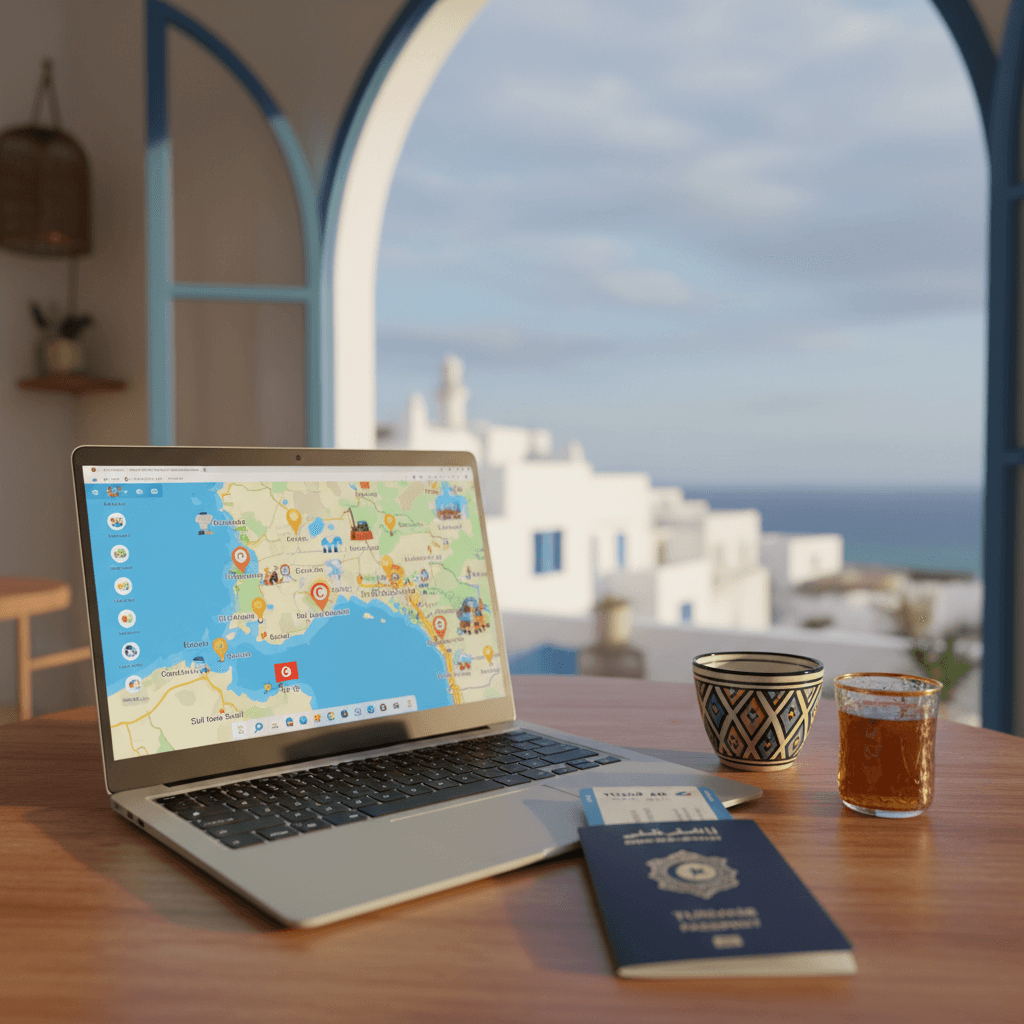
Tunisia
Complete Digital Nomad Guide

Policy Stability
Stamped Nomad ExclusiveHow likely visa and immigration policies are to remain unchanged
Quick Facts
Nomad Visa Cost
N/A
Max Stay
3 months
Renewable
Yes
Cost of Living
$875/mo
Avg Internet
17 Mbps
Safety Score
6/10
Healthcare
Medium
Coworking
Medium
English Friendly
Low
Time Zones
UTC+1
Entry Methods Available
Best For
The Visa-Free Advantage
Tunisia is remarkably welcoming for most digital nomads. If you hold a passport from the United States, Canada, the UK, or any EU nation, you can fly into Tunis or Monastir and get a 90-day entry stamp without any prior paperwork. This visa-free privilege extends to over 90 nationalities, including travelers from Australia, Brazil, and much of the Arab world.
Your passport just needs to be valid for at least six months from your date of arrival. While there are no official e-visa portals or widespread "visa on arrival" schemes for those outside the exempt list, the process is streamlined for the majority of the nomad community. You simply show up, get your stamp, and head to your seaside apartment.
Applying for a Tourist Visa
If your country isn't on the visa-free list, you'll need to coordinate with the nearest Tunisian consulate. This is a traditional process where the visa is physically stamped into your passport. You cannot currently apply through a centralized government website, so ignore third-party sites claiming to offer "instant" electronic visas.
To get your 90-day tourist visa, you generally need to provide:
- A completed application form from the consulate.
- A passport-sized photo.
- A confirmed hotel booking or a letter of invitation.
- Proof of sufficient funds for your stay.
- The application fee, which usually hovers around 80 TND or the local currency equivalent.
The Ministry of Interior handles the approvals, so give yourself a buffer of at least 15 to 21 days before your flight. It is a manual system, and patience is part of the experience.
Business Visas and Local Rules
For those visiting for specific meetings or to scout office space, the business visa offers a stay of 30 to 90 days. The requirements are nearly identical to the tourist visa, but you must include a formal invitation from a Tunisian company. It is important to remember that this visa does not grant you the right to seek local employment or sign contracts as a Tunisian employee. If you are working remotely for a company back home, the standard tourist entry is usually the path of least resistance.
Staying Longer: Extensions and Residence
If three months isn't enough time to explore the ruins of Carthage and the cafes of Sidi Bou Said, you can request an extension. You will need to visit the local immigration office, known as the Direction des Frontières et des Etrangers, before your initial 90 days expire. Extensions are granted on a case-by-case basis and typically allow for another 90 days of legal stay.
For those looking to make Tunisia a semi-permanent base, a long-stay residence permit is required. This involves more "red tape," including proof of a local bank account and a lease agreement. Most nomads find it easier to enjoy their 90 days, take a quick trip to Europe or a neighboring country, and return for a fresh stamp, though the government may eventually ask questions if you do this indefinitely.
Current Policy Outlook
The visa landscape for 2025 and 2026 remains stable. There are no major shifts in entry requirements for Western travelers, and the country continues to prioritize tourism as a pillar of the economy. While there has been talk of a formalized e-visa system for years, it has not yet replaced the current consulate-based method for non-exempt travelers. Stick to official diplomatic channels for the most accurate fee schedules, as these can fluctuate slightly based on exchange rates and specific consulate policies.
The Current Landscape
Tunisia hasn't jumped on the official digital nomad visa bandwagon yet. While several neighboring Mediterranean countries have launched specific remote work programs, the Tunisian government currently operates without a dedicated visa category for location-independent professionals. This doesn't mean you can't work from a seaside cafe in Sidi Bou Said, it just means you have to use the existing immigration framework to make it happen.
Most nomads start their journey here using the standard tourist entry. Citizens from the US, Canada, and the EU generally enjoy visa-free entry for up to 90 days. If you are planning a shorter stint to test the Mediterranean lifestyle, this is your easiest path. You are technically a visitor, but as long as your income comes from foreign clients and you aren't competing for local Tunisian jobs, you can keep your laptop open without much fuss.
Staying Beyond Three Months
If the jasmine-scented air and affordable cost of living convince you to stay longer, you have two main paths. The first is a simple extension of your tourist stay, which can sometimes be pushed to 6 months by visiting the local police station. However, for a more permanent setup, you will need to apply for a long-stay visa followed by a Carte de Séjour (residence permit).
The long-stay visa is handled through Tunisian embassies or consulates in your home country. Since there is no "freelancer" category, you will typically apply under a general long-stay status. You will need to show that you are financially self-sufficient. While the government doesn't publish a "magic number" for monthly income, having bank statements that show a consistent flow of funds is your best bet for approval. Expect the processing time at the embassy to take roughly 4 weeks.
The Residence Permit Process
Once you land in Tunisia with your long-stay visa, the real paperwork begins. You have 30 days to register with the local police to obtain your Carte de Séjour. This permit is usually valid for 1 year and is renewable annually. After five years of consistent residency, you can apply for a permanent permit, though most nomads find the one-year renewals sufficient for their needs.
To get your permit, you will generally need to provide:
- A passport with at least 6 months of validity remaining.
- Proof of a local address, such as a notarized rental contract.
- Evidence of foreign income or financial self-sufficiency.
- Several passport-sized photos.
- Payment for the application fee.
Taxation and Local Rules
Tax is always the elephant in the room. In Tunisia, you are generally considered a tax resident if you spend more than 183 days in the country within a calendar year. However, the tax system is largely focused on local earnings. If your employer is based in London or New York and you have no Tunisian clients, you typically avoid local income tax. If you decide to register a local business or work for Tunisian companies, you will be pulled into the local tax net, which is significantly more complex.
Keep in mind that local employment is strictly prohibited on a tourist or standard long-stay visa. Your right to remain in the country is based on the fact that you are bringing money into the economy, not taking it from the local job market. Always keep digital or physical copies of your foreign work contracts or invoices in case you need to justify your status to immigration officials.
Practical Steps for Your Move
Before you pack your bags, check the specific requirements at the Tunisian embassy nearest to you. Requirements can shift slightly depending on your nationality. Once you arrive, make it a priority to find a long-term apartment quickly; you will need that notarized lease to start any residency paperwork. Tunisia is a country that still values face-to-face interaction, so be prepared for a few visits to the Ministry of Interior or the local police station to get everything finalized.
The 90-Day Sweet Spot
Tunisia is remarkably welcoming for most Western nomads. Citizens of the United States, Canada, the UK, and most EU countries can enter the country visa-free for up to 90 days. You just need a passport with at least six months of validity remaining. It is a straightforward process; you show up, get your stamp, and start hunting for the best couscous in Tunis.
While the entry is free, keep your paperwork organized. Immigration officers occasionally ask for proof of a return flight or a confirmed hotel booking. If you are staying in an Airbnb, have the address and the host's phone number handy just in case.
The Digital Transition
There has been plenty of talk regarding a new e-Visa system designed to speed up the process for those who do not qualify for visa-free entry. While the government has laid the groundwork for this portal, it remains in a bit of a limbo state. If you find yourself needing a visa because of your nationality, do not rely on a website that might not be fully live yet. Stick to the traditional embassy route for now to avoid any last-minute headaches at the airport.
Traditional Visa Applications
If you are from a country that requires a pre-arranged visa, you will need to coordinate with the nearest Tunisian Embassy. For those applying from the US, the consular section handles these requests. Here is what you need to gather before your appointment:
- A passport with 6+ months of validity.
- A completed application form and a recent passport photo.
- Proof of a hotel reservation or a notarized invitation letter from a local resident.
- Visa fees: $90 for a single entry or $180 for multiple entries.
Give yourself plenty of lead time. The processing window can stretch up to 21 business days, so do not book your non-refundable flights until that sticker is in your passport.
Staying Beyond Three Months
If three months of Mediterranean sunsets isn't enough, you have a few hurdles to jump. Tunisia does not have a formal "Digital Nomad Visa" yet, so staying long-term requires a residence permit. You apply for this at the local police station (the Service des Etrangers) in the district where you are living.
These permits are typically valid for one year and are renewable. However, the bureaucracy can be thick. You will need to show proof of income or significant savings to prove you aren't seeking local employment. Many nomads find the process tedious and choose to stick to the 90-day limit instead.
The Reality of Border Runs
You might hear whispers in nomad circles about "border runs" to nearby Sicily or Algiers to reset the 90-day clock. While this works for some, it is not a guaranteed right. Tunisian immigration officials are sharp; if they see a pattern of someone living in the country on back-to-back tourist stamps, they can deny you entry. It is a risky gamble that could leave you stranded with a lease you can't fulfill.
A Warning on Overstays
Tunisia takes its immigration timelines seriously. If you overstay your welcome, even by a few days, expect a hassle when you try to leave. The penalties are not just a slap on the wrist:
- Daily Fines: You will be charged for every extra day you remained in the country. These must be paid before you are allowed to board your flight.
- Entry Bans: Serious overstays can result in being barred from the country for 3 to 10 years.
- Future Friction: An overstay on your record can trigger red flags when you apply for visas to other countries in the future.
The ETIAS Factor
Since Tunisia is in North Africa and not part of the European Schengen Area, the upcoming ETIAS authorization does not apply here. However, if your nomad route takes you from Tunis to Marseille or Rome, you will need to ensure your ETIAS paperwork is sorted for the European leg of your journey. Keep the two systems separate in your planning to avoid confusion at the boarding gate.
The Reality of Staying Long-Term
Tunisia doesn't have a flashy "Digital Nomad Visa" or a "Golden Visa" program like you might find in Europe. Instead, the country relies on a traditional system of renewable residence permits known as the Carte de Séjour. It is a bit old-school, but for the patient nomad, it is a very affordable way to call North Africa home.
Everything starts with a long-stay visa from your local Tunisian embassy before you fly. Once you land, you have a window of 15 to 30 days to head to the local police station (the Commissariat) to start your residency application. It is a paper-heavy process, so bring plenty of patience and a stack of passport photos.
Temporary Residence Permits
Most nomads and remote workers will start with a temporary residence permit. These are usually valid for 1 to 2 years and can be renewed indefinitely. The cost is surprisingly low, typically ranging between TND 100 and TND 200 ($30 to $65 USD). While the official processing time is 4 to 12 weeks, it is common to carry a temporary receipt that acts as your legal status while you wait for the physical card.
To get your hands on one, you will need to provide:
- A valid passport and a medical certificate from a local doctor.
- Proof of a clean criminal record from your home country.
- A registered lease agreement for your Tunisian home.
- Evidence of financial self-sufficiency, often shown through foreign bank statements.
The Investor Path
If you are looking for more stability and have the means to start a local business, the Investor Residence is a stronger option. This permit is valid for 5 years and is renewable. You will need to work with the Foreign Investment Promotion Agency to register a company and present a viable business plan.
- Cost: Approximately TND 150 to TND 300 ($50 to $100 USD).
- Benefit: A longer validity period and fewer trips to the police station for renewals.
- Requirement: You must prove you have the funds to support yourself and the business without relying on the local labor market.
Retiring in Tunisia
Tunisia is a popular spot for European retirees, and while there isn't a specific retirement visa category, the temporary residence permit covers this group easily. You generally need to be 55 or older and show a stable pension or savings income of $1,500 to $2,000 per month. Like other permits, you apply at the local police station and provide proof of health insurance and a local address.
The Freelance Hurdle
Being a freelancer in Tunisia is a bit of a grey area. There is no specific visa for someone working for US or UK clients while sitting in a cafe in La Marsa. Most remote workers either stay on a series of temporary permits by showing foreign income or register a local "offshore" company to formalize their status. If you choose the latter, you will need to obtain work authorization, which adds a layer of bureaucracy to the process.
Moving Toward Permanent Residency
If you fall in love with the lifestyle and stay for 5 continuous years on temporary permits, you become eligible for a permanent residence permit. This card is valid for 10 years and is much easier to renew. Other ways to fast-track this include marrying a Tunisian national (eligible after 3 years of marriage) or making a significant economic contribution to the country. If you are truly committed, naturalization is an option after 5 years, provided you have a solid grasp of the Arabic language.
Quick Summary of Options
- Temporary Residence: Costs TND 100-200, lasts 1-2 years, requires proof of income and housing.
- Investor Residence: Costs TND 150-300, lasts 5 years, requires company registration and a business plan.
- Permanent Residence: Available after 5 years of living in Tunisia or 3 years of marriage to a citizen.
What is your nationality? Requirements and visa-free entry periods vary significantly depending on the passport you hold.
The Nomad Budget Breakdown
Tunisia remains one of the most affordable Mediterranean frontiers for remote workers heading into 2025 and 2026. You can live a high-quality lifestyle here for a fraction of the cost of Southern Europe or even neighboring Morocco. Most nomads find their "sweet spot" between $500 and $1,200 USD per month, though your choice of neighborhood and how often you seek out Western comforts will swing that needle.
The local currency is the Tunisian Dinar (TND). While the exchange rate fluctuates around 1 USD to 2.9 TND, your dollars or euros go incredibly far at local markets and cafes. If you lean into the local lifestyle, eating seasonal produce and using the ubiquitous yellow taxis, you will find it hard to break the $800 mark.
Tunis: The Hub of Infrastructure
The capital is where you will find the most robust nomad community and the best internet speeds, which typically hover between 38 and 48 Mbps. Areas like La Marsa and Sidi Bou Said are the premium picks, offering seaside views and "laptop-friendly" cafes, though they command higher rents.
- 1BR Rent (Nomad Areas): $200 (Budget) / $300 (Comfort) / $650 (Premium)
- Food & Dining: $150 (Budget) / $250 (Comfort) / $400 (Premium)
- Transport: $30 (Budget) / $60 (Comfort) / $150 (Premium)
- Coworking (Monthly): $100 (Budget) / $200 (Comfort) / $400 (Premium)
Sousse & Hammamet: The Coastal Lifestyle
These cities are the go-to for those who want a beach within walking distance. Sousse is a bit more lived-in and authentic, while Hammamet has a distinct resort vibe. Expect to pay a premium for housing in the "Tourist Zones," where rents can sit 8% to 26% higher than the national average during peak summer months.
- 1BR Rent: $210–$220 (Budget) / $340–$350 (Comfort) / $680–$700 (Premium)
- Food & Dining: $155–$160 (Budget) / $255–$260 (Comfort) / $410–$420 (Premium)
- Coworking: $110–$120 (Budget) / $210–$220 (Comfort) / $420–$450 (Premium)
Sfax: The Ultra-Budget Choice
If you are looking to stretch your runway as far as possible, Sfax is the industrial heart of the south. It lacks the "vacation" feel of the coast but offers the lowest cost of living for a major city. It is ideal for focused deep-work phases where saving money is the priority.
- 1BR Rent: $180 (Budget) / $280 (Comfort) / $550 (Premium)
- Food & Dining: $140 (Budget) / $230 (Comfort) / $380 (Premium)
- Coworking: $90 (Budget) / $180 (Comfort) / $350 (Premium)
Daily Expenses and Lifestyle Tips
Groceries are a highlight of Tunisian life. You can fill a bag with fresh bread, olives, harissa, and seasonal fruit for under $10 at local souks. Supermarkets like Carrefour are available for imported goods, but expect to pay double for familiar Western brands.
Getting around is cheap but requires a bit of patience. A standard taxi ride across town rarely exceeds $1 or $2. Many nomads skip the confusing bus system and rely on apps like Bolt, which are safer and more transparent for foreigners. For health, avoid the public system. International insurance plans that cover private clinics in Tunis are the standard, usually costing between $50 and $120 monthly depending on your age and coverage level.
Overall, a Budget lifestyle will cost you roughly $550 to $750. A Comfortable tier, including a private apartment and frequent dining out, lands between $850 and $1,100. If you want the Premium experience with a luxury villa and a dedicated desk at a top-tier space like Cogite, plan for $1,300 and up.
Choosing Your Base in Tunisia
Tunisia is finally hitting the radar for remote workers who want Mediterranean views without the European price tag. While the country is compact, your experience will shift drastically depending on whether you choose the urban sprawl of the capital, the resort-heavy coastline, or the quiet island life of the south. Most nomads find they can live comfortably here on $700 to $1,800 a month, though your choice of city dictates how much of that budget goes toward rent versus weekend excursions.
Tunis: The Urban Hub
If you need a fast-paced environment and the highest concentration of networking opportunities, the capital is your best bet. It is the only city in the country with a truly established startup scene and multiple dedicated coworking spaces like Green Box and Cogite. You will find the largest expat community here, making it easier to build a social circle quickly through Facebook groups and local meetups.
- Monthly Cost: $1,000 to $1,800. You can find decent apartments for as low as $200 if you look outside the high-end neighborhoods.
- Connectivity: Average speeds range from 5 to 11 Mbps. It is not the fastest in the region, but the density of work-friendly cafes like Cafe de Paris makes it manageable.
- The Vibe: A mix of chaotic Mediterranean traffic and French colonial architecture. It is perfect for those who want nightlife and cultural sites like the Bardo Museum or the ruins of Carthage within a short taxi ride.
- The Downside: The traffic can be grueling and English is less common than French or Arabic.
Hammamet: The Coastal Retreat
Located about an hour south of Tunis, Hammamet offers a slower pace of life focused on the water. It is traditionally a resort town, which means the infrastructure for tourists is excellent, though the digital nomad scene is still in its early stages. It is a great middle ground for someone who wants to save money while staying close enough to the capital for a day trip.
- Monthly Cost: $800 to $1,500. It is generally more affordable than Tunis, especially for food and leisure.
- Connectivity: While there are fewer coworking spaces, HVH Hub provides a reliable base. The city actually scores well for internet stability in many residential pockets.
- The Vibe: Relaxed beach bars and jasmine-scented streets. It is safe and walkable, particularly in the tourist zones and near the Medina.
- The Downside: It can feel a bit "seasonal." Some areas get very crowded in the summer and feel like ghost towns in the dead of winter.
Djerba: The Island Escape
Djerba is the wildcard choice for nomads who want to completely unplug from the mainland. It is famous for its white-washed desert architecture and Mediterranean beaches. Surprisingly, it has become a hotspot for remote workers thanks to CoZi, a coliving and coworking space that has built a dedicated community of "island nomads."
- Monthly Cost: $1,000 to $1,500. While it is an island, the cost of living remains very reasonable for foreigners.
- Connectivity: Reliable for work if you stick to established hubs like SpaceB. Do not rely on random hotel Wi-Fi here.
- The Vibe: Very chill and very safe. The pace of life is slow, consisting of morning swims, afternoon coffee, and sunset bike rides.
- The Downside: You are isolated. If you need a big city fix or a wide variety of shopping and nightlife, you will have to fly or take a long ferry and bus ride to the mainland.
Quick Comparison at a Glance
Best for Networking: Tunis. The entrepreneur scene is centered here, and you will find more people working on tech and creative projects.
Best for Budget: Hammamet. You get the most "Mediterranean lifestyle" for your dollar, with lower rent than the capital and plenty of cheap local eats.
Best for Community: Djerba. Because the nomad scene is smaller and centered around specific coliving spots, it is much easier to make deep connections with other travelers.
The Connectivity Reality
Tunisia is a bit of a mixed bag when it comes to staying connected. If you are coming from a tech hub like Tallinn or Seoul, the speeds might feel modest, but for the average remote worker, it is more than functional. Fixed broadband averages between 13 and 23 Mbps nationally. However, if you stick to the capital, Tunis, those numbers often jump to 55 Mbps, especially in neighborhoods where fiber has been prioritized.
Fiber optic (FTTH) expansion is moving fast. Tunisie Telecom has laid down over 50,000 km of network, bringing high-speed lines to Tunis, Sfax, Sousse, and surprisingly, even parts of Tataouine. Outside these major hubs, you will likely be relying on ADSL, which is fine for emails and Slack but might struggle with 4K video uploads.
Top Coworking Hubs
The coworking scene in Tunis is where you will find your tribe. These spaces are generally more reliable than cafes because they invest in backup power and dedicated fiber lines. Here are the spots currently topping the nomad charts:
- Cobink: Located downtown, this spot is a favorite for its 24/7 power and internet guarantees. It features a great terrace for when you need a screen break.
- The Dot: A massive innovation hub that feels very "Silicon Valley." It is great for networking with local entrepreneurs and tech talent.
- Cobeez: This is one of the most budget-friendly options. For about 140 TND (~$45 USD) a month, you get 50 Mbps WiFi and unlimited coffee.
- Cogite: Known for its community vibes and flexible desks, it is a staple for the international nomad crowd.
The Cost of Desk Space
Pricing for workspaces varies wildly depending on how much "corporate" polish you want. While Cobeez starts at a very accessible 140 TND, more premium spots like ZonAct or Regus can range from 420 TND (~$135 USD) to 1,300 TND (~$420 USD) for private offices or dedicated hot desks. Most monthly passes include basic amenities like meeting room access and printing, but always double-check the latest rates before you show up.
Cafe Culture and WiFi
Tunisia has a beautiful cafe culture, but do not expect every spot with a "WiFi" sign to deliver. In Tunis, spots like El Ali, Café des Délices, and Yuka are popular for working, but the speeds can fluctuate. Nomad reliability scores for cafe internet hover around 50% to 70%. Use cafes for casual tasks or creative brainstorming, but keep a mobile hotspot ready if you have a high-stakes Zoom call. Outages are rare but they do happen, making a backup plan a requirement for any serious professional.
Mobile Data: Your Secret Weapon
The mobile network in Tunisia is often more consistent than the fixed lines. Ooredoo, Tunisie Telecom, and Orange are the big three providers. You can grab a 5G data plan for around 30 TND (~$10 USD) which gives you 25GB of data. If you are a data hog, 110GB will run you about 80 TND. For those staying long-term, there are massive 500GB plans available for 500 TND (~$160 USD).
If you prefer the convenience of an eSIM, you can find basic 1GB packages starting at $4.50 USD. Most nomads find that a local SIM card paired with a coworking membership provides the perfect balance of speed and stability. Always carry a local SIM; it is the cheapest insurance policy you can buy for your productivity.
Tunisia has carved out a reputation as a major hub for medical tourism in North Africa, which is great news for digital nomads. The country operates a dual healthcare system. While the public sector provides a safety net for locals, the private sector is where you will find the high-quality, modern care that most expats expect. If you are coming from Europe or North America, you will likely find the private facilities surprisingly affordable, often costing 40% to 70% less than what you are used to paying back home.
Public vs. Private Care
Public hospitals like Charles-Nicolle in Tunis are accessible and very cheap, but they are generally not the first choice for nomads. These facilities deal with high patient volumes, leading to long wait times and aging equipment. Language can also be a barrier here, as staff primarily speak Arabic and French.
Private clinics are a different world. They are equipped with the latest technology and staffed by doctors who frequently train in France or the US. In these clinics, English is much more common. Most nomads stick to private care because it offers a "Western" standard of service, including faster diagnostics and private rooms that feel more like hotel suites than hospital wards.
Top International Hospitals
If you need serious medical attention or a specialist consultation, these facilities are the gold standard in Tunisia:
- Clinique Taoufik (Tunis): Located near the airport, this is one of the oldest and most respected private clinics in the country.
- Hannibal International Clinic (Tunis): JCI-accredited and very popular with expats, offering a dedicated "VIP" reception for international patients.
- Clinique Les Oliviers (Sousse): A top-tier choice if you are based on the coast, known for its advanced imaging and intensive care units.
- Carthage International Medical Center (Monastir): A modern facility that attracts many medical tourists for elective surgeries.
Healthcare Costs
Prices in the private sector are transparent but usually require payment upfront in cash or by card if you do not have a direct-billing insurance plan. Here is what you can expect to pay in Tunisian Dinar (TND):
- GP Consultation: 40 to 100 TND (Private)
- Specialist Visit: 35 to 70 TND
- Dental Implant: 1,300 to 1,600 TND
- Private Hospital Stay: Starts at 500 TND per day
- Prescription Medications: 20 to 80 TND per script
Insurance for Nomads
If you obtain residency, you are required to join the national health fund, CNAM. It costs roughly $15 to $30 USD per month, but the coverage for private clinics is very limited and capped. Most nomads opt for international health insurance to bridge the gap.
- International Plans: Providers like Cigna Global or Allianz offer comprehensive coverage with direct billing at major clinics. Expect to pay between $50 and $120 USD per month.
- Nomad Insurance: For those without residency, SafetyWing is a popular choice for its flexibility and ease of use while traveling.
- Cash Payments: For minor issues like a cold or a basic dental cleaning, many nomads simply pay out of pocket because the rates are so low.
Pharmacies and Medications
Finding a pharmacy in Tunisia is easy. Look for the glowing green "Pharmacie" signs. In major cities, you will find plenty of 24/7 pharmacies; look at the door of any closed pharmacy to find a posted list of the nearest "on-call" locations for that night.
Many medications that require a prescription in the US or UK, including some antibiotics, are available over the counter here. Prices are regulated by the government and are typically about 50% cheaper than in Europe. Always keep your receipts if you plan to claim the costs back from your insurance provider.
Emergency Services
In a serious emergency, dialing 190 will get you a public ambulance, while 197 connects you to the police. However, public ambulances can be slow. If you are in a city and have a private insurance plan, it is often faster to call a private clinic directly or take a taxi to the nearest private emergency room. Private ER entry fees usually start around 100 TND.
The Reality of the Tunisian Dinar
Tunisia operates on a closed currency system, meaning the Tunisian Dinar (TND) is non-convertible. You cannot buy it before you arrive, and you certainly cannot take it with you when you leave. The Central Bank of Tunisia keeps a tight grip on foreign exchange, so treat your cash with respect. While the coastal resorts and high-end hotels in Tunis are getting better with card payments, Tunisia remains a cash-first society. You will need paper money for everything from your morning café crème to a taxi ride across La Marsa.
Can You Open a Local Bank Account?
For the average digital nomad staying a few months, the short answer is no. Standard bank accounts are reserved for residents who have lived in the country for over two years or have specific work permits. If you are a long-term expat or a diplomat, you can apply for a Personne Physique Résidente (PPR) account, which allows you to hold funds in convertible dinars or foreign currency.
To open a PPR account, you will need to visit a branch in person as digital onboarding is non-existent for foreigners. Bring the following:
- Your valid passport
- A sworn statement confirming you do not hold another PPR account
- Proof of a local address or residency permit
- Recent payslips or proof of foreign income
Using Wise and Revolut
Since local banking is a headache, most nomads rely on Wise or Revolut. These cards are your best friends here. They work seamlessly at most ATMs and POS terminals in major cities. While you cannot hold a balance in TND within these apps, they will automatically convert your USD, GBP, or EUR at the mid-market rate when you swipe.
Revolut users should be mindful of their plan limits. The Standard plan usually allows for £200 (or equivalent) in free monthly withdrawals, after which a 2% fee kicks in. Wise works similarly; it is excellent for spending, but keep an eye on those ATM withdrawal caps to avoid unnecessary surcharges.
Navigating ATMs and Fees
Expect to pay for the privilege of accessing your own money. Most Tunisian ATMs charge a flat fee for foreign cards, typically ranging from 10 to 15 TND per transaction. This is roughly $3 to $5 USD, which adds up if you are making frequent small withdrawals. Transaction limits are also quite low, usually capped between 300 and 1,000 TND.
To keep costs down, follow these tips:
- Try Tunisian Saoudi Bank (TSB) ATMs, as they sometimes waive the local fee.
- Always decline the "Dynamic Currency Conversion" (DCC). If the machine asks if you want to be billed in your home currency, say no and choose TND. Your home bank will almost always give you a better rate than the ATM provider.
- Withdraw the maximum amount allowed each time to minimize the impact of the flat fee.
Moving Money Internationally
If you need to send money to a local friend or pay for a long-term rental via bank transfer, skip the traditional wire transfers. Banks often hit you with high correspondent fees that eat into your budget. Services like Currencyflow, Wise, or Western Union are much more efficient. Currencyflow is a favorite for many because of its low markup, often around 0.26%. For urgent cash, Western Union and Ria have branches in almost every neighborhood.
A Word on Crypto
If you are a crypto enthusiast, keep it on the down-low. Cryptocurrency is a legal gray area that leans toward "not allowed." A 2018 directive effectively banned the trading or mining of crypto if it involves converting dinars. People have faced fines or even jail time for unauthorized foreign exchange activities. Stick to your standard banking apps and leave the hardware wallet in your bag while you are exploring the medina.
Visas and Residency for the Whole Crew
Moving the family to Tunisia starts with the regroupement familial, or family reunification process. To get your spouse and children settled, you first need to establish your own residency as the primary sponsor. This requires showing proof of a stable income, a valid lease agreement, and comprehensive health insurance for everyone under your roof.
The application goes through the Ministry of Interior, and while the paperwork can feel a bit dense, the result is a renewable one-year residence card for your dependents. Keep in mind that processing can take anywhere from a few weeks to several months. It is smart to keep a folder of original birth certificates and marriage licenses, likely translated into French or Arabic, to keep the wheels turning.
Education: From American Standards to Local International Options
If you are looking for English-language schooling, your choice usually depends on your budget and which city you call home. Tunis is the heavy hitter here, hosting the American Cooperative School of Tunis (ACST). It offers the full IB curriculum but comes with a premium price tag between $23,246 and $25,980 USD per year.
For those living along the coast or looking for a more affordable path, there are excellent alternatives:
- Sousse International School: Offers IGCSE and A-Levels for roughly 7,400 to 9,000 TND per year for foreign students.
- British International School of Tunis: Provides a British curriculum with fees typically ranging from 6,200 to 10,000 TND.
- Private Preschools: Local daycare and "jardin d'enfants" are incredibly affordable, often costing only 250 to 300 TND per month.
Healthcare and Pediatric Care
Tunisia’s healthcare system is divided between the public CNAM (Caisse Nationale d'Assurance Maladie) and a robust private sector. While residents can access public hospitals for very low costs, most nomads and expats stick to private clinics. These facilities offer shorter wait times and modern equipment, though you will want international insurance to cover the costs.
Expect to pay out of pocket for specialist visits if you do not have a local plan, though these costs are generally lower than in North America or Western Europe. For families planning to grow, private maternity clinics in Tunis are highly regarded, though a private birth can cost several thousand euros depending on the level of care required.
Where to Plant Your Flag
Not every Tunisian city is built equal when it comes to family life. Most digital nomad families gravitate toward the northern coast for the blend of infrastructure and leisure. La Marsa and Carthage are the gold standards, offering walkable neighborhoods, easy beach access, and plenty of parks for the kids. They are safe, suburban in feel, and have the highest concentration of expat amenities.
If you prefer a slower pace, Hammamet and Sousse offer a resort-town vibe with great security and plenty of outdoor activities. These areas are generally very welcoming to children, as Tunisian culture is deeply family-oriented. You will find that taking kids to restaurants or cafes is not just accepted, but encouraged.
Safety and Daily Life
Tunisia is generally a safe environment for families, especially in the major coastal hubs. Petty crime exists but is relatively low compared to other major global cities. The biggest transition for parents is often the physical environment; medinas have narrow, uneven cobblestones that are not stroller-friendly, and traffic in Tunis can be chaotic. Most families find that holding hands is a must when navigating busy streets.
While travel advisories often mention the southern border regions, the primary expat zones maintain a visible security presence. Locals are famously hospitable and will often go out of their way to help a parent with a stroller or a lost child. For daily budgeting, plan for about 700 to 1,000 TND per month per child to cover extracurriculars, tutoring, and high-quality childcare setups.
Safety Overview
Tunisia offers a generally secure environment for remote workers, especially when compared to its North African neighbors. Most expats find that daily life in the coastal resorts or the residential suburbs of Tunis feels quite safe. Crime is typically opportunistic rather than violent. You should stay alert in crowded areas like the medinas, where pickpocketing and phone snatching are the primary concerns. Young men on scooters sometimes target pedestrians for "snatch-and-grab" thefts, so keep your phone tucked away and wear your bag across your body.
Stick to well-established hubs to ensure the smoothest experience. The northern suburbs of Tunis, specifically La Marsa, Carthage, and Les Berges du Lac, are the gold standard for digital nomads. These areas have enhanced security, reliable infrastructure, and a high concentration of fellow expats. Outside the capital, Sousse, Hammamet, and Djerba are excellent coastal alternatives. Avoid travel to the border regions near Libya and Algeria, as well as isolated desert zones where security risks are significantly higher.
LGBTQ+ Safety and Legal Realities
It is vital to understand that Tunisia remains a conservative country regarding sexual orientation and gender identity. Homosexuality is illegal under Article 230 of the penal code, carrying a potential sentence of up to three years in prison. This law applies to both men and women. There are no recognized safe spaces like LGBTQ+ bars or clubs, and social discrimination is widespread.
For those in the community, discretion is a matter of legal safety. Many LGBTQ+ expats choose to remain closeted to avoid harassment or legal trouble. Be extremely cautious with dating apps; authorities and bad actors have been known to use fake profiles for entrapment. Between September 2024 and January 2025, at least 84 individuals were arrested on charges related to their orientation. If you choose to visit, keeping your private life entirely private is the only way to mitigate these risks.
Cultural Etiquette and Social Norms
Tunisian culture is a blend of Mediterranean openness and Islamic tradition. While the locals are famously hospitable, following a few social cues will make your stay much easier. Dress modestly when you leave the beach or the tourist resorts. Topless sunbathing is a major offense, and walking through town in revealing clothing will draw unwanted attention. When entering a home or a shop for a conversation, remove your sunglasses and hat; eye contact is a sign of respect and sincerity.
Public displays of affection are culturally discouraged and can lead to uncomfortable confrontations or even legal issues in extreme cases. During Ramadan, the social atmosphere shifts. It is respectful to avoid eating, drinking, or smoking in public during daylight hours out of consideration for those fasting. If you aren't sure how to greet someone, a simple handshake is always appropriate. Follow the lead of locals for cheek kisses, which are common among friends.
Language and Local Integration
The language barrier can be a hurdle if you only speak English. Tunisian Arabic (Derja) is the primary language, while French is the secondary language used in business, administration, and healthcare. You will find that most doctors and professionals are fluent in French, but English proficiency is limited outside of high-end tourism. Learning a few basic phrases in French or Arabic will go a long way in building rapport with your neighbors.
To build a social circle, look toward established expat groups like the Union des Français de l'Étranger (UFE) or active Facebook groups for Tunis-based nomads. These communities are invaluable for navigating local bureaucracy and finding reliable housing. In neighborhoods like Banlieu Nord, you'll find a growing number of coworking spaces where you can meet other remote workers. Using ride-hailing apps like Bolt is the most efficient way to get around, as it eliminates the need to haggle over fares with taxi drivers.
Emergency Contacts
- Police: 197
- Ambulance: 190
- Fire Department: 198
Always register your presence with your home country's embassy. They provide essential security updates and can assist if you run into administrative or legal trouble during your stay.
Understanding Tax Residency
Tunisia doesn't have a specific digital nomad visa, which means you fall under standard tax laws. The most important rule to remember is the 183-day threshold. If you spend 183 days or more in the country during a calendar year, the government considers you a tax resident. This stay doesn't have to be consecutive; they count the cumulative total of your days on the ground.
Residency can also be triggered if you establish a "principal domicile" here. If you sign a long-term lease and make Tunisia your primary home base, the tax office may view you as a resident even if you travel frequently. For most nomads, staying under the six-month mark is the simplest way to remain a non-resident, meaning you only owe tax on income actually earned within Tunisia.
Income Tax Brackets
If you cross that 183-day line, you are liable for tax on your worldwide income. Tunisia uses a progressive tax scale that includes a 0.5% social solidarity contribution for most earners. The rates for 2026 are tiered based on your annual income in Tunisian Dinars (TND):
- 0 to 5,000 TND: Generally 0% (though a 0.5% contribution may apply to some amounts).
- 5,001 to 10,000 TND: 15.5%
- 10,001 to 20,000 TND: 25.5%
- 20,001 to 30,000 TND: 30.5%
- 30,001 to 40,000 TND: 33.5%
- 40,001 to 50,000 TND: 36.5%
- 50,001 to 70,000 TND: 38.5%
- Over 70,000 TND: 40.5%
The top marginal rate can be quite high, reaching over 40% for high earners. If you are a non-resident working a short-term local gig, you might instead face a flat 20% withholding tax on that specific income.
The Double Taxation Safety Net
Fortunately, Tunisia has signed tax treaties with over 60 countries, including the US, UK, France, and Germany. These agreements are designed to ensure you don't pay tax on the same dollar twice. If you are a resident of both your home country and Tunisia, these treaties use "tie-breaker" rules to determine where you should legally pay. Usually, this looks at where your permanent home is or where your "center of vital interests" lies.
Crypto and Digital Assets
Tunisia maintains a very strict stance on cryptocurrency. Trading and mining have been illegal since 2018. Because the activity itself isn't recognized as legal, there is no formal tax framework for crypto gains. Instead, any profits could be viewed as proceeds from illegal activity and could be confiscated under strict currency control laws. If you are active in the crypto space, it is best to keep those activities entirely separate from your Tunisian presence.
Filing and Deadlines
If you qualify as a tax resident, you need to file an annual Personal Income Tax declaration. The deadline is usually the end of February for the previous year's income. You'll need to report your global earnings but can often apply credits for taxes already paid abroad. Keeping a meticulous log of your entry and exit dates is the best way to prove your status if the authorities ever ask for verification. Missing these deadlines or failing to report can lead to significant fines, so stay on top of your calendar.
Connectivity and SIM Cards
Staying connected in Tunisia is relatively straightforward, but don't rely solely on cafe WiFi, which can be hit-or-miss. For the best experience, grab a local prepaid SIM card as soon as you land at Tunis-Carthage Airport or visit an official store in the city. The big three providers are Ooredoo, Orange, and Tunisie Telecom. You can get started for as little as TND 5 to TND 20. Orange offers a solid tourist plan with 10GB of data for 30 days for about $15, while a smaller 1GB weekly plan costs around $4.50.
If your phone supports it, eSIMs are the most convenient way to skip the physical swap. Providers like Nomad or Yesim offer 4G and 5G data starting from $0.54 per GB. If you go the physical route with Tunisie Telecom, you can activate your service by dialing *140# to manage your data top-ups. Always keep a VPN active to secure your connection while working from public spaces.
Getting Around
The golden rule for transportation in Tunisia is to use apps whenever possible. Yassir is the powerhouse here; it functions similarly to Uber and is available 24/7 for ride-hailing, food delivery, and even payments. It has millions of users, making it the most reliable way to get a car without haggling. Other niche options include Karry for verified drivers, Wasalni for budget-friendly pooling, and FAST Taxi for real-time tracking.
If you do hail a yellow taxi on the street, make sure they turn on the meter. If they refuse, it is often better to step out and find another or stick to Speed Tunis Taxi to get fare estimates beforehand. Most apps allow for cash or in-app payments, giving you flexibility while avoiding the "tourist tax" often applied to foreigners.
Where to Set Up Base
Tunis has several distinct neighborhoods that cater to the nomad lifestyle. For a creative, Mediterranean atmosphere, Sidi Bou Said is unmatched. It is famous for its blue-and-white architecture, sea views, and inspiring cafes. If you prefer a more modern, upscale vibe with green spaces and high-speed internet cafes, El Menzah is a practical choice close to the city center.
For those who want a mix of beach life and nightlife, La Marsa and the Banlieue Nord are the go-to spots. These areas have a growing number of coworking spaces and international amenities. Lac de Tunis is another professional hub, offering polished apartments and plenty of networking opportunities for remote workers.
Finding Your Home
Securing a place to stay is easiest through Airbnb, which is widely used for monthly furnished rentals. Many hosts offer significant discounts for stays over 28 days. Booking.com is also useful for finding aparthotels that offer more service-oriented stays with verified WiFi speeds. For those seeking a built-in social life, check out Coliving.com or Mapmelon. These platforms highlight shared spaces designed specifically for nomads, ensuring you have a dedicated workspace and a community of like-minded people from day one.
Food and Essentials
When you aren't out exploring the local markets, Glovo and Yassir are your best friends for delivery. They cover everything from restaurant meals to groceries and pharmacy runs. If you find yourself in the Tunisian Sahel region, MenuTium is the local favorite for food delivery. Most services accept cash on delivery, though card payments are becoming more common in major cities.
Communication and Local Nuances
While French is common and Arabic is the official language, English is still limited outside of the main tourist bubbles. Learning a few phrases in the Tunisian dialect goes a long way. Use the Bluebird app for its 500 video lessons on the local dialect, or try Talkio AI to practice conversations with an AI tutor. It helps with pronunciation and makes daily interactions at the "hanout" (corner store) much smoother.
Safety and Common Pitfalls
Tunisia is generally safe, but stay vigilant in crowded markets like the Medina to avoid pickpockets. A common mistake is relying on a single source of internet; always have that local SIM as a backup for your Zoom calls. Avoid taxi scams by sticking to the apps mentioned above. In case of an emergency, keep these numbers saved:
- Police: 197
- Ambulance (SAMU): 190
- Fire Department: 198
- Night Ambulance: 71.717.171
More Guides from Africa
Stay Updated on Tunisia
Get notified about visa changes, policy updates, and new information for digital nomads in Tunisia.