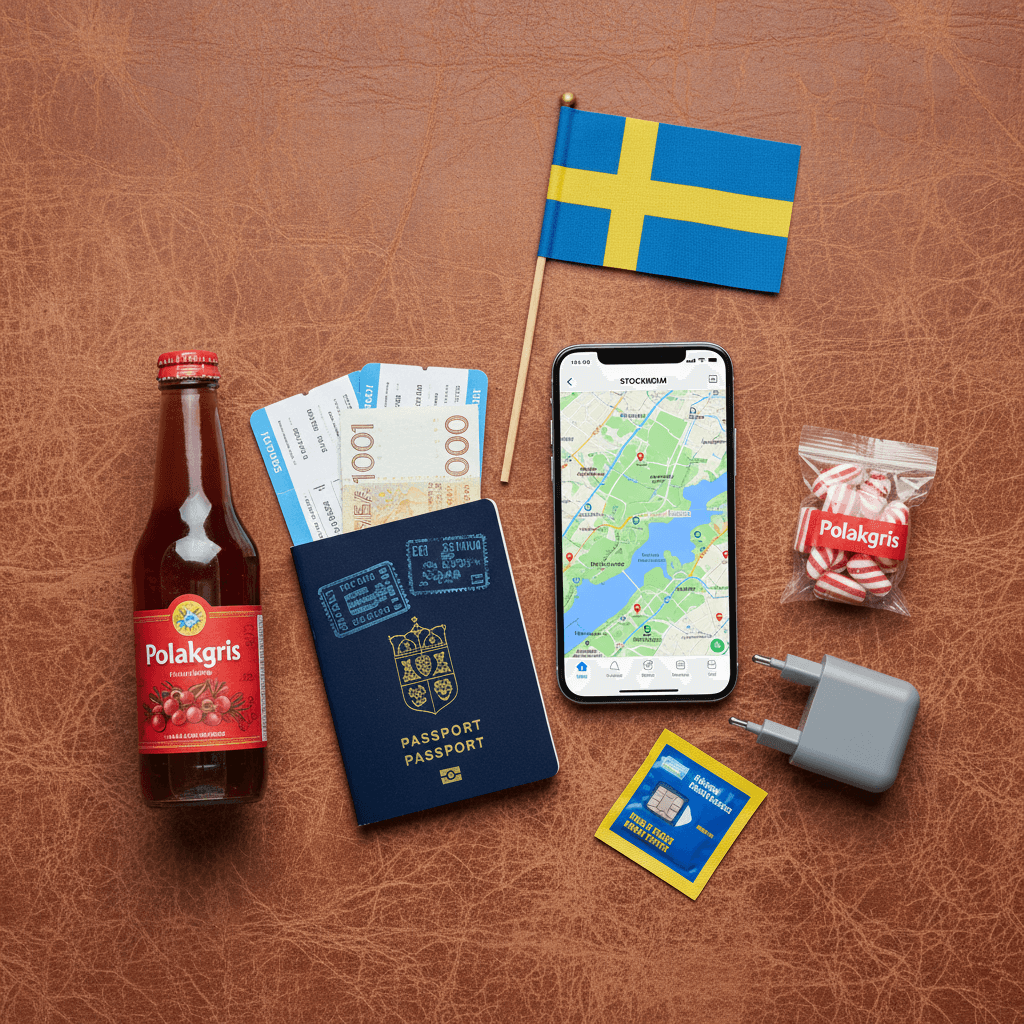
Sweden
Complete Digital Nomad Guide

Policy Stability
Stamped Nomad ExclusiveHow likely visa and immigration policies are to remain unchanged
Quick Facts
Nomad Visa Cost
N/A
Max Stay
3 months
Renewable
No
Cost of Living
$2,600/mo
Avg Internet
213 Mbps
Safety Score
6/10
Healthcare
High
Coworking
High
English Friendly
High
Time Zones
CET, CEST
Entry Methods Available
Best For
Navigating the Swedish Entry System
Sweden is a cornerstone of the Schengen Area, which makes entry straightforward for many nomads but requires a bit of paperwork for others. The system is split into two main tracks: short-term stays under 90 days and long-term residence permits for those planning to settle in for a season or longer. All applications are managed by Migrationsverket, the Swedish Migration Agency, though you will likely interact with an embassy or a service provider like VFS Global for your initial filings.
If you are from the US, Canada, Australia, the UK, or any EU/EEA country, you can roll into Sweden without a visa for up to 90 days within any 180-day window. If you hail from countries like India, China, or South Africa, you will need to secure a Schengen visa before you board your flight. Sweden does not offer a visa on arrival, so do not expect to figure it out at the gate in Arlanda.
The Tourist Visa (Schengen C-Type)
The standard tourist visa is your ticket for a short-term scouting trip. It allows you to explore the archipelago or hunt for the Northern Lights for up to 90 days. The application fee is roughly €80 to €90 (about 900 SEK) for adults, while children aged 6 to 12 pay about half that. Kids under 6 usually get in for free.
You should apply at least 15 days before your trip, though two months in advance is a safer bet during the busy summer months. Extensions are incredibly rare and usually only granted for emergencies like a sudden illness. If you want to stay longer than 90 days, you need to look into a national D-type visitor's permit rather than trying to stretch a tourist visa.
Business Visits
If you are heading to Stockholm for a series of networking events or to meet with a local tech incubator, the Business Schengen visa is the correct path. It carries the same 90-day limit as the tourist version but requires an official invitation letter from a Swedish host. You also need to prove you have enough cash to support yourself. The current requirement is 450 SEK per day, though this can be waived if your host is picking up the tab for your room and board.
Long-Term Residence and Work
For nomads who want to make Sweden a semi-permanent base, the D-type national visa is the goal. This covers work, study, and self-employment. Unlike some Mediterranean countries, Sweden does not have a dedicated "Digital Nomad Visa" yet, so most remote workers look toward the Self-Employment Permit. This requires a solid business plan and proof that you have enough experience in your field to run a profitable venture.
The EU Blue Card is another option for highly skilled professionals. It requires a job offer with a salary that meets a specific threshold, but it offers a faster track to permanent residency than standard work permits.
Upcoming Changes for 2025 and 2026
The Swedish government is tightening several immigration rules over the next two years. If you are traveling with an older passport, be aware that extended passports will no longer be considered valid for entry starting October 1, 2025. Your document must be a standard, non-extended version to pass through border control.
The EU is also rolling out the Entry/Exit System (EES) on October 12, 2025. This will replace manual passport stamping with an automated biometric registry. While it should speed up lines eventually, expect some growing pains at the border during the initial rollout. Additionally, Sweden is raising the salary requirements for work permits in April 2025, making it slightly more difficult for lower-wage roles to qualify for residency.
Quick Facts for Your Application
- Standard Fee: €80-90 for adults.
- Processing Time: Usually 15 days, but can take up to 45 days.
- Proof of Funds: 450 SEK per day for short stays.
- Validity: 90 days within a 180-day period for C-type visas.
- Digital Status: Applications start online, but you must visit an embassy for biometrics.
The Reality of Remote Work in Sweden
If you are looking for a shiny, government-branded "Digital Nomad Visa" with a Viking logo, you are out of luck. Sweden has not joined the ranks of countries offering a specific remote work permit. Instead, nomads who want to stay longer than a standard 90-day Schengen visit have to get creative with the Self-Employed Residence Permit. This is not a casual application; it is a serious commitment designed for people who actually intend to run a business within Swedish borders.
For most nomads, the 90-day rule is the easiest path. If you hold a passport from a visa-exempt country, you can hop between Stockholm's coffee shops and Gothenburg's coworking spaces for three months without any paperwork. But if you want to settle in for the long haul, you need to prove you are an entrepreneur, not just an employee with a laptop.
The Self-Employed Route
The Swedish Migration Agency, known as Migrationsverket, offers a permit for those running their own business. To qualify, you must own at least 51% of your company and show that you have the ultimate responsibility for its operations. This is perfect for freelancers or consultants, but it is a non-starter if you are a full-time remote employee for a foreign corporation.
The authorities want to see that your business is viable and that you have deep experience in your field. You will need to submit a professional business plan and show that you have established networks or customers. They also expect you to speak English or Swedish well enough to handle your business dealings without a translator.
Financial Requirements
Sweden is famously expensive, and the government wants to ensure you will not end up relying on their social safety net. You must prove you have enough cash in the bank to support yourself and any family members for the first two years. These funds cannot be loans; they must be your own capital.
- Main Applicant: Approximately SEK 200,000 (~€18,000)
- Spouse/Partner: SEK 100,000
- Per Child: SEK 50,000
In addition to your personal savings, you must show that the business itself will generate enough profit to cover your living expenses. The agency will conduct a financial assessment of your projected income to make sure the numbers add up.
The Application Process
The timeline for this permit is the biggest hurdle. Processing times are notorious, often stretching from 6 to 12 months or even longer. You should apply from your home country via the Migrationsverket online portal. The application fee is SEK 2,000. While you wait, you cannot live in Sweden, so plan your travels accordingly.
If your application is successful, you are granted a 1-year permit. This is essentially a probationary period. You can renew it annually for up to two years. If your business is thriving after that point, you may be eligible for permanent residency.
Taxes and the Personnummer
Once you stay in Sweden for more than six months, you generally become a tax resident. This means the Swedish Tax Agency, Skatteverket, will want a cut of your worldwide income. Tax rates are high, usually ranging from 30% to 55%, but this comes with access to world-class infrastructure and services.
One of your first tasks should be applying for a personnummer, the Swedish personal identity number. Without this, you will find it nearly impossible to open a bank account, get a gym membership, or sign a phone contract. It is the golden key to living a normal life in Sweden.
Important Restrictions
This permit is strictly for running your own business. You are not allowed to take up local employment with a Swedish company while on this visa. If you decide you would rather just work for a local tech giant, you would need to switch to a standard work permit sponsored by that employer. For EU and EEA citizens, none of this applies; you have the right to live and work in Sweden freely, though you still need to register with the tax authorities if you stay long-term.
The 90-Day Rule
Sweden operates under the standard Schengen Area framework. If you hold a passport from a country like the United States, Canada, Australia, or Japan, you don't need to apply for a visa before flying to Stockholm. You can stay for up to 90 days within any 180-day period. This is a rolling window, so you have to keep a close eye on your calendar if you are hopping between different European countries.
For those from countries on the visa-required list, such as India, China, or South Africa, you will need to apply for a Schengen Visa (Type C). This process is handled through Swedish embassies or VFS Global centers. It is not an instant process; you should submit your application at least two months before your flight to account for the 15 to 60-day processing time.
No Visas at the Border
One thing to keep in mind is that Sweden does not offer any form of visa on arrival. If your nationality requires a visa, you must have that sticker in your passport before you land at Arlanda. If you arrive without the proper authorization, the border police will likely put you on the next flight back home. There is currently no e-visa system either, though a digital pre-authorization called ETIAS is set to launch in late 2026 for travelers who are currently visa-exempt.
Costs and Requirements
Budgeting for your paperwork is straightforward. The standard fees are set across the Schengen zone, though they do occasionally adjust for inflation. Here is what you can expect to pay for a tourist entry:
- Schengen Visa Fee: €90 for adults.
- Children (6-12): €45.
- VFS Service Fees: Usually between €20 and €40 depending on the location.
- ETIAS (Starting 2026): €7 for adults, while those under 18 or over 70 are free.
The Myth of the Border Run
If you are used to the "border runs" common in Southeast Asia or parts of Latin America, you will need to change your strategy for Sweden. Leaving the Schengen Area for a weekend in London or flying to Montenegro will not reset your 90-day clock. The Swedish authorities use a rolling calculator. If you have spent 90 days in the zone, you must stay out of the entire Schengen Area for another 90 days before you can return. Trying to circumvent this by frequently crossing borders can flag your passport in the system, which might lead to a denial of entry.
Extensions and Long Stays
Extending a tourist visa while you are already inside Sweden is incredibly difficult. The Migration Agency generally only grants extensions for force majeure situations, such as a sudden serious illness or a major natural disaster that prevents travel. Simply wanting more time to explore the Swedish archipelago won't cut it.
If you know from the start that 90 days isn't enough, do not enter on a tourist visa. Instead, apply for a visitor's residence permit before you leave home. This permit is designed for people who want to stay in Sweden for more than three months but less than a year, provided you can show you have the funds to support yourself without working.
The Risks of Overstaying
Sweden is efficient, and that efficiency extends to their border enforcement. Overstaying your allowed time is a serious offense that can haunt your future travels. If you get caught, the consequences are swift:
- Fines: These can range from €500 to over €5,000.
- Entry Bans: You could be barred from the entire Schengen Area for 1 to 5 years.
- Deportation: You may be detained and forcibly removed at your own expense.
- Future Denials: An overstay on your record makes it significantly harder to get any European visa in the future.
Keep your travel plans within the legal limits. The Swedish police do conduct internal checks, and being "found" in the system after your time has expired is a quick way to end your nomad journey on a sour note.
Understanding the Swedish Long-Term Landscape
Sweden doesn't make it easy to just drift in and stay forever, but for those with a plan, the paths are clear. If you are coming from outside the EU or EEA, you need a solid reason to be there for more than 90 days. Whether you are building a business, working for a Swedish firm, or joining family, everything goes through the Swedish Migration Agency, known locally as Migrationsverket.
Most permits require you to apply from outside the country. You will need a valid passport, proof that you can support yourself financially, and comprehensive health insurance. Processing times vary wildly, sometimes taking anywhere from 1 month to a full year, so starting early is the only way to avoid stress.
The Freelancer and Self-Employment Route
Sweden does not have a specific "Digital Nomad Visa," but the self-employment permit is the standard workaround for freelancers and entrepreneurs. To qualify, you must own at least 50% of a viable Swedish business or operate as a sole trader. The bar for entry is high because the government wants to ensure your venture will actually contribute to the economy.
You will need to present a detailed business plan that shows your industry experience and proves the business will be profitable. Specifically, you should expect to show a turnover of at least SEK 200,000 in your first year. Beyond the business capital, you must prove you have personal savings to live on:
- SEK 200,000 for the main applicant
- SEK 100,000 for a spouse or partner
- SEK 50,000 for each accompanying child
This permit usually lasts for 2 years initially. If the business is still standing and profitable after that period, you can apply for an extension. The application fee is SEK 2,000.
Spending Retirement in Sweden
There is no dedicated retirement visa for non-EU citizens. If you want to spend your golden years in a Swedish cottage, you generally apply for a long-term visitor's residence permit. This is a discretionary permit, meaning it is granted on a case-by-case basis and does not give you the right to work.
You must show you have sufficient funds to live without help from the Swedish social system. For 2026, this is set at roughly SEK 10,440 per month for a single person. These permits are typically granted for up to 1 year at a time and are not intended for permanent settlement, though they can sometimes be extended. The fee starts at SEK 1,500.
General Work and Residency Rules
If you aren't working for yourself, a standard work permit is the most common entry point. This requires a formal job offer from a Swedish employer with a minimum monthly salary of SEK 13,000. Your employer must also have advertised the position in Sweden and the EU for at least ten days before offering it to you. Like the self-employment route, these permits are the foundation for a long-term life in the Nordics.
The Road to Permanent Residency
If you fall in love with the Swedish lifestyle, you can eventually trade your temporary permit for a permanent one. This usually happens after 4 or 5 years of continuous residence on a qualifying permit. The requirements for "settling" have become stricter recently.
To secure permanent status, you must prove you have been self-supporting and haven't relied on public funds for more than 3 months in the last four years. You also need a clean record with no criminal sentences longer than 3 months. After 5 years, you may also be eligible for long-term EU resident status, which makes moving within the rest of Europe much simpler. The application fee for permanent residency is SEK 2,000.
Your Monthly Budget Breakdown
Living the nomad life in Sweden isn't exactly cheap, but it is manageable if you approach it with a strategy. Depending on your lifestyle and choice of city, you should expect to spend between 15,000 and 35,000 SEK per month. While Stockholm carries a premium price tag, cities like Malmö offer a more relaxed pace with a significantly lower entry point for housing and social life.
The Housing Market in Nomad Hubs
Finding a short-term, furnished apartment is the biggest hurdle for most. Because of high demand in trendy neighborhoods, expect to pay a markup of 20% to 50% over long-term local rates. Most nomads stick to areas like Södermalm in Stockholm or Majorna in Gothenburg for the proximity to cafes and coworking spaces.
Stockholm (Södermalm/Vasastan)
- Budget: 10,000–12,000 SEK
- Comfortable: 12,000–16,000 SEK
- Premium: 16,000+ SEK
Gothenburg (Majorna/Linné)
- Budget: 9,000–10,500 SEK
- Comfortable: 10,500–13,000 SEK
- Premium: 13,000+ SEK
Malmö (Möllevången/Västra Hamnen)
- Budget: 8,000–9,000 SEK
- Comfortable: 9,000–11,000 SEK
- Premium: 11,000+ SEK
Uppsala (Central)
- Budget: 8,500–9,500 SEK
- Comfortable: 9,500–12,000 SEK
- Premium: 12,000+ SEK
Food and Dining
Eating out is where your budget can quickly spiral. A casual lunch "Dagens Lunch" usually costs around 140 SEK, but dinner with drinks will easily double that. Most nomads balance the cost by shopping at budget-friendly grocery chains like Lidl or Willys.
- The Budget Cook (3,000 SEK): Focuses on home-cooked meals and local staples. Expect to pay 16 SEK for a liter of milk, 26 SEK for a loaf of bread, and 53 SEK for a standard portion of chicken.
- The Social Nomad (4,000 SEK): A mix of groceries and dining out once or twice a week at mid-range cafes or bistros.
- The Foodie (5,500+ SEK): Frequent dining in Stockholm’s high-end districts where meals range from 250 to 450 SEK per person.
Getting Around
Sweden’s public transport is world-class, so there is rarely a need for a car. Most cities are incredibly bike-friendly; buying a used bike for 1,000 to 3,000 SEK is a smart move that pays for itself within a few months. Monthly transit passes are the standard for most residents.
- Stockholm (SL Pass): 1,060 SEK
- Gothenburg (Västtrafik): 895 SEK
- Uppsala (UL Pass): 820 SEK
- Malmö (Skånetrafiken): 780 SEK
Coworking and Connectivity
While Sweden has some of the fastest public WiFi in the world, a dedicated desk is often necessary for community and focus. Prices vary based on the exclusivity of the neighborhood and the amenities provided.
- Budget Desk: 2,500–4,000 SEK. These are often hot-desks in quieter residential areas or shared creative studios in Malmö.
- Comfortable Hub: 4,000–5,500 SEK. This gets you a spot in central locations like Kungsholmen, often including coffee, events, and 24/7 access.
- Premium Office: 6,000+ SEK. High-end executive spaces in Stockholm’s Östermalm district.
Health and Wellness
Since nomads generally do not have access to the subsidized Swedish public healthcare system without a personnummer, private insurance is a requirement. Without it, a simple visit to a GP can cost between 110 and 300 SEK, and emergency costs can be astronomical.
- Basic Expat Coverage: 1,000–1,200 SEK per month. Covers emergencies and basic illness.
- Comprehensive Coverage: 1,400–1,800 SEK per month. This typically includes dental care, specialists, and medical evacuation services.
The Big Three: Choosing Your Swedish Base
Sweden isn't exactly a budget destination, but for nomads who value high-speed fiber, sleek design, and a society that actually works, it is hard to beat. Most remote workers gravitate toward the southern half of the country where the sun stays up a bit longer and the train connections are seamless. While Stockholm is the undisputed heavy hitter, cities like Gothenburg and Malmö offer distinct vibes that might suit your rhythm (and your wallet) a bit better.
The common thread across all three is the infrastructure. You can walk into almost any cafe, flip open your laptop, and expect speeds that make Zoom calls feel like you are in the same room. Just remember that the "fika" culture is sacred here; it is perfectly fine to work from a cafe, but make sure you are actually buying coffee and cinnamon buns to keep the staff happy.
Stockholm: The Tech Powerhouse
Stockholm is the crown jewel of the Nordic startup scene. It is expensive, polished, and incredibly efficient. If you want to be surrounded by "unicorns" and high-level networking, this is your spot. The city is spread across 14 islands, meaning you are never more than a few minutes from the water, even when you are deep in a coworking session.
- Monthly Cost: Around $4,100
- Internet Speed: 35 Mbps average (mobile can hit 263 Mbps)
- Coworking: 141+ spaces, including Impact Hub and massive metro hubs
- Community: Large and active, with nearly 1,000 documented nomad reviews
The Upside: The sheer volume of coworking options is staggering. You have access to world-class nightlife in Södermalm and a cafe culture that is second to none. Safety is rarely a concern, even late at night.
The Downside: Your bank account will feel the sting. Finding a short-term apartment is notoriously difficult and often requires a "second-hand" lease. Winters are also brutal, with the sun setting before 3:00 PM in December.
Gothenburg: The Creative Coast
If Stockholm is the high-energy older sibling, Gothenburg is the laid-back artist. Located on the west coast, it has a more industrial, salty-air charm. It is significantly more affordable than the capital, yet it still maintains a high standard of living and a very respectable tech scene. The city feels more compact and manageable, with a heavy emphasis on work-life balance.
- Monthly Cost: Approximately $3,035
- Internet Speed: 38 Mbps
- Coworking: 55+ dedicated spaces
- Community: Medium-sized and welcoming
The Upside: You get a better bang for your buck here. The seafood is world-class, the tram system is iconic, and the locals are generally considered "friendlier" than their Stockholm counterparts. It is a great middle-ground for those who want city life without the frantic pace.
The Downside: The nomad community is smaller, so you might have to put in more effort to find your tribe. It also rains quite a bit more than in the east, so pack a solid jacket.
Malmö: The Gateway to Europe
Malmö is Sweden’s most multicultural city, located just a 35-minute train ride across the bridge from Copenhagen. This proximity gives you two countries for the price of one. It is the scrappy, innovative underdog of the trio, boasting a surprisingly high number of coworking spaces for its size and a very bike-friendly layout.
- Monthly Cost: Roughly $3,500
- Internet Speed: 43 Mbps (the fastest of the three)
- Coworking: 150+ spots and growing
- Community: Growing rapidly due to the "Copenhagen spillover"
The Upside: It is the most "continental" feeling city in Sweden. The food scene is incredibly diverse and much cheaper than Stockholm. Being so close to a major international airport like Kastrup makes weekend trips to the rest of Europe a breeze.
The Downside: While generally safe during the day, some neighborhoods require more awareness at night compared to the other two cities. It lacks the "grandeur" of Stockholm, but makes up for it in grit and creativity.
The Connectivity Standard
Sweden is a dream for anyone whose paycheck depends on a stable connection. You are looking at a country where high-speed fiber is the baseline, not a luxury. With over 80% of households plugged directly into fiber-to-the-premises networks, you can expect seamless video calls whether you are in a high-rise in Stockholm or a quieter coastal town.
The national average for fixed broadband sits around 161 Mbps download, but top-tier providers like Bahnhof often push those speeds past 210 Mbps. If you are moving large files or streaming 4K content, the infrastructure here handles it without breaking a sweat. Even the mobile networks are impressively robust, with 5G coverage reaching nearly 90% of the population.
Top Coworking Hubs
The coworking scene in Sweden, particularly in Stockholm, feels more like a collection of high-end social clubs than sterile offices. There is a heavy emphasis on "fika" (the traditional Swedish coffee break) and networking, making it easy to integrate into the local professional community.
- United Spaces: This is a favorite for those who like a polished, cafe-style atmosphere. It feels modern and professional without being stuffy.
- The Castle: Located in a historic building, this space leans into a creative, community-focused vibe. It is perfect if you find standard corporate offices soul-crushing.
- Impact Hub Stockholm: A great choice for social entrepreneurs. The staff is famously helpful, and the layout is spacious and clean.
- Lager 46: Situated in the heart of Södermalm, this spot offers a fantastic terrace for the summer months and a central location near the best bars and shops.
- Norrsken House: This is the place to be if you are in the tech or startup world. It is a massive ecosystem that hosts frequent events and networking mixers.
Membership Costs and Budgeting
Quality comes at a price in Scandinavia. While you can find budget-friendly lounge access, a dedicated spot in a premium facility will be one of your larger monthly expenses. Most spaces offer flexible plans depending on how often you need a desk.
- WeWork: Monthly memberships generally start around SEK 3,019. This gives you access to their global network and high-end amenities.
- Alma: For a more exclusive, design-forward environment, expect to pay between SEK 4,000 and SEK 6,500 for a hot desk.
- Bro Coworking: A more accessible option, offering lounge access for roughly SEK 1,500 per month.
- Regus: Flexible plans usually average around SEK 2,550 and up, providing a more traditional corporate environment.
Cafe Culture and Public WiFi
If you prefer the hum of a coffee shop, you will find Sweden very accommodating. Most cafes offer free, reliable WiFi that averages about 21 Mbps. Popular chains like Espresso House are dependable backups with speeds around 38 Mbps, and independent spots like Kaffekoppen can reach 43 Mbps. Swedes are generally relaxed about people working on laptops, provided you keep the coffee flowing and avoid taking loud calls in quiet corners.
Mobile Data and eSIMs
Setting up a local SIM or an eSIM is the first thing you should do upon arrival. Local providers offer excellent value, and 5G speeds in the cities often range between 110 Mbps and 260 Mbps. If you have a phone that supports eSIMs, apps like Nomad or Airalo are the most convenient way to get online the moment you land.
- Nomad eSIM: Approximately USD 20 for 20GB of data over 30 days.
- Airalo: Roughly USD 18 for 10GB.
- Telia: Local prepaid plans start at SEK 149 for 5GB.
- Tele2: Good for heavy users, offering 20GB for around SEK 249.
- Telenor: Plans start at SEK 199 and include generous EU roaming, which is handy if you plan on taking weekend trips to Copenhagen or Oslo.
The Swedish Healthcare System
Sweden operates a tax-funded public healthcare system that is world-class in quality but often slow in delivery. For digital nomads, your access depends heavily on whether you have a personnummer (a Swedish personal identity number). If you are registered with the Swedish Tax Agency (Skatteverket), you get the same subsidized rates as locals. If you are just passing through, you will likely be paying out-of-pocket or relying on international insurance.
The public system is managed regionally, meaning the experience can vary slightly between Stockholm and a cabin in Dalarna. While the medical standards are exceptionally high, the primary drawback is the wait time. It can take several days to see a GP and anywhere from two to six months to see a specialist. To combat this, the government is injecting 6.6 billion SEK into the 2026 budget specifically to shorten queues for elective surgeries.
Public vs. Private Care
While 90% of Swedes use the public system, about 10% opt for private insurance to skip the lines. Private clinics offer the same high medical standards but with significantly faster turnaround times, often getting you an appointment within 24 to 48 hours. Most private doctors speak fluent English, making it the preferred choice for expats who haven't mastered Swedish yet.
Cost Comparison:
- Public GP Visit: 200 to 300 SEK
- Private GP Visit: 1,500 to 2,500 SEK
- Public Specialist: 400 SEK
- Private Specialist: 2,000 to 4,000 SEK
- Public Emergency Room: 400 to 450 SEK
Insurance for Nomads and Expats
If you are an EU/EEA citizen, your EHIC card covers you for medically necessary care at the public rate. For everyone else, you need private coverage until you are officially a resident. Even for those with residency, many nomads keep private international insurance to access the private sector's speed.
- Nomad-Specific Insurance: Providers like SafetyWing are popular for short-term stays and emergencies.
- Visa-Compliant Plans: Companies like Feather offer plans specifically designed to meet Swedish migration requirements for those without a personnummer.
- International Plans: AXA or Cigna provide high-limit coverage that includes medical evacuation and private hospital stays.
- Employer Plans: if you take a local contract, your employer might offer a private health plan, which usually costs between 300 and 700 SEK per month.
Top Hospitals for Internationals
If you need specialized care, Sweden’s university hospitals are among the best globally. Most have dedicated international patient offices and staff who are comfortable consulting in English.
- Karolinska University Hospital (Stockholm): Consistently ranked as one of the top hospitals in the world.
- Sahlgrenska University Hospital (Gothenburg): A leading center for advanced research and emergency care.
- Uppsala University Hospital: Known for its specialized departments and international outreach.
- Capio Sankt Görans (Stockholm): A private alternative that provides high-speed emergency and elective services.
Pharmacies and Prescriptions
Swedish pharmacies, such as Apotek Hjärtat or Kronans Apotek, are modern and efficient. Most prescriptions are handled electronically (e-recept). You simply show your ID at the counter, and they pull up your records. Sweden uses a "high-cost protection" system, meaning you will never pay more than 2,850 SEK per year for prescription medications; the government covers the rest once you hit that cap.
Keep in mind that Swedish pharmacies generally do not accept foreign e-prescriptions. If you have a prescription from your home country, try to bring a physical paper copy or, better yet, visit a local doctor to have it converted into the Swedish system. Over-the-counter medicine is available but restricted to pharmacies and some grocery stores, typically open from 09:00 to 19:00 on weekdays.
Emergency and Non-Emergency Advice
In a life-threatening emergency, dial 112. The operators speak English and can dispatch ambulances or the police immediately. For non-emergencies, Sweden has a brilliant service called 1177. You can call this number 24/7 to speak with a registered nurse who can provide medical advice, tell you if you need to see a doctor, or help you find the nearest open clinic.
The Reality of a Cashless Society
Sweden is one of the most digitized economies on the planet. You will quickly notice that many cafes, shops, and even public toilets do not accept physical cash at all. While the Swedish Krona (SEK) is the official currency, your life here will revolve almost entirely around plastic and digital apps.
If you do need physical bills, stick to the Bankomat network. These ATMs are generally fee-free for international cardholders. Avoid third-party machines like Forex or Nokas, which often tack on a fee of 30 to 50 SEK per transaction. Always remember to select "Decline Conversion" at the screen so your home bank handles the exchange rate instead of the ATM provider.
Traditional Banking vs. Digital Alternatives
Opening a traditional account at a "Big Four" bank like Handelsbanken, Swedbank, Nordea, or SEB is a rite of passage for long-term residents, but it is notoriously difficult for short-term nomads. To get the full suite of services, you need a personnummer (a Swedish personal identity number). Obtaining this requires registering with the Tax Agency (Skatteverket), which usually demands proof you are staying for at least a year.
For most nomads, digital-first banks are the smarter play. They provide the IBANs you need without the bureaucratic headache of a local branch visit. Wise and Revolut are the gold standards here. They are widely accepted across the country and offer much better exchange rates than traditional banks.
- Wise: Best for those receiving payments in multiple currencies. They use the mid-market rate and charge a transparent fee between 0.4% and 2%.
- Revolut: Great for travelers who want extra perks like lounge access or built-in budgeting tools.
- Lunar: A solid Nordic-specific digital bank that is gaining popularity for its sleek interface and local integration.
Transferring Funds to Sweden
Moving money into a Swedish account through traditional wire transfers is slow and expensive, often costing $15 to $50 plus a hidden markup on the exchange rate. If you are moving a significant amount for a long-term rental deposit, use a dedicated transfer service to save hundreds of dollars.
- Wise: Most transfers arrive within hours for a fraction of the cost of a bank wire.
- Remitly: A reliable choice for regular, smaller remittances.
- Western Union: Only useful if you specifically need a cash pickup, though this is rare in Sweden.
The Crypto Landscape
Sweden treats cryptocurrency as a taxable financial instrument rather than a currency. It is perfectly legal to trade and hold, but the tax man stays very well-informed. Under EU regulations like MiCA and DAC 8, exchanges are required to report transaction data directly to the Swedish Tax Agency.
If you are considered a tax resident, you must report all capital gains on your crypto holdings. Any exchange operating within the country must be authorized by Finansinspektionen (the Financial Supervisory Authority), ensuring a high level of security but also total transparency for the government.
Budgeting for Fees
If you manage to open a local account, expect to pay around 250 SEK annually for a basic current account. Debit cards usually carry a separate fee of 300 to 360 SEK per year. Most nomads find that sticking with a premium Wise or Revolut plan is more cost-effective, especially since they allow free ATM withdrawals up to £200 (or equivalent) per month before a small percentage fee kicks in.
A final tip for the daily grind: download the Swish app if you get a local bank account and personnummer. It is the universal way Swedes pay each other for everything from flea market finds to splitting a dinner bill. Without it, you might feel a little left out of the local financial ecosystem.
The Logistics of Bringing the Crew
Moving to Sweden with children is a relatively straightforward process if you hold a valid residence permit. Whether you are there on a work visa or a study permit, your children under 18 can join you through family reunification. You will need to show you can support everyone; for a single child under six, that means having at least 3,306 SEK available monthly after your rent is paid.
If you are an EU citizen, the process is even smoother since there are no visa fees. For everyone else, expect to pay 1,530 SEK per adult and 750 SEK per child. Keep your birth certificates and marriage licenses handy, and make sure they are translated into Swedish or English before you start the paperwork.
Schooling and Education Costs
Sweden offers a stark choice between high-end international private schools and a robust, free public system. Most nomads lean toward international schools to keep their kids in an English-speaking environment or the IB curriculum, but these come with a price tag. Annual tuition for private international primary schools usually sits between 110,000 and 180,000 SEK, while high school can climb to 260,000 SEK.
Be prepared for a few upfront costs that can catch you off guard:
- Application fees ranging from 1,000 to 2,500 SEK.
- One-time enrollment fees that can hit 60,000 SEK.
- Annual meal fees between 2,000 and 10,000 SEK.
On the flip side, Swedish public schools are entirely free, including lunch and materials. They are famous for their "språkintroduktion" (language introduction) programs, which help non-Swedish speaking kids integrate quickly. If you plan to stay long-term, the public route is a massive money-saver.
World-Class Healthcare for Kids
Once your family has a personnummer (personal identity number), healthcare for children is essentially free. Medical visits for anyone under 20 years old cost nothing. You will also have access to the BVC (Barnavårdscentralen), which are specialized centers for children under six that handle everything from vaccinations to developmental checks.
The system is designed to protect your wallet. Out-of-pocket healthcare costs for adults are capped at roughly 1,000 SEK per year, and prescription drugs are capped at 3,800 SEK. Even dental care is covered by the regional councils for residents under 20.
The Childcare "Cheat Code"
Sweden’s childcare system is arguably the best in the world for working parents. Fees are "maxtaxa," meaning they are capped based on your income. For your first child, the most you will ever pay is 1,382 SEK (about $135 USD) per month. The price drops for your second and third child, and the fourth child attends for free.
To make things even better, the government sends you a monthly "barnbidrag," or child allowance, of 1,250 SEK per child. This tax-free payment almost entirely covers the cost of preschool, making high-quality childcare nearly net-zero for many families.
Where to Set Up Base
While the whole country is family-centric, a few cities stand out for nomads:
- Stockholm: Best for museum access and international school variety. Neighborhoods like Södermalm are perfect for parents who want walkable streets and plenty of parks like Djurgården.
- Gothenburg: A bit more relaxed than the capital. It features the Universeum science center and Slottsskogen, a massive park with a free zoo.
- Malmö and Lund: These southern spots offer a slower pace of life and easy access to Copenhagen. They have excellent international schools and a very high safety rating.
A Note on Safety
Sweden remains one of the safest places on earth for families, but it is worth staying informed. There has been a rise in organized crime in specific suburbs of the three largest cities. While this rarely spills over into the areas where most expats live or visit, it is the reason for some international travel advisories. Most residential areas remain quiet, well-lit, and perfectly safe for kids to walk to school or play in the local "parklek" (staffed playgrounds).
Safety in the Streets and the Digital Space
Sweden is famously safe, frequently appearing at the top of global peace and security rankings. Violent crime against visitors is incredibly rare, though like any major European hub, you need to keep your wits about you in crowded areas. Most issues for nomads are opportunistic, such as pickpocketing in Stockholm or Gothenburg transit hubs. While there has been an uptick in gang-related activity in specific urban outskirts, these incidents rarely affect the typical nomad lifestyle or the central neighborhoods where you’ll likely be working.
The real threats are often digital or logistical. Housing scams are a headache in Stockholm’s competitive rental market. Never wire money for an apartment you haven't seen, and be wary of "landlords" who claim to be abroad and demand a deposit via untraceable methods. In the city, stick to official taxis with yellow license plates. Some rogue drivers use "fake" meters or take the scenic route to overcharge unsuspecting arrivals. If you’re at a restaurant, keep your bag on your lap or looped around your chair; "distraction thefts," where someone asks for a photo or directions while an accomplice grabs your tech, do happen in tourist heavy zones.
A Gold Standard for Inclusivity
If you identify as LGBTQ+, Sweden is arguably the most welcoming home base you can find. The country legalized same-sex marriage back in 2009 and has had anti-discrimination laws on the books since 1987. Public support for equality is staggering, with over 92% of the population favoring same-sex marriage. You won't find morality laws here; instead, you'll find massive celebrations like Stockholm Pride and a culture where you can simply exist without scrutiny. This progressive atmosphere extends to gender equality and general social welfare, making it a comfortable environment for everyone.
Cracking the Cultural Code
Swedes are polite but famously reserved. Don't mistake their lack of small talk for rudeness; they simply value privacy and don't want to bother you. Punctuality is a religion here. If you meet a local for coffee at 10:00, show up at 09:55. Being late is seen as a sign of disrespect for their time. When meeting people, a firm handshake and eye contact are the standard. Hugs are usually reserved for close friends you’ve known for years.
The secret weapon for social integration is fika. It is more than a coffee break; it is a cultural institution. It’s the designated time to slow down, eat a cinnamon bun, and actually talk to your colleagues or neighbors. If someone invites you for fika, always say yes. It is the primary way Swedes bond without the pressure of a formal dinner or a loud bar.
The Language Barrier (or Lack Thereof)
You can easily live in Sweden for years without speaking a word of Swedish because English fluency is nearly universal. Most Swedes under 50 speak English with near-native proficiency. However, there is a catch: if you want to move beyond the "perpetual tourist" phase, you should try to learn the basics. Locals appreciate the effort, even if they immediately switch to English the moment they hear you struggle. For long-term nomads, the government often provides free SFI (Swedish for Immigrants) classes, which are also a great way to meet other expats.
Where to Find Your Tribe
The nomad scene is concentrated in a few key hubs, each with its own flavor. Networking is easiest through established Facebook groups and coworking spaces where the "unspoken" social rules are more relaxed.
- Stockholm: Head to Södermalm for a hipster, creative vibe or Vasastan for a more polished, professional atmosphere.
- Gothenburg: The Haga district is the go-to for cozy cafes and a slower pace of life.
- Malmö: Known for its gritty, international feel and proximity to Copenhagen, making it great for those who want a multicultural environment.
- Uppsala: A student city that offers a perfect balance of history and high-speed internet, located just a short train ride from the capital.
To truly integrate, don't just stick to nomad meetups. Join a "förening" (club or association). Whether it is a running club, a bouldering gym, or a choir, Swedes connect through shared hobbies. Showing up consistently to a group activity is the fastest way to turn a reserved local into a lifelong friend.
Understanding Residency: The Six-Month Rule
Sweden does not use a rigid 183-day clock to determine your tax status. Instead, the Swedish Tax Agency (Skatteverket) looks at your "habitual abode." If you stay in the country for a continuous period of six months or more, you are generally considered a tax resident from day one. Short trips abroad for vacation do not reset this clock.
Even if you stay for shorter bursts, you might be flagged as a resident if you have "essential ties" to the country, such as owning a year-round home or having family based there. Some case law suggests that spending as few as 80 days per year in Sweden over several years could trigger residency. Once you hit that resident status, Sweden expects a slice of your worldwide income, regardless of where your clients are located.
Income Tax Rates and Brackets
Sweden is famous for its robust social safety net, and the tax rates reflect that investment. Your total tax bill is usually a combination of municipal and state taxes. Most nomads will deal primarily with the municipal rate, which averages 32.38%, though it fluctuates between 29% and 36% depending on which city you call home.
- Municipal Tax: Average of 32.38% on all earned income.
- State Tax: An additional 20% applied only to income exceeding SEK 643,100.
- Total Effective Rate: Can reach 52% to 55% for high earners.
- Basic Deduction: You get a break on the first SEK 16,800 to 44,800 you earn, depending on your total income level.
The SINK Alternative for Short Stays
If you are a true nomad passing through for less than six months, you might qualify for the SINK tax (Special Income Tax for Non-Residents). This is a flat rate applied to Swedish-source income. The rate is currently 25%, but it is scheduled to drop to 22.5% in 2026. This is often a much simpler route because it removes the need for complex deductions and, in many cases, the need to file a full year-end return.
Double Taxation and Treaties
You do not want to pay twice on the same dollar or krona. Sweden has signed double taxation treaties with over 90 countries, including the US, UK, Germany, and India. These agreements ensure you can claim credits in your home country for taxes paid in Sweden, or vice versa. If you are working for a non-Swedish employer and stay for fewer than 15 consecutive days (or 45 days total in a year), your income might be entirely exempt from Swedish tax under specific treaty protections.
Crypto and Capital Gains
Sweden views Bitcoin and other digital assets as "other assets" rather than currency. If you sell or exchange crypto, you will owe a flat 30% capital gains tax on the profits. You calculate this using the average cost basis method. If you are mining or staking, Skatteverket usually classifies that as earned income, which subjects it to those higher progressive tax rates up to 52%. You can offset your gains with losses, but usually only at 70% to 100% of the loss value.
Reporting and Deadlines
The Swedish tax year follows the calendar year. If you are a resident, you must file the Inkomstdeklaration 1. The window for filing typically opens in mid-March and closes in early May, usually between May 2 and May 4.
- Standard Income: Reported on the main digital portal.
- Crypto Gains: Reported on Form K4.
- Business Income: Reported on Form T2.
- Late Fees: Skatteverket is strict about deadlines; missing the May cutoff results in automatic financial penalties.
Special Exemptions for Experts
While there is no "Nomad Visa," high-level tech workers or researchers might qualify for the "Expert Tax" rule. If you earn over SEK 114,600 per month or work in a highly specialized field, you can apply to have 25% of your salary remain tax-exempt for five years. You must apply for this status within three months of starting your stay in Sweden.
Staying Connected
Sweden is a digital powerhouse, so you will rarely struggle for a signal. If you want a physical SIM card, head to a Pressbyrån convenience store or a carrier shop like Telia, Tele2, or Tre. A standard prepaid SIM with 5GB of data usually costs around 149 SEK.
For those who prefer to land with data already active, eSIMs are the way to go. BitJoy offers plans starting at $4.50 for 1GB, while Airalo and Holafly provide larger data buckets. Stick with Telia if you plan on exploring the northern wilderness, as they have the best rural coverage. Tre is often cheaper if you are staying strictly within city limits.
Navigating the Cities
Public transport in Sweden is exceptionally efficient. In Stockholm, the SL app is your lifeline for the metro, buses, and ferries. You can buy tickets directly in the app or simply tap your contactless credit card at the turnstiles. If you are heading to Gothenburg, download Västtrafik To Go instead.
- Ride-hailing: Uber and Bolt are active in major cities.
- Taxis: Sverigetaxi is a reliable nationwide option.
- Micromobility: Electric scooters from Voi and Tier are everywhere for short hops.
Where to Set Up Base
Choosing the right neighborhood changes your entire experience. Södermalm in Stockholm is the classic choice for nomads, packed with creative cafes and a high concentration of English speakers. If you want something more modern and slightly more affordable, Solna is a great hub just north of the city center.
For a more historic feel, Gamla Stan offers cobblestone charm, though it can be touristy. If you want to live like a local, look into Hägersten-Liljeholmen. It has a great underground music scene and plenty of quiet corners for deep work.
Finding a Home
The Swedish rental market is notoriously tight, so coliving spaces are often the best bet for nomads. Coliving.com is a solid resource for finding furnished spots with utilities included. Bromma Friends offers studios for roughly $1,000 per month, while Udda has options in Solna and Östermalm starting around $760.
If you prefer a more community-focused vibe, check Mapmelon or Nomadstays. These platforms vet locations specifically for Wi-Fi reliability and communal workspaces, which helps bridge the gap when you first arrive.
Food and Deliveries
Eating out is expensive, so you will likely rely on delivery apps on busy workdays. Foodora has the most extensive reach, delivering groceries and meals even in smaller towns. Wolt is known for its speed, often arriving in under 30 minutes in urban centers. Uber Eats is a reliable backup in Stockholm and Gothenburg.
Language and Communication
Almost everyone in Sweden speaks English fluently, but learning a few phrases goes a long way in social settings. The Simply Learn Swedish app is excellent for picking up the basics through native speaker recordings. While Duolingo is good for vocabulary, Simply Learn focuses more on the practical phrases you will actually use at a grocery store or cafe.
Safety and Emergencies
Sweden is incredibly safe, but it is good to have the right numbers saved just in case. The universal emergency number is 112 for police, fire, or medical emergencies. For non-urgent matters, use the following:
- 114 14: Police for non-emergencies
- 1177: Non-urgent medical advice and healthcare questions
- 113 13: Information during large-scale crises or accidents
Avoiding Common Pitfalls
The "lone wolf" approach can be tough here. Swedes can be reserved, so join local meetups or coworking spaces early to avoid isolation. Don't overpack; Sweden has everything you need, and dragging heavy suitcases over cobblestones is a mistake you only want to make once. Finally, if you stay longer than six months, look into getting a personnummer. It is the golden ticket to opening bank accounts and signing up for local services without a headache.
More Guides from Europe
Stay Updated on Sweden
Get notified about visa changes, policy updates, and new information for digital nomads in Sweden.