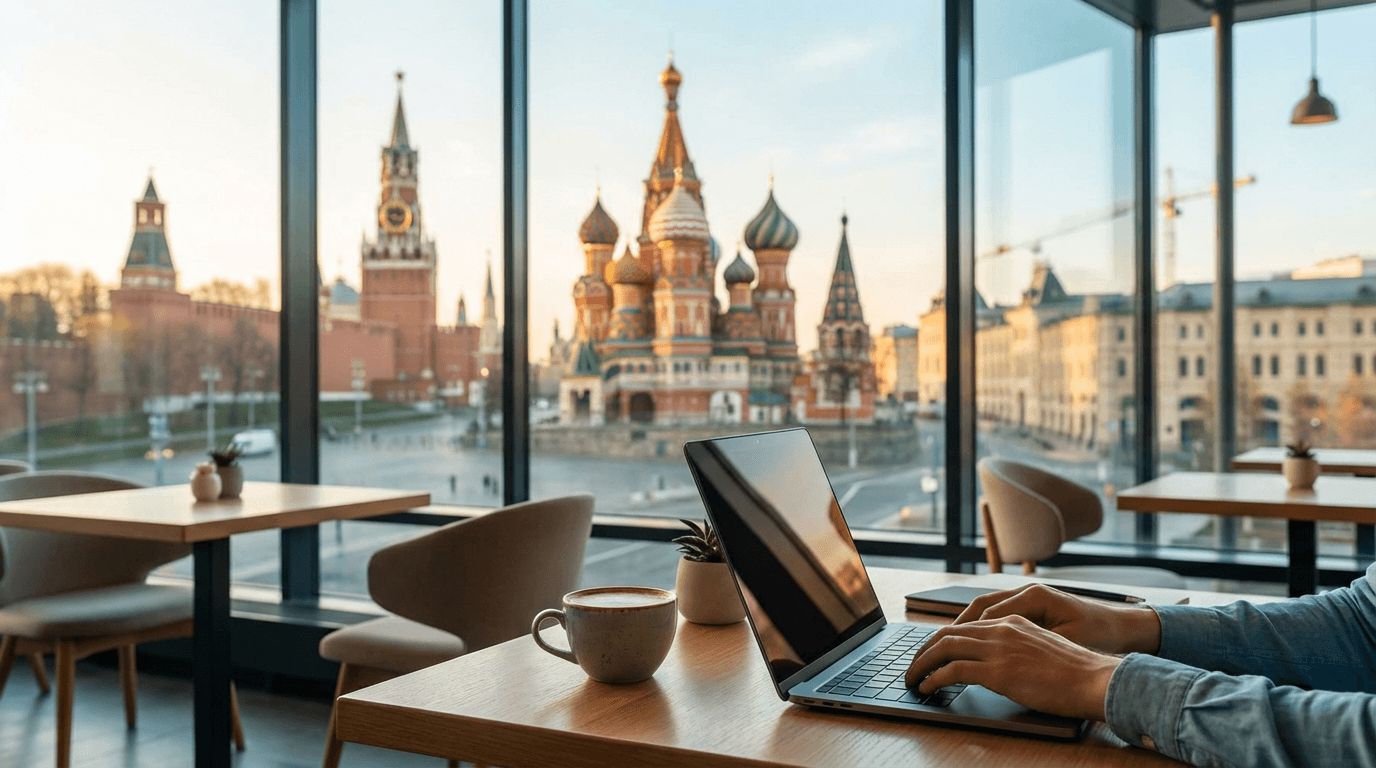
Russia
Complete Digital Nomad Guide

Policy Stability
Stamped Nomad ExclusiveHow likely visa and immigration policies are to remain unchanged
Quick Facts
Nomad Visa Cost
N/A
Max Stay
6 months
Renewable
No
Cost of Living
$1,411/mo
Avg Internet
90 Mbps
Safety Score
7/10
Healthcare
Medium
Coworking
High
English Friendly
Low
Time Zones
UTC+2, UTC+3, UTC+4, UTC+5, UTC+6, UTC+7, UTC+8, UTC+9, UTC+10, UTC+11, UTC+12
Entry Methods Available
Best For
The Visa Reality for Nomads
Russia has a reputation for being a bureaucratic fortress, but for the modern nomad, the walls are starting to lean. While there isn’t a specific "digital nomad visa" yet, the system offers several pathways depending on how long you plan to stay and how much paperwork you can stomach. Most travelers will find themselves choosing between the streamlined e-visa or the traditional tourist and business routes.
Before you pack your winter coat, remember that Russia does not offer a visa-on-arrival program. You must have your paperwork sorted before you hit the border. If you are from a CIS country or certain nations with bilateral agreements, you might enjoy 90-day visa-free entry, but for everyone else, the official immigration portal is your starting point.
The E-Visa: The Path of Least Resistance
If you are planning a short stint in Moscow or St. Petersburg, the electronic visa is your best friend. It is available to citizens of 52 to 64 countries, including much of Europe and parts of Asia. It eliminates the need for paper invitations or hotel vouchers, which were historically the biggest headache of the Russian application process.
- Validity: 60 days from issuance, allowing a stay of up to 16 days.
- Cost: Approximately $52.
- Processing: Apply between 4 and 40 days before your trip.
- Requirements: A passport valid for at least 6 months and a digital photo.
Longer Stays: Tourist and Business Options
For nomads who want more than two weeks to explore the Trans-Siberian Railway or settle into a Kazan coworking space, a standard tourist visa is the next step. These are generally valid for 30 to 90 days. Some nationalities, including those from the US and EU, may be eligible for multi-year visas allowing stays of up to 6 months per visit.
Business visas are another popular choice for remote workers. While you cannot be employed by a Russian company or receive local payments, these visas allow for stays of 30, 90, or 180 days, and even up to 1 year. However, there is a catch; you can only stay for a maximum of 90 days within any 180-day period. This "90/180 rule" is a standard hurdle for long-term travelers in the region.
The 2026 Skilled Visa Programme
A significant shift is coming on April 15, 2026. Russia is launching a Skilled Visa Programme designed to attract professionals in science, business, and culture. This is the closest the country has come to a dedicated nomad or freelancer track. It starts with a 1-year business visa and can eventually lead to residency. The best part? There are no language tests or restrictive quotas for this specific program, making it an attractive long-term play for high-level specialists.
Key Visa Types and Features
- Tourist Visa: Valid up to 3 months (standard) or 6 months (multiple-entry). It cannot be extended once you are in the country.
- Business Visa: Best for 90-day stays. Requires a formal invitation from a registered organization and costs more than a tourist visa.
- Work Visa: Valid for 1 to 3 years. This is the only way to legally work for a Russian employer and requires a complex invitation process.
- Student Visa: Valid for the duration of your study program. It usually starts at 3 months and is renewable annually while you are in Russia.
Important Logistics
One quirk of the Russian system is registration. If you stay in one location for more than 7 business days, you must be registered with the Ministry of Internal Affairs. Hotels do this automatically, but if you are renting an Airbnb, you will need your host to help you. Failure to register can lead to fines or issues when you try to exit the country.
When you are ready to start the paperwork, always use the government visa website to check the latest fees and specific requirements for your nationality. Rules change frequently, and keeping an eye on official updates is the only way to ensure a smooth entry.
Let's address the elephant in the room first. Russia doesn't have a dedicated "Digital Nomad Visa" in the way countries like Portugal or Mexico do. If you are looking for a simple application that grants you a year of remote work freedom, you won't find it here. However, that doesn't mean you can't base yourself in Moscow or St. Petersburg. You just have to be strategic about which lane you choose.
The Short-Term Solution: Tourist E-Visa
For most nomads wanting a "test drive" of the Russian lifestyle, the unified e-visa is the path of least resistance. It is available to citizens of 64 countries and removes the old headache of needing a physical invitation or hotel voucher. You simply apply through the official government portal and wait a few days.
- Stay Duration: Maximum of 16 days within a 60-day validity window.
- Cost: Approximately $40-$50 depending on exchange rates.
- Requirements: A digital photo, a valid passport, and medical insurance.
- The Catch: It is strictly for short stays. You cannot extend it while in the country, and it does not allow for long-term residency.
The High-Earner Route: HQS Visa
If you have a high income and want to stay for several years, the Highly Qualified Specialist (HQS) visa is a powerhouse option. While it technically requires a Russian employer, many senior consultants and tech leads use this to establish a long-term base. It bypasses the usual quota systems and offers some of the best perks in the country.
- Income Threshold: You must earn at least 750,000 RUB per quarter (roughly $8,000 per month).
- Validity: Issued for up to 3 years and can be renewed indefinitely.
- Tax Benefit: You are taxed at a flat 13% from your first day, avoiding the 30% rate usually applied to new arrivals.
- Family: This visa allows you to bring spouses and children along with relative ease.
The 2026 Skilled Visa Programme
There is a new system on the horizon set to launch on April 15, 2026. While it is designed for skilled workers in specific sectors rather than general freelancers, it represents a major shift in how Russia handles foreign talent. The process starts with an online application from your home country. If approved, you get a 1-year business visa that allows you to work without a separate permit. After that, you can transition into a 3-year temporary residency or even permanent residency within 30 days of applying.
Taxes and Residency
Money matters are shifting in Russia. Generally, if you spend more than 183 days in the country during a calendar year, you become a tax resident. For 2024 and beyond, the tax rate for most workers is 13% to 15%. If you are there on a standard work visa but haven't hit that 183-day mark yet, you might face a 30% rate on income sourced from within Russia. This is why the HQS visa is so popular; it locks in that 13% rate immediately regardless of your residency status.
Important Restrictions
Before you pack your bags, keep these limitations in mind. The e-visa is great for a quick trip, but it offers zero path to residency and doesn't officially authorize "work," even if checking emails at a cafe is a grey area. The HQS visa requires a heavy paper trail and a committed relationship with a Russian entity. Also, keep in mind that visa-free entry is largely reserved for citizens of CIS countries and parts of Latin America. If you are from the US, UK, or EU, you will almost certainly need a formal visa of some kind to enter.
The Visa Landscape
Russia has a reputation for being a bureaucratic fortress, but for the modern nomad, the walls are actually coming down. While you can't just show up and wing it with a visa on arrival, the introduction of the e-visa and a wide net of visa-free agreements has made the world’s largest country far more accessible than it used to be.
Currently, citizens from 65 countries can enter Russia visa-free for short stays, which usually cap out at 90 days. Another 60 countries are eligible for a simplified entry via Electronic Travel Authorization (ETA) using the Gosuslugi app. If you aren't on those lists, you'll be looking at either a digital e-visa or a traditional paper visa tucked into your passport.
The E-Visa: The Nomad’s Best Friend
If you’re planning a quick scouting trip or a one-month stint in Moscow or St. Petersburg, the e-visa is your path of least resistance. It’s a single-entry permit that cuts out the need for embassy visits and physical invitation letters.
- Validity: 120 days from the date of issuance.
- Duration: You can stay for up to 30 days from the date you cross the border.
- Processing Time: Usually around 4 calendar days.
- Cost: Approximately $52 USD.
- Requirements: A passport valid for 6 months beyond your stay, a digital photo, and medical insurance.
Keep in mind that this is strictly a single-entry deal. If you leave the country to visit a neighbor, you can't come back in on the same e-visa. It is also non-extendable, so you’ll need to depart before your 30 days are up.
Standard Tourist Visas
For those planning a longer stay or who need the flexibility to move in and out of the country, the standard tourist visa is the way to go. You’ll need to apply through a Russian embassy or an authorized visa center within 90 days of your planned arrival.
Single and Double-Entry Options: These generally allow for stays up to 30 days and are valid for up to 3 months. The double-entry is perfect if you want to hop over to Mongolia or Kazakhstan and return to Russia.
Multiple-Entry Options: These are usually valid for 6 months. However, US citizens have a unique advantage here: a 3-year multiple-entry visa. This allows for unlimited entries with stays of up to 6 months at a time. It’s a massive perk for long-term nomads who want to use Russia as a home base.
Nailing the Requirements
The paperwork for a standard visa is specific, so don't cut corners. You will need a Tourist Invitation (LOI), often called a "voucher." Most hotels will provide this for a small fee, or you can use a registered tour operator to generate one for your entire stay. Your visa dates will match exactly what is written on your invitation.
- Passport: Must have 2+ blank pages and be valid for 6 months after your visa expires.
- Application Form: Completed online, then printed and signed.
- Insurance: You must have a policy that covers medical emergencies and repatriation for the full duration of your trip.
- Photos: Color prints measuring 3.5x4.5 cm.
- Proof of Funds: If you are self-employed or currently between jobs, bring a recent bank statement to show you can support yourself.
Border Runs and Extensions
Standard tourist visas are generally not extendable while you are inside Russia. If you want to stay longer, you’ll need to leave and apply for a new visa. This is where the multiple-entry visa shines. By crossing the border and re-entering, you "reset" your clock. For US citizens on the 3-year visa, this allows for a very comfortable lifestyle, provided you keep an eye on your 6-month limit per entry.
Be aware that new entry regulations are scheduled to be implemented at all border checkpoints from June 30, 2025, to June 30, 2026. While the specifics of these checks haven't been fully detailed, it's a good idea to stay updated via official channels. Travelers should also monitor the latest travel advisories regarding safety and entry requirements before booking any non-refundable travel.
The Golden Rule: Compliance
Russia takes its visa dates seriously. Overstaying can lead to fines, deportation, or being banned from future entry. Always ensure your exit date is clearly within your visa's validity. If you are a digital nomad moving frequently, double-check that your hotel or host registers your stay, as this is a separate but vital part of staying legal while on the ground.
The Traditional Routes
If you're looking to plant roots in Russia, the most established path is the Temporary Residence Permit (TRP). This permit grants you a three-year stay and, more importantly, the right to work without needing a separate work permit. After you've held this for two years, you become eligible to level up to a permanent status.
The Permanent Residence Permit is essentially the Russian equivalent of a green card. It's a lifetime status that lets you come and go as you please without the constant headache of visa applications. Once you've been a permanent resident for five years, the door to Russian citizenship officially opens.
The Fast Track for Professionals
For those with a high-earning remote gig or a specialized skill set, the Highly Skilled Migrant Visa is often the cleanest play. To qualify, you generally need to show an annual income of over R1 million. This visa lasts for three years and lets you skip the temporary permit phase entirely. It also covers your immediate family, including spouses and parents, making it a favorite for nomads traveling with a crew.
Investors have their own lane as well. An investor residence permit can be processed in about one month. While the capital requirements vary, this route can lead to permanent residency in three years and full citizenship after five years.
The 2026 Game Changer
Russia is shaking up its immigration policy with a new Skilled Worker Visa launching on April 15, 2026. This is specifically designed to strip away the usual bureaucratic red tape that keeps people away. It uses a two-stage application where you start the process online from home and finalize it once you're on the ground.
The perks of this new program are significant:
- No Russian language test is required, which removes a massive hurdle for most westerners.
- There are no immigration quotas, so you aren't competing for a limited number of spots.
- Applications must be approved within 30 days, a massive improvement over the standard four-month wait.
- You can apply for either a three-year residency or go straight for permanent status depending on your background.
Processing and Logistics
Standard paperwork usually takes about 4 months to churn through the system. However, if you are applying through the Shared Values pathway, you can stay in the country while your application is being processed, even if your original entry visa expires during the wait.
Keep in mind that Russia doesn't currently offer a specific "Digital Nomad Visa" or a "Freelancer Visa" in the way some European countries do. You'll need to fit yourself into one of these existing boxes. While we don't have the exact government filing fees on hand, expect to pay for translations, notary services, and medical exams as part of the package. For the most current fee schedules, check with the Ministry of Internal Affairs or a specialized immigration attorney.
Summary of Options
- Temporary Residence Permit: Valid for 3 years; includes work rights.
- Highly Skilled Migrant Visa: For those earning R1 million+; covers family members.
- Investor Visa: Fast 30-day processing; permanent residency after 3 years.
- Skilled Worker Visa (2026): No language test; 30-day approval; online application.
The Bottom Line
Russia remains one of the most budget-friendly frontiers for nomads who want a high-end urban lifestyle without the Western European price tag. You can live comfortably in a major Russian hub for anywhere between $1,000 and $1,800 per month. If you are willing to venture beyond the primary capitals, those costs drop significantly, often sitting 16% below the European average.
While the exchange rate fluctuates, the current baseline of 1 USD to 77 RUB makes your foreign currency go a long way. Your biggest variable will always be housing; choosing a trendy district in Moscow versus a quiet street in Kazan can change your monthly burn by hundreds of dollars.
Cost Breakdown by City
The "Two Capitals" rule applies here. Moscow and Saint Petersburg operate on a different economic level than the rest of the country. Here is what you can expect to spend in the most popular nomad hubs.
Moscow: The High-Energy Hub- Budget ($940/month): Living in a modest studio on the outskirts and sticking to local canteens (stolovayas).
- Comfortable ($1,411/month): A private 1BR in a nomad-friendly area, regular coworking access, and dining out twice a week.
- Premium ($2,810/month): A central, modern 1BR, daily restaurant meals, and frequent taxi rides.
- The Specifics: Rent for a comfortable 1BR ranges from $700 to $1,000. A monthly coworking pass averages $126.
- Budget ($800–$1,000/month): Shared housing or small studios with a focus on home-cooked meals.
- Comfortable ($1,100–$1,500/month): A well-located apartment near the historic center and a mid-range dining budget.
- Premium ($2,000–$2,500/month): Luxury living in renovated imperial-era buildings.
- The Specifics: Rent is 20–30% cheaper than Moscow, with comfortable 1BRs landing between $500 and $800.
- Budget ($600–$800/month): Extremely affordable living with all the modern amenities of a large city.
- Comfortable ($900–$1,200/month): High-quality lifestyle for a fraction of the cost of a capital city.
- Premium ($1,500–$2,000/month): The "king of the castle" lifestyle, including the best apartments in the city.
- The Specifics: Rent for a solid 1BR starts as low as $300, and food costs are roughly 15% lower than in Moscow.
Lifestyle Expenses
Food is where you have the most control over your budget. Groceries are inexpensive, with a weekly shop for a single person averaging around $45. If you prefer eating out, a local meal costs about $8, while a high-end dinner will run you closer to $25. Most nomads find a sweet spot around $335 per month for a mix of groceries and dining.
Public transport is a highlight of living in Russia. It is efficient, sprawling, and incredibly cheap. A budget of $30 to $50 a month covers most of your subway and bus needs. Even taxis, which are easily summoned via apps, are affordable; a premium transport budget of $100 a month usually covers daily rides.
Utilities and connectivity are also winners here. High-speed internet is standard and cheap, though you should budget about $150 for total household utilities if they aren't included in your rent. For workspace, Moscow is the priciest at $180 for a premium monthly coworking pass, while regional hubs like Kazan offer similar spaces for around $80 to $110.
One thing to keep in mind is health insurance. While local costs are low, most nomads opt for international expat plans. Expect to pay between $50 and $150 per month for decent coverage, depending on your age and requirements. Always check current listings on sites like Cian for real-time rent prices before you book your flight.
The Big Three: Where to Plant Your Laptop
Russia is a massive expanse, but for the remote worker, the choice usually narrows down to three distinct vibes. Whether you want the high-octane energy of a global megacity, the moody artistic soul of a European-style port, or a rugged Pacific outpost, there is a spot that fits your workflow. While the language barrier is real once you step off the main boulevards, these cities offer the infrastructure to keep you online and well-fed.
Moscow: The Power Hub
Moscow is the undisputed heavy hitter. It functions like a city-state within Russia, offering a level of service and speed that rivals New York or London. If you thrive on 24/7 convenience and high-end tech, this is your base. The nomad community here is the largest in the country, centered around the Tverskaya and Arbat districts.
- Coworking: Abundant. You will find high-end spaces tucked into Stalinist skyscrapers and modern glass towers.
- Internet: Blazing fast. Urban averages are some of the highest in Eastern Europe.
- Monthly Cost: High. Expect to pay a premium for central apartments that matches Western European capitals.
- Safety: Moderate. Stick to the central administrative okrugs and you will find it highly polished and well-lit.
The Pros: It is the center of everything. You get world-class museums, a deep pool of networking opportunities in the tech sector, and public transport that is arguably the best in the world.
The Cons: It is expensive and can feel impersonal. The sheer scale of the crowds can be draining, and the outer suburbs lack the charm of the historic center.
Saint Petersburg: The Cultural Capital
Often called the "Venice of the North," Peter (as locals call it) is for the nomad who prefers coffee shops and canals over skyscrapers. It has a more relaxed, progressive atmosphere than Moscow. The nomad scene here is growing, supported by a massive student population and a DIY creative spirit.
- Coworking: Stylish and varied. Spaces like Yasnaya Polyana offer monthly memberships for around 17,000 RUB, while the Chernyshevskaya area is packed with lofts and "anti-cafes."
- Internet: Very reliable. Most cafes are accustomed to people working for hours on a single latte.
- Monthly Cost: Mid-range. It is noticeably cheaper than Moscow, though prime real estate near the Hermitage still commands a high price.
- Nightlife: Incredible. Use Telegram channels like Fiesta.Ru to find underground bars and pop-up events.
The Pros: The city is a living museum. The architecture is stunning, the nightlife is legendary, and it feels much more "European" than other Russian hubs.
The Cons: The weather is notoriously grey and damp. Also, keep an eye on the clock during "bridge season," when the Neva River bridges open at night to let ships through, potentially cutting you off from your apartment until dawn.
Vladivostok: The Wild East
If you want to stay in Russia but feel the pull of the Pacific, Vladivostok is the wildcard. It is closer to Tokyo than it is to Moscow. This city offers a unique "San Francisco of the East" vibe, with steep hills, ocean views, and a surprisingly high nomad score for its balance of cost and connectivity.
- Coworking: Available but limited. You won't find the same volume of dedicated spaces as the western cities, but the infrastructure supports remote work well.
- Internet: Strong enough for video calls and heavy uploads.
- Monthly Cost: Moderate. The proximity to the coast adds a "vacation" value to the rental market.
- Vibe: Nature-focused. Your weekends will be spent on beaches or hiking rocky cliffs rather than in museums.
The Pros: It is a great alternative for those who want to avoid the "big city" grind. The seafood is world-class, and the nature access is immediate.
The Cons: The community is much smaller. If you don't speak some Russian, you might find the social circle a bit tight. It is also geographically isolated from the rest of the country's major hubs.
Honorable Mentions
Kazan and Novosibirsk are worth a look if you are on a budget. Kazan offers a fascinating multicultural blend of Russian and Tatar influences with a growing IT scene. Novosibirsk is the "Siberian Silicon Valley," home to serious research and tech talent, though it lacks the polished nomad infrastructure found in Moscow or Saint Petersburg.
The Digital Infrastructure
If you are sticking to the primary hubs like Moscow or Saint Petersburg, you will find some of the fastest internet in Europe. Premium coworking spaces routinely clock in at 200 Mb/s or higher, usually backed by reliable fiber optics. It is a different story once you leave the city limits. National infrastructure is inconsistent, and while the government is investing heavily in tech, rural areas still struggle with speeds that make video calls a gamble.
Public Wi-Fi in cafes exists, but it is often more trouble than it is worth. Many networks require a local phone number for SMS authentication, and the stability fluctuates during peak hours. For serious work, you will want a dedicated desk or a solid mobile backup. Providers like MTS and Beeline offer very affordable 4G and 5G plans. These are perfect for tethering in a pinch, though signal strength drops off significantly the moment you head into the Russian countryside.
Top Coworking Spots
The coworking scene is exploding, with the market expected to hit $570 million by 2030. You will find international-standard facilities that rival anything in London or Berlin, complete with tech support, community events, and bottomless coffee.
- Red Factory (Moscow): This is widely considered the gold standard. It offers massive open-plan areas and private offices with 200 Mb/s Wi-Fi. They include perks like parking and meeting room discounts for members.
- Atmosphere Network (Moscow): A massive, investor-backed hub located in the iconic Izvestia building. With 17,000 square meters of space, it is the place to be if you want to network with the local startup elite.
- Kovorking Soty (Moscow): A more boutique, flexible environment designed for creative types who need a break from the corporate aesthetic.
- YellowRockets (Samara): Proof that the tech scene exists outside the capital. This entrepreneur-focused spot offers hot desks and dedicated offices with generous hours, including weekend access.
Membership Costs
Prices are generally favorable for those earning in stronger currencies, though they vary wildly between the "Two Capitals" and the provinces. Most spaces offer daily, weekly, or monthly passes.
Moscow (Premium Tier)
- Hot Desk: Roughly $260 per month (or $200 for a 10-day pass).
- Dedicated Desk: Starting around $350 per month.
- Perks: Usually includes high-speed Wi-Fi, guest passes, and kitchen access.
Samara & Regional Hubs
- Hot Desk: Between $87 and $108 per month.
- Dedicated Desk: Between $111 and $138 per month.
- Day Rates: Many spots like YellowRockets offer a free trial day, with hourly meeting room rentals costing about $6 to $8.
General Market Rates
- Daily Passes: Expect to pay from $50 for high-end daily access in major business districts.
- Monthly Average: Across the country, a standard nomad setup typically lands around $300 per month for a fixed spot in a reputable building.
While the language barrier and visa bureaucracy remain hurdles, the actual work environment in Russia's cities is top-tier. Just ensure you have a VPN and a local SIM card before you settle in. For more options in cities like Novosibirsk or Yakutsk, you can browse listings on Coworker to compare amenities and reviews.
The Two-Tier Reality
Russia operates on a split system where public and private care exist in completely different universes. While the state provides free universal healthcare through the OMI system, the reality for most nomads is a world of long queues and a heavy language barrier. Public clinics in Moscow and Saint Petersburg are generally decent, but once you head into the regions, the quality of equipment and facilities drops off significantly.
Most expats stick exclusively to private clinics. These facilities feel more like luxury hotels than hospitals, offering state-of-the-art tech and doctors who often trained in Europe or the US. You’ll find the best concentration of these in the major hubs, where English is the default language for staff and medical records.
Insurance Requirements for Nomads
Since Russia doesn't have a dedicated digital nomad visa, your insurance needs depend on your entry method. If you are applying for a work visa, the government demands proof of private medical insurance before you even set foot in the country. It is a non-negotiable legal requirement for residency.
- International Plans: These are your best bet. They ensure you can skip the state system and head straight to high-end providers like the European Medical Centre or the American Clinic.
- Employer Coverage: If you take a local contract, your employer handles your registration for public care, though most nomads still buy a private top-up.
- Coverage Gap: Only about 5% of the local population uses private insurance, but that jumps to 20% in Moscow. You want to be in that 20%.
What You’ll Pay
The silver lining of the Russian healthcare system is the price tag. You can get Western-level care for a fraction of what you’d pay in the US or even parts of the EU. Many travelers actually come here specifically for "medical tourism" in fields like dentistry and ophthalmology.
- Full Health Screening: A deep dive including blood work, imaging, and specialist consults usually runs between $300 and $800.
- Specialized Care: Cosmetic surgery and high-end dental work are significantly cheaper than in the West without sacrificing quality.
- Emergency Services: If you have a residency permit, emergency care is technically free, but the language barrier in an ambulance can be a major hurdle.
Navigating the Pharmacy and Clinic
Pharmacies are everywhere in Russian cities, often open 24/7. You’ll find that many medications requiring a prescription in your home country might be available over the counter here, though it’s always better to check first. For vaccinations, private clinics carry imported stocks that meet all WHO specifications.
If you have a chronic condition, do some legwork before you arrive. Mental health services, particularly English-speaking therapy, are still catching up to Western standards. Many nomads find it easier to keep their existing therapists back home via Zoom while using local specialists for physical prescriptions.
Practical Tips for Arrivals
If you decide to register for the local system to have a backup, you’ll need to visit a local health center with your passport and residency permit. Do not go alone unless your Russian is fluent. Medical terminology is a different beast than ordering a coffee, and most state doctors won't speak English. Bringing a translator or a Russian-speaking friend is the only way to ensure nothing gets lost in translation.
For those looking for the most reliable care, check out the European Medical Centre or the American Clinic. These are the gold standards for the expat community in Moscow, offering everything from 24-hour emergency rooms to specialized maternity wards.
The Money Situation: A Different World
Let's be clear from the jump: Russia's financial system is currently an island. Your usual plastic, whether it is a Visa, Mastercard, or American Express, will be nothing more than a fancy ice scraper once you cross the border. Because of the disconnection from the SWIFT network, you cannot simply wire money from your home bank to a Russian one using traditional methods. This is the hurdle that trips up most newcomers, but it is manageable if you prepare before you fly.
The local king is the Mir card. This is Russia's domestic payment system, and you will need one for everything from ordering a Yandex Taxi to buying a coffee in Vladivostok. Without a Mir card, you are stuck carrying thick wads of cash, which is neither safe nor convenient for a long-term stay.
Opening Your Local Account
You can't open an account from your sofa back home. You have to show up in person at a branch. While the big names like Sberbank and VTB are everywhere, many nomads prefer Tinkoff or Raiffeisen for their smoother apps and better English-language support. OTP Bank is another solid choice for expats.
To get your hands on a local card, you need to bring a specific kit of paperwork to the bank teller:
- Your valid passport (with a translation if required).
- The migration card you received at the airport.
- Your registration or proof of address (usually provided by your landlord or hotel).
- A Russian phone number (get a local SIM card immediately upon arrival).
- A Russian tax ID, known as an INN, if you plan on doing serious financial business.
Card issuance is usually fast. Some banks can print a basic card on the spot, while personalized ones take about 2 to 5 days. Once you have it, you can link it to your phone for contactless payments, which are used everywhere in major cities.
Getting Funds Into the Country
Since you can't just "send money" via your banking app, you need a workaround. Here is how the community is currently moving their funds:
- Cryptocurrency: This is the gold standard for nomads right now. You buy USDT (a stablecoin tied to the US Dollar) using your home bank account, then sell it on a P2P (peer-to-peer) exchange for Rubles. Those Rubles are then deposited directly into your Russian Mir account. It sounds technical, but it is the fastest and most reliable method available.
- The Cash Carry: You are allowed to bring up to $10,000 in cash into Russia without declaring it. Bring crisp, new USD or EUR bills. Exchange them at small booths in the city rather than the airport for much better rates.
- UnionPay: If you have a UnionPay card issued outside of Russia, it might work at some ATMs, but it is hit-or-miss. Do not rely on this as your primary source of funds.
Taxes and the Digital Nomad Life
Russia does not have a formal "Digital Nomad Visa" yet. Most people operate on tourist or business visas. If you are working for a company outside of Russia and getting paid into a foreign account, you generally aren't part of the Russian tax system. This changes if you stay longer than 183 days in a calendar year, at which point you become a tax resident. However, as long as your income isn't coming from Russian clients, the local authorities generally leave you alone.
A Few Survival Tips
Never close your bank accounts back home. You will still need them to receive your salary and pay for global subscriptions like Netflix or Spotify, which won't accept Russian cards. Think of your finances as two separate buckets: one foreign bucket for your income and global bills, and one local Russian bucket for your daily life. Keep a healthy "emergency fund" of physical cash tucked away in your apartment just in case there is a technical glitch with the P2P exchanges. Finally, keep an eye on the exchange rates; they can be volatile, so it often pays to move larger chunks of money when the Ruble is feeling weak.
The Logistics of Bringing the Crew
Russia might not be the first place that pops into your head for a family sabbatical, but for those on a work or investor visa, the process for bringing dependents is surprisingly straightforward. You can apply for a Family Member Visa for your spouse and children under 18. If you are entering on a Highly-Skilled Migrant visa, the red tape is even thinner; you can bring your immediate family without a separate invitation, provided you show you can financially support them.
The paperwork is the heavy lift here. You will need original birth and marriage certificates, and they must be apostilled and translated into Russian. If you are a "Golden Visa" investor, expect to pay between $500 and $800 in processing fees for a family of four. For everyone else, fees vary by nationality but are often reduced or waived for minors.
If you happen to have a Russian spouse or parent, you have more flexibility. You can snag a private visa for up to 12 months, or look into the simplified path toward permanent residency. Just keep in mind that if you are eyeing residency based on having a Russian child, the rules changed recently. You generally need to be married to a Russian citizen or prove 3 years of co-residency and care before that path opens up.
Education and International Schools
If your kids don't speak Russian, your options will mostly be centered in Moscow and St. Petersburg. These cities host several international schools following British, American, or IB curricula. It is a premium experience with a price tag to match; expect to pay between $10,000 and $20,000 per year per child. In local currency, that often translates to 1 million to 2 million RUB.
For younger children, private Russian kindergartens are a more affordable way to immerse them in the language. These usually run between 20,000 and 50,000 RUB per month. They are often high-quality, offering hot meals and structured activities that rival expensive Western pre-schools.
Healthcare and Safety for Families
While state healthcare is technically free for residents, most digital nomad families opt for private clinics to avoid the language barrier and long wait times. Private health insurance for a child usually costs between 50,000 and 100,000 RUB per year. This gets you access to modern facilities in major cities where the doctors often speak English.
Safety-wise, Moscow and St. Petersburg are very family-oriented. You will see parents out with strollers at all hours, and the parks are world-class. Like any massive metro area, petty crime exists, so keep an eye on your bags in crowded tourist spots. Generally, the biggest safety "threat" you will face is the icy sidewalks in January.
Where to Set Up Base
Your choice of city will define your family's experience. Moscow is the hub for international life, while other cities offer a more "authentic" and affordable Russian lifestyle at the cost of English-speaking resources.
Moscow
- International Schools: Highest concentration, including the Anglo-American School and British International School.
- Family Amenities: Incredible parks like Gorky and VDNKh, plus endless museums and indoor play centers.
- Cost of Childcare: 40,000 to 60,000 RUB per month for high-end private options.
St. Petersburg
- International Schools: Several solid options, though fewer than Moscow.
- Atmosphere: More walkable and European in feel, which many families find less overwhelming than Moscow's pace.
- Cost of Childcare: 30,000 to 50,000 RUB per month.
Kazan
- International Schools: Very limited English-language schooling.
- Pros: Extremely safe, clean, and significantly cheaper than the "two capitals."
- Cost of Childcare: 15,000 to 25,000 RUB per month.
Before you book your flights, it is smart to check the latest requirements with the Russian Ministry of Foreign Affairs or your local consulate. Rules for family reunification can shift, and having a local contact or legal fixers can make the apostille process much less of a headache.
The Reality of Life on the Ground
If you walked through downtown Moscow or St. Petersburg today, you would see packed cafes, functional public transport, and a rhythm of life that feels surprisingly ordinary. For nomads, the "vibe" isn't one of a war zone, but rather a city that has pivoted inward. Most hotels are open and services are running, though you will notice a distinct lack of Western tourists and English signage compared to five years ago.
Security is the biggest variable. While daily life is stable, major cities have seen occasional drone activity and higher police presence. The risk of terrorism remains a factor, highlighted by the 2024 Crocus City Hall attack. You need to stay alert in crowded spaces and follow the instructions of local authorities immediately if an emergency occurs. If you stick to the major metros and avoid border regions near Ukraine, the day-to-day risk feels manageable, but it requires a level of situational awareness you might not need in Lisbon or Tbilisi.
Navigating the Legal Landscape
Russia does not currently offer a specific digital nomad visa. Most remote workers enter on a standard tourist visa, which is still issued routinely. The golden rule here is simple: do not engage in any form of political activism, protests, or public criticism of the government. As long as you keep your head down and your paperwork in order, arbitrary detentions are rare.
- Registration: If you stay in a hotel, they handle your registration automatically. If you rent an apartment for more than 7 days, your landlord is legally required to register your stay with the Ministry of Internal Affairs.
- Device Privacy: Assume all electronic communications are monitored. It is wise to use a "clean" laptop for work and avoid storing sensitive personal information on devices you carry through customs.
- Connectivity: Western platforms like Instagram, Facebook, and YouTube are blocked. You will need a reliable VPN to access your usual stack, though the government frequently cracks down on VPN providers.
Money and Payments
This is the biggest hurdle for westerners. Your international Visa, Mastercard, and American Express cards will not work at Russian ATMs or shops. You have two main options for survival: bring plenty of cash (USD or EUR) to exchange locally, or apply for a MIR card once you arrive. MIR is the domestic payment system, and having a local card makes life significantly easier for food delivery and ride-sharing apps.
Social Norms and LGBTQ+ Safety
Russian culture is generally conservative and formal. You will find that people are incredibly warm once you break the ice, but the "customer service smile" isn't a thing here. Learning basic Russian phrases is a necessity now that English speakers are becoming harder to find in the service industry.
For LGBTQ+ nomads, extreme discretion is necessary. Russia has strict laws regarding "international LGBT movements" and public expressions of non-traditional relationships. Public displays of affection or wearing pride symbols can lead to fines, arrest, or deportation. It is a "don't ask, don't tell" environment where private life remains private.
Integration and Community
The Western expat community has shrunk significantly, so you won't find the bustling nomad hubs common in places like Bali or Mexico City. Integration happens in small circles. You are more likely to find community in local language exchange meetups or co-working spaces like those in the Moscow City district.
- Language: Use translation apps like Yandex Translate, which often performs better with Russian nuances than Google.
- Apps: Download the Yandex Go app for taxis and food delivery; it is the local equivalent of Uber and works seamlessly if you have a local SIM and payment method.
- Health: You must have valid health insurance that covers your entire stay; check that your provider specifically covers Russia under current sanctions.
Staying safe in Russia as a nomad comes down to compliance. Follow the registration rules, keep your political opinions to yourself, and ensure you have a way to access funds that doesn't rely on a Western bank. If you can handle the logistical hurdles, you get access to world-class infrastructure and a culture that remains fascinatingly complex.
The 183-Day Rule
Russia keeps its residency math pretty straightforward. You become a tax resident if you spend more than 183 days in the country within any rolling 12-month period. Border officials track this down to the day using your passport stamps, so don't assume a few days under the radar will slide. If you hit that 183-day threshold, you are taxed on your worldwide income. If you stay for less, you are a non-resident and only owe the Russian government a cut of what you earn within their borders.
Income Tax Rates and the 2025 Shift
The tax gap between residents and visitors used to be massive, but recent legislative updates have smoothed things out for remote workers. Here is how the numbers break down:
- Residents: You pay 13% on income up to 5 million rubles. Anything earned above that mark is taxed at 15%.
- Non-Residents: Standard income is hit with a flat 30% rate with zero deductions allowed.
- Remote Employees: Starting in 2025, if you work remotely for a Russian company using Russian internet infrastructure, you get the resident rate of 13% to 15% even if you are living outside the country or haven't hit the 183-day mark yet.
Special Incentives for Nomads
While Russia hasn't launched a formal "Digital Nomad Visa" yet, there are pathways to lower your tax burden if you are self-employed or working for a foreign firm. Under specific conditions, you can apply for status that grants a foreign income exemption. This means you could potentially live in Russia on a business or work visa without the tax man touching the money you make from clients back home.
To grab these benefits, you have to register with the Federal Tax Service (FTS). You will need your passport, visa, work permit or contract, and proof of your foreign income. It is a bit of paperwork, but it beats paying double tax or losing 30% of your paycheck to the local treasury.
Compliance and Deadlines
If you are employed by a Russian company, they usually handle the withholding for you. However, if you are freelancing or your income comes from abroad, the responsibility falls on your shoulders. You need to file your 3-NDFL return by April 30, with the actual payment due by July 15. If you decide to leave Russia permanently, you are required to file a departure return before you head to the airport.
The Russian authorities have become significantly more tech-savvy with their monitoring. Failing to file can lead to frozen bank accounts or fines. You can manage most of these filings through the Federal Tax Service official portal, though you might want a local accountant to help with the initial setup.
Double Taxation and Crypto
Russia has a network of double taxation treaties designed to prevent you from being taxed twice on the same dollar or ruble. These treaties are vital for US expats, who are still required to report to the IRS regardless of where they sleep. By using these treaties, you can often claim credits in your home country for taxes paid in Russia.
When it comes to cryptocurrency, the rules are still catching up to the technology. There isn't a specific "crypto tax" yet, so gains from digital assets are generally treated as standard personal income. If you trade heavily, expect to pay the 13% to 15% resident rate or the 30% non-resident rate on your profits. Since these regulations evolve quickly, checking the latest updates from the FTS before tax season is a smart move.
Getting Connected
Your first mission upon landing is securing a local SIM card. Don't rely on international roaming; it is expensive and will lock you out of most public infrastructure. You need a Russian number to authenticate for public Wi-Fi in metros and cafes via SMS. Major providers like MTS, Beeline, Megafon, or Tele2 offer unlimited data for $15 to $20 a month. You can pick these up at airport kiosks or any mobile shop in the city center. If your phone supports it, ask for an eSIM to keep your home number active for bank alerts.
The internet here is lightning fast and incredibly cheap. In Moscow or St. Petersburg, a 500 Mbps fiber connection usually costs under $10 a month. However, the web is heavily filtered. Standard VPNs like Nord or Express often fail here. Before you fly, set up a VPN using obfuscated protocols like VLESS, Shadowsocks, or WireGuard. Many seasoned nomads rent a private VPS for $10 to $20 a month to ensure their connection stays stable and private.
Where to Set Up Your Base
Moscow and St. Petersburg are the heavy hitters for infrastructure, but other cities offer unique vibes depending on your hobbies.
Moscow
- Best for: High-speed infrastructure and 24/7 city life.
- Top Neighborhoods: Tverskaya or Arbat for a central, historic feel.
- Living Costs: Expect to spend $1,200 to $2,500 total per month.
- Coworking: #tceh costs about $270 a month for 24/7 access, while Rabochaya Stantsiya runs closer to $400 for premium amenities.
St. Petersburg
- Best for: European aesthetics, canals, and a massive cafe culture.
- Internet: Equally as fast and affordable as Moscow.
- Vibe: Slightly more relaxed and artsy than the capital.
Alternative Hubs
- Vladivostok: Great for those who want proximity to the ocean and a gateway to Asia.
- Murmansk: The go-to for hikers and those chasing the Northern Lights.
- Kazan: A beautiful blend of cultures with a lower cost of living than Moscow.
Getting Around and Eating Well
Forget trying to hail a cab on the street. Download Yandex Go immediately. It functions like Uber but is much more integrated. Regular riders in major cities usually spend between $50 and $100 a month on taxis. For the metro, download the Moscow Metro app to navigate the world's most beautiful underground system. It is efficient, runs every 90 seconds, and costs pennies.
When it comes to food, the app ecosystem is top-tier. Use Yandex Lavka or Delivery Club for groceries and hot meals. If you prefer eating out, look for "Business Lunches" on weekdays between 12:00 and 16:00. You can get a three-course meal for $5 to $8. A monthly budget for dining out and delivery usually hovers around $400 to $600.
Language and Logistics
English is common among the younger crowd in Moscow, but it drops off quickly elsewhere. Yandex Translate is generally more accurate for Russian than other tools; download the offline packs so you aren't stranded without a signal. For the paperwork, Russia doesn't have a standard "digital nomad visa" yet. Most long-termers use Business or Highly Skilled Migrant visas. You must secure your invitation letters before you arrive, as the process is difficult to start from within the country.
Keep these emergency numbers saved in your phone just in case:
- General Emergencies: 112
- Police: 102
- Ambulance: 103
- Fire: 101
Treat your initial setup like a mini-project. Install your VPNs, set up your crypto rails for moving funds, and get that local SIM immediately. Once those hurdles are cleared, the quality of life for the price point is hard to beat.
More Guides from Europe
Stay Updated on Russia
Get notified about visa changes, policy updates, and new information for digital nomads in Russia.