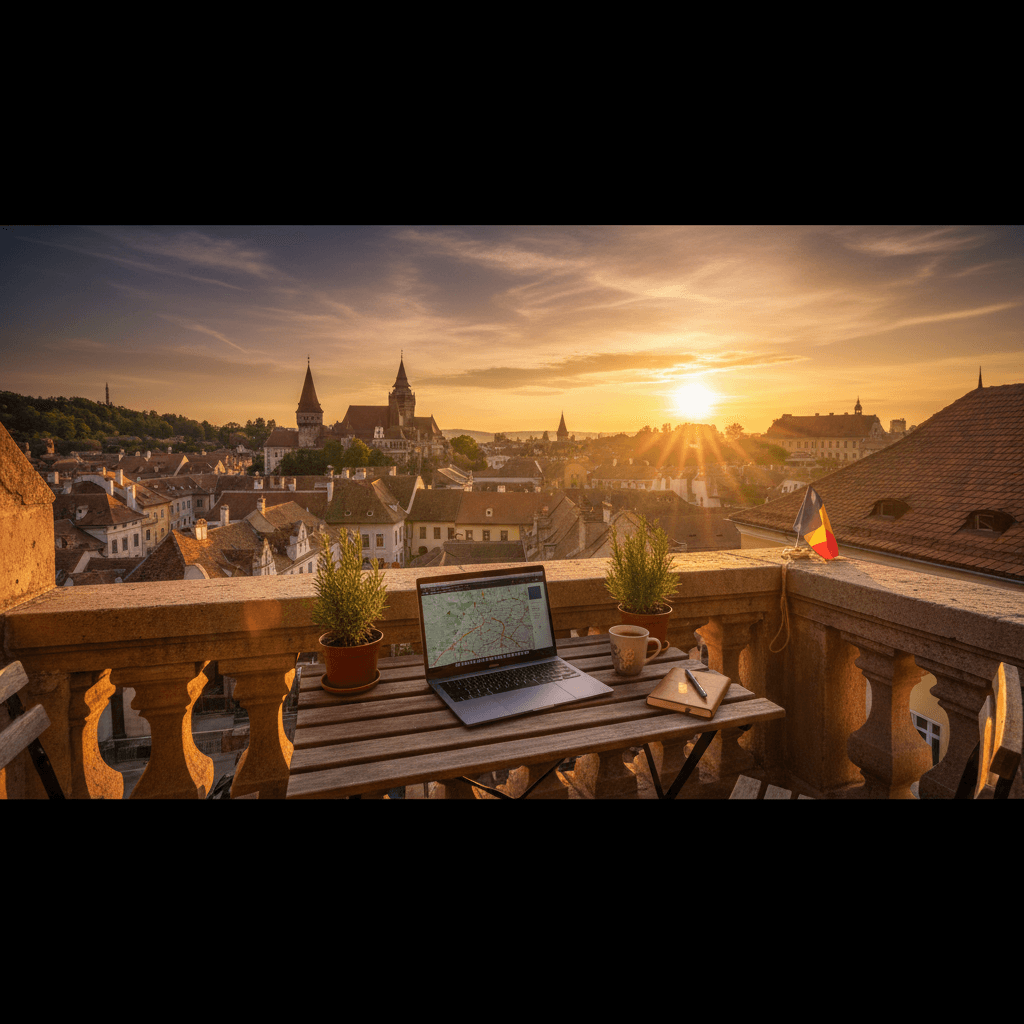
Romania
Complete Digital Nomad Guide

Policy Stability
Stamped Nomad ExclusiveHow likely visa and immigration policies are to remain unchanged
Quick Facts
Nomad Visa Cost
$240
Income Requirement
$3,900/mo
Max Stay
12 months
Renewable
Yes
Cost of Living
$1,300/mo
Avg Internet
250 Mbps
Safety Score
7/10
Healthcare
Medium
Coworking
High
English Friendly
High
Time Zones
EET (UTC+2), EEST (UTC+3)
Entry Methods Available
Best For
The Schengen Reality
Ever since Romania fully integrated into the Schengen Area in 2024, the rules for getting in have become much more streamlined, though slightly more rigid for those used to the old "border run" days. If you are entering for a scouting trip or a short-term stay, you are now operating under the 90/180-day rule. This means your time in Romania counts toward your total time allowed in the entire Schengen Zone, which includes most of Europe.
For most digital nomads from "Type A" countries like the US, Canada, UK, Australia, and Japan, you don't need to do anything before you fly. You just show up, get your passport stamped, and you have 90 days to enjoy the coffee shops of Bucharest or the mountains of Brașov. Just remember to use a Schengen calculator if you have been hopping around the continent recently; those days add up fast across borders.
Short-Stay Visas (Type C)
If you hail from a country that doesn't have a visa-waiver agreement with the EU, you will need to apply for a Type C Uniform Schengen Visa. This covers everything from tourism to short business meetings. The process has moved mostly online, though you still have to visit a consulate in person eventually.
- Tourism (C/TU): This is the standard pick for a holiday. The consular fee is €90 for adults and €45 for children aged 6 to 12.
- Business (C/A): If you are coming for trade fairs or specific client meetings, this is your best bet. You will need an invitation or a guarantee letter from a Romanian company.
- Requirements: You will generally need proof of accommodation, a return ticket, travel insurance with €30,000 coverage, and proof of financial means.
For citizens of certain countries, like India, China, or Nigeria, the process involves an extra step. You must obtain an invitation approved by the General Inspectorate for Immigration (IGI) before you can even start your application.
Long-Stay Options (Type D)
If three months isn't enough time to soak up the Carpathian atmosphere, you will need a Type D National Visa. These are for stays longer than 90 days and serve as the precursor to getting a residency permit. These visas are purpose-specific, so you have to pick the one that actually matches your life on the ground.
- Economic Activities (D/AE): Best for those looking to open a local branch or run a business.
- Commercial Activities (D/AC): Aimed at shareholders or managers of Romanian companies. This requires a technical endorsement from the Ministry of Economy and proof of significant investment.
- Professional Activities (D/AP): For those practicing specific liberal professions regulated by Romanian law.
The fee for most long-stay visas is €120. You should start this process at least two weeks before your intended travel date, but giving yourself three months of lead time is much safer given the bureaucracy involved.
The E-Visa Portal and Process
The Romanian government uses an electronic portal to handle the heavy lifting of paperwork. You can upload your passport scans, photos, and supporting documents directly to the site. Just make sure your files are under 2MB each, or the system will reject them. Once the consulate reviews your digital file and gives the green light, they will schedule an in-person interview to validate your documents and stick the visa in your passport.
If you find yourself in a bind while already in the country, extensions are technically possible through the IGI. However, these are usually reserved for emergencies or medical reasons. An extension typically costs around €100 and adds another 30 to 90 days to your stay, but you must apply well before your current visa expires. Don't wait until the final 48 hours to start asking for more time.
Entry Requirements for Visa-Free Travelers
Even if you don't need a formal visa sticker, there are still rules for entry. Border police can ask to see proof of your plans. It is a good idea to have these items ready on your phone or printed out:
- Proof of Funds: Generally expected to be at least €50 per day for the duration of your stay, with a minimum of €500.
- Onward Travel: A flight or bus ticket out of the Schengen Area.
- Accommodation: A hotel booking or a rental agreement.
- Insurance: While not always checked for visa-free travelers, having medical coverage is a standard requirement for all foreign visitors.
The Basics of the Romanian Digital Nomad Visa
Romania has quietly become one of the most attractive hubs in Eastern Europe for remote workers. The government officially introduced a dedicated visa for non-EU nationals who want to trade their home office for a flat in Bucharest or a bohemian attic in Brasov. Technically, this falls under the long-stay visa (symbol D/AS), specifically designed for those employed by a foreign company or running their own business registered outside of Romania.
The beauty of this setup is the flexibility. You get to enjoy some of the fastest internet speeds in the world and a relatively low cost of living while maintaining your foreign income. To qualify, you just need to prove you can do your job entirely via information and communication technology.
The Income Threshold
This is the part where you need to check your bank statements. Romania requires you to prove a stable monthly income that is at least three times the Romanian gross average salary. Currently, this sits between €3,800 and €4,000 per month. You will need to show you earned this amount for at least the six months prior to your application and that you will continue to earn it for the duration of your stay.
When you apply, come prepared with apostilled proof. This usually means bank statements, pay stubs, or tax documents. If you are a business owner, you will need to provide your company’s incorporation documents and proof of profits.
Timeline and Stay Duration
The process happens in two stages. First, you get a 90-day entry visa from a Romanian embassy or consulate. Once you land in the country, the real work begins. You must apply for a residence permit through the General Inspectorate for Immigration (IGI) at least 30 days before your initial 90 days expire.
The residence permit is usually granted for one year. If you still meet the requirements after that first year, you can renew it for one additional year. This gives you a total of two years to explore the Carpathian Mountains and the Black Sea coast before you have to look at other residency options.
The Application Checklist
Gathering your paperwork is the most time-consuming part of the journey. Everything needs to be translated into Romanian by an authorized translator. Here is what you need to have ready:
- A valid passport with at least six months of validity remaining.
- Proof of remote work, such as an employment contract or business ownership papers for a non-Romanian entity.
- Health insurance that covers at least €30,000 in expenses within Romania.
- A clean criminal record from your home country, which must be apostilled or legalized.
- Proof of accommodation, like a notarized rental agreement in Romania.
- A letter of intent explaining why you want to live in Romania and what you do for work.
- A valid travel ticket or proof of transport to the country.
The initial application is handled through the eVisa portal. There is a processing fee of €120 for the visa, and you will pay another €120 fee when you apply for the actual residence permit card once you arrive.
Taxes and Fine Print
One of the biggest perks of the Romanian digital nomad visa is the tax exemption. You are generally not subject to Romanian income tax or social security contributions for the first 183 days of your stay within any 12-month period. This assumes you are working for a foreign company and not a local one.
If you stay longer than 183 days, you technically become a tax resident. Romania has a 10% flat income tax, which is one of the lowest in Europe, but it is always smart to talk to a local tax advisor to make sure you are filing correctly. Keep in mind that this visa does not allow you to take a local job with a Romanian employer. It is strictly for those bringing their work with them from abroad.
If you aren't traveling solo, you can bring family members along. They will need to apply for a separate family reunification visa (D/VF), but the process is straightforward once your own nomad visa is approved.
The 90-Day Rule and Visa-Free Entry
For many travelers, getting into Romania is as simple as showing a passport at the border. Citizens from about 60 countries, including the United States, Canada, Australia, and the UK, can stay for up to 90 days within any 180-day period without a visa. If you hold an EU or EEA passport, you have it even easier; you just need a valid national ID card to cross the border.
Things are changing slightly in 2026. If you are from a visa-exempt country, you will need to grab an ETIAS approval before you fly. It is a quick digital registration that will be mandatory for entering Romania and the rest of the Schengen zone. Until then, the standard stamp in your passport is all you need to start your scouting trip.
Understanding the Schengen Shift
It is vital to remember that Romania is now part of the Schengen Area. This means the old "border run" trick to Serbia or Moldova to reset your clock no longer works. Your 90 days are cumulative across almost all of Europe. If you spend 60 days in Italy and then fly to Bucharest, you only have 30 days left before you need to head home or apply for a long-stay permit. Trying to hop across the border and come right back will likely result in a very uncomfortable conversation with the Border Police.
Visa Categories and Costs
If you aren't from a visa-exempt country, or if you are planning a stay that lasts longer than a summer holiday, you will need to apply for a specific visa. The Romanian government charges standard fees for these applications, which are non-refundable even if your request is denied.
- Airport Transit (Type A): 90 EUR. This is strictly for those passing through the international zone of the airport.
- Short-Stay (Type C): 90 EUR. This covers tourism, business, or private visits for up to 90 days. Children aged 6 to 12 pay a reduced rate of 45 EUR.
- Long-Stay (Type D): 120 EUR. This is the holy grail for nomads. It lasts for 90 days initially but is designed to be converted into a residence permit once you arrive.
Applicants from certain neighboring countries like Albania, Georgia, Moldova, and Montenegro may be eligible for a reduced fee of 35 EUR. Always check the specific agreement for your nationality before paying.
Navigating the E-Visa Portal
Romania has digitized most of the initial legwork through an official e-visa portal. You can upload your documents and fill out the forms from your laptop, but you will still need to visit a diplomatic mission in person to finalize everything. The system is a bit picky; you cannot use your browser’s back button, and files must be under 2 MB in standard formats like PDF or JPEG.
Make sure any supporting documents are translated into Romanian or English by a certified translator. You should aim to submit your application at least two weeks before you plan to leave, though you can start the process up to three months in advance. If you get interrupted while filling out the forms, the system saves your progress for 30 days.
Extensions and Overstays
If you are on a standard Type C tourist visa, you generally cannot extend it. You have to leave before your time is up. However, if you hold a Type D long-stay visa, you can apply for a residence permit through the General Inspectorate for Immigration. You must get your request in at least 30 days before your visa expires to avoid legal hiccups.
Whatever you do, do not overstay. Romania takes border security seriously, and the penalties for overstaying are stiff. You could face fines of up to 400 EUR and, more importantly, an entry ban. These bans can last anywhere from 6 months to 5 years depending on how long you stayed past your welcome. A black mark on your record in Romania can also make getting visas for other countries much more difficult in the future.
Setting up a base in Romania is a smart move for anyone looking to trade high costs of living for high-speed internet and stunning Carpathian views. While the paperwork might feel a bit old-school, the General Inspectorate for Immigration (IGI) provides several clear pathways for non-EU citizens to call the country home. Most of these start with a long-stay (D-type) visa, which you then swap for a residence permit once you land on Romanian soil.
The Digital Nomad Visa
Romania’s digital nomad visa is one of the most popular routes for remote workers. This permit is specifically for those employed by a company registered outside Romania or freelancers with foreign clients. The financial bar is set at three times the Romanian average gross salary. Currently, you need to show a monthly income of roughly €3,600 to €3,800 for the six months leading up to your application.
The initial permit lasts for one year and can be renewed. To get your hands on it, you will need to provide:
- Proof of remote work via contracts and client lists.
- Health insurance with at least €30,000 in coverage.
- A clean criminal record from your home country.
- Proof of accommodation in Romania.
- Application fees totaling about €230.
Investment and the "Golden Visa"
If you have capital to deploy, the investment route offers a more permanent foothold. Standard business residency requires a €50,000 contribution to a Romanian company where you act as an administrator. If you are starting a fresh business, expect to invest between €100,000 and €150,000 and create at least 10 to 15 local jobs.
For those looking for a hands-off approach, a new residency-by-investment program is slated for late 2025. This "Golden Visa" will grant a 5-year permit in exchange for a €400,000 investment in real estate or government bonds. A major perk of this program is that it does not require you to physically live in the country to maintain your status, though it still puts you on the path to permanent residency.
Retirement and Long-Term Stays
Romania does not offer a dedicated "retirement visa" like some of its neighbors. However, retirees over 65 still have options. Most expats in this category use the long-stay visa for "other purposes" or apply through family reunification if they have relatives in the country. Volunteering with local NGOs or setting up a small business are also common workarounds.
Regardless of the category, you must show you have the means to support yourself, usually at the level of the Romanian minimum wage. You will also need to stay on top of your private health insurance until you are eligible to enter the public system.
The Path to Permanent Residency
If you fall in love with the lifestyle and decide to stay for the long haul, you can apply for permanent residency after 5 years of continuous legal stay. "Continuous" means you haven't been out of the country for more than six consecutive months or more than 10 months total during that five-year window.
The benefits of permanent residency include:
- A permit valid for 5 to 10 years depending on your situation.
- Easier access to the local labor market.
- A direct path to citizenship after 8 years of living in the country.
- Reduced application timelines for spouses of Romanian citizens, often as short as 2.5 years.
General Residency Costs
Budgeting for the bureaucracy is straightforward. While the rules change, the fees generally hover around the same mark for most permit types. Expect to pay about €120 for the initial long-stay visa at a consulate and another €100 to €200 for the issuance of the residence card once your application is approved by the IGI territorial office.
The Financial Reality of Living in Romania
Romania remains one of the most compelling value propositions in the European Union. While prices have crept up in recent years, your Euro or Dollar still stretches significantly further here than in Berlin, Paris, or even neighboring Budapest. You can expect a cost of living roughly 68% lower than in the United States, allowing you to upgrade your lifestyle without draining your savings.
Most solo nomads find they can live quite well on a monthly budget between €740 and €1,100. This range covers a private apartment, utilities, groceries, and plenty of social outings. If you venture outside the major hubs into smaller cities like Sibiu or Iași, you can expect those costs to drop by another 20%.
Housing and Neighborhoods
Your biggest expense will be rent, and the market varies wildly depending on which city you call home. Bucharest is the clear outlier, especially in the trendy District 1, where a high-end one-bedroom can reach €900. If you look toward Districts 4 or 6, prices soften significantly to around €515.
- Cluj-Napoca: Expect to pay around €420 for a studio or €600 for a two-room apartment in this tech-heavy hub.
- Brașov: This mountain favorite is a steal, with studios starting at €375 and larger apartments averaging €500.
- Timișoara: Central, nomad-friendly spots typically hover around €550.
- Affordable Alternatives: Constanța and Iași offer great value, with two-room apartments often priced between €360 and €450.
Dining and Groceries
Eating well is easy on a Romanian budget. A basic meal like a burger or pizza usually costs between €7.50 and €9.50. If you prefer mid-range dining with a few drinks, you are looking at $15 to $20 per person. For those who cook at home, a couple can expect to spend about €300 per month on groceries. Pro tip: skip the supermarkets for fresh produce and head to the local "Piața" for better quality at lower prices.
Transport and Connectivity
Getting around is remarkably cheap. A single trip on public transport costs roughly €0.50, and monthly passes are affordable enough that you will hardly notice the dent in your wallet. If you prefer the freedom of the open road, car rentals start at $25 per day, and fuel prices are generally lower than what you will find in Western Europe. Coworking spaces are plentiful in Bucharest and Cluj, with monthly hot desks usually starting around €80 to €100 in the budget tier.
Health and Wellness
The digital nomad visa requires you to have travel health insurance. Many nomads opt for providers like SafetyWing, which costs about $60 per month for those under 40. Beyond insurance, the private healthcare system in Romania is modern and efficient. Out-of-pocket costs for specialist visits or dental work are a fraction of Western prices, making it a popular spot for nomads to catch up on health checkups.
Cost Breakdown by City
Bucharest
- Budget Tier (~€890): Includes a €450 apartment, local dining, and public transit.
- Comfortable Tier (~€1,270): Includes a €650 apartment in a better district and a dedicated coworking desk.
- Premium Tier (~€1,700): Includes a €900 District 1 apartment, frequent dining out, and private health plans.
Cluj-Napoca
- Budget Tier (~€855): Based on a €420 studio and modest lifestyle.
- Comfortable Tier (~€1,215): Covers a €600 two-room apartment and regular social activities.
- Premium Tier (~€1,595): Includes high-end housing around €800 and premium coworking memberships.
Brașov
- Budget Tier (~€775): The most affordable major hub, with rent around €375.
- Comfortable Tier (~€1,050): A €500 apartment and plenty of budget for mountain excursions.
- Premium Tier (~€1,340): Covers a luxury €650 apartment and high-end dining.
Timișoara
- Budget Tier (~€800): Includes rent at €400 and basic living expenses.
- Comfortable Tier (~€1,100): Covers a central €550 apartment and a standard nomad lifestyle.
- Premium Tier (~€1,390): Includes a €700 apartment and all the bells and whistles.
Choosing where to set up shop in Romania depends entirely on your pace. Whether you want the chaotic energy of a Balkan capital or a quiet desk overlooking the Carpathian Mountains, the infrastructure is surprisingly world-class. You will find some of the fastest fixed broadband speeds on the planet here, often exceeding 250 Mbps, paired with a cost of living that makes your budget stretch significantly further than in Western Europe.
Bucharest: The High-Energy Hub
Bucharest is the undisputed heavyweight for networking. It hosts a massive community of over 1,600 active nomads and remote workers. If you thrive on variety, this is your spot. You can spend your mornings at sleek spaces like Impact Hub or Commons and your nights in the Lipscani district or at legendary clubs like Expirat.
- Monthly Cost: €1,200–€1,500
- 1-Bed Rent (Center): €920
- Internet Speed: ~250 Mbps
- The Vibe: Fast-paced, gritty, and culturally rich.
While it is the most expensive city in the country, it offers the most "big city" amenities. Traffic can be a headache and you should keep an eye on your pockets in crowded tourist areas, but the sheer volume of cafes and events makes it the easiest place to make friends quickly.
Cluj-Napoca: The Tech Capital
Often called the Silicon Valley of Transylvania, Cluj-Napoca feels more polished and European than the capital. It is a massive university town, which keeps the energy young and the English proficiency high. The city is incredibly safe, with safety indices often hitting the 80-90 range.
- Monthly Cost: €1,100–€1,400
- 1-Bed Rent (Center): €1,020
- The Vibe: Intellectual, safe, and festival-driven.
Rent here has spiked recently, sometimes even surpassing Bucharest. However, the trade-off is a high quality of life and access to major events like the Untold Festival. Coworking spaces like ClujHub are central to the local scene, making it easy to plug into the tech community.
Timișoara: The Budget-Friendly Powerhouse
If you want the fastest possible internet for the lowest possible price, go to Timișoara. It boasts fixed speeds of 255 Mbps and a very relaxed, multicultural atmosphere. It is currently the most affordable major hub for nomads, where a single person can live comfortably on €900 to €1,200 per month.
- Monthly Cost: €900–€1,200
- 1-Bed Rent (Center): €630
- The Vibe: Laid-back, walkable, and very safe.
The nomad community is smaller here than in Cluj or Bucharest, so you might have to work a bit harder to find your tribe. That said, the city is full of parks and beautiful plazas, offering a much slower burn than the capital.
Brașov: The Mountain Escape
Brașov is the best choice for nomads who spend their weekends hiking or skiing. Nestled in the mountains, it offers a medieval old-town charm that feels like a movie set. It is remarkably safe and offers a balanced lifestyle that is hard to beat.
- Monthly Cost: €900–€1,300
- 1-Bed Rent (Center): ~€700
- The Vibe: Cozy, scenic, and outdoorsy.
The coworking scene is smaller, and the nightlife is definitely quieter than the other three cities. It can also get quite crowded with tourists during the peak summer and winter seasons. However, for a focused work stint paired with fresh mountain air, it is nearly perfect.
The Backbone of the Balkans
Romania has quietly become a global powerhouse for remote work, and it isn't just because of the low cost of living. The country boasts some of the fastest fixed broadband speeds in Europe, often outperforming major hubs like London or Berlin. You can expect average download speeds between 235 and 257 Mbps, with upload speeds keeping pace around 234 Mbps. This level of performance makes heavy video editing, large file transfers, and seamless Zoom calls the standard rather than the exception.
The secret lies in the country's massive fiber optic network. Over 93% of localities have access to gigabit-capable fiber, meaning you can find 1 Gbps connections in almost every major city. While rural areas are still catching up, ongoing infrastructure investments are pushing 300+ Mbps speeds into the countryside, making mountain retreats a viable option for a workweek.
Top Coworking Hubs
While you can work from almost anywhere, the coworking scene in Bucharest, Cluj-Napoca, and Timisoara offers the community and stability many nomads crave. Most premium spaces offer 24/7 access, which is vital if you are syncing with North American time zones.
Bucharest
- Commons (Romana, Unirii, Baneasa): A nomad favorite known for its stylish interiors and pet-friendly policy. It offers 24/7 access, lockers, and frequent community events.
- Impact Hub (Universitate, Floreasca): One of the most established names in the city. It features Skype rooms, chill zones, and plans starting around 88 EUR per month.
- Grey Matter HUB: Located near the Old Town, this spot is perfect for those who want to be near the action. It provides 24/7 access and everything from hot desks to private offices.
Timisoara
- DevPlant Cowork: A downtown gem that balances work and wellness. They offer hot desks, private offices, and even showers for those who bike to work.
- Cowork Timisoara: A straightforward, professional environment with meeting rooms and excellent coffee, though it typically operates during standard business hours.
The Cost of Connection
Budgeting for a workspace is relatively straightforward. In Bucharest, an unlimited monthly pass for a hot desk typically ranges from 100 to 350 EUR (roughly 450 to 1,600 RON). If you are looking for something more flexible, Regus offers plans starting around 130 EUR per month or daily rates near 28 RON.
In smaller cities like Timisoara, prices are more approachable, with monthly options starting around 140 EUR. For budget-conscious travelers, local spots like Coworkperativa offer business-hour passes for approximately 80 to 120 EUR (around 359 RON).
Cafe Culture and Mobile Data
If you prefer the hum of a coffee shop, Bucharest is a dream. Most central cafes offer free, high-speed WiFi that rarely throttles. You will find ample power outlets and a culture that is generally accepting of laptops, provided you keep the coffee flowing. The reliability is high enough that you can easily hop from a morning meeting in a garden cafe to an afternoon session in a library without worrying about your connection dropping.
For mobile data, eSIMs are the most convenient path for short to medium stays. Providers like Nomad offer 20GB for 30 days at prices between $20 and $27. If you only need a quick bridge, 5-day unlimited plans go for about $17. Local giants like Orange lead the pack for 5G coverage and mobile speeds, which average between 57 and 64 Mbps nationwide. If you plan to stay longer than a month, picking up a local data-only SIM will always be the most cost-effective move.
The Dual Healthcare Reality
Romania operates on a two-tier healthcare system. While the public system, the National Health Insurance House (CNAS), provides the backbone of the country's medical care, most digital nomads and expats gravitate toward the private sector. The public system is reliable for emergencies, but you'll often encounter aging infrastructure, long wait times, and a significant language barrier if you don't speak Romanian.
Private healthcare is where the nomad experience shines. Facilities in major hubs like Bucharest, Cluj-Napoca, and Timișoara are modern, sleek, and staffed by doctors who usually speak excellent English. You can often book a specialist appointment for the same or next day, which is a massive perk compared to the weeks-long wait times in the public sector.
Public vs. Private Breakdown
- Public Healthcare (CNAS): Consultations cost roughly €10-20. It is free for those paying into the social security system, but expect basic facilities and limited English support.
- Private Healthcare: Consultations typically range from €30-60. Private hospital stays are expensive, costing between €300 and €1,000 per day, but the quality of care matches Western European standards.
Top Private Networks
If you are looking for international-standard care, several networks dominate the market. These providers offer subscription plans that many locals and expats use as a supplement to insurance.
- Regina Maria: The heavy hitter in Romania with over 300 locations. Their Ponderas Academic Hospital and Baneasa facility are top-tier, featuring JCI certifications and premium English-speaking support.
- MedLife: The largest chain in terms of sheer volume, offering six major hospitals and hundreds of clinics organized to European standards.
- Medicover & Sanador: Both are excellent alternatives that prioritize international patients and use state-of-the-art diagnostic equipment.
- Monza Hospital: Known for being a luxury option, particularly if you need specialized surgical procedures or cardiology.
Insurance Requirements and Costs
If you are applying for the Romanian digital nomad visa or residency, you must show proof of health insurance. For those employed locally, 10% of your gross salary is automatically deducted for CNAS. If you are self-employed or on a nomad visa, you can voluntarily contribute to the public system for about €390 annually.
Most nomads opt for a "belt and braces" approach by combining public coverage with a private international plan. Local private insurance plans can cost anywhere from €300 to €1,000 per year. If you prefer a global nomad policy, expect to pay significantly more for the flexibility of worldwide coverage, often averaging around $3,900 annually for individual plans.
Affordable Procedures and Dental Care
Romania is a major destination for medical tourism because procedure costs are often 50% to 70% lower than in the US or UK. Dental care is particularly high quality and affordable. A root canal will run you about $153, while a high-end dental implant surgery costs between $686 and $939.
Major surgeries are also competitively priced. A total hip replacement averages $6,023, and a heart bypass (CABG) is roughly $8,029. Even private maternity care is accessible, with the cost of giving birth in a private clinic ranging from €1,000 to €2,000.
Pharmacies and Prescriptions
Pharmacies are everywhere in Romanian cities. Look for big green signs for chains like Catena, Dr. Max, or Sensiblu. Catena is the largest and usually has 24/7 locations in every major neighborhood. While many basic meds are over-the-counter, you will need a valid prescription for antibiotics or specialized maintenance drugs. If you have a specific brand you rely on, bring a 3-month supply with you, as local brand names often differ.
Emergency Situations
In a life-threatening emergency, dial 112. Emergency care at public hospitals is generally free for those covered by CNAS, and they are required to stabilize anyone in a crisis. In Bucharest, Floreasca Emergency Hospital is the gold standard for trauma and complex surgeries. For neurological issues, Bagdasar-Arseni is the specialist hub. While private ERs exist and are faster, for major trauma, the specialized public emergency hospitals are often better equipped.
Managing Your Money in Romania
Romania is a hidden gem for digital nomads when it comes to financial flexibility. While the country is part of the EU, it still uses its own currency, the Romanian Leu (RON). You will find a banking system that is increasingly digital-friendly, though it still holds onto some traditional bureaucratic quirks that require a bit of patience.
Most nomads find that they do not actually need a local bank account for short stays. However, if you are planning to settle in for six months or more, or if you are applying for a long-term residency permit, having a local IBAN makes life much easier for paying utilities and receiving local payments.
Traditional Banking Options
If you decide to go the traditional route, the "Big Three" banks are Banca Transilvania, BCR, and BRD. Banca Transilvania is often the favorite for expats because they have a massive ATM network and a fairly modern mobile app. Opening an account usually requires showing up in person at a branch.
To get started, make sure you have these documents ready:
- A valid passport (EU national IDs are sometimes accepted, but a passport is safer).
- Proof of address, such as a recent utility bill or a rental contract.
- Proof of income, which could be your remote employment contract or recent payslips.
- Your Tax Identification Number (TIN) from your home country.
- A small initial deposit to activate the account.
Keep in mind that some branches might ask for official Romanian translations of your documents if they are not in English or Romanian. It is always smart to call the specific branch ahead of time to see if they have an English-speaking manager available.
Digital Banks and Neobanks
For the average nomad, Revolut and Wise are the kings of the road here. Revolut is incredibly popular among locals; you will often see people "Revoluting" money to each other at dinner to split the bill. It functions almost like a local bank and provides a RON sub-account, which helps you avoid conversion fees when shopping.
Wise is the better choice if you need to move larger sums of money from your home country into Romania. They offer mid-market exchange rates that beat almost any traditional bank. Both of these options allow you to skip the physical paperwork and the need for a Romanian phone number.
ATMs and Cash Culture
While card payments are standard in cities like Bucharest, Cluj-Napoca, and Brasov, cash is still vital for farmer's markets, small villages, and some older taxis. The good news is that most major bank ATMs in Romania do not charge access fees to foreign cardholders.
When using an ATM, always choose to be charged in RON rather than your home currency. If the machine asks if you want to accept their conversion rate, hit "Decline Conversion." This ensures your own bank handles the exchange, which is almost always cheaper than the "convenience" rate offered by the ATM provider.
Transferring Funds
If you need to move money into the country, you have several reliable paths depending on your priority:
- Wise: Best for the lowest fees and transparent exchange rates. Transfers often arrive in minutes.
- Standard Bank Transfers: Best for very large amounts where security is the top priority, though it takes 1 to 3 business days.
- MoneyGram or Western Union: Best for emergencies when you need physical cash pickup within minutes.
- Remitly: A solid middle-ground for frequent, low-fee transfers.
Crypto and Taxes
Romania has a surprisingly clear stance on cryptocurrency. It is legal and regulated, making it a friendly spot for crypto-investors. There is a standard 10% income tax on crypto gains. However, the government recently approved a temporary tax holiday. There is an income tax exemption on capital gains from crypto transactions that lasts until July 31, 2025. This makes the next few months a particularly lucrative time to be a crypto-holding nomad in the country.
Fees to Watch For
Traditional accounts usually carry a small monthly maintenance fee, often around 8 lei per month. Many banks will waive this fee entirely if you deposit a certain amount each month, typically around 2,000 lei. While local transfers and direct debits are usually free, be prepared for high fees if you try to make international wire transfers through a traditional Romanian bank account.
Bringing Your Family to Romania
Moving your family to a new country is a massive undertaking, but Romania makes the administrative side relatively straightforward for digital nomads. If you hold a qualifying long-term residence permit or an EU Blue Card, you can apply for a D/VF type visa for your spouse and unmarried minor children. This includes adopted children under 18.
The process starts in Romania, where you first get approval from the General Inspectorate for Immigration (IGI). You will need to prove you have adequate housing and enough income to support everyone, usually calculated as at least the minimum wage per family member. Once approved, your family applies at a consulate abroad. The visa fee is around €120 with a 30-day processing time, followed by a residence permit fee of 259 RON once they arrive.
Education and International Schools
If you are based in Bucharest, you will find a wide variety of international schools that follow British, American, or French curricula. These schools are the go-to for expat families because they offer English-led instruction and smaller class sizes, typically between 16 and 23 students.
- International British School of Bucharest: Fees range from €11,000 for nursery to €17,650 for senior years.
- American International School of Bucharest: One of the most premium options, with kindergarten starting at €21,090 and reaching €23,830 for grades 11 and 12.
- Registration Fees: Most schools charge an initial fee between €100 and €3,240.
Childcare Costs
For younger children, childcare is very affordable compared to Western Europe or North America. Public nurseries, known as crese, cost between 300 and 700 RON per month, though they can be harder to get into if you aren't a fluent speaker. Most nomads opt for private preschools.
- Bucharest: Expect to pay an average of €643 per month for private full-day care.
- Cluj-Napoca: Prices average around €471 per month.
- Brasov: One of the more affordable hubs at €438 monthly.
- Rural Areas: Costs drop significantly, often between 800 and 1,500 RON.
Healthcare for the Little Ones
Children under 18 are eligible for free public healthcare through the CNAS system if you are a resident. This covers GP visits, emergency care, and subsidized medications. However, the public system often suffers from long wait times and aging infrastructure.
Most expat families use private clinics for routine checkups and specialists. A private visit usually costs between €20 and €200 depending on the facility. You can also get a private family insurance plan for roughly €180 per month, which grants you access to modern facilities and English-speaking doctors. For any major emergency, dial 112 for 24/7 assistance.
Safety and Best Cities for Kids
Romania is remarkably safe, ranking 36th on the Global Peace Index. Violent crime is extremely rare. While you should keep an eye on your bags in crowded spots like Bran Castle, you can generally feel comfortable walking with your children in any major city at night.
When choosing where to settle, these cities offer the best balance of parks, museums, and family infrastructure:
- Brasov: Surrounded by mountains with plenty of outdoor activities and a calm pace of life.
- Bucharest: The best for international schools and specialized kids' museums.
- Cluj-Napoca: A very walkable city with a high concentration of playgrounds and family events.
- Sibiu and Sighisoara: Ideal if you want a fairytale medieval setting with plenty of pedestrian zones.
- Mamaia/Constanta: The best choice for summer, featuring safe, shallow beaches and water parks.
Personal Safety and Crime
Romania is remarkably safe for its size, often outperforming many Western European capitals when it comes to violent crime. The national crime index sits at a low 27.58, and you will likely feel comfortable walking alone at night, as safety ratings for solo evening strolls reach a high 63.05. Most nomads find the environment more relaxed than they expected.
The primary concerns for foreigners are property crimes and petty theft. Pickpockets operate in crowded areas of Bucharest, which has a slightly higher crime index of 28.5 compared to the rest of the country. If you want the highest levels of security, consider basing yourself in Cluj-Napoca or Brasov, which rank as the safest cities for expats with crime indices of 22.4 and 25.4 respectively.
Common Scams to Avoid
While physical danger is low, your wallet requires some vigilance. Scams often target those who look like they just stepped off a plane. Taxi overcharging is the most frequent headache; always use apps like Uber or Bolt to ensure a fair price and a tracked route. Be wary of "fake police" who might ask to see your passport or wallet to check for counterfeit currency, a tactic used to swipe cash or personal info.
- ATM Skimming: Stick to bank-affiliated ATMs located in well-lit areas or inside lobbies.
- The "Pig Butchering" Scam: This involves long-term romance or investment fraud where scammers build rapport online before asking for money.
- Hidden Fees: Check restaurant menus carefully, as some tourist-trap spots may add unexpected service charges or charge for bread you didn't order.
- Distraction Techniques: Groups may approach you in parks or squares to offer flowers or ask for directions while an accomplice targets your bag.
LGBTQ+ Friendliness
Romania remains a socially conservative country, and the legal framework reflects this. While same-sex activity is legal and there are protections against discrimination, the country ranks low within the EU for LGBTQ+ rights. Public displays of affection are generally avoided by the local queer community to prevent unwanted attention or harassment.
Bucharest is the exception, hosting a vibrant Pride march and several queer-friendly bars and clubs. In rural areas, traditional values are much more rigid. Statistics show that 73% of queer individuals in Romania avoid holding hands in public, so it is often easier to keep a low profile outside of known "safe" urban spaces.
Cultural Etiquette and Language
Romanians are incredibly hospitable but appreciate formal boundaries. When meeting someone for the first time, use a firm handshake and address them as "Domnul" (Mr.) or "Doamna" (Mrs.). Using first names right away can be seen as disrespectful, especially with older generations.
If you are invited to a local's home, never show up empty-handed. Flowers, chocolate, or a bottle of wine are standard gifts. If you see your host remove their shoes at the door, follow suit. Also, prepare to be fed well. Hospitality is a point of pride here, and hosts will often insist you have seconds or thirds. It is polite to refuse at least once before eventually giving in.
The language barrier is minimal in major hubs. English is widely spoken by people under 40 and professionals in cities like Bucharest, Cluj-Napoca, and Timisoara. In the countryside, you will need a translation app. Learning basic phrases like "multumesc" (thank you) goes a long way in building rapport.
The Nomad Community and Integration
Romania currently ranks 7th globally on digital nomad indexes for 2025, largely due to its lightning-fast internet and affordability. This has created a thriving expat scene. You can find your tribe at spots like Impact Hub in Bucharest or ClujHub in the north. For those who prefer the mountains, Brasov offers a cozy community and coliving spaces like Cobana.
To integrate into local life, look beyond the nomad bubble:
- Join local Meetup groups focused on hiking or board games rather than just "expat" mixers.
- Attend cultural sessions hosted by the General Inspectorate for Immigration to learn about history and customs.
- Volunteer with local NGOs to meet Romanians who share your interests.
- Frequent the same small cafes and shops; building a "regular" status is the fastest way to turn a nodding acquaintance into a friend.
The 183-Day Threshold
Romania offers one of the most attractive tax setups in Europe for remote workers, but the clock starts ticking the moment you arrive. You become a tax resident if you spend more than 183 days in the country during any 12-month period. This isn't strictly based on the calendar year; it’s a rolling window. If you cross that threshold, the government considers your "center of vital interests" to be Romanian, and you may be liable for tax on your worldwide income.
For those just passing through, life is simpler. Non-residents only pay tax on income actually earned within Romania. If you're working for a company back home and stay under the six-month limit, you generally won't owe the Romanian treasury a cent. Just keep a meticulous log of your entry and exit dates, as partial days count toward your total.
Special Exemptions for Digital Nomads
The Romanian Digital Nomad Visa comes with a massive perk that sets it apart from other EU destinations. If you hold this specific visa and work for a company registered outside of Romania, you are exempt from income tax and social security contributions on your foreign salary.
This exemption holds steady as long as you don't exceed the 183-day limit. Once you stay longer than that, you transition into a full tax resident. At that point, the standard 10% flat tax applies to your global earnings. It’s a generous window that allows you to enjoy the lifestyle without the immediate headache of local filings.
Income Tax and Social Contributions
If you do trigger residency or decide to set up a local business, the tax structure is relatively straightforward compared to Western Europe. Romania uses a flat tax system rather than progressive brackets.
- Personal Income Tax: A flat 10% rate on taxable income.
- Dividends: Currently taxed at 8%, but this is set to rise to 16% starting in 2026.
- Social Security (CAS): Generally 25% for employees, though nomads on foreign contracts are often exempt under specific conditions.
- Health Insurance (CASS): Usually 10%, often capped based on the national minimum wage.
Crypto and Investment Gains
Romania has become a popular hub for crypto enthusiasts due to its clear reporting requirements. Gains from Bitcoin or other virtual currencies are classified as "income from other sources." You’ll pay a 10% tax on these profits, though there is a small exemption for annual gains under 600 lei. Be aware that the rate for investment gains is scheduled to jump to 16% in 2026, so timing your exits might save you a significant chunk of change.
Filing and Paperwork
The tax year follows the calendar year. If you find yourself needing to file, the main document is Form 212 (the Unique Declaration). This must be submitted by May 25 each year for the previous year's income. Most nomads handle this through the ANAF online portal, though the interface is notoriously clunky and entirely in Romanian.
If you are approaching the 183-day mark, you are required to submit a residency questionnaire to the authorities. This helps ANAF determine if you should be taxed on your local income only or your global earnings. If you’re coming from a country with a Double Taxation Treaty (DTT), make sure to get a tax residency certificate from your home country. Romania has over 90 DTTs in place, including agreements with the USA, UK, and most of the EU, ensuring you don't get taxed twice on the same dollar.
Key Compliance Checklist
- Track your days: Use an app to log arrivals and departures to stay under the 183-day limit.
- The 30-day rule: If you expect to stay past the threshold, notify ANAF within 30 days of hitting that mark.
- Keep your records: Maintain digital copies of your foreign employment contracts and bank statements.
- Watch the calendar: Remember the May 25 deadline for annual declarations.
Connectivity and SIM Cards
Staying connected in Romania is surprisingly cheap and fast. While public Wi-Fi is everywhere, you'll want a local SIM for those remote work sessions from a Transylvanian cafe. Orange is the gold standard here, offering the most reliable 4G and 5G coverage across the country. You can pick up a prepaid tourist plan with 66GB of data for about 34 Lei (roughly $7 USD), which lasts for 28 days. You can find these at the airport or any Orange shop in town.
If you prefer the convenience of an eSIM, providers like eSIM4 run on the Orange network and start as low as $3.98. This lets you skip the physical swap and get online the moment you land. Vodafone is a solid runner-up, while Telekom is fine if you plan on staying strictly within major city limits.
Getting Around
Forget about hailing traditional taxis on the street; they often overcharge tourists. Instead, download Bolt or Uber. Bolt is the dominant player in Romania, offering affordable rides and electric scooters in almost every major city. Uber is also widely available, operating in 36 different cities across the country.
For those settling in Bucharest, the Info Transport Bucharest app is a lifesaver. It allows you to buy tickets via SMS or card directly on your phone. It also provides real-time route tracking and notifications so you don't miss your stop on the tram or bus.
Where to Set Up Base
In Bucharest, your neighborhood choice dictates your lifestyle. Floreasca is the trendy pick for nomads who want a mix of modern apartments, high-end cafes, and green parks. It’s home to coworking spaces like Spaces, making it easy to separate work from home. If you want to be in the heart of the action, the Old Town (Piata Unirii) offers endless nightlife and easy access to TechHub, though it can get noisy on weekends.
For a quieter, more upscale vibe, Băneasa sits near the northern forests. It's perfect if you value nature and quiet mornings, though you should expect to pay a premium on rent in this area.
Finding Your Home
Most nomads start with Airbnb or Booking.com for their first few weeks. Expect to pay between €30 and €60 per night for a decent studio apartment. Once you've decided to stay longer, switch to OLX.ro or join local Facebook expat groups. These are the best places to find monthly rentals at local prices. If reliable internet is your top priority, check NomadStays, as they specifically verify Wi-Fi speeds for remote workers.
Food and Grocery Delivery
When you're deep in a project and can't leave your desk, Glovo is the go-to app for everything from hot meals to groceries. It features real-time tracking and frequent promotions. Wolt and Bolt Food are also popular, offering a wide variety of restaurant options. While Tazz is growing quickly, keep an eye out for the return of Uber Eats, which is expected to rejoin the Romanian market by 2026.
Language and Communication
While many younger Romanians speak excellent English, learning a few basics goes a long way. Pimsleur is particularly effective for Romanian because it focuses on conversational audio, helping you pick up the rhythm of the language quickly. If you want to dive deeper into grammar, RomanianPod101 offers a massive library of video lessons, while Mango Languages uses structured repetition to help you memorize common phrases.
Safety and Emergencies
Romania is generally very safe, but it’s good to have the right numbers saved. Dial 112 for any emergency, whether you need medical help, the fire department, or the police. The system is efficient, with an average response time of just 4 seconds. For those with hearing or speech disabilities, you can send an SMS to 113, though you must register for this service first.
Avoiding Common Pitfalls
- Watch your budget: While Romania is affordable, costs can creep up. Plan for a monthly spend between €800 and €1,500 depending on your lifestyle.
- Kill the roaming: International roaming fees are a trap. Get that local SIM or eSIM immediately upon arrival to avoid a massive bill.
- Pack light: Moving between cities like Brasov, Cluj, and Bucharest is much easier if you aren't lugging three oversized suitcases.
- Backup your data: Don't rely solely on cloud storage; keep a physical backup of your work.
- Take breaks: It’s easy to stay glued to your screen when you have 1GB internet speeds, but don't forget to get out and explore the Carpathian Mountains.
More Guides from Europe
Stay Updated on Romania
Get notified about visa changes, policy updates, and new information for digital nomads in Romania.