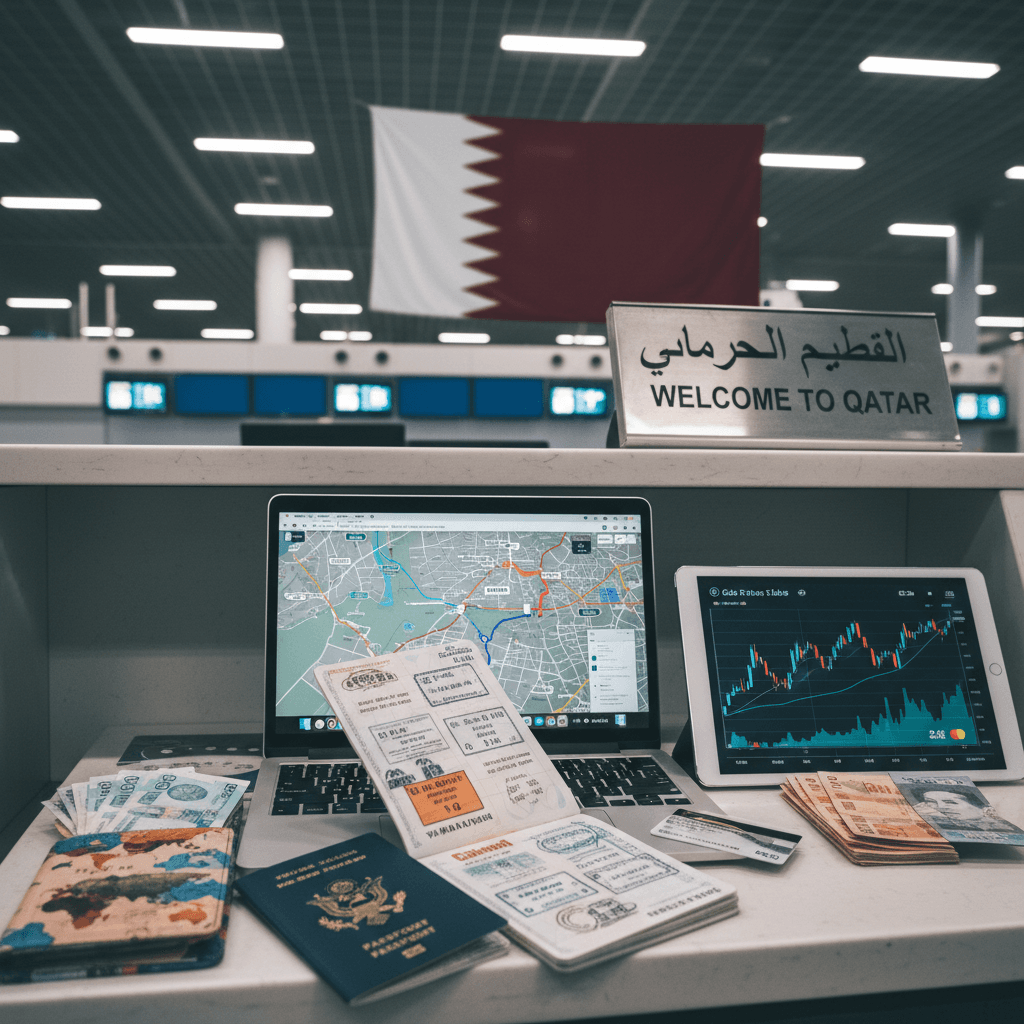
Qatar
Complete Digital Nomad Guide

Policy Stability
Stamped Nomad ExclusiveHow likely visa and immigration policies are to remain unchanged
Quick Facts
Nomad Visa Cost
N/A
Max Stay
3 months
Renewable
Yes
Cost of Living
$2,200/mo
Avg Internet
150 Mbps
Safety Score
9/10
Healthcare
High
Coworking
High
English Friendly
High
Time Zones
AST (UTC+3)
Entry Methods Available
Best For
Understanding Qatar's Visa Ecosystem
Qatar has transformed into one of the most accessible destinations in the Middle East. While the country doesn't have a specific "digital nomad visa" yet, the Hayya platform and a generous visa-on-arrival policy make it easy for remote workers to set up shop for a few months. Most visitors enter under the Hayya system, which has become the centralized hub for almost all entry permits.
For citizens of the GCC (Bahrain, Kuwait, Oman, Saudi Arabia, and the UAE), entry is entirely unrestricted. For everyone else, the process depends on your passport and how long you plan to stay. Most nomads will find themselves choosing between a standard tourist entry or the more structured e-visa process to avoid airport paperwork.
The Main Visa Categories
The Hayya platform categorizes entry types into specific codes. Understanding these helps you select the right path before you land in Doha:
- Hayya A1 (Tourist): The standard choice for holidaymakers and short-term nomads.
- Hayya A2 (GCC Residents): Specifically for expats living in other Gulf countries.
- Hayya A3 (Business): For those attending meetings or conferences with a local invite.
- Transit Visa: Perfect for a quick stopover, allowing up to 96 hours in the country.
- Joint Qatar-Oman Visa: Available to specific nationalities, allowing travel between both nations on one permit.
Tourist Entry and Costs
The most common route is the Hayya A1 tourist visa. This allows you to stay for 30 days and costs QAR 100, which is roughly $27 USD. If you want to stay longer, you can extend this once for an additional 30 days. This extension usually costs around QAR 200 and can be handled through the Ministry of Interior portal or the Metrash2 mobile app.
To get this visa, you need a passport valid for at least 3 months, a confirmed return ticket, and a hotel booking. US citizens get a slightly better deal with a 2-year multiple-entry visa on arrival that allows up to 90 days per visit.
Visa-Free Entry for 100+ Nationalities
Qatar is incredibly open, offering visa-free entry or visa-on-arrival to over 100 nationalities, including those from the EU, UK, Canada, Australia, and Japan. Under this scheme, you generally get 30 days upon arrival, which is extendable to 60 days. You just need to show a passport with 3 months of validity and your flight out of the country.
Recent updates have also made things easier for GCC residents. As of late 2025, the Hayya GCC Resident Visa stay has been extended to 60 days with multiple entries, making it a great option for nomads based elsewhere in the region who want to spend a couple of months in Doha.
Specific Requirements for Certain Passports
While the process is smooth for many, citizens from countries like India, Pakistan, Iran, Thailand, and Ukraine have an extra step. To get a visa on arrival, travellers from these nations must book their accommodation through the Discover Qatar website specifically. If you fall into this category, a standard hotel booking from a third-party site won't suffice for entry requirements.
The E-Visa Advantage
Even if you qualify for a visa on arrival, applying for an e-visa via the Hayya platform is often the smarter move. It costs the same QAR 100 and typically takes 3 to 7 days to process. Having the digital approval in your inbox means you skip the payment lines at the airport and walk straight to immigration. You will need to upload a digital photo, your passport scan, and your flight and accommodation details during the application.
Business Visas
If you are heading to Doha for more than just remote work, such as a local partnership or a conference, the Hayya A3 business visa is the standard route. This requires an invitation from a Qatari sponsor. You will need a passport valid for at least 6 months, proof of sufficient funds, and health insurance. Processing is fast, usually around 3 days, though the duration of stay varies based on the specific invitation.
Recent and Upcoming Changes
The rules in Qatar evolve quickly to keep up with tourism goals. Starting November 30, 2025, the 60-day stay for GCC residents became the new standard. Looking into 2026, expect stricter enforcement of mandatory health insurance for any visa extensions beyond the initial 30 days. Always verify the current status of the Discover Qatar hotel requirements, as the list of nationalities required to use that specific platform can change with little notice.
The Current State of Play
If you are looking for a official "Digital Nomad Visa" stamped with those exact words, you will not find one in Qatar. The country has not yet rolled out a specific remote work permit like some of its neighbors. However, that does not mean the door is closed. Most nomads currently operating out of Doha or Lusail do so by utilizing the robust tourist visa infrastructure, which has become significantly more streamlined recently.
The Hayya Portal is the heartbeat of entry into the country. While it was originally built for the World Cup, it has evolved into a permanent e-visa platform. For the vast majority of digital nomads, the Hayya A1 tourist visa is the standard entry point. It is accessible to citizens of over 100 countries, often available either visa-free or as a simple on-arrival permit.
The Tourist Visa Strategy
Since there is no dedicated nomad category, you will be entering as a visitor. This comes with a specific set of rules and a few gray areas you should understand before booking your flight. The primary draw here is the tax situation. Qatar does not levy personal income tax on foreign-sourced income for short-term visitors, meaning what you earn from your clients back home stays in your pocket.
- Initial Duration: Most visitors get an initial 30 days upon entry.
- Extensions: You can typically extend this stay online through the Hayya platform or the Ministry of Interior website for a total of 90 days.
- The Work Rule: You are strictly prohibited from seeking employment with Qatari companies. However, working remotely for your own business or employers based outside of Qatar is the standard practice for nomads here.
- The Exit Loop: Many long-term travelers choose to exit the country for a quick weekend in Dubai or Muscat and then re-enter to reset their stay, though this is subject to immigration discretion.
What You Need to Apply
The application process is digital and relatively painless. You do not need to visit an embassy in most cases. You will want to have your digital files ready before starting the application on the Hayya website or mobile app.
- Passport: Must be valid for at least 6 months from your date of entry.
- Proof of Accommodation: A confirmed hotel booking or a "Discover Qatar" hostel reservation is usually required.
- Health Insurance: You must purchase a mandatory health insurance policy from a registered Qatari provider, which costs approximately QAR 50 per month.
- Return Ticket: Proof that you intend to leave the country is mandatory for boarding your flight.
- The Fee: Expect to pay between QAR 100 and QAR 200 (roughly USD 27 to USD 55) depending on your specific nationality and visa type.
Step-by-Step Application
Start by creating an account on the Hayya.qa portal. You will upload a high-quality passport photo and a scan of your passport's data page. Once you submit your accommodation details and pay the fee, the processing time is generally fast, often landing in your inbox within 3 to 7 days.
Once approved, you receive a digital permit. Print a physical copy just in case, though the digital version on the app is usually enough for the e-gates at Hamad International Airport. When you land, the immigration officer will give you a standard entry stamp, and your 30-day clock begins.
Long-Term Alternatives
If you find yourself falling in love with the desert lifestyle and want to stay beyond the 90-day mark, the path gets more complicated and expensive. Qatar does not offer a middle ground between "tourist" and "resident" for remote workers. Your options for a longer stay usually involve more formal business structures.
- QFC Registration: The Qatar Financial Centre allows for 100% foreign ownership. This is a legitimate way to get a residency permit as a freelancer, but it involves significant setup fees and annual audits.
- Free Zones: Locations like Qatar Free Zones (QFZ) offer similar setups for tech and innovation startups, though these are geared toward companies rather than individual solo-preneurs.
- Work Residence Visa: This requires a local employer to sponsor you. It is the most common way people stay long-term, but it tethers you to a local company, which defeats the purpose for most nomads.
For most, the 90-day window provided by a tourist visa extension is the sweet spot. It gives you enough time to enjoy the winter weather, explore the museums, and work from the high-end coffee shops of Msheireb Downtown without the headache of local business registration.
Visa-Free Entry
Qatar has become one of the most open countries in the Middle East, offering visa-free entry to citizens of over 95 countries. If you hold a passport from the UK, USA, or most European nations, you can skip the paperwork entirely. You just need a passport with at least six months of validity and a confirmed onward or return ticket.
The duration of stay depends on your nationality. EU citizens typically receive a multi-entry waiver valid for 90 days within a 180-day period. Meanwhile, visitors from the US, UK, and Canada generally get 30 days on arrival. These waivers are issued at the border and do not require any prior application or fees.
The Hayya E-Visa Platform
If you aren't eligible for a visa-free waiver, the Hayya platform is your primary gateway. This centralized system manages the A1 tourist visa category. You create an account, upload a digital copy of your passport and a recent photo, and pay a fee of QAR 100. Processing usually takes between three to seven days.
One specific requirement for the e-visa is proof of accommodation. Depending on your nationality, you might need to book your stay through the Discover Qatar website. Additionally, all visitors must have health insurance from a provider approved by the Ministry of Public Health. These policies are inexpensive but mandatory for your application to be approved.
Visa on Arrival
Travelers from over 80 countries can opt for a visa on arrival if they haven't applied through Hayya. This is also a great fallback for residents of GCC countries or those holding valid visas from the US, UK, Canada, or the Schengen area. While many of these are free, some nationalities may be charged a small fee of approximately QAR 77.
To ensure a smooth entry at Hamad International Airport, keep your hotel booking confirmation and proof of funds ready. The immigration officers occasionally ask to see a credit card or a specific amount of cash to ensure you can support yourself during your stay.
Duration and Extensions
Most standard tourist visas allow for a 30-day stay. If you find yourself falling in love with the Doha skyline and want to stay longer, you can usually extend your visa once for an additional 30 days. This gives you a total of 60 days to explore the country.
- Standard Stay: 30 days
- Maximum Extension: 30 additional days
- Extension Fee: QAR 100 to QAR 200
- Transit Visas: 96 hours (generally non-extendable)
You can handle the extension online through the Ministry of Interior portal. It is a straightforward process where you enter your visa and passport details, pay the fee, and receive an instant update. Make sure to apply at least a few days before your initial 30 days are up.
Overstays and Border Runs
Qatar is strict about its immigration timelines. There is no standard grace period, so the moment your visa expires, the fines begin to accrue. The penalty is QAR 200 per day. These fines can add up quickly, though they are capped at a maximum of QAR 12,000.
You should pay any outstanding fines via the Metrash2 app or at a Ministry of Interior service center before you head to the airport. Attempting to leave with unpaid fines can lead to significant delays or future entry bans. While some nomads try "border runs" by hopping to a neighboring country and back, this isn't an official policy. If an immigration officer suspects you are cycling visas to live in the country permanently without a residency permit, they have the discretion to deny you entry.
Cost Summary
- E-Visa Fee: QAR 100 (approximately $27 USD)
- Visa on Arrival: Free for most; QAR 77 for specific cases
- Monthly Extension: QAR 100 to QAR 200
- Overstay Fine: QAR 200 per day
Always check the official Ministry of Interior or Hayya platforms before you fly. Rules can shift quickly, and staying updated ensures your digital nomad journey starts without any legal hiccups.
Making Qatar Your Long-Term Base
Qatar has shifted its approach to residency in recent years, moving away from short-term work cycles toward attracting long-term residents and investors. If you are looking to plant roots in Doha or the surrounding coastal developments, you have several distinct paths to consider. Whether you have the capital to invest in luxury real estate or the skills to launch a tech startup, the options are more flexible than they used to be.
The Real Estate Golden Visa
The most straightforward way to secure residency without a traditional employer sponsor is through property. Qatar allows foreigners to own property in designated zones like The Pearl, Lusail, and West Bay Lagoon. This investment opens the door to the Golden Visa program, which provides residency for you and your family.
- Temporary Residency (5 years): Requires a property investment of at least USD 200,000 (QAR 728,000).
- Permanent Residency: Requires a property investment of at least USD 1 million (QAR 3,650,000).
- Core Requirements: You must have a valid passport with at least 6 months of validity, a clean criminal record, and a medical clearance certificate. The property must be fully owned, not mortgaged.
The Mustaqel Visa: For Entrepreneurs and Talent
If you prefer to invest in your own skills or a business idea rather than a condo, the Mustaqel Visa is the modern choice for nomads and innovators. This program is specifically designed to bring in talent and fresh business energy. It grants a 5-year renewable residency permit with full work authorization.
Entrepreneurs need a business plan endorsed by a Qatari incubator and a minimum investment of QAR 250,000. For those in the "Talent" category, such as experts in technology, sports, or the arts, you need an endorsement from a relevant Qatari entity. This visa is a game-changer because it allows you to sponsor your family and own assets without a local partner.
The Freelancer Route
Independent professionals can also find a home here through the Mustaqel initiative. This pathway requires you to apply via the Jusoor platform. While it is more structured than the digital nomad visas you might find in Europe, it offers a legal way to live and work in the country as an independent contractor.
- Documentation: You will need attested educational certificates, a professional portfolio, and bank statements covering the last 3 to 6 months.
- Maintenance: The visa is renewed annually. You will need to show proof of ongoing freelance income and maintain health insurance throughout your stay.
- Health and Safety: All applicants must pass a medical exam and complete biometric registration upon arrival.
Business Investment Pathway
For those looking to enter the corporate world, the Business Investment Visa is aimed at larger-scale operations. This requires a minimum investment of QAR 3 million (roughly USD 825,000) in a Qatari-registered company. You must hold at least 51% of the shares. The government prioritizes sectors like finance, technology, and healthcare for this specific program.
Long-Term Permanent Residency
Qatar remains selective about granting full permanent residency, which offers perks like government healthcare and education. Outside of the million-dollar real estate investment, the standard route is based on time served. You must live in the country for 20 consecutive years (or 10 if you were born in Qatar) without being away for more than 60 days in any given year.
- Income Thresholds: Private sector employees need to earn at least QAR 30,000 per month, while government employees need QAR 20,000.
- Language and Conduct: Applicants must demonstrate Arabic proficiency and have a flawless legal record.
- Fees: The application costs QAR 3,000, with another QAR 3,000 due when the card is issued.
A Note for Retirees
There is no specific "Retirement Visa" category for new arrivals. However, if you have already been working in the private sector and reach the age of 60, you can request a renewal of your residency. This is generally handled on a case-by-case basis and usually requires you to stay with your existing sponsor or have significant financial independence.
The Reality of the Qatari Price Tag
Qatar often gets a reputation for being an playground for the ultra-wealthy, but for a digital nomad, the financial reality is more nuanced. While you can certainly spend a small fortune on a penthouse in The Pearl, the country offers a surprisingly structured cost of living that rewards those who know where to plant their roots. You can expect your monthly burn rate to land anywhere between 8,000 QAR and 25,000 QAR (roughly $2,200 to $6,900 USD), depending on whether you are living the high life in West Bay or keeping things local in Al Rayyan.
Doha is the undisputed hub, but it carries a price premium. If you venture just a bit further out to Al Rayyan, you will find costs drop by about 22% for daily expenses. Al Wakrah offers a similar discount with a coastal, laid-back vibe that feels a world away from the Doha skyscrapers. Most nomads find that the efficiency of the country often offsets the higher price points; you are paying for world-class infrastructure and safety that few other hubs can match.
Monthly Budget Tiers
To help you plan your runway, we have broken down the monthly costs for a single nomad based on three distinct lifestyle tiers. These figures reflect the 2025–2026 market data for Doha. If you choose Al Rayyan or Al Wakrah, you can safely shave 10% to 25% off the rent and food categories.
The Budget Nomad
- Housing: 3,500–5,000 QAR. This usually gets you a 1BR or a high-quality studio in areas like Al Sadd or Al Nasr, just outside the primary business center.
- Food: 800–1,200 QAR. This relies on local markets and inexpensive "hole-in-the-wall" cafeterias where a solid meal costs about 30 QAR.
- Transport: 200–400 QAR. A monthly metro pass is a steal at 120 QAR, supplemented by the occasional short taxi ride.
- Workspace: 800–1,200 QAR for a flexible hot desk in a shared coworking space.
- Health Insurance: 50–200 QAR for the basic mandatory MOPH plan.
The Comfortable Nomad
- Housing: 5,000–7,500 QAR. This opens up modern apartments in Lusail or Al Waab, often with a gym and pool included.
- Food: 1,500–2,000 QAR. A healthy mix of grocery shopping and hitting mid-range restaurants a few times a week.
- Transport: 500–800 QAR. Frequent use of Uber and taxis, which usually cost between 10 and 25 QAR per trip.
- Workspace: 1,500–2,000 QAR for a dedicated desk in a more central hub.
- Health Insurance: 300–500 QAR for an enhanced private expat plan with better clinic access.
The Premium Nomad
- Housing: 8,000–9,000+ QAR. This is the domain of The Pearl and West Bay, featuring high-rise views and luxury amenities.
- Food: 2,500+ QAR. Regular dining at upscale establishments where a single dinner might run 200 QAR.
- Transport: 1,000+ QAR. Primarily using premium ride-shares or a private driver for daily commutes.
- Workspace: 2,500+ QAR for a private office or a membership at a top-tier executive club.
- Health Insurance: 1,000+ QAR for comprehensive international coverage.
Hidden Costs and Practicalities
When you are tallying up your totals, do not forget the utilities. While some nomad-friendly rentals include them, you should set aside 500 to 700 QAR for high-speed internet and electricity, especially during the summer months when the AC is non-negotiable. The mandatory health insurance is a relatively new requirement for visitors and expats, so ensure you have that sorted before you land to avoid any friction at the border.
The exchange rate is pegged at approximately 1 USD to 3.64 QAR, which makes financial planning fairly stable. Unlike other regions where currency fluctuations can ruin a budget overnight, your purchasing power here stays consistent. Whether you are grabbing a 2 QAR metro ticket or signing a lease in a Lusail glass tower, the transparency of the Qatari market makes it one of the easier Middle Eastern spots to manage as a remote professional.
Doha
Doha is the undisputed heavyweight for anyone landing in Qatar with a laptop. It is a high-octane mix of traditional souks and a skyline that looks like it was pulled from a sci-fi film. If you want the strongest community, this is where you will find it. Most nomads congregate in West Bay or the sustainable Msheireb Downtown district, where the infrastructure is flawless and the 15-140 Mbps internet speeds make video calls a breeze.
The capital offers the best balance of "work" and "play" in the country. You can spend your mornings at Flat White or Volume Café, both of which are famous for reliable Wi-Fi and plenty of power outlets. When the sun goes down, Doha is the only spot where you will find a truly active nightlife, ranging from rooftop lounges to high-end clubs like Qube. It is exceptionally safe, boasting a safety index between 84 and 90, meaning you can walk home at 2:00 AM without a second thought.
- Monthly Cost: Approximately $3,900
- One-Bedroom Rent: $1,000 to $1,400
- Internet Speed: 15-140 Mbps
- Vibe: Fast-paced, international, and amenity-rich.
Pros: Unmatched coworking density, best social scene, and world-class public transit via the Doha Metro.
Cons: The most expensive and crowded city in the country.
Lusail
Located just north of Doha, Lusail is a "smart city" built from the ground up. It feels incredibly modern because, quite literally, everything is new. This is the place for the tech-forward nomad who wants 5G coverage everywhere and sleek, dedicated coworking spaces like Flare or Regus. It is quieter than Doha but rapidly catching up in terms of luxury dining and entertainment.
The nomad community here is growing fast, drawn by the "city of the future" energy. While it has some of the highest costs in Qatar, you are paying for a level of urban planning that is hard to find elsewhere. It is polished, quiet, and feels very exclusive.
- Monthly Cost: Approximately $4,300
- Internet Speed: High-speed 5G and fiber
- Safety Index: 84-90
- Vibe: Futuristic, quiet, and high-tech.
Pros: Cutting-edge workspaces and less traffic than the capital.
Cons: The highest price tag in Qatar; some areas still feel like a construction zone.
Al Rayyan
If the glitz of Doha feels like a bit much, Al Rayyan offers a more grounded, suburban alternative. It is technically a separate city but functions as a leafy extension of the capital. You get the benefit of lower rents while staying only 20 to 30 minutes away from the major business hubs. It is popular with nomads who prioritize green spaces and a bit of peace and quiet over a wild social life.
The internet is still excellent here, averaging around 64 Mbps. While you won't find a coworking space on every corner, the proximity to Education City means there are plenty of quiet libraries and student-friendly cafes where you can hunker down for a few hours of deep work.
- Monthly Cost: Approximately $2,500
- Average Rent: $900
- Internet Speed: 64 Mbps
- Vibe: Peaceful, family-oriented, and spacious.
Pros: More affordable than Lusail or Doha; great parks and local culture.
Cons: Very limited nightlife; you will likely need a car or Uber to find a real "nomad" scene.
Al Wakrah
Al Wakrah is for the nomad who wants to be by the water without the Doha price tag. This coastal town south of the capital has a more traditional, relaxed feel. You can spend your lunch breaks walking through the Heritage Village or sitting by the beach. It is significantly more affordable, with monthly costs sitting around $3,500 and rents starting near $900.
The pace of life is slower here, but the essentials are covered. You will find reliable 39 Mbps internet and familiar spots like Costa or Flat White for remote work. It is a great home base if you want to save money while remaining a short 20-minute drive from the action in Doha.
- Monthly Cost: Approximately $3,500
- Average Rent: $900
- Internet Speed: 39 Mbps
- Vibe: Coastal, historic, and laid-back.
Pros: Beach access and lower living costs.
Cons: Smallest nomad community and very few dedicated coworking offices.
High-Speed Connectivity and Infrastructure
Qatar is a powerhouse when it comes to digital infrastructure. You won’t be hunting for a signal here; fiber-optic coverage reaches over 95% of the country. Whether you are staying in a high-rise in West Bay or a boutique apartment in The Pearl, you can expect fixed broadband speeds averaging 137 Mbps download and 94 Mbps upload. In many parts of Doha, these speeds can spike significantly higher, with gigabit plans readily available through local providers.
The mobile experience is even more impressive. Qatar consistently ranks among the fastest countries globally for mobile data, with 5G networks delivering speeds between 300 Mbps and 500 Mbps. This makes your phone a perfectly viable backup hotspot if you ever face a rare outage at your accommodation.
Top Coworking Spaces in Doha
If you need a professional environment to stay productive, Doha has several high-end options. Most spaces are concentrated in the business districts and offer 24/7 access, which is a lifesaver if you are working across different time zones.
- Servcorp (Doha Tower & Tornado Tower): These are the gold standard for corporate nomads. Located in iconic West Bay skyscrapers, they offer premium amenities, secretarial support, and stunning views of the Corniche.
- Workinton Alfardan Centre: Situated on Grand Hamad Street, this space has a more modern, creative vibe. It is popular with entrepreneurs and offers a mix of open booths and quiet zones.
- Nest Qatar: Located in Al Fardan Tower, Nest provides a boutique feel with excellent networking opportunities and high-speed Wi-Fi that handles video calls without a hiccup.
- Mavericks365: A great choice for those who prefer a more community-focused atmosphere over a corporate one.
Membership and Pass Costs
Pricing for coworking in Qatar reflects the premium nature of the real estate. While you can find budget-friendly daily rates, monthly commitments offer the best value for long-term stays.
- Servcorp Doha Tower: Hot desks start at QAR 790 per month. Dedicated desks cost around QAR 1,080 per month with a 12-month commitment.
- Ten Works: Monthly memberships begin at approximately QAR 750.
- Regus: Offers flexible pricing across multiple locations, with daily rates starting around QAR 36 equivalent when calculated monthly.
- Day Passes: Expect to pay between QAR 70 and QAR 219 for a single day of access depending on the prestige of the building.
Cafe Culture and Public Wi-Fi
Working from cafes is a common sight in Doha, especially in areas like Msheireb Downtown and the various malls. Public Wi-Fi is available in the Doha Metro and major shopping centers like the Mall of Qatar. Most international chains like Caribou Coffee provide reliable connections, though speeds can dip during the busy evening hours when locals gather to socialize.
While public Wi-Fi is generally safe, it is wise to use a VPN for any sensitive work or banking. For the most consistent experience, many nomads prefer to tether to their mobile devices, as the 5G signal is often faster and more stable than shared cafe networks.
Mobile Data and SIM Cards
Getting connected as soon as you land is straightforward. Ooredoo and Vodafone are the two main players. You can pick up a physical SIM or an eSIM at Hamad International Airport or any major mall.
- Prepaid Plans: Expect to pay between QAR 50 and QAR 200 for 28-day packages offering 5GB to 30GB of data.
- Visitor SIMs: These typically cost between QAR 150 and QAR 250. They provide roughly 7GB to 16GB of high-speed data and often include "endless" low-speed data at 128kbps once your cap is reached.
- Travel eSIMs: Services like Nomad or aloSIM are convenient alternatives, with data packages ranging from $5 to $50 for 3GB to 20GB.
Public vs. Private: Choosing Your Path
Qatar’s healthcare system is world-class, consistently ranking among the best in the Middle East. As a digital nomad, you have two main routes: the public system, managed by the Hamad Medical Corporation (HMC), and a fast-growing private sector. Both offer high standards of care, but the experience differs significantly in terms of speed and comfort.
The public system is modern and highly subsidized. To access it, you’ll need a Health Card, which costs QAR 100 annually. With this card, outpatient consultations at public clinics drop to just QAR 50. While the care is excellent, public facilities often come with longer wait times and less flexibility for non-emergency appointments. Most expats treat the public system as a reliable backup for major emergencies while using private clinics for day-to-day needs.
Private healthcare is where most nomads end up for routine visits. Here, you’ll find shorter queues, English-speaking staff, and amenities that feel more like a hotel than a hospital. It is more expensive, but the efficiency is usually worth the premium if you are balancing a remote work schedule.
Top International Hospitals
If you need medical attention in Doha, several facilities stand out for their expat-friendly services and specialized care:
- Al Ahli Hospital: Known for luxury-tier care and advanced departments in cardiology and orthopedics. Reach them at +974 4489 8888.
- Al Emadi Hospital: An ISO-certified multi-specialty facility that is a favorite for its streamlined service. Contact: +974 4466 6009.
- Doha Clinic Hospital: A reliable choice for general surgery and emergency care located in the heart of the city.
- Sidra Medicine: A high-tech facility that specializes in pediatrics and maternity care with a highly diverse, international staff.
- Hamad General Hospital: The public flagship. This is the place to go for major trauma or complex emergencies.
Mandatory Insurance and Costs
Health insurance isn't just a suggestion in Qatar; it is a legal requirement for your visa. If you are entering on a visitor or nomad-style visa, you must have a basic policy. These mandatory visitor plans are affordable, costing around QAR 50 per month, and cover emergency services up to QAR 150,000.
For better coverage, many nomads opt for international private plans. Annual premiums vary based on your age and coverage needs:
- Cigna: QAR 8,000 to QAR 45,000 per year.
- Allianz: QAR 6,500 to QAR 30,000 per year.
- GIG Gulf (formerly AXA): QAR 4,000 to QAR 22,000 per year.
Typical out-of-pocket costs at private hospitals (before insurance kicks in) include $100 to $500 for an ER visit and $200 to $500 for an MRI. A night in a private hospital room can range from $500 to $1,500. Most private insurance plans in Qatar cover 80% to 90% of these costs after you meet your deductible.
Pharmacies and Prescriptions
Finding a pharmacy is easy in Doha. Many are open 24/7, and you will find them tucked into almost every major mall and residential hub. Lulu Pharmacare is a popular choice for expats because they offer express delivery and online ordering via their app.
If you have a Health Card, you only pay 20% of the cost for medications at public pharmacies. However, be aware that Qatar has strict regulations on certain medications. Some Western prescriptions, particularly those for mental health like antidepressants or ADHD medication, may be restricted or require specific localized paperwork. It is smart to carry your original prescription and a doctor's letter when bringing any medication into the country.
Emergency Services
In a medical crisis, dial 999. Qatar’s National Ambulance Service is incredibly efficient, with average response times around 8 minutes within Doha. The paramedics are well-trained and speak both Arabic and English. While private hospitals like Al Ahli operate their own ambulances, the HMC public ambulances are often faster and better equipped for life-threatening trauma. You do not need an appointment or a Health Card to be treated in a life-or-death emergency situation.
The Currency and the Peg
Qatar uses the Qatari Riyal (QAR). One of the best things about managing your finances here is the stability; the Riyal has been pegged to the US Dollar at a rate of 1 USD to 3.64 QAR since 2001. This makes mental math easy if you are used to dealing in Dollars.
You will find banknotes ranging from 1 to 500 Riyals. While coins (dirhams) exist, they are increasingly rare in daily transactions. Most shops, even smaller ones, are well-equipped for contactless payments, though keeping some cash for older souqs or small cafeterias is a smart move.
Banking for Nomads and Expats
Opening a bank account in Qatar is straightforward if you have a Qatar ID (QID), which usually comes with a residency permit or work visa. For digital nomads on a standard tourist visa, things get a bit more complex. Most local banks require a residency permit to open a full-service account.
If you are in the process of getting residency, some banks like QNB or Doha Bank offer temporary accounts. Without a QID, you might be looking at a non-resident account. These often come with steep minimum balance requirements, sometimes between 10,000 QAR and 100,000 QAR. For most short-term nomads, relying on international fintech is the path of least resistance.
Required Paperwork
If you decide to go the local route, prepare your folder. You will generally need:
- A valid passport with your entry stamp.
- Passport-sized photos.
- Proof of address, such as a utility bill or a formal rental agreement.
- A salary certificate or a letter from a local sponsor if you are working for a Qatari entity.
- Proof of funds or a reference letter from your home bank.
Using Wise and Revolut
Wise and Revolut are your best friends in Doha, but there is a catch. Neither company currently issues new cards to people residing in Qatar. However, if you already have a card from your home country, it will work perfectly for daily spending and ATM withdrawals.
Wise is particularly useful because it allows you to hold and transfer QAR at much better rates than traditional banks. You can send money directly to a local Qatari bank account if you need to pay a landlord or a service provider, and it usually arrives within a day.
ATM Fees and Cash Access
ATMs are everywhere, from luxury malls to petrol stations. When using a foreign card, expect to pay a fee of 10 to 15 QAR per transaction. On top of that, your home bank might tack on a 2% to 3% currency conversion fee.
To keep costs down, look for HSBC or Commercial Bank of Qatar (CBQ) ATMs, as they sometimes offer lower fees for specific international partner networks. Always decline the "dynamic currency conversion" on the screen; let your own bank handle the exchange rate to save a few dollars every time you withdraw.
Moving Money Around
For sending money home or receiving your salary from abroad, you have several reliable options beyond the slow and expensive traditional wire transfer.
- Wise: Best for low fees and transparent exchange rates when sending to a local account.
- HSBC Global Money: Excellent if you already hold an HSBC account in another country, allowing for near-instant transfers.
- Remitly or Xoom: Good for quick cash pickups or fast deposits if you are in a rush.
The Crypto Situation
If you are a crypto nomad, Qatar is a "proceed with extreme caution" zone. The Qatar Central Bank has effectively banned the trading and exchange of cryptocurrencies like Bitcoin since 2018. This was reinforced in 2024 with new regulations that exclude crypto from being used as a legal payment method.
While holding crypto is not necessarily a crime, you cannot use it to pay for goods or services, and local banks will likely flag or block transactions related to crypto exchanges. It is best to handle your digital asset business through accounts based outside of Qatar.
Top Banking Options
- QNB (Qatar National Bank): Best for high-income earners. Requires a 10,000 QAR minimum balance but offers a great mobile app and extensive branch access.
- Doha Bank: Generally considered the most expat-friendly for those just starting out. They are often more flexible with documentation for newcomers.
- HSBC Qatar: The top choice for international portability. If you have Premier status elsewhere, they can help you set up an account before you even arrive. Minimum balances are higher, often around 20,000 QAR.
- Standard Chartered: A solid option if you need multi-currency accounts and travel frequently across the Middle East and Asia.
Making the Move with Your Family
Qatar is often a surprise for nomad parents. While many digital nomads travel solo, Doha has built an environment that is arguably one of the most family-friendly hubs in the Middle East. The combination of high-end infrastructure, a massive community of expatriate families, and a culture that deeply respects children makes it a seamless transition if you are bringing your spouse and kids along.
The Family Residence Visa
If you are working remotely under a residency permit, you can sponsor your family through the Family Residence Visa. To qualify, you generally need a minimum salary of QAR 10,000 per month, or QAR 6,000 to 7,000 if your employer provides your housing. This allows you to bring your spouse, sons under 25 who are unmarried, and unmarried daughters of any age.
The process is handled primarily through the Metrash2 app or Ministry of Interior centers. Expect to pay an entry visa fee of QAR 200 and an annual residency permit fee of QAR 500 per person. You will need to provide attested marriage and birth certificates, a medical test for adults costing QAR 100, and proof of a rental contract. Processing usually wraps up within 3 to 6 weeks.
Schooling and Education
Education is a major investment here, but the quality is world-class. If your children are between 6 and 18 years old, they must be enrolled in a licensed school. Most expats opt for international schools that follow British, American, or IB curricula.
- Premium Schools: Fees range from QAR 80,000 to 120,000 per year. These often include sprawling campuses and extensive extracurriculars.
- Mid-Range Schools: Expect to pay between QAR 31,400 and 47,750 per year at institutions like Nord Anglia.
- Budget Options: Specialized community schools, such as the Philippine International School, can cost as little as QAR 6,000 to 10,000 per year.
Healthcare for the Little Ones
The pediatric care in Qatar is exceptional. Sidra Medicine is the standout facility here, acting as a high-tech specialty hospital for women and children. For routine check-ups and emergencies, the Pediatric Emergency Centers and private facilities like Aman Hospital provide quick, efficient care.
While government health cards offer subsidized services, most nomad families opt for private insurance. A comprehensive plan for a family of four typically costs between QAR 6,000 and 11,000 per year. This covers consultations, vaccinations, and dental care, ensuring you avoid the longer wait times sometimes found in the public sector.
Where to Live
Doha is not just skyscrapers and glass. Several neighborhoods are designed specifically with families in mind, featuring gated compounds, parks, and easy access to schools.
- Al Waab: Known for its large villas and proximity to Aspire Park. It is home to major schools like Doha College. Monthly rent for a 4-bedroom villa is usually QAR 15,000 to 20,000.
- Al Gharrafa: A great mid-budget option near Education City and several major malls.
- Al Rayyan: Offers more traditional suburban living with plenty of green spaces and kindergartens.
Childcare and Nurseries
For younger children, nursery costs depend on the location and the number of days your child attends. Standard monthly rates for nurseries in Doha range from QAR 1,000 to 4,000. Many facilities offer flexible schedules, such as two or three days a week, with sessions costing between QAR 2,100 and 3,400 depending on the child's age. Be prepared for a one-time registration fee of around QAR 1,000.
Safety and Peace of Mind
Safety is perhaps Qatar’s biggest selling point for parents. It consistently ranks in the top 3 safest countries globally, with a safety index of 84.6. Crime is incredibly rare, and it is perfectly normal to see families walking in parks or along the Corniche late into the evening. The infrastructure is built with strollers in mind, and the strict local laws ensure a secure environment where you can focus on your work and family life without constant worry.
Safety on the Ground
Qatar is consistently ranked as one of the safest places on the planet for expats and digital nomads. With a crime index of 16.0, it currently holds the title for the second-lowest crime rate globally. You will likely feel a sense of security here that is hard to find elsewhere; it is common to see people leave their laptops on cafe tables while they grab a refill or walk through the city late at night without a second thought.
Violent crime is statistically rare and almost never involves Westerners or tourists. Most reported incidents are concentrated in labor camps far from the typical nomad hubs. That said, don't let your guard completely drop. Petty theft like pickpocketing can happen in crowded spots like Souq Waqif, and while home burglaries are uncommon, it is still smart to lock your doors if you are staying in a ground-floor apartment or villa.
Staying Smart and Avoiding Scams
While the streets are safe, you might encounter a few opportunistic hustlers. The most common headache for newcomers is taxi overcharging. Stick to the official Karwa taxis or use apps like Uber to ensure you are paying the regulated rate. Unmarked "private" drivers often hang around high-traffic areas and will try to quote you double the standard fare.
- ATM Safety: Use machines located inside banks or malls to avoid potential skimming devices.
- Authentic Goods: Be wary of vendors in the markets offering "genuine" gold or high-end watches at impossible prices.
- Digital Tickets: Always buy entry for events or tours through official websites rather than third-party "guides" on the street.
The LGBTQ+ Reality
This is a conservative country where same-sex acts are illegal. For LGBTQ+ nomads, the reality requires a high degree of discretion. There is a risk of entrapment on dating apps like Grindr, and law enforcement has been known to monitor these platforms. While the government generally does not arrest people based on their identity alone, public displays of affection or wearing pride symbols can lead to serious legal trouble.
If you are traveling with a partner, it is best to act as friends in public. Using a VPN for your private browsing is highly recommended to maintain your digital privacy while working from Doha.
Navigating Local Culture
Qatari culture is rooted in hospitality, but it is governed by a strict set of social rules. When you meet someone, a warm "Salaam Alaikum" goes a long way. If you are offered Arabic coffee and dates, accept them with your right hand; it is considered rude to refuse hospitality or to use your left hand for eating and drinking. Also, remember to take your shoes off before entering a Qatari home.
Modesty is the golden rule for clothing. Both men and women should keep their shoulders and knees covered when in public spaces like malls or government buildings. During the holy month of Ramadan, you must refrain from eating, drinking, or smoking in public during daylight hours out of respect for those fasting. Most workplaces and some cafes will have screened-off areas where expats can eat.
Language and Communication
Arabic is the official language, but you will rarely struggle if you only speak English. Because expats make up nearly 85% of the population, English has become the default language for business, shopping, and dining. You will hear a mix of Hindi, Urdu, and Tagalog in the streets, reflecting the massive South Asian and Filipino communities that keep the city running. Learning a few basic Arabic greetings will earn you plenty of respect, but it isn't a requirement for daily life.
The Expat Community and Integration
Integration in Qatar usually happens within the expat bubble rather than with the local Qatari population, who tend to be more private. You will find a massive network of fellow nomads and professionals in the high-rise towers of West Bay or the Pearl. These areas are designed for international living, featuring compounds with gyms, pools, and social clubs.
- Coworking Hubs: Join spaces in Msheireb Downtown or Lusail to meet other remote workers.
- Social Groups: Online forums and Facebook groups for expats are very active and great for finding weekend desert trips or sporting clubs.
- The Majlis: If you are lucky enough to be invited to a Majlis (a traditional sitting room), accept the invitation. It is the best way to experience authentic Qatari culture and build genuine rapport with locals.
To thrive here, embrace a slower pace of communication. Business and social connections are built on small talk and trust. Avoid being overly blunt or confrontational, as saving face is an important cultural value in the region.
The Golden Rule: 0% Personal Income Tax
Qatar is a heavy hitter for digital nomads primarily because of its tax policy. There is no personal income tax on salaries, wages, or foreign-sourced income. Whether you are working for a tech firm in London or managing clients in New York from a cafe in Msheireb Downtown Doha, your earnings remain yours. This 0% rate applies to all residents, regardless of nationality.
For the self-employed, the rules remain very generous. You only face taxation if your income is specifically "Qatar-sourced." If your revenue comes from international clients and you are simply living in Doha, you generally fall under the tax-free umbrella. Unlike many Western nations, there are no social security or pension deductions for expats, meaning your gross pay is effectively your net pay.
Establishing Tax Residency
To officially be considered a tax resident under Qatar Tax Law No. 11 of 2022, you typically need to meet the 183-day rule. This means staying in the country for more than 183 days within any 12-month period. These days do not have to be consecutive, so your weekend trips to Dubai or Oman won't reset the clock.
You can also be classified as a resident if you have a "permanent home" in Qatar or if your center of vital interests, such as your family or primary business ties, is located here. For most nomads, the physical presence test is the most straightforward way to track status. Keeping a log of your entry and exit stamps is a smart move if you plan on staying long-term.
Crypto and Digital Assets
If you trade Bitcoin, stake Ethereum, or flip NFTs, Qatar is one of the most friendly jurisdictions you will find. Because there is no personal capital gains tax, individuals do not pay tax on crypto profits. This applies to mining and DeFi activities as well. While the Qatar Financial Centre (QFC) regulates digital assets for companies at a 10% corporate rate, individual nomads are currently exempt from these burdens.
Leveraging Double Taxation Treaties
One of Qatar’s biggest advantages is its massive network of over 80 double taxation agreements (DTAs). These treaties are vital for nomads who want to ensure their home country doesn't try to claim a slice of their income while they are living abroad. Qatar has agreements with a long list of nations, including:
- Europe: France, Greece, Cyprus, Austria, and Hungary.
- Asia: India, Indonesia, Hong Kong, and Brunei.
- Others: Morocco, Algeria, and Ecuador.
To take advantage of these treaties, you may need a Tax Residency Certificate from the General Tax Authority (GTA). You will need to provide your ID, proof of residence, and records showing you have met the physical presence requirements.
Reporting and Compliance
The administrative side of Qatari taxes is refreshingly simple. Most individuals have no annual tax filing requirements at all. If you are a remote worker with no local business activity, you won't even need to register with the tax office. However, if you decide to branch out and earn money from Qatari clients, you must register with the GTA and file accordingly. For everyone else, the main task is simply tracking your days in the country to manage your residency status.
The Nomad Setup
While Qatar doesn't have a specific "Digital Nomad Visa" yet, the tax benefits are available to anyone with a valid residence permit. This includes those on entrepreneur visas or those sponsored by a local entity. Here is a quick look at the incentives for remote workers:
- Foreign Income: Always 0% tax for residents.
- Entrepreneur Visas: Permits available for startups, often lasting 5 years.
- Free Zones: Areas like the Qatar Financial Centre offer corporate perks, though personal tax remains zero across the entire country.
Connectivity and Communication
Staying online is your first priority when landing in Doha. You can pick up a physical SIM or an eSIM immediately upon arrival at Hamad International Airport. Ooredoo is the primary provider, offering Visitor SIMs that range from QR75 for 6GB (valid for 7 days) to QR200 for 25GB (valid for 30 days). If you want to save a few riyals, Vodafone usually offers slightly more competitive data packs for similar durations.
For those who only need data and don't care about a local phone number, digital eSIM providers like aloSIM or Nomad are often the cheapest route. You can grab 5GB of data for around $15. Just keep in mind that many local services and delivery apps require a local number for SMS verification, so a physical Visitor SIM is usually the smoother choice for long-term stays.
While English is spoken almost everywhere, learning a few local phrases goes a long way. Download the Qatari Phrasebook app. It was developed by Georgetown University Qatar and includes over 1,500 phrases in the local dialect with audio recordings. It is far more useful for daily life in Doha than the standard Arabic you might find on Duolingo.
Getting Around
The heat makes walking impractical for most of the year, but the rideshare ecosystem is excellent. Uber is the most common choice for expats. If you want the official government-regulated option, download Karwa. They manage the turquoise taxis and offer transparent pricing and professional drivers.
- Uber: Best for familiar interface and international card payments.
- Karwa: The official taxi and limo service; very reliable and affordable.
- Ryde: A local alternative often featuring lower surge pricing during peak hours.
- Doha Metro: Clean, fast, and incredibly cheap for North-South travel.
Where to Set Up Base
Choosing a neighborhood defines your nomad experience here. The Pearl-Qatar is the go-to for luxury and convenience. It is a man-made island with Mediterranean-style marinas, walkable promenades, and plenty of high-end apartments. It is pricey, but the beach access and "Western" feel make it an easy transition.
For a more professional, fast-paced environment, West Bay puts you in the heart of the skyline. You will be surrounded by skyscrapers, major hotels, and the best coworking spaces. If you prefer a sustainable, tech-forward vibe, Msheireb Downtown is a "smart city" district that attracts creatives and entrepreneurs. For those on a tighter budget, Al Sadd offers central access to the metro and more affordable furnished rentals.
When searching for a place, Airbnb is the most reliable platform for stays of 1 to 3 months. Look for listings that specifically mention a dedicated workspace. If you want a more local experience or a longer lease, Property Finder is the standard listing site, while Mapmelon is gaining traction for nomads looking for coliving communities.
Daily Life and Logistics
Food and grocery delivery is a lifestyle in Qatar. Talabat is the market leader for everything from high-end dinners to pharmacy runs. Snoonu and Rafeeq are local competitors that often have better deals or no minimum order requirements. Most apps allow you to track your rider in real-time and pay with an international credit card.
Safety is rarely a concern, as Qatar is consistently ranked among the safest countries in the world. However, you should still keep 999 programmed into your phone. This is the universal emergency number for police, fire, and ambulance services. Operators are available 24/7 and speak multiple languages, including English.
Avoiding Common Pitfalls
A few cultural rules will make your stay much smoother. Dress modestly in public spaces like malls or government buildings; this generally means keeping shoulders and knees covered. Always ask for permission before taking photos of people, particularly at Souq Waqif or inside mosques.
On the technical side, be wary of "unlimited" data claims. Many local SIMs have fair usage caps that throttle your speed after a certain threshold. Also, avoid using unregistered private cars that offer rides outside of the major apps. Stick to licensed taxis or Uber to ensure you are covered by insurance and fair pricing.
Latest Nomad News
Inside Qatar’s 10-Year Residency for Executives and Entrepreneurs
Qatar has introduced two new long-term residence categories offering up to 10 years of validity without the need for a local employer sponsor. These permits allow for family sponsorship and are designed to attract high-level talent and business owners to the country.
Qatar Automatically Extends All Entry Visas
Qatar has implemented an automatic one-month extension for all expired or soon-to-expire entry visas starting February 28, 2026. The extension is processed electronically at no cost, though travelers must settle any prior immigration violations to qualify.
How the Hayya GCC Resident Visa Works for Remote Workers
The Hayya GCC Residents Visa (A2) has been upgraded from a one-month single-entry permit to a two-month multiple-entry visa. This change allows eligible residents of other GCC countries to travel more flexibly to Qatar for extended stays or frequent business trips.
Qatar Updates Residency Options for Executives and Entrepreneurs
Qatar has introduced two new long-term residence permits offering up to 10 years of non-sponsored residency for high-earning senior professionals and incubator-backed entrepreneurs. These visas aim to facilitate long-term stays for skilled expats and business owners without the need for a local employer sponsor.
Stay Updated on Qatar
Get notified about visa changes, policy updates, and new information for digital nomads in Qatar.