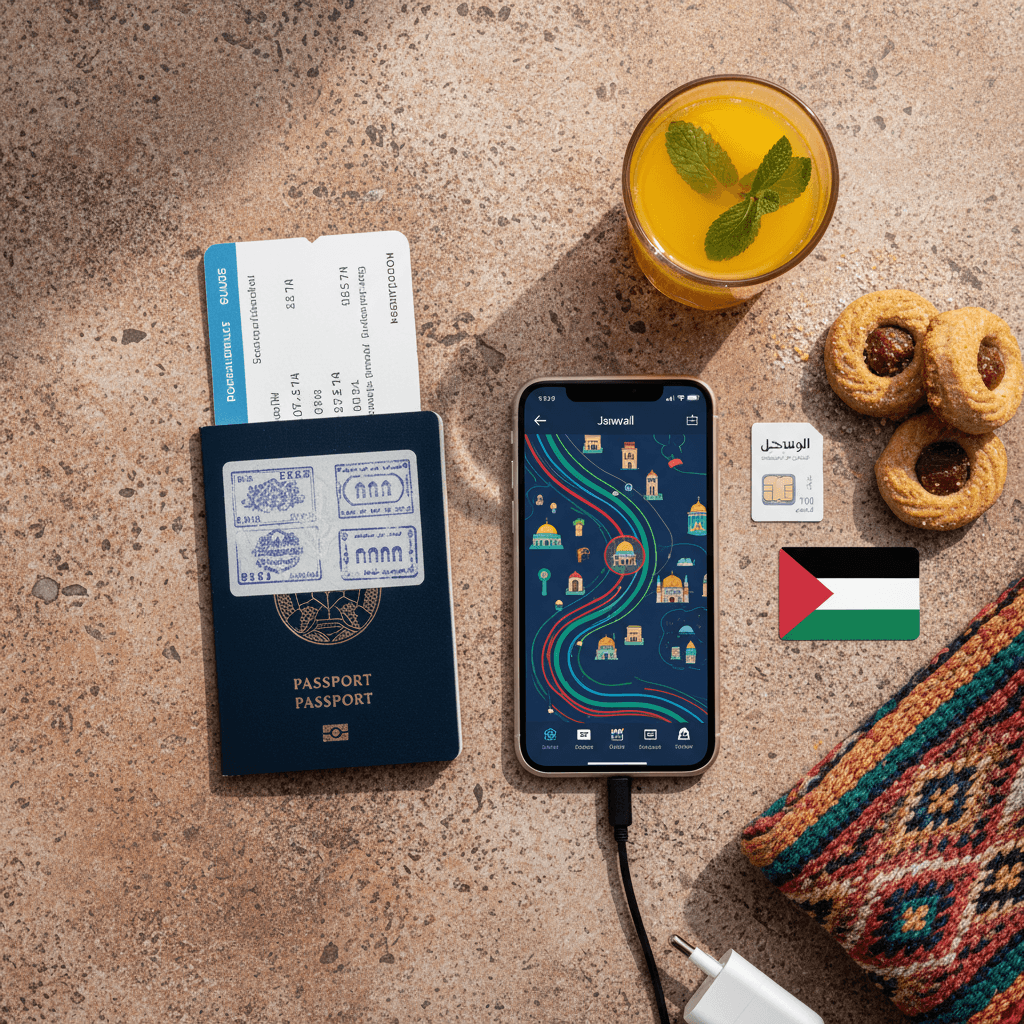
Palestine
Complete Digital Nomad Guide

Policy Stability
Stamped Nomad ExclusiveHow likely visa and immigration policies are to remain unchanged
Quick Facts
Nomad Visa Cost
N/A
Max Stay
3 months
Renewable
No
Cost of Living
$1,100/mo
Avg Internet
50 Mbps
Safety Score
6/10
Healthcare
Medium
Coworking
Medium
English Friendly
Medium
Time Zones
EET, EEST
Entry Methods Available
Best For
The Entry Reality
Entering Palestine as a digital nomad is a unique logistical puzzle because the Palestinian Authority does not control its own borders. To get to Ramallah, Bethlehem, or Jericho, you actually follow Israeli immigration protocols. There is no such thing as a "Palestinian Visa" that you apply for at an embassy before you leave home. Instead, you enter via Israeli-controlled crossings, usually Ben Gurion Airport or the Allenby Bridge from Jordan.
Most travelers from the US, EU, UK, Canada, and Australia receive a 90-day stay permit upon arrival. It is important to remember that Israel no longer stamps passports; they provide a small blue paper slip called a "Stay Permit." Keep this slip with your passport at all times, as you will need to show it at checkpoints when moving between cities in the West Bank.
The ETA-IL System
Starting in 2025, the rules for visa-exempt nationalities shifted. You now need to apply for an ETA-IL (Electronic Travel Authorization) online before you fly. This authorization is generally valid for two years and allows for multiple entries, though each individual stay is still capped at 90 days. It is a quick digital process, but you should handle it at least a few days before your trip to avoid any boarding denials at the airport.
Extending Your Stay via the PA
If you fall in love with the hilltop views and hospitality and want to stay longer than three months, the Palestinian Ministry of Interior (MoI) handles internal residency extensions. This is specifically for foreigners spending their time within Palestinian Authority-controlled areas. You will need to visit an MoI branch office, likely in Ramallah, to start the paperwork.
For those staying for family reasons or personal projects, extensions typically range from 1 to 3 months. If you are the spouse of a local resident, these can be extended in annual increments for up to 27 months. You will need to bring the following to the MoI office:
- Your original passport and copies of your current entry slip.
- Recent passport-sized photos.
- A fee of 165 ILS (paid by check) plus a 20 JOD stamp fee.
- Documentation supporting your reason for staying.
Business and Work Residency
Nomads who are collaborating with local Palestinian startups or registered companies can apply for a business residence visa. These are processed through the MoI office in Ramallah and can grant you 6 to 12 months of residency. They even offer multiple-entry options, which are capped at 10 trips, allowing you to move back and forth more freely.
The requirements for a business extension are a bit more formal:
- A valid employment contract with a PA-registered entity.
- Prior coordination and approval from the Ministry.
- 3 passport photos.
- A 40 JOD stamp fee and a 250 ILS check.
Important Logistics for Land Borders
If you are entering from Jordan via the Allenby (King Hussein) Bridge, the process can be more time-consuming than the airport. While the 90-day permit rule still applies, the border is managed by both Israeli and Jordanian authorities with specific opening hours. Always check the current status of the bridge before traveling, as it is the primary artery for foreigners heading directly into the West Bank without passing through Tel Aviv first.
Be aware that while your Israeli-issued permit allows you to visit both Israel and the West Bank, certain nationalities or individuals with specific travel histories may face additional questioning. Transparency about your itinerary is usually the best policy, but having your accommodation details and a return flight ready is standard practice for a smooth entry.
The Current Reality
If you are looking for a formal "Digital Nomad Visa" program in Palestine, you won't find one. Unlike some of its Mediterranean neighbors, the Palestinian Authority does not have a dedicated residency scheme for remote workers. Because Israel controls the borders and entry points into the West Bank, your legal status as a nomad is almost entirely tied to the entry permit you receive upon arrival at an Israeli checkpoint or airport.
Most nomads operate under the radar here using a standard tourist visa. While this isn't a permanent solution, it provides a functional window for those who want to experience cities like Ramallah or Bethlehem while keeping up with their Slack notifications. You are essentially a visitor who happens to have a laptop, provided your income comes from a foreign employer and you aren't competing for local jobs.
Entry and Duration
Since there is no specific Palestinian portal for foreign visas, your journey starts with the Israeli authorities. Most Western nationalities receive a 90-day entry permit on arrival. This permit is usually a small blue slip of paper rather than a passport stamp, which is important to keep safe throughout your stay.
- Entry Points: Most travelers arrive via Ben Gurion Airport or the Allenby (King Hussein) Bridge from Jordan.
- The ETA-IL: Eligible nationalities now need to apply for an electronic travel authorization before arrival.
- Duration: The standard stay is three months, though security officials at the border have the discretion to grant shorter periods.
- Local Work: Engaging in local employment requires a formal work permit sponsored by a Palestinian company through the Ministry of Labor, which is a complex and lengthy process.
Staying Longer
Extending your stay is where things get tricky. There is no automated renewal system for nomads. If you want to stay beyond your initial 90 days, you generally have two options. You can apply for an extension through the Israeli Ministry of Interior, though these are rarely granted for "tourism" purposes without a significant reason.
The more common, albeit unofficial, method is the "visa run." This involves crossing into Jordan for a few days and attempting to re-enter. Be aware that frequent re-entries can lead to questioning by border security. They are often skeptical of foreigners spending long periods in the West Bank without a clear humanitarian, religious, or educational affiliation.
Requirements and Paperwork
Because you are entering on a tourist permit, the "requirements" are much lighter than a typical nomad visa. You don't need to prove a specific monthly income or show a contract from a remote employer. However, you should be prepared to show proof of funds and a return flight if asked at the border.
- Income: No official minimum, but having access to $2,000 to $3,000 per month is recommended for a comfortable stay.
- Taxes: You won't be taxed on your foreign income during a short-term stay. If you manage to stay long enough to be considered a resident, local tax laws may apply, so consult a professional if you stay over 183 days.
- Health Insurance: While not a visa requirement, you should have a policy that specifically covers the West Bank, as many standard travel insurances exclude high-risk areas.
The Gaza Exception
It is important to distinguish between the West Bank and Gaza. Access to Gaza is highly restricted and generally closed to digital nomads and tourists. Entry usually requires specific coordination for journalists, aid workers, or diplomatic staff. For the purposes of remote work, your focus will be almost exclusively on the West Bank.
Living as a nomad here requires a bit of flexibility and a "go with the flow" attitude toward bureaucracy. You won't have the legal protections of a residency permit, but you will have the chance to live in one of the most historically significant regions in the world while you work.
Understanding the Entry System
If you are planning to base yourself in the West Bank, the first thing to understand is that Palestine does not maintain an independent visa system or its own border control. Entry is managed entirely by Israeli authorities at all land crossings and airports. Because of this, you won't find a Palestinian embassy issuing tourist visas. Instead, your ability to enter and stay depends on Israeli immigration policy.
For digital nomads from around 100 visa-exempt countries, including the US, UK, EU, Canada, and Australia, the process is relatively straightforward. You do not need to apply for a visa at a consulate before you fly. You will either receive a B/2 tourist stamp upon arrival or use the digital authorization system known as the ETA-IL.
The ETA-IL and Entry Requirements
Starting in 2025, the ETA-IL system is the mandatory first step for travelers from visa-exempt nations. You should apply for this online at least 72 hours before your flight. The digital application is quick, usually taking just a few minutes to complete, and costs 25 NIS (roughly $7 USD). Once approved, your authorization is valid for up to two years or until your passport expires, allowing for multiple entries.
When you land at Ben Gurion Airport or cross a land border from Jordan, you will receive a small blue paper slip. This is your B/2 stay permit. Keep this slip with your passport at all times; you will need it to pass through checkpoints within the West Bank and to check into local accommodation.
- Cost: 25 NIS for the online ETA-IL; free at physical border crossings.
- Processing time: Instant to 72 hours for digital approval.
- Entry Type: Multiple entry allowed within the validity period.
Stay Duration and Extensions
The standard tourist stay is 90 days. This window applies to your total time spent in both Israel and the West Bank combined. If you want to stay longer, you have two main options, though neither is guaranteed.
You can apply for a formal extension through the Israeli Population and Immigration Authority offices, located in cities like Jerusalem or Tel Aviv. You will need to provide passport photos, proof of sufficient funds to support yourself, and an onward travel ticket. The fee for an extension typically ranges from 500 to 1,000 NIS. These extensions are discretionary and can be difficult to obtain for long-term travelers.
Many nomads opt for a "border run" by crossing into Jordan via the Allenby/King Hussein Bridge. After spending a few days abroad, you can attempt to re-enter and receive a fresh 90-day permit. Be aware that immigration officers may question frequent re-entries, so it is best not to rely on this indefinitely.
Overstaying and Penalties
Since Palestinian authorities do not manage immigration, all enforcement is handled by Israel. Overstaying your permit is taken seriously and can lead to immediate complications at checkpoints or when trying to fly home. Penalties often include heavy fines, which can reach thousands of NIS, and potential detention.
The most significant risk for a nomad is a long-term entry ban. Overstaying by even a few days can result in being blacklisted from re-entering for one to five years. If you find yourself approaching your 90-day limit, it is always better to exit the country and attempt a legal re-entry than to risk a ban that would end your time in the region permanently.
The Gaza Exception
It is important to distinguish between the West Bank and Gaza. The entry process described above applies only to the West Bank. Entry into Gaza is strictly controlled and generally closed to tourists and digital nomads. Access is usually restricted to humanitarian workers or journalists with specific permits issued through the Rafah crossing on the Egyptian border or the Erez crossing from Israel.
The Reality of Long-Term Stays
If you are looking for a flashy "Digital Nomad Visa" or a "Golden Visa" program, you won't find them here. Palestine operates on a system that prioritizes family ties, specific employment, and humanitarian work rather than remote work or retirement. Residency is managed by the Palestinian Ministry of Interior (MoI), but there is a significant catch: because of the political situation, staying in the West Bank often requires coordination with Israeli authorities for permits and entry.
Most nomads get by on standard tourist entries, but for those committed to a long-term base in cities like Ramallah or Bethlehem, the paths are narrow. You will likely need a formal "anchor" in the community, whether that is a local employer, a spouse, or a registered business interest. The process is bureaucratic and involves physical paperwork, stamps, and specific bank checks.
Residency Pathways
While there is no specific freelancer category, there are three primary ways foreigners secure the right to stay for extended periods. Each requires a visit to a Ministry of Interior branch, typically the headquarters in Ramallah.
- Family Reunification: This is the most common path for those with Palestinian heritage or a local spouse. It offers a 27-month initial stay that can be renewed annually. You will need proof of relationship, a 20 JOD stamp, and a 165 ILS bank check.
- Business and Investment: If you are looking to set up a local entity or manage a foreign institution, you can apply for a 6 to 12-month permit. This requires a formal contract and "prior coordination," which is code for security clearance. It costs 40 JOD plus a 250 ILS check.
- Work and Volunteer Permits: These are tied directly to an employer or an NGO. You cannot simply show up and apply; you need a job offer and approval from the Ministry of Labor. This is often how humanitarian workers and international teachers maintain their residency.
Costs and Documentation
The paperwork trail is specific. You cannot just pay online; you will usually need to visit a Cairo-Amman Bank or an Israeli post office to settle the fees. Keep your original passport handy with at least 6 months of validity remaining at all times.
Spousal Residency Requirements
- Proof of relationship (Marriage certificate or ID copies)
- Valid passport and 2 recent photos
- 20 JOD stamp for the application
- 165 ILS bank check
- A final 20 JOD stamp upon approval
Business Residency Requirements
- Employment contract or proof of investment
- 3 recent photos
- 40 JOD stamp
- 250 ILS bank check
- Multiple-entry permits are usually reserved for senior managers
The Long Game: Permanent Residency
Setting down permanent roots is a steep climb. Technically, you can apply for permanent residency after 5 years of continuous legal stay. However, the authorities rarely grant this to foreigners who do not have deep family ties or have not gone through the naturalization process. Naturalization usually requires renouncing your current citizenship and demonstrating proficiency in Arabic. Most long-term expats simply choose to renew their temporary permits indefinitely rather than pursuing full residency.
Keep in mind that rules for Gaza are entirely separate and significantly more restrictive. Most foreigners entering Gaza do so under specific humanitarian or journalistic credentials, with declarations made via the local MoI office. For the average digital nomad, the West Bank remains the only viable region for a semi-permanent setup.
The Economic Reality for Nomads
Living in the Palestinian territories offers a unique financial profile. While the cost of living is significantly lower than in neighboring Tel Aviv or major European hubs, it remains higher than many popular nomad destinations in Southeast Asia. You can expect a monthly burn rate between $900 and $1,600 depending on your lifestyle and your choice of base. Ramallah serves as the primary hub for anyone needing reliable infrastructure, while Bethlehem offers a more relaxed, tourist-oriented pace at a slightly lower price point.
It is important to recognize the local context. While these prices feel affordable to someone earning a Western salary, the average local monthly income ranges from $190 to $642. This disparity means your purchasing power is high, but it also places you firmly in a premium demographic within the local economy. Most nomads opt for international private health insurance, which adds a fixed cost of $40 to $150 per month to the budget.
Ramallah: The Urban Hub
Ramallah is the heartbeat of the West Bank and the most viable option for serious remote work. It has a cosmopolitan feel with plenty of cafes and a growing tech scene near Birzeit University. Because it is the administrative and business center, prices here are the highest in the territories.
- Budget Tier (~$900/month): This lifestyle involves staying in a basic 1BR apartment for around $280 to $420, cooking most meals at home with local produce, and using public transport. You'll likely work from local cafes rather than dedicated offices.
- Comfortable Tier (~$1,200/month): This covers a mid-range apartment in a central area for about $420, more frequent dining out, and a monthly transport pass. It also accounts for $100 to $200 for a shared coworking space or consistent cafe hopping.
- Premium Tier (~$1,600+/month): For those who want Western-style amenities, a furnished Airbnb or upscale 1BR can run $500 to $700. This budget allows for imported groceries, frequent taxis, and a dedicated desk in a premium hub.
Bethlehem: The Cultural Alternative
Bethlehem is generally 10% to 15% cheaper than Ramallah. It is a smaller city with a heavy focus on tourism, which means plenty of English speakers and hospitality, though the coworking infrastructure is less developed. If you choose Bethlehem, you will likely spend more time working from your apartment or hotel lobby.
- Budget Tier (~$850/month): Rent for a modest 1BR averages $320. Grocery costs are similar to Ramallah, but you'll save on social outings and transport within the smaller city limits.
- Comfortable Tier (~$1,150/month): A nice central apartment costs roughly $340. This budget allows for a healthy mix of street food and sit-down restaurants, with roughly $100 set aside for workspace needs.
- Premium Tier (~$1,500+/month): High-end rentals or boutique hotel stays start at $450. This tier covers a high-quality lifestyle with private transport and premium international health coverage.
Day-to-Day Expenses
Groceries are a mix of very affordable local staples and expensive imports. A liter of milk is about $2, a loaf of fresh bread is $1.20, and a kilogram of chicken is roughly $10. If you stick to seasonal markets, your food budget will stretch much further than if you rely on supermarkets for familiar brands. Expect to spend between $380 and $600 on food depending on how often you treat yourself to dinner out.
Getting around is relatively straightforward. A local bus or shared taxi ticket costs between $1.40 and $2.30. If you prefer the convenience of a monthly pass in Ramallah, budget about $83. For those who value privacy and speed, private taxis are readily available but will quickly push your transport budget over $100 per month.
Connectivity and Workspace
Coworking spaces aren't as common here as they are in places like Bali or Lisbon. Most nomads find their "office" in the vibrant cafe culture of Ramallah. A day pass or a monthly membership in a shared space can range from $50 for casual cafe use to $250 for a dedicated desk in a high-end business hub. Always check the WiFi speeds before committing to a long-term rental, as quality can vary significantly between neighborhoods.
Ramallah: The Heart of the Action
If you are heading to Palestine as a nomad, Ramallah is likely where you will end up. It is the most liberal, cosmopolitan hub in the West Bank and serves as the unofficial headquarters for the region’s remote work scene. With a community of about 200 digital nomads, it is the only city where you will find a consistent "scene" of like-minded workers.
The city boasts the best coworking infrastructure in the territory. You can post up at spaces like Work Factory, uMake, or Sidekick Workplaces, though a hot desk will run you about $190 a month. When the sun goes down, Ramallah transforms into the nightlife epicenter of Palestine, filled with rooftop cocktail bars and a diverse restaurant scene that feels surprisingly global.
- Monthly Cost: Approximately $3,412 for a solo nomad.
- 1-Bedroom Apartment: $456 per month in the city center.
- Daily Life: Expect to pay $4 for a coffee and $4 for a beer.
- Vibe: High-energy, walkable, and the most safe and welcoming for international visitors.
Bethlehem: History at Your Doorstep
Bethlehem offers a slower pace than Ramallah and is steeped in religious and cultural significance. It is a fantastic choice if you want to be surrounded by history rather than high-rises. While the coworking scene isn't as developed as Ramallah's, the city is packed with charming guesthouses and cafes that stay open late, offering plenty of spots to get a few hours of work done.
Living here is significantly easier on the wallet. It is roughly 22% cheaper than Ramallah for day-to-day expenses. You will find a more conservative atmosphere here, but the locals are famously hospitable to travelers. The main trade-off is the lack of dedicated office spaces, meaning you will be relying heavily on hotel Wi-Fi or local cafes.
Nablus: The Authentic Choice
For those who want an authentic Palestinian experience without the "expat bubble" feel, Nablus is the place to be. It is the most affordable major city, coming in at nearly 15% cheaper than Ramallah. The city is famous for its food, particularly its Kunafeh, and has a growing cafe culture with spots like Antique Café and Jasmine Cafe becoming popular hangouts for the local creative set.
- Infrastructure: Limited, but Factory-x Coworking Space provides a base for those who need it.
- Atmosphere: Traditional and bustling; it is the largest city by population.
- Considerations: It is more conservative than the central hubs, so nightlife is mostly centered around tea, shisha, and coffee rather than bars.
Jericho: The Desert Escape
Jericho is the oldest city in the world and offers a unique, warm climate year-round. It is the most budget-friendly option in the region, but it comes with a major catch for remote workers. The internet infrastructure is severely lacking, with speeds often hovering around 1 Mbps. This makes it better suited for a "digital detox" or a writing retreat rather than a job that requires constant Zoom calls.
The Connectivity Reality Check
You need to be realistic about the technical side of things before you book your flight. The biggest hurdle in Palestine is the internet. Even in Ramallah, speeds average around 8 Mbps. This is significantly lower than the 50 Mbps most nomads consider the bare minimum for reliable work. High-definition video conferencing and uploading large files can be a genuine struggle.
The infrastructure faces unique challenges, from restrictions on importing tech equipment to delays in mobile broadband rollouts. If your job depends on lightning-fast connectivity, you might find the West Bank frustrating. However, if your work is asynchronous or you can manage with slower speeds, the rich culture and deep history of these cities offer a reward that most nomad hotspots can't match.
The Connectivity Reality
Working from Palestine, particularly the West Bank, is a study in contrasts. While the region faces unique infrastructure hurdles, the digital landscape has matured significantly. You will find that fixed broadband is surprisingly snappy in urban centers, often outperforming expectations with average download speeds between 55 Mbps and 65 Mbps. If you are lucky enough to snag a spot with a fiber connection, those speeds can jump up to 300 Mbps.
The catch is that the internet here is heavily dependent on external infrastructure, which can lead to occasional latency. For most nomads, the West Bank cities like Ramallah and Nablus offer the most stable environments. East Jerusalem also boasts high speed access through providers like Bezeq, where speeds often hit 161 Mbps. If your work involves heavy video rendering or constant Zoom calls, sticking to these urban hubs is your best bet.
Fiber Availability and Providers
Fiber-to-the-home (FTTH) is the gold standard here and it is expanding rapidly. Providers like Paltel Group, Mada, and Jet Fiber are leading the charge. While coverage was once a rarity, there are now over 51,700 active fiber subscribers across the West Bank. In Ramallah, fiber is becoming the norm for modern apartment rentals and dedicated workspaces, though it remains less common as you move into more rural villages.
Top Coworking Spaces
Ramallah is the undisputed heartbeat of the Palestinian tech and startup scene. The coworking spaces here are not just places to plug in; they are vital networking hubs where you will meet local entrepreneurs and creatives. Prices are very reasonable compared to neighboring hubs like Amman or Tel Aviv.
- uMake (Ramallah): This is a favorite for the budget conscious nomad. It offers a modern, high energy environment with hot desks starting around $40 to $51 per month.
- Sidekick Workplaces (Ramallah): If you need a more corporate or professional atmosphere for client meetings, Sidekick is the place. Monthly passes sit around $113, providing a more curated office experience.
- Laboo (Birzeit): Located near the university, this spot has a younger, academic energy and is great if you want to escape the immediate hustle of downtown Ramallah.
- Ellen Hub (Gaza): For those working from Gaza, this space provides the necessary amenities like printing and stable WiFi that can be hard to find elsewhere.
Monthly Membership Costs
Budgeting for your "office" in Palestine is straightforward. You can expect to pay anywhere from $40 to $150 per month depending on your needs. A standard hot desk usually averages $50, while a dedicated desk with more privacy will lean toward the $150 mark. Many spaces offer daily drop in rates or free trial days, so do not be afraid to shop around before committing to a full month.
Cafe Culture and WiFi
If you prefer the hum of a coffee shop, Ramallah has a thriving cafe culture. Spots like ZAMN and Zaman are popular for a reason; they offer reliable WiFi, plenty of power outlets, and an upscale vibe that is welcoming to solo travelers and women. While these spots are generally reliable, public WiFi can fluctuate. Always run a quick speed test before ordering your second latte. Because of the unique network routing in the region, using a VPN is a smart move for both security and accessing region locked content.
Mobile Data and SIM Cards
Mobile data is where you will notice the most friction. Most of the West Bank currently operates on 3G and 4G networks with average speeds between 5 Mbps and 9 Mbps. While a 4G rollout has been approved, it is not yet universal. You should rely on mobile data as a backup rather than your primary work connection.
- Jawwal: The largest provider. You can get a 32 GB bundle for 30 days for roughly $19.
- Ooredoo: Often slightly cheaper than Jawwal, with various prepaid bundles ranging from $4 to $20.
- eSIMs: If you want to hit the ground running, travel eSIMs are available starting at $6 for 1 GB, though local SIMs bought at kiosks are much more cost effective for longer stays.
Pick up a physical SIM card at any local shop in the West Bank for a few dollars. You will need your passport for registration, but the process is usually quick and painless.
Understanding the Landscape
Healthcare in Palestine is a complex, fragmented system that requires a proactive approach from any digital nomad. The reality on the ground is a stark contrast between the West Bank and Gaza. While the West Bank has a functioning network of clinics and hospitals, Gaza’s infrastructure is currently near total collapse, with only a handful of hospitals operational. For most expats, the public system isn't a viable primary option due to overcrowding, frequent medicine shortages, and the fact that foreigners are excluded from public Ministry of Health coverage.
Movement restrictions are the biggest hurdle to care. Checkpoints and permit requirements can turn a simple medical referral into a days-long ordeal. Because of these challenges, many nomads choose to base themselves in cities like Ramallah while keeping a firm exit strategy for serious medical issues, often looking toward Jordan or Israel for advanced procedures.
Public vs Private Care
Public hospitals serve the local population but struggle with high patient volumes and limited resources. You will find that patient satisfaction in public facilities is generally low when it comes to reliability and modern equipment. Private hospitals are the standard choice for the international community. They offer shorter wait times, better amenities, and more modern diagnostic tools.
- Al-Istishari Arab Hospital (Ramallah): A primary choice for expats, featuring 330 beds and relatively modern standards.
- Al Ahli Hospital (Hebron): One of the larger private facilities with 250 beds.
- East Jerusalem Facilities: Hospitals like Makassed provide high-quality care, but accessing them from the West Bank requires permits that are often delayed or denied.
Insurance Requirements
You cannot rely on local public health schemes. Since you will be paying out-of-pocket for almost everything, having a robust international health insurance policy is non-negotiable. Local private plans through companies like Palestine Insurance exist, but they are often too limited for the needs of a digital nomad.
Look for global plans that specifically include medical evacuation coverage. If a situation becomes critical, you want the financial backing to be airlifted to Amman or Tel Aviv. Nomad-specific providers like NOMADS.insure are popular because they offer the flexibility that traditional corporate plans lack. Ensure your policy has high limits, as some international plans offer up to $8 million in coverage, which is helpful if you require long-term care outside the territory.
Estimated Costs for Medical Care
Costs can be unpredictable, but they are generally lower than in the US and higher than in parts of Southeast Asia. Out-of-pocket payments account for nearly 40% of total health spending in the region. If you are referred to an Israeli hospital for specialized care, prices jump significantly.
- Public Outpatient Visit: Approximately $13.
- Private Dialysis: Around $16,000 per year.
- MRI (Israeli Referral): $1,800 to $2,200.
- Hospitalization Day (Israeli Referral): $2,000+.
- Chemotherapy Day (Israeli Referral): $1,400 to $1,700.
Pharmacies and Medication
Pharmacies are easy to find in urban centers and are often the first place locals go for medical advice. They are licensed by the Ministry of Health, but the supply chain is fragile. Roughly 70% of people report difficulty accessing specific medications. Local production only covers about 50% of the demand, and the rest must be imported through Israeli-controlled borders, leading to frequent stock-outs. If you rely on specific prescriptions, bring a multi-month supply with you and carry the original paper prescriptions.
Emergency Services
The Palestine Red Crescent Society (PRCS) operates the primary ambulance service, reachable via the national 101 line. They manage about 122 vehicles across 41 stations. However, "emergency" is a relative term here. In the West Bank, ambulances often have to perform "back-to-back" transfers at checkpoints, where a patient is moved from one vehicle to another because the first ambulance isn't permitted to cross. This adds dangerous delays to critical care. In Gaza, the situation is even more dire, with movement bans and hospital closures making emergency response nearly impossible in many zones.
The Banking Reality for Nomads
Opening a local bank account in Palestine is, to put it bluntly, nearly impossible for short-term visitors or digital nomads. Major institutions like the Bank of Palestine and Ahli Bank have strict requirements that favor residents and citizens. You generally need a Palestinian ID, a Jerusalem ID, or formal proof of residency to get through the door. Even then, the paperwork involves heavy declarations regarding tax obligations and "politically exposed" status.
Unless you are moving here long-term for a specific NGO role or have family ties that grant you residency, you should plan to manage your finances through international accounts. The local system is robust for those inside it, but it is not designed for the "laptop lifestyle" crowd looking for a quick checking account.
The Currency Mix
Palestine operates without its own national currency, which creates a unique multi-currency environment. The Israeli New Shekel (ILS/NIS) is the primary currency for daily transactions, from buying a coffee in Ramallah to paying for a taxi in Bethlehem. However, you will frequently see prices listed in US Dollars (USD) or Jordanian Dinars (JOD) for larger expenses like rent or car purchases.
Most ATMs are "multi-currency," meaning you can often choose to withdraw ILS, USD, or JOD. This is incredibly handy for paying a landlord who insists on Dinars while keeping Shekels in your pocket for groceries. Just keep an eye on the exchange rates, as they fluctuate daily.
ATMs and Plastic
ATMs are ubiquitous in major cities. You will find plenty of machines from Bank of Palestine, Arab Bank, and Palestine Islamic Bank that play nice with international Visa and Mastercard. American Express is much harder to find, so do not rely on it as your primary card.
Using your foreign card comes with a price. Expect a "double dip" on fees: your home bank will likely charge a 1% to 3% foreign transaction fee, and the local ATM will tack on its own charge. These local fees are often around 4% of the withdrawal, or fixed amounts ranging from $4 to $21 depending on how much cash you are pulling out. Daily withdrawal limits can be quite high, sometimes reaching the equivalent of $3,000.
Digital Banks and Transfers
This is where things get tricky. While many nomads rely on Revolut or Wise, these platforms have significant limitations here. Revolut explicitly does not support transfers to the West Bank or Palestinian territories. Wise has a history of freezing or blocking accounts associated with the region due to intense anti-terror financing scrutiny and regulatory risks. If you use these apps, do not be surprised if a transfer gets flagged or blocked.
For moving money, your best bets are specialized transfer services. They often offer better rates than traditional bank wires and have more reliable "uptime" in the region:
- Xe: Often the most cost-effective for new users and offers fast, same-day bank deposits.
- Remitly or Rewire: Reliable options for sending money to local bank accounts or for cash pickup.
- Western Union and MoneyGram: The old-school choice, but they have the most physical locations for cash pickup if you find yourself in a pinch.
Crypto and Regulations
The Palestinian Monetary Authority (PMA) does not recognize cryptocurrency as legal tender. There is no official ban on individuals owning or trading crypto, but the environment is entirely unregulated. Because of international scrutiny regarding money laundering, using crypto to move large sums of money into the local economy is risky and could lead to your traditional bank accounts being flagged.
Most crypto use in Palestine is informal and peer-to-peer. If you are looking for a Bitcoin ATM or a merchant that accepts Ethereum for lunch, you are out of luck. Stick to Shekels for your daily needs and keep your crypto activities on private, international exchanges.
Quick Finance Cheat Sheet
- Primary Currency: Israeli New Shekel (ILS).
- Secondary Currencies: USD and Jordanian Dinar (JOD).
- Local ATM Fee: Roughly 4% or a fixed $4-$21 fee.
- Best Transfer Tool: Xe or Remitly.
- Card Acceptance: High in hotels and upscale restaurants; cash is king everywhere else.
A Realistic Look at Family Life
Relocating to Palestine with children is a complex decision that requires a deep understanding of the local landscape. While the culture is incredibly family-centric and welcoming, the logistical hurdles are significant. Dependent visas aren't clearly defined under Palestinian Authority rules, so most families navigate the Israeli visa system. If you are applying for an A/2 or A/4 visa, you will need to provide original birth certificates, marriage licenses, and proof of health insurance. For children under 12, you must also show documentation for vaccinations or recovery from illness.
The reality on the ground varies wildly between the West Bank and Gaza. In the West Bank, life often feels stable but can change rapidly due to permit restrictions and road closures. Gaza, however, remains in a state of severe crisis with no guaranteed safe zones, making it currently unsuitable for digital nomad families.
Education and International Schools
If you choose the West Bank, Ramallah and its surroundings offer the best educational infrastructure for expats. These schools serve as the primary social hubs for international families and offer high-standard curricula in English or French.
- Ramallah Friends School (RFS): Located in Beit Jala and Ramallah, this is a prestigious Quaker institution offering the IB program from pre-K through grade 12. Tuition generally falls between $3,515 and $5,230 per year.
- American International School in Gaza (AISG): While currently facing immense operational challenges, this school follows a K-12 American curriculum with fees ranging from 1,500 to $3,000 USD (approximately 5,750 to 11,500 NIS).
- Other Options: The American School of Palestine in El-Bireh and the Lycée Français in Ramallah are popular choices. You should contact them directly for current availability, as they prioritize expat enrollment and vary in their language of instruction.
Healthcare for the Little Ones
The Palestinian Ministry of Health manages primary care for children up to age 5. However, the system faces chronic shortages of specialized medicines and pediatric equipment. Many specialized treatments require travel to Jerusalem, which is often hindered by permit delays and checkpoints.
For routine issues, local clinics in Ramallah are accessible. For anything serious or chronic, most expats maintain international private insurance that allows for medical evacuation or treatment in nearby Jordan or Israel. This is a vital safety net given the frequent disruptions to local medical supply chains.
Where to Plant Roots
Choosing the right city is about balancing safety with amenities. Most digital nomad families gravitate toward three specific areas in the West Bank.
Ramallah
- Vibe: The cosmopolitan heart of the West Bank with a visible expat community.
- Safety: Very low street crime and safe public spaces for kids.
- Amenities: Best access to international cafes, gyms, and extracurricular activities.
Bethlehem & Beit Sahour
- Vibe: Welcoming, community-oriented, and generally more affordable than Ramallah.
- Safety: Lower tension compared to northern cities like Jenin or Nablus.
- Proximity: Close to major historical sites and reputable private schools.
Jericho
- Vibe: A relaxed, resort-style atmosphere near the Dead Sea.
- Climate: Much warmer in winter, though summers can be intense.
- Appeal: Great for families who want a slower pace and easy access to outdoor attractions.
The Cost of Childcare
Specific data for the West Bank is often hard to pin down, but costs generally mirror regional trends in neighboring areas. Private childcare is the standard for expats, as public options are often overcrowded or taught exclusively in Arabic.
- Infant Daycare (0-3 years): Private nurseries typically cost between 2,500 and 6,000 NIS per month, which is roughly $650 to $1,600.
- Preschool (Ages 3+): Public preschool is often low-cost, but expat-friendly private options will charge between 500 and 1,500 NIS monthly for supplies and specialized activities.
- Nannies: Hiring a private nanny is common and often more affordable than in Western Europe or North America, though prices are negotiated privately.
Safety Considerations
Street crime is remarkably low in West Bank cities. You will likely find that walking home late at night feels safer in Ramallah than in many major American or European cities. Local culture is protective of children, and families are treated with immense respect.
The primary risk is the political conflict. This manifests as sudden road closures, military incursions, or protests. Families should stay informed through local news groups and avoid political hotspots or areas near settlements. In Gaza, the situation is entirely different; over 80% of the population is displaced, and infrastructure for family life has been largely destroyed. For any family move, a flexible exit strategy and a keen eye on the local security situation are mandatory.
Safety Overview
Living as a digital nomad in Palestine isn't your typical remote work experience. The region faces extreme safety risks due to ongoing armed conflict and political instability. Most governments currently advise against all travel to the Gaza Strip and non-essential travel to the West Bank. You have to stay alert, as military operations, settler attacks, and clashes near checkpoints can flare up without warning.
While the overall rate of petty crime is relatively low, it still happens in crowded urban areas and tourist spots. Keep a close eye on your passport and wallet in markets or near busy transport hubs. Violent crime is a more significant concern, often tied to localized gang activity or military friction. Since 2020, intra-Palestinian violence has claimed over 400 lives, and the situation remains volatile.
Common Scams
Most locals are incredibly hospitable, but you’ll still run into the usual tourist traps. Watch out for these common tricks:
- The Restaurant Upsell: You might order a simple pita, but the server brings out a full falafel platter and charges you triple. Always clarify exactly what you’re ordering.
- Unofficial Exchanges: Street money changers often offer poor rates or use counterfeit bills. Stick to official banks or established exchange offices.
- Commission Guides: "Friendly" locals might offer to show you around, only to lead you into a shop where they get a kickback for anything you buy.
LGBTQ+ Friendliness
This is one of the most challenging regions globally for LGBTQ+ travelers. Palestine ranks near the bottom of international equality indexes, sitting at 190 out of 197 countries. While homosexuality is technically legal in the West Bank, it is punishable by up to 10 years in prison in Gaza. Societal taboos are deeply rooted, and public displays of affection can lead to hostility or violence. Discretion isn't just a suggestion here; it is a requirement for your safety.
Cultural Etiquette
Palestinian culture is conservative and deeply traditional. To get along well with your neighbors, keep these tips in mind:
- Greetings: Use "As-salamu alaykum" and wait for the response "Wa alaykum as-salam." When meeting the opposite sex, let them initiate a handshake; many women prefer a polite nod instead.
- Dress Code: Modesty is the golden rule. Keep your shoulders and knees covered. If you're visiting religious sites, women should carry a scarf to cover their hair.
- Dining: Always use your right hand for eating and shaking hands. The left hand is considered unclean. If you visit during Ramadan, avoid eating, drinking, or smoking in public during daylight hours.
- Photography: Never take photos of military personnel, police, or government buildings. It can lead to immediate detention or equipment confiscation.
Language and Communication
Arabic is the primary language. While you'll find English speakers in urban centers like Ramallah or Hebron, proficiency drops off quickly in smaller villages. Learning a few basic Arabic phrases goes a long way in building rapport. Most people are patient and will try to help, but having a translation app downloaded for offline use is a smart move.
The Nomad Scene
You won't find a bustling community of digital nomads or co-working hubs here. The "expat" scene is mostly made up of humanitarian workers, academics, and human rights volunteers. There are some local creatives in the West Bank using digital tools for activism, but they don't form a traditional nomad hub. Most remote workers looking for a Mediterranean base tend to head toward Tel Aviv for a more established infrastructure.
Integration Tips
Building trust takes time. Start by frequenting the same cafes and shops to become a familiar face. Avoid jumping into political debates, as the situation is deeply personal and complex for everyone living there. Volunteering with local NGOs can be a great way to meet people, but always research the organization thoroughly first. Patience is your best friend when dealing with the daily reality of checkpoints and travel restrictions.
The 183-Day Threshold
Understanding your tax position in Palestine starts with a single number: 183. While local Palestinians trigger residency after 120 days, foreign nomads are generally considered tax residents only if they stay for 183 days or more within a single calendar year. If you stay under that limit, you are typically only liable for taxes on income actually earned from Palestinian sources.
The lines get blurry for remote workers. If you are sitting in a cafe in Ramallah working for a client in London, the Palestinian Income Tax Department might still view that as local-source income because the work is performed on their soil. Because there isn't a specific digital nomad visa, you fall under standard tax code. If you plan a long-term stay, tracking your dates is the best way to avoid an accidental residency trigger.
Progressive Tax Rates
If you do end up owing the taxman, the rates are actually quite low compared to most Western nations. Palestine uses a progressive system that was overhauled in 2011 to encourage economic activity. The brackets are calculated in Israeli New Shekels (ILS):
- 5% on annual income between 1 and 75,000 ILS
- 10% on annual income between 75,001 and 150,000 ILS
- 15% on any income exceeding 150,000 ILS
For high-earning nomads, a 15% cap is a major perk. However, keep in mind that once you are a resident, you may technically be liable for tax on your worldwide income, not just what you earn locally. This makes the 183-day rule the most important factor in your financial planning.
The Double Taxation Gap
This is where things get complicated. Palestine has a limited network of double taxation treaties. Currently, agreements exist with Ethiopia, Jordan, Serbia, Sri Lanka, Sudan, Turkey, the UAE, Venezuela, and Vietnam. If your home country isn't on that list, you might find yourself paying twice unless your home nation offers unilateral tax credits for foreign taxes paid.
The Oslo Accords also mean that Palestinian tax collection is often entangled with Israeli authorities. While this mostly affects trade and VAT, it adds a layer of bureaucracy that makes it difficult to get clear answers on unique remote work setups. If you're from the US or the EU, you won't find a specific treaty to protect you here.
Crypto and Capital Gains
The Palestinian Monetary Authority hasn't released a formal framework for Bitcoin or Ethereum yet. In the absence of specific crypto laws, these holdings are generally treated as assets. Any gains you realize while a resident would likely fall under the standard 15% income tax rate. Because the local banking system is heavily monitored and influenced by international regulations, moving large amounts of crypto-derived fiat into local accounts can be a headache. Most nomads choose to keep their crypto activities tied to their home bank accounts to avoid the local regulatory gray zone.
Filing and Deadlines
If you meet the residency requirements or earn local income, you have to file a return. The tax year follows the calendar year, and the deadline to submit your paperwork to the Income Tax Department is April 30 of the following year.
- Submission: Returns usually require manual filing; digital systems for individuals are not yet the norm.
- Withholding: If you do local freelance work, clients may withhold 10% on payments to non-residents.
- Record Keeping: Keep a log of your entry and exit dates to prove your residency status if challenged.
Since there are no dedicated "Nomad Visas" with built-in tax holidays, you are essentially operating as a standard foreign resident. It pays to consult with a local accountant in Ramallah or Bethlehem if you plan on making Palestine your base for more than six months.
Stay Connected from Day One
Reliable internet is the lifeblood of any nomad, and in Palestine, you have two main paths. For the best local coverage, pick up a physical SIM from Jawwal or Ooredoo Palestine. You can find these at kiosks or official stores for $1 to $5, with data plans typically ranging from $10 to $30 depending on your usage. If you prefer to hit the ground running without swapping plastic, eSIM providers like Yesim, eSIM.net, or Simology offer instant activation for compatible devices.
Getting Around the West Bank
While walking is great for soaking in the atmosphere, you will need wheels for longer distances. In Bethlehem and across the West Bank, Mashaweer Taxi is the go-to app. It offers upfront pricing and GPS tracking, which saves you the hassle of negotiating fares. If you find yourself in Gaza, Sary Taxi is the primary digital option. For a more local experience in cities like Ramallah or Hebron, look for "servees" (shared taxis) that run set routes for a fraction of the cost of a private ride.
Where to Set Up Your Desk
Choosing the right base changes your entire experience. Here are the top neighborhoods for remote work:
- Ramallah: The unofficial capital for nomads. It is packed with modern cafes, a fast-paced business vibe, and the most consistent Wi-Fi speeds in the region.
- Bethlehem: Ideal for those who want a mix of history and walkability. Stay near the city center to be close to tourist sites, but always double-check the local security situation before booking.
- Hebron: For a quieter, more secure stay, look at Al Haras Street. It is well-served by local amenities and offers a more residential feel.
Finding a Home
Booking a month at a time is the smartest way to save money and ensure you have a dedicated workspace. Airbnb is the strongest platform here for finding furnished apartments with verified Wi-Fi. If you are on a tighter budget or want a built-in community, check Coliving.com. They list shared housing options that include all utility bills in the monthly price, which takes the guesswork out of your overhead costs.
Food and Grocery Delivery
When you are deep in a flow state and cannot leave the laptop, use Yummy. This app is the local heavy hitter for food delivery in Ramallah, Hebron, Bethlehem, and Nablus. It covers everything from local favorites to international chains like KFC and Domino's. For more localized restaurant orders with live tracking, Tawasi is a solid secondary option that connects you with a wide variety of vendors.
Bridging the Language Gap
English is common in business hubs, but knowing some Arabic goes a long way. Google Translate is your best friend for reading menus or street signs; just make sure to download the Arabic pack for offline use. For real-time conversations, iTranslate works well. If you want to dive deeper into the local dialect, Zaqzaq focuses specifically on Palestinian Arabic vocabulary and works without an internet connection.
Safety and Emergency Contact
Program these numbers into your phone as soon as you arrive. Calls are automatically routed based on your current location:
- Police: 100
- Ambulance (Red Crescent): 101
- Fire / Civil Defense: 102
Pro-Tips to Avoid Common Headaches
Don't rely solely on Instagram for your research. While the photos look great, they don't tell you about the local visa nuances or the occasional power outage. Always carry a backup power bank and keep physical copies of your passport and entry documents. Cash is still king in many smaller shops, so keep a stash of local currency on hand. Finally, don't make the mistake of arriving without a local data plan; trying to find your first accommodation using spotty public Wi-Fi is a recipe for stress.
Stay Updated on Palestine
Get notified about visa changes, policy updates, and new information for digital nomads in Palestine.