Palau
Complete Digital Nomad Guide

Policy Stability
Stamped Nomad ExclusiveHow likely visa and immigration policies are to remain unchanged
Quick Facts
Nomad Visa Cost
$248
Max Stay
6 months
Renewable
Yes
Cost of Living
$1,500/mo
Avg Internet
15 Mbps
Safety Score
8/10
Healthcare
Medium
Coworking
Low
English Friendly
High
Time Zones
GMT+9
Entry Methods Available
Best For
The 30-Day Entry Standard
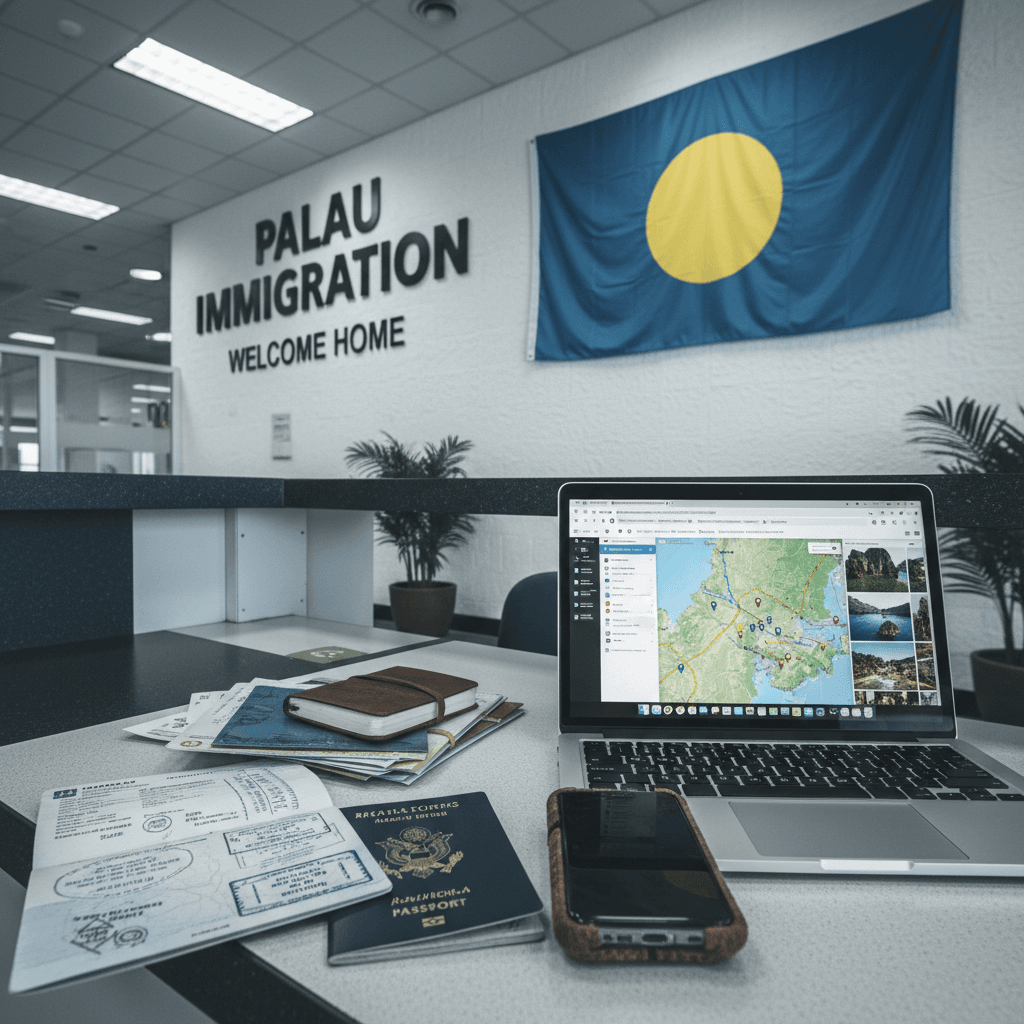
For the vast majority of digital nomads, entering Palau is a breeze. You don't need to apply for anything at an embassy before you fly. Most travelers receive a 30-day tourist visa on arrival at no cost. It is a straightforward process that lets you get through the airport and into the water quickly.
If you decide one month isn't enough to explore the Rock Islands, you can extend your stay. You’ll need to apply for an extension at least 7 days before your initial 30 days are up. With approval from the Chief of Immigration and a $50 USD fee per extension, you can stay for a total of 90 days. This typically involves two separate 30-day extensions after your first month concludes.
Pre-Arrival Logistics and Fees
While the visa itself is often free, there are two administrative steps you can't skip. First, you must complete the Palau Entry Form online at least 72 hours before you land. Once finished, you'll get a QR code via email; keep this handy on your phone or printed out to show immigration officers.
Second, there is the $100 USD Pristine Paradise Environmental Fee (PPEF). The good news is you usually don't have to pay this at a kiosk. It is almost always included in the price of your international airline ticket. This fee goes directly toward preserving the unique ecosystems that make Palau a top-tier remote work destination.
New Restrictions for Specific Nationalities
The rules changed recently for a small group of countries. Under Executive Order No. 499, which took effect March 30, 2026, the visa-on-arrival privilege was removed for citizens of 12 specific nations. If you hold a passport from one of these countries, you must secure advance clearance or a visa before you board your flight.
- The Excluded Countries: Bangladesh, Cambodia, Cameroon, Ghana, Haiti, Iran, Myanmar, Nigeria, North Korea, Saint Kitts and Nevis, Sri Lanka, and Vanuatu.
- The Process: Submit your passport copy, confirmed return ticket, accommodation details, and proof of funds to the Bureau of Customs and Border Protection.
- Timeline: You must apply at least five days before travel. They usually acknowledge the application within 24 hours and give a final decision within three to five business days.
Business and Remote Work Reality
Palau doesn't have a specific "Digital Nomad Visa" yet, but for most remote workers, the tourist entry covers the bases. You can conduct business meetings or handle your remote tasks under the standard entry arrangement. There is no separate business visa required for general professional activities.
If you are looking to work for a Palauan company, the rules get much stricter. You would need a temporary employment visa sponsored by a local employer. The employer has to prove they couldn't find a local worker for the role and must submit a mountain of paperwork, including your health certificate, police clearance, and educational credentials.
Summary of Entry Requirements
- Standard Tourist Stay: 30 days (extendable to 90).
- Extension Cost: $50 USD per 30-day increment.
- Mandatory Entry Form: Must be completed 72 hours before arrival.
- Environmental Fee: $100 USD (usually built into your flight cost).
- Restricted Entry: 12 specific nationalities must apply at least 5 days in advance.
If you have a complex situation or need to verify specific documentation, the Bureau of Customs and Border Protection is the best point of contact. You can reach them at (680) 488-1985 for direct inquiries about the latest immigration mandates.
The Reality of Remote Work in Palau
If you are searching for a traditional digital nomad visa in Palau, you will not find one. This Pacific archipelago does not have a specific "Remote Work Visa" category like you might find in Europe or the Caribbean. However, Palau has taken a futuristic approach to the problem. They have launched a unique Digital Residency Program that serves as a workaround for long-term travelers, alongside a standard tourist entry system for those just passing through.
The Digital Residency Program (RNS.ID)
Palau is the first country to offer a digital identity platform backed by the government. While this is not a traditional visa, it provides a legal, government-issued ID that grants nomads extended staying power. It is designed specifically for the borderless workforce and offers a much smoother experience than constantly renewing a tourist stamp.
- Validity: You can choose between 1, 5, or 10-year validity periods.
- Stay Duration: This ID allows you to stay in Palau for up to 180 days per entry.
- Cost: The standard annual fee is $248 USD, though you can get a discount if you commit to the 5 or 10-year options.
- Income Requirements: There are no minimum monthly salary requirements or proof of employment needed.
One of the biggest draws for the RNS.ID is the tax benefit. Digital residents generally enjoy 0% tax on foreign-sourced income. The program is open to citizens from 138 different countries, though you will be excluded if you hold a passport from a sanctioned nation like North Korea or Iran.
How to Apply for Digital Residency
The application is entirely digital and usually takes about 15 minutes to complete. You do not need to visit an embassy or mail in your physical passport. The process moves fast once you submit your documents.
- Create an account on the official RNS portal using your email or Google account.
- Upload a scan of your passport or a valid driver’s license.
- Complete the identity verification (KYC) process.
- Pay the fee using a credit card or cryptocurrency like USDT, USDC, or ETH.
- Once approved, you receive a digital ID as an NFT and a physical card sent via mail within 2 to 3 weeks.
The Standard Tourist Route
If you only plan to be in Palau for a few weeks, the Digital Residency might be overkill. Most visitors receive a 30-day visa on arrival at the airport. This is a straightforward process, but it requires a little more legwork if you decide to stay longer than a month.
You can extend this tourist visa twice, with each extension granting an additional 30 days. This gives you a maximum stay of 90 days. To qualify for this, you must show proof of funds totaling at least $200 USD per week to cover your living expenses. You also need to submit the official Palau Entry Form online within 72 hours of your flight landing.
Which Option Should You Choose?
The choice depends entirely on your timeline. If you want to spend a full season diving and working from the islands, the Digital Residency is the superior choice. It doubles your allowed stay time from 90 to 180 days and removes the hassle of visiting the Bureau of Immigration for extensions. Plus, having a government-backed digital ID is a handy tool for crypto users and nomads who want a secondary form of identification that isn't tied to their home country.
For those on a quick scouting trip, the 30-day tourist visa is fine. Just remember that the Bureau of Immigration is the final authority on all stays. If you have specific questions, you can reach their office at (680) 488-2498 or email them directly to confirm your specific passport requirements before you book your flight.
The 30-Day Welcome
For the vast majority of digital nomads, entering Palau is a breeze. Most nationalities receive a 30-day tourist visa automatically upon arrival. You just need a passport with at least 6 months of validity and a confirmed return ticket. While the visa itself is free, remember that everyone pays a $100 environmental fee. This is usually bundled into your airfare, so you likely won't even notice the transaction, but it is a mandatory contribution to the island's conservation efforts.
The most important step happens before you even board your flight. Every traveler must complete the digital Palau Entry Form. You need to submit this online within 72 hours of your arrival. Once finished, you will get a QR code via email. Keep a screenshot of this on your phone; the immigration officers will ask for it the moment you land.
Advance Clearance Requirements
While Palau is open to most, there are specific regulations for travelers from a small group of countries. If you hold a passport from Bangladesh, Cambodia, Cameroon, Ghana, Haiti, Iran, Myanmar, Nigeria, North Korea, Saint Kitts and Nevis, Sri Lanka, or Vanuatu, you cannot simply show up. You must apply for advance clearance or a visa at least five days before you travel.
The Bureau of Customs and Border Protection handles these applications. They generally acknowledge receipt within 24 hours and provide a final decision within 3 to 5 business days. If you fall into this category, do not book non-refundable accommodation until your clearance is firmly in hand.
Extending Your Stay
Thirty days is rarely enough time to truly soak in the Rock Islands. If you want to stay longer, you can extend your tourist visa twice. Each extension grants you an additional 30 days, allowing for a maximum stay of 90 days total. Each of these extensions costs $50.
To keep things legal, email the Bureau of Immigration at least 7 days before your current stamp expires. They are strict about the timeline, so don't wait until the last minute. Once you hit that 90-day mark, the clock stops. You are required to exit the country, and there are no exceptions for further tourist extensions.
Costs and Fees
- Entry Visa: Free for most nationalities.
- Environmental Fee: $100 (typically included in your flight cost).
- Visa Extension: $50 per 30-day increment.
- Departure Tax: $50 (applicable if you are on a one-way ticket leaving the country).
The Reality of Border Runs
If you are planning to hop over to a neighboring country and fly right back in to reset your visa, think again. Palau has significantly tightened its border enforcement recently. Border runs are not considered a valid way to maintain residency or long-term stays. Authorities are actively monitoring for "perpetual tourists" and have been known to add frequent visa-runners to an undesirable aliens list.
Overstaying is a serious mistake here. Unlike some hubs where you might just pay a small fine at the airport, Palau enforces strict penalties. Violations can lead to immediate deportation and a permanent ban from re-entering the country. With the recent implementation of heightened security screening, the government is more vigilant than ever about tracking who enters and when they leave. Stick to the 90-day limit and plan your remote work stints accordingly.
The Reality of Staying Long-Term
Palau is one of those places that feels like a secret you want to keep to yourself, but sticking around for the long haul requires some strategic planning. Unlike many digital nomad hotspots in Southeast Asia, Palau doesn't have a "freelancer visa" or a simple path to permanent residency for the average remote worker. You won't find retirement schemes or citizenship-by-investment programs here either.
Most nomads start with a standard 30-day visa issued on arrival. If you fall in love with the limestone islands and world-class diving, you can extend this twice. Each extension gives you another 30 days, allowing for a total stay of 90 days. You'll need a passport valid for 6 months, a return ticket, and proof that you have about $200 USD per week to support yourself.
The Digital Residency Program
In 2022, Palau made headlines by launching a Digital Residency Program. It sounds like the perfect nomad solution, but there's a catch: it’s a digital identity, not a physical residency permit. While it doesn't give you the right to move to Palau permanently, it does offer some perks that make it attractive for certain types of travelers.
- Cost: $248 for 1 year, $1,039 for 5 years, or $2,039 for 10 years.
- Physical Stay: You can stay in the country for up to 180 days per year.
- Tax Benefits: You get 0% tax on foreign-sourced income and capital gains.
- Processing: Usually takes about 1 month.
- Requirements: You must be 18 or older, have a clean criminal record, and a valid government ID.
This is a solid option if you want to spend half the year in paradise while keeping your tax situation lean. You can even pay the application fees in cryptocurrency if that's your preferred way of doing business.
The Investment Route (PEIP)
If you have significant capital and want to make Palau your permanent home base, the Palau Economic Investment Program (PEIP) is the only real path to permanent residency. This isn't a casual commitment; it’s designed for serious investors looking to integrate into the local economy.
- Minimum Investment: $250,000 in government-approved projects.
- Holding Period: You must maintain the investment for at least 5 years.
- Ownership: Foreigners cannot own land in Palau. However, you can secure leases for up to 50 years.
- Restrictions: Certain business sectors are reserved for Palauan citizens, so you'll need to check if your business idea is permitted.
The Foreign Investment Board is surprisingly efficient, usually processing applications within 7 to 10 working days. Just remember that this leads to permanent residency, not citizenship. Naturalization is almost impossible for those without Palauan ancestry.
Making It Official
Since rules can shift and individual cases vary, getting in touch with the right offices is the best move before you ship your belongings to Koror. The Bureau of Immigration handles the day-to-day visa extensions, while the Digital Residency Office manages the ID program. For those looking at the investment route, the Foreign Investment Board and the Bureau of Foreign Affairs and Trade will be your primary points of contact.
- Bureau of Immigration: (680) 488-2498
- Digital Residency Office: (680) 767-2403
- Bureau of Foreign Affairs and Trade: (680) 767-2408
Living in Palau is a dream for many, but it's a dream that requires a bit of paperwork and a clear understanding of the 180-day limit if you're going the digital route. If you can make the logistics work, the reward is a lifestyle that most people only see on a postcard.
The Reality of a Micronesian Budget
Palau is a dream destination for divers and nature lovers, but it doesn't come with the low price tag often associated with Southeast Asian nomad hubs. Because it's a remote island nation, almost everything—from your morning cereal to the fuel in your taxi—is imported. This creates a cost of living that sits somewhere between a mid-sized US city and a premium European island.
Expect to spend anywhere from $1,700 to $2,100 per month if you want a lifestyle that feels like a "home away from home." While you can scrape by on less if you live like a local in the outskirts, most digital nomads find their sweet spot around the $1,500 mark for a comfortable, middle-of-the-road experience in Koror.
Housing and Connectivity
Koror is the beating heart of Palau and where you will likely hang your hat. Finding a modern one-bedroom apartment in the city center will set you back about $480 a month. If you are willing to commute from the quieter outskirts, that price drops to roughly $360.
Utilities and staying connected are where things get pricey. Electricity and water for one person average around $80, but the real kicker is the internet. A reliable 50 Mbps connection can cost $121 per month. Since your livelihood depends on those pings, this is one area where you cannot afford to cut corners.
- City Center Rent: $480
- Outside Center Rent: $362
- Monthly Utilities: $80
- High-Speed Internet: $121
Food and Dining
Eating in Palau is a mix of affordable local staples and expensive imports. If you stick to the supermarket, be prepared for some sticker shock on fresh produce. A dozen eggs will cost you $4.54, and a liter of milk is about $2.67.
Dining out is actually quite reasonable if you know where to go. A standard lunch menu in the business district is about $10.50, while a casual fast-food meal is closer to $6. For a nice night out, a three-course dinner for two at a mid-range restaurant averages $52. Most nomads should budget about $440 per month for food to cover a mix of home cooking and social dining.
Getting Around
Palau is small, so you won't be spending much on transport. A monthly pass for local transit is only $25.70. If you prefer the privacy of a taxi, an 8km trip costs roughly $12. For those considering renting a car or scooter, petrol sits at about $2.17 per liter. Most nomads find that $40 a month covers their basic movement needs within Koror.
Workspace and Health
Dedicated coworking spaces are still a developing concept here. You will mostly find coliving arrangements that include a desk and Wi-Fi in the price, often starting as low as $60 a month for basic access. If you prefer a more professional setup, expect to pay up to $150 for a premium spot with better backup power and air conditioning.
Health insurance is a non-negotiable expense. Local facilities are limited, so you need a plan that covers medical evacuation. Cigna Global and GeoBlue are popular choices, with monthly premiums ranging from $50 to $150 depending on your age and how much "peace of mind" you want to purchase.
Budget Breakdown by Lifestyle
The Budget Nomad: $975/month
- Housing & Internet: $450
- Food: $300
- Transport: $25
- Extras: $200 (Insurance, basic coworking, minimal fun)
The Comfortable Nomad: $1,440/month
- Housing & Internet: $550
- Food: $450
- Transport: $40
- Extras: $400 (Insurance, coworking, weekend trips)
The Premium Nomad: $2,125/month
- Housing & Internet: $700
- Food: $650
- Transport: $75
- Extras: $700 (Top-tier insurance, private office, frequent diving)
The Big Picture for Nomads in Palau
Palau is a dream for divers and nature lovers, but it requires a specific mindset for remote work. Unlike the digital nomad hubs of Southeast Asia, you won't find lightning-fast fiber on every corner. Internet is usable but can be moody; mobile data is your best friend for a backup, though it isn't particularly cheap. Expect to pay a premium for the privilege of working from paradise, with monthly costs for a single person often exceeding $2,500.
Most of the action is clustered in and around Koror. Once you leave the urban center for the larger island of Babeldaob, things get quiet and rural very quickly. Public transit is almost non-existent, so plan on renting a car if you want to explore. If you need a consistent social scene and a reliable desk, you'll likely spend 90% of your time in the Koror area.
Koror (The Main Hub)
Koror is the only true "city" in Palau. It’s where 70% of the population lives and where you’ll find almost every service a nomad needs. It’s the heartbeat of the country, packed with dive shops, banks, and the only dedicated coworking space in the islands.
- The Work Setup: DOUREOR (EmeraldDreams) is the go-to coworking spot, offering high-speed internet, printing, and coffee. For those staying long-term, setting up a fixed Wi-Fi line with PNCC is the best move for stability.
- Internet Speeds: While plans advertise 50–60 Mbps, real-world speeds often hover in the low-to-mid tens. It’s enough for Zoom calls, but maybe not for uploading massive 4K video files daily.
- Cost of Living: Expect a nomad-style budget of $3,500+ per month. Rent and utilities for a decent apartment usually start around $600, but food and entertainment in the tourist center add up fast.
- The Vibe: The main road is walkable and lined with spots like Kramer’s Cafe and The Taj. It’s the only place with a consistent evening scene, though it’s more about relaxed bars and resort lounges than late-night clubs.
Pros: Best infrastructure in the country, easy to meet other expats, and highly walkable in the town center.
Cons: Expensive compared to global averages, frequent traffic on the main road, and total reliance on a few service providers.
Malakal Island
Malakal is connected to Koror by a causeway and feels like a specialized district for the diving community. It’s more industrial in some parts due to the port, but it holds a certain charm for those who want to be near the water.
- Rent: $500–$800 for modest guesthouses.
- Food: Plentiful options at dive resorts and the popular Drop Off Bar & Grill.
You’ll use the same internet backbone as central Koror, but there are no coworking spaces here. Most nomads either work from their hotel balcony or take the 10-minute drive into the city. It’s a great base if your primary reason for being in Palau is to get underwater between emails.
Pros: Relaxed waterfront atmosphere and a tight-knit traveler community.
Cons: No dedicated workspaces and fewer independent cafes for laptop sessions.
Ngerkebesang Island
Another satellite island linked by a bridge, Ngerkebesang is where you go for a quieter, more residential lifestyle. It’s home to some of the higher-end resorts but also has pockets of local housing that offer a bit more peace than downtown Koror.
- Rent: $550–$900 depending on the age of the building.
- Transport: Car or scooter rental is mandatory here.
This is the spot for the "home-office" nomad. You won’t find many cafes to work from, but the environment is safe, quiet, and surrounded by greenery. You’re only a short drive from the coworking space in Koror, giving you the best of both worlds if you value privacy.
Pros: Very quiet and safe with a local residential feel.
Cons: Zero walkability for errands and very limited nightlife within the immediate area.
Airai (The Gateway)
Located on the southern edge of Babeldaob island, Airai is just across the bridge from Koror. It’s home to the airport and provides a more rural, spacious alternative to the crowded streets of the capital.
- Rent: $500–$750 for larger houses or apartments.
- Internet: Reliable enough for basic work, but signal strength can vary as you move further from the bridge.
Living in Airai gives you a "suburban" experience. You’ll get more space for your money, but you’ll be spending a lot of time in your car. It’s a solid choice if you want to be close to the airport and the hiking trails of the big island while remaining within a 15-minute drive of Koror’s amenities.
Pros: Lower density and more modern housing options.
Cons: Complete car dependence and very few social hubs for nomads.
The Connectivity Reality
For years, Palau was the ultimate "off-the-grid" destination, but the arrival of submarine fiber optic cables has changed the game. While you won't find the blistering gigabit speeds of Seoul or Tokyo, the infrastructure now supports steady remote work. The Belau Submarine Cable Corporation manages a high-capacity link to Guam that has effectively ended the era of total satellite dependence.
Home and office connections generally hover between 10 Mbps and 20 Mbps. While these are marketed as "up to" speeds, they are usually sufficient for Zoom calls and standard cloud workflows. If you are setting up a long-term base, the Premium 20 Mbps plan from PNCC runs about $127.14 per month, while more modest 5 Mbps setups cost around $21.20.
Top Coworking Spots
If you need a professional environment beyond your hotel balcony, Koror has a few solid options that cater specifically to the nomadic crowd. These spaces offer the most stable power and cooling on the island.
- Palau Link Center: This is the heavyweight champion of local coworking. It spans 10,000 square feet and offers everything from open workstations to private executive offices. A designated desk goes for $125 per month, while private offices range from $250 to $750. They also have "co-labs" and boardrooms if you need to host a meeting.
- DOUREOR Coworking: Located in the heart of Koror, this space is tailored for entrepreneurs and digital nomads. It features high-speed Wi-Fi and a modern aesthetic. A major perk: if you stay at Meda Terrace accommodations, access is free.
- Palasia Hotel: For high-stakes meetings or when you need a formal boardroom, Palasia offers an Executive Boardroom for $45 per hour. It fits up to 20 people and includes technical support and dedicated high-speed lines.
Cafe Culture and Public Wi-Fi
Working from cafes in Palau requires a bit of strategy. Most spots use a "shared" network, meaning speeds can take a dive when the lunch crowd rolls in. Coffee Berry is a favorite for its atmosphere, but experienced nomads recommend heading there early in the morning or later in the evening to snag the best bandwidth.
Other reliable spots include Cro.fe, where the Wi-Fi comes free with your pastry, and the Belau National Museum for a quieter vibe. If you find yourself in Melekeok, Okemii Deli & Internet Café is the go-to spot, though they close by 3 PM and are shuttered on Mondays.
Mobile Data and eSIMs
PNCC (PalauCel) is the primary provider on the island. You can grab a prepaid SIM card for $10.60, which includes $10 of airtime to get you started. For heavy users, the monthly postpaid data plans are the best value:
- 20GB Plan: $21.20
- 30GB Plan: $31.80
- 50GB Plan: $45.00
If you prefer the convenience of an eSIM, options like GoMoWorld offer entry-level 1GB plans for around $2.32. Maya Mobile provides 5GB for $13.99. However, keep in mind that local PNCC infrastructure is the backbone for everything; international eSIMs can sometimes be finicky with local towers, so having a physical PNCC SIM as a backup is a smart move.
Quick Cost Reference
- Coworking Monthly Pass: $125 to $300
- Daily Drop-in Rate: Varies by facility
- 50GB Mobile Data: $45.00
- Hourly Boardroom Rental: $45.00
The Healthcare Reality in Palau
Living the island life in Palau means trading high-tech urban infrastructure for pristine reefs and a slower pace. The healthcare system follows suit. It is small, centralized, and primarily government-run through the Ministry of Health and Human Services. While it is perfectly adequate for a flu shot or a minor infection, the system is not designed to handle complex chronic illnesses or major trauma.
Most of your medical needs will be met in Koror, the country's commercial hub. Outside of the main town, you will find smaller dispensaries and community health centers that provide basic primary care. For anything serious, everyone—locals and expats alike—heads to the capital.
Primary Facilities and Emergency Care
The Belau National Hospital (BNH) is the heart of Palauan medicine. It is a 65 to 75-bed facility that houses the country’s only emergency room, surgery suites, and dialysis units. If you are a diver, you will be glad to know they operate a functional hyperbaric chamber for decompression sickness.
In a pinch, you can reach emergency services by dialing 911 in Koror or calling the hospital directly at +680 488-2552. While the country recently launched a specialized emergency response team called Team Klemat, the geographic isolation of the islands means response times can vary. If you are staying on a remote island, have a plan for getting back to Koror quickly.
Limitations and Medical Evacuation
The biggest hurdle for nomads is the lack of specialized care. Palau does not have the equipment or personnel to treat most cancers, perform complex cardiac surgeries, or manage highly specialized neurological conditions. When the local doctors hit their limit, they refer patients to hospitals in Taiwan, the Philippines, Hawaii, or Guam.
Because of this, medical evacuation coverage is non-negotiable. An emergency flight to Manila or Honolulu can cost tens of thousands of dollars out of pocket. If your insurance doesn't cover a private medevac jet, you are taking a massive financial and physical risk.
Insurance Options for Digital Nomads
While locals use the Palau Prime Plan, expats and nomads should look toward international providers. These plans ensure you can access private care and, more importantly, get off the island if things go south. Several providers are popular in the region:
- Digital Nomad Specialists: Genki, World Nomads, and SafetyWing offer flexible, monthly subscriptions that are easy to manage while traveling.
- Comprehensive Expat Plans: Cigna Global, Allianz, and GeoBlue provide higher coverage limits and are better suited for long-term residents with pre-existing needs.
- Regional Coverage: Ensure your plan specifically includes "Oceania" or "Worldwide" to avoid gaps in coverage while island hopping.
What You Will Pay
Healthcare costs in Palau are relatively modest compared to the US, but they can add up if you are uninsured. Most nomads will utilize a mix of public and private services. Here is a look at typical out-of-pocket costs:
- Private GP Consultation: Approximately $50 USD.
- Specialist Co-pay: Around $30 to $60 under local insurance schemes.
- Diagnostic Imaging: MRI and CT scans require pre-certification and usually involve a 20% coinsurance fee.
- Prescriptions: Most basic medications are affordable, though specialty drugs often need to be imported.
Pharmacies and Prescriptions
Don't expect a pharmacy on every corner. The main pharmacy is located inside the Belau National Hospital. There is also LCM Pharmaceutical, which is the only independently owned pharmacy in the country. It was opened in 2017 to help bridge the gap during medication shortages at the public hospital.
If you take specific maintenance medication, bring a multi-month supply with you. Stock can be inconsistent, and it may take weeks for a specific brand-name drug to arrive if it isn't currently in the country.
Staying Healthy in the Tropics
Palau is free from malaria, which is a huge relief for many travelers. However, Dengue fever is present. Since there is no vaccine for the common traveler, your best defense is high-quality repellent and staying in screened-in accommodations. Beyond the bugs, the most common health issues on the island are non-communicable, such as diabetes and heart disease, largely due to the high cost of importing fresh produce and a reliance on processed foods.
Managing Your Finances in the Pacific
Money matters in Palau are a unique blend of high-tech potential and old-school cash reliance. Since the country uses the US Dollar (USD) as its official currency, Americans will feel right at home with the denominations. For everyone else, it means your budget won't be subject to local currency fluctuations, though you’ll still need a solid strategy to avoid getting eaten alive by transaction fees.
Opening an Account as a Nomad
If you plan on staying in Palau for an extended period, you might consider opening a local bank account. Unlike many island nations that bury foreigners in red tape, Palau is relatively open. You don't necessarily need a long-term residency permit to get started. Most banks allow non-residents to open accounts with a passport and standard "Know Your Customer" paperwork.
The process usually takes one to two weeks. You can often handle the verification via video call or by providing notarized copies of your ID. However, keep an eye on the entry requirements; most banks expect an initial deposit or minimum balance between $2,500 and $10,000. You’ll need to provide:
- A valid passport or government-issued photo ID
- Proof of address, like a utility bill from your home country
- Documentation showing your source of funds
- A clear explanation of where your deposits are coming from and how you plan to use the account
ATM Access and Fees
While Koror has a decent density of ATMs, they are nearly non-existent once you head to the more remote islands. Most machines are concentrated in the town center, shopping plazas, and major hotels. It is best to treat Koror as your primary "refueling" station for cash.
Be prepared for a bit of "island tax" when withdrawing money. Foreign cards are hit with significant per-transaction fees. Bank of Guam machines typically charge $5.00, while Bank of Hawaii ATMs charge $5.20. Most machines have a daily withdrawal limit of $1,000. To keep costs down, make fewer, larger withdrawals rather than frequent small ones.
Digital Wallets and Transfers
For the modern nomad, Wise is your best friend in Palau. It is fully operational and offers the most competitive rates for moving money into the country. Sending money from a UK account starts around 4.67 GBP, while transfers from a US-based Wise account cost about $1.13.
Revolut is technically supported for business operations, but users have reported mixed results when trying to verify accounts using the Palau Digital Residency ID. If you rely on Revolut, keep a backup method handy. For emergency situations, Western Union has locations in Koror, though you'll pay a premium for the speed.
The Crypto Situation
If you’re a crypto enthusiast, Palau presents a bit of a contradiction. Since 2019, there has been a moratorium on cryptocurrency activities. The government stepped in to halt private crypto startups following concerns about fraud. This means you won't find local crypto exchanges or businesses legally accepting Bitcoin at the register.
Interestingly, the government is working with Ripple to develop a national stablecoin. This is a government-backed digital USD, not a private cryptocurrency. For now, keep your private trading on international platforms and don't expect to use your cold wallet for lunch at a local cafe.
Practical Spending Tips
- Credit Cards: Major hotels and tourist-centric businesses in Koror accept Visa and Mastercard. However, smaller shops, local eateries, and boat operators almost exclusively take cash.
- Online Banking: Most local banks have modernized and offer mobile apps, so you can manage your balance without visiting a branch.
- Privacy: Palau is a non-CRS jurisdiction. This means they do not automatically share financial account information with foreign tax authorities under the OECD Common Reporting Standard.
- Carry Backup: Always keep a few hundred dollars in cash stashed safely in your accommodation. Power outages or internet blips can occasionally take card readers and ATMs offline.
Navigating Residency and Visas
Moving your family to Palau requires some strategic planning because the country doesn't offer a traditional dependent visa. If you aren't married to a Palauan national, you'll likely need to secure your own residency through employment or investment first. For most nomad families, this means one parent obtains an employment-based residence permit, which is valid for up to 3 years. You will need to provide a clean criminal background check from every country you've lived in over the last five years, along with medical certificates and proof of financial stability.
For those with significant capital, an investment-based residence is an option if you put at least $250,000 into government-approved real estate. While a tourist visa extension can buy you up to 90 days, it isn't a sustainable long-term solution for families looking to settle in and enroll children in school.
Education and Schooling Options
Most expat families gravitate toward private international schooling in Koror. The International School Palau and Koror Academy are the top choices, both utilizing an American curriculum with English-language instruction. These schools offer smaller class sizes than the public system and provide a smoother transition for kids coming from Western school systems.
- Primary School Tuition: Between $2,000 and $6,800 per year.
- Higher Education: Palau Community College costs roughly $140 to $155 per credit for international students.
- Public Schools: Free and compulsory for ages 6 to 14, though they often lack the resources and amenities found in the private sector.
Pediatric Healthcare and Safety
Palau is incredibly safe for children, with a very low violent crime rate. You can feel comfortable walking with your kids during the day, though Koror does enforce a nighttime curfew (starting at 2:30 a.m. or 4:00 a.m. depending on the day) to maintain order. The biggest safety concern is actually petty theft, so don't leave bags unattended at the beach or in your car.
Medical care is a bit more nuanced. The Family Health Unit and Belau National Hospital handle routine checkups, immunizations, and basic pediatric emergencies well. However, the island lacks specialized care for complex childhood illnesses. A private consultation costs about $50, but you must have international health insurance that covers medical evacuation. In serious cases, you will likely be flown to Taiwan or Hawaii for treatment.
Best Areas for Families
Most nomads choose Koror because it is the hub for schools, hospitals, and the few large supermarkets on the island. Over two-thirds of the population lives here, making it the only place with a concentrated expat community.
- Koror: High convenience, walkable during the day, and close to all international schools.
- Babeldaob: Better for families who want more space and a backyard. It is quieter and more affordable, but you will definitely need a car for the daily school run.
Childcare and Cost of Living
Childcare isn't subsidized in Palau, so most families look for private daycare or hire help. Private daycare typically runs between $150 and $350 per month, though many families find that informal arrangements with neighbors or local sitters are more common.
Budgeting for a family in Palau can be eye-opening since almost everything is imported. A typical monthly breakdown for a small family includes:
- Housing and Utilities: $900 to $950.
- Groceries: $400 to $500.
- Internet: $120 for speeds around 50 to 60 Mbps.
- Transportation: Gasoline is roughly $1.80 per liter, and car rentals cost about $35 per day if you aren't buying a vehicle.
Street Safety and Natural Hazards
Palau is remarkably safe for travelers and remote workers. It consistently maintains a low crime rate, and violent incidents involving foreigners are nearly unheard of. You can feel comfortable walking through Koror at night, though you should still use common sense with your belongings. Don't leave your laptop or expensive camera gear unattended in public spaces or unlocked cars.
Your biggest safety concerns aren't people; they are remnants of the past and the local wildlife. World War II left behind unexploded ordnance in certain remote forested areas and dive sites. Always stick to marked trails and follow the guidance of local dive masters. Additionally, saltwater crocodiles inhabit some mangroves and coastal waters. Pay attention to local warning signs before taking a dip in non-tourist areas.
The Digital Risk: Scams and Cybercrime
While you won't get mugged on the street, you need to be sharp online. Palau has recently dealt with sophisticated international scam hubs operating out of local hotels. These groups often focus on cryptocurrency fraud and illegal gambling platforms. As a digital nomad, be wary of any "local" crypto investment opportunities or unverified digital residency perks that seem too good to be true.
Stick to established banking like the Bank of Hawaii and avoid using standalone, unbranded ATMs. If you see online gambling sites claiming to be licensed in Palau, it is best to steer clear. The risk here is almost entirely cyber-dependent, so keep your VPN active and your financial transactions on secure, known platforms.
LGBTQ+ Life in the Islands
The legal environment for LGBTQ+ nomads is a bit of a contradiction. Same-sex activity has been legal since 2014, but the constitution still bans same-sex marriage. There are currently no specific laws protecting you from discrimination in housing or services, though the general Palauan culture of uluang (respect) usually keeps interactions polite.
Public displays of affection are generally discouraged for all couples in Palauan culture, regardless of orientation. While the younger generation is increasingly open, the society remains traditional. You likely won't face open hostility, but it is a "discretion is advised" environment where legal protections haven't quite caught up to the island's welcoming spirit.
Mastering Palauan Etiquette
Palauan society is matrilineal, meaning women hold significant power in land ownership and family titles. Respecting this structure and the influence of elders is the fastest way to gain local favor. When you enter a home or a bai (traditional meeting house), always remove your shoes. It is a small gesture that speaks volumes about your awareness of local customs.
- The Palau Pledge: Upon arrival, you will sign a pledge in your passport to act in an ecologically and culturally responsible way. Take this seriously; the locals do.
- Dress Code: Keep it modest when you aren't on the beach. If you are heading into a village or a government office, cover your shoulders and wear longer shorts or a skirt.
- Photography: Always ask before snapping a photo of someone or a specific cultural site. Some areas are considered sacred and are off-limits to cameras.
Language and Social Integration
English is the primary language for business and education, so you won't struggle to find your way around or negotiate a lease. However, the local language is the heartbeat of the community. Dropping a "Alii" (hello) or "Mesulang" (thank you) will immediately soften your interactions with vendors and neighbors.
Integration happens at a slower pace here. Life moves on "island time," and trying to rush a process or a conversation is considered rude. To meet people, look toward the small but active expat community in Koror. New coliving spaces are popping up, which are great for bypassing the high cost of individual $120 monthly broadband bills. Joining a local dive club or attending a community festival is your best bet for moving beyond the "tourist" bubble and into the local social fabric.
The Territorial Advantage
Palau operates under a territorial tax system, which is essentially the holy grail for remote workers. In simple terms, the government generally only cares about money you make within the borders of Palau. If your clients are based in Europe, the US, or anywhere else outside the archipelago, you are looking at a very friendly tax environment.
While many countries lean on the 183-day rule to determine residency, Palau is a bit more flexible. Most nomads enter the system through the Digital Residency Program. This gives you a legal digital identity and allows you to stay for up to 180 days per entry. It is a streamlined way to get your foot in the door without the heavy lifting of traditional immigration paperwork.
Income Tax Brackets
If you do end up earning local income or establishing full tax residency, Palau uses a progressive scale. It is straightforward and relatively low compared to Western standards:
- 0 to $8,000: 6% tax rate
- $8,001 to $40,000: 10% tax rate
- $40,001 and above: 12% tax rate
For those who aren't residents but perform specific local services, withholding taxes apply. You might see a 10% hit on interest, royalties, or technical fees sourced from within Palau, and a 5% tax on insurance premiums.
The Digital Residency Perk
The real draw for the Stamped Nomad community is the 0% tax on foreign-sourced income offered to digital residents. Since your income isn't generated in Palau, you aren't handing over a percentage of your paycheck to the local bureau. This zero-tax incentive extends to capital gains on foreign earnings as well.
The program costs between $248 and $2,039 depending on whether you want a 1, 5, or 10-year ID. Besides the tax perks, this ID is widely recognized by major crypto exchanges like Binance, Kraken, and Coinbase, making it a favorite for those who live off their portfolios.
Crypto and Digital Assets
Palau is incredibly hands-off when it comes to crypto. There is currently a 0% capital gains tax for individuals, regardless of how long you hold your assets. You won't find specific, complex guidance on DeFi or staking yet, but the territorial system suggests that as long as your trading activity isn't a "local business," your gains remain your own.
If you decide to run a full-scale commercial mining operation or a registered crypto business, you will likely fall under the 12% Business Profits Tax. For the average nomad trader, however, the burden is virtually non-existent. Just keep in mind that the 10% Palau Goods and Services Tax (PGST) applies to most things you buy on the islands.
Privacy and Reporting
For those who value financial privacy, Palau is an interesting outlier. It is not a CRS reporting jurisdiction. This means it doesn't automatically trade your financial info with other countries under the OECD Common Reporting Standard. It is also not a FATCA partner, though the local banks still play by international rules to keep their connections to the global financial system secure.
Filing is still a requirement if you are a resident. You will need to submit standard returns to the Bureau of Revenue and Taxation. If you are setting up a local company, you will need approval from the Foreign Investment Board and a local bank account to keep things above board. Those registered for PGST need to be diligent about their records, as any changes to your business details must be reported within 21 days.
Getting Connected
Connectivity in Palau is a bit of a throwback. You only have one mobile operator to deal with, which simplifies your choices but limits your leverage. PalauCel is your go-to for prepaid SIM cards. You will need to bring your physical passport to a service center to register your line. If you have a newer phone, head to the PNCC (Palau National Communications Corp.) office in downtown Koror. They offer eSIM options that take about ten minutes to set up. Don't bother checking your Airalo or Holafly apps before you land; international eSIM providers do not have coverage here yet.
Navigating the Islands
While Uber technically operates here and allows for pre-scheduled rides, the local favorite is AliiRide. It is a homegrown ride-sharing app built specifically for the islands. For those arriving at the airport, OpaTaxi and Airporttaxis provide fixed-price transfers so you aren't guessing the fare while jet-lagged.
Public transit is almost non-existent. If you are staying longer than a week, you need wheels. Renting a car will run you about $35 USD per day. If you are settling in for six months or more, look into buying a used "island car" imported from Japan. You can often find these for as little as $600 USD, and you can usually sell them for the same price when you leave.
Where to Set Up Your Desk
Most nomads gravitate toward Koror. It is the heartbeat of the country where you will find the best concentration of gyms, restaurants, and grocery stores. For a professional workspace, DOUREOR offers a coworking environment with the most reliable Wi-Fi and backup power systems in the city.
If you prefer silence and greenery, Babeldaob island to the north is stunning. It features waterfalls and a much slower pace, but it is remote. You will be entirely dependent on your own vehicle and a mobile hotspot if you choose to live up there. The Rock Islands are the postcard-perfect spots you see in brochures, but they are for day trips and diving, not for living.
Finding a Home
Airbnb is the standard tool for finding monthly rentals, and most hosts offer significant discounts for long-term stays. Nomad Stays is also gaining traction here, specifically vetting locations for work-friendly desks and verified internet speeds. If you want to find the "local price," join the Palau Buy, Sell and Trade group on Facebook. It is the unofficial marketplace for everything from apartments to office chairs. Coliving spaces are also popping up in Koror, offering a middle ground between a hotel and a private apartment.
Food and Grocery Logistics
Don't expect the convenience of GrabFood or DoorDash. While Sakura Restaurant, The Taj, and Canoe House are great about offering their own delivery or pickup, there is no centralized app. For groceries, prepare for high prices on imported goods at the main supermarkets. Pro tip: seek out the Bangladeshi-run shops and local farms in Babeldaob for seasonal produce. It is much cheaper and fresher than the wilted greens that come off the shipping containers.
Communication and Integration
English is spoken by over 90% of the population, so you won't struggle to order coffee or sign a lease. That said, the culture is tight-knit. Learning a few Palauan phrases goes a long way in building rapport.
- Alii!: Hello
- Sulang: Thank you
- Ungiil tutau: Good morning
- Keuangerang: How are you?
Emergency Information
For any urgent situation involving police or medical services, dial 911. If you need to reach the Ministry of Health directly, call 680-488-2558. For visa extensions or paperwork questions, the Bureau of Immigration can be reached at 680-488-2498.
Pro Tips for a Smooth Stay
- Avoid Data Burn: Mobile data is pricey. As soon as you get a permanent roof over your head, install a fixed PNCC Wi-Fi system. It is much more cost-effective than burning through prepaid cards.
- Embrace Island Time: Bureaucracy moves slowly. Whether you are opening a bank account at Bank of Hawaii or waiting for a permit, double your expected timeline.
- The Palau Pledge: You will sign this in your passport upon entry. It is a legal promise to the children of Palau to protect the environment. Use reef-safe sunscreen and ditch the single-use plastics.
- Social Life: The expat bubble is small. To avoid the "island fever" blues, join a volleyball league or a diving club. Physical activity is the primary way people socialize here.
Stay Updated on Palau
Get notified about visa changes, policy updates, and new information for digital nomads in Palau.