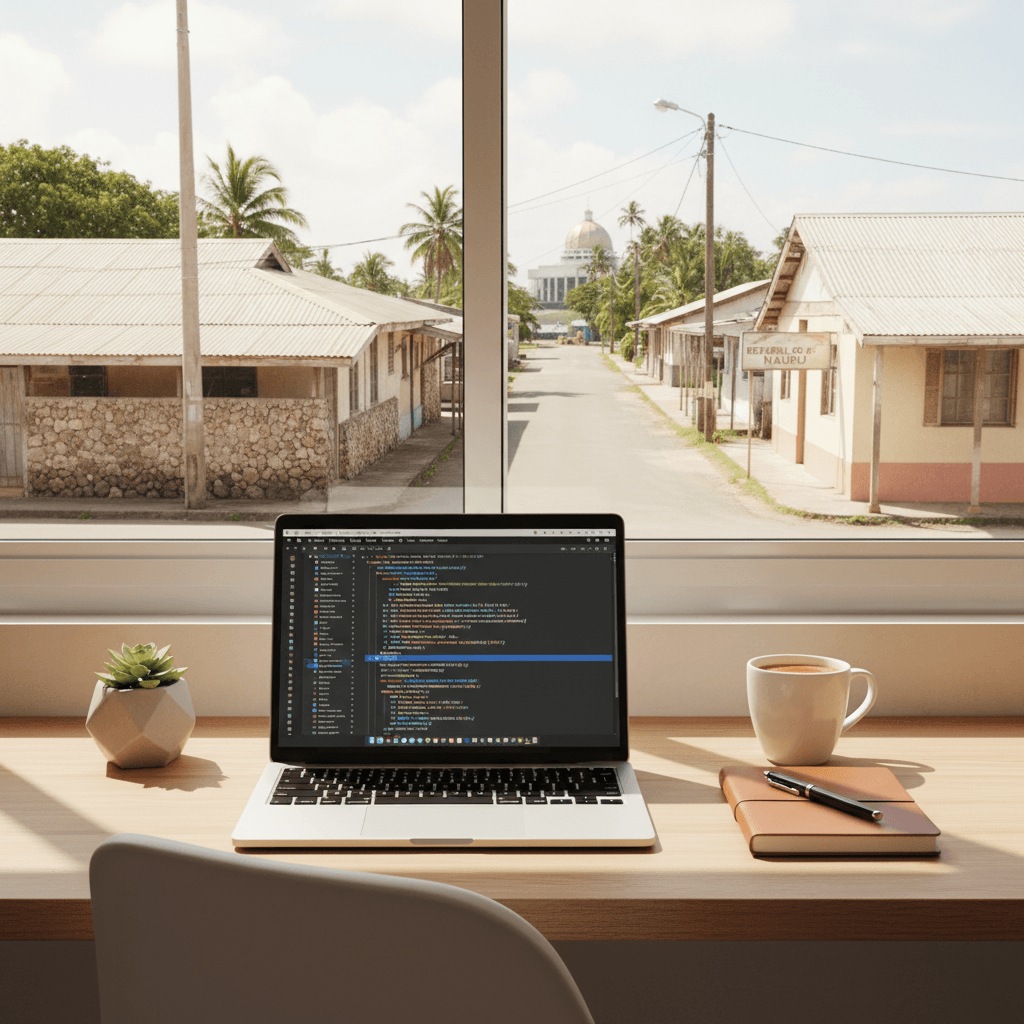
Nauru
Complete Digital Nomad Guide

Policy Stability
Stamped Nomad ExclusiveHow likely visa and immigration policies are to remain unchanged
Quick Facts
Nomad Visa Cost
N/A
Max Stay
3 months
Renewable
Yes
Cost of Living
$733/mo
Avg Internet
125 Mbps
Safety Score
6/10
Healthcare
Low
Coworking
Low
English Friendly
High
Time Zones
UTC+12
Entry Methods Available
Best For
The Nauru Entry Strategy
Nauru isn't your typical digital nomad hub with a streamlined e-visa or a dedicated remote work permit. It is one of the least visited countries on earth, and the immigration process reflects that exclusivity. For most travelers, getting onto the island requires a bit of manual paperwork and some patience. You can submit applications through the official government portal or via email, but you will want to start the process well before your intended flight.
Most nomads will look toward the Visitor Visa as their primary entry point. If you hold a passport from specific Pacific neighbors like Fiji, Kiribati, or Papua New Guinea, or nations like Israel, Thailand, or Taiwan, you are in luck. Citizens from these countries can grab a free visa on arrival for up to 90 days. If you aren't on that short list, you must secure pre-approval before you even think about checking in for your flight.
The Visitor Visa Breakdown
The cost of your stay depends entirely on how long you plan to hide away on the island. The fees are tiered based on duration and whether you need to leave and come back:
- One Month (Single Entry): $50
- Two Months (Single Entry): $150
- Three Months (Single Entry): $250
- Multiple Entry: Usually adds an extra $10 to $20 to the base fee.
If you fall in love with the quiet pace of life, extensions are possible. You have to apply for a new visa before your current one expires. Don't let your paperwork slip; overstaying is a headache you don't want. The government charges a $50 per day fine for overstays, and they can issue a removal notice after just seven days of being undocumented.
Business and Employment Options
If you are heading to Nauru for more than just a change of scenery, the costs jump significantly. The Business Visa is a heavy investment, designed for serious consultants or those with local partners. A 12-month multiple-entry business visa costs $6,000. If you are actually being hired by a local entity, an employment visa runs $8,000 for multiple entry or $1,000 for a single entry.
There is also a newer category called the Local Business Visa. This is specifically for businesses that are 100% Nauruan-owned. It is much more affordable at $300 for an individual or $400 for a family, but it requires a very specific local connection to qualify.
Other Specialized Visas
Nauru has a unique geopolitical role, which means they have several visa classes you won't find elsewhere. The Regional Processing Centre and Temporary Settlement visas carry monthly fees ranging from $1,000 to $2,000. For those bringing family along, a Dependant Visa costs $1,000.
Media professionals should be aware that Nauru maintains strict rules for journalists. A media visa is one of the most expensive in the world at $8,000 for a single entry. If you are a digital nomad who also produces professional journalism, you need to be very clear about your intent upon entry to avoid legal friction.
Logistics and Requirements
Expect to provide the standard suite of documents: a passport valid for at least six months, proof of a return flight, and evidence of sufficient funds. Because Nauru is so small, immigration officials often want to know exactly where you are staying. Having a confirmed hotel booking or an invitation from a local sponsor is usually a requirement for the application to move forward.
There are no major policy shifts scheduled for 2025 or 2026 that would make entry easier for Western travelers. The system remains traditional and paper-heavy. While the government has discussed digital upgrades, the current reality involves downloading forms from the official Immigration Division site and coordinating directly with their office in Yaren.
The Reality of Remote Work in Nauru
Nauru is one of the smallest and least-visited countries on the planet. Because of its size and isolated location, the government hasn't yet developed a specific digital nomad visa or a dedicated remote work program. You won't find a streamlined "laptop lifestyle" permit here, but that doesn't mean you can't set up shop for a few months if you're willing to follow the standard immigration paths.
Most nomads entering the country do so on a Visitor Visa. While this visa is technically for tourism, it serves as the primary gateway for anyone looking to stay for a short duration. Since you aren't entering the local labor market or competing with Nauruan citizens for jobs, working for a foreign employer while on a visitor permit is generally the standard practice, though the government doesn't have an official policy explicitly blessing remote work.
Visa Options and Costs
The Visitor Visa is tiered based on how long you plan to stay. You'll need to decide your duration upfront, as the fees change significantly depending on the length of your visit. Unlike many other Pacific nations, Nauru does not typically offer visas on arrival for most nationalities, so you must have your paperwork sorted before you board your flight.
- One-month stay: $50
- Two-month stay: $150
- Three-month stay: $250
- Multiple entry fee: An additional $10 to $20 depending on the duration
If you find yourself falling in love with the island's unique pace, you can attempt to renew your visa by reapplying through the Immigration Division in Yaren. Be careful with your dates, though. Overstaying your visa is a serious matter here, carrying a $50 per day fine and the risk of deportation.
The Application Process
The process is a bit old-school. You won't find a slick digital portal with a progress bar. Instead, you'll need to download the application form and submit it via email to the Director of Immigration. It is a manual process that requires some patience and proactive communication.
Your application package needs to be thorough to avoid delays. You are required to provide a scan of your passport, a formal letter from your employer (or proof of your freelance business), your flight itinerary, and a confirmed hotel booking. You also need to demonstrate you have sufficient funds to support yourself without local employment. Once you send the email to the immigration office, keep a close eye on your inbox for the approval letter, which you must present when you land.
Tax and Residency Rules
Nauru’s tax system is relatively straightforward for visitors. If you stay in the country for 183 days or more, you are generally considered a resident for tax purposes and may be subject to taxes on your worldwide income. However, since the standard visitor path only allows for three months at a time, most nomads won't hit that residency threshold.
Because there are no specific digital nomad tax laws, your income earned from foreign sources is usually left alone during short stays. If you are planning a more permanent move, you would likely need to transition to a Business or Employment visa. These are significantly more expensive, with fees reaching up to $8,000, and require deep ties to local businesses or government projects.
Important Restrictions
The most important rule to remember is that you cannot work for a Nauruan company or provide services to local clients while on a Visitor Visa. This permit is strictly for those whose income originates outside of the island. Additionally, flight options are limited. Nauru Airlines is the primary carrier, and schedules can be infrequent. Always ensure your visa duration aligns perfectly with your flight dates, as getting a last-minute flight out to avoid an overstay fine can be both difficult and expensive.
Navigating the Entry Process
Nauru is one of the least-visited countries in the world, and their visa process reflects that exclusivity. You won't find a flashy e-visa portal or a high-tech app here. Instead, the system relies on direct communication with the Immigration Division. Most digital nomads will enter on a Visitor Visa, which is generally issued for a single entry and lasts up to 3 months.
While some countries have signed visa waiver agreements, the vast majority of travelers need to secure approval before they even board their flight. You cannot simply show up at the airport and expect a stamp. You will need to email your application directly to the Nauru Immigration office. This package usually includes a scan of your passport, a completed application form, a copy of your return flight ticket, and often a letter from your employer or a sponsor.
Pre-Arrival Procedures
Since there is no automated system, give yourself plenty of lead time. Once you email your documents to the official immigration address, the authorities process your request offline. If approved, you will receive an entry permit via email to show the airline. Upon landing in Yaren, immigration officers will briefly hold your passport to finalize the entry certificate and physical stamp before returning it to you.
- Application Method: Email submission of PDF forms.
- Required Documents: Valid passport, flight itinerary, and proof of accommodation or sponsorship.
- Processing: Completed before travel; physical stamp issued on arrival.
Costs and Fees
The cost of your stay depends on how long you plan to linger on the island. Nauru uses a tiered pricing structure for visitor visas, and these fees are generally paid during the application process or upon arrival as directed by the department. If you happen to be from a country listed under Schedule 3 of their regulations or a nation with a specific waiver agreement, you might be exempt from these fees entirely.
- One-month stay: $50
- Two-month stay: $150
- Three-month stay: $250
- Multiple-entry (Business): $100 to $200
Be aware that if you are visiting for media or journalism purposes, the fees skyrocket to $8,000. Always ensure you are applying for the correct category to avoid massive unexpected costs.
Extensions and Overstays
If you fall in love with the quiet pace of the island and want to stay longer than your initial visa allows, you can apply for an extension while you are still in the country. You will essentially be applying for a new visa class or a renewal, and approval is at the discretion of the Director of Immigration. There isn't a formal "border run" culture here because flights are infrequent and expensive, so it is better to handle your paperwork locally.
Do not let your visa expire. Nauru takes overstaying seriously. If you are caught with an expired permit, you will be issued a 7-day notice and charged a penalty of $50 per day for every day you were in the country illegally. Failing to settle this and regularize your status can lead to a removal order and a permanent mark on your travel record.
Key Takeaways for Nomads
Because Nauru does not have a specific "Digital Nomad Visa," most remote workers operate under the standard visitor rules. Since the maximum stay is 3 months, it is perfect for a short-term stint but requires careful planning for anything longer. Keep digital copies of all your correspondence with the immigration office, as the manual nature of the process means having your own paper trail is a smart move.
The Long-Term Landscape
Nauru is perhaps the most unconventional stop on any nomad’s journey. It is a tiny island nation where the traditional "digital nomad visa" simply doesn't exist. You won't find a sleek application portal for freelancers or a specific path for remote workers to hang out for a year. Instead, long-term stays are handled through a very specific set of immigration categories that prioritize family ties, state-level agreements, or significant financial contributions.
For the average traveler, staying beyond a standard visitor's entry requires a bit of a pivot. Most people living on the island long-term are there for specific work contracts or because they have deep roots in the community. If you are looking to make Nauru a more permanent base, your options are narrow but clearly defined by the Immigration Division.
Residence and Long-Term Visas
The standard Residence Visa is primarily designed for the dependents of Nauruan citizens. This includes spouses, children under the age of 18, or individuals who are fully dependent on a citizen for physical or financial support. While there is no fee for this visa, the requirements are strict. You will need to provide a police clearance, a medical certificate, and valid passport copies. It is a stable way to stay, but it is tied directly to your relationship status; a divorce or change in dependency can void the permit immediately.
A newer development is the Long Term Stay Visa, introduced for 2025. This is a specialized category that allows for a stay of up to 30 years. However, it is not an open-application visa for the general public. It is designed for individuals under specific government-to-government arrangements. The $1,000 annual fee is typically covered by the requesting state. This visa offers broad rights, including access to health, education, and the right to work, but it remains a tool for diplomacy and state business rather than individual relocation.
The ECRCP: A Path to Permanent Residency
If you have the capital and want a permanent solution, Nauru recently launched the Economic and Climate Resilience Citizenship Program (ECRCP). This is essentially a citizenship-by-investment pathway that grants you the same rights as a local, effectively serving as a permanent residency solution. It is the fastest way to secure a long-term future on the island without needing a local employer or a Nauruan spouse.
The financial commitment is significant. For a single applicant, the total cost lands around $102,700. This includes a $90,000 non-refundable contribution to the National Treasury Fund, a $5,000 application fee, and $6,000 for due diligence. The process is relatively quick, usually taking 3 to 4 months, and it does not require you to actually live on the island to maintain your status. You must be at least 18 years old and pass a rigorous background check to qualify.
Key Costs and Requirements
- Residence Visa: Requires proof of dependency on a Nauruan citizen, a clean criminal record, and a medical clearance. There is no application fee.
- Long Term Stay Visa: Requires a state-level arrangement and ID verification. The cost is $1,000 per year and covers a duration of 30 years.
- ECRCP Citizenship: Requires a total investment of approximately $102,700 for individuals. This provides permanent rights and involves a 3 to 4 month processing time via licensed agents.
- Business and Employment Visas: If you are moving for a specific job, fees range from $300 to $8,000 depending on the nature of the business and the length of the contract.
Since there is no dedicated freelancer or retirement visa, most nomads who want to stay longer than a few weeks usually look into Business Visas. These are more expensive and require a local entity to sponsor or justify your presence. If you are planning a move, your first point of contact should always be the Immigration Division via their official government email channels to ensure you have the most current forms and fee schedules.
Nauru presents a unique paradox for the digital nomad. While the sticker price of living on the world’s smallest island nation is surprisingly low, the "cost" often manifests in the lack of traditional infrastructure. You won't find the polished coworking hubs of Bali or Lisbon here. Instead, you get a raw, off-the-beaten-path experience where $733 a month can cover your basic footprint, including rent.
The Monthly Budget Breakdown
Living costs in Nauru don’t fluctuate much between districts because the entire island is only 21 square kilometers. Most nomads gravitate toward Yaren or Aiwo, as these areas host the airport, government offices, and the few service hubs available. Here is how the monthly spending typically scales:
- The Budget Tier (~$500 - $600): This covers a basic room outside the immediate civic centers for roughly $245, a diet heavy on local staples like rice ($1.34/kg), and minimal transport costs.
- The Comfortable Tier (~$733 - $850): This is the sweet spot for most. It allows for a central 1BR apartment at $352, regular meals out at local spots where a plate costs $6 to $7, and a monthly transport pass for about $22.
- The Premium Tier ($1,200+): High-end housing is scarce, but if you secure a modern rental or a long-term hotel suite, expect to pay $600 or more. This budget also accounts for imported luxuries like steak at $10.30/kg and frequent taxi use.
Housing and Workspace Realities
Finding a place to live requires a bit of boots-on-the-ground networking. Since there are no dedicated coworking spaces on the island, your "office" will likely be your dining table or a handful of local cafes. If you need a professional environment, some nomads negotiate informal day-rates at local hotels or use virtual office setups, which can add $30 to $50 to your monthly overhead.
Electricity and water are generally reliable in the main districts, but internet speeds can be inconsistent for high-bandwidth tasks. Factor the cost of a high-quality local SIM card and data packages into your "rent" budget to ensure you have a backup for video calls.
Food, Transport, and Logistics
Almost everything in Nauru is imported, which reflects in the grocery aisles. Basics like milk stay around $1.53 per liter, but specialized Western products will command a premium. Eating out is often more convenient than sourcing diverse ingredients for home cooking.
Getting around is simple. The island has one main ring road. A local bus ticket is just $0.63, but many nomads prefer the flexibility of taxis for $9.55 per trip across the island. Since the distances are so short, your total transport spend rarely exceeds $30 a month unless you are constantly on the move.
Health and Safety Nets
Public healthcare is available but basic. For anything serious, medical evacuation is the standard procedure, making private insurance a non-negotiable expense. A standard nomad policy like SafetyWing usually runs between $40 and $60 monthly. If you opt for a more robust plan including dental and full evacuation coverage, expect to pay closer to $100.
While the financial barrier to entry is low, the trade-off is the effort required to maintain a digital workflow. Nauru is a destination for the self-sufficient nomad who prioritizes a quiet, isolated environment over the amenities of a traditional tech hub.
If you are looking for a traditional digital nomad hub with high-rise coworking spaces and a bustling cafe culture, Nauru will be a massive reality check. This is the world's smallest island nation, and it doesn't function like the destinations you see on Instagram. There aren't "cities" here in the conventional sense. Instead, the entire population of roughly 12,000 people lives along a singular coastal ring road that circles the 21 square kilometer island.
The "Urban" Layout
While maps might show names like Yaren or Aiwo, these are administrative districts rather than distinct cities. You can drive around the entire country in about 20 minutes. Yaren is the de facto capital because it houses the parliament and the airport, while Aiwo is the main commercial hub where you will find the port and most services. Because the island is so small, your choice of where to stay doesn't change your lifestyle much; you are always a short walk from the ocean and a short drive from everything else.
Internet and Connectivity
For years, Nauru was a dead zone for remote work. That changed with the arrival of Starlink, which now handles about 64% of the island's traffic. You can actually get decent speeds between 50 Mbps and 200 Mbps now, which is a game changer for video calls. However, local mobile data through providers like Digicel is still sluggish, often hovering between 2 Mbps and 10 Mbps. If you plan to work here, you absolutely must verify that your accommodation has a Starlink setup, or you will be stuck paying $140 for a 170 GB monthly mobile plan that might not even load your email during a rainstorm.
Cost of Living Breakdown
Living on a remote island means almost everything is imported, which reflects in the prices. However, housing is surprisingly affordable compared to major Western cities. Here is what you can expect to spend monthly:
- Total Estimated Monthly Cost: Approximately $733.
- Housing: A one-bedroom apartment in the main hub costs around $352, while more modest options can be found for $245.
- Groceries and Dining: Budget about $290 for food. A basic meal out is roughly $6.66, and a coffee will set you back about $2.78.
- Utilities: Basic monthly utilities for an apartment average around $60.
The Infrastructure Reality
Nauru is not for the faint of heart. There are no dedicated coworking spaces, and the "laptop in a cafe" lifestyle is virtually non-existent. You will likely be working from your guest house or a small hotel. The expat community is tiny, mostly consisting of government consultants and regional workers. Social life is quiet and revolves around small gatherings or the few local bars. If you need a high-energy nightlife or a large community of fellow nomads to feel motivated, you will find Nauru incredibly isolating.
Is it Right for You?
Nauru is a destination for the "extreme nomad" who wants to check off every country in the world or someone who truly wants to disappear from the grid for a month. It is incredibly safe; crime is very low because everyone knows everyone else. You can walk alone during the day without a second thought. But the lack of entertainment, high cost of reliable internet, and the sheer isolation mean most nomads prefer nearby alternatives like Fiji or Samoa, which offer better infrastructure and a more established social scene. If you do choose Nauru, go for the simplicity and the unique experience of living on a limestone rock in the middle of the Pacific, but don't expect a polished remote work setup.
The Connectivity Shift: Starlink and Beyond
Nauru used to be a tough spot for remote work, but the situation is changing fast. If you visited a few years ago, you would have struggled with sluggish satellite speeds. Now, the island is seeing a massive tech upgrade. Starlink has become the go-to for anyone needing a stable connection, and it now accounts for roughly 64% of the island's internet subscriptions.
With a Starlink setup, you can expect download speeds between 50 and 200 Mbps. Latency sits around 50 ms, which is actually decent enough for video calls and most cloud-based tasks. The recent launch of the Starlink Community Gateway in late 2024 has stabilized the network even further, making the island much more viable for a long-term stay.
While the island currently lacks submarine fiber cables, that is set to change. The East Micronesia Cable (EMC) project is underway with a $95 million budget. Once finished in 2025 or 2026, it will link Nauru to Pohnpei and Kiribati, providing the kind of high-speed fiber backbone that digital nomads usually find in major hubs.
Coworking and Workspaces
Don't expect to find a WeWork or a sleek, glass-walled coworking hub here. Nauru is tiny, and the "coworking" scene is informal. If you need a dedicated desk, your best bet is to look into Mapmelon, which lists coliving spaces specifically designed for nomads. These spots usually offer shared work areas as part of the stay, though you will need to message them directly for current rates.
For a more traditional setup, the Cenpac Internet Café at the Civic Centre in the Aiwo District is the local standby. It is more of a classic internet shop than a modern nomad lounge, but it provides a reliable place to sit and get through some emails if your accommodation's WiFi acts up. Most nomads here tend to work from their hotels or guesthouses, relying on a mix of local SIMs and Starlink.
Mobile Data and eSIM Options
If you prefer to stay mobile, local prepaid plans are surprisingly generous with data. Digicel is the primary provider, and their bundles are straightforward. You can pick up a SIM at the airport or in town and choose from several tiers:
- Weekly: 35 GB for $40 (7 days)
- Fortnightly: 70 GB for $70 (14 days)
- Monthly: 170 GB for $140 (30 days)
- Home Plan: Unlimited data for approximately AUD $120 per month
For those who want to be connected the second they land, eSIMs are an option, though they are generally more expensive per gigabyte. Saily offers plans starting at $7.99, while Nomad has a 1 GB starter pack for $20. If you need a larger bucket of data, Roamify provides unlimited plans for three to ten days, priced between $22 and $55. Just keep in mind that these might throttle your speed after you hit a certain limit.
Reliability and Local Infrastructure
While the infrastructure is improving, the environment still plays a role. Heavy tropical rain can occasionally interfere with satellite signals, and peak hours can see some congestion. Most of the mobile network currently runs on 3G and 4G/LTE, but Neotel launched a nationwide 5G network in January 2025, which is a massive leap forward for mobile users.
The general rule for Nauru is redundancy. If you have a critical meeting, don't rely on just one source. Having a local Digicel SIM as a backup to your accommodation's Starlink is the smartest way to ensure you stay online through the Pacific weather shifts.
The Reality of Care on the Island
Nauru is the world’s smallest island nation, and its healthcare infrastructure reflects that scale. You won't find gleaming private wings or international medical centers here. Instead, the healthcare system is almost entirely public, centered around the Republic of Nauru Hospital (RON Hospital) located in Denigomodu. While the facility handles routine check-ups, minor surgeries, and basic emergencies, it often struggles with overcrowding and equipment shortages.
For a digital nomad, the public system is a safety net for small issues like a sinus infection or a minor cut, but it isn't designed for complex care. There is no real private sector to speak of. While you might hear whispers of smaller clinics, they rarely offer anything beyond what the main hospital provides. If you have a chronic condition or require specialized treatment, Nauru's limitations will become apparent quickly.
Medical Evacuation: A Non-Negotiable
The most important thing to understand about Nauru is that "serious" care happens off-island. If you experience a major trauma or a cardiac event, you will likely be stabilized at RON Hospital and then flown to Australia, usually to Brisbane. This isn't just a suggestion; it is the standard protocol for anything the local staff cannot manage.
Because these medevac flights are coordinated through government channels and involve private charters, the costs are astronomical. A single evacuation flight can easily exceed $150,000 AUD. Without a robust international insurance policy, you are looking at a life-altering bill before you even reach the Australian ER.
Insurance Requirements and Providers
Standard travel insurance rarely cuts it for a long-term stay in Nauru. You need a global health plan that specifically includes high-limit medical evacuation coverage. Several providers offer plans that work well for the Pacific islands:
- Cigna Global: Offers high-tier plans with flexible limits, often reaching unlimited coverage for inpatient care.
- Allianz Care: Known for strong administrative support in remote regions and direct billing arrangements.
- GeoBlue: A popular choice for Americans, providing high-end evacuation benefits and access to a global network.
- April International: Offers comprehensive packages that prioritize emergency repatriation and evacuation.
For a 40-year-old nomad, a basic international medical plan starts between $30 and $70 USD per month, though premiums rise significantly if you opt for lower deductibles or add-ons like dental and vision.
Pharmacies and Prescriptions
The Republic of Nauru Pharmacy is the primary source for medication, importing most of its stock from Australia or the Netherlands. However, supply chains to a remote island are fragile. Shortages of common antibiotics, asthma inhalers, or specific blood pressure medications are frequent.
If you rely on daily medication, bring a six-month supply with you. Always keep your prescriptions in their original packaging with your name clearly printed. While some medications are affordable due to government subsidies, imported brands are expensive, and you should expect to pay upfront if you aren't a citizen.
Emergency Response
In a crisis, the response is localized but functional. The ambulance service is reachable at 111, while the police can be contacted at 110. Response times are generally quick because the island is so small, but the level of care in the ambulance is basic. Use these services for stabilization and transport to RON Hospital, but keep your insurance provider's emergency 24-hour hotline saved in your phone as your second call.
Estimated Healthcare Costs
- Routine GP Visit: $20 – $50 USD (for foreigners at public facilities)
- Emergency Room Stabilization: $100 – $300 USD
- Medical Evacuation to Australia: $100,000 – $150,000+ USD
- Monthly Health Insurance Premium: $30 – $70 USD (base rate)
The Reality of Local Banking
If you are planning to set up a local bank account in Nauru, you should probably lower your expectations. The banking system here is extremely exclusive. The primary financial service is a CommBank agency with branches in the Aiwo and Ewa Districts. While they offer standard personal and business accounts, these are almost entirely reserved for Nauruan citizens. Unless you are pursuing citizenship through investment, you will likely find the door firmly shut.
For those who do qualify, the process involves providing a primary photo ID like a Nauruan or Australian passport. Business accounts are even more rigorous, requiring local certificates of incorporation and director details. For the average digital nomad, trying to open a local account is a logistical dead end. You are better off relying on international solutions before you touch down on the island.
Currency and the Cash Economy
Nauru uses the Australian Dollar (AUD) as its official currency. You won't find any local Nauruan notes or coins here. Because the island's infrastructure is basic, cash is the absolute ruler of daily life. While some larger establishments might take a card, you should assume every transaction for food, transport, and services will be settled in physical bills.
The ATM situation is notoriously unreliable. There are only a few machines, mostly concentrated in Yaren and Aiwo. These ATMs frequently run out of cash, especially around government paydays. When they do work, they often have low daily withdrawal limits, usually between $200 and $300 USD. Between local fees and your home bank's international charges, those small withdrawals get expensive quickly.
Digital Alternatives: Wise and Revolut
Since local banking is off the table, Wise and Revolut are your best friends. Both platforms allow you to hold and send AUD, which is vital for avoiding terrible conversion rates. Wise is particularly effective for sending money to Nauruan bank accounts if you need to pay a local landlord or business, with transfers often arriving in a matter of hours.
Using a Wise or Revolut debit card at the local ATMs can help you dodge some of the high currency exchange markups that traditional banks tack on. However, you should still carry a significant amount of AUD cash with you when you arrive. Do not rely on the airport ATM being functional or stocked when you land.
Money Transfer Options
If you find yourself short on funds and the ATMs are empty, you have a few backup options for getting money onto the island:
- Western Union: A reliable fallback for cash pickups if digital transfers aren't an option.
- Wise: The most cost-effective way to move money into the local system if you have a trusted local contact.
- Revolut: Great for managing your daily budget and performing fee-free currency exchanges up to your plan's limit.
Crypto and the Future
In a surprising twist for such a small island, Nauru is positioning itself as a forward-thinking hub for digital assets. The Command Ridge Virtual Asset Authority (CRVAA) was established in 2025 to regulate the crypto space. This framework covers everything from stablecoins and NFTs to decentralized finance (DeFi) and digital banking licenses.
While you won't be buying your groceries with Bitcoin just yet, the legal environment is becoming very friendly for crypto-based businesses and investors. If you operate in the Web3 space, Nauru is worth watching as a potential base for authorized digital asset activities. For now, just make sure you have enough physical AUD in your pocket to cover your dinner.
Living the Island Life with Kids
Nauru isn't your typical digital nomad hub with sprawling playgroups and international franchises. It is a tight-knit, traditional island where family is the center of social life. If you are bringing your family here, you will find a safe environment where children are welcomed, but you will need to be self-reliant when it comes to specialized services and advanced education.
Dependent Visa Options
Bringing your family along is relatively straightforward if you already hold a valid work or residence permit. The Dependent Visa covers spouses and children under the age of 18. You can also apply for other family members if you can prove they are fully dependent on you for financial support.
The application process requires valid passports, birth certificates, and clean criminal records for all adults. Expect to pay an application fee around $1,000. You must demonstrate that you have the means to provide full financial support for every dependent throughout your stay on the island.
Education and Schooling
There are no dedicated international schools on Nauru. Education is provided through 11 public schools, and it is compulsory for children between the ages of 5 and 16. While local schooling is free, many expats find the curriculum and facilities different from what they are used to back home.
- Kayser College: A popular Catholic option that covers everything from infant years to year 8.
- Nauru Secondary School and Nauru College: These are the primary options for older students.
- Regional Options: Many long-term expat families choose to homeschool or send older children to boarding schools in Australia or New Zealand.
- Higher Education: While there is a USP (University of the South Pacific) campus, tuition for university-level courses generally ranges from $2,500 to $5,000 per year.
Healthcare for Children
Pediatric care is available but basic. The Boe Children’s Clinic handles routine matters like vaccinations and developmental screenings. The Nauru Medical Centre also provides immunizations and general pediatric care. You should be aware that lifestyle-related issues like childhood obesity and diabetes are high on the public health agenda here.
For anything serious, medical evacuation is the standard protocol. Ensure your health insurance specifically covers emergency flights to Australia, as local facilities are not equipped for complex surgeries or intensive pediatric care.
Family-Friendly Districts
Since Nauru is small, you are never far from the coast, but certain districts offer a better setup for families. These areas provide the best balance of community and nature.
- Anibare: Home to Anibare Bay, this area has the best white-sand beaches and is the safest spot for supervised swimming.
- Meneng: This district offers access to the Menen Hotel and beautiful coastal views, making it a popular spot for expat housing.
- Yaren: As the administrative center, Yaren puts you close to the capital’s community park, schools, and government offices.
- Buada: Located inland, this district surrounds Buada Lagoon, a lush, green area that offers a different landscape from the rocky coast.
Childcare Costs
Formal daycare centers are rare on the island. Most local families rely on extended family networks for childcare. If you need a private preschool or early learning environment, costs are estimated at roughly $330 USD (500 A$) per month. Many nomads find that hiring a local nanny or helper is the most practical way to manage childcare while working remotely.
Safety and Environment
Nauru is exceptionally safe from a criminal standpoint, with a very low criminality score of 2.05 out of 10. People look out for one another, and kids generally have the freedom to roam. However, the environment itself requires caution.
Strong coastal currents make many beaches dangerous for swimming; always stick to protected areas like the Anibare boat harbor. You should also watch out for stray dogs and take precautions against mosquitoes, which can carry dengue fever. Beyond these natural hazards, the island is a peaceful place for a family to slow down and experience a different pace of life.
Safety and Security
Nauru is a relatively safe place for the few digital nomads who make it here. Violent crime is uncommon, and the risk of being mugged or physically attacked is low. Most interactions with locals are peaceful, and you won't find the aggressive tourist-targeting behavior common in more crowded hubs. That said, the island isn't a utopia. Petty theft happens, and you should keep your eyes on your gear.
Property crime is the most frequent issue. Residents report moderate concerns regarding car break-ins, which sit at a rating of 54/100. Home security is also something to keep in mind, though the risk remains low at 37.5. Basically, don't leave your laptop sitting on a beach chair or your rental car unlocked. If you stick to common sense, you're unlikely to face any major trouble.
Avoiding Scams
You won't find many elaborate "tourist traps" here because there simply isn't a massive tourism industry to support them. Scams are a low-level concern. You might run into the occasional overcharge for a taxi or a local tour, but it's usually just a product of an unregulated economy rather than a malicious plot. Digital nomad visa scams haven't really hit Nauru yet, so just stick to official channels for your paperwork.
LGBTQ+ Considerations
The legal and social landscape for LGBTQ+ travelers is a bit of a mixed bag. While same-sex activity has been legal since 2016, the island is socially conservative. There are no laws protecting against discrimination, and gender identity changes aren't legally recognized. Nauru sits around 87th in global safety rankings for queer travelers.
You probably won't face open hostility or violence, but public displays of affection are generally frowned upon for everyone, regardless of orientation. Discretion is the best way to move through the community comfortably. It is a place where traditional values still dictate most public behavior.
The Local Way of Life
Nauruan culture is built on a foundation of respect, hierarchy, and community. If you want to get along well, remember these small but important gestures:
- Greeting Elders: Always acknowledge seniors first. A polite handshake and some small talk about the weather or family go a long way.
- Indoor Etiquette: Take your shoes off before entering someone's home.
- Dress Code: Keep it modest. Even though it is a tropical island, dressing too provocatively can be seen as disrespectful.
- Body Language: Avoid pointing at people or objects, as it can be perceived as rude.
While the island runs on a relaxed "island time" pace, punctuality is surprisingly appreciated in formal settings. If you have a meeting or a scheduled event, try to be on time even if your hosts are a few minutes late.
Communication and Language
Language is one of the easiest parts of living in Nauru. English is an official language and is spoken by almost everyone, which makes handling logistics or remote work needs much simpler. Locally, people speak Nauruan, an Oceanic language used by about 96% of the population. You will also hear some Pidgin English and occasionally Chinese dialects or Kiribati. Learning a few words of Nauruan will definitely earn you some smiles and extra hospitality.
The Expat and Nomad Scene
If you are looking for a bustling community of remote workers with co-working spaces and weekly meetups, you won't find it here. The nomad scene is tiny. There are no formal expat clubs or digital nomad hubs. Most people connecting here do so through small online groups or by simply running into each other at the few local hangouts.
The primary reason for the small community is the infrastructure. Internet is notoriously expensive and can be unreliable, which keeps the "zoom-heavy" crowd away. Most expats on the island are there for government work or regional projects rather than independent remote work.
Integration and Social Tips
Integrating into such a small, tight-knit society requires a soft touch. Nauruans are generally hospitable, but the island has a complex history with outsiders due to its recent era as a regional processing center. Here is how to build bridges:
- Be a Chatty Neighbor: Small talk is the currency of the island. Don't be afraid to strike up a conversation at a shop or while walking.
- Contribute: If you have a skill that can help the community, offer it up. Nauruans value people who want to benefit the collective well-being.
- Go Local: Join community events or sports if invited. It is the fastest way to move from "stranger" to "neighbor."
Hitchhiking is a common way to get around and a great way to meet people. It is a small island where everyone eventually knows everyone else, so maintaining a good reputation is your best security measure.
Understanding Tax Residency
Nauru doesn't just hand out tax residency based on a visa stamp. The Nauru Revenue Office (NRO) looks at the ground reality of your life on the island. You become a tax resident if you spend 183 days or more in the country during any 12-month period. This isn't limited to a single calendar year; it’s a rolling look-back, so those days can add up quickly if you are hopping in and out.
Beyond the simple day count, the government uses a "permanent home" test. If you set up a long-term base with the clear intent to stay indefinitely, you could be classified as a resident even before hitting that six-month mark. For most nomads, staying under the 183-day threshold keeps you in the non-resident category, meaning you only owe tax on income actually earned within Nauru.
Income Tax and Thresholds
If you trigger residency or earn local income, you fall under the Employment and Services Tax Act. The system is relatively straightforward compared to many Western nations, but the rates are high once you cross the initial threshold. Here is how the personal income tax breaks down:
- First AUD 9,240: 0% tax (Tax-free bucket)
- Above AUD 9,240: 20% flat rate
Some interpretations of the law suggest higher thresholds for specific sectors, but for the average remote worker or freelancer, 20% is the figure to keep in mind. If you are running a formal business entity, the Business Profits Tax (BPT) generally sits between 20% and 25%. Smaller operations with a turnover under AUD 250,000 might qualify for a simplified 2.5% tax on gross turnover instead.
The Digital Nomad Reality
Nauru hasn't rolled out a specific "Digital Nomad Visa" with its own tax perks. You are essentially operating under general tax law. The silver lining is that Nauru generally does not tax non-residents on foreign-sourced income. If you are sitting on a beach in Meneng working for a client in London or New York, and you haven't triggered the 183-day residency rule, your income usually remains outside the NRO’s reach.
However, once you become a tax resident, your global income could technically come into play. Since there are no specific nomad exemptions, timing your stay is the most effective way to manage your tax exposure.
Crypto and Digital Assets
Nauru is fairly quiet on the cryptocurrency front. There is no specific capital gains tax, and digital assets aren't currently hit with a Value Added Tax (VAT). For a nomad trading crypto, the NRO treats these activities similarly to general business income. If you aren't a tax resident and your trading isn't "sourced" in Nauru, you likely won't see a tax bill for your portfolio gains. If you are a resident, crypto is treated as a commodity under standard business tax rules.
Reporting and Compliance
If you do find yourself crossing the residency line, you need to get formal. This starts with registering for a Tax Identification Number (TIN) at the NRO. The administrative side is quite strict once you are in the system:
- Monthly Filings: Any withholding or remittances are due by the 15th of each month.
- Annual Returns: You must file your final return within 90 days of the end of the fiscal year.
- Record Keeping: You are legally required to maintain all financial records and receipts for at least five years.
Double Taxation and Treaties
Nauru’s treaty network is small. They have established agreements with Australia, New Zealand, and the UK, which can help reduce withholding taxes on things like dividends or royalties to between 5% and 15%. Outside of these specific countries, you might find yourself facing double taxation if your home country doesn't offer unilateral relief for taxes paid abroad. Nauru does participate in the Common Reporting Standard (CRS), so expect financial data to be shared with your home tax authorities if you open local bank accounts.
Staying Connected
Nauru is one of the most remote nations on earth, so don't expect fiber-optic speeds. Digicel is the only local player in town. You can grab a physical SIM card at the airport or in local shops for about 10 AUD, which usually comes with 5 AUD of credit. There is no need for passport registration, making it a quick process.
If you prefer to hit the ground running, eSIMs from providers like Nomad or NoveSIM are your best bet. A typical 1 GB pack for 7 days will set you back around $20 USD. While it supports 4G and 5G, speeds vary. For longer stays, look into data packs ranging from small nightly bundles to 3.6 GB monthly plans. Just remember that bandwidth is a precious commodity here; save the heavy 4K streaming for when you're back on the mainland.
Getting Around
There is no Uber here, and public buses are non-existent. The island is circled by a single 19 km ring road, and your primary way to traverse it is via taxi. Download the NUDG app before you arrive. It is the local go-to for booking rides, tracking your driver, and paying via card or digital wallet.
You can also flag down taxis along the main road or find them waiting outside hotels. Fares are usually negotiated upfront. If you want more freedom, some hotels offer limited car rentals, but most nomads find the taxis sufficient for the occasional trip to the government offices or the beach.
Where to Base Yourself
Since the entire island is only 21 square km, you are never truly far from anything. However, most nomads gravitate toward the Yaren district or Anibare Bay. Yaren is the administrative hub where you will find government buildings and services. Anibare offers a bit more of a "tropical" feel with better access to the coast.
Avoid staying deep in the interior phosphate plateau. It is rugged, isolated, and lacks the infrastructure you will need for a productive workday. Stick to the coastal belt where the breeze and the people are.
Finding a Bed
The accommodation market is tiny, so booking months in advance is a requirement for your visa. You won't find sleek coliving spaces here. Instead, check Booking.com, Momondo, or Airbnb for private rooms and guesthouses. Prices generally hover between $70 and $90 per night.
- Menen Hotel: One of the larger established spots with basic amenities.
- Private Airbnbs: These offer a more local feel and often include a kitchen.
- Nomad Stays: Check this platform for listings that specifically mention Wi-Fi reliability.
Food and Language
Forget about Glovo or DoorDash. If you want food delivered, you might find some success with platforms like Foodchow, but your best bet is eating at your hotel or grabbing takeaway from local Chinese restaurants. Most nomads opt for self-catering. Small grocery shops stock basics, though fresh produce depends entirely on the latest cargo ship arrival.
English is an official language and is spoken by almost everyone. You will have no trouble communicating. If you want to impress the locals, download the Nauruan M(A)L app to learn a few basics of Dorerin Naoero through simple games and flashcards.
Safety and Emergency Info
Nauru is generally very safe, but emergency services are limited. Keep these numbers in your phone just in case:
- Police: 110
- Ambulance: 111
- Fire: 112
- Nauru Community Health Centre: +674 557 3071 (Weekdays)
Pro-Tips to Avoid Rookie Mistakes
The biggest mistake you can make is underestimating the remoteness. Pack your own specialized electronics, medications, and specific toiletries, as you won't find them in the shops. When it comes to the ocean, never swim at unguided beaches. The riptides are powerful, and the coral and stonefish can turn a quick dip into a hospital visit.
Stick to bottled water and avoid unpeeled fruits or vegetables washed in tap water. Finally, try to avoid driving or walking long distances at night. Street lighting is sporadic, and the roads can be unpredictable after dark.
Stay Updated on Nauru
Get notified about visa changes, policy updates, and new information for digital nomads in Nauru.