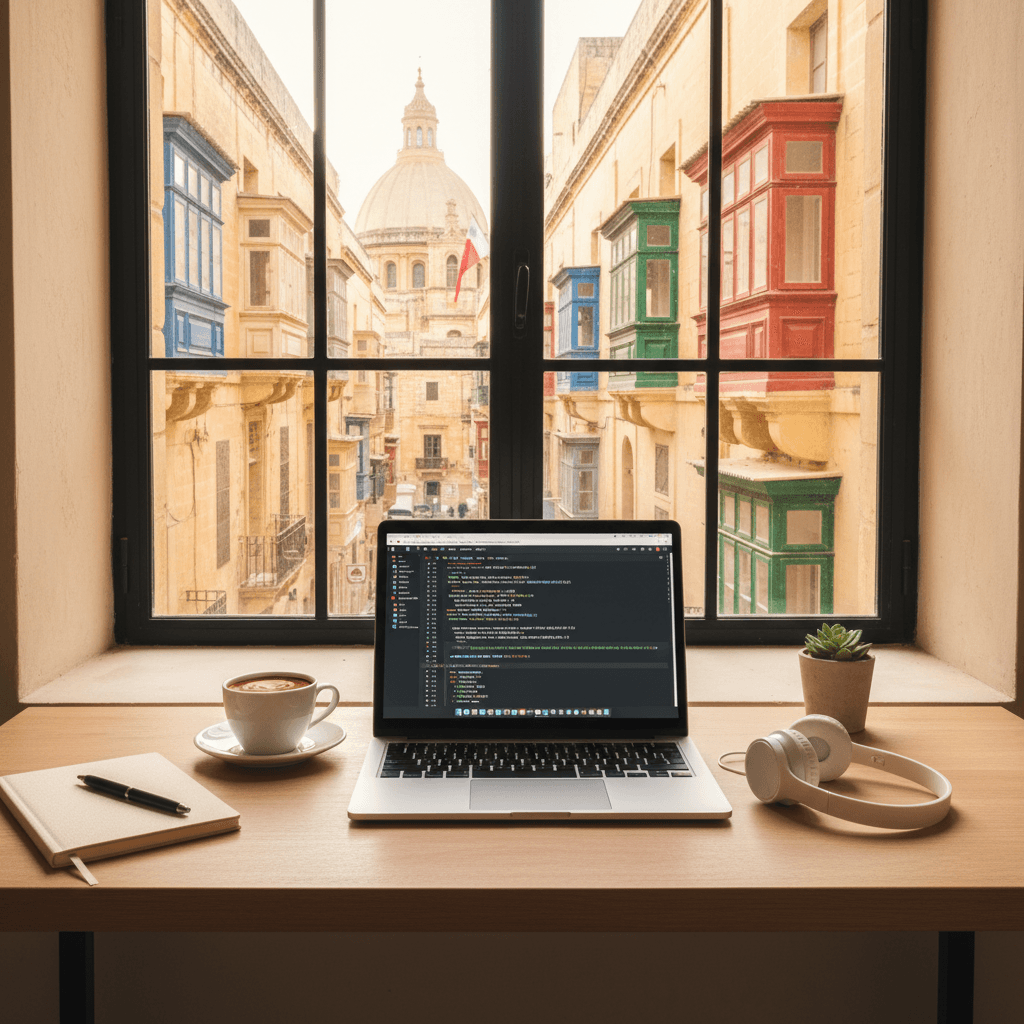
Malta
Complete Digital Nomad Guide

Policy Stability
Stamped Nomad ExclusiveHow likely visa and immigration policies are to remain unchanged
Quick Facts
Nomad Visa Cost
$324
Income Requirement
$3,780/mo
Max Stay
48 months
Renewable
Yes
Cost of Living
$2,000/mo
Avg Internet
150 Mbps
Safety Score
6/10
Healthcare
Medium
Coworking
High
English Friendly
High
Time Zones
CET, CEST
Entry Methods Available
Best For
Understanding Your Entry Options
Malta is a core member of the Schengen Area, which makes entry straightforward for many but requires a bit of paperwork for others. Whether you are planning a quick scouting trip or a longer stint under the Mediterranean sun, you need to categorize your stay into one of two buckets: the short-term Schengen Type C visa or the long-term National D-visa.
For most digital nomads, the journey starts with the 90-day rule. If you hold a passport from the USA, Canada, Australia, the UK, or Japan, you are among the 60+ nationalities that can enter Malta visa-free. You can stay for up to 90 days within any 180-day period. Just remember that this time limit applies to the entire Schengen Area collectively, not just Malta.
Short-Stay Tourist Visas (Type C)
If your nationality is not on the visa-exempt list, you will need to apply for a Schengen Type C visa before you arrive. Malta does not offer visas on arrival or a digital e-visa system for tourists, so you have to coordinate with your local embassy or a VFS Global center.
- Standard Fee: €80 for adults.
- Processing: Handled by the Central Visa Unit or local diplomatic missions.
- Extensions: Only granted for serious reasons like humanitarian issues or force majeure. These cost €60 and require a visit to the Immigration Offices in Valletta or Gozo.
- Key Requirements: You must show proof of sufficient funds, a confirmed return ticket, and accommodation bookings for your entire stay.
Business and Long-Stay National Visas (Type D)
When 90 days isn't enough to finish your project or soak up the island lifestyle, you move into National D-visa territory. This is the path for stays lasting between 91 and 365 days. While short-term business meetings can be done on a standard tourist visa, formal business stays require the specific D-visa framework.
The application process for a business-related D-visa is more rigorous. You will need to provide a formal invitation letter and evidence of your business relations or agenda in Malta. The standard fee for this application is €150, though certain extended versions can cost up to €250, payable by credit card only.
Document requirements for the D-visa include:
- A valid passport with at least two blank pages.
- Medical insurance with a minimum coverage of €30,000.
- Recent bank statements proving you can support yourself without local employment.
- A detailed flight itinerary and proof of a place to live.
- Official company documents if you are representing a business entity.
What to Expect in 2025 and 2026
The visa landscape for 2025 remains stable for tourists and short-term business travelers. Most of the recent legislative updates focus on labor migration and residency programs rather than the entry visas themselves. For example, the MPRP property rules are seeing some flexibility starting in July 2025, and new labor migration rules take effect in August 2025.
If you run into specific hurdles or have a complex situation, the Central Visa Unit is the primary point of contact. They can be reached at +356 2590 4550. It is always better to reach out early, as processing times can fluctuate during the peak summer months when the islands are at their busiest.
Quick Reference Summary
- Visa-Free Nationalities: Up to 90 days for US, UK, EU, and AU citizens.
- Schengen Type C Cost: €80 for non-exempt travelers.
- National D-Visa Cost: €150 to €250 for long stays.
- Insurance Requirement: Minimum €30,000 coverage for D-visas.
- Application Method: Pre-apply via VFS Global or Maltese embassies; no visa on arrival.
The Nomad Residence Permit: Your Ticket to the Mediterranean
Malta was one of the first countries in the EU to roll out a dedicated remote work visa, and they have refined the process into something surprisingly efficient. Officially called the Nomad Residence Permit, it is managed by the Residency Malta Agency. This permit is designed specifically for non-EU, non-EEA, and non-Swiss nationals who want to base themselves in the middle of the Mediterranean while working for employers or clients located elsewhere.
The beauty of this permit is the flexibility it offers. You get an initial stay of 1 year, but you can renew it up to three times. This means you could potentially call Malta home for a total of 4 years, provided you still meet the income and employment criteria. It is a perfect middle ground for those who want more stability than a tourist visa but are not ready for the complexities of permanent residency.
The Financial Bar
To qualify, you need to show that you are bringing a steady stream of income into the Maltese economy. The government sets a specific threshold to ensure nomads can comfortably afford the local cost of living without seeking local employment.
- Minimum Gross Annual Income: €42,000 for the main applicant.
- Spouse or Partner: An additional €32,400.
- Per Child: An additional €10,800 for dependents under 18.
You will need to prove this through employment contracts, business ownership documents, or bank statements from the last 3 months. They are quite strict about the "remote" aspect; your income must come from entities registered outside of Malta.
The Application Workflow
The process is mostly digital, which is exactly what you would expect for a nomad visa. You start by submitting your documents online, including Form N4, a copy of your passport, a CV, and a police conduct certificate. There is a €300 non-refundable fee per applicant that you pay via bank transfer at the start.
Once you submit, the background checks take about 30 working days. If you get the green light, known as the Letter of Approval in Principle, you have 30 days to secure your local accommodation and health insurance. Your insurance policy must have at least €100,000 in coverage to satisfy the requirements.
After you arrive in Malta, you will book a biometrics appointment to get your actual residence card. This involves a final €100 fee for the card itself, which usually takes 3 to 4 weeks to be ready for collection.
Taxation and the Fine Print
Malta offers a very aggressive tax incentive to lure remote workers. For your first 12 months, you are 100% exempt from paying Malta income tax on your remote work earnings. If you stay longer and become a tax resident, a flat 10% tax rate applies to that income. This is a massive draw compared to the higher brackets found in most of Western Europe.
However, keep in mind that this permit does not lead to permanent residency or citizenship. It is a temporary stay arrangement. You are also strictly forbidden from taking up a job with a Maltese company while on this permit. If you decide you want to work for a local startup, you would need to switch to a different type of work permit entirely.
Family members are welcome to join you. This includes spouses, partners in a stable relationship, and even adult children up to age 27 if they are still students and financially dependent on you. It makes Malta a viable choice for "nomad families" who want a safe, English-speaking base with great weather.
The 90-Day Rule: Who Gets in Free?
Malta is a full member of the Schengen Area, meaning it follows the standardized European rules for entry. If you hold a passport from the USA, Canada, UK, Australia, or Japan, you do not need to apply for a visa before you land. You can simply show up at the border, get your stamp, and stay for up to 90 days within any 180-day period.
While the entry is visa-free, it is not "documentation-free." Border guards occasionally ask to see your return flight details, proof of where you are staying, and evidence that you have enough money to support yourself. Keep these documents handy on your phone or printed out to avoid any friction at Luqa Airport.
Applying for a Schengen Short-Stay Visa (Type C)
If your nationality is not on the visa-exempt list, you will need to apply for a Schengen C-type visa before you pack your bags. Malta does not offer a visa-on-arrival or a digital e-visa for tourists. Anything you see online claiming to be an "official Malta e-visa" portal is likely a third-party service or a scam.
The application goes through VFS Global centers or Maltese diplomatic missions in your home country. You will need to provide a valid passport, two recent photos, travel insurance covering at least €30,000, a full flight itinerary, and proof of accommodation. Standard processing usually takes about 15 days, but it is smart to apply at least a month before your trip.
Costs and Fees
Budgeting for your paperwork is straightforward. The fees are standardized across the Schengen zone, though they are subject to minor currency fluctuations. Here is what you can expect to pay:
- Schengen Short-Stay (Adult): Between €80 and €90.
- Children (Ages 6-12): €40.
- Children (Under 6): Free.
- Long-Stay (D-Visa): Starts at €100 and can go up to €300 depending on the specific purpose.
- VFS Service Fees: Expect to pay an additional €30 to €150 for the convenience of using a processing center.
Staying Longer: The Long-Stay D-Visa
If you plan to stay in Malta for more than 90 days, the standard tourist visa will not cut it. You will need a National Long-Stay (D-Visa). These are not typically granted for "extended tourism." You must have a specific reason, such as employment, study, or the Nomad Residence Permit.
The D-visa requires pre-approval from Identità, Malta’s central agency for residency. If you are already in Malta on a tourist visa and decide you want to stay long-term, you generally cannot just "swap" your status. Most nomads apply for their long-term permits while still abroad or through the specific Nomad Residence Permit track which has its own set of rules.
The Reality of Extensions and Overstays
Extending a 90-day tourist stay is notoriously difficult in Malta. The Central Visa Unit only grants extensions for "force majeure" or extreme humanitarian reasons, like a medical emergency that prevents you from flying. Wanting more time to explore the beaches of Gozo does not count.
Do not try to "reset" your 90 days by flying to Italy or Greece for a weekend. The 90/180 rule applies to the entire Schengen Area collectively. If you overstay, even by a few days, you risk heavy fines, immediate deportation, and a potential five-year ban from entering any Schengen country. The electronic entry-exit systems are efficient, and they will catch the discrepancy when you try to leave.
Choosing Your Path to the Island Life
Malta has become a Mediterranean powerhouse for remote workers, and the government has made it surprisingly straightforward to stay beyond a typical 90-day tourist window. Whether you are a freelancer looking for a year of sun or an investor seeking a permanent base, there is a specific permit tailored to your situation. Most applications are handled by two main bodies: Residency Malta Agency and Identità.
The Nomad Residence Permit
This is the most popular route for the Stamped Nomad community. If you work for a company outside of Malta or run your own freelance business with foreign clients, this permit is your golden ticket. To qualify, you need to show a gross annual income of at least €42,000. You also need valid health insurance with €30,000 in coverage and a local rental agreement.
The application fee is €300 for the main applicant and an additional €300 for each dependent you bring along. This permit is valid for one year and can be renewed once, giving you a total of two years to enjoy the archipelago. Just remember, you cannot perform any work for Maltese companies while on this specific permit.
Malta Permanent Residence Programme (MPRP)
If you have the capital and want to skip the yearly renewal cycle, the MPRP (often called the Golden Visa) offers residency for life. This is an investment-heavy route that requires a clean criminal record and proof of assets totaling €500,000. You will need to make a government contribution of at least €100,000, a €2,000 donation to a local charity, and pay various administrative fees.
Property is the final piece of the puzzle. You can either buy a home for at least €300,000 or rent a property for €10,000 to €14,000 per year depending on the location. While the upfront costs are high, usually ranging between €150,000 and €300,000 total, it grants you the right to live in Malta indefinitely and puts you on a potential path to citizenship later on.
General Residency and Single Permits
For those who find a local job or want to start a business on the island, Identità issues general residency permits. The "Single Permit" combines work and residence into one application. First-time applicants pay €600, while annual renewals cost €150. You will need a formal job offer or proof of self-sufficiency, meaning you have enough stable income and savings to support yourself without becoming a burden on the state.
Retiring in Malta
Malta is a top-tier retirement destination because of its tax perks. The Retirement Programme requires that 75% of your income comes from a foreign pension, totaling at least €27,000 annually. You will pay a flat 15% tax rate on any foreign income you bring into the country. There is a €2,500 application fee, and like other programs, you must maintain private health insurance and a local address.
The Long Game: Permanent Residency
If you fall in love with the island and stay for five continuous years on a legal permit, such as a Nomad Permit or a work visa, you can apply for long-term resident status. This requires proof of integration, stable income, and a place to live. Once granted, you gain many of the same rights as local citizens, making your Mediterranean lifestyle a permanent reality.
- Nomad Income Requirement: €42,000 gross per year
- Nomad Permit Duration: 1 year, renewable once
- MPRP Asset Requirement: €500,000
- Path to Permanent Residency: 5 years of legal residence
The Price of Mediterranean Living
Malta occupies a unique middle ground in the European digital nomad scene. While it is more affordable than London or Paris, it carries a higher price tag than Eastern European hubs like Sofia or Bucharest. For a single nomad, monthly expenses typically range from €1,500 to €4,000+. Your final bill depends heavily on whether you crave the social energy of the harbor area or the quiet, limestone streets of the countryside.
The local currency is the Euro, and while card payments are accepted almost everywhere, keeping a bit of cash for small village pastizzerias is a smart move. Rent will be your biggest hurdle, as the island's small size creates a competitive market, especially during the sun-soaked summer months.
Location Breakdown
Where you plant your laptop determines your burn rate. The island is small, but the price variance between neighborhoods is noticeable.
Sliema and St. Julian's (The Nomad Hubs)
This is the heart of the action. It is where you will find the most coworking spaces, international restaurants, and networking events.
- 1BR Rent: €1,000–€1,600
- Food & Dining: €350–€500
- Coworking: €250–€400
- Monthly Transport: €26–€65
Valletta (The Historic Capital)
Living in a UNESCO World Heritage site comes with plenty of charm but limited modern apartment stock. Prices are high, but the lifestyle is unmatched.
- 1BR Rent: €900–€1,300
- Food & Dining: €300–€450
- Coworking: €200–€350
Gozo and Northern Malta (The Budget Choice)
If you prefer a slower pace and rugged cliffs over nightlife, Gozo offers significant savings. You will trade some convenience and high-speed networking for a much lower overhead.
- 1BR Rent: €750–€1,000
- Food & Dining: €250–€400
- Coworking: €150–€300
Lifestyle Tiers
How you choose to live in Malta dictates which of these three brackets you fall into. These estimates include rent, food, transport, and basic nomad infrastructure.
The Budget Nomad (€1,500–€2,000)
This tier assumes you are living in a more residential area or sharing a flat. You cook most meals at home, use the efficient bus system, and perhaps use a hot-desk at a coworking space rather than a dedicated office.
- Rent: €750–€900
- Groceries: €250–€300
- Health Insurance: €25–€50
The Comfortable Nomad (€2,000–€3,000)
This is the sweet spot for most professionals. You get a modern one-bedroom apartment in a decent area, eat out a few times a week, and maintain a dedicated desk at a hub like SOHO or Regus.
- Rent: €1,000–€1,300
- Food & Social: €350–€450
- Coworking: €250–€350
The Premium Nomad (€3,500+)
If you want a sea-view penthouse in Sliema, frequent fine-dining spots in Valletta, and use private taxis or car rentals to get around, your costs will scale quickly.
- Rent: €1,400+
- Food & Entertainment: €450+
- Health Insurance: €100+
Key Expense Details
Transport is surprisingly affordable. The Tallinja card makes bus travel very cheap, often around €26 per month for frequent users. Some residents even qualify for free travel, though nomads usually pay the standard visitor or resident rates.
Food costs are manageable if you shop at local markets and avoid the tourist traps on the waterfront. Expect to spend €250 to €500 depending on how often you trade your kitchen for a bistro table. Health insurance is a requirement for the Nomad Residence Permit; basic plans like SafetyWing hover around €50 to €60, while more comprehensive private Maltese plans can reach €125 per month.
Utilities and high-speed internet aren't always included in the rent. You should budget an additional €100 to €150 per month to cover electricity, water, and a solid fiber connection to keep your Zoom calls running smoothly.
The Top Three Bases for Your Maltese Stay
Malta is small, but choosing the right neighborhood is the difference between a productive month and a logistical headache. While the island is blanketed in high-speed fiber internet averaging over 100 Mbps, the vibe shifts dramatically from one town to the next. For most nomads, the "North Harbour" region is the place to be. It is where you will find the highest concentration of coworking spaces, English speakers, and fellow remote workers.
If you want to be in the middle of the action, stick to the trio of Sliema, St. Julian's, and Valletta. These hubs offer the best infrastructure, though you will pay a premium for the convenience compared to the quieter villages in the south or on the sister island of Gozo.
Sliema: The Expat Heartbeat
Sliema is the undisputed champion for digital nomads in Malta. It is a coastal commercial hub that manages to feel both professional and relaxed. The town is defined by its long seafront promenade, where you will see people jogging at sunrise and grabbing Aperol Spritzes at sunset. It is incredibly walkable, meaning you can ditch the car and rely on your own two feet or the frequent ferries to Valletta.
The community here is massive. You will find established coworking giants like SOHO Office Space and The Hive, which are perfect if you need a dedicated desk and a social calendar. The internet is rock solid, and because the area is so international, you will never struggle to find a cafe with reliable Wi-Fi and a laptop-friendly policy.
- Monthly Cost: Approximately $2,070
- Coworking: SOHO, The Hive, and numerous boutique offices.
- Pros: Excellent walkability, massive nomad community, and easy access to rocky beaches for a quick swim between meetings.
- Cons: Rent is high, often ranging between €1,200 and €1,800 for a decent apartment; the area can feel very crowded during peak tourist season.
St. Julian's: Energy and Entertainment
Just a short walk up the coast from Sliema is St. Julian's. If Sliema is where people work and live, St. Julian's is where they go to play. It is centered around the picturesque Spinola Bay, famous for its colorful traditional boats and waterfront dining. This is the spot for younger nomads or anyone who wants a "work hard, play hard" lifestyle.
You have access to SpacesWorks and a variety of trendy cafes that don't mind you lingering over a latte. However, be aware that St. Julian's is also home to Paceville, Malta's main nightlife district. While it is great for a late night out, it brings noise and a slight uptick in petty crime like pickpocketing. Choose your apartment location carefully if you value a full night's sleep.
- Monthly Cost: Approximately $2,020
- Coworking: Spaces, plus laptop-friendly spots like Badass Burgers or local cafes.
- Pros: The best nightlife on the island, beautiful bay views, and a very high density of services.
- Cons: Noise levels can be frustrating; petty theft is more common in the crowded bar areas.
Valletta: History and High Culture
Valletta is a UNESCO World Heritage site and a masterpiece of Baroque architecture. Living here feels like being on a movie set. It is the smallest capital in the EU, and every street is packed with history, wine bars, and upscale restaurants. For nomads, it offers a more "boutique" experience compared to the modern sprawl of Sliema.
The workspace scene here is unique, with coworking spots often tucked into renovated historic buildings. Cafes like Tribe and Coffee Circus are popular hangouts for the creative crowd. Keep in mind that Valletta is built on a grid of steep hills and stairs, so your daily commute will be a workout. While the charm is unmatched, the thick stone walls of older buildings can sometimes interfere with Wi-Fi signals, so always ask for a speed test before signing a lease.
- Monthly Cost: Approximately $1,990
- Coworking: Several historic shared offices and creative hubs.
- Pros: Incredible atmosphere, very safe, and a high concentration of cultural events and top-tier dining.
- Cons: No sandy or rocky beaches within walking distance; the hilly terrain can be exhausting; grocery shopping options are limited within the city walls.
Quick Comparison
Sliema
- Rent & Living: $2,070
- Internet: 100+ Mbps
- Vibe: Social and professional
St. Julian's
- Rent & Living: $2,020
- Internet: 100+ Mbps
- Vibe: Energetic and youthful
Valletta
- Rent & Living: $1,990
- Internet: 47-148 Mbps
- Vibe: Sophisticated and historic
Connectivity and Speed
Malta is a rare gem in the Mediterranean where the internet infrastructure actually matches the marketing. The island boasts an average broadband speed of 102.4 Mbps, which is a massive relief for anyone who has struggled with spotty island WiFi elsewhere. In fact, over half of the connections on the island hit at least 100 Mbps, putting Malta well ahead of the EU average.
Fiber is the standard here, not the exception. The two main players, GO and Melita, have blanketed the island in high-capacity networks. GO offers speeds up to 1,000 Mbps, while Melita pushes the envelope further with 2.5 Gbps options. While fiber-to-the-door sits at about 48% coverage, the general network capacity is robust enough that you will rarely face lag during a Zoom call, even in older stone buildings.
Top Coworking Spots
The coworking scene is concentrated around Valletta and the Sliema/St. Julian’s corridor, but you can find quiet pockets further inland if you want to escape the tourist buzz.
- Grand Central (Valletta): Located in the heart of the capital, this spot is perfect for those who want a view. Their roof terrace is a major perk. A day pass costs €30, while a 60-hour monthly pass is €150.
- SOHO Office Savoy Gardens (Gzira): This is the "see and be seen" spot for the tech crowd. It is professional and sleek. Expect to pay €30 for a day pass or €325 per month for a dedicated desk.
- SC Coworking Campus (Pembroke): This is a unique hybrid. It functions as a campus with on-site coliving, a pool, and 24/7 access. It is ideal if you want your social life and work life in the same zip code.
- 230 Works (Mosta): If you are staying away from the coast, this is the best budget bet. A day pass is just €15, and an unlimited monthly hot desk is a steal at €55.
- Spaces: A reliable global brand with a presence here. Their all-access plans can be as low as €9 per day if you use their unlimited membership options.
Remote Work from Cafes
Malta has a thriving cafe culture, but not every espresso bar wants you hogging a table for four hours. For a reliable connection, stick to the nomad-friendly spots. Mint in Sliema is a staple for a reason; the food is great and there are plenty of power outlets. Tribe in Valletta is another winner, known for having some of the fastest public WiFi in the city.
In St. Julian’s, Costa Coffee and Lot Sixty One are safe bets for a quick hour of emails. If you find yourself in Valletta, Caffe Cordina offers fast WiFi without the hassle of a password, though it can get noisy during peak tourist hours. Keep in mind that cafe speeds usually hover around 35 Mbps, which is plenty for basic tasks but might struggle with heavy video editing or large uploads.
Mobile Data and eSIMs
If you are only staying for a few weeks, grab a Nomad eSIM before you land. Plans start at $4.50 for 1 GB, but they offer larger buckets up to 75 GB. These typically piggyback off the Epic or GO networks, so you will have solid 4G or 5G coverage across most of the island.
For those staying a month or longer, a local SIM is much cheaper. Epic offers prepaid plans from €15 per month. If you are renting an apartment, you can bundle your services; combining an Epic home internet plan (€30) with a mobile plan (€15) brings your total monthly connectivity cost to just €45.
Monthly Budget Estimates
- Budget Setup: €100 per month. Includes a €55 unlimited membership at 230 Works, a €30 basic home internet plan, and a €15 prepaid SIM.
- Mid-Range Setup: €208 per month. Includes a €150 part-time pass at Grand Central, €38 for high-speed GO Fiber, and a €20 mobile plan.
- Premium Setup: €383+ per month. Includes a €325 dedicated desk at SOHO, €58 for 500 Mbps fiber at home, and a high-limit mobile data plan.
The Maltese Healthcare System
Malta punches well above its weight when it comes to medical care. For a small island nation, it offers a sophisticated dual-track system that blends high-quality public services with a fast-moving private sector. All medical staff speak fluent English, so you won't have to worry about anything getting lost in translation during a consultation.
The public system is anchored by Mater Dei Hospital, a state-of-the-art facility in Msida that handles everything from routine check-ups to complex surgeries. While the care is excellent, the public sector is currently feeling the pressure of a growing expat population. This means that while emergency care is immediate, non-urgent specialist appointments can involve waiting lists that stretch for several months.
Most digital nomads opt for the private route to bypass these queues. Private hospitals like St. James in Sliema or DaVinci Health in Birkirkara feel more like boutique hotels than clinics. You can often book a specialist visit for the same week, and the out-of-pocket costs remain significantly lower than what you would find in the US or Northern Europe.
Key Medical Facilities
- Mater Dei Hospital (Msida): The primary public teaching hospital. It is the go-to for 24/7 emergency services and specialized intensive care.
- St. James Hospital (Sliema & Zabbar): The top choice for the nomad community. It offers 24/7 private emergency rooms and high-end diagnostic equipment.
- Gozo General Hospital (Victoria): The main facility for those based on Malta's sister island, offering both public and private services.
- DaVinci Hospital (Birkirkara): Known for quick walk-in appointments and excellent radiology services.
Insurance Requirements for Nomads
If you are applying for the Malta Nomad Residence Permit, you are required to have a health insurance policy with at least €100,000 in coverage, including inpatient, outpatient, and evacuation costs. EU citizens can rely on their EHIC card for short-term stays, but once you become a resident, you'll want something more permanent.
Local providers like Laferla offer tiered plans that are surprisingly affordable. Their Bronze plan starts around €275 per year for basic coverage, while a Gold plan at €700 per year covers almost everything with zero fuss. If you prefer a nomad-specific plan, SafetyWing costs roughly €60 per month and is widely accepted for visa applications.
Out-of-Pocket Costs
Even without insurance, paying cash for medical services in Malta won't break the bank. Here is a breakdown of what you can expect to pay at private clinics:
- GP Consultation: €10 to €20. Many pharmacies have a doctor on-site for €10 walk-ins.
- Specialist Visit: €40 to €60 for an initial consultation.
- Standard Blood Test: €20 to €60 depending on the complexity.
- MRI Scan: €150 to €500.
- Emergency Room Visit (Private): €100 to €300.
- Overnight Hospital Stay (Private): €200 to €500 per night.
Pharmacies and Prescriptions
Pharmacies are everywhere in Malta, easily identified by the standard green cross. They operate on a unique rotation system on Sundays and public holidays; there is always at least one pharmacy open in each region of the island. You can check the local newspapers or online schedules to see which one is on duty.
Keep in mind that Maltese pharmacists cannot legally honor foreign prescriptions. If you need a refill, you will need to see a local doctor first. Alternatively, services like Travel Doctor EU can provide digital prescriptions that you can take to the nearest pharmacy on the same day. For basic ailments like a cold or a minor skin rash, the pharmacist is often your first line of defense and can recommend over-the-counter treatments without a doctor's note.
In Case of Emergency
If you find yourself in a serious situation, dial 112. This is the universal emergency number for an ambulance, the police, or the fire department. If you are mobile but need urgent care, head directly to the Emergency Department at Mater Dei. It is open 24/7 and treats everyone regardless of insurance status in life-threatening situations, though you may be billed later if you aren't covered by the local social security system.
Currency and Daily Cash
Malta adopted the Euro (€/EUR) in 2008, and the transition has been seamless. You will find that cash is still king in smaller village "pastizzerias" or local markets, but the island is generally very card-friendly. Most shops and restaurants accept contactless payments without a second thought.
ATMs are everywhere, particularly those operated by BOV and HSBC. If you use a local bank card at its own ATM, withdrawals are free. Using a different bank's ATM usually incurs a small fee of €0.50 to €0.75 per transaction. Be wary of blue and yellow Euronet ATMs; they often charge high "Dynamic Access Fees" and offer poor exchange rates. Stick to bank-branded machines and always decline the "on-screen" currency conversion to let your own bank handle the rate.
The Local Banking Scene
Opening a traditional bank account in Malta can be a test of patience. Expect the process to take anywhere from 2 to 6 weeks. Most banks require an in-person appointment and a mountain of paperwork. You will typically need your passport, a valid Maltese rental agreement, an employment contract, and sometimes a reference letter from your previous bank back home.
The main players include:
- Bank of Valletta (BOV): The largest network on the island with over 100 ATMs. They are reliable but can be bureaucratic.
- HSBC Malta: A solid choice for those who already have an HSBC account elsewhere, though they have high standards for residency proof.
- APS Bank: Often cited by expats as more flexible and friendly toward newcomers.
- BNF Bank: A smaller, modern alternative that sometimes offers faster processing.
Expect to pay a monthly maintenance fee between €2 and €3.50. Most banks also require a minimum opening deposit ranging from €50 to €500.
Digital Banks: The Nomad Shortcut
Most digital nomads in Malta skip the traditional banks entirely, at least at first. Wise and Revolut are widely used and accepted across the islands. They provide instant account setup and multi-currency wallets, which is perfect if you are getting paid in USD or GBP but spending in Euros.
While these apps work for 95% of daily life, there is a small catch. Some local government entities or older utility providers occasionally insist on a local MT IBAN. Since Wise uses Belgian (BE) IBANs and Revolut uses Lithuanian (LT) ones, you might occasionally hit a "system says no" moment. Many nomads find a hybrid approach works best: use Revolut for daily spending and maintain a basic local account for rent and bills.
Moving Money Internationally
If you need to move large sums for a rental deposit or to pay local taxes, avoid using traditional bank wire transfers. Maltese banks can charge €10 to €15 or more per transfer, and their exchange rates are rarely competitive.
- Wise: Best for mid-market rates and low fees, usually between 0.35% and 1.5%. It is the gold standard for receiving client payments from abroad.
- Revolut: Ideal for instant SEPA transfers within Europe.
- Xoom: A fast alternative if you need to get money into a Maltese bank account within 30 minutes.
Crypto and Digital Assets
Malta famously marketed itself as "Blockchain Island," and while the hype has cooled, the regulatory framework is quite advanced. The Markets in Crypto-Assets Act 2024 aligns Malta with EU-wide standards. If you are just a casual trader, Revolut allows you to buy and sell crypto directly in the app. If you are running a crypto-based business, be prepared for strict licensing requirements and capital requirements ranging from €50,000 to €730,000 depending on your operation class. New reporting standards under DAC8 will also begin in 2026, ensuring more transparency for crypto holdings.
Navigating Life with the Family
Malta is a standout choice for digital nomads who aren't just traveling with a laptop, but with a spouse and kids in tow. The island is small, making school runs and weekend beach trips manageable, and the culture is deeply rooted in family life. You will find that children are welcomed almost everywhere, from late-night dinners in the piazza to community festas.
Visas and Residency for Dependents
If you are a third-country national living in Malta on a residence permit, you can generally sponsor your family after you have lived on the island for 12 months. This applies to your spouse, provided they are at least 21 years old, and your unmarried minor children. You will need to show you earn at least the median wage of €18,940, plus an additional 20% for each family member you bring along. Documentation usually includes recent payslips, tax returns, and health insurance with a minimum coverage of €100,000 per person.
For high-earning specialists or those on key employee programs, the rules are more flexible. If your income exceeds €50,000, the one-year waiting period is often waived. In these cases, you will need to prove an extra €6,000 in income for each dependent and commit to enrolling school-age children in private international schools.
Education and International Schools
While the local state schools are an option, most nomad families gravitate toward international schools for consistency in curriculum. These schools primarily use English and offer British, American, or IB programs. Fees vary wildly depending on the age of the child and the prestige of the institution, typically ranging from €5,000 to €26,000 per year.
- St. Edward’s College: Located in Birgu, this school offers the IB curriculum and is known for its multicultural atmosphere.
- Verdala International School: Based in Pembroke, it follows an American-style international curriculum.
- Quality of Instruction: Most international schools maintain low student-teacher ratios and are concentrated in areas like Swieqi and Naxxar.
Childcare and Early Years
If your children aren't school-age yet, Malta has a robust network of nurseries. If you are working and paying social security in Malta, you might qualify for government subsidies that make childcare free or very low-cost. Without subsidies, expect to pay between €2.60 and €3.00 per hour.
- Sliema and Swieqi: Monthly costs range from €350 to €400.
- Birkirkara: Slightly more affordable at €120 to €400 per month.
- Gozo and Valletta: Prices are the most varied here, spanning €83 to €616.
Keeping the Kids Healthy
The healthcare system in Malta is high quality, and almost all medical professionals speak fluent English. While public healthcare covers basic vaccinations, many expats choose private insurance to avoid longer wait times for specialists. A private family plan for four usually costs between €300 and €600 per month. A standard visit to a private pediatrician will typically set you back €60 to €100. It is a good idea to bring translated vaccination records from your home country to make the initial registration easier.
Top Neighborhoods for Families
Choosing the right base is about balancing proximity to schools with your desire for outdoor space. While the harbor area is exciting, many families head further inland or north for a slower pace.
- Mosta: A central hub that is incredibly convenient. It has large supermarkets, plenty of playgrounds, and a local feel that is less touristy than the coast.
- Mellieħa: This is the place to be if you want sandy beaches. It is very safe, quiet at night, and offers larger homes with more square footage.
- Naxxar: A prestigious residential area that is very close to several international schools and popular expat social clubs.
- Gozo: For a truly rural experience, Victoria offers lower costs and plenty of open space, though it requires a ferry commute to the main island for most major services.
Safety and Peace of Mind
Malta remains one of the safest countries in Europe. Violent crime is rare, with a homicide rate of just 0.7 per 100,000 people. While petty theft has seen a slight increase in crowded tourist hotspots, the residential areas where families live are generally very secure. It is common to see children playing in the squares well after sunset, and the general sense of community watchfulness adds an extra layer of comfort for parents.
Safety and Crime for Foreigners
Malta is consistently ranked as one of Europe’s safest spots for digital nomads. With a police force of about 430 officers per 100,000 people, violent crime is incredibly rare, occurring at roughly a quarter of the rate seen in the United States. Recent data shows that crime rates continue to dip, with reported incidents falling by 1% over the last year.
Most issues involve petty, opportunistic theft. Pickpocketing and bag snatching account for about 50% of reported offenses, usually concentrated in high-traffic hubs like the Valletta bus terminal, the Sliema seafront, and the nightlife district of St. Julian’s. Valletta remains a standout for safety; its well-lit streets and visible police presence make it a comfortable place to walk alone at any hour.
Common Scams Targeting Foreigners
While physical safety is high, digital and financial scams are on the rise. Be wary of complex romance schemes, unexpected business "opportunities," or job offers that arrive via social media. If someone you met online asks for money or proposes a face-to-face meeting in a secluded spot, treat it with skepticism. Always verify business ventures through official channels before committing funds.
LGBTQ+ Friendliness
Malta is a champion for LGBTQ+ rights, holding the top spot on the ILGA-Europe Rainbow Map for six years running with a score of 89%. Same-sex marriage is legal, joint adoption is permitted, and the country allows for legal gender recognition without medical hurdles. It is a place where most queer expats feel comfortable being open about their relationships in public.
The most inclusive neighborhoods include:
- Sliema and Gzira: Modern urban hubs with a high density of international residents.
- St. Julian's: The center of nightlife with many gay-friendly bars and clubs.
- Valletta: Home to the annual Malta Pride in mid-September, a massive event supported by public officials.
While the cities are progressive, rural villages can still be socially conservative. In these smaller communities, a bit of discretion is often the norm to respect local sensibilities.
Language and Communication
English is an official language here, alongside Maltese. It is used in government, business, and education, so you will rarely face a language barrier when signing a lease or ordering a coffee. Many locals also speak Italian due to the islands' close ties with Italy.
Even though English is everywhere, learning a few Maltese phrases goes a long way with the locals. Try using "Bonġu" for hello or "Grazzi" for thank you. It shows respect for the local culture, which is a blend of Arabic, Italian, and English influences.
Cultural Etiquette and Social Norms
Maltese culture is built on Catholic traditions and tight-knit family structures. You will often see three generations sharing a Sunday meal at a local restaurant. The pace of life is slower here than in Northern Europe. Punctuality is relaxed, and you will need a healthy dose of patience when dealing with administrative offices.
Keep these social tips in mind:
- Avoid pointing with your finger, as it can be seen as aggressive or rude.
- Dress modestly when entering churches, covering your shoulders and knees.
- Steer clear of heated debates regarding local politics or immigration until you know someone well.
- Participate in festas, which are village festivals honoring patron saints with fireworks and parades.
Expat Community and Integration
Since the launch of the digital nomad visa in 2021, over 1,000 nomads have moved to the islands. The community is active and easy to find in co-working spaces across Sliema and Msida. To truly integrate, don't just stick to expat bubbles. Accept dinner invitations from Maltese neighbors and embrace the Mediterranean philosophy of taking your time. Showing up to community events is the fastest way to turn a temporary stay into a home.
The 183-Day Rule and Residency
Malta determines your tax status primarily through the 183-day rule. If you spend more than half the year on the islands, you are generally considered a tax resident. However, Malta uses a unique system that distinguishes between ordinary residence and domicile.
Most nomads fall under ordinary residence. This is a massive advantage because it means you are typically only taxed on income earned in Malta or foreign income that you actually bring into a Maltese bank account. Foreign capital gains often remain out of reach for the local tax authorities, provided you don't intend to stay in Malta forever.
The Nomad Residence Permit Advantage
If you are moving to Malta on the Nomad Residence Permit (NRP), the tax perks are among the best in Europe. To qualify, you need a gross annual income of at least €42,000 from remote work. The incentive structure is designed to make the first few years very affordable.
- First 12 Months: You enjoy a 100% exemption from income tax on your authorized remote work.
- After 12 Months: Your remote income is subject to a flat 10% tax rate.
If you don't have this specific permit but stay long enough to become a resident, you'll fall under the standard progressive tax brackets. These start at 15% and climb to 35% for income exceeding €60,000. Self-employed individuals should also budget for social contributions, which are capped at roughly €3,900 annually.
Crypto and Digital Assets
Malta earned its "Blockchain Island" nickname for a reason. For individual investors, the tax treatment of cryptocurrency is remarkably friendly. If you hold coins like Bitcoin or Ethereum as a long-term investment, you generally won't pay capital gains tax when you sell.
The rules change if you are day-trading professionally or earning income through mining and staking. In those cases, the earnings are treated as business income and taxed at the standard progressive rates between 15% and 35%. If you are under the Global Residence Program, you may even see exemptions on capital gains for certain digital assets.
The Global Residence Program (MGRP)
For high-earning nomads from outside the EU who want a more permanent setup, the MGRP is a specialized alternative. It offers a flat 15% tax rate on foreign income sent to Malta, but it comes with higher entry requirements.
- Minimum Tax: You must pay at least €15,000 in tax annually.
- Housing: You need to rent a property for at least €9,600 per year (or €8,750 in Gozo or the South).
- Wealth Protection: Foreign capital gains and foreign income left in offshore accounts are not taxed.
Avoiding Double Taxation
You won't get hit twice on the same Euro if your home country has a treaty with Malta. With a network of about 80 double taxation treaties, Malta uses a credit method. This allows you to subtract the taxes you paid abroad from what you owe locally. To claim this, you'll need to stay on top of your paperwork and file Form DT1 with your annual returns.
Paperwork and Reporting
Setting up your tax profile is a manual process. You'll need to apply for a Tax Identification Number (TIN) using Form IRD1. If you are claiming the 12-month exemption under the Nomad Residence Permit, make sure your documentation clearly states that your stay is not merely temporary. While the system is favorable, the Maltese authorities are strict about declaring any income earned from local clients, which is always taxed under standard rules rather than the nomad incentives.
Getting Connected
Staying online is straightforward in Malta, and you can usually find a signal even in the limestone corners of Valletta. For the best overall coverage, GO is the local favorite. Their €15.99 prepaid plan gives you unlimited local data and 28GB of EU roaming for four weeks. If you just need a cheap starter, Epic offers a €10 SIM with 10GB, while Melita provides 25GB for €12.
You can grab these cards at Malta International Airport or any convenience store. Just remember to bring your passport for registration. If your phone supports eSIMs, Holafly is a solid alternative for instant activation, with unlimited data starting around $19.50 for five days.
Navigating the Islands
Public transport is centered around the bus system, but Google Maps is notoriously unreliable for local schedules. Download the Tallinja app immediately. It provides real-time tracking and journey planning that actually reflects the current traffic. For quick trips, Bolt is the dominant rideshare app with the most drivers, followed closely by eCabs. Uber operates here too, though wait times can be longer.
Walking is your best bet in the dense central hubs, but keep the ferries in mind. The fast ferry between Valletta and Sliema, or the larger boats to Gozo, are often more pleasant than sitting in the notorious peak-hour traffic.
Where to Set Up Base
Choosing a neighborhood determines your daily vibe and your budget. Most nomads gravitate toward the northeast coast for the density of amenities.
- Sliema: The primary nomad hub. It features a long seafront promenade and several coworking spaces like SOHO. Expect to pay €1,200 to €1,500 for a one-bedroom apartment.
- St. Julian's: Best for those who want nightlife and easy access to Spinola Bay. Rents typically range from €1,100 to €1,400.
- Gzira: A slightly more affordable alternative that is still central. You can find decent spots for €900 to €1,200.
- Gozo: For a slower pace and more nature. It is much quieter, with rents dropping to €700 to €900.
Finding Accommodation
Airbnb and Booking.com are the standard for short-term stays. If you are looking for a community-first experience, check out Evolve or Mapmelon for coliving options that include dedicated workspaces. Before you commit to a long-term lease, always verify that the building has fiber internet. Central areas often support speeds up to 1Gbps, but older stone buildings can sometimes suffer from spotty internal Wi-Fi signals.
Food and Daily Life
When you do not feel like heading out, Wolt and Bolt Food are the two main delivery apps. They cover hundreds of restaurants and grocery stores, usually arriving within 20 to 30 minutes. If you plan on staying a while, a Wolt+ subscription can save you a significant amount on delivery fees.
English is an official language and is spoken by almost everyone, so you will rarely face a communication barrier. However, learning a few phrases in Maltese can go a long way with locals. Apps like Kelmet or Talkio AI are helpful for picking up basic greetings and daily vocabulary.
Safety and Local Advice
Malta is generally very safe, but it is good to have the right numbers saved. Dial 112 for any emergency involving the police, ambulance, or fire department. For non-emergency police matters, use 21224001.
A few rookie mistakes to avoid: do not underestimate the Mediterranean sun. The UV index hits high levels quickly, so sunscreen is a daily requirement. Also, try to avoid booking accommodation directly in Paceville unless you enjoy loud music until 4:00 AM. Finally, only rent a car if you plan on living in Gozo or the remote north; in the central areas, parking is a nightmare and walking or biking is much faster.
Latest Nomad News
More Guides from Europe
Stay Updated on Malta
Get notified about visa changes, policy updates, and new information for digital nomads in Malta.