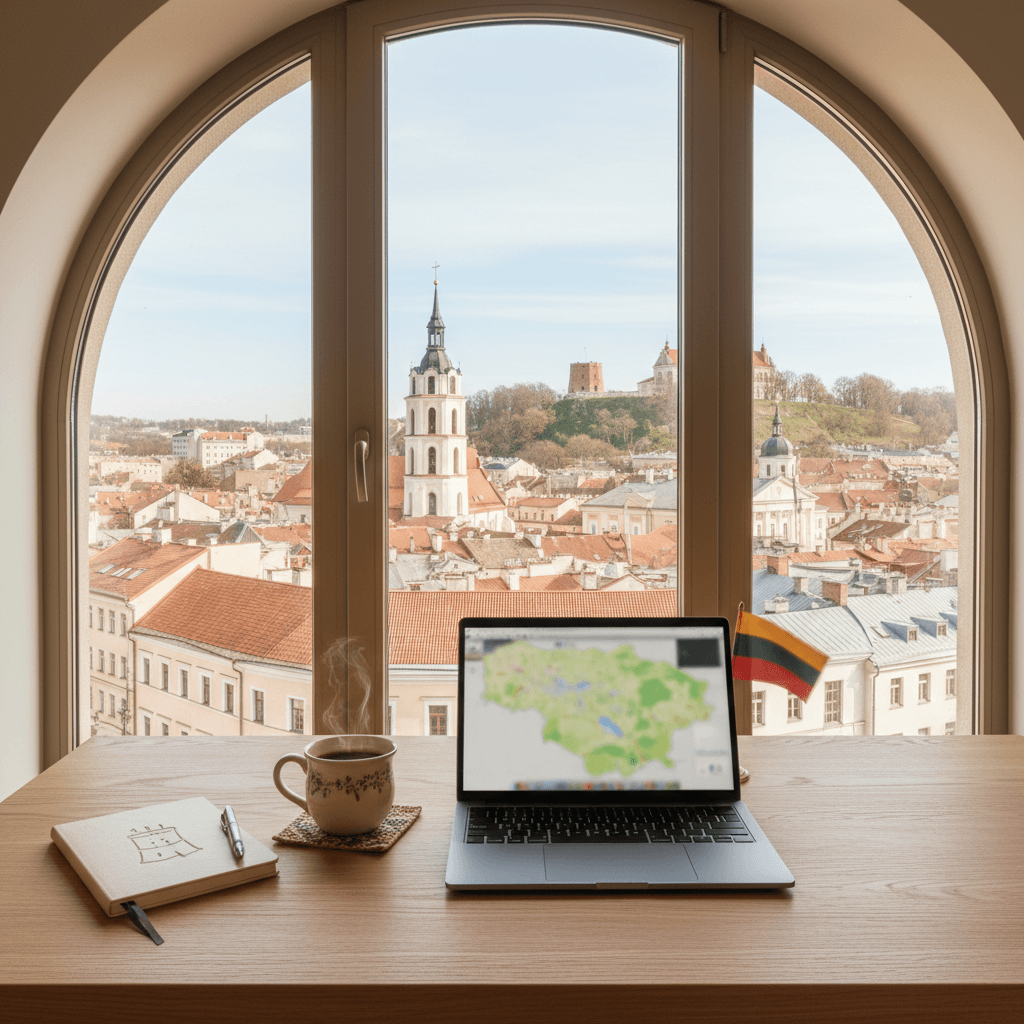
Lithuania
Complete Digital Nomad Guide

Policy Stability
Stamped Nomad ExclusiveHow likely visa and immigration policies are to remain unchanged
Quick Facts
Nomad Visa Cost
N/A
Income Requirement
$1,090/mo
Max Stay
12 months
Renewable
Yes
Cost of Living
$1,400/mo
Avg Internet
150 Mbps
Safety Score
7/10
Healthcare
High
Coworking
High
English Friendly
High
Time Zones
GMT+2, GMT+3
Entry Methods Available
Best For
The Essentials
Lithuania is a standout choice for nomads looking for a base in Northern Europe. Since it is part of the Schengen Area, your access depends heavily on your passport and how long you plan to stay. Most short-term visitors will arrive under the standard 90-day rule, while those looking to hunker down for a full year will need to look into the National Visa system.
The application process has moved entirely to the MIGRIS platform. While you start the paperwork online, you still need to show up in person for biometrics. If you see mentions of the old EPM portal in older blog posts, ignore them; that system was retired in late 2025.
Short-Term Stays (Schengen Visa Type C)
If you are from the USA, Canada, Australia, the UK, or New Zealand, you probably do not need a visa for a quick trip. You can stay for up to 90 days within any 180-day period. This is a rolling window, so you have to keep track of your days across the entire Schengen zone.
For those who do need a visa for tourism or short business trips, the Type C visa is the standard. It costs €80 for adults. You will need to show you have enough money to support yourself, which usually means at least €40 per day. You also need travel health insurance with a minimum coverage of €30,000.
Long-Term Stays (National Visa Type D)
If you want to stay in Lithuania for more than three months, the National Visa is your best bet. This allows you to live in the country for up to one year. It is popular for people involved in volunteer programs, professional training, or those working under specific international agreements like the Youth Mobility schemes available to citizens of Japan, Canada, and New Zealand.
- Cost: The application fee is €140.
- Proof of Funds: You must show you have at least one minimum monthly salary for every month you plan to stay.
- Cooldown Period: Once your one-year visa expires, you generally have to wait 180 days before you can apply for another one.
- Insurance: Standard €30,000 health coverage is required.
Business and Work Updates
Lithuania has high standards for business travelers. If you are coming for short-term business, the Type C visa covers you. For anything longer, such as setting up a company or managing a local branch, you will need the Type D visa. This requires a formal mediation letter submitted by the Lithuanian company through the MIGRIS system.
The government has recently tightened rules regarding work-related stays. There is a greater emphasis on Temporary Residence Permits (TRP) rather than just visas for long-term employment. If you are looking to get hired locally, be aware that there are now strict quotas on foreign workers, with the limit set at 24,830 for 2025. Additionally, VFS Global stopped handling certain national visa appointments in late 2025, so you should check the MIGRIS portal directly for the most current service points.
Important Reminders
- No Visa on Arrival: Lithuania does not offer any form of visa on arrival. You must have your paperwork sorted before you land.
- Biometrics: Even though the application starts online, you must visit a Migration Department office in Lithuania or an authorized external provider abroad to give your fingerprints.
- Extensions: Extending a tourist visa is nearly impossible. Unless you have a major humanitarian reason or a "force majeure" situation, you will be expected to leave once your 90 days are up.
For EU, EEA, and Swiss citizens, none of these hurdles apply. You have the right to move and work freely, though you should register your residence if you stay longer than three months.
Let’s clear up the biggest misconception right away: Lithuania doesn't actually have a dedicated "Digital Nomad Visa." While neighbors like Estonia and Latvia have rolled out specific remote work permits, Lithuania hasn't followed suit with a one-size-fits-all sticker for your passport. If you’re an EU citizen, this doesn't matter; you can hop on a flight to Vilnius tomorrow and stay as long as you like. For everyone else, you’ll need to get a bit more creative with the existing immigration categories.
The Reality for Non-EU Nomads
Most nomads visiting Lithuania rely on the standard 90-day Schengen rules for short stays. However, if you want to make the Baltic lifestyle a long-term reality, you’ll have to look at the National Visa (Type D) or a Temporary Residence Permit (TRP). Since there is no "remote work" category, you generally need a specific reason to be there, such as running a business, being a shareholder in a local company, or working for a Lithuanian employer.
The Migration Department, known locally as MIGRIS, handles all these applications. Everything starts online, but you’ll eventually need to visit a VFS Global office or a migration office in Lithuania to provide biometrics. It’s a digital-first system, which fits the country’s tech-forward reputation, but the legal requirements remain strict regarding local ties.
The Startup Visa Path
If you aren't just a freelancer but a founder, the Startup Visa is your best bet. This isn't for a standard consulting gig; it’s designed for innovative businesses in fields like IT, biotech, or electronics. You’ll need to pitch your idea to a committee for approval before you can even apply for the residence permit.
- Validity: 1 year, with the option to renew for another year.
- Investment: No initial capital is required to apply, but you must set up the company within 120 days of approval.
- Financial Proof: You must show you have enough funds to live and run your business for 1 year.
- Family: You can bring your family along from day one.
The National Visa (Type D)
This is the workhorse of Lithuanian immigration for stays up to one year. It’s often used by people who are in the process of setting up a business or waiting for a residence permit. To get this on business grounds, you usually need to be a manager or a shareholder in a Lithuanian company that meets specific equity requirements.
- Equity Requirement: At least €28,000 in company equity, with at least €14,000 of that being your own personal investment.
- Application Fee: Usually between €120 and €140.
- Health Insurance: Must cover at least €30,000 and be valid in all Schengen countries.
- Processing Time: Generally faster than a full residence permit, often decided within a few weeks.
Temporary Residence Permits (TRP)
For those looking to stay longer than a year, the TRP is the goal. These are typically issued for 2 years and are renewable. Most nomads qualify through "Self-Employment" or "Lawful Activities." This requires significant paperwork to prove your business is real and provides a benefit to the Lithuanian economy. You’ll need a clean criminal record from every country you’ve lived in for the last couple of years, which can be the most time-consuming part of the process.
Taxes and Residency
Lithuania is famous for its 15% flat tax on most personal income, which is one of the lowest in Europe. However, if you stay for more than 183 days in a calendar year, you officially become a tax resident. At that point, the government expects a cut of your global income. High earners should be aware that once you cross certain income thresholds, the rate can jump to 20% or 32%. It is a good idea to speak with a local tax consultant because the rules for "individual activity" (the Lithuanian version of freelancing) can be quite favorable if you set it up correctly.
Basic Requirements Checklist
- Income: You should show at least €460 per month in savings or income, though higher amounts are recommended to ensure approval.
- Accommodation: You must have a registered address in Lithuania; a hotel or a temporary Airbnb usually won't cut it for a residence permit.
- Health Insurance: A private policy is mandatory for all non-EU applicants.
- Mediation: Most visas require a mediation letter from a Lithuanian person or company through the MIGRIS system.
The 90-Day Rule and Visa-Free Entry
Lithuania is a full member of the Schengen Area, which means your entry requirements depend largely on the passport you carry. If you hold a passport from the USA, Canada, Australia, the UK, or Japan, you fall into the visa-exempt category. You can land in Vilnius or Kaunas and stay for up to 90 days within any 180-day period without any prior paperwork.
Keep a close eye on the calendar. This isn't a simple three-month allowance; it is a rolling window. If you spend 90 days in Lithuania (or any combination of Schengen countries), you must leave the entire zone for another 90 days before you can return. Border runs do not work here. Crossing into a neighboring Schengen state like Latvia won't reset your clock, and even heading to a non-Schengen neighbor won't help if you've already hit your 90-day limit.
Starting in mid-2025, visa-exempt travelers will need to apply for an ETIAS authorization before arrival. This is a quick online check that costs €7 and remains valid for 3 years. It is not a visa, but you won't be allowed to board your flight without it once the system is fully live.
The Schengen Visa (Type C)
If your home country does not have a visa-waiver agreement with the EU, you will need to apply for a Schengen Type C visa before you travel. Lithuania does not offer visas on arrival at the airport or land borders. You must submit your application through a VFS Global center or a Lithuanian embassy in your home region.
The standard fee for this visa is €80, though you should expect to pay an additional €30 to €40 in service fees to the processing center. You will need to provide proof of accommodation, a return flight itinerary, and travel insurance with a minimum coverage of €30,000. Processing typically takes between 15 and 45 days, so plan your departure accordingly.
Long-Stay Options (National Visa D)
For nomads who want to call Vilnius home for more than three months, the National Visa (Type D) is the primary path. This is a long-stay visa that allows you to remain in Lithuania for up to one year. Unlike the short-term tourist visa, the application for a Type D visa is handled through the MIGRIS electronic system.
You will register on the portal, upload your documents, and then book an in-person appointment to submit biometrics. The cost for a National Visa is €140. This is a popular choice for those coming to Lithuania for work, research, or specific long-term projects that exceed the standard tourist window.
Visa Costs at a Glance
- ETIAS (Visa-Free Nationals): €7
- Schengen Type C Visa: €80 (plus service fees)
- National Type D Visa: €140
- Minimum Insurance Coverage: €30,000
Overstays and Penalties
Lithuanian authorities take the 90-day rule seriously. Overstaying your visa is considered an administrative violation and can lead to heavy fines, sometimes reaching up to €2,180. Beyond the financial hit, an overstay usually results in a formal deportation order and a Schengen-wide re-entry ban.
If you find yourself unable to leave due to a legitimate emergency, such as a serious illness or a force majeure event, you must contact the Migration Department immediately. They can grant short extensions in extreme circumstances, but "I wanted to see more of the Curonian Spit" will not qualify as a valid reason to stay past your expiration date.
The Residency Landscape
Lithuania is a bit of a straight shooter when it comes to residency. Unlike some of its southern European neighbors, it doesn't offer a flashy digital nomad visa or a simple path for retirees to buy their way in with a beach house. Instead, the system favors people who are actively contributing to the economy through work, business, or innovation. If you want to call Vilnius or Kaunas home for more than ninety days, you will be dealing with the MIGRIS system, which is the country's digital gateway for all residence permits.
Most nomads and long-term travelers start with a Temporary Residence Permit (TRP). These are usually issued for one to two years and can be renewed as long as you still meet the original criteria. You will need to show you have health insurance, a clean criminal record, and enough money to support yourself, which generally means proving you earn at least one minimum monthly salary (roughly €1,000) for the duration of your stay.
Business and Entrepreneurial Paths
Since there isn't a dedicated freelancer visa, self-employed nomads usually go the business route. This isn't just about filling out a form; you have to prove your business is real and active. To qualify for a business-based TRP, your company must have been running for at least six months before you apply. You will need to invest at least €28,000 in equity and own at least one-third of the shares.
The catch for many is the hiring requirement. To maintain this permit, you must employ at least one Lithuanian or EU citizen and pay them a salary that is at least twice the national average. For those in the tech space, the Start-up Visa is a much smoother path. If your business is considered innovative, you can bypass the heavy capital requirements, though you will need approval from Enterprise Lithuania and must set up your company within 120 days of arriving.
Options for Retirees
Lithuania doesn't have a specific "Golden Years" visa category. If you are looking to retire here, you will likely apply under the general TRP for people with sufficient means of subsistence. You must be of legal retirement age according to Lithuanian law and prove a stable passive income, such as a pension, that meets the minimum subsistence levels. It is a functional path, but it lacks the tax perks or streamlined processing found in dedicated retirement programs elsewhere.
The Road to Permanent Residency
If you fall in love with the Baltic lifestyle and decide to stay for the long haul, Permanent Residency (PRP) is the goal. This gives you almost all the same rights as a citizen and makes moving around the rest of the EU much easier. The requirements are strict but transparent:
- Five years of continuous legal residence on a TRP.
- Physical presence in the country, meaning you haven't been gone for more than six consecutive months or ten months total over those five years.
- Passing a basic Lithuanian language exam and a test on the Lithuanian Constitution.
- Proof of stable income and a registered place of residence.
The language and constitution tests are waived for those over the age of 65 or individuals with specific disabilities. Once you submit your application through the MIGRIS portal, expect to wait between one and four months for approval. Standard government fees for a TRP range from €120 to €300, while a PRP costs about €160 for standard processing or €320 if you are in a rush.
Application Logistics
While the initial application is handled online, you can't skip the face-to-face meeting. You will need to visit a Migration Department office in Vilnius, Kaunas, or Klaipėda to submit your biometrics and original documents. It is a highly organized process, but appointments fill up fast, so it is smart to book your slot several weeks in advance. If you are already in the country on a visa-free stay or a Schengen visa, make sure you start the MIGRIS process well before your time runs out to avoid any legal gaps in your stay.
The Cost of Living in Lithuania: 2025-2026 Breakdown
Lithuania remains one of the best-kept secrets for nomads looking to stretch their Euro without sacrificing a high-quality lifestyle. While prices have crept up in recent years, it still offers a significant discount compared to Western European hubs like Berlin or Amsterdam. You can expect a modern, tech-forward environment where a €1,300 to €1,800 monthly budget provides a very comfortable life in the heart of the action.
Your biggest variable will be your choice of city. Vilnius, the capital, carries a price premium for its vibrant social scene and density of coworking spaces. Kaunas and Klaipėda offer a more relaxed pace and can save you roughly 15% to 30% on your fixed monthly costs, particularly when it comes to housing.
Monthly Rent in Nomad Neighborhoods
Housing is your primary expense, and the market for furnished one-bedroom apartments is competitive but fair. In Vilnius, nomads typically gravitate toward Senamiestis (Old Town) or the trendy Naujamiestis district. A stylish, move-in-ready 1BR in these areas averages €670, though you can find studios starting around €550 if you book in advance. Luxury lofts or premium apartments in Šnipiškės can easily climb to €1,100.
If you head to Kaunas or the coastal city of Klaipėda, your money goes much further. Central apartments in these cities generally range from €400 to €550. Even at the premium end, it is rare to see a standard one-bedroom exceed €750 unless it is a high-end waterfront property in Klaipėda.
- Budget: €350 to €550 (Outer districts or smaller studios)
- Comfortable: €550 to €750 (Central, modern furnished 1BR)
- Premium: €750 to €1,100 (High-end finishes in prime locations)
Food and Dining
Grocery shopping is affordable if you stick to local chains like Maxima or Iki. A monthly grocery bill for one person typically lands between €200 and €300. This covers a mix of fresh local produce, dairy, and pantry staples. If you prefer imported specialty goods or organic markets, plan for closer to €400.
Eating out is where the costs vary. A standard business lunch in Vilnius costs between €10 and €15, while a nice dinner for one with a drink will run you €20 to €35. Kaunas and Klaipėda are slightly cheaper, with plenty of local spots offering hearty meals for under €12. Overall, a comfortable lifestyle with a mix of home cooking and frequent dining out requires a budget of about €300 to €450 per month.
Coworking and Connectivity
Lithuania is famous for its internet speeds, but most nomads still prefer the community of a dedicated workspace. In Vilnius, top-tier spots like Workland or Rise Vilnius charge between €150 and €300 for a hot desk or dedicated seat. Kaunas and Klaipėda have excellent options like PIXEL HUB and Light House, where monthly memberships are more accessible, ranging from €100 to €250.
- Budget: €100 to €150 (Basic hot desk or part-time pass)
- Comfortable: €150 to €250 (Full-time flex desk with 24/7 access)
- Premium: €250 to €400 (Dedicated desk or private office pod)
Transport and Health
Public transport is efficient and cheap. A monthly pass in any of the major cities costs between €28 and €38. Most nomads find they can walk to most places within the central districts, using rideshare apps for longer trips or late nights, which usually cost €6 to €10 per ride. For health insurance, private international plans for nomads typically range from €80 to €150 per month, depending on your age and coverage level.
City Comparison (Comfortable Tier)
Vilnius
- Rent: €600 to €800
- Food: €250 to €350
- Transport: €30 to €40
- Coworking: €150 to €300
- Insurance: €80 to €150
- Total: €1,110 to €1,640
Kaunas
- Rent: €450 to €600
- Food: €200 to €300
- Transport: €28 to €30
- Coworking: €120 to €250
- Insurance: €80 to €150
- Total: €878 to €1,330
Klaipėda
- Rent: €450 to €600
- Food: €200 to €300
- Transport: €30
- Coworking: €120 to €250
- Insurance: €80 to €150
- Total: €880 to €1,330
Vilnius: The Baltic Tech Capital
Vilnius is the heavy hitter of the Lithuanian nomad scene. It balances a UNESCO-listed Old Town with a high-energy tech ecosystem that makes networking feel effortless. If you want to be where the action is, this is your spot.
The city is famous for its "Nightlife Triangle," a dense collection of bars like Alchemikas and Piano Man Bar where the craft cocktail scene thrives. For those who work better with caffeine, you will find over 30 specialty coffee roasters scattered throughout the city. It is roughly 40% cheaper than Berlin, making it a high-value alternative to Western European hubs.
- Monthly Cost: $780 to $1,250
- Internet Speed: 48 Mbps average
- Coworking: Top-tier spaces like Talent Garden (200+ members), Wolf Space, and Vilnius Tech Park.
- Community: Large, international, and very active.
The only real downside is the price tag relative to the rest of the country. While affordable by global standards, Vilnius is the most expensive city in Lithuania for housing. It can also get quite busy during the summer months when tourism peaks.
Kaunas: The Value King
If you find Vilnius a bit too frantic, Kaunas is the perfect middle ground. As the second-largest city, it offers a more relaxed pace while maintaining a surprisingly robust infrastructure for remote workers. The city sits at the confluence of two rivers and features a stunning pedestrian boulevard that stretches across the center.
Kaunas is the best choice for long-term stays if you want to keep your overhead low. You get the same high-speed internet found in the capital but at a fraction of the rent. The nomad community here is growing, supported by creative hubs like Pixel Hub, which blends art and business in a way that feels unique to the city's character.
- Monthly Cost: $560 to $880
- Internet Speed: 48 Mbps
- Vibe: Historical, green, and incredibly safe.
- Nightlife: Moderate but quality, with spots like LA45 and DejaVu keeping the weekends lively.
The community is smaller than in Vilnius, so you might have to put in a little more effort to find your tribe. However, the local culture score is high, and the nature access is unbeatable for weekend hiking or cycling.
Klaipėda: The Maritime Alternative
Klaipėda offers a completely different flavor of Lithuanian life. This is a port city with a distinct German architectural influence and a direct line to the Baltic Sea. It is ideal for nomads who need to be near the water to feel inspired.
The Lighthouse Hub is the go-to spot for work, offering a professional environment that offsets the city's vacation-town energy. While the costs are higher here due to its status as a coastal destination, you gain access to maritime festivals and a much slower, salt-air pace of life.
- Monthly Cost: Approximately $2,045
- Internet Speed: 50 Mbps
- Safety: Exceptionally high, even by Lithuanian standards.
- Best for: Beach lovers and those seeking a maritime atmosphere.
Palanga: The Seasonal Retreat
Palanga is primarily a resort town. It is the most expensive option on the list and arguably the least "nomad-friendly" in terms of community. There are very few dedicated coworking spaces, and the town effectively shuts down or slows to a crawl outside of the summer season.
However, if you have a high budget and want a month of deep work in a quiet, seaside environment, Palanga delivers. The air is clean, the pine forests are beautiful, and the crime rate is nearly non-existent. Just do not expect to find a bustling tech meetup at the local bar.
- Monthly Cost: $2,180
- Internet Speed: 50 Mbps
- Community: Minimal to non-existent.
- Vibe: Pure relaxation and seaside walks.
Connectivity and Safety Overview
Lithuania consistently ranks in the top 10 globally for public WiFi speeds. You can expect to pay between €10 and €20 monthly for a home fiber connection, and mobile data coverage from providers like Telia is seamless across all four cities. Whether you are in a basement cafe in Vilnius or a beach hut in Palanga, your Zoom calls will hold up.
Safety is a non-issue for most. It is one of the safest countries in Europe. While you should keep an eye on your bag in crowded areas like the Vilnius train station, violent crime is rare. Women generally feel comfortable walking alone at night in any of these major hubs.
Lightning-Fast Connectivity
Lithuania is a quiet powerhouse when it comes to digital infrastructure. It consistently ranks among the top global performers for public WiFi speeds, and you will feel that efficiency the moment you open your laptop. Fixed broadband speeds typically hover around 120 Mbps, though premium providers like Telia often push those numbers north of 214 Mbps. With latency staying low between 20 and 50 ms, you can handle back-to-back video calls or heavy file uploads without the dreaded lag.
The backbone of this performance is a robust fiber-optic network. Fiber covers over 60% of residential premises, leading much of Europe in terms of penetration. Major providers like Teo and Cgates have blanketed the country with fiber-to-the-premises technology, meaning even modest Airbnbs or local apartments usually offer professional-grade internet. The government is currently pushing for 100 Mbps universal access for the entire population by 2027, so the network is only getting stronger.
Top Coworking Hubs
The coworking scene is concentrated in Vilnius and Kaunas, offering a mix of corporate chic and creative industrial spaces. These hubs are more than just desks; they serve as the primary social anchors for the local nomad community.
- Workland: They operate multiple locations in central Vilnius and are known for a high-end, professional atmosphere. It is the go-to for nomads who need a polished environment for client meetings.
- Talent Garden Vilnius: Located in the historic Old Town, this tech-focused space is ideal for networking with local startups and developers.
- Pixel Hub: Based in Kaunas, this spot offers 24/7 access and a more laid-back, community-driven vibe that appeals to freelancers and creatives.
Membership and Desk Costs
Pricing for workspace is reasonable compared to Western European capitals, though you should remember that most listed prices exclude the 21% VAT. If you are staying for a month or more, a flexible hot desk is your most cost-effective bet.
- Hot Desk Memberships: Expect to pay between €120 and €220 per month. Pixel Hub sits at the lower end at €119, while premium spots like Workland or Talent Garden range from €209 to €220.
- Dedicated Desks: If you need a permanent setup with a monitor, monthly rates jump to €200 to €300.
- Day Passes: For those just passing through, daily rates typically fall between €15 and €29.
The Cafe Office Culture
If you prefer the hum of a coffee shop, you are in luck. Lithuania holds a top global spot for public WiFi quality. In Vilnius, chains like Caffeine Roasters are ubiquitous and very nomad-friendly, offering reliable speeds that often exceed 100 Mbps. Most independent cafes have a "laptop welcome" policy during weekdays, though they may ask you to clear out during busy weekend brunch hours. You will rarely find a cafe that doesn't offer free, high-speed access as a standard amenity.
Mobile Data and eSIMs
Staying connected on the move is remarkably cheap. Local operators like Telia, Tele2, and Bite provide 5G coverage across nearly all populated areas. If you want to hit the ground running without visiting a physical store, several eSIM providers offer competitive prepaid plans.
- Budget eSIMs: Providers like Airalo and Nomad offer plans starting at $4.50 for 1GB.
- Bulk Data: Larger packages ranging from 10GB to 20GB are available for 7 to 30 days.
- Local SIMs: If you need unlimited data, a local prepaid SIM from a convenience store is often the cheapest route, providing 95-99% national coverage.
The Healthcare Landscape
Lithuania’s healthcare system is a tale of two worlds. On one hand, you have the state-funded Privalomasis Sveikatos Draudimas (PSD), which provides low-cost or free basic care to residents. On the other, a booming private sector offers the kind of speed and modern amenities most digital nomads expect. While the public system is reliable for emergencies, the bureaucratic hurdles and long wait times for specialists can be a headache if you’re only in the country for a short stint.
Most expats lean heavily on private clinics. The facilities are top-tier, the equipment is cutting-edge, and almost every doctor speaks fluent English. In the public sector, especially outside Vilnius or Kaunas, you might find a bit of a language barrier with older staff. If you want an appointment today rather than three weeks from now, private is the way to go.
Top Hospitals for Expats
If you need serious medical attention, there are two names you should know. Kardiolita Hospital operates in Vilnius and Kaunas; it is private, JCI-accredited, and feels more like a high-end hotel than a clinic. They are specialists in orthopedics and cardiology and are very comfortable dealing with international insurance providers.
For complex issues like oncology or major trauma, Vilnius University Hospital Santaros Klinikos is the heavy hitter. It is a public university facility with some of the best surgeons in the region. While you generally need a referral for non-emergency care here, their emergency department is world-class.
Insurance Requirements
Your insurance strategy depends on your residency status and where you’re from. EU citizens can get by with an EHIC card for public services, but non-EU nomads will need a solid private policy. If you stay longer than 90 days and become a resident, you’ll likely need to register for the PSD and make monthly contributions.
To skip the public queues, many nomads opt for international providers. These plans usually start around $50-60 per month and cover private consultations and global emergencies. Common choices include:
- Cigna Global: Great for flexible, modular plans.
- SafetyWing or PassportCard: Popular with the nomad crowd for ease of use.
- Allianz Care or Bupa: Premium options with extensive hospital networks.
What You’ll Pay Out-of-Pocket
Even if you pay entirely out-of-pocket at a private clinic, prices in Lithuania are a bargain compared to the US or UK. It is a common destination for medical tourism because the quality-to-price ratio is so high. Here is a look at typical private costs:
- Family doctor consultation: €40 to €65
- Dentist check-up: €25 to €50
- Professional dental cleaning: €95
- ECG test: €15
- Knee surgery: Approximately €3,500
- Gastric sleeve surgery: €5,450 to €6,150
Pharmacies and Prescriptions
Pharmacies, known locally as vaistinės, are everywhere. Major chains like BENU and Gintarinė are easy to find, and many in the larger cities stay open 24/7. You can find most basic over-the-counter meds without a script.
Lithuania is quite tech-forward with prescriptions. If you are from another EU country like Estonia or Finland, your e-prescriptions often work here automatically with just your ID. If you’re coming from outside the EU, you’ll usually need to see a local doctor to get a Lithuanian script for any long-term medications.
Emergencies
In a crisis, dial 112. This is the universal emergency number for Lithuania, and the operators generally speak English. Ambulance response times in urban areas are impressive, usually arriving within 15 minutes. Emergency stabilizing care is free for everyone, regardless of insurance status, in life-threatening situations. However, once you are stable, the hospital will ask for insurance details or a payment method, so keep your digital policy card handy.
The Currency Landscape
Lithuania has been part of the Eurozone since 2015, so you will be dealing exclusively in Euros (EUR). The country is highly digitized; you can pay for a single espresso or a bus ticket with a contactless card or phone almost anywhere in Vilnius or Kaunas. While carrying a small amount of cash is helpful for remote forest cabins or certain traditional markets, you can easily survive a month here without ever touching a physical banknote.
Traditional vs. Digital Banking
Opening an account at a traditional Lithuanian "brick and mortar" bank like Swedbank, SEB, or Luminor is possible but often a headache for digital nomads. These institutions are cautious with non-residents. They typically require a face-to-face meeting and solid proof of your connection to the country, such as a long-term rental agreement, a local employment contract, or a residence permit.
Be prepared for the "non-resident tax." Some traditional banks charge application processing fees as high as €400 for foreigners, and they might spend weeks scrutinizing your business plan or source of wealth. If you are just passing through for a few months, this route usually is not worth the stress.
The smarter move is leveraging Lithuania's status as a global fintech hub. Revolut actually holds a full banking license here through Revolut Bank UAB. When you sign up, you often get a local LT IBAN, which makes paying local utilities or receiving payments within the EU seamless. Paysera is another local favorite that offers easy online onboarding for non-residents and is widely used for local e-commerce.
ATM Access and Fees
Finding an ATM is easy in any urban center. The best part? Most major Lithuanian bank ATMs, including those owned by SEB and Swedbank, do not charge local access fees for foreign cards. You will likely only pay whatever fee your home bank charges.
- Avoid Airport ATMs: These often have the worst exchange rates and sneaky markups.
- Decline DCC: If an ATM asks if you want to be charged in your "home currency," always select No. Let your own bank handle the conversion to get the mid-market rate.
- Daily Limits: Standard ATMs usually allow withdrawals up to €500 or €1,000 per day depending on your card provider.
Moving Money Efficiently
If you need to move large sums for a security deposit or a co-working membership, avoid traditional wire transfers. They are slow and the hidden exchange rate markups will eat your budget. Wise is the gold standard here for speed; transfers often arrive within minutes or a single business day. For those moving larger amounts, services like Currencies Direct or Remitly offer competitive structures with low flat fees.
Crypto and Digital Assets
Lithuania is one of the more regulated environments for crypto in Europe. The Bank of Lithuania keeps a close eye on Virtual Asset Service Providers (VASPs). Under the upcoming MiCA regulations, any exchange or custody service operating here must have significant capital reserves and local management.
For you as an individual, this means the environment is safe but strict. You can freely hold and trade crypto, but ensure you are using a licensed platform. Expect rigorous KYC (Know Your Customer) checks if you try to off-ramp your crypto gains into a Lithuanian bank account; the banks here are very diligent about anti-money laundering protocols.
Banking Summary for Nomads
- Best for Daily Use: Revolut or Wise. Both are fully compliant with SEPA and widely accepted.
- Requirements for Local Accounts: Valid passport, residence permit, and a completed KYC questionnaire.
- Typical Costs: €0 to €10 monthly for fintech accounts; up to €400 one-time fee for non-resident traditional accounts.
- Transfer Speed: Standard SEPA transfers are usually instant or 24 hours.
The Logistics of Bringing the Crew
Moving your family to Lithuania is a multi-step process, but the path for dependents is well-defined. You can secure family reunification visas for your spouse and children under 18. Generally, if you hold a temporary residence permit as a highly skilled worker or researcher, your family can apply immediately. Otherwise, most residents become eligible to sponsor family members after 2 years of legal stay.
The Migration Department typically processes these applications within 2 to 4 months. You will need to provide birth and marriage certificates, proof of health insurance, and evidence that you have the financial means to support everyone. Once approved, their permits usually match your own duration, typically lasting between 1 and 2 years before renewal.
Schooling and Education Costs
If you are settling in Vilnius, you will find several high-caliber international schools that cater to the expat community. These institutions follow international curricula and offer a familiar environment for kids transitioning from abroad. Keep in mind that many schools offer sibling discounts or installment plans to help manage the investment.
- American International School of Vilnius: Expect to pay €8,382 for Pre-K, while grades K-5 jump to €18,188 per year.
- Vilnius International School: Annual tuition reaches up to €15,000.
- French International High School: A more mid-range option at €5,700 per year, plus an €800 registration fee.
Beyond the base tuition, set aside €150 to €300 annually for books and roughly €100 to €500 for extracurricular activities. If you need after-school care, daily rates usually range from €5 to €15.
Childcare and Early Education
For younger children, the private kindergarten market is robust. In Vilnius, the average monthly cost is €541, though prices can swing from €170 to €1,600 depending on the facilities. Many families take advantage of municipal subsidies, which range from €100 to €250 per child. These subsidies can bring the effective cost of public options down to just €50 to €500 per month to cover meals and basic materials.
Keeping the Kids Healthy
Healthcare is a major win for expat families in Lithuania. If you have a residence permit and pay into the Compulsory Health Insurance (CHI) system, your children under 18 receive free public healthcare. This includes primary care, specialist visits, and hospital stays. The Vilnius University Children Hospital is a standout facility, providing English-speaking services in specialized fields like surgery and oncology.
While the public system is high-quality, many nomads opt for private clinics for routine check-ups. These clinics often provide faster service and guaranteed English-speaking staff, though you will pay an additional fee for the convenience.
Safety and Quality of Life
Lithuania is remarkably safe and offers a "free-range" childhood that has become rare in many Western countries. It is common to see children playing unsupervised in parks or walking to school alone. Crime rates are low and comparable to the United States, with a steady decrease in juvenile crime over the last decade.
When choosing a home base, three cities stand out for families:
- Vilnius: The clear winner for variety, featuring the best international schools and family-centric spots like Bernardinai Garden.
- Kaunas: A great middle ground with a charming Old Town and plenty of interactive museums for kids.
- Klaipėda: Ideal for families who want a coastal lifestyle, offering sports schools for swimming and basketball alongside easy beach access.
The biggest safety concern for parents here is actually road safety and winter injury prevention. As long as you keep an eye on traffic and bundle up for the Baltic winters, the environment is exceptionally welcoming for a growing family.
Staying Safe on the Baltic Coast
Lithuania is consistently ranked as one of the safest destinations in Europe. With a crime score of 2 out of 5 on the Global Peace Index, it feels significantly more relaxed than many major hubs in Western Europe. You can generally walk through Vilnius or Kaunas at night without a second thought, and public transport is reliable and secure.
That said, keep your wits about you in specific neighborhoods. In Vilnius, the areas around the train station and districts like Snipiskes or Naujininkai see occasional pickpocketing. The most common headaches for nomads aren't violent crimes, but opportunistic scams. Taxi drivers are notorious for quoting prices 10 times the standard rate to anyone with a foreign accent. Stick to ride-sharing apps like Bolt or Uber to avoid the "tourist tax."
Be wary of aggressive beggars in the Old Towns of Vilnius and Klaipėda; many operate as part of organized groups rather than out of genuine need. In the digital realm, stay alert for phishing texts mimicking the Post Office and always cover your PIN at ATMs. If you are heading out for drinks, keep an eye on your tab in tourist-heavy bars to ensure no "extra" charges have been tacked on.
Social Norms and Etiquette
Lithuanians might seem a bit stoic when you first arrive. They value formality and personal space, so a firm handshake and direct eye contact are the standard way to say hello. Use professional titles and surnames until you are invited to move to a first-name basis. Small talk usually revolves around the weather or cultural events; jumping into deep personal questions too early can make locals feel uncomfortable.
Punctuality is a big deal here. Arriving late to a meeting or a dinner date is seen as a sign of disrespect. If you are invited to a local's home, remember these specific quirks:
- The Flower Rule: Always give an odd number of flowers. Even numbers are strictly for funerals.
- Second Helpings: Refusing a second serving of food can be taken as a slight against the host's hospitality.
- Eye Contact: When someone raises a glass for a toast, look them in the eye.
- Language Levels: The language uses formal (Jūs) and informal (Tu) pronouns. Stick to the formal version until you've built a solid rapport.
LGBTQ+ Climate
The experience for LGBTQ+ nomads is a tale of two environments. Vilnius is the progressive heart of the country, featuring a growing number of inclusive spaces and hosting the Baltic Pride festival. Outside the capital and among older generations, attitudes remain conservative. A 2023 survey showed that only 22% of the population supports same-sex marriage, one of the lowest rates in the EU.
Discretion is common among the local community, with only about 16% of LGBTQ+ Lithuanians being open about their identity in public. While you are unlikely to face direct confrontation in urban centers, public displays of affection may still draw unwanted stares in rural areas.
Breaking the Language Barrier
English is widely spoken by the under-40 crowd and the tech community, but it drops off quickly once you head into the countryside. Learning a few basics like "Labas" (Hello) and "Ačiū" (Thank you) goes a long way in softening the initial reserve of shopkeepers and neighbors.
For those staying long-term, mastering the language is a shortcut to better job opportunities and a deeper social life. You can find language exchanges through platforms like Tandem or join local meetups in Vilnius. While the grammar is notoriously difficult, making the effort shows a level of respect that locals deeply appreciate.
Finding Your Tribe
Integration is surprisingly easy if you lean into the tech scene. Vilnius is a legitimate startup hub, and the Vilnius Tech Park is a great place to start networking. The expat community is tight-knit and active, organizing everything from English-language stand-up comedy to weekend hiking trips.
- Coliving Spaces: These are the best way to land on your feet, offering built-in social calendars and shared workspaces.
- Digital Nomads Lithuania: Join this group on social media for real-time advice on visas and local events.
- Local Markets: Skip the big supermarkets occasionally and shop at local stalls to practice your Lithuanian and meet residents.
- News Sources: Follow LRT English to stay informed on local current events, which provides great fodder for conversation.
The 183-Day Threshold
Lithuania is a welcoming hub for remote workers, but the tax office keeps a close eye on the calendar. You become a tax resident if you spend 183 days or more in the country during a single calendar year. If you are planning a longer stay, be aware of the secondary rule: spending 280 days over two consecutive years also triggers residency, provided you stayed at least 90 days in one of those years.
Residency means the government views your worldwide income as taxable in Lithuania. If you stay below these limits, you are generally only taxed on income sourced directly from Lithuanian territory, such as local rental properties or local employment. For those on the one-year digital nomad visa, crossing that 183-day mark is the primary trigger for full tax integration.
Income Tax and Progressivity
The tax system is shifting toward a more progressive structure. Most income, including salaries and remote work earnings, starts at a base rate of 20%. This rate applies to income up to roughly €83,000. If your earnings climb higher, the rate jumps to 25%, and eventually hits 32% for amounts exceeding approximately €138,000.
Dividends offer a bit of a break with a flat 15% rate. For nomads running their own show, the "Individual Activity" certificate is the most popular route. This setup allows for a reduced effective tax rate between 5% and 20% on profits up to €42,500. It is a flexible option that lets you deduct a flat 30% of your income as expenses without needing to track every single coffee shop receipt.
Crypto Gains and Digital Assets
Lithuania is quite advanced regarding digital assets, but they treat crypto gains as taxable income. You get a small pass if your annual net gains stay below €2,500; anything under that threshold is tax-free. Once you cross it, you will typically pay 15% on the profit. If your total annual income is exceptionally high, these gains might be aggregated and taxed at the higher progressive tiers.
- Mining: Only taxed at the moment you sell the assets, not when you earn them.
- Exchanges: Generally exempt from VAT as they are classified as financial services.
- Record Keeping: The tax authorities expect you to keep your transaction history for 10 years.
Double Taxation Protection
You won't necessarily be taxed twice on the same Euro. Lithuania has signed treaties with about 80 countries, including the US, UK, Canada, and most of the EU. These agreements allow you to claim credits for taxes already paid abroad. If both Lithuania and your home country claim you as a resident, "tie-breaker" rules in these treaties usually look at where you have a permanent home or where your life is more centered to decide who gets the tax revenue.
Filing Your Paperwork
The tax year follows the calendar, running from January 1 to December 31. You need to file your annual return by May 1 of the following year. Everything is handled through the EDS electronic system, which you can access via local e-banking or a mobile ID. While the interface is efficient, self-employed nomads should consider filing monthly or quarterly to keep their social security contributions (Sodra) up to date and avoid a large bill in the spring.
Business Structures for Nomads
Since there is no specific "nomad tax holiday," choosing the right legal structure is your best bet for optimization. Most remote workers choose between two paths:
- Individual Activity: Best for solo freelancers. It offers lower rates for the first €42,500 of profit and simplified bookkeeping.
- Small Partnership (Mažoji Bendrija): Good for small teams or those with higher overhead. It allows for more complex profit distribution but comes with more rigorous accounting needs.
- Standard Employment: Typically the most expensive route due to high social security contributions from both the employer and employee.
Stay Connected: SIMs and eSIMs
Lithuania is a global leader in internet speeds, and getting online is painless. For most nomads, an eSIM is the way to go. You can snag a 1GB data plan for as little as $4.50 for 7 days and have it activated before your plane even touches the tarmac in Vilnius. It saves you the hassle of hunting for a physical card while juggling your luggage.
If your phone doesn't support eSIMs, don't sweat it. You can pick up a traditional SIM at any airport kiosk or mobile operator store. Look for providers like Pildyk, Labas, or Ežys. They offer cheap prepaid plans with plenty of data, often for less than €10 a month.
Getting Around
The transport scene here is dominated by Bolt. It is your one-stop shop for ride-hailing, electric scooters, and even car rentals through Bolt Drive. You can book rides up to 90 days in advance, which is handy for early morning airport runs. Uber exists here too, but you will find far more drivers on the Bolt platform.
- Trafi: This is the gold standard for public transport. It gives you real-time schedules for buses and trains across the country.
- CityBee: Perfect for when you need a car for a few hours to haul groceries or take a day trip without the commitment of a traditional rental.
- Cycling: Vilnius has been pouring money into bike lanes. It is often faster to grab a scooter or bike than to sit in rush hour traffic.
Where to Hang Your Hat
Vilnius is a city of distinct pockets, each with its own personality. Avoid the temptation to stay strictly in the Old Town; it is beautiful but can feel like a tourist bubble.
Užupis
This is the bohemian heart of the city, a self-proclaimed "republic" with its own constitution. It is ideal for creatives. Expect to pay between €500 and €700 per month for a decent spot.
Naujamiestis
This is the "New Town," though it is full of characterful old buildings. It is the hub for startups and nightlife. Rents hover around €500 to €700, and you will be within walking distance of the best coworking spaces.
Žvėrynas
If you want quiet streets and wooden houses, this is it. It is tucked next to Vingis Park, the city's largest green space. Prices are slightly lower, usually €400 to €600.
Finding a Place
For short stays, Airbnb and Booking.com remain the reliable giants. However, if you want a built-in social life, check out Mapmelon. They specialize in coliving spaces that bundle your private room, coworking desk, and gym access into one monthly price. It is a shortcut to finding your community.
Food and Groceries
When you don't feel like cooking, Wolt is the go-to app for restaurant delivery. For groceries, download Barbora. They deliver fresh produce and household staples right to your door, saving you from lugging heavy bags through the snow. If you need something specific like pharmaceuticals or quick snacks, Ežys has a very fast turnaround time.
Language and Local Life
While most young people in the cities speak excellent English, you might hit a wall with older generations who primarily speak Lithuanian or Russian. Google Translate is your best friend for reading menus or signs. If you want to make local friends, try Tandem to find a language exchange partner. Even learning a few basic phrases like "Ačiū" (thank you) goes a long way with the locals.
Important Paperwork and Safety
The universal emergency number is 112. It is free, works without a SIM card, and operators usually speak English, Polish, or Russian. The average response time is just 5 seconds.
Regarding your stay, EU citizens can roam free for 90 days but need to look into temporary residency after that. For non-EU nomads, Lithuania offers a "startup visa" which provides 2 years of residency and can be extended to 5 years. It is one of the more accessible paths into the EU for tech-focused remote workers.
Pro Tips for Success
- Pack for the cold: Winter is no joke. Temperatures can drop to -15°C. Invest in a proper coat and thermal layers.
- Find your tribe: Join the "Digital Nomads in Lithuania" Facebook group. It is the best place for networking and finding local meetups.
- Work spots: Beyond the big coworking names like Workland and Talent Garden, check out the second floor of the IKEA in the Panorama mall. It is a free, quiet place to work with solid Wi-Fi.
More Guides from Europe
Stay Updated on Lithuania
Get notified about visa changes, policy updates, and new information for digital nomads in Lithuania.