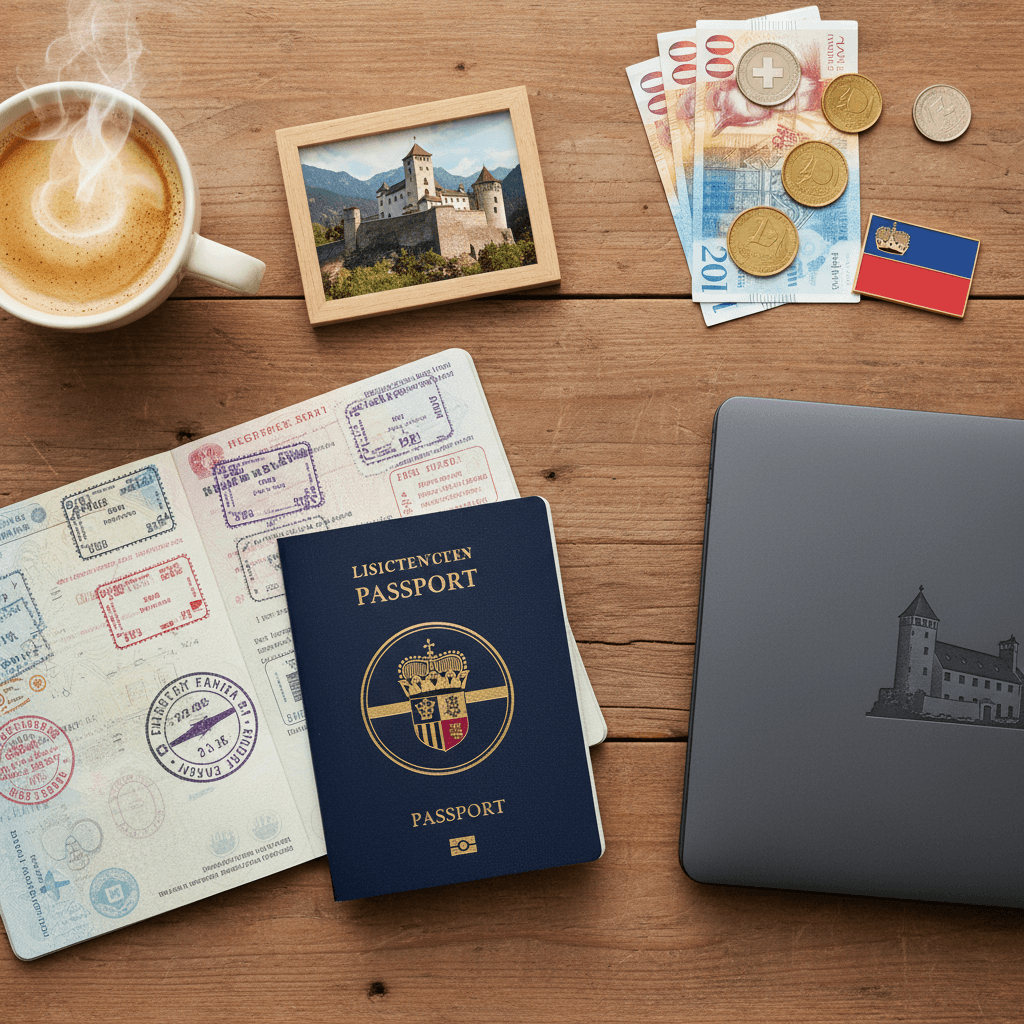
Liechtenstein
Complete Digital Nomad Guide

Policy Stability
Stamped Nomad ExclusiveHow likely visa and immigration policies are to remain unchanged
Quick Facts
Nomad Visa Cost
N/A
Max Stay
3 months
Renewable
No
Cost of Living
$5,500/mo
Avg Internet
189 Mbps
Safety Score
9/10
Healthcare
High
Coworking
Medium
English Friendly
High
Time Zones
CET, CEST
Entry Methods Available
Best For
The Liechtenstein-Schengen Connection
If you are looking for a Liechtenstein-specific visa sticker for your passport, you won't find one. Because the principality is tucked between Switzerland and Austria, it shares a tight immigration bond with its neighbors. Liechtenstein does not issue its own visas. Instead, the process is handled through Swiss representations abroad. While the Liechtenstein Migration and Passport Office has a say in long-term stays, the Swiss authorities are the ones who will actually process your paperwork.
Since the country is part of the Schengen Area, the rules here mirror those of most European destinations. You can move freely across the borders of neighboring countries without passport checks, but you must keep a close eye on your total days spent within the zone. If you have a valid Schengen visa for France or Italy, you are already cleared to visit Vaduz.
Short-Stay Options (Schengen C-Visa)
For most nomads and travelers, the Type C visa is the standard entry point. This covers tourism, family visits, and business trips. It allows for a stay of up to 90 days within any 180-day period. If you are coming for business, this visa covers meetings, networking, and conferences, but it strictly prohibits you from taking up local employment.
- Standard Fee: €90 for adults.
- Reduced Fee: €45 for children aged 6 to 12.
- Processing Time: Usually 15 days, though it can take longer during peak summer months.
- Requirements: Proof of sufficient funds, travel insurance with €30,000 coverage, and a confirmed itinerary.
Visa-Free Travel and ETIAS
Citizens from approximately 115 countries do not need a visa to enter Liechtenstein for short stays. This includes passport holders from the United States, Canada, the United Kingdom, Australia, and all EU/EEA nations. You simply show up with a passport valid for at least three months beyond your planned departure date.
Things are shifting slightly in the near future. While these nationalities remain visa-exempt, the EU is rolling out the ETIAS system in 2026. This is a digital pre-authorization rather than a full visa. It will cost €7 and stay valid for three years. Additionally, the Entry/Exit System (EES) is slated for October 2025, which replaces manual passport stamping with biometric tracking to better monitor stay limits.
Long-Stay National Visas (Type D)
If you plan to stay in the principality for more than 90 days, you enter the territory of the National Visa. These are much harder to get than the standard tourist version. They are generally reserved for specific purposes like employment with a local company, specialized study, or family reunification. Unlike some larger European neighbors, Liechtenstein does not currently offer a specific "Digital Nomad Visa" for remote workers. Most nomads choose to maximize their 90-day Schengen allowance rather than attempting the rigorous long-term residency process.
Important Limitations
You cannot get a visa on arrival in Liechtenstein. There is no airport in the country, so you will likely be arriving via Zurich or by rail from Austria. Ensure your paperwork is handled well before you depart. Extensions for tourist visas are almost never granted unless there is a major medical emergency or a force majeure event. If you want to stay longer, you generally have to leave the Schengen Area entirely and wait for your 180-day clock to reset.
- No E-Visa: Applications must be submitted via Swiss portals or VFS Global centers.
- Biometrics: First-time applicants must appear in person to provide fingerprints.
- Swiss Oversight: All applications are funneled through the Swiss State Secretariat for Migration.
Upcoming Changes to Watch
The immigration landscape here is becoming more digitized. Outside of the ETIAS and EES rollouts, the principality is also updating its own internal systems. A new passport design is launching in February 2026, and while that mostly affects locals, it signals a broader push toward modernizing the country's security infrastructure. For visitors, the biggest hurdle remains the strict 90-day limit, which is strictly enforced through the new biometric tracking systems being installed at Schengen external borders.
The Reality of Remote Work in the Principality
If you were hoping for a streamlined "Digital Nomad Visa" with a flashy landing page and a simple online application, I have some news for you. Liechtenstein does not offer a specific digital nomad visa. This tiny, mountainous nation tucked between Switzerland and Austria is one of the wealthiest and most exclusive corners of Europe, and their immigration policy reflects that. They aren't exactly knocking on doors to find more residents.
Most nomads treat Liechtenstein as a short-term stopover. Because the country is part of the Schengen Area, you can use a standard Type C Schengen visa to stay for up to 90 days within any 180-day period. This is the path of least resistance for most remote workers. You get to enjoy the Alpine views and the pristine quiet of Vaduz without having to dive into the country's notoriously complex bureaucracy.
The "Financially Independent" Route
For those who want to call the Principality home for longer than three months, things get complicated. There is no "nomad" category, but there is a residency option for financially independent persons. This is designed for people who can prove they have significant wealth and won't be competing for local jobs.
The barrier to entry is high. To even be considered, you generally need to show a remote annual income of at least CHF 100,000. You also need to provide proof of local housing and comprehensive medical insurance. Even if you meet these requirements, you are fighting for a very small number of spots. Liechtenstein uses a strict quota system. For EEA and Swiss nationals, only about 89 permits are issued per year, and many of these are distributed via a literal lottery held twice a year. For non-EEA citizens, the chances are even slimmer and usually require exceptional circumstances.
Application and Logistics
If you are determined to try for a residency permit, your first point of contact is the Migration and Passport Office (Ausländer- und Passamt) in Vaduz. Because Liechtenstein shares a close administrative relationship with Switzerland, many visa processes are handled through Swiss representations abroad. Here is what you will need for a residency application:
- A valid passport and professional photo.
- Proof of remote income exceeding CHF 100,000 per year.
- A signed lease or proof of property ownership in Liechtenstein.
- Private health insurance coverage valid within the Principality.
- A clean criminal record check.
Permits are typically granted for one year at first. If you still meet the income requirements and haven't tried to take a local job, you can usually renew it. Long-term residency of up to 5 years is possible, but keep in mind that for permanent stays, the government often expects you to demonstrate a basic command of the German language.
Taxes and Restrictions
Living in Liechtenstein as a resident means entering their tax system. If you spend more than 183 days a year there, you are considered a tax resident. The country uses a progressive income tax system that can reach up to 24% by 2026. They also have a wealth tax, which is something many nomads aren't used to dealing with. On the bright side, if you are just passing through on a 90-day Schengen stay and your income comes entirely from abroad, you generally won't owe local taxes.
There are a few hard lines you cannot cross. You are strictly forbidden from seeking local employment on a tourist visa or a financially independent permit. The authorities are very protective of the local labor market. Additionally, remember that the quota system is absolute. If the 16 spots for your specific category are filled, you simply have to wait until the next year or the next lottery draw.
For the average nomad, the best strategy is to enjoy Liechtenstein as a 90-day guest. It gives you enough time to hike the Princess Gina Trail and explore the mountain huts without getting tangled in one of the world's most restrictive residency lotteries.
Liechtenstein might be a tiny principality tucked between Switzerland and Austria, but it does not have its own unique visa system for visitors. Instead, it plays by the Schengen Area rules. Since Liechtenstein has no international airport, you will almost certainly be arriving via Switzerland, which handles all visa matters for the country. Think of it as a two-for-one deal; once you are in the Schengen zone, the border between Switzerland and Liechtenstein is invisible.
The 90-Day Rule
For most digital nomads coming from places like the USA, Canada, Australia, the UK, or Japan, you do not need to apply for anything before you hop on a plane. You can stay for up to 90 days within any 180-day period. This is a rolling window, so you have to keep a close eye on your calendar. If you spend 90 days in the zone, you have to leave for at least another 90 days before coming back.
Your passport needs to be valid for at least three months past your planned departure date and must have been issued within the last 10 years. While there is no formal visa on arrival or e-visa system right now, things are changing slightly. Starting in late 2026, visa-exempt travelers will need to apply for an ETIAS authorization. It will cost €7, stay valid for three years, and is a quick digital check-in rather than a full visa application.
Applying for a Schengen Visa
If your passport is not on the visa-exempt list, you will need to apply for a Schengen Type C tourist visa before you travel. Because Liechtenstein does not have its own embassies abroad, you will deal with Swiss consulates. You will need to provide a flight itinerary, proof of accommodation, travel insurance, and evidence that you have enough money to support yourself during your stay.
- Adult Fee: €90
- Children (6 to 12): €45
- Children (Under 6): Free
- Standard Processing: 15 days
Extensions and Overstays
Do not count on extending your stay once you arrive. The local Migration and Passport Office in Vaduz only grants extensions for extreme situations, like medical emergencies or major travel disruptions. If you try to extend for personal reasons, the fee is €60 for adults, but these are rarely approved for tourists who just want more time to hike the Alps.
The "border run" strategy does not work here. Since the Entry/Exit System (EES) went live in October 2025, every entry and exit is tracked digitally. Overstaying is a major headache that can ruin future travel plans. If you get caught staying past your 90 days, the consequences are swift and expensive.
- Fines: €500 to €5,000 depending on the length of the overstay.
- Entry Bans: 1 to 5 years (or longer) for the entire Schengen Area.
- Record: A permanent mark in the Schengen Information System (SIS) that makes future visas much harder to get.
Key Contacts and Resources
If you have a specific question about your situation, the Ausländer- und Passamt (Migration and Passport Office) in Vaduz is the place to go. You can reach them by phone at +423 236 61 41. For checking whether your specific nationality requires a visa, the Swiss State Secretariat for Migration provides an online checker that is always the most reliable source for current requirements.
The Reality of Settling in the Alpine Principality
Liechtenstein is one of the most exclusive addresses in the world, and the government keeps it that way through a rigid quota system. If you are dreaming of a long-term base among the Rhine Valley peaks, you need to prepare for a bureaucratic marathon rather than a sprint. The Migration and Passport Office (APA) in Vaduz manages every aspect of residency with precision, typically granting only 89 permits per year across all categories.
Most of these slots are reserved for Swiss and EEA nationals. For everyone else, known as third-country nationals, the door is only open a crack. There isn't a "digital nomad visa" or a simple path for remote workers here. Success usually depends on being a high-level specialist or having enough wealth to prove you won't ever need to rely on the state.
Residency Permits (B Permits)
The B Permit is the standard residence authorization for stays lasting more than 12 months. While it is renewable, getting your hands on one is the hurdle. For most foreigners, the requirements include:
- Proof of financial self-sufficiency so you never claim social benefits.
- Comprehensive health insurance coverage that meets local standards.
- A confirmed local address or rental agreement.
- A clean criminal record and a history of good conduct.
If you are applying for a permit without a local job offer, you are competing for one of roughly 16 annual spots allocated to non-workers. Processing times vary, but EEA citizens usually hear back in 4 weeks, while others can wait 3 months or longer for a decision.
Freelancing and Self-Employment
There is no specific freelancer visa in Liechtenstein. If you want to work for yourself while living in Vaduz or Schaan, you have to prove your business provides a "national economic interest." This usually means you are a highly qualified specialist in a field like fintech or specialized manufacturing.
You will need to register a business, such as a sole proprietorship (Einzelfirma), and submit a detailed business plan to the APA. The authorities will scrutinize whether your presence benefits the local economy before granting a permit. EEA nationals have a slight advantage here, as they can participate in a lottery system for residency twice a year.
Investment and Economic Benefit
Liechtenstein does not offer a formal "Golden Visa" where a specific check gets you a passport. However, the Foreigners Act allows for residency if you bring significant economic value to the country. This is handled on a case-by-case basis.
- Investment Levels: While not set in stone, successful applicants often invest between CHF 100,000 and CHF 1 million into local businesses.
- Job Creation: Your investment should ideally create jobs for local residents.
- Economic Impact: The government looks for industries that diversify the local market or bring specialized innovation.
Retirement in the Principality
Retirees can apply for a residence permit under the "non-employment" category. Since there is no dedicated retirement visa, you fall into the same tiny quota as everyone else. To be considered, you must demonstrate significant passive income from pensions or investments and show a genuine "tie of interest" to Liechtenstein. This often means having family in the country or a long history of visiting. Expect the financial scrutiny to be intense.
The Path to Permanent Residency
If you manage to secure and hold a B Permit for 5 continuous years, you can apply for a Settlement Permit (C Permit). This grants you indefinite right to stay and is much closer to the rights held by citizens. You must show you have integrated into the community, have not used public funds, and have maintained a clean legal record.
Citizenship is a much longer road. It generally requires living in the country for 30 years, though years spent between the ages of 10 and 20 count double. In some cases, your local neighbors even get to vote on whether or not you should be granted citizenship, making it one of the most unique naturalization processes in the world.
Estimated Costs and Contact
Fees for these permits aren't flat rates and can change based on your specific situation. Generally, you should budget between CHF 100 and CHF 500 for administrative processing fees. For the most current requirements or to start an application, you should contact the APA directly at their Giessenstrasse office in Vaduz.
The Price of Alpine Luxury
Setting up your remote office in Liechtenstein isn't for the faint of heart or the light of wallet. It is consistently ranked among the most expensive places on earth. Since the country uses the Swiss Franc (CHF), you can expect price tags that mirror Zurich or Geneva. For most digital nomads, a realistic monthly budget sits between CHF 3,600 and CHF 9,750 depending on how much you value a mountain view from a luxury balcony.
The good news is that you get what you pay for. The infrastructure is flawless, the streets are impeccably safe, and the public transport is like clockwork. While there isn't a specific digital nomad visa, you can operate here on a standard 90-day Schengen stay. Just keep in mind that if you plan to stay longer than three months, mandatory health insurance kicks in, which adds a significant chunk to your monthly overhead.
Where to Plant Your Laptop
Because the country is so small, you really only have two main choices for a base. Both are located in the Rhine Valley and are separated by just a five-minute drive.
Vaduz (The Capital Hub)- 1BR Rent: Expect to pay CHF 900–1,500 for a budget studio, CHF 1,800–2,400 for a mid-range apartment, and CHF 3,000+ for premium setups.
- Monthly Groceries: CHF 400–700.
- Coworking: Dedicated desks at spots like CoWorking Liechtenstein run CHF 300–500 per month.
- Transport: A monthly LIEmobil pass costs around CHF 84–100.
- 1BR Rent: Slightly more accessible at CHF 800–1,300 for budget options and CHF 1,500–2,000 for comfort. Premium stays start around CHF 2,500.
- Monthly Groceries: Same as Vaduz, roughly CHF 400–700.
- Coworking: Similar rates to the capital, starting at CHF 300.
- Transport: Integrated into the same CHF 84–100 bus network.
Living Within Your Means
If you are watching your pennies, a Budget Tier (CHF 3,600–4,000) is doable but tight. You will likely live in Schaan or a smaller village like Triesen, cook every single meal at home, and use drop-in coworking passes rather than a dedicated desk. This tier covers a basic 1BR, groceries, and the mandatory CHF 430 basic insurance if you stay long-term.
Most nomads aim for the Comfortable Tier (CHF 5,000–6,000). This allows for a central apartment in Vaduz, a full-time coworking membership, and about CHF 200 for utilities and high-speed internet. You will have enough left over for a few weekend trips into the Alps or dinners at local bistros.
For those on a Premium Tier (CHF 8,000+), the sky is the limit. This budget buys you a high-end penthouse, private transport, and top-tier health insurance at CHF 840 per month. You won't have to think twice about CHF 22/kg chicken or CHF 50 restaurant tabs.
The Real Cost of Daily Life
Groceries will likely be your biggest surprise. Basic staples like milk are CHF 2 per liter and bread is CHF 3 a loaf. If you enjoy dining out, prepare for a shock; even a casual meal will easily set you back CHF 30 without drinks. Adding regular restaurant visits to your routine can easily tack an extra CHF 500 onto your monthly burn rate.
On the bright side, public transport is a steal if you commit. While a single monthly pass is around CHF 84, an annual all-zones pass ranges from CHF 370 to CHF 520. Given that the buses are clean, frequent, and reach almost every corner of the principality, many nomads find they don't need a car at all.
The Hub: Vaduz
As the capital and cultural heartbeat of the country, Vaduz is the most logical starting point for any nomad. It feels more like a sophisticated village than a major city, but it packs a punch when it comes to infrastructure. You will find the most established coworking communities here, specifically at Coworking Space Vaduz and CoWorking Liechtenstein, which serve as the primary meeting grounds for the small but growing expat scene.
The lifestyle in Vaduz is defined by high-end convenience. You can spend your mornings working from Café Amann or Café Etagere and your evenings at Zwei Bar. While it has the most "bustle" you will find in Liechtenstein, the safety remains world-class. You can walk home at any hour without a second thought.
- Internet Speeds: Average 63 Mbps download.
- Monthly Solo Cost: Approximately $6,150.
- Typical Rent: Around 1,400 CHF.
- Weekly Groceries: Roughly 220 CHF.
- The Vibe: Polished, professional, and the most social option available.
The Industrial Neighbor: Schaan
Just a stone's throw from the capital, Schaan is the country's economic engine. It offers a slightly different energy, feeling a bit more industrious and less tourist-heavy than Vaduz. While it lacks its own dense cluster of coworking spaces, its proximity to Vaduz means you are never more than a ten-minute bus ride or bike move away from a desk.
The internet here is reliable, and if you rely on mobile data, you can see speeds hitting up to 251 Mbps. For local hangouts, Café Wanger is a staple for a caffeine fix, while Andy's Bunker or Black Pearl Bar provide a low-key spot for a drink after work. It is remarkably quiet at night, making it perfect for those who prioritize sleep and deep work over a party scene.
- Internet Speeds: Solid 50 Mbps landline; high-speed mobile data.
- Monthly Solo Cost: Roughly $3,100 (estimated lower due to local pricing variances).
- Social Scene: Medium; mostly focused on local pubs and quiet cafes.
- Safety: Top-tier, consistent with the rest of the country.
The Quiet Alternative: Eschen
If you want to escape the "metropolitan" feel of the larger towns, Eschen is a scenic gem. It appeals to nomads who prefer hiking trails to cocktail bars. Surprisingly, it houses the Eschen Innovation Hub, providing a dedicated professional space that keeps you from feeling isolated despite the town's small size.
The connectivity in Eschen is actually some of the best in the region, with speeds often reaching 100 Mbps. Life here moves at a slower pace. You will likely find yourself at St. Martins Pub or Werk Bar for your social fix. It is the best choice for those looking to keep their overhead slightly lower, as rent tends to be more manageable than in the heart of Vaduz.
- Internet Speeds: Impressive 100 Mbps.
- Monthly Solo Cost: Approximately $6,150.
- Typical Rent: Around 1,100 CHF.
- The Vibe: Peaceful, scenic, and focused on outdoor history.
- Community: Very small; you will need to be proactive to meet others.
Regardless of which town you choose, remember that Liechtenstein is tiny. You can live in Eschen and commute to Vaduz for a meeting in less time than it takes to cross a single neighborhood in London or New York. The high cost of entry is the price you pay for a level of safety and efficiency that is nearly impossible to find anywhere else on the planet.
Internet Quality
Liechtenstein might be one of the smallest countries in the world, but its digital infrastructure is a powerhouse. The nation recently achieved a feat most larger countries only dream of: a 99% nationwide Fiber-to-the-Home (FTTH) rollout. This means whether you are staying in the heart of Vaduz or a quiet mountain village, you are likely plugged into a world-class network. The old copper lines are a relic of the past, fully decommissioned in favor of high-speed glass fiber.
For nomads who rely on heavy bandwidth, the numbers are impressive. Median fixed broadband speeds sit around 189 Mbps, though the network supports symmetric plans up to 8 Gbps. With over ten competing ISPs operating on an open-access state network, you can find high-speed packages starting as low as CHF 39.90 per month. Mobile coverage is equally robust, with 99% 4G LTE availability and 5G reaching nearly 90% of the population.
Best Coworking Spaces
While the country is small, the coworking scene is high-quality and caters specifically to the professional and tech-driven crowd. Most spaces are concentrated in Vaduz or the nearby business hubs of Triesen and Schaan. You won't find a massive variety, but the existing options provide excellent amenities and networking opportunities.
- Impact Office (Vaduz): Located at Austrasse 15, this is a top-tier choice for serious work. It offers dedicated desks starting at CHF 450 per month, featuring a shared kitchen, conference rooms, and reliable high-speed WiFi.
- CV Labs (Vaduz): A hub for the blockchain and tech community, offering flexible coworking desks from CHF 240 per month. It is one of the more affordable entry points for nomads in the capital.
- Triesen Business Hubs: Just outside Vaduz, spaces like the Liechtensteiner Business Center and offices at Landstrasse 123 offer professional setups. Private or shared office spaces here typically start around CHF 390 per person monthly.
- Kokon Corporate Campus (Ruggell): A more modern, lifestyle-oriented business park that integrates work and wellness facilities.
Expect to pay about CHF 50 for a day pass if you are just passing through. Monthly unlimited access for flex desks generally ranges between CHF 300 and CHF 850 depending on the level of privacy and perks you need.
Cafe WiFi Reliability
Working from a cafe in Liechtenstein is a pleasant experience for an hour or two, but it is rarely a long-term solution for a full workday. Public WiFi is common in spots like Cafe Restaurant Engel or the Giessen Hotel & Coffeehouse. However, these networks are often shared and can see significant speed drops during the lunch rush or tourist peaks.
Speeds on public networks usually hover between 20 and 100 Mbps, but the connection can be inconsistent. Security is another factor to consider, as most public hotspots are unsecured. If you have a deadline or a video call, the reliability of a dedicated coworking space or a mobile hotspot is much safer than relying on a local espresso bar's router.
Mobile Data for Nomads
Setting up mobile data is straightforward, with FL1, Swisscom LI, and 7acht (Salt) being the primary providers. These networks offer seamless roaming into Switzerland, which is a huge plus if you plan to hop across the border. FL1 is a popular choice, offering 5 GB of data for CHF 19.90 or a massive 200 GB for CHF 39.90 on 30-day plans.
If you prefer an unlimited setup, expect to pay between CHF 50 and CHF 80 per month for full 4G/5G access. For those who prefer the convenience of an eSIM, services like NoveSIM or Yesim offer traveler-friendly packages. These typically start at $8 for a day of unlimited data or roughly $28 for a week. Just be mindful that while Switzerland roaming is often included, roaming within the broader EU can sometimes trigger extra fees depending on your specific Liechtenstein SIM plan.
Understanding the Healthcare System
Liechtenstein doesn't follow the typical public-private split you might find in other European hubs. Instead, it runs on a universal mandatory insurance model. Every resident and worker contributes to a national fund, which ensures high-quality care across the board. While the country is small, the medical standards are exceptionally high, often mirroring the quality found in neighboring Switzerland.
The system relies heavily on the Liechtensteinisches Landesspital in Vaduz. This is the primary hospital for the principality. However, because the country is so compact, there is no private hospital sector. If you want a more "private" experience, you'll visit independent specialists or private practitioners who offer shorter wait times and more personalized attention, particularly for elective procedures.
Cross-Border Care and Specialization
One unique aspect of being a nomad in Liechtenstein is the seamless medical integration with Switzerland and Austria. For highly specialized surgeries or rare treatments, patients are often transferred to world-class facilities in neighboring Swiss or Austrian cities. This cross-border cooperation is a standard part of the local healthcare workflow.
If you are dealing with a complex medical issue, you aren't limited by the country's borders. Your insurance typically covers these transfers, making the tiny principality feel much larger in terms of medical resources. For dentistry, keep in mind that this sector is entirely private. There are about 26 dental clinics across the country, and you should expect to pay for these services out of pocket.
Insurance Requirements for Nomads
If you are working locally, you'll register for the national healthcare fund. Contributions usually hover between 300 and 320 CHF per month. For those visiting on a shorter basis or using an EHIC card, you can access the state system for a fee of approximately 67 CHF for one month, though you will still be responsible for 50% of your medical fees.
Many digital nomads opt for international plans to handle the high costs of Alpine care. Popular options include:
- Bupa Global: Offers high coverage limits around €1,250,000 and includes virtual appointments.
- Atlas International: Provides up to $2,000,000 in coverage and is a solid choice if you need a Schengen visa letter.
- Bupa Premier: A more robust plan that includes dental treatment and expanded outpatient services.
What You’ll Pay
The system uses a co-payment model. Even with insurance, you’ll likely face a 10% co-payment on most medical expenses. For those using an EHIC card, there is a standard fee of 115 CHF for every 30-day period of treatment.
Annual co-payments are capped to protect you from massive bills. For adults, this cap is usually 700 CHF per year, while for children, it stays around 350 CHF. These caps make the costs predictable, even if you require significant medical attention during your stay.
Pharmacies and Prescriptions
You can find a pharmacy, known locally as an Apotheke, in almost every town. If you have a prescription from an EU or EEA country, it is generally accepted here. Liechtenstein also automatically recognizes any medicine authorized by Swissmedic, the Swiss regulator.
If a medication is listed under the state-provided healthcare plan, it is often free at the point of service. For unlisted or "lifestyle" medications, you will need to pay the full price. Most pharmacies are open during standard business hours, but there is always a rotating "on-duty" pharmacy for late-night needs.
Emergency Situations
In a crisis, dial 144. Emergency medical care is available to everyone regardless of their insurance status. You don't need a referral to show up at the emergency room in Vaduz. While ambulance transport to a hospital is generally covered by the national insurers, be aware that air rescue or helicopter transport often has a coverage ceiling, and you might be responsible for the remaining balance.
The Swiss Connection
Liechtenstein is in a unique position. While it is an independent principality and part of the European Economic Area (EEA), it shares a monetary union with Switzerland. This means the Swiss Franc (CHF) is the official currency. You will find that the financial system here is incredibly stable, but it is primarily geared toward high-net-worth individuals and private wealth management.
Opening a Local Account
Opening a bank account in Liechtenstein as a non-resident is entirely possible, but it is not exactly a "walk-in" experience for the average digital nomad. Most local institutions, such as LGT Bank or VP Bank, focus on private banking. They often require substantial minimum deposits that can range from €100,000 to €1,000,000.
If you need a local presence without the millionaire price tag, look into the Liechtensteinische Landesbank (LLB). They offer more accessible retail options like the LLB Light digital package. This includes a basic account, a debit card, and a savings account for a manageable monthly fee. VP Bank also provides a Basic package for residents and non-residents that covers the essentials.
Documentation and Red Tape
The banks here take "Know Your Customer" (KYC) rules very seriously. You should prepare a thick folder of paperwork before your appointment. Most banks require an in-person visit to finalize the process. Expect to provide the following:
- A valid passport or national ID card.
- Proof of address, such as a utility bill less than 3 months old.
- Your Tax ID from your home country.
- A bank reference letter and a professional CV.
- Proof of income, like pay stubs or tax returns.
- Documentation proving your source of wealth, especially for large deposits.
Keep in mind that any documents not in German or English may require certified translations.
Digital Alternatives: Wise and Revolut
For most nomads, a local bank account is overkill. Revolut and Wise are both fully operational and widely used in the country. Revolut launched its banking services in Liechtenstein in 2022, providing EEA deposit protection up to €100,000. This is a great way to hold CHF and pay for local expenses without the high maintenance fees of a traditional bank.
Wise is equally effective for moving money in and out of the country. You can send 1,000 GBP to a local account for a fee of about 4.48 GBP, and the transfer often arrives in under 40 minutes. Using these cards for daily purchases will help you avoid the unfavorable exchange rates offered by some local merchants.
ATM Fees and Cash
While the country is modern, having some cash on hand is helpful for small mountain cafes or local markets. ATMs are plentiful and mostly operated by the major banks. If you use a foreign card, be prepared for potential fees between 5 CHF and 10 CHF per withdrawal.
To keep costs down, stick to your digital bank limits. Wise offers two free withdrawals up to €200 per month, with a 1.75% fee thereafter. Revolut has similar tiered limits. If you have a local or Swiss card, ATM withdrawals are typically free.
Moving Money Internationally
Because Liechtenstein is an EEA member, SEPA transfers are the standard for moving money across Europe. They are fast, reliable, and usually free or very cheap. For transfers outside the EEA, Wise and Revolut remain the champions of speed and transparency. TransferGo is another solid alternative, often offering zero-fee options for transfers that settle within 30 minutes. Western Union is available for emergencies, though their exchange rate markups make them a last resort.
Crypto and Blockchain
Liechtenstein is one of the most crypto-friendly jurisdictions in the world. The Blockchain Act (TVTG) provides a clear legal framework for digital assets. As a foreigner, you can freely own, trade, and use cryptocurrency here. Many local authorities and businesses even accept crypto for payments. If you are a founder looking to set up a crypto business, the Financial Market Authority (FMA) oversees registration. Be warned that the registration fees for a crypto service provider start around 30,000 CHF, reflecting the country's "premium" approach to regulation.
Bringing Your Family Along
Moving your family to Liechtenstein isn't just about finding a desk with a view. The Principality has strict but clear pathways for family reunification. If you are an EEA or Swiss national, the process is relatively smooth; you will need to prove your relationship, show you have the financial means to support everyone, and provide proof of comprehensive health insurance. Once you arrive, your spouse is legally allowed to work immediately.
For third-country nationals, the bar is a bit higher. You will need to secure an assurance of a residence permit or a visa before the family enters the country. You must also prove you have suitable accommodation that is large enough for the whole crew. Keep in mind that students or those on short-term L-permits usually aren't eligible to bring dependents, so this is a path primarily for those with long-term residency plans.
Education and Schooling
While Liechtenstein has a solid public school system, most nomadic families gravitate toward international curricula to keep their kids' education portable. The primary choice for the region is the International School Rheintal (ISR). Although it is located just across the border in Feldkirch, Austria, it serves the Liechtenstein community and follows the International Baccalaureate (IB) framework.
The costs for private international education are significant and rise as your child gets older. Here is a breakdown of the annual tuition you can expect:
- Kindergarten (Full Day): CHF 23,300 to CHF 25,440
- Primary School: CHF 27,720
- Middle School: CHF 31,720
- IB Diploma Years: CHF 35,290
These fees generally cover your textbooks, but you should budget extra for field trips or replacing lost materials. For younger children, private preschools and full-day kindergartens within Liechtenstein are more affordable, averaging between CHF 240 and CHF 310 per month. Some municipalities offer subsidies based on your income level, which can take the sting out of the monthly bill.
Healthcare for the Little Ones
The healthcare system here is world-class and deeply integrated with the Swiss network. One of the biggest perks for resident families is that children under the age of 16 do not pay health insurance premiums. This coverage includes a series of ten preventive check-ups (U1 through U9) from birth through school age to ensure development is on track.
If your child gets a fever in the middle of the night, you have access to the Medgate Kids Line, a 24/7 pediatric consultation service. Medical care is universal, meaning you have your pick of local pediatricians and easy access to specialized hospitals. Vaccinations generally follow the Swiss national schedule, so check your records before you move to see if any boosters are needed.
Where to Set Up Base
Liechtenstein is tiny, but each municipality has a slightly different vibe for families. Most areas are low-density and focus heavily on outdoor engagement. You won't find urban grit here; instead, you find nature reserves and high-end recreation centers.
- Vaduz: The capital is great for weekend wandering. It features the city train, the iconic castle views, and plenty of museums that offer interactive exhibits for kids.
- Triesen and Balzers: These spots are perfect if you want a mix of history and open space. They offer excellent playgrounds and easy access to Rhine-side walking paths.
- Malbun (Triesenberg): This is the go-to for active families. It is a car-free alpine resort area that is famous for being incredibly kid-friendly, especially for skiing in the winter and hiking in the summer.
- Ruggell and Planken: These are quieter, residential havens. Ruggell, in particular, is known for its nature reserves where the pace of life slows down significantly.
Safety and Peace of Mind
If safety is your primary motivator for choosing a base, Liechtenstein is hard to beat. The crime rate is almost negligible, sitting at a 3.85 out of 100. To put that in perspective, the worry about being mugged or attacked is rated at less than 7% by residents. Parents often let their children walk to school or play in local parks without a second thought. Even late at night, the safety rating for walking alone exceeds 95%. It is a stable, strictly enforced environment where the biggest "danger" is usually just a steep hiking trail.
Safety and Security
Liechtenstein is arguably one of the safest hubs in the world for remote workers. With crime rates that remain remarkably low year after year, you can walk through the capital of Vaduz or hike mountain trails at dusk without a second thought. While there was a slight uptick in reported incidents recently, the vast majority of these are resolved quickly by local authorities, who maintain a high clear-up rate.
Violent crime is almost non-existent here. Most issues for visitors involve very minor petty theft, which typically only occurs around high-traffic transport hubs or border crossings. Even then, it is rare. You should practice basic common sense with your tech gear in public spaces, but you won't find the aggressive pickpocketing rings common in larger European capitals.
Staying Smart Online
While the physical streets are safe, the digital landscape requires more caution. Financial scams have become the primary threat to expats and nomads. These often manifest as sophisticated e-banking frauds, fake package delivery notifications, or individuals impersonating police officers over the phone.
- Digital Scams: Be wary of unsolicited requests for money or "emergency" messages from people claiming to be officials.
- Transport: While rare, keep an eye on taxi meters near the borders to ensure you aren't being overcharged.
- Official Business: Local authorities will almost never ask for sensitive financial data or immediate wire transfers via phone or email.
The Social Fabric and Etiquette
Liechtenstein is a conservative, privacy-respecting society with deep Catholic roots. This doesn't mean it is unwelcoming; rather, it is discreet. People value their personal space and yours. To fit in, keep your voice at a moderate level in public and avoid prying into personal lives early in a conversation.
Punctuality is a way of life here. If you have a meeting or a dinner invite, arriving five minutes early is considered on time. Being late is seen as a sign of disrespect. When meeting someone, a firm handshake and direct eye contact are the standards. Use the greeting "Grüezi" to start things off on the right foot. When dining, wait for your host to begin and use the phrase "En Guete" before tucking in.
Language and Communication
German is the official language, but the reality on the ground is a bit more complex. Residents speak a variety of Alemannic dialects in their daily lives. While Standard German is used for administration, media, and writing, the local dialect can be a hurdle for integration.
English is widely understood within the business community and the tourism sector, but it isn't universal. If you plan on staying for more than a few weeks, enrolling in a basic German course will change your experience entirely. It shows respect for the culture and makes simple tasks like grocery shopping or visiting the post office much smoother.
LGBTQ+ and Inclusion
The country has made significant strides in equality over the last few decades. Same-sex activity has been legal since 1989, and registered partnerships have been recognized since 2011. While the society is traditional, it is also highly respectful of individual privacy. Overt prejudice is rare, and the legal framework provides robust anti-discrimination protections. Digital nomads in the LGBTQ+ community generally find the environment safe and welcoming, if a bit quiet.
The Nomad Community
About 33% of the population is foreign-born, creating a surprisingly international atmosphere for such a small nation. Most expats come from Switzerland, Austria, or Germany, forming a professional, multinational workforce.
The dedicated digital nomad scene is small but high-quality. You won't find dozens of massive coworking spaces, but there are community-focused coliving options and boutique hubs that cater to remote professionals. To build a social circle, it is best to lean into the local lifestyle:
- Join a local hiking or skiing group to meet people outside of work.
- Participate in community festivals and traditions without trying to take center stage.
- Use local sports clubs or "Vereine" as a bridge to meet residents.
- Check platforms like Mapmelon to find other remote workers staying in the area.
Integration happens slowly but deeply. If you show a genuine interest in the local heritage and follow the social cues of the residents, you will find a loyal and supportive community beneath the reserved exterior.
Understanding Tax Residency
Liechtenstein is a tiny, wealthy enclave that takes its tax rules seriously. If you are planning to set up your laptop here, you need to know where the line is between being a visitor and becoming a tax resident. Generally, you become a resident for tax purposes if you establish a permanent home (domicile) or if you stay for more than six months in a calendar year. This habitual residence rule means the government expects a cut of your worldwide income, not just what you earn while sitting in a cafe in Vaduz.
There is also a "substantial economic activity" clause. If you are running a major business operation from within the borders, the tax office might consider you a resident even if you haven't hit that 183-day mark. For most nomads, the primary concern is tracking those days. Even partial days count toward your total, so keep a detailed log of your entry and exit dates to avoid accidental residency.
Income Tax and Surcharges
The tax system here is progressive, but it works a bit differently than in most countries because of the communal surcharges. On a national level, rates start at 1% for income above CHF 21,140 and cap out at 8% for anything over CHF 211,400. However, your actual bill will be higher because your local municipality adds a surcharge, usually between 150% and 180% of the national rate.
When you combine these, the effective maximum tax rate usually lands around 22.4%. Singles get an initial tax-free exemption of CHF 15,855, while married couples and single parents often qualify for higher thresholds and various deductions that can lower the total burden significantly.
The Nomad Reality: Special Regimes
You won't find a specific "Digital Nomad Visa" in Liechtenstein yet. If you are working for a foreign employer and living here, you might qualify for certain exemptions on your non-Liechtenstein earnings. In some cases, local income can be taxed at reduced rates ranging from 1.2% to 25% depending on your specific permit and income source.
For high-net-worth nomads who don't intend to work locally, there is a "lump-sum" taxation option. This is based on your living expenses rather than your actual income, provided you are financing your lifestyle from abroad. This usually requires a minimum income of roughly CHF 100,000 and is a popular route for wealthy expats looking for a predictable tax bill.
Crypto and Digital Assets
Liechtenstein is famously crypto-friendly, but that doesn't mean it is a tax haven for traders. There are no specific "crypto taxes" per se; instead, digital currencies are treated as private assets. If you are a resident, capital gains from selling or converting crypto are generally taxed as regular income at those effective rates up to 22.4%.
There are nuances here based on how long you hold the assets and whether the tax office views your trading as a professional activity. If you are running a crypto-related business, you will likely face a 12.5% corporate tax rate, and some services may attract a 7.7% VAT. It is a sophisticated environment, so keeping clean records of your cost basis is a must.
Treaties and Reporting
To prevent you from paying tax twice on the same dollar, Liechtenstein maintains double taxation treaties (DTTs) with about 20 countries. This list includes major hubs like Switzerland, Germany, Austria, the UK, and Singapore. They also have Tax Information Exchange Agreements with the US. These treaties typically use the credit or exemption method to ensure you aren't penalized for your international lifestyle.
If you cross the residency threshold, you are required to file an annual return with the Tax Office. You will need to declare your global earnings and, if you are claiming expat status, provide proof of your foreign income eligibility. Non-residents who only have local ties, like owning real estate, are taxed only on that specific local source income.
- Residency Trigger: More than 183 days or permanent domicile.
- Effective Tax Cap: Approximately 22.4% including municipal surcharges.
- Corporate Tax: Flat 12.5% for business entities.
- VAT Rate: Standard rate of 7.7%.
Stay Connected Without the Roaming Sting
In a country as small as Liechtenstein, you might think your home plan has you covered, but roaming fees here can drain your budget before you’ve even finished your first coffee in Vaduz. If you have a phone that supports it, grab an eSIM from Gigago, Nomad, or NoveSIM. You can activate these instantly for as little as $2 to $5 for 1GB, which is perfect for getting through your first few days without hunting for Wi-Fi.
For those who prefer a physical SIM or need more data, head to a shop in Vaduz or catch a provider at Zurich Airport before you cross the border. Swisscom offers a solid prepaid deal for 20 CHF that gives you unlimited data for 7 days. Salt is another reliable alternative. Just remember to keep your passport handy, as you’ll need it for identification when registering any local SIM.
Getting Around Like a Local
Liechtenstein doesn’t have its own airport, but its bus system is incredibly efficient. Download the LIEmobil app to keep track of the 17 routes and over 400 stops scattered across the principality. If you want a more "set it and forget it" approach, FAIRTIQ is your best friend. You simply swipe to check in when you board and swipe again when you get off; the app calculates the cheapest zone-based fare automatically. Single tickets usually start around 3 CHF.
Since you’ll likely be crossing into Switzerland or Austria for weekend trips, keep SBB Mobile or Moovit on your home screen. These apps handle the cross-border train connections to Feldkirch or Sargans seamlessly. If you dodge the fare and get caught without a validated ticket, expect a fine between 70 and 90 CHF.
Where to Set Up Base
Choosing a neighborhood depends on whether you want "city" life or mountain silence. Vaduz is the obvious choice for most nomads because it puts you within walking distance of co-working spaces, the main bus hub, and plenty of cafes. It’s the most central spot, but you’ll pay a premium for those castle views.
- Balzers: Located in the south, this area has a more innovative, community-focused vibe. It’s home to The Hub Balzers and offers great access to hiking trails.
- Eschen: A solid pick for those looking for a slightly more affordable residential feel while staying connected to the northern industrial hubs.
- Triesenberg: If you don't mind a winding bus ride, this village sits high above the valley. It’s quiet, traditional, and offers the best views in the country.
Finding a Home
The rental market here is tight, so start your search early. Airbnb is the go-to for most nomads, with furnished apartments in Vaduz or Eschen starting around $100 per night. For stays longer than a few weeks, check Flatio, which specializes in mid-term rentals without requiring the massive deposits typical of local leases. If you’re looking for a community-first environment, Nomad Stays and Mapmelon occasionally list coliving spots that guarantee high-speed internet.
Food and Daily Life
Eating out every night will break the bank, but when you do want a night off from cooking, Foodchow is the local favorite for ordering from Vaduz restaurants. Because of the close ties with Switzerland, Just Eat and Lieferando.ch also operate here, delivering everything from schnitzel to pizza in about 30 to 45 minutes.
German is the official language, and while almost everyone in the business districts speaks excellent English, learning a few phrases goes a long way. Use Ling or uTalk for about 10 minutes a day to get familiar with the local dialect. It’s a small gesture that locals genuinely appreciate.
Safety and Common Pitfalls
Liechtenstein is one of the safest places on earth, but it’s still smart to have the emergency numbers saved. Dial 112 for general emergencies, 117 for police, and 144 for medical assistance. The Landespolizei station is located in Vaduz if you need to report anything in person.
One thing that catches newcomers off guard is how quiet Sundays are. Almost everything closes, so stock up on groceries by Saturday afternoon. Also, never assume your VPN is optional; protect your data when using public Wi-Fi in cafes. Finally, pack for the weather. The valley might be warm, but if you take a bus up to Triesenberg for a hike, the temperature can drop significantly.
More Guides from Europe
Stay Updated on Liechtenstein
Get notified about visa changes, policy updates, and new information for digital nomads in Liechtenstein.