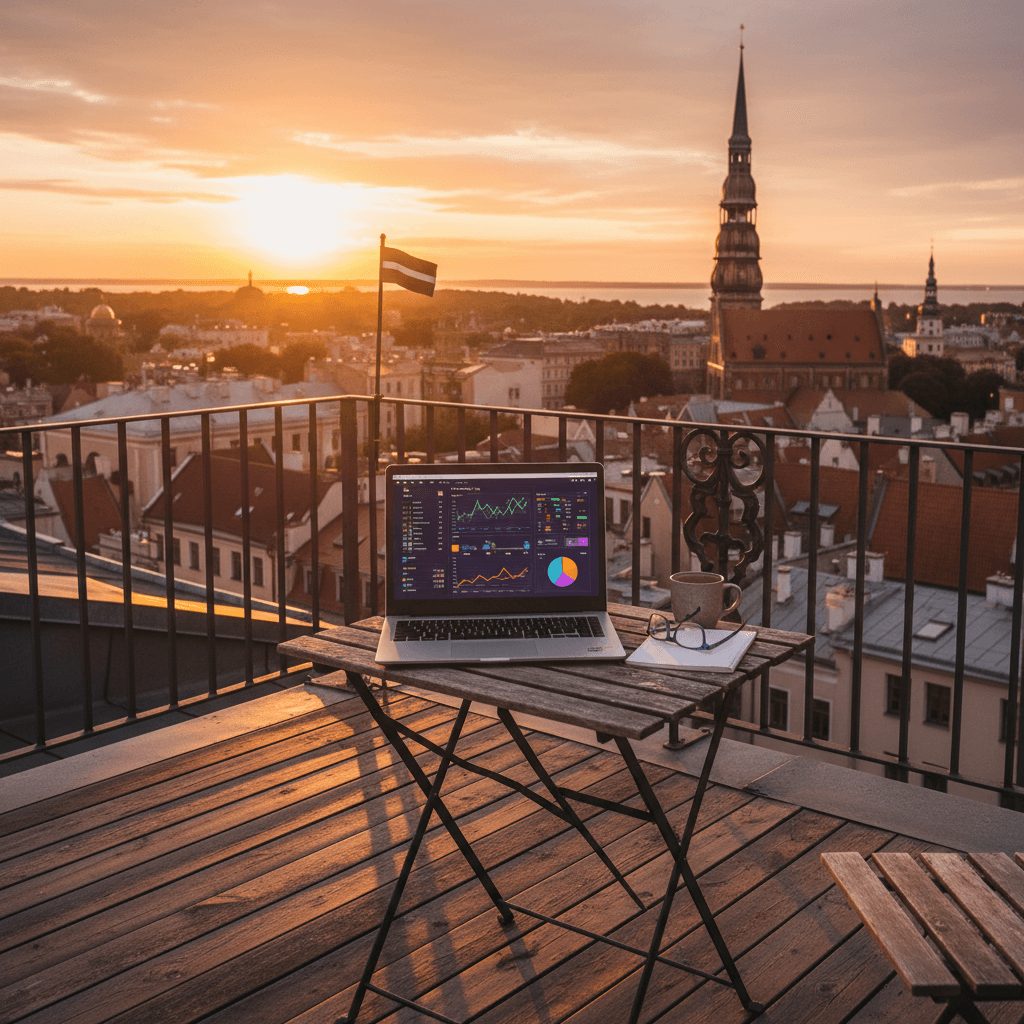
Latvia
Complete Digital Nomad Guide

Policy Stability
Stamped Nomad ExclusiveHow likely visa and immigration policies are to remain unchanged
Quick Facts
Nomad Visa Cost
$65
Income Requirement
$3,024/mo
Max Stay
12 months
Renewable
Yes
Cost of Living
$1,096/mo
Avg Internet
89 Mbps
Safety Score
7/10
Healthcare
Medium
Coworking
Medium
English Friendly
High
Time Zones
EET, EEST
Entry Methods Available
Best For
The Basics: Schengen vs. National Visas
Latvia operates under the standard European framework, dividing entry into two main buckets. For short stays, you are looking at the C-type Schengen visa. This is your ticket for stays up to 90 days within any 180-day period. It allows you to hop across borders to neighboring Estonia or Lithuania without extra paperwork.
If you are planning a deeper dive into the Baltic lifestyle, you will need a D-type long-stay national visa. This is designed for those staying longer than three months for work, study, or specific residency tracks. Both types generally carry an application fee of €90 for adults, though children under six are exempt from fees entirely.
Short-Stay and Tourist Entry
Most nomads start with the standard tourist visa. It is straightforward but strict. You get 90 days to explore Riga’s Art Nouveau architecture or the beaches of Jūrmala. Extensions are notoriously difficult to get; unless you are facing a "force majeure" situation or a serious personal emergency, the 90-day limit is firm. If you do qualify for an emergency extension, it costs €30, though force majeure extensions are processed for free.
For those visiting on business, the requirements tighten up slightly. You will need to provide:
- An official invitation letter from a Latvian host company.
- Proof of funds totaling at least €80 per day of your stay.
- Travel health insurance with a minimum coverage of €30,000.
- A passport valid for at least 3 months beyond your planned departure.
Visa-Free Travel and the New ETA System
If you hold a passport from the EU, EEA, or Switzerland, you can skip the visa line entirely. You have the right to enter and stay for up to 90 days just by showing your ID. Citizens from over 100 other countries, including the US, Canada, and the UK, also enjoy visa-free access for similar durations.
However, the entry process is becoming more digital. Starting September 1, 2025, Latvia introduced a mandatory Electronic Travel Declaration (ETA). If you are a third-country national who doesn't already have a visa or residence permit, you must submit your details online before you arrive. This system collects your personal info, travel purpose, and contact details to speed up border checks. Failing to fill this out before you land can lead to administrative headaches at the border.
Long-Stay Options for Nomads
The D-type visa is the bridge between being a visitor and becoming a resident. It costs €90 and can be issued for single or multiple entries. This is the category most remote workers look at when they want to settle in Riga for a full year. The application process has become more rigorous recently, with expanded biometric data collection now required at consular offices.
Important 2025-2026 Updates
Latvia has recently overhauled its immigration laws to tighten security. The changes that kicked off in late 2025 mean that border checkpoints and consulates are now collecting more biometric data than before. Documentation standards have also been raised, so double-check that every form is current. The April 3, 2025 amendments to the Immigration Law make it clear: providing false info or skipping the ETA declaration can result in immediate liability or entry denial. Processing times currently range from 15 to 60 days, so plan your move well in advance.
Quick Reference Summary
- Tourist Visa Fee: €90 for adults, €45 for kids 6-12.
- Business Proof of Funds: €80 per day.
- Schengen Limit: 90 days within a 180-day window.
- Mandatory Tech: Electronic Travel Declaration (ETA) via the official portal.
- Visa-on-Arrival: Not available for entry into Latvia.
The Long-Stay Visa for Remote Work
Latvia joined the digital nomad movement by introducing a specific legal pathway for remote workers who want more than just a quick stopover in the Baltics. Officially known as the Long-Stay Visa for Remote Work, this permit allows you to base yourself in Riga or the quieter coastal towns while continuing to serve clients or employers back home. It bridges the gap between a short-term Schengen visit and full-blown permanent residency.
The primary catch is that Latvia is picky about where your income comes from. To qualify, you must be a citizen of a third country (non-EU/EEA) and work for an employer or clients registered in a country that belongs to the Organization for Economic Cooperation and Development (OECD). If your business or boss is based in the US, Canada, the UK, or most of Europe, you are in the clear. If not, this specific visa won't be an option for you.
Income Requirements and Financials
Latvia sets its financial bar based on the national average salary, which means the requirement shifts slightly every year. Currently, you need to prove a minimum monthly gross income of €4,213. This is calculated as 2.5 times the average Latvian salary. It is a steeper requirement than some of its neighbors, but it ensures you can comfortably afford the local cost of living while contributing to the economy.
You cannot just show a bank screenshot to prove this. You will need official documentation from your home country’s tax administration or social insurance institution to verify your earnings. Additionally, be prepared to pay a standard application fee of €60. If you are already in the country and need a rush decision, there is an expedited option for €120.
Timeline and Stay Duration
Once approved, the visa is valid for one year. If you fall in love with the Latvian lifestyle, you can apply to renew it for one additional year. This gives you a maximum of two years on this specific permit. After that, you would need to look into other residency options if you plan to stay longer. Processing times are generally reasonable, usually taking between 15 and 30 business days from the moment you submit your paperwork.
The Application Process
You can start the process at a Latvian embassy or consulate in your home country, or through VFS Global. The paperwork is standard for a long-stay visa, but you need to be meticulous with the remote work proof.
- Proof of Employment: You need solid contracts or registration documents showing your work is tied to an OECD country.
- Health Insurance: You must have a policy with at least €42,600 in liability coverage that is valid in Latvia.
- Accommodation: You will need to show proof of where you intend to live, such as a long-term rental agreement.
- Clean Record: Standard background checks and valid travel documents are required.
Tax Perks and Limitations
There is a significant silver lining regarding taxes. Digital nomad visa holders from OECD countries can access a reduced personal income tax rate of 15% on income earned while in Latvia. This is a massive discount compared to the standard progressive rates that can climb as high as 31%. However, if you stay longer than 183 days in a year, you will be considered a tax resident, which means you'll need to report your global income to the State Revenue Service.
It is also important to understand the boundaries of this visa. You are strictly prohibited from seeking local employment. You cannot pick up a side job at a Riga cafe or consult for a Latvian startup. You are also not covered by the local social insurance system, so your private health insurance is your only safety net while you are there.
The 90-Day Rule and Visa-Free Access
For most digital nomads coming from the US, Canada, Australia, or the UK, getting into Latvia is straightforward. You fall under the visa-free regime, which allows you to explore Riga’s art nouveau streets or the beaches of Jūrmala for up to 90 days within any 180-day period. This isn't just for Latvia; that 90-day clock covers the entire Schengen Area.
If you hold a biometric passport from one of the 60+ visa-exempt countries, you simply show up at the border. However, the ground is shifting for 2025 and 2026. Latvia is rolling out a new online entry procedure for third-country nationals. You’ll need to submit your travel info at the official government portal at least 48 hours before you land. By late 2026, the ETIAS system will also go live, requiring a quick pre-travel authorization for a small fee.
Applying for the Schengen C-Type Visa
If your passport isn't on the "visa-free" list, you’ll need to secure a standard Schengen short-stay visa (C-type) before you pack your bags. This process is handled through Latvian embassies or VFS Global centers. You can apply as early as 6 months before your trip, but don't leave it later than 15 days before your flight.
The paperwork is standard for Europe. You will need to provide:
- A valid passport with at least two blank pages.
- Proof of travel insurance covering at least €30,000.
- A confirmed flight itinerary and proof of accommodation.
- Evidence of sufficient funds to support your stay.
- Biometric data (fingerprints) if you haven't provided them in the last 59 months.
What It Costs
Budgeting for your entry is simple because the fees are standardized across the zone. For most travelers, the costs are as follows:
- Adults: €90
- Children (6-12): €45
- Children under 6: Free
- Long-stay (D-type) Visa: €90
Some nationalities, including citizens of Ukraine and Georgia, may benefit from facilitated sets of rules with fees reduced to €35. Keep in mind that if you use an external service provider like VFS, they will charge an additional service fee on top of the government cost.
No Visas on Arrival
Latvia does not offer a visa on arrival for tourists. If you need a visa, you must have it stamped in your passport before you reach the border. There is also no "e-visa" in the traditional sense; while you might submit info online starting in 2025, the actual Schengen visa remains a physical sticker in your passport. If you show up without the right paperwork, the airline likely won't even let you board the plane.
Duration, Extensions, and Overstays
The 90/180 rule is strict. If you want to stay longer than three months, a tourist visa won't cut it; you’ll need to look into a Long-stay (D-type) visa or a residence permit. Extensions for tourists are incredibly rare. Unless you have a serious medical emergency or a "force majeure" situation, the Office of Citizenship and Migration Affairs (PMLP) will expect you to leave when your time is up.
The EU is launching an automated Entry/Exit System in late 2025. This replaces physical passport stamps with an electronic database that tracks exactly how many days you’ve used. This makes "border runs" to reset your clock much harder to pull off if you aren't tracking your days carefully.
Overstaying is a gamble that rarely pays off. Penalties in Latvia are stiff, often starting with fines of €500 or more. Beyond the cash, you risk a formal deportation and a ban from the entire Schengen Area for 1 to 5 years. For a nomad, losing access to 29 European countries is a heavy price to pay for a few extra days in Riga.
Outbound Travel for Latvian Citizens
If you happen to be a Latvian citizen or are looking at the long-term goal of naturalization, the passport is one of the strongest in the world. Latvian citizens enjoy visa-free access to roughly 180 countries. This includes the entire EU, the UK, and easy electronic authorizations for the USA (ESTA) and Canada (eTA). It is a top-tier travel document for anyone living the nomadic lifestyle.
The Digital Nomad Visa
In 2022, Latvia joined the ranks of nomad-friendly nations by launching a dedicated visa for remote workers. This is specifically designed for people employed by companies registered in OECD member countries or those who are self-employed with a business base in an OECD nation. It allows you to live in Latvia for one year, with the option to renew for a second year.
The financial barrier is higher than other options here. You need to prove a monthly income of at least €3,433, which is 2.5 times the national average. You also need to show at least 6 months of employment history with your current employer. While it does not lead directly to permanent residency, it is a great "foot in the door" for those who want to test the Baltic lifestyle before committing to a long-term residence permit.
- Processing Time: Around 30 working days.
- Health Insurance: Must cover at least €42,600.
- Extensions: One-time renewal for an additional 12 months.
The Golden Visa (Investment Pathways)
If you have capital to deploy, Latvia offers one of the more straightforward investment residency programs in Europe. This grants a 5-year temporary residence permit. Note that this program is currently closed to Russian and Belarusian nationals. There are four primary ways to qualify through investment.
- Business Investment: A minimum of €50,000 into a company with fewer than 50 employees, plus a €10,000 state fee.
- Interest-Free Bonds: Purchase €250,000 in state securities, plus a €38,000 state fee.
- Bank Deposit: A €280,000 subordinated deposit with a Latvian bank for at least five years.
- Real Estate: Investment in property, though specific minimums vary based on the location and type of building.
Self-Employed and Freelance Permits
For those who do not meet the high income threshold of the Digital Nomad Visa, the self-employed residence permit is a viable alternative. You will need to present a solid business plan and demonstrate a subsistence level of €2,554 per month. If you are bringing family, add €500 for each adult and €150 for each child to that monthly requirement.
Retirement in the Baltics
Latvia is a surprisingly affordable and peaceful spot for retirees. If you are 65 or older and come from a visa-free country, you can apply for a 5-year residence permit. The main hurdle is proving a monthly pension income of at least €784. The processing is remarkably fast, often wrapping up in just 10 days. The state fees for this are quite reasonable, totaling around €300 for standard 30-day processing.
Long-Stay D Visas
If you are planning a stay that is longer than a standard tourist visit but shorter than a year, the Long-Stay D Visa is your best bet. It covers stays between 90 days and 12 months. You should get your application in at least 3 months before you plan to arrive. Decisions usually come back within 15 days, though the embassy can take up to 60 days if they need to dig deeper into your paperwork.
The Road to Permanent Residency
Most of these temporary permits can eventually lead to permanent residency after 5 years of continuous living in the country. To make the jump to permanent status, you will need to prove you have lived in Latvia for at least 4 out of those 5 years.
The requirements for permanent residency are becoming stricter. You will need to pass a Latvian language test at the B1 level and show a basic understanding of the country's history and constitution. You also need to maintain a clean record with no tax debts or administrative violations during your stay. It is a commitment, but it secures your place in the heart of the Baltics for the long haul.
The Price of the Baltic Lifestyle
Latvia continues to be one of the most compelling "value for money" destinations in Europe for 2025 and 2026. While Western European hubs see skyrocketing costs, Latvia maintains a sweet spot where high-speed internet and modern infrastructure meet surprisingly low overhead. Depending on your lifestyle choices, you can live comfortably here on a budget ranging from $700 to $3,000 per month.
Riga is the natural starting point for most nomads, offering the best density of coworking spaces and social networks. If you want to drop your costs further, heading west to the coastal wind of Liepaja or east to the budget-friendly streets of Daugavpils will stretch your dollars significantly. Jurmala remains the premium outlier, perfect if you want a beachfront villa vibe and don't mind paying a surcharge for the sea air.
Monthly Rent in Nomad Hotspots
Housing will be your primary expense, but even in the heart of the capital, prices are manageable compared to Berlin or Tallinn. In Riga, nomads usually flock to Centrs for the architecture or Agenskalns for a more local, hipster feel. Expect to pay between $580 and $975 for a quality one-bedroom apartment in these zones.
Riga
- Budget: $525
- Comfortable: $735
- Premium: $1,050
Jurmala
- Budget: $400
- Comfortable: $680
- Premium: $1,100
Liepaja
- Budget: $370
- Comfortable: $525
- Premium: $680
Daugavpils
- Budget: $260
- Comfortable: $315
- Premium: $420
Dining and Groceries
Food costs in Latvia are highly flexible. If you stick to local markets and cook at home, you can get by on roughly $270 a month. Groceries are affordable; a liter of milk is about €1.13 and a fresh loaf of bread is around €1. When you decide to head out, a casual local meal costs about $9, while a three-course dinner at a mid-range spot in Riga hits closer to $35.
- Budget Nomad: $270 (mostly home cooking)
- Comfortable Nomad: $360 to $420 (mix of groceries and frequent cafe lunches)
- Premium Nomad: $1,200+ (heavy focus on fine dining and cocktails)
Transport and Infrastructure
Getting around is one area where you won't need to stress your budget. Latvia’s public transport is efficient and incredibly cheap. A one-way ticket is €1.15, and a monthly pass for unlimited rides costs just €30. Taxis and ride-sharing apps are also reasonably priced at about €0.70 per kilometer. Most nomads spend between $30 and $100 a month depending on how often they explore the countryside.
Coworking and Connectivity
Since you are here to work, the cost of a desk is a vital line item. Riga has the most diverse options, with monthly hot desk rates ranging from $105 to $370. In smaller cities like Liepaja or Daugavpils, you can find community-driven spaces for as little as $75 to $80 a month. High-speed fiber internet is standard in almost every apartment, often included in the utility bill or available for a small extra fee.
Health Insurance Requirements
If you are applying for the Latvian Digital Nomad Visa, you are required to have private health insurance with a minimum coverage of €42,500. While EU citizens can use their EHIC cards for basic needs, private insurance is a smart move for faster access to specialists. Budget roughly $50 to $150 per month for a comprehensive policy that satisfies visa requirements and gives you peace of mind.
Riga: The Pulsing Heart of the Baltics
If you want the full-throttle digital nomad experience in Latvia, Riga is the only place to start. It feels like a miniature version of Berlin or Prague, blending gritty creative districts with world-class Art Nouveau architecture. This is where roughly 70% of the country's nomad population lives, so you won't have to look hard to find a community.
The infrastructure here is top-tier. You can expect lightning-fast fiber internet with speeds often exceeding 100 Mbps. Coworking spaces like Regus and Workland are scattered throughout the city, offering reliable desks and networking events. Between calls, you can grab a coffee in the Old Town or explore the cafes in the Quiet Center.
- Estimated Monthly Cost: $2,100
- Internet Speed: 100+ Mbps
- Safety Index: 62
- Best For: Networking, nightlife, and high-speed infrastructure.
While Riga is the most expensive spot in the country, the "busy" vibe is still quite manageable compared to London or Paris. The main trade-off for the convenience is the price tag, but the sheer volume of amenities usually makes it worth the investment.
Jurmala: Seaside Serenity
Just a short train ride from the capital, Jurmala offers a completely different pace. It is a coastal resort town known for its wooden villas and pine-fringed beaches. About 15% of the local nomad community chooses to base themselves here to escape the city noise while keeping Riga’s resources within reach.
The internet remains solid at around 55 Mbps, which is plenty for video conferencing. While there aren't many dedicated coworking spaces in the town itself, many nomads commute to Riga for deep work days or simply set up in the relaxed seaside cafes. It is incredibly safe and perfect for those who prioritize wellness and nature over a wild social calendar.
- Estimated Monthly Cost: $1,400
- Internet Speed: ~55 Mbps
- Best For: Nature lovers and those who want a quiet beach lifestyle.
Liepaja: The Wind of Change
Located on the west coast, Liepaja is often called the city where the wind is born. It has a unique, slightly rebellious Baltic vibe that attracts creative types. The nomad scene is smaller than Riga’s but growing steadily, supported by reliable 75 Mbps internet and several emerging coworking options.
You will find a great balance of affordability and culture here. Cafe Antikvariats is a local favorite for working, offering strong Wi-Fi and a cozy atmosphere. The nightlife is surprisingly vibrant for a smaller city, centered around music and arts. It is a fantastic alternative if you want a beach city that feels more "lived-in" and authentic than the resort-heavy Jurmala.
- Estimated Monthly Cost: $1,800
- Internet Speed: ~75 Mbps
- Best For: Creative nomads seeking a coastal culture.
Jelgava: The Focused Professional’s Choice
If your primary goal is to get your head down and work while keeping costs low, Jelgava is a hidden gem. Located about an hour from Riga, it is a quiet, academic city dominated by its massive palace and river views. It feels incredibly safe, with a safety index of 63.
The Jelgava Coworking Space provides a professional environment for those who need a dedicated office. With monthly costs sitting around $900, it is one of the most affordable places to live comfortably in Northern Europe. The trade-off is the social scene; it is very calm, so you might find yourself heading to Riga on the weekends for a change of pace.
- Estimated Monthly Cost: $900
- Internet Speed: ~55 Mbps
- Best For: Budget-conscious nomads and deep-work phases.
Daugavpils: The Budget Frontier
Daugavpils is the second-largest city in Latvia but feels worlds apart from the capital. Located in the east, it has a heavy Eastern European influence and a very low cost of living. You can get by on roughly $870 a month, which is nearly impossible elsewhere in the region.
The internet is slower here, averaging around 18 Mbps, so it might not suit those who deal with massive file uploads or constant high-def streaming. However, for basic tasks and administrative work, it is perfectly functional. The nomad community is tiny, but the city offers unique cultural sites and a very different perspective on Latvian life.
- Estimated Monthly Cost: $870
- Internet Speed: ~18 Mbps
- Best For: Extreme slow-traveling on a budget.
Connectivity Standards
Latvia is a powerhouse when it comes to digital infrastructure. You won't have to hunt for a signal here; the country consistently ranks among the top tier in Europe for fiber connectivity. Fixed broadband speeds nationwide average around 84 Mbps for downloads, but if you are based in Riga, those numbers jump significantly. In the capital, you can expect average download speeds of 142 Mbps, with premium providers like Balticom pushing the ceiling up to 175 Mbps.
The backbone of this system is an extensive fiber-to-the-home network that covers over 72% of households. Even if you decide to venture outside the city for a few days, high-speed access remains remarkably consistent. About 90.7% of the country has access to speeds of 100 Mbps or higher. This makes Latvia one of the few places where you can confidently book a rural Airbnb and still expect to handle high-definition video calls without a hitch.
Top Coworking Hubs in Riga
The coworking scene in Riga is concentrated and community-focused. Most spaces are located in the central district or the trendy Skanste neighborhood. These spots aren't just desks; they serve as the primary social hubs for the local expat and tech community.
- Teikums: Located in the Jaunā Teika district, this is often cited as the gold standard for local design. It offers a high-energy environment with plenty of networking events and 24/7 access.
- Magnēts: A favorite for those who need a quieter, more professional atmosphere. It is known for its ergonomic setups and reliable infrastructure.
- OraculeTang Space: Situated in the heart of Old Town, this spot mixes historical architecture with modern amenities. It’s perfect if you want to be steps away from the city's best restaurants.
- Coworking Riga: A more laid-back, budget-friendly option that draws a loyal crowd of freelancers and long-term nomads.
Membership Costs
Pricing for coworking in Latvia is competitive compared to Western Europe, though keep in mind that quoted prices usually exclude the 21% VAT. If you are just passing through, a day pass will typically run you between €15 and €18.
- Hot Desks: Expect to pay between €120 and €220 per month. Coworking Riga sits at the lower end at €120, while more premium spots like Raunas start around €150.
- Dedicated Desks: For a permanent setup, prices range from €150 to €350. Magnēts offers one of the better deals at €160, while high-end central offices can reach €300 or more.
Cafe Culture and Remote Work
Riga is a laptop-friendly city, and you will see plenty of locals working from cafes during the day. While the WiFi in most urban cafes is free, the speeds are generally better suited for emails and light admin than heavy uploading. Average cafe speeds hover around 3 Mbps, though tech-forward spots like COFYZ can reach up to 11 Mbps.
MiiT Coffee is a staple for the nomad crowd, offering plenty of power outlets and a vegetarian-friendly menu. While these spots are great for a change of scenery, it is wise to have a mobile hotspot as a backup if you have a deadline. The connection in public spaces is generally stable, but it can fluctuate when the lunch rush hits.
Mobile Data and eSIMs
The local mobile market is dominated by LMT, Tele2, and Bite. 5G is becoming increasingly common in the city center. For short-term stays, local prepaid SIM cards are incredibly cheap, often starting at just €4 for a flexible data package. If you prefer to have your data sorted before you land, eSIM providers offer several convenient options.
- Holafly: Offers unlimited data for approximately €19, which is great for heavy users who don't want to track gigabytes.
- Nomad: Flexible plans ranging from 1GB to 20GB starting at about $6.
- Airalo and Maya Mobile: Both provide reliable 4G/5G coverage using local networks like LMT or Tele2.
While EU roaming is a standard feature for those coming from within the bloc, be aware that many "unlimited" plans have fair-usage caps when roaming. If you plan to use your phone as your primary internet source, picking up a local SIM or a dedicated eSIM is the most reliable path.
The Public vs. Private Divide
Latvia operates a universal healthcare system managed by the National Health Service (NVD), but for most digital nomads, the public system is more of a safety net than a primary choice. While the quality of care is high, the public sector is often bogged down by long wait times for specialists and a bureaucratic process that can be frustrating if you don't speak Latvian or Russian. In rural areas, facilities can feel a bit dated, though they remain functional for emergencies.
Most expats gravitate toward the private sector. It is efficient, modern, and almost entirely English-speaking. You will find that private clinics in Riga feel more like boutique hotels than hospitals, offering personalized service and the ability to book an appointment within days rather than months. If you have the budget or the right insurance, private care is the path of least resistance.
Top Facilities for Expats
Riga is the medical hub of the country, housing several world-class facilities that cater specifically to international patients. If you need a consultation or a specialized procedure, these are the names to remember:
- Veselības centrs 4 (VC4): This is a massive network of clinics known for medical tourism and high-tech diagnostics.
- Medical Centre ARS: Located in the heart of Riga, this is a go-to for English speakers needing quick specialist visits or diagnostic imaging.
- AIWA Clinic: A private hospital modeled after Western European standards, focusing on surgery and diagnostics.
- Pauls Stradiņš Clinical University Hospital: The major state-run teaching hospital, best for complex emergencies or highly specialized treatments.
Insurance Requirements and Options
If you are applying for a long-stay visa or a residence permit, proof of health insurance is a non-negotiable requirement. While public coverage is tied to social security contributions from a local salary, most nomads will need a private policy. A solid expat plan typically costs between €50 and €150 per month depending on your age and coverage level.
For those on the move, global nomad policies like SafetyWing are popular for their flexibility. If you prefer more traditional coverage, providers like Cigna Global or local Latvian insurers offer plans that cover everything from routine check-ups to emergency medical evacuation. Make sure your policy specifically covers "repatriation in case of illness" to satisfy immigration officials.
What You Will Pay
Healthcare in Latvia is remarkably affordable compared to the US or Western Europe, even when paying out of pocket at private clinics. Public co-pays are nominal, while private fees are transparent and manageable. Here is a breakdown of what to expect:
- GP Visit (Public): €1.50 to €2
- Specialist Consultation (Private): €30 to €100
- MRI Scan (Private): €50 to €300
- Hospital Stay (Private): €80 to €500 per day
- Spine Surgery (Private): €1,500 to €9,000
Pharmacies and Prescriptions
You won't have to look far for a pharmacy, known locally as an "aptieka." They are everywhere in cities, and major chains like Mēness Aptieka often have 24/7 locations in Riga. Most pharmacists speak English and are helpful with over-the-counter recommendations.
If you have a chronic condition, bring a supply of your medication and a signed letter from your doctor. Foreign prescriptions aren't always accepted at the counter, so you may need to visit a local GP to get a Latvian version of your script. This is usually a quick and inexpensive process at a private clinic.
Emergency Situations
In a life-threatening emergency, dial 112 (the general EU emergency number) or 113 for the ambulance service. The State Emergency Medical Service (SEMS) is reliable and covers the entire country. If you are in Riga and have a non-life-threatening but urgent issue, the Medical Centre ARS offers extended hours and specialized urgent care services that bypass the standard ER wait times.
The Currency Landscape
Latvia has been part of the Eurozone since 2014, so you will be dealing exclusively in Euro (EUR). While the country is becoming increasingly cashless, especially in the tech-forward hub of Riga, it is smart to keep a few physical bills on you. Small vendors, independent boutiques, and rural guesthouses occasionally stick to a cash-only policy.
Avoid currency exchange booths at the airport or in heavy tourist zones. They often bake high margins into their rates. Your best bet for getting cash is using a local bank ATM, where you will get the mid-market rate without the "convenience" markup of a kiosk.
Opening a Bank Account
If you are planning a long-term stay or setting up a local business, opening a Latvian bank account is a straightforward process. Major players include Swedbank, SEB, Citadele, and Luminor. Unlike many EU countries, Latvia allows non-residents to open accounts, though the paperwork requirements are more stringent than for locals.
To get started, you will generally need:
- A valid passport or national ID card.
- Proof of address, such as a recent utility bill.
- A work contract or proof of income to satisfy "Know Your Customer" (KYC) regulations.
- A completed bank application form.
The timeline varies significantly depending on your residency status. Personal accounts are usually processed in a few days, but corporate accounts for freelancers or startups can take up to 4 weeks. Most banks offer multi-currency accounts that support EUR, USD, and GBP, and there is typically no mandatory minimum deposit required to open the account.
ATMs and Digital Banking
Latvia is a dream for nomads using Wise or Revolut. These cards are accepted everywhere from high-end restaurants to local transit kiosks. Most bank ATMs, including those operated by Swedbank and SEB, do not charge access fees for foreign cards. This makes it easy to withdraw cash without feeling like you are being nickel-and-dimed.
The golden rule at the ATM is to decline dynamic currency conversion. If the machine asks if you want to be billed in your home currency, say no. Always choose to be billed in EUR. This allows your own bank (like Wise) to handle the conversion at a much fairer rate, saving you between 1% and 3% on every transaction.
Moving Money Internally and Externally
For moving money across borders, skip the traditional SWIFT transfers offered by high-street banks. They are slow and expensive. Wise is the gold standard here for its SEPA integration, often moving funds in under 48 hours with minimal fees. For those moving larger sums, providers like Remitly or Currencies Direct often offer better specialized rates for high-volume transfers.
Revolut is the local favorite for peer-to-peer payments. If you are splitting a dinner bill with new friends in Riga, they will almost certainly ask to "Revolut" you the money. It’s instant and avoids the clunkiness of IBAN transfers for small amounts.
Crypto and Future Regulations
Latvia is moving toward tighter integration with EU crypto standards. New regulations approved in June 2025 mean that crypto service providers will be required to report transactions starting January 1, 2026. This is part of a broader effort to align with the CARF framework and prevent tax evasion.
While there is no ban on holding or trading digital assets, nomads should be diligent about record-keeping. Fines for non-compliance with reporting can reach €14,000. If you are trading heavily while based in Latvia, expect enhanced due diligence from local banks if you try to move large crypto-derived sums into a traditional EUR account.
Bringing Your Family to Latvia
If you are relocating to Latvia, bringing your spouse and children is a straightforward process through family reunification. Eligible dependents include your spouse and unmarried children under age 18. Children can often be included in your residence permit application at no extra cost, provided they are dependent on you.
The process starts with an invitation approved by the Office of Citizenship and Migration Affairs (OCMA). Once that is cleared, your family applies at a Latvian consulate abroad. After arriving, you must declare your residence and secure health insurance with a minimum coverage of €42,600. Initial permits usually last one year, followed by a four-year renewal, eventually leading to permanent residency.
Family members generally enjoy full access to the local labor market and education system if the primary sponsor holds a permit based on employment. This makes the transition easier for spouses looking to continue their own careers while abroad.
Schooling and Education
Latvia has a robust selection of international schools, mostly concentrated in Riga. These institutions offer varied curricula including the International Baccalaureate (IB), British, French, and German systems. While public schools are free for all residents, most nomads opt for private international options to maintain linguistic continuity.
- International School of Latvia (ISL): IB curriculum for ages 2 to 18. Annual fees range from €8,800 to €22,300.
- International School of Riga (ISR): Offers IB and British programs for ages 2 to 18. Annual fees range from €10,500 to €20,400.
- King’s College: A British school focused on ages 15 to 18. Annual fees are between €10,000 and €20,000.
- Deutsche Schule Riga: Follows the German curriculum for various age groups.
- École Française Jules Verne: Provides a French-based education for the expat community.
Admissions typically require your child's passport, birth certificate, previous school records, and proof of language proficiency. If you choose the public route, you only need to cover the cost of daily catering, which is a significant budget saver.
Healthcare for the Little Ones
Latvia prioritizes pediatric care, and children are exempt from the patient co-payments that adults usually pay for state-funded services. Your kids are entitled to regular preventive checkups, dental hygiene, and vaccinations. Spouses of residents also receive free state-funded prenatal care and childbirth assistance.
While the system is inclusive, it does face some hurdles. Latvia has higher rates of unmet medical needs compared to some other EU neighbors, particularly for specialized dental care. While Riga has excellent facilities, pediatric specialists are harder to find in rural areas. However, the "Care Mobile" initiative helps fill this gap by bringing doctors to remote towns throughout the year.
Childcare and Daily Costs
Latvia stands out as one of the most affordable places in Europe for childcare. Private kindergartens usually cost between €250 and €280 per month, including meals. If you prefer the preschool programs at international schools, expect to pay closer to €600 or €700 monthly.
The government also provides various family support allowances. For children under 1.5 years, parents receive €171 per month. There are also monthly child-raising allowances that increase with the number of children you have, ranging from €25 for one child up to €225 for three children.
Where to Live: Family-Friendly Cities
Most nomad families gravitate toward a few specific hubs that offer the best balance of safety and recreation.
- Riga: The capital is the obvious choice for access to the National Zoo, museums, and the largest concentration of international schools. It is a walkable city with plenty of green space.
- Jurmala: Just 30 minutes from the capital, this seaside resort city is perfect for families who want a coastal lifestyle. It features long sandy beaches and the Dzintari Forest Park.
- Sigulda and Cēsis: These towns are easily reached by train and are ideal for families who love the outdoors, hiking, and exploring medieval castles in a quiet environment.
Safety and Environment
Latvia is statistically very safe, with crime rates significantly lower than those in the United States. While you should keep an eye on your belongings in crowded tourist spots like Riga’s Central Market to avoid pickpockets, violent crime is rare. The culture is generally very welcoming toward children, and it is common to see families out late in parks or cafes during the long summer evenings.
Staying Safe on the Baltic Coast
Latvia sits comfortably among the safer European destinations for remote workers. With a crime index of 36.63, it statistically outperforms the United States and several Western European neighbors. Violent crime against foreigners is a rarity, though you should keep your wits about you in high-traffic zones. Most issues involve non-confrontational petty theft like pickpocketing, which tends to spike during the summer months in Riga’s Old Town and around the Central Market.
The streets are generally safe to walk at night, but the Central Station area and certain parts of the Maskavas Forštate district can feel a bit gritty after dark. Stick to well-lit paths and use common sense. If you are heading out for the evening, use ride-sharing apps like Bolt rather than hailing random taxis on the street to ensure transparent pricing and GPS tracking.
Avoiding Scams and Pitfalls
While the physical risks are low, financial scams require a sharper eye. A classic trap involves "friendly" locals inviting you to a specific bar where you are later presented with a bill for hundreds of Euros. If a stranger is overly insistent on taking you to a "hidden gem" for a drink, it is best to decline. Phone and digital fraud are also on the rise; scammers often pose as bank officials or police to fish for data.
- Rental Scams: Always verify apartment listings through reputable platforms. Avoid sending deposits via wire transfer before seeing a property in person.
- Fake Taxis: Unmetered cabs at the airport or near clubs may charge five times the standard rate. Stick to verified apps.
- Charity Fraud: Be wary of individuals collecting "donations" in tourist squares; these are rarely legitimate organizations.
Social Dynamics and LGBTQ+ Life
Latvian culture is famously reserved. Locals value their personal space and quiet, so you might find the initial social barrier a bit high. This is not unfriendliness; it is a cultural preference for sincerity over small talk. Public displays of affection or loud behavior in public spaces are generally frowned upon. Once you break the ice, however, Latvians are incredibly loyal and helpful neighbors.
For LGBTQ+ nomads, the situation is evolving. Same-sex unions were legalized in 2023, and Riga hosts a vibrant Baltic Pride event. While the capital is progressive and safe for visitors, rural areas remain more conservative. It is wise to be discreet in smaller villages, though younger generations are increasingly open and inclusive.
Etiquette and Local Integration
If you get invited to a Latvian home, you have officially "made it." Bring a small gift like a box of chocolates or a bouquet of flowers. Just remember to bring an odd number of stems, as even numbers are reserved for funerals. Avoid red roses for casual acquaintances, as they carry heavy romantic connotations.
When it comes to conversation, keep things light at first. It is best to avoid sensitive topics regarding the Soviet era or complex regional politics until you know someone well. Punctuality is a big deal here. If you agree to meet a local at 7:00 PM, being five minutes late is noticed, and being ten minutes late is considered rude.
Communication and Community
Latvian is the official language, and learning basic phrases like "Sveiki" (Hello) and "Paldies" (Thank you) goes a long way in earning respect. English is widely spoken by anyone under 40 and is the standard in Riga’s tech and service sectors. In more remote areas or among the older population, you might find that Russian is more common than English, though the geopolitical climate has made the use of Russian a sensitive topic for some.
The expat and nomad scene is concentrated heavily in Riga, which houses about 70% of the country’s international community. You will find plenty of support in the following ways:
- TechHub Riga: A central pillar for the startup community and a great place to network.
- Facebook Groups: Search for "Expats in Latvia" or "Riga Digital Nomads" for active communities and housing leads.
- Coworking Events: Spaces like Teikums and OraculeTang host regular meetups that help bridge the gap between locals and foreigners.
Integration takes patience. Latvians value trust, and trust is built over time through consistency rather than grand gestures. Join a local hobby club or a gym to meet people outside the "nomad bubble." Showing a genuine interest in the local history and choir culture will open doors that a typical tourist never sees.
Latvia has become an intriguing spot for remote workers, but the tax man here is diligent. Understanding where you stand depends almost entirely on the calendar. If you are just passing through for a summer in Riga, your tax life remains back home. However, once you cross the 183-day threshold within any 12-month rolling period, the Latvian State Revenue Service (VID) considers you a tax resident. This means they will want a piece of your worldwide income, not just what you earn while sitting in a Latvian cafe.
The 183-Day Rule
The math is strict. Latvia counts every partial day, weekend, and holiday you spend in the country toward that 183-day limit. Only transit stays of less than 24 hours are usually ignored. If you plan to stay long-term on the Digital Nomad Visa, which requires a minimum monthly income of roughly €3,400, you need to track your entry and exit dates meticulously. If you stay under the limit, you generally avoid local income tax on your foreign earnings. Once you hit day 184, you are officially in the system and must register with the VID.
Income Tax Brackets
Latvia uses a progressive tax system, and the rates for 2026 have been updated to reflect new brackets. For most residents, the Personal Income Tax (PIT) looks like this:
- 20% for annual income up to €20,000
- 23% for income between €20,001 and €78,000
- 31% for anything above €78,000
Alternatively, some specific income types or higher thresholds may trigger a 25.5% rate up to €105,300, with a 33% rate for the highest earners. Capital gains, including dividends and investment profits, are typically taxed at 25.5%. If you decide to rent out a property while you are there, the rental income tax is a flat 10% after basic deductions.
Crypto and Digital Assets
If you trade crypto, Latvia is tightening the reins. Gains are treated as capital gains at 25.5%. While there has been some relief for non-residents on public circulation disposals, residents must declare any gains that exceed the original acquisition cost. Starting in 2026, new reporting mandates mean crypto service providers will share data directly with authorities. Fines for non-compliance can reach €14,000, so keeping a clean paper trail of your swaps and wallets is a smart move.
Double Taxation and Relief
The good news is that Latvia has signed double taxation treaties with over 60 countries, including the US, UK, Canada, and most of the EU. These agreements ensure you aren't paying the full rate to two different governments. To claim these benefits, you will need a tax residency certificate from your home country. Residents can also take advantage of a non-taxable minimum of €510 per month and deductions of up to €600 per year for medical expenses or education.
Filing Your Returns
The tax year follows the calendar year. If you are a resident, you must file an annual income declaration via the VID’s EDS portal by June 1 of the following year. The system is surprisingly digital-friendly; you can upload photos of receipts for medical or dental work to get your tax rebates. Even if you aren't a resident, if you earn more than 75% of your income within Latvia as an EU citizen, you can often opt-in to these same relief programs. Keep a log of your travel and rental agreements to defend your residency status if the VID ever asks for proof of your whereabouts.
Connectivity and Mobile Data
Staying connected in Latvia is remarkably straightforward and affordable. You have three main players to choose from: LMT, Tele2 (specifically their Zelta Zivtiņa brand), and Bite. For most nomads just landing, LMT is the gold standard. Their weekly plan costs €4.50 and gives you unlimited data, calls, and texts for seven days. It’s the easiest way to get online the moment you leave the airport.
If you prefer a digital approach, eSIM providers like Nomad, GOHUB, and esimlatvia.net allow you to skip the physical SIM card entirely. For longer stays of a month or more, expect to pay between €15 and €25 for a prepaid plan with a solid data bucket. You can pick up physical SIMs at almost any Narvesen convenience store or supermarket.
Getting Around the Baltics
The transportation scene in Riga is dominated by Bolt. It is the go-to app for ride-hailing, and the pricing is transparent and very competitive. While you might see Yandex Taxi or Forus, Bolt usually has the fastest pickup times. For public transport within Riga, download Mobilly. It lets you buy and activate bus and tram tickets directly on your phone so you don't have to fumble for change.
If you are planning a weekend trip to the coast or the forests, use 1188.lv to check bus and train schedules. For real-time updates on when your next bus is actually arriving at the stop, the Transport LV app is a lifesaver.
Where to Plant Your Flag
Selecting the right neighborhood changes your entire experience of the city. Most nomads gravitate toward these four spots:
- Centrs (City Center): This is the heart of the action. You will be surrounded by the highest concentration of coworking spaces, cafes, and gyms.
- Agenskalns: Located across the river, this area feels like a small village within a city. It is famous for its wooden architecture and a very local, community-driven vibe.
- The Quiet Centre: This is the Art Nouveau district. It is upscale, peaceful, and filled with embassies and parks, yet only a ten-minute walk from the main hub.
- Skanste: A newer, modern district that is popular with young professionals. It feels more "corporate-chic" with contemporary apartment blocks.
Finding Your Home
For stays under a month, Airbnb is the most reliable platform, and many hosts offer significant discounts for 28-day bookings. If you want something more social, Coliving.com has listings specifically tailored for remote workers, often including a desk and high-speed internet in the monthly price. Booking.com is also surprisingly effective for finding "aparthotels" which offer the amenities of a hotel with the kitchen facilities of an apartment.
Food and Groceries
When you don't feel like cooking, Wolt and Bolt Food are the two giants here. Wolt is generally praised for its interface and customer service, and a Wolt+ subscription can save you a lot if you order frequently. For rapid grocery replenishment, Bolt Market can get essentials to your door in about 30 minutes.
Learning the Local Tongue
Latvian is a beautiful but challenging language. Don't look for it on Duolingo because it isn't there. Instead, use the Ling App, which is widely considered the best tool for Latvian. It uses native speaker audio and focuses on cultural context. Babbel is another great choice for learning practical phrases you will actually use at the market or in a taxi.
Safety and Emergencies
Latvia is generally very safe, but it is always better to be prepared. The universal emergency number is 112. You should download the 112 Latvija app. It allows dispatchers to see your exact GPS coordinates if you call through the app, which is incredibly helpful if you get lost while hiking in Gauja National Park. The app also sends out alerts for severe weather or local hazards.
Pro-Tips to Avoid Headaches
- Watch for Scams: While rare, be cautious of "independent" taxis near the airport or nightclubs that don't use a meter. Stick to the apps.
- VPN is a Must: If you are working from the many beautiful cafes in Riga, always use a VPN to protect your data on public networks.
- Don't Overwork: It is easy to stay glued to your screen, but make sure to balance your hours. Latvia’s nature is stunning, and the "burnout" is real if you don't step away from the laptop.
- Paperwork: If you are applying for a long-term visa or residency, double-check every document. Latvian bureaucracy is efficient but very strict about missing signatures or incomplete forms.
More Guides from Europe
Stay Updated on Latvia
Get notified about visa changes, policy updates, and new information for digital nomads in Latvia.