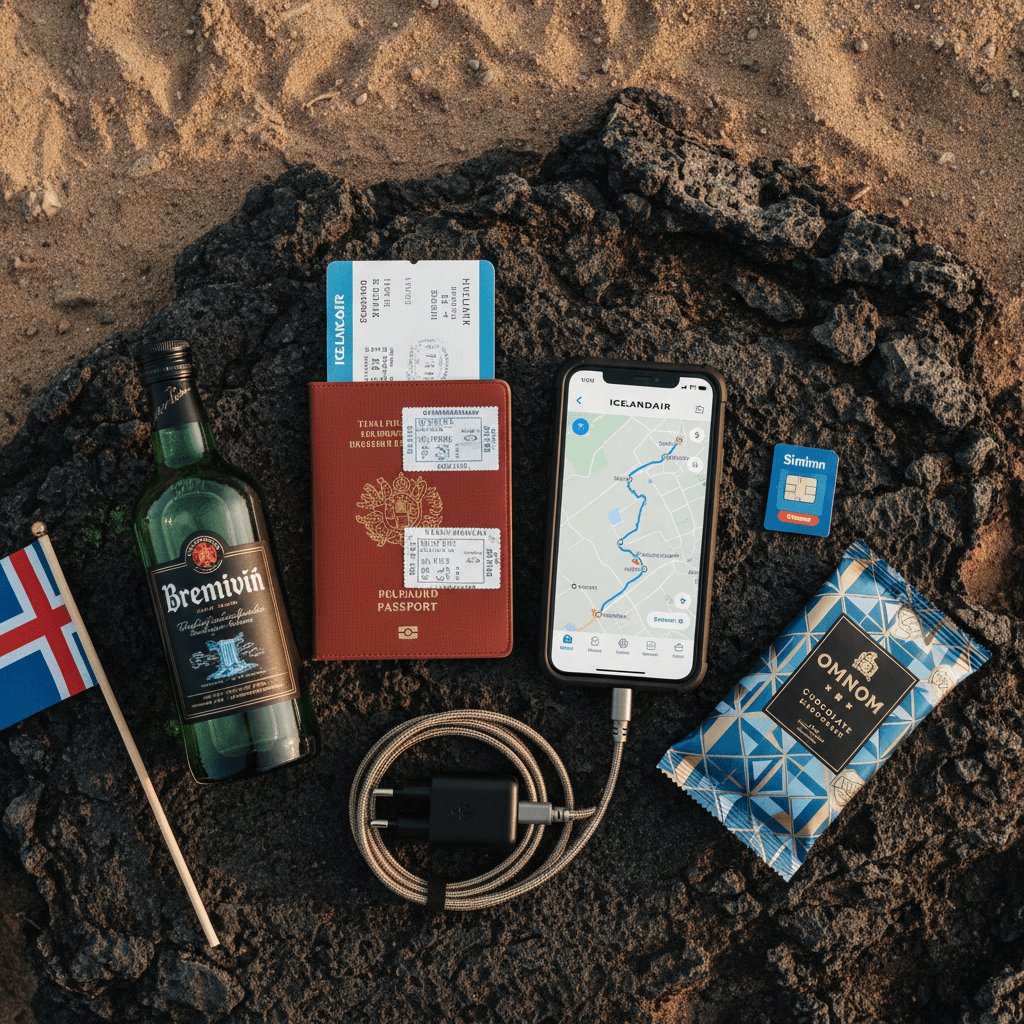
Iceland
Complete Digital Nomad Guide

Policy Stability
Stamped Nomad ExclusiveHow likely visa and immigration policies are to remain unchanged
Quick Facts
Nomad Visa Cost
N/A
Max Stay
3 months
Renewable
No
Cost of Living
$4,300/mo
Avg Internet
466 Mbps
Safety Score
10/10
Healthcare
High
Coworking
Medium
English Friendly
High
Time Zones
GMT
Entry Methods Available
Best For
The Basics of Entering the Land of Fire and Ice
Iceland is a key member of the Schengen Area, which makes travel seamless if you are coming from within Europe but requires a bit of paperwork if you are arriving from further afield. For most nomads, your entry path depends entirely on your passport's origin. There is no such thing as a "Visa on Arrival" here; you either need to secure your documents before you board your flight or belong to a country that enjoys visa-free privileges.
If you are planning a stint in Reykjavik or a road trip along the Ring Road, your primary focus will be the Type C Schengen Visa. This allows for stays of up to 90 days within any 180-day period. It is the standard "short-stay" permit used for tourism, visiting family, or scouting the island for future remote work setups.
Visa-Free Travel and ETIAS
Citizens from 121 countries currently enjoy visa-free entry into Iceland. This list includes the United States, United Kingdom, Canada, Australia, Japan, and all EU/EEA nations. If you hold one of these passports, you can simply show up with a passport that is valid for at least three months beyond your intended departure date.
Keep an eye on the calendar for 2026. This is when the European Travel Information and Authorisation System, or ETIAS, is scheduled to launch. It is not a visa, but a mandatory electronic pre-authorization for visa-exempt travelers. It will cost €7, remain valid for three years, and involve a quick online application before you fly.
The Schengen Tourist Visa
If your nationality is not on the visa-free list, you will need to apply for a tourist visa through the Directorate of Immigration's official application procedures. These are typically handled by VFS Global centers or Icelandic embassies in your home country. While you might start the process online to book an appointment, this is a paper-based system that requires a physical visit for biometrics.
- Standard Fee: €80 for adults and €40 for children aged 6 to 12.
- Processing Time: Usually takes 15 to 45 days, so do not leave this until the last minute.
- Extensions: These are very rare and typically only granted for medical emergencies or force majeure.
Business Visits
If you are heading to Iceland specifically for a conference, a series of meetings, or to ink a contract, you will still fall under the Type C Schengen umbrella. The main difference is the documentation. You will need an official invitation letter from an Icelandic company outlining the purpose of your visit. The costs and time limits remain the same as the tourist visa, though frequent business travelers often find it easier to secure multiple-entry permits.
Important Considerations for 2025 and Beyond
While the visa rules are holding steady through 2025, the move toward digital borders is accelerating. Iceland does not offer a traditional "E-Visa" where you simply print a PDF and go. You still need that sticker in your passport. However, the EU is working on enhancing digital application systems to make the biometric process more efficient over the next few years.
If you plan to stay longer than 90 days for work or study, a standard Schengen visa will not cut it. You would instead need to look into a Long-stay National Visa (Type D) or a specific residence permit, which involve a much more rigorous application process through the Icelandic authorities.
Let's clear the air right away: Iceland does not have a dedicated digital nomad visa. While several European neighbors have rolled out red carpets specifically for remote workers, Iceland remains a bit of a traditionalist. You won't find a "Remote Worker Certificate" or a "Nomad Stamp" in their immigration catalog. Instead, you have to play by the standard Schengen rules or navigate the more rigorous residence permit system.
The 90-Day Strategy
For most nomads, the easiest way to experience Iceland is the 90-day window. If you hold a passport from the United States, Canada, Australia, or the UK, you can enter the Schengen Area visa-free for up to 90 days within any 180-day period. This is the path of least resistance. You can bring your laptop, work from a cozy Reykjavik cafe, and soak in the Blue Lagoon without filing a single piece of paperwork with the immigration office.
The catch is the clock. Once those 90 days are up, you have to leave the entire Schengen zone, not just Iceland. If you are looking for a longer stay, you have to look into more permanent residency options which come with significantly more red tape.
Long-Term Residence Permits
If three months isn't enough to satisfy your inner Viking, you will need to apply for a long-term residence permit. These are not designed for casual travelers; they are for people committing to the Icelandic economy or community. The two most common routes for non-EEA citizens are:
- Work Permits: These require a formal job offer from an Icelandic company. The employer usually has to prove they couldn't find an EEA citizen to fill the role.
- Self-Employment Permits: You can apply as a freelancer, but your business must be registered in Iceland. This means you'll be paying into the local social security and tax systems from day one.
The financial bar is high. For these permits, the Directorate of Immigration generally looks for a stable monthly income of around 1,000,000 ISK, which is roughly $7,200 USD. You also need comprehensive health insurance that covers you specifically in Iceland and a clean criminal record from your home country.
The Application Process
If you decide to go for a long-term permit, patience is your best friend. The process is handled through the Directorate of Immigration and typically takes 3 to 6 months to finalize. You can start the process through the Ísland.is portal.
- Application Fee: Prepare to pay approximately 80,000 ISK for the processing fee.
- Biometrics: You will likely need to attend an interview or provide biometrics once you arrive.
- Registration: Upon arrival, you must register your legal address with Registers Iceland to get your "kennitala" (ID number).
Initial permits are usually granted for 1 to 2 years. They are renewable, and if you stay for 4 years under the same conditions, you can often apply for permanent residency.
Tax and Residency Rules
Iceland's tax man is quite efficient. If you stay in the country for less than 183 days in a twelve-month period, you are generally not considered a tax resident. You can keep paying taxes in your home country on your foreign-earned income.
However, the moment you cross that 183-day threshold, you become a tax resident. Iceland uses a progressive tax system that ranges from 31.8% to 46.24%. While Iceland has double-taxation treaties with many countries to prevent you from being taxed twice, the high local rates can be a shock to the system for those used to lower-tax jurisdictions.
Important Restrictions
Even if you have the right to be in Iceland, there are lines you cannot cross. You cannot take up local employment with an Icelandic company unless your permit specifically allows it. Furthermore, you cannot simply hop over to a neighboring country like Norway or Denmark to "reset" your 90 days; the Schengen clock tracks your time across all member states combined. Always keep a close eye on your entry and exit stamps to avoid being blacklisted from the region.
Navigating the Schengen Shuffle
Iceland is a full member of the Schengen Area, which means your entry requirements are tied to a massive web of European agreements. For most nomads from Western countries, getting in is the easy part. The real challenge is managing your calendar so you don't accidentally trigger a multi-year ban from the continent.
There is no such thing as a "Visa on Arrival" in Iceland. You either show up with a passport that grants you automatic entry, or you spend weeks coordinating with an embassy before you ever book a flight. If you're planning to test the Icelandic waters before committing to a long-term remote work visa, here is how the tourist logistics break down.
The 90-Day Rule for Visa-Free Travelers
Citizens from approximately 60 countries, including the United States, Canada, Australia, the UK, Brazil, and South Korea, can enter Iceland for up to 90 days within any 180-day period. This is a rolling window, so you have to count backward from every day you are in the country to ensure you haven't overstayed your welcome in the broader Schengen zone.
While you don't need a paper visa, border guards often ask for proof of self-sufficiency. You should be prepared to show:
- A return or onward flight ticket departing the Schengen Area.
- Proof of funds, generally calculated at 8,000 ISK per day of your stay.
- A passport valid for at least three months beyond your intended departure date.
- Travel insurance that covers medical emergencies across Europe.
Keep in mind that the European Travel Information and Authorisation System, known as ETIAS, is scheduled to launch in late 2026. Once live, visa-exempt travelers will need to apply online for a 7€ authorization before boarding their flight. It will be valid for 3 years, but until then, you can simply fly in with your passport.
The Schengen Visa Process
If you aren't from a visa-exempt country, you'll need to apply for a Schengen Type C visa. There is no digital e-visa option for this; it is a paper-heavy process that requires an in-person appointment for biometrics. Most applications are handled by VFS Global on behalf of the Icelandic government.
- Cost: The standard fee is 90€ (roughly 13,000 ISK), plus service fees from the provider which usually run between $40 and $50 USD.
- Timeline: You can apply up to 6 months in advance, but you must submit your paperwork at least 15 days before your trip. Processing typically takes 15 to 45 days.
- Requirements: You'll need bank statements, a detailed itinerary, and proof of accommodation for your entire stay.
Extensions and Border Runs
The 90-day limit is notoriously strict. Extensions are only granted by the Directorate of Immigration in extreme cases, such as a medical emergency or a natural disaster that grounds all flights. Wanting to stay longer to catch the Northern Lights doesn't qualify.
"Border runs" to nearby non-Schengen countries like Ireland or the UK do not reset your 90-day clock. They only pause it. If you spend 60 days in Reykjavik, fly to London for a week, and return, you only have 30 days left. If immigration officials suspect you are using back-to-back tourist entries to live in Iceland without a proper permit, they can deny you entry on the spot.
The Cost of Overstaying
Iceland uses the Schengen Information System (SIS) to track every entry and exit. Overstaying by even a few days can lead to a fine starting at 500€. More importantly, it often results in an entry ban ranging from 1 to 5 years, effectively locking you out of most of Europe. Always use a Schengen calculator to track your dates; the risk of a "black mark" on your travel record far outweighs the benefit of a few extra days in the highlands.
If you have fallen in love with the dramatic landscapes of the North Atlantic and want to stay longer than a standard tourist visa allows, you will need to get familiar with the Directorate of Immigration (Útlendingastofnun). Iceland does not offer a specific "Golden Visa" or a simple residency-by-investment scheme. Instead, the path to staying long-term depends on your ability to support yourself without relying on the local social system.
The Financially Independent Permit
For those who have already built their nest egg or have a steady stream of passive income, the most common route is the permit for financially independent individuals. This is the closest thing Iceland has to a retirement visa. You must prove you have enough money to cover your living expenses without working locally.
The income threshold is currently set at 270,825 ISK (roughly $2,000) per month for a single person, though couples should expect this number to be higher. You will need to provide official documentation of pensions, Social Security payments, or other guaranteed income. Beyond the money, you must secure private health insurance for your first six months and provide a clean criminal record from your home country.
Freelancing and Self-Employment
Digital nomads often look toward the self-employed residence permit. To qualify, you need to show a viable business plan and prove that your work is legitimate. Like the independent permit, you must meet the minimum income requirements to ensure you can afford the high cost of living in Reykjavik, where monthly expenses for a couple often hit $3,000 or more.
- Applications must be submitted from outside Iceland in most cases.
- Processing fees hover around 110,000 ISK (approximately $800).
- You must provide proof of secure accommodation, like a long-term lease agreement.
Family Reunification for Parents
There is a specific niche permit for parents aged 67 and older who have an adult child already living legally in Iceland. This is a great option for families looking to reunite, though it requires the child in Iceland to guarantee financial support if the parent's own income falls short. You can find the specific forms on the official government portal.
Path to Permanent Residency
Most of these temporary permits are stepping stones. If you maintain your legal status for four continuous years, you can apply for permanent residency. This is a major milestone because it removes the need to constantly renew your temporary papers. Once you have permanent status, you are well on your way to eventual citizenship, though that requires a few more years of residency and passing an Icelandic language exam.
Cost and Requirement Breakdown
Budgeting for an Icelandic move requires looking at both the government fees and the actual reality of the local economy. Here is a quick look at what to expect:
- Monthly Income Requirement: At least 270,825 ISK for a single person or couple, depending on the specific permit type.
- Application Fee: Usually 110,000 ISK, which is non-refundable even if your application is denied.
- Health Insurance: You must buy a private policy that covers at least 2,000,000 ISK until you have lived in Iceland long enough to join the national system.
- Living Expenses: Budget at least $3,000 per month for a couple in Reykjavik to cover rent, utilities, and groceries.
For the most accurate and up-to-date forms, always check the Directorate of Immigration website. Rules can shift, so it is smart to verify your specific situation with an immigration lawyer before you pack your bags for the Arctic.
Iceland is famous for its otherworldly landscapes, but the price of entry is notoriously steep. For digital nomads planning a stay in 2025 or 2026, the financial reality requires careful strategy. Most travelers should expect monthly expenses to range between 250,000 and 700,000 ISK (roughly $1,800 to $5,000 USD) depending on their lifestyle choices and location.
The Major Nomad Hubs
Reykjavik is the undisputed center of the Icelandic nomad scene. It offers the best density of coworking spaces, high-speed fiber internet, and international networking. However, the capital carries a premium price tag. If you want to stretch your budget, Akureyri in the north provides a more relaxed, nature-focused vibe with significantly lower rent. Hafnarfjörður sits in the middle, offering a suburban compromise that keeps you close to the capital's amenities without the downtown price hikes.
Monthly Housing Costs
Finding a one-bedroom apartment in nomad-friendly neighborhoods is your biggest hurdle. Prices vary based on whether you want a basic studio or a premium spot with harbor views.
Reykjavik
- Budget: 200,000–250,000 ISK
- Comfortable: 260,000–320,000 ISK
- Premium: 350,000+ ISK
Akureyri
- Budget: 140,000–180,000 ISK
- Comfortable: 190,000–240,000 ISK
- Premium: 260,000+ ISK
Hafnarfjörður
- Budget: 160,000–200,000 ISK
- Comfortable: 210,000–270,000 ISK
- Premium: 290,000+ ISK
Food and Dining
Eating out in Iceland can drain a bank account quickly. To keep costs manageable, most nomads do about 70% of their cooking at home. Shopping at budget supermarkets like Bónus is the standard move for locals and expats alike.
- Budget (Local markets): 50,000–70,000 ISK
- Comfortable (Mixed groceries and cafes): 80,000–100,000 ISK
- Premium (Organic and frequent dining): 120,000+ ISK
Expect to pay about 10-20% more for groceries in Reykjavik compared to Akureyri, mainly due to the higher concentration of specialty shops and imported goods.
Transportation and Mobility
Public transport via Strætó buses is reliable within the cities, but many nomads prefer a car for weekend exploration. Walking and biking are highly effective in the summer months, though winter weather makes a bus pass or vehicle mandatory.
- Budget: 10,000–15,000 ISK for a monthly bus pass.
- Comfortable: 20,000–30,000 ISK for a mix of bus trips and occasional taxis.
- Premium: 50,000+ ISK for a dedicated car rental with full insurance.
Workspace and Connectivity
Internet speeds are excellent across the island, typically averaging 100+ Mbps. If you need a dedicated desk at spots like Skipasæti or Norður Thingholt, factor these monthly rates into your overhead.
- Hot Desks: 20,000–30,000 ISK
- Flex Monthly Pass: 40,000–60,000 ISK
- Private Office: 80,000+ ISK
Health and Insurance
Since the Icelandic public healthcare system is reserved for residents, nomads must carry private coverage. EU citizens can use their EHIC for short visits, but long-term stays require a dedicated expat plan.
- Basic Plans: 15,000–25,000 ISK
- Comprehensive Coverage: 30,000–45,000 ISK
- Premium/Family Plans: 60,000+ ISK
For a more granular look at how these prices fluctuate across different regions, check out the latest data on the cost of living in Iceland to help finalize your budget.
Iceland is a unique beast for remote workers. You aren't coming here for the cheap beer or the tropical sun; you're coming for the otherworldly landscapes and the kind of safety that lets you leave your laptop on a cafe table while you grab a refill. While the country is sparsely populated, three main hubs offer the infrastructure you need to actually get work done between glacier hikes.
Reykjavik: The Vibrant Capital
If you want the most seamless transition to Icelandic life, Reykjavik is your best bet. It is the only city in the country with a concentrated digital nomad scene, meaning you won't have to look far to find a community of like-minded people. The city feels like a cozy village but operates with the efficiency of a high-tech capital.
The coworking scene is surprisingly robust. Places like Innovation House and the Reykjavik Coworking Unit provide stable desks and networking opportunities for startups. If you prefer the "cafe office" lifestyle, the city is packed with spots that offer 24-26 Mbps speeds and won't kick you out for lingering over a single latte.
- Pros: Most active nomad community, fastest internet, world-class safety, and the best nightlife in the country.
- Cons: Extremely high cost of living, often reaching $3,000 to $5,600 per month depending on your lifestyle.
- Coworking: Innovation House, Reykjavik Coworking Unit, and Hitt Húsið.
Akureyri: The Northern Escape
Known as the "Capital of the North," Akureyri is for the nomad who finds Reykjavik a bit too busy. It sits at the base of a fjord and offers a much slower pace of life. While you won't find dedicated coworking hubs on every corner, the local cafes are incredibly welcoming to remote workers.
Bláa Kannan is a local favorite for its cozy atmosphere and reliable WiFi. The community here is smaller, but it is tight-knit. It is the perfect base if you want to spend your weekends exploring Godafoss or dipping into northern hot springs without the tourist crowds of the Golden Circle.
- Pros: Incredible access to northern nature, quieter atmosphere, and slightly lower costs than the capital.
- Cons: Very limited nightlife and fewer professional networking opportunities.
- Best Work Spot: Bláa Kannan Cafe.
Isafjordur: The Remote Frontier
Isafjordur is located in the Westfjords, one of the most dramatic and least-visited parts of the country. This isn't a place for everyone. It is for the nomad who wants to be truly immersed in the landscape. The town is small, surrounded by towering mountains, and feels like the edge of the world.
Surprisingly, the internet remains robust even this far out. The Edinborg Culture House serves as a makeshift hub for locals and visitors alike to get some work done. It is a quiet existence, best suited for those who prioritize hiking and photography over social mixers.
- Pros: Stunning fjord views, elite safety, and a truly authentic Icelandic experience.
- Cons: Very small social circle, minimal cafe options, and a very remote location.
- Key Hub: Edinborg Culture House.
Cost Comparison and Logistics
Regardless of which city you choose, you need to budget carefully. Iceland is consistently ranked as one of the most expensive countries in the world. Here is a general breakdown of what to expect for monthly expenses:
- Reykjavik Total: $3,000 to $5,600
- Akureyri Total: $2,800 to $4,500
- Isafjordur Total: $2,500 to $4,000
- Average Coffee: $5 to $7
- Monthly Rent (Studio): $1,800 to $2,500
Most nomads find that the high price tag is a fair trade for the infrastructure. You can find more details on the logistics of staying long-term through Iceland's remote work visa guidelines. While the costs are steep, the reliability of the grid and the sheer beauty of the surroundings make it a bucket-list destination for anyone working from a laptop.
Iceland might be famous for its rugged, prehistoric landscapes, but its digital infrastructure is futuristic. You won't find yourself hunting for a signal behind a waterfall; the country has some of the fastest internet on the planet. Whether you are hunkered down in a Reykjavik studio or van-lifing along the Ring Road, staying connected is rarely a struggle.
The Speed Reality
The baseline for fixed broadband here is impressive. Most urban connections average around 215 Mbps download and 120 Mbps upload. Fiber-to-the-home reaches nearly 99% of Reykjavik and over 90% of the country. Even in remote fjords, government-subsidized fiber projects mean you can often take a Zoom call where you’d least expect it.
Mobile connectivity is equally robust. 5G is the standard in the capital and larger towns, providing speeds between 100 and 150 Mbps. If you are planning to work from the road, you can check the latest coverage and signal maps to ensure your remote campsite has the bandwidth you need.
Top Coworking Spots in Reykjavik
While the country is vast, the coworking scene is concentrated in the capital. These spaces are professional, sleek, and designed for heavy lifting. Most offer a mix of daily passes and monthly memberships.
- Grandi Mathús: Located in the trendy harbor district, this spot has a creative, high-energy vibe. It is perfect if you like being near great food and a salty sea breeze. Check out their workspace options.
- Upmarket: This is the go-to for a more corporate, polished environment. It is quiet, centrally located, and offers reliable hot desks. View their membership tiers.
- Start Coworking: Highly rated by the tech community, this space focuses on startups and networking. It has great amenities and some of the best views in the city. See their pricing and facilities.
What You’ll Pay
Iceland isn't a budget destination, and coworking prices reflect the local cost of living. Expect to pay a premium for dedicated space and high-end perks.
- Hot Desks: 25,000 to 60,000 ISK ($175–$425 USD) per month.
- Dedicated Desks: 50,000 to 100,000 ISK ($350–$700 USD) per month.
- Day Passes: 3,000 to 6,000 ISK ($20–$42 USD) per day.
Cafe Culture and WiFi
Reykjavik has a legendary coffee scene. Places like Sandholt and Kaffibarinn are nomad favorites for a reason. You can expect free WiFi with speeds between 50 and 100 Mbps, which is plenty for emails or light admin. However, these spots get crowded during peak hours. If you have a three-hour intensive workshop or need to upload large video files, stick to a dedicated coworking space to avoid congestion and the guilt of nursing one latte for half a day.
Mobile Data and eSIMs
Don't rely on international roaming; it is an easy way to burn through your budget. Local providers offer excellent prepaid and eSIM options that you can set up before you even clear customs. Coverage is excellent across the island, even in the highlands.
- Síminn: Often cited for the best rural coverage. They offer tourist eSIMs with 10 to 50 GB for 2,900 to 9,900 ISK. Check their prepaid plans.
- Vodafone: Competitive pricing and reliable 5G. Their tourist plans are easy to tops up via their app. View Vodafone’s offers.
- Nova: Usually the most budget-friendly choice. You can grab 20 GB of data for about 3,900 ISK. See Nova’s tourist SIMs.
For those staying longer than a month, unlimited data plans usually hover around 15,000 ISK. Just make sure your device is unlocked before you arrive.
Public vs Private Healthcare
Iceland’s healthcare system is consistently ranked among the best in the world. It is a tax-funded, universal system that focuses on high-quality outcomes. For residents, including expats with a valid permit, the public system is incredibly affordable. Once you reach an annual out-of-pocket cap of about 34,000 ISK (~$250 USD), most further costs are covered.
While the quality of public care is exceptional, the system can be slow for non-emergency specialist appointments. This is where private clinics come in. Many nomads and expats choose private options to skip the queues. It is more expensive if you are paying out of pocket, but it offers a level of efficiency and comfort that fits a busy remote-work lifestyle.
International Hospitals and Clinics
You won't find massive international hospital chains here like you might in Southeast Asia. Instead, the healthcare backbone is Landspitali University Hospital in Reykjavik. It is the primary facility for serious issues and emergencies. The staff is highly educated, and English is spoken fluently by almost every doctor and nurse you will encounter.
For day-to-day needs, private clinics are the way to go. Facilities like the Volta Medical Center or centers affiliated with deCODE genetics provide modern, tech-forward care. These clinics are used to seeing international patients and offer a streamlined experience that feels very familiar to those coming from North America or Western Europe.
Health Insurance Options
If you are moving to Iceland on a digital nomad visa, you need to plan your insurance carefully. Public coverage only kicks in after 6 months of legal residency. Before that milestone, you are responsible for your own costs. Most nomad visas actually require proof of private insurance before you even land.
- International Providers: Companies like Cigna Global or Allianz Care are popular choices. Expect annual premiums to range between $1,500 and $5,000 depending on your age and how much coverage you want.
- Local Options: Once you have your residency established, you can look into Icelandic private insurance providers like Sjukra to supplement the public system.
- EEA/EU Citizens: If you are from the EU, your European Health Insurance Card (EHIC) will cover you for necessary medical care at the same cost as locals, but it is not a substitute for full travel or long-term insurance.
Costs for Common Procedures
Prices in Iceland are high for everything else, but public healthcare remains surprisingly reasonable. If you have registered and met the residency requirements, these are the typical ballpark figures:
- General Practitioner Visit: ~5,000 ISK ($35)
- Specialist Consultation: ~7,000 ISK ($50)
- Emergency Room Visit: ~10,000 ISK ($70)
If you are paying the full private rate without insurance, the numbers jump significantly. An MRI can cost between $500 and $1,000, while a major surgery like an appendectomy could run you $5,000 to $10,000. Dental and vision care are almost entirely private, so expect to pay $100 to $200 for a standard cleaning or eye exam.
Pharmacy Access
Pharmacies, known locally as Apótek, are easy to find in Reykjavik and larger towns like Akureyri. Lyfja and Apótekinn are the main chains. Most medications that might be over-the-counter in other countries require a prescription here, so you will likely need to see a doctor first.
If you have a prescription from an EU or EEA country, it is usually recognized, but it is always easier to have a local doctor rewrite it. For late-night needs, there are 24/7 pharmacies located near the major hospitals in the capital. English-speaking pharmacists are the standard, so explaining your symptoms or needs is never an issue.
Emergency Services
In a crisis, the number to dial is 112. This is a free nationwide service that covers police, fire, and ambulance. The response times in urban areas are impressive, often under 10 minutes. If you are exploring the more remote parts of the island, be aware that air ambulances are used for evacuations, which is another reason why high-quality insurance is a must for the adventurous nomad.
The Reality of Local Banking
Opening a traditional bank account in Iceland as a nomad is a bit of a catch-22. While the long-term visa for remote work allows you to stay in the country, it doesn't grant you a kennitala (a national ID number) or a registered legal address. Most local banks like Landsbankinn or Arion require these for a standard account.
You can certainly walk into a branch and ask about non-resident accounts, but the paperwork is often more trouble than it's worth for a six-month stay. Unless you plan on buying property or staying for years, you’ll likely find that your home-country accounts and digital alternatives are all you need.
The Digital Alternatives
Iceland is almost entirely cashless. You will see people paying for a single stick of gum with a card or a phone. This makes neobanks your best friend. Wise and Revolut are widely accepted and offer much better exchange rates than traditional Icelandic banks.
- Wise: Ideal for moving large sums to cover your initial relocation costs. They use the mid-market rate with no hidden markups.
- Revolut: Great for day-to-day spending and splitting bills with other travelers.
- Bunq: A solid choice if you want a neobank that offers zero-fee ATM withdrawals globally.
The Money You Need to Show
The Icelandic government is strict about your financial standing before they approve your visa. They want to ensure you won't be a burden on their social system. You'll need to prove a monthly income of at least 1,000,000 ISK. If you are bringing a spouse or partner, that requirement jumps to 1,300,000 ISK.
When you apply, have these documents ready in digital format:
- Proof of remote work authorization, like an employer letter or self-employment contracts.
- Recent payslips or tax statements showing you hit the income threshold.
- A receipt for the visa application fee.
- A valid health insurance policy that covers your entire stay.
Handling Cash and Transfers
If you do find yourself needing to send money to an Icelandic business, avoid using your standard high-street bank. Traditional banks typically charge between 2% and 7% in fees for international transfers. Specialized services like Xe, Remitly, or Currencyfair usually keep those fees between 0.5% and 1%.
ATMs (called Hraðbanki) are easy to find in Reykjavik and larger towns like Akureyri. While many neobanks don't charge for the first few withdrawals, the local Icelandic ATM might have its own fee. Always choose to be charged in ISK rather than your home currency to avoid the "dynamic currency conversion" trap where the bank sets a terrible rate.
Taxes and Crypto
Iceland generally doesn't consider you a tax resident unless you stay for more than 183 days. Since the remote work visa is capped at six months, you’ll usually keep paying taxes in your home country. However, if you stay a day over that limit, the Icelandic Tax Office (Skatturinn) may want a word.
As for cryptocurrency, Iceland is a bit of a grey area for nomads. While the country is a hub for crypto mining due to cheap geothermal energy, the regulations for individuals are still evolving. If you plan on cashing out large amounts of crypto while in the country, consult with a local tax advisor or check the latest updates from the Financial Supervisory Authority (FSA) to stay on the right side of the law.
Living the Nordic Dream with Kids
Moving to Iceland with a family isn't just about finding a desk with a view; it is about plugging into one of the most supportive social structures in the world. The country is famously safe, and it is common to see infants napping in strollers outside cafes while parents grab a coffee inside. If you are bringing the kids along on your nomadic journey, you will find a system designed to make parenting significantly less stressful than in North America or much of Europe.
Dependent Visa Options
If you are relocating on a long-term permit, your spouse and children under 18 can generally join you through family reunification. You will need to prove your relationship with birth and marriage certificates and demonstrate that you meet the minimum income thresholds required by the Directorate of Immigration. You also need to show you have suitable housing and health insurance for the family. While children are on a dependent permit, they are expected to be supported by the primary permit holder and cannot work. You can find the specific paperwork and income requirements on the Directorate of Immigration website.
International Schools and Education
Public education is free for all residents starting at age 6. While the local schools are excellent, they teach primarily in Icelandic, which can be a steep curve for older children. Many nomad families opt for international schools in the Reykjavík area to keep their kids in an English-speaking environment.
- Landakotsskóli: Located in Reykjavík, the International Department serves ages 6 to 16 using the Cambridge curriculum. It is a smaller community with about 150 students. Visit the International Department of Landakotsskóli for enrollment details.
- International School of Iceland: Situated in nearby Garðabær, this is another popular choice for expat families.
- Costs: Expect to pay between ISK 25,000 and 40,000 (roughly €200 to 300) per month. This is remarkably affordable compared to international schooling in cities like London or Singapore.
Childcare and Preschool Costs
Icelandic childcare is heavily subsidized, making it accessible for working parents. For toddlers under 2, you will likely look for a dagmamma (day mother), which costs around ISK 70,000 per month, including essentials like diapers and food. Once a child hits age 2, they can enter leikskóli (kindergarten).
- Kindergarten Fees: Typically ISK 25,000 to 35,000 per month for a full 8-hour day.
- Waitlists: Demand is high. It is smart to apply through municipal portals like Reykjavík's preschool services as soon as you have your kennitala (ID number).
- Primary School: After age 6, public school tuition is free.
Healthcare for the Little Ones
Once you are registered as a resident, your children are covered by the universal public healthcare system. This includes routine check-ups, vaccinations, and hospital care at little to no cost. The quality of care is world-class, evidenced by Iceland’s incredibly low infant mortality rates. While private specialists exist for those who want to skip the occasional wait, the public system is the standard for almost everyone living here.
Top Family-Friendly Locations
Choosing where to base your family depends on how much "city" you still want in your life. Most expats stick to the capital region for the schools and amenities, but there are other gems.
Reykjavík
- Atmosphere: High energy with the most parks, museums, and after-school programs.
- Best for: Families who want walkability and proximity to international schools.
Garðabær and Hafnarfjörður
- Atmosphere: Quiet, safe suburban vibes just 15 minutes from the city center.
- Best for: Families wanting more space, great local kindergartens, and easy access to lava fields and nature trails.
Akureyri
- Atmosphere: The "Capital of the North" offers a tight-knit community feel without the Reykjavík traffic.
- Best for: Families who love skiing, hiking, and a slower pace of life.
Safety and Peace of Mind
Safety is perhaps Iceland's biggest selling point for parents. Violent crime is nearly non-existent, with murder rates often sitting at zero or one per year for the entire country. About 88% of people report feeling perfectly safe walking alone at night. This translates to a childhood where kids often have more autonomy, walking themselves to school or the local pool without a second thought from their parents.
Safety in the Land of Fire and Ice
Iceland isn't just safe; it is consistently ranked as the most peaceful nation on earth. For digital nomads, this translates to a level of psychological comfort that is hard to find elsewhere. You can walk through Reykjavik at 2:00 AM without looking over your shoulder, and violent crime is so rare that it often dominates the national news cycle when it occurs.
The Global Peace Index 2025 continues to place Iceland at the top of its rankings. Homicides are incredibly rare, often averaging fewer than three per year for the entire country. While you should still use common sense, the "high-trust" nature of the society means you’ll often see locals leaving their bikes unlocked or even strollers parked outside cafes.
That said, keep an eye on your belongings in high-traffic tourist areas. Petty theft and pickpocketing have seen a slight uptick in Reykjavik's crowded spots and nightlife hubs. Most "danger" in Iceland actually comes from the environment rather than the people. Always check the weather and road conditions before heading out on a remote work excursion.
LGBTQ+ Acceptance
Iceland is a global leader in queer rights and visibility. Whether you are traveling solo or with a partner, you will find a society that is overwhelmingly supportive and inclusive. Discrimination is legally prohibited, and hate crimes are virtually non-existent. Reykjavik’s Pride festival is one of the biggest events of the year, drawing nearly a third of the country's population into the streets to celebrate.
Common Scams to Avoid
You won't find the elaborate street scams common in many European capitals here. The primary "scams" are usually just high prices or informal housing listings. When looking for a mid-term rental, stick to verified platforms. Avoid sending deposits via wire transfer to individuals you met on unregulated forums without a formal contract. In the city, be wary of unofficial tour operators or "too-good-to-be-true" car rental deals that may hide massive insurance deductibles in the fine print.
Cultural Etiquette and Social Norms
Icelanders are a polite but reserved people. They value privacy and personal space, so don't be offended if a local doesn't strike up a long conversation at the grocery store. Once you break the ice, however, they are incredibly warm and loyal friends.
- No Tipping: Service and VAT are included in the price of everything. Tipping isn't expected and can sometimes feel awkward.
- The Shoe Rule: Always remove your shoes when entering someone's home.
- Pool Culture: Visiting local thermal pools is a way of life. You must shower thoroughly without a swimsuit before entering the water; it is a strict hygiene requirement that locals take very seriously.
- Environmental Respect: Never walk on the moss. It takes decades to grow back and is a major point of contention for locals.
Language and Communication
While Icelandic is the official language, English proficiency is staggering. Over 90% of the population speaks fluent English, so you will have no trouble setting up a bank account, ordering coffee, or discussing a lease. Most digital nomads find they can live in Reykjavik for years without mastering the local tongue, though learning basic phrases like takk (thanks) goes a long way in building rapport.
Building Your Community
The expat scene is small but tight-knit. Since Iceland can feel isolating during the long winter months, joining digital communities is the fastest way to find your feet. Most social life for foreigners is organized through Facebook and Reddit.
- The Expats’ Lounge Iceland: A great public forum for general questions and local advice.
- Away from Home – Living in Iceland: A private, active group that is excellent for navigating visa hurdles and finding social events.
- Coworking Spaces: Places like Innovation House or Regus in Reykjavik serve as the primary hubs for the nomadic community.
To integrate, don't wait for an invitation. Icelanders respect those who take the initiative. Join a local CrossFit gym, attend a pub trivia night, or volunteer for a local cleanup. Embracing the "leave no trace" philosophy and participating in local traditions like the runtur (weekend bar crawl) will help you move from being a tourist to a member of the community.
Understanding Tax Residency
Iceland is famous for its "no-nonsense" approach to many things, and taxes are no different. If you are planning a long stint chasing the Northern Lights, you need to keep a close eye on the calendar. You become a tax resident, meaning you are liable for taxes on your worldwide income, if you stay in Iceland for 183 days or more within any 12-month period.
It is not just about the days, though. Icelandic authorities also look at your "center of vital interests." If you establish a permanent home or have significant economic ties to the island, you might be considered a resident even before you hit the six-month mark. For nomads bouncing between Airbnbs, the 183-day rule is your primary benchmark for staying off the local tax grid.
Income Tax Brackets
Iceland uses a progressive tax system that combines national and municipal taxes. While the nature of the landscape is rugged, the tax rates are relatively steep to fund the country's robust social services. For residents, the rates are broken down as follows:
- Lower Tier: 31.8% on income up to a certain threshold.
- Upper Tier: Up to 46.24% on annual income exceeding ISK 12.3 million.
- Non-Resident Rate: A flat 37.6% on income sourced specifically within Iceland.
You can find the latest breakdown of these figures on the official Skatturinn tax rates page. Additionally, if you are employed by an Icelandic entity, expect a 4% employee social security contribution to be deducted from your paycheck.
Avoiding Double Taxation
The good news is that Iceland has a wide network of 92 double taxation treaties, including agreements with the USA, UK, Canada, and most EU nations. These treaties are designed to ensure you aren't paying the same dollar or euro to two different governments. Most of these follow the OECD model, allowing you to claim a credit or an exemption depending on your home country's specific rules.
If you find yourself caught between two tax jurisdictions, "tie-breaker" rules usually look at where you have a permanent home or where you spend the majority of your time. You can review the full list of treaty partners on the Government of Iceland portal.
The Reality of Nomad Visas
While many countries have rushed to launch dedicated digital nomad visas with tax breaks, Iceland hasn't followed suit with a specific tax-free regime. Most remote workers enter on a Schengen short-stay or a long-term residence permit. These permits allow you to live in the country, but they do not exempt you from the standard residency rules. If your stay exceeds the 183-day limit, the tax office will expect a filing, regardless of your visa type.
Crypto and Capital Gains
If you are funding your travels through Bitcoin or Ethereum, Iceland treats these gains as capital income. Residents enjoy an annual allowance of ISK 500,000; anything above that is taxed at a flat 22% rate. It is important to keep meticulous records of your cost basis, as you are required to report these transactions in your annual return. Trading crypto as a primary source of income can sometimes be reclassified as business activity, which carries the higher progressive tax rates mentioned earlier.
Filing and Deadlines
The Icelandic tax year follows the calendar year. If you are a resident, you must file your return through the Skatturinn digital portal by May 15. For those with significant global assets exceeding ISK 150 million, additional reporting is required. Be diligent with your paperwork; the penalty for failing to file can reach up to 30% of the tax due, which is a heavy price to pay for a paperwork oversight.
Staying Connected
Internet speed in Iceland is world-class, but you need a local SIM to avoid those eye-watering roaming charges. Síminn is the gold standard for coverage if you plan on working from remote fjords, with tourist plans starting around ISK 2,000 for 2GB. Vodafone Iceland offers competitive 10GB bundles, while Nova is generally the cheapest if you need unlimited local calls.
You can grab physical SIMs at the airport or supermarkets like Bónus. If your phone supports it, skip the plastic and pre-order an eSIM through SimOptions or Airalo. This lets you activate your data the second the wheels touch the tarmac at Keflavík.
Getting Around
Public transport in Reykjavik is reliable, though most nomads eventually find themselves renting wheels to explore. The Strætó app is your lifeline for nationwide buses; it handles real-time tracking and ticket purchases. Within the city, the Hopp app is great for e-scooters, and Taxi.is covers your rideshare needs since Uber hasn't quite made it here yet.
- Strætó: Use this for city and long-distance bus routes via the official Strætó portal.
- Car Rentals: Budget options like Sadcars are popular, but always check Vedur.is for weather alerts before driving.
- Tours: For group trips to the Golden Circle, Reykjavik Excursions is the most established operator.
Where to Set Up Your Desk
Reykjavik is small, but the vibe varies wildly between blocks. Vesturbær is the "cool" residential neighborhood; it’s quiet, filled with local cafes, and within walking distance of the university. Miðborg (the 101 area) is the heart of the action with the most coworking spots, though it can get noisy on weekends. For a better work-life balance, look at Laugardalur, which sits near the city’s largest outdoor pool and gym complex.
Outside the capital, Akureyri serves as the best northern base for nomads. When booking through Airbnb or Booking.com, look for "long-stay" discounts, which often kick in at the 28-day mark. Always confirm your host has fiber internet, as speeds over 100Mbps are common in most urban rentals.
Food and Groceries
Eating out every night will drain your bank account faster than a volcanic eruption. Use Foodora or Just Eat Iceland for the occasional splurge, but smart nomads cook at home. Bónus (the yellow pig logo) and Krónan are the most affordable grocery chains. If you're on a late-night run, the Olís app can help you find 24/7 convenience stores and fuel stations.
Language and Safety
Almost everyone in Iceland speaks perfect English, but learning a few basics goes a long way with the locals. Duolingo and Mondly both offer Icelandic courses. Start with "takk" for thanks and "bless" for goodbye. It's simple, polite, and appreciated.
For emergencies, dial 112. It’s a single point of contact for police, fire, and ambulance services. I highly recommend downloading the 112 Iceland app. It allows you to leave a "breadcrumb" trail of your GPS location, which is a literal lifesaver if you get stuck in a sudden blizzard while hiking.
Common Pitfalls to Avoid
Iceland is a high-cost destination, so budget for roughly twice what you’d spend in mainland Europe. The most frequent mistake nomads make is underpacking. Even in July, you need waterproof layers and sturdy boots. The wind here isn't just a breeze; it can literally rip a car door off its hinges if you aren't careful.
- Winter Driving: Don't attempt F-roads or remote highland passes in winter without a 4x4 and significant experience.
- Booking Lead Times: If you're visiting during the June to August peak, book your accommodation at least three to four months in advance.
- Credit Cards: Iceland is nearly cashless. You’ll need a card for everything from public toilets to hot dog stands, so keep your physical plastic handy even if you use Apple Pay.
More Guides from Europe
Stay Updated on Iceland
Get notified about visa changes, policy updates, and new information for digital nomads in Iceland.